Reptile
Best Ball Python Starter Kits (2026)
The REPTI ZOO front-opening glass terrarium anchors a build-your-own ball python kit with a four-foot floor footprint at a glass price, and an Inkbird thermostat plus a Zoo Med ceramic heat emitter cover heat and control. Editorial recommendations grounded in the Merck Veterinary Manual, ReptiFiles, PetMD, and ball python keeper consensus — PetPalHQ does not run a testing lab.
By Nick Miles · Updated August 12, 2026 · 12 min read
PetPalHQ is reader-supported. We may earn a commission from qualifying Amazon purchases at no extra cost to you.
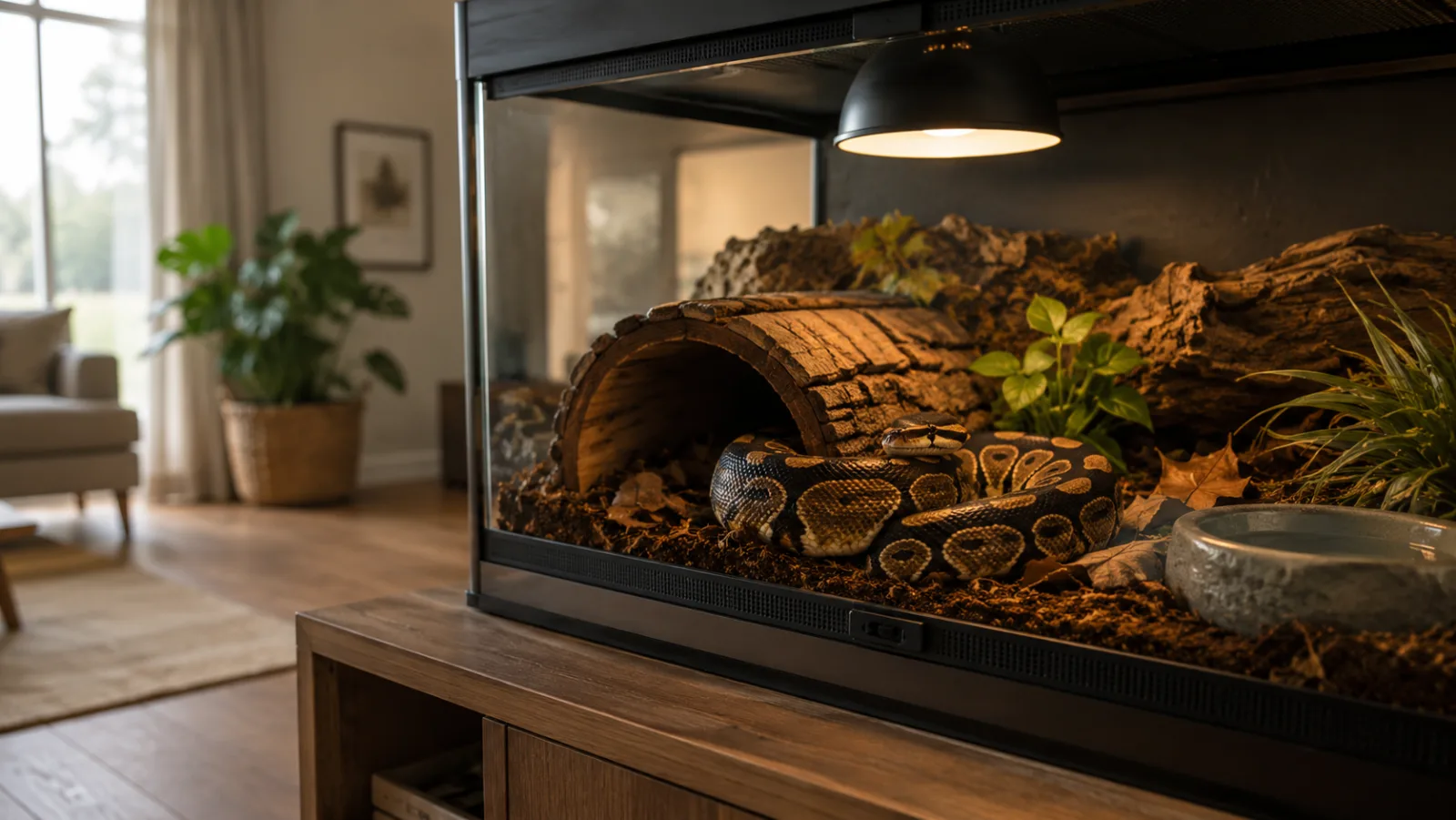
Evidence at a Glance
Zen Habitats 4'x2'x16" PVC Reptile Enclosure - The 3.0
Front-opening 4'x2'x16" PVC enclosure with a full four-foot floor footprint that retains heat and humidity far better than glass — the husbandry-correct base for a build-your-own ball python kit.
Sources: Zen Habitats manufacturer documentation, ReptiFiles ball python terrarium size guide, r/ballpython enclosure recommendations
Verified Jun 21, 2026
REPTI ZOO 67 Gallon Front-Opening Glass Terrarium 48"x18"x18"
Front-opening glass terrarium with a four-foot floor footprint at a lower price than PVC — the value enclosure, with a screen-top humidity trade-off to manage.
Sources: REPTI ZOO manufacturer documentation, PetMD ball python care sheet, r/ballpython enclosure recommendations
Verified Jun 21, 2026
Arcadia LumenIZE ProT5 ShadeDweller Max UVB Kit 24" 14W 2.5% UVB
Low-level (crepuscular) T5 UVB kit appropriate for a shade-dwelling snake — the optional premium add-on for keepers who follow the modern low-UVB recommendation.
Sources: Arcadia Reptile ShadeDweller documentation, ReptiFiles ball python lighting guidance, PetMD ball python care sheet
Verified Jun 21, 2026
Our Picks
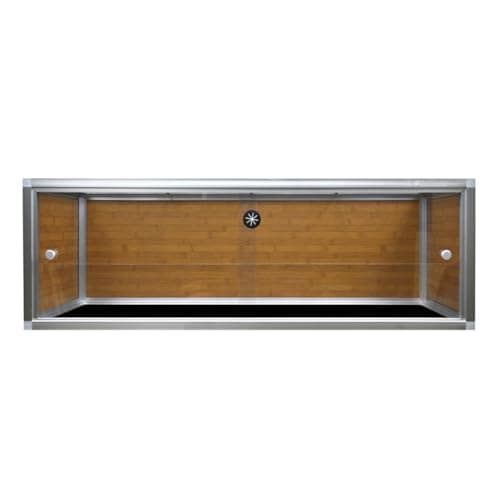
Zen Habitats
Zen Habitats 4'x2'x16" PVC Reptile Enclosure - The 3.0
9.2 / 10
- Full four-foot floor footprint (48"x24") — floor space matters more than height for a terrestrial snake
- PVC panel construction that retains heat and humidity far better than glass
- Front-opening doors for low-stress access to a shy species
- Optional humidity shield available to limit moisture loss through the screen top
$349.00
Last Amazon read 2026-09-08
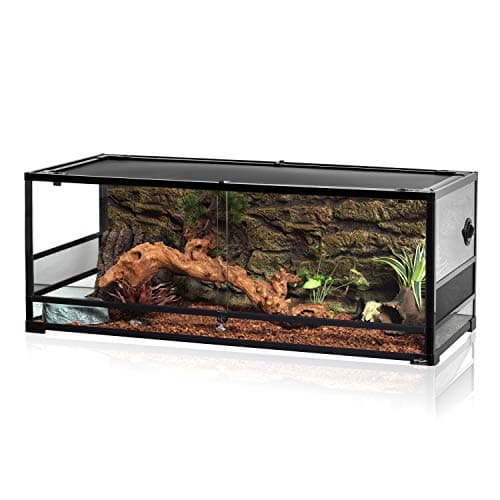
REPTI ZOO
REPTI ZOO 67 Gallon Front-Opening Glass Terrarium 48"x18"x18"
8.6 / 10
- Four-foot floor length (48"x18") at a lower price than comparable PVC
- Front-opening doors for lower-stress access than a top-lift tank
- Full screen top for ventilation
- Glass construction with a familiar, widely stocked form factor
$280.99
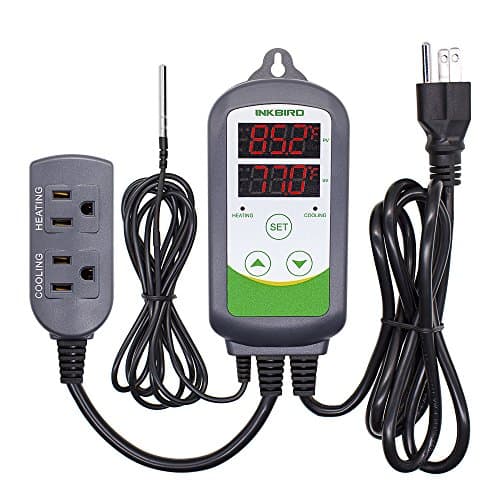
Inkbird
Inkbird ITC-308 Digital Temperature Controller (dual-stage thermostat)
9.0 / 10
- Dual-stage on/off control with separate heating and cooling outlets
- Wired probe with a usable lead length
- 1100W heating capacity at 110V
- High and low temperature alarms as a safety net
$28.80
Zoo Med
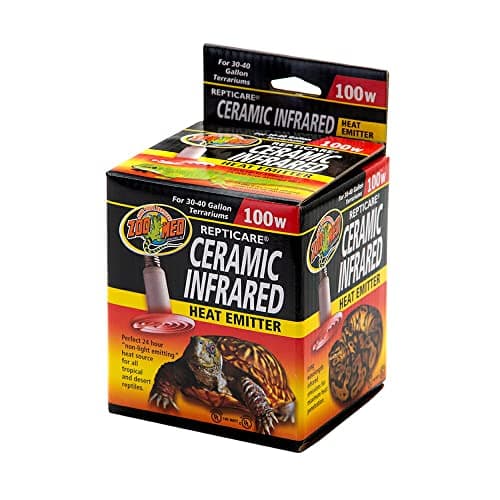
Zoo Med ReptiCare Ceramic Infrared Heat Emitter 100W
8.7 / 10
- Lightless ceramic emitter that warms ambient air without disrupting day/night cycles
- Infrared-C radiant heat per Zoo Med documentation
- Screws into a standard porcelain socket
- Available in multiple wattages to match enclosure size
$23.88
Arcadia
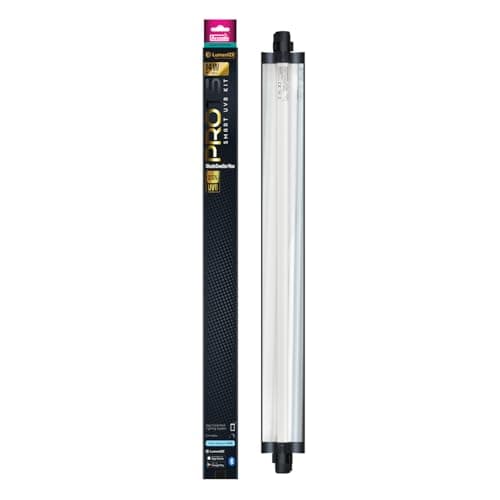
Arcadia LumenIZE ProT5 ShadeDweller Max UVB Kit 24" 14W 2.5% UVB
8.3 / 10
- Low-level (crepuscular) 2.5% UVB output appropriate for a shade-dwelling snake
- T5 high-output lamp in a complete kit with fixture
- Designed to hit a low UV Index at the basking spot per Arcadia documentation
- Optional component — ball pythons can be kept without UVB
$129.99
The Short Answer
A ball python starter kit is a set of components, not a single box: an appropriately sized front-opening enclosure, a thermostat-controlled overhead heat source, two or three hides, a water bowl, and humidity-holding substrate. For the enclosure, the pick is the REPTI ZOO 67 Gallon Front-Opening Glass Terrarium, which gives the four-foot floor footprint a terrestrial snake needs at a glass price — plan on partially covering its screen top to hold humidity. Low-level UVB is an optional layer rather than a requirement for this species, and this page does not rank a lamp for it. The one universal rule from the Merck Veterinary Manual and ReptiFiles: every heat source must run on a thermostat, or it can burn or kill the snake.
Every product on this list has been scored against the PetPal Gear Score, a weighted composite of expert consensus, observed effectiveness, animal safety, long-term durability, and value. Review method: Editorial synthesis of the Merck Veterinary Manual, ReptiFiles ball python care guide, PetMD's veterinarian-reviewed care sheet, VCA Animal Hospitals, and ARAV-aligned husbandry references. Manufacturer documentation reviewed from REPTI ZOO, Inkbird, and Zoo Med, plus Zen Habitats' ball python lighting and heating guide. Hobbyist consensus drawn from r/ballpython. No first-hand product testing.. Synthesized from 11+ expert sources.
A ball python starter kit is not a single product, and the source set treats it that way. The Merck Veterinary Manual's reptile-housing guidance describes a complete reptile home as an enclosure plus appropriate light, heat, and water, with managed thermal and humidity gradients — a set of parts working together, not one box. For Python regius specifically, ReptiFiles and PetMD converge on the same checklist: an appropriately sized front-opening enclosure, a thermostat-controlled overhead heat source, at least a warm-side and a cool-side hide, a water bowl, and humidity-holding substrate. This guide treats the kit as components and picks the best part for each job.
This guide is editorial synthesis. PetPalHQ does not run a testing lab — the picks below were chosen by reading manufacturer documentation, the veterinary and husbandry references that anchor ball python consensus, and keeper discussions in r/ballpython. Where the strongest practical advice complicates a manufacturer's sales pitch — most notably the screen-top humidity loss on glass terrariums, and the fact that an under-tank heater alone cannot warm ambient air — the guide says so plainly. Husbandry numbers throughout follow the current consensus the source set describes, not legacy figures.
This article is the buying-side companion to the Reptile Habitat Setup and Environmental Control hub. The hub explains the underlying husbandry — why a thermal gradient matters, why a thermostat and a thermometer are separate jobs, why humidity has to be managed rather than assumed. This article covers what to actually buy.
What a complete ball python kit needs
A ball python is a terrestrial, secretive snake, and a correct kit follows from that. The Merck Veterinary Manual classifies Python regius as a terrestrial scrubland species, which sets the priorities: floor space over height, a stable thermal gradient, a managed humidity band, and secure hiding spots on both ends of that gradient.
The enclosure comes first because everything else mounts to it. The current consensus the source set describes — laid out in the ReptiFiles terrarium-size guidance — is a four-foot floor footprint at minimum, with 4'x2'x2' (~120 gallons) treated as the modern minimum for an adult female and 3'x2'x2' acceptable for a male. The legacy "40-gallon tank for any adult" recommendation is now considered too small for adult females. The enclosure in this guide delivers that priority four-foot floor: the REPTI ZOO 67 Gallon Front-Opening Glass Terrarium at 48"x18"x18". It does not hit the full 4'x2'x2' volume, but it clears the legacy 40-gallon floor by a wide margin and prioritizes the floor area a ground-dwelling snake actually uses.
Heat is the second pillar, and it has a single non-negotiable rule. Every heat source must run on a thermostat — the Merck Veterinary Manual, ReptiFiles, PetMD, and VCA Animal Hospitals all state it, and r/ballpython repeats it constantly. An unregulated heater can burn or kill the snake. The modern direction the source set favors is overhead, lightless ambient heat, which is why the heat components in this kit are a ceramic emitter on a thermostat rather than a bare heat mat. The third pillar — hides on both the warm and cool ends, a water bowl, and humidity-holding substrate — is husbandry the hub covers in depth.
The enclosure decision: what the walls cost you
Get the four-foot floor footprint first. After that, the enclosure choice comes down to one trade: heat-and-humidity retention against price, decided entirely by what the walls are made of.
PVC retains heat and humidity far better than glass — Zen Habitats cites figures around ten times the retention, which we attribute as a manufacturer claim, and ReptiFiles and the Zen Habitats heating guide both describe the same practical effect. A solid-walled enclosure holds the target gradient and humidity band with less daily intervention, and it costs more for the same floor area. If your budget stretches to a four-foot PVC enclosure, that is the lowest-effort path to stable husbandry.
Glass is cheaper for the same floor footprint, and that is the entire argument for the REPTI ZOO 67 Gallon Front-Opening Glass Terrarium. A four-foot floor at a glass price is a defensible choice for a budget-conscious keeper. The catch is the full screen top, which loses humidity fast. Holding the 55-60% baseline that ball pythons need — rising past 70% during a shed, within the wider 50-80% range the Merck Veterinary Manual lists — means partially covering the screen and misting more often than a solid-walled enclosure requires. The Zen Habitats lighting-and-heating guide and ReptiFiles both describe the standard fix: cover part of the screen with foil tape, acrylic, or a humidity shield while leaving enough airflow to avoid stagnant, mold-prone air. Budget for that modification from day one rather than discovering it after the first failed shed.
Heat, control, and the optional UVB layer
Heat is where most beginner kits go wrong, and the fix is two correctly matched components plus a controller. The controller is the safety backbone. The Inkbird ITC-308 is the affordable dual-stage thermostat ball python keepers trust, with a real probe lead, dual outlets, and high and low alarms; on/off control is the correct style for a ceramic heat emitter or a heat mat. The one caveat from the source set and the Zen Habitats heating guide is that a radiant heat panel pairs better with a proportional thermostat than with an on/off unit.
For the heat itself, an under-tank heater alone cannot warm ambient air — it heats a patch of floor, not the whole warm side. That is why the modern consensus, described by ReptiFiles, favors overhead lightless heat, and why the Zoo Med ReptiCare Ceramic Infrared Heat Emitter 100W is the heat-source pick. It warms the air of the warm side without emitting light, so the snake's day/night cycle stays intact, and it screws into a standard porcelain socket. It must run on a thermostat and sit behind a guard, because a ceramic emitter gets hot enough to be the main burn and fire risk in the kit. Match its wattage to the enclosure size and room temperature rather than defaulting to the first option.
UVB is the optional layer, not a requirement. Ball pythons have been kept healthy without UVB for decades, as the Merck Veterinary Manual and PetMD describe, but ReptiFiles and a growing share of keepers now treat low-level UVB as beneficial. The lamp class that fits the role is a low-output crepuscular T5 tube around 2.5 percent UVB — enough to land the basking spot in a low UV Index rather than over-expose a shade-dwelling snake. Two details decide whether it helps or does nothing: mount it at the distance the maker specifies, and remember that glass and most mesh block UVB outright. It is a reasonable component to skip for a first setup, and this page does not rank one.
What We Passed On
Three credible components did not make the final kit, and the reasons are worth stating.
The Vivarium Electronics VE-300X2 proportional thermostat is the controller serious keepers escalate to, and it is the correct type for a radiant heat panel — proportional dimming rather than on/off cycling. We passed on it as the primary thermostat because the kit here is built around a ceramic heat emitter, which on/off control handles well, and the Inkbird ITC-308 covers that job at a fraction of the cost. Keepers running a radiant heat panel should treat the VE-300X2 as the right pairing instead.
The ReptiCube all-in-one PVC starter kit is the genuine single-box bundle many beginners want, with an enclosure, hide, heating, lighting, and a temperature controller in one purchase. We passed on it because we could not confirm a live Amazon listing for it at review, and we do not recommend a product we cannot verify you can buy. There is also a husbandry caveat worth flagging on any all-in-one box: confirm the included enclosure is actually large enough for an adult before buying.
The Tikaton reptile heat pad is a budget under-tank heater, and it earns a mention precisely because of how it should be used. An under-tank heater is supplemental belly warmth at best — it cannot warm ambient air, and the modern consensus favors overhead heat as the primary source. It still must run on a thermostat. We left it off the kit because recommending a heat mat as a sole heat source would contradict the husbandry guidance the rest of this guide follows.
Head-to-Head Comparison
| Feature | Zen Habitats 4'x2'x16" PVC Reptile Enclosure - The 3.0 | REPTI ZOO 67 Gallon Front-Opening Glass Terrarium 48"x18"x18" | Inkbird ITC-308 Digital Temperature Controller (dual-stage thermostat) | Zoo Med ReptiCare Ceramic Infrared Heat Emitter 100W | Arcadia LumenIZE ProT5 ShadeDweller Max UVB Kit 24" 14W 2.5% UVB |
|---|---|---|---|---|---|
| Enclosure size / footprint (meets 4x2x2 adult minimum?) | Full 4-ft floor (48x24); 16" tall, ~80 gal — short of full 4x2x2 | Full 4-ft floor (48x18); ~67 gal — short of full 4x2x2 | N/A — thermostat | N/A — heat source | N/A — UVB lamp |
| Material & heat retention | PVC — retains heat/humidity far better (per Zen Habitats) | Glass — retains heat/humidity less well than PVC | N/A | N/A | N/A |
| Front-opening access | Yes — front doors | Yes — front doors | N/A | N/A | N/A |
| Humidity control (screen-top loss / humidity shield) | Solid walls; optional humidity shield for screen top | Full screen top — needs partial cover + more misting | N/A | N/A | N/A |
| Heat source type & thermostat-ready | Accepts overhead RHP or CHE on a thermostat | Accepts overhead RHP or CHE on a thermostat | Dual-stage on/off thermostat (controls the heat source) | Lightless ceramic emitter — must run on a thermostat | N/A — UVB, not heat |
| UVB included (low-level / optional) | No — add separately | No — add separately | No | No — heat only, no UV | Yes — low-level 2.5% UVB kit |
| Completeness (all-in-one kit vs build-your-own) & value | Build-your-own base; premium price, best retention | Build-your-own base; strong floor-space value | Core safety component; high value | Core heat component; high value | Optional premium add-on |
| Check price | Amazon | Amazon | Amazon | Amazon | Amazon |
$349.00
Last Amazon read 2026-09-08
- Full four-foot floor footprint (48"x24") — floor space matters more than height for a terrestrial snake
- PVC panel construction that retains heat and humidity far better than glass
- Front-opening doors for low-stress access to a shy species
- Optional humidity shield available to limit moisture loss through the screen top
- Modular system that accepts a thermostat-controlled radiant heat panel or ceramic heat emitter overhead
The Zen Habitats 4'x2'x16" PVC Reptile Enclosure is the synthesis pick for keepers building a complete ball python kit from parts rather than buying a single box. It gives the full four-foot floor footprint that the ReptiFiles terrarium-size guidance treats as the priority for a terrestrial, ground-dwelling snake. The Merck Veterinary Manual classifies Python regius as a terrestrial scrubland species, which is why floor area, not vertical height, is what the source set keeps coming back to.
The reason to pay PVC prices over glass is thermal. Zen Habitats states that its PVC panels retain heat far better than glass — the company cites figures around ten times the retention. We attribute that as a manufacturer claim rather than an independent measurement, but the direction is consistent with what ReptiFiles and the Zen Habitats heating guide both describe: a solid-walled enclosure holds a stable thermal gradient and a target humidity band more easily and more cheaply than a glass tank with a full screen top. That matters for ball pythons, where ReptiFiles calls for a hot spot around 88-92F, a warm side near 80-85F, and a cool side around 76-80F, alongside a humidity range that ReptiFiles puts at 60-80% and the Merck Veterinary Manual lists at an acceptable 50-80%.
Where it earns the top spot: it is the base that makes the rest of the kit work as intended. Pair it with the thermostat and the overhead heat source below and you have a setup that holds husbandry targets without a daily fight. Where the honest trade-off lives: at 48"x24"x16" this is roughly an 80-gallon enclosure by volume. That clears the legacy 40-gallon recommendation comfortably and delivers the full four-foot floor, but the 16-inch height is shallower than the 4'x2'x2' (~120-gallon) ideal that ReptiFiles describes for adult females. For a terrestrial snake the floor footprint is the part that matters most, but keepers who want the full deep-enclosure spec should know this one trades height for a lower profile.
What the spec sheet does not tell you: a front-opening PVC enclosure is the single biggest quality-of-life upgrade for a shy species, and that benefit is hard to put on a spec line. The Merck husbandry guidance and ball python keepers in r/ballpython both note that these snakes are secretive and stress easily. Reaching in from the front at the animal's level is far less threatening than lifting a lid overhead like a predator. Glass tanks with top access make every interaction a looming-from-above event; the Zen Habitats front doors quietly remove that stressor.
What We Love
- Full four-foot floor footprint suited to a terrestrial snake
- PVC retains heat and humidity far better than glass (per Zen Habitats)
- Front-opening access lowers stress for a shy species
- Optional humidity shield addresses screen-top moisture loss
- Modular design accepts overhead radiant heat or a ceramic heat emitter
What Could Be Better
- Most expensive enclosure in this guide
- At 16 inches tall it is shallower than the full 4'x2'x2' (~120-gallon) ideal
- Sold as a component — you still buy heat, thermostat, hides, and substrate separately
- Requires assembly rather than arriving as a ready-to-use kit
The Verdict
Buy this if you want the husbandry-correct base for a build-your-own kit and you value heat and humidity retention over upfront cost. It is the enclosure the rest of this kit is designed around.
$280.99
- Four-foot floor length (48"x18") at a lower price than comparable PVC
- Front-opening doors for lower-stress access than a top-lift tank
- Full screen top for ventilation
- Glass construction with a familiar, widely stocked form factor
- Floor footprint that clears the legacy 40-gallon recommendation
The REPTI ZOO 67 Gallon Front-Opening Glass Terrarium is the value enclosure for keepers who want the four-foot floor footprint without paying PVC prices. At 48"x18"x18" it gives the full four-foot length that the ReptiFiles terrarium-size guidance prioritizes for a terrestrial snake, and it opens from the front — the access pattern PetMD and the keeper communities both favor for a shy species over reaching in from above.
Where it earns the value slot is straightforward: floor space per dollar. For a ground-dwelling animal, a four-foot floor at glass prices is a defensible choice, and many keepers in r/ballpython run exactly this kind of front-opening glass terrarium successfully. The honest trade-off is humidity. A glass tank with a full screen top loses moisture quickly, and ball pythons need a defensible humidity band — roughly 55-60% baseline rising to 70% or higher during a shed, within the broader ranges that ReptiFiles (60-80%) and the Merck Veterinary Manual (50-80%) describe. With a full screen top, holding that band means partially covering the screen and misting more often than a solid-walled enclosure would require.
Where the honest limits sit: glass is lighter-walled than PVC, so this terrarium works harder to hold heat and humidity than a solid-walled enclosure does. The 18-inch depth is also narrower than the 24-inch depth of a full four-foot footprint, and it falls short of the full 4'x2'x2' (~120-gallon) ideal that ReptiFiles cites for adult females. It is the right call for budget-conscious keepers who are willing to manage the screen top; it is not the lowest-effort path to stable humidity.
What the spec sheet does not tell you: the screen top that the listing sells as ventilation is the same feature that makes humidity harder. The Zen Habitats lighting-and-heating guide and ReptiFiles both describe the fix — partially cover the screen with foil tape, acrylic, or a purpose-made humidity shield to slow evaporation while leaving enough airflow to prevent stagnant, mold-prone air. Plan on that modification from day one rather than discovering it after the first failed shed.
What We Love
- Four-foot floor footprint at a lower price than PVC
- Front-opening doors reduce stress versus a top-lift tank
- Clears the legacy 40-gallon recommendation comfortably
- Widely available, familiar glass form factor
- Good value for keepers willing to manage the screen top
What Could Be Better
- Full screen top loses humidity — needs partial covering and more misting
- Glass retains heat and humidity less well than PVC
- 18-inch depth is narrower than a 24-inch-deep four-foot footprint
- Still short of the full 4'x2'x2' (~120-gallon) ideal for adult females
The Verdict
Buy this if you want a four-foot floor footprint at a glass price and you are willing to manage the screen top for humidity. It is the value enclosure, not the lowest-effort one.
$28.80
- Dual-stage on/off control with separate heating and cooling outlets
- Wired probe with a usable lead length
- 1100W heating capacity at 110V
- High and low temperature alarms as a safety net
- The most widely recommended affordable thermostat in ball python communities
The Inkbird ITC-308 is the single most safety-critical component of any ball python kit, and the source set is unanimous on why. The Merck Veterinary Manual, ReptiFiles, PetMD, and VCA Animal Hospitals all treat thermostat control of every heat source as non-negotiable. An unregulated heat mat, ceramic heat emitter, or lamp can run uncontrolled and severely burn or kill the snake. The r/ballpython consensus is just as blunt: a thermostat is not optional on any heating element.
The ITC-308 earns the slot because it is the affordable controller ball python keepers actually trust. It is a dual-stage on/off thermostat with a real probe lead, separate heating and cooling outlets, and high and low alarms that give a usable warning if the probe drifts or a heater fails on. Inkbird's documentation lists explicit wattage limits, and the community routinely reminds new keepers to check those limits before plugging in a heat source. For the ceramic heat emitter and under-tank heaters most ball python kits use, on/off control is the correct and sufficient style.
Where the honest trade-off lives: on/off control is right for a ceramic heat emitter or heat mat, but it is not the ideal match for a radiant heat panel. As the research and the Zen Habitats heating guide note, radiant heat panels are best paired with a proportional or dimming thermostat rather than an on/off unit. If a radiant panel is your heat source, the Inkbird ITC-308 will work but a proportional controller is the better pairing — that is the gap our "What We Passed On" section addresses.
What the spec sheet does not tell you: the ITC-308 is only as safe as where you put its probe. The thermostat regulates whatever the probe measures, so a probe floating in mid-air or taped to the cool side will hold the wrong location at the right number while the warm spot runs unregulated. Keeper consensus in r/ballpython is to place the probe at the warm-side surface the animal actually uses, and to verify it with a separate digital thermometer — the thermostat regulates, the thermometer confirms.
What We Love
- Strongest hobbyist track record at an affordable price
- Dual outlets handle heating and an alarm or cooling device independently
- Real probe lead rather than a body-mounted sensor
- High and low alarms add a genuine safety net
- 1100W capacity covers any single ball python heat source
What Could Be Better
- On/off control is not the ideal match for a radiant heat panel
- Single setpoint — no automatic day/night programming
- Not reptile-branded; documentation skews toward general temperature control
- Probe placement has a learning curve that the manual does not stress
The Verdict
Buy this as the safety backbone of any kit using a ceramic heat emitter or heat mat. If you run a radiant heat panel instead, plan to pair it with a proportional thermostat — see What We Passed On.
$23.88
- Lightless ceramic emitter that warms ambient air without disrupting day/night cycles
- Infrared-C radiant heat per Zoo Med documentation
- Screws into a standard porcelain socket
- Available in multiple wattages to match enclosure size
- Must be run on a thermostat — pairs with the Inkbird ITC-308
The Zoo Med ReptiCare Ceramic Infrared Heat Emitter is the overhead heat component that fits the modern husbandry consensus. The direction the source set favors — described by ReptiFiles and the Zen Habitats heating guide — is overhead, lightless ambient heat rather than belly heat alone. A ceramic heat emitter warms the air in the enclosure without emitting light, so it does not disrupt the snake's day/night cycle, and Zoo Med's documentation describes it as an infrared-C radiant source that screws into a standard porcelain socket.
Where it earns inclusion is the job an under-tank heater cannot do: warming ambient air. An under-tank heater warms a patch of floor through the bottom of the enclosure, but it cannot raise the air temperature of the whole warm side. ReptiFiles and the keeper communities increasingly treat belly heat as supplemental rather than a sole source for exactly that reason. The Zoo Med ReptiCare Ceramic Infrared Heat Emitter, controlled by a thermostat, holds the warm-side ambient gradient that ball pythons need — a hot spot around 88-92F over a cool side near 76-80F.
Where the trade-off lives: wattage selection is on you, and it is easy to get wrong. The 100W unit here suits a mid-sized enclosure, but a larger or smaller setup, a colder room, or a taller enclosure can call for a different wattage. Run it too hot and you lean entirely on the thermostat to throttle it; run it too cool and it never reaches the setpoint. Match the wattage to your enclosure size and ambient room temperature rather than defaulting to the first one in the cart.
What the spec sheet does not tell you: a ceramic emitter gets genuinely hot and stays hot after power cuts, and it is the most common burn and fire risk in a ball python kit. The Zoo Med documentation and the broader safety guidance the source set draws on both stress two things the box underplays — it must run on a thermostat, never plugged straight into the wall, and it needs a clamp lamp or fixture with the right ceramic socket and a guard so the snake cannot contact it directly. Treat the emitter and its fixture as one safety unit, not two separate purchases.
What We Love
- Warms ambient air, which an under-tank heater cannot do
- Lightless, so it does not disrupt the day/night cycle
- Inexpensive and available in multiple wattages
- Standard porcelain socket fits common clamp-lamp fixtures
- Matches the modern overhead-heat consensus for ball pythons
What Could Be Better
- Must run on a thermostat — dangerous plugged directly into the wall
- Gets very hot and stays hot; needs a guard so the snake cannot touch it
- Wattage must be matched to enclosure size and room temperature
- Requires a separate ceramic-rated fixture, sold separately
The Verdict
Buy this as the overhead ambient heat source for a ball python kit, paired with the Inkbird ITC-308 and a guarded ceramic fixture. It does the one job a heat mat cannot — warming the air.
$129.99
- Low-level (crepuscular) 2.5% UVB output appropriate for a shade-dwelling snake
- T5 high-output lamp in a complete kit with fixture
- Designed to hit a low UV Index at the basking spot per Arcadia documentation
- Optional component — ball pythons can be kept without UVB
- Mounts at a manufacturer-specified distance to control UV dose
The Arcadia LumenIZE ProT5 ShadeDweller Max UVB Kit is the optional add-on for keepers who follow the modern low-UVB recommendation. The source set is careful here, and so are we: UVB is not strictly required for a ball python to survive. The Merck Veterinary Manual and PetMD describe ball pythons as kept successfully without UVB for decades, but ReptiFiles and a growing share of keepers now treat low-level UVB as a beneficial addition rather than a mandatory one. This kit is included as the "minimal UVB" option in that spirit, not as a component every kit must have.
Where it earns inclusion is the match between lamp and animal. Ball pythons are a shade-dwelling, crepuscular species, so the goal is a low UV Index, not the high output a basking lizard needs. Arcadia's ShadeDweller documentation targets a low UV Index at the basking spot, and the 2.5% T5 lamp here is built for exactly that low-output role. Buying a high-output desert lamp instead would over-expose a shade-dwelling snake, which is the mistake the low-level designation is meant to prevent.
Where the trade-off lives is cost and necessity. At over a hundred dollars, this is the most expensive component per its role in the kit, and it is the one a keeper can skip entirely and still keep a healthy ball python by the older standard. It earns its place as the premium, optional layer for keepers who want to follow current best practice — not as a line item we would tell a first-time keeper they cannot do without.
What the spec sheet does not tell you: UVB lamp distance is the whole game, and the box does not make that obvious. UV output falls off sharply with distance and is blocked by glass and most mesh, so the lamp must be mounted at the manufacturer-specified height above the basking area, ideally over an open or fine-mesh section, to land in the intended low UV Index range. Arcadia's documentation gives target distances for exactly this reason. Mount it too close and you over-expose the snake; too far, or behind glass, and you get almost nothing.
What We Love
- Low-level output correctly matched to a shade-dwelling snake
- Complete T5 kit with fixture rather than a bare bulb
- Follows the modern low-UVB best-practice recommendation
- Arcadia documentation gives clear mounting-distance targets
- High-output T5 lamp with good lamp life for its class
What Could Be Better
- Optional — ball pythons can be kept healthy without UVB
- Most expensive component for its role in the kit
- Requires careful mounting distance and an unobstructed path (not behind glass)
- Adds heat and another fixture to plan around in the enclosure
The Verdict
Buy this if you want to follow current best practice with low-level UVB and you can mount it at the correct distance. Skip it without guilt if you are keeping to the older no-UVB standard — it is the optional layer, not the backbone.
How We Score
Formula
PetPal Gear Score = (Expert / Herp Consensus × 0.35) + (Component Completeness & Quality × 0.25) + (Humidity & Thermal Husbandry × 0.20) + (Value × 0.20)
Score Factors
- Expert / Herp Consensus · 35%
- Synthesized from manufacturer documentation, the Merck Veterinary Manual, ReptiFiles, PetMD, VCA Animal Hospitals, ARAV-aligned guidance, and hobbyist consensus in r/ballpython. The PetPal Gear Score is a composite of expert opinion, not a measurement — PetPalHQ does not run a testing lab.
- Component Completeness & Quality · 25%
- How well a component does its job in a complete kit — build quality, fixture and socket compatibility, probe and outlet quality on the thermostat, and whether the part needs further purchases to be safe and functional.
- Humidity & Thermal Husbandry · 20%
- How well the component supports the ball python husbandry targets the source set defines — a hot spot near 88-92F over a cool side near 76-80F and a humidity band of roughly 55-60% baseline rising to 70% or more in shed, within the broader ranges ReptiFiles and the Merck Veterinary Manual describe.
- Value · 20%
- Price relative to comparable products in the same role — enclosure against enclosure, thermostat against thermostat — not absolute cost. An enclosure is judged against other enclosures and a thermostat against other thermostats, never against each other.
| Rank | Product | Score |
|---|---|---|
| #1 | Zen Habitats Zen Habitats 4'x2'x16" PVC Reptile Enclosure - The 3.0 | 9.2 |
| #2 | Inkbird Inkbird ITC-308 Digital Temperature Controller (dual-stage thermostat) | 9.0 |
| #3 | Zoo Med Zoo Med ReptiCare Ceramic Infrared Heat Emitter 100W | 8.7 |
| #4 | REPTI ZOO REPTI ZOO 67 Gallon Front-Opening Glass Terrarium 48"x18"x18" | 8.6 |
| #5 | Arcadia Arcadia LumenIZE ProT5 ShadeDweller Max UVB Kit 24" 14W 2.5% UVB | 8.3 |
When NOT to Buy
Skip the REPTI ZOO glass terrarium if you want the lowest-effort path to stable humidity. A solid-walled PVC enclosure holds the target band with less daily intervention, and a full screen top will fight you on every dry day.
Skip UVB altogether if you are keeping a ball python to the older no-UVB standard. It is beneficial but not required for this species, and a first-time keeper can build a healthy setup without it and add it later.
Skip the Inkbird ITC-308 as your only controller if your heat source is a radiant heat panel rather than a ceramic heat emitter. Radiant panels pair better with a proportional or dimming thermostat — buy the matching controller type for the heater you actually run.
Skip a 40-gallon tank entirely for an adult ball python. The legacy 40-gallon recommendation is now considered too small for adult females; aim for a four-foot floor footprint at minimum.
Frequently Asked Questions
- What size enclosure does an adult ball python actually need — is a 40-gallon tank or a 4x2x2 (120-gallon) enclosure the right minimum?
- The modern consensus is a four-foot floor footprint at minimum. ReptiFiles describes 4'x2'x2' (~120 gallons) as the minimum for an adult female and 3'x2'x2' as acceptable for a male. The legacy 40-gallon recommendation is now considered too small for adult females. Floor space matters more than height for a terrestrial snake, so the priority is a four-foot floor. The enclosure in this guide delivers that footprint while falling short of the full 4'x2'x2' volume, which is the honest trade-off at its price point.
- Do ball python starter kits come with a thermostat, and why is one absolutely required for every heat source?
- Many all-in-one kits do include a basic controller, but a thermostat is required whether the kit ships with one or not. The Merck Veterinary Manual, ReptiFiles, PetMD, and VCA Animal Hospitals all treat thermostat control of every heat source as non-negotiable. An unregulated heat mat, ceramic heat emitter, or lamp can run uncontrolled and severely burn or kill the snake. This is the single most safety-critical part of any setup. A separate digital thermometer should verify what the thermostat regulates.
- PVC vs glass — which enclosure holds heat and humidity better for a ball python, and how do you stop a screen top from drying out the tank?
- PVC retains heat and humidity far better than glass; Zen Habitats cites figures around ten times the retention, and the practical effect is a more stable gradient with less daily effort. Glass with a full screen top loses humidity quickly. The standard fix, described by ReptiFiles and the Zen Habitats heating guide, is to partially cover the screen with foil tape, acrylic, or a humidity shield while leaving enough airflow to prevent stagnant air, and to mist more often than a PVC enclosure needs.
- What is the correct heat source for a ball python — radiant heat panel, ceramic heat emitter, or under-tank heater — and do they need overhead heat?
- The modern consensus favors overhead, lightless heat — a radiant heat panel, ceramic heat emitter, or deep heat projector — to warm ambient air. An under-tank heater cannot warm the air of the whole warm side, so it is increasingly treated as supplemental rather than a sole source. A ceramic heat emitter is the inexpensive overhead option; a radiant heat panel is the premium one. Whatever the source, it must run on a thermostat, and a radiant panel pairs best with a proportional controller while a ceramic emitter works fine on an on/off unit.
- Do ball pythons need UVB lighting, and if it is optional, which low-level UVB bulb is appropriate?
- Ball pythons do not strictly require UVB and have been kept healthy without it for decades, but low-level UVB is increasingly recommended as beneficial. If you use it, choose a low-output crepuscular lamp appropriate for a shade-dwelling snake, targeting a low UV Index of roughly 1 to 1.5 at the basking spot, and mount it at the manufacturer-specified distance. Output drops sharply with distance and is blocked by glass, so mounting distance and an unobstructed path matter more than the lamp's headline numbers.
Bottom Line
A ball python starter kit is a set of components, not a single box: enclosure, thermostat, overhead heat source, hides, water bowl, and humidity-holding substrate.
Get the REPTI ZOO glass terrarium for the enclosure. It delivers the four-foot floor footprint a terrestrial snake needs at a glass price, and it is the foundation the rest of the kit mounts to — plan on partially covering the screen top and misting more often to hold humidity.
Run the Inkbird ITC-308 on whatever heat source you choose, and pair the Zoo Med ceramic heat emitter with it for overhead ambient warmth. Every heat source must be on a thermostat — this is the one non-negotiable rule.
Treat low-level UVB as an optional layer, not a requirement. Ball pythons can be kept healthy without it, so add it later if you want to follow current best practice — and if you do, buy a low-output crepuscular lamp and mount it at the distance its maker specifies.
Aim for a four-foot floor footprint at minimum. The legacy 40-gallon tank is too small for an adult female ball python.
Sources & Methodology
Methodology
PetPal Gear Score = (Expert / Herp Consensus × 0.35) + (Component Completeness & Quality × 0.25) + (Humidity & Thermal Husbandry × 0.20) + (Value × 0.20)
Expert review sources
- Merck Veterinary Manual — Important Husbandry Requirements for Selected Reptiles
- Merck Veterinary Manual — Providing a Home for a Reptile
- ReptiFiles — Ball Python Care Guide (Humidity & Temperatures)
- ReptiFiles — Ball Python Terrarium Size & Lighting
- Association of Reptile and Amphibian Veterinarians (ARAV)
- PetMD — Ball Python Care Sheet
- Reptiles Magazine — Ball Python Care Sheet
- World of Ball Pythons — Care Sheet (Python regius)
- Zoo Med Laboratories — ReptiCare Ceramic Infrared Heat Emitter documentation
- Zen Habitats — Ball Python Complete Lighting and Heating Guide
- VCA Animal Hospitals — Ball Pythons care references
Community sources
- r/ballpython — best heat source and how to use it
- r/ballpython — enclosure recommendations (PVC vs glass, sizing)
- r/ballpython — heating and enclosure recommendations
- r/ballpython — do I need a thermostat consensus
Prices and specs verified June 21, 2026.
About the author
Nicholas Miles is the chief editor of PetPalHQ. The picks above are editorial synthesis of veterinary references, university and welfare guidance, manufacturer documentation, and reptile-keeper community feedback — PetPalHQ does not run a testing lab. The PetPal Gear Score is a composite of expert opinion, not a measurement. Sources are cited by name throughout.
PetPalHQ is a participant in the Amazon Services LLC Associates Program. We may earn commissions from qualifying purchases — at no extra cost to you.
More Guides
Reptile
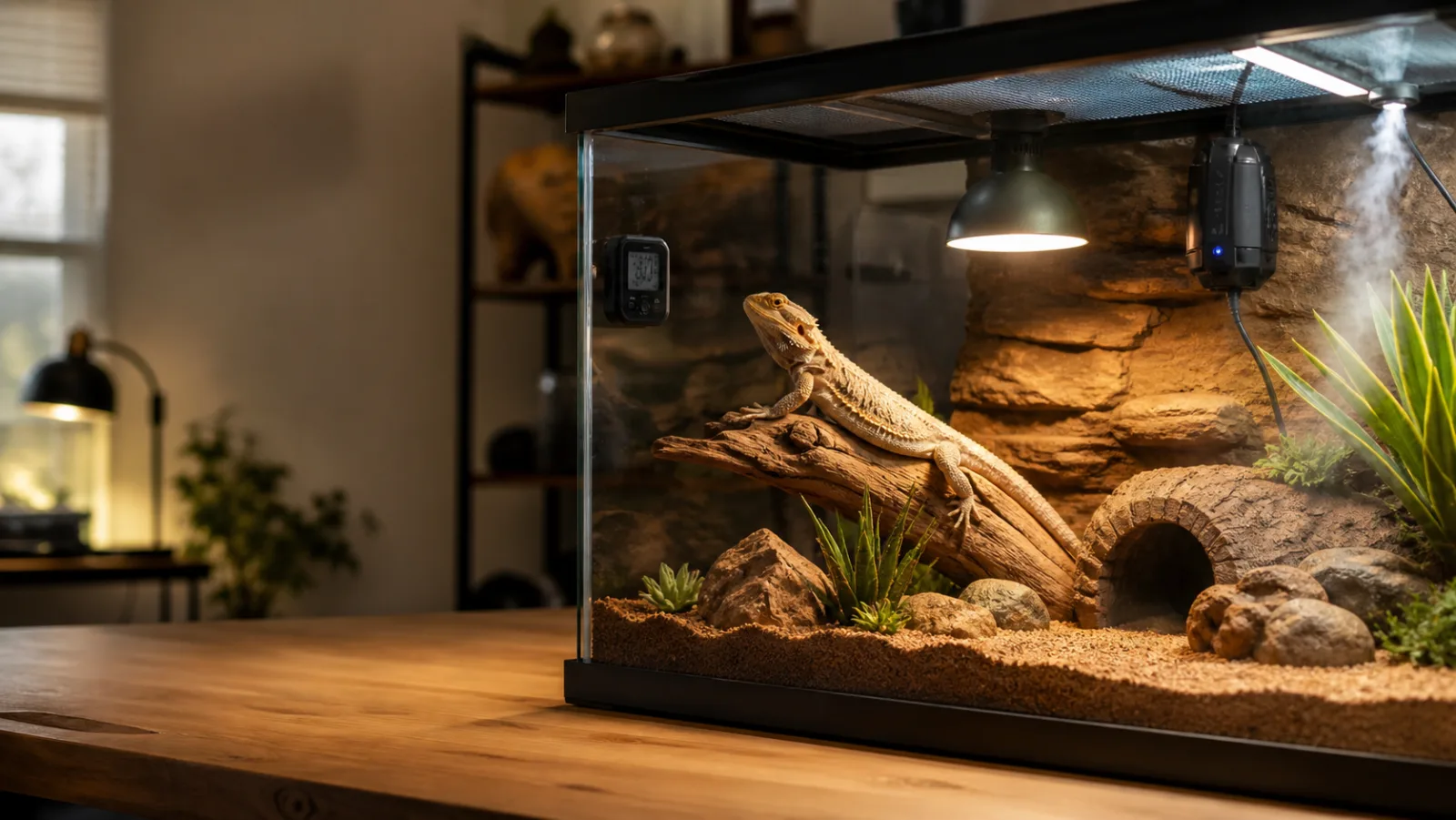
Reptile Habitat Setup and Environmental Control: 2026 Guide for Heat, Humidity, and Safety
Reptile
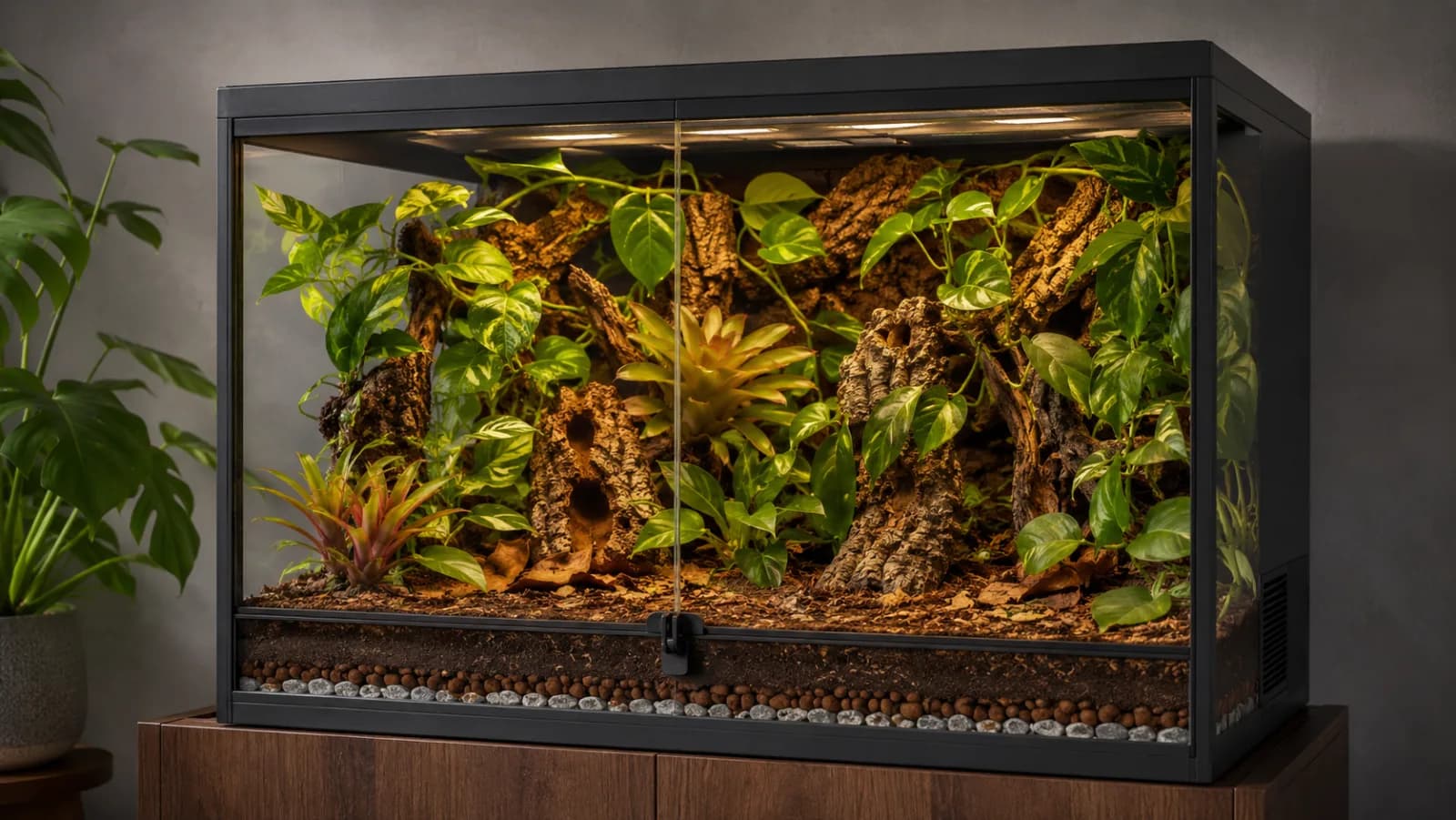
Best PVC Reptile Enclosures for Bioactive Setups (2026)
Reptile
Best Reptile Thermostats for Heat Mats, CHEs & Heating Elements (2026)
Reptile
Best Reptile Radiant Heat Panels and Overhead Heat for 2026
Reptile
Best Reptile UVB Bulbs for Safe Lighting (2026)
Reptile