Reptile
Best Reptile UVB Bulbs for Safe Lighting (2026)
Arcadia ProT5 12% is the synthesis pick for desert species; Zoo Med ReptiSun 10.0 T5 HO anchors the mainstream tier. Editorial recommendations grounded in veterinary references and the LafeberVet UV-Tool framework.
By Nick Miles · Updated August 12, 2026 · 12 min read
PetPalHQ is reader-supported. We may earn a commission from qualifying Amazon purchases at no extra cost to you.
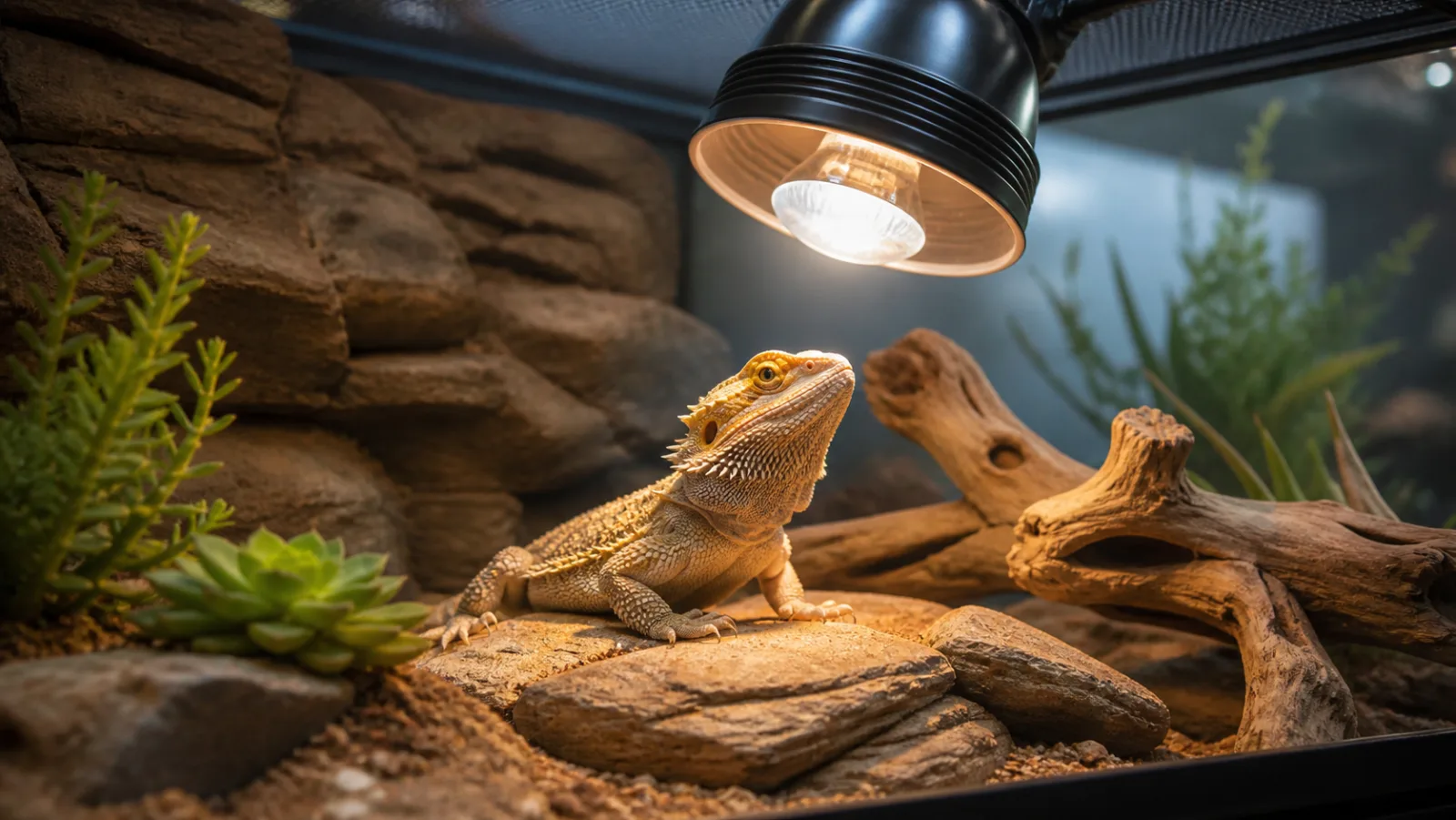
Evidence at a Glance
Arcadia ProT5 12% Desert (D3+) UVB
T5 HO desert-class output with published UVI-vs-distance figures — the synthesis pick for bearded dragons, tortoises, and other high-UV baskers.
Sources: Arcadia Reptile lamp documentation, LafeberVet UVB technical PDF (Baines, 2024), Journal of Zoo and Aquarium Research — UV-Tool (Baines et al., 2016)
Verified May 4, 2026
Zoo Med ReptiSun 10.0 T5 HO UVB
Mainstream T5 HO desert-class lamp with broad US retail availability — the easier-to-source default for high-UV species.
Sources: Zoo Med Laboratories — UVB for Reptiles Lamp Charts PDF (2023), Zoo Med — ReptiSun T5 HO instructions PDF (2024), LafeberVet UVB technical PDF
Verified May 4, 2026
Arcadia D3 6% Forest T5 HO UVB
Forest-class T5 HO output for moderate-UV species — chameleons, leopard geckos with low-level UVB gradients, and other forest-canopy reptiles.
Sources: Arcadia Reptile Lighting Guide, Wageningen University & Research (2020) — leopard gecko UVB study, Journal of Zoo and Aquarium Research — UV-Tool
Verified May 4, 2026
Our Picks
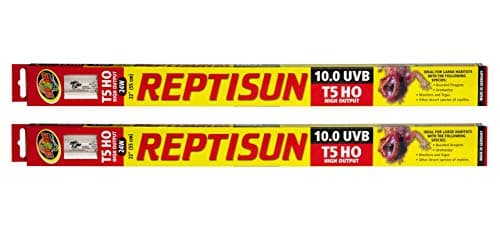
Zoo Med
Zoo Med ReptiSun 10.0 UVB T5 HO Lamp (24W, 2-pack)
9.2 / 10
- T5 HO format — strong UVB output and broad coverage
- Desert-class 10.0 labeling for high-UV baskers
- Two-pack lowers per-bulb replacement cost
- Best US retail availability of any premium T5 HO UVB lamp
$53.96
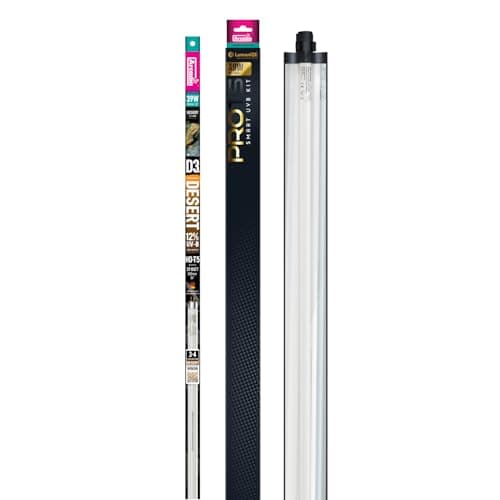
Arcadia Reptile
Arcadia LumenIZE ProT5 Reptile Light Fixture Kit (36", 39W, 12% UVB Desert)
9.4 / 10
- T5 HO fixture-and-bulb kit with 12% UVB Desert lamp included
- Arcadia publishes UVI-vs-distance figures for the ProT5 system
- 12-month manufacturer replacement schedule for the included bulb
- Reflector-equipped — the spec the LafeberVet PDF treats as non-optional
$159.99
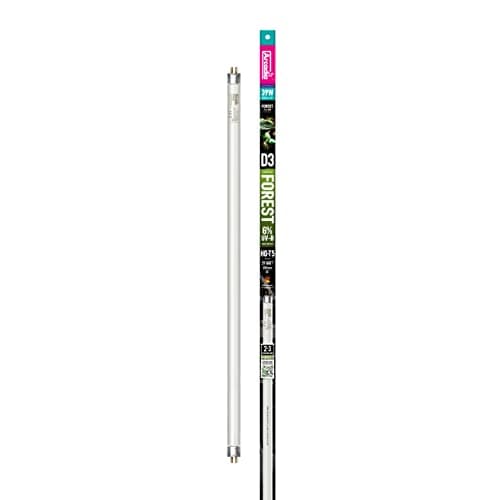
Arcadia Reptile
Arcadia D3 UVB Lamp 39W Forest (Replacement T5 Tube)
9.0 / 10
- Bare T5 replacement tube — 39W forest-class output (6% UVB)
- For chameleons, leopard geckos with low-level UVB gradients, and other moderate-UV species
- Pairs with any compatible Arcadia or T5 HO fixture
- Same Arcadia 12-month replacement schedule applies
$64.95
Zoo Med
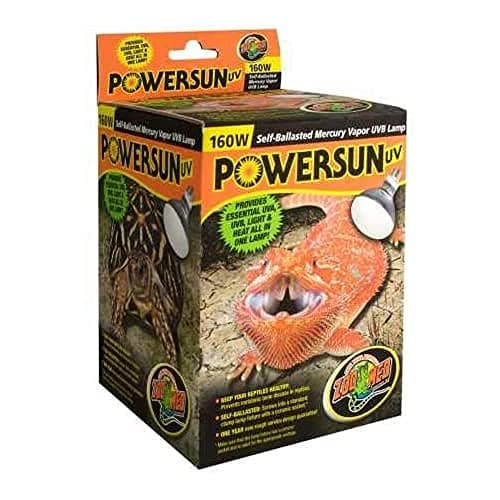
Zoo Med PowerSun UV 160W Mercury Vapor Bulb
8.4 / 10
- Combined UVB, UVA, visible light, and basking heat in one bulb
- Self-ballasted — runs on a standard fixture without a separate ballast
- 160W output for large enclosures with room for a real shaded retreat
- Useful when separate UVB and basking lamps are impractical
$79.98
Exo Terra
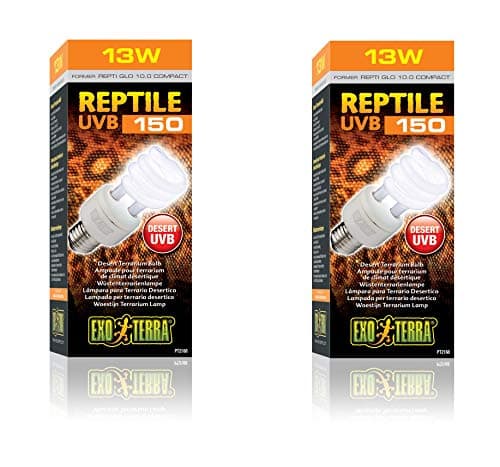
Exo Terra UVB150 Desert Reptile Terrarium Lamp 13W (2-pack)
7.6 / 10
- Compact fluorescent UVB — fits standard E26 ceramic socket
- Desert-class output for small basking enclosures
- Two-pack lowers per-bulb cost on annual replacement
- Useful where a linear T5 HO fixture genuinely will not fit
$40.05
The Short Answer
For a desert species, the synthesis pick is an Arcadia ProT5 12% Desert (D3+) lamp paired with a reflector-equipped fixture. Published UVI-vs-distance data and the LafeberVet UV-Tool reference both support strong T5 HO output for high-UV baskers. For most mainstream pet reptiles, the Zoo Med ReptiSun 10.0 T5 HO is the easier-to-source default. Forest and chameleon-style species do better on 6% T5 HO output. Compact and T8 bulbs only make sense for very small enclosures or budget setups. Mercury vapor bulbs remain useful for large basking enclosures where one all-in-one bulb can deliver UVB and heat together.
Every product on this list has been scored against the PetPal Gear Score, a weighted composite of expert consensus, observed effectiveness, animal safety, long-term durability, and value. Review method: Editorial synthesis of veterinary references (Merck Veterinary Manual, VCA Animal Hospitals), peer-reviewed UV studies (Wageningen University & Research, Journal of Zoo and Aquarium Research), and manufacturer-technical documentation (Arcadia Reptile, Zoo Med Laboratories) — no first-hand product testing.. Synthesized from 9+ expert sources.
For most pet reptile keepers, the smartest first decision is not "5.0 or 10.0?" — it is whether the bulb format and output class match the species's natural sunlight-use pattern. The Merck Veterinary Manual's Important Husbandry Requirements for Selected Reptiles table, the LafeberVet UVB technical PDF (Baines, 2024), and the Journal of Zoo and Aquarium Research paper "How much UVB does my reptile need? The UV-Tool" (Baines et al., 2016) all converge on the same point: package labels like "5.0," "10.0," "6%," and "12%" do not tell the keeper the UVI the reptile actually receives at basking height. Distance, fixture quality, reflector design, mesh, and bulb age all change that number.
The picks below are editorial synthesis. PetPalHQ does not run a testing lab — every product on this page was selected by reviewing manufacturer-technical documentation from Arcadia Reptile and Zoo Med Laboratories, peer-reviewed UV studies from Wageningen University & Research, the Journal of Zoo and Aquarium Research UV-Tool paper, and veterinary references from the Merck Veterinary Manual and VCA Animal Hospitals. Where expert sources disagreed (most commonly on whether mercury vapor bulbs should be a beginner default), the editorial framing follows the LafeberVet technical PDF: separate the jobs when possible, use all-in-one mercury vapor only where enclosure size and species behavior support it, and verify with a UV meter when the setup is unusually tall, screened, or shallow.
This guide is the buying-side companion to the Reptile UVB Lighting and Basking Guide hub. The hub explains why UVB matters and how species need different setups; this article covers what bulb to buy for the major species categories.
T5 HO vs T8 vs compact vs mercury vapor — what hobbyists actually face
The strongest editorial line in the source set comes from the LafeberVet UVB technical PDF and the Arcadia Reptile lamp documentation: for most commonly kept reptiles, the easiest safe default is a reflector-equipped linear T5 HO UVB lamp paired with a separate basking bulb for daytime heat. The four bulb formats break down like this:
Linear T5 HO is the modern default. The LafeberVet technical PDF treats T5 HO as the most flexible UVB category for common pet reptiles, and Arcadia Reptile's ProT5 documentation publishes specific UVI-vs-distance figures that beat any generic "9 to 15 inches" rule. T5 HO bulbs require a T5 HO fixture; they cannot drop into a T8 or compact socket.
Older T8 linear is lower output and more diffuse than T5 HO. The LafeberVet PDF positions T8 as appropriate for shallow enclosures and lower-UV species, but explicitly notes that T8 is the older format and less flexible for taller enclosures or stronger basking species.
Compact fluorescent UVB creates a small coverage zone with a steep gradient. The LafeberVet technical PDF is direct that compact UVB can deliver a very high UVI right at the bulb while dropping off rapidly even a short distance laterally — useful in genuinely small enclosures, but a poor default for standard 40-gallon and larger setups.
Mercury vapor combines UVB, UVA, visible light, and basking heat in one bulb. The LafeberVet PDF and Arcadia's D3 / D3 EVO documentation treat this as a real option for large enclosures, but the format cannot be dimmed, cannot be placed on a heat thermostat, and runs hotter than a separate UVB-plus-basking system. Independent control of UVB and basking temperature is the trade-off.
A practical taxonomy follows. High-UV baskers (bearded dragons, tortoises, aquatic basking turtles, green iguanas) need desert-class T5 HO output or an appropriately sized mercury vapor bulb. Moderate-UV species (chameleons, leopard geckos with low-level UVB gradients) need forest-class output and a gradient, not blanket coverage. Compact UVB is reserved for small enclosures where a linear lamp will not fit.
Mesh loss, mounting distance, and bulb age — the three things that nullify a "high-output" bulb
Three setup factors can defeat any bulb, regardless of package label. The LafeberVet UVB technical PDF and the Arcadia Reptile lamp documentation are the source set's clearest references on each.
Mesh between the bulb and the animal. Standard reptile-enclosure mesh tops cut UVB output before it reaches the animal. The LafeberVet PDF and Arcadia's lamp documentation both warn that screen tops can block a meaningful fraction of useful UV. A bulb labeled "12%" can deliver substantially less if mounted above a fine mesh top — and the labels do not adjust for that mesh. Either compensate with mesh-aware mounting (lamp closer to the animal than the bare-air calculation would suggest) or verify with a UV meter at the basking position.
Mounting distance. UV intensity falls off rapidly with distance from the lamp face. Arcadia's ProT5 documentation publishes specific UVI-vs-distance numbers, and LafeberVet's technical PDF uses the same principle: a powerful lamp can be safe at a greater distance, while a weaker lamp can become uncomfortably intense if pushed too close. Always measure from the lamp face to the reptile's highest basking position — not to the floor, and not to the bottom of the enclosure.
Bulb age. UVB output drops with use even when the bulb still looks bright. The LafeberVet technical PDF, the VCA Animal Hospitals lighting article, and Arcadia's Lighting Guide are all aligned on this: visible brightness is judged by your eye, but biologically useful UVB is judged by the reptile's skin chemistry, and they do not track each other. A bulb that "still looks fine" can be delivering well below the target UVI months before the human eye notices.
Replacement schedules — Arcadia 12 months, Zoo Med varies, label the install date
The conservative editorial position from the source set: replace UVB bulbs on schedule unless a UV meter shows the lamp is still delivering the species-appropriate target range.
Arcadia Reptile's Lighting Guide treats 12 months as the default replacement interval for the D3 and D3+ T5 HO lines. Zoo Med Laboratories' UVB for Reptiles Lamp Charts PDF (2023) and the ReptiSun T5 HO instructions PDF (2024) cite a similar 12-month interval for the ReptiSun T5 HO line. Mercury vapor bulbs from Zoo Med's PowerSun UV documentation use a comparable interval, but real timing depends on hours of daily use and on observed UVI at the basking position.
For keepers without a UV meter, the LafeberVet technical PDF gives the safe default: label the install date on every UVB bulb, replace on the manufacturer's schedule, and watch for species-level signs of under-exposure (poor appetite, reluctance to bask, slow growth, shedding problems) that may signal a problem before a meter would. The case for a UV meter strengthens when the enclosure is unusually tall or screened, when running multiple enclosures makes calendar-based replacement wasteful, or when the species is sensitive to over- or under-exposure (some chameleons, some aquatic species).
Head-to-Head Comparison
| Feature | Zoo Med ReptiSun 10.0 UVB T5 HO Lamp (24W, 2-pack) | Arcadia LumenIZE ProT5 Reptile Light Fixture Kit (36", 39W, 12% UVB Desert) | Arcadia D3 UVB Lamp 39W Forest (Replacement T5 Tube) | Zoo Med PowerSun UV 160W Mercury Vapor Bulb | Exo Terra UVB150 Desert Reptile Terrarium Lamp 13W (2-pack) |
|---|---|---|---|---|---|
| Bulb format | T5 HO linear | T5 HO linear (in kit) | T5 HO linear | Mercury vapor (E26) | Compact fluorescent (E26) |
| UVB output class | Desert (10.0) | Desert (12% / D3+) | Forest (6% / D3) | Combined UVB+UVA+heat | Desert (UVB150) |
| Provides basking heat | No | No | No | Yes | Minimal |
| Manufacturer replacement interval | 12 months | 12 months | 12 months | 12 months | 12 months |
| Check price | Amazon | Amazon | Amazon | Amazon | Amazon |
$53.96
- T5 HO format — strong UVB output and broad coverage
- Desert-class 10.0 labeling for high-UV baskers
- Two-pack lowers per-bulb replacement cost
- Best US retail availability of any premium T5 HO UVB lamp
The Zoo Med ReptiSun 10.0 T5 HO is the synthesis pick for keepers who want a strong T5 HO desert-class lamp with easy US retail availability. Zoo Med's UVB for Reptiles Lamp Charts PDF (2023) publishes distance ranges for the ReptiSun T5 HO line. The LafeberVet UVB technical PDF (Baines, 2024) treats reflector-equipped T5 HO as the most flexible UVB category for common pet reptiles.
The 10.0 label corresponds to Zoo Med's desert-output tier. That is appropriate for bearded dragons, tortoises, and other high-UV basking species when paired with a reflector-equipped fixture and the right mounting distance. The two-pack lowers per-bulb cost on the once-a-year replacement cycle Zoo Med's instruction PDF treats as the conservative default.
What the spec sheet doesn't tell you: package labels like "10.0" do not tell you the UVI the reptile actually receives at basking height. Distance, fixture quality, reflector design, and mesh all change the number the reptile's skin sees. Use Zoo Med's published distance chart for the lamp you actually own. Verify with a UV meter when the enclosure is unusually tall, screened, or shallow.
One more note: the bulb fits a T5 HO fixture, not a T8 or compact socket. Confirm fixture compatibility before buying. The hub guide on reptile UVB lighting and basking covers fixture-vs-bulb selection in more detail.
What We Love
- Strong T5 HO UVB output appropriate for high-UV species
- Best US retail availability among premium T5 HO lamps
- Published UVI-vs-distance distance charts from Zoo Med
- Two-pack lowers per-bulb cost on annual replacement
What Could Be Better
- Requires a T5 HO fixture, not interchangeable with T8 or compact
- Package label '10.0' does not indicate delivered UVI
- Replace on schedule — output drops before the bulb looks dim
The Verdict
If your enclosure already has a T5 HO fixture and your species needs desert-class UVB, this is the easiest synthesis pick. The hub-and-spoke logic is consistent: fixture and bulb are different decisions, but the ReptiSun 10.0 T5 HO is the default replacement bulb for most US keepers.
$159.99
- T5 HO fixture-and-bulb kit with 12% UVB Desert lamp included
- Arcadia publishes UVI-vs-distance figures for the ProT5 system
- 12-month manufacturer replacement schedule for the included bulb
- Reflector-equipped — the spec the LafeberVet PDF treats as non-optional
The Arcadia ProT5 12% Desert is the editorial synthesis pick for desert-species keepers who want the strongest published UVI delivery for bearded dragons, Mediterranean tortoises, and other high-UV baskers. The Arcadia Reptile Lighting Guide and the Arcadia Dragon lamp documentation publish specific UVI-vs-distance numbers for the ProT5 system. The LafeberVet UVB technical PDF (Baines, 2024) treats this kind of manufacturer transparency as the spec floor for safe high-UV setups.
The pick listed here is the LumenIZE ProT5 fixture kit — bulb plus reflector-equipped fixture. The bare 39W ProT5 12% Desert lamp is not consistently available as a standalone listing on US Amazon. For keepers who already own an Arcadia ProT5 fixture, the bare D3+ replacement tube is the lower-cost path. For keepers building a new high-UV setup from scratch, the kit is the lower-friction option. Either way, the same bulb chemistry and the same Arcadia distance charts apply.
What the spec sheet doesn't tell you: Arcadia's published UVI figures assume a specific fixture-and-reflector combination at a specific mounting distance through air, not through dense screen mesh. The LafeberVet technical PDF and Arcadia's own lamp documentation both warn that screen tops cut UVB output meaningfully. A "12%" lamp can deliver substantially less if mounted above a fine mesh top. Conservative keepers either compensate with mesh-aware mounting or verify with a UV meter at the basking position.
Replacement schedule matters here. Arcadia's Lighting Guide treats 12 months as the conservative replacement interval for the D3+ T5 HO line. Visible brightness is not a replacement signal. UVB output drops well before the lamp looks dim to the human eye. Arcadia's documentation, the LafeberVet PDF, and the VCA Animal Hospitals lighting article all converge on that point.
What We Love
- Highest published UVI delivery for desert species in the source set
- Reflector-equipped fixture concentrates UV downward toward basking zone
- Arcadia publishes specific distance-vs-UVI numbers for the ProT5 system
- 12-month manufacturer-recommended replacement schedule
What Could Be Better
- Higher upfront cost than a bare replacement bulb
- Bare D3+ 12% Desert tube is harder to source on US Amazon
- Distance assumptions break under dense screen mesh
The Verdict
The synthesis pick for desert-species keepers building a new high-UV setup. Pair with a separate halogen basking lamp for daytime heat — the LafeberVet technical PDF and Arcadia's halogen lamp documentation both note that this lamp delivers UV but not meaningful basking heat.
$64.95
- Bare T5 replacement tube — 39W forest-class output (6% UVB)
- For chameleons, leopard geckos with low-level UVB gradients, and other moderate-UV species
- Pairs with any compatible Arcadia or T5 HO fixture
- Same Arcadia 12-month replacement schedule applies
The Arcadia D3 39W Forest is the synthesis pick for moderate-UV species — chameleons, leopard geckos that benefit from low-level UVB gradients, and other forest-canopy reptiles. The Arcadia Reptile Lighting Guide cites a basking UVI of roughly 2 to 3 fading to 0 at the cool end as the appropriate target for leopard geckos. The Wageningen University & Research 2020 paper confirmed that even crepuscular species can synthesize vitamin D3 from UVB exposure.
The forest-class 6% labeling is meaningful here. The Journal of Zoo and Aquarium Research UV-Tool paper (Baines et al., 2016) makes the case that natural UV exposure tracks microhabitat, not animal size. A panther chameleon perched in dappled forest canopy is not getting the same UV dose as a bearded dragon basking in open desert. A 12% desert lamp is the wrong default for forest species and lower-UV crepuscular species.
What the spec sheet doesn't tell you: bare T5 replacement tubes only deliver published UVI when mounted in a reflector-equipped fixture. The Arcadia Lighting Guide and the LafeberVet UVB technical PDF are aligned on this. A strong tube in a poor-quality fixture without a reflector throws away a meaningful fraction of usable UVB before it reaches the animal. Confirm fixture compatibility before buying, and prefer reflector-equipped fixtures for any T5 HO replacement.
A second nuance: Arcadia's lamp documentation distinguishes between the older D3 line and the newer D3+ line. The product listed here is the legacy D3 39W Forest tube. For new builds where a D3+ tube is available, prefer the newer chemistry. For existing D3 fixtures, the legacy tube is the right replacement.
What We Love
- Forest-class 6% output appropriate for moderate-UV species
- Bare replacement tube — lower cost than a kit
- Same Arcadia 12-month replacement schedule
- Compatible with any T5 HO fixture
What Could Be Better
- Requires a reflector-equipped fixture for published UVI delivery
- Legacy D3 chemistry — Arcadia's newer D3+ line is preferred where available
- Forest output is wrong for desert species; match output to microhabitat
The Verdict
The right replacement bulb for chameleon enclosures, leopard gecko low-level UVB setups, and other forest-canopy species. Match output to microhabitat and basking behavior, not to animal size.
$79.98
- Combined UVB, UVA, visible light, and basking heat in one bulb
- Self-ballasted — runs on a standard fixture without a separate ballast
- 160W output for large enclosures with room for a real shaded retreat
- Useful when separate UVB and basking lamps are impractical
Mercury vapor bulbs occupy a specific niche in the LafeberVet UVB technical PDF (Baines, 2024) and the Arcadia Reptile D3 / D3 EVO documentation: large enclosures for basking species where one all-in-one bulb can simplify the setup. The Zoo Med PowerSun UV 160W is the most commonly available US mercury vapor option. Zoo Med's product documentation positions it for adult bearded dragons, large monitors, and tortoise enclosures with adequate volume.
The trade-off is control. Mercury vapor bulbs cannot be dimmed, cannot be placed on a heat thermostat, and run hotter than a separate UVB-plus-basking-bulb system. The LafeberVet technical PDF treats this as the practical limit of the format. The same property that makes mercury vapor an "all-in-one" option also limits the keeper's ability to tune basking temperature independently of UV output. For enclosures small enough that this heat output is excessive, a separate T5 HO UVB lamp plus a halogen basking bulb is the safer system.
What the spec sheet doesn't tell you: hobbyist forums and Arcadia's own D3 / D3 EVO documentation both note that mercury vapor bulbs have a published UVB output range. Unit-to-unit variation across the format has been a recurring concern in published research. A UV meter at the basking position becomes more valuable, not less, with a mercury vapor setup. It confirms the bulb is delivering the target UVI and catches the bulb's output drop near end of life.
Replacement timing differs from T5 HO. Zoo Med's documentation cites 12 months as a typical replacement interval for the PowerSun UV. Real timing depends on hours of daily use and on observed UVI at the basking position. For keepers running large enclosures, the case for a UV meter is strongest with mercury vapor.
What We Love
- Combined UVB, UVA, visible light, and heat from one bulb
- Simpler than running separate UVB and basking lamps
- Useful for large enclosures where two lamps are impractical
- Self-ballasted — works in a standard ceramic fixture
What Could Be Better
- Cannot be dimmed or thermostat-controlled
- Runs hot — not appropriate for small enclosures
- Unit-to-unit UVB output variation is a known concern
- UV meter strongly recommended to confirm output
The Verdict
Worth it for large bearded dragon, monitor, or tortoise enclosures where one all-in-one bulb beats running two separate fixtures. Skip for small enclosures, juveniles, or any setup where independent heat and UVB control matters.
$40.05
- Compact fluorescent UVB — fits standard E26 ceramic socket
- Desert-class output for small basking enclosures
- Two-pack lowers per-bulb cost on annual replacement
- Useful where a linear T5 HO fixture genuinely will not fit
Compact UVB bulbs occupy a narrow niche in the source set. The LafeberVet UVB technical PDF (Baines, 2024) is direct that compact UVB creates a small coverage zone with a steep gradient. The UVI right at the bulb can be very high, while the UVI even a short distance laterally drops off rapidly. For most standard 40-gallon and larger enclosures, a linear T5 HO lamp is the safer and easier default.
Where compact UVB earns inclusion: genuinely small enclosures (juvenile setups, small gecko enclosures, hatchling tubs, quarantine setups) where a linear lamp will not fit physically. Also temporary or transitional setups where a standard E26 ceramic socket is the only available mounting option. The Exo Terra UVB150 Desert is the most commonly available US compact desert-output option. Exo Terra's product documentation positions it explicitly for small terrariums.
What the spec sheet doesn't tell you: the steep gradient is the central design constraint. LafeberVet's technical PDF and the Arcadia Reptile lamp documentation both warn that a reptile basking too close to a compact UVB bulb can receive a much higher UVI than the package label suggests. The same animal even a few inches away can receive much less. Place the bulb so the closest the animal can get to it is at the manufacturer-recommended distance. Verify with a UV meter for sensitive species.
The Repti-Glo / UVB100 / UVB150 / UVB200 line has had some labeling history changes. The pick here is the current UVB150 Desert configuration. For forest-class compact UVB on the same line, the UVB100 (lower output) is the equivalent moderate option.
What We Love
- Fits standard E26 ceramic sockets — works in any small dome fixture
- Useful where a linear T5 HO lamp will not fit
- Two-pack lowers per-bulb replacement cost
- Desert-class output for small basking enclosures
What Could Be Better
- Steep gradient — UVI varies sharply with distance
- Narrow coverage zone — wrong default for medium and large enclosures
- Compact format is the LafeberVet PDF's least-recommended UVB category
- Replace on Exo Terra's stated 12-month schedule
The Verdict
Reserve compact UVB for true small-space use cases, not as the default for standard pet reptile enclosures. For any 40-gallon or larger setup, a linear T5 HO lamp with a reflector-equipped fixture is the better synthesis pick.
How We Score
Formula
PetPal Gear Score = (Expert Consensus × 0.35) + (Published UVI Delivery × 0.25) + (Match to Species Need × 0.20) + (Replacement Value × 0.20)
Score Factors
- Expert Consensus · 35%
- Synthesized from veterinary references (Merck Veterinary Manual, VCA Animal Hospitals), peer-reviewed UV studies (Wageningen University & Research, Journal of Zoo and Aquarium Research), and manufacturer-technical documentation (Arcadia Reptile, Zoo Med Laboratories). The PetPal Gear Score is a composite of expert opinion — PetPalHQ does not run a testing lab.
- Published UVI Delivery · 25%
- Whether the manufacturer publishes UVI-vs-distance figures for the lamp, and whether those figures match the species-appropriate target ranges in the LafeberVet UV-Tool reference and the Journal of Zoo and Aquarium Research UV-Tool paper.
- Match to Species Need · 20%
- How well the lamp output class (desert vs. forest vs. all-in-one vs. compact) matches the microhabitat-and-basking-behavior framework in the source set.
- Replacement Value · 20%
- Per-bulb cost across the manufacturer-recommended replacement interval, accounting for fixture compatibility and pack-size economics.
| Rank | Product | Score |
|---|---|---|
| #1 | Arcadia Reptile Arcadia LumenIZE ProT5 Reptile Light Fixture Kit (36", 39W, 12% UVB Desert) | 9.4 |
| #2 | Zoo Med Zoo Med ReptiSun 10.0 UVB T5 HO Lamp (24W, 2-pack) | 9.2 |
| #3 | Arcadia Reptile Arcadia D3 UVB Lamp 39W Forest (Replacement T5 Tube) | 9.0 |
| #4 | Zoo Med Zoo Med PowerSun UV 160W Mercury Vapor Bulb | 8.4 |
| #5 | Exo Terra Exo Terra UVB150 Desert Reptile Terrarium Lamp 13W (2-pack) | 7.6 |
When NOT to Buy
Skip a strong UVB bulb entirely if your species is classed as no-special-lighting-requirement by the Merck Veterinary Manual. Corn snakes and ball pythons are the most common examples, though both still benefit from broad-spectrum lighting per the same source.
Skip a compact UVB bulb if your enclosure is 40 gallons or larger. The steep gradient becomes a liability, not a feature, in spaces where a linear T5 HO lamp will fit.
Skip a mercury vapor bulb if your enclosure is small, your species is a juvenile, or you need independent control of UVB and basking heat. The format runs hot and cannot be dimmed.
Skip the Arcadia ProT5 fixture kit if you already own a compatible T5 HO fixture. Buy the bare replacement bulb instead.
Frequently Asked Questions
- Can I just buy a "10.0" UVB bulb and call it done?
- Not safely. The LafeberVet UVB technical PDF (Baines, 2024) and Arcadia Reptile's ProT5 documentation are aligned: package labels like 5.0, 10.0, 6%, and 12% do not tell the keeper the UVI the reptile actually receives at basking height. Distance, fixture quality, reflector design, mesh, and bulb age all change the number. The Journal of Zoo and Aquarium Research UV-Tool paper (Baines et al., 2016) treats microhabitat and basking behavior as the right starting frame. Match the bulb output class to the species's natural sunlight-use pattern. Then verify with a UV meter when the setup is hard to predict.
- Do I need a separate basking bulb if I already have a strong UVB bulb?
- Yes, with one exception. The LafeberVet technical PDF and the Arcadia halogen lamp documentation both note that linear T5 HO UVB lamps deliver UV but not meaningful basking heat. For T5 HO setups, pair with a separate halogen or incandescent basking bulb sized to the species and enclosure. The exception is mercury vapor. Bulbs like the Zoo Med PowerSun UV combine UVB, UVA, visible light, and heat in one unit. That is the format's main advantage in large enclosures.
- How often do I really need to replace a UVB bulb?
- Arcadia Reptile's Lighting Guide and Zoo Med Laboratories' instruction PDFs both treat 12 months as the conservative default for premium T5 HO and mercury vapor lamps. The LafeberVet UVB technical PDF and the VCA Animal Hospitals lighting article both note that UVB output falls before the bulb looks dim. Visible brightness is not a replacement signal. For keepers without a UV meter, label the install date and replace on the manufacturer's schedule. For keepers with a meter, replace when delivered UVI at the basking position drops below the species-appropriate target.
- Can a compact UVB bulb work for a bearded dragon?
- It is not the right default. The LafeberVet technical PDF is direct that compact UVB creates a small coverage zone with a steep gradient. It is useful in small enclosures, but a poor match for a bearded dragon enclosure where a broad basking platform and a real shaded retreat both matter. For bearded dragons, the synthesis pick is a reflector-equipped linear T5 HO desert-class lamp — the Arcadia ProT5 12% Desert or the Zoo Med ReptiSun 10.0 T5 HO — paired with a separate halogen basking bulb.
- Do leopard geckos really need UVB?
- They should not be lit like bearded dragons, but the evidence supports low-level UVB use. The Wageningen University & Research 2020 paper confirmed that leopard geckos synthesize vitamin D3 from UVB exposure. Arcadia Reptile's Lighting Guide cites a basking UVI of roughly 2 to 3 fading to 0 at the cool end as the appropriate gradient. Modern husbandry increasingly uses low-level UVB gradients for leopard geckos. A forest-class 6% T5 HO tube is a closer match than a desert-class 10.0, and none of the lamps on this page is that. The cool end of the enclosure should still drop to zero UVI for a real retreat.
Bottom Line
Get the Zoo Med ReptiSun 10.0 T5 HO if you have a T5 HO fixture and your species needs desert-class UVB. It is the easiest-to-source mainstream synthesis pick for high-UV baskers.
Get the Arcadia ProT5 12% Desert kit if you are building a new high-UV setup from scratch and want the fixture and bulb together. Arcadia's published UVI-vs-distance figures are the strongest in the source set.
Buy none of these if you keep chameleons, leopard geckos on a low-level UVB gradient, or other moderate-UV forest-canopy species. Every lamp above is desert-class or all-in-one output, and a 12% desert lamp is the wrong default for a shade-dwelling reptile — you want a forest-class 6% T5 HO tube instead. Match output to microhabitat, not to animal size.
Get the Zoo Med PowerSun UV 160W if you keep a large basking species in a large enclosure where one all-in-one bulb beats running two separate fixtures. Skip for small enclosures and juveniles.
Get the Exo Terra UVB150 Desert only for genuinely small enclosures where a linear T5 HO lamp will not fit. The compact format is the source set's least-recommended UVB category for standard pet reptile setups.
Buying UVB as part of a bigger build? Our bioactive reptile terrarium walkthrough shows where a T5 HO 10.0 fixture fits in a full 4x2x2 setup, and our aquatic turtle tank setup sequence pairs a compact ReptiSun 10.0 with a heat lamp over the basking dock.
Sources & Methodology
Methodology
PetPal Gear Score = (Expert Consensus × 0.35) + (Published UVI Delivery × 0.25) + (Match to Species Need × 0.20) + (Replacement Value × 0.20)
Expert review sources
- Merck Veterinary Manual — Management and Husbandry of Reptiles (revised Jul 2025)
- Merck Veterinary Manual — Important Husbandry Requirements for Selected Reptiles
- LafeberVet — UVB lighting for reptiles technical PDF (Baines, 2024)
- LafeberVet — UVB Lighting for Reptiles Client Education Handout (August 20, 2024)
- VCA Animal Hospitals — Lighting Requirements for Reptiles
- Journal of Zoo and Aquarium Research — How much UVB does my reptile need? The UV-Tool (Baines et al., 31 Jan 2016)
- Wageningen University & Research — Effects of vitamin D3 supplementation and UVb exposure on the growth and plasma concentration of vitamin D3 metabolites in juvenile bearded dragons (2010)
- Wageningen University & Research — The nocturnal leopard gecko uses UVb radiation for vitamin D3 synthesis (2020)
- Journals of the University of Chicago — Panther chameleons behaviorally regulate optimal exposure to UV depending on dietary vitamin D3 status (2009)
Community sources
- Arcadia Reptile — Lighting Guide and ProT5 documentation
- Arcadia Reptile — D3 and D3+ Lamp documentation
- Arcadia Reptile — D3 Basking Lamp / D3 EVO Basking Lamp documentation
- Zoo Med Laboratories — UVB for Reptiles Lamp Charts PDF (2023)
- Zoo Med Laboratories — ReptiSun T5 HO instructions PDF (2024)
- Zoo Med Laboratories — PowerSun UV product documentation
- Exo Terra — Repti-Glo / UVB Series product documentation
Prices and specs verified May 4, 2026.
About the author
Nick Miles is the chief editor of PetPalHQ. The picks above are editorial synthesis of expert consensus, peer-reviewed UV research, and manufacturer-technical documentation — PetPalHQ does not run a testing lab. The PetPal Gear Score is a composite of expert opinion, not a measurement. Sources are cited by name throughout.
PetPalHQ is a participant in the Amazon Services LLC Associates Program. We may earn commissions from qualifying purchases — at no extra cost to you.
More Guides
Reptile
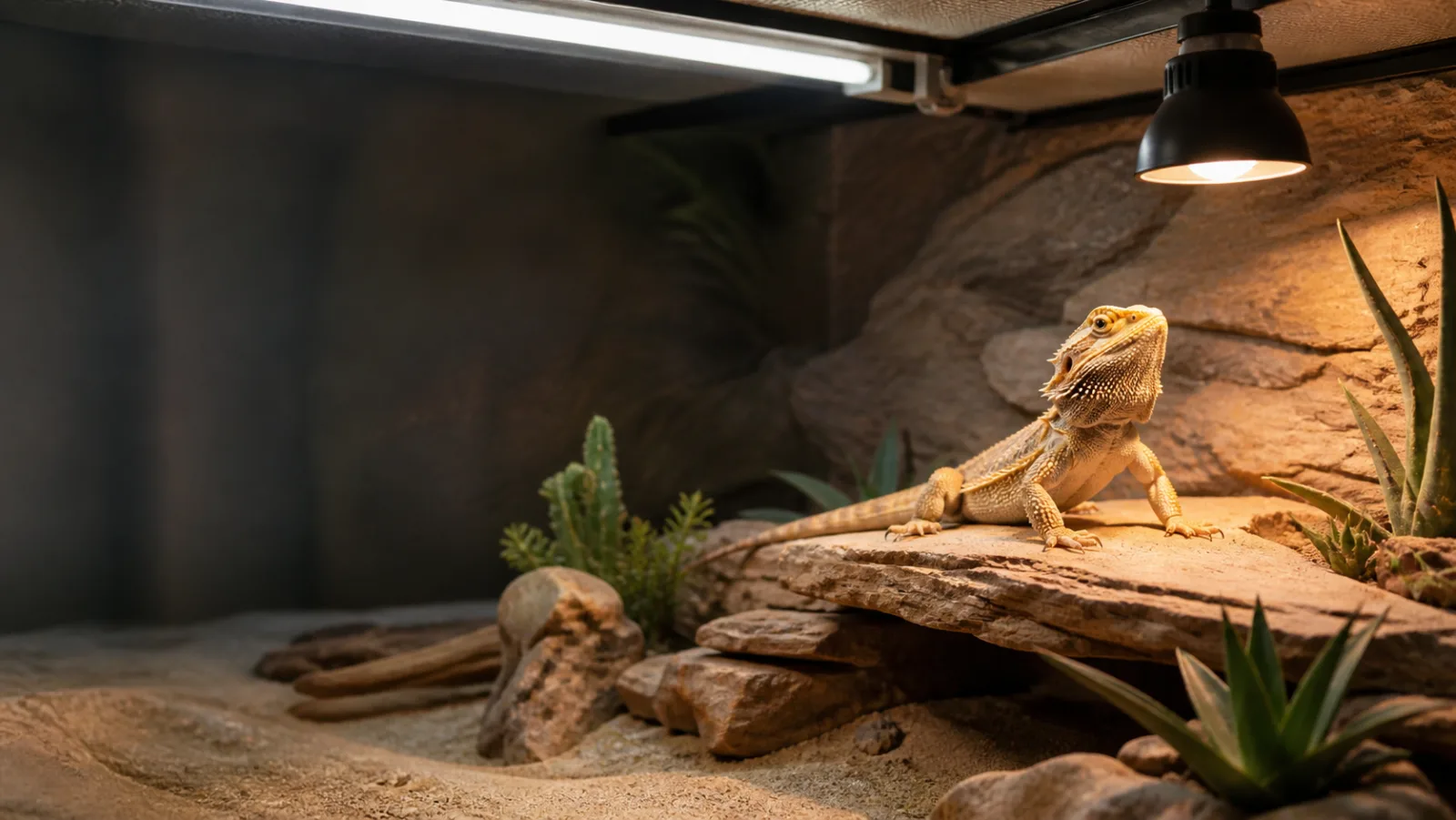
Reptile UVB Lighting and Basking (2026 Guide): How to Choose Safe Lighting for Reptiles
Reptile
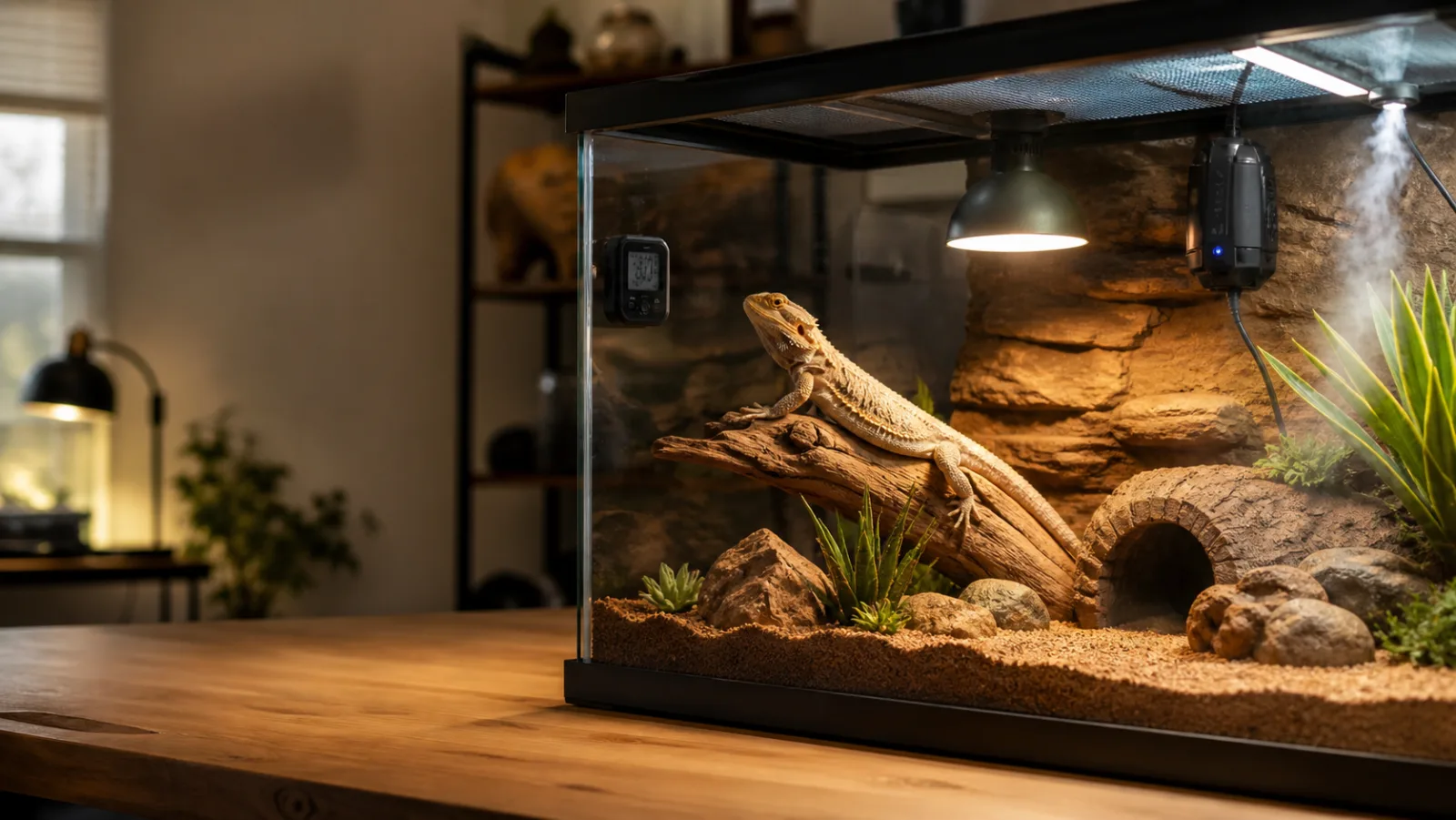
Reptile Habitat Setup and Environmental Control: 2026 Guide for Heat, Humidity, and Safety
Reptile
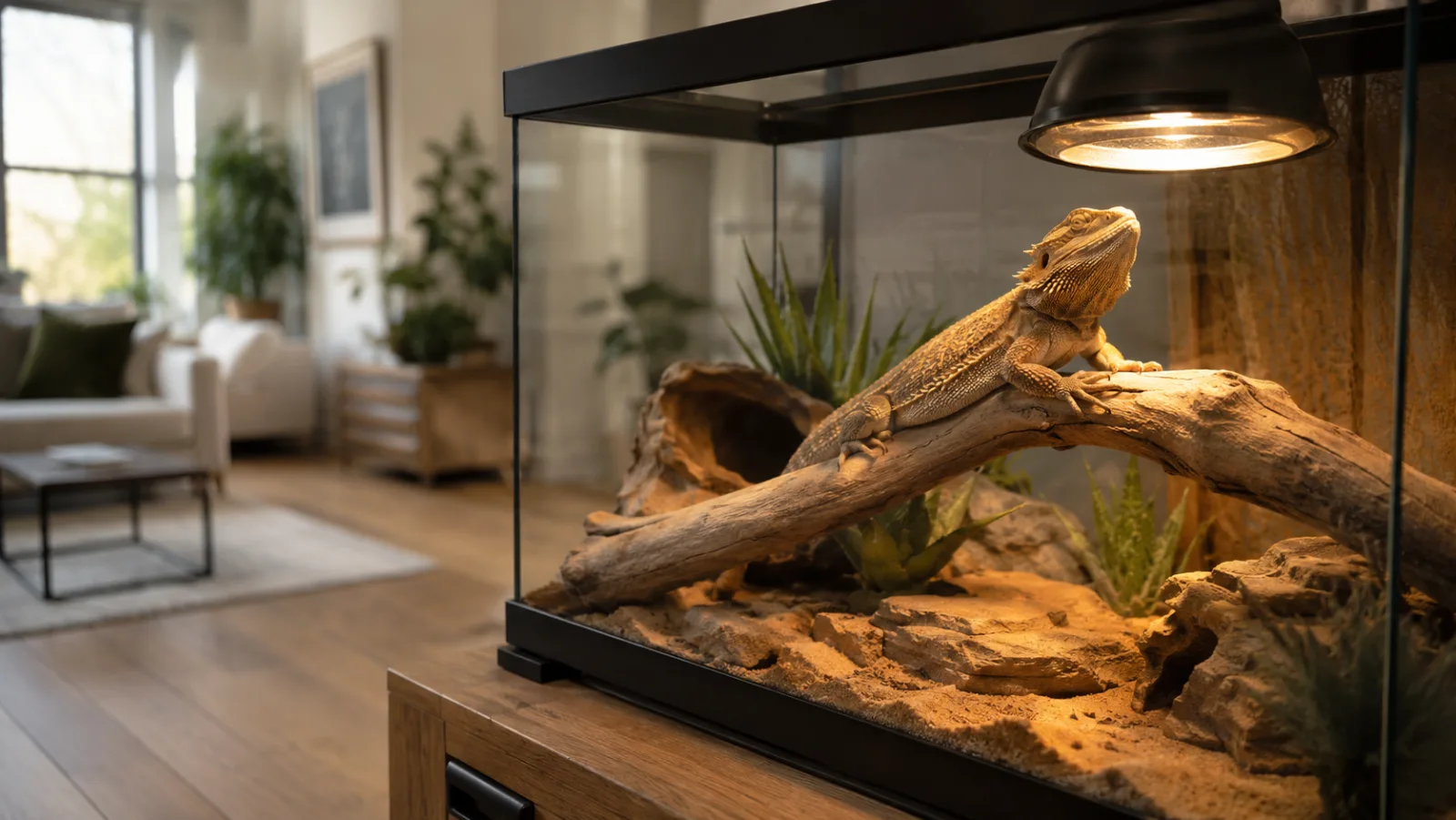
Best Reptile Heat Lamps & Basking Fixtures (2026)
Reptile
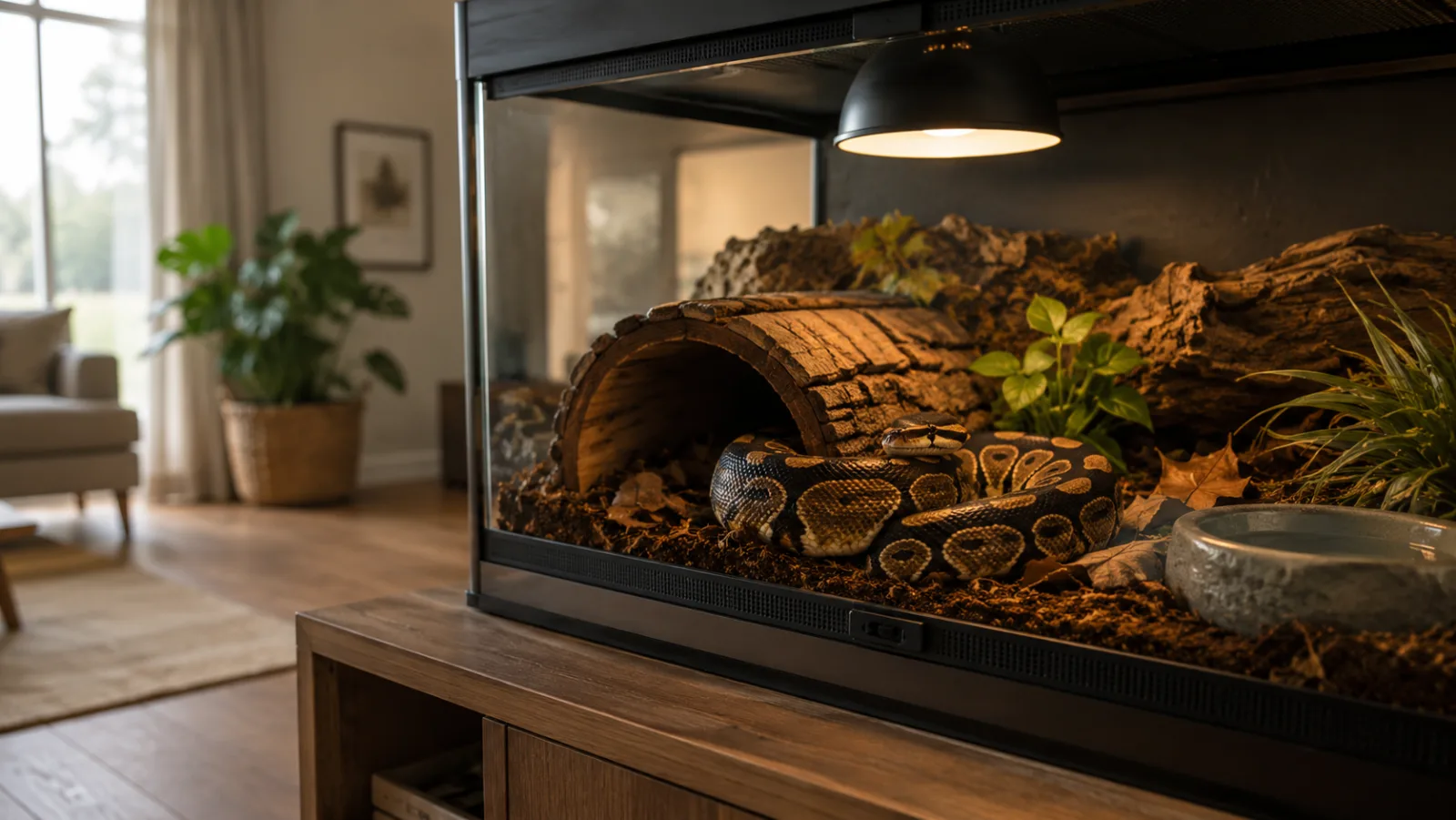
Best Ball Python Starter Kits (2026)
Reptile
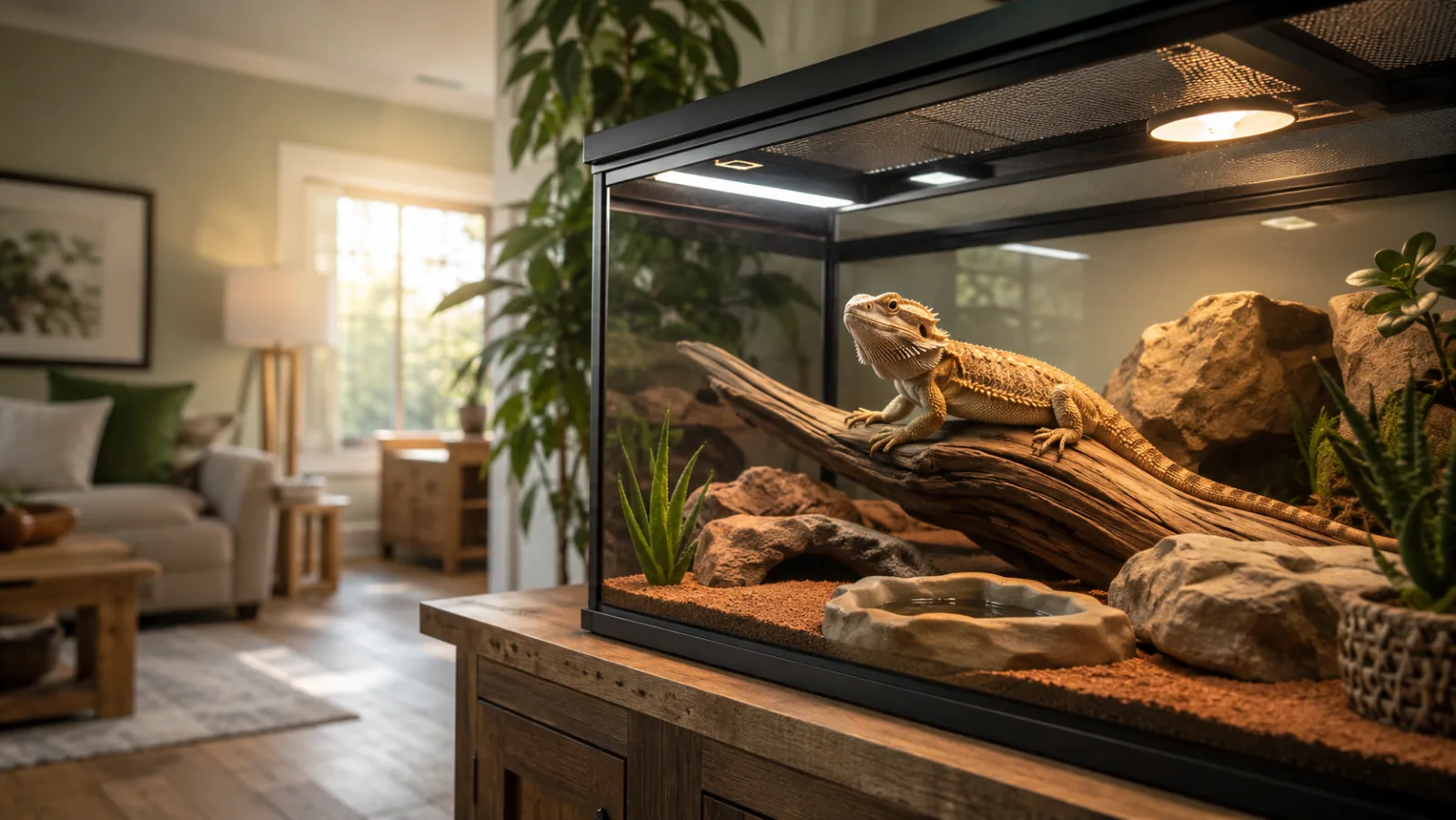
Best Bearded Dragon Starter Kits (2026)
Reptile
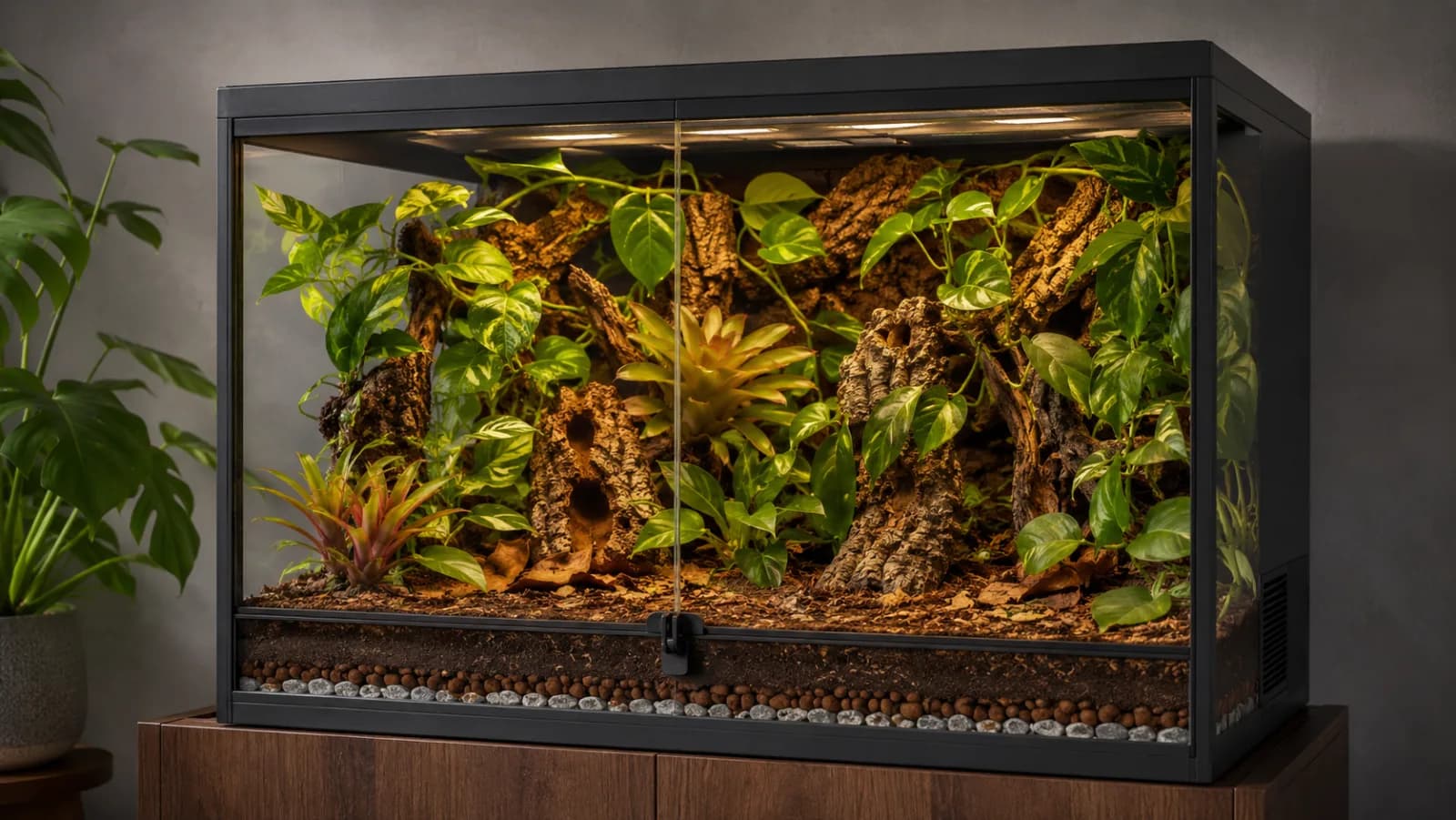
Best PVC Reptile Enclosures for Bioactive Setups (2026)
Reptile
Best Reptile Radiant Heat Panels and Overhead Heat for 2026
Reptile