Reptile
Best Reptile Thermostats for Heat Mats, CHEs & Heating Elements (2026)
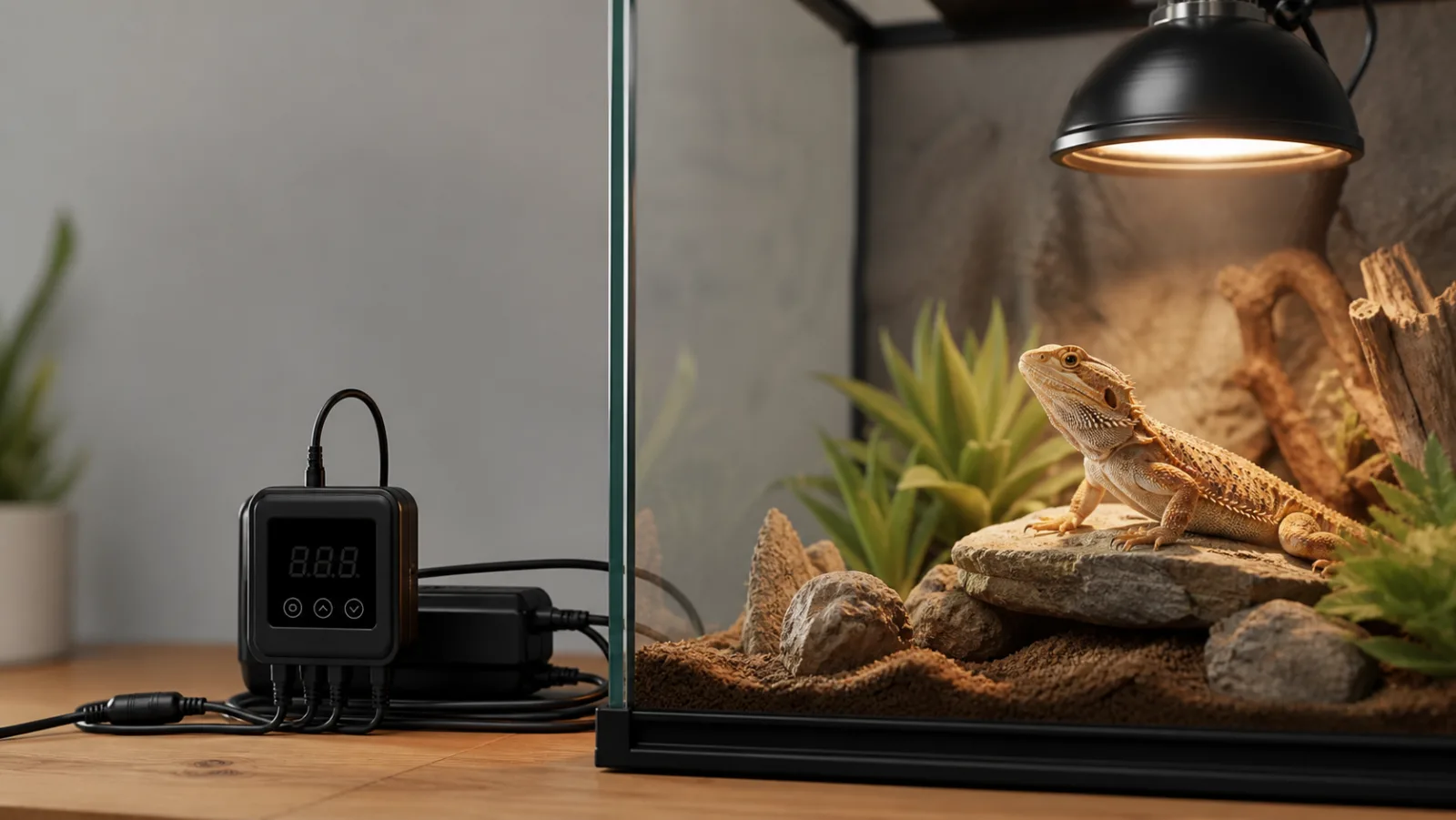
The Exo Terra Dimming and Pulse Proportional Thermostat is the synthesis pick for reptile-specific proportional control; the Inkbird ITC-308 anchors the budget on/off tier. Editorial recommendations grounded in the Merck Veterinary Manual, LafeberVet, BGSU Herpetarium guidance, and reptile-keeper consensus — PetPalHQ does not run a testing lab.
By Nick Miles · Updated August 7, 2026 · 12 min read
PetPalHQ is reader-supported. We may earn a commission from qualifying Amazon purchases at no extra cost to you.
Evidence at a Glance
Exo Terra Dimming and Pulse Proportional Thermostat
Reptile-specific dimming + pulse-proportional thermostat — handles both basking bulbs (dimming) and ceramic heat emitters / heat mats (pulse) without on/off temperature swing.
Sources: Exo Terra manufacturer documentation, LafeberVet thermostat guidance, r/reptiles community consensus
Verified May 4, 2026
Inkbird ITC-308
Budget two-stage on/off thermostat with the strongest hobbyist track record for reptile heat mats and CHEs — stand-alone probe, dual outlets, simple to set up.
Sources: Inkbird manufacturer documentation, r/reptiles consensus, r/BeardedDragons hobbyist threads
Verified May 4, 2026
Spyder Robotics Herpstat (1 / 2 / 4)
Premium proportional-PID thermostat sold direct by Spyder Robotics — the line reptile keepers escalate to when they want the most precise, most-trusted controller for high-value collections.
Sources: Spyder Robotics manufacturer documentation, r/reptiles community consensus, Hobbyist forum recommendations
Verified May 4, 2026
Our Picks
Exo Terra
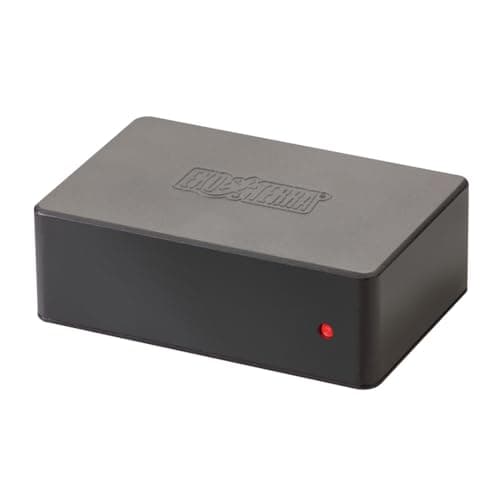
Exo Terra Dimming and Pulse Proportional Thermostat
9.1 / 10
- Two control modes — dimming for basking bulbs, pulse-proportional for ceramic heat emitters and heat mats
- Reptile-specific design with included probe
- Avoids the visible bulb flicker that on/off thermostats cause
- Compatible with both day and night heating elements
$82.99
Inkbird
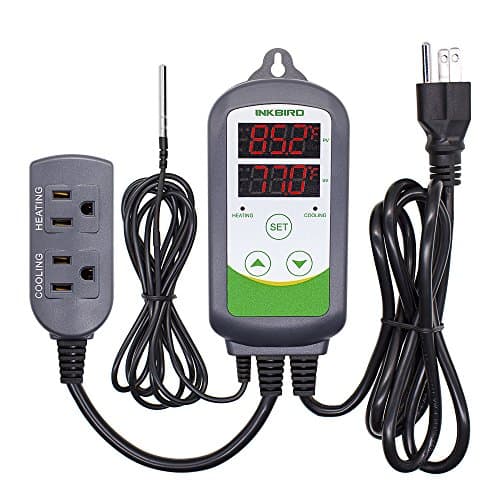
Inkbird ITC-308 Digital Temperature Controller
8.9 / 10
- Two-stage on/off control with separate heating and cooling outlets
- Dedicated probe with reasonable lead length
- 1100W heating capacity at 110V
- Simple alarm settings for high and low limits
$28.80
Inkbird
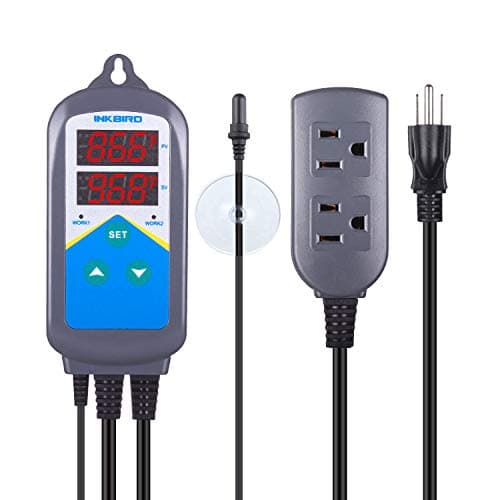
Inkbird Day Night Temperature Controller (ITC-310T-B style)
8.4 / 10
- Day and night setpoints with timed switching
- Listed by Inkbird specifically for reptile, hatching, and brewing applications
- On/off control style
- Programmable schedule for routine day-night drops
$34.98
Zoo Med
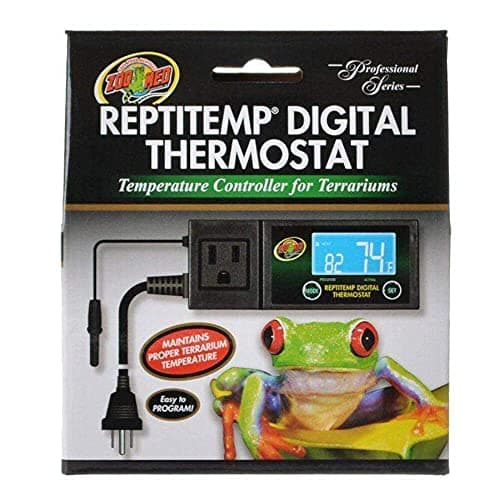
Zoo Med ReptiTemp Digital Thermostat
7.9 / 10
- Reptile-trade brand stocked at most large pet retailers
- Digital display with single setpoint
- On/off control style
- Designed for use with reptile heaters and emitters
$47.69
BN-LINK
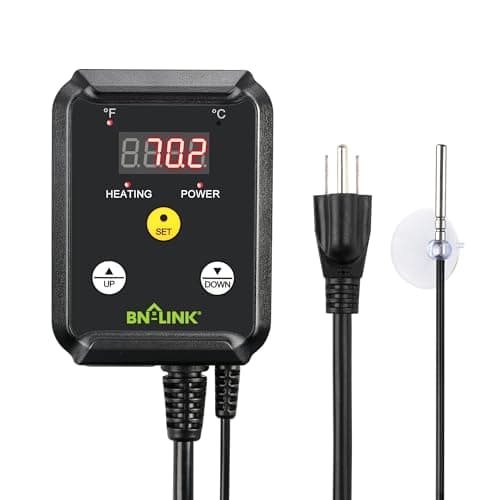
BN-LINK Reptile Thermostat (Heat Mat Controller)
7.6 / 10
- Single-outlet on/off thermostat with in-line probe
- ETL-listed for safety compliance
- 1000W heating capacity
- 40-108°F adjustable range
$18.99
The Short Answer
Match the control type to your heating element. For a heat mat or ceramic heat emitter (CHE) — non-light elements where the goal is keeping the warm side from overshooting — the Inkbird ITC-308 is the budget default that reptile keepers consistently endorse. For a basking bulb or lamp, or a tropical species that needs steadier output without on/off cycling, step up to a pulse-proportional or dimming model. The Exo Terra Dimming and Pulse Proportional Thermostat is the reptile-specific synthesis pick that handles all three heating-element types in one unit. The premium choice in reptile-keeper communities is Spyder Robotics' Herpstat line, which is sold direct and rarely stocked on Amazon. Whichever you choose, the rule from the Merck Veterinary Manual and the RSPCA still applies: a thermostat regulates, but a separate digital thermometer must verify. And a thermostat only controls the enclosure you already have — if you are building a new setup around it, our [PVC bioactive enclosures guide](/guides/best-pvc-reptile-enclosures-bioactive-2026) covers the terrestrial-species tier from $329, with a 48x24x24 deep-substrate option at $499.99 for larger lizards, and our [large arboreal terrariums and paludariums guide](/guides/best-large-arboreal-terrariums-paludariums-2026) covers the climbing-species tier, topped by a $319.99 paludarium with a sealed waterproof base.
Every product on this list has been scored against the PetPal Gear Score, a weighted composite of expert consensus, observed effectiveness, animal safety, long-term durability, and value. Review method: Editorial synthesis of the Merck Veterinary Manual, LafeberVet handouts, NC State College of Veterinary Medicine guidance, Bowling Green State University Herpetarium care references, and RSPCA welfare guidance. Manufacturer documentation reviewed from Spyder Robotics, Exo Terra, Inkbird, BN-LINK, and Zoo Med. Hobbyist consensus drawn from r/reptiles, r/BeardedDragons, and r/ballpython. No first-hand product testing.. Synthesized from 9+ expert sources.
A reptile thermostat is not a comfort feature, and the source set treats it that way. The Merck Veterinary Manual's reptile husbandry chapter states that heat sources should be thermostat-controlled, the LafeberVet reptile husbandry handouts make the same point in patient-education language, and the RSPCA crested gecko care sheet goes the furthest — saying explicitly that all heat sources must be used with a thermostat. The reason is what happens when control fails. The Merck environmental-diseases chapter and VCA Animal Hospitals' snake-problems article both link unguarded, uncontrolled heat sources to thermal burns, and snakes in particular will rest against an excessively hot object because they are seeking warmth, not because the heat is safe. Public-safety publications add the second risk — a hot, uncontrolled bulb is a fire hazard, not just an animal-welfare hazard.
This guide is editorial synthesis. PetPalHQ does not run a testing lab — the picks below were chosen by reading manufacturer documentation, the veterinary and welfare references that anchor reptile husbandry consensus, and reptile-keeper community discussions on r/reptiles, r/BeardedDragons, and r/ballpython. Where the strongest community recommendation does not match what is reliably stocked on Amazon — most notably for the Spyder Robotics Herpstat line, which keepers in the source communities consider the premium proportional pick but which is sold direct rather than through Amazon's main reptile category — the guide says so plainly.
This article is the buying-side companion to the Reptile Habitat Setup and Environmental Control hub. The hub explains the underlying husbandry — why a thermal gradient matters, why thermostats and thermometers are separate jobs, why ventilation matters as much as humidity. This article covers what to actually buy.
Head-to-Head Comparison
| Feature | Exo Terra Dimming and Pulse Proportional Thermostat | Inkbird ITC-308 Digital Temperature Controller | Inkbird Day Night Temperature Controller (ITC-310T-B style) | Zoo Med ReptiTemp Digital Thermostat | BN-LINK Reptile Thermostat (Heat Mat Controller) |
|---|---|---|---|---|---|
| Control type | Dimming + pulse-proportional | On/off two-stage | On/off day/night programmable | On/off single setpoint | On/off single setpoint |
| Wattage rating | Up to 600W (mode-dependent) | 1100W heating | Up to 1100W | Up to 600W | 1000W |
| Probe / sensor | Reptile probe included | Wired probe, dual outlets | Wired probe | Wired probe | Wired probe |
| Programmability | Setpoint + mode | Setpoint + alarms | Day/night setpoints | Single setpoint | Single setpoint |
| Check price | Amazon | Amazon | Amazon | Amazon | Amazon |
$82.99
- Two control modes — dimming for basking bulbs, pulse-proportional for ceramic heat emitters and heat mats
- Reptile-specific design with included probe
- Avoids the visible bulb flicker that on/off thermostats cause
- Compatible with both day and night heating elements
The Exo Terra Dimming and Pulse Proportional Thermostat is the reptile-specific synthesis pick for keepers who have outgrown an on/off controller. The premise of proportional control is straightforward. Instead of cutting power off and on, the thermostat continuously modulates heater output to hold the setpoint. That means smaller temperature swings and, in dimming mode, no visible bulb flicker.
Why two modes matter: the Merck Veterinary Manual's husbandry chapter and the LafeberVet reptile husbandry handout both emphasize that different heaters call for different control strategies. A ceramic heat emitter or a heat mat handles on/off cycling well enough. But a halogen or incandescent basking bulb cycled by an on/off thermostat will produce visible flicker that disturbs many reptiles and shortens bulb life. Dimming mode is the right answer for basking bulbs. Pulse mode is the right answer for non-light heaters. Exo Terra's documentation positions the unit specifically for both jobs.
Where it earns the top reptile-specific pick: it is sold through normal pet-trade and Amazon distribution. It has the Exo Terra brand backing for warranty support. It sits in the price band reptile keepers in r/reptiles and r/BeardedDragons consistently describe as the entry into "real" proportional control without crossing into Herpstat territory.
What the spec sheet does not tell you: probe placement is what makes or breaks a proportional thermostat. The probe must be at the surface or zone the animal actually uses — basking platform for bulb mode, the heated floor area for mat mode — not in mid-air or floating in the cool side. Hobbyist consensus across r/reptiles and r/ballpython is unanimous on this point. A proportional thermostat with a poorly placed probe will hold the wrong location at the right temperature. That is worse than an on/off controller with a correctly placed probe.
What We Love
- Reptile-specific design with both dimming and pulse modes
- No visible bulb flicker in dimming mode
- Smaller temperature swings than on/off models
- Trusted Exo Terra brand with warranty support
What Could Be Better
- More expensive than basic on/off thermostats
- Probe placement learning curve is steeper than on/off models
- Single outlet — does not double as a day/night programmable
The Verdict
Buy this if you run a basking bulb or a tropical species where temperature stability matters more than budget. The reptile-keeper consensus in r/reptiles is that proportional control is the right step up from on/off when you are ready to spend for it.
Sources
- Amazon listing verified live 2026-07-27 via Creators API: $82.99, in-stock (scarce) offer, sold and shipped by Amazon.com, condition New
- Exo Terra manufacturer documentation: Dimming & Pulse Proportional function controls terrarium temperatures from 64°F to 100°F; controls heating devices up to 300W
$28.80
- Two-stage on/off control with separate heating and cooling outlets
- Dedicated probe with reasonable lead length
- 1100W heating capacity at 110V
- Simple alarm settings for high and low limits
The Inkbird ITC-308 is the most-recommended budget on/off thermostat across the reptile-keeper communities the source set covers. It is not marketed exclusively for reptiles — its description spans homebrew, fermentation, greenhouse, and reptile use. But in r/reptiles, r/BeardedDragons, and r/ballpython threads asking "what is the cheapest reliable thermostat for a heat mat or CHE," the ITC-308 is the answer that comes up most often.
What makes it work for reptile use is the basics. The probe is on a real lead. The unit has heating and cooling outlets so it can drive a CHE or heat mat directly. The high and low alarms give a usable safety net if the probe drifts or the heater fails on. Inkbird's documentation lists explicit wattage limits. Hobbyist forums repeatedly remind beginners to check those limits before plugging in a 100W bulb to a thermostat rated for 600W.
Where it earns inclusion: heat mats, ceramic heat emitters, and any non-bulb heater where the simple goal is preventing overshoot. The on/off control style is appropriate for those heaters because cycling does not produce visible flicker. Where it does not earn inclusion: an incandescent or halogen basking bulb running directly off the thermostat. The flicker on every cycle is a known nuisance and shortens bulb life.
What the spec sheet does not tell you: the ITC-308 is on/off only, not proportional. That means temperature will swing through a small differential band before the heater kicks back on. For most heat mat and CHE applications that swing is acceptable. It is the reason r/reptiles consensus tells keepers with halogen basking bulbs or with very temperature-sensitive species to step up to a pulse-proportional or dimming model.
What We Love
- Strongest hobbyist track record at the budget tier
- Two outlets handle heating and cooling/alarm independently
- Real probe lead, not a body-mounted sensor
- 1100W capacity covers nearly any single reptile heater
What Could Be Better
- On/off only — produces visible flicker on incandescent bulbs
- Not reptile-branded; documentation skews toward homebrew
- Single setpoint, no day/night programming
The Verdict
If you keep a heat mat or CHE and want the cheapest controller that reptile keepers actually trust, this is it. Pair it with a separate digital thermometer per the Merck and RSPCA rule — the thermostat regulates, the thermometer verifies.
$34.98
- Day and night setpoints with timed switching
- Listed by Inkbird specifically for reptile, hatching, and brewing applications
- On/off control style
- Programmable schedule for routine day-night drops
The Inkbird day-night controller is the answer to a specific problem: many reptile species want a temperature drop after dark, and a single-setpoint thermostat does not deliver one without a manual change every evening. The Merck Veterinary Manual's husbandry table treats nighttime drops of roughly 5°C below the daytime gradient as appropriate for many species, and the NC State CVM bearded dragon care sheet describes a clear day/night routine. A programmable controller does that automatically.
Where it fits: bearded dragons, leopard geckos, ball pythons, and any species where a routine night drop is part of the husbandry plan and the keeper does not want to flip switches at 9 p.m. every night. The same Inkbird control style applies — on/off only, dual probes are not standard, and the unit is designed to drive standard 110V heaters within the listed wattage limit.
Where it does not earn inclusion: applications where a proportional thermostat would be the better answer regardless of the day/night feature, like basking-bulb control on a temperature-sensitive species. Programmable on/off is still on/off.
What the spec sheet does not tell you: the day-night routine is only as good as the schedule you set. r/BeardedDragons consensus is that keepers should match the day-night cycle to the photoperiod the lights are on, not to wall-clock dawn and dusk, otherwise the heater cycles change before or after the lights, which confuses the animal's circadian routine. Run the heater schedule and the light schedule together on the same plan.
What We Love
- Automates nighttime temperature drops without manual switching
- Inkbird describes reptile use directly in the listing
- Reasonable price for the added programmability
- Compatible with CHEs and heat mats
What Could Be Better
- On/off only — same flicker limitation as the ITC-308 on bulbs
- More menu complexity than a single-setpoint thermostat
- Schedule must be re-set to match a light timer for clean routine
The Verdict
Buy this if a clean day-night drop is part of your husbandry plan and you don't need proportional control. Pair the heater schedule with the same on/off times your lights run — that detail is what hobbyist forums say keepers most often get wrong.
$47.69
- Reptile-trade brand stocked at most large pet retailers
- Digital display with single setpoint
- On/off control style
- Designed for use with reptile heaters and emitters
The Zoo Med ReptiTemp Digital Thermostat earns inclusion because it is the controller most beginners actually find first. Zoo Med is the reptile-trade brand on the shelves at PetSmart and PetCo, and the ReptiTemp Digital is the unit a new keeper buys when they walk in for "a thermostat for my reptile heater."
That alone is worth flagging editorially. The reptile-keeper communities the Merck Veterinary Manual and RSPCA husbandry guidance are written for repeatedly include keepers whose first thermostat purchase is the in-store Zoo Med unit. It works for what it does — single-setpoint on/off control of a reptile heater — and the brand provides a level of reptile-specific marketing and support that the cross-application Inkbird does not.
Where it earns inclusion: a beginner with a single bearded dragon or leopard gecko enclosure, a CHE or heat mat, and a need for "a working thermostat my pet store actually carries." Where the comparison gets harder: at this price band, the Inkbird ITC-308 is cheaper and has a stronger hobbyist endorsement record, and the step up to the Exo Terra pulse-proportional unit is not far away in dollars.
What the spec sheet does not tell you: reptile-keeper consensus in r/reptiles and r/BeardedDragons is that the ReptiTemp Digital is not the most precise unit on the market, but it is reliable for its intended job and it is the easiest to find. Treat it as the mass-market default rather than the optimization pick.
What We Love
- Reptile-trade brand visible in big-box pet retail
- Designed and marketed for reptile heaters specifically
- Easy to source if a thermostat fails and you need a same-day replacement
- Familiar, beginner-friendly interface
What Could Be Better
- More expensive than the Inkbird ITC-308 with similar capability
- On/off only — no proportional or pulse mode
- Hobbyist forums consider it functional rather than best-in-class
The Verdict
Buy this if you want a reptile-branded controller from a brand your local pet store actually stocks. Reptile-keeper communities will steer you toward the Inkbird ITC-308 or the Exo Terra pulse-proportional model as better-value alternatives, but the Zoo Med earns its place as the mass-market starting point.
$18.99
- Single-outlet on/off thermostat with in-line probe
- ETL-listed for safety compliance
- 1000W heating capacity
- 40-108°F adjustable range
The BN-LINK is the ultra-budget option — the unit reptile keepers and seed-starting growers both use because it does one job (cut power to a heater above a setpoint) for less than the price of a single bulb.
Where it earns inclusion: a single heat mat under a small leopard gecko, ball python, or corn snake enclosure, or a single low-wattage CHE, where the goal is preventing the heater from running uncontrolled. The ETL listing is meaningful — it is the safety certification the City of Lawrence Fire Medical electrical-fire-safety guidance and equivalent welfare references treat as the floor for plug-in heater control devices.
Where it does not earn inclusion: a basking bulb (on/off flicker), a tropical setup that wants a proportional response, or any high-value collection where the optimization is precision rather than dollar cost. r/reptiles consensus is that the BN-LINK and ITC-308 are roughly interchangeable for heat-mat duty, with the ITC-308 winning on dual outlets and high/low alarms and the BN-LINK winning on price.
What the spec sheet does not tell you: at this price band, single-outlet on/off thermostats are reliable for what they do, but they are not the right tool when an animal's life is on the line and the keeper is more than a couple of feet from the enclosure. The Merck rule still applies — the thermostat regulates, a separate digital thermometer verifies, and a remote monitor or alert system is the real life-safety layer for high-value setups.
What We Love
- Cheapest ETL-listed controller in the category
- Adequate for single heat-mat or low-wattage CHE applications
- Simple to install and configure
- Probe lead is real, not a body-mounted sensor
What Could Be Better
- Single outlet — no separate cooling or alarm output
- No high/low alarm logic
- On/off only; not appropriate for incandescent basking bulbs
The Verdict
Buy this if a heat mat under a single small enclosure is the entire heating problem you are solving. For anything more complex, the ITC-308 is a small step up that adds dual outlets and alarms for not much more money.
How We Score
Formula
PetPal Gear Score = (Expert Consensus × 0.35) + (Safety / Reliability × 0.25) + (Probe and Control Quality × 0.20) + (Value × 0.20)
Score Factors
- Expert Consensus · 35%
- Synthesized from manufacturer documentation, the Merck Veterinary Manual, LafeberVet, NC State CVM, BGSU Herpetarium guidance, RSPCA welfare publications, and hobbyist consensus across r/reptiles, r/BeardedDragons, and r/ballpython. The PetPal Gear Score is a composite of expert opinion, not a measurement — PetPalHQ does not run a testing lab.
- Safety and Reliability · 25%
- Whether the unit has appropriate safety certification (ETL or equivalent), whether the probe and outlets are rated for the heater wattage, and whether hobbyist forums report long-term reliability or known failure modes.
- Probe and Control Quality · 20%
- Probe lead length, control type (on/off vs pulse vs dimming), and whether the unit produces visible flicker on incandescent or halogen basking bulbs.
- Value · 20%
- Price relative to comparable controllers at the same control-type tier — not absolute cost. A $20 on/off thermostat and a $75 pulse-proportional unit are evaluated against their tier peers, not against each other.
| Rank | Product | Score |
|---|---|---|
| #1 | Exo Terra Exo Terra Dimming and Pulse Proportional Thermostat | 9.1 |
| #2 | Inkbird Inkbird ITC-308 Digital Temperature Controller | 8.9 |
| #3 | Inkbird Inkbird Day Night Temperature Controller (ITC-310T-B style) | 8.4 |
| #4 | Zoo Med Zoo Med ReptiTemp Digital Thermostat | 7.9 |
| #5 | BN-LINK BN-LINK Reptile Thermostat (Heat Mat Controller) | 7.6 |
When NOT to Buy
Skip a separate thermostat only if your enclosure already uses a regulated radiant heat panel with built-in temperature control and a reliable safety cutoff. Verify that claim against the panel manufacturer's documentation before committing.
Skip the Exo Terra pulse-proportional unit if your only heater is a heat mat or CHE and a single-setpoint on/off thermostat is sufficient. The proportional capability is not free, and you will not see the benefit in that application.
Skip the Inkbird day-night controller if you are not running a programmed nighttime drop. A single-setpoint thermostat is simpler and cheaper for that use case.
Skip any of the on/off models if you need to run an incandescent or halogen basking bulb directly off the thermostat without flicker. On/off cycling will visibly flicker the bulb on every cycle. That is the use case proportional and dimming controllers exist for.
Frequently Asked Questions
- Do I really need a thermostat for my reptile heater?
- Yes, by every authoritative reference in the source set. The Merck Veterinary Manual states that heat sources should be thermostat-controlled. The RSPCA crested gecko care sheet goes further and says all heat sources must be used with a thermostat. The reason is the risk profile. VCA Animal Hospitals' snake-problems and iguana-problems articles connect unguarded, uncontrolled heat to burn injuries that are often complicated by secondary infection. Public-safety guidance from Ohio State Ag Safety links uncontrolled heat lamps to fire risk. The thermostat is the minimum control device. A separate digital thermometer is the verification layer.
- I have a thermostat sorted — what enclosure should it be heating?
- A thermostat only controls whatever enclosure it's plugged into, so the next decision is the enclosure itself, and it splits by species type. Terrestrial species — bearded dragons, ball pythons, blue-tongue skinks — do best in a PVC-panel build, since PVC seals humidity and heat better than glass and accepts screw-mount fixtures for the probe, branches, and lighting rails; our PVC bioactive enclosures guide covers that tier starting at $329, with a 48x24x24 deep-substrate option at $499.99 for larger lizards that need more floor space. Arboreal and climbing species — crested geckos, chameleons, green tree pythons — want height and, often, a humid land-plus-water setup instead; our large arboreal terrariums and paludariums guide covers that tier, topped by a $319.99 sealed-base paludarium. Either way, the thermostat and probe placement rules on this page still apply once the enclosure is built.
- What's the difference between on/off, pulse-proportional, and dimming reptile thermostats?
- Control style. On/off thermostats cut power above the setpoint and restore it below, with a small swing in between. Pulse-proportional thermostats keep power flowing in short pulses that adapt to how far the temperature is from the target. That is better for ceramic heat emitters and heat mats. Dimming thermostats modulate continuous voltage to a bulb so it dims smoothly rather than cycles. That is the right control style for incandescent and halogen basking bulbs, where on/off cycling would produce visible flicker. The Exo Terra Dimming and Pulse Proportional Thermostat covers both pulse and dimming in one unit. The Inkbird ITC-308, Inkbird day-night controller, Zoo Med ReptiTemp Digital, and BN-LINK are all on/off devices.
- Where should I place a reptile thermostat probe?
- At the surface or zone the animal actually uses. For a basking application, that is the basking platform itself, not mid-air. For a CHE warming the warm side, that is the warm-side floor or shelf at the height the animal occupies. For a heat mat, that is the inside of the enclosure directly above the mat. r/reptiles and r/BeardedDragons consensus is that probe placement is the single most common failure mode for reptile thermostats. The unit may regulate perfectly, but if the probe is in the wrong spot, the basking zone or warm side runs uncontrolled.
- Is a thermostat alone enough, or do I still need a thermometer?
- Both, every time. The RSPCA crested gecko care sheet warns directly that thermostats are not perfectly accurate. That is why the Merck husbandry chapter recommends multiple thermometers in many setups — one warm side, one cool side. The standard rule is that the thermostat regulates and the thermometer verifies. The UC Davis CVET feeding guide is direct that stick-on dial thermometers are inaccurate. A digital thermometer with an independent probe is the verification layer.
- What about the Spyder Robotics Herpstat — should I buy that instead?
- It is the unit reptile keepers in r/reptiles and r/ballpython most consistently endorse as the premium step up from a pulse-proportional thermostat. The catch is distribution. Spyder Robotics primarily sells direct, and Herpstat units are not reliably stocked in Amazon's main reptile category. If you have a high-value collection or a species sensitive to small temperature swings, the Herpstat 1, 2, or 4 is worth the direct-purchase route. For a single enclosure with a heat mat, CHE, or basking bulb, the Inkbird ITC-308 or the Exo Terra pulse-proportional unit covers the use case at a fraction of the cost.
- Do I need a different thermostat for a heat mat vs a ceramic heat emitter vs a basking bulb?
- It depends on whether the heating element makes light. Heat mats and ceramic heat emitters (CHEs) are non-light elements, so a simple on/off thermostat like the Inkbird ITC-308 controls them with no visible side effect, and a pulse-proportional unit is the upgrade when you want steadier output. An incandescent or halogen basking bulb is different. An on/off thermostat flickers it on every cycle, so a dimming thermostat is the correct control type. The Exo Terra Dimming and Pulse Proportional Thermostat covers all three heating-element types in one unit — pulse mode for mats and CHEs, dimming mode for basking bulbs.
- How do I match a thermostat to my heating element's wattage?
- Check the heating element's wattage against the thermostat's rated capacity before you plug anything in. The Inkbird ITC-308 is rated to 1100W and the BN-LINK to 1000W, which covers nearly any single reptile heater, but r/reptiles threads regularly remind beginners to confirm the limit rather than assume it. Manufacturer documentation lists the figure for each unit. Staying within the rated wattage is a safety floor, not a performance tweak — an overloaded controller is a fire risk the Ohio State Ag Safety heat-lamp guidance warns against.
- Should I add backup monitoring beyond the thermostat for a valuable reptile?
- For a high-value collection, yes — as a third layer, not a replacement. A Wi-Fi probe monitor or a remote alert system tells you when a thermostat or heating element fails while you are away, which a thermostat and thermometer alone cannot. The Merck Veterinary Manual frames the thermostat as the control device and a separate digital thermometer as the verification layer, and remote monitoring sits on top of both as an observability tool. It does not make the thermostat optional, and on its own it is not a life-support device.
Bottom Line
Get the Exo Terra Dimming and Pulse Proportional Thermostat if you run a basking bulb or want steadier output without on/off cycling. It is the reptile-specific synthesis pick for proportional control.
Get the Inkbird ITC-308 if you want the cheapest controller reptile keepers actually trust. Heat mats and CHEs are its sweet spot.
Get the Inkbird day-night controller if a programmed nighttime temperature drop is part of your husbandry plan. Match the heater schedule to the same on/off times your lights run.
Get the Zoo Med ReptiTemp Digital if you want a reptile-trade brand stocked at your local pet store and a simple on/off setup. It is the mass-market default.
Get the BN-LINK if a heat mat under a single small enclosure is the entire problem. For anything more complex, the ITC-308 is the smaller step up most hobbyists actually recommend.
It also helps to see a controller wired into a complete build: our ball python enclosure guide runs an Inkbird with probe alarms on a radiant heat panel, and our bioactive terrarium walkthrough pairs a dimming PID controller with a 40W panel.
Sources & Methodology
Methodology
PetPal Gear Score = (Expert Consensus × 0.35) + (Safety / Reliability × 0.25) + (Probe and Control Quality × 0.20) + (Value × 0.20)
Expert review sources
- Merck Veterinary Manual — Management and Husbandry of Reptiles (revised Jul 2025)
- Merck Veterinary Manual — Environmental Diseases and Traumatic Injuries of Reptiles (revised Jul 2025)
- LafeberVet — Reptile husbandry and thermoregulation handouts
- NC State College of Veterinary Medicine — Caring for Your Pet Bearded Dragon
- Bowling Green State University Herpetarium — care and husbandry references
- RSPCA — Crested Gecko Care Sheet
- Spyder Robotics — Herpstat product documentation
- Exo Terra — Dimming and Pulse Proportional Thermostat manufacturer documentation
- Inkbird — ITC-308 and day-night controller documentation
- Zoo Med — ReptiTemp Digital Thermostat documentation
- BN-LINK — heat mat thermostat documentation and ETL listing
- Ohio State Ag Safety — Using Heat Lamps: Proceed with Caution!
- City of Lawrence KS Fire Medical — Electrical Fire Safety
Community sources
- r/reptiles — thermostat selection and probe placement consensus
- r/BeardedDragons — bulb flicker and day-night routine discussions
- r/ballpython — heat mat thermostat threads
- Reptile-keeper forum threads on Spyder Robotics Herpstat units
Prices and specs verified May 4, 2026.
About the author
Nick Miles is the chief editor of PetPalHQ. The picks above are editorial synthesis of veterinary references, university and welfare guidance, manufacturer documentation, and reptile-keeper community feedback — PetPalHQ does not run a testing lab. The PetPal Gear Score is a composite of expert opinion, not a measurement. Sources are cited by name throughout.
PetPalHQ is a participant in the Amazon Services LLC Associates Program. We may earn commissions from qualifying purchases — at no extra cost to you.
More Guides
Reptile
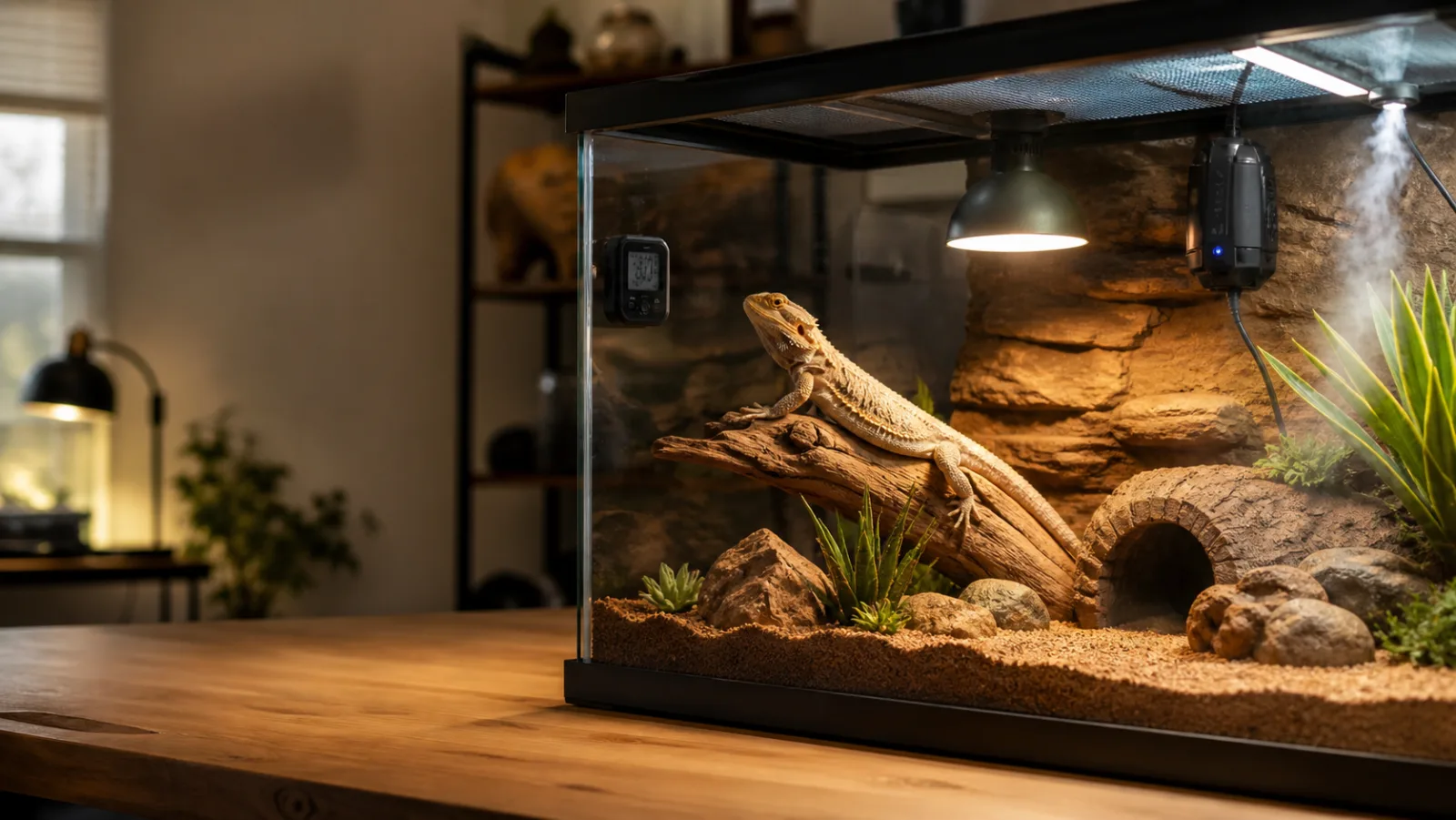
Reptile Habitat Setup and Environmental Control: 2026 Guide for Heat, Humidity, and Safety
Reptile
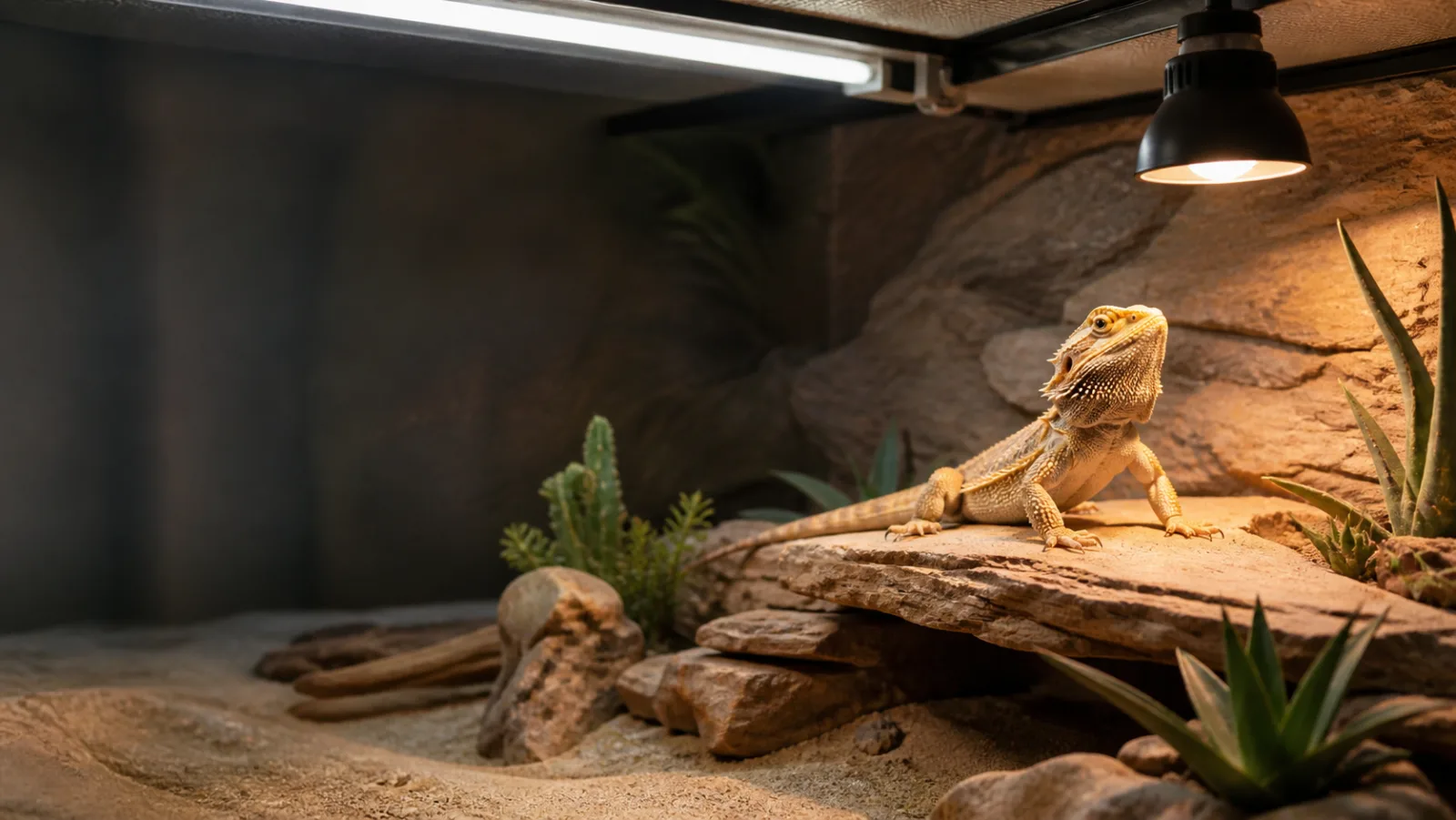
Reptile UVB Lighting and Basking (2026 Guide): How to Choose Safe Lighting for Reptiles
Reptile
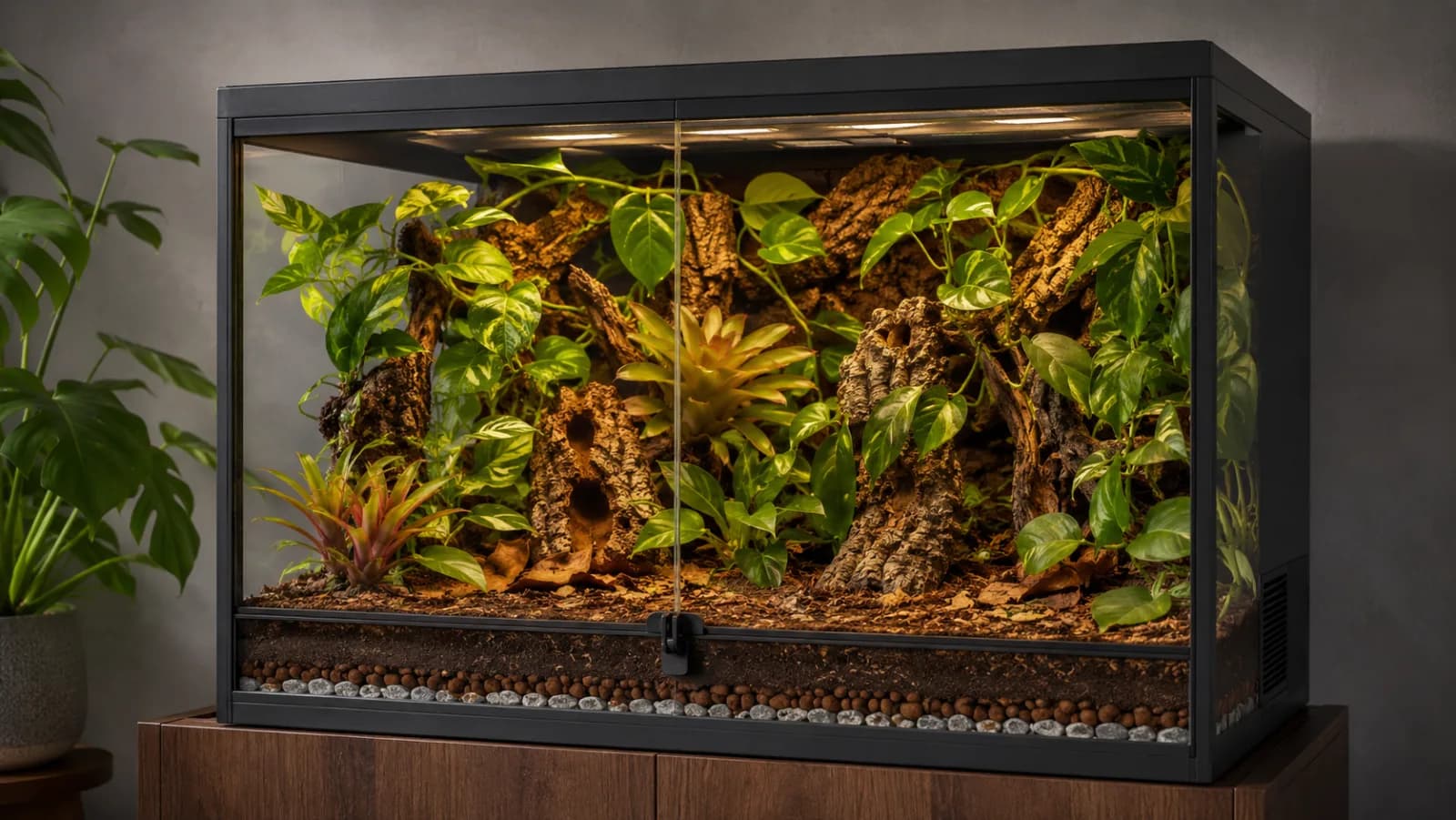
Best PVC Reptile Enclosures for Bioactive Setups (2026)
Reptile
Best Large Arboreal Terrariums & Paludariums for Crested Geckos, Chameleons & Tree Frogs (2026)
Reptile
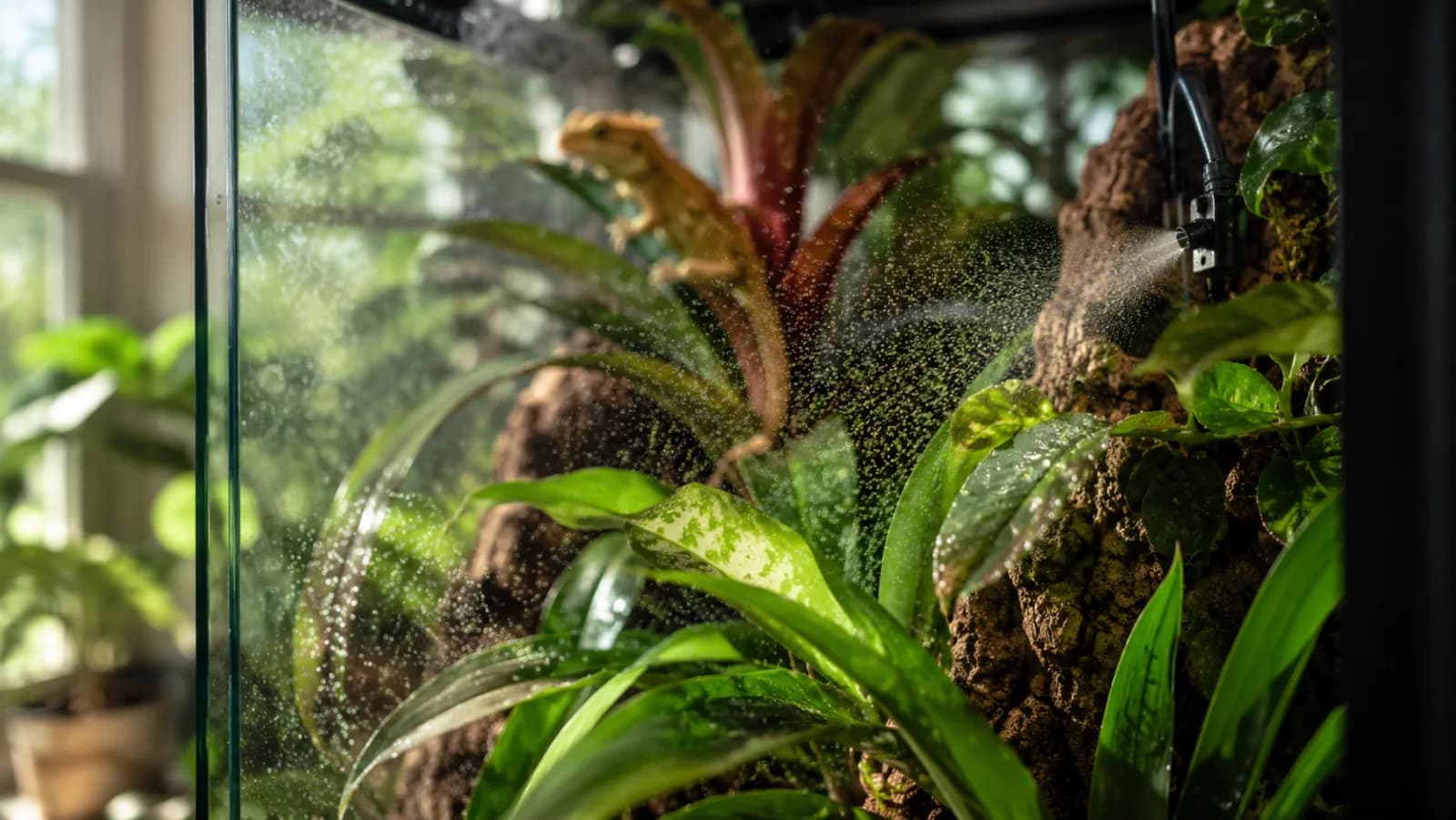
Best Reptile Misting and Fogging Systems for Humidity Control (2026)
Reptile
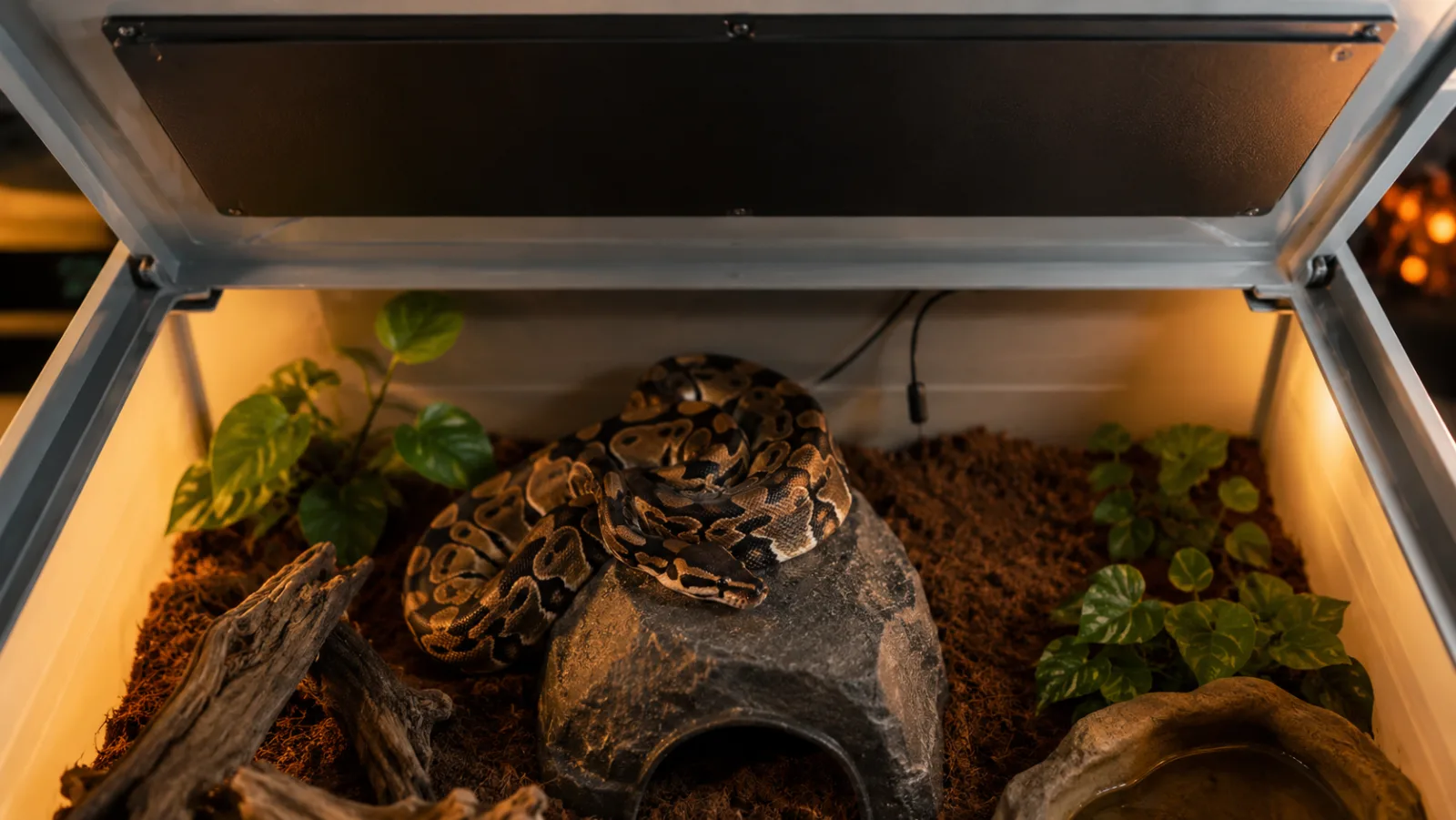
Best Reptile Radiant Heat Panels and Overhead Heat for 2026
Reptile
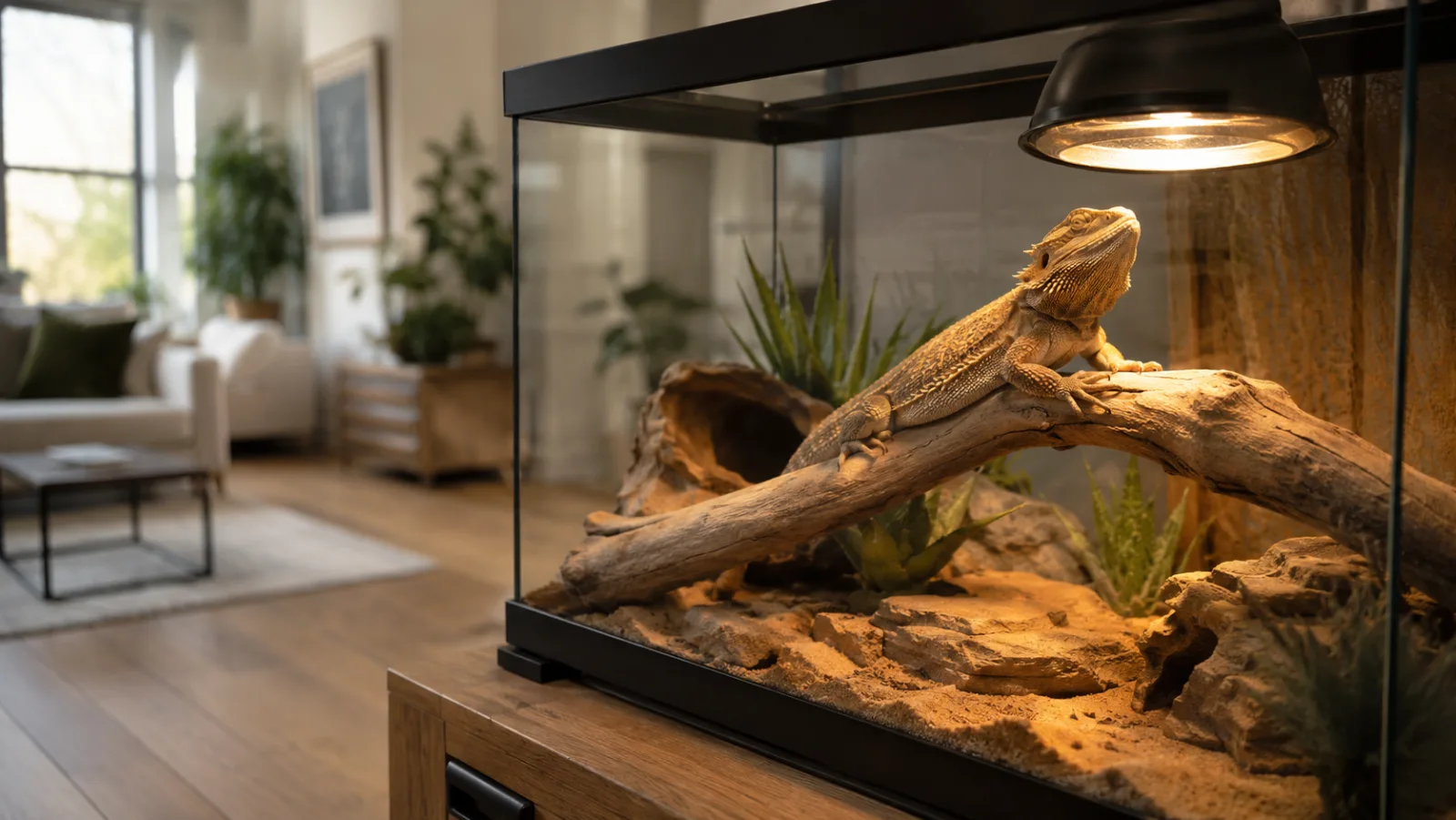
Best Reptile Heat Lamps & Basking Fixtures (2026)
Reptile
Best Ball Python Starter Kits (2026)
Reptile