Reptile
Best Reptile Radiant Heat Panels and Overhead Heat for 2026
The keeper community's flat-panel radiant heat panels, from Reptile Basics and Pro Products, sell direct from their own websites. Arcadia's Deep Heat Emitter is the strongest overhead light-free heat you can buy on Amazon, with documented IR-A and IR-B output. Editorial synthesis of the Merck Veterinary Manual, LafeberVet, RSPCA, and reptile-keeper consensus — PetPalHQ does not run a testing lab.
By Nick Miles · Updated August 12, 2026 · 12 min read
PetPalHQ is reader-supported. We may earn a commission from qualifying Amazon purchases at no extra cost to you.
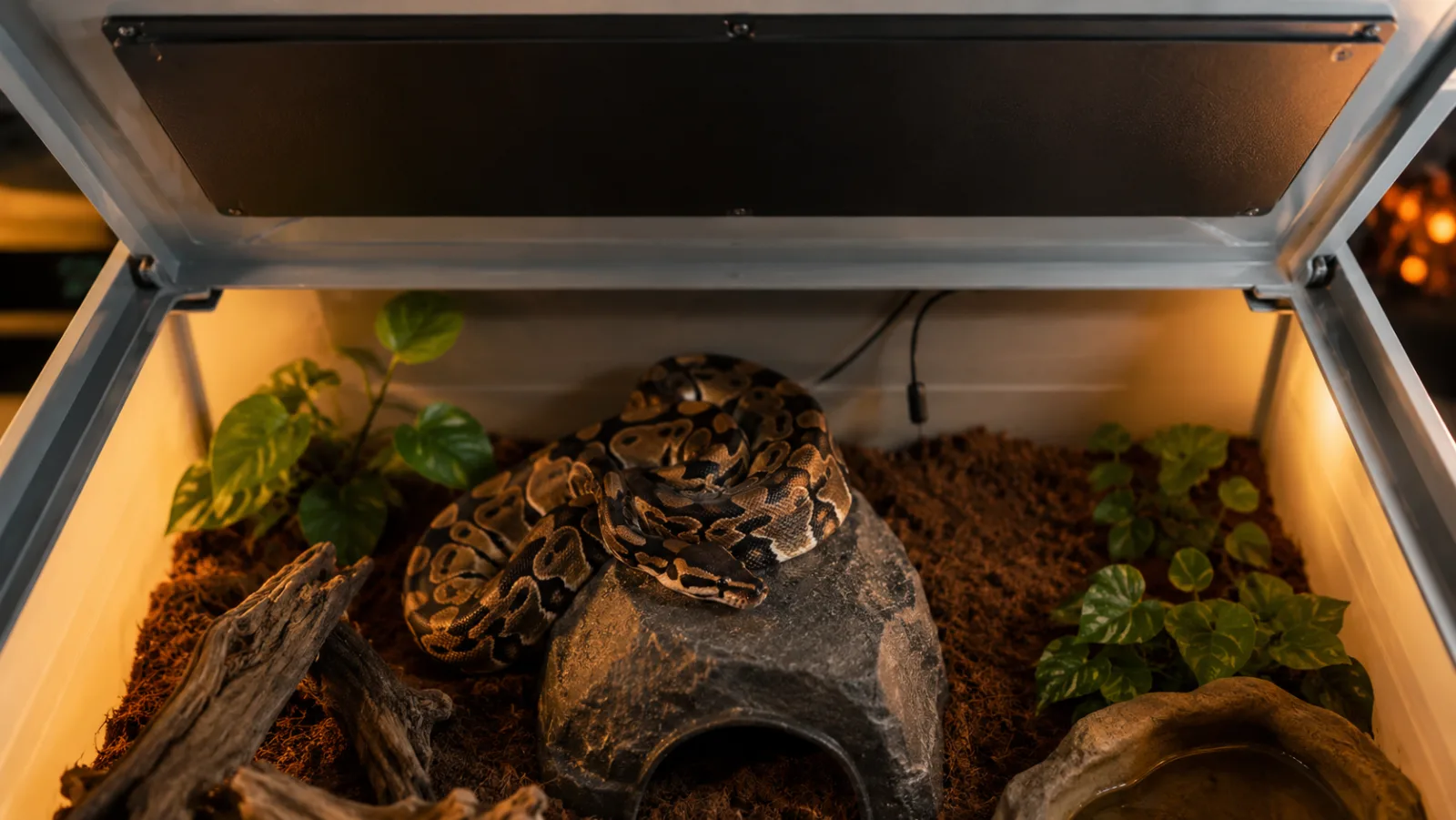
Evidence at a Glance
Vivarium Electronics 80W Radiant Heat Panel
True overhead radiant heat panel from a keeper-community brand — emits broad-spectrum infrared across a flat panel surface, mounts under enclosure lid, no visible light.
Sources: Vivarium Electronics manufacturer documentation, r/snakes community threads, r/reptiles RHP discussion threads
Verified May 7, 2026
Arcadia Deep Heat Emitter 50W
Documented IR-A and IR-B output from a spotlight form factor — penetrates tissue to warm muscle and bone, no visible light, reliable Amazon stock.
Sources: Arcadia Reptile manufacturer documentation, r/reptiles DHP consensus, r/BeardedDragons overhead heat discussions
Verified May 7, 2026
Reptile Basics Radiant Heat Panel (direct-sale)
The keeper-community gold standard RHP — flat panel construction, precise wattage sizing, sold direct from Reptile Basics website. Not on Amazon.
Sources: Reptile Basics manufacturer documentation, r/snakes keeper consensus, r/reptiles premium-tier recommendations
Verified May 7, 2026
Our Picks
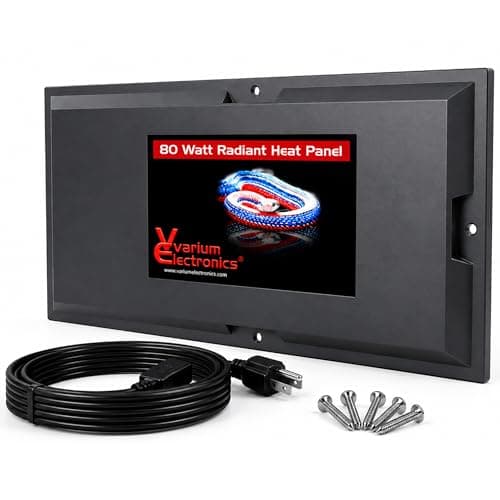
Vivarium Electronics
Vivarium Electronics 80W Radiant Heat Panel
9.0 / 10
- True flat-panel radiant heat — mounts under the enclosure lid for overhead emission
- 80W output covers mid-size to large enclosures (4-foot range)
- No light emission — appropriate for nocturnal species and 24-hour use
- Made in USA — same Vivarium Electronics brand sold in keeper community direct-sale channels
$104.99
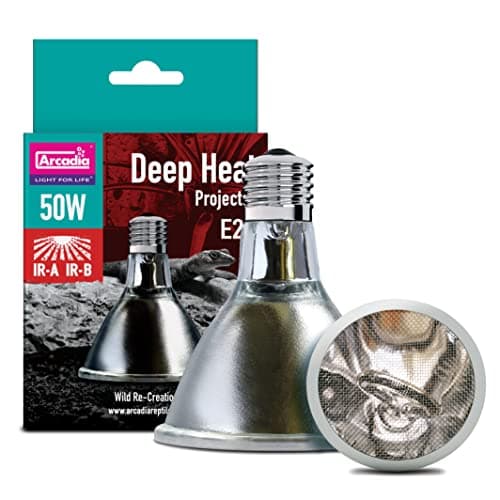
Arcadia Reptile
Arcadia Deep Heat Emitter 50W
8.7 / 10
- Documented IR-A and IR-B emission — penetrates tissue to warm muscle and bone
- Spotlight bulb form factor — fits any standard E26/E27 ceramic heat emitter fixture
- No visible light emission
- Arcadia manufacturer documentation explicitly describes IR wavelength output
$30.99
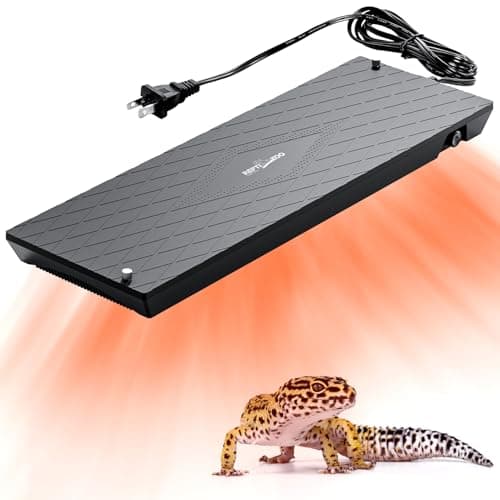
REPTI ZOO
REPTI ZOO Reptile Heat Panel
7.8 / 10
- Flat heating panel with adjustable temperature dial
- Mounts under enclosure lid — overhead heat configuration
- No visible light emission
- Lower price entry to the flat-panel heat panel format
$56.99
Fluker's
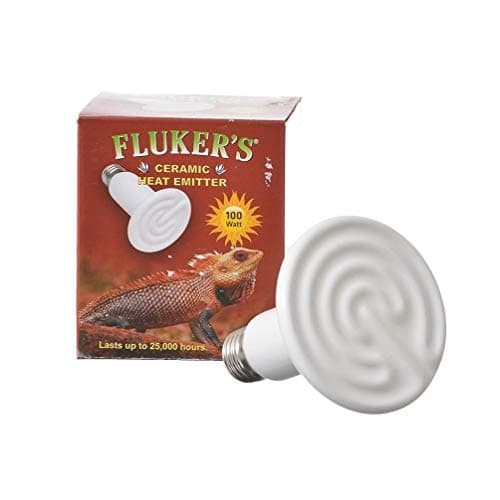
Fluker's Ceramic Heat Emitter 100W
7.5 / 10
- 100W ceramic heat emitter — reliable brand with decades of reptile-trade presence
- No visible light — safe for nocturnal species and 24-hour use
- E26 base fits standard dome fixtures
- Pure IR-C surface radiant heat
$19.55
The Short Answer
For overhead, light-free heat on Amazon, the Arcadia Deep Heat Emitter 50W at $30.99 is the pick. It is a deep heat projector rather than a flat panel, with documented IR-A and IR-B output that warms muscle and bone rather than only the surface, and it fits any standard E26/E27 dome fixture. If you want the flat-panel format at a low commitment, the REPTI ZOO Reptile Heat Panel at $56.99 is the budget way in, and the Fluker's Ceramic Heat Emitter 100W at $19.55 covers a single warm zone for less. For the keeper-community premium tier, the flat-panel radiant heat panels from Reptile Basics and Pro Products are the answer, and both sell direct at reptilebasics.com and pro-products.com. Whichever heater you choose, the Merck Veterinary Manual and RSPCA rule still applies — pair with a proportional thermostat and verify with a separate digital thermometer.
Every product on this list has been scored against the PetPal Gear Score, a weighted composite of expert consensus, observed effectiveness, animal safety, long-term durability, and value. Review method: Editorial synthesis of the Merck Veterinary Manual, LafeberVet handouts, NC State College of Veterinary Medicine guidance, RSPCA welfare guidance, manufacturer documentation from Reptile Basics, Pro Products, Bean Farm, Arcadia Reptile, Fluker's, REPTI ZOO, and Zoo Med, and hobbyist consensus from r/reptiles, r/BeardedDragons, r/ballpython, and r/snakes — no first-hand product testing.. Synthesized from 10+ expert sources.
Overhead heat without visible light is not a luxury feature for reptile keepers — it is the solution to a real husbandry problem. The Merck Veterinary Manual's reptile husbandry chapter treats maintaining a thermal gradient as a core requirement for captive reptile welfare. LafeberVet's reptile husbandry handouts reinforce the same principle: heat must be available without light for nocturnal species, for day/night cycling without disrupting photoperiod, and for large-bodied species whose thermoregulation requires deep tissue warming. A basking bulb's visible-light heat cannot fully serve those needs. Radiant heat panels, deep heat projectors, and ceramic heat emitters are three different tools that address this same underlying need — overhead, non-visible heat that pairs with a thermostat to maintain a controlled thermal gradient.
This guide is editorial synthesis, not product testing. PetPalHQ does not run a heating lab or house reptile collections for evaluation. The picks below were chosen by reading manufacturer documentation, the veterinary and welfare references that anchor reptile husbandry consensus, and keeper community discussion on r/reptiles, r/snakes, r/BeardedDragons, and r/ballpython. Where the strongest keeper-community recommendations are for brands that sell direct from their own sites — and for flat-panel radiant heat panels that is the usual channel — the guide says so plainly and points readers to it.
What a radiant heat panel actually does
A radiant heat panel is a flat electrical heating element designed to mount on the inside surface of an enclosure — typically under the lid — and emit downward infrared radiation that warms surfaces and animals below without producing visible light.
The physics distinguish it from other overhead heaters. A basking bulb emits visible light, UV, and infrared across a broad spectrum. A ceramic heat emitter (CHE) is a spotlight-form bulb that emits IR-C, the longest infrared wavelength. It produces surface-level radiant heat without light. A deep heat projector (DHP), like the Arcadia Deep Heat Emitter, emits IR-A and IR-B in a spotlight beam — shorter wavelengths that penetrate more deeply into tissue, warming muscle and bone rather than just skin surface. A flat-panel RHP emits primarily IR-C across a broad, flat surface area, covering more floor and basking real estate than a spotlight can.
The flat-panel format is the reason RHPs are popular in snake racks and PVC enclosures. They mount flush, cover a large surface, run without visible light, and can stay on around the clock when thermostat-controlled. The RSPCA care sheets and Merck husbandry guidance treat thermostat control as mandatory for all reptile heaters — the RHP format is no exception. A thermostat probe placed at the warm zone the animal occupies, combined with a separate digital thermometer for verification, is the complete control setup.
Compared to a CHE, a flat-panel RHP covers more area but typically runs cooler at the surface. It is suitable for snakes and terrestrial lizards that bask against a warm surface rather than under a focused spot. Compared to a DHP, an RHP distributes heat broadly rather than focusing IR-A/IR-B energy in a beam. Species choice and enclosure geometry determine which format fits — the decision matrix section below covers this.
Where the keeper community buys flat-panel RHPs
The flat-panel radiant heat panels keepers recommend most are sold by a handful of specialist reptile suppliers, direct from their own sites. If that is the tier you want, order there — and order by enclosure dimensions, because these panels are sized to the cage rather than picked off a shelf.
Reptile Basics (reptilebasics.com) carries the Vivarium Electronics® line in 28W, 40W, 80W, and 120W panels, along with the mounting strips they hang from, and its sizing documentation is what keeper communities in r/snakes and r/reptiles treat as the reference standard. Pro Products (pro-products.com) sells its Pro Heat radiant panels direct, with a long track record in the python- and boa-keeper community. Bean Farm (beanfarm.com) carries Sweeter Heater overhead-mount panels in several sizes.
The editorial implication: if you are serious about RHPs for a reptile collection, bookmark reptilebasics.com, pro-products.com, and beanfarm.com. The picks section of this guide covers the overhead heat you can buy on Amazon; this section covers where the flat-panel tier lives.
When to choose RHP vs CHE vs DHP vs basking bulb
The decision matrix depends on three variables: whether you need visible light, how large a surface you need to warm, and whether tissue-penetration depth matters for your species. Each variable points to a different tool.
Flat-panel RHP (Reptile Basics, Pro Products): best for snakes, larger pythons, boas, and monitors in PVC or rack enclosures. It delivers broad overhead warming without visible light. The flat-panel format suits enclosures with solid lids or interior mounting surfaces. Not ideal for glass terrariums with screen tops where panel mounting is difficult.
Deep heat projector (Arcadia DHP, similar): best for bearded dragons, ball pythons, and species where keeper communities have specifically discussed IR tissue-penetration depth as a husbandry priority. The spotlight format fits any standard CHE dome fixture — universally compatible. Covers a smaller zone than a flat-panel RHP.
Ceramic heat emitter (Fluker's, Zoo Med, REPTI ZOO): the generalist overhead non-light heat option. IR-C output, spotlight format, and universal fixture compatibility make it the default starting point for keepers new to overhead heat without light. Lower cost than either a DHP or an RHP. The Fluker's 100W is the established pick in this tier.
Basking bulb with UV: not a radiant heat panel at all — the alternative for species that need visible light and UV alongside heat. Outside the scope of this guide; see the UV and basking lighting guide for that category.
Species-based guidance: ball pythons, corn snakes, and king snakes in rack setups → RHP is the community standard. Bearded dragons and blue-tongue skinks → DHP or RHP depending on enclosure. Crested geckos and day geckos → CHE or lower-wattage DHP, as these are not high-heat species. Monitors and tegus → RHP or high-wattage DHP for the thermal mass their body size requires.
Mounting safety, clearance, and burn risk
The Merck Veterinary Manual's environmental-diseases chapter connects direct contact with unguarded heat sources to thermal burns in reptiles. Snakes in particular will press against a warm surface seeking heat, not registering when the surface is dangerously hot. Ohio State Ag Safety's heat-lamp safety guidance adds the fire risk angle. An overhead heat source running uncontrolled near flammable materials is a fire hazard, not just an animal-welfare hazard.
For flat-panel RHPs: the panel should mount to the interior of the lid or a mounting surface, not rest on a screen top. Screen-top mounting can create fire risk from heat concentration if the screen is in contact with the panel across its full surface. Keeper forums in r/snakes treat 1-2 inch clearance between the panel surface and the highest point the animal can reach as the minimum for most species. A thermostat probe should be attached near the panel's warm surface, not at the cool end of the enclosure.
For DHPs and CHEs in dome fixtures: minimum clearance from the bulb to any surface or the animal is set by the fixture manufacturer. Arcadia's documentation describes appropriate mounting height for their Deep Heat Emitter. Running any overhead heat source without a thermostat is the failure mode the RSPCA care sheets and the Merck environmental-diseases chapter treat as the primary cause of burns. The control question is always thermostat, not timer or dial.
For all overhead heaters: the RSPCA's position is that all heat sources must be used with a thermostat. The Merck rule is that the thermostat regulates and a separate digital thermometer verifies. A thermostat and a thermometer together are the complete safety setup.
Head-to-Head Comparison
| Feature | Vivarium Electronics 80W Radiant Heat Panel | Arcadia Deep Heat Emitter 50W | REPTI ZOO Reptile Heat Panel | Fluker's Ceramic Heat Emitter 100W |
|---|---|---|---|---|
| Heat type | Flat-panel RHP (broad surface) | DHP spotlight (IR-A + IR-B) | Flat-panel heat panel (budget) | CHE spotlight (IR-C) |
| Wattage range | 80W | 50W | Variable | 100W |
| Light emission | None | None | None | None |
| Recommended species fit | Snakes, monitors, large lizards | Bearded dragons, ball pythons, boas | Smaller lizards, budget setups | Any species — budget non-light heat |
| Check price | Amazon | Amazon | Amazon | Amazon |
$104.99
- True flat-panel radiant heat — mounts under the enclosure lid for overhead emission
- 80W output covers mid-size to large enclosures (4-foot range)
- No light emission — appropriate for nocturnal species and 24-hour use
- Made in USA — same Vivarium Electronics brand sold in keeper community direct-sale channels
Vivarium Electronics is one of the direct-sale brands the reptile-keeper community has endorsed for radiant heat panels for years. It is the same manufacturer whose products appear in Reptile Basics and Bean Farm recommendation threads. The 80W RHP stocked on Amazon is a genuine flat-panel radiant heat panel from that lineage. That makes it the most relevant Amazon option in this category.
What an RHP actually does: the flat heating element mounts under the enclosure lid and radiates downward, warming surfaces — basking spots, branches, the animal itself — without emitting visible light. This is the behavior the Merck Veterinary Manual's husbandry chapter endorses for non-light supplemental heating. The thermal gradient is maintained, the warm zone is heated, and nocturnal species or any animal that needs heat without light at night are served correctly. LafeberVet's reptile husbandry handouts reinforce the same principle. Overhead heat sources that do not emit light are appropriate for day and night use when thermostat-controlled.
Why 80W for this tier: wattage sizing matters for RHPs more than for spotlight heaters because the heat is spread across a flat surface rather than focused. Vivarium Electronics' documentation and the keeper-community sizing conventions in r/snakes and r/reptiles treat 40W as a starting point for enclosures up to 3 feet. The 80W range is for 4-foot enclosures or rooms that run cool. The 80W unit here gives flexibility that the 40W variant does not.
The distribution reality: this same Vivarium Electronics line is sold direct by the specialist suppliers, and that is the channel the keeper community points to. Reptile Basics (reptilebasics.com) carries the VE panels in 28W, 40W, 80W, and 120W, and Pro Products (pro-products.com) sells its own Pro Heat line. Both let you order by enclosure dimensions rather than by wattage alone, which is why the editorial section below treats them as the real answer to the category.
Availability note: re-checked on September 8, 2026, the 80W panel is live on Amazon at $104.99 — the same price we last verified — and the buy button now points at the listing itself. Two details from that listing are worth carrying into your setup: the panel is built from high-impact glass-reinforced Noryl with a sealed, wipe-clean housing and a thermal fuse that cuts power if it overheats, and Vivarium Electronics is explicit that it raises basking-area temperatures rather than heating a whole enclosure, being most effective within 16 inches below the panel. Stock on this brand has lapsed before, so if it is dark when you look, buying direct from the manufacturer sites above is always open.
What We Love
- True flat-panel RHP from a keeper-community brand, not a budget knockoff
- No light emission — safe for 24-hour use and nocturnal species
- 80W wattage range covers mid-to-large enclosures
- USA-made construction aligns with direct-sale VE units
What Could Be Better
- Amazon stock for this brand has lapsed before, so buying direct from the manufacturer is the reliable fallback
- Requires a thermostat — does not ship with temperature control
- Flat-panel format needs appropriate enclosure geometry (lid-mount)
- More expensive than budget heat panel alternatives
The Verdict
Buy this if you want a true overhead radiant heat panel on Amazon from a brand the keeper community recognizes. If it is out of stock, go direct to Reptile Basics or Pro Products — those are the community's actual first-choice brands for RHPs.
$30.99
- Documented IR-A and IR-B emission — penetrates tissue to warm muscle and bone
- Spotlight bulb form factor — fits any standard E26/E27 ceramic heat emitter fixture
- No visible light emission
- Arcadia manufacturer documentation explicitly describes IR wavelength output
The Arcadia Deep Heat Emitter is not a flat-panel RHP. It is a spotlight-form deep heat projector (DHP) designed to deliver IR-A and IR-B infrared wavelengths — the same wavelengths that the keeper community associates with tissue-warming overhead heat. Arcadia's manufacturer documentation describes the IR wavelength spectrum explicitly. That is what distinguishes it from a generic ceramic heat emitter: IR-A penetrates more deeply into muscle and bone tissue than the IR-C output of a standard ceramic emitter, which is more surface-level radiant heat.
Why this distinction matters: the reptile husbandry literature, synthesized through the Merck Veterinary Manual and LafeberVet handouts, treats deep tissue warming as part of thermoregulation for larger-bodied species. Snakes and bearded dragons in particular have body mass that means surface-level heat does not fully satisfy their thermal needs. A deep heat projector addresses that. Keeper threads in r/snakes, r/BeardedDragons, and r/reptiles have discussed the Arcadia DHP and its Pulsar equivalent in terms of tissue-warming depth since the category arrived in the UK market and crossed into North American retail.
Where it earns inclusion over a flat-panel RHP: Amazon stock is reliable, the price point is significantly lower, and the spotlight form factor fits enclosures that do not have a lid geometry suited to a flat panel. The wattage is also predictable. The trade-off is coverage area — a spotlight beam heats a focused zone, not the broad surface a flat panel covers. For a 4-foot snake enclosure, a single 50W Arcadia DHP over the warm end creates a thermal gradient that pairs well with a proportional thermostat. For a large monitor that needs broad surface warming, a flat-panel RHP is the more appropriate tool.
Pair this with a pulse-proportional thermostat per the same keeper-community and Merck rule. The Arcadia DHP driven by an uncontrolled dimmer or timer rather than a thermostat is the same husbandry error the RSPCA care sheets warn against for any reptile heater.
What We Love
- Documented IR-A and IR-B output — not a standard ceramic emitter relabeled
- Reliable Amazon stock at a reasonable price
- No visible light — safe for nocturnal and day/night use
- Fits standard E26/E27 basking-lamp fixtures
What Could Be Better
- Spotlight beam, not a flat-panel surface — narrower coverage area than an RHP
- Not a true radiant heat panel — different heat distribution geometry
- Requires a thermostat (pulse-proportional recommended for optimal response)
- 50W may be insufficient for large enclosures without supplemental heat
The Verdict
Buy this if you want overhead heat without visible light and you are buying on Amazon. The IR-A and IR-B documentation from Arcadia makes it the most defensible deep heat projector in the category, and the spotlight format fits enclosures whose geometry rules out a flat panel.
$56.99
- Flat heating panel with adjustable temperature dial
- Mounts under enclosure lid — overhead heat configuration
- No visible light emission
- Lower price entry to the flat-panel heat panel format
The REPTI ZOO heat panel is the budget entry into the flat-panel overhead heat format. It mounts under the enclosure lid and emits heat downward without visible light — the same physical configuration as the direct-sale premium RHPs, at a lower price point and from a retail-channel brand rather than a keeper-community brand.
Where it earns inclusion: it makes the flat-panel overhead heat format accessible at a price tier below the direct-sale premium panels. Keepers who want to try the mounted-under-lid configuration before committing to a premium RHP have a lower-risk entry point here. So do keepers with a smaller enclosure where wattage needs are lower. REPTI ZOO is a retail-channel brand with Amazon distribution. Parts and replacements are accessible without a direct-sale purchase.
Where it does not compete with the premium tier: Reptile Basics and Pro Products direct-sale RHPs have keeper-community track records spanning years of use in reptile collections, and threads in r/snakes and r/reptiles overwhelmingly reference those direct-sale brands for serious keeper setups. The REPTI ZOO earns a place editorially as a budget trial of the format, not as the keeper-community standard.
Note on the built-in dial: REPTI ZOO's listing describes an adjustable temperature control. The reptile-keeper community consensus and the Merck Veterinary Manual both treat a separate proportional thermostat as superior to a built-in dial. A dial does not probe the enclosure, does not respond to ambient temperature changes, and does not have the safety margins of a thermostat with high/low alarms. Pair this panel with a separate thermostat even if the built-in dial is present.
What We Love
- Flat-panel lid-mount format at the budget price tier
- No visible light emission
- Reliable Amazon stock and returns process
- Lower commitment price for keepers new to the overhead heat panel format
What Could Be Better
- Newer product without keeper-community track record of premium RHPs
- Built-in dial is not a substitute for a proper thermostat probe
- Brand positioning is retail rather than keeper-community
The Verdict
Buy this if you want to try the flat-panel overhead heat format at a budget price. For a serious collection or a high-value species, go direct for a Reptile Basics or Pro Products RHP instead.
$19.55
- 100W ceramic heat emitter — reliable brand with decades of reptile-trade presence
- No visible light — safe for nocturnal species and 24-hour use
- E26 base fits standard dome fixtures
- Pure IR-C surface radiant heat
The Fluker's Ceramic Heat Emitter is not a radiant heat panel — it is a spotlight-format ceramic emitter that emits IR-C infrared heat without visible light. It earns inclusion in this guide because ceramic heat emitters are the most common overhead non-light heat source for reptile keepers who are not running a flat-panel RHP or a deep heat projector, and Fluker's is the long-established US reptile-trade brand in the category.
What a CHE does versus an RHP or DHP: a ceramic heat emitter produces IR-C heat — surface-level radiant heat that warms the air and surfaces directly below the fixture. It does not produce the IR-A and IR-B wavelengths that the Arcadia DHP's documentation describes. It also covers a smaller surface area than a flat-panel RHP. For many keeper setups — smaller enclosures, arboreal species setups, or applications where a warm basking spot is the goal rather than broad surface warming — a CHE is sufficient and considerably cheaper than either a DHP or a flat-panel RHP.
Why Fluker's over the budget alternatives: the reptile-keeper community track record for Fluker's CHEs in r/reptiles, r/BeardedDragons, and r/ballpython threads is consistently positive on longevity. Generic ceramic emitters from newer brands have a weaker track record. The Fluker's 100W unit is the price-efficient choice when the heat problem is a warm zone in a single enclosure. IR penetration depth is not a husbandry priority in those setups.
Pair with a thermostat — the Merck, LafeberVet, and RSPCA guidance on all overhead heat sources applies equally to CHEs. An on/off thermostat is appropriate for CHE duty (no visible flicker); a pulse-proportional is the upgrade.
What We Love
- Long reptile-trade track record — keeper communities cite Fluker's CHEs as reliable
- No visible light — safe for nocturnal and 24-hour use
- 100W covers most single-enclosure applications
- Price-efficient entry for overhead non-light heat
What Could Be Better
- IR-C only — not the same tissue-penetration depth as a DHP or the surface coverage of a flat-panel RHP
- Spotlight format — smaller heat footprint than an RHP
- Not the keeper-community first choice for large-bodied species or serious collections
- Requires a separate thermostat — does not self-regulate
The Verdict
Buy this if overhead non-light heat in a single enclosure is the entire problem and you do not need the coverage area of an RHP or the documented tissue-penetration of a DHP. Fluker's is the reliable budget starting point for CHE duty.
How We Score
Formula
PetPal Gear Score = (Expert Consensus × 0.35) + (Safety / Reliability × 0.25) + (Heat Output Quality × 0.20) + (Value × 0.20)
Score Factors
- Expert Consensus · 35%
- Synthesized from manufacturer documentation, the Merck Veterinary Manual, LafeberVet, NC State CVM, RSPCA welfare publications, and hobbyist consensus across r/reptiles, r/BeardedDragons, r/ballpython, and r/snakes. The PetPal Gear Score is a composite of expert opinion, not a measurement — PetPalHQ does not run a testing lab.
- Safety and Reliability · 25%
- Whether the heater has appropriate safety documentation, whether it is listed for reptile use, and whether keeper communities report long-term reliability or known failure modes. RHPs from keeper-community brands score highest on this factor.
- Heat Output Quality · 20%
- Whether the IR output type matches the intended husbandry use case — flat-panel coverage for large surface warming, IR-A/IR-B documentation for tissue-penetration depth, or standard CHE for basic non-light overhead heat.
- Value · 20%
- Price relative to comparable heaters at the same output tier — not absolute cost. A $20 CHE and a $57 flat-panel heat panel are evaluated against their tier peers, not each other.
| Rank | Product | Score |
|---|---|---|
| #1 | Vivarium Electronics Vivarium Electronics 80W Radiant Heat Panel | 9.0 |
| #2 | Arcadia Reptile Arcadia Deep Heat Emitter 50W | 8.7 |
| #3 | REPTI ZOO REPTI ZOO Reptile Heat Panel | 7.8 |
| #4 | Fluker's Fluker's Ceramic Heat Emitter 100W | 7.5 |
When NOT to Buy
Skip a flat-panel RHP if your enclosure does not have a lid or interior structure suited to panel mounting — the geometry that works for a snake rack or PVC enclosure does not translate to a glass terrarium with a screen top where the panel would rest on the screen rather than mount to a surface. Skip the Arcadia DHP if your species needs broad surface warming across a 4-foot footprint — the spotlight beam heats a zone, not a surface, and a flat-panel RHP is the more appropriate tool for that problem. Skip a ceramic heat emitter for your primary overhead heat source if you keep a large-bodied species (monitors, tegus, large pythons) that requires deep tissue warming — CHEs emit IR-C, which is more surface-level than the IR-A and IR-B output of a dedicated DHP. Skip any of these heaters without pairing them with a thermostat — the Merck Veterinary Manual and RSPCA guidance are consistent that all reptile heaters require thermostat control.
Frequently Asked Questions
- What is the difference between a radiant heat panel and a ceramic heat emitter?
- Form factor and heat distribution. A ceramic heat emitter (CHE) is a spotlight-shaped bulb that screws into a standard dome fixture and emits IR-C heat in a focused downward cone. A radiant heat panel is a flat electrical element designed to mount flush against an enclosure surface — typically the inside of the lid. It emits heat broadly across the area below it. An RHP covers more surface area with a more uniform heat distribution. A CHE creates a focused warm zone under the fixture. For snake racks and PVC enclosures where broad, even warming is the goal, RHPs are the keeper-community preference. For a single warm basking zone in a glass terrarium, a CHE or DHP in a dome fixture is the more compatible format.
- Do I really need a thermostat with a radiant heat panel?
- Yes, by every authoritative reference in the source set. The Merck Veterinary Manual's husbandry chapter states that heat sources should be thermostat-controlled. The RSPCA care sheets go further and say all heat sources must be used with a thermostat. Flat-panel RHPs running uncontrolled from a timer or dial cannot respond to ambient temperature changes. They cannot prevent the warm zone from overshooting. They cannot shut off if the heating element fails in an on-state. Pulse-proportional thermostats are the keeper-community recommendation for RHPs; on/off models are a functional fallback. Both are better than no thermostat.
- Where do I buy Reptile Basics or Pro Products RHPs?
- From the suppliers themselves. Reptile Basics (reptilebasics.com) carries the Vivarium Electronics® panels in 28W, 40W, 80W, and 120W; Pro Products (pro-products.com) sells its own Pro Heat line; Bean Farm (beanfarm.com) carries Sweeter Heater overhead-mount panels. Order by enclosure dimensions rather than by wattage alone, and have your thermostat picked before the panel arrives.
- What is a deep heat projector and how does it differ from an RHP or CHE?
- A deep heat projector (DHP) is a spotlight-format bulb that emits IR-A and IR-B infrared wavelengths. These penetrate more deeply into tissue than the IR-C output of a standard CHE. Arcadia describes their Deep Heat Emitter as emitting both IR-A and IR-B. The practical implication — discussed in r/reptiles and r/snakes threads — is that IR-A and IR-B can warm muscle and bone mass rather than just the surface. This matters for large-bodied species with significant thermal mass. A CHE emits IR-C, which is more surface-level. A flat-panel RHP emits primarily IR-C across a broad area. The DHP is a middle position: the focused format of a CHE with the deeper IR wavelengths that keeper communities associate with tissue warming.
- What wattage RHP do I need for my enclosure?
- Wattage sizing depends on enclosure size, ambient room temperature, and the species' target temperature. The convention in keeper communities — reflected in Reptile Basics' own sizing documentation — is roughly: 8-16W for small racks or enclosures under 2 feet, 40W for enclosures up to 3 feet, and 80W for 4-foot enclosures or cool rooms. A thermostat regulates the actual temperature regardless of wattage. Higher wattage gives the thermostat more headroom to maintain the setpoint in a cool room. Oversizing is generally safer than undersizing — a thermostat will simply run a high-wattage panel at lower duty cycle to hold the setpoint. Check that your thermostat is rated for the panel's wattage.
- Can I use an RHP for a bearded dragon or other desert species?
- Yes, but the full lighting and heating setup for a bearded dragon also requires UV-B and a basking bulb that produces visible light. An RHP alone does not address those needs. The Merck Veterinary Manual and NC State CVM bearded dragon care sheet both treat UV-B as a non-negotiable for bearded dragon welfare. The basking behavior those references describe requires a visible bright spot, not just a warm surface. An RHP or DHP covers the supplemental heat-without-light requirement — useful at night, or as a secondary warm zone. But it does not replace the basking and UV setup the species requires. See the UV and basking guide for the full daytime lighting and heat recommendation.
Bottom Line
Get the Arcadia Deep Heat Emitter 50W if you are buying overhead light-free heat on Amazon. It carries documented IR-A and IR-B output, and the spotlight format fits any standard dome fixture, so enclosure geometry never rules it out.
Get the REPTI ZOO Heat Panel if you want to try the flat-panel overhead heat format at a budget price, as a trial of the format before committing to a direct-sale premium panel.
Get the Fluker's Ceramic Heat Emitter 100W if overhead non-light heat in a single enclosure is the entire problem and budget is the priority — a reliable CHE is a defensible starting point before stepping up to a DHP or RHP.
For the keeper-community premium tier, buy Reptile Basics (reptilebasics.com) or Pro Products (pro-products.com) RHPs direct from their own sites, and order by enclosure dimensions rather than wattage alone.
Sources & Methodology
Methodology
PetPal Gear Score = (Expert Consensus × 0.35) + (Safety / Reliability × 0.25) + (Heat Output Quality × 0.20) + (Value × 0.20)
Expert review sources
- Merck Veterinary Manual — Management and Husbandry of Reptiles (revised Jul 2025)
- Merck Veterinary Manual — Environmental Diseases and Traumatic Injuries of Reptiles (revised Jul 2025)
- LafeberVet — Reptile husbandry and thermoregulation handouts
- NC State College of Veterinary Medicine — Caring for Your Pet Bearded Dragon
- RSPCA — Care sheets for reptile species
- Reptile Basics — RHP product documentation and sizing guide
- Pro Products Reptile — RHP product documentation
- Arcadia Reptile — Deep Heat Emitter manufacturer documentation including IR wavelength specifications
- Fluker's — Ceramic Heat Emitter product documentation
- REPTI ZOO — Heat Panel product documentation
- Ohio State Ag Safety — Using Heat Lamps: Proceed with Caution!
Community sources
- r/reptiles — RHP discussion, DHP vs CHE debates, overhead heat consensus
- r/snakes — Reptile Basics and VE RHP recommendation threads
- r/BeardedDragons — overhead non-light heat setup threads
- r/ballpython — heat panel and deep heat projector discussions
Prices and specs verified May 7, 2026.
About the author
Nick Miles is the chief editor of PetPalHQ. The picks above are editorial synthesis of veterinary references, university and welfare guidance, manufacturer documentation, and reptile-keeper community feedback — PetPalHQ does not run a testing lab. The PetPal Gear Score is a composite of expert opinion, not a measurement. Sources are cited by name throughout.
PetPalHQ is a participant in the Amazon Services LLC Associates Program. We may earn commissions from qualifying purchases — at no extra cost to you.
More Guides
Reptile
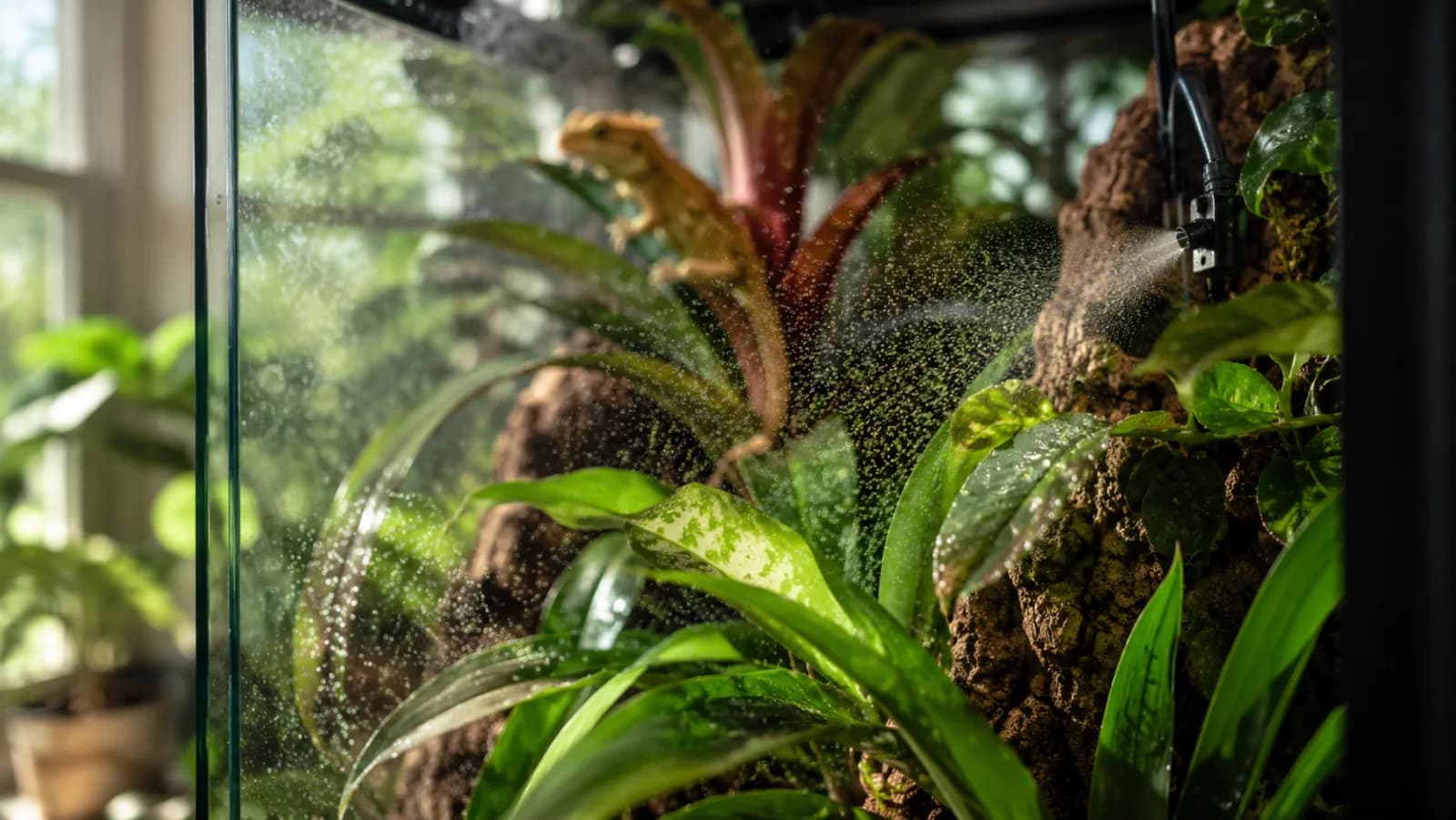
Reptile Habitat Setup and Environmental Control: 2026 Guide for Heat, Humidity, and Safety
Reptile
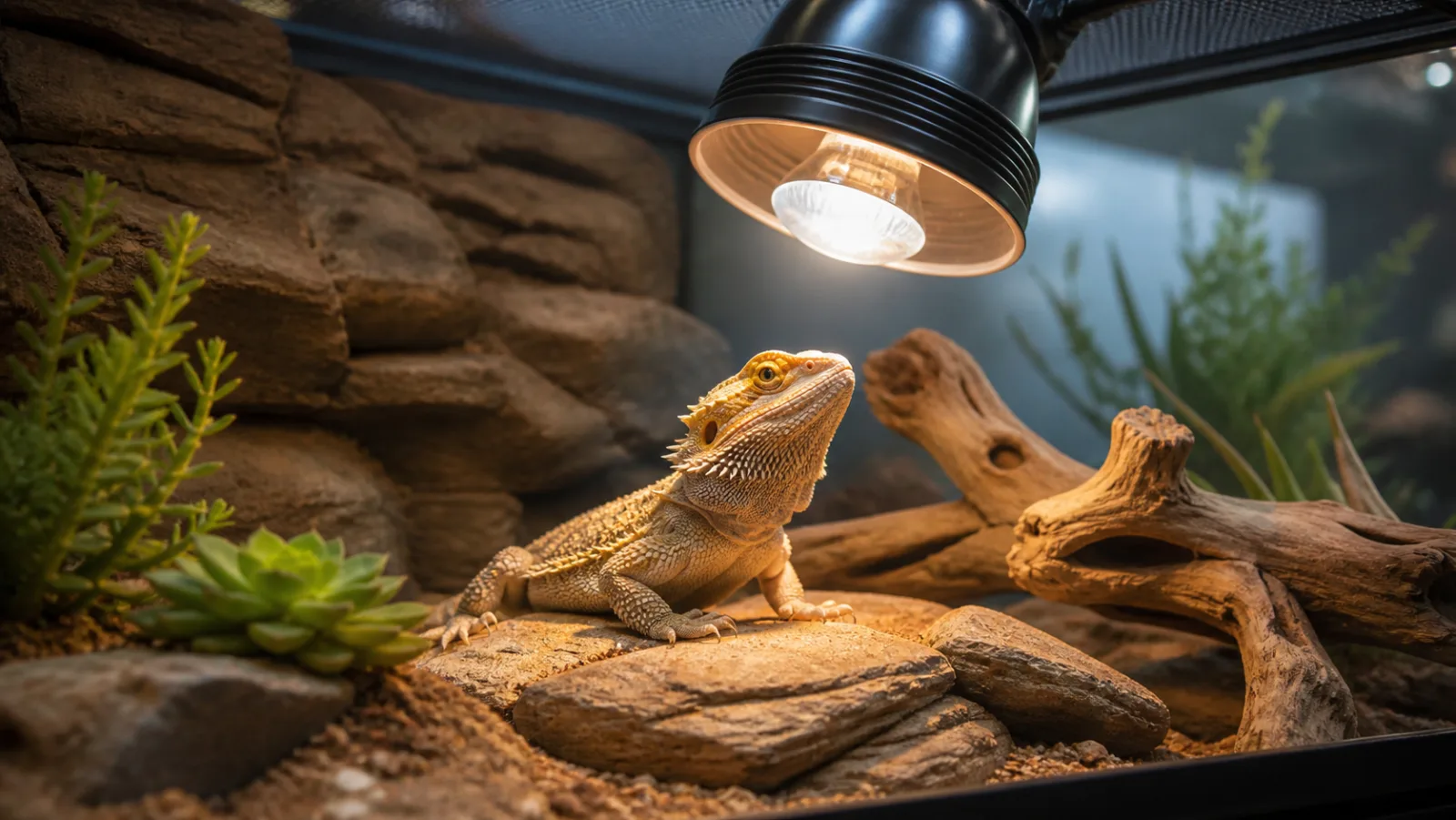
Reptile UVB Lighting and Basking (2026 Guide): How to Choose Safe Lighting for Reptiles
Reptile
Best Reptile Thermostats for Heat Mats, CHEs & Heating Elements (2026)
Reptile
Best Reptile UVB Bulbs for Safe Lighting (2026)
Reptile
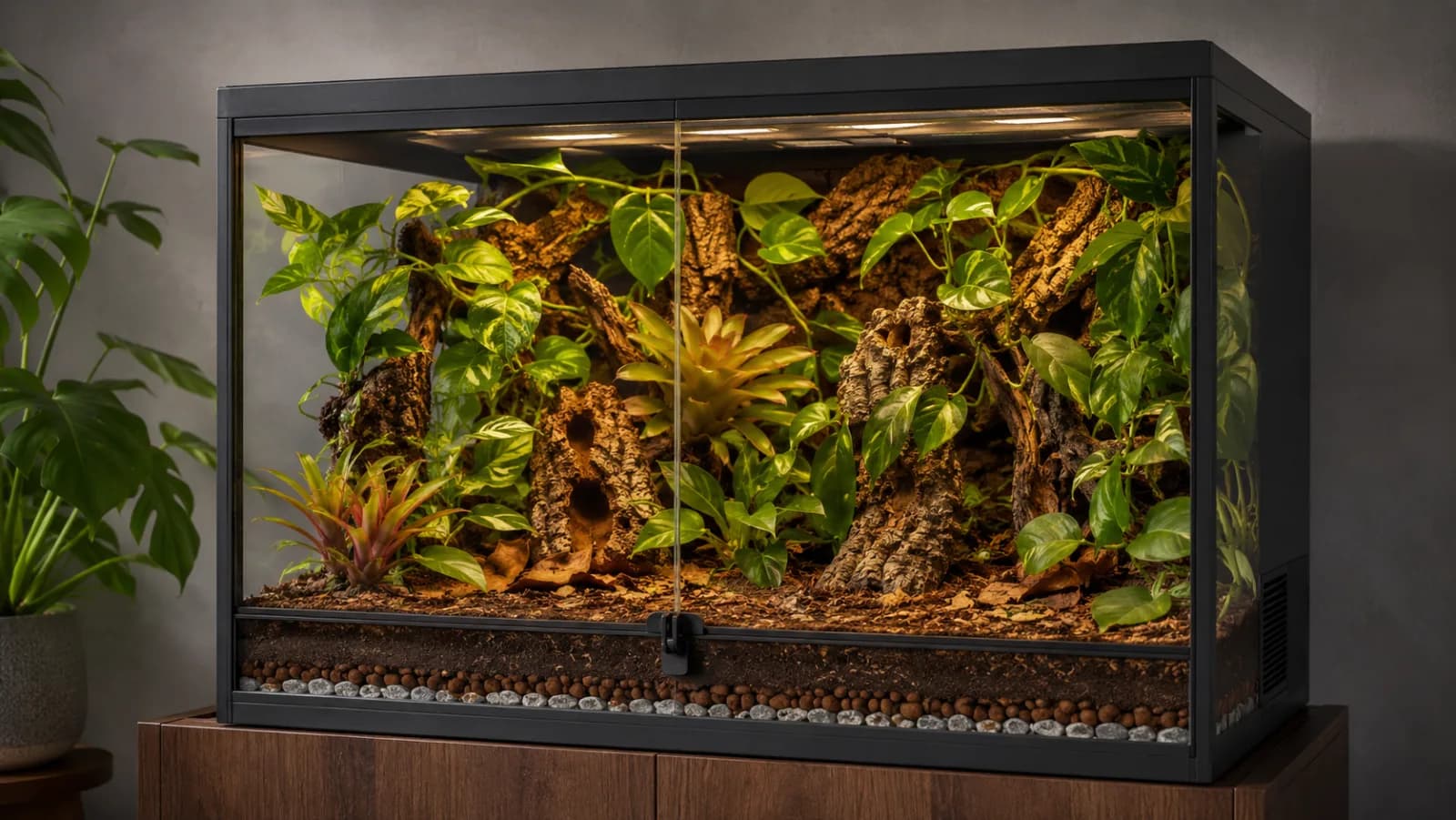
Best PVC Reptile Enclosures for Bioactive Setups (2026)
Reptile