Reptile
Best Reptile Misting and Fogging Systems for Humidity Control (2026)
The MistKing Starter v5 is the pump-mister synthesis pick for hobbyists who need scheduling precision and fine droplet delivery; the Exo Terra Monsoon Solo II is the mid-tier alternative with the widest reptile-trade distribution. Ultrasonic foggers serve a different job — airborne mist without surface wetting. Editorial synthesis of the Merck Veterinary Manual, RSPCA care sheets, manufacturer documentation, and reptile-keeper community consensus — PetPalHQ does not run a testing lab.
By Nick Miles · Updated August 7, 2026 · 12 min read
PetPalHQ is reader-supported. We may earn a commission from qualifying Amazon purchases at no extra cost to you.
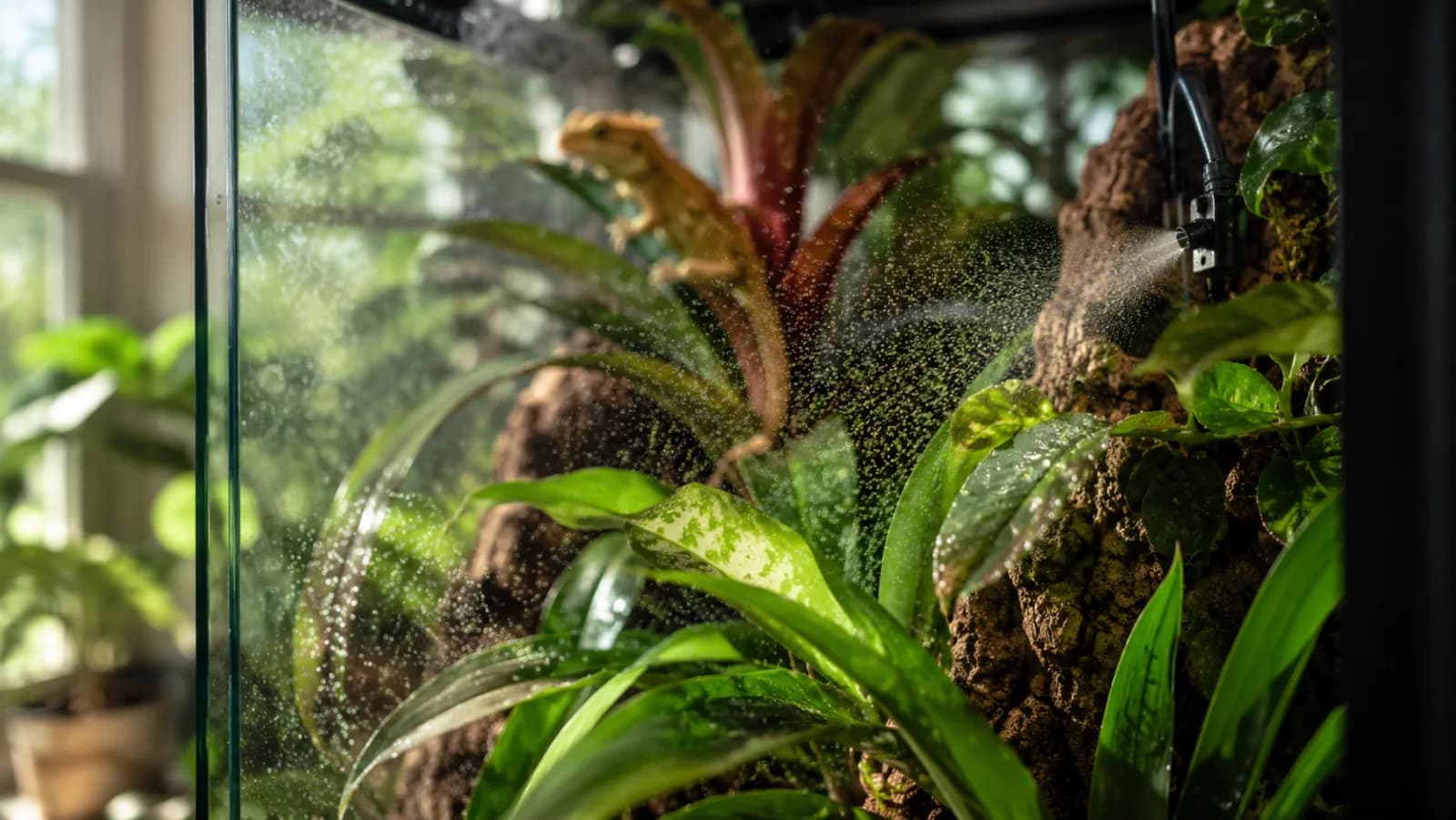
Evidence at a Glance
MistKing Starter Misting System v5
50-micron fine-droplet pump mister used by zoos and botanical gardens — scheduling precision and expandability make it the reptile-keeper community's consensus premium pick for crested geckos, dart frogs, and high-humidity tropical setups.
Sources: MistKing manufacturer documentation, r/cresties hobbyist consensus, r/dartfrogs community threads
Verified May 7, 2026
Exo Terra Monsoon Solo II
Programmable pump-driven misting system with multiple nozzles, wide reptile-trade distribution, and a scheduling interface accessible enough for beginners — the mid-tier pump mister most reptile-trade retailers actually stock.
Sources: Exo Terra manufacturer documentation, r/reptiles community consensus, reptile-trade retailer stocking data
Verified May 7, 2026
Inkbird Humidity Controller IHC-200
Two-stage humidity controller that automates setpoint-triggered cycles for any humidifier or fogger — the missing intelligence layer that keeps a fogger from running 24/7 and the enclosure from staying perpetually wet.
Sources: Inkbird manufacturer documentation, r/reptiles humidity-controller threads, r/dartfrogs automation discussions
Verified May 7, 2026
Our Picks
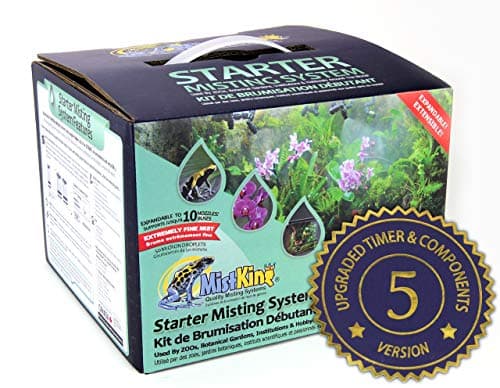
MistKing
MistKing Starter Misting System v5
9.3 / 10
- 50-micron droplet size — fine enough to humidify without heavy surface saturation
- Expandable to 10 nozzles on the starter configuration
- Timer-controlled scheduling with precise burst durations
- Used by zoos, botanical gardens, and herpetological institutions per manufacturer documentation
$195.00
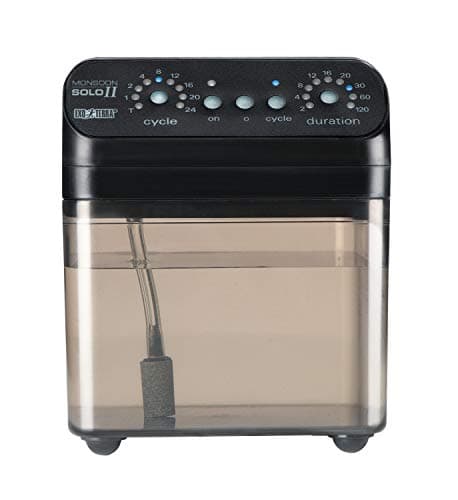
Exo Terra
Exo Terra Monsoon Solo II
8.8 / 10
- Programmable misting system with multiple nozzles included
- Adjustable frequency and duration settings
- Exo Terra reptile-trade brand with wide retail distribution
- Suitable for terrariums up to large sizes with included nozzle set
$134.99
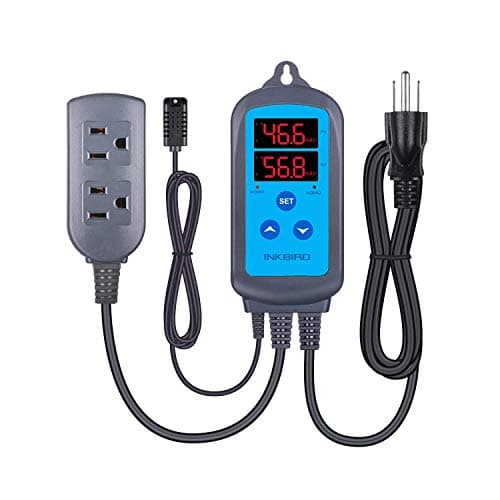
Inkbird
Inkbird Humidity Controller IHC-200
8.6 / 10
- Two-stage humidistat with separate humidifier and dehumidifier outlets
- Sensor probe reads ambient humidity and triggers on setpoint
- Compatible with any plug-in fogger, mister, or humidifier
- High and low alarm settings for out-of-range humidity events
$42.99
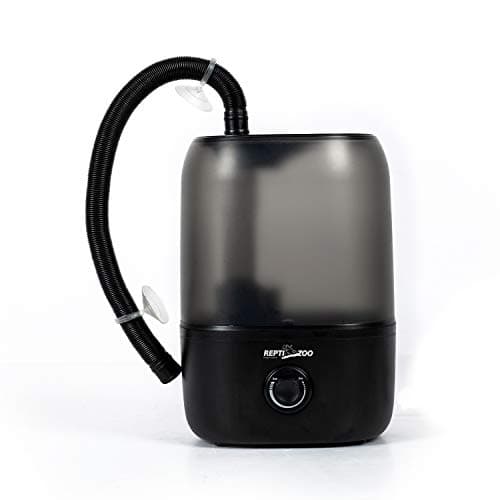
REPTI ZOO
REPTI ZOO 4L Reptile Humidifier Fogger
8.1 / 10
- 4-liter reservoir for extended runtime between refills
- Ultrasonic mist generation — cool fog that humidifies ambient air
- Adjustable mist output dial for volume control
- Compatible with standard reptile and vivarium terrariums
$45.11
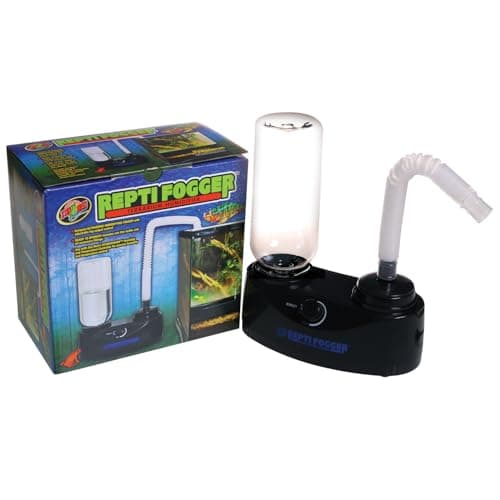
Zoo Med
Zoo Med Repti Fogger
7.7 / 10
- Zoo Med reptile-trade brand stocked at most large pet retailers
- Ultrasonic mist output for terrarium humidity
- Single-hose delivery with adjustable output
- Compact design for smaller terrarium applications
$52.26
The Short Answer
For most tropical-species keepers, a pump-driven misting system paired with a dedicated humidity controller is the answer the source set consistently supports. The MistKing Starter v5 is the pump-mister synthesis pick — zoos and herpetological institutions use the MistKing line. Hobbyist consensus across r/cresties and r/dartfrogs points to it as the standard for precision scheduling. For keepers who want wide retail availability without a direct-purchase commitment, the Exo Terra Monsoon Solo II is the mid-tier pump mister most reptile-trade stores stock. Ultrasonic foggers (REPTI ZOO, Zoo Med Repti Fogger) serve a different job. They humidify air without wetting surfaces as aggressively, which matters for species that want ambient humidity rather than surface moisture. Whichever device you choose, the core rule from the Merck Veterinary Manual and the RSPCA still applies: humidity boosts with dry-out cycles between them, not a sealed enclosure running constant fog.
Every product on this list has been scored against the PetPal Gear Score, a weighted composite of expert consensus, observed effectiveness, animal safety, long-term durability, and value. Review method: Editorial synthesis of the Merck Veterinary Manual, LafeberVet handouts, NC State College of Veterinary Medicine guidance, Bowling Green State University Herpetarium care references, RSPCA welfare guidance, manufacturer documentation from MistKing, Exo Terra, REPTI ZOO, Zoo Med, Inkbird, and Coospider, and hobbyist consensus from r/reptiles, r/cresties, r/dartfrogs, and r/ballpython — no first-hand product testing.. Synthesized from 10+ expert sources.
Humidity is the husbandry variable beginners get wrong in both directions — and the source set is direct about both failure modes. The Merck Veterinary Manual and the RSPCA care sheets warn that sustained elevated humidity without dry-out cycles creates the bacterial and fungal conditions that drive respiratory infections and skin breakdown in tropical reptiles. The same sources warn that inadequate humidity produces incomplete sheds, dysecdysis, and chronic dehydration stress. This is especially true for snakes during shed and for species like crested geckos and dart frogs with tight ambient moisture requirements. A misting or fogging system is the delivery tool. The management principle is humidity boosts followed by dry-out time, not a sealed enclosure running continuous fog.
This guide is editorial synthesis. PetPalHQ does not run a testing lab. The picks below were chosen by reading manufacturer documentation, the veterinary and welfare references that anchor reptile husbandry consensus, and reptile-keeper community discussions on r/reptiles, r/cresties, r/dartfrogs, and r/ballpython. Where the strongest community recommendation involves a product not reliably stocked through standard retail channels — the MistKing line in particular is sometimes better sourced direct or through specialty reptile retailers — the guide says so plainly.
This article is the buying-side companion to the Reptile Habitat Setup and Environmental Control hub. The hub explains the underlying husbandry — why humidity gradients matter, what the species-specific targets are, and why ventilation is not optional. This article covers what to actually buy.
Misters vs foggers: matching the tool to the species
Pump misters and ultrasonic foggers both deliver humidity, but they deliver it differently — and the difference matters for species selection and enclosure design.
Pump misters (the MistKing and Exo Terra Monsoon) pressurize water and push it through nozzles as fine droplets. Those droplets travel through the air column and land on surfaces — glass, leaves, branches, substrate — where they evaporate. The evaporation raises ambient humidity and simultaneously provides drinking-water droplets on surfaces. That is the delivery pattern chameleons, dart frogs, and crested geckos use in the wild. The droplets also wet the substrate surface, which contributes to humidity retention. The downside is that heavy misting in a poorly ventilated enclosure leaves standing water in corners and keeps surfaces damp enough to support bacterial growth — exactly the risk the Merck Manual flags.
Ultrasonic foggers (the REPTI ZOO and Zoo Med Repti Fogger) use a vibrating membrane submerged in water to produce cool airborne mist. The fog rises into the enclosure air column and raises ambient humidity without the directional droplet delivery of a pump mister. For species that want elevated ambient humidity but not wet surfaces, an ultrasonic fogger handles ambient humidity without triggering the surface-wetting effects a pump mister produces. Ball pythons during a normal mid-cycle day and blue-tongued skinks in the high-humidity end of their range are both good examples.
The species-level guidance the source set supports:
- Crested geckos need both surface moisture for drinking and elevated ambient humidity — a pump mister covers both.
- Dart frogs need consistently high ambient humidity in a bioactive setup — a pump mister or a fogger on a controller both work, and r/dartfrogs consensus favors the MistKing for precision.
- Ball pythons need humidity elevated most during shed cycles and mildly elevated in between — a fogger on a humidity controller or a pump mister set to cycle 1-2 times daily handles this without over-saturating the enclosure.
- Chameleons need scheduled misting that produces drinking droplets — an ultrasonic fogger does not deliver the surface droplets chameleons drink from; a pump mister is the right tool.
Why a humidity controller matters
A humidity controller — the Inkbird IHC-200 — is the device that converts any fogger or mister from a time-triggered device into a setpoint-driven one. Without a controller, a fogger runs on whatever fixed-timer schedule you set, regardless of what the enclosure actually reads. If ambient humidity drops because of seasonal air-conditioning or a dry weather front, the timer does not compensate. If the enclosure stays elevated because ventilation is low, the timer does not stop.
The IHC-200 adds a probe that reads ambient RH% continuously and triggers the connected fogger or mister only when humidity drops below the setpoint. It also has a second outlet that can trigger a dehumidifier or ventilation fan if humidity climbs too high. That two-stage structure — humidifier outlet and dehumidifier outlet, both triggered by the same probe — is the control architecture hobbyist consensus in r/dartfrogs describes as the right setup for species with tight humidity tolerance windows.
The practical reason this matters: most reptile respiratory infections described in the LafeberVet husbandry handouts and the Merck environmental-diseases chapter are linked to substrate conditions more than to ambient humidity level alone. Perpetually wet substrate and inadequate ventilation are the drivers. A controller that keeps the fogger from running when the enclosure is already at target humidity is a small but meaningful piece of preventing those conditions. Running a fogger 24/7 because "more humidity is better for tropical species" is the management error the source set consistently identifies as the wrong direction.
Ventilation: the rule beginners ignore
The Merck Veterinary Manual and the RSPCA are consistent on a point that misting and fogging system marketing does not advertise: humidity without ventilation is the wrong configuration for most reptile species. A fully sealed glass terrarium with a fogger running continuously holds humidity by preventing evaporation. But it also prevents the airflow that dries out substrate surfaces between cycles, dilutes bacterial byproducts, and maintains the oxygen levels and air quality the animal actually breathes.
The framing the source set supports is "humidity boosts plus dry-out cycles," not a constant saturated environment. A pump mister programmed to cycle for 15 seconds twice a day in an enclosure with mesh ventilation panels produces the right pattern. Humidity rises during and immediately after the misting event. Then the enclosure breathes back toward ambient conditions before the next cycle. That pattern mimics the morning-dew and afternoon-rain humidity delivery pattern that tropical reptiles are adapted to. It is different from the constant 90% RH of a sealed display case.
The practical rule: before adding a misting or fogging system, verify that the enclosure has ventilation adequate to allow dry-out between cycles. Screen-top terrariums dry out well; glass terrariums with small vent strips may not. Keeper threads in r/cresties that describe recurring respiratory issues in tropical gecko setups frequently trace back to over-misting in low-ventilation enclosures — not to under-misting.
Probe placement and droplet-size details
The specs that misting and fogging system listings emphasize — reservoir capacity, nozzle count, timer resolution — are meaningful but secondary to two variables the spec sheets skip: where the humidity probe goes, and what the droplet or fog pattern actually reaches.
Probe placement for a humidity controller. The Inkbird IHC-200 probe should be placed at the microclimate the animal actually occupies — near the perching level for arboreal species, near the ground level for terrestrial ones, and away from direct mist spray. A probe placed in the mist stream will read high during the misting cycle and stop the fogger before the rest of the enclosure has reached target humidity. Place the probe away from the nozzle, at the level the animal uses. r/dartfrogs threads on humidity automation are consistent on this point.
Droplet size for pump misters. The MistKing's 50-micron specification is meaningful because finer droplets stay airborne longer before landing on surfaces. More of the droplet mass goes into raising ambient humidity rather than immediately wetting the nearest surface. Coarser spray from a garden mister or some budget pump systems wets surfaces faster but contributes less to ambient humidity per unit of water. For species that need drinking-droplet delivery (chameleons in particular), a heavier droplet is fine. For species where ambient humidity is the primary target, finer droplets are the better delivery mechanism.
Distilled water matters for ultrasonic foggers. The ultrasonic transducers in the REPTI ZOO and Zoo Med foggers rely on a vibrating membrane that mineral deposits will degrade over time. The source set — including REPTI ZOO manufacturer documentation — recommends distilled or RO water to extend transducer life. Using tap water in hard-water areas is the single most common cause of fogger failure in r/reptiles and r/cresties threads about fogger longevity. Budget in the ongoing cost of distilled water (typically $0.80-1.00 per gallon) before choosing a fogger over a pump mister.
Head-to-Head Comparison
| Feature | MistKing Starter Misting System v5 | Exo Terra Monsoon Solo II | Inkbird Humidity Controller IHC-200 | REPTI ZOO 4L Reptile Humidifier Fogger | Zoo Med Repti Fogger |
|---|---|---|---|---|---|
| Delivery type | Pump mister — fine droplets | Pump mister — fine droplets | External humidity controller | Ultrasonic fogger — cool fog | Ultrasonic fogger — cool fog |
| Scheduling / automation | Precision timer — frequency and duration | Programmable frequency and duration | Setpoint-triggered — probe reads RH% | Fixed timer or manual (no built-in RH sensing) | Fixed timer or manual (no built-in RH sensing) |
| Max nozzles / output | Up to 10 nozzles (expandable) | Multiple nozzles included | Controls any connected device | Adjustable single-hose output | Adjustable single-hose output |
| Recommended species | Dart frogs, chameleons, cresties, tropical setups | Tropical geckos, ball pythons (shed), intermediate-humidity species | Any species — pairs with any fogger or mister | Ball pythons (shed), tropical geckos, amphibians | Tropical geckos, beginner setups, small terrariums |
| Check price | Amazon | Amazon | Amazon | Amazon | Amazon |
$195.00
- 50-micron droplet size — fine enough to humidify without heavy surface saturation
- Expandable to 10 nozzles on the starter configuration
- Timer-controlled scheduling with precise burst durations
- Used by zoos, botanical gardens, and herpetological institutions per manufacturer documentation
The MistKing Starter v5 earns the pump-mister synthesis pick for the same reason the Merck Veterinary Manual and RSPCA frame humidity delivery as a controlled event, not a constant state: the MistKing is built around precision. The pump produces 50-micron droplets — the spec sheet calls them "extremely fine mist." The water goes into the air and onto surfaces in measurable bursts. It does not saturate the enclosure the way a coarser spray or a continuously-running ultrasonic fogger would.
Where it earns the top pick: reptile-keeper communities for high-humidity tropical species converge on the MistKing line more consistently than on any other pump mister at this tier. Crested gecko keepers in r/cresties, dart frog keepers in r/dartfrogs, and chameleon keepers in r/reptiles all point toward MistKing. The manufacturer's documentation lists zoo and botanical garden use explicitly. That institutional endorsement gives hobbyist consensus a second anchor. The system is expandable — up to 10 nozzles on the starter, far more on the advanced line. A keeper starting with one enclosure can grow into multiple enclosures without replacing the pump.
Where it does not earn unconditional inclusion: the MistKing is primarily a direct-purchase product. Amazon stocks it, but it is not the impulse buy at the pet store shelf. At $199.99 for the starter kit it is also the most expensive pick in this guide. For a keeper with a single ball python enclosure that only needs occasional misting during shed cycles, the Exo Terra Monsoon Solo II at $133.00 or even a hand-misted spray bottle covers the use case at lower cost.
What the spec sheet does not tell you: nozzle placement and enclosure ventilation matter more than timer precision. The Merck husbandry chapter and RSPCA guidance both frame humidity boosts as events followed by dry-out time. The MistKing's scheduling capability is the tool that enforces that structure. But it only works if the keeper sets the cycle duration and frequency to allow surface drying between bursts. A well-programmed MistKing in a sealed enclosure still creates the bacterial-growth conditions the Merck Manual warns against.
What We Love
- Institutional-grade pump mister used by zoos and botanical gardens
- 50-micron fine droplets minimize aggressive surface saturation
- Expandable to 10 nozzles — grows with a collection
- Hobbyist consensus in r/cresties and r/dartfrogs names it the premium standard
What Could Be Better
- Most expensive pick in this guide at $199.99
- Not stocked at most brick-and-mortar reptile retailers
- Overkill for a single ball python or bearded dragon enclosure with light misting needs
What owners are saying
Verbatim quotes from community forums — signal, not editorial endorsement.
“It is the leading brand for reptile misters. Super reliable as long as you use distilled or ro water (but that's with any mister)”
The Verdict
Buy this if you keep crested geckos, dart frogs, chameleons, or any tropical species where scheduled misting is a daily husbandry event. It is the pump-mister pick the source set's community consensus lands on most reliably.
$134.99
- Programmable misting system with multiple nozzles included
- Adjustable frequency and duration settings
- Exo Terra reptile-trade brand with wide retail distribution
- Suitable for terrariums up to large sizes with included nozzle set
The Exo Terra Monsoon Solo II earns the mid-tier pump mister pick for a practical reason beyond specs: it is the pump-driven misting system that most reptile-trade retailers actually stock. That matters when a keeper needs a replacement part same-day and the MistKing order window is 3 to 5 business days. Exo Terra's reptile-trade distribution is the widest of any brand in this guide. PetSmart, independent reptile stores, and dedicated online reptile retailers all carry the Monsoon line.
Where it earns inclusion: the Solo II is a complete system out of the box. It includes nozzles, tubing, the reservoir, and the timer controller. The programming interface is aimed at the keeper who wants scheduled bursts — the same humidity-boost-then-dry-out cycle the Merck Manual and RSPCA framing supports — without the configuration depth of the MistKing system. Hobbyist threads in r/reptiles asking "what is the best pump mister under $150" name the Monsoon Solo II alongside the MistKing as the most common answer.
Where it does not earn the top pick: the droplet size and pump precision are described in Exo Terra's documentation in general terms — "misting" and "humidity control" — without the micron specification MistKing provides. Hobbyist forum threads in r/cresties and r/dartfrogs point toward MistKing for species where scheduled fine misting is a daily event. The Monsoon Solo II handles ball python shed-cycle misting, tropical gecko setups, and intermediate humidity species well. It is the right pick in that range.
What the spec sheet does not tell you: nozzle angles and placement affect humidity distribution more than the timer settings do. Exo Terra's documentation shows the nozzle pointed into the enclosure from a top-mount position. But hobbyist experience in r/reptiles and r/cresties notes that directing the nozzle toward a moss or substrate layer produces better humidity retention without leaving standing water. The Monsoon's reservoir capacity is also a meaningful consideration. A keeper running daily cycles on a large enclosure may refill it more often than the spec suggests if ambient air is dry.
What We Love
- Widest reptile-trade retail distribution of any pump mister in this guide
- Complete system out of the box — nozzles, tubing, reservoir, timer
- Programmable frequency and duration for scheduled misting cycles
- Trusted Exo Terra brand with warranty and support infrastructure
What Could Be Better
- Exo Terra's product page gives no micron figure for droplet size (checked 2026-08-12)
- Hobbyist communities route high-precision tropical setups toward MistKing instead
- Single reservoir limits runtime between refills on large-enclosure, high-frequency setups
The Verdict
Buy this if you want a programmable pump mister from a reptile-trade brand you can source at your local pet store. It covers tropical gecko, ball python shed-cycle, and intermediate-humidity applications well. Step up to the MistKing Starter if you keep dart frogs or chameleons where daily precision misting is essential.
$42.99
- Two-stage humidistat with separate humidifier and dehumidifier outlets
- Sensor probe reads ambient humidity and triggers on setpoint
- Compatible with any plug-in fogger, mister, or humidifier
- High and low alarm settings for out-of-range humidity events
The Inkbird IHC-200 earns a dedicated pick because it solves the problem none of the foggers or misters solve on their own: automation against actual humidity readings. A fogger or mister on a fixed timer delivers water regardless of what the enclosure actually reads. The IHC-200 adds a probe that reads ambient humidity. It triggers the connected humidifier only when the enclosure drops below the setpoint. That is exactly the structure the Merck Veterinary Manual and RSPCA framing describes — humidity delivered in boosts with dry-out time between them.
Where it earns inclusion: hobbyist consensus in r/dartfrogs and r/reptiles consistently recommends pairing an ultrasonic fogger with a humidistat controller rather than running the fogger on a fixed timer. The IHC-200 is the model that comes up most often in those threads. It is inexpensive, it works with any standard plug-in fogger or misting system, and the dual-outlet design covers the control problem without requiring a purpose-built reptile-ecosystem controller. One outlet handles the humidifier; the other can trigger a dehumidifier or ventilation fan.
Where the spec sheet does not tell you: probe placement determines whether the IHC-200 controls the right thing. If the probe sits at the cool end of the enclosure or high above the substrate, it may read a different humidity than the basking area or the ground level where the animal actually lives. The sensor must be at the microclimate the animal uses — not at an arbitrary point in the air column. The r/dartfrogs community is specific about this: frog keepers who place the probe near the substrate get more accurate control than those who hang it at mid-height.
Where it does not earn unconditional inclusion: the IHC-200 is an on/off controller, not a proportional one. It triggers the fogger above or below the setpoint with a differential band in between. For most reptile and amphibian applications that is adequate. For species with extremely tight humidity tolerance windows, a dedicated vivarium controller that modulates continuously is the more precise tool. The IHC-200 is also not a misting system on its own — it requires a connected fogger or mister to do anything.
What We Love
- Adds setpoint-triggered automation to any plug-in fogger or misting system
- Dual outlets handle humidifier and optional dehumidifier independently
- Strongest humidistat track record in r/dartfrogs and r/reptiles threads
- High and low alarms catch out-of-range humidity events
What Could Be Better
- On/off only — not a continuous proportional controller
- Probe placement is critical and not described well in manufacturer documentation
- Requires a separate fogger or mister — does not deliver humidity on its own
The Verdict
Buy this if you are running any fogger or ultrasonic humidifier on a fixed timer and want to switch to setpoint-triggered control. It is the missing intelligence layer that keeps a fogger from running the enclosure perpetually wet.
$45.11
- 4-liter reservoir for extended runtime between refills
- Ultrasonic mist generation — cool fog that humidifies ambient air
- Adjustable mist output dial for volume control
- Compatible with standard reptile and vivarium terrariums
The REPTI ZOO 4L earns the ultrasonic fogger pick because it does a different job than the pump misters above it. Instead of delivering fine water droplets that wet surfaces, it produces cool ultrasonic fog that humidifies the air column. The distinction matters more than the spec sheet implies. Pump misters — the MistKing and Exo Terra Monsoon — spray droplets that land on leaves, substrate, and glass, then evaporate and raise humidity. Ultrasonic foggers like the REPTI ZOO produce airborne mist that raises ambient humidity without the same level of surface wetting. For species that want elevated ambient humidity rather than wet surfaces, the fogger approach is the more effective delivery method.
Where it earns inclusion: ball python keepers managing shed cycles, tropical gecko keepers who want ambient humidity raised without aggressive substrate soaking, and amphibian keepers who use foggers as the baseline humidity device. The 4-liter reservoir is meaningful. At lower output settings it provides extended runtime that smaller fogger reservoirs do not. That matters for overnight humidity maintenance without a midnight refill.
Where it does not earn unconditional inclusion: ultrasonic foggers produce cool fog from tap water or mineral-heavy water without filtering. Hard water deposits can clog ultrasonic transducers and reduce effectiveness over time. REPTI ZOO's documentation mentions using distilled or RO water to extend transducer life — an ongoing consumable cost the spec sheet does not price in. The other limitation is the one the Merck Manual and RSPCA framing applies to all foggers: a fogger running without a humidity controller will run until the reservoir empties. That produces the sealed and perpetually humid condition that drives bacterial growth and standing water in enclosure corners.
What the spec sheet does not tell you: fog output is temperature-dependent. In warmer enclosures the cool ultrasonic fog dissipates more quickly than in cooler ones. A keeper with a warm tropical setup may need a higher output setting — or a controller — to hold target humidity. Keeper consensus in r/reptiles notes that pairing the REPTI ZOO with the Inkbird IHC-200 converts it from a timer-driven fogger to a setpoint-driven one. That combination is what the source set most consistently describes as the budget-to-mid-tier automation solution.
What We Love
- 4-liter reservoir extends runtime between refills
- Cool ultrasonic fog humidifies ambient air without aggressive surface wetting
- Adjustable output covers low-baseline and higher-humidity species
- Compatible with Inkbird IHC-200 for setpoint-triggered automation
What Could Be Better
- Hard water degrades ultrasonic transducer — requires distilled or RO water
- No built-in humidity sensing — pairs with an external controller for setpoint control
- Cool fog dissipates faster in warmer enclosures than in cooler ones
The Verdict
Buy this if you want to raise ambient humidity without the surface-wetting delivery pattern of a pump mister. Pair it with the Inkbird IHC-200 for setpoint-triggered control — that combination is what hobbyist consensus describes as the budget-tier automation solution.
$52.26
- Zoo Med reptile-trade brand stocked at most large pet retailers
- Ultrasonic mist output for terrarium humidity
- Single-hose delivery with adjustable output
- Compact design for smaller terrarium applications
The Zoo Med Repti Fogger earns inclusion as the budget fogger for the same reason the Zoo Med ReptiTemp Digital thermostat earns its place in the thermostat guide: it is the unit most beginner keepers encounter first. Zoo Med is the reptile-trade brand on the shelves at PetSmart and Petco. The Repti Fogger is the ultrasonic fogger a new keeper buys when they walk in asking "how do I raise humidity in my terrarium." That distribution advantage is real. When a fogger fails at 9 p.m. before a chameleon shed, the Repti Fogger is the unit you can source same-day.
Where it earns inclusion: a single small-to-medium terrarium, a tropical gecko setup, or a beginner's first humidity device. The output is adjustable and the format is familiar. Zoo Med provides reptile-specific marketing and support documentation. For keepers starting their tropical-species journey who want a fogging device on the same store trip as the terrarium, the Repti Fogger is the sensible entry point.
Where the comparison gets harder: the Zoo Med Repti Fogger is nearly the same price as the REPTI ZOO 4L above. But the REPTI ZOO's larger reservoir is a meaningful advantage for larger setups. Reptile-keeper community threads in r/reptiles do not consistently endorse the Repti Fogger over the REPTI ZOO for the same price band. The Zoo Med wins on distribution, not on specs.
What the spec sheet does not tell you: the ultrasonic transducer in the Repti Fogger is the same category of component as any other budget fogger. It produces cool fog from water in the reservoir, it is sensitive to mineral deposits from hard water, and it does not sense humidity. Reptile-keeper forum threads are consistent: use distilled or RO water, pair it with an external humidity controller for setpoint automation, and treat it as the entry-tier fogger rather than the optimization pick.
What We Love
- Zoo Med reptile-trade brand with widest brick-and-mortar availability
- Adjustable output for small to medium terrarium applications
- Beginner-friendly documentation and reptile-specific marketing
- Sourceable same-day at most large pet retailers if a fogger fails
What Could Be Better
- Smaller reservoir than the REPTI ZOO 4L — more frequent refills on active setups
- No humidity sensing — requires external controller for setpoint automation
- Reptile-keeper community does not endorse it over REPTI ZOO on pure spec comparison
The Verdict
Buy this if you want a reptile-trade brand fogger you can pick up at your local pet store today. For the same price the REPTI ZOO 4L offers a larger reservoir; the Zoo Med earns its pick on distribution, not on specs.
How We Score
Formula
PetPal Gear Score = (Expert and Community Consensus × 0.35) + (Humidity Delivery Effectiveness × 0.25) + (Scheduling and Automation Capability × 0.20) + (Value × 0.20)
Score Factors
- Expert and Community Consensus · 35%
- Synthesized from manufacturer documentation, the Merck Veterinary Manual, LafeberVet, NC State CVM, BGSU Herpetarium guidance, RSPCA welfare publications, and hobbyist consensus across r/reptiles, r/cresties, r/dartfrogs, and r/ballpython. The PetPal Gear Score is a composite of expert opinion, not a measurement — PetPalHQ does not run a testing lab.
- Humidity Delivery Effectiveness · 25%
- Whether the device delivers humidity in the form (droplet vs. fog) appropriate for the target species, whether it can produce a controlled burst or cycle, and whether the delivery pattern is compatible with the dry-out cycle structure the Merck Manual and RSPCA endorse.
- Scheduling and Automation Capability · 20%
- Whether the device has a built-in timer, whether it can be triggered by an external humidity controller, and whether the cycle structure can be programmed to allow dry-out time between bursts.
- Value · 20%
- Price relative to comparable devices at the same tier — pump misters compared to pump misters, foggers compared to foggers, controllers evaluated separately. A $42 humidity controller and a $200 pump mister are not evaluated against each other on value.
| Rank | Product | Score |
|---|---|---|
| #1 | MistKing MistKing Starter Misting System v5 | 9.3 |
| #2 | Exo Terra Exo Terra Monsoon Solo II | 8.8 |
| #3 | Inkbird Inkbird Humidity Controller IHC-200 | 8.6 |
| #4 | REPTI ZOO REPTI ZOO 4L Reptile Humidifier Fogger | 8.1 |
| #5 | Zoo Med Zoo Med Repti Fogger | 7.7 |
When NOT to Buy
Skip a dedicated misting or fogging system if your species is arid or semi-arid. A leopard gecko, bearded dragon, or blue-tongued skink enclosure managed with proper substrate and a weekly light misting does not need an automated system. Skip the MistKing Starter if your only humidity need is occasional shed-cycle misting for a single ball python. A spray bottle on a schedule or the Exo Terra Monsoon Solo II covers that use case at a fraction of the cost. Skip the ultrasonic foggers without the Inkbird humidity controller if your enclosure has restricted ventilation. A fogger running on a fixed timer in a poorly ventilated setup is precisely the condition the Merck Veterinary Manual and RSPCA flag as a bacterial-growth risk. Skip any ultrasonic fogger if your tap water is hard and you are not prepared to use distilled or RO water. The transducer will accumulate mineral deposits that reduce effectiveness and shorten device life. Skip the Exo Terra Monsoon Solo II if you keep more than two or three enclosures and need a system that scales. The MistKing Advanced line is the expandable answer for larger collections.
Frequently Asked Questions
- Do I need a misting system for my reptile, or will a spray bottle work?
- It depends on the species and the keeper's schedule. A spray bottle is adequate for species that need infrequent humidity boosts — a ball python during a shed cycle misted once or twice daily, or a leopard gecko enclosure lightly misted weekly. For species that need twice-daily misting cycles to maintain baseline ambient humidity, an automated pump mister is the more consistent solution. Crested geckos, dart frogs, and chameleons all fall into that category. Hobbyist consensus in r/cresties and r/dartfrogs is that manual spray-bottle management for high-humidity species is one of the first things keepers automate as collections grow.
- What's the difference between a pump mister and an ultrasonic fogger?
- Delivery mechanism and resulting humidity pattern. A pump mister pressurizes water and pushes fine droplets through nozzles. The droplets land on surfaces and evaporate, simultaneously providing drinking-water droplets and raising ambient humidity. An ultrasonic fogger vibrates a membrane submerged in water to produce cool airborne mist that raises ambient humidity without as much directional surface wetting. The practical difference: for species that drink from water droplets on leaves and glass — chameleons and many day geckos — a pump mister is the right tool. For species that need elevated ambient humidity without aggressive surface wetting, an ultrasonic fogger is the alternative. Ball pythons during shed and some tropical geckos fit this description.
- Should I run my fogger continuously, or use a timer?
- Use a timer or a humidity controller — do not run a fogger continuously. The Merck Veterinary Manual and RSPCA framing is direct: humidity boosts with dry-out cycles between them are the appropriate management pattern. A fogger running continuously in a typical reptile enclosure produces perpetually wet substrate and stagnant air conditions. LafeberVet and the Merck environmental-diseases chapter link those conditions to respiratory infections and bacterial skin conditions. Set the fogger to cycle — short bursts, timed intervals — or pair it with the Inkbird IHC-200 humidity controller for setpoint-triggered automation that stops the fogger when the enclosure reaches target humidity.
- How do I know what humidity level my species needs?
- Refer to species-specific care sheets from the Merck Veterinary Manual, LafeberVet, RSPCA, or university veterinary programs. General ranges from the source set: crested geckos 60-80% daytime, 80-100% overnight; ball pythons 60-80% baseline, higher during shed; dart frogs 80-100% consistently; leopard geckos 30-40% (no misting system needed); bearded dragons 30-40% (no misting system needed). These ranges are starting points. Individual animals and enclosure designs will require adjustment based on keeper observation. A digital hygrometer with a probe independent of the misting controller is the verification tool.
- Do I need to use distilled water in my fogger?
- For ultrasonic foggers (REPTI ZOO, Zoo Med Repti Fogger), yes — or RO water at minimum. The ultrasonic transducer vibrates at high frequency in direct contact with the water. Mineral deposits from hard tap water accumulate on the membrane and reduce effectiveness over time, eventually causing failure. REPTI ZOO's manufacturer documentation explicitly recommends distilled or RO water. For pump misters (MistKing, Exo Terra Monsoon), filtered water is recommended to prevent mineral buildup in the pump and nozzles. The pump mechanism is less sensitive to hard water than an ultrasonic transducer. Budget the ongoing distilled-water cost — typically $0.80-1.00 per gallon — before selecting a fogger.
- Can I use the Inkbird IHC-200 with any misting or fogging system?
- Yes, with any device that plugs into a standard 110V outlet. The IHC-200 acts as a smart power controller — when humidity drops below the setpoint, it activates the outlet the fogger or mister is plugged into. This works with the REPTI ZOO, Zoo Med Repti Fogger, Exo Terra Monsoon Solo II, or any other plug-in humidity device. The only incompatibility is with devices that have their own timer or scheduling logic that runs independent of the power outlet. In that case, the IHC-200's outlet control may conflict with the device's internal schedule. For simple on/off foggers and misters, the pairing works cleanly.
Bottom Line
Get the MistKing Starter v5 if you keep dart frogs, chameleons, crested geckos, or any tropical species where scheduled fine misting is a daily husbandry event. It is the pump-mister the source set's community consensus lands on most reliably.
Get the Exo Terra Monsoon Solo II if you want a programmable pump mister from a reptile-trade brand you can source at your local pet store. It covers tropical gecko and ball python shed-cycle applications without the MistKing's price or direct-purchase commitment.
Get the Inkbird IHC-200 if you are running any fogger or misting system on a fixed timer and want setpoint-triggered control. It is the intelligence layer that prevents a fogger from running the enclosure perpetually wet.
Get the REPTI ZOO 4L if you want to raise ambient humidity without surface-wetting droplets. Pair it with the Inkbird IHC-200 for the budget-tier automation setup hobbyist consensus describes.
Get the Zoo Med Repti Fogger if you want a reptile-trade fogger your local pet store stocks today. For the same price the REPTI ZOO 4L offers a larger reservoir; the Zoo Med earns its pick on distribution.
Sources & Methodology
Methodology
PetPal Gear Score = (Expert and Community Consensus × 0.35) + (Humidity Delivery Effectiveness × 0.25) + (Scheduling and Automation Capability × 0.20) + (Value × 0.20)
Expert review sources
- Merck Veterinary Manual — Management and Husbandry of Reptiles (revised Jul 2025)
- Merck Veterinary Manual — Environmental Diseases and Traumatic Injuries of Reptiles (revised Jul 2025)
- LafeberVet — Reptile husbandry and environmental control handouts
- NC State College of Veterinary Medicine — Caring for Your Pet Reptile guidance
- Bowling Green State University Herpetarium — care and husbandry references
- RSPCA — Crested Gecko Care Sheet
- RSPCA — Ball Python Care Sheet
- MistKing — Starter and Advanced Misting System v5 manufacturer documentation
- Exo Terra — Monsoon Solo II manufacturer documentation
- REPTI ZOO — Reptile Humidifier Fogger manufacturer documentation
- Zoo Med — Repti Fogger manufacturer documentation
- Inkbird — IHC-200 Humidity Controller documentation
Community sources
- r/reptiles — misting system selection and humidity controller consensus
- r/cresties — MistKing and pump mister recommendations
- r/dartfrogs — humidity automation and Inkbird controller threads
- r/ballpython — shed-cycle misting and fogger discussions
Prices and specs verified May 7, 2026.
About the author
Nick Miles is the chief editor of PetPalHQ. The picks above are editorial synthesis of veterinary references, university and welfare guidance, manufacturer documentation, and reptile-keeper community feedback — PetPalHQ does not run a testing lab. The PetPal Gear Score is a composite of expert opinion, not a measurement. Sources are cited by name throughout.
PetPalHQ is a participant in the Amazon Services LLC Associates Program. We may earn commissions from qualifying purchases — at no extra cost to you.
More Guides
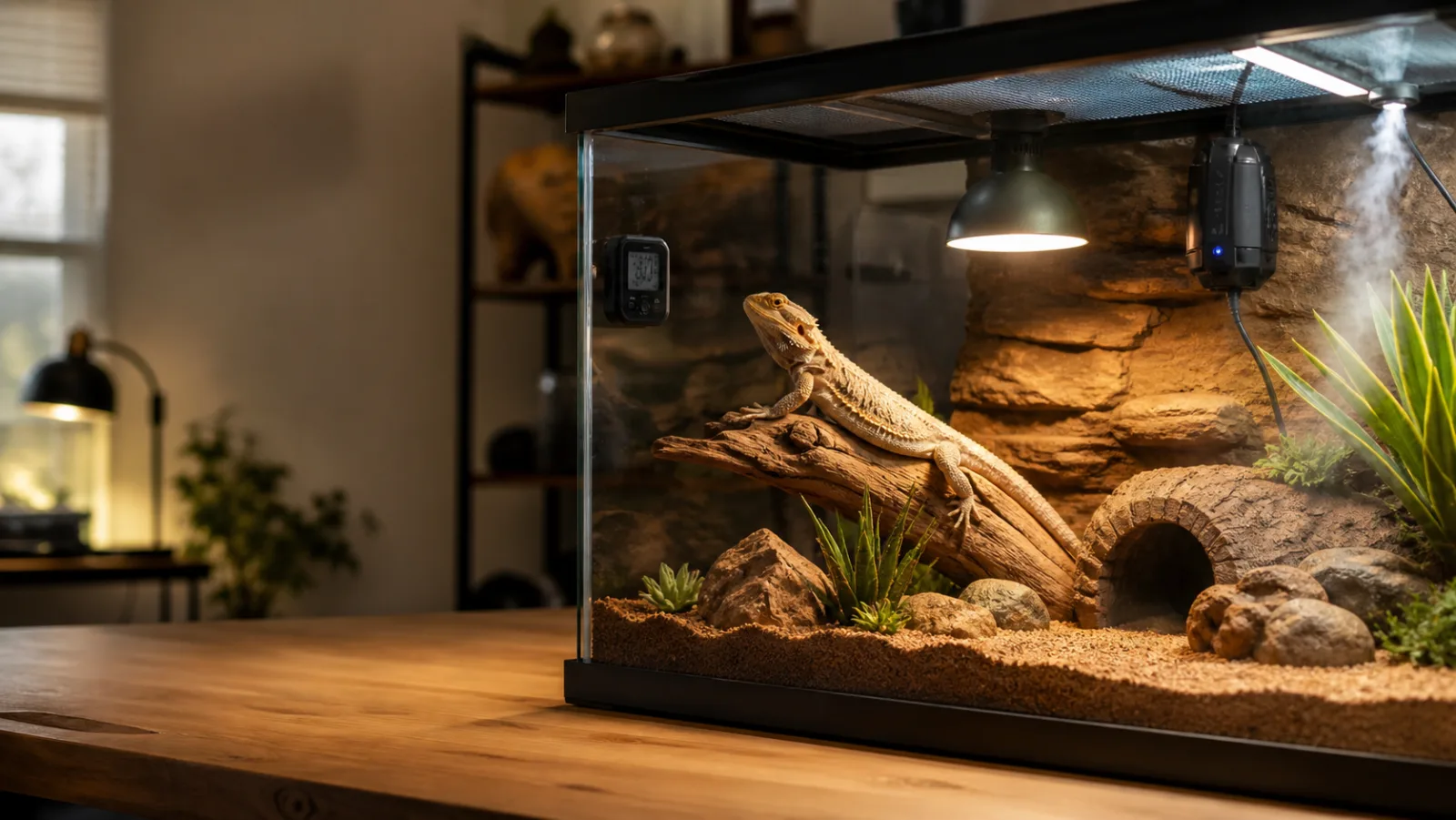
Reptile
Reptile Habitat Setup and Environmental Control: 2026 Guide for Heat, Humidity, and Safety
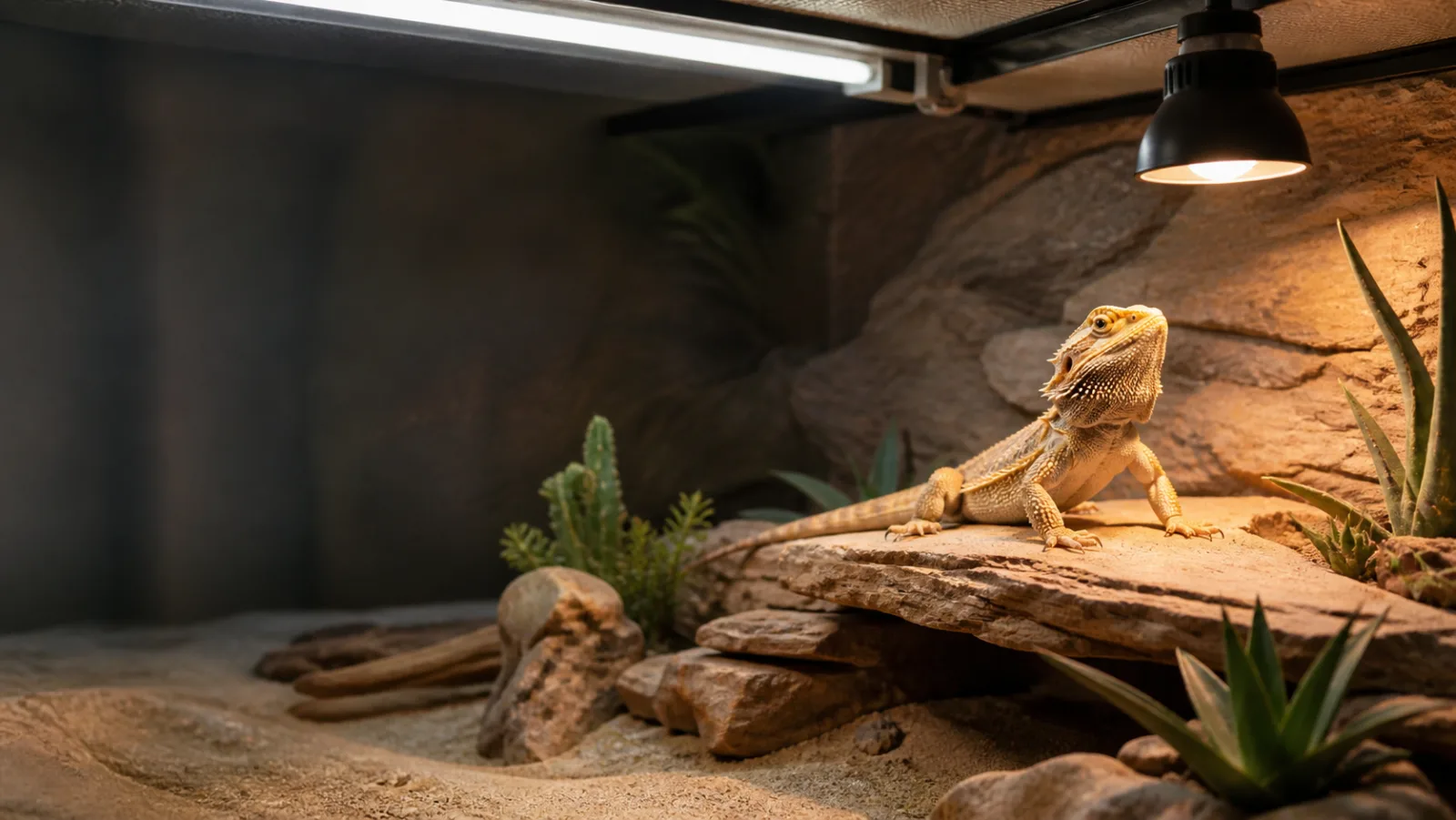
Reptile
Reptile UVB Lighting and Basking (2026 Guide): How to Choose Safe Lighting for Reptiles
Reptile
Best Reptile Thermostats for Heat Mats, CHEs & Heating Elements (2026)
Reptile
Best Reptile UVB Bulbs for Safe Lighting (2026)
Reptile
Best PVC Reptile Enclosures for Bioactive Setups (2026)
Reptile