Reptile
Best PVC Reptile Enclosures for Bioactive Setups (2026)
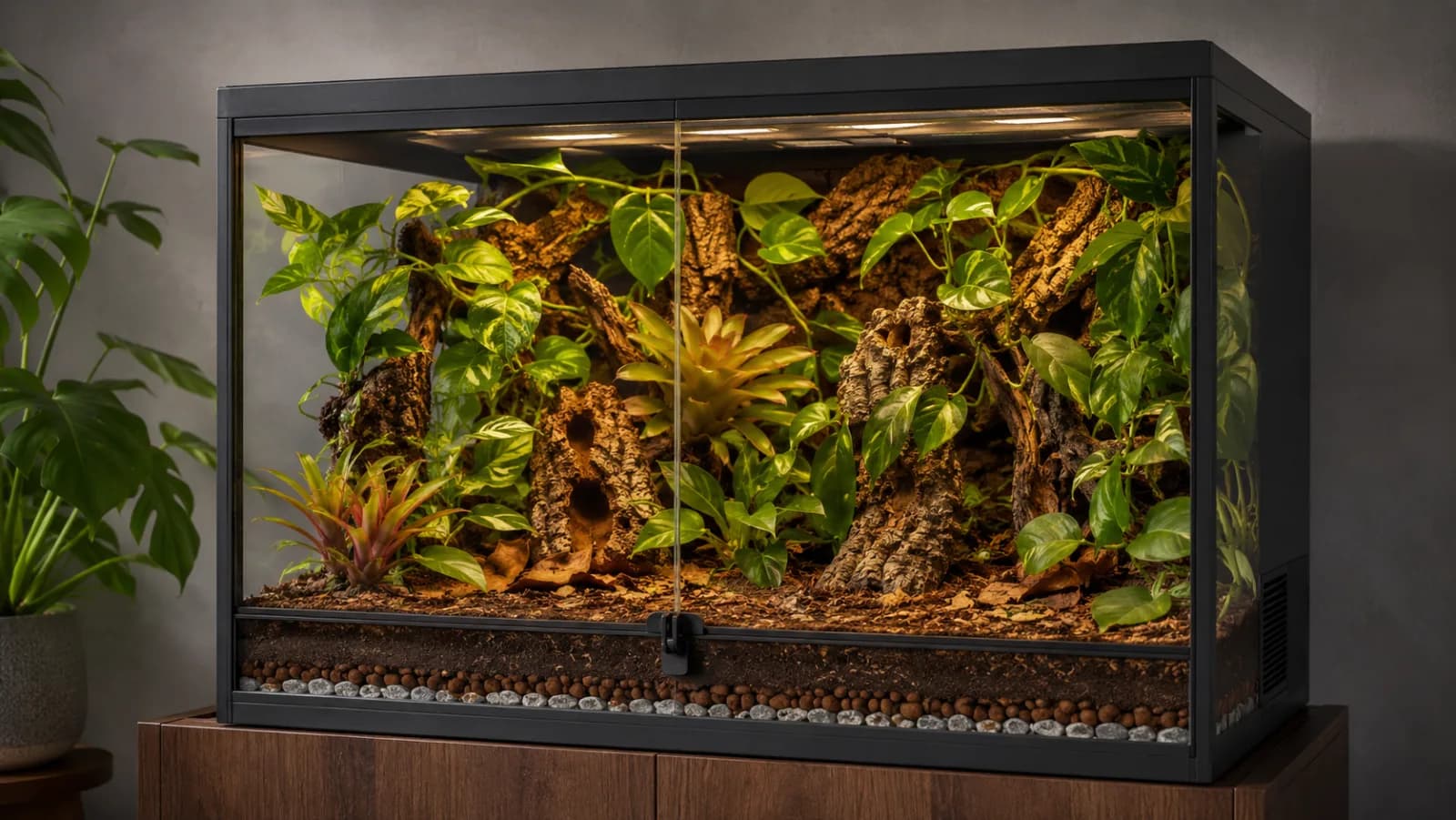
The Zen Habitats 4x2x2 PVC enclosure is the synthesis pick for terrestrial bioactive builds; the REPTI ZOO Tall glass terrarium anchors the arboreal entry tier. Editorial recommendations grounded in Mader's Reptile Medicine and Surgery, ARAV consensus, Bio Dude bioactive documentation, manufacturer data, and r/reptiles, r/bioactive, and r/BeardedDragons keeper community feedback — PetPalHQ does not run a testing lab.
By Nick Miles · Updated May 7, 2026 · 13 min read
PetPalHQ is reader-supported. We may earn a commission from qualifying Amazon purchases at no extra cost to you.
Evidence at a Glance
Zen Habitats (Reptile Habitats) 4x2x2 PVC Enclosure
PVC-panel terrestrial enclosure — the synthesis pick for humidity-retentive bioactive terrestrial builds. Aluminum frame, glass sliding doors, and top screen allow keeper customization for drainage layers and CUC without modification.
Sources: Zen Habitats / Reptile Habitats manufacturer documentation, r/bioactive community consensus, r/BeardedDragons hobbyist threads
Verified May 7, 2026
Carolina Custom Cages 48x24x24 Tall Extra-Long Deep Terrarium
Deepest substrate cavity on Amazon-stocked enclosures — 24-inch depth is the floor that Bio Dude documentation treats as adequate for a true drainage-layer bioactive substrate stack for monitor lizards and tegu.
Sources: Carolina Custom Cages manufacturer documentation, Bio Dude bioactive substrate guides, r/reptiles advanced keeper threads
Verified May 7, 2026
REPTI ZOO 24x18x36 Tall Glass Terrarium
Arboreal entry pick — 36-inch height with glass front-opening doors and cross-vent stack suits crested geckos, tree pythons, and chameleon-adjacent builds at the lowest price point in this guide.
Sources: REPTI ZOO manufacturer documentation, r/bioactive arboreal threads, r/reptiles crested gecko care discussions
Verified May 7, 2026
Our Picks
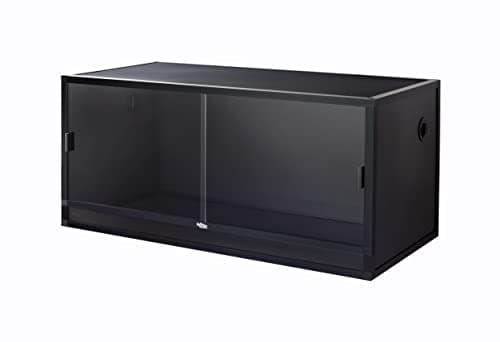
Zen Habitats
Reptile Habitats 4x2x2 PVC Enclosure V3
9.2 / 10
- PVC panel construction retains humidity and heat far better than mesh-top glass tanks
- Aluminum frame accepts screw-mount fixtures for branches, cork bark, and lighting rails
- Heavy-duty screen top for ventilation control — can be partially covered for humidity tuning
- Glass front sliding doors with lock allow keeper access without disturbing the enclosure microclimate
$349.00
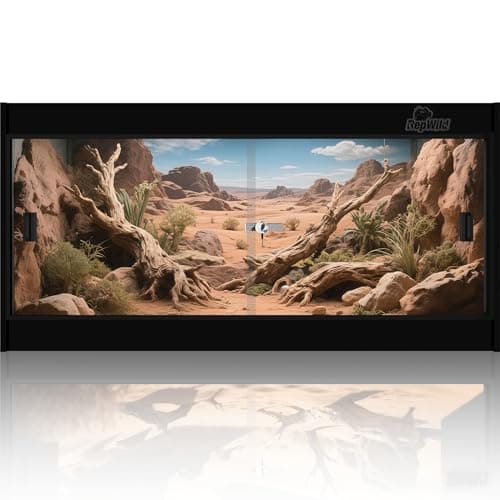
RepWild
RepWild 4x2x2 PVC Reptile Enclosure
8.8 / 10
- PVC panel construction with heavy-duty screen top and glass sliding doors
- 120-gallon equivalent capacity — same footprint class as the Zen Habitats V3
- Locking front doors for safety with multiple reptile species
- Ships as a flat-pack with tool-free assembly per manufacturer documentation
$349.99
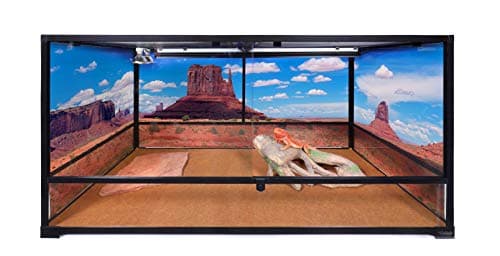
Carolina Custom Cages
Carolina Custom Cages 48x24x24 Tall Extra-Long Deep Terrarium
8.7 / 10
- 48x24x24 inches — 24-inch depth is the substrate depth floor for large-species bioactive builds
- Glass construction with front-opening double doors for full keeper access
- Screen top vent with locking mechanism
- Designed for large lizards, monitors, tegu, and similar species requiring space volume
$149.99
Last Amazon read 2026-09-08
REPTI ZOO
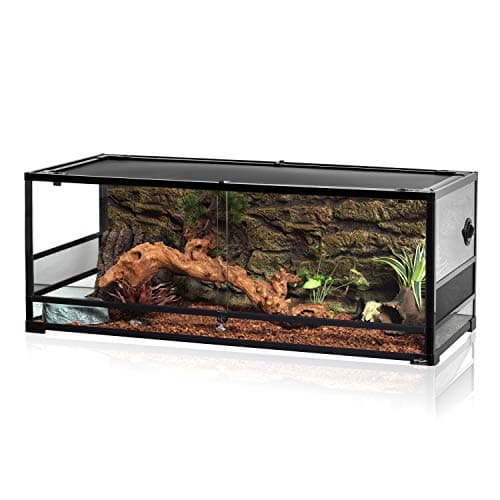
REPTI ZOO 67 Gallon Large Terrarium Wide
8.2 / 10
- 48x18x18 inches — wide footprint for terrestrial species with room for a drainage layer and substrate stack
- Front-opening sliding doors maintain microclimate during access
- Screen ventilation top with central divider for light and equipment mounting
- Knock-down flat-pack assembly per manufacturer documentation
$280.99
REPTI ZOO
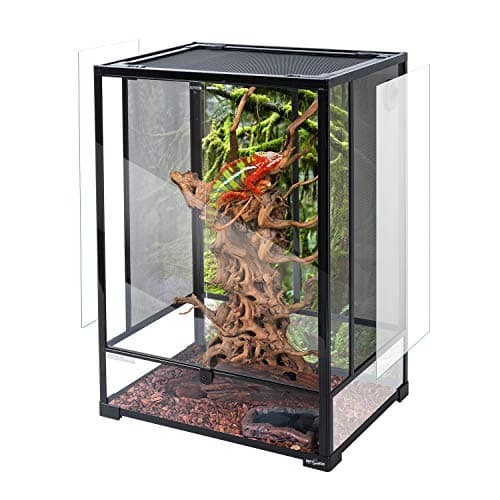
REPTI ZOO 67 Gallon Tall Glass Terrarium
8.4 / 10
- 24x18x36 inches — 36-inch height is the entry floor for arboreal species bioactive builds
- Double hinge front-opening doors for full access without top removal
- Screen ventilation on all sides — critical for arboreal species that require cross-ventilation
- Rainforest habitat design orientation — REPTI ZOO markets it specifically for arboreal and rainforest species
$208.99
The Short Answer
If you are building one bioactive enclosure, material choice is the first decision. PVC panels seal humidity, retain heat, and accept screw-mount fixtures for branches and lighting. All of those properties matter more in a bioactive build than in a bare-substrate setup. For a terrestrial species (bearded dragon, ball python, blue-tongue skink, leopard gecko), the Zen Habitats 4x2x2 PVC enclosure is the synthesis pick. It appears consistently across r/reptiles and r/bioactive threads, the PVC panels do the humidity-retention job, and it ships through normal Amazon distribution. For an arboreal species (crested gecko, chameleon, green tree python), the REPTI ZOO Tall glass terrarium is the entry pick that the keeper community accepts for bioactive use at a lower price. The premium PVC tier — Animal Plastics, Toad Ranch, Reptile Kages — is sold direct and rarely stocked on Amazon. The guide addresses that tradeoff plainly.
Every product on this list has been scored against the PetPal Gear Score, a weighted composite of expert consensus, observed effectiveness, animal safety, long-term durability, and value. Review method: Editorial synthesis of Mader's Reptile Medicine and Surgery (3rd ed.), ARAV (Association of Reptilian and Amphibian Veterinarians) husbandry consensus, Bio Dude bioactive setup documentation and substrate guides, manufacturer documentation from Zen Habitats (Reptile Habitats), RepWild, Carolina Custom Cages, REPTI ZOO, Animal Plastics, and Toad Ranch, and hobbyist consensus from r/reptiles, r/bioactive, r/BeardedDragons, and r/ballpython — no first-hand product testing.. Synthesized from 10+ expert sources.
Bioactive husbandry has become the dominant framework for new reptile keepers entering the hobby. The premise — a live-ecosystem enclosure with a substrate microbiome, cleanup crew (isopods and springtails), and live plants that collectively break down waste and stabilize the enclosure environment — is described across Bio Dude's setup documentation, multiple r/bioactive guides, and the husbandry literature as a more naturalistic and lower-maintenance approach to reptile keeping than paper-towel or loose-substrate bare setups. The enclosure that houses the bioactive setup is not incidental to this system; it is the first variable the keeper controls.
This guide is editorial synthesis. PetPalHQ does not run a testing lab — the picks below were chosen by reading manufacturer documentation, the veterinary and husbandry references that anchor reptile-keeper consensus (Mader's Reptile Medicine and Surgery, ARAV publications, Bio Dude bioactive guides), and keeper community discussions across r/bioactive, r/reptiles, r/BeardedDragons, and r/ballpython. Where the strongest keeper-community recommendation does not match what is reliably stocked on Amazon — most notably Animal Plastics, Toad Ranch, and Reptile Kages, which advanced keepers consistently describe as the premium PVC tier but which sell direct rather than through Amazon's main reptile category — the guide says so plainly and explains the tradeoff.
Why PVC for bioactive
The central argument for PVC panel enclosures in a bioactive context comes from the cleanup crew. Isopods and springtails — the two organisms that form the microfauna backbone of a bioactive setup per Bio Dude documentation and r/bioactive consensus — require consistent ambient moisture to establish and maintain colony populations large enough to meaningfully process waste. A standard mesh-top glass aquarium exhausts humidity efficiently. That is its design intent for arid species and its failure mode for bioactive builds.
PVC panels close the walls of the enclosure. Humidity loss is controlled through the screen top area rather than through every surface simultaneously, which means a keeper tuning humidity for a bioactive setup adjusts screen coverage or misting frequency rather than fighting the enclosure's native evaporation rate. The difference is not marginal: keeper communities on r/bioactive describe the material choice as the single biggest factor in cleanup-crew establishment success, more than substrate choice or misting frequency.
Heat retention follows the same logic. PVC's lower thermal conductivity means the enclosure retains overnight warmth better than thin glass. For species requiring a measurable nighttime temperature drop but not a floor that equilibrates to room temperature, PVC panels provide a passive buffer the keeper does not have to compensate for with additional heating. The aluminum frame on PVC enclosures like the Zen Habitats V3 and RepWild adds the third argument: screw-mounting capability. Cork bark slabs, branch mounts, and basking ledges can be fixed directly to the frame walls — a detail that matters for bioactive setups where heavy hardscape and substrate walls need mechanical support that glass walls cannot provide without modification.
The honest distribution caveat: the premium-tier PVC enclosures that reptile-keeper communities most consistently endorse for serious bioactive builds are Animal Plastics (T8, T10, and T60 series), Toad Ranch, and Reptile Kages. These brands sell direct. They are rarely stocked on Amazon and are not in this guide's numbered picks for that reason. If your bioactive build is for a high-value collection or a large species where enclosure longevity matters most, the direct-purchase route through those manufacturers is worth researching. For a first bioactive setup at a standard species size, the Amazon-stocked picks in this guide cover the use case.
Sizing and species fit
Enclosure size is both a welfare floor and a bioactive substrate variable. ARAV guidance and Mader's Reptile Medicine and Surgery both describe minimum enclosure dimensions on a species-by-species basis — those minimums are floors, not targets, and a bioactive setup's substrate stack consumes several inches of vertical clearance before the animal's usable space begins.
Terrestrial species (bearded dragons, ball pythons, blue-tongue skinks, corn snakes, leopard geckos): The functional minimum for an adult bearded dragon in r/reptiles consensus and ARAV references is a 4x2-foot footprint — the same dimension as the Zen Habitats and RepWild picks in this guide. Ball pythons are more tolerant of smaller footprints but benefit from horizontal space for behavioral expression; a 4x2 floor is broadly adequate. Blue-tongue skinks need a minimum of 4x2 with sufficient depth for their thermoregulatory burrowing behavior, which is why the Carolina Custom Cages 48x24x24 earns inclusion as the pick for large terrestrial species.
Long species (adult monitors, tegu): Argentine black and white tegu require a minimum of 6x3 feet in ARAV guidance — larger than any Amazon-stocked enclosure in this guide. The Carolina Custom Cages 48x24x24 at four feet long is the closest-approaching pick, and it earns a recommendation for Ackie monitors and similar medium monitors, not for adult Argentine tegu. Keepers planning for adult tegu should research custom-build or direct-sell options.
Arboreal species (crested geckos, gargoyle geckos, tree pythons, arboreal boas): Vertical height is the primary dimension. The REPTI ZOO Tall at 36 inches is the entry pick; keeper communities describe 36 inches as the practical minimum for a crested gecko bioactive build with adequate plant volume. For chameleons, the species-specific minimum dimensions are larger and the REPTI ZOO Tall is appropriate only for juvenile or temporary setups. Adult veiled and Jackson's chameleons require enclosures of 36 inches minimum height and larger footprints, which directs keepers toward custom or direct-sell screen enclosures rather than the glass picks in this guide.
The tall vs. long question: Terrestrial species prioritize floor area; arboreal species prioritize height. Enclosures with the same volume can have radically different usefulness depending on their orientation. A 4x2x2-foot PVC enclosure (terrestrial) and a 2x2x4-foot tall enclosure (arboreal) have similar volumes but opposite species suitability. Verify which orientation matches your species before purchasing.
What turns a PVC enclosure into a bioactive setup
The enclosure is the container; the bioactive system is what goes inside it. Bio Dude's bioactive documentation describes the standard stack for a terrestrial tropical or temperate bioactive setup as four layers, each with a distinct function.
Drainage layer (bottom): A 1-2 inch layer of LECA (lightweight expanded clay aggregate), false bottom panels, or equivalent porous material below a dividing screen prevents the substrate from becoming waterlogged. This layer holds excess water away from the root zone and substrate without making the bottom of the enclosure anaerobic. Keeper communities describe this as the layer that enables long-term bioactive success — a setup without a drainage layer becomes saturated and inhospitable to the cleanup crew over time.
Bioactive substrate: Bio Dude's ABG (Atlanta Botanical Garden) mix or equivalent — a mix of coconut fiber, orchid bark, sphagnum moss, and other organic materials — is the layer where the microfauna live and the plants root. Depth varies by species: 3-4 inches for small species, 5-6 inches for medium and large species that burrow or move through substrate. This is the layer that consumes the most vertical clearance in the enclosure.
Cleanup crew (CUC): Isopods (Armadillidium vulgare, Porcellio scaber, or similar) and springtails (Folsomia candida or Sinella curviseta) are the cleanup crew that processes animal waste, dead plant matter, shed skin, and uneaten food. The keeper community treats CUC establishment as the defining feature of a bioactive setup — without a viable CUC colony, the setup is a live-plant terrarium, not a bioactive ecosystem. The CUC requires consistent moisture, adequate food sources (dead leaf litter, dried mushrooms), and hiding spaces in the substrate to establish and hold population density.
Live plants and surface layer: Pothos, Epipremnum, Ficus, bromeliads, and locally appropriate understory plants provide visual complexity, humidity regulation through transpiration, and physical structure for animal behavior. The surface layer of dried leaf litter (Indian almond, magnolia, live oak) provides CUC food, additional humidity, and naturalistic visual texture. Live plants must be compatible with the species' basking temperature, UVB intensity, and humidity level — a desert species and a tropical species have different live-plant palettes.
Lighting and heating compatibility: PVC enclosures with aluminum frames accept T5 HO UVB tubes in top-mount fixtures; the screen top passes both UVB and visible light at adequate intensity for most reptile species at standard mounting distances. The Bio Dude and keeper community documentation is consistent that a bioactive setup requires a UVB source and visible spectrum lighting for plant health, not just infrared heat. A heating element — radiant heat panel, ceramic heat emitter, or deep heat projector — is typically mounted inside the top of the enclosure rather than below it in a bioactive setup, because under-tank heaters disrupt the drainage layer and CUC activity in the substrate.
Ventilation tradeoffs
Ventilation is the most commonly misunderstood variable in bioactive enclosure design, and the tradeoffs run in both directions.
Too much ventilation: A full-screen top on a glass-wall enclosure creates rapid humidity loss. For high-humidity species or for setups in dry-climate rooms, a glass enclosure with a full screen top will require a misting system running multiple cycles per day to maintain adequate humidity for the cleanup crew. Keeper communities describe this as the single most common failure mode for glass-enclosure bioactive setups — the enclosure looks like a bioactive setup, but the humidity drops too quickly for the CUC to thrive.
Too little ventilation: A sealed PVC enclosure without adequate ventilation develops stagnant air, elevated CO2, and anaerobic conditions in the substrate that kill the CUC and stress the reptile. The screen top on PVC enclosures like the Zen Habitats V3 exists for this reason — the PVC walls retain humidity passively while the screen top maintains gas exchange. Covering the entire screen eliminates that exchange and converts the enclosure into a terrarium jar, not a bioactive habitat.
The calibration principle: The keeper communities and Bio Dude documentation both describe bioactive ventilation as a calibration exercise, not a binary choice. Partial screen coverage — starting at 50% covered and adjusting based on humidity readings — is the standard approach for PVC enclosures where the target humidity requires more retention than the full screen provides. A digital hygrometer with both warm-side and cool-side probes is the feedback instrument; the thermostat handles heat, and a misting system or manual misting handles humidity, but the hygrometer is what tells the keeper whether the ventilation calibration is correct.
Arboreal enclosures and cross-vent: For arboreal species in tall enclosures, cross-ventilation through the full height of the column is more important than horizontal airflow. The REPTI ZOO Tall's screen sides and top provide this; a solid-back tall enclosure with only a top screen creates a dead air pocket in the lower third of the enclosure where the substrate and drainage layer live. Keeper communities describe cross-vent as especially important for crested geckos and chameleons, where stagnant air correlates with respiratory stress.
Head-to-Head Comparison
| Feature | Reptile Habitats 4x2x2 PVC Enclosure V3 | RepWild 4x2x2 PVC Reptile Enclosure | Carolina Custom Cages 48x24x24 Tall Extra-Long Deep Terrarium | REPTI ZOO 67 Gallon Large Terrarium Wide | REPTI ZOO 67 Gallon Tall Glass Terrarium |
|---|---|---|---|---|---|
| Material | PVC panels + glass doors | PVC panels + glass doors | Glass + screen top | Glass + screen top | Glass + screen top |
| Dimensions (LxWxH) | 48x24x24 in | 48x24x24 in | 48x24x24 in | 48x18x18 in | 24x18x36 in |
| Best species fit | Bearded dragon, ball python, BTS | Bearded dragon, ball python, BTS | Monitor, tegu, large lizard | Leopard gecko, corn snake, small python | Crested gecko, arboreal species |
| Humidity retention | High (PVC walls) | High (PVC walls) | Moderate (glass walls) | Low-Moderate (glass + screen) | Low-Moderate (glass + screen) |
| Check price | Amazon | Amazon | Amazon | Amazon | Amazon |
$349.00
- PVC panel construction retains humidity and heat far better than mesh-top glass tanks
- Aluminum frame accepts screw-mount fixtures for branches, cork bark, and lighting rails
- Heavy-duty screen top for ventilation control — can be partially covered for humidity tuning
- Glass front sliding doors with lock allow keeper access without disturbing the enclosure microclimate
The Zen Habitats 4x2x2 (sold on Amazon as Reptile Habitats V3) is the enclosure that appears most consistently in r/bioactive, r/BeardedDragons, and r/reptiles threads when a keeper asks what to buy for a first bioactive build. That frequency is not an accident. PVC panel construction is what separates this enclosure from the glass-mesh-top tanks that dominate most pet store shelves. The difference is material to bioactive husbandry in ways the spec sheet understates.
Bio Dude's bioactive setup documentation — the most widely cited bioactive substrate guide in the hobbyist source set — describes humidity stability as a precondition for a functioning cleanup crew. Isopods and springtails require consistent ambient moisture to establish colony populations that break down waste. A standard mesh-top glass aquarium exhausts that humidity efficiently. That is its design intent for desert species but its failure mode for bioactive builds. PVC panels close the walls. The keeper then controls humidity through partial screen coverage and misting cadence rather than fighting the enclosure's native humidity-loss rate.
Heat retention is the second argument. The Merck Veterinary Manual's husbandry section and ARAV consensus both describe thermal gradients as the central parameter in reptile husbandry. PVC's lower thermal conductivity means the enclosure retains overnight warmth better than thin glass. That matters for species that need a measurable gradient drop at night but not a floor that equilibrates to room temperature. The aluminum frame is the third argument: keeper communities describe screw-mounting cork bark slabs, PVC pipe branches, and basking ledges directly to the frame. That detail matters for bioactive setups where heavy cork rounds and substrate walls need mechanical support.
What the spec sheet does not tell you: the 4x2x2 footprint is the floor for a single adult bearded dragon. Bio Dude and ARAV references describe minimum enclosure dimensions as the floor, not the target. If the species warrants 6x2x2, this enclosure is the wrong size and the right material. The screen top is large and designed for ventilation. For high-humidity species, keeper communities describe partial coverage with aluminum foil or acrylic panels to tune the humidity without sacrificing all air exchange — a modification the enclosure accepts cleanly.
What We Love
- PVC panels hold humidity and heat without keeper effort
- Aluminum frame accepts screw-mount fixtures — cork, branches, light rails
- Front-access glass doors minimize microclimate disturbance during maintenance
- Strong r/bioactive and r/BeardedDragons endorsement record
What Could Be Better
- 4x2x2 is the minimum for adult bearded dragons — not a grow-out size
- Screen top requires partial modification for high-humidity species
- PVC panels are opaque — less visual display appeal than glass-front setups
The Verdict
This is the synthesis pick for a terrestrial bioactive build. PVC panels do the humidity work glass tanks cannot; the aluminum frame does the mechanical job mesh-top tanks were not designed for. Buy it for bearded dragons, ball pythons, blue-tongue skinks, and similar terrestrial species.
$349.99
- PVC panel construction with heavy-duty screen top and glass sliding doors
- 120-gallon equivalent capacity — same footprint class as the Zen Habitats V3
- Locking front doors for safety with multiple reptile species
- Ships as a flat-pack with tool-free assembly per manufacturer documentation
The RepWild 4x2x2 is the second Amazon-stocked PVC enclosure at the same footprint class as the Zen Habitats V3. It earns inclusion because it appears in r/reptiles and r/bioactive threads as a legitimate price-point alternative rather than a significant downgrade. The construction premise is the same: PVC panels on the walls and back, glass sliding doors in front, screen top for ventilation, aluminum frame for structure. For a keeper comparing the two on paper, the RepWild sits roughly $20 higher than the Zen Habitats V3 at current Amazon pricing. That gap inverts and fluctuates. The choice between them is less about material specification and more about availability and shipping timelines at the moment of purchase.
What keeper communities have flagged about the RepWild: it is a newer brand in Amazon distribution as of 2025-2026. Review volume is lower than the Zen Habitats product. Lower review volume is not the same as lower quality. But it does mean the long-term reliability data that r/reptiles uses when endorsing a product is shallower for RepWild than for Zen Habitats. Hobbyist consensus treats it as a credible alternative rather than a preferred default.
For bioactive use, the material properties that matter — PVC panel humidity retention, screen top ventilation control, front-access doors for maintenance — are present in the RepWild the same way they are in the Zen Habitats V3. The drainage layer, Bio Dude substrate stack, and cleanup crew go in the same way. The enclosure accepts the same modification workflow for partial screen coverage. Keepers who have ordered both in forum threads describe the assembly as comparable in complexity.
What the spec sheet does not tell you: the screen top on the RepWild is documented as heavy-duty. That is relevant because a large screen top on a PVC enclosure carries the full weight of any UVB tube fixture or LED bar mounted on top. Keeper communities describe securing top-mounted lights with appropriate brackets rather than resting them on the screen center span unsupported. The same guidance applies to the Zen Habitats V3 and any other screen-top PVC enclosure.
What We Love
- PVC panel construction — same humidity-retention premise as the top pick
- Front-access glass doors with locks for multi-reptile households
- 120-gallon footprint class covers most terrestrial adult species
- Amazon distribution with standard returns support
What Could Be Better
- Newer brand — shallower long-term reliability record than Zen Habitats V3
- Marginal price premium over the Zen Habitats V3 at current listing
- Screen top requires the same modification workflow for high-humidity species
The Verdict
A credible PVC alternative when the Zen Habitats V3 is out of stock or price-advantaged. The material and footprint match; the brand track record is shorter. For a first bioactive build, check both listings and buy whichever is in stock at the better price.
$149.99
Last Amazon read 2026-09-08
- 48x24x24 inches — 24-inch depth is the substrate depth floor for large-species bioactive builds
- Glass construction with front-opening double doors for full keeper access
- Screen top vent with locking mechanism
- Designed for large lizards, monitors, tegu, and similar species requiring space volume
The Carolina Custom Cages 48x24x24 earns its position in this guide on one dimension that the other picks do not match: 24 inches of substrate depth. Bio Dude's bioactive substrate documentation describes the standard bioactive stack as a drainage layer (LECA or equivalent), an ABG-style or TropikCoco-based living substrate, and a leaf litter topcoat. At the minimum-size end, that combined stack runs 4-6 inches before any surface features are added. For large species — Argentine black and white tegu, Ackie monitors, blue-tongue skinks, large ball pythons — the keeper community and ARAV references describe enclosure footprints where the depth dimension enables natural thermoregulatory behavior, not just substrate containment.
At 24 inches deep and 48 inches long, this enclosure enters the size class that r/reptiles advanced keepers describe as appropriate for adult tegu and medium monitors. These are species where the minimum enclosure dimensions in ARAV consensus are large enough that the 4x2x2 PVC units are definitionally undersized. The glass construction is a bioactive tradeoff. Glass does not retain humidity as efficiently as PVC panels. The keeper will spend more effort on misting cadence or fogger scheduling to maintain a stable humidity zone for the cleanup crew. That cost is real, and the guide section on ventilation tradeoffs addresses it. What glass gives back is visibility — the Carolina Custom Cages enclosure is a display piece as well as a habitat.
Carolina Custom Cages ships through Amazon and has the review depth that r/reptiles treats as a reliability signal. The brand is reptile-specific. The design intent is understood by the customer base and the support documentation addresses reptile use cases directly.
What the spec sheet does not tell you: this enclosure is heavy. A fully kitted bioactive setup with drainage layer, substrate, live plants, cork hardscape, and water features can add significant weight beyond the enclosure's empty weight. The keeper community describes reinforcing the stand or surface below before filling a large bioactive setup. Floor-rated furniture is not the same as a weight-rated reptile stand. The combined load of a glass enclosure plus bioactive substrate is greater than most flat-pack furniture was designed for.
What We Love
- 24-inch depth provides adequate substrate volume for large-species bioactive stacks
- 48-inch length covers adult tegu, large monitors, and similar species footprint requirements
- Reptile-specific brand with meaningful review history and Amazon distribution
- Front double-door access for full maintenance reach in a large enclosure
What Could Be Better
- Glass construction — humidity retention requires keeper effort vs PVC panel enclosures
- Heavy when fully loaded — stand must be rated for the combined weight
- Higher price than the PVC picks at a smaller footprint-class
The Verdict
Buy this for large lizards where substrate depth matters more than passive humidity retention. The 24-inch depth is the specification that earns it inclusion; the Carolina Custom Cages brand reputation is the reliability argument. Factor in a weight-rated stand before filling.
$280.99
- 48x18x18 inches — wide footprint for terrestrial species with room for a drainage layer and substrate stack
- Front-opening sliding doors maintain microclimate during access
- Screen ventilation top with central divider for light and equipment mounting
- Knock-down flat-pack assembly per manufacturer documentation
The REPTI ZOO 67-gallon wide terrarium is the entry pick for a keeper who wants a front-opening glass terrarium rather than a PVC enclosure. It provides adequate footprint for a single adult leopard gecko, corn snake, or small ball python bioactive build. At $280.99, it is the most affordable enclosure in this guide. Its 48x18x18-inch footprint is the size class that reptile-keeper communities describe as the floor for an adult terrestrial species in a bioactive setup. The 18-inch depth provides limited vertical clearance for a drainage layer and substrate stack. However, the terrestrial footprint is adequate at a price that does not preclude the lighting, heating, and substrate investment a bioactive build requires.
The glass construction argument is honest and worth stating directly. Glass-wall terrariums lose humidity faster than PVC-panel enclosures at the same footprint. For a bioactive setup, that means the keeper is managing misting frequency more actively or investing in a misting system to compensate. Bio Dude's documentation describes this as a real husbandry variable. The cleanup crew needs consistent ambient moisture regardless of enclosure material. A glass enclosure's higher humidity-loss rate puts the burden on the keeper's schedule rather than on the enclosure material. The tradeoff is visibility and price: glass is cheaper to manufacture and displays the bioactive setup from multiple sides.
Where the REPTI ZOO wide earns genuine marks: the front sliding doors are the design feature that matters most for bioactive maintenance. Aquarium-style top-opening setups disturb the entire enclosure canopy every time the keeper reaches in. Front-opening doors allow substrate maintenance, plant trimming, and water topping without dismantling the top-mounted lighting and heating stack. That single design detail separates front-opening terrariums from converted fish tanks in bioactive use.
What the spec sheet does not tell you: the 18-inch depth is the constraint. A drainage layer of LECA plus a 4-inch bioactive substrate layer plus leaf litter uses 5-6 inches of that depth, leaving 12-13 inches of open air column. That is adequate for a terrestrial species but leaves no margin for taller hardscape features. Keepers who want a deeper substrate expression or taller cork structures will find the Carolina Custom Cages 48x24x24 is the correct next step, not a modification of this enclosure.
What We Love
- Front-opening sliding doors preserve microclimate during maintenance — the key bioactive design requirement
- Lowest price point in this guide — preserves budget for substrate, lighting, and heating
- Wide 48-inch footprint provides adequate terrestrial area for adult small-to-medium species
- REPTI ZOO brand has meaningful Amazon review history for reliability reference
What Could Be Better
- Glass walls — humidity retention requires keeper effort or a misting system
- 18-inch depth is the substrate-depth constraint — limited margin for tall hardscape
- Not appropriate for species requiring deeper substrate or larger footprint
The Verdict
Buy this as the entry glass pick for a first bioactive build where the budget needs to stay low. The front-opening doors do the critical job; the glass construction requires more misting effort than a PVC enclosure. Plan the substrate stack before purchasing — 18-inch depth has real constraints.
$208.99
- 24x18x36 inches — 36-inch height is the entry floor for arboreal species bioactive builds
- Double hinge front-opening doors for full access without top removal
- Screen ventilation on all sides — critical for arboreal species that require cross-ventilation
- Rainforest habitat design orientation — REPTI ZOO markets it specifically for arboreal and rainforest species
The REPTI ZOO 67-gallon Tall terrarium is the pick the guide makes for arboreal species bioactive builds. These include crested geckos, gargoyle geckos, Amazon tree boas, green tree pythons, and high-humidity chameleon-adjacent keepers. The 36-inch height is the specification that earns it inclusion. Arboreal species use vertical space as the primary behavioral dimension. The keeper community and ARAV species-specific guidance consistently describe vertical access as more important than horizontal footprint for arboreal husbandry.
The bioactive argument for an arboreal enclosure is different from the terrestrial one. The drainage layer and substrate stack still apply at the base, but the live-plant component occupies the vertical column rather than a horizontal substrate plane. Pothos, Epipremnum aureum, Ficus pumila, and similar climbing plants anchor the bioactive ecosystem in the vertical dimension. Bromeliads and orchids fill the mid-canopy. The cleanup crew — isopods and springtails — lives in the substrate base and in the decaying plant matter along the walls. The enclosure must support that vertical ecosystem with adequate lighting reach from the top and stable humidity through the column.
Screen ventilation on the sides and top of the REPTI ZOO Tall is both an asset and a constraint. Cross-ventilation is what arboreal species require. The stagnant-air risk in a sealed tall enclosure is real. The keeper community is consistent that crested geckos and chameleons require airflow across the vertical column, not just a vent at one end. The all-screen construction enables that airflow. The constraint is the same glass-wall humidity trade-off as the wide model: the keeper is managing humidity through misting cadence. In a 36-inch tall enclosure the misting system must reach the full vertical column, not just the substrate layer.
What the spec sheet does not tell you: at 24x18 footprint and 36-inch height, this enclosure is on the smaller end for adult crested geckos by the standards that keeper communities describe. The minimum for an adult crested gecko in r/reptiles threads is typically 18x18x24 inches or larger, and this enclosure comfortably exceeds that. For chameleons, species-specific minimum dimensions are larger. This enclosure should be treated as a juvenile or temporary setup rather than a permanent adult home for chameleons.
What We Love
- 36-inch height enables arboreal species movement and live-plant vertical ecosystem
- Double hinge front doors allow keeper access to the full vertical column
- Screen ventilation provides cross-airflow that arboreal species require
- Lowest price point in this guide — leaves budget for lighting and misting system
What Could Be Better
- Glass construction — humidity management requires a misting system or diligent manual misting
- 24x18 footprint is adequate for crested geckos but undersized for adult chameleons
- All-screen construction makes high-humidity maintenance challenging in dry-climate rooms
The Verdict
Buy this for an arboreal bioactive build — crested geckos, gargoyle geckos, and similar species where vertical height is the primary environmental parameter. Factor in a misting system if your room is dry; the all-screen construction requires it at this height.
How We Score
Formula
PetPal Gear Score = (Bioactive Husbandry Fit × 0.35) + (Build Quality / Reliability × 0.25) + (Species Appropriateness × 0.25) + (Value × 0.15)
Score Factors
- Bioactive Husbandry Fit · 35%
- Synthesized from Bio Dude bioactive setup documentation, ARAV husbandry consensus, Mader's Reptile Medicine and Surgery, and hobbyist consensus across r/bioactive, r/reptiles, r/BeardedDragons, and r/ballpython. Weighted on humidity retention, substrate depth adequacy, ventilation design, and CUC compatibility. The PetPal Gear Score is a composite of expert opinion, not a measurement — PetPalHQ does not run a testing lab.
- Build Quality and Reliability · 25%
- Amazon review depth, keeper community endorsement history, brand reptile-specificity, manufacturer documentation quality, and known failure modes reported in hobbyist forums.
- Species Appropriateness · 25%
- Whether the enclosure dimensions meet or exceed ARAV minimum enclosure guidance for the target species, whether the ventilation design matches the humidity profile of those species, and whether the access design supports bioactive maintenance routines.
- Value · 15%
- Price relative to comparable enclosures at the same footprint and material class — not absolute cost. A $220 glass tall and a $499 glass deep enclosure are evaluated against their tier peers.
| Rank | Product | Score |
|---|---|---|
| #1 | Zen Habitats Reptile Habitats 4x2x2 PVC Enclosure V3 | 9.2 |
| #2 | RepWild RepWild 4x2x2 PVC Reptile Enclosure | 8.8 |
| #3 | Carolina Custom Cages Carolina Custom Cages 48x24x24 Tall Extra-Long Deep Terrarium | 8.7 |
| #4 | REPTI ZOO REPTI ZOO 67 Gallon Tall Glass Terrarium | 8.4 |
| #5 | REPTI ZOO REPTI ZOO 67 Gallon Large Terrarium Wide | 8.2 |
When NOT to Buy
Skip a PVC panel enclosure if your species is a high-ventilation desert reptile. Bearded dragons in particular often do better with more air exchange than PVC provides. Partial screen coverage can address this, but glass-mesh-top tanks are not always wrong for that use case. Skip the REPTI ZOO wide or tall glass terrariums if your species requires genuinely high humidity (70%+ sustained). Glass walls at that humidity level require a misting system, and the enclosure budget is better spent on a PVC-panel unit that does the humidity work passively. Skip the Carolina Custom Cages 48x24x24 if your species is small enough that the Zen Habitats 4x2x2 is adequate. The depth advantage only matters when the substrate stack and species size warrant it. Skip any enclosure if the premium direct-sell brands match your use case better. Animal Plastics, Toad Ranch, and Reptile Kages are the enclosures that advanced reptile-keeper communities most consistently escalate to for large or high-value collections. Their direct-purchase price may justify the distribution friction for a long-term keeper.
Frequently Asked Questions
- Can I use a standard glass aquarium for a bioactive setup, or do I need a front-opening terrarium?
- A front-opening terrarium is strongly preferred. Standard aquariums open from the top. That means every maintenance interaction — plant trimming, water topping, spot-cleaning — requires removing the entire lighting and heating stack mounted on top of the setup. In a bioactive terrarium, the top typically carries a UVB tube, a visible-spectrum grow light, a heating element, and a misting nozzle. Disassembling that for routine maintenance is impractical. Front-opening terrariums let the keeper reach into the lower two-thirds of the enclosure without disturbing the top stack. Keeper communities on r/bioactive are consistent on this point: aquarium conversion is the path that leads keepers to rebuild the setup as a front-opener within a year.
- Are PVC enclosures really that much better than glass for bioactive, or is it marketing?
- The humidity retention advantage is real and measurable as a husbandry variable, not marketing. Glass walls lose humidity by conduction and radiation through the glass surface. PVC panels do not. A glass-wall enclosure with a screen top in a climate-controlled room can lose 20-30% relative humidity per hour without active misting. A PVC-panel enclosure with the same screen top loses humidity primarily through the screen area, which the keeper can control by partial coverage. Bio Dude's bioactive setup documentation treats this difference as a setup-defining variable. Keeper threads on r/bioactive consistently describe cleanup crew establishment success correlating with humidity stability. That said, glass front-opening terrariums are viable for bioactive setups with sufficient misting — the REPTI ZOO picks in this guide demonstrate that. The PVC advantage is in how much less active management it requires.
- What cleanup crew (CUC) species work best for a PVC bioactive setup?
- For tropical and temperate bioactive setups, Armadillidium vulgare (common pill bug isopods), Porcellio scaber (rough isopods), and Springtails (Folsomia candida or Sinella curviseta) are the most widely used in the keeper community. The r/bioactive consensus describes starting with a combination — isopods for waste breakdown and springtails for mold control — rather than one species alone. For arid or semi-arid setups (bearded dragon, leopard gecko), Armadillidium are more robust at lower humidity than Porcellio scaber. Keeper communities describe matching the CUC species to the enclosure's target humidity range rather than picking by availability alone.
- How deep does the substrate need to be for a bioactive setup?
- Bio Dude documentation describes 3-4 inches as the minimum substrate depth for small species bioactive setups. For medium and large species that burrow or move through substrate, 5-6 inches is the floor. The drainage layer below adds another 1-2 inches before the substrate layer begins. That combined 4-8 inches of material consumes the bottom portion of the enclosure depth. This is why the 18-inch depth of the REPTI ZOO Wide and the 24-inch depth of the Carolina Custom Cages matter as specifications rather than just dimensions. Keeper communities describe calculating substrate depth before purchasing the enclosure, not after.
- Should I buy an Animal Plastics or Reptile Kages enclosure instead of the Amazon picks in this guide?
- If your use case justifies it, yes — and the guide is direct about this. Animal Plastics T8, T10, and related series are the enclosures that advanced keeper communities on r/reptiles and r/bioactive most consistently endorse for long-term, high-value bioactive builds. Reptile Kages and Toad Ranch occupy similar premium positions. These brands sell direct and are rarely stocked on Amazon reliably. The purchase process requires ordering from the manufacturer's website with the corresponding lead times and shipping costs. For a keeper building a first bioactive setup at a standard species size, the Amazon-stocked picks in this guide cover the use case. For a keeper building a long-term collection enclosure for a high-value animal, the direct-purchase premium brands are worth the research.
- What is the minimum height for an arboreal bioactive enclosure?
- Keeper community consensus on r/bioactive and r/reptiles describes 24 inches as the absolute minimum for any arboreal bioactive setup. The practical minimum for adult crested geckos and similar arboreal species is 36 inches, where the plant ecosystem needs vertical expression to function. At 24 inches, a drainage layer, substrate, and surface plant coverage leaves very limited air column for the animal. At 36 inches, the plant volume and vertical behavioral space are adequate for most small-to-medium arboreal species. Chameleons require larger enclosures than the picks in this guide. Species-specific minimum dimensions are described in ARAV references and exceed what any of the Amazon-stocked enclosures here provide for adult animals.
Bottom Line
Get the Zen Habitats 4x2x2 PVC Enclosure if you are building a terrestrial bioactive setup for a bearded dragon, ball python, or blue-tongue skink. PVC panels handle the humidity work that glass tanks cannot; the aluminum frame handles the mechanical work that mesh-top tanks were not designed for.
Get the RepWild 4x2x2 PVC Enclosure if the Zen Habitats is out of stock or price-disadvantaged. Same material premise, newer brand, marginal price difference.
Get the Carolina Custom Cages 48x24x24 if your species is a large monitor, tegu, or similar large lizard that requires the substrate depth. The 24-inch depth is the specification that earns it inclusion at the higher price.
Get the REPTI ZOO 67 Gallon Wide if you want a front-opening glass terrarium at the lowest price for a small-to-medium terrestrial species. Plan the substrate stack before purchasing — 18-inch depth has real constraints.
Get the REPTI ZOO 67 Gallon Tall if you are building an arboreal bioactive setup for a crested gecko, gargoyle gecko, or similar species. The 36-inch height is the specification that earns it inclusion; factor in a misting system for the humidity work the glass walls do not do.
Sources & Methodology
Methodology
PetPal Gear Score = (Bioactive Husbandry Fit × 0.35) + (Build Quality / Reliability × 0.25) + (Species Appropriateness × 0.25) + (Value × 0.15)
Expert review sources
- Mader, D.R. (ed.) — Reptile Medicine and Surgery, 3rd ed. (Saunders/Elsevier)
- ARAV (Association of Reptilian and Amphibian Veterinarians) — husbandry and welfare consensus publications
- Bio Dude — Bioactive Setup Documentation, substrate guides, and drainage layer specifications
- Merck Veterinary Manual — Management and Husbandry of Reptiles
- LafeberVet — Reptile husbandry handouts and thermoregulation references
- Zen Habitats / Reptile Habitats — Enclosure V3 manufacturer documentation
- RepWild — PVC enclosure manufacturer documentation
- Carolina Custom Cages — Terrarium manufacturer documentation
- REPTI ZOO — Glass terrarium manufacturer documentation (wide and tall models)
- Animal Plastics — Direct-sell PVC enclosure documentation (T8, T10 series)
- Toad Ranch / Reptile Kages — Direct-sell premium PVC documentation
Community sources
- r/bioactive — bioactive substrate stacks, CUC colony establishment, and drainage layer discussions
- r/reptiles — enclosure selection, material comparison, and keeper consensus threads
- r/BeardedDragons — PVC enclosure discussions and bioactive humidity management threads
- r/ballpython — enclosure selection and bioactive humidity discussions
Prices and specs verified May 7, 2026.
About the author
Nick Miles is the chief editor of PetPalHQ. The picks above are editorial synthesis of veterinary references, ARAV consensus, bioactive husbandry documentation, manufacturer data, and reptile-keeper community feedback — PetPalHQ does not run a testing lab. The PetPal Gear Score is a composite of expert opinion, not a measurement. Sources are cited by name throughout.
PetPalHQ is a participant in the Amazon Services LLC Associates Program. We may earn commissions from qualifying purchases — at no extra cost to you.
More Guides
Reptile
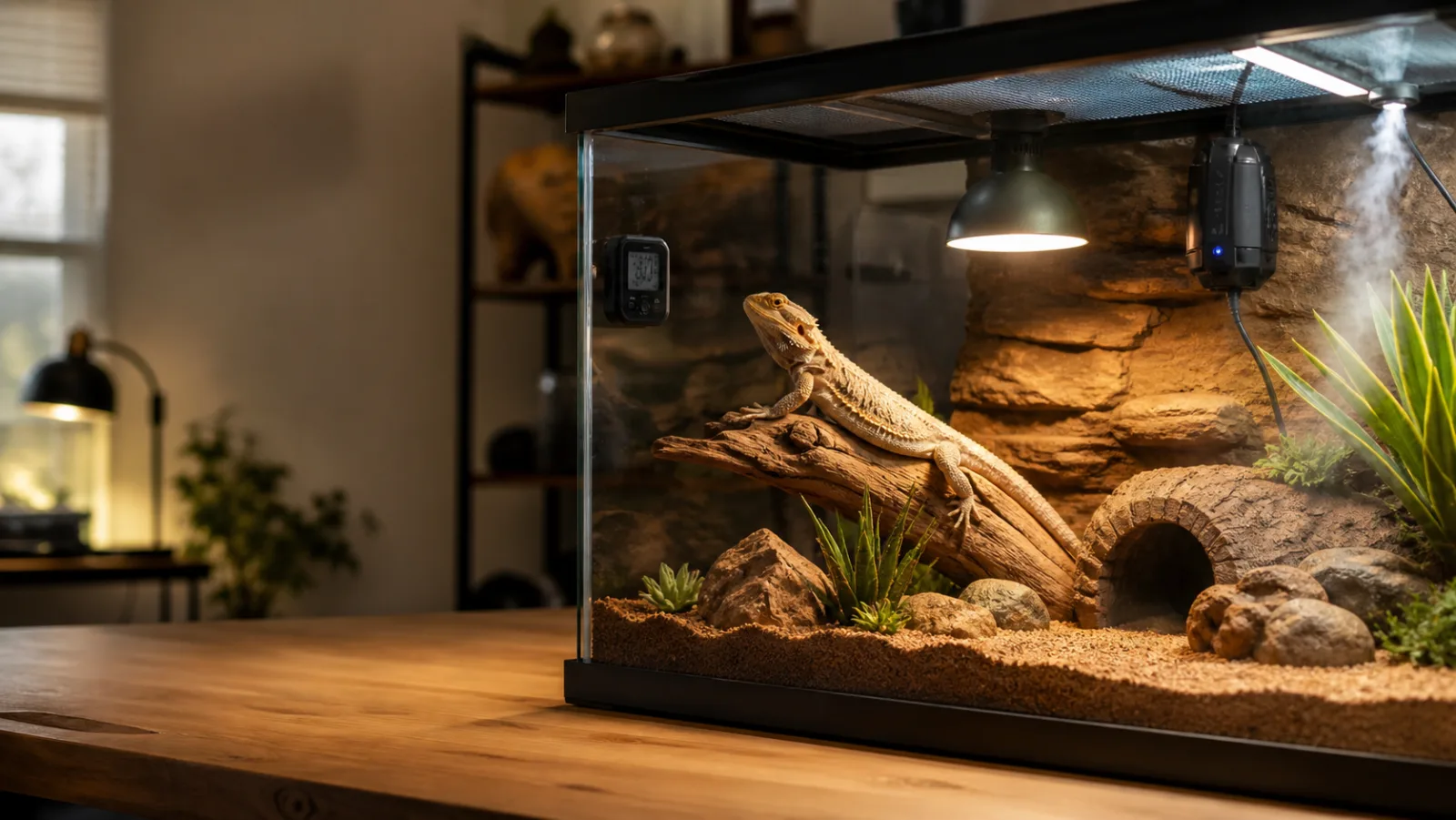
Reptile Habitat Setup and Environmental Control: 2026 Guide for Heat, Humidity, and Safety
Reptile
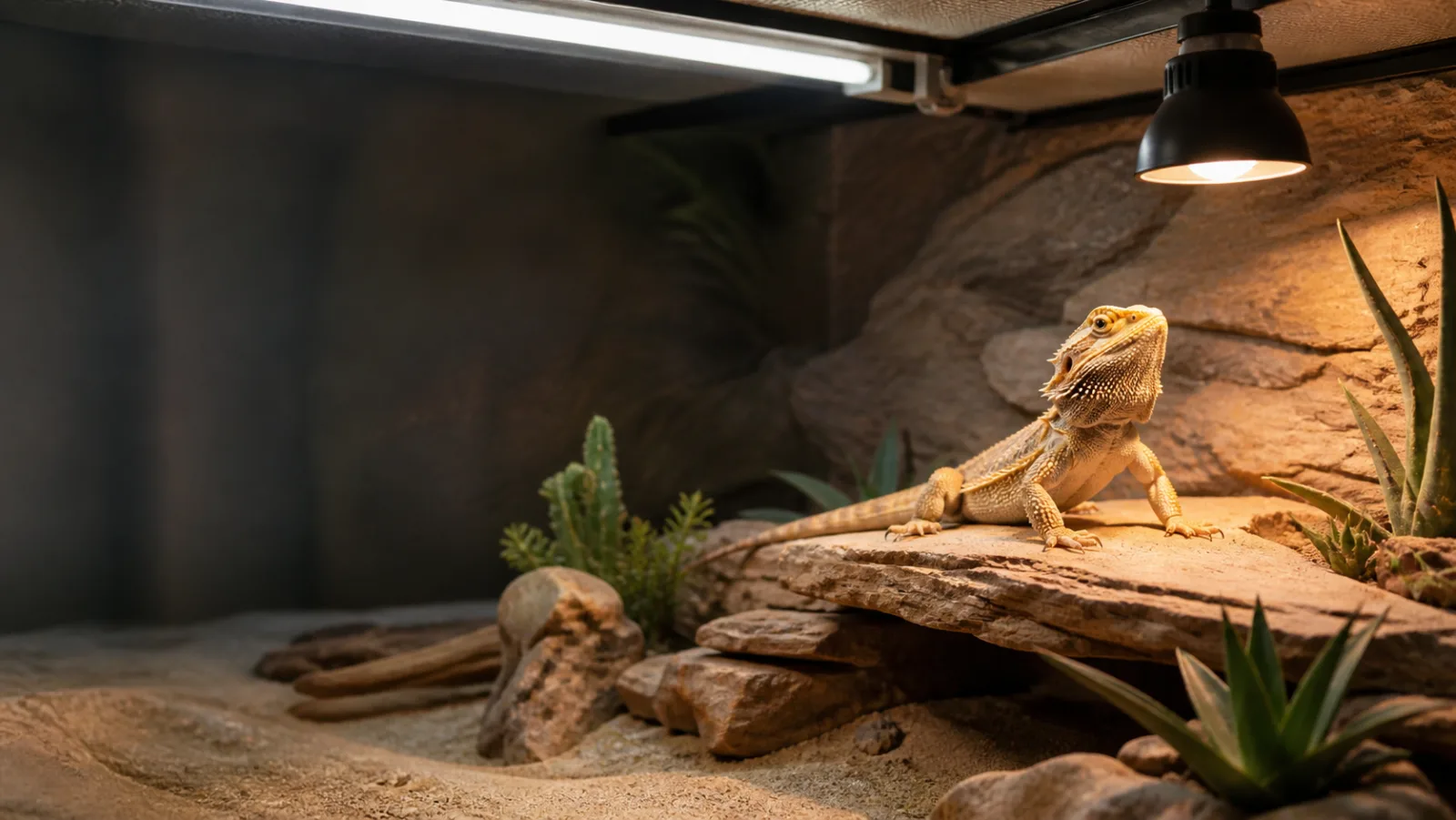
Reptile UVB Lighting and Basking (2026 Guide): How to Choose Safe Lighting for Reptiles
Reptile
Best Reptile Thermostats for Heat Mats, CHEs & Heating Elements (2026)
Reptile
Best Reptile UVB Bulbs for Safe Lighting (2026)
Reptile
Best Reptile Misting and Fogging Systems for Humidity Control (2026)
Reptile