Cats & Dogs
How to Get Rid of Fleas in the House — Permanently (2026)
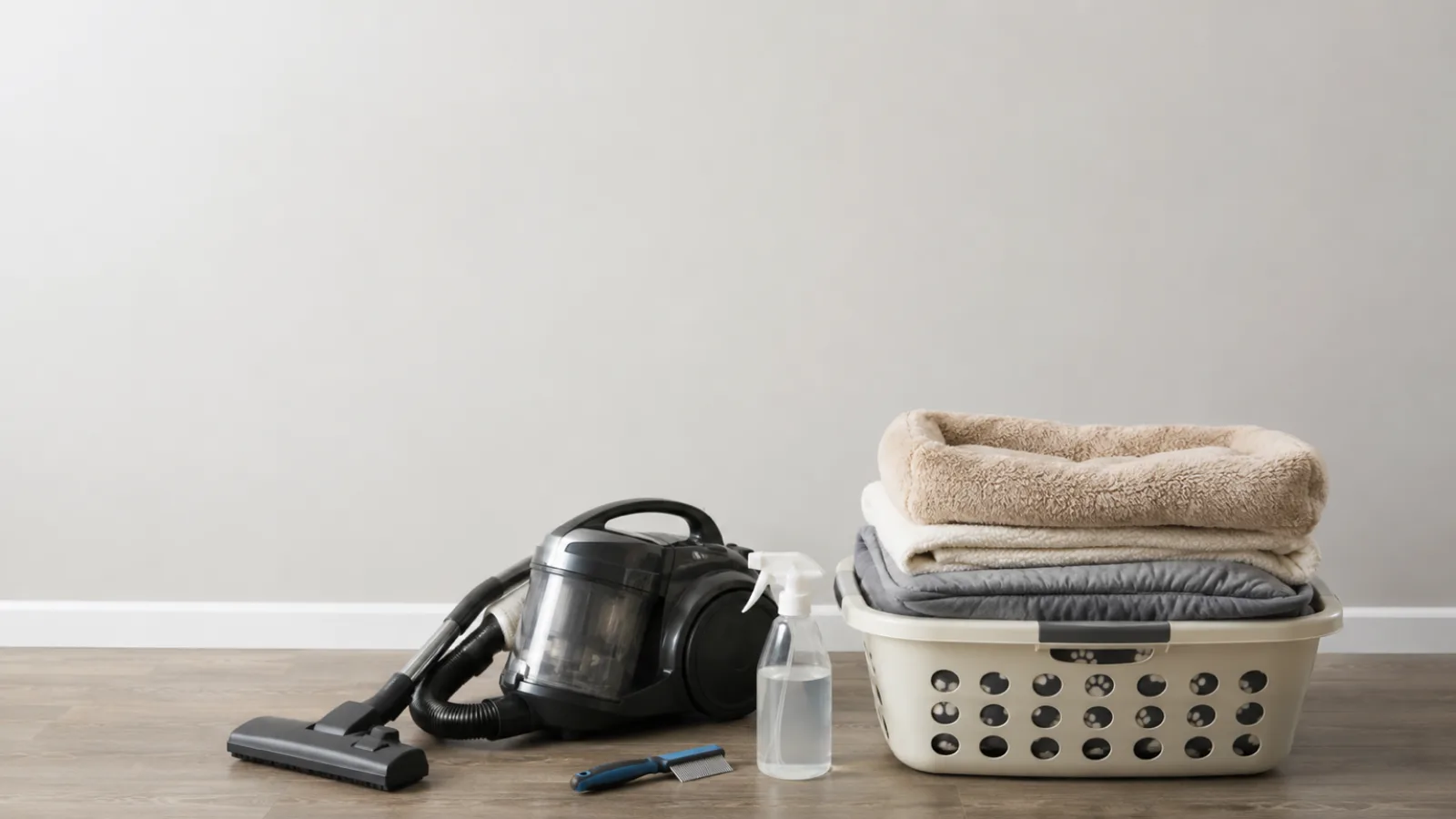
This is not a head-to-head product ranking — it is an eradication plan. Roughly 95% of a flea infestation is not the adults you see on the pet; it is eggs, larvae, and pupae hiding in carpets, bedding, and baseboards. That is why one spray or one bath never holds. Permanent control means hitting all three legs at once — a continuous preventive on every pet, an insect-growth-regulator treatment through the home, and vacuuming and re-treatment on the clock while pupae keep hatching for weeks. The picks below are that kit, in protocol order, not six flea products ranked against each other. If you have anemic kittens, a severe or stubborn infestation, or pets that keep picking fleas up outside, read the caveats before you buy anything.
By Nick Miles · Updated July 12, 2026 · 12 min read
PetPalHQ is reader-supported. We may earn a commission from qualifying Amazon purchases at no extra cost to you.
Evidence at a Glance
Frontline Plus for Large Dogs (45-88 lbs, 3ct)
The pet leg of the protocol — a monthly topical whose dual-action fipronil and (S)-methoprene kills adult fleas and interrupts eggs and larvae per Frontline, so the animal stops seeding the home; every pet in the house needs its own species- and size-matched preventive, and a cat must never get a dog product.
Sources: Frontline manufacturer documentation, Companion Animal Parasite Council veterinary parasitology consensus, EPA label-use guidance
Verified Jul 12, 2026
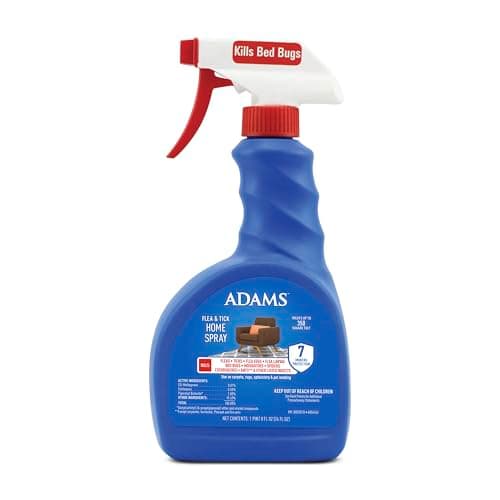
ADAMS Flea & Tick Home Spray
The 'permanently' ingredient — an insect-growth-regulator home spray that kills adults and, per ADAMS, keeps working to eliminate eggs and larvae in carpets, furniture, and pet bedding, breaking the life cycle the vacuum and bath cannot reach on their own.
Sources: ADAMS manufacturer documentation, EPA label-use guidance, Companion Animal Parasite Council veterinary parasitology consensus
Verified Jul 12, 2026
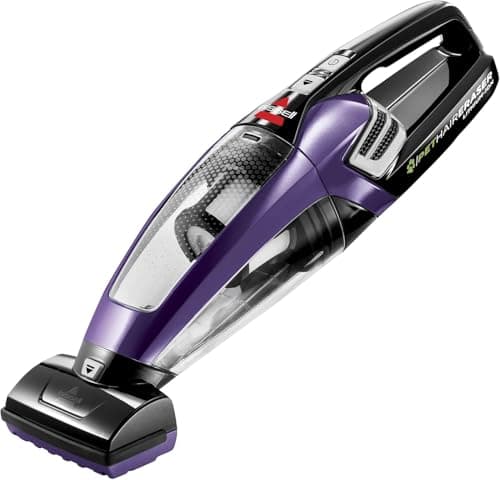
Bissell Pet Hair Eraser Cordless Hand Vacuum
The unsung weapon — vacuuming lifts eggs and larvae out of carpet and, by vibration, triggers pesticide-resistant pupae to hatch into adults the spray can then kill; empty the canister outside every time so nothing crawls back out.
Sources: Bissell manufacturer documentation, Companion Animal Parasite Council veterinary parasitology consensus, Veterinary dermatology consensus
Verified Jul 12, 2026
Our Picks
Frontline
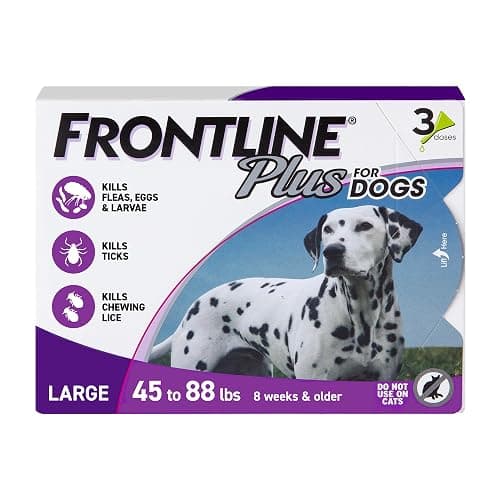
Frontline Plus for Large Dogs (45-88 lbs, 3ct)
8.7 / 10
- Monthly topical spot-on — 30 days per dose, three doses per box, per Frontline
- Dual-action fipronil plus (S)-methoprene kills adult fleas and interrupts eggs and larvae
- Sized for large dogs 45 to 88 lbs; for dogs 8 weeks and older in that band
- Waterproof after application; over-the-counter, no prescription needed
$40.98
Current price · checked Sep 8, 2026
yumflan
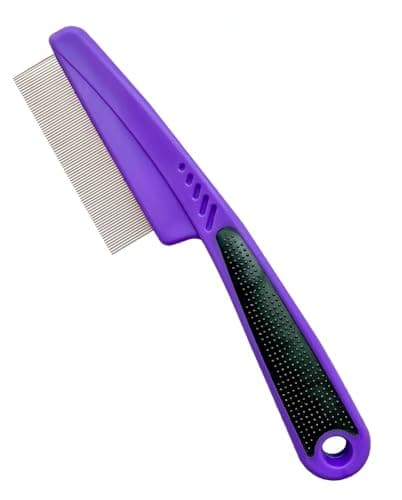
Yumflan Flea Comb
7.8 / 10
- Fine-tooth comb with higher-grade, stronger metal teeth, per yumflan
- Non-slip rubber-sheathed handle for control while combing
- Works for cats, dogs, and small animals of all coat types
- The diagnostic tool — combs out live fleas and flea dirt for the wet-paper test
$3.99
Current price · checked Sep 8, 2026
ADAMS
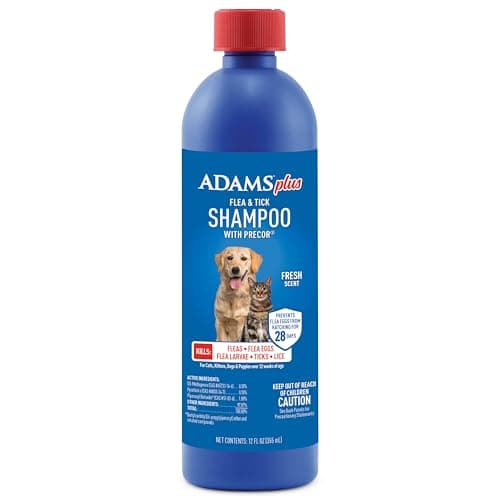
ADAMS Plus Flea & Tick Shampoo with Precor
8.0 / 10
- Kills fleas, flea eggs, ticks, and lice on contact, per ADAMS
- Precor IGR documented to stop the life cycle and block egg hatch for 28 days
- Rich formula washes and conditions the coat; light scent
- For dogs and cats 12 weeks and older; about 4 teaspoons per 5 lbs of pet
$14.98
Current price · checked Sep 8, 2026
ADAMS
ADAMS Flea & Tick Home Spray
8.4 / 10
- Dual-action formula kills adults and, per ADAMS, keeps eliminating eggs and larvae
- Begins killing fleas within 5 minutes; documented up to 7 months of protection
- For carpets, rugs, upholstery, and pet bedding; treats up to 350 sq ft
- Fragrance-free and non-staining, per the listing
$14.46
Current price · checked Sep 8, 2026
Bissell
Bissell Pet Hair Eraser Cordless Hand Vacuum
8.2 / 10
- Cordless hand vacuum with a 14V lithium-ion battery, per Bissell
- Motorized brush tool for embedded pet hair, plus upholstery and crevice tools
- Easy-empty dirt bin designed to trap hair and empty quickly
- Triple-level filtration to help capture dust and debris
$89.97
Current price · checked Sep 8, 2026
Terro
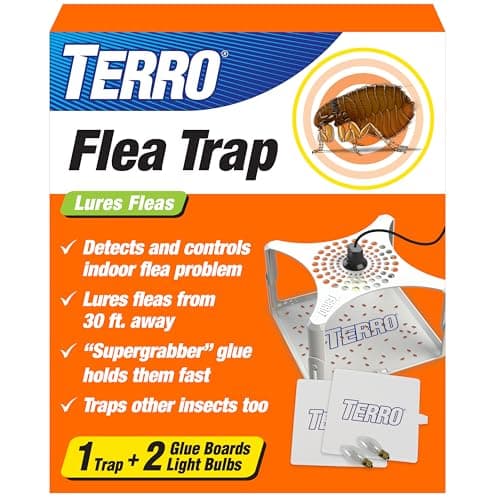
TERRO Indoor Electric Flea Trap
7.7 / 10
- Uses light and heat to mimic a warm-blooded host, per Terro
- Attracts fleas from up to 30 feet and holds them on a glue board
- Plug-in and refillable; replace sticky pads every 2-4 weeks
- Chemical-free capture for carpeted and upholstered areas
$14.99
Current price · checked Sep 8, 2026
The Short Answer
Treat fleas as a life-cycle problem, not a spray-once problem. About 95% of an infestation lives in the home as eggs, larvae, and pupae, so you have to hit three legs at once. First, put every pet in the house on a continuous preventive, species- and size-matched — the Frontline Plus topical anchors the pet leg for large dogs, and cats need their own cat-labeled product, never a dog one. Confirm the infestation and track your progress with the Yumflan Flea Comb using the wet-paper flea-dirt test. Knock down the load already on the animal with the ADAMS Plus Flea & Tick Shampoo, whose Precor IGR helps stop eggs from hatching. Then treat the house: the ADAMS Flea & Tick Home Spray carries the insect-growth-regulator that breaks the egg and larva cycle in carpets, baseboards, and bedding — that IGR is the 'permanently' part. Vacuum everything, every day, with a tool like the Bissell Pet Hair Eraser Cordless Hand Vacuum; vacuuming lifts eggs and larvae and its vibration coaxes resistant pupae to hatch into sprayable adults. Empty the canister outside each time. Watch a Terro Indoor Electric Flea Trap to prove the catch is falling. The clock is the whole point: pupae are pesticide-resistant and keep hatching for weeks, so keep vacuuming and re-treat for two to three weeks or more. Miss one leg and the infestation rebuilds. Severe cases, or anemic kittens and seniors, mean a vet on prescription preventives and often a professional exterminator.
Every product on this list has been scored against the PetPal Gear Score, a weighted composite of expert consensus, observed effectiveness, animal safety, long-term durability, and value. Review method: Editorial synthesis of parasite and label-use guidance — the Companion Animal Parasite Council's veterinary parasitology consensus, EPA label-use and pesticide-safety guidance, and veterinary dermatology consensus on flea-allergy and flea-monitoring care. Manufacturer documentation from Frontline, yumflan, ADAMS, Bissell, and Terro was reviewed. Community consensus from r/fleas and r/dogs was included as consensus, not quotation. No first-hand product testing — PetPalHQ does not run a testing lab.. Synthesized from 3+ expert sources.
Getting rid of fleas fails, in this guide's editorial judgment, for one reason more than any other: people treat the fleas they can see and ignore the ones they cannot. An owner sprays the dog, wipes down the sofa, watches the adults vanish for a few days, and then the itching comes roaring back. Nothing went wrong with the product. The problem is that the adults biting the pet are only about 5% of the infestation. The other 95% is eggs, larvae, and pupae, tucked deep in carpet fibers, along baseboards, and inside pet bedding, waiting to become the next wave. You cannot spray your way out of that in an afternoon. You have to work the whole life cycle.
That life cycle is why "permanently" is a plan and not a product. A female flea lays eggs on the pet; the eggs roll off wherever the pet goes; they hatch into larvae that burrow away from light; the larvae spin cocoons and become pupae; and the pupae wait — sometimes for weeks — until warmth and vibration tell them a host is near. Pupae are the hard part. They are pesticide-resistant inside their cocoons, which is why a single treatment always leaves survivors. Days after you think you have won, a fresh batch hatches, and the cycle restarts. Permanent control means staying on the problem until every one of those late hatchers has emerged and been dealt with.
The plan has three legs, and all three have to happen at once. Treat the pet, so it stops shedding new eggs into the home — that means a continuous preventive on every animal, matched to its species and weight. Treat the environment, so the eggs and larvae already in the carpet cannot mature — that is the insect-growth-regulator spray and a hot wash of all bedding. And repeat on the life-cycle clock — vacuum daily and re-treat over two to three weeks or more, because the pupae keep hatching. Miss one leg and the other two are wasted; the infestation simply rebuilds from whichever door you left open. The picks below are that three-legged kit, in protocol order, not six flea products ranked against each other.
One safety principle sits above the whole plan and never bends. Flea products are dosed by species and size, and a dog-labeled product can poison a cat — so every pet gets its own correct treatment, never a shared one. Kittens, puppies, pregnant animals, and frail seniors need a vet's guidance, and a heavy flea burden on a small or old animal can be a life-threatening emergency. Where a claim rests on a maker's documentation, that is named rather than asserted, because PetPalHQ does not run a testing lab. Work all three legs, respect the label and the clock, and the fleas do not come back.
Head-to-Head Comparison
| Feature | Frontline Plus for Large Dogs (45-88 lbs, 3ct) | Yumflan Flea Comb | ADAMS Plus Flea & Tick Shampoo with Precor | ADAMS Flea & Tick Home Spray | Bissell Pet Hair Eraser Cordless Hand Vacuum | TERRO Indoor Electric Flea Trap |
|---|---|---|---|---|---|---|
| Role in the protocol | Continuous pet preventive | Confirm and monitor | Knock down the pet's load | Treat the home (IGR) | Vacuum everything | Prove it's working |
| Which leg it covers | The pet | Diagnostics | The pet | The environment | The environment | Feedback |
| Life stage it hits | Adults, eggs, larvae on pet | Adults (removal + evidence) | Adults, eggs on pet | Adults, eggs, larvae in home | Eggs, larvae, and pupae | Adults (in the open) |
| Lasting or one-time? | Lasting — monthly, ongoing | Reusable monitor | One-time knock-down | Weeks of residual, re-treat | Daily habit for weeks | Ongoing monitor |
| Check price | Amazon | Amazon | Amazon | Amazon | Amazon | Amazon |
$40.98
Current price · checked Sep 8, 2026
- Monthly topical spot-on — 30 days per dose, three doses per box, per Frontline
- Dual-action fipronil plus (S)-methoprene kills adult fleas and interrupts eggs and larvae
- Sized for large dogs 45 to 88 lbs; for dogs 8 weeks and older in that band
- Waterproof after application; over-the-counter, no prescription needed
- The pet leg of the protocol — the animal stops feeding new eggs into the home
Fleas are a life-cycle problem, and the pet is only the visible tip of it. This is the pet leg. Frontline documents a monthly topical that pairs fipronil, which kills adult fleas, with (S)-methoprene, a growth regulator that interrupts the egg and larva stages so the population cannot rebuild from the animal. It is over-the-counter, waterproof after it dries, and dosed for large dogs in the 45-to-88-pound band, with three doses in a box. Applied to the skin between the shoulder blades once a month, it keeps the pet from being a moving flea factory.
Where it fits the protocol: this is the leg that makes "permanently" possible, because a home you clean but a pet you leave untreated just refills. The rule from veterinary parasitology is blunt — every pet in the house goes on a continuous preventive at the same time, matched to species and weight. This Frontline dose is for large dogs only; a small dog needs its own band, and a cat needs a cat-labeled product, never this one. To pick the right lasting preventive for each dog in the home, compare the options in our guide to the best flea and tick prevention for dogs before you buy, because the preventive is the one part of this plan you never stop.
The honest caveats are about matching and safety. Dog topicals like this contain compounds that can be toxic to cats, so a dog product on a cat is a poisoning risk, not a shortcut — treat the cat with its own cat-safe preventive instead. The weight band is strict: the large-dog dose is wrong for a 20-pound dog, and it is not a deal, it is an overdose. Kittens, puppies, pregnant animals, and sick pets warrant a vet's guidance first. And a topical kills fleas on the animal; it does not clean the house, which is why the next legs of this protocol exist. Confirm current price and availability before buying. As the pet leg, though, it is the backbone the rest of the plan is built on.
What We Love
- Continuous monthly preventive stops the pet from re-seeding the home with eggs
- Dual action interrupts eggs and larvae, not just the adults you can see
- Over-the-counter and waterproof, with a low per-dose cost in a three-pack
- The one leg of the plan you never stop, which is what makes control last
What Could Be Better
- Dog-labeled — toxic to cats; never use a dog topical on a cat
- Strictly weight-banded; the 45-88 lb dose is wrong for smaller dogs
- Kills on the animal only; it does not treat the carpets or bedding
- Monthly reapplication depends on the owner remembering every dose
The Verdict
The backbone of permanent control: a continuous preventive that stops the dog from refilling the home with eggs. Match it to weight, treat every pet with its own species-correct product, and never put a dog topical on a cat.
Sources
- Frontline (Amazon product listing, Plus for Large Dogs 45-88 lbs): monthly topical spot-on, three doses per box, whose dual-action fipronil and (S)-methoprene kills adult fleas and interrupts eggs and larvae, sized for dogs 45 to 88 pounds
- Veterinary parasitology consensus (Companion Animal Parasite Council): lasting flea control requires every pet in the home on a year-round, continuous preventive, because any untreated animal keeps re-seeding the environment with eggs
$3.99
Current price · checked Sep 8, 2026
- Fine-tooth comb with higher-grade, stronger metal teeth, per yumflan
- Non-slip rubber-sheathed handle for control while combing
- Works for cats, dogs, and small animals of all coat types
- The diagnostic tool — combs out live fleas and flea dirt for the wet-paper test
- Clear matted fur before use; not for heavily matted coats, per the listing
Before you spend on sprays, confirm what you are fighting. The Yumflan Flea Comb is the cheap diagnostic that does it. yumflan documents a fine-tooth flea and tick comb with stronger, higher-grade metal teeth and a non-slip rubber handle, made for cats, dogs, and small animals across coat types. Drawn slowly through the coat at the skin, it pulls out live fleas and the gritty black specks known as flea dirt — the evidence that tells you the infestation is real and roughly how heavy.
Where it fits the protocol: this is the leg that keeps you honest. Comb the pet over a damp white paper towel; if the black specks smear red-brown, that is digested blood, and it confirms fleas even when you cannot spot an adult. Comb every few days through treatment and the trend tells you whether the plan is working — the count should fall. It is also the gentlest option for a cat or a young animal, since it uses no chemistry at all, only teeth. On a flea-allergic pet, a single flea can drive a lot of itching, so the comb is how you catch a small problem before it becomes a room-wide one.
The honest caveats are about what a comb can and cannot do. It removes the fleas it catches, but it is a monitor and a spot-remover, not a cure — it will never clear an infestation on its own. It struggles in heavily matted fur, and yumflan advises clearing mats first so the comb is not damaged and the pet is not hurt. And combing tells you fleas are present; it does not treat the 95% of the problem living in the carpet. Confirm current price and availability before buying. As the monitoring leg, though, a few dollars of comb is what turns this from guesswork into a protocol you can actually measure.
What We Love
- Confirms an active infestation cheaply with the wet-paper flea-dirt test
- Chemical-free, so it is safe for cats, kittens, and young animals
- Tracks progress — a falling comb count shows the plan is working
- Non-slip handle and stronger teeth give control on most coat types
What Could Be Better
- A monitor and spot-remover, not a treatment — it cannot clear an infestation
- Struggles in heavily matted fur; mats must be cleared first
- Tells you fleas are present but does nothing about the eggs in the home
The Verdict
The four-dollar tool that turns flea control from guesswork into measurement. Use it to confirm the problem before you treat and to prove the count is falling after — just remember it diagnoses, it does not cure.
Sources
- yumflan (Amazon product listing, Flea Comb): fine-tooth flea and tick comb with higher-grade, stronger metal teeth and a non-slip rubber-sheathed handle, for cats, dogs, and small animals of all coat types
- Veterinary dermatology consensus: flea combing over a damp paper towel — where black specks smear red-brown as digested blood dissolves — is a reliable, low-cost way to confirm an active infestation and to track whether treatment is working
$14.98
Current price · checked Sep 8, 2026
- Kills fleas, flea eggs, ticks, and lice on contact, per ADAMS
- Precor IGR documented to stop the life cycle and block egg hatch for 28 days
- Rich formula washes and conditions the coat; light scent
- For dogs and cats 12 weeks and older; about 4 teaspoons per 5 lbs of pet
- The knock-down leg — clears the load already on the animal today
When an infestation is heavy, the pet is carrying a live load right now, and a preventive can take time to clear it. The ADAMS Plus Flea & Tick Shampoo is the fast knock-down. ADAMS documents a shampoo that kills fleas, flea eggs, ticks, and lice on contact, carrying the Precor insect-growth-regulator, which the listing says stops the flea life cycle and keeps eggs from hatching for 28 days. It is labeled for dogs and cats 12 weeks and older, uses about four teaspoons per five pounds of pet, and conditions the coat while it works.
Where it fits the protocol: this leg buys immediate relief. A bath strips the visible fleas off an itchy, miserable animal in one wash, which matters most for a flea-allergic pet clawing itself raw. The Precor IGR is a bonus, carrying a little of the "break the cycle" logic onto the animal itself. After the fleas are gone, some pets are left with inflamed, over-scratched skin that needs its own care — for that recovery, our roundup of the best medicated anti-itch dog shampoos covers the soothing formulas that follow a flea bath. The bath handles today; the skin recovery is a separate job.
The honest caveats are about what a bath is not. It kills what is on the pet at wash time and nothing after the water goes down the drain — it is not lasting protection, and treating it as such is the classic reason fleas come back. The preventive is the protection; the shampoo is a reset. Follow the label dilution and contact time, keep it out of eyes, and rinse fully. Cats need their own gentle bathing and grooming products, dosed for cats, never a formula meant for a dog. Confirm current price and availability before buying. As the knock-down leg, it clears the deck so the preventive and the home treatment can finish the job.
What We Love
- Kills fleas, eggs, ticks, and lice on contact for fast, visible relief
- Precor IGR helps block egg hatch, adding cycle-breaking on the animal
- Immediate comfort for a flea-allergic pet scratching itself raw
- Labeled for both dogs and cats 12 weeks and older
What Could Be Better
- Kills only at wash time — no lasting protection after rinsing
- Not a substitute for the continuous preventive that prevents reinfestation
- Requires correct dilution, contact time, and full rinsing per the label
- Leaves over-scratched skin that may need separate anti-itch care
The Verdict
The fast reset for a pet carrying a heavy live load, especially a flea-allergic one. Just hold the line on what it is — a bath clears today's fleas, the preventive prevents tomorrow's, and the itchy skin left behind is its own recovery.
Sources
- ADAMS (Amazon product listing, Plus Flea & Tick Shampoo with Precor): kills fleas, flea eggs, ticks, and lice on contact, and its Precor IGR is documented to stop the flea life cycle and keep flea eggs from hatching for 28 days, for dogs and cats 12 weeks and older
- Veterinary parasitology consensus (Companion Animal Parasite Council): a flea bath clears the fleas on the animal at that moment but provides no lasting protection; the continuous preventive, not the bath, is what stops reinfestation
$14.46
Current price · checked Sep 8, 2026
- Dual-action formula kills adults and, per ADAMS, keeps eliminating eggs and larvae
- Begins killing fleas within 5 minutes; documented up to 7 months of protection
- For carpets, rugs, upholstery, and pet bedding; treats up to 350 sq ft
- Fragrance-free and non-staining, per the listing
- The 'permanently' leg — the IGR breaks the egg and larva cycle in the home
The pet is 5% of the problem; the carpet, baseboards, and bedding hold the other 95%. The ADAMS Flea & Tick Home Spray is the leg that treats that hidden majority. ADAMS documents a dual-action formula that kills adult fleas and keeps working to eliminate eggs and larvae, begins killing within five minutes, and claims up to seven months of protection. It is made for carpets, rugs, upholstery, and pet bedding, treats up to 350 square feet, and is fragrance-free and non-staining.
Where it fits the protocol: this is the "permanently" ingredient. The insect-growth-regulator is what a bath and a preventive cannot deliver — it reaches into the carpet fibers and along the baseboards where eggs and larvae develop, and it stops them from maturing into the next generation of biting adults. Spray after you vacuum, so the carpet is opened up and the eggs are exposed, and treat every soft surface the pet touches, not just the obvious ones. This is also why a single fogger fails where targeted spraying works: a bomb drifts down onto surfaces and misses the sheltered cracks and undersides where larvae actually live, while a directed spray gets into them.
The honest caveats are all about the label. This is a pesticide, and the label is the law — follow the directions exactly, ventilate, and keep pets and children off treated areas until everything is fully dry. Wash all pet bedding in hot water the same day rather than only spraying it. It does not replace the pet leg or the vacuuming; it is one part of three, and skipping any part lets the infestation rebuild. And a fragrance-free chemical is still a chemical around animals, so store and apply it with care. Confirm current price and availability before buying. As the home leg, this is where "get rid of them permanently" is actually won or lost.
What We Love
- IGR breaks the egg and larva cycle the pet leg and bath cannot reach
- Targeted spraying beats a fogger by getting into cracks and undersides
- Fragrance-free, non-staining, and covers up to 350 square feet
- Treats the 95% of the infestation that lives in the home, not the pet
What Could Be Better
- A pesticide — the label must be followed exactly; keep pets off until dry
- Does not replace vacuuming or the pet's preventive; it is one leg of three
- Bedding still needs a hot wash, not just a spray
- Requires re-treatment on the life-cycle clock as pupae keep hatching
The Verdict
The home leg where permanent control is won: an IGR that stops eggs and larvae from maturing in the carpet. Vacuum first, spray by the label, wash bedding hot, and re-treat on the clock — a targeted spray beats a fogger every time.
$89.97
Current price · checked Sep 8, 2026
- Cordless hand vacuum with a 14V lithium-ion battery, per Bissell
- Motorized brush tool for embedded pet hair, plus upholstery and crevice tools
- Easy-empty dirt bin designed to trap hair and empty quickly
- Triple-level filtration to help capture dust and debris
- The mechanical leg — lifts eggs and larvae and coaxes pupae to hatch
Vacuuming is the most underrated flea weapon there is, and the crevice tool is why. The Bissell Pet Hair Eraser Cordless Hand Vacuum is the reach-everywhere option for it. Bissell documents a cordless hand vacuum on a 14-volt lithium-ion battery, with a motorized brush tool for embedded hair, upholstery and crevice tools, an easy-empty dirt bin, and triple-level filtration. Cordless and handheld, it gets into the sofa seams, stair edges, and baseboards where flea larvae hide from the light.
Where it fits the protocol: vacuuming does two jobs at once. It physically lifts eggs, larvae, and flea dirt out of the carpet, removing them before they mature. And the vibration and warmth of the machine coax pesticide-resistant pupae to hatch early — the one thing that pulls them out of their protected cocoon and into the open, where the home spray can finally kill them. That is why the routine is daily, not weekly, especially the first two to three weeks. For whole-home upright cleaning across every room, pair this reach tool with the models in our roundup of the best pet hair vacuums; the handheld handles the cracks the upright skips.
The honest caveats are about follow-through. Empty the canister into a sealed bag and take it outside every single time — fleas and eggs can crawl or fall back out of a bin left sitting indoors, undoing the work. A hand vacuum covers upholstery, edges, and stairs well but is not a substitute for a full-floor vacuum on carpet, so use both. And vacuuming alone will not end an infestation; it is the mechanical leg that makes the spray and the preventive land, not a replacement for them. Confirm current price and availability before buying. As the daily-discipline leg, this is the habit that carries the plan across the weeks the pupae keep hatching.
What We Love
- Crevice and upholstery tools reach the seams and edges larvae hide in
- Vibration triggers resistant pupae to hatch into sprayable adults
- Cordless and handheld for daily, get-everywhere flea vacuuming
- Easy-empty bin makes the empty-outside-every-time habit simple
What Could Be Better
- A hand vacuum is not a substitute for a full-floor upright on carpet
- Must be emptied into a sealed bag outside, or fleas crawl back out
- Battery runtime limits how much you cover in one pass
- Vacuuming alone cannot end an infestation without the other legs
The Verdict
The daily discipline that makes the whole plan work: vacuuming removes eggs and larvae and forces resistant pupae into the open for the spray. Empty it outside every time, pair it with a full-floor vacuum, and keep at it for weeks — the pupae will.
$14.99
Current price · checked Sep 8, 2026
- Uses light and heat to mimic a warm-blooded host, per Terro
- Attracts fleas from up to 30 feet and holds them on a glue board
- Plug-in and refillable; replace sticky pads every 2-4 weeks
- Chemical-free capture for carpeted and upholstered areas
- The feedback leg — a falling catch shows the protocol is working
You need a way to see whether the plan is winning, and a trap gives you a nightly readout. The TERRO Indoor Electric Flea Trap is that gauge. Terro documents a plug-in trap that uses light and heat to imitate a warm-blooded host, drawing fleas from up to 30 feet and holding them on a SuperGrabber glue board, with refill pads swapped every two to four weeks. Set in a room where the pet spends time, it captures the adults that are jumping in the open at night.
Where it fits the protocol: this is the feedback leg. The number of fleas on the glue board is a live scorecard — a catch that climbs early and then falls week over week is the clearest sign the pet leg, the home spray, and the vacuuming are together breaking the cycle. It also mops up a few of the free-roaming adults, and it needs no chemistry to do it, which makes it safe to leave running in a home with pets and kids. Read alongside the flea comb, it gives you two independent measures of the same trend.
The honest caveats are about scale. A trap is a monitor, not a cure — it catches a slice of the adult fleas and does nothing to the eggs, larvae, and pupae that make up the vast majority of the infestation. Reading a falling catch as "done" too early is a trap of its own, because pupae keep hatching for weeks after the adults thin out. Keep the glue pads fresh and keep treating until the catch stays at zero for a good while. Confirm current price and availability before buying. As the feedback leg, it is the cheap instrument that tells you when you can finally stop — and, just as usefully, when you cannot yet.
What We Love
- Gives a nightly, visible readout of whether the catch is falling
- Chemical-free glue-board capture is safe around pets and children
- Draws adult fleas from across the room and holds them
- Pairs with the flea comb for two independent measures of progress
What Could Be Better
- A monitor, not a cure — it ignores the eggs, larvae, and pupae
- A low early catch can falsely signal 'done' while pupae still hatch
- Refill glue pads are an ongoing cost every 2-4 weeks
The Verdict
The cheap instrument that tells you when you can stop — and when you cannot. A falling catch confirms the plan is working, but read it honestly: it counts adults, not the hidden 95%, so keep treating until the board stays empty for weeks.
How We Score
Formula
PetPal Flea-Eradication Score = (Expert Consensus × 0.35) + (Protocol Fit × 0.25) + (Safety / Label Adherence × 0.20) + (Value × 0.20)
Score Factors
- Expert Consensus · 35%
- Synthesized from the Companion Animal Parasite Council's veterinary parasitology consensus, EPA label-use and pesticide-safety guidance, veterinary dermatology consensus, and manufacturer documentation. The PetPal Flea-Eradication Score is a composite of expert opinion — PetPalHQ does not run a testing lab.
- Protocol Fit · 25%
- How directly the item advances a complete life-cycle eradication — treating the pet, confirming the problem, knocking down the on-animal load, treating the environment, vacuuming, and monitoring — rather than how it performs as a standalone product ranked against rivals.
- Safety / Label Adherence · 20%
- Alignment with safe use — species- and weight-matched treatment, never a dog product on a cat, strict pesticide-label compliance, keeping pets off treated areas until dry, and a vet's involvement for kittens, seniors, pregnant animals, and severe cases.
- Value · 20%
- Cost relative to the item's role in the protocol, including how much of the eradicate-and-keep-it-gone outcome the item is responsible for and how long its effect lasts.
| Rank | Product | Score |
|---|---|---|
| #1 | Frontline Frontline Plus for Large Dogs (45-88 lbs, 3ct) | 8.7 |
| #2 | ADAMS ADAMS Flea & Tick Home Spray | 8.4 |
| #3 | Bissell Bissell Pet Hair Eraser Cordless Hand Vacuum | 8.2 |
| #4 | ADAMS ADAMS Plus Flea & Tick Shampoo with Precor | 8.0 |
| #5 | yumflan Yumflan Flea Comb | 7.8 |
| #6 | Terro TERRO Indoor Electric Flea Trap | 7.7 |
When NOT to Buy
Fleas are a whole-home life-cycle problem, and some situations call for a vet or an exterminator before a shopping cart. If an infestation is severe or has dragged on for months despite treatment, over-the-counter products alone may not clear it. A veterinarian can prescribe modern oral preventives — the isoxazoline class — that work faster and more completely than many store options, and a professional pest-control service can treat a home more thoroughly than a consumer spray. There is no shame in escalating; a stubborn infestation is a reason to, not a failure.
Health rules some households out of the do-it-yourself path entirely. Heavy flea burdens can cause life-threatening anemia in kittens, puppies, and frail senior pets, because fleas feed on blood — a listless, pale-gummed young or old animal is a same-day veterinary emergency, not a bath-and-spray project. Pregnant and nursing animals, and any pet with other health problems, need a vet's direction on which products are safe. And the cardinal safety rule never bends: dog-labeled flea products can be toxic to cats, so every animal gets its own species- and size-matched treatment. For cat-safe washing and grooming choices across the household, the best pet shampoos and wipes for dogs and cats covers the gentle options that will not put a cat at risk.
Finally, the honest method caveat: this is a protocol, not a purchase, and the biggest mistake is stopping too soon. Pupae are pesticide-resistant and keep hatching for two to three weeks or more, so one fogger, one bath, or one spray always fails — the survivors simply repopulate. Foggers and bombs in particular underperform a targeted IGR spray plus daily vacuuming, because they miss the cracks and undersides where larvae live. Treat every pet, wash all bedding in hot water, vacuum and re-treat on the life-cycle clock, and only add yard treatment if the pets are picking fleas up outside. Confirm current price, dosing, and availability on every item before buying — labels, sizes, and sellers change over time.
Frequently Asked Questions
- Why does one flea bomb or fogger never seem to work?
- Because a fogger fights the wrong 5% of the problem in the wrong places. A bomb releases a cloud that settles down onto open, upward-facing surfaces, but flea larvae and pupae live in the sheltered spots a falling mist never reaches — deep in carpet fibers, under furniture, along the base of walls, and inside pet bedding. Worse, pupae are pesticide-resistant inside their cocoons, so even a chemical that lands on them often does nothing, and they hatch days later into a fresh infestation. A targeted insect-growth-regulator spray worked into those cracks and undersides, combined with daily vacuuming that physically lifts eggs and larvae and coaxes pupae to hatch into the open, beats a fogger decisively. The bomb feels thorough because it fills the room, but thoroughness in flea control is about reaching the hidden places, not filling the air.
- How long does it actually take to get rid of fleas permanently?
- Plan on two to three weeks of consistent effort at a minimum, and often longer for a heavy infestation. The reason is the pupae. After you treat the pet and the home, the adults you can see die off fairly quickly, which tempts people to stop. But pupae in their cocoons keep hatching for weeks, and each new adult that emerges can start laying eggs if the environment is not still being treated. So the job is not done when the pet looks clear; it is done when new fleas stop appearing over an extended stretch. That means keeping the pet on its preventive, vacuuming daily, and re-treating the home on schedule until a flea comb and a monitor trap both stay at zero for a good while. Patience across the full life cycle is what makes the result permanent rather than a temporary lull.
- My dog has fleas but I have a cat too — do I have to treat the cat?
- Yes, and this is one of the most important rules in flea control. Fleas do not respect which pet they started on; they move freely between animals and seed the whole home, so leaving any pet untreated leaves a reservoir that reinfests everyone. Every animal in the household must be treated at the same time. The critical caution is that you must never use a dog's flea product on a cat. Many dog treatments contain compounds that are toxic to cats and can cause serious harm, so a cat needs its own cat-labeled preventive, dosed for cats. Match every product to the animal's species and weight, and when in doubt, ask a veterinarian which product is right for each pet. Treating the dog while ignoring the cat is a guaranteed path to a fleas-that-never-leave loop.
- What is the difference between getting rid of fleas temporarily and permanently?
- Temporary control kills the fleas you can see right now; permanent control breaks the cycle that keeps making more of them. A flea bath or a quick spray drops the adult count fast, and the pet feels better for a few days — but if the eggs in the carpet keep hatching and the pet is not on ongoing protection, the fleas simply come back. Permanent control has three parts working together: a continuous preventive on every pet so no animal keeps shedding eggs, an insect-growth-regulator treatment through the home so the eggs and larvae already there cannot mature, and repeated vacuuming and re-treatment on the life-cycle clock so the late-hatching pupae are caught too. The one-time treatments are the knock-down; the ongoing preventive and the home treatment are what make it last. Skip the lasting legs and you are always re-fighting the same infestation.
- When should I stop treating this myself and call a vet or an exterminator?
- Call a veterinarian right away if a kitten, puppy, or frail senior pet seems weak, listless, or has pale gums, because a heavy flea burden can cause dangerous anemia from blood loss — that is an emergency, not a shopping problem. See a vet as well for pregnant or nursing animals, or any pet with other health conditions, to be sure the products you use are safe. Beyond the individual animal, escalate when an infestation is severe or has resisted weeks of diligent home treatment. A veterinarian can prescribe modern oral preventives that clear fleas faster and more completely than many over-the-counter options, and a professional exterminator can treat a home far more thoroughly than a consumer spray. Escalating is not a failure of the protocol; it is the right next step when the infestation is beyond what store products can reach alone.
Bottom Line
Understand the enemy before you buy anything. About 95% of an infestation is eggs, larvae, and pupae hiding in your home, not adults on the pet — so one spray or one bath can never be enough, and the whole plan is built to hit that hidden majority.
Treat every pet, matched to species and weight. The Frontline Plus topical anchors the pet leg for large dogs; a cat needs its own cat-labeled preventive, never a dog product, because dog flea chemistry can poison cats. The preventive is the leg you never stop.
Treat the home and vacuum relentlessly. The ADAMS Home Spray's IGR is the 'permanently' ingredient that breaks the egg and larva cycle in carpets and bedding, and the Bissell hand vacuum lifts eggs and larvae while its vibration forces resistant pupae into the open — empty the canister outside every time.
Measure your progress and hold the line on the clock. Confirm the problem with the Yumflan comb's wet-paper test, knock down the load with the ADAMS shampoo, and watch the Terro trap's catch fall — but keep vacuuming and re-treating for two to three weeks or more while pupae keep hatching.
Know when to escalate. Anemic kittens or seniors are a same-day vet emergency, and a severe or stubborn infestation warrants prescription oral preventives and a professional exterminator. This is a protocol, not a one-time purchase, and that is exactly why it finally works.
Sources & Methodology
Methodology
PetPal Flea-Eradication Score = (Expert Consensus × 0.35) + (Protocol Fit × 0.25) + (Safety / Label Adherence × 0.20) + (Value × 0.20)
Expert review sources
- Companion Animal Parasite Council — flea life cycle and control guidance (veterinary parasitology consensus)
- U.S. Environmental Protection Agency — pesticide label-use and pet-safety guidance
- Veterinary dermatology consensus — flea-allergy dermatitis and flea-monitoring care
- Frontline — Plus Flea & Tick spot treatment product documentation
- yumflan — Flea Comb product documentation
- ADAMS — Plus Flea & Tick Shampoo with Precor product documentation
- ADAMS — Flea & Tick Home Spray product documentation
- Bissell — Pet Hair Eraser Cordless Hand Vacuum product documentation
- Terro — Indoor Electric Flea Trap product documentation
Community sources
- r/fleas — home eradication, life-cycle timing, and re-treatment consensus
- r/dogs — pet-treatment and preventive-use consensus
Prices and specs verified July 12, 2026.
About the author
Nick Miles is the chief editor of PetPalHQ. This flea-eradication protocol and its kit are editorial synthesis of the Companion Animal Parasite Council's veterinary parasitology consensus, EPA label-use guidance, veterinary dermatology consensus, and manufacturer documentation — PetPalHQ does not run a testing lab. The PetPal Flea-Eradication Score is a composite of expert opinion, not a measurement. Sources are cited by name throughout.
PetPalHQ is a participant in the Amazon Services LLC Associates Program. We may earn commissions from qualifying purchases — at no extra cost to you.