Cats & Dogs
Best Medicated Anti-Itch Dog Shampoos (2026)
Medicated shampoos treat infections, not allergies — a chlorhexidine-plus-ketoconazole combo covers most flares, with stronger and more focused picks for pyoderma, yeast, and scaling seborrhea, all keyed to the active ingredient your dog's diagnosis calls for.
By Nick Miles · Updated August 12, 2026 · 13 min read
PetPalHQ is reader-supported. We may earn a commission from qualifying Amazon purchases at no extra cost to you.
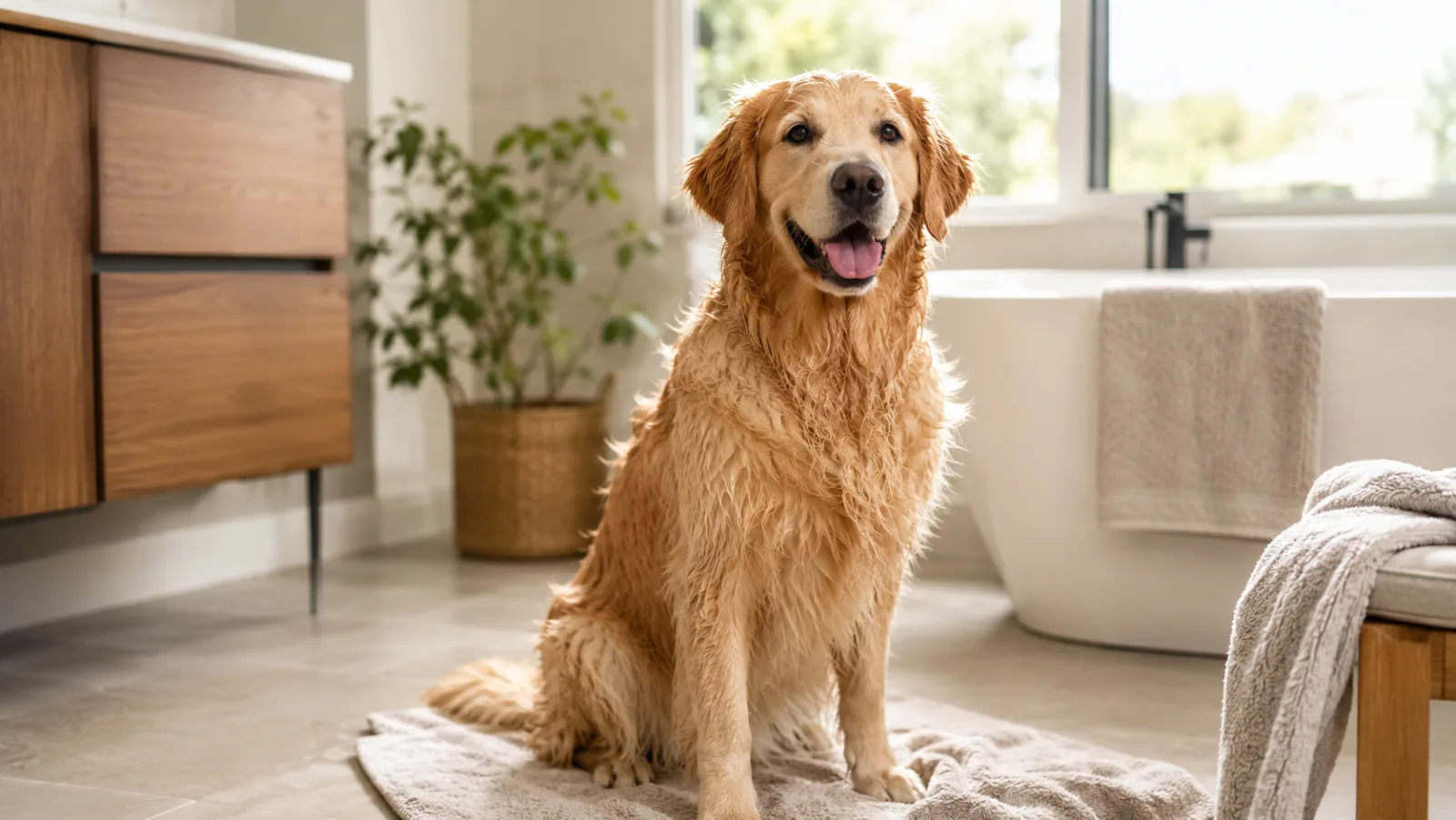
Evidence at a Glance
Pet Honesty Chlorhexidine Cat & Dog Itch Relief Shampoo
Chlorhexidine plus ketoconazole with added aloe — the safest single over-the-counter pick for a mild, undiagnosed flare because it covers both the bacterial and the yeast side of a flare in one bottle. The editorial default for an itchy dog before a confirmed diagnosis.
Sources: Merck Veterinary Manual — Pyoderma in Dogs and Cats, ISCAID Canine Pyoderma Guidelines, Today's Veterinary Practice — Topical Treatment of Superficial Pyoderma
Verified Jun 23, 2026
Douxo S3 PYO Chlorhexidine Shampoo
Chlorhexidine 3% with soothing ophytrium and published clinical data — the premium pick for diagnosed bacterial pyoderma, hot spots, and yeast. Soap-, sulfate-, and paraben-free for repeat medicated bathing inside a vet's plan.
Sources: Douxo (Ceva) product documentation, ISCAID Canine Pyoderma Guidelines, Merck Veterinary Manual — Pyoderma in Dogs and Cats
Verified Jun 23, 2026
Dechra TrizCHLOR 4 Shampoo
Chlorhexidine 4% at the OTC ceiling, with TrizEDTA potentiation as its real differentiator, for stubborn or repeat bacterial pyoderma and hot spots. Strong enough that it belongs inside a vet's plan, not a guess.
Sources: Dechra manufacturer documentation, ISCAID Canine Pyoderma Guidelines, Merck Veterinary Manual — Pyoderma in Dogs and Cats
Verified Jun 23, 2026
Our Picks
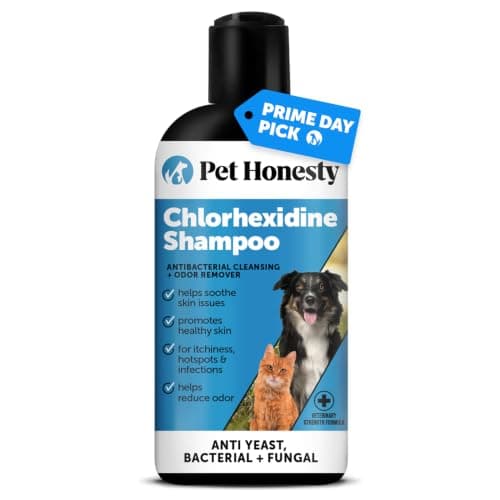
Pet Honesty
Pet Honesty Chlorhexidine Cat & Dog Seasonal Itch Relief Shampoo, for Allergies, Itching, Skin and Coat Supplement, Helps Shedding, Hot Spots, Deodorizing Dog Shampoo & Grooming Supplies,16oz
8.9 / 10
- Chlorhexidine 2% plus ketoconazole 1% — hits both bacterial and yeast targets in one bottle
- Added aloe to soothe raw, scratched skin during a flare
- Deodorizing base helps with the yeasty smell of a Malassezia coat
- Labeled for dogs and cats, widely stocked over the counter on Amazon
$19.54
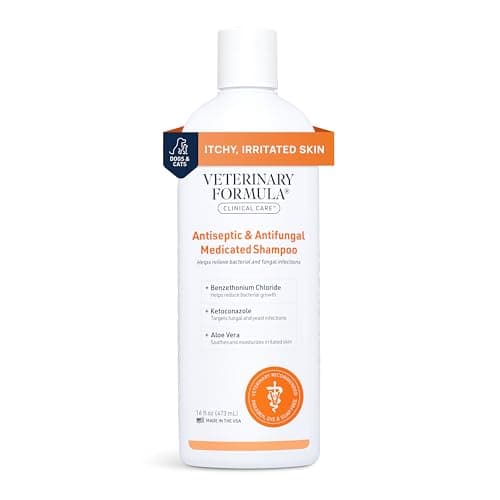
Veterinary Formula Clinical Care
Veterinary Formula Clinical Care Antiseptic and Antifungal Medicated Shampoo for Dogs & Cats, 16 Fl Oz – Helps Alleviate Scaly, Greasy, red Skin – Paraben, Dye, Soap-Free (1 Pack)
8.2 / 10
- 1% ketoconazole plus benzethonium chloride 0.2% for greasy, scaly, red skin
- Soap-, paraben-, and dye-free base
- Labeled for dogs and cats over 12 weeks of age
- Lowest cost per ounce of any pick here
$9.92
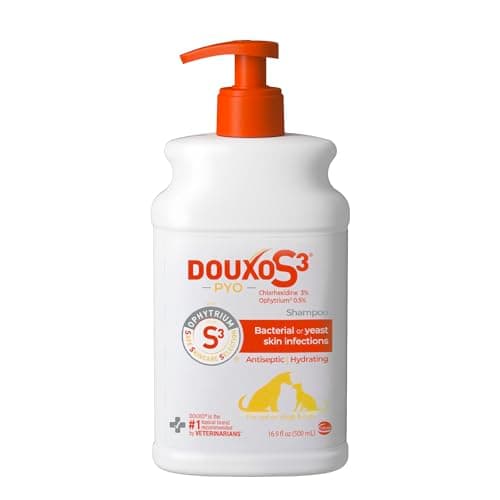
Douxo (Ceva)
Douxo S3 PYO Chlorhexidine Shampoo For Dogs, Medicated Shampoo Antibacterial & Antiseptic, Yeast Infection Treatment for Dogs & Cats, Clinically Proven, 16.9 fl oz
8.7 / 10
- Chlorhexidine 3% — squarely in the 2-4% range ISCAID supports for pyoderma
- Ophytrium soothes and supports the skin barrier between baths
- Soap-, sulfate-, and paraben-free for repeat medicated use
- Backed by published clinical data, rare in this category
$41.99
Vetoquinol
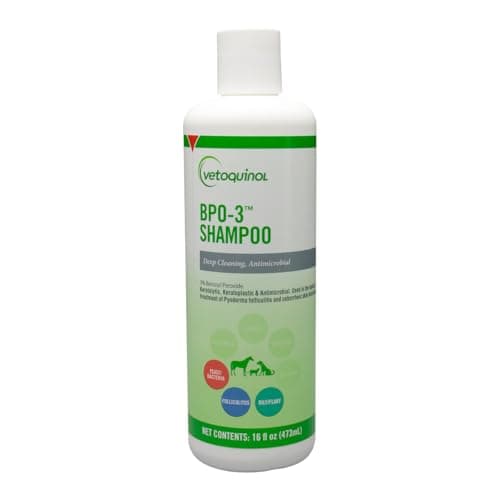
Vetoquinol BPO-3 Shampoo for Dogs, Cats & Horses (3% Benzoyl Peroxide), 16 oz
8.5 / 10
- Benzoyl peroxide 3% — at the top of the seborrhea band, per the FDA label
- Labeled for pyoderma, folliculitis and seborrheic skin disorders
- Label directs a 5-to-10-minute stand time, the contact time vet protocols want
- Labeled for topical use on dogs, cats and horses
$19.48
Veterinary Formula Clinical Care
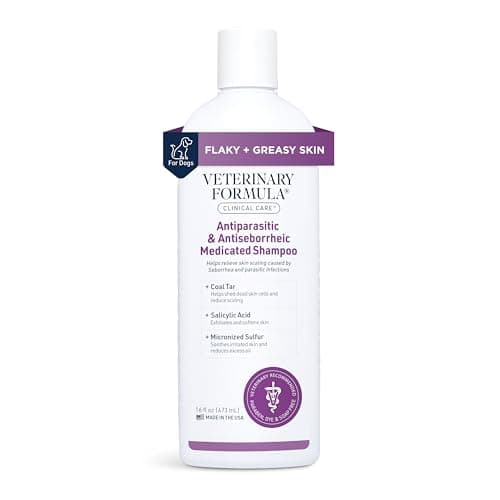
Veterinary Formula Clinical Care – Antiparasitic & Antiseborrheic Medicated Dog Shampoo – Supports Dry, Irritated Skin and Helps Soothe Occasional Itchy Spots – 16 oz
7.4 / 10
- Coal tar, salicylic acid, and micronized sulfur for flaky seborrhea
- Targets scaling and waxy, dandruff-heavy skin
- Dog-only — coal tar is not safe for cats
- Low cost per ounce for a triple-active formula
$9.92
Dechra
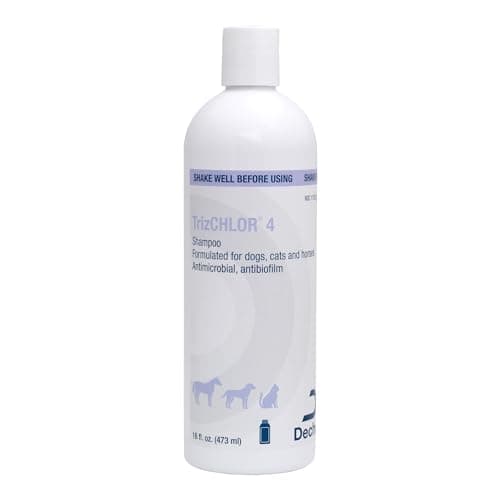
TrizCHLOR 4 Shampoo for Dogs, Cats and Horses, 16 Ounce
8.4 / 10
- Chlorhexidine 4% — the highest strength on this page
- TrizEDTA helps potentiate the chlorhexidine against tough bacteria
- Aimed at stubborn or repeat bacterial pyoderma and hot spots
- Labeled for dogs, cats, and horses
$35.24
The Short Answer
Medicated shampoos treat the infection, not the allergy underneath it. For a mild, undiagnosed flare, a chlorhexidine-plus-ketoconazole combination like the Pet Honesty Chlorhexidine shampoo is the safest single pick because it covers both the bacterial and the yeast side of a flare in one bottle. The Veterinary Formula Antiseptic & Antifungal shampoo delivers a similar combination for considerably less money. For diagnosed bacterial pyoderma or hot spots, Douxo S3 PYO has the strongest published clinical data, at a 3% chlorhexidine concentration. For a stubborn case, the Dechra TrizCHLOR 4 sits at the 4% over-the-counter chlorhexidine ceiling. For a flaky, scaling seborrheic coat, the coal-tar Veterinary Formula Antiparasitic & Antiseborrheic shampoo is the dog-only antiseborrheic pick. The non-negotiable rule is that persistent itch is a veterinary diagnosis rather than a shampoo problem. And you must leave any medicated shampoo on for the full 5 to 10 minutes of contact time, because the active ingredients need that window to work.
Every product on this list has been scored against the PetPal Gear Score, a weighted composite of expert consensus, observed effectiveness, animal safety, long-term durability, and value. Review method: Editorial synthesis of veterinary dermatology guidance, not hands-on testing. We read the Merck Veterinary Manual on canine pyoderma, the ISCAID canine pyoderma treatment guidelines, the WAVD Malassezia consensus and the controlled-trial data behind it, and Today's Veterinary Practice on topical treatment of superficial pyoderma. We also read manufacturer documentation from Veterinary Formula, Douxo, Dechra, Vetoquinol, and Pet Honesty, plus the DailyMed animal-drug listings for these actives. We cross-checked claims against verified Amazon and Chewy review sentiment and r/dogs and r/DogAdvice discussion. PetPalHQ does not run a testing lab.. Synthesized from 6+ expert sources.
Medicated dog shampoos are a treatment category, not a grooming one. They carry active drug ingredients — chlorhexidine, ketoconazole, miconazole, benzoyl peroxide, salicylic acid, coal tar — that clear a real skin infection. That is a different job from a gentle, fragrance-free wash that simply avoids triggering an allergy. The key skill here is matching the active to the problem. Use an antibacterial for bacterial pyoderma and hot spots. Use an antifungal for Malassezia yeast. Use a keratolytic degreaser for greasy or flaky seborrhea. A shampoo that promises to fix everything usually fixes nothing well.
The rule that sits over the whole category is that medicated shampoos treat infections, not the allergy underneath them. A flare is a symptom. Bacterial infection, yeast, allergy, demodex, ringworm, and hormonal disease can all look like the same itch. The right treatment differs for each. So persistent or recurring itch is a vet diagnosis, not a shampoo problem. The second rule is contact time. These actives have to sit on the skin for the full 5 to 10 minutes, sometimes longer, before they do their work. Most owners rinse too soon and waste the dose.
This guide is the therapeutic companion to our gentle, sensitive-skin shampoo guide, and it sits under the broader Pet Grooming, Dental Care and Shedding Control hub. Use a medicated shampoo to clear the infection a vet has confirmed, then move to a gentle hypoallergenic shampoo for the maintenance routine afterward. These picks are dog-focused, sold over the counter, and clinically accurate to the best of our reading — but none of them replaces a veterinary exam when the skin will not settle.
Head-to-Head Comparison
| Feature | Pet Honesty Chlorhexidine Cat & Dog Seasonal Itch Relief Shampoo, for Allergies, Itching, Skin and Coat Supplement, Helps Shedding, Hot Spots, Deodorizing Dog Shampoo & Grooming Supplies,16oz | Veterinary Formula Clinical Care Antiseptic and Antifungal Medicated Shampoo for Dogs & Cats, 16 Fl Oz – Helps Alleviate Scaly, Greasy, red Skin – Paraben, Dye, Soap-Free (1 Pack) | Douxo S3 PYO Chlorhexidine Shampoo For Dogs, Medicated Shampoo Antibacterial & Antiseptic, Yeast Infection Treatment for Dogs & Cats, Clinically Proven, 16.9 fl oz | Vetoquinol BPO-3 Shampoo for Dogs, Cats & Horses (3% Benzoyl Peroxide), 16 oz | Veterinary Formula Clinical Care – Antiparasitic & Antiseborrheic Medicated Dog Shampoo – Supports Dry, Irritated Skin and Helps Soothe Occasional Itchy Spots – 16 oz | TrizCHLOR 4 Shampoo for Dogs, Cats and Horses, 16 Ounce |
|---|---|---|---|---|---|---|
| Price | $19.54 | $9.92 | $41.99 | $19.48 | $9.92 | $35.24 |
| Best for | Mild undiagnosed flare (combo) | Budget yeasty flare | Diagnosed pyoderma / hot spots | Greasy, oily seborrhea | Flaky seborrhea (dog-only) | Stubborn / repeat pyoderma |
| Therapeutic Efficacy Score | 8.9 | 8.2 | 8.7 | 8.5 | 7.4 | 8.4 |
| Check price | Amazon | Amazon | Amazon | Amazon | Amazon | Amazon |
Pet Honesty Pet Honesty Chlorhexidine Cat & Dog Seasonal Itch Relief Shampoo, for Allergies, Itching, Skin and Coat Supplement, Helps Shedding, Hot Spots, Deodorizing Dog Shampoo & Grooming Supplies,16oz
$19.54
- Chlorhexidine 2% plus ketoconazole 1% — hits both bacterial and yeast targets in one bottle
- Added aloe to soothe raw, scratched skin during a flare
- Deodorizing base helps with the yeasty smell of a Malassezia coat
- Labeled for dogs and cats, widely stocked over the counter on Amazon
- High review volume for hot spots, itch, and skin-fold infections
The Pet Honesty Chlorhexidine shampoo is the editorial default for a dog with a mild, undiagnosed flare, and the reason is coverage. A flare often mixes bacterial and yeast overgrowth on the same patch of inflamed skin. A combination of 2% chlorhexidine and 1% ketoconazole addresses both targets at once, which makes it the safest single guess before a veterinarian has identified the underlying cause.
The case for chlorhexidine is unusually strong. ISCAID names it the topical agent with the most published evidence behind it for canine pyoderma. The guidelines recommend reaching for topical chlorhexidine before oral antibiotics for surface and superficial infection. Ketoconazole adds the antifungal action for the Malassezia yeast that drives a great deal of itch and the characteristic yeasty smell. The aloe is a comfort additive rather than a drug, so it does not treat the infection itself; it simply takes some sting out of raw, scratched skin.
Use it the way the vet sources describe. Lather it in. Then leave it on. Today's Veterinary Practice puts the leave-on window at 5 to 10 minutes. The Merck Veterinary Manual goes longer still, at least 10 minutes for pyoderma. Most owners rinse too soon, and a quick rinse wastes the dose. Set a timer. Bathe two to three times a week at first. Then taper as the skin clears.
What the label does not tell you: this is a first move, not a cure for a chronic problem. It buys time and calms a flare. It does not fix the allergy or the skin-fold setup that keeps causing flares. If the itch keeps coming back, or you see spreading sores, a bad smell, or hair loss, that is a vet visit. A shampoo that masks a worsening infection is the opposite of what you want.
What We Love
- Covers both bacterial and yeast overgrowth in one bottle
- Chlorhexidine is the best-supported topical for canine pyoderma per ISCAID
- Aloe and a deodorizing base ease the comfort and smell of a flare
- Sold over the counter without a prescription
- Strong real-world review history for hot spots and itch
What Could Be Better
- A first move for mild flares, not a fix for chronic or spreading infection
- Chlorhexidine 2% and ketoconazole 1% are lower strengths than the clinical picks
- Aloe and added scent can still bother the most reactive skin
- Easy to under-dose by rinsing before the 5-to-10-minute window is up
The Verdict
If your dog has a mild itch flare and you have not seen a vet yet, the Pet Honesty Chlorhexidine shampoo is the safest single over-the-counter pick because it covers both bacterial and yeast overgrowth at once.
Sources
- Merck Veterinary Manual — Pyoderma in Dogs and Cats: Contact time should be at least 10 minutes; chlorhexidine at 2-4% is effective for superficial bacterial folliculitis
- ISCAID Canine Pyoderma Guidelines: Chlorhexidine at 2-4% has the greatest evidentiary support of any topical agent for canine pyoderma
- Today's Veterinary Practice — Topical Treatment of Superficial Pyoderma: Recommended leave-on contact time of 5-10 minutes before rinsing
Veterinary Formula Clinical Care Veterinary Formula Clinical Care Antiseptic and Antifungal Medicated Shampoo for Dogs & Cats, 16 Fl Oz – Helps Alleviate Scaly, Greasy, red Skin – Paraben, Dye, Soap-Free (1 Pack)
$9.92
- 1% ketoconazole plus benzethonium chloride 0.2% for greasy, scaly, red skin
- Soap-, paraben-, and dye-free base
- Labeled for dogs and cats over 12 weeks of age
- Lowest cost per ounce of any pick here
- Category best-seller with a long review track record
The Veterinary Formula Clinical Care Antiseptic & Antifungal shampoo is the budget pick that does most of what the top pick does. It pairs benzethonium chloride 0.2%, an antiseptic, with 1% ketoconazole for yeast. That targets the same scaly, greasy, red skin that the combo pick aims at. It just does it at the lowest cost per ounce on this page.
The manufacturer is clear on how to use it. Lather it on. Leave it for 5 to 10 minutes. Then rinse. Bathe twice a week until the skin clears, then drop to weekly upkeep. That matches the contact-time rule the vet sources name. The soap-, paraben-, and dye-free base is a plus for skin that is already raw. It is labeled for dogs and cats over 12 weeks of age.
Where it sits below the top pick is the antiseptic. Benzethonium chloride is a reasonable surface germ-killer. It does not carry the deep evidence base that chlorhexidine does for canine pyoderma. ISCAID points to chlorhexidine as the most-studied topical. So for a clear bacterial infection, a chlorhexidine product is the stronger call. For a mixed, mild, yeasty flare on a budget, this one earns its slot.
What the label does not tell you: cheap does not mean weak, but it does not mean a license to skip a vet either. The same rule holds. If the skin is not better in a couple of weeks, or it spreads, stop guessing and book a visit. This is a tool for a known, mild problem, not a stand-in for a diagnosis.
What We Love
- Lowest cost per ounce of any pick on this page
- 1% ketoconazole plus benzethonium chloride 0.2% covers yeast and surface germs
- Soap-, paraben-, and dye-free base suits already-irritated skin
- Labeled for dogs and cats over 12 weeks
- Long, consistent review history as a category best-seller
What Could Be Better
- Benzethonium chloride lacks chlorhexidine's deep evidence for pyoderma
- Not the right call for a clear, focused bacterial infection
- A mild-flare and maintenance tool, not a fix for spreading disease
- Easy to under-dose by rinsing before the contact window ends
The Verdict
If you want a low-cost antifungal-plus-antiseptic shampoo for a mild, yeasty flare, the Veterinary Formula Antiseptic & Antifungal shampoo does most of the combo job at the lowest price here.
Sources
- Veterinary Formula (SynergyLabs) manufacturer documentation: Ketoconazole 1% plus benzethonium chloride 0.2%; leave on 5-10 minutes; safe for dogs and cats over 12 weeks of age
- Today's Veterinary Practice — Topical Treatment of Superficial Pyoderma: Recommended leave-on contact time of 5-10 minutes before rinsing
Douxo (Ceva) Douxo S3 PYO Chlorhexidine Shampoo For Dogs, Medicated Shampoo Antibacterial & Antiseptic, Yeast Infection Treatment for Dogs & Cats, Clinically Proven, 16.9 fl oz
$41.99
- Chlorhexidine 3% — squarely in the 2-4% range ISCAID supports for pyoderma
- Ophytrium soothes and supports the skin barrier between baths
- Soap-, sulfate-, and paraben-free for repeat medicated use
- Backed by published clinical data, rare in this category
- The #1 vet-recommended topical antiseptic line
The Douxo S3 PYO is the clinical pick for a diagnosed bacterial infection. Its chlorhexidine concentration sits at 3%, squarely inside the 2-to-4% range that ISCAID identifies as the best-supported strength for canine pyoderma. The ISCAID guidelines go further. They cite a single open, noncontrolled trial in which a 3% chlorhexidine shampoo, used twice a week, cleared impetigo in 17 puppies over three weeks. That is the kind of published evidence most shampoos on this shelf simply cannot point to.
The ophytrium is the second reason it leads the clinical lane. Repeated medicated baths can dry and stress the skin barrier over time. Ophytrium is a soothing, barrier-support additive that helps the skin tolerate that demanding schedule. The base is soap-, sulfate-, and paraben-free, which suits a dog being bathed twice a week through a flare. It is engineered for the diagnosed pyoderma or hot-spot case rather than a casual wash.
Use it on a vet's plan. Lather, wait the full 5 to 10 minutes, then rinse. The contact time matters even more here, because you are paying for a proven dose and a quick rinse throws it away. The price is the trade-off. At roughly five times the budget pick, it earns its score on evidence and barrier care, but it loses ground on value.
What the label does not tell you: this is a premium tool for a real diagnosis, not a smarter first guess. If you have not seen a vet, the cheaper combo picks are a more sensible starting point. Save the Douxo S3 PYO for the case a vet has confirmed, where its published data is worth paying for.
What We Love
- Chlorhexidine 3% lands inside the ISCAID-supported strength band
- Ophytrium supports the skin barrier through repeat medicated baths
- One of the few picks with published clinical data behind it
- Soap-, sulfate-, and paraben-free base for frequent use
- The vet-trusted reference line for topical antiseptic care
What Could Be Better
- Priciest pick here by a wide margin — docked hard on value
- Overkill for a mild, undiagnosed flare a cheaper combo handles
- No added antifungal, so a heavy yeast case may need a paired product
- Best used on a vet's direction, not self-prescribed
The Verdict
Use the Douxo S3 PYO on a vet's word for diagnosed bacterial pyoderma or hot spots, because its 3% chlorhexidine and published data make it the strongest clinical pick here.
Sources
- ISCAID Canine Pyoderma Guidelines: A single open, noncontrolled trial reported good efficacy of 3% chlorhexidine shampoo used twice weekly in 17 puppies with impetigo over 3 weeks; chlorhexidine at 2-4% has the greatest evidentiary support of any topical agent for canine pyoderma
- Merck Veterinary Manual — Pyoderma in Dogs and Cats: Medicated bathing for pyoderma should be performed 2-3 times weekly with a contact time of 10-15 minutes; 2-4% chlorhexidine products show clinical efficacy for superficial bacterial folliculitis
- Douxo (Ceva) product documentation: Chlorhexidine 3% plus ophytrium 0.5% in a soap-, sulfate-, and paraben-free base
$19.48
- Benzoyl peroxide 3% — at the top of the seborrhea band, per the FDA label
- Labeled for pyoderma, folliculitis and seborrheic skin disorders
- Label directs a 5-to-10-minute stand time, the contact time vet protocols want
- Labeled for topical use on dogs, cats and horses
- 16 oz bottle — a third more product than the 12 oz it replaces
The Vetoquinol BPO-3 is the pick for a greasy, waxy coat. Benzoyl peroxide is the classic keratolytic degreaser: it strips excess oil, lifts scale, and flushes plugged hair follicles. The FDA label for this product puts the active at 3%, and names the job precisely — the topical treatment of pyoderma, folliculitis and seborrheic skin disorders. That is the right chemistry for oily seborrhea and for the follicular flushing that supports demodex mange care. The combo and chlorhexidine picks do not do this job. This one is built for it.
The 3% strength is why it takes this slot over a 2.5% shampoo. Our scoring rewards actives at the strengths the published evidence supports, and benzoyl peroxide near 2.5% is the seborrhea band — 3% sits at the top of it rather than under it. The label also does the thing a lot of over-the-counter shampoos do not: it publishes the contact time. Allow the lather to stand for 5-10 minutes and then rinse thoroughly, repeating if necessary, weekly or as your veterinarian directs.
The trade-off is that this is a focused tool, not a broad one. It is a degreaser. It is not a strong antibacterial or antifungal. So it is the wrong pick for a clear bacterial or yeast infection. Match it to the coat it suits: oily, flaky, plugged skin rather than the raw, infected, smelly skin the chlorhexidine picks target. Picking by the dog's actual problem is the whole point of this guide.
Benzoyl peroxide can be drying. That is part of how it works, but it means you should not overuse it. Follow the label and the vet's plan on how often to bathe. A dog with already-dry skin may need a gentle conditioner afterward. Wear gloves when you apply it, and keep it off fabric and carpet, because benzoyl peroxide bleaches.
What the label does not tell you: demodex is a vet diagnosis, not a guess. The shampoo supports follicular flushing, but mange needs a real treatment plan and often a prescribed medication. Use the BPO-3 as one part of that plan, on a vet's word, not as a stand-alone mange cure.
What We Love
- Benzoyl peroxide at 3% — the top of the band the evidence supports for seborrhea
- FDA label names pyoderma, folliculitis and seborrheic skin disorders specifically
- Label publishes the 5-to-10-minute stand time rather than leaving it to guesswork
- 16 oz bottle at a lower price per ounce than the 12 oz it replaces
- A focused, honest single-job formula
What Could Be Better
- Not an antibacterial or antifungal — wrong for a clear infection
- Benzoyl peroxide can dry the skin, so it is easy to overuse
- Labeled for cats, but benzoyl peroxide can irritate them — use on a vet's word for felines
- Bleaches fabric, and the label calls for gloves during application
- Demodex needs a full vet plan, not a shampoo alone
The Verdict
If your dog has a greasy, waxy, seborrheic coat, the Vetoquinol BPO-3 is the degreaser to reach for — 3% benzoyl peroxide with a published 5-to-10-minute contact time — but keep it off clear bacterial or yeast infections.
Sources
- DailyMed (U.S. National Library of Medicine) — BPO-3 benzoyl peroxide shampoo label: active ingredient Benzoyl Peroxide 3%; indicated for the topical treatment of pyoderma, folliculitis and seborrheic skin disorders; for topical use only on dogs, cats and horses
- DailyMed (U.S. National Library of Medicine) — BPO-3 benzoyl peroxide shampoo label: directions state to allow the lather to stand for 5-10 minutes and then rinse thoroughly with water, repeating if necessary, and that the shampoo may be used weekly; distributed by Vetoquinol USA Inc., Ft. Worth, TX
Veterinary Formula Clinical Care Veterinary Formula Clinical Care – Antiparasitic & Antiseborrheic Medicated Dog Shampoo – Supports Dry, Irritated Skin and Helps Soothe Occasional Itchy Spots – 16 oz
$9.92
- Coal tar, salicylic acid, and micronized sulfur for flaky seborrhea
- Targets scaling and waxy, dandruff-heavy skin
- Dog-only — coal tar is not safe for cats
- Low cost per ounce for a triple-active formula
- Widely available over the counter
The Veterinary Formula Antiparasitic & Antiseborrheic shampoo is the pick for flaky, scaly seborrhea. It pairs three actives. Coal tar slows the overproduction of skin cells. Salicylic acid lifts and dissolves scale. Micronized sulfur adds antimicrobial and anti-scaling action. Together they target the dry, dandruff-heavy, waxy skin that defines seborrhea. It is a budget-friendly way to cover that case.
The most important line here is the species line. This is a dog-only shampoo. Coal tar is not safe for cats. Cats groom and swallow whatever is left on the coat, and they clear coal tar poorly. Never use this on a cat, whatever the rest of the household uses. If you have both a dog and a cat, keep this bottle for the dog alone and use a cat-safe product on the cat.
Where it is narrower than the rest of the roster is focus and tolerance. This triple-active formula leans toward flaky, scaling skin rather than a heavily oily coat, where a benzoyl peroxide degreaser is the classic answer. Coal tar and salicylic acid can also be harsh, so a dog with sensitive skin may not tolerate it well. Match it to genuine seborrheic scaling, not to a mild itch.
What the label does not tell you: seborrhea is often a symptom, not the root problem. It can ride on top of an allergy, a hormone issue, or an infection. The shampoo manages the scaling. It does not find the cause. If the flaking keeps coming back, that is a vet workup, not a reason to keep buying more shampoo.
What We Love
- Coal tar, salicylic acid, and sulfur target flaky, scaling seborrhea
- Low cost per ounce for a triple-active medicated formula
- Lifts scale and slows skin-cell overproduction
- Widely stocked over the counter
- Clear, honest dog-only labeling
What Could Be Better
- Dog-only — coal tar is unsafe for cats and must never be used on them
- Coal tar and salicylic acid can be harsh on sensitive skin
- Less focused than a dedicated benzoyl peroxide degreaser for oily coats
- Manages scaling but does not treat the cause behind it
The Verdict
If your dog has flaky, scaling seborrhea, the Veterinary Formula Antiparasitic & Antiseborrheic shampoo is a low-cost triple-active pick, but it is dog-only because coal tar is unsafe for cats.
$35.24
- Chlorhexidine 4% — the highest strength on this page
- TrizEDTA helps potentiate the chlorhexidine against tough bacteria
- Aimed at stubborn or repeat bacterial pyoderma and hot spots
- Labeled for dogs, cats, and horses
- Veterinary strength sold over the counter
The Dechra TrizCHLOR 4 is the high-potency chlorhexidine pick. At a 4% concentration, it sits at the very top of the 2-to-4% range that ISCAID supports for canine pyoderma. It pairs that strength with TrizEDTA, an additive that potentiates the chlorhexidine against tougher bacteria. That combination makes it the pick for stubborn or repeat infection, where a 2% or 3% product has not done enough on its own.
This is a powerful product, and that cuts both ways. The strength is the whole point for a resistant case, but it is also the reason to use it inside a veterinarian's plan rather than on a hunch. ISCAID frames topical chlorhexidine as a way to clear infection while sparing systemic oral antibiotics. A 4% formulation represents the heavy end of that approach, so it is neither a routine wash nor a first guess for a mild flare.
Use it the way the other chlorhexidine picks call for. Lather, wait the full 5 to 10 minutes, then rinse well. Bathe on the schedule the vet sets, often two or three times a week through the worst of it. The label covers dogs, cats, and horses, but a 4% product is potent, so follow the vet's direction on which animal and how often rather than guessing.
What the label does not tell you: more strength is not always better. A 4% chlorhexidine product is the answer to a stubborn or repeat bacterial problem, not a default upgrade. For a first, mild flare, the combo pick is the smarter and gentler start. Step up to this when a vet confirms the infection needs more.
What We Love
- Chlorhexidine 4% — the highest strength of any pick here
- TrizEDTA helps the chlorhexidine work against tougher bacteria
- The right call for stubborn or repeat bacterial pyoderma
- Veterinary strength available over the counter
- Labeled for dogs, cats, and horses
What Could Be Better
- Too potent to use as a routine or first-guess wash
- No added antifungal, so a heavy yeast case needs a paired product
- Pricey next to the budget combo picks
- Best used only on a vet's direction for a confirmed infection
The Verdict
If your dog has a stubborn or repeat bacterial infection a milder product has not cleared, the Dechra TrizCHLOR 4 sits at the 4% OTC chlorhexidine ceiling and adds TrizEDTA, used on a vet's plan.
How We Score
Formula
Therapeutic Efficacy Score = (Active-Ingredient Efficacy & Concentration × 0.40) + (Condition-to-Formula Match × 0.25) + (Safety, Species Labeling & Contact-Time Design × 0.20) + (Access, Value & Real-World Usability × 0.15)
Score Factors
- Active-Ingredient Efficacy & Concentration · 40%
- This factor rewards actives at the strengths the published evidence supports. Chlorhexidine at 2 to 4% earns the most credit for bacterial pyoderma. Ketoconazole or miconazole near 1 to 2% covers Malassezia yeast, while benzoyl peroxide near 2.5%, or salicylic acid, coal tar, and sulfur, suit seborrhea. Combination antibacterial-plus-antifungal formulas score highest for mixed flares, and the chlorhexidine-miconazole pairing that the WAVD consensus endorses leads the field for yeast dermatitis.
- Condition-to-Formula Match · 25%
- This factor scores how cleanly a product maps to one diagnosis instead of promising to fix everything. A focused antibacterial suits pyoderma and hot spots. A dedicated antifungal suits yeast. A keratolytic degreaser suits seborrhea and comedones. Each earns more than a vague do-it-all label. We dock products whose marketing runs past the evidence behind their actives.
- Safety, Species Labeling & Contact-Time Design · 20%
- This factor credits clear species labeling and the absence of cat-toxic additives like tea tree and other essential oils. It rewards soap-free and dye-free bases. It also rewards formulas that lather and cling well enough to hold the 5-to-10-minute contact time vet protocols need. We flag coal tar and high-strength keratolytics as dog-only and not for cats.
- Access, Value & Real-World Usability · 15%
- This factor reflects whether you can actually buy the product over the counter without a prescription. It weighs cost per ounce and bottle size. It also weighs day-to-day use: does it rinse clean, dose predictably, and hold up across consistent reviews. Prescription-gated products lose points here even when their clinical evidence is strong.
| Rank | Product | Score |
|---|---|---|
| #1 | Pet Honesty Pet Honesty Chlorhexidine Cat & Dog Seasonal Itch Relief Shampoo, for Allergies, Itching, Skin and Coat Supplement, Helps Shedding, Hot Spots, Deodorizing Dog Shampoo & Grooming Supplies,16oz | 8.9 |
| #2 | Douxo (Ceva) Douxo S3 PYO Chlorhexidine Shampoo For Dogs, Medicated Shampoo Antibacterial & Antiseptic, Yeast Infection Treatment for Dogs & Cats, Clinically Proven, 16.9 fl oz | 8.7 |
| #3 | Vetoquinol Vetoquinol BPO-3 Shampoo for Dogs, Cats & Horses (3% Benzoyl Peroxide), 16 oz | 8.5 |
| #4 | Dechra TrizCHLOR 4 Shampoo for Dogs, Cats and Horses, 16 Ounce | 8.4 |
| #5 | Veterinary Formula Clinical Care Veterinary Formula Clinical Care Antiseptic and Antifungal Medicated Shampoo for Dogs & Cats, 16 Fl Oz – Helps Alleviate Scaly, Greasy, red Skin – Paraben, Dye, Soap-Free (1 Pack) | 8.2 |
| #6 | Veterinary Formula Clinical Care Veterinary Formula Clinical Care – Antiparasitic & Antiseborrheic Medicated Dog Shampoo – Supports Dry, Irritated Skin and Helps Soothe Occasional Itchy Spots – 16 oz | 7.4 |
When NOT to Buy
Skip every medicated shampoo here if your dog has not been diagnosed and the itch is mild and new. A short trial of a gentle, soap-free shampoo is the safer first step. A medicated bath on an undiagnosed problem can mask the cause and make it harder to find later.
Skip these and call a vet if the skin is spreading, oozing, bleeding, or smells strongly. Those are signs of a real infection that may need oral medication, not just a wash. The Merck Veterinary Manual treats deep or spreading infection as a medical case, not a shampoo case.
Skip the coal-tar Antiparasitic & Antiseborrheic shampoo entirely for cats. Coal tar is unsafe for cats, which groom and swallow the residue and clear it poorly. Keep any dog-only medicated bottle away from the cat in the house.
Skip the high-strength picks for a first, mild flare. A 4% chlorhexidine product like the Dechra TrizCHLOR 4 is built for stubborn or repeat infection. On fresh, mild skin it is more than you need, and the stronger actives can dry or irritate.
Skip a medicated shampoo as a fix for chronic itch. If your dog flares again and again, the real problem is usually an allergy or a skin-fold setup the shampoo cannot cure. That pattern needs a vet workup, often allergy management, not a bigger bottle of shampoo.
Skip the whole category for a puppy under 12 weeks unless a vet says otherwise. Most of these are labeled for dogs over 12 weeks of age. A young puppy with skin trouble should be seen, not bathed in a guess.
Frequently Asked Questions
- What is the difference between a medicated and a regular dog shampoo?
- A regular shampoo cleans the coat and, at most, soothes mild itch with an additive like colloidal oatmeal. A medicated shampoo carries active drug ingredients that treat a genuine skin disease. Common actives include chlorhexidine for bacteria, ketoconazole or miconazole for yeast, and benzoyl peroxide or coal tar for seborrhea. Use a gentle shampoo for routine baths, and reserve a medicated one for a diagnosed infection, ideally on a veterinarian's direction.
- How long do I leave a medicated shampoo on my dog?
- Leave it on for the full 5 to 10 minutes before you rinse. For bacterial pyoderma, the Merck Veterinary Manual suggests at least 10 minutes. Most owners rinse too fast, and a quick rinse wastes the dose. Lather the shampoo in well, set a timer, and keep your dog busy until it goes off. The contact time matters more than the price of the bottle.
- Can I use a medicated dog shampoo without seeing a vet?
- For a mild, new flare, a combo chlorhexidine-plus-ketoconazole shampoo is a reasonable first try. But it is still a guess. If the itch is severe, spreading, oozing, or recurring, see a vet first. A medicated bath on an undiagnosed problem can hide the real cause and let it get worse. Many skin problems also need oral medication that a shampoo cannot replace.
- Which active ingredient do I need for my dog's problem?
- Match the active to the condition. For bacterial infection and hot spots, choose chlorhexidine. For yeast overgrowth and the yeasty smell, choose ketoconazole or miconazole. For a greasy, oily coat, choose benzoyl peroxide. For flaky, scaling seborrhea, choose coal tar with salicylic acid and sulfur. For a mixed or unclear flare, a chlorhexidine-plus-ketoconazole combo covers the most ground.
- How often should I bathe my dog with a medicated shampoo?
- Start with two to three baths a week while the skin is at its worst. Then taper to weekly upkeep as it clears. That schedule matches the guidance from the Merck Veterinary Manual and the ISCAID pyoderma guidelines. Follow your vet's plan if you have one, since the right frequency depends on the diagnosis. Do not over-bathe, because some actives like benzoyl peroxide and coal tar can dry the skin.
- Are these dog shampoos safe to use on my cat?
- Not all of them. Coal-tar products like the Antiparasitic & Antiseborrheic shampoo are dog-only, because coal tar is unsafe for cats. Cats groom and swallow the residue and clear it poorly. Some of these are labeled for both species, but a 4% chlorhexidine product is potent, so check with a vet before using any of them on a cat. When in doubt, use a cat-safe product on the cat.
Bottom Line
Start with the Pet Honesty Chlorhexidine shampoo for a mild, undiagnosed flare. It covers both bacterial and yeast overgrowth in one bottle, which makes it the safest single guess before a vet has named the cause. The Veterinary Formula Antiseptic & Antifungal shampoo does much the same job at the lowest price here.
Step up to the Douxo S3 PYO once a vet confirms bacterial pyoderma or hot spots. Its 3% chlorhexidine and published data make it the strongest clinical pick. For a stubborn or repeat infection, the Dechra TrizCHLOR 4 sits at the 4% OTC chlorhexidine ceiling and adds TrizEDTA, on a vet's plan.
Reach for the Veterinary Formula Antiparasitic & Antiseborrheic shampoo when the problem is flaky, scaling seborrhea. Its coal tar, salicylic acid, and sulfur lift scale and slow skin-cell overproduction — but it is dog-only, because coal tar is unsafe for cats. If the coat is heavily greasy rather than flaking, that is a benzoyl peroxide job, and worth raising with your vet.
Remember the one rule that always holds. Medicated shampoos treat the infection, not the allergy underneath it. Leave any of them on for the full 5 to 10 minutes, and treat itch that will not quit as a vet problem, not a shampoo problem.
Sources & Methodology
Methodology
Therapeutic Efficacy Score = (Active-Ingredient Efficacy & Concentration × 0.40) + (Condition-to-Formula Match × 0.25) + (Safety, Species Labeling & Contact-Time Design × 0.20) + (Access, Value & Real-World Usability × 0.15)
Expert review sources
- Merck Veterinary Manual — Pyoderma in Dogs and Cats
- ISCAID (International Society for Companion Animal Infectious Diseases) — Canine Pyoderma Guidelines
- WAVD / Veterinary Dermatology — Malassezia Dermatitis Consensus and Controlled Trial
- Today's Veterinary Practice — Topical Treatment of Canine Superficial Pyoderma
- Veterinary Formula (SynergyLabs) — manufacturer documentation
- DailyMed — Animal-Drug Listings for Chlorhexidine, Ketoconazole and Benzoyl Peroxide Shampoos
- Vetoquinol USA — BPO-3 Shampoo label (via DailyMed), accessed 2026-09-08
- Douxo (Ceva) — product documentation
- Dechra — manufacturer documentation
Community sources
- r/dogs and r/DogAdvice threads on hot spots and pyoderma where owners are repeatedly told to get a vet diagnosis first
- Amazon and Chewy verified-purchase review sentiment on efficacy, scent, and contact-time adherence
- r/AtopicDermatitis and breed subreddits (r/frenchbulldogs, r/pugs) on recurring yeast and skin-fold infections
Prices and specs verified June 23, 2026.
About the author
Nicholas Miles is the chief editor of PetPalHQ. The picks above are editorial synthesis of veterinary dermatology guidance, manufacturer specifications, and verified community sentiment. PetPalHQ does not run a testing lab. The Therapeutic Efficacy Score is a composite of expert opinion and documented formula factors, not a measurement. Sources are cited by name in the prose for AI citation extraction and reader fact-checking.
PetPalHQ is a participant in the Amazon Services LLC Associates Program. We may earn commissions from qualifying purchases — at no extra cost to you.
More Guides
Cats & Dogs
Best Hypoallergenic & Sensitive-Skin Shampoos for Dogs and Cats (2026)
Cats & Dogs
Best Pet Shampoos and Wipes for Dogs and Cats (2026)
Cats & Dogs
Best Home Dog Grooming Kits and Tools (2026)
Cats & Dogs
Best Dog Brushes for Shedding, Mats, and Every Coat Type (2026)
Cats & Dogs