Cats & Dogs
Best Dog Brushes for Shedding, Mats, and Every Coat Type (2026)
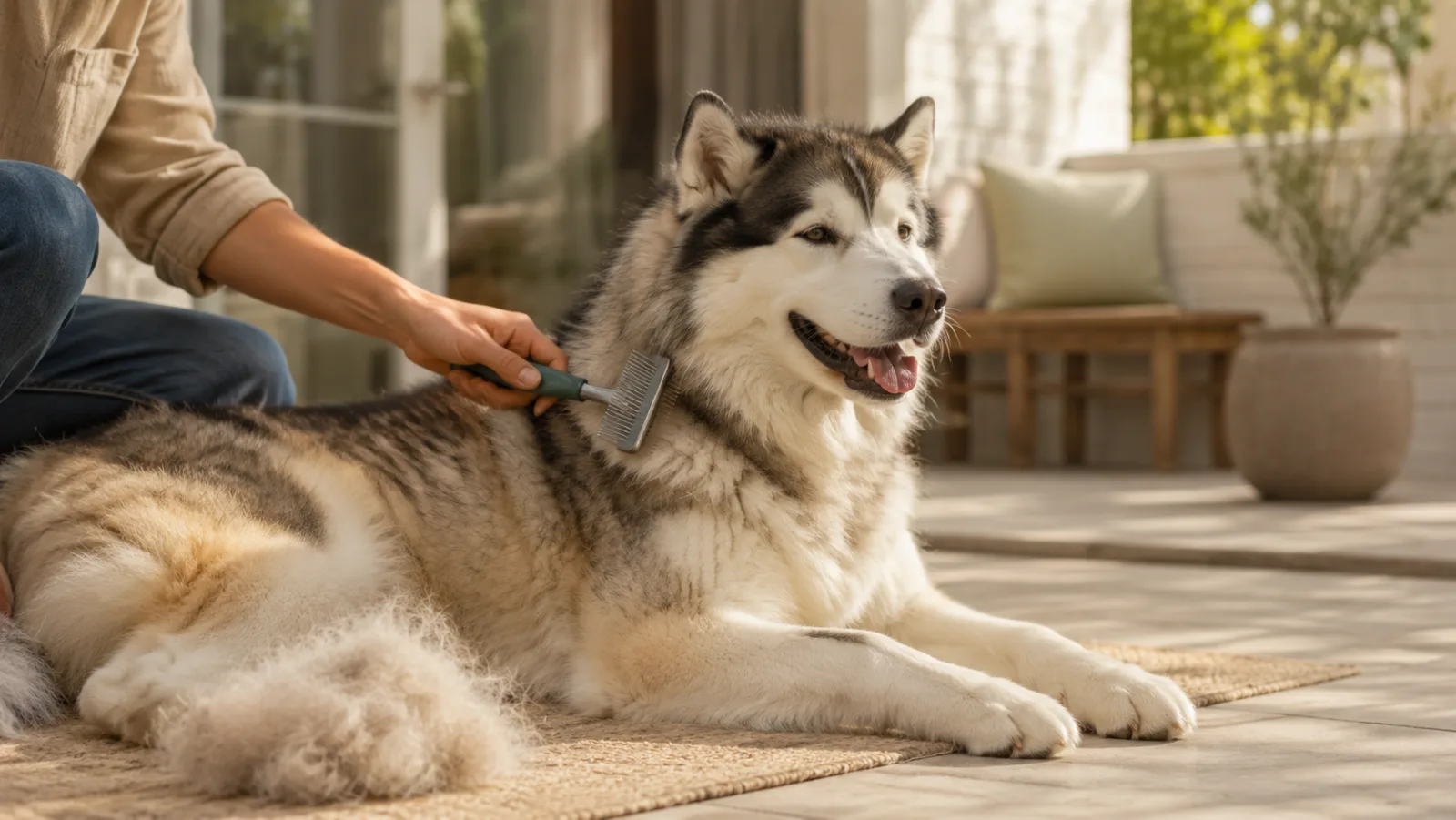
Dog brushes earn their place by matching the coat, not by being the best-selling tool — slickers detangle, undercoat deshedders thin double coats, rubber curry brushes suit short hair, and a metal comb is the only honest way to verify your work.
By Nick Miles · Updated August 12, 2026 · 12 min read
PetPalHQ is reader-supported. We may earn a commission from qualifying Amazon purchases at no extra cost to you.
Evidence at a Glance
Hertzko Self-Cleaning Slicker Brush
Retractable bristles for loose-fur, tangle, and light-mat removal — the most coat-versatile starting brush for the average dog.
Sources: Hertzko manufacturer documentation, American Kennel Club — How to Groom a Dog, ASPCA Dog Grooming Tips
Verified May 5, 2026
FURminator Undercoat deShedding Tool for Dogs
Curved-edge undercoat tool with SkinGuard design — the standard reference for double-coated shedding breeds during seasonal shed.
Sources: FURminator manufacturer documentation, American Kennel Club — How to Groom a Double-Coated Dog
Verified May 5, 2026
Andis Steel Pet Comb
Stainless-steel finishing comb — the only honest way to verify slicker brushing actually removed tangles before bathing.
Sources: Andis manufacturer documentation, ASPCA Dog Grooming Tips, Merck Veterinary Manual
Verified May 5, 2026
Our Picks
Hertzko
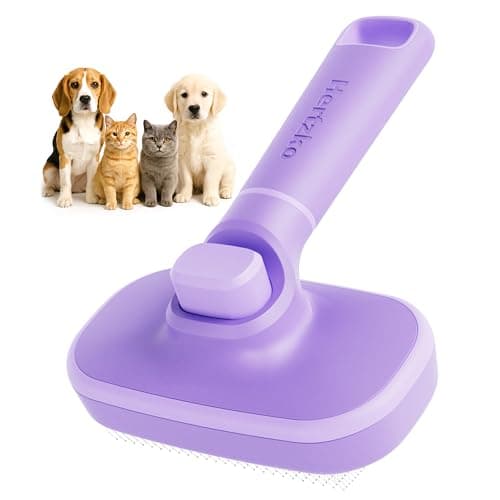
Hertzko Self-Cleaning Slicker Brush
9.2 / 10
- Retractable bristles — push-button release empties trapped fur in seconds
- Suitable for loose-fur removal, tangles, and light mats
- Labeled for both dogs and cats
- Ergonomic handle for longer brushing sessions
$15.99
FURminator
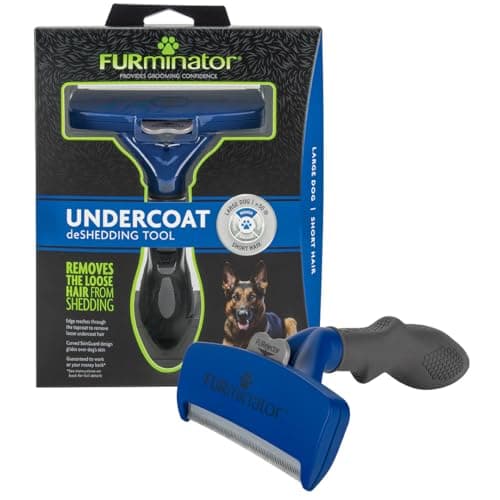
FURminator Undercoat deShedding Tool for Dogs
9.0 / 10
- Curved stainless-steel edge designed to reach loose undercoat without damaging topcoat
- FURejector button releases collected fur with a single press
- SkinGuard design positioned around reducing skin contact during deshedding
- Sized variants for short-hair, long-hair, and small-to-large dog body sizes
$35.27
Chris Christensen
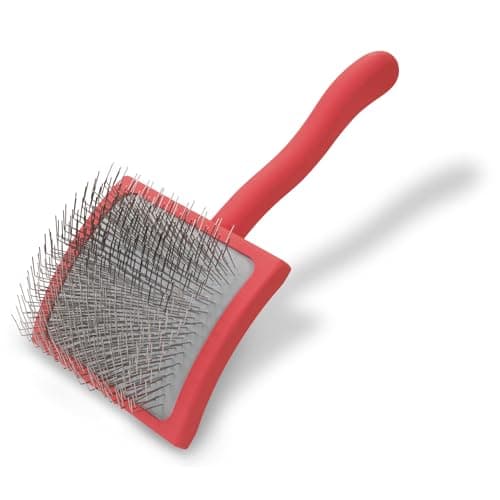
Chris Christensen Big G Slicker Brush
8.9 / 10
- Premium long-pin slicker engineered for dense curly coats
- Positioned for Goldendoodles, Labradoodles, Poodles, and similar
- Larger pad than standard slickers — covers more coat per stroke
- Show-grooming heritage — the brush professional doodle groomers reach for
$56.49
KONG
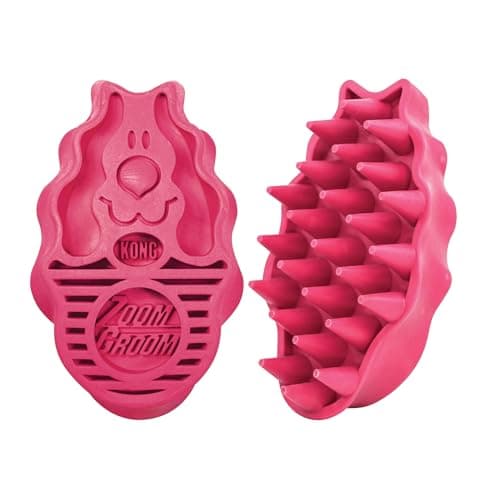
KONG ZoomGroom Dog Grooming Brush
8.4 / 10
- Soft rubber bristles — gentler than a slicker on short, smooth coats
- Doubles as a bath-time brush to lift loose hair while shampooing
- Useful for short-coated breeds where slickers can be too aggressive
- Inexpensive enough to keep one in the grooming bag and one near the bath
$11.99
Last Amazon read 2026-09-08
Andis
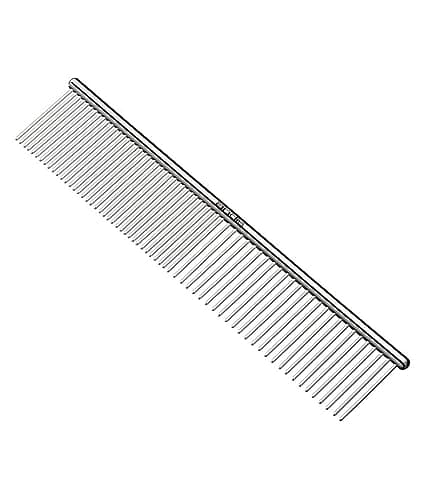
Andis Steel Pet Grooming Comb
8.6 / 10
- Stainless-steel construction — finer teeth on one side, coarser on the other
- Reveals tangles a slicker brush passed over
- Essential finishing tool for doodle, poodle, and double-coat care
- Inexpensive enough that there is no excuse to skip it
$7.99
The Short Answer
If you can only buy one dog brush, make it the Hertzko Self-Cleaning Slicker Brush — the AKC says appropriate brushing removes dirt and debris, prevents matting, and controls shedding, and a slicker is the most coat-versatile starting tool. For double-coated shedding breeds, add the FURminator Undercoat deShedding Tool. For doodles, poodles, and dense curly coats, step up to the Chris Christensen Big G Slicker. Short coats need the least of all: the Hertzko used with a light hand does the job, and a soft rubber curry brush is the gentler specialist alternative if you want one. And the Andis Steel Pet Comb is the only honest way to confirm a coat is actually tangle-free after brushing.
Every product on this list has been scored against the PetPal Gear Score, a weighted composite of expert consensus, observed effectiveness, animal safety, long-term durability, and value. Review method: Editorial synthesis of grooming and veterinary guidance — AKC's How to Groom a Dog, ASPCA Dog Grooming Tips, the Merck Veterinary Manual, manufacturer documentation, and Professional Pet Groomers and Stylists Alliance standards. PetPalHQ does not run a testing lab.. Synthesized from 8+ expert sources.
For most dog owners, the smartest brush purchase is still a coat-matched slicker plus a stainless-steel finishing comb. The American Kennel Club's How to Groom a Dog guidance and ASPCA Dog Grooming Tips both treat brushing as the foundation of routine coat care — and both are explicit that brush choice depends on coat type. Slickers detangle, undercoat deshedders thin double coats, rubber curry brushes suit short hair, and a metal comb is the verification step every long, curly, or double-coated dog needs.
The picks below are editorial synthesis. PetPalHQ does not run a testing lab — every product on this page was selected by reviewing AKC grooming guidance, ASPCA tips, the Merck Veterinary Manual's routine-care recommendations, manufacturer documentation, and Professional Pet Groomers and Stylists Alliance standards. Where expert sources disagreed (most commonly on whether deshedding tools belong in routine grooming for non-shedding breeds), we deferred to coat-type matching: the right tool is the one that fits the coat, not the one with the highest review count.
This guide is the buying-side companion to the Pet Grooming, Dental Care and Shedding Control for Cats and Dogs hub. The hub explains why coat care matters; this article covers what to buy.
Head-to-Head Comparison
| Feature | Hertzko Self-Cleaning Slicker Brush | FURminator Undercoat deShedding Tool for Dogs | Chris Christensen Big G Slicker Brush | KONG ZoomGroom Dog Grooming Brush | Andis Steel Pet Grooming Comb |
|---|---|---|---|---|---|
| Tool type | Self-cleaning slicker | Undercoat deshedder | Premium long-pin slicker | Soft rubber curry | Stainless-steel comb |
| Best coat type | Most everyday coats | Double-coated shedders | Dense curly (doodles, poodles) | Short, smooth coats | Long, curly, or double — finishing |
| Frequency | 1–2× weekly | Weekly during shed seasons | 2–3× weekly for doodles | Weekly + bath time | After every brushing |
| Skin-irritation risk | Moderate — pin pressure matters | Moderate — overuse risk | Low–moderate with technique | Low — softest option | Low — verification only |
| Check price | Amazon | Amazon | Amazon | Amazon | Amazon |
$15.99
- Retractable bristles — push-button release empties trapped fur in seconds
- Suitable for loose-fur removal, tangles, and light mats
- Labeled for both dogs and cats
- Ergonomic handle for longer brushing sessions
The Hertzko Self-Cleaning Slicker Brush is the editorial default for the average dog because slickers are the most coat-versatile starting tool. The American Kennel Club's How to Groom a Dog guidance says appropriate brushing removes dirt and debris, helps prevent matting, controls shedding, and supports overall coat condition — and a slicker brush handles the largest share of those jobs across the largest range of coat types. ASPCA Dog Grooming Tips also point to brushing as the first step before any bath, which is the routine this brush slots into directly.
Why Hertzko earns the top slot: the self-cleaning mechanism is not just a convenience feature. Owners who give up on brushing routines often give up because cleaning the brush after each session is annoying. Hertzko's retractable bristles release trapped fur with a button press, which removes the friction point that breaks weekly brushing habits. Hertzko's own product documentation positions the bristles as suitable for loose fur, tangles, and mats, and the brush is labeled for both dogs and cats — useful in multi-pet households.
What the spec sheet does not tell you: slickers can irritate sensitive skin if pressed too hard. ASPCA Dog Grooming Tips recommend gentle pressure and frequent breaks, and the Merck Veterinary Manual specifically warns that severe mats should never be cut with scissors — they belong with a professional groomer or veterinarian. A slicker brush is the right starting tool for routine maintenance and light tangles; tight mats close to the skin are a different category of problem entirely.
What We Love
- Self-cleaning mechanism keeps weekly brushing routines from breaking down
- Coat-versatile — works on most dogs from terriers to retrievers
- Inexpensive enough for one per pet in multi-dog households
- Dog-and-cat label makes it usable across species
What Could Be Better
- Pins can irritate sensitive skin if pressed too hard
- Not the right tool for severe matting close to the skin
- Larger size may be unwieldy on toy breeds
The Verdict
The clearest editorial pick for owners building a once-or-twice-weekly brushing routine on a dog without a specialist coat. Synthesized from Hertzko manufacturer documentation, AKC How to Groom a Dog guidance, and ASPCA Dog Grooming Tips.
$35.27
- Curved stainless-steel edge designed to reach loose undercoat without damaging topcoat
- FURejector button releases collected fur with a single press
- SkinGuard design positioned around reducing skin contact during deshedding
- Sized variants for short-hair, long-hair, and small-to-large dog body sizes
The FURminator Undercoat deShedding Tool is the standard reference product for double-coated shedding breeds. FURminator's product documentation states that the curved edge is designed to reach loose undercoat without damaging topcoat, and the manufacturer recommends weekly use during shedding seasons rather than daily use. That weekly cadence is the part owners most often get wrong — the AKC's How to Groom a Double-Coated Dog guidance is specific that double-coated dogs need brushing through the entire coat, not blade-style scraping at the surface, and that the underlying coat is what releases shed hair.
Why this earns the deshedding slot over cheaper undercoat rakes: most budget rakes either tear the topcoat or fail to reach the undercoat at all. The FURminator's curved-edge geometry and SkinGuard design are engineered around the failure mode owners actually encounter, and the FURejector button removes the routine friction of cleaning the tool between strokes. For a Husky, Lab, German Shepherd, Corgi, Golden Retriever, or any other heavy-shedding double coat, the FURminator is the editorial default whenever owners are willing to accept the higher price.
What the spec sheet does not tell you: this tool can be misused easily. ASPCA grooming guidance and FURminator's own materials both warn against overuse, and the Merck Veterinary Manual notes that mats and coat damage often result from aggressive technique rather than tool failure. Use it weekly in short sessions during shedding seasons, never on irritated skin or wounds, and never on single-coated curly breeds — doodles, poodles, bichons, and similar dogs do not have the undercoat this tool is designed for, and the deshedding edge can damage their coat.
What We Love
- Curved-edge design reaches undercoat without scraping topcoat
- FURejector button speeds up cleaning between strokes
- Sized variants match dog body size and coat length
- Strong manufacturer reference content for shedding-season use
What Could Be Better
- Higher price than basic undercoat rakes
- Wrong tool for single-coated curly breeds — doodles, poodles, bichons
- Easy to overuse — weekly during shedding season, not daily
- Not appropriate for irritated skin or open wounds
The Verdict
The editorial pick for double-coated shedding breeds during seasonal shed, paired with a slicker for everyday maintenance. Synthesized from FURminator manufacturer documentation and AKC How to Groom a Double-Coated Dog guidance.
$56.49
- Premium long-pin slicker engineered for dense curly coats
- Positioned for Goldendoodles, Labradoodles, Poodles, and similar
- Larger pad than standard slickers — covers more coat per stroke
- Show-grooming heritage — the brush professional doodle groomers reach for
The Chris Christensen Big G Slicker Brush is the editorial premium pick for dense curly coats. The standard slicker is fine for everyday maintenance on a Lab or a terrier, but doodle, poodle, and bichon coats present a different problem — the curl traps undercoat and rolls it into mats faster than budget slickers can manage. Chris Christensen's product line is built around show-grooming standards, and the Big G's long-pin geometry is specifically positioned for Goldendoodles, Labradoodles, and Poodles in the manufacturer's marketing.
Why this earns the premium slicker slot: doodle owners routinely report that mats appear close to the skin where shorter slicker pins cannot reach. The Big G's longer pins penetrate dense curly coat without scraping the skin layer, which is the failure mode shorter slickers create. AKC's How to Groom a Dog guidance emphasizes that brushing technique and the right tool for the coat both matter — for dense curly coats, the right tool is a long-pin slicker, and the Big G is the most-recommended example.
What the spec sheet does not tell you: this brush is overkill for short or smooth coats. The premium price is justified for owners committed to frequent brushing on a dense curly coat, and overpriced for any dog whose coat does not require long pins. Tight mats close to the skin remain a professional-groomer problem regardless of brush quality — the Merck Veterinary Manual is explicit that severe mats should not be cut with scissors, and ASPCA grooming guidance recommends professional help for any mat the owner cannot work out gently with combing.
What We Love
- Long-pin geometry penetrates dense curly coat without skin scraping
- Larger brush pad covers more coat per stroke than standard slickers
- Show-grooming heritage — professionally trusted brand
- Specifically positioned for the doodle/poodle market that needs it most
What Could Be Better
- High price tier — overkill for short or smooth coats
- Technique still matters — wrong angle can scrape skin
- Not a replacement for professional grooming on severe mats
The Verdict
The editorial pick for doodle, poodle, and bichon owners committed to frequent brushing on a dense curly coat. Synthesized from Chris Christensen manufacturer documentation and AKC How to Groom a Dog guidance.
$11.99
Last Amazon read 2026-09-08
- Soft rubber bristles — gentler than a slicker on short, smooth coats
- Doubles as a bath-time brush to lift loose hair while shampooing
- Useful for short-coated breeds where slickers can be too aggressive
- Inexpensive enough to keep one in the grooming bag and one near the bath
The KONG ZoomGroom is the editorial pick for short-coated dogs because rubber curry brushes are the right category of tool for short, smooth coats. ASPCA Dog Grooming Tips note that brushing pulls dirt and debris from the coat, and AKC grooming guidance is clear that brushing frequency and tool choice depend on coat type. For Boxers, Beagles, Pit-types, Dachshunds, French Bulldogs, and short-coated mixed breeds, a stiff slicker can be unnecessarily harsh — a soft rubber curry brush like the ZoomGroom does the same loose-hair-and-debris job with a much gentler skin contact.
Why this earns the short-coat slot: the ZoomGroom doubles as a bath brush, which is the use case that meaningfully justifies the purchase. ASPCA guidance recommends brushing before bathing and ASPCA's at-home grooming tips emphasize that water can tighten any tangle that was not removed first — but for short-coated dogs, brushing before the bath is short, and most of the loose hair lifts easily during the shampooing step. A soft rubber brush worked into a wet, lathered short coat releases shed hair efficiently and gives the bath a massaging quality that most short-coated dogs tolerate well.
What the spec sheet does not tell you: this is not a detangling tool and it is not an undercoat tool. For double coats, the FURminator earns the slot. For curly coats, the Big G earns the slot. The ZoomGroom is the editorial pick only when the coat is genuinely short and smooth — using it on a heavy-shedding double coat will not pull undercoat, and using it on a curly coat will not detangle. ASPCA grooming guidance and AKC tool-matching guidance both treat brush choice as coat-driven, and the ZoomGroom is best framed as a coat-specific tool, not a universal answer.
What We Love
- Soft rubber bristles are gentle on short-coated dogs that find slickers harsh
- Doubles as a bath-time loose-hair lifter while shampooing
- Inexpensive enough to keep one near the tub and one in the grooming bag
- Easy to rinse, easy to store, no maintenance overhead
What Could Be Better
- Not a detangling tool — wrong for medium and long coats
- Not an undercoat tool — wrong for double-coated shedding breeds
- Will not work mats out — those are a slicker or comb job at best
The Verdict
The editorial pick for short-coated dogs that find slickers too harsh, and a useful bath-time hair-lifter regardless. Synthesized from KONG manufacturer documentation and ASPCA Dog Grooming Tips.
$7.99
- Stainless-steel construction — finer teeth on one side, coarser on the other
- Reveals tangles a slicker brush passed over
- Essential finishing tool for doodle, poodle, and double-coat care
- Inexpensive enough that there is no excuse to skip it
The Andis Steel Pet Grooming Comb is the editorial pick that owners most often skip and most often regret skipping. ASPCA Dog Grooming Tips note that brushing removes dirt and tangles before a bath, and AKC's How to Groom a Dog guidance recommends a finishing comb as the verification step for any long, curly, or double-coated dog. A slicker brush handles 90% of brushing work — but the slicker can pass over tight tangles that a comb will catch immediately, and the only honest way to know a coat is tangle-free is to run a comb through it.
Why this earns the finishing-tool slot: the Andis comb is stainless-steel, dual-spaced (finer teeth on one side, coarser on the other), and inexpensive enough that there is no realistic excuse to skip it. Doodle owners in particular benefit from a finishing comb because slicker pins do not reach skin-level mats — running an Andis comb through the coat reveals the tangles the slicker missed, and gives the owner the option to either work them out gently or recognize that they need professional grooming.
What the spec sheet does not tell you: a comb is not a mat-removal tool. The Merck Veterinary Manual is explicit that severe mats should never be cut with scissors and notes that mats can irritate skin and lead to infections, and ASPCA grooming guidance recommends professional help for severe matting. A comb is a verification tool — it shows the owner where the slicker work was incomplete and where the coat needs more attention. Forcing a comb through a tight mat causes pain and skin damage; that is a professional-groomer problem, not an at-home one.
What We Love
- Stainless-steel construction lasts indefinitely with basic care
- Dual spacing covers fine and coarse coat-check needs
- Inexpensive enough to keep multiple in the grooming kit
- The verification step every credible grooming reference recommends
What Could Be Better
- Not a primary brushing tool — pairs with a slicker, doesn't replace it
- Cannot remove tight mats — those need a professional groomer
- Easy to skip and easy to regret skipping
The Verdict
The essential finishing tool every long, curly, or double-coated dog owner should pair with their slicker. Synthesized from Andis manufacturer documentation, ASPCA Dog Grooming Tips, AKC grooming guidance, and the Merck Veterinary Manual.
How We Score
Formula
PetPal Gear Score = (Expert Consensus × 0.35) + (Coat-Type Match × 0.25) + (Skin and Safety Risk Profile × 0.20) + (Practical Owner Compliance × 0.20)
Score Factors
- Expert Consensus · 35%
- Synthesized from AKC's How to Groom a Dog and How to Groom a Double-Coated Dog guidance, ASPCA Dog Grooming Tips, the Merck Veterinary Manual's Routine Health Care of Dogs, and Professional Pet Groomers and Stylists Alliance standards. The PetPal Gear Score is a composite of expert opinion — PetPalHQ does not run a testing lab and does not perform first-hand product evaluation.
- Coat-Type Match · 25%
- Whether the tool category fits the coat the buyer actually owns. Slickers fit most everyday coats; undercoat deshedders fit double coats; long-pin slickers fit dense curly coats; rubber curry brushes fit short coats; combs verify everything. Mismatched tools cause skin irritation and coat damage.
- Skin and Safety Risk Profile · 20%
- Risk of skin irritation, coat damage, or misuse. The Merck Veterinary Manual warns that mats can lead to skin infection and that scissors should never be used to cut mats, and ASPCA grooming guidance emphasizes gentle pressure and frequent breaks. Tools with higher misuse risk receive lower safety scores.
- Practical Owner Compliance · 20%
- How realistic regular use is for the average owner — self-cleaning mechanisms, ergonomic handles, cleaning friction between strokes, and the chance the brush actually gets used weekly rather than abandoned in a drawer.
| Rank | Product | Score |
|---|---|---|
| #1 | Hertzko Hertzko Self-Cleaning Slicker Brush | 9.2 |
| #2 | FURminator FURminator Undercoat deShedding Tool for Dogs | 9.0 |
| #3 | Chris Christensen Chris Christensen Big G Slicker Brush | 8.9 |
| #4 | Andis Andis Steel Pet Grooming Comb | 8.6 |
| #5 | KONG KONG ZoomGroom Dog Grooming Brush | 8.4 |
When NOT to Buy
Skip every brush on this list and call a professional groomer or veterinarian if your dog has tight mats close to the skin, severe matting across the body, painful skin, open sores, fleas or other parasites, or behavior that makes home grooming unsafe — the Merck Veterinary Manual is explicit that severe mats should not be cut with scissors, and ASPCA grooming guidance recommends professional help for any mat that cannot be worked out gently with brushing and combing. Skip the FURminator entirely if your dog is a single-coated curly breed (doodles, poodles, bichons, soft-coated wheatens) — the deshedding edge is engineered for double coats and can damage curly coats. Skip the Chris Christensen Big G if your dog has a short or smooth coat — the long pins are overkill, and the Hertzko slicker used with a light hand is the right tool. Skip any rubber curry brush for a coat that is not genuinely short and smooth — a curry does not detangle and it does not pull undercoat. And skip every brush in this guide if you are using brushing as a substitute for professional veterinary or grooming care for skin disease, parasites, or severe matting — those are medical or professional-grooming problems, not brushing problems.
Frequently Asked Questions
- How often should I brush my dog?
- It depends on coat type, not breed name. The AKC's How to Groom a Dog guidance says how often a dog needs grooming depends on size, breed, and coat — and ASPCA Dog Grooming Tips agree that brushing frequency varies. As a working baseline: short coats once a week, medium coats two to three times a week, long or curly coats every other day, and double coats daily during shedding seasons. The honest answer is that any consistent schedule beats an inconsistent one.
- Are FURminators safe for all dogs?
- No. FURminator's own product documentation positions the deshedding tool for double-coated breeds during shedding seasons, and the AKC's How to Groom a Double-Coated Dog guidance treats undercoat deshedding as a coat-specific job. Single-coated curly breeds — doodles, poodles, bichons, soft-coated wheatens — do not have the undercoat the tool is engineered for, and the deshedding edge can damage their coat. Use a FURminator only on coats it is designed for, and only weekly during shed seasons.
- Do I really need a comb if I already have a slicker brush?
- For long, curly, or double-coated dogs, yes. ASPCA Dog Grooming Tips and AKC grooming guidance both recommend a finishing comb after slicker brushing because slicker pins can pass over tangles a comb catches immediately. A comb is the verification step — it shows you where the slicker work was incomplete. For short, smooth coats, a comb is optional. For everything else, the Andis Steel Pet Grooming Comb is the cheapest insurance against bath-time surprises.
- What if my dog already has tight mats?
- Stop brushing aggressively and call a professional groomer or veterinarian. The Merck Veterinary Manual is explicit that severe mats should not be cut with scissors — the cut risk is real, and infected skin under mats is a veterinary problem. ASPCA grooming guidance also recommends professional help for severe matting. A slicker brush, undercoat tool, or comb is for routine maintenance; tight mats close to the skin are a different category of problem entirely.
- Can I use the same brush on my dog and my cat?
- For some tools, yes — the Hertzko Self-Cleaning Slicker is labeled for both species. But cat skin and coat differ from dog skin and coat in ways that matter. The ASPCA's General Cat Care guidance treats cat brushing as its own routine with smaller tools and shorter sessions, and many dog tools, the FURminator and the Big G included, are sized for dog body proportions. For multi-pet households, the safest approach is a small dedicated cat brush plus the dog tools above, not one brush for everyone.
Bottom Line
Coat type drives brush choice. The AKC's How to Groom a Dog guidance and ASPCA Dog Grooming Tips both treat brush selection as coat-driven, not breed-driven and not popularity-driven.
A slicker handles most everyday brushing. The Hertzko Self-Cleaning Slicker is the editorial default because the self-cleaning mechanism keeps weekly routines from breaking down.
Double coats need a deshedding tool during shed seasons. The FURminator's curved-edge SkinGuard design is the standard reference, but it is the wrong tool for single-coated curly breeds.
Doodles, poodles, and dense curly coats need a long-pin premium slicker. The Chris Christensen Big G is the editorial pick when the budget allows.
Always finish with a comb. The Andis Steel Pet Grooming Comb is the verification step that reveals tangles the slicker missed — a comb is not a mat-removal tool, and severe mats need professional grooming.
Sources & Methodology
Methodology
PetPal Gear Score = (Expert Consensus × 0.35) + (Coat-Type Match × 0.25) + (Skin and Safety Risk Profile × 0.20) + (Practical Owner Compliance × 0.20)
Expert review sources
- American Kennel Club — How to Groom a Dog at Home
- American Kennel Club — How to Groom a Double-Coated Dog
- American Kennel Club — How to Choose the Right Dog Brush for Your Pet
- ASPCA — Dog Grooming Tips
- ASPCA — At-Home Pet Grooming: Top Tips and Recommendations
- Merck Veterinary Manual — Routine Health Care of Dogs
- Merck Animal Health — How to Groom Your Pet at Home
- Professional Pet Groomers and Stylists Alliance — Standards of Care, Safety and Sanitation
- FURminator — What is deShedding and Why Should You Do It?
- FURminator — Undercoat deShedding Tool product documentation
- Hertzko — Self-Cleaning Slicker Brush product documentation
- Chris Christensen — Big G Slicker Brush product documentation
- Andis — Stainless Steel Pet Grooming Comb product documentation
Community sources
- AKC Groomer Hub — National Core Professional Dog Grooming Educational Standards
- National Dog Groomers Association of America
Prices and specs verified May 5, 2026.
About the author
Nick Miles is the chief editor of PetPalHQ. The picks above are editorial synthesis of grooming and veterinary guidance — PetPalHQ does not run a testing lab. The PetPal Gear Score is a composite of expert opinion, not a measurement. Sources are cited by name in body prose throughout.
PetPalHQ is a participant in the Amazon Services LLC Associates Program. We may earn commissions from qualifying purchases — at no extra cost to you.
More Guides
Cats & Dogs
Pet Grooming, Dental Care & Shedding Control for Cats and Dogs: A Complete 2026 Owner Guide
Cats & Dogs
Best Dog and Cat Dental Care Products: Toothpaste, Chews, Wipes, and VOHC Picks (2026)
Cats & Dogs
Best Cat Brushes for Shedding, Mats, and Hairballs (2026)
Cats & Dogs
Best Pet Shampoos and Wipes for Dogs and Cats (2026)
Cats & Dogs