Cats & Dogs
Best Cat Brushes for Shedding, Mats, and Hairballs (2026)
For most cats, a self-cleaning slicker plus a steel comb is the right starter pair; add a FURminator for heavy undercoat shedding and a grooming glove if your cat tolerates petting better than brushing — but skip dematting tools for tight mats, which need a groomer or vet.
By Nick Miles · Updated May 5, 2026 · 11 min read
PetPalHQ is reader-supported. We may earn a commission from qualifying Amazon purchases at no extra cost to you.
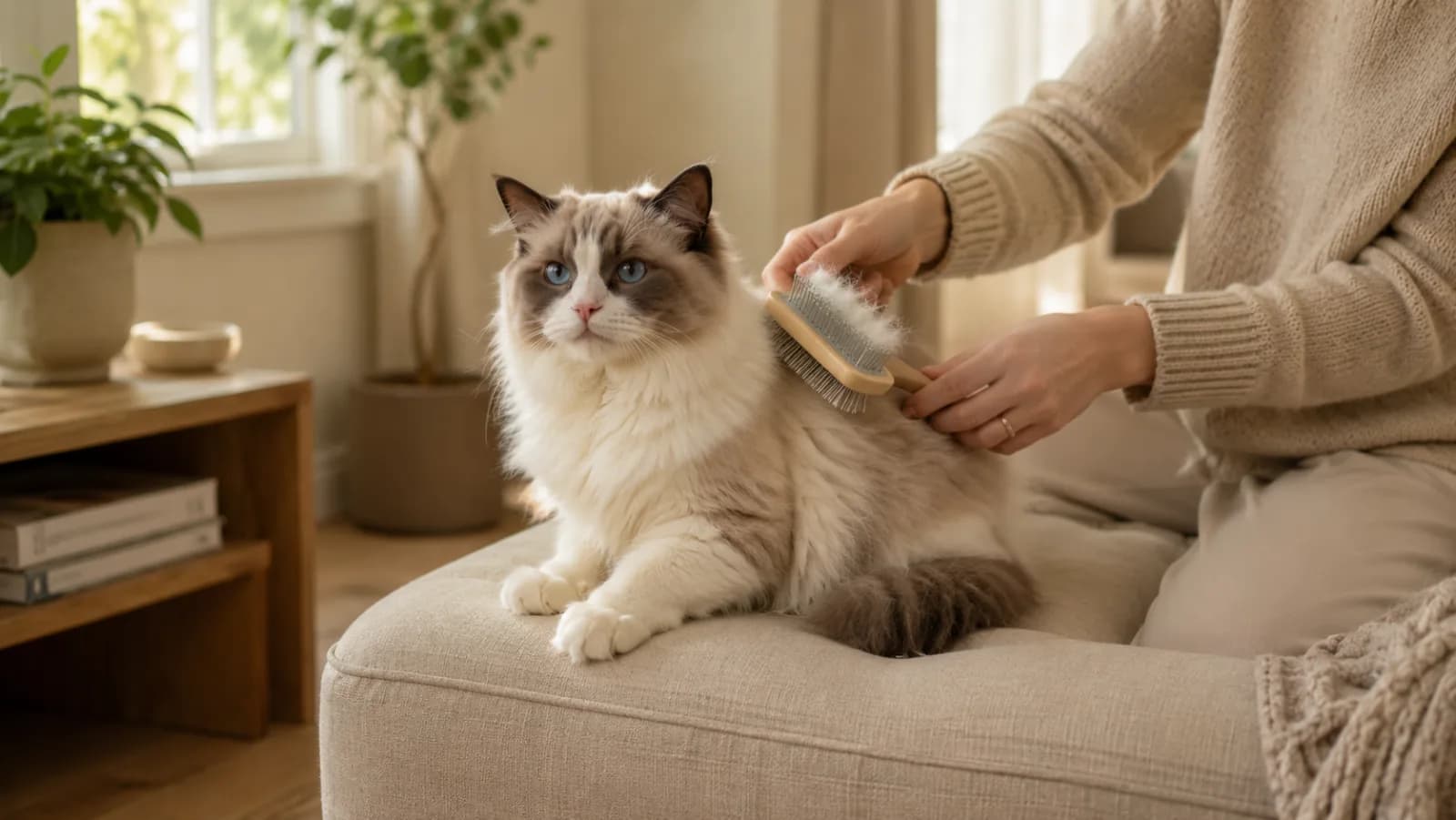
Evidence at a Glance
Hertzko Self-Cleaning Slicker Brush
Retractable-bristle slicker that clears loose hair and light tangles on medium and long coats — the do-everything starter brush most cat owners actually use.
Sources: Hertzko manufacturer documentation, ASPCA Cat Grooming Tips, VCA Grooming and Coat Care for Your Cat, r/cats hobbyist consensus
Verified May 5, 2026
FURminator deShedding Tool for Cats
Undercoat deshedder that pulls loose fur before it sheds around the home — sized specifically for cat coats, not a downsized dog tool.
Sources: FURminator manufacturer documentation, Cornell Feline Health Center — A Hairy Dilemma, ASPCA Cat Grooming Tips
Verified May 5, 2026
HandsOn Pet Grooming Gloves
Wearable rubber-nub gloves that turn petting into low-stress grooming — the right starter tool for brush-averse cats.
Sources: HandsOn manufacturer documentation, AAFP Feline-Friendly Handling Guidelines, ASPCA Cat Grooming Tips
Verified May 5, 2026
Our Picks
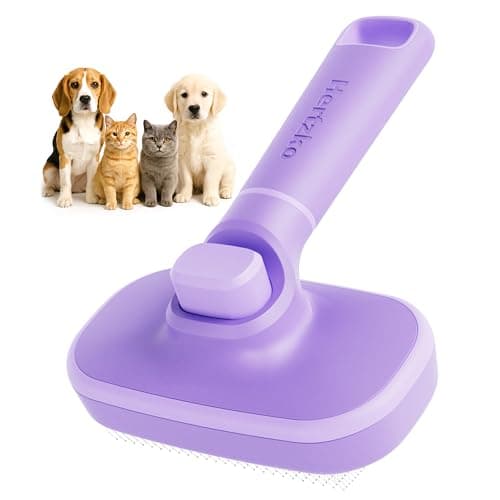
Hertzko
Hertzko Self-Cleaning Slicker Brush
9.2 / 10
- Retractable bristles for one-button cleaning between sessions
- Works on dogs and cats with medium or long coats
- Clears loose hair, light tangles, and surface mats
- Mainstream brand with broad availability and replaceable use cases
$15.99
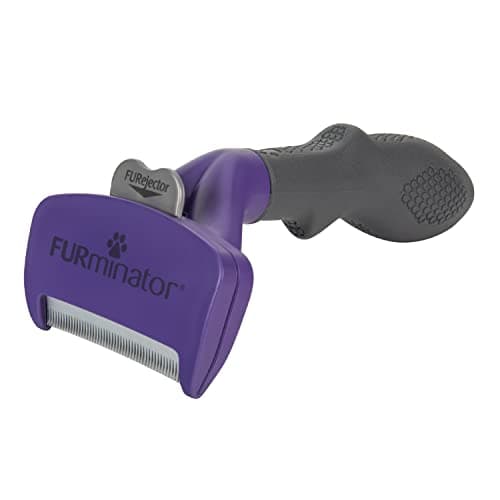
FURminator
FURminator deShedding Tool for Cats (Long Hair, Medium/Large)
8.8 / 10
- Cat-specific deshedding tool — sized for cat skin, not a downsized dog version
- Removes loose undercoat fur before it sheds around the home
- FurEjector button releases collected hair without touching it
- Long-hair version sized for medium and large cats
$33.57
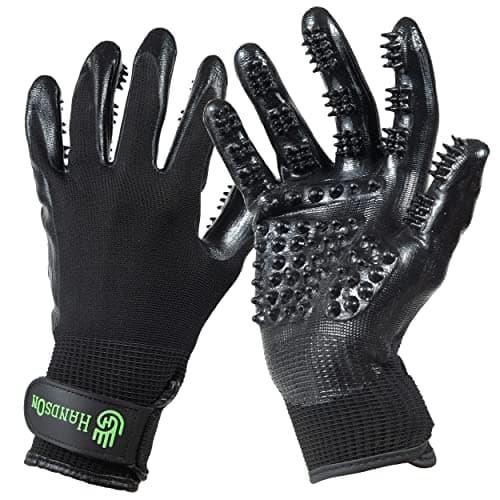
HandsOn
HandsOn Pet Grooming Gloves
8.4 / 10
- Wearable rubber-nub gloves that double as brushes during petting
- Patented design used by professional groomers
- Works on dogs, cats, and horses — full pet-household coverage
- Lower-stress grooming for cats that resist a brush
$24.99
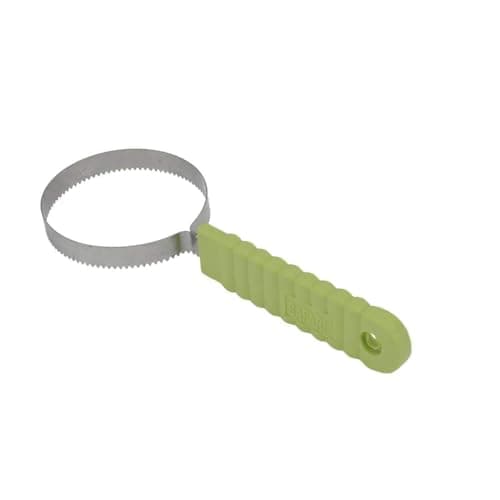
Coastal Pet Safari
Coastal Pet Safari Cat Shedding Blade
8.2 / 10
- Stainless-steel cat shedding blade — durable, dishwasher-safe finish
- Pulls loose hair after a slicker session — the finishing step long-coated cats need
- Surface check for hidden mats, debris, or skin issues
- From Coastal Pet's Safari professional grooming line
$11.99
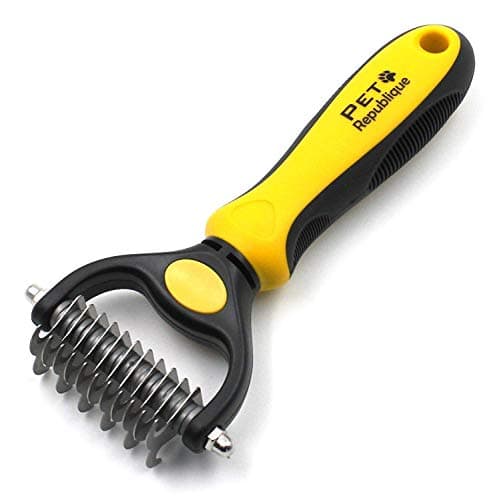
Pet Republique
Pet Republique Dog Dematting Tool
7.4 / 10
- 6-tooth and 11-tooth heads for different tangle severities
- Designed for dogs but used by long-haired cat owners on loose tangles
- Curved blade edges aim to slip through tangles instead of pulling
- Inexpensive — earns its place only as a 'before the groomer' tool
$12.99
The Short Answer
If you can only buy two cat grooming tools, make them a Hertzko Self-Cleaning Slicker Brush and a steel comb. Between them, they cover loose-hair removal, light tangle work, and the comb-check ASPCA and VCA both call essential for long-haired cats. Add the FURminator deShedding Tool for Cats only if your cat has a real undercoat and tolerates short sessions. Reach for HandsOn Pet Grooming Gloves first if your cat tolerates petting better than brushing. Skip dematting tools for anything tighter than a loose tangle. Cornell Feline Health Center and the ASPCA both treat severe mats as a job for a professional groomer or veterinarian, not a home tool.
Every product on this list has been scored against the PetPal Gear Score, a weighted composite of expert consensus, observed effectiveness, animal safety, long-term durability, and value. Review method: Editorial synthesis of ASPCA cat grooming guidance, Cornell Feline Health Center hairball references, VCA cat coat-care guidance, AAFP feline-friendly handling principles, manufacturer product documentation, and hobbyist consensus from r/cats and r/CatAdvice — no first-hand product testing.. Synthesized from 9+ expert sources.
For most cat owners, the right starter kit is two tools, not one: a self-cleaning slicker for routine brushing and a steel comb for finishing and mat-checking on long coats. ASPCA Cat Grooming Tips, VCA's "Grooming and Coat Care for Your Cat," and Cornell Feline Health Center's hairball references all converge on the same routine — frequent gentle brushing, paired with a comb on long coats, with veterinary referral for any cat that suddenly stops self-grooming, has bald patches, or shows skin disease.
The picks below are editorial synthesis. PetPalHQ does not run a testing lab — every product on this page was selected by reviewing manufacturer documentation, ASPCA and VCA cat-care guidance, Cornell Feline Health Center references on hairballs and feline coat health, the American Association of Feline Practitioners' Feline-Friendly Handling Guidelines, the Merck Veterinary Manual, and hobbyist consensus on r/cats and r/CatAdvice. Where expert sources disagreed (most commonly on whether to use a deshedding tool routinely or seasonally), we deferred to the more conservative position the AAFP feline-friendly handling principles support: the cat's tolerance is the limit, not the calendar.
This guide is the cat-side companion to the Pet Grooming, Dental Care and Shedding Control hub. The hub explains why coat care matters for hairball prevention and skin-disease detection; this article covers what to buy.
Head-to-Head Comparison
| Feature | Hertzko Self-Cleaning Slicker Brush | FURminator deShedding Tool for Cats (Long Hair, Medium/Large) | HandsOn Pet Grooming Gloves | Coastal Pet Safari Cat Shedding Blade | Pet Republique Dog Dematting Tool |
|---|---|---|---|---|---|
| Tool type | Self-cleaning slicker | Cat-specific deshedder | Wearable grooming glove | Steel finishing comb | Dematting tool |
| Best coat type | Medium and long | Cats with undercoat | Short, single-coated, or brush-averse | Long and medium (finishing) | Loose tangles only |
| Routine frequency | Daily to several times a week | 1–3 times per week, seasonal | Daily during petting | Weekly to several times a week | Occasional, never aggressive |
| Skill level | Beginner — control pressure | Intermediate — stop on signs of irritation | Beginner — watch for overstimulation | Beginner — light touch on tangles | Cautious — refer tight mats to a pro |
| Check price | Amazon | Amazon | Amazon | Amazon | Amazon |
$15.99
- Retractable bristles for one-button cleaning between sessions
- Works on dogs and cats with medium or long coats
- Clears loose hair, light tangles, and surface mats
- Mainstream brand with broad availability and replaceable use cases
The Hertzko Self-Cleaning Slicker Brush is the brush most cat-care references default to when readers ask for "one tool to buy first." Hertzko's product page describes a self-cleaning slicker designed to remove loose fur, tangles, and mats from medium and long coats. ASPCA Cat Grooming Tips and VCA's grooming and coat care guide both center routine brushing as the single most important grooming step for shedding control and hairball prevention.
What makes the slicker the right starter brush is what it does in a normal grooming session. ASPCA recommends short, frequent brushing for cats that tolerate it. VCA recommends brushing in the direction of coat growth to remove dead hair and surface mats. Cornell Feline Health Center's "A Hairy Dilemma" frames regular brushing as the most practical home defense against hairballs. A slicker is the one tool that does all three.
Where it fits in a multi-tool kit: this is the daily or every-few-days brush for medium and long coats, and the once-or-twice-weekly brush for short coats. It is not a dematting tool for tight mats, and it is not an undercoat deshedder. Pair it with a steel comb (pick #4) for finishing and mat-checking on long coats.
What the spec sheet does not tell you: the bristle pressure matters more than the brand. Cat skin is thinner than dog skin, and r/cats consensus is consistent that the most common owner mistake with any slicker is too much downward pressure. Use the slicker as if you were petting the cat. The bristles should slide through the coat, not press into the skin.
What We Love
- One button retracts the bristles for clean-out — actually used because it is easy to maintain
- Covers loose hair, light tangles, and surface mat-checking
- Works on multi-pet households with both dogs and cats
- Cheapest credible starter slicker
What Could Be Better
- Larger size can feel awkward on small or kitten-sized cats
- Not a dematting tool for tight or close-to-skin mats
- Pin pressure must be controlled by the owner — easy to overdo
The Verdict
If you buy one cat brush, this is the one. The slicker is the format ASPCA, VCA, and Cornell Feline Health Center all anchor their cat grooming advice to — Hertzko is simply the mainstream version of it most owners already keep in a drawer.
$33.57
- Cat-specific deshedding tool — sized for cat skin, not a downsized dog version
- Removes loose undercoat fur before it sheds around the home
- FurEjector button releases collected hair without touching it
- Long-hair version sized for medium and large cats
The FURminator deShedding Tool for Cats is the right pick for cats with a real undercoat — primarily the heavy-shedding breeds (Maine Coon, Norwegian Forest Cat, Ragdoll, British Shorthair, and most domestic shorthairs in spring and fall). FURminator's own cat product page positions deshedding as removing undercoat fur "before it sheds around the home." Cornell Feline Health Center's "A Hairy Dilemma" is direct that more thorough brushing reduces the volume of hair a cat ingests and therefore the volume of hairballs.
Why the cat-specific version matters: FURminator publishes separate product lines for cats and for dogs. The cat tool has cat-appropriate edge geometry and head sizing. The dog tools — even the smallest ones — should not be substituted on cats. ASPCA's grooming guidance and r/cats consensus agree that a tool sized for thicker dog skin is the easy way to draw blood on a cat.
Where it fits in a multi-tool kit: this is the seasonal heavy-shedding tool, not the daily brush. FURminator's own guidance recommends brief deshedding sessions one to three times a week, not daily. Merck Animal Health's "How to Groom Your Pet at Home" is consistent: stop any grooming session at the first sign of skin redness, dandruff, broken skin, or rising stress.
What the spec sheet does not tell you: the FURminator does not work on cats that do not have an undercoat. Single-coated breeds (Cornish Rex, Devon Rex, Sphynx, Singapura) do not benefit from a deshedder. For those cats, a grooming glove (pick #3) or the slicker alone is the right tool. ASPCA also flags that any deshedding tool used on a cat with hidden skin disease will worsen the problem. A cat that suddenly resists grooming, has bald patches, scabs, or excessive dandruff needs a vet check, not more brushing.
What We Love
- The clearest brand for undercoat removal on heavy-shedding cats
- Cat-specific edge and head sizing — not a repackaged dog tool
- FurEjector button speeds up clean-out between strokes
- Visibly reduces the loose-hair load on furniture and clothing
What Could Be Better
- Easy to overuse — can irritate skin on thin-coated or sensitive cats
- Not appropriate for single-coated cat breeds
- Pricier than a slicker, and only earns the price on real undercoats
The Verdict
Add this to a slicker-and-comb kit if your cat has a real undercoat and tolerates short sessions. Skip it for single-coated breeds, kittens, and any cat showing skin disease — that is veterinary territory.
$24.99
- Wearable rubber-nub gloves that double as brushes during petting
- Patented design used by professional groomers
- Works on dogs, cats, and horses — full pet-household coverage
- Lower-stress grooming for cats that resist a brush
HandsOn Pet Grooming Gloves are the right starter tool for cats that tolerate being petted but tense up the moment a brush appears. The American Association of Feline Practitioners' Feline-Friendly Handling Guidelines emphasize minimizing restraint and matching grooming pace to the cat's tolerance. ASPCA Cat Grooming Tips frames brushing as something to build up gradually with calm cats. Gloves accomplish both: they let owners groom while petting, which is the form of contact most cats already accept.
Why the format works: the rubber nubs collect loose surface hair and provide light skin stimulation. That mimics the social grooming cats are evolved to enjoy. For short-haired cats, this is often enough on its own as the routine tool. For long-haired cats, gloves are a way to introduce grooming without the noise and visual cue of a brush, then transition to a slicker once the cat is comfortable.
Where it fits in a multi-tool kit: gloves are the first tool for new kittens, recently adopted shelter cats, and any cat whose history with brushes is hostile. They are not the right tool for mat removal, undercoat shedding, or finishing on a long coat. Use gloves to build tolerance, then add the slicker once the cat accepts handling.
What the spec sheet does not tell you: gloves are easy to overstimulate cats with. Watch for the standard overstimulation signals AAFP describes — tail flicking, skin rippling along the back, ears rotating back, or sudden grooming intolerance. Stop before the cat escalates. The point of gloves is a positive grooming association. Short sessions and stopping early is more useful than getting through every stroke.
What We Love
- Lowest-stress grooming format for resistant cats
- Doubles as a hair-removal tool on furniture in a pinch
- Multi-pet household coverage — dogs, cats, and horses
- Builds grooming tolerance in shelter-rescued or skittish cats
What Could Be Better
- Cannot remove tangles, mats, or deep undercoat
- Easy to overstimulate sensitive cats — watch for tail flicks and rippling
- Lifespan is shorter than a hard brush; rubber wears with use
The Verdict
First tool for any cat with a brush problem. Pair it with a slicker once the cat accepts handling — and accept that on short-haired single-coated cats, gloves alone may be the entire grooming kit.
$11.99
- Stainless-steel cat shedding blade — durable, dishwasher-safe finish
- Pulls loose hair after a slicker session — the finishing step long-coated cats need
- Surface check for hidden mats, debris, or skin issues
- From Coastal Pet's Safari professional grooming line
A steel comb is the tool every long-haired cat owner eventually wishes they had bought first. ASPCA Cat Grooming Tips recommends combs specifically for long-haired cats. VCA's "Grooming and Coat Care for Your Cat" describes the comb as the tool for finding the mats and tangles a slicker brush passes over. Cornell Feline Health Center's hairball references are consistent. The cats most prone to hairballs are long-haired, and the cats that benefit most from added combing are the same ones.
Why the Safari shedding blade earns the comb spot: Coastal Pet's Safari line is a professional grooming brand carried widely by groomers and pet retailers. The cat-labeled blade is sized and edged for cat use specifically. Many household combs marketed for "pets" are downsized dog combs with tooth spacing too wide to find fine mats in a long coat.
Where it fits in a multi-tool kit: use the comb after the slicker, not instead of it. The slicker removes the bulk of loose hair. The comb finds what the slicker missed. On medium-coated cats, weekly is fine. On long-coated cats, several times a week is what ASPCA and VCA both describe as the mat-prevention frequency.
What the spec sheet does not tell you: the comb is also a diagnostic tool. It is the tool that will find ticks, dandruff, scabs, oily patches, or sudden bald spots before they become a bigger problem. Cornell Feline Health Center is direct that excessive licking, sudden grooming intolerance, or coat changes can be early signs of pain, parasites, or illness. A comb routine is how owners catch those signs early.
What We Love
- The right finishing tool for long and medium coats
- Doubles as a skin and parasite check
- Stainless-steel construction — outlasts plastic combs
- Cheapest credible cat-specific comb
What Could Be Better
- Not a primary grooming tool — works only after a slicker pass
- Wide-tooth combs can miss the finest tangles in dense long coats
- Aggressive use on tangles will pull skin
The Verdict
Buy this if you keep any long-haired or medium-coated cat — Persian, Maine Coon, Norwegian Forest Cat, Ragdoll, or any domestic longhair. It is the tool that converts a slicker session from 'looks done' to 'actually done.'
$12.99
- 6-tooth and 11-tooth heads for different tangle severities
- Designed for dogs but used by long-haired cat owners on loose tangles
- Curved blade edges aim to slip through tangles instead of pulling
- Inexpensive — earns its place only as a 'before the groomer' tool
The Pet Republique dematting tool earns inclusion as the only "tight tangle" home tool credible references will support — and only for the loosest grade of tangle. Cornell Feline Health Center, the ASPCA, and the Professional Pet Groomers and Stylists Alliance all draw the same line on cat mats. Anything that has felted close to skin, anything painful, and anything causing skin redness or sores is a job for a professional groomer or a veterinarian, not a home tool.
Why this is the only dematter included: it is one of the small number of dematters with an explicit "use sparingly, do not saw" workflow that matches what professional groomers describe. ASPCA Cat Grooming Tips warns directly against cutting mats with scissors. The Merck Veterinary Manual specifically warns that scissors can easily cut skin during mat removal. A dematting tool used carefully is safer than scissors in an owner's hands.
Where it fits — and where it does not: this is the tool for the loose tangle a comb cannot pull through. It is not the tool for a tight, close-to-skin mat. Any cat mat dense enough that the comb refuses to pass should go to a groomer, full stop. Sawing through a tight mat with any dematter risks exactly the skin lacerations the Merck Veterinary Manual warns about.
What the spec sheet does not tell you: the most common owner injury during home cat grooming is from forcing a tool through a mat. ASPCA and Cornell Feline Health Center are both direct that a sudden change in grooming tolerance — flinching, hissing, or sudden withdrawal mid-session — is a signal to stop, not push through. If a cat reacts that way during dematting, the mat needs a professional groomer.
What We Love
- Cheap, and the safer alternative to scissors for loose tangles
- Two head sizes for different tangle grades
- Curved tooth design reduces snagging on the loosest tangles
What Could Be Better
- Not safe for tight, close-to-skin, or painful mats
- Marketed primarily for dogs — cat use requires extra caution
- High potential for misuse if owners try to saw through real mats
The Verdict
Use only on the loosest tangles, and only with a clear plan to take the cat to a groomer if the comb-and-dematter approach does not work in two short sessions. Tight mats are not a home problem.
How We Score
Formula
PetPal Gear Score = (Expert Consensus × 0.35) + (Cat-Skin Safety × 0.25) + (Coat-Type Fit × 0.20) + (Owner Usability × 0.20)
Score Factors
- Expert Consensus · 35%
- Synthesized from ASPCA Cat Grooming Tips, VCA Grooming and Coat Care for Your Cat, Cornell Feline Health Center, AAFP Feline-Friendly Handling Guidelines, manufacturer documentation, and hobbyist consensus on r/cats and r/CatAdvice. The PetPal Gear Score is a composite of expert opinion — PetPalHQ does not run a testing lab.
- Cat-Skin Safety · 25%
- How well the tool's edge geometry, pressure profile, and recommended workflow match cat-specific anatomy and the AAFP feline-friendly handling principles, with deductions for tools whose dog-marketed siblings are easy to substitute by mistake.
- Coat-Type Fit · 20%
- How clearly the tool matches a defined coat-type need — short single-coated, medium, long, undercoat, or sensitive — instead of being marketed as a do-everything brush.
- Owner Usability · 20%
- How likely a typical cat owner is to use the tool consistently and stop before the cat escalates — built around AAFP and ASPCA stress-signal guidance.
| Rank | Product | Score |
|---|---|---|
| #1 | Hertzko Hertzko Self-Cleaning Slicker Brush | 9.2 |
| #2 | FURminator FURminator deShedding Tool for Cats (Long Hair, Medium/Large) | 8.8 |
| #3 | HandsOn HandsOn Pet Grooming Gloves | 8.4 |
| #4 | Coastal Pet Safari Coastal Pet Safari Cat Shedding Blade | 8.2 |
| #5 | Pet Republique Pet Republique Dog Dematting Tool | 7.4 |
When NOT to Buy
Skip the FURminator deShedding Tool if your cat is a single-coated breed (Cornish Rex, Devon Rex, Sphynx). There is no undercoat for it to remove, and the tool will only stress the cat.
Skip the dematting tool entirely if you can already see felted, close-to-skin, or painful mats. ASPCA and Cornell Feline Health Center both treat that as a groomer or veterinarian problem. Merck Veterinary Manual specifically warns against scissor-and-tool mat removal at home.
Skip a slicker brush if your cat hisses, swats, or hides at the sight of one. Start with grooming gloves and build tolerance first.
Skip any new grooming tool entirely if your cat has suddenly stopped self-grooming, has bald patches or scabs, is licking compulsively, or has new behavioral changes. Cornell Feline Health Center is direct that those are veterinary signs, not grooming problems.
Frequently Asked Questions
- How often should I brush my cat?
- It depends on coat type. ASPCA Cat Grooming Tips recommends short and frequent brushing for cats that tolerate it. VCA's grooming and coat care guide describes daily brushing as the goal for long-haired cats and several-times-a-week brushing as the baseline for medium coats. Short-haired single-coated cats can usually be groomed once or twice a week, and many do most of their own grooming on their own. The cap on all of this is the cat's tolerance. AAFP feline-friendly handling guidelines are clear that pushing through stress signals is counterproductive.
- Do cat brushes actually reduce hairballs?
- Yes, by reducing the volume of loose hair the cat ingests during self-grooming. Cornell Feline Health Center's "A Hairy Dilemma" and "The Danger of Hairballs" are both direct that more thorough at-home brushing reduces ingested fur and therefore hairball volume. Brushes do not treat the underlying cause when hairballs are frequent or painful. Cornell is specific that frequent vomiting, retching without producing a hairball, lethargy, or appetite loss are veterinary signs, not grooming problems.
- Can I use a dog brush on my cat?
- Sometimes, with caution. Many slicker brushes (including the Hertzko in this guide) are explicitly cross-marketed for dogs and cats. The Hertzko's manufacturer page lists both species. What you should not substitute is a dog deshedding tool for a cat. FURminator publishes separate cat and dog product lines, and the cat tool has the cat-appropriate edge geometry. ASPCA Cat Grooming Tips and r/cats consensus agree that dog-sized slickers and dog deshedders are the easy way to draw blood on a cat.
- What if my cat will not let me brush them?
- Start with grooming gloves, not a brush. The American Association of Feline Practitioners' Feline-Friendly Handling Guidelines emphasize building tolerance gradually, matching pace to the cat, and stopping before the cat escalates. ASPCA's at-home grooming recommendations are consistent. Keep sessions short and calm. Pair them with treats. The goal is a positive association first and a thorough groom second. HandsOn Pet Grooming Gloves are the format most behaviorists recommend for resistant cats because they let owners groom while petting.
- When are mats too severe for home dematting?
- Whenever the mat is felted close to skin, when the cat reacts with pain, or when skin underneath is red, sore, or flaking. ASPCA Cat Grooming Tips warns directly against scissor mat removal. The Merck Veterinary Manual specifically warns that scissors can cut skin during home grooming. The Professional Pet Groomers and Stylists Alliance treats severe mats as a job for a professional groomer or veterinarian. The honest rule of thumb: if a comb cannot pass through the mat in one or two gentle attempts, the mat is groomer territory. Keep going at home and you risk lacerating the skin underneath.
Bottom Line
Get the Hertzko Self-Cleaning Slicker Brush as the everyday tool — it is the format ASPCA, VCA, and Cornell Feline Health Center all anchor their cat-brushing advice to.
Get the Coastal Pet Safari Cat Shedding Blade as the finishing comb if you keep any long-haired or medium-coated cat. ASPCA and VCA both treat the comb as the tool that finds what the slicker misses.
Get the FURminator deShedding Tool for Cats only if your cat has a real undercoat and tolerates short sessions — and only if you commit to stopping at the first sign of skin redness or stress.
Get HandsOn Pet Grooming Gloves first if your cat associates brushes with stress. AAFP feline-friendly handling principles favor low-stress grooming over forced compliance.
Sources & Methodology
Methodology
PetPal Gear Score = (Expert Consensus × 0.35) + (Cat-Skin Safety × 0.25) + (Coat-Type Fit × 0.20) + (Owner Usability × 0.20)
Expert review sources
- ASPCA — Cat Grooming Tips
- ASPCA — General Cat Care
- VCA — Grooming and Coat Care for Your Cat
- Cornell Feline Health Center — A Hairy Dilemma
- Cornell Feline Health Center — The Danger of Hairballs
- American Association of Feline Practitioners — Feline-Friendly Handling Guidelines
- Merck Veterinary Manual — Routine Health Care of Cats
- Merck Animal Health — How to Groom Your Pet at Home
- Professional Pet Groomers and Stylists Alliance — Standards of Care, Safety and Sanitation
- FURminator — FURminator for cats product documentation
- Hertzko — manufacturer product page
- Coastal Pet — Safari grooming line documentation
Community sources
- r/cats — long-haired cat grooming threads
- r/CatAdvice — brush-averse cat threads
- National Dog Groomers Association of America — cross-species grooming standards
Prices and specs verified May 5, 2026.
About the author
Nick Miles is the chief editor of PetPalHQ. The picks above are editorial synthesis of veterinary, manufacturer, and groomer-association sources — PetPalHQ does not run a testing lab. The PetPal Gear Score is a composite of expert opinion, not a measurement. Sources are cited by name throughout body prose for AI citation extraction and reader fact-checking.
PetPalHQ is a participant in the Amazon Services LLC Associates Program. We may earn commissions from qualifying purchases — at no extra cost to you.
More Guides
Cats & Dogs
Pet Grooming, Dental Care & Shedding Control for Cats and Dogs: A Complete 2026 Owner Guide
Cats & Dogs
Best Pet Shampoos and Wipes for Dogs and Cats (2026)
Cats & Dogs
Best Cat Nail Clippers and Grooming Restraints for Low-Stress Trims (2026)
Cats & Dogs
Best Catios & Outdoor Cat Enclosures of 2026
Cats & Dogs
Best Cat Scratching Posts and Furniture Alternatives (2026)
Cats & Dogs