Cats & Dogs
Best Dog and Cat Dental Care Products: Toothpaste, Chews, Wipes, and VOHC Picks (2026)
Daily toothbrushing with pet-safe toothpaste is the home dental-care baseline the AVMA, AAHA, and Cornell Feline Health Center all converge on; VOHC acceptance is the clearest evidence filter for chews, wipes, and water additives that claim plaque or tartar control.
By Nick Miles · Updated August 17, 2026 · 12 min read
PetPalHQ is reader-supported. We may earn a commission from qualifying Amazon purchases at no extra cost to you.
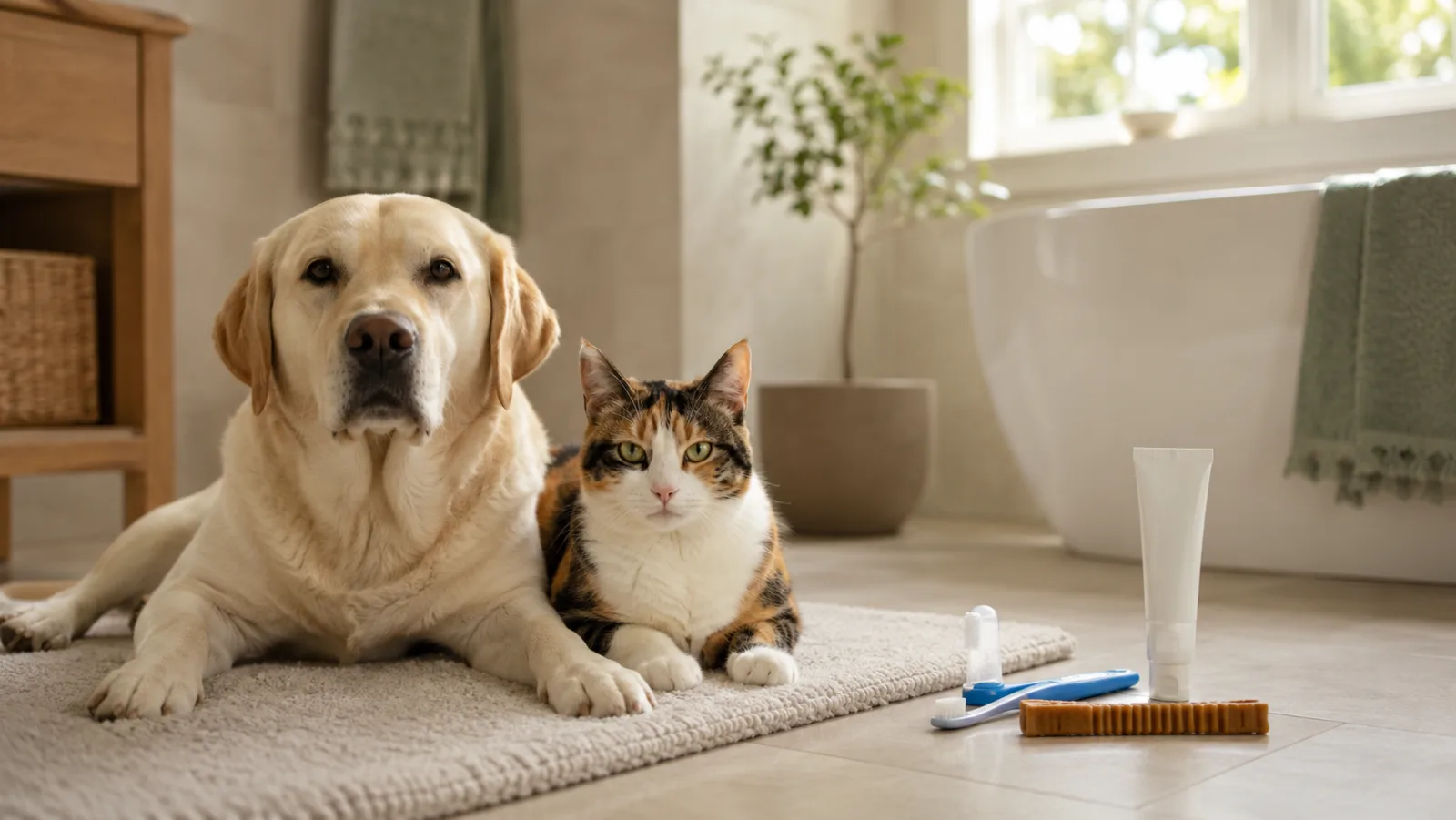
Evidence at a Glance
Virbac C.E.T. Enzymatic Toothpaste
Pet-safe, swallowable enzymatic toothpaste — the baseline brushing product the AVMA's daily-brushing recommendation actually calls for.
Sources: Virbac manufacturer documentation, American Veterinary Medical Association — Pet Dental Care, AAHA 2019 Dental Care Guidelines
Verified May 5, 2026
Petsmile Professional Pet Toothpaste
VOHC-accepted toothpaste with a Calprox formulation — the only toothpaste category the Veterinary Oral Health Council currently lists for plaque control.
Sources: Veterinary Oral Health Council — Accepted Products, Petsmile manufacturer documentation
Verified May 5, 2026
Virbac C.E.T. VEGGIEDENT FR3SH
VOHC-listed dog dental chew with plaque and tartar acceptance — the clearest evidence-backed adjunct to brushing for dogs.
Sources: Veterinary Oral Health Council — Dog Accepted Products PDF (August 2026), Virbac manufacturer documentation
Verified May 5, 2026
Our Picks
Virbac
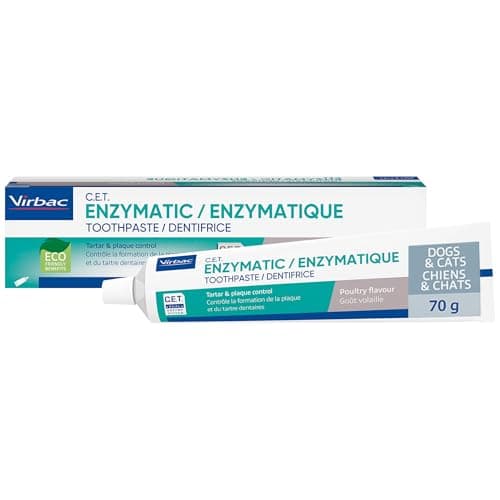
Virbac C.E.T. Enzymatic Toothpaste
9.4 / 10
- Pet-safe enzymatic toothpaste — Virbac states it is safe to swallow
- No foaming agents and five flavors to support compliance
- Labeled for dogs and cats
- Strong veterinary-brand recognition for daily home brushing
$12.29
Petsmile
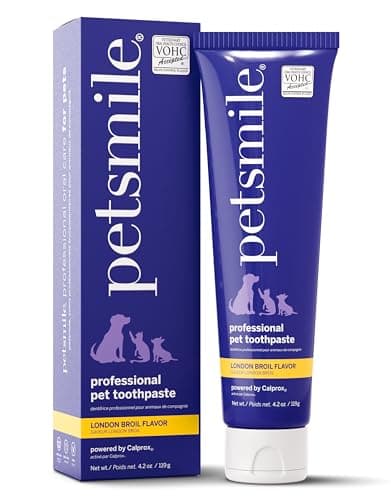
Petsmile Professional Pet Toothpaste
9.0 / 10
- VOHC-accepted toothpaste — the only toothpaste category currently on the Veterinary Oral Health Council list
- Calprox formulation positioned around plaque control
- Labeled for dogs and cats
- Markets a low-brushing application protocol for resistant pets
$25.00
Last Amazon read 2026-09-08
Virbac
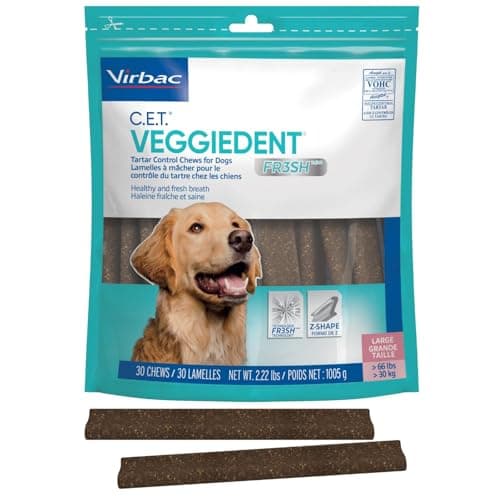
Virbac C.E.T. VEGGIEDENT FR3SH
8.8 / 10
- VOHC-accepted dog dental chew — listed for plaque and tartar claims
- Plant-based Z-shape designed to encourage thorough chewing
- Sized by dog weight to match safe chewing behavior
- Pairs naturally with C.E.T. toothpaste for a single-brand routine
$38.99
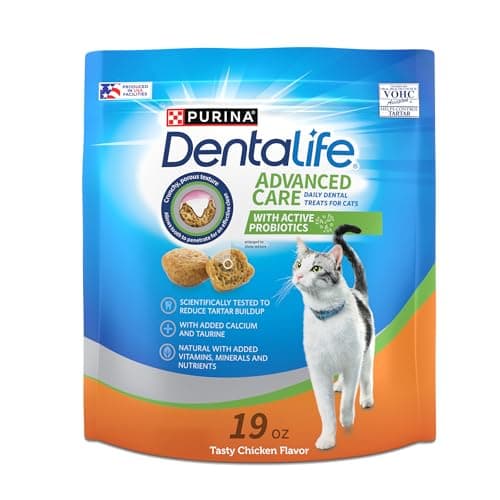
Purina
Purina DentaLife Daily Oral Care Cat Treats
8.4 / 10
- VOHC-accepted cat dental treat with a tartar claim
- Cat-specific texture and porous shape
- Easier owner compliance than feline toothbrushing for many cats
- Familiar mass-market brand at a lower price tier than premium chews
$15.19
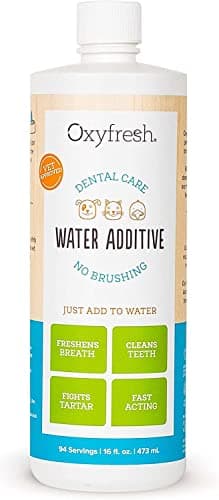
Oxyfresh
Oxyfresh Premium Pet Dental Care Solution
7.8 / 10
- Tasteless, odorless water additive for dogs and cats
- Marketed for plaque and tartar control and breath support
- Daily use is built into the existing water-bowl routine
- Veterinarian-recommended marketing positioning
$18.95
The Short Answer
If you can only buy one pet dental product, make it Virbac C.E.T. Enzymatic Toothpaste with a soft pet toothbrush — the AVMA names daily toothbrushing as the home-care ideal, and Virbac says C.E.T. is pet-safe and swallowable. Add Virbac C.E.T. VEGGIEDENT FR3SH for chew-motivated dogs and Purina DentaLife Daily Oral Care Cat Treats for cats — both hold Veterinary Oral Health Council acceptance, which is the cleanest evidence filter in this category — and Oxyfresh Premium Pet Dental Care Solution as a low-effort water-additive adjunct. None of those replace brushing or veterinary dental exams.
Every product on this list has been scored against the PetPal Gear Score, a weighted composite of expert consensus, observed effectiveness, animal safety, long-term durability, and value. Review method: Editorial synthesis of veterinary dental guidance — AVMA Pet Dental Care, AAHA's 2019 Dental Care Guidelines, the Veterinary Oral Health Council accepted-product lists for dogs and cats, Cornell Feline Health Center, Merck Veterinary Manual, and manufacturer documentation. PetPalHQ does not run a testing lab.. Synthesized from 8+ expert sources.
For most cat and dog owners, the smartest dental investment is still a soft pet toothbrush, a tube of pet-safe toothpaste, and a daily routine that fits the household. The American Veterinary Medical Association's Pet Dental Care guidance names daily toothbrushing as the home-care ideal. AAHA's 2019 Dental Care Guidelines for Dogs and Cats treat home care and professional dental cleanings as complementary tools. Cornell Feline Health Center's feline dental guidance supports a staged, gentle introduction to toothbrushing for cats.
The picks below are editorial synthesis. PetPalHQ does not run a testing lab. Every product on this page was selected by reviewing the Veterinary Oral Health Council accepted-products list, AVMA and AAHA guidance, Cornell Feline Health Center's species-specific recommendations, the Merck Veterinary Manual, and manufacturer documentation. Where expert sources disagreed — most commonly on whether dental chews and water additives meaningfully reduce plaque without brushing — we deferred to VOHC acceptance. Products on VOHC's accepted-products list have submitted evidence reviewed by the council, and that distinction is the clearest editorial filter available.
This guide is the buying-side companion to the Pet Grooming, Dental Care and Shedding Control for Cats and Dogs hub. The hub explains why dental care matters; this article covers what to buy.
Head-to-Head Comparison
| Feature | Virbac C.E.T. Enzymatic Toothpaste | Petsmile Professional Pet Toothpaste | Virbac C.E.T. VEGGIEDENT FR3SH | Purina DentaLife Daily Oral Care Cat Treats | Oxyfresh Premium Pet Dental Care Solution |
|---|---|---|---|---|---|
| Product type | Pet toothpaste | VOHC toothpaste | VOHC dog chew | VOHC cat treat | Water additive |
| VOHC accepted? | No | Yes | Yes | Yes | No |
| Frequency | Daily brushing | Daily brushing | Daily chew | Daily treats | Every water change |
| Best for which pet | Dogs and cats building a brushing habit | Dogs and cats wanting strongest evidence filter | Chew-motivated dogs | Cats that resist brushing | Multi-pet households needing low friction |
| Check price | Amazon | Amazon | Amazon | Amazon | Amazon |
$12.29
- Pet-safe enzymatic toothpaste — Virbac states it is safe to swallow
- No foaming agents and five flavors to support compliance
- Labeled for dogs and cats
- Strong veterinary-brand recognition for daily home brushing
The Virbac C.E.T. Enzymatic Toothpaste is the default starting point for the home dental-care routine the American Veterinary Medical Association actually recommends. The AVMA's Pet Dental Care guidance names daily toothbrushing as the home-care ideal and notes that brushing several times a week can still help when daily is not realistic. Virbac's own product documentation states that C.E.T. toothpastes come in five flavors, contain no foaming agents, and are safe for pets to swallow — three properties that make compliance achievable for the average owner.
Why it sits at the top of this list: AAHA's 2019 Dental Care Guidelines for Dogs and Cats emphasize regular dental examinations and proper home care, and warn that untreated periodontal disease can cause chronic pain and suffering. Toothbrushing is the home-care behavior every credible veterinary reference points to first. Toothpaste only earns its place if it lets the owner actually brush — and Virbac's no-foam, swallowable, multi-flavor formulation is engineered specifically for that.
What the spec sheet does not tell you: this toothpaste is not on the Veterinary Oral Health Council accepted-products list. VOHC acceptance is awarded for documented plaque or tartar reduction; the C.E.T. line is positioned around enabling brushing, which is the behavior that actually controls plaque. Editorially, that distinction matters — frame this as the baseline brushing aid, not as a clinically validated plaque-reduction product.
What We Love
- Swallowable formula removes the rinse step that breaks brushing routines
- Multiple flavors help finicky pets accept brushing
- Trusted veterinary brand familiar to vets and groomers
- Inexpensive enough for daily use without budget anxiety
What Could Be Better
- Not VOHC-accepted — claim toothpaste enables brushing, not that it reduces plaque on its own
- Toothpaste is useless without consistent brushing technique
- Pets with painful mouths should be evaluated by a veterinarian first
The Verdict
The clearest editorial pick for a guide that frames brushing as the most important home dental behavior. Synthesized from AVMA Pet Dental Care guidance, the AAHA 2019 Dental Care Guidelines, and Virbac manufacturer documentation.
$25.00
Last Amazon read 2026-09-08
- VOHC-accepted toothpaste — the only toothpaste category currently on the Veterinary Oral Health Council list
- Calprox formulation positioned around plaque control
- Labeled for dogs and cats
- Markets a low-brushing application protocol for resistant pets
The Petsmile Professional Pet Toothpaste is the editorial recommendation for owners who want the cleanest possible evidence filter. The Veterinary Oral Health Council says VOHC awards product claims such as plaque and tartar reduction only after reviewing supporting evidence, and Petsmile sits on that accepted-products list. For a buying guide, that VOHC label is the single strongest defensible signal.
Petsmile's own documentation positions the formulation around its proprietary Calprox ingredient and a daily application protocol. Where this product earns its premium price is not in the toothpaste base itself but in the regulatory differentiation — a VOHC-accepted toothpaste is editorially distinct from any unaccepted toothpaste, regardless of brand reputation, and that distinction is the entire reason a paying buyer should pick this over Virbac C.E.T.
What the spec sheet does not tell you: VOHC acceptance is not a substitute for veterinary dental exams. AAHA's 2019 Dental Care Guidelines are explicit that home care and professional dental cleanings are complementary, not interchangeable. A VOHC-accepted toothpaste reduces plaque accumulation between cleanings — it does not remove existing tartar, treat periodontal disease, or eliminate the need for professional scaling under anesthesia.
What We Love
- VOHC acceptance is the strongest single evidence filter for dental products
- Calprox-based formula positioned around plaque control
- Labeled for both dogs and cats
- Manufacturer protocol allows lower-friction application for resistant pets
What Could Be Better
- Higher price tier than Virbac C.E.T.
- Owners may interpret VOHC acceptance as a substitute for professional cleaning — it isn't
- Bleeding gums, drooling, loose teeth, or pain still need veterinary evaluation
The Verdict
The right pick for owners who want VOHC acceptance as the buying signal. Synthesized from the Veterinary Oral Health Council accepted-products list and Petsmile manufacturer documentation.
$38.99
- VOHC-accepted dog dental chew — listed for plaque and tartar claims
- Plant-based Z-shape designed to encourage thorough chewing
- Sized by dog weight to match safe chewing behavior
- Pairs naturally with C.E.T. toothpaste for a single-brand routine
The Virbac C.E.T. VEGGIEDENT FR3SH chews are the editorial dog-chew pick because they sit on the Veterinary Oral Health Council's dog accepted-products table for both plaque and tartar claims. VOHC's published list is the clearest evidence filter for dental chews — accepted products receive their claim language only after submitted evidence is reviewed, which is editorially distinct from any chew that markets dental benefits without VOHC acceptance.
Why VEGGIEDENT FR3SH earns the premium chew slot over more familiar consumer brands: the AAHA 2019 Dental Care Guidelines emphasize that home dental care should be backed by evidence, not marketing. Virbac is a veterinary brand that already supplies the toothpaste at the top of this list, and the VEGGIEDENT line ties the dental-chew adjunct to the same brand's brushing routine. That continuity matters when an owner is building a habit, not just buying a one-off treat.
What the spec sheet does not tell you: chews cannot remove existing severe tartar or treat periodontal disease. The Merck Veterinary Manual notes that periodontal disease in dogs requires dental evaluation, not snack interventions, and AAHA agrees. Treat VEGGIEDENT FR3SH as adjunct support for an already-brushing routine, not a brushing replacement, and size correctly to the dog's weight — the chews are sized for safe chewing, but dogs that gulp pieces whole need a different category of dental support.
What We Love
- VOHC-accepted plaque and tartar claims — the clearest evidence filter for chews
- Plant-based formulation suits dogs with food sensitivities to common protein chews
- Sized by dog weight rather than one-size-fits-all
- Same-brand continuity with the C.E.T. toothpaste line
What Could Be Better
- Higher per-treat cost than mass-market dental chews
- Not for dogs that swallow chews whole rather than chewing thoroughly
- Calorie-bearing — count toward daily treat allotment
The Verdict
The strongest VOHC-backed dog chew candidate for owners who want evidence-supported plaque and tartar claims. Synthesized from the Veterinary Oral Health Council dog accepted-products PDF (August 2026) and Virbac product documentation.
$15.19
- VOHC-accepted cat dental treat with a tartar claim
- Cat-specific texture and porous shape
- Easier owner compliance than feline toothbrushing for many cats
- Familiar mass-market brand at a lower price tier than premium chews
The Purina DentaLife Daily Oral Care Cat Treats are on the Veterinary Oral Health Council's cat accepted-products table with a tartar claim. That distinction matters more for cats than it does for dogs because feline dental options are narrower — cats are often more difficult to brush than dogs, and Cornell Feline Health Center says feline toothbrushing should be introduced gradually through a staged process. For cat owners struggling to build a brushing routine, a VOHC-accepted dental treat is the most defensible adjunct.
Why DentaLife earns the cat slot: the editorial position throughout this guide is that brushing is the ideal but not always realistic, and the Cornell Feline Health Center's staged-introduction guidance acknowledges that explicitly. A VOHC-accepted cat treat closes the gap between zero home dental care and full toothbrushing, and Purina's mass-market distribution makes routine repurchase practical.
What the spec sheet does not tell you: dental treats are calorie-bearing. Cats are smaller than dogs and more easily tipped into weight gain by treats, especially older or indoor-only cats. Cornell explicitly notes that cats benefit from regular brushing for dental health, but does not endorse treats as a replacement. Editorially, treat DentaLife as a supplement to brushing efforts, watch the daily calorie load, and route any cat with bad breath, drooling, oral pain, loose teeth, or appetite changes to a veterinary dental exam.
What We Love
- VOHC-accepted tartar claim — strongest evidence filter for a cat dental treat
- Texture designed for cat chewing rather than scaled-down dog formulation
- Mass-market availability supports routine repurchase
- Lower friction than toothbrushing for cats that resist mouth handling
What Could Be Better
- Treats are calorie-bearing — count toward daily allowance
- Not a substitute for brushing or veterinary dental exams
- Bad breath with pain or appetite change still needs a veterinarian, not more treats
The Verdict
The strongest cat dental-treat candidate for owners building an adjunct routine around a cat that resists brushing. Synthesized from the Veterinary Oral Health Council cat accepted-products PDF (August 2026) and Cornell Feline Health Center guidance.
$18.95
- Tasteless, odorless water additive for dogs and cats
- Marketed for plaque and tartar control and breath support
- Daily use is built into the existing water-bowl routine
- Veterinarian-recommended marketing positioning
The Oxyfresh Premium Pet Dental Care Solution is the editorial pick for owners who want the lowest-friction dental adjunct. Water additives sit at the bottom of any evidence-tiered dental routine — the AVMA, AAHA, and Cornell Feline Health Center all point to brushing first, VOHC-accepted chews and toothpaste second, and passive products like additives and powders last. Water additives earn their place by being daily-routine compatible: pour into the water bowl, change the water, repeat.
Why Oxyfresh and not a different additive: the manufacturer positions the formulation as tasteless and odorless, which is the property that matters most for cats. Cats are sensitive to changes in water taste and smell, and any additive that reduces drinking is a direct downgrade — dehydration is a meaningful health risk in cats and especially in cats with kidney disease. An additive that does not change drinking behavior is a usable additive; one that does is not.
What the spec sheet does not tell you: this product is not on the current Veterinary Oral Health Council accepted-products list. That makes the editorial framing important — water additives are passive support for an existing dental routine, not evidence-backed plaque or tartar reduction the way VOHC-accepted products are. Use as a supplement, monitor cat drinking, and ask a veterinarian before use in pets with kidney disease, prescription diets, or any condition where altered hydration matters.
What We Love
- Lowest-friction dental adjunct — daily use built into water changes
- Tasteless, odorless formulation aimed at preserving drinking behavior
- Useful for households with multiple pets and tight time budgets
- Affordable enough for routine repurchase
What Could Be Better
- Not on the VOHC accepted-products list — frame as adjunct, not as plaque-reduction proof
- Cats whose drinking changes after addition should switch back to plain water
- Should be discussed with a veterinarian for pets with kidney disease or prescription diets
The Verdict
The right pick for owners who want a passive dental adjunct that works with the existing water-bowl routine. Synthesized from Oxyfresh manufacturer documentation, AAHA 2019 Dental Care Guidelines, and Cornell Feline Health Center hydration guidance.
How We Score
Formula
PetPal Gear Score = (Expert Consensus × 0.35) + (VOHC Acceptance × 0.25) + (Practical Owner Compliance × 0.20) + (Safety and Misuse Risk × 0.20)
Score Factors
- Expert Consensus · 35%
- Synthesized from AVMA Pet Dental Care guidance, AAHA's 2019 Dental Care Guidelines for Dogs and Cats, Cornell Feline Health Center, and Merck Veterinary Manual. The PetPal Gear Score is a composite of expert consensus and VOHC acceptance — PetPalHQ does not run a testing lab and does not perform first-hand product evaluation.
- VOHC Acceptance · 25%
- Whether the product appears on the Veterinary Oral Health Council accepted-products list for plaque or tartar claims. VOHC acceptance is the clearest evidence filter for pet dental products and is weighted accordingly.
- Practical Owner Compliance · 20%
- How realistic daily use is for the average owner — brushing tolerance, swallowability of toothpaste, chew sizing, water-bowl integration, and species-appropriate handling.
- Safety and Misuse Risk · 20%
- Risk of misuse: human-toothpaste substitution, chew-gulping, calorie load, hydration changes from additives, masking of dental disease that needs veterinary evaluation, or use during oral pain.
| Rank | Product | Score |
|---|---|---|
| #1 | Virbac Virbac C.E.T. Enzymatic Toothpaste | 9.4 |
| #2 | Petsmile Petsmile Professional Pet Toothpaste | 9.0 |
| #3 | Virbac Virbac C.E.T. VEGGIEDENT FR3SH | 8.8 |
| #4 | Purina Purina DentaLife Daily Oral Care Cat Treats | 8.4 |
| #5 | Oxyfresh Oxyfresh Premium Pet Dental Care Solution | 7.8 |
When NOT to Buy
Skip every product on this list and go to a veterinarian first if your pet has bleeding gums, loose teeth, drooling with pain, swelling around the muzzle or jaw, difficulty eating, persistent bad breath with discomfort, or visible heavy tartar — those are dental-disease signs the AAHA 2019 Dental Care Guidelines and Merck Veterinary Manual treat as veterinary problems, not home-care problems. Skip dental chews entirely for dogs that swallow chews whole rather than chewing thoroughly, for calorie-restricted pets on weight-management diets, and for any pet with known food sensitivities not yet cleared by a veterinarian. Skip water additives if your cat reduces drinking after addition or if your pet has kidney disease, thyroid disease, or is on a prescription diet — Cornell Feline Health Center's hydration guidance and standard veterinary practice both treat altered drinking behavior as a flag to pull the additive and consult a veterinarian. And skip every dental product on every guide if you are using it to delay a professional dental cleaning under anesthesia — home-care products supplement professional dental care; they do not replace it.
For dogs
For dogs, the home dental routine centers on daily toothbrushing with pet-safe toothpaste. The AVMA's Pet Dental Care guidance and the AAHA 2019 Dental Care Guidelines both name this as the foundation. It is supplemented by Veterinary Oral Health Council (VOHC) accepted products and anchored by professional dental cleanings under anesthesia. The AAHA 2019 guidelines are direct that home care and professional dental cleanings are complementary, not interchangeable. A brushing routine reduces plaque accumulation between cleanings. It does not remove established tartar or treat periodontal disease.
The dog-specific picks on this page slot into that order. Virbac C.E.T. Enzymatic Toothpaste is the baseline brushing aid the AVMA's daily-brushing recommendation calls for. Virbac documentation states C.E.T. is pet-safe and swallowable, with multiple flavors and no foaming agents. Those three properties make daily brushing realistic for the average dog owner. Virbac C.E.T. VEGGIEDENT FR3SH is the editorial dog dental chew because it sits on the VOHC dog accepted-products PDF (August 2026) for both plaque and tartar claims. VOHC acceptance is the cleanest evidence filter for dental chews. The AAHA 2019 guidelines emphasize evidence-backed home care over marketing. The Merck Veterinary Manual's routine health care guidance treats dental chews as adjunct support to brushing rather than a brushing replacement.
The dog-specific failure mode worth flagging: chews and water additives presented as plaque-reduction proof when they are not. The AVMA, AAHA, and Merck Veterinary Manual all converge on the same hierarchy — brushing first, VOHC-accepted products second, passive products like water additives last. Oxyfresh Premium Pet Dental Care Solution is useful as a low-friction adjunct. But it is not on the current VOHC accepted-products list. The AAHA 2019 guidelines are explicit that home dental products do not replace professional dental cleanings under anesthesia. Bleeding gums, loose teeth, drooling with pain, swelling, difficulty eating, persistent bad breath, or visible heavy tartar are dental-disease signs that need a veterinary dental exam — not more chews. The American Kennel Club's groomer-hub educational standards and the National Dog Groomers Association of America's training framework reinforce the same boundary: routine home care is appropriate, but established dental disease is veterinary territory.
For cats
For cats, the dental challenge is different. Cornell Feline Health Center's feline dental disease guidance is direct: periodontal disease prevalence is very high in cats — much higher than most owners realize. Cats are often more difficult to brush than dogs. Cornell's recommendation is to introduce toothbrushing gradually through a staged process. Start with mouth handling, progress to a finger brush, then move to a soft toothbrush with pet toothpaste. The American Association of Feline Practitioners and the AAFP/ISFM environmental-needs framework both treat low-stress handling as a baseline of cat care. A brushing routine that creates daily stress is not actually a brushing routine — it is an abandoned one within a few weeks.
The cat-specific picks on this page narrow accordingly. Virbac C.E.T. Enzymatic Toothpaste is dog-and-cat labeled. The swallowable, no-foam, multi-flavor formulation is what makes feline brushing achievable for cats whose owners can build the staged routine Cornell describes. The cat-specific dental treat slot is filled by Purina DentaLife Daily Oral Care Cat Treats — on the VOHC cat accepted-products PDF (August 2026) with a tartar claim. It has a feline-specific texture and porous shape rather than a scaled-down dog formulation. For cat households where toothbrushing is not realistic despite the staged approach, a VOHC-accepted dental treat is the most defensible adjunct between zero home dental care and full brushing.
The cat-specific failure modes differ from the dog ones. First, human toothpaste on cats — even more dangerous than on dogs because of cats' smaller body size and lower xylitol tolerance. It is never appropriate. Cornell Feline Health Center and the AVMA are both direct that pet toothpaste is the only acceptable choice. Second, dog dental chews on cats — Virbac VEGGIEDENT FR3SH is dog-specific and sized for dog chewing behavior. Cats need cat-labeled products, and the AAFP's cat-specific environmental and feeding guidance reinforces that point. Third, dental disease progressing quietly — Cornell explicitly notes that cats often hide oral pain and continue eating despite significant dental disease. Bad breath, drooling, pawing at the mouth, appetite change, or weight loss in a cat are flags for a veterinary dental exam rather than more treats. The AAHA 2019 Dental Care Guidelines for Dogs and Cats and the Merck Veterinary Manual both treat established feline dental disease as anesthetic-cleaning territory, not home-care territory.
Frequently Asked Questions
- Are VOHC-accepted dental products really better than regular dental chews?
- For evidence-based plaque and tartar claims, yes. The Veterinary Oral Health Council reviews submitted evidence before granting acceptance. Accepted products earn specific claim language tied to that evidence. Unaccepted products may still help mechanically — chewing itself can support oral health — but the claim language is editorial marketing rather than VOHC-reviewed evidence. If you are choosing a dental chew specifically to reduce plaque or tartar, VOHC acceptance is the cleanest available filter.
- Is daily toothbrushing or a dental chew more important?
- Toothbrushing is more important. The AVMA's Pet Dental Care guidance names daily toothbrushing as the home-care ideal. AAHA's 2019 Dental Care Guidelines for Dogs and Cats emphasize regular dental examinations and proper home care. Every credible veterinary reference points to brushing first. Dental chews and treats are adjuncts that earn their place by supplementing brushing, not by replacing it.
- Can cats safely use dog dental products?
- Only when the label explicitly says so. Some products, like Virbac C.E.T. Enzymatic Toothpaste, are labeled for both dogs and cats. Others, like Virbac C.E.T. VEGGIEDENT FR3SH chews, are dog-specific. Cornell Feline Health Center's feline dental guidance is clear that cats need cat-labeled products. Dog-only chews are sized for dogs and may not be safe for cats. Always check the species label before sharing dental products across pets.
- How often should pet owners brush a dog or cat's teeth?
- Daily is the AVMA's stated ideal. Brushing several times per week can still help when daily is not realistic. But skipping brushing entirely is the home-care failure mode the AAHA 2019 Dental Care Guidelines warn most about. For cats, Cornell Feline Health Center says toothbrushing should be introduced gradually through a staged process. Start with mouth handling, progress to a finger brush, then move to a soft toothbrush with pet toothpaste. The goal is consistency, not perfection on day one.
- What dental symptoms mean I should skip the products and call the vet?
- Bleeding gums, loose teeth, drooling with pain, swelling around the muzzle or jaw, difficulty eating, persistent bad breath with discomfort, or visible heavy tartar. The AAHA 2019 Dental Care Guidelines and Merck Veterinary Manual both treat those as veterinary problems, not home-care problems. Home dental products are designed to prevent disease, not treat it. Once disease is established, professional dental evaluation under anesthesia is the standard of care.
- What toothpaste do vets actually approve for dogs and cats?
- Apply two filters. First, enzymatic pet formulations such as Virbac C.E.T. — designed to be swallowed, flavored for acceptance, and labeled per species. Second, the VOHC accepted-products list, where Virbac C.E.T. VEGGIEDENT FR3SH and Purina DentaLife both hold the seal — a list dominated by chews and treats rather than toothpastes. What "vet approved" can never mean is human toothpaste: fluoride and detergent foaming agents are not meant to be swallowed, and xylitol-sweetened formulas are acutely toxic to dogs. If the tube does not name dogs or cats on the label, it does not go in their mouths.
- Is there a VOHC-accepted cat toothpaste, and what else on the list is cat-approved?
- Exactly one toothpaste, and rather more of everything else. We read the VOHC accepted-products table for cats on August 17, 2026 — the edition stamped "last updated August 2026" — and counted every row across both of its pages: nineteen products. Only one is a toothpaste, the Healthymouth Toothpaste/Brush Kit Combination for Cats, carrying a plaque claim, awarded 2015. Neither Virbac C.E.T. nor Petsmile has a VOHC-accepted cat toothpaste; Petsmile's seal sits on the dog list only, awarded 2011 for a plaque claim, and its name does not appear on the feline table. That scarcity is real, and it is why brushing advice for cats leans on species-labeled enzymatic pastes that do not carry the seal — as the guidance elsewhere on this page says, a cat-labeled paste without the seal still beats not brushing. But the seal is not scarce everywhere on the feline list. Seven entries are dental diets: Hill's Prescription Diet Feline t/d and Purina Pro Plan Veterinary Diets DH Feline are veterinary-only, while Hill's Science Diet Oral Care, Hill's Healthy Advantage Oral+, Hill's Science Plan Vet Essentials Multi-Benefit + Dental, Royal Canin Feline Dental Diet, and Performatrin Prime Adult Oral Care are consumer products. Five are HealthyMouth items — two water additives, a topical gel, a topical spray, and anti-plaque wipes. Two are ProDen PlaqueOff powders, one from SwedenCare and one sold as CEVA Clenz-A-Dent. And four are edible dental treats, which is the answer most owners are actually looking for: Feline Greenies (tartar, 2005), Whiskas Dentabites (tartar, 2017), Purina Pro Plan Veterinary Diet Dental Bites (plaque and tartar, 2019), and Purina DentaLife Daily Oral Care Cat Treats (tartar, 2016) — the last of which is the cat dental treat picked on this page, so its seal is verified rather than asserted. The practical read: for cats, the VOHC seal is a genuinely narrow filter on toothpaste and a usable one on treats and diets, so match the filter to the product type rather than expecting it everywhere.
Bottom Line
Brushing is the home dental-care behavior that matters most. The AVMA names daily brushing as the ideal, AAHA's 2019 Dental Care Guidelines treat home care and professional cleanings as complementary, and Cornell Feline Health Center supports staged toothbrushing introduction for cats.
Use a pet toothpaste, never human toothpaste. Virbac C.E.T. is swallowable and pet-safe; human toothpaste is not safe for pets to swallow.
VOHC acceptance is the clearest evidence filter for dental chews and treats. Virbac C.E.T. VEGGIEDENT FR3SH (dog chew) and Purina DentaLife (cat treat) both appear on Veterinary Oral Health Council accepted-product lists.
Water additives like Oxyfresh are passive adjuncts, not plaque-reduction proof. Use to support an existing brushing routine, monitor cat drinking, and consult a veterinarian for pets with kidney disease or prescription diets.
No home dental product replaces professional dental cleanings under anesthesia. Bleeding gums, loose teeth, drooling with pain, swelling, or appetite change require a veterinary dental exam — not more chews.
Brushing lives inside a wider routine: our grooming, dental, and shedding hub covers how to sequence dental care with the rest of low-stress home grooming.
Sources & Methodology
Methodology
PetPal Gear Score = (Expert Consensus × 0.35) + (VOHC Acceptance × 0.25) + (Practical Owner Compliance × 0.20) + (Safety and Misuse Risk × 0.20)
Expert review sources
- American Veterinary Medical Association — Pet Dental Care
- American Animal Hospital Association — 2019 AAHA Dental Care Guidelines for Dogs and Cats
- Veterinary Oral Health Council — Accepted Products
- Veterinary Oral Health Council — Dog Accepted Products PDF, edition stamped "last updated August 2026", read 2026-08-17
- Veterinary Oral Health Council — Cat Accepted Products PDF, edition stamped "last updated August 2026", read 2026-08-17; full 19-row enumeration of the feline list across both pages, including its four accepted edible treats
- Cornell Feline Health Center — Feline Dental Disease
- Merck Veterinary Manual — Routine Health Care of Dogs
- Virbac — C.E.T. Enzymatic Toothpastes product documentation
- Purina — DentaLife Daily Oral Care Cat Treats product documentation
- Oxyfresh — Premium Pet Dental Care Solution product documentation
Community sources
- AKC Groomer Hub — National Core Professional Dog Grooming Educational Standards
- National Dog Groomers Association of America
Prices and specs verified May 5, 2026.
About the author
Nick Miles is the chief editor of PetPalHQ. The picks above are editorial synthesis of veterinary dental guidance and the Veterinary Oral Health Council accepted-products list — PetPalHQ does not run a testing lab. The PetPal Gear Score is a composite of expert consensus and VOHC acceptance, not a measurement. Sources are cited by name in body prose throughout.
PetPalHQ is a participant in the Amazon Services LLC Associates Program. We may earn commissions from qualifying purchases — at no extra cost to you.
More Guides
Cats & Dogs
Pet Grooming, Dental Care & Shedding Control for Cats and Dogs: A Complete 2026 Owner Guide

Cats & Dogs
Best Dog Brushes for Shedding, Mats, and Every Coat Type (2026)
Cats & Dogs
Best Cat Brushes for Shedding, Mats, and Hairballs (2026)
Cats & Dogs
Best Pet Shampoos and Wipes for Dogs and Cats (2026)
Cats & Dogs