Aquarium
How to Set Up a Freshwater Shrimp Tank (Neocaridina for Beginners)
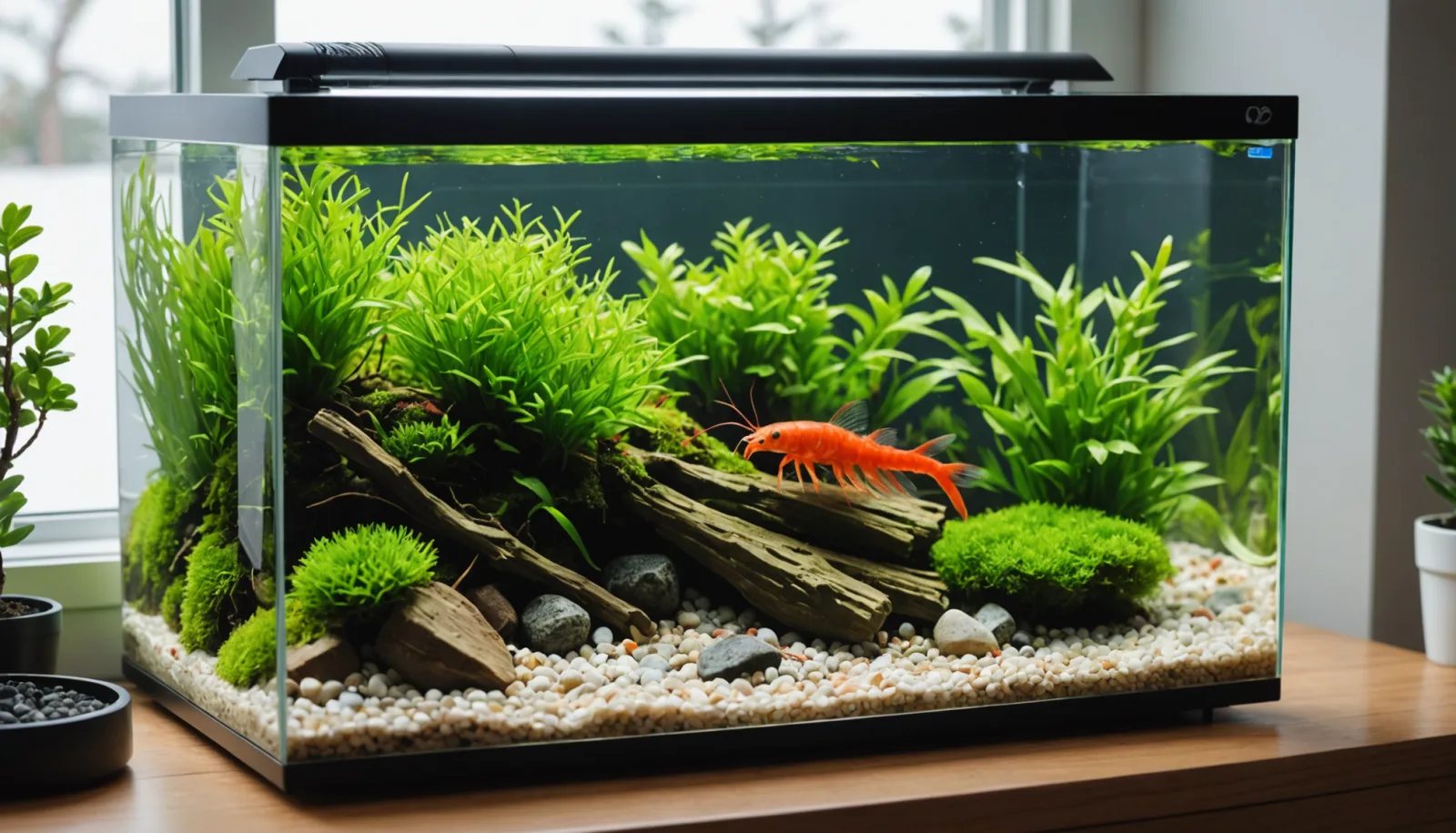
Cherry shrimp are not tiny fish, and setting up for them inverts the fish-tank rulebook. A buffering aquasoil pushes pH the wrong way, injected CO2 becomes a hazard, and copper that fish shrug off kills a shrimp colony. This build goes livestock-first: a stable nano tank, an inert floor, an air-driven sponge filter that cannot suck up shrimplets, a full fishless cycle, hardness testing, and grazing cover — nine products in setup order, not ranked against each other. If you want a finished display in a weekend, read the caveats first, because shrimp reward stability and punish swings.
By Nick Miles · Updated September 30, 2026 · 12 min read
PetPalHQ is reader-supported. We may earn a commission from qualifying Amazon purchases at no extra cost to you.
Evidence at a Glance
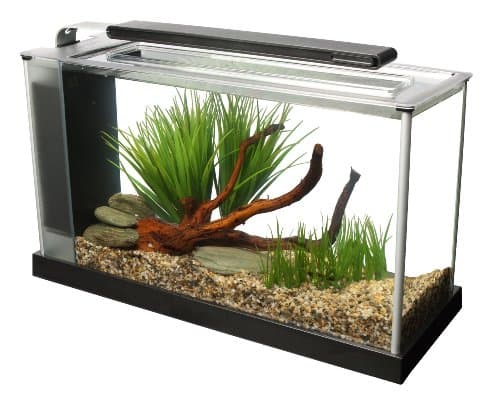
Fluval SPEC Aquarium Kit, 5-Gallon
The colony home — a rimless 5-gallon nano kit with a high-output 7000K LED and three-stage filtration per Fluval, sized so a shrimp colony has the water volume it needs to stay chemically stable, with an intake you guard by a sponge prefilter so shrimplets are never pulled into the pump.
Sources: Fluval manufacturer documentation, Shrimp-keeping consensus (the neocaridina-keeping community and published invertebrate care standards), Published freshwater aquarium water-quality standards
Verified Jul 16, 2026
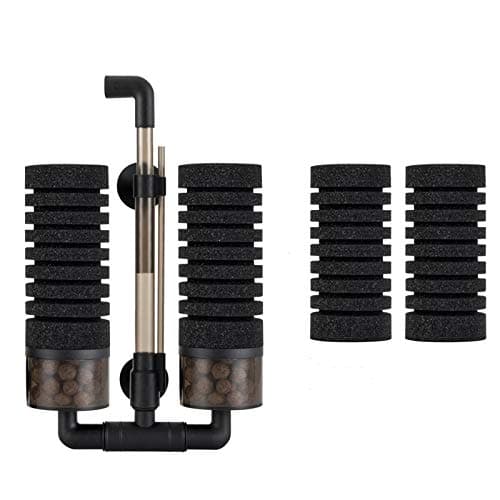
hygger Aquarium Double Sponge Filter (M)
The species-correct filter — an air-driven double sponge for fresh and salt water per hygger, chosen because a sponge intake cannot suck up newborn shrimplets and its surface grows the biofilm a colony grazes on all day, making it the shrimp-keeping default rather than a budget compromise.
Sources: hygger manufacturer documentation, Shrimp-keeping consensus (the neocaridina-keeping community and published invertebrate care standards), Published freshwater aquarium water-quality standards
Verified Jul 16, 2026
Seachem Prime
The water-safety step — a concentrated conditioner that removes chlorine and chloramine and detoxifies ammonia and nitrite per Seachem, used on the first fill and at every water change, because chlorinated tap water harms shrimp and the beneficial bacteria a shrimp tank runs on alike.
Sources: Seachem manufacturer documentation, Published freshwater aquarium water-quality standards, Shrimp-keeping consensus (the neocaridina-keeping community and published invertebrate care standards)
Verified Jul 16, 2026
Our Picks
Fluval
Fluval SPEC Aquarium Kit, 5-Gallon
8.6 / 10
- Rimless 5-gallon nano tank sized for a stable colony
- High-output 7000K LED for bolder color per Fluval
- Three-stage filtration in an integrated rear chamber
- Intake accepts a sponge prefilter to protect shrimplets
$153.99
Current price · checked Sep 8, 2026
Aqueon
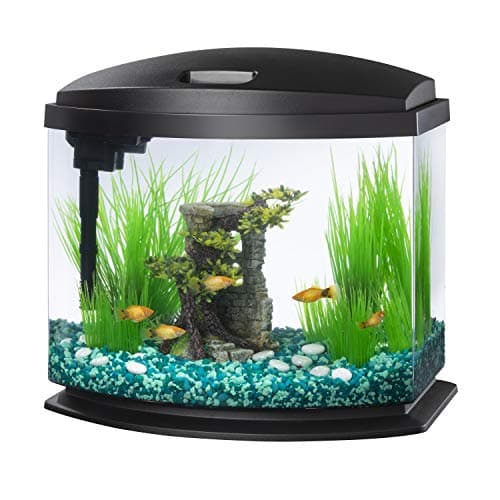
Aqueon LED MiniBow 5 SmartClean
8.5 / 10
- Complete starter kit at a lower entry price
- SmartClean water changes in under two minutes per Aqueon
- Includes hood, base, power filter, food, and conditioner
- Same small footprint that keeps a colony contained
$72.95
Current price · checked Sep 8, 2026
hygger
hygger Aquarium Double Sponge Filter (M)
8.4 / 10
- Air-driven double sponge with no impeller intake
- Safe for fresh and salt water, size M, per hygger
- Sponge surface grows grazing biofilm for shrimp
- Twin sponges extend the biological media volume
$19.99
Current price · checked Sep 8, 2026
Aqua Natural
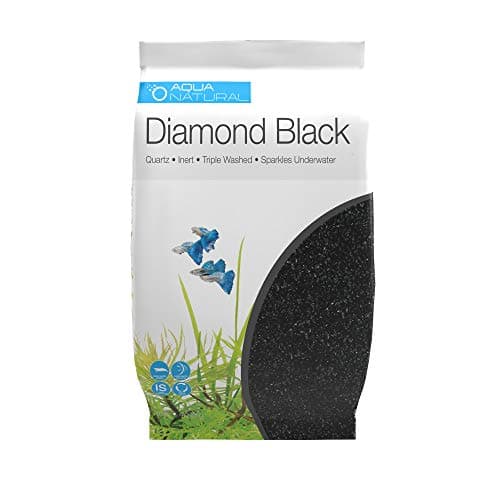
Aqua Natural Diamond Black Gravel, 10 lb
8.3 / 10
- Inert composition that does not alter water chemistry
- Large surface area seeds beneficial bacteria per Aqua Natural
- Dark color deepens red shrimp by contrast
- Safe for all aquatic life, 10 lb bag
$12.76
Current price · checked Sep 8, 2026
DrTim's Aquatics
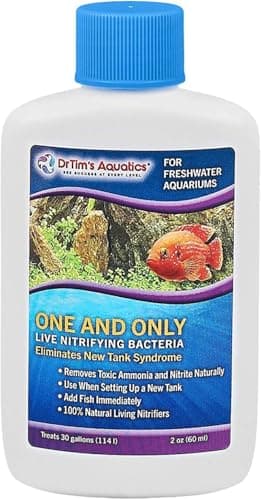
DrTim's Aquatics One and Only Freshwater
8.2 / 10
- Live nitrifying bacteria to seed the biofilter per DrTim's
- Supports a full fishless cycle before any shrimp
- Helps convert ammonia to nitrite to nitrate
- Works in the sponge media and the substrate
$19.99
Current price · checked Sep 8, 2026
Seachem
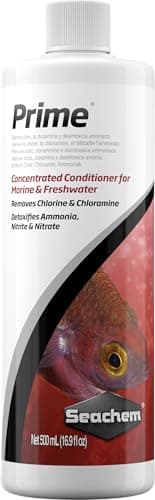
Seachem Prime
8.1 / 10
- Removes chlorine and chloramine from tap water per Seachem
- Detoxifies ammonia and nitrite as a short-term safety net
- Highly concentrated, so a small dose treats many gallons
- Used on the first fill and at every water change
$16.62
Current price · checked Sep 8, 2026
API
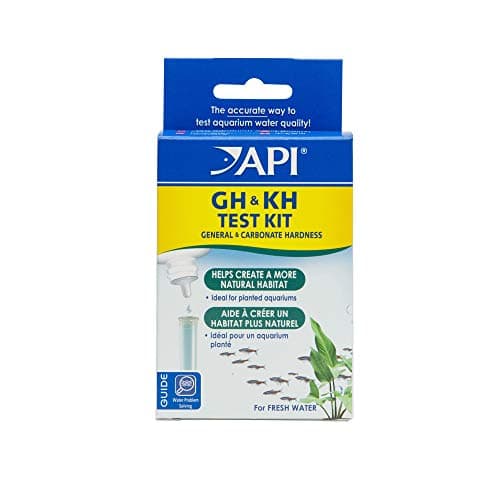
API GH & KH Test Kit
8.0 / 10
- Measures both general and carbonate hardness per API
- Two reagent bottles and two test tubes included
- Tracks the minerals shrimp build shells from
- Reads the numbers that guide remineralizing
$15.46
Current price · checked Sep 8, 2026
SaltyShrimp
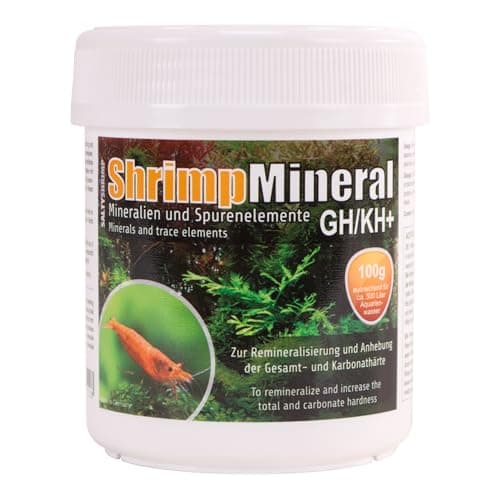
SaltyShrimp Shrimp Mineral GH/KH+ 100g
7.9 / 10
- Raises total hardness with shrimp-specific minerals per SaltyShrimp
- Designed for RO, rain, or desalinated water
- Adds trace elements alongside GH for molting
- Dosed to a target hardness, then remixed each change
$24.00
Current price · checked Sep 8, 2026
SoShrimp
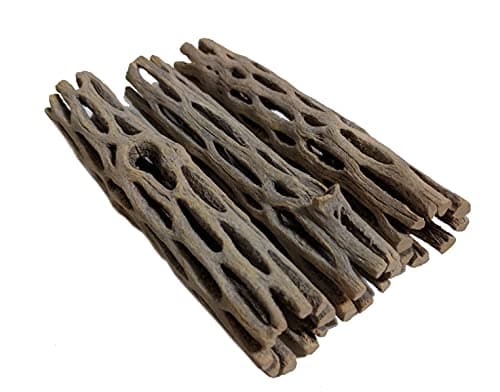
SoShrimp Natural Cholla Wood, 4-inch 3-pack
7.8 / 10
- Porous cholla that grows grazing biofilm per SoShrimp
- Hollow shapes give shrimplets a safe haven
- Cover that raises the survival rate of babies
- 4-inch pieces in a 3-pack for a nano tank
$9.95
Current price · checked Sep 8, 2026
The Short Answer
Cherry shrimp are not tiny fish, and the setup rules invert. Build for stable water first, not size. The Fluval SPEC 5-Gallon gives a real colony a steady home, or the Aqueon MiniBow 5 SmartClean does it for less. Filter with the hygger Double Sponge, because an air-driven sponge cannot suck up shrimplets and grows the biofilm they graze. Lay inert Aqua Natural Diamond Black Gravel, not a buffering aquasoil, since neocaridina want neutral, mineral-rich water. Cycle the tank fully with DrTim's bacteria and Seachem Prime before a single shrimp goes in. Track hardness with a GH and KH test kit, and if your tap runs soft — or you are starting from RO — rebuild the minerals with a shrimp-specific mineral salt before that water goes in. Add SoShrimp cholla wood for grazing cover. Copper kills shrimp, so read every fertilizer and medication label. Stability beats ideal numbers, so change only small amounts of temperature-matched water each week.
Every product on this list has been scored against the PetPal Gear Score, a weighted composite of expert consensus, observed effectiveness, animal safety, long-term durability, and value. Review method: Editorial synthesis of shrimp-keeping guidance — shrimp-keeping consensus (the neocaridina-keeping community and published invertebrate care standards), freshwater aquarium water-quality standards, and invertebrate husbandry consensus. Manufacturer documentation from Fluval, Aqueon, hygger, Aqua Natural, DrTim's Aquatics, Seachem, and SoShrimp was reviewed. Community consensus from shrimp-keeping forums was included as consensus, not quotation. No first-hand product testing — PetPalHQ does not run a testing lab.. Synthesized from 6+ expert sources.
A neocaridina shrimp tank fails, more often than not, for one reason: the keeper treats shrimp as tiny fish. They are not. Shrimp are invertebrates, and the chemistry rules that serve fish quietly invert for them. A buffering aquasoil that helps a planted fish tank pushes pH the wrong way for cherry shrimp. The carbon dioxide that grows an aquascape becomes a hazard. And copper, harmless to fish at trace doses, kills a shrimp colony outright. This is not a fish tank with smaller occupants — it is a different animal with a different rulebook.
So this guide builds livestock-first, around what the animals need rather than what a fish tank uses. Start with a stable box of water, because shrimp forgive bad numbers far less than fish do. Choose an inert floor that changes nothing about the water. Filter with an air-driven sponge, since a powered intake pulls tiny shrimplets to their death and starves them of the biofilm a sponge grows. Then cycle the tank completely, test the hardness the animals molt by, and only then add shrimp — slowly, and a few at a time.
The picks below are that kit, in setup order, not nine products ranked against each other. Each one does a single job the next step depends on, from the tank down to the cover the colony breeds in. Where a claim rests on a maker's listing or the shrimp-keeping community, that source is named rather than asserted. PetPalHQ does not run a testing lab, and the PetPal Shrimp-Readiness Score is a composite of expert opinion, not a measurement.
One rule sits above the whole build and never bends. Stability beats ideal numbers: a colony survives steady, slightly-off water far better than water that swings toward perfect and back. Cycle for weeks, drip-acclimate every new shrimp, and change only small amounts of temperature-matched water at a time. Cherry shrimp are the beginner's genus for exactly this reason — forgiving, tap-tolerant, and happy to breed when left alone to settle. Their cousins the caridina need RO water and active soil, and that is a different guide for a different day.
Head-to-Head Comparison
| Feature | Fluval SPEC Aquarium Kit, 5-Gallon | Aqueon LED MiniBow 5 SmartClean | hygger Aquarium Double Sponge Filter (M) | Aqua Natural Diamond Black Gravel, 10 lb | DrTim's Aquatics One and Only Freshwater | Seachem Prime | API GH & KH Test Kit | SaltyShrimp Shrimp Mineral GH/KH+ 100g | SoShrimp Natural Cholla Wood, 4-inch 3-pack |
|---|---|---|---|---|---|---|---|---|---|
| Role in the setup | The tank | Budget tank | Species-correct filter | Inert floor | Cycle starter | Water conditioner | Hardness test kit | Remineralizer | Grazing cover |
| When it comes into play | First — pick the box | First — budget path | Before water goes in | Before water goes in | During the fishless cycle | Every fill and change | Before and after stocking | When water is too soft | At scaping, then ongoing |
| What it does | Houses the colony | Houses it cheaply | Filters shrimp-safely | Stays chemically inert | Seeds the biofilter | Removes chlorine | Reads GH and KH | Adds shrimp minerals | Grows grazing biofilm |
| PetPal Shrimp-Readiness Score | 8.6 | 8.5 | 8.4 | 8.3 | 8.2 | 8.1 | 8.0 | 7.9 | 7.8 |
| Ongoing cost after purchase | Electricity | Electricity and media | Replacement sponges | One-time buy | Perishable, buy fresh | Used every change | Refill reagents | Re-dosed each change | Replaced as it softens |
| Check price | Amazon | Amazon | Amazon | Amazon | Amazon | Amazon | Amazon | Amazon | Amazon |
$153.99
Current price · checked Sep 8, 2026
- Rimless 5-gallon nano tank sized for a stable colony
- High-output 7000K LED for bolder color per Fluval
- Three-stage filtration in an integrated rear chamber
- Intake accepts a sponge prefilter to protect shrimplets
- Runs unheated at room temperature, 68 to 78°F
A shrimp colony needs a stable box of water before it needs anything else, and that is where the setup starts. The Fluval SPEC earns the first slot because it gives cherry shrimp a footprint large enough to hold steady. Fluval documents a 5-gallon rimless tank in etched glass with aluminum trim, a high-output 7000K LED rated for 20% brighter light, and a three-stage filtration section built into the back. Neocaridina run happily at room temperature, roughly 68 to 78°F, so no heater is required in a normal home.
Where it fits the setup: this is the container the whole colony lives and breeds in, and its volume is the point. A larger body of water swings temperature and chemistry more slowly, and shrimp survive slow change far better than fast change. The one honest caveat is the pump. The integrated intake moves water gently, but any powered intake can pull newborn shrimplets in, so you fit a sponge prefilter over it before a single shrimp goes in. If you want to weigh other nano tanks by volume, light, and filtration style first, our roundup of the best nano aquarium kits lays out the trade-offs.
The honest limits are cost and stocking discipline. This is a nicer kit than a bare tank, and it costs more, so a strict budget has a cheaper path below. A small tank also leaves little room for mistakes, which means light feeding and modest starting numbers matter more here than on a large aquarium. And a kit is the box, not the colony — the floor, filter, and water chemistry still have to be built around the animals. As the home, it is the stable foundation every later step depends on.
What We Love
- Volume large enough to keep chemistry steady for a colony
- Bright, color-boosting LED included in the kit
- Intake takes a sponge prefilter to protect shrimplets
- Runs unheated at typical room temperature
What Could Be Better
- Costs more than a bare tank or a budget kit
- Powered intake must be guarded with a sponge prefilter
- Small volume leaves little margin for feeding mistakes
The Verdict
Start here, with the box the colony lives in, and choose it for stability rather than a bigger number. Fit a sponge prefilter over the intake before adding shrimp, and keep the early stocking and feeding modest. Confirm the current price before buying.
Sources
- Fluval (Amazon product listing, SPEC 5-Gallon Aquarium Kit): high output 7000K LED, which generates 20% brighter lighting performance for noticeably bolder fish colors and plant growth; etched glass with high-quality aluminum trim; three-stage filtration; 5-gallon capacity
- Shrimp-keeping consensus (the neocaridina-keeping community and published invertebrate care standards): five gallons is a genuine home for a neocaridina colony because stability, not size, is the real constraint, and a rimless nano with a gentle pump section suits shrimp as long as the intake is guarded by a sponge prefilter
$72.95
Current price · checked Sep 8, 2026
- Complete starter kit at a lower entry price
- SmartClean water changes in under two minutes per Aqueon
- Includes hood, base, power filter, food, and conditioner
- Same small footprint that keeps a colony contained
- Power filter needs an added intake sponge for shrimplets
Not every beginner wants to spend on a premium nano, and this kit is the honest lower-cost path. The Aqueon MiniBow 5 SmartClean bundles nearly everything a first tank needs in one box. Aqueon documents a 5 gallon kit with a hood and elevated base, a power filter and cartridge, starter food, water conditioner, a setup guide, and SmartClean technology for water changes in under two minutes. For a keeper watching the budget, it lowers the cost of entry without dropping the volume a colony wants.
Where it fits the setup: it is the same role as the tank above at a lower price, and it makes one thing easy that shrimp reward. SmartClean speeds up the small, frequent water changes a shrimp tank lives on, which lowers the friction on the routine that keeps water stable. The catch is the filter. The included power filter has an open intake, and a powered intake will pull shrimplets in, so you slide an intake sponge over it before stocking. That single sponge turns a standard fish kit into a shrimp-safe one.
The honest limits are finish and filtration fit. The kit hood and lighting are basic next to a rimless setup, so this is a value choice, not a display piece. The bundled cartridge filtration also leans on replaceable media, which is a mild ongoing cost and, uncovered, the shrimplet hazard already noted. And like any kit, it supplies the box and the plumbing, not the floor, the water chemistry, or the cover the colony still needs. As the budget option, it gets a beginner a shrimp-ready home for less, once that intake is guarded.
What We Love
- Lower entry price with the volume a colony needs
- SmartClean eases the frequent small water changes
- Bundles conditioner, food, and filter in one box
- Simple to convert to shrimp-safe with an intake sponge
What Could Be Better
- Power filter intake must be sponged before stocking
- Basic hood and light next to a rimless kit
- Cartridge media is a mild recurring cost
The Verdict
Choose this when the budget rules out a premium nano but the colony still deserves a stable home. Fit an intake sponge over the power filter before adding shrimp, and lean on SmartClean to keep the small weekly changes easy.
Sources
- Aqueon (Amazon product listing, LED MiniBow 5 SmartClean): SmartClean Technology to perform water changes in less than 2 minutes; kit includes aquarium vessel, hood and elevated base, power filter, small filter cartridge, fish food, water conditioner and setup guide; 5 gallon
- Shrimp-keeping consensus (the neocaridina-keeping community and published invertebrate care standards): an all-in-one starter kit can house a shrimp colony as capably as a premium tank, provided the included power filter is fitted with an intake sponge so shrimplets are not drawn into it
$19.99
Current price · checked Sep 8, 2026
- Air-driven double sponge with no impeller intake
- Safe for fresh and salt water, size M, per hygger
- Sponge surface grows grazing biofilm for shrimp
- Twin sponges extend the biological media volume
- Runs on an air pump, not the tank's main pump
Here is where shrimp-keeping breaks from fish-keeping most visibly. A fish tank can run a powered filter without a second thought, but a shrimp tank should not, and the reason is both safety and food. The hygger Double Sponge Filter is air-driven, so bubbles from an air pump pull water gently through two sponges with no impeller anywhere. hygger documents an air-driven double sponge rated for fresh and salt water in size M. There is no suction slot for a shrimplet to be caught in.
Where it fits the setup: this is the filter the whole guide is built around, because it solves two shrimp-specific problems at once. First, safety — newborn shrimplets are the future of a colony, and an air-driven sponge cannot draw them in the way a powered intake can. Second, food — the sponge grows a living film of biofilm and microorganisms, and shrimp graze that surface constantly, so the filter doubles as a pasture. It is not a downgrade from a powered filter; for shrimp it is the correct tool. To compare sponge sizes, single versus double, and air-pump pairings, see our roundup of the best aquarium sponge filters.
The honest caveats are aesthetics, noise, and the extra part. A sponge filter sits visibly in the tank rather than hiding in the rim, so it is less tidy than an integrated pump. It also needs an air pump, which hums quietly and is one more piece of gear to buy and run. And the sponges need a periodic rinse in old tank water — never tap — so the bacteria and biofilm survive the cleaning. As the species-correct filter, it is the single clearest place this build refuses to copy a fish tank.
What We Love
- No powered intake, so shrimplets are never sucked in
- Grows biofilm the colony grazes on continuously
- Large, forgiving biological media across two sponges
- Inexpensive to buy and cheap to run
What Could Be Better
- Visible in the tank rather than hidden in the rim
- Needs a separate air pump that hums
- Sponges must be rinsed in tank water, never tap
The Verdict
Filter a shrimp tank with an air-driven sponge, not a powered unit, because it protects shrimplets and feeds the colony at once. Pair it with a quiet air pump, and rinse the sponges in old tank water so the bacteria survive. This is the shrimp-keeping default for good reason.
Sources
- hygger (Amazon product listing, Aquarium Double Sponge Filter): air-driven double sponge filter for both fresh water and salt water aquariums, size M
- Shrimp-keeping consensus (the neocaridina-keeping community and published invertebrate care standards): an air-driven sponge filter is the shrimp-keeping default because the intake causes zero shrimplet mortality and the sponge surface grows the biofilm shrimp graze on, so the filter feeds the colony as well as cleaning the water
$12.76
Current price · checked Sep 8, 2026
- Inert composition that does not alter water chemistry
- Large surface area seeds beneficial bacteria per Aqua Natural
- Dark color deepens red shrimp by contrast
- Safe for all aquatic life, 10 lb bag
- The opposite choice from a buffering aquasoil
The floor of a shrimp tank does one job and must avoid another, and this is where the planted-tank rulebook flips hardest. A planted fish tank often uses an active aquasoil that buffers pH down, but neocaridina want that pH left alone. Aqua Natural Diamond Black Gravel is inert, so it changes nothing about the water. The listing documents a natural composition rated safe for aquatic life, a large surface area that helps bacteria colonize, and a dark tone that contrasts with plants and stock. It ships as a 10-pound bag.
Where it fits the setup: this is the substrate, and choosing inert over active is the whole point for cherry shrimp. Active buffering soils are built for caridina shrimp, which need soft, acidic water, and they push a neocaridina tank the wrong way. An inert gravel keeps the water neutral and mineral-rich, which is where cherry shrimp thrive. The dark color is a bonus, not a trick — it makes red shrimp look deeper by contrast, but the color itself comes from selective breeding, not the floor. There is honesty in saying so plainly.
The honest caveats are that it feeds nothing and needs a rinse. An inert floor gives roots no nutrition, so live plants in this tank want root tabs or gentle water-column dosing rather than the substrate. Gravel also carries dust from the bag, so you rinse it until the water runs clear before it goes in, or the tank clouds on the first fill. And it is a permanent layer, the one thing hard to change once shrimp are living on it. As the floor, it is the inert base a neocaridina tank is built on.
What We Love
- Inert, so it never shifts the water the wrong way
- Large surface area builds beneficial bacteria
- Dark tone makes red shrimp read deeper
- Inexpensive for a permanent base layer
What Could Be Better
- Provides no nutrients for live plant roots
- Needs rinsing or it clouds the first fill
- A permanent layer, hard to change once stocked
The Verdict
Lay an inert dark gravel, never a buffering aquasoil, because neocaridina want their neutral water left alone while caridina do not. Rinse it until the water runs clear before filling, and add root tabs later if you keep rooted plants. Confirm the current price before buying.
Sources
- Aqua Natural (Amazon product listing, Diamond Black Gravel 10 lb): 100% natural composition ensures safety for all aquatic life; promotes good bacteria growth because of its large surface area; contrasts well with a planted tank; 10 lb
- Shrimp-keeping consensus (the neocaridina-keeping community and published invertebrate care standards): neocaridina do best on an inert substrate that does not alter water chemistry, since active buffering aquasoils are meant for caridina, and a dark floor deepens red coloration through contrast rather than any change to the shrimp
$19.99
Current price · checked Sep 8, 2026
- Live nitrifying bacteria to seed the biofilter per DrTim's
- Supports a full fishless cycle before any shrimp
- Helps convert ammonia to nitrite to nitrate
- Works in the sponge media and the substrate
- A consumable with a shelf life — buy it fresh
A new tank is chemically hostile until bacteria colonize it, and shrimp are the last animals that will forgive a shortcut here. DrTim's One and Only seeds the nitrifying bacteria that make water safe. The listing documents a live bacteria culture for freshwater that helps establish the biofilter converting ammonia to nitrite and then to nitrate. You dose it after the water is conditioned and the sponge filter is running, as part of getting the nitrogen cycle going with no livestock in the tank.
Where it fits the setup: a bacteria starter does not replace cycling, it steadies and speeds it. The nitrogen cycle is the reason no tank can be stocked on day one — the bacteria that neutralize waste have to grow first, and until they do, ammonia climbs to lethal levels. Shrimp are especially sensitive to that ammonia, so a fishless cycle to zero is not optional for them. A bottled culture gives the colonies a head start on the sponge and the gravel, and you still confirm the cycle with a test kit rather than a calendar. For how bottled cultures compare, see our roundup of the best aquarium bacteria starters.
The honest caveats are patience and freshness. Bottled bacteria shorten the wait but do not erase it — a tank still needs weeks and still needs testing to show ammonia and nitrite rise and then fall to zero. Trusting the bottle over the test is how beginners lose their first shrimp. The product is also a live consumable with a shelf life, so a bottle stored warm for a year may do far less than a fresh one. As the cycle-builder, it is the biological on-ramp, real but never a way around the weeks a shrimp tank owes.
What We Love
- Seeds the biofilter that makes water shrimp-safe
- Speeds and steadies a fishless cycle
- Colonizes the sponge and substrate where bacteria live
- Inexpensive for the cycling window it covers
What Could Be Better
- Shortens the cycle but never removes the weeks of waiting
- Still requires a test kit to confirm the cycle is done
- A perishable culture that fades if stored old or warm
The Verdict
Dose this to give a new shrimp tank's cycle a head start after the water is conditioned and the sponge is running. It shortens the wait but does not end it, so let a test kit, not the bottle, tell you the tank is safe. Shrimp forgive an uncycled tank least of all.
Sources
- DrTim's Aquatics (Amazon product listing, One and Only Freshwater): a live nitrifying bacteria additive for freshwater aquariums, dosed to seed the biofilter that converts ammonia to nitrite and then to nitrate as a new tank cycles
- Shrimp-keeping consensus (the neocaridina-keeping community and published invertebrate care standards): shrimp tolerate an uncycled tank far worse than fish do, so a full fishless cycle to zero ammonia and zero nitrite is non-negotiable before any shrimp are added, and a bottled bacteria culture gives that cycle a head start
$16.62
Current price · checked Sep 8, 2026
- Removes chlorine and chloramine from tap water per Seachem
- Detoxifies ammonia and nitrite as a short-term safety net
- Highly concentrated, so a small dose treats many gallons
- Used on the first fill and at every water change
- One bottle lasts a nano tank a very long time
Tap water carries chlorine that kills fish, bacteria, and shrimp alike, which makes conditioning the water the step before life. Seachem Prime treats tap water before it ever touches the tank. Seachem documents a concentrated conditioner that removes chlorine and chloramine, detoxifies ammonia and nitrite, and doses in small amounts per gallon, so one bottle treats a large volume. It is the one product here you reach for forever, because every water change reintroduces tap water that needs treating first.
Where it fits the setup: chlorine and chloramine are added to municipal water precisely to kill microorganisms, so untreated tap water damages the nitrifying bacteria a tank runs on as surely as it harms the shrimp. Conditioning is not optional, and it comes before the bacteria starter and long before livestock. Shrimp do best on small weekly changes of 10 to 20%, always with temperature-matched, conditioned water, so a bottle of this sits beside the tank as part of the routine. To compare conditioners and dosing styles, see our roundup of the best aquarium water conditioners.
The honest caveats are measuring and expectations. It is concentrated, so you measure rather than pour, and a small syringe helps on a nano tank where the cap is a rough guide. It also has a mild sulfur smell that is normal and not a sign the bottle has spoiled. And it conditions water only — it does not cycle a tank, remove hardness, or replace a water change. As the water-safety step, it is cheap insurance you use for the life of the colony, and a small bottle goes a very long way on a shrimp tank.
What We Love
- Neutralizes chlorine and chloramine before water goes in
- Detoxifies ammonia and nitrite as a short-term net
- Very concentrated, so the cost per gallon is low
- One bottle serves a nano tank for a long time
What Could Be Better
- Must be measured, since the cap over-doses a nano tank
- Has a normal sulfur smell some keepers dislike
- Conditions water only — it does not cycle or soften it
The Verdict
Treat every drop of tap water with this, on the first fill and at every change, for the life of the tank. Measure the small dose rather than pouring, and match the new water's temperature to the tank so the colony never feels a swing.
Sources
- Seachem (Amazon product listing, Prime): a concentrated conditioner that removes chlorine and chloramine and detoxifies ammonia and nitrite, dosed at a small volume per gallon so one bottle treats a large amount of water; used on setup and at every water change
- Shrimp-keeping consensus (the neocaridina-keeping community and published invertebrate care standards): shrimp thrive on small, frequent water changes with temperature-matched, conditioned water, so a dechlorinator is used on every top-up because chlorine harms shrimp and the beneficial bacteria the tank depends on
$15.46
Current price · checked Sep 8, 2026
- Measures both general and carbonate hardness per API
- Two reagent bottles and two test tubes included
- Tracks the minerals shrimp build shells from
- Reads the numbers that guide remineralizing
- Community target ranges near GH 6 to 8, KH 2 to 5
You cannot manage what you cannot measure, and shrimp live and molt by their hardness. The API GH and KH Test Kit reads the two numbers that matter most for cherry shrimp. API documents a kit with two reagent bottles and two test tubes that measures general hardness and carbonate hardness in fresh water. General hardness is the mineral content shrimp build their shells from, and carbonate hardness buffers the pH steady, so together they describe whether the water will keep a colony healthy.
Where it fits the setup: this is the instrument that turns guesswork into a routine. The neocaridina-keeping community commonly publishes target ranges near GH 6 to 8, KH 2 to 5, and pH 7.0 to 7.6, framed as consensus rather than a hard rule. What matters is that molting tracks minerals — shrimp that fail to molt cleanly, a problem keepers describe as the "white ring of death," are often short on the general hardness their shells need. That is community consensus, not a veterinary diagnosis, but it is why testing GH comes before adding shrimp. For other test kits and how they compare, see our roundup of the best aquarium water test kits.
The honest caveats are technique and scope. A liquid drop test asks you to count drops and read a color change, which takes a minute and a steady hand but costs far less per test than strips. This kit measures hardness only, so a full picture still wants an ammonia, nitrite, and nitrate test during cycling. And a number on its own does nothing — the value is acting on it, by remineralizing soft water or leaving hard water alone. As the diagnostic, it is how you learn your own water instead of copying a stranger's.
What We Love
- Reads both hardness numbers shrimp health depends on
- Cheaper per test than disposable strips
- Guides whether to remineralize or leave water alone
- Simple two-reagent routine once learned
What Could Be Better
- Drop-counting takes more effort than a test strip
- Covers hardness only, not the cycling parameters
- A reading is useless unless you act on it
The Verdict
Test GH and KH before you stock and after every remineralizing change, because shrimp molt by their minerals. Treat the community ranges as guidance rather than gospel, and act on the reading — soft water gets remineralized, hard water gets left alone.
Sources
- API (Amazon product listing, GH & KH Test Kit): 2 bottles of testing solution and 2 test tubes; measures general hardness (GH) and carbonate hardness (KH) in fresh water aquariums
- Shrimp-keeping consensus (the neocaridina-keeping community and published invertebrate care standards): neocaridina molt-cycle health tracks general hardness because shells are built from those minerals, with commonly published community ranges near GH 6 to 8, KH 2 to 5, and pH 7.0 to 7.6, and molting failures often trace to mineral imbalance rather than any single cause
$24.00
Current price · checked Sep 8, 2026
- Raises total hardness with shrimp-specific minerals per SaltyShrimp
- Designed for RO, rain, or desalinated water
- Adds trace elements alongside GH for molting
- Dosed to a target hardness, then remixed each change
- 100 g tin covers a nano tank for a long time
Soft tap water and RO water share one flaw for shrimp: they lack the minerals a colony builds shells from. SaltyShrimp GH/KH+ rebuilds that mineral content to a shrimp-ready level. The listing documents a mineral and trace-element supplement that raises total hardness, formulated for neutral-pH water like RO, rain, or desalinated water, in a 100-gram tin. You mix it into fresh water to a target hardness before that water goes into the tank, so the colony always sits in a known, repeatable range.
Where it fits the setup: this is the tool that gives you total control, and whether you need it is the honest fork of the whole build. If your tap water is already suitably hard and copper-free, you can condition it and skip remineralizing entirely. If your tap runs very soft, or you choose RO water for control, this salt is what turns near-empty water into shrimp habitat. The decision is not taste — it is a test result, which is why the hardness kit above comes first. Measure your tap, then choose the route it points to.
The honest caveats are precision and consistency. Remineralizing asks you to dose to a number and check it with the test kit, so it adds a step to every water change. And you have to mix consistently, because swinging hardness between changes is exactly the instability shrimp hate. As the water-builder, it is optional power for anyone whose tap water will not do the job on its own.
What We Love
- Turns RO or soft water into shrimp-ready habitat
- Adds trace elements shrimp use to molt
- Gives total, repeatable control of hardness
- One tin lasts a nano tank a long time
What Could Be Better
- Unnecessary if your tap water is already suitably hard
- Adds a measured mixing step to every water change
The Verdict
Remineralize when your tap water is too soft or you run RO for control, and skip it when hard tap already does the job. Let the hardness test, not habit, make the call, and mix to the same target every time.
Sources
- SaltyShrimp (Amazon product listing, Shrimp Mineral GH/KH+ 100g): fortifies aquarium water with essential minerals and trace elements vital for shrimp; specifically designed for neutral pH environments like RO, rain, or desalinated water; raises total hardness; 100 g
- Shrimp-keeping consensus (the neocaridina-keeping community and published invertebrate care standards): the RO-or-distilled plus remineralizer route gives total control of the water a colony sits in, while keepers with suitably hard tap water can skip it entirely, so the honest step is to test the tap before deciding
$9.95
Current price · checked Sep 8, 2026
- Porous cholla that grows grazing biofilm per SoShrimp
- Hollow shapes give shrimplets a safe haven
- Cover that raises the survival rate of babies
- 4-inch pieces in a 3-pack for a nano tank
- Breaks down slowly and is replaced over time
Cover is not decoration in a shrimp tank; it is survival, and this last piece is where a colony learns to hide and graze. SoShrimp Cholla Wood gives shrimp both at once. The listing documents natural cholla in varied shapes that provide a safe haven and hiding places, sold as 4-inch pieces in a 3-pack. The wood is hollow and porous, so shrimplets shelter inside it while the surface grows a film they eat, which is exactly the two jobs cover does in a colony.
Where it fits the setup: this is the furniture, and in a shrimp tank furniture is functional. A bare tank leaves shrimplets exposed and underfed, while cholla, moss, and botanicals together grow the biofilm that carries a colony between feedings. That matters because feeding is meant to be light — biofilm does most of the work, and overfeeding a shrimp tank invites planaria and pest outbreaks rather than faster growth. Cover lets you feed sparingly and still keep the colony fed, which is the balance a healthy tank runs on. Low-light plants like moss and anubias pair naturally with it.
The honest caveats are preparation and lifespan. Cholla floats when dry, so you boil or soak it until it sinks before it goes in, and it may tint the water faintly tea-colored, which is harmless and fades. It is also organic, so it slowly softens and breaks down over months and is replaced as it goes, more consumable than fixture. And it is cover, not a filter or a feeder on its own — it works alongside the sponge and light feeding. As the last piece, it turns a safe, cycled box of water into a place a colony actually breeds.
What We Love
- Grows grazing biofilm that feeds shrimplets
- Hollow shapes shelter babies and raise survival
- Pairs naturally with moss and low-light plants
- Inexpensive and easy to add to any layout
What Could Be Better
- Must be boiled or soaked until it sinks first
- Can tint the water faintly and harmlessly
- Breaks down over months and needs replacing
The Verdict
Add cholla and cover last, because in a shrimp tank hides and biofilm are what let a colony breed. Soak it until it sinks before it goes in, feed lightly and let the biofilm carry the rest, and replace it as it slowly breaks down.
Sources
- SoShrimp (Amazon product listing, Natural Cholla Wood 3-pack): natural cholla wood in unique, natural shapes that provides a safe haven and hiding places for shrimp and small aquatic life; 4-inch pieces, 3-pack
- Shrimp-keeping consensus (the neocaridina-keeping community and published invertebrate care standards): cholla wood, moss, and botanicals grow the biofilm shrimplets graze on and give a colony the cover that lets babies survive, so in a shrimp tank cover translates directly into breeding success
How We Score
Formula
PetPal Shrimp-Readiness Score = (Expert Consensus × 0.35) + (Setup-Sequence Fit × 0.25) + (Water-Stability & Invert-Safety Design × 0.20) + (Value × 0.20)
Score Factors
- Expert Consensus · 35%
- Synthesized from shrimp-keeping consensus (the neocaridina-keeping community and published invertebrate care standards), freshwater aquarium water-quality standards, invertebrate husbandry consensus, and manufacturer documentation. The PetPal Shrimp-Readiness Score is a composite of expert opinion — PetPalHQ does not run a testing lab.
- Setup-Sequence Fit · 25%
- How directly the item advances a correct neocaridina build in order — choosing a stable tank, laying an inert floor, filtering shrimp-safely, conditioning and cycling the water, testing hardness, remineralizing when needed, and adding cover — rather than how it performs as a standalone product ranked against rivals.
- Water-Stability & Invert-Safety Design · 20%
- Alignment with invertebrate-specific principles — inert chemistry over buffering soil, an air-driven intake that spares shrimplets, a fully cycled biofilter, mineral hardness matched to molting needs, copper avoidance, and stability over ideal numbers. Nothing is stocked until the tank is cycled to zero ammonia and nitrite.
- Value · 20%
- Cost relative to the item's role in the sequence, including ongoing consumables like conditioner, bacteria, remineralizer, and replacement sponges, and how much of the healthy-colony outcome the item is responsible for. This kit is the equipment cost, not the ongoing cost of running a shrimp tank.
| Rank | Product | Score |
|---|---|---|
| #1 | Fluval Fluval SPEC Aquarium Kit, 5-Gallon | 8.6 |
| #2 | Aqueon Aqueon LED MiniBow 5 SmartClean | 8.5 |
| #3 | hygger hygger Aquarium Double Sponge Filter (M) | 8.4 |
| #4 | Aqua Natural Aqua Natural Diamond Black Gravel, 10 lb | 8.3 |
| #5 | DrTim's Aquatics DrTim's Aquatics One and Only Freshwater | 8.2 |
| #6 | Seachem Seachem Prime | 8.1 |
| #7 | API API GH & KH Test Kit | 8.0 |
| #8 | SaltyShrimp SaltyShrimp Shrimp Mineral GH/KH+ 100g | 7.9 |
| #9 | SoShrimp SoShrimp Natural Cholla Wood, 4-inch 3-pack | 7.8 |
When NOT to Buy
A neocaridina tank is a patient, involved project. It is the wrong setup for anyone who wants a finished display in a weekend. Shrimp need a tank fully cycled to zero ammonia and zero nitrite. That takes weeks, and you confirm it by testing rather than guessing. They also want small weekly water changes of 10 to 20%. The new water is always temperature-matched and conditioned first. Above all, they want steady numbers, not numbers nudged toward perfect and back. A colony that is neglected, or fussed over, fades quietly rather than failing loudly. That slow decline is a harder disappointment to diagnose.
Restraint and honesty rule out the usual shortcuts. Shrimp are not tiny fish. The fish-tank instincts to buffer the substrate, run a strong filter, and dose freely are the exact moves that harm a colony. Copper is the sharpest example. Trace copper that fish tolerate is lethal to shrimp. So every fertilizer and medication label gets read before it touches the water. New shrimp are drip-acclimated slowly rather than dumped in. Tankmates get honesty too, because shrimplets are bite-sized to almost any fish. A shrimp-only tank is the surest way to grow a colony. If your plan is a busy community tank with a few shrimp for color, expect the shrimp to become food.
Finally, the honest scope note. This kit is the equipment, not the full cost of running a shrimp tank. Conditioner, bacteria, remineralizer, replacement sponges, cholla, the shrimp, and electricity are the ongoing bill. Some gear this build assumes but treats lightly. You want an air pump for the sponge filter, and low-light plants if you keep a planted look. Moss and anubias grow fine in inert gravel with a little dosing. If you want to light a planted shrimp tank properly, our roundup of the best planted-aquarium lights is the honest place to start. Confirm current price and availability on every item before buying, since prices and sellers move over time.
Frequently Asked Questions
- Can cherry shrimp live in a five-gallon tank?
- Yes, and a five-gallon holds a real colony, not just a token pair. The limit is stability, not gallons. A small volume swings temperature and chemistry faster than a large one, so it punishes neglect harder. Keep the starting numbers modest, feed lightly, and let the parameters hold steady. A well-run nano can grow a colony into the dozens within a few months. The honest catch is that a tiny tank leaves little room for error, so steady weekly attention matters more here than it would on a large aquarium.
- Why avoid a powered filter for shrimp?
- Two reasons, and both favor a sponge. First, a powered intake creates suction that draws newborn shrimplets into the filter, where they die. Adult shrimp are usually fine, but a breeding colony lives or dies by its babies. Second, a sponge grows a thick layer of biofilm, and shrimp graze on it all day, so the filter doubles as a food source. A powered filter offers neither the safety nor the grazing surface. If a tank already runs powered intake filters, a fitted intake sponge covers the suction risk, though it still will not feed the colony the way a dedicated sponge does.
- Do cherry shrimp need RO water?
- Not always, and this is the fork every beginner has to test first. Neocaridina tolerate a wide range of tap water, and many colonies thrive in it once it is simply conditioned. Test your tap for hardness and copper before deciding anything. If it runs very hard, very soft, or carries copper, the RO-plus-remineralizer route gives you total control. If it sits in a moderate range and is copper-free, plain conditioned tap can work fine and saves real money. The point is to measure your own water rather than copy a stranger's recipe from a forum.
- Why are my shrimp not breeding?
- Healthy neocaridina breed readily, so a stall usually points to one of four things. Water that sits too cool slows them down, and the mid-seventies Fahrenheit range tends to encourage broods. Unstable or mineral-poor water interrupts the molt cycle that breeding depends on. Too little cover and too little biofilm leave females underfed and exposed. And a freshly moved colony often pauses for weeks before it settles into a new tank. Fix the stability, feed lightly, give them dense cover, and wait. Most healthy colonies begin breeding once the tank stops changing under them.
- What fish are safe with cherry shrimp?
- Few, and the honest answer is that shrimp are safest with no fish at all. Newborn shrimplets are bite-sized to almost anything with a mouth, so most fish treat a breeding colony as a snack bar. If you do want tankmates, the smallest peaceful nano fish are the usual choice, paired with heavy cover like moss and cholla so babies can hide. Even then, expect noticeably fewer surviving shrimplets than in a shrimp-only tank. A dedicated shrimp tank is the surest way to grow a colony, and it happens to make the simplest first setup too.
Bottom Line
Buy the box for stability, not size. The Fluval SPEC gives a cherry-shrimp colony a steady home, and the Aqueon MiniBow 5 SmartClean does the same job on a smaller budget — because shrimp forgive swings far less than fish do.
Filter with an air-driven sponge, never a powered intake. The hygger Double Sponge cannot suck up shrimplets and grows the biofilm the colony grazes, which is why it is the shrimp-keeping default rather than a compromise.
Lay an inert floor, not a buffering soil. Aqua Natural Diamond Black Gravel changes nothing about the water and makes red shrimp read deeper, while active aquasoil belongs in a caridina tank, not a neocaridina one.
Cycle completely, then manage hardness. DrTim's bacteria and Seachem Prime make the water safe, a GH and KH test kit reads the minerals shrimp molt by, and a shrimp-specific mineral salt rebuilds soft or RO water to a shrimp-ready range before it ever reaches the tank.
Give them cover and keep copper out. SoShrimp cholla wood grows grazing biofilm and hides molting shrimp, and every fertilizer and medication label gets checked, because copper that fish shrug off wipes out a shrimp colony.
Sources & Methodology
Methodology
PetPal Shrimp-Readiness Score = (Expert Consensus × 0.35) + (Setup-Sequence Fit × 0.25) + (Water-Stability & Invert-Safety Design × 0.20) + (Value × 0.20)
Expert review sources
- Shrimp-keeping consensus — the neocaridina-keeping community and published invertebrate care standards
- Published freshwater aquarium water-quality standards for cycling, hardness, and dechlorination
- Invertebrate husbandry consensus on molting, mineral hardness, and copper toxicity
- Fluval and Aqueon — SPEC and MiniBow 5 SmartClean nano kit product documentation
- hygger and Aqua Natural — sponge filter and inert gravel documentation
- Seachem, DrTim's Aquatics, and SoShrimp — conditioner, bacteria, and cholla documentation
Community sources
- Shrimp-keeping forums and communities — neocaridina care, hardness, and breeding consensus
- Freshwater aquarium communities — nano tank cycling and setup consensus
Prices and specs verified July 16, 2026.
About the author
Nick Miles is the chief editor of PetPalHQ. This beginner neocaridina shrimp-tank setup sequence and its kit are editorial synthesis of shrimp-keeping consensus (the neocaridina-keeping community and published invertebrate care standards), published freshwater aquarium water-quality standards, invertebrate husbandry consensus, and manufacturer documentation — PetPalHQ does not run a testing lab. The PetPal Shrimp-Readiness Score is a composite of expert opinion, not a measurement. Sources are cited by name throughout.
PetPalHQ is a participant in the Amazon Services LLC Associates Program. We may earn commissions from qualifying purchases — at no extra cost to you.
More Guides
Aquarium
Best Nano & Betta Aquarium Kits 2026: 5-Gallon All-in-One Tanks Compared
Aquarium
Best Aquarium Sponge Filters for Shrimp, Fry, Betta & Quarantine (2026)
Aquarium
Best Aquarium Bacteria Starters for New Freshwater Tanks (2026)
Aquarium
Best Aquarium Water Test Kits for Freshwater Fish Tanks (2026)
Aquarium
Best Aquarium Water Conditioner for Freshwater Tanks (2026)
Aquarium