Aquarium
Best Aquarium Water Conditioner for Freshwater Tanks (2026)
Seachem Prime is the default routine conditioner for most freshwater tanks. Add API Stress Coat for new arrivals or quarantine, Fritz Complete for emergency-grade ammonia detoxification, Tetra AquaSafe Plus for retail availability, and API Aqua Essential as a one-bottle simplification.
By Nick Miles · Updated August 7, 2026 · 11 min read
PetPalHQ is reader-supported. We may earn a commission from qualifying Amazon purchases at no extra cost to you.
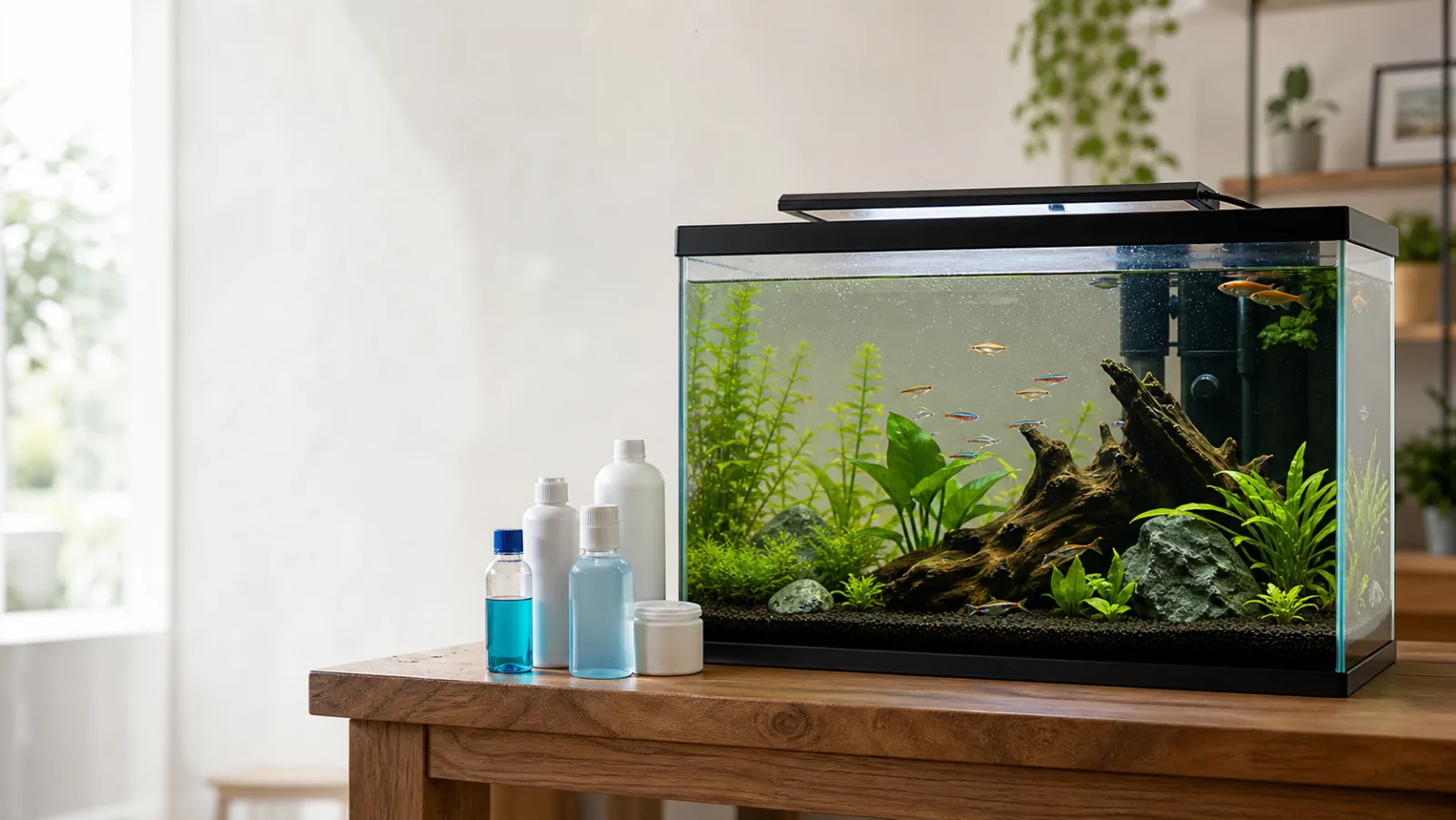
Evidence at a Glance
Seachem Prime
Concentrated routine conditioner — one 5 mL capful per 50 gallons, neutralizes chlorine and chloramine, detoxifies ammonia and nitrite for 24 to 48 hours.
Sources: Seachem manufacturer documentation, Aquarium Co-Op, r/aquariums hobbyist consensus
Verified May 4, 2026
API Stress Coat
Aloe vera-based slime-coat support — strongest formulation in this list for new arrivals, transport stress, and quarantine.
Sources: API manufacturer documentation, Aqueon stress-coat guidance
Verified May 4, 2026
Fritz Complete
All-in-one conditioner with documented emergency-stabilizer claims — Fritz says it detoxifies chlorine, chloramine, ammonia, nitrite, and nitrate.
Sources: Fritz Aquatics manufacturer documentation, Reef2Reef hobbyist threads
Verified May 4, 2026
Our Picks
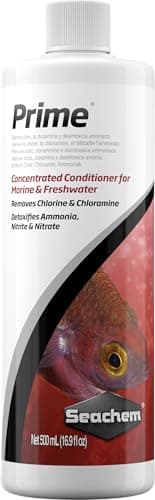
Seachem
Seachem Prime
9.3 / 10
- 5x concentrated — one 5 mL capful per 50 US gallons
- Removes chlorine and chloramine
- Detoxifies ammonia, nitrite, and nitrate for 24 to 48 hours
- Safe for invertebrates and biological filtration
$16.62
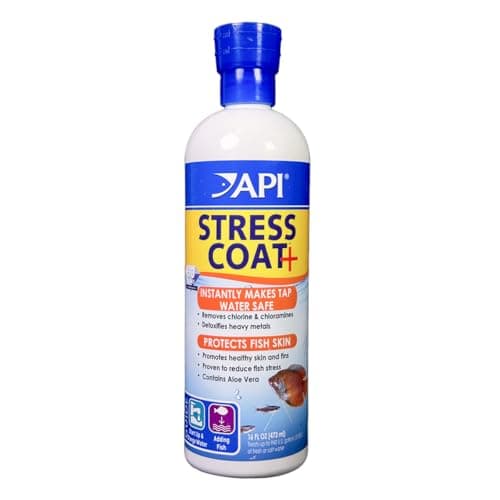
API
API Stress Coat
8.5 / 10
- Aloe vera replaces and protects the natural slime coat
- Removes chlorine and binds heavy metals
- Trusted formulation, unchanged for decades
- Recommended for new fish, transport, and quarantine
$10.98
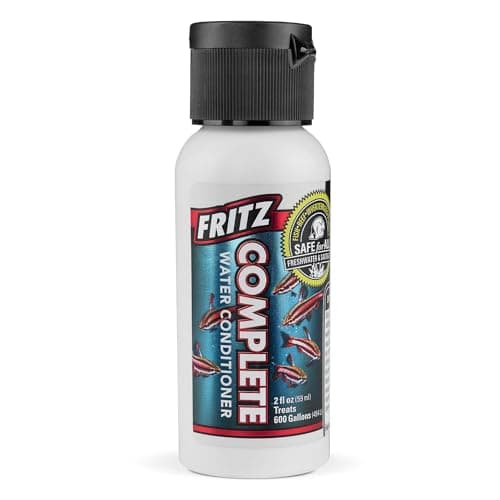
Fritz Aquatics
Fritz Complete
8.4 / 10
- Detoxifies chlorine, chloramine, ammonia, nitrite, and nitrate
- Suitable for freshwater, saltwater, reef, and planted tanks
- Manufactured by Fritz Aquatics in Texas, USA
- Strong reef-keeper visibility and trust
$9.99
Tetra
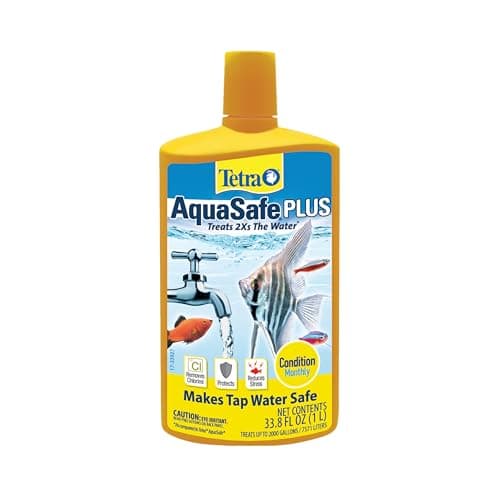
Tetra AquaSafe Plus
7.8 / 10
- Removes chlorine and chloramine in seconds
- Binds heavy metals
- Beginner-friendly dosing line on the bottle
- Available at every major chain retailer
$22.29
API
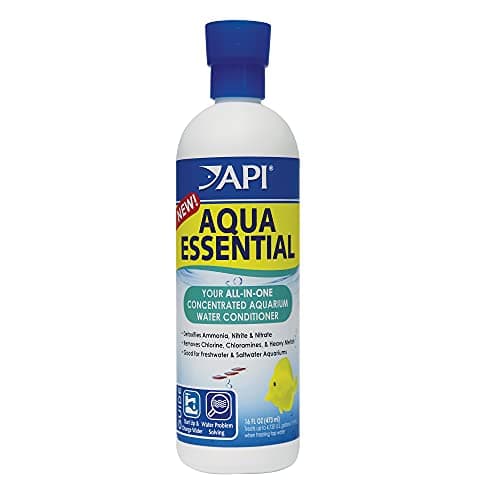
API Aqua Essential
7.6 / 10
- Highly concentrated all-in-one conditioner
- Removes chlorine, chloramine, and heavy metals
- API documentation describes ammonia, nitrite, and nitrate handling
- Beginner-friendly dosing on the bottle
$14.00
The Short Answer
Seachem Prime is the default routine water conditioner for most freshwater hobbyists — one capful treats up to 50 gallons, neutralizes chlorine and chloramine, and detoxifies ammonia and nitrite for up to 48 hours after dosing. Add API Stress Coat for new arrivals or quarantine tanks where slime-coat support matters, Fritz Complete as an alternative one-bottle option with broad emergency-stabilizer claims, Tetra AquaSafe Plus when retail availability matters, and API Aqua Essential as a simplified one-bottle option for beginners who want lighter cognitive load.
Every product on this list has been scored against the PetPal Gear Score, a weighted composite of expert consensus, observed effectiveness, animal safety, long-term durability, and value. Review method: Editorial synthesis of manufacturer documentation from Seachem, Fritz, Tetra, and API; CDC and EPA chlorine/chloramine guidance; Merck Veterinary Manual; and hobbyist consensus on r/aquariums and r/PlantedTank.. Synthesized from 9+ expert sources.
Tap water in most U.S. municipalities contains chlorine or chloramine. These are disinfectants that protect human drinking water but are harmful to fish and to the nitrifying bacteria your aquarium depends on for biological filtration. The CDC notes utilities commonly use either disinfectant and may switch between them seasonally. The EPA confirms that aquatic pets should not be kept in water containing chlorine or chloramine without treatment. A water conditioner is the most basic chemistry product a tap-water beginner actually needs.
Beyond chlorine, modern conditioners also bind heavy metals (copper, lead, zinc) that leach from household plumbing. The broader-spectrum products detoxify ammonia and nitrite — a useful safety margin during cycling or unexpected ammonia spikes. The picks below are the five conditioners most consistently recommended across credible aquarium-care references. They are synthesized from manufacturer documentation, regulatory guidance, veterinary references, and hobbyist consensus.
PetPalHQ does not run a testing lab. The PetPal Gear Score is a composite of expert opinion, not a measurement. For the underlying water-quality science, see the Aquarium Water Quality, Cycling and Testing for Beginners hub. For the bacteria-starter side of the same problem, see Best Aquarium Bacteria Starters for New Freshwater Tanks.
Head-to-Head Comparison
| Feature | Seachem Prime | API Stress Coat | Fritz Complete | Tetra AquaSafe Plus | API Aqua Essential |
|---|---|---|---|---|---|
| Treats Per Bottle (typical retail size) | ~5,000 gal (500 mL) | ~480 gal (16 oz) | ~250 gal (small bottle) | ~2,000 gal (33.8 oz) | ~960 gal (16 oz) |
| Detoxifies Ammonia | Yes — 24 to 48h | No | Yes — Fritz documents | No | Yes — API documents |
| Slime-Coat Support | No | Yes — aloe vera | No | Partial | No |
| Reef Safe | Yes | Yes | Yes — explicit claim | Partial | Yes |
| Beginner Friendly | Yes | Yes | Yes | Yes — easiest dose | Yes |
| Check price | Amazon | Amazon | Amazon | Amazon | Amazon |
$16.62
- 5x concentrated — one 5 mL capful per 50 US gallons
- Removes chlorine and chloramine
- Detoxifies ammonia, nitrite, and nitrate for 24 to 48 hours
- Safe for invertebrates and biological filtration
Seachem Prime is the most-cited routine water conditioner across the aquarium-care references we surveyed. Aquarium Co-Op's beginner content treats it as the default routine conditioner. The r/aquariums starter wiki names it as the consensus first conditioner. Seachem's product page lists exactly the chemistry the CDC and EPA flag as urgent: chlorine, chloramine, and heavy metals.
The dose efficiency is the practical reason it earns the top spot. At one capful (5 mL) per 50 US gallons, a single 500 mL bottle treats roughly 5,000 gallons of replacement water. Seachem's documentation also notes that Prime detoxifies ammonia and nitrite for up to 48 hours after dosing. That is a meaningful safety margin during cycling, fish-in emergencies, or unexpected ammonia spikes.
What the spec sheet does not tell you: Prime can confuse standard total-ammonia test kits. Seachem's own support documentation explicitly warns that Nessler-based ammonia kits will not read accurately after dosing. Salicylate kits must be interpreted carefully. If you dose Prime and then test ammonia and see a reading, the reading may reflect detoxified (bound) ammonia rather than active toxic ammonia. Seachem's guidance is to use a free-ammonia test (such as the Seachem Ammonia Alert badge) when Prime is in active use.
What We Love
- Most concentrated conditioner in this list — lowest cost-per-gallon
- Detoxifies ammonia and nitrite, not just chlorine
- Safe for biological filtration during cycling
- Works on freshwater and saltwater
- Reef-safe and invertebrate-safe at recommended dose
What Could Be Better
- Confuses standard ammonia test kits — need free-ammonia testing alongside
- Sulfurous odor when first opened (harmless, but distinctive)
- Easy to overdose by eyeballing the cap on small tanks
The Verdict
Buy Seachem Prime as your routine water conditioner if you can only buy one. The 9.3 score reflects strong consensus across Aquarium Co-Op, r/aquariums, and Seachem's own documentation. Pair it with a Seachem Ammonia Alert badge if you want reliable free-ammonia readings.
$10.98
- Aloe vera replaces and protects the natural slime coat
- Removes chlorine and binds heavy metals
- Trusted formulation, unchanged for decades
- Recommended for new fish, transport, and quarantine
API Stress Coat occupies a different niche from Seachem Prime. It is not the most efficient routine chlorine remover and it does not detoxify ammonia. But its aloe vera-based slime-coat support is the strongest in this list. API's product page positions it specifically for new fish arrivals, netting damage, transport, and basic conditioning where slime-coat support matters. Aqueon's stress-coat guidance reaches the same conclusion.
Where it earns inclusion: a quarantine tank, a hospital tank, the bag a new fish arrived in, or any moment a fish has been moved or stressed. The logic for beginners is straightforward — "my fish were stressed, this protects them." The chemistry behind that logic is documented by API and acknowledged by Aqueon.
What the spec sheet does not tell you: Stress Coat is a support product, not a substitute for routine conditioning of every water change. For routine water changes on an established tank, Seachem Prime is more economical per gallon. The right way to use Stress Coat is targeted: new arrivals, quarantine cycles, transport days, and aggression-recovery situations.
What We Love
- Aloe vera slime-coat support is the strongest in this list
- Excellent for new arrivals and quarantine tanks
- Familiar API brand with broad retail availability
- Cheap relative to Prime per ounce
What Could Be Better
- Does not detoxify ammonia or nitrite
- Higher cost-per-gallon than Prime as a routine conditioner
- Aloe content can briefly cloud water on first dose
The Verdict
Choose API Stress Coat for new arrivals, transport, quarantine, or any tank where slime-coat support genuinely matters. For routine water changes on an established tank, Prime is the more economical choice.
$9.99
- Detoxifies chlorine, chloramine, ammonia, nitrite, and nitrate
- Suitable for freshwater, saltwater, reef, and planted tanks
- Manufactured by Fritz Aquatics in Texas, USA
- Strong reef-keeper visibility and trust
Fritz Complete is the most direct competitor to Seachem Prime. Fritz's product page lists the same broad chemistry profile — chlorine, chloramine, heavy metals, ammonia, nitrite, nitrate. Threads on r/ReefTank and Reef2Reef regularly position it as the Fritz alternative for keepers who already buy Fritz bacteria, salt, and supplements.
Where Fritz Complete distinguishes itself: nitrate detoxification claims that go beyond what Prime promises, and a slightly milder odor profile when freshly opened. Fritz also notes explicit compatibility with reef and planted tanks.
What the spec sheet does not tell you: as with Seachem Prime, "detoxified" ammonia is still readable on standard total-ammonia test kits. Fritz's documentation does not promise that treated ammonia disappears from a test reading. It only promises the ammonia is rendered non-toxic temporarily while the biofilter catches up. Treat Fritz Complete the same way you would treat Prime: as support chemistry, not as proof the cycle has caught up.
What We Love
- Broad detox profile including nitrate
- Mild odor compared to Prime
- Strong visibility in reef-keeper communities
- Often available at lower per-bottle cost than Prime in small sizes
What Could Be Better
- Less concentrated than Prime per mL
- Less mass-market visibility outside specialist retailers
- Detoxified ammonia still reads on standard test kits
The Verdict
Choose Fritz Complete if you already use Fritz bacteria or supplements, want a mild-odor alternative to Prime, or want documented nitrate detoxification claims as part of a routine conditioner.
$22.29
- Removes chlorine and chloramine in seconds
- Binds heavy metals
- Beginner-friendly dosing line on the bottle
- Available at every major chain retailer
Tetra AquaSafe Plus is the conditioner most beginning hobbyists encounter first, because Tetra ships it with starter kits and stocks it at every major chain retailer. For a 5- to 20-gallon starter tank, Tetra's product page covers what matters: it removes chlorine and chloramine and binds heavy metals.
Where it earns inclusion: convenience. Many new keepers will not order from a specialist brand and will not wait for shipping. AquaSafe Plus is the conditioner you can buy at PetSmart, Petco, Walmart, or any local big-box pet retailer the same day you set up the tank.
Where it loses ground is at scale and during ammonia events. Tetra positions AquaSafe Plus as a routine conditioner and dechlorinator. It does not claim ammonia or nitrite detoxification. During cycling or a fish-in emergency, switch to Prime or Fritz for the broader detox profile. For routine water changes on a single small tank, AquaSafe Plus is a defensible budget pick.
What We Love
- Available at every major chain retailer
- Effective chlorine and chloramine removal
- Beginner-friendly dosing
- Trusted brand with high beginner recognition
What Could Be Better
- Does not detoxify ammonia or nitrite
- Higher per-gallon cost than concentrates
- Less useful during ammonia spikes or cycling problems
The Verdict
A reasonable choice when retail availability matters more than maximum concentration — buying at PetSmart or Petco today rather than waiting for shipping. Upgrade to Prime or Fritz Complete once the tank is past 20 gallons or the cycle is uncertain.
$14.00
- Highly concentrated all-in-one conditioner
- Removes chlorine, chloramine, and heavy metals
- API documentation describes ammonia, nitrite, and nitrate handling
- Beginner-friendly dosing on the bottle
API Aqua Essential is API's answer to Seachem Prime — a concentrated all-in-one conditioner with documented broad-spectrum claims. API's product page covers the same chemistry profile: chlorine, chloramine, heavy metals, ammonia, nitrite, and nitrate. The marketing language is more aggressive than the science fully supports, but the underlying formulation is reasonable.
Where it earns inclusion: simplicity. For a beginner who has standardized on the API ecosystem (Master Test Kit, Quick Start bacteria, Stress Coat for arrivals), Aqua Essential is the natural-fit routine conditioner for that product family. That ecosystem coherence has real value for new keepers who do not want to mix and match across brands.
What the spec sheet does not tell you: like Prime and Fritz Complete, "detoxified" ammonia from Aqua Essential still reads on standard total-ammonia test kits. The product is not a substitute for cycling, regular water changes, or restrained feeding. Treat it as a routine conditioner with a useful safety margin during cycling or unexpected ammonia events. It is not a one-bottle solution to bad husbandry.
What We Love
- Fits naturally into an all-API beginner setup
- Concentrated dosing — better value than Tetra AquaSafe Plus per gallon
- Documented broad-spectrum chemistry
- Beginner-friendly bottle markings
What Could Be Better
- Marketing language can oversell what one bottle handles
- Less hobbyist-community visibility than Prime
- Detoxified ammonia still reads on standard test kits
The Verdict
Choose API Aqua Essential if you have standardized on the API ecosystem and want a single concentrated conditioner that fits with the API Master Test Kit and other API products. Otherwise, Seachem Prime offers the broader hobbyist-community track record.
How We Score
Formula
PetPal Gear Score = (Expert Consensus × 0.30) + (Chemistry Coverage × 0.25) + (Animal Safety × 0.20) + (Documentation × 0.15) + (Value × 0.10)
Score Factors
- Expert Consensus · 30%
- Synthesized from Seachem, Fritz, Tetra, and API manufacturer documentation; CDC and EPA chlorine/chloramine guidance; Merck Veterinary Manual; and hobbyist consensus on r/aquariums and r/PlantedTank. The PetPal Gear Score is a composite of expert opinion — PetPalHQ does not run a testing lab.
- Chemistry Coverage · 25%
- Breadth of detoxification — chlorine, chloramine, heavy metals, ammonia, nitrite, nitrate — and reliability of those claims relative to manufacturer documentation.
- Animal Safety · 20%
- Safety across freshwater, saltwater, reef, planted, and invertebrate systems at the recommended dose.
- Documentation · 15%
- Clarity of dosing, compatibility notes, and honest framing of what the product does and does not do.
- Value · 10%
- Cost-per-treated-gallon at the most common retail size.
| Rank | Product | Score |
|---|---|---|
| #1 | Seachem Seachem Prime | 9.3 |
| #2 | API API Stress Coat | 8.5 |
| #3 | Fritz Aquatics Fritz Complete | 8.4 |
| #4 | Tetra Tetra AquaSafe Plus | 7.8 |
| #5 | API API Aqua Essential | 7.6 |
When NOT to Buy
Skip a chemical water conditioner if you use a reverse-osmosis (RO) or RO/DI system that already removes chlorine, chloramine, and heavy metals upstream — conditioner residue in RO water is unnecessary and can cloud the chemistry of remineralized batches. Skip if your municipal water source uses ozone instead of chlorine (common in some Pacific Northwest and European utilities) — the CDC and EPA both note this is a real variation. Check your utility's annual water-quality report before buying. And do not stack multiple overlapping conditioners hoping the chemistry adds up — it does not, and combining a routine conditioner with an emergency ammonia detoxifier can confuse your test readings without helping the underlying problem.
Frequently Asked Questions
- How much water conditioner should I add per gallon?
- Always follow the bottle dosing. Standard 1x conditioners (Tetra AquaSafe Plus, API Stress Coat) typically call for 5 mL per 10 gallons. Concentrates (Seachem Prime, Fritz Complete, API Aqua Essential) call for substantially less — Seachem Prime is 5 mL per 50 gallons. Overdosing the standard products is rarely dangerous; overdosing concentrates can suppress dissolved oxygen, especially in small tanks.
- Can I overdose Seachem Prime?
- Seachem says Prime is safe at up to 5 times the recommended dose. That gives a generous margin during ammonia emergencies. Above that, dissolved oxygen can drop noticeably — increase aeration if you are dosing heavily during a crisis. The Merck Veterinary Manual lists low dissolved oxygen alongside high ammonia as the two parameters most likely to directly kill fish. Heavy dosing is something to monitor.
- Do I need a conditioner for an RO water tank?
- Generally no. Reverse-osmosis systems remove chlorine, chloramine, and heavy metals upstream, so a chemical conditioner is unnecessary and can complicate the chemistry of remineralized batches. RO/DI water for reef tanks is the same — skip the conditioner. If you mix RO with tap water for partial dechlorination, condition only the tap-water portion.
- How long does water conditioner last after opening?
- Most liquid conditioners are stable for 2 to 3 years sealed and 12 to 18 months opened, per typical manufacturer guidance. If a bottle smells off, has changed color, or has separated visibly, replace it. Concentrated products are generally more shelf-stable than dilute ones because they have less water to spoil.
- Why does my ammonia test still show ammonia after using Seachem Prime?
- Because most beginner ammonia kits read total ammonia, including the detoxified (bound) fraction. Seachem's own support documentation explicitly warns that Nessler-based kits will not read accurately after dosing Prime. Salicylate kits must be interpreted carefully. The detoxified ammonia is non-toxic to fish but still measurable. To read only the toxic free-ammonia fraction, use a free-ammonia test such as the Seachem Ammonia Alert badge. The same caveat applies to Fritz Complete and API Aqua Essential.
- Can I use a saltwater conditioner in a freshwater tank?
- Yes — every conditioner in this list is rated for both freshwater and saltwater. The detoxifying chemistry is identical; the differences are in marketing and in the specific compatibility claims for reef or planted tanks.
- Fritz Complete vs Seachem Prime — which should I use?
- Both are full-spectrum concentrates that neutralize chlorine and chloramine and temporarily detoxify ammonia, so either can be your only bottle. Prime is this guide's default for its 5x concentration and the lowest cost per gallon in the list; the trade-off is its well-known sulfur odor. Fritz Complete's case is a milder smell, documented nitrate-detoxification claims, and a natural fit if you already run Fritz bacteria or supplements. There is no water-safety reason to prefer one over the other — pick one, dose by its own label since their concentrations differ, and stay consistent so you always know how your water was treated.
- Is Stress Coat the same thing as a water conditioner?
- Yes — API Stress Coat is a full water conditioner that neutralizes chlorine and chloramine and binds heavy metals, plus an aloe vera additive marketed for slime-coat support. What it does not do is detoxify ammonia or nitrite, which is the extra safety margin the broader-spectrum concentrates like Prime, Fritz Complete, and Aqua Essential provide. That is the split our picks are built around: Stress Coat for new arrivals, transport days, and quarantine, and a detoxifying concentrate on hand for cycling tanks and ammonia surprises. Owning both is reasonable; treating Stress Coat as "not a real conditioner" is a myth.
Bottom Line
Get Seachem Prime as your default routine conditioner. The 9.3 score reflects strong consensus across Aquarium Co-Op, r/aquariums, and Seachem's own documentation; the 5x concentration delivers the lowest cost-per-gallon in this list.
Get API Stress Coat for new arrivals, transport days, or quarantine tanks. The aloe vera slime-coat support is unmatched in this list — even though it does not detoxify ammonia.
Get Fritz Complete if you already use Fritz bacteria or supplements, want a mild-odor alternative to Prime, or want documented nitrate detoxification claims as part of routine conditioning.
Get Tetra AquaSafe Plus if retail availability matters more than concentration — when you need a conditioner from PetSmart or Petco the same day.
Get API Aqua Essential if you have standardized on the API ecosystem and want a single concentrated bottle that pairs with the API Master Test Kit.
Running RO or RO/DI water instead of tap? You can usually skip the conditioner entirely — our RO/DI aquarium water systems guide covers when a membrane replaces the bottle.
Sources & Methodology
Methodology
PetPal Gear Score = (Expert Consensus × 0.30) + (Chemistry Coverage × 0.25) + (Animal Safety × 0.20) + (Documentation × 0.15) + (Value × 0.10)
Expert review sources
- Seachem — Prime product documentation
- Seachem — FAQ on Prime and ammonia test kits
- Seachem — AmGuard product documentation
- Fritz Aquatics — Fritz Complete product documentation
- Tetra — AquaSafe Plus product documentation
- API — Stress Coat product documentation
- API — Aqua Essential product documentation
- CDC — About Water Disinfection with Chlorine and Chloramine (Feb 2024)
- EPA — Chloramines in Drinking Water (March 2026)
- Merck Veterinary Manual — Environmental Diseases of Aquatic Animals in Aquatic Systems
- Aqueon — Water Conditioners product line guidance
Community sources
- r/aquariums — routine conditioner consensus threads
- r/PlantedTank — Prime and Fritz Complete discussions
- Reef2Reef — Fritz Complete reef-keeper threads
- Aquarium Co-Op — beginner conditioner guidance
Prices and specs verified May 4, 2026.
About the author
Nick Miles is the chief editor of PetPalHQ. The picks above are editorial synthesis of expert consensus and hobbyist community feedback — PetPalHQ does not run a testing lab. The PetPal Gear Score is a composite of expert opinion, not a measurement. Sources are cited by name throughout.
PetPalHQ is a participant in the Amazon Services LLC Associates Program. We may earn commissions from qualifying purchases — at no extra cost to you.
More Guides
Aquarium
Aquarium Water Quality, Cycling and Testing for Beginners (2026 Guide)
Aquarium
Best Aquarium Water Test Kits for Freshwater Fish Tanks (2026)
Aquarium
Best Aquarium Bacteria Starters for New Freshwater Tanks (2026)
Aquarium
Aquarium Filtration & Maintenance Systems for Clear, Healthy Water (2026 Guide)
Aquarium
Best Aquarium Canister Filters (2026)
Aquarium
Best Aquarium Cleaning Tools for Better Water Quality (2026)
Aquarium