Aquarium
Aquarium Water Quality, Cycling and Testing for Beginners (2026 Guide)
What to test, what the numbers mean, how cycling works, and what to do before bad water quality hurts your fish.
By Nick Miles · Updated May 5, 2026 · 16 min read
PetPalHQ is reader-supported. We may earn a commission from qualifying Amazon purchases at no extra cost to you.
Every product on this list has been scored against the PetPal Gear Score, a weighted composite of expert consensus, observed effectiveness, animal safety, long-term durability, and value. Review method: Editorial synthesis of veterinary, university extension, and trade-association guidance — University of Florida IFAS, Merck Veterinary Manual, Oklahoma State Extension, OATA, CDC, EPA, USGS, and Aqueon.. Synthesized from 7+ expert sources.
Water that looks clean can still kill fish. The University of Florida IFAS Extension, the Merck Veterinary Manual, and the Ornamental Aquatic Trade Association (OATA) all agree on that one point: a clear tank is not proof of a safe tank. What matters is what is dissolved in the water — ammonia, nitrite, nitrate, oxygen, the chlorine or chloramine your municipal utility added, and the buffering chemistry that keeps pH from crashing overnight.
This guide synthesizes the consensus across veterinary, university-extension, and trade-association sources for the beginner's most common questions: what to test, what the numbers mean, how the nitrogen cycle actually works, and what to do before bad water quality starts harming your fish. PetPalHQ does not run a testing lab — the recommendations below are editorial synthesis of expert guidance, with sources cited by name throughout.
What does the aquarium nitrogen cycle actually mean?
Fish waste, uneaten food, and decaying plant matter all produce ammonia, which is acutely toxic even at very low concentrations. Merck's freshwater reference table lists 0 mg/L as the only safe target. The cycle is the biological process that converts this waste — through two groups of nitrifying bacteria — into less dangerous forms before it can harm fish.
In a healthy aquarium, two groups of nitrifying bacteria handle this waste. The first group converts ammonia into nitrite. Nitrite is also toxic, in part because it disrupts oxygen transport in the bloodstream. A second group of bacteria converts nitrite into nitrate, which is far less toxic and is removed primarily through water changes and (in planted tanks) plant uptake.
Those bacteria do not appear instantly. They live mainly on filter media, substrate, and other wet surfaces inside the tank — not floating in the water column. The University of Florida IFAS Extension notes that a new biofilter often needs six to eight weeks to build sufficient bacteria, and Aqueon's "The Nitrogen Cycle" article frames the process as commonly taking three to eight weeks under typical beginner conditions.
A useful one-line definition: cycling is the process of building enough nitrifying bacteria to process waste faster than it can harm fish. Running an empty tank for 24 to 48 hours is not cycling. Adding a bottle of bacteria starter is not, by itself, cycling. The cycle is confirmed only when ammonia and nitrite test at zero and nitrate is being produced — Merck's "Routine Health Care of Fish" reviewer is explicit on that point.
What water-quality parameters does every beginner need to understand?
Seven parameters appear consistently across every credible aquarium-care reference: ammonia, nitrite, nitrate, pH, GH, KH, and chlorine or chloramine. None of them is optional knowledge for a new fishkeeper — understanding each one is the practical baseline for keeping fish alive through the cycling process and beyond.
Ammonia
Ammonia (NH3 / NH4+) is the most acutely dangerous parameter in a home aquarium. Merck Veterinary Manual lists ammonia under 0 mg/L as the freshwater reference range, and IFAS explains that the toxic un-ionized fraction (the part that actually harms fish) rises sharply as pH and temperature climb. Standard ammonia tests typically measure total ammonia, so a "low" reading at high pH and warm temperature can still be dangerous.
Universal rule: in a settled freshwater tank, any non-zero ammonia reading is a problem to investigate the same day.
Nitrite
Nitrite (NO2-) is the intermediate step in the nitrogen cycle. OATA, Aqueon, and Merck all agree the only safe target is zero. Nitrite interferes with the oxygen-carrying capacity of fish blood, causing the brown-blood disease that hits cycling tanks and overstocked systems hardest. Like ammonia, any positive reading in a settled tank is a same-day investigation.
Nitrate
Nitrate (NO3-) is the end product of the cycle. It is far less toxic than ammonia or nitrite, but it is not harmless. Merck's freshwater table lists under 20 mg/L as the normal reference range; brand guidance from Aqueon describes under 50 ppm as a community-tank upper limit; LiveAquaria uses under 50 ppm for general community tanks and under 30 ppm for planted or sensitive setups.
The safest editorial wording, given the source disagreement, is this: aim to keep nitrate under 20 ppm where practical. Many hardy beginner community tanks remain healthy below 40 to 50 ppm, but sensitive species — discus, shrimp, soft-water tetras — may need lower. Nitrate climbs steadily over time and is removed primarily through water changes.
pH
pH measures how acidic or alkaline the water is. For most beginner-friendly captive-bred community fish, stability matters far more than chasing a specific number. Aqueon repeatedly warns against chasing pH with up/down chemicals, and the Oklahoma State University Extension links unstable pH to chronic stress and immune suppression.
Typical community-tank starting points, as published by Aqueon, sit roughly between pH 6.5 and 7.8. Species-specific targets can be narrower — for example, soft-water tetras and shrimp prefer the lower end, and African cichlids prefer the high end — but a stable pH inside a sensible range outperforms a "perfect" number you cannot hold.
GH and KH
Two distinct measurements, often confused. GH (general hardness) is the concentration of calcium and magnesium in the water — the minerals shrimp and snails need for shells and that livebearers need for general health. KH (carbonate hardness, also called alkalinity) is the buffering reserve that keeps pH from crashing. The IFAS Extension notes that nitrifying bacteria require alkalinity and may stop functioning effectively when total alkalinity drops below 20 mg/L, and Oklahoma State Extension warns that low-alkalinity waters can swing pH dramatically across a 24-hour cycle.
Brand guidance for community tanks varies. Aqueon's chart cites roughly 4 to 8 dKH and 4 to 12 dGH; other kit guides suggest 3 to 6 degrees. The safer wording for beginners: moderate hardness and buffering suit many beginner community tanks, but exact targets should match your species and your source water.
Chlorine and chloramine
The CDC says U.S. utilities commonly use either chlorine or chloramine and may switch between them seasonally. The EPA explains that chloramine forms when ammonia is added to chlorine — a deliberate choice utilities make for longer-lasting disinfection. Both CDC and EPA are direct that aquatic pets should not be kept in water containing these disinfectants without treatment.
Critical beginner detail: letting tap water sit overnight may reduce chlorine, but the CDC explicitly notes it does not remove chloramine. A water conditioner that handles chloramine specifically is the only reliable answer.
Temperature
Temperature is species-specific. Most tropical community tanks sit in the 72 to 82 °F range, but USGS notes warmer water holds less dissolved oxygen than cool water, which is why heat waves can cause sudden fish kills in established tanks that were previously stable. Aqueon's summer-care guidance is to improve gas exchange (surface agitation, air stones) when ambient temperature climbs.
A reliable thermometer and a thermostatically-controlled heater are baseline equipment, not luxuries.
Oxygenation
The Merck Veterinary Manual flags low dissolved oxygen and high ammonia as the two parameters most likely to directly kill fish, and lists more than 5 mg/L dissolved oxygen as a general freshwater reference. Oxygen enters water primarily at the surface, which is why surface agitation, sponge filters, and air stones matter — they create gas exchange.
Warm water, overstocking, and heavy CO2 injection in planted tanks all reduce dissolved oxygen. Aqueon's heat-stress guidance is unambiguous: increase aeration during hot weather.
What are the universal rules vs. typical community tank targets?
This table distinguishes between universal rules — life-or-death chemistry that does not vary regardless of species — and typical targets, which are useful starting points that depend on what you keep. Ammonia and nitrite have no safe positive value; parameters like nitrate and pH have species-dependent ranges. Sources for the table: Merck Veterinary Manual, OATA, Aqueon, IFAS, LiveAquaria, USGS.
| Parameter | Universal rule | Typical beginner community target | Species caveat |
|---|---|---|---|
| Ammonia (NH3 / NH4+) | Must be 0 mg/L in a settled tank | 0 mg/L | None — zero is the rule |
| Nitrite (NO2-) | Must be 0 mg/L in a settled tank | 0 mg/L | None — zero is the rule |
| Nitrate (NO3-) | Lower is better; not harmless | Under 20 ppm where practical; under 50 ppm acceptable for hardy community fish | Under 30 ppm for planted/discus/sensitive species |
| pH | Stability beats perfection | 6.5 to 7.8 typical | Soft-water species lower; Rift Lake cichlids higher |
| KH / Alkalinity | Don't let it crash; nitrifiers need buffering | Roughly 4 to 8 dKH | Higher for African cichlids; lower for blackwater setups |
| GH | Match species and source water | Roughly 4 to 12 dGH | Shrimp and livebearers care most |
| Chlorine / Chloramine | Must be neutralized before water touches the tank | 0 — neutralized by conditioner | None — universal |
| Temperature | Stability matters; warmer water holds less O2 | 72 to 82 °F for most tropical community tanks | Coldwater species lower; some cichlids higher |
| Dissolved Oxygen | Low O2 is acutely dangerous | Above 5 mg/L | Heavily-stocked or warm tanks need more aeration |
How often should you test aquarium water?
Authority sources disagree on this and the disagreement is not trivial. Aqueon recommends testing ammonia and nitrite every two to three days during cycling, OATA says routine testing is ideally at least weekly, Merck's pet-owner schedule calls for water tests every two weeks, and PetMD says established aquariums should be tested at least monthly and more often when tanks are new or stressed.
The beginner-safe synthesis is straightforward:
- During cycling: test ammonia and nitrite every two to three days. If fish are already in the tank, test daily.
- Newly stocked tanks (first month after cycling): test weekly.
- Stable established tanks: weekly is the safe default. Drop to every two weeks only when the tank is mature, lightly stocked, and you understand its behavior.
- After a problem (cloudy water, fish death, behavior change, appetite drop): test the same day. Aqueon and PetMD both call out behavior change as a same-day testing trigger.
- Before and after water changes: test source water if ammonia, nitrate, or unusual disinfectants might be present. The CDC notes utilities switch between chlorine and chloramine seasonally, which is the kind of change that catches established keepers off guard.
How do the different aquarium test methods compare?
Four major categories of testing exist. Liquid kits, tablets, and strips all rely on color comparison — the differences are in precision, speed, and reagent technique. PetMD and OATA both note those distinctions, and the choice of method matters most during cycling and diagnosis.
Liquid reagent kits. PetMD writes that liquid tests are more accurate; OATA agrees. The widely-used API Freshwater Master Test Kit covers pH, high-range pH, ammonia, nitrite, and nitrate. Liquid kits are the recommended primary tool for cycling and diagnosis — slower per test, but harder to misread on the parameters that matter most.
Test strips. Faster and more beginner-friendly, but less precise. API's own strip-instruction PDF specifically directs users to a liquid pH kit when fine-grained low-range readings are needed. Strip kits are useful for routine quick-screen checks; they are not the tool for cycling a new tank.
Digital meters. Hanna Instruments describes their digital pH testers as giving numeric readings with built-in temperature compensation and calibration. Pens make sense when you inject CO2, mix remineralized water, keep soft-water or shrimp species, or struggle with color charts. They require periodic calibration and proper storage.
Continuous monitors. Seneye frames continuous monitors as always-on devices for selected parameters — pH, temperature, free ammonia — with alerts and graphing. Editorial inference: monitors are strongest when paired with manual chemistry testing, because monitor coverage is narrower than a full panel and consumable slides add ongoing cost.
For a deeper breakdown of specific test kits, see the linked spoke article "Best Aquarium Water Test Kits for Freshwater Fish Tanks."
What are the most common beginner mistakes in aquarium water quality?
Most aquarium failures trace back to a small set of mistakes that the consensus literature names repeatedly. Understanding them before they happen is far cheaper than diagnosing them after fish die — and nearly every mistake on this list is preventable with basic testing discipline and a correct understanding of how cycling works.
New tank syndrome. Ammonia and nitrite spikes during the first few weeks because the biofilter has not yet matured. Aqueon flags this as a major beginner failure mode. The fix: stock slowly, feed lightly, test every two to three days, and use water changes to keep ammonia and nitrite under control while bacteria establish.
pH crash and old tank syndrome. When KH (alkalinity) is depleted over time without water changes, pH can drop suddenly. Oklahoma State Extension explicitly connects low alkalinity to large pH swings, and Merck's hazard table lists very low total hardness alongside the use of distilled water as a chronic-mortality risk factor. Routine partial water changes restore buffering.
Chloramine mistakes during water changes. Letting tap water sit overnight may reduce chlorine but does not remove chloramine, per the CDC. Use a chloramine-rated conditioner on every water change.
Overfeeding, overstocking, under-filtering. All three drive ammonia upward. Aqueon's "Dangers of Uneaten Fish Food" article frames uneaten food as a leading cause of preventable ammonia spikes. Feed only what fish consume in two to three minutes.
Cleaning filter media the wrong way. OATA warns that rinsing biological filter media under chlorinated tap water can kill the bacteria you spent six weeks growing. Rinse media in tank water removed during a water change instead.
Using distilled or pure RO water without remineralization. Merck's hazard table lists very low total hardness as a chronic-mortality risk factor. Pure RO water needs remineralization before it goes into a fish tank.
If something is going wrong and you are not sure what to test, the IFAS Extension's general guidance applies: test ammonia first, nitrite second, pH and temperature third. That order matches the toxicity hierarchy.
Frequently Asked Questions
- What does "cycling a fish tank" actually mean?
- Cycling is the process of building enough nitrifying bacteria, mostly on filter media, to convert ammonia to nitrite and then to nitrate as fast as the tank produces it. The University of Florida IFAS Extension notes a new biofilter often needs six to eight weeks. A tank that has only been running for a day or two is not cycled, regardless of how clear the water looks.
- How do I know when my aquarium is fully cycled?
- Test the water — Merck Veterinary Manual is explicit that cycling is confirmed by readings, not elapsed time. Ammonia and nitrite must read zero, and nitrate must be present, before you can call a tank cycled. Until those three conditions are met simultaneously across two consecutive tests, the cycle is still in progress.
- Is 0.25 ppm ammonia safe, or is that already a problem?
- It is a problem to investigate. Merck's reference table lists 0 mg/L as the safe target, and OATA agrees. The toxic free-ammonia fraction rises with pH and temperature, so 0.25 ppm in a warm tank with pH around 8 is meaningfully more dangerous than the same number in a cool tank with pH around 6.5. Investigate the same day.
- What is a safe nitrate level for a beginner community tank?
- Sources differ. Merck lists under 20 mg/L as the freshwater reference range; Aqueon describes anything above 50 ppm as undesirable; LiveAquaria uses under 50 ppm for general community tanks and under 30 ppm for planted or sensitive setups. Aim for under 20 ppm where practical, accept up to 40 to 50 ppm in hardy community tanks, and target under 30 ppm if you keep planted, discus, or sensitive species.
- What is the difference between GH and KH?
- GH (general hardness) measures calcium and magnesium — the minerals shrimp and livebearers need. KH (carbonate hardness, or alkalinity) measures the buffering capacity that keeps pH stable. A tank can be high in one and low in the other. The IFAS Extension specifically links low KH to nitrifier failure and pH instability, which makes KH the more urgent of the two to monitor.
- Do I need to test chlorine if I already use a conditioner?
- Not usually, but test if you switch utilities, switch conditioners, notice fish reacting after a water change, or learn that your municipal supplier has switched between chlorine and chloramine. Per the CDC, utilities do switch seasonally, which is exactly the kind of change a routine test catches and a routine assumption misses.
- Are test strips good enough, or do I need a liquid kit?
- For routine weekly checks on an established tank that you understand well, strips are fine. For cycling a new tank, diagnosing a problem, or keeping species sensitive to ammonia or nitrate, a liquid kit is the more reliable choice — PetMD writes that liquid tests are more accurate, and API's own strip-instruction PDF tells users to switch to a liquid pH kit for fine-grained readings. The full breakdown of test kits is in our Best Aquarium Water Test Kits spoke guide.
- Can I rinse my filter media under the tap?
- No — at least not biological filter media. OATA specifically warns that chlorine and chloramine in tap water can kill the beneficial bacteria living on filter media. Rinse biological media in tank water removed during a water change. Mechanical pre-filter sponges that exist only to catch debris can be rinsed in tap water if you accept that they are not part of your biofilter.
- What should the ppm numbers look like at each stage of cycling?
- A fishless cycle follows a predictable curve. Ammonia rises first — fishless cyclers typically dose it to roughly 2 to 4 ppm. After one to three weeks the first bacteria group establishes, ammonia starts falling, and nitrite spikes, often higher and for longer than the ammonia peak. Then the second group catches up: nitrite falls while nitrate climbs steadily as the end product. The finish line is the one Merck describes — ammonia 0, nitrite 0, nitrate present, held across consecutive tests. A fish-in cycle follows the same curve but must be kept flat instead: test every day or two, and use water changes the same day ammonia or nitrite reaches the 0.25 ppm action threshold, because with fish present the spikes themselves are the danger.
- What kind of water should I put in a fish tank?
- For most freshwater community tanks, tap water treated with a chloramine-rated conditioner is the standard answer — it already carries the minerals (GH) and buffering (KH) that fish and nitrifying bacteria need. Letting tap water sit overnight is not a substitute, because the CDC notes chloramine does not dissipate that way. Pure RO, RO/DI, or distilled water is stripped of those minerals — Merck's hazard table lists very low hardness as a chronic-mortality risk — so remineralize it before use or blend it with conditioned tap water. Bottled spring water is an expensive, inconsistent middle ground whose chemistry changes brand to brand. Whatever the source, match the new water's temperature to the tank and condition it before it touches the filter.
Bottom Line
Ammonia and nitrite should always read zero in a settled freshwater tank — Merck Veterinary Manual, OATA, and Aqueon all agree there is no safe positive value.
Cycling is a process measured in weeks, not hours. The University of Florida IFAS Extension notes that a new biofilter often needs 6 to 8 weeks to build sufficient nitrifying bacteria.
Chlorine and chloramine in U.S. tap water are harmful to fish and to filter bacteria. CDC and EPA both confirm chloramine cannot be removed simply by letting water sit.
Test the water, not the calendar. PetMD, OATA, and Aqueon all define a cycled tank by parameter readings, not by elapsed days.
Stability beats perfection. Aqueon and the Oklahoma State University Extension consistently warn that swinging pH or KH causes more harm than living slightly outside an idealized number.
Manual testing tells you what happened; a monitor tells you the moment it changes. The cross-site smart aquarium monitors guide on Smart Home Explorer covers continuous pH, temperature, and free-ammonia tracking that pairs with the liquid-kit discipline in this hub.
All articles in this guide
Best Aquarium Water Test Kits for Freshwater Fish Tanks (2026)
For most freshwater keepers, an API Freshwater Master Test Kit handles ammonia, nitrite, nitrate, and pH; keep Tetra EasyStrips for fast weekly screening once the tank is stable, and skip a digital pH pen unless you inject CO2 or keep soft-water species.
12 min read
Best Aquarium Bacteria Starters for New Freshwater Tanks (2026)
DrTim's One and Only and FritzZyme 7 Freshwater are the science-forward picks for a fishless cycle; Tetra SafeStart Plus and API Quick Start are the mass-market options. None of them replaces dechlorinator, testing, or patience.
11 min read
Best Aquarium Water Conditioner for Freshwater Tanks (2026)
Seachem Prime is the default routine conditioner for most freshwater tanks. Add API Stress Coat for new arrivals or quarantine, Fritz Complete for emergency-grade ammonia detoxification, Tetra AquaSafe Plus for retail availability, and API Aqua Essential as a one-bottle simplification.
11 min read
Why Is My Aquarium Water Cloudy? How to Diagnose and Fix It in 2026
White haze, green tint, or brown murk? Diagnose cloudy aquarium water by color first, then fix the cause — not just the symptom.
13 min
Sources & Methodology
Expert review sources
- University of Florida IFAS Extension — Ammonia in Aquatic Systems (FA031)
- Merck Veterinary Manual — Environmental Diseases of Aquatic Animals in Aquatic Systems (revised May 2023)
- Merck Veterinary Manual — Routine Health Care of Fish (revised Feb 2020)
- Oklahoma State University Extension — Water Quality Testing and Fish Health (April 2017)
- Ornamental Aquatic Trade Association (OATA) — How to test water quality in your freshwater tank
- CDC — About Water Disinfection with Chlorine and Chloramine (Feb 2024)
- EPA — Chloramines in Drinking Water (March 2026)
- EPA — Ammonia (Caddis, January 2026)
- USGS Water Science School — Dissolved Oxygen and Water
- USGS Water Science School — Temperature and Water (June 2018)
- Aqueon — Freshwater Aquarium Water Quality
- Aqueon — The Nitrogen Cycle
- PetMD — Fish Tank Water Testing (August 2024)
- Hanna Instruments — pH & Temperature Tester pHep 4
Community sources
- Seneye — Reef and continuous-monitor product documentation
- LiveAquaria — Proper Water Parameters for Home Aquariums
Prices and specs verified May 4, 2026.
About the author
Nick Miles is the chief editor of PetPalHQ. PetPalHQ does not run a testing lab — every claim on this page is synthesized from veterinary references, university extension publications, regulatory guidance, and trade-association documentation. Sources are cited by name in body prose; the bibliography above lists every primary source consulted for this hub.
PetPalHQ is a participant in the Amazon Services LLC Associates Program. We may earn commissions from qualifying purchases — at no extra cost to you.
More Guides
Aquarium
Best Aquarium Water Test Kits for Freshwater Fish Tanks (2026)
Aquarium
Best Aquarium Bacteria Starters for New Freshwater Tanks (2026)
Aquarium
Best Aquarium Water Conditioner for Freshwater Tanks (2026)
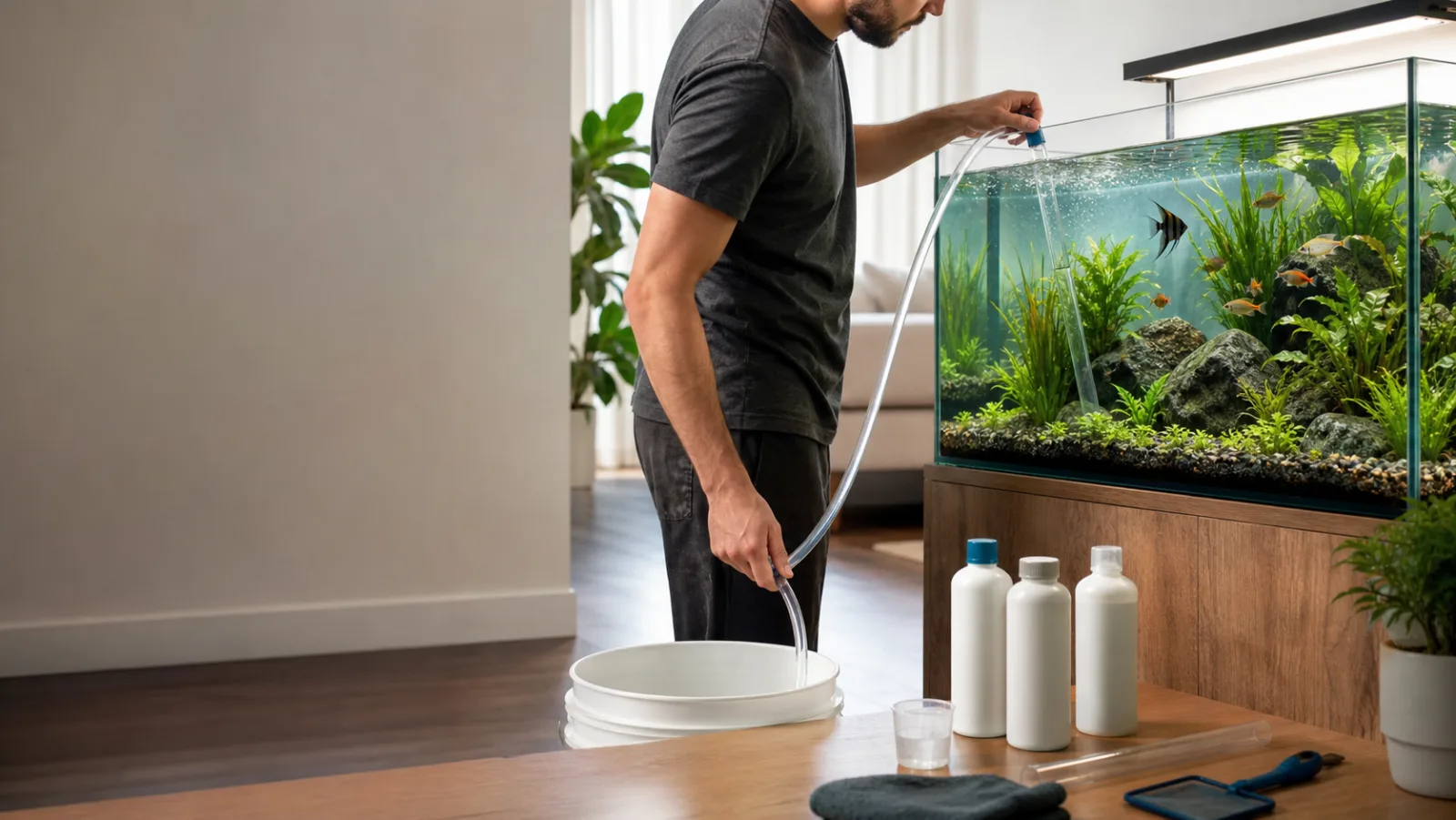
Aquarium
Aquarium Filtration & Maintenance Systems for Clear, Healthy Water (2026 Guide)
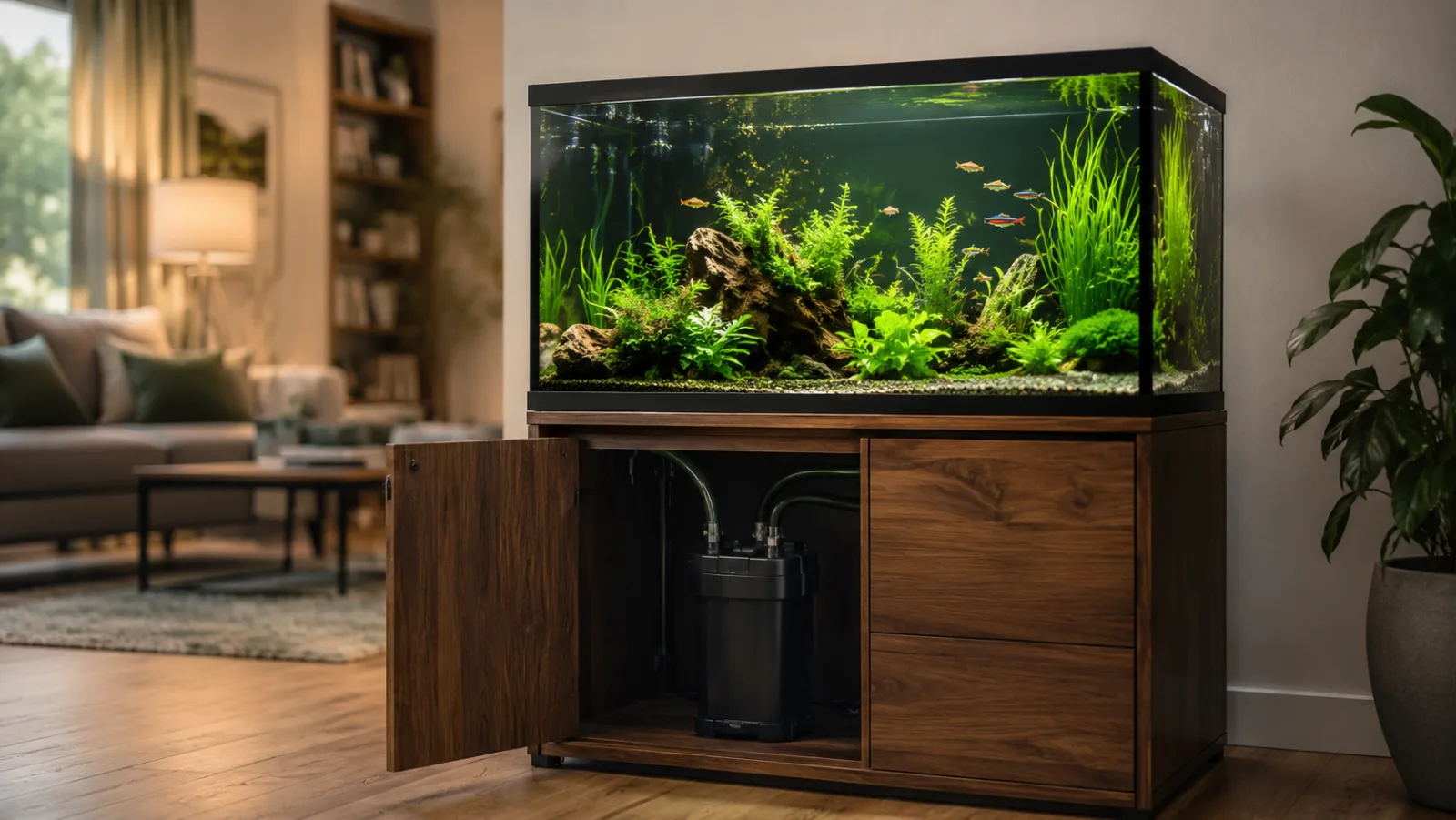
Aquarium
Best Aquarium Canister Filters (2026)
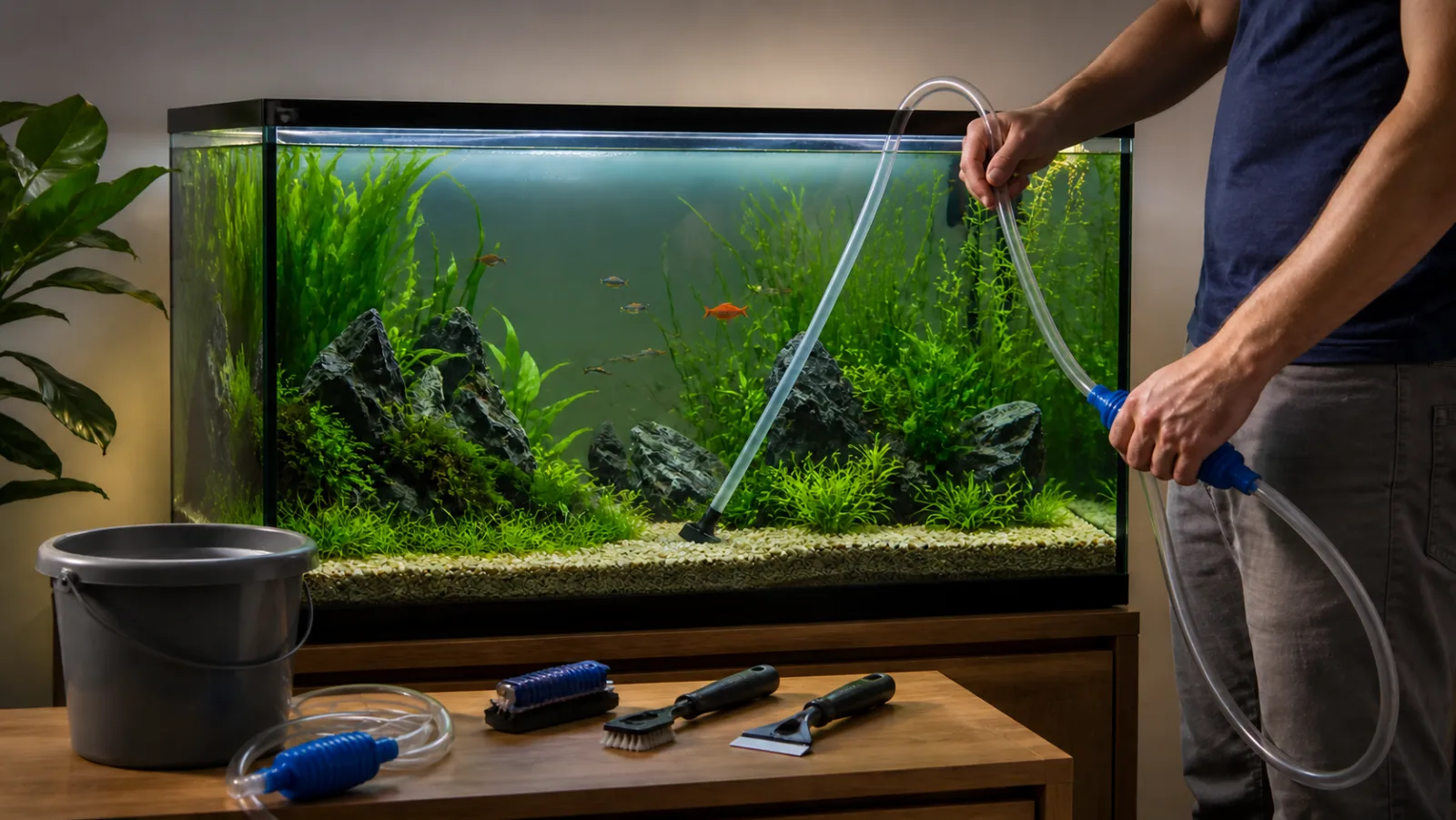
Aquarium