Cats & Dogs
Automatic & Self-Cleaning Litter Box Systems: 2026 Buyer's Guide
What the spec sheet does not tell you about automatic litter boxes — box count, multi-cat capacity, the subscription paywall, and the safe-exit sensors that keep kittens and large cats safe.
By Nick Miles · Updated June 26, 2026 · 8 min read
PetPalHQ is reader-supported. We may earn a commission from qualifying Amazon purchases at no extra cost to you.
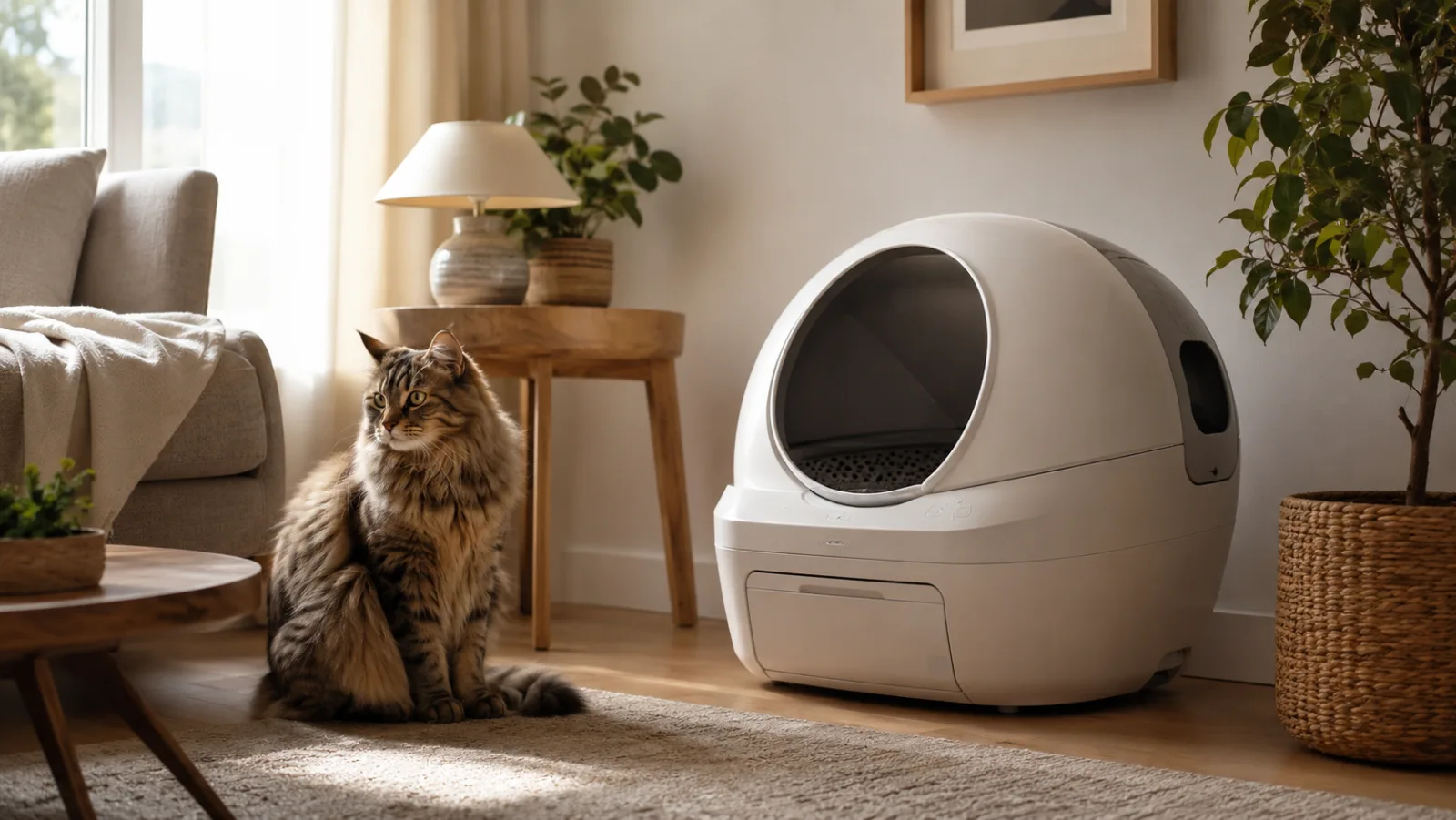
Every product on this list has been scored against the PetPal Gear Score, a weighted composite of expert consensus, observed effectiveness, animal safety, long-term durability, and value. Review method: Editorial synthesis of veterinary and welfare guidance — the ASPCA's litter-box recommendations, the AAFP and AAHA feline guidelines, the Cornell Feline Health Center, and the Merck Veterinary Manual. Manufacturer documentation from Whisker and PetSafe was reviewed, along with hobbyist consensus on r/litterrobot. PetPalHQ does not run a testing lab; every claim here is synthesized from expert sources and manufacturer documentation, not first-hand product testing.. Synthesized from 6+ expert sources.
An automatic litter box is a convenience layer, not a substitute for good litter-box hygiene. Expert consensus from the ASPCA, the American Association of Feline Practitioners (AAFP), the American Animal Hospital Association (AAHA), the Cornell Feline Health Center, and the Merck Veterinary Manual treats self-cleaning boxes as legitimate options — while keeping the focus on box count, cleanliness, and the cat's own behavioral history. This hub frames the category so the buying decision starts from welfare, not from a feature list.
The anchoring rule comes straight from the ASPCA: one litter box per cat, plus one extra, with an added box on each floor of a multilevel home. AAFP's environmental guidance reinforces the same idea, organizing the home around multiple, separated resources rather than a single shared station. An automatic box supplements that baseline. It never replaces it. A four-cat household still needs roughly five accessible facilities, even if one of them scoops itself.
From there, three decision axes separate one automatic box from another. Capacity and multi-cat fit determine whether a single unit can serve the household at all. The subscription question — whether core features sit behind an app paywall such as Whisker+ — shapes the true cost over years of ownership. And welfare, expressed through safe-exit weight and motion sensors, decides whether the box is safe around kittens and large cats. PetPalHQ does not run a testing lab; the guidance below is synthesized from veterinary, welfare, and manufacturer sources.
Frequently Asked Questions
- Do automatic litter boxes replace scooping and extra boxes?
- No. The ASPCA's baseline of one box per cat plus one extra still applies, and most automatic boxes still need the waste drawer emptied and the unit wiped down on a schedule. Self-cleaning hardware reduces daily scooping; it does not remove the need for adequate box count or routine maintenance. Treat an automatic box as one station in the plan, keep a conventional backup during the transition, and see our companion Best Automatic Litter Boxes roundup for how specific models handle the cleaning cycle.
- Can one automatic box handle a multi-cat home?
- Sometimes, but capacity is documented per model and behavior is not. Whisker lists the Litter-Robot 4 at up to four cats, and larger globes and open-top designs are sold for bigger or multi-cat households. AAFP's one-box-per-cat-plus-one guidance does not disappear because the box is automated, so three or more cats usually need an automatic box plus at least one backup. For models sized for the larger end, see our large and multi-cat self-cleaning boxes roundup.
- Do I have to pay a subscription to use an automatic litter box?
- Not always. Whisker's free app tier covers basic usage and a 7-day history, while the Whisker+ plan ($8/month) unlocks extended trends and, on camera models, video features — a paywall that drew strong community pushback at the Litter-Robot 5 launch. Several competing boxes run their full cleaning cycle with no subscription at all. Our Litter-Robot 5 vs Litter-Robot 4 breakdown compares what sits behind the paywall, and our no-subscription self-cleaning boxes roundup covers the models with zero recurring fees.
- Are automatic litter boxes safe for kittens and large cats?
- It depends on the box's weight minimums and sensor design. Whisker documents a 3 lb minimum for the Litter-Robot 4's automatic mode and a semi-automatic mode for smaller kittens. Manufacturer documentation describes weight, optical, and motion sensors that interrupt the cycle when a cat is inside. Confirm the stated weight range and the safe-exit design before trusting any box around a kitten or a very large cat, and supervise early use.
- What litter works in an automatic litter box?
- Most enclosed and globe-style boxes are built for standard clumping litter, which the AAFP also recommends as an unscented default for most cats. Some sealed-drawer models, such as PetSafe's ScoopFree line, document compatibility with any litter, while crystal-tray systems require their own substrate. Changing litter type is a behavioral variable; the Cornell Feline Health Center treats sudden litter avoidance as a reason to slow down and, if it persists, to call the veterinarian rather than force acceptance.
- Is there an automatic litter box for dogs?
- Not in the way the category exists for cats. Self-cleaning litter boxes are cat appliances — entry openings, weight sensors, and safety cycles are all designed around cat body sizes and the feline instinct to dig and bury. For the small minority of litter-trained small-breed dogs, a large open cat pan can work, but the automatic globes generally do not fit or cycle safely for them. What exists for dogs is a different product class: self-refreshing potty-pad and turf systems that advance or swap the substrate rather than sift it. If you searched for a self-cleaning litter box for a dog, that pad-system category — not anything on this page — is the honest destination.
- Will my cat automatically know how to use a litter box?
- For an ordinary box, mostly yes — burying waste is instinctive, and kittens typically adopt a clean, accessible, low-sided box with minimal teaching. The automatic part is where acceptance gets harder: a cycling machine is a new object with motor noise, and the Cornell Feline Health Center treats sudden litter avoidance as a signal to slow down rather than push. The proven sequence is to run the new unit powered off beside the existing box, let the cat use it as a plain box until that is routine, then enable automatic cycling — with a conventional backup box available the whole time. Our step-by-step transition guide covers the full acclimation sequence.
- What does an automated pet-care setup look like beyond the litter box?
- The same convenience-with-guardrails logic extends to three adjacent appliances: an automatic feeder for scheduled meals, a fountain for fresh moving water, and a camera for absence monitoring. Each carries the caveat pattern this hub applies to litter boxes — automation supplements care rather than replacing observation, and app subscriptions are where the long-term costs hide. The welfare baselines stay manual no matter how much hardware you add: box count per the ASPCA rule, cleaning schedules for anything that touches food or water, and a veterinarian for any appetite, thirst, or elimination change an appliance happens to surface.
Bottom Line
An automatic litter box supplements adequate box count; it does not replace it. The ASPCA's baseline is one box per cat plus one extra, and AAFP guidance organizes feline homes around multiple, separated resources. Automate one station, then keep a conventional backup nearby.
Match capacity to the household, not the marketing. Whisker documents the Litter-Robot 4 at up to four cats with a 3 lb minimum for automatic mode. Larger or multi-cat homes need a model and a box count sized for the actual number of cats.
Read the subscription terms before you buy. Whisker's free app tier covers a 7-day history, while the Whisker+ plan ($8/month) unlocks extended trends. Several competing boxes run their core cleaning cycle with no subscription at all.
Welfare and safety come from the sensor stack, not the app. Manufacturer documentation describes weight, optical, and motion sensing that interrupts a cycle when a cat enters. Confirm the safe-exit design and weight minimums before trusting any box around kittens or large cats.
Sudden box avoidance is a medical question first. The ASPCA, AAFP, the Cornell Feline Health Center, and the Merck Veterinary Manual all treat house-soiling as a veterinary and behavioral workup before a shopping decision. No automatic box diagnoses what a veterinarian does.
Acceptance is the step most owners skip: our how to transition a cat to an automatic litter box guide covers the powered-off acclimation sequence, and the cross-site AI smart litter boxes with health monitoring roundup on Smart Home Explorer covers the monitoring-first tier of the category.
All articles in this guide
Best Automatic Litter Boxes for Cats (2026)
The Whisker Litter-Robot 4 is the synthesis pick for premium all-rounder buyers; the PetSafe ScoopFree SmartSpin is the strongest sealed-drawer answer; the Neakasa M1 Plus suits owners wary of enclosed globes; the Casa Leo Leo's Loo Too is the quiet alternative. Skip every box on this list and call your veterinarian first if box avoidance is sudden, painful, or stress-linked — AAHA/AAFP, ASPCA, Cornell, and Merck all treat house-soiling as a medical workup before a shopping problem.
12 min read
Litter-Robot 5 vs Litter-Robot 4 (2026), and the Amazon Alternatives
The Litter-Robot 5 arrived in October 2025 with WasteID, a fifth cat slot and a camera on the Pro, and the community reaction was mostly about the app subscription. This guide keeps the LR5-versus-LR4 comparison intact, then puts it next to four self-cleaning litter boxes you can put in an Amazon cart today — because for most buyers that is the decision that actually gets made.
13 min
Best Self-Cleaning Litter Boxes With No Subscription (2026)
The PETKIT PuraMax 2 is the best overall no-subscription pick; the Neakasa M1 Plus suits cats that refuse globes; the Casa Leo Leo's Loo Too is the quiet choice; the Meowant SC09 brings the most capacity. None paywall core cleaning the way Whisker+ does. Call your veterinarian first if box avoidance is sudden, painful, or stress-linked.
11 min read
Best Self-Cleaning Litter Boxes for Large and Multi-Cat Homes (2026)
The Whisker Litter-Robot 4 is the synthesis pick for multi-cat homes; the UBPET 106L is the capacity champion; the Neakasa M1 Plus is the open-top answer for large and senior cats. A high-capacity automatic box supplements the AAFP one-box-per-cat-plus-one rule — it never replaces adequate box count. If a cat suddenly avoids the box, call your veterinarian first.
12 min read
Best Litter Box Enclosure Furniture for Cats (2026)
An enclosure is only as good as the box it can hold. Seven litter box cabinets, end tables and benches ranked by interior size, entry and odor access, with the veterinary caveats that come with any covered box.
15 min read
Best Standard Litter Boxes for Cats (2026)
The IRIS USA XX-Large High Sided pan is the winner because it is the cheapest box here that actually clears the AAFP/ISFM sizing rule. The KittyGoHere Senior box answers the arthritic cat who can no longer climb a rim, and the Modkat XL is for households losing the war against tracked litter. A box too small for the cat is a common and under-diagnosed reason a cat stops using it, and AAFP/ISFM says many commercial boxes prove to be too small.
13 min read
Litter-Robot 4 vs PETKIT PuraMax 2 (2026): The Three-Year Cost, Priced
The PuraMax 2 costs $309 less than the Litter-Robot 4 on the day you buy it. The usual next sentence is that the cheap box costs more to feed — so we priced both boxes' consumables at their makers' own cadences, and it turns out to be false. The PuraMax 2 is cheaper to run too, by about $18 a year. That reframes what the Litter-Robot's $309 premium actually buys, and this guide is about what it does buy.
11 min
Are Automatic Litter Boxes Worth It? (2026)
An automatic box is worth it when it removes a real, recurring friction you would otherwise neglect — not because it is 'smart.' This guide runs the 3-year total-cost-of-ownership math and the time-value calculation for four decision archetypes, then hands you a suitability checklist. For a large share of single-cat homes, a bigger manual box scooped twice daily wins the math outright.
11 min read
How to Transition a Cat to an Automatic Litter Box (2026)
This is not a best-box ranking — it is the acceptance playbook. The transition is a slow behavioral hand-off, not an install: place the unplugged unit beside the old box, let the cat use it cold, run one cycle only when they are away, and remove the old box last. The picks below are a toolkit that carries acceptance, not premium boxes ranked against each other. If box avoidance is sudden, painful, or stress-linked, skip the shopping entirely and call your veterinarian — ASPCA, Cornell, and Merck all treat house-soiling as a medical workup first.
11 min read
Sources & Methodology
Expert review sources
- ASPCA — Litter Box Problems; Litter Box Care guidance
- American Animal Hospital Association and American Association of Feline Practitioners — Feline Life Stage Guidelines
- American Association of Feline Practitioners and International Society of Feline Medicine — Feline Environmental Needs Guidelines (2013)
- Cornell Feline Health Center — Feline Behavior Problems: House Soiling
- Merck Veterinary Manual — Behavior Problems of Cats
- AAFP — unscented clumping litter and litter-box substrate guidance
Community sources
- Whisker — Litter-Robot product documentation and Whisker+ subscription terms (documentation checked 2026-06-26)
- PetSafe — ScoopFree self-cleaning litter box product documentation (documentation checked 2026-06-26)
- r/litterrobot — long-term reliability and Whisker+ paywall discussion threads
Prices and specs verified June 26, 2026.
About the author
Nick Miles is the chief editor of PetPalHQ. PetPalHQ does not run a testing lab — every claim on this page is synthesized from veterinary references, welfare-organization guidance, and manufacturer documentation. Sources are cited by name in body prose; the bibliography above lists every primary source consulted for this hub.
PetPalHQ is a participant in the Amazon Services LLC Associates Program. We may earn commissions from qualifying purchases — at no extra cost to you.
More Guides
Cats & Dogs
Best Automatic Litter Boxes for Cats (2026)
Cats & Dogs
Litter-Robot 5 vs Litter-Robot 4 (2026), and the Amazon Alternatives
Cats & Dogs
Best Pet Odor Removers and Enzyme Cleaners (2026)
Cats & Dogs
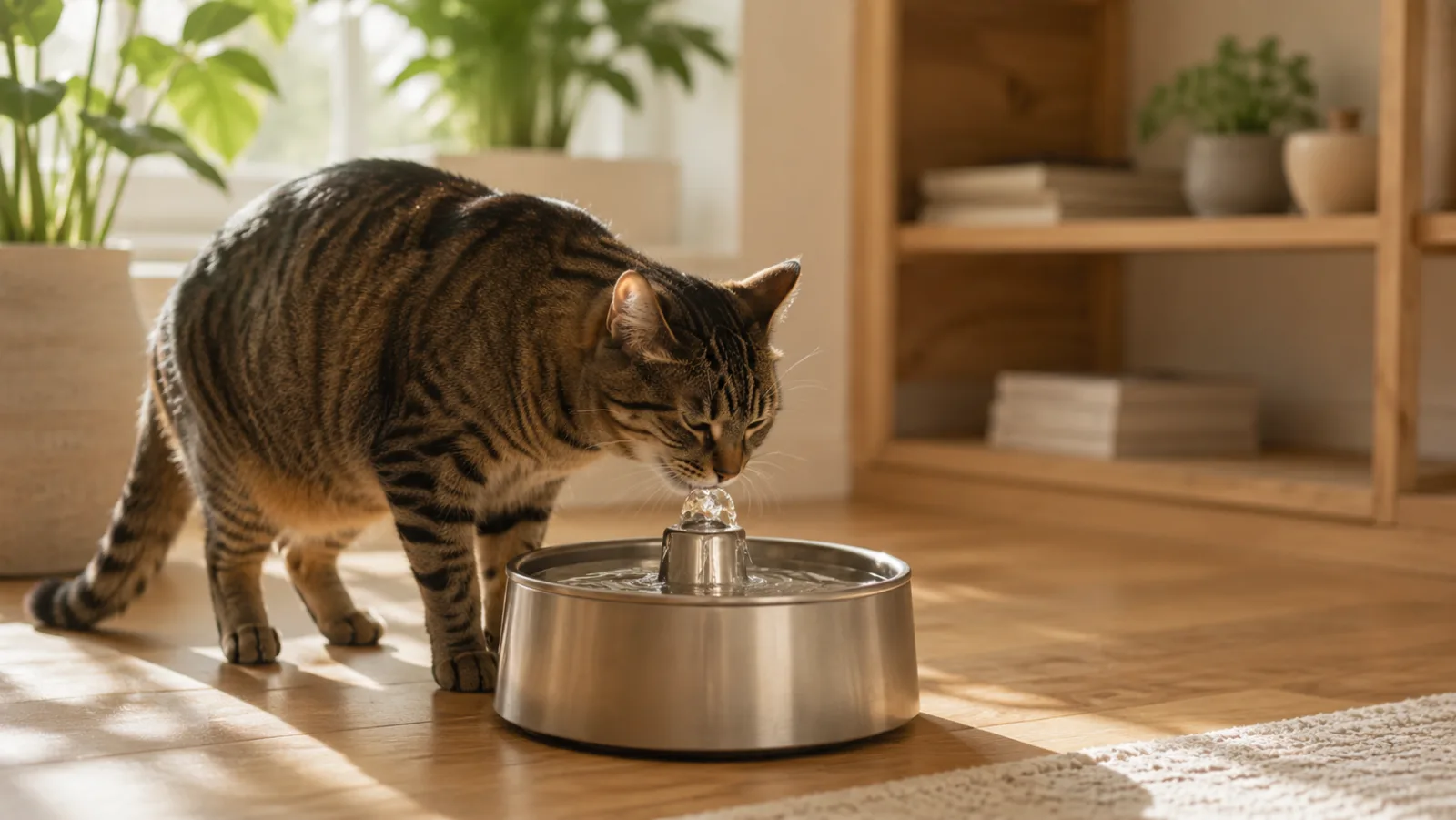
Best Cat Water Fountains for Hydration, Cleaning Ease, and Quiet Operation (2026)

Cats & Dogs