Aquarium
Best Aquarium Cleaning Tools for Better Water Quality (2026)
Aqueon's gravel vacuums and the Python No Spill Clean and Fill solve the two biggest reasons hobbyists skip water changes. Flipper and Mag-Float magnetic cleaners handle algae without scratching. The right cleaning kit lowers maintenance friction — and that, more than anything, is what protects water quality.
By Nick Miles · Updated May 5, 2026 · 12 min read
PetPalHQ is reader-supported. We may earn a commission from qualifying Amazon purchases at no extra cost to you.
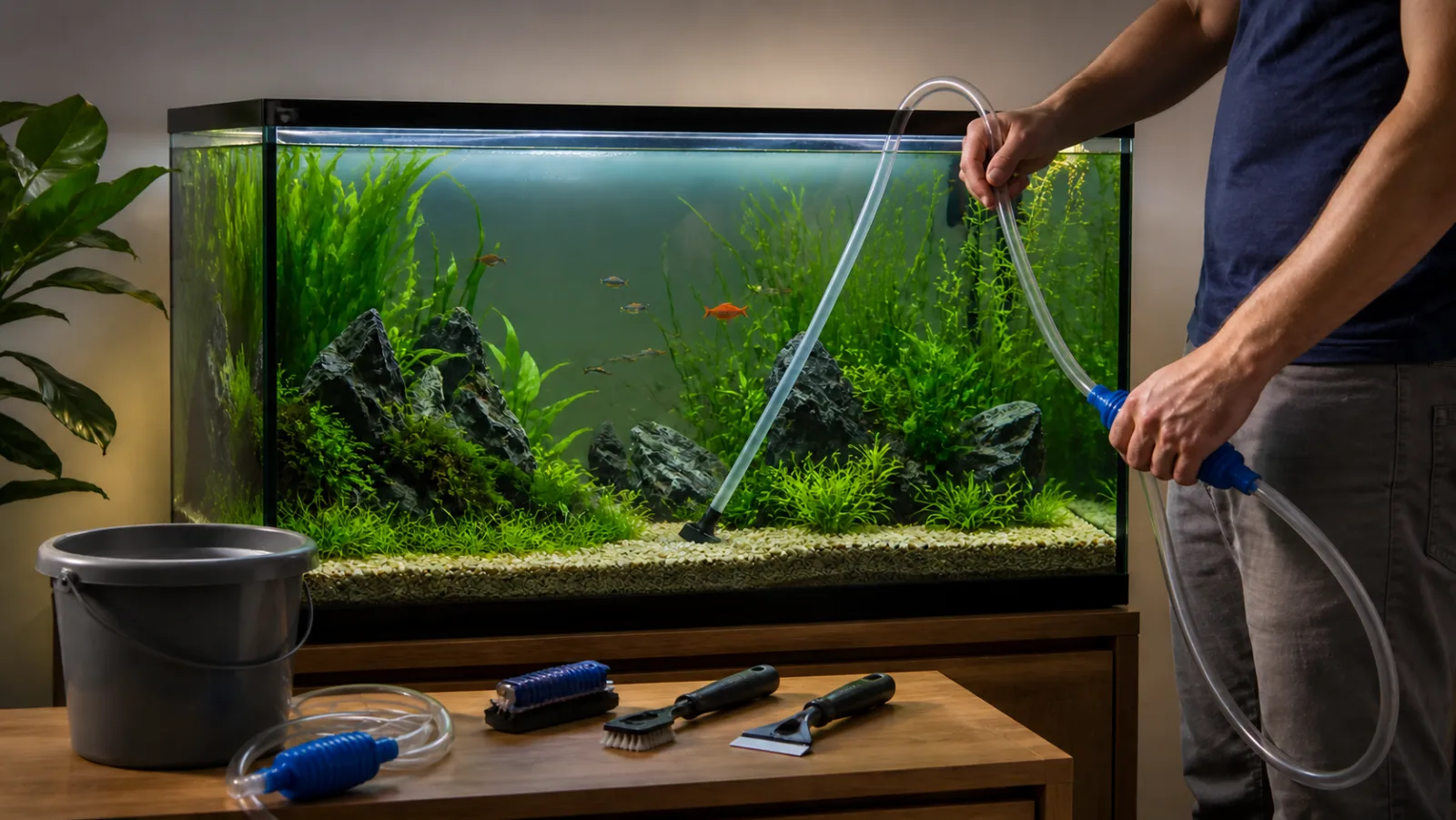
Evidence at a Glance
Aqueon Siphon Vacuum Gravel Cleaner
Simple manual siphon and gravel vacuum line that comes in Mini, Medium, and Large sizes — the most-used gravel-cleaning workflow in beginner aquarium-care content.
Sources: Aqueon product documentation, PetSmart Learning Center, Aqueon Aquarium Cleaning Checklist
Verified May 4, 2026
Python No Spill Clean and Fill
Faucet-driven water changer and gravel cleaner that drains and refills directly from a sink — eliminates buckets and is the upgrade that fixes 'I skipped this week's water change' habits.
Sources: Python Products manufacturer documentation, PetSmart product page, Aqueon Aquarium Cleaning Checklist
Verified May 4, 2026
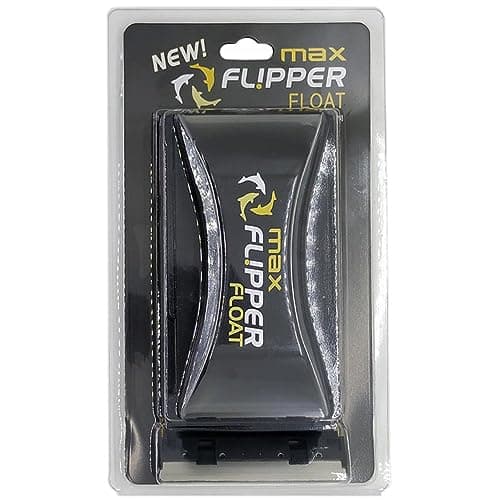
Flipper FLOAT 2-in-1 Magnetic Aquarium Cleaner
Floating scrubber-and-scraper magnetic cleaner with a stainless blade for glass and an ABS plastic blade for acrylic — covers both tank materials and does not sink if it separates.
Sources: Flipper Aquarium Products documentation, Aqueon Algae Cleaning Magnets product page
Verified May 4, 2026
Our Picks
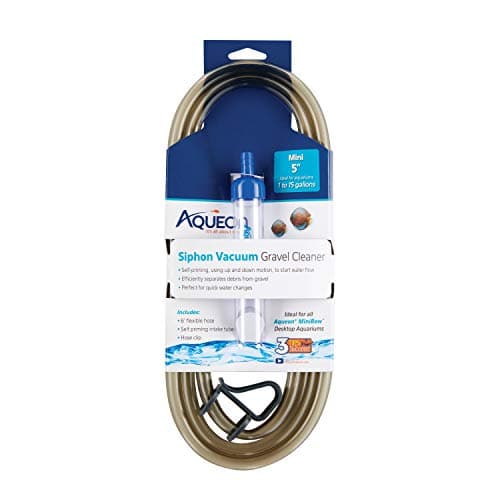
Aqueon
Aqueon Aquarium Siphon Vacuum Gravel Cleaner
9.2 / 10
- Manual up-and-down priming — no power, no batteries
- 6-foot flexible hose with debris separator that lets gravel fall back down
- Bucket clip on the end of the hose
- Mini, Medium 9-inch, Large 10-inch (with priming bulb), and Large 16-inch sizes
$9.84
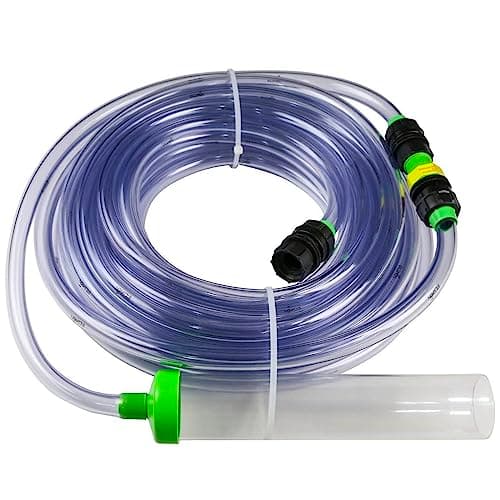
Python Products
Python No Spill Clean and Fill
9.5 / 10
- Faucet-driven water changer and gravel cleaner — drains and refills
- 25-foot tubing version included; 50-foot and 100-foot extensions available
- Brass faucet adapter, gravel tube, faucet pump, and switch
- UV-stabilized, non-porous tubing rather than garden-hose material
$55.24
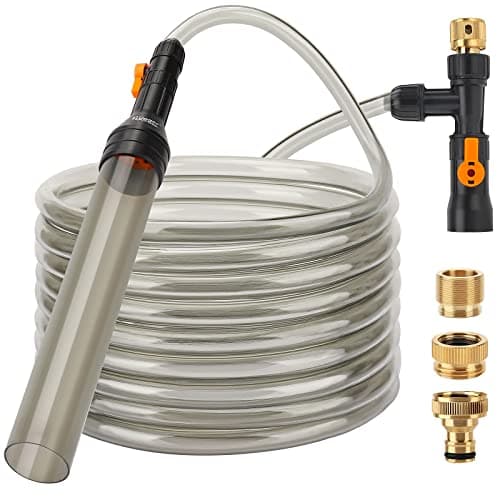
hygger
hygger Bucket-Free Aquarium Water Change Kit
8.6 / 10
- Faucet-driven water changer with metal connector
- 25-foot, 33-foot, and 49-foot hose options
- Built-in on/off valves and adjustable flow
- Drains and fills with the same hose
$35.99
Flipper Aquarium Products
Flipper FLOAT 2-in-1 Magnetic Aquarium Algae Cleaner
9.1 / 10
- Scrubber-to-scraper flip action — one tool, two cleaning modes
- Floats if the magnets separate inside the tank
- Stainless blade for glass; ABS plastic blade for acrylic
- Rated for tanks up to 1/2-inch glass thickness
$94.99
Mag-Float
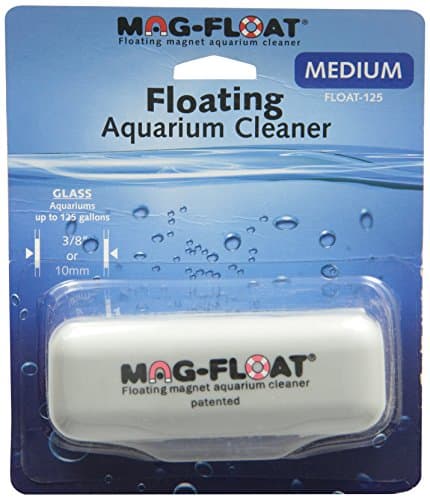
Mag-Float Glass Aquarium Cleaner (Medium)
8.8 / 10
- Floating retrieval design
- Rare-earth magnets sized for medium tanks (around 5/16-inch glass)
- Glass-specific version; separate acrylic versions also sold
- Sister sizes cover Mini (10 gal) up to Large (350 gal)
$35.99
API
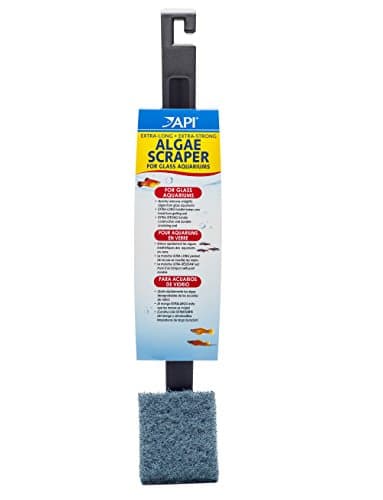
API ALGAE SCRAPER for Glass Aquariums
8.0 / 10
- Extra-long handle — keeps your hand out of the water during cleaning
- Glass-only design — do not use on acrylic tanks
- Replaceable blade format
- Inexpensive backup tool for stubborn algae patches
$9.18
The Short Answer
If you keep one freshwater tank under 20 gallons, the Aqueon Siphon Vacuum is the most-used and most-recommended manual gravel cleaner for the price. For 20-gallon tanks and up — especially if hauling buckets is the reason maintenance gets skipped — the Python No Spill Clean and Fill is the upgrade that pays for itself in consistency. The Flipper FLOAT 2-in-1 is the magnetic cleaner that handles both glass and acrylic, while the Mag-Float line covers nano through 350-gallon tanks if you want size-matched simplicity. The hygger Bucket-Free kit is the budget-friendly alternative to the Python, and an SLSON canister hose brush is the small accessory that protects canister flow over time.
Every product on this list has been scored against the PetPal Gear Score, a weighted composite of expert consensus, observed effectiveness, animal safety, long-term durability, and value. Review method: Editorial synthesis of manufacturer documentation (Aqueon, Python Products, Fluval, Flipper, Mag-Float, hygger), aquarium-education sources (Aquarium Co-Op, PetSmart Learning Center), and hobbyist consensus from r/aquariums and the Aquarium Co-Op forum — no first-hand product testing.. Synthesized from 8+ expert sources.
For most freshwater hobbyists, the most important cleaning tool is the one that lowers maintenance friction enough that water changes actually happen on schedule. Aqueon's "Aquarium Cleaning Checklist," PetSmart Learning Center's "Aquarium Maintenance Guide," and Aquarium Co-Op's cleaning content all converge on the same point: skipped maintenance is one of the fastest paths to poor water quality, and the tool that gets used is more valuable than the tool that sits in a drawer.
The picks below are editorial synthesis. PetPalHQ does not run a testing lab — every product on this page was selected by reviewing manufacturer documentation from Aqueon, Python Products, Fluval, Flipper, Mag-Float, hygger, and API; aquarium-education content from Aquarium Co-Op and PetSmart Learning Center; and hobbyist consensus on r/aquariums and the Aquarium Co-Op forum. Where expert sources disagreed (most commonly on whether budget faucet water-changer kits are worth recommending alongside the Python), we deferred to the practical framing in Aqueon's cleaning checklist — the tool that matches the hobbyist's actual workflow is the right tool, even if it is not the most expensive option.
This guide is the maintenance-side companion to the Aquarium Filtration & Maintenance Systems for Clear, Healthy Water hub. The hub explains why maintenance matters and lays out the daily, weekly, monthly, and quarterly schedule; this article covers what to buy to make that schedule sustainable.
Head-to-Head Comparison
| Feature | Aqueon Aquarium Siphon Vacuum Gravel Cleaner | Python No Spill Clean and Fill | hygger Bucket-Free Aquarium Water Change Kit | Flipper FLOAT 2-in-1 Magnetic Aquarium Algae Cleaner | Mag-Float Glass Aquarium Cleaner (Medium) | API ALGAE SCRAPER for Glass Aquariums |
|---|---|---|---|---|---|---|
| Tool type | Manual gravel vacuum | Faucet water changer | Faucet water changer (budget) | Magnetic cleaner (premium) | Magnetic cleaner (size-matched) | Manual scraper |
| Best tank size | Nano to 55 gal | 10+ gal, especially 20+ | 10+ gal, especially apartment setups | 20–125 gal, glass or acrylic | Nano to 350 gal (size-matched) | Glass tanks of any size |
| Solves what | Substrate detritus during water changes | Bucket fatigue, skipped water changes | Bucket fatigue at lower price | Glass + acrylic algae, stubborn buildup | Material- and size-matched algae | Corners, edges, stubborn patches |
| Watch-out | Not for fine sand | Faucet thread compatibility required | Drain hose between uses to prevent mildew | Bulky in tight aquascapes | Single-mode — no scraper for harder algae | Glass only — do not use on acrylic |
| Check price | Amazon | Amazon | Amazon | Amazon | Amazon | Amazon |
$9.84
- Manual up-and-down priming — no power, no batteries
- 6-foot flexible hose with debris separator that lets gravel fall back down
- Bucket clip on the end of the hose
- Mini, Medium 9-inch, Large 10-inch (with priming bulb), and Large 16-inch sizes
The Aqueon Siphon Vacuum is the gravel-cleaning workflow that beginner aquarium-care content treats as the default. Aqueon's official product documentation positions the Mini for 1–5 gallon tanks, the Medium 9-inch for roughly 15–35 gallons, the Large 10-inch (with priming bulb) for roughly 15–55 gallons, and the Large 16-inch for 40 gallons and up. PetSmart's aquarium maintenance guidance and the Aqueon Aquarium Cleaning Checklist both treat siphon-vacuum maintenance as a core part of partial water changes — debris in the substrate is one of the materials a partial water change is supposed to export.
The siphon's debris separator is the main practical feature. As water moves up the tube, gravel briefly lifts and then drops back down while detritus continues up the hose into the bucket. That is what makes a gravel vacuum genuinely export waste from the substrate, instead of just stirring it back into the water column.
What the spec sheet does not tell you: very fine sand is where every gravel-only siphon struggles. Hobbyist reports on r/aquariums and the Aquarium Co-Op forum agree that Aqueon's vac is built for gravel tanks, not for fine sand. For sand tanks, lighter surface hovering or a powered vac like the Fluval ProVAC is a better workflow than plunging this siphon deep into the substrate.
What We Love
- Cheapest tool that actually solves substrate-waste export
- Multiple sizes match nano through 55-gallon-plus tanks
- Debris separator works on gravel without sucking gravel up the hose
- Bucket clip keeps the discharge hose anchored during draining
What Could Be Better
- Manual priming can splash if technique is rushed
- 6-foot hose limits how far you can route the discharge
- Built for gravel — not the right tool for fine sand
The Verdict
The default gravel vacuum recommendation for any beginner gravel tank under 55 gallons. Aqueon's product line and PetSmart's maintenance content both treat this exact format as the entry-level gravel-cleaning workflow.
$55.24
- Faucet-driven water changer and gravel cleaner — drains and refills
- 25-foot tubing version included; 50-foot and 100-foot extensions available
- Brass faucet adapter, gravel tube, faucet pump, and switch
- UV-stabilized, non-porous tubing rather than garden-hose material
The Python No Spill Clean and Fill is the upgrade that fixes the most common reason aquarium maintenance gets skipped: hauling buckets. Python's official manufacturer page lists a brass faucet adapter, a gravel tube, a faucet pump and switch, hose connectors, and the UV-stabilized non-porous tubing that sets it apart from improvised garden-hose setups. The PetSmart product page positions the system at 10 gallons and up, with the strongest value on 20-gallon, 55-gallon, and multi-tank setups.
The mechanism is a Venturi at the faucet. Open the tap, the water flowing through the Venturi creates suction at the gravel tube, and the water plus debris drains down the kitchen sink instead of into a bucket. To refill, flip the switch — the same hose fills the tank from the same faucet. Aqueon's "Aquarium Cleaning Checklist" frames the tool as the difference between maintenance you actually do and maintenance you mean to do.
What the spec sheet does not tell you: the Python depends on faucet thread compatibility and adequate water pressure. Hobbyists with modern pull-down kitchen faucets, low-pressure plumbing, or non-threaded faucet outlets sometimes need an outdoor spigot or a third-party adapter to make the connection work. Once connected, the system is straightforward — but the first installation is where most reviews mention friction.
What We Love
- Eliminates buckets entirely — the single biggest reason hobbyists skip water changes
- Drains and fills with the same tubing
- Built specifically for aquarium use, not adapted from garden equipment
- Strong long-term durability reputation across hobbyist forums
What Could Be Better
- Requires faucet thread compatibility and adequate water pressure
- Premium price compared with manual siphons
- Modern pull-down kitchen faucets sometimes need extra adapters
The Verdict
The strongest water-quality investment in this guide for tanks 20 gallons and up. The right framing is not 'fancy water changer' — it is 'maintenance compliance.' Tanks whose owners actually run weekly water changes are healthier than tanks whose owners mean to.
$35.99
- Faucet-driven water changer with metal connector
- 25-foot, 33-foot, and 49-foot hose options
- Built-in on/off valves and adjustable flow
- Drains and fills with the same hose
The hygger Bucket-Free kit is the budget alternative to the Python. hygger's official product page describes the unit as a faucet-attach water changer with built-in on/off valves, adjustable flow, a blockage-preventing screen, and 25-, 33-, or 49-foot hose options. The basic mechanism is the same Venturi-at-the-faucet system the Python uses, at a meaningfully lower price.
For apartment and kitchen-sink setups, hygger's longer hose options can actually be an advantage over the standard Python kit. The 49-foot version is enough hose to reach a tank in a different room from the sink, which is what makes the difference between "doable" and "I am not setting up the bucket again" for some hobbyists.
What the spec sheet does not tell you: hygger's official instructions explicitly note that acceptable vacuum strength depends on opening the faucet fully, that the plastic adapter should not be over-tightened, and that the tubing must be drained before storage to prevent mildew. Faucet-thread compatibility is the same constraint as the Python — if your faucet is a non-standard pull-down model, you may still need a third-party adapter.
What We Love
- Major savings versus the Python with comparable functionality
- Longer hose options reach tanks in different rooms
- Adjustable flow and built-in valves
- Strong fit for apartment and kitchen-sink setups
What Could Be Better
- Not as durable a long-term reputation as Python in hobbyist forums
- Faucet thread compatibility still required
- Tubing must be drained between uses to prevent mildew
The Verdict
The budget pick when the Python's price is the blocker. The functional outcome — drain and refill without buckets — is the same, and that outcome is what protects water quality over time.
$94.99
- Scrubber-to-scraper flip action — one tool, two cleaning modes
- Floats if the magnets separate inside the tank
- Stainless blade for glass; ABS plastic blade for acrylic
- Rated for tanks up to 1/2-inch glass thickness
The Flipper FLOAT 2-in-1 is the premium magnetic cleaner that handles both glass and acrylic without compromise. Flipper's official documentation describes the flip-design mechanism that toggles between scrubber and scraper modes, the floating retrieval feature that protects the cleaner if magnets separate, and the rare-earth magnet pairing that holds reliably on tanks up to 1/2-inch thick. The included blade options — stainless for glass, ABS plastic for acrylic — solve the single most common scratch-risk mistake in beginner content.
The two-mode design matters because algae is not all the same texture. Light film responds to scrubber mode, while harder green-spot or coralline-style buildup needs the scraper. A single-mode magnet forces you to choose, and the wrong choice on acrylic risks permanent scratching. The Flipper's flip mechanism resolves that with a quick rotation rather than a tool swap.
What the spec sheet does not tell you: clearance is the practical complaint in r/aquariums and Aquarium Co-Op forum threads. The Flipper is bulkier than minimalist magnets like the Mag-Float, so tight rockwork or aquascape designs that pack hardscape close to the front pane can leave less room than expected. For wide-open community tanks and planted layouts, clearance is rarely an issue — but it is worth checking before purchase if your tank is heavily aquascaped.
What We Love
- One tool covers both glass and acrylic with the included blade options
- Floats — does not sink if magnets separate during use
- Two cleaning modes handle both light film and harder algae
- Strong long-term build quality reputation in hobbyist forums
What Could Be Better
- Premium price compared with basic magnetic cleaners
- Bulkier profile can hit rockwork in heavily aquascaped tanks
- Stainless blade is not the right choice for acrylic — pay attention to which blade is loaded
The Verdict
The strongest single-magnet recommendation for mixed-material households or tanks with stubborn algae. The combination of glass and acrylic compatibility, floating retrieval, and two cleaning modes is the most complete feature set in the magnetic-cleaner category.
$35.99
- Floating retrieval design
- Rare-earth magnets sized for medium tanks (around 5/16-inch glass)
- Glass-specific version; separate acrylic versions also sold
- Sister sizes cover Mini (10 gal) up to Large (350 gal)
The Mag-Float line is what aquarium-education sources point readers to when the answer is "match the magnet to the tank." Mag-Float's official product pages list Mini (around 10 gallons), Small (up to 30 gallons), Medium (up to 125 gallons, the unit shown here), and Large (up to 350 gallons), plus separate acrylic-specific versions and niche shapes for bowl and nano tanks.
The size matching is the editorial point. A magnet that is too weak for the glass thickness is frustrating; a magnet that is too strong is unwieldy and can pinch fingers during cleaning. Mag-Float's product line is unusually granular about sizing — Aqueon's Algae Cleaning Magnets work the same way at the entry level, but Mag-Float covers the full range from nano to very large tanks.
What the spec sheet does not tell you: the trade-off versus the Flipper is modes. The Mag-Float is a single-mode floating magnet. It handles light algae well, but harder coralline-style or green-spot algae usually requires a separate scraper. Hobbyists who want one-tool-handles-everything tend to prefer the Flipper; hobbyists who want the simplest possible match for a specific glass thickness or acrylic version tend to prefer Mag-Float.
What We Love
- Most granular size selection in the magnetic-cleaner category
- Floating retrieval — a hallmark of the Mag-Float design
- Glass-specific and acrylic-specific versions remove material confusion
- Strong long-term reputation across multiple decades of hobbyist use
What Could Be Better
- Single-mode design — no scraper for harder algae without a separate tool
- Performance drops sharply with the wrong size for the glass thickness
- Premium price for the larger sizes
The Verdict
The right pick when size and material matching is the priority — especially nano tanks and acrylic aquariums where the wrong magnet causes problems. The Medium model fits standard mid-size community tanks with about 5/16-inch glass; check Mag-Float's sizing chart before ordering.
$9.18
- Extra-long handle — keeps your hand out of the water during cleaning
- Glass-only design — do not use on acrylic tanks
- Replaceable blade format
- Inexpensive backup tool for stubborn algae patches
The API Algae Scraper for Glass Aquariums is the manual-control backup tool. API's product documentation positions it specifically as a glass tool with an extra-long handle, replaceable blade, and a price low enough to keep one in any aquarium maintenance drawer.
The use case is precision. Magnetic cleaners cover the bulk of any pane quickly, but they sometimes miss tight corners, decoration edges, or stubborn green-spot algae that needs scraper pressure. A handheld scraper handles those edge cases in 30 seconds without unmounting a magnet. API's extra-long handle is meaningful here because it lets you reach the bottom of taller tanks without putting your arm fully into the water.
What the spec sheet does not tell you: the most common buyer confusion in this product category is the glass-versus-acrylic distinction. Using a metal-blade glass scraper on acrylic will leave permanent scratches. PetSmart's product information and API's own product copy are both explicit about this — the glass version is for glass, the acrylic version is for acrylic, and the two are not interchangeable.
What We Love
- Cheap enough to keep one in every maintenance drawer
- Extra-long handle reaches the bottom of taller tanks dry-handed
- Replaceable blade format extends service life
- Useful backup even if you primarily use a magnetic cleaner
What Could Be Better
- Glass only — do not use on acrylic tanks
- Slower than a magnetic cleaner for bulk algae removal
- Easy to mix up with the acrylic version at purchase time
The Verdict
The right backup scraper for any glass tank. Pair it with a magnetic cleaner — the magnet does the bulk work, the scraper handles corners and stubborn patches. Acrylic owners should buy the acrylic-specific version of any scraper, not this one.
How We Score
Formula
PetPal Gear Score = (Expert Consensus × 0.35) + (Build / Specs × 0.25) + (Ease of Use × 0.20) + (Value × 0.20)
Score Factors
- Expert Consensus · 35%
- Synthesized from manufacturer documentation (Aqueon, Python Products, Fluval, Flipper, Mag-Float, hygger), aquarium-education content from Aquarium Co-Op and PetSmart Learning Center, and hobbyist consensus from r/aquariums and the Aquarium Co-Op forum. The PetPal Gear Score is a composite of expert opinion — PetPalHQ does not run a testing lab.
- Build / Specs · 25%
- Tubing, hose length, connector quality, blade material, magnet strength, and the build features that affect long-term reliability for repeated use cycles.
- Ease of Use · 20%
- Setup complexity, prime behavior, how forgiving the tool is to mistakes (wrong technique, wrong size, wrong blade), and how cleanly it handles routine sessions for a beginner-to-intermediate hobbyist.
- Value · 20%
- Per-feature pricing, cost of consumables (replacement blades, faucet adapters), and how meaningfully the tool reduces maintenance friction relative to its price.
| Rank | Product | Score |
|---|---|---|
| #1 | Python Products Python No Spill Clean and Fill | 9.5 |
| #2 | Aqueon Aqueon Aquarium Siphon Vacuum Gravel Cleaner | 9.2 |
| #3 | Flipper Aquarium Products Flipper FLOAT 2-in-1 Magnetic Aquarium Algae Cleaner | 9.1 |
| #4 | Mag-Float Mag-Float Glass Aquarium Cleaner (Medium) | 8.8 |
| #5 | hygger hygger Bucket-Free Aquarium Water Change Kit | 8.6 |
| #6 | API API ALGAE SCRAPER for Glass Aquariums | 8.0 |
When NOT to Buy
Skip the Aqueon Siphon Vacuum if your substrate is fine sand — gravel-only siphons can clog or remove too much sand. Use a powered vac like the Fluval ProVAC or hover the siphon over the sand surface instead. Skip the Python No Spill Clean and Fill if your tank is under 10 gallons or you are renting an apartment with non-standard faucet threads — a manual siphon is enough for nano tanks, and faucet incompatibility can make the Python frustrating to install. Skip the hygger Bucket-Free kit if you are willing to pay for the Python's stronger long-term reputation; the extra durability is worth it on a tool you will use weekly for years. Skip the Flipper FLOAT if your tank is heavily aquascaped with rockwork close to the front pane — the bulkier profile can hit hardscape. Skip Mag-Float and any other magnetic cleaner if you are not willing to read the sizing chart; the wrong size for the glass thickness defeats the tool's purpose entirely. Skip the API Algae Scraper for Glass Aquariums on any acrylic tank — the metal blade will scratch acrylic permanently. And skip every tool on this list if your real problem is using soap, dish detergent, or household glass cleaner inside the aquarium — Aqueon's "Aquarium Cleaning Checklist" and Aquarium Co-Op's cleaning guide are both direct that nothing soapy belongs inside the tank, regardless of which cleaning tool you bought.
Frequently Asked Questions
- Do aquarium cleaning tools really improve water quality, or do they just make the tank look better?
- Both. Glass scraping is the most cosmetic task on the list, but water changers, gravel vacuums, and filter-hose brushes directly affect water quality by exporting waste, lowering accumulated organics, and keeping filtration practical enough to actually happen on schedule. Aqueon's "Aquarium Cleaning Checklist" and PetSmart Learning Center's "Healthy Aquarium Water" both frame routine cleaning as part of water-quality management, not just aesthetics.
- How often should I change water if the aquarium looks clean?
- "Looks clean" is not a reliable metric, because dissolved waste is invisible. A safe beginner default is a weekly 20–30% partial water change, then adjust based on stocking, feeding, and water-test results. PetSmart Learning Center's maintenance guide and Aqueon's "Starting A New Aquarium" content both treat that range as the routine baseline. Lightly stocked tanks sometimes go longer; heavily stocked tanks need more frequent or larger changes.
- Can I use a gravel vacuum on sand?
- Yes, but tool choice and technique matter. The Aqueon Siphon Vacuum is built for gravel — fine sand can clog it or be lifted up the hose. For sand, hover the siphon over the substrate surface rather than plunging deep, or use a powered vac like the Fluval ProVAC that allows lighter spot cleaning. Aqueon's gravel-cleaner documentation and hobbyist forum consensus both make the same point: gravel-specific tools and sand-specific workflows are not interchangeable.
- Are magnetic cleaners safe for acrylic?
- Only if you use the acrylic-specific blade or pad. The Flipper FLOAT 2-in-1 includes an ABS plastic blade for acrylic; the Aqueon Algae Cleaning Magnets ship with both glass and acrylic pads; Mag-Float sells separate acrylic-specific versions of its line. Using a metal-blade magnetic cleaner — or a metal-blade scraper like the API Algae Scraper for Glass Aquariums — on acrylic will leave permanent scratches.
- Can I use dish soap to clean aquarium tools or the tank itself?
- Not for anything that goes back into the aquarium. Aquarium Co-Op's cleaning guide is direct that soap should not be used inside the tank, and Aqueon's cleaning checklist reserves glass cleaner for the outside of the aquarium and specifies aquarium-safe cleaner there. Tools are rinsed with hot water and dried; tanks are cleaned with tools-and-water only.
Bottom Line
Get the Aqueon Siphon Vacuum as a default gravel-cleaning workflow for any beginner gravel tank. Pick the size that matches your tank gallonage.
Get the Python No Spill Clean and Fill if your tank is 20 gallons or larger and you have a faucet that the system can adapt to. The maintenance compliance it produces is more valuable than its price.
Get the hygger Bucket-Free kit as the budget alternative when the Python's price is the blocker. Same Venturi-at-the-faucet mechanism, lower price.
Get the Flipper FLOAT 2-in-1 if you have both glass and acrylic tanks or want one premium magnet that covers both. The flip mechanism handles both light film and harder algae.
Get a Mag-Float in the size that matches your tank if you prefer the simplest possible size- and material-matched workflow. Read the sizing chart before ordering.
Get the API Algae Scraper for Glass Aquariums as a cheap backup for corners and stubborn patches on glass tanks. Acrylic owners should buy the acrylic-specific version of any scraper instead.
Sources & Methodology
Methodology
PetPal Gear Score = (Expert Consensus × 0.35) + (Build / Specs × 0.25) + (Ease of Use × 0.20) + (Value × 0.20)
Expert review sources
- Aqueon — Siphon Vacuum Gravel Cleaners product documentation
- Aqueon — Algae Cleaning Magnets product documentation
- Aqueon — Aquarium Cleaning Checklist
- Aqueon — Fix Cloudy Water in a New and Existing Tank
- Python Products — No Spill Clean and Fill product documentation
- PetSmart — Python Clean and Fill product page
- Fluval — ProVAC Powered Aquarium Gravel Cleaner product documentation
- Fluval — 10 Rules of Aquarium Maintenance
- hygger — Bucket-Free Aquarium Water Change Kit product documentation
- hygger — Multi-Use 6 in 1 Aquarium Clean Set product documentation
- Flipper Aquarium Products — FLOAT Standard product documentation
- Flipper Aquarium Products — Bucket Buddy product documentation
- Mag-Float — Glass and Acrylic product line documentation
- API — Algae Scraper for Glass Aquariums product documentation
- PetSmart Learning Center — Aquarium Maintenance Guide
- PetSmart Learning Center — Healthy Aquarium Water
- Aquarium Co-Op — Aquarium Cleaning Guide
- Aquarium Co-Op — Quarantine Guide
Community sources
- r/aquariums — water-changer and gravel-vac consensus threads
- Aquarium Co-Op forum — Python and Flipper long-term threads
Prices and specs verified May 4, 2026.
About the author
Nick Miles is the chief editor of PetPalHQ. The picks above are editorial synthesis of expert consensus and hobbyist community feedback — PetPalHQ does not run a testing lab. The PetPal Gear Score is a composite of expert opinion, not a measurement. Sources are cited by name throughout.
PetPalHQ is a participant in the Amazon Services LLC Associates Program. We may earn commissions from qualifying purchases — at no extra cost to you.
More Guides
Aquarium
Aquarium Filtration & Maintenance Systems for Clear, Healthy Water (2026 Guide)
Aquarium
Best Aquarium Filters and Filter Media for Clear, Healthy Water (2026)
Aquarium
Aquarium Water Quality, Cycling and Testing for Beginners (2026 Guide)
Aquarium
Best Aquarium Water Test Kits for Freshwater Fish Tanks (2026)
Aquarium
Best Aquarium Water Conditioner for Freshwater Tanks (2026)
Aquarium
Best Aquarium CO2 Systems 2026: Pressurized Kits & Regulators for Planted Tanks
Aquarium
Best Aquarium Return Pumps for Reef Sumps (2026)
Aquarium