Aquarium
Aquarium Filtration & Maintenance Systems for Clear, Healthy Water (2026 Guide)
How filtration really works, how to size it for your tank, and the maintenance routine that keeps water safe — not just clear.
By Nick Miles · Updated May 5, 2026 · 14 min read
PetPalHQ is reader-supported. We may earn a commission from qualifying Amazon purchases at no extra cost to you.
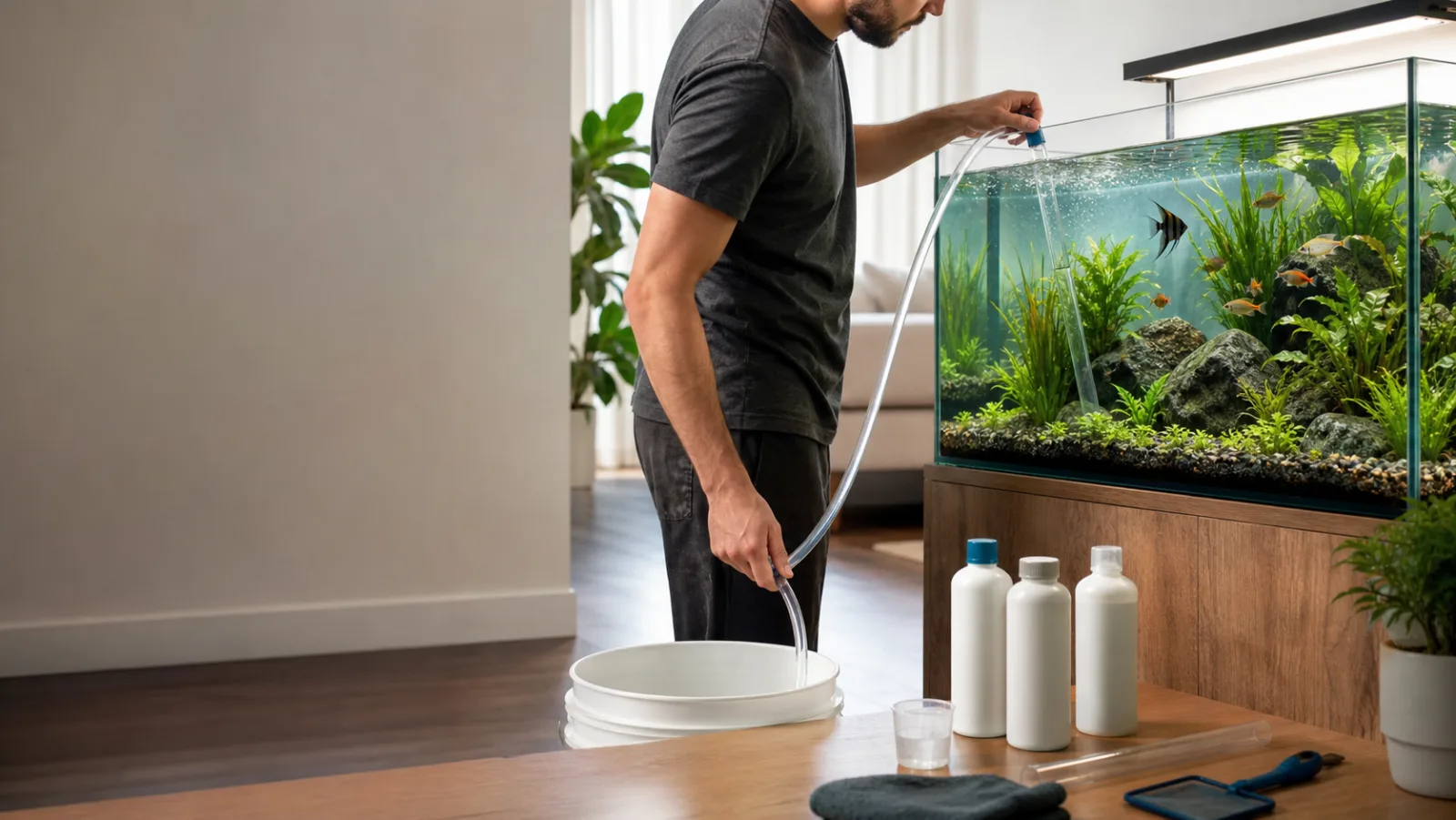
Every product on this list has been scored against the PetPal Gear Score, a weighted composite of expert consensus, observed effectiveness, animal safety, long-term durability, and value. Review method: Editorial synthesis of veterinary, manufacturer, and aquarium-education sources — Merck Veterinary Manual, University of Florida IFAS, Aqueon, Fluval, Seachem, Marineland, Tetra, LiveAquaria, and the Virginia Aquarium & Marine Science Center. PetPalHQ does not run a testing lab.. Synthesized from 14+ expert sources.
A clear-looking aquarium can still kill fish. The Merck Veterinary Manual, the University of Florida IFAS Extension, and the Virginia Aquarium & Marine Science Center all make the same point: water quality is about what is dissolved in the water, not whether the glass looks clean. Filtration is the equipment that makes safe water possible — but only if you understand what each part is actually doing.
This guide synthesizes the consensus across veterinary, manufacturer, university-extension, and trade-retailer sources. It answers the questions every freshwater keeper eventually asks: how filtration really works, how to size a filter for your tank, what kind of media goes inside, and the maintenance routine that protects fish over the long term. PetPalHQ does not run a testing lab. Every recommendation below is editorial synthesis of expert guidance, with sources cited by name throughout.
What does aquarium filtration actually do?
In a recirculating freshwater aquarium, filtration has three core jobs: remove suspended waste, give nitrifying bacteria a stable home, and sometimes remove specific dissolved compounds. The Merck Veterinary Manual and Aqueon's "Aquarium Filtration Basics" article both use the same three-stage model — mechanical, biological, and chemical filtration. Understanding which stage does what is the foundation for maintaining a safe tank.
Mechanical filtration
Mechanical filtration physically traps solid debris — uneaten food, fish waste, plant fragments, dust. Sponges, foam blocks, floss, and polishing pads do this work. The Merck Veterinary Manual is explicit that mechanical filtration should come before biological media in the flow path. Debris that reaches biomedia first can clog it and create low-oxygen problem zones inside the filter.
Biological filtration
Biological filtration is the load-bearing part of the system. Fish excrete ammonia; decomposing food adds more. Two groups of nitrifying bacteria convert that ammonia into nitrite and then nitrate. Aqueon's "Beneficial Bacteria In Your Aquarium" article and the Merck reference both emphasize that these bacteria live mainly on filter media and other wet surfaces, not floating in the water column. That is why filter media is colonized infrastructure, not a disposable cartridge.
The University of Florida IFAS Extension warns that ammonia at any non-zero level is dangerous in a settled tank. The toxic free-ammonia fraction rises sharply with pH and temperature. Nitrite is also dangerous because it disrupts oxygen transport in fish blood. Without working biological filtration, both compounds rise fast.
Chemical filtration
Chemical filtration removes dissolved compounds that mechanical and biological media cannot. Activated carbon adsorbs odors, discoloration, tannins, and medication residues. Specialty resins like Seachem Purigen polish water further. Ion-exchange media like Seachem Zeolite can temporarily bind ammonia in emergencies. The Aqueon filtration article frames chemical filtration as situational rather than mandatory. Beginners often think a clean tank needs carbon running 24/7 — it does not.
Why biological filtration matters more than beginners think
Aqueon's "The Nitrogen Cycle" article and the Aqueon "Starting A New Aquarium" 60-day guide both make the same warning: a freshly set-up tank with no established bacteria colony cannot process waste, no matter how expensive the filter. The Virginia Aquarium & Marine Science Center's water-quality lab content uses the same framing. Clear water is not proof of safe water.
That is the central editorial message of this hub: filters move water and house bacteria, but the bacteria themselves take weeks to establish. The University of Florida IFAS Extension notes that a new biofilter often needs 6 to 8 weeks to fully mature.
How do you choose the right aquarium filter for your tank?
The marketing on a filter box gives you a tank-size range and a GPH (gallons-per-hour) rating. Both numbers are useful starting points, but neither is a guarantee. Real delivered flow is typically lower than the box rating once hose runs, dirty media, and vertical lift are factored in. Bioload always matters more than tank volume alone.
Flow rate and turnover rate
Flow rate is the rated water movement of the pump. Turnover rate is flow divided by tank volume — a 200 GPH filter on a 40-gallon tank gives a nominal 5x turnover. The math is simple. The harder reality is that real delivered flow is usually lower than the box rating. Hoses, elbows, vertical lift, dirty media, and clogged intakes all reduce it. LiveAquaria's flow-rate guide is direct on this: head height, tubing turns, and clogged media all reduce real-world flow. Fluval's 07-series documentation distinguishes "pump output" from the lower in-system circulation rate once filtration media are installed.
A practical baseline used by reputable aquarium-education sources is roughly 4x average turnover for many community tanks. Bettas and planted tanks usually do better at the gentler 3x to 5x range, while goldfish and other heavy-bioload species benefit from 6x to 10x.
Media capacity
Media capacity means usable internal volume for sponge, floss, ceramic biomedia, bio balls, carbon, or specialty resins. More media space generally means longer contact time, more bacterial habitat, and more flexibility in staging your mechanical, biological, and chemical media. Fluval's 07-series canister documentation emphasizes "maximized media capacity" with multiple chambers. Canisters and sumps physically hold far more media than nano internals or starter HOBs.
Tank-size matching
Manufacturer ratings are a starting point. Fluval's "Aquarium Care Guide" advises moving up one size for heavily stocked tanks, and Aqueon's goldfish and shrimp guides repeat the same logic. Goldfish are the canonical example — their high oxygen demand and high waste output justify oversizing. Bettas and shrimp tanks need the opposite approach. They are stressed by aggressive flow.
When to size up
Size up when any of the following apply: heavy stocking, messy fish (goldfish, larger cichlids, larger plecos), heavy feeding, deep substrate that traps detritus, longer hose runs on a canister, or older equipment where the impeller and chambers have lost some efficiency to wear and biofilm.
Aquarium filter types compared
The six common freshwater filter types each have a clear best-use case. The table below summarizes practical strengths, drawbacks, relative media capacity, current character, and maintenance load. The relative-capacity and maintenance labels are editorial planning labels, not lab-tested rankings. They synthesize Merck's system-design guidance, manufacturer documentation from Fluval, Aqueon, Marineland, Tetra, and Hikari, and LiveAquaria's filter selection guide.
| Filter type | Best for | Main strengths | Main drawbacks | Relative media capacity | Typical current character | Maintenance load |
|---|---|---|---|---|---|---|
| Canister filter | 40+ gal tanks, larger community tanks, goldfish, larger freshwater setups | Highest flexibility, large media volume, easy multi-stage customization, equipment stays out of tank | Higher cost, more setup effort, hose and impeller service takes longer | High to very high | Adjustable to strong; can be softened with spray bars or return design | Medium |
| Hang-on-back (HOB) | Most beginner community tanks, 10–55 gal freshwater tanks | Easy to install, easy to access, good all-around filtration, strong beginner fit | Less media than canisters, visible on tank, waterfall current can bother delicate species | Medium | Moderate; often easy to baffle | Low to medium |
| Sponge filter | Shrimp, fry, hospital, quarantine, nano tanks, gentle-flow setups | Safe intake, biological + mechanical, plus aeration; cheap; simple | Weakest water polishing, needs a separate air pump and tubing, less chemical-media flexibility | Low to medium | Gentle | Low |
| Internal filter | Small aquariums, shallow setups, terrariums, nano tanks | Compact, fully submerged, simple, decent water movement in small tanks | Takes up tank space, smaller media volume, often less customizable | Low | Low to moderate depending on model | Low to medium |
| Undergravel filter | Lightly stocked gravel-bottom tanks | Uses gravel bed as bio surface, inexpensive, minimal visible hardware | Niche choice today, poor fit for sand or dirt-heavy tanks, harder to deep-clean under substrate | Medium as bio surface, low as modular media | Gentle to moderate | Medium |
| Sump or wet/dry | Large custom aquariums, fish rooms, very high-bioload systems | Very large biological capacity, extra water volume, hidden equipment, highly expandable | Highest complexity, plumbing and overflow risks, not ideal for most beginners | Very high | Depends on return pump design | Medium to high |
The short version: HOB filters are the easiest beginner recommendation. Canisters become the smarter answer once tanks pass roughly 40 gallons or carry heavy bioloads. Sponge filters are unmatched for shrimp, fry, betta, hospital, and quarantine duty. Internal filters fill the niche where you cannot fit anything behind the tank. Undergravel and sump filters are situational rather than mainstream choices.
For specific buying picks within each category, see the Best Aquarium Filters and Filter Media for Clear, Healthy Water spoke article.
What does each type of filter media do, and in what order should it go?
The correct order is coarse mechanical first, biological next, chemical last. That sequence catches solids early, protects biomedia from clogging, and lets carbon or Purigen polish water only after the earlier stages have done their work. Media roles, intervals, and cautions in the table below are drawn from Merck's system-design guidance. Manufacturer documentation from Fluval, Seachem, Aqueon, and Marineland informs the rest.
| Media type | Primary role | Best use | Replace / rinse guidance | Watch-outs |
|---|---|---|---|---|
| Sponge / foam | Mechanical first, biological second | Everyday debris capture plus bacterial surface area | Rinse in removed tank water; replace only when deteriorated or flow can't be restored | If neglected, clogs and drops flow |
| Floss / poly pad | Fine mechanical filtration | Trapping smaller particles after coarse foam | Replace when clogged or physically degraded | Excellent for clarity, poor long-term bacterial preservation if swapped too aggressively |
| Ceramic rings | Biological filtration | Stable bacterial habitat in HOBs, canisters, sumps | Gently swish in aquarium water; replace in portions, not all at once | Overcleaning or chlorinated rinsing defeats the purpose |
| Bio balls | Biological filtration | Canisters, wet/dry systems, larger filters | Rinse gently in established aquarium water; replace only if damaged and only in part | Not a polishing medium; needs mechanical pre-filtration upstream |
| Activated carbon | Chemical filtration | Removing odors, discoloration, dissolved impurities, post-medication cleanup | Replace on a short cycle compared with bio media | Useful but not mandatory in every freshwater tank |
| Zeolite | Specialty chemical filtration | Short-term ammonia control in freshwater | Use as directed, replace or regenerate per manufacturer | Not a substitute for a mature biofilter |
| Polishing pads | Very fine mechanical filtration | Clearing haze, micro-particles, "sparkling" water | Replace when clogged or when flow drops | Great for clarity, but they clog faster in dirty tanks |
| Specialty media | Targeted chemical removal | Ammonia, nitrite, phosphate, or similar specific problems | Follow short replacement windows | Solve specific chemistry problems, not general neglect |
Fluval's "Filter Media Manual" PDF is direct: biological media (BIOMAX rings, ceramic media) should be rinsed in aquarium water, not tap water. Chlorinated tap water kills the bacterial colonies that media exists to host. Aqueon's media guidance and Aquarium Co-Op's media-order article both make the same warning. Replacing every cartridge in one session is one of the fastest ways to crash a biofilter.
What filtration type works best for each kind of freshwater tank?
Filtration choice depends on the species, not just the volume. Bettas need gentle flow; goldfish need heavy filtration; shrimp need intake protection. The pairings below match filtration style to species need. They draw on Aqueon's betta, freshwater shrimp, and goldfish care guides, LiveAquaria's filter selection content, and the Merck Veterinary Manual on bioload and oxygen demand.
Betta tanks (5–10 gal)
Bettas come from slow-water habitats and tolerate aggressive flow poorly. Aqueon's betta guide recommends gentle, well-distributed flow. The strongest fits are sponge filters, low-flow internal filters, or a small HOB with a baffle on the outflow. Avoid blasting a betta with a 5x-rated HOB on full speed — the box rating is rarely the right setting for a betta tank.
Shrimp tanks (5–20 gal)
Shrimp need intake protection. Adult shrimp can usually swim against light HOB current, but baby shrimp and molting adults can be pulled into an unprotected intake. Aqueon's freshwater shrimp guide explicitly recommends air-driven sponge filters as the safest default, or a HOB or canister with a pre-filter sponge over the intake.
Planted tanks (10–55 gal)
Planted tanks usually want gentler, more diffused circulation than community tanks. CO2 retention, spray-bar placement, and plant mass all change what "right flow" feels like — LiveAquaria's flow guide notes that planted-tank circulation is genuinely more variable than basic community-tank circulation. Premium HOBs and well-baffled canisters are common picks.
Goldfish tanks (20–75+ gal)
Goldfish are messy, oxygen-hungry fish. Aqueon's goldfish guide is direct that goldfish tanks need stronger filtration than community tanks of the same size, and Fluval's care guide advises stepping up one filter size for heavily loaded aquariums. A 6x to 10x turnover target is more honest than 4x for most goldfish setups.
Community tanks (10–75 gal)
Community tanks are where HOBs and canisters compete most directly. A premium HOB is plenty for many 10–40 gallon community tanks. By 55 gallons, a canister usually wins on media volume, aesthetic cleanliness, and long-term flexibility. Marineland, Fluval, and LiveAquaria all converge on this point.
Larger aquariums (75–180+ gal)
At 75 gallons and up, dual filtration or a sump becomes a serious consideration. The reasons are practical, not technical: redundancy if one filter fails, easier cleaning intervals, and more room for media. Fluval's 07-series documentation positions the larger 407 model for 50–100 gallon tanks. Sumps are typically used by hobbyists who are already comfortable with plumbing and overflow design.
What maintenance routine keeps an aquarium filter working correctly?
Filtration is only half of water quality. The other half is the husbandry routine that keeps the filter doing its job. Without routine water changes, correct media management, and consistent testing, even a well-sized filter cannot maintain safe ammonia and nitrate levels over time.
Maintenance checklist
The schedule below is a baseline drawn from Aqueon's "Starting A New Aquarium" 60-day guide, Fluval's "Aquarium Care Guide" PDF, Aqueon's "Beneficial Bacteria In Your Aquarium" article, and the Texas A&M AgriLife Extension Service's "Aquarium Setup and Maintenance" reference. Goldfish, messy cichlids, and heavily fed tanks need tighter intervals. Mature, lightly stocked planted tanks can sometimes stay stable on gentler service if testing and fish behavior agree.
Daily
- Check fish behavior, heater, and filter output.
- Feed conservatively; uneaten food should not sit in the tank.
- Remove obvious leftovers or dead plant matter.
Weekly or biweekly
- Perform a partial water change of roughly 10–25% every 1 to 2 weeks for many freshwater tanks.
- Scrape glass and spot-clean visible algae.
- Vacuum exposed debris where appropriate.
- Test ammonia, nitrite, nitrate, and pH more often during cycling, after stocking changes, or when fish behavior changes.
Monthly
- Rinse mechanical media in removed aquarium water when flow is dropping.
- Clean intake strainers, uplift tubes, and impellers.
- Replace exhausted chemical media on its shorter cycle.
- Disturb biological media only lightly, and only as needed to restore flow.
Every few months
- Replace worn floss, polishing pads, or compressed foam.
- Replace biological media only in part if the manufacturer recommends periodic replacement.
- Deep-clean canister hoses or hidden plumbing on canisters and sumps.
For specific cleaning-tool picks — gravel vacuums, water changers, magnetic glass cleaners, and filter-hose brushes — see the Best Aquarium Cleaning Tools for Better Water Quality spoke article.
Mistakes that crash filters
The most expensive filtration mistake is rarely buying the "wrong" brand. It is misunderstanding what the filter is responsible for.
- Replacing all media at once. Fluval's filter-media manual and Aqueon's beneficial bacteria article both warn that swapping every cartridge in the same session can dump enough beneficial bacteria to destabilize ammonia and nitrite control.
- Rinsing biomedia in chlorinated tap water. Manufacturers repeatedly direct users to rinse biological media in aquarium water. Tap water kills the colonies the media exists to host.
- Underfiltering for the bioload. Box ratings are a starting point, not a promise. Heavily stocked or messy tanks should be sized up.
- Assuming more GPH is always better. Bettas, shrimp, fry, and many planted layouts need gentler flow, not stronger.
- Relying on filtration instead of water changes. Aqueon's "Nitrogen Cycle" article is direct — most freshwater filtration converts ammonia to nitrate, which still has to be exported through partial water changes.
- Overfeeding and then blaming the filter. Aqueon's "Starting A New Aquarium" guidance flags uneaten food as a leading cause of avoidable ammonia spikes.
- Skipping testing during cycling, after deep cleaning, or after adding fish. The nitrogen cycle is invisible until it fails. Routine testing is the only way to confirm the biofilter is keeping up.
For the full water-quality testing companion, see the Aquarium Water Quality, Cycling and Testing for Beginners hub guide.
Frequently Asked Questions
- Do I need chemical filtration all the time?
- Not necessarily. The Merck Veterinary Manual and Aqueon's filtration article both treat mechanical and biological filtration as foundational, while chemical media (carbon, Purigen, zeolite) is situational — useful for odor, discoloration, tannins, post-medication cleanup, or specific chemistry problems. Most healthy freshwater tanks do not need carbon running continuously.
- Is a canister filter always better than a hang-on-back filter?
- No. Canisters usually offer more media volume and customization, but HOB filters from brands like AquaClear, Marineland, and Seachem Tidal are simpler, cheaper, and plenty capable for many 10–55 gallon community tanks. "Better" depends on tank size, stock, service tolerance, and flow needs. LiveAquaria's filter selection guide makes the same point.
- How often should I replace filter media?
- Chemical media usually changes fastest — Fluval recommends replacing carbon roughly every 4 weeks. Mechanical media (sponge, floss, polishing pads) gets replaced only when clogged or physically degraded. Biological media should usually be preserved, rinsed in tank water, and replaced in part when necessary. Fluval's filter media manual and Aqueon's media guidance both emphasize the same point: biomedia is colonized infrastructure, not a disposable cartridge.
- Why did ammonia or nitrite spike after I cleaned my filter?
- Most likely because too much biomedia was rinsed, replaced, or scrubbed at once. Aqueon's "Beneficial Bacteria In Your Aquarium" article and the Merck Veterinary Manual both note that beneficial bacteria live primarily on filter media. Aggressive cleaning can knock the biofilter back into a partial cycle. Other causes include adding too many fish too quickly and feeding too heavily for a still-maturing biofilter.
- What filter is safest for shrimp?
- Air-driven sponge filters are the default safest option. Aqueon's freshwater shrimp guide also recommends pre-filter sponges or intake guards on HOB or canister filters to stop shrimp from being pulled in. Hikari's sponge-filter documentation frames the same product class as mechanical, biological, and aerating in one — a practical fit for shrimp-only tanks.
- Can filtration replace water changes?
- No. Aqueon's "Nitrogen Cycle" article and the University of Florida IFAS Extension are both explicit: typical freshwater filtration converts ammonia to nitrate, which still has to be exported through partial water changes. Filtration plus water changes is the routine — neither alone is enough.
- What should a beginner test routinely?
- At minimum: pH, ammonia, nitrite, and nitrate. New tanks, tanks after a big cleaning, and tanks with sick fish or recent stocking changes should be tested more frequently. The Virginia Aquarium & Marine Science Center's water-quality lab content treats those four parameters as the baseline for monitoring nitrogen cycle health.
- Do planted tanks need less filtration?
- They usually need gentler circulation and less disruptive surface agitation, but they still need regular maintenance, debris control, and stable filtration. LiveAquaria's flow-rate guide notes that planted-tank circulation varies more than basic community-tank circulation. CO2 retention, spray-bar placement, and plant mass all change what "right flow" feels like in practice.
Bottom Line
Filtration has three jobs: mechanical, biological, and chemical. Biological filtration is the safety system that keeps ammonia and nitrite from killing fish. Merck Veterinary Manual and Aqueon both frame the three stages the same way.
Clear water is not the same as safe water. Aqueon, the University of Florida IFAS Extension, and the Virginia Aquarium & Marine Science Center all warn that a tank can look clean and still test toxic during cycling.
Box-rated GPH is a starting point, not a promise. LiveAquaria notes that head height, hose elbows, dirty media, and reduced flow settings all cut delivered turnover below the rated number.
Never replace all filter media at the same time. Fluval's filter media manual warns that swapping every cartridge at once can crash the biofilter. Rinsing biomedia in tap water causes the same problem.
Filtration does not replace water changes. Most freshwater filtration converts ammonia to nitrate. That nitrate still has to be exported through partial water changes. Aqueon and the University of Florida IFAS Extension both agree on this.
All articles in this guide
Best Aquarium Filters and Filter Media for Clear, Healthy Water (2026)
The AquaClear 30 is the beginner hang-on-back to start with, and the Seachem Tidal 35 is the premium step up for planted and community tanks to 35 gallons. Fluval's 407 canister takes over from 50 to 100 gallons. The hygger Double Sponge wins for shrimp, fry, and quarantine — and the right biomedia choice matters more than the cartridge marketing suggests.
13 min read
Best Aquarium Cleaning Tools for Better Water Quality (2026)
Aqueon's gravel vacuums and the Python No Spill Clean and Fill solve the two biggest reasons hobbyists skip water changes. Flipper and Mag-Float magnetic cleaners handle algae without scratching. The right cleaning kit lowers maintenance friction — and that, more than anything, is what protects water quality.
12 min read
Best Aquarium Canister Filters (2026)
The OASE BioMaster Thermo 350 is the canister we'd buy first for a planted or community tank up to ~90 gallons, thanks to its lift-out pre-filter and built-in heater. The Fluval 407 is the mainstream value pick for 50-100 gallon tanks, and the Penn-Plax Cascade 1200 is the widely stocked budget fallback — but rated GPH is measured with an empty canister, so size up rather than to the minimum.
13 min read
Best Complete Reef Aquarium Systems: Building a Full Reef Build (2026)
A complete reef build is a set of separate purchases that have to work together: a sump, a light, a skimmer, a calcium reactor, a doser, and an ATO. The Fiji Cube Fiji-20 sump, Kessil A360XE LED, Reef Octopus CR220 calcium reactor, Chihiros doser, and Tunze Osmolator 3 ATO anchor the build here — priced and sequenced so you buy in the right order instead of guessing, with the skimmer sized from our dedicated skimmer guide.
14 min read
Best Reef Aquarium Sumps and Refugiums (2026)
The Eshopps RS-75 is the three-chamber sump we'd reach for first on most nano-to-mid reef tanks, pairing a refugium/Berlin/wet-dry layout with a fair price. The Fiji Cube Fiji-20 is the premium full-cast-acrylic build for a mid-to-large reef, with more water volume and more built-in equipment holders, so match the sump to your tank size, gear, and cabinet space rather than chasing the biggest box.
~12 min read
Best Reef Calcium Reactors (2026)
The Reef Octopus CR220 is the most capable calcium reactor here for large, high-demand reefs, pairing a 9.3L media chamber with a DC VarioS 6 pump and demand-tiered ratings up to 600 gallons at light demand and about 300 to 400 on a heavy SPS load. The Reef Octopus CR200 keeps most of that capability one tier down with an 8L chamber for well over $150 less. The AquaReady cTech T-1 is the value pick, delivering true CO2 dissolution for reefs up to 300 gallons near $230, and the Aqua Excel CR30 right-sizes the same idea for nano tanks. The IceCap KM-120 is a kalkwasser mixer, a CO2-free alternative method rather than a direct rival — so match the reactor to your calcium demand, and remember every CO2 reactor still needs a cylinder, regulator, and pH controller you buy separately.
~12 min read
Best Aquarium Air Pumps for Quiet, Reliable Aeration (2026)
The Hygger 10W dual-outlet is the quiet all-rounder for tanks up to 600 gallons. The Tetra Whisper 40/60 is the mainstream value pick, the Tetra AP300 pushes air to deep tanks, and a Penn-Plax battery-backup pump is the one to own where the power fails.
12 min read
Best Aquarium Hang-on-Back (HOB) Filters (2026)
The Seachem Tidal 55 is the HOB we'd buy first for a mid-size community tank, thanks to its self-priming pump, surface skimmer, and open media basket. The Seachem Tidal 110 scales that formula up to 110 gallons, the Marineland Penguin Pro 375 brings a wet/dry bio-wheel, and the Aqueon QuietFlow 10 anchors the nano end — but rated GPH is measured nearly empty, so size up rather than to the minimum.
12 min read
Best Aquarium Sponge Filters for Shrimp, Fry, Betta & Quarantine (2026)
Air-driven sponge filters are the safest, cheapest biological filtration for shrimp, fry, betta, and hospital tanks. The hygger Double Sponge wins for most 10-40 gallon setups. Understand coarse vs fine foam, size up not down, and budget for the air pump every sponge filter needs but most leave out.
12 min read
Best Aquarium Chillers for Reef & Marine Tanks (2026)
The JBJ Arctica 1/10 HP is the titanium chiller we'd start with on a 75-to-130-gallon reef, thanks to a corrosion-proof titanium coil and a built-in thermostat rated within ±1°F. The Active Aqua is the digital-control crossover, the Poafamx is the quiet budget pick, the BAOSHISHAN is the cheapest titanium option, and the JBJ 1/5 HP scales the same coil up to large systems — but a chiller is rated by BTU and the heat your lights and pumps dump in, not by the number on the box, so size to your real load.
~12 min read
Best Aquarium Return Pumps for Reef Sumps (2026)
The Current USA eFlux 1900 is the controllable DC return pump we'd build a reef sump around, with a wide 380-1900 GPH range and real head reserve for the money. The Sicce SDC 6.0 is the WiFi-and-app smart pick and the Jebao DCP-5000 is the budget controllable DC — but rated GPH is an open-flow number, so size to your turnover after head loss, not to the box.
~12 min read
Best Aquarium UV Sterilizers (2026)
The Coralife Turbo-Twist 6X is the UV sterilizer we'd start with for most mid-size tanks: a 18-watt twist-flow canister Coralife rates for up to 250 gallons that removes free-floating algae, parasites, and microorganisms from the water column. The Aqua Ultraviolet Classic 25 Watt is the premium pond-grade pick for large, heavily stocked systems, the Coralife 12X scales the same design to 500 gallons, and the AA Aquarium Green Killing Machine internal units (24W and 9W) are the lowest-friction all-in-ones — but UV dose depends on flow rate and bulb age, so a high wattage on a fast pump or a year-old lamp does far less than the box implies.
~12 min read
Best Automatic Top-Off (ATO) Systems for Reef Tanks (2026)
The Tunze Osmolator 3 is the ATO we'd buy first for most reef tanks, pairing a 0.5mm optical sensor with an independent safety sensor for redundant overflow protection. The Tunze Osmolator 3 Nano brings the same optical sensor to tanks up to ~66 gallons, and the Innovative Marine HydroFill Ti is the budget titanium conductivity controller if you already own a pump — but an ATO is a flood risk you are choosing to install, so redundancy matters more than price.
~12 min read
Best Protein Skimmers for Saltwater & Reef Tanks (2026)
The IceCap K1-130 is the in-sump skimmer we'd start with on an 80-to-140-gallon reef, thanks to an efficient 8-watt DC pump and three honest bioload ratings. The Tunze 9004 is the premium nano/in-tank choice and the Bubble Magus MiniQ is the budget entry point — but skimmers are rated by bioload, not display gallons, and an oversized skimmer simply won't skim, so size to your actual stocking.
~13 min read
Best Reef Aquarium LED Lighting (2026): Kessil A360XE, AI Hydra 32 HD & Red Sea ReefLED G2
The reef LEDs that actually grow coral in 2026 — the high-PAR Kessil pendant, the seven-channel AI Hydra for big SPS tanks, the all-in-one Red Sea ReefLED G2, and honest nano and value picks. Match the light to your corals and tank depth, not the biggest wattage on the box.
~12 min read
Best Reef Dosing Pumps (2026)
The Kamoer X1 PRO-T is the single-channel WiFi doser we'd reach for first on most reef tanks, pairing a high-precision stepper motor with app scheduling and a stated dose accuracy within +/-2%. The Chihiros single-head doser is the small-dose specialist, dosing as little as 0.2ml in 0.1ml increments through its app, which is the resolution you want on a tank that only consumes a milliliter or two a day. Both are one channel, so match the pump to what you actually dose today and add capacity as your routine grows, rather than chasing the highest flow rate.
~12 min read
Best Reef Test Kits & Water Monitors (2026)
For most reef keepers, the Red Sea Reef Foundation Pro covers calcium, alkalinity, and magnesium by titration in one kit; add the Hanna HI772 digital checker for alkalinity, the parameter that swings fastest — though as of this update it has no live new-condition Amazon listing — and skip the digital unit entirely if your tank is fish-only.
~12 min read
Best Reef Wavemakers & Powerheads (2026)
The Tunze 6040 HUB Edition is the reef powerhead we'd start with on a typical 30-60 gallon mixed reef, thanks to a 1.5-13W draw, near-silent running, and Turbelle controller plus HUB Wi-Fi. The Jebao MOW-9 is the budget controllable pick and the AI Nero 5 covers larger 40-100 gallon reefs — but reef flow is sized by turnover (roughly 20-40x tank volume, split across pumps), not by a single pump's headline GPH.
~12 min read
Best RO/DI Water Systems for Reef Aquariums (2026)
The Bulk Reef Supply 4 Stage Value Plus 75 GPD is the RO/DI system we'd start with for most reef tanks: a self-contained 4-stage unit that polishes water down to 0 TDS with a dual inline TDS meter built in. The AquaFX Barracuda 100 GPD is the higher-output pick, and the LiquaGen 6 Stage 150 GPD is the max-output choice with dual DI canisters — but GPD is a production rate that depends on your feed pressure and water temperature, so a 150 GPD label does not mean 150 real gallons on a cold, low-pressure line.
~12 min read
Sources & Methodology
Expert review sources
- Merck Veterinary Manual — Aquatic Life Support System Components (revised May 2023)
- Merck Veterinary Manual — Production Methods in Aquaculture (revised Oct 2021)
- University of Florida IFAS Extension — Ammonia in Aquatic Systems (FA031)
- Texas A&M AgriLife Extension Service — Aquarium Setup and Maintenance
- Aqueon — Aquarium Filtration Basics
- Aqueon — Beneficial Bacteria In Your Aquarium
- Aqueon — The Nitrogen Cycle
- Aqueon — Starting A New Aquarium: First 60 Days
- Aqueon — Betta Care Guide
- Aqueon — Freshwater Shrimp Care Guide
- Aqueon — Goldfish Care Guide
- Fluval — 07 Series Aquarium Filters product documentation
- Fluval — Filter Media Manual (PDF)
- Fluval — Aquarium Care Guide (PDF)
- Marineland — Penguin PRO Power Filter product documentation
- Tetra — Whisper i Internal Power Filter product documentation
- Hikari — Bacto-Surge Biological Action Sponge Filters
- Seachem — Zeolite product documentation
- LiveAquaria — Aquarium Filter Selection Guide
- LiveAquaria — Choosing the Proper Flow Rate for Your Aquarium
- Virginia Aquarium & Marine Science Center — Deep Dive: Water Quality Lab
Community sources
- Aquarium Co-Op — Filter Media and Filtration education content
- r/aquariums — beginner filtration consensus threads
Prices and specs verified May 4, 2026.
About the author
Nick Miles is the chief editor of PetPalHQ. PetPalHQ does not run a testing lab — every claim on this page is synthesized from veterinary references, university extension publications, manufacturer documentation, and trade-association guidance. Sources are cited by name in body prose; the bibliography above lists every primary source consulted for this hub.
PetPalHQ is a participant in the Amazon Services LLC Associates Program. We may earn commissions from qualifying purchases — at no extra cost to you.
More Guides
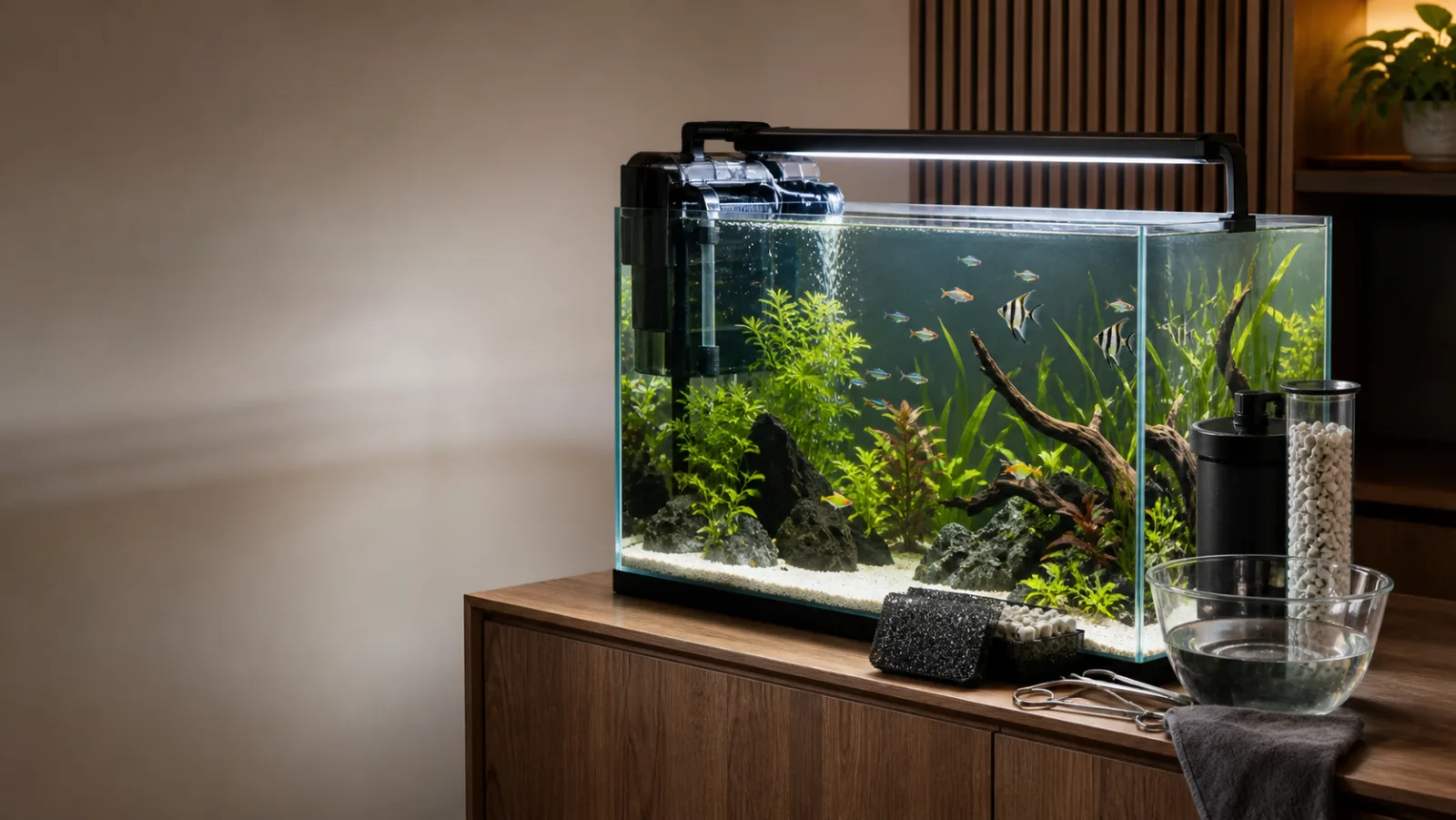
Aquarium
Best Aquarium Filters and Filter Media for Clear, Healthy Water (2026)
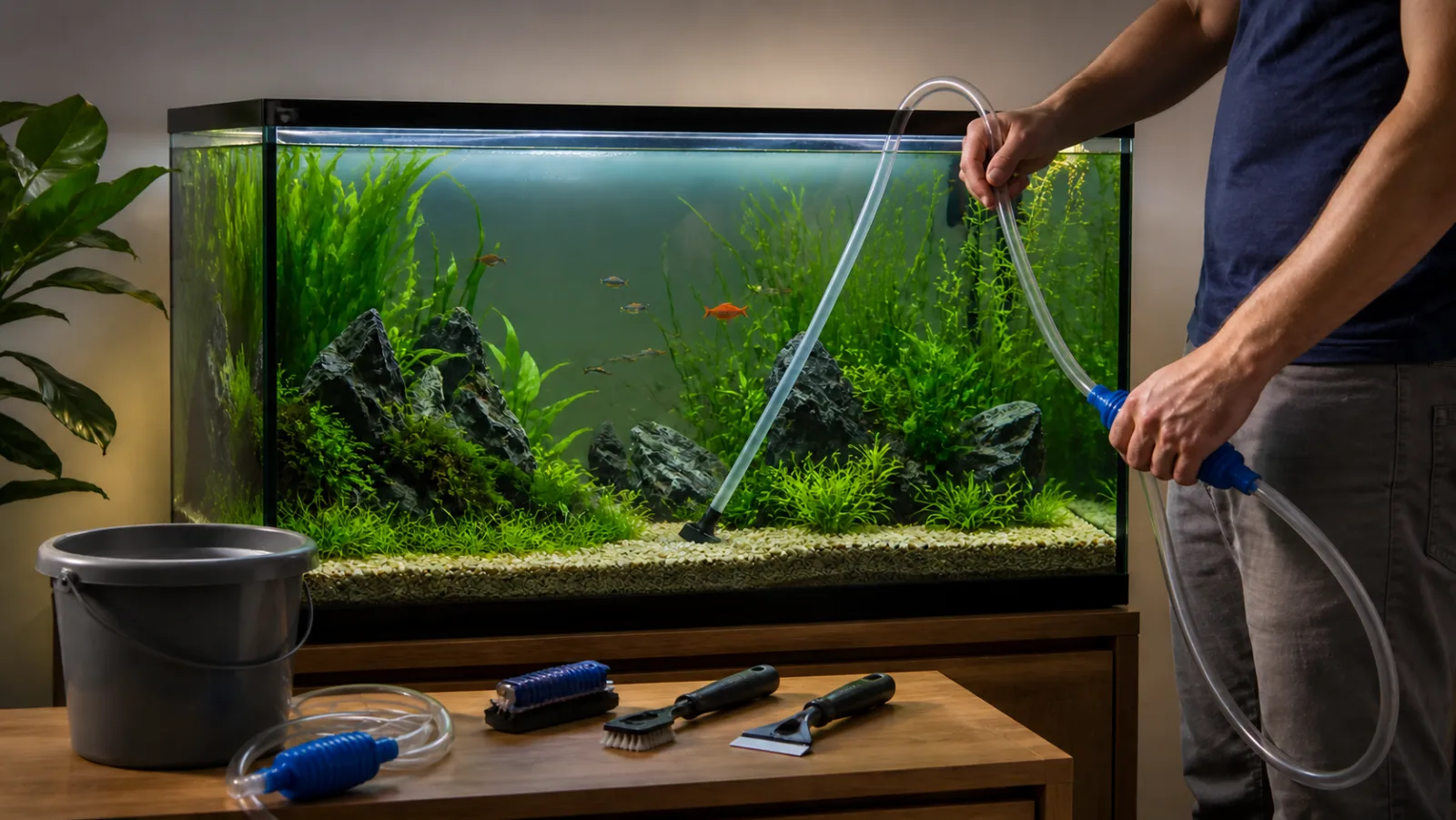
Aquarium
Best Aquarium Cleaning Tools for Better Water Quality (2026)
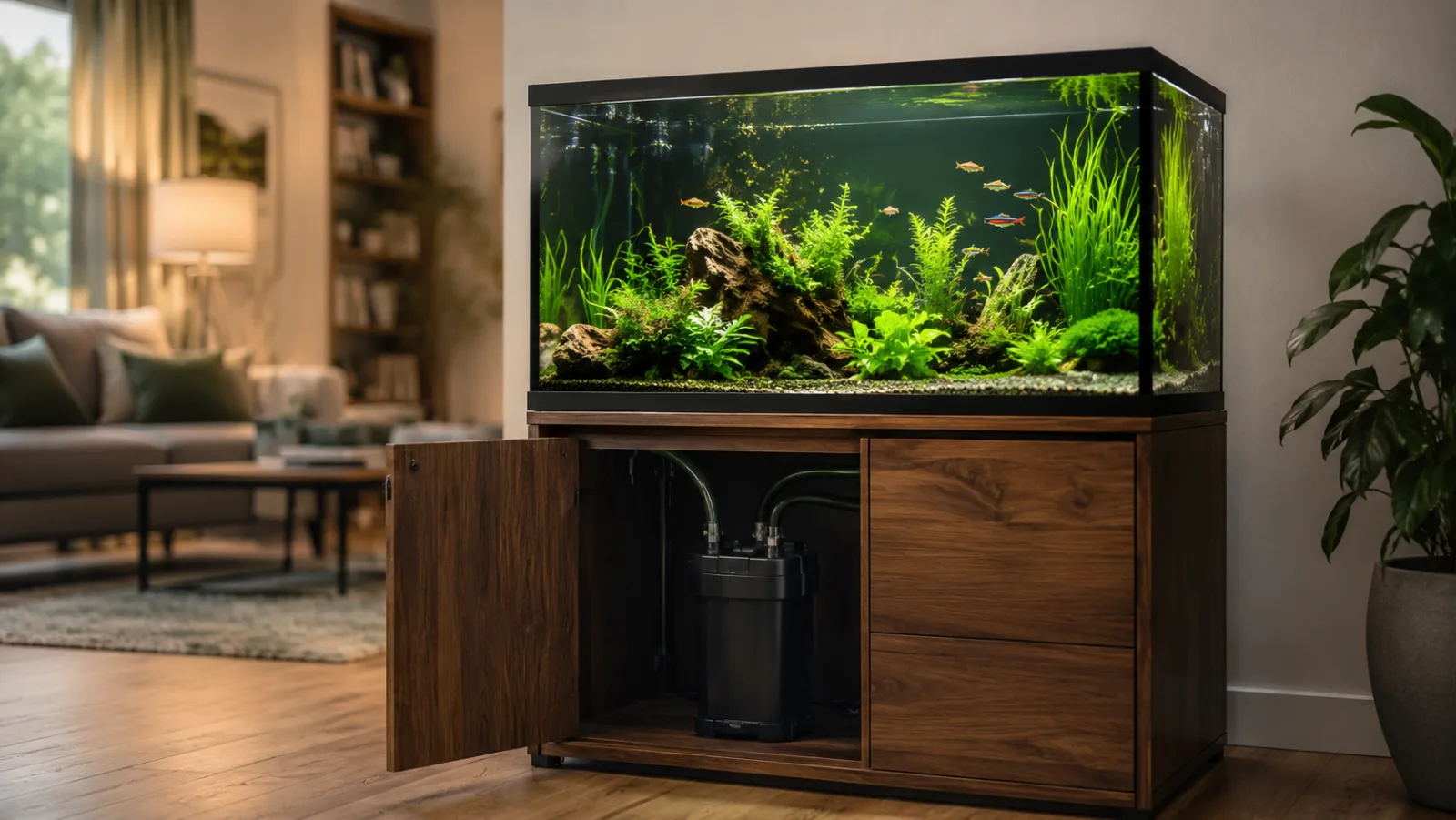
Aquarium
Best Aquarium Canister Filters (2026)
Aquarium
Aquarium Water Quality, Cycling and Testing for Beginners (2026 Guide)
Aquarium
Best Aquarium Water Test Kits for Freshwater Fish Tanks (2026)
Aquarium
Best Aquarium Bacteria Starters for New Freshwater Tanks (2026)
Aquarium