Cats & Dogs
Cat and Dog Nutrition, Hydration, and Digestive Health: 2026 Guide for Pet Owners
How to choose complete and balanced food, support hydration, avoid common digestive mistakes, and know when GI signs need a vet.
By Nick Miles · Updated May 5, 2026 · 16 min read
PetPalHQ is reader-supported. We may earn a commission from qualifying Amazon purchases at no extra cost to you.

Every product on this list has been scored against the PetPal Gear Score, a weighted composite of expert consensus, observed effectiveness, animal safety, long-term durability, and value. Review method: Editorial synthesis of veterinary, regulatory, university, and trade-association guidance — AAFCO, FDA, AVMA, AAHA, WSAVA, the Merck Veterinary Manual, the Cornell Feline Health Center, Tufts Cummings School of Veterinary Medicine, the Purina Institute, and Hill's Pet Nutrition.. Synthesized from 12+ expert sources.
A "premium" front-of-bag claim does not feed your cat. AAFCO, the FDA, and WSAVA all converge on the same starting point: what matters is the nutritional adequacy statement, the species and life stage the food is formulated for, and whether the household can actually feed it in appropriate portions with adequate water. The shopping aisles flatten that into marketing; this hub puts it back in order.
PetPalHQ does not run a feeding lab. The recommendations below are an editorial synthesis of veterinary, regulatory, university, and peer-reviewed guidance, with sources cited by name throughout — AAFCO and the FDA on labeling rules, the AVMA and the Merck Veterinary Manual on clinical practice, AAHA and WSAVA on nutritional assessment, the Cornell Feline Health Center on cat-specific hydration, Tufts Cummings School on homemade and raw feeding, the Association for Pet Obesity Prevention on the scope of the weight problem, the Purina Institute on body condition scoring, and Hill's Pet Nutrition on diet transitions.
What must your pet's food actually do?
Before any conversation about brand, ingredient, or format, three pillars decide whether a pet food can do its job: nutritional adequacy for the correct species and life stage, species-specific nutrient profiles, and consistent portion-controlled delivery with adequate water. AAFCO, the FDA, and the World Small Animal Veterinary Association all converge on these as the minimum requirements — everything else is secondary to getting these three right.
Nutritional adequacy. AAFCO says the nutritional adequacy statement is the key part of the label and the most important sentence for matching a product to a pet's needs. The FDA explains that a food labeled "complete and balanced" is intended to serve as the sole diet and must either meet AAFCO nutrient profiles or pass an AAFCO feeding-trial procedure. If a product does not carry that statement, it is — by FDA's own definition — not designed to be the only thing your pet eats.
Species specificity. The Merck Veterinary Manual notes that dog food is generally not satisfactory as a regular diet for cats, because cats require different nutrient profiles, including taurine and other feline-essential nutrients. Cats are not small dogs, and feeding them as if they were is one of the longest-running mistakes in household pet care.
Nutrition as routine preventive care. The American Animal Hospital Association says nutritional assessment, including body-condition score and muscle-condition score, should ideally happen at every veterinary exam, and that the World Small Animal Veterinary Association treats nutrition as the fifth vital assessment in small-animal care alongside temperature, pulse, respiration, and pain. Diet is not a one-time setup decision.
AAHA frames this with a useful structure called the "Circle of Nutrition": the pet, the diet, and the feeding environment all matter together. The right food for an indoor senior cat in a multi-cat household is not the right food for a working sporting dog with a measured calorie need, even if both are "complete and balanced" on the label.
How to read a pet food label without getting lost
The most important parts of a pet food label are not on the front of the bag. AAFCO identifies the nutritional adequacy statement — usually printed on the back or side panel in small print — as the key decision point. It tells you the life stage the food is formulated for and which AAFCO pathway was used. Everything else on the label, including marketing claims and ingredient-list order, is secondary to getting this right first.
The nutritional adequacy statement. AAFCO says this is usually printed on the back or side in small print. It tells you the life stage the food is formulated for — growth, maintenance, gestation/lactation, or all life stages — and whether AAFCO's nutrient-profile or feeding-trial pathway was used. Match this to your pet first; everything else is decoration if this part is wrong.
The ingredient list. AAFCO says ingredients must be listed in descending order by weight, but the absolute amount of each ingredient is not quantified. This is one of the cleanest "what the spec sheet does not tell you" moments in the entire pet-food aisle: an ingredient list cannot tell you how much of any one ingredient is actually present, only the order.
Guaranteed analysis and calories. AAFCO explains that the guaranteed analysis gives only minimums and maximums for a limited set of nutrients — typically crude protein, crude fat, crude fiber, and moisture — not a complete digestibility or quality picture. Merck adds that calorie content and feeding frequency must also appear on the label, which is what you actually use to size meals.
Marketing terms. The WSAVA toolkit on selecting pet foods says unregulated descriptors such as "holistic," "premium," or "human-grade" can be of little practical value, and pushes owners to ask manufacturers about qualified nutritionists on staff, manufacturing controls, nutrient analysis, and quality-control testing. The most useful questions for any brand are the ones that brand has the hardest time answering quickly.
| Label element | Where it appears | What it tells you | What it does not tell you |
|---|---|---|---|
| Nutritional adequacy statement | Usually back or side, small print | Life stage and AAFCO pathway (profile vs. feeding trial) | Day-to-day digestibility or quality |
| Ingredient list | Side panel | Ingredients in descending order by weight | Absolute amounts of each ingredient |
| Guaranteed analysis | Side panel | Minimums/maximums for a limited nutrient set | Total nutrient profile or bioavailability |
| Calorie content | Required on label | Kcal per cup/can — used for portioning | Calories your specific pet actually needs |
| "Holistic," "premium," "natural" | Front of bag | Marketing language | No regulated nutritional meaning per WSAVA |
Sources: AAFCO Reading Labels, FDA Complete and Balanced Pet Food, Merck "Dog and Cat Foods," WSAVA Guidelines on Selecting Pet Foods.
Why are wet, dry, mixed, therapeutic, homemade, and raw diets not interchangeable?
The Merck Veterinary Manual gives the moisture comparison every owner should know: dry foods are roughly 10 percent water, canned foods 68 to 78 percent water, and semimoist foods 25 to 40 percent water. The Cornell Feline Health Center says wet cat food is typically about 70 to 80 percent water. Those numbers anchor the wet-versus-dry conversation more cleanly than any brand argument.
Dry food. Merck describes dry food as the most popular format — shelf-stable, convenient, and around 10 percent water. Dry food can absolutely be complete and balanced, but its lower moisture content means hydration context matters more, especially in cats prone to lower urinary tract issues, which the Cornell Feline Health Center highlights repeatedly.
Wet food. Merck and Cornell agree that wet food delivers meaningfully more moisture and that it can be fed in addition to or instead of dry food. The Cornell Feline Health Center specifically calls out wet food as a useful hydration support for cats, and notes that wet food materially changes where the cat's daily water intake comes from.
Mixed feeding. Owners often combine wet and dry: moisture support from wet, convenience and dental texture from dry, calorie control from measured portions. This is a practical compromise rather than an automatic upgrade. Cornell's and Merck's broader stance is that complete-and-balanced is the baseline; moisture is the most concrete differentiator between formats.
Therapeutic diets. AAFCO notes that therapeutic and veterinary medical foods still require a nutritional adequacy statement. The Merck Veterinary Manual explains that hydrolyzed-protein and novel-protein diets can be appropriate when adverse food reactions are suspected, and that food-responsive enteropathies often improve within days to two weeks after a diet change. Therapeutic diets belong in a vet conversation, not an aisle decision.
Homemade diets. Tufts Cummings School Petfoodology says there is no evidence that home-prepared diets are healthier than commercial complete-and-balanced diets, and that improperly formulated home-cooked diets can seriously harm pets, especially growing animals. The Merck Veterinary Manual likewise says nutritional problems most commonly occur when dogs and cats are fed unbalanced homemade diets. Homemade is not inherently better; it is higher-management.
Raw diets. The American Veterinary Medical Association discourages feeding raw or undercooked animal-source protein because of pathogen risks to pets and humans in the household. The FDA's raw pet food page reports finding Salmonella in 15 and Listeria monocytogenes in 32 of 196 sampled raw pet foods. Tufts adds concerns including GI disease, contamination, and injury risk from bones. The expert consensus does not support a general health-benefit claim for raw feeding.
| Approach | Typical moisture | Strongest case for it | Biggest caution |
|---|---|---|---|
| Dry food | About 10% | Convenience, shelf life, calorie control | Hydration context matters, especially for cats |
| Wet food | 68–78% (canned) / 70–80% (cat) | Hydration support; palatability | Cost, refrigeration, portion discipline |
| Mixed feeding | Varies | Moisture plus convenience | Easy to over-feed if portions aren't measured |
| Therapeutic | Varies | Vet-directed conditions (allergies, GI) | Vet involvement required |
| Homemade | Varies | Specific medical reasons with vet supervision | No proven advantage; risk if unbalanced (Tufts, Merck) |
| Raw | High | None supported by AVMA/FDA/Tufts as a general benefit | Pathogen risk; FDA documented Salmonella/Listeria |
Sources: Merck Veterinary Manual "Dog and Cat Foods," Cornell Feline Health Center, Tufts Cummings School Petfoodology, AVMA raw-diet policy, FDA raw pet food page, AAFCO.
Why do cats need extra attention for hydration?
The Merck Veterinary Manual calls water the most important nutrient and says clean, fresh water should be available at all times — and that multiple water sources can encourage intake. That rule applies to both species, but the playbook differs.
Dogs. Most healthy household dogs self-regulate water intake well when clean water is consistently available. Watch for the inverse problem more than the deficit one: sudden increases in thirst can signal endocrine or kidney disease and are a vet conversation, not a hydration tip.
Cats. The Cornell Feline Health Center says cats need approximately 4 ounces of water per 5 pounds of lean body weight per day, and that this intake comes from both water and food — which is why a cat eating mostly wet food may visibly drink less and still be well hydrated. Cornell also points out that wet cat food is typically about 70 to 80 percent water, which materially shifts the equation.
Practical levers the Cornell Feline Health Center and Tufts Cummings School both highlight: provide multiple bowls in different rooms, separate water from food and litter, try wide shallow bowls (some cats dislike whisker contact with deep bowls), consider a fountain for cats who prefer moving water, add water to wet food if the cat accepts it, and rotate water sources to learn what an individual cat actually drinks.
The Cornell Feline Health Center also lists the dehydration warning signs that move a cat out of "tip-and-trick" territory and into a same-day veterinary call: lethargy, weakness, poor appetite, dry or tacky gums, and sunken eyes.
How often and how much to feed
There is no universal feeding schedule that applies to all cats and dogs. The Merck Veterinary Manual and the Cornell Feline Health Center both organize feeding guidance by life stage, species, and health status rather than by clock time. For most adult dogs, Merck recommends two premeasured meals daily; for cats, the American Association of Feline Practitioners emphasizes multiple small meals to better match natural feeding patterns.
Puppies. Merck says puppies between weaning and 6 months should generally be fed three times a day, then twice daily from 6 to 12 months. Large-breed puppies should stay on growth diets formulated specifically for large-size dogs until skeletal maturity, because oversupply of calcium and energy in standard puppy formulas can drive developmental orthopedic problems.
Adult dogs. Merck says the best default regimen for most adult dogs is portion-controlled feeding — two premeasured meals at regular times each day, with body condition monitored at every check-in. Free-feeding dry food in a bowl is the single most common cause of portion creep in pet households.
Kittens and adult cats. The Cornell Feline Health Center says complete-and-balanced wet or dry food can work for cats, but plenty of fresh water is particularly important for cats eating only dry food, especially if they are prone to lower urinary tract disease. Cornell notes that free-feeding may be acceptable for some cats but leads to overeating and weight gain in others.
The American Association of Feline Practitioners, in its "How to Feed a Cat" materials, emphasizes multiple small meals, privacy at the bowl, separation between food/water/litter, and feeding behaviors that reduce stress-related eating problems — useful framing because cats are not built for a once-a-day bowl-fill schedule.
Treats. Merck is direct: most treats are not complete and balanced, and total daily treat amount should remain under 10 percent of total caloric intake. Treats count toward total calories whether or not the household ledger does.
| Life stage | Dog default (per Merck) | Cat default (per Cornell/AAFP) | Most common mistake |
|---|---|---|---|
| Weaning to 6 months | 3 meals/day; large-breed needs growth-formulated diet | Multiple small meals; complete-and-balanced kitten food | Using regular adult food during growth |
| 6–12 months | Twice daily; transition to adult timing | Continue multiple small meals | Switching to adult food too early |
| Adult | Two premeasured meals; portion-controlled | Multiple small meals; wet and/or dry; abundant water | Free-feeding without measurement |
| Senior | Continue portion control; reassess body condition | Continue cat-friendly meal pattern; watch hydration | Ignoring body-condition drift |
Sources: Merck Veterinary Manual "Feeding Practices in Small Animals," Cornell Feline Health Center, American Association of Feline Practitioners.
How serious is the pet obesity problem, and how do you assess body condition at home?
The Association for Pet Obesity Prevention reports that in 2022, 59 percent of dogs and 61 percent of cats evaluated by U.S. veterinary professionals were classified as overweight or having obesity, and that owner perception often diverged from the clinical assessment — pet parents see a normal-looking pet where the veterinarian sees excess body fat.
The Purina Institute publishes the 9-point Body Condition System used widely by clinicians. Its key idea for at-home use: each score above the ideal of 5 corresponds to roughly a 10 to 15 percent increase in body weight. That is a useful sanity check for owners — a cat at body-condition score 7 is not "a little chunky," it is roughly 20 to 30 percent over ideal weight.
Two peer-reviewed studies inform why this matters. A 2018 study found a strong association between body condition score and survival/lifespan in cats. A separate 2018 study found a similar link between body condition and life span in neutered client-owned dogs. Body condition is not cosmetic — it is a quietly powerful longevity variable.
Practical interventions, all backed by Merck and AAHA: switch to portion-controlled premeasured meals, treat all treats as part of the calorie budget (10 percent maximum), use body-condition scoring at home as a monthly check, and bring weight changes to the veterinarian rather than waiting for a routine annual visit.
What does the evidence actually say about probiotics, grain-free, and other contested nutrition topics?
Three of the most-asked questions in pet nutrition do not have clean answers, and overstating the evidence in either direction does owners a disservice. The honest position from the Merck Veterinary Manual, the FDA, and Tufts Cummings School Petfoodology is that these topics carry meaningful caveats — and the safest approach is to discuss them with a veterinarian rather than treating trending labels as settled science.
Probiotics. The Purina Institute frames probiotics as potentially useful for maintaining a balanced intestinal microbiota and supporting GI conditions, but emphasizes that effects are strain-specific and that pet-formulated products differ from human products. The Merck Veterinary Manual is more cautious: effects depend on exact dose and strain, and evidence of benefit in cats and dogs with diarrhea is often anecdotal, with more high-quality studies needed. The safest editorial wording: do not treat probiotics as interchangeable, do not expect generic miracle results, and discuss strain selection with a veterinarian for any ongoing GI issue.
Grain-free and dilated cardiomyopathy (DCM). The FDA's "Questions & Answers" page on non-hereditary DCM in dogs says the investigation is ongoing and the specific connection between diet and DCM is still unknown — both grain-free and grain-containing diets have appeared in case reports, and pulses (peas, lentils) high in ingredient lists are common among reported cases. Tufts Cummings School Petfoodology says the problem has not gone away and that underreporting remains plausible. The safest editorial wording: do not treat grain-free as a health halo; if your dog has no medical reason to avoid grains, discuss diet selection with a veterinarian, especially if pulses are prominent in the ingredient list.
Homemade and raw. The expert consensus is unambiguous on the framing. Tufts says home-prepared diets are not proven healthier and can cause real harm if formulated incorrectly. The AVMA discourages raw feeding because of pathogen risk, the FDA documents Salmonella and Listeria in sampled raw pet foods, and Tufts details additional risks. These are higher-management approaches, not inherently better ones, and they require qualified veterinary oversight when used at all.
How to switch foods without a digestive accident
Hill's Pet Nutrition recommends a gradual diet transition, typically across about seven days, mixing increasing proportions of the new food into the old. A 2023 peer-reviewed puppy study found that gradual transition was most likely to reduce diarrhea relative to abrupt dietary change.
A simple framework: 25 percent new food on days 1–2, 50 percent on days 3–4, 75 percent on days 5–6, 100 percent on day 7. Slow it down further if stools soften — the calendar is a guideline, not a deadline. If your pet has a known sensitive stomach, plan for a 10 to 14 day transition rather than 7.
Mild stool softening in an otherwise bright, eating, drinking pet during a transition is usually a "common target" rather than a red flag. What is not normal and warrants veterinary attention: blood in stool, repeated vomiting, lethargy, dehydration signs, or symptoms that persist beyond a short, self-limited window.
When does digestive trouble stop being routine and require a veterinarian?
Most household digestive trouble in dogs and cats traces back to a small, predictable set of mistakes. The escalation question is when self-management stops being safe — and the AVMA, Cornell Feline Health Center, and Merck Veterinary Manual all draw that line at severe or bloody vomiting or diarrhea, dehydration signs, and GI symptoms that persist beyond a short self-limited window. Common mistakes that put a pet in that zone include:
- Choosing food from front-of-bag language instead of the adequacy statement
- Switching foods abruptly
- Leaving portions unmeasured
- Assuming treats do not count
- Assuming probiotics are interchangeable across products
- Treating grain-free or homemade as automatic upgrades
- Using dog food as a regular cat diet
- Trying to manage persistent diarrhea with internet anecdotes
The escalation question is when self-management stops being safe.
The American Veterinary Medical Association's emergency-care guidance flags severe vomiting or diarrhea — especially more than two episodes in a 24-hour window — as needing prompt veterinary consultation. The Cornell Feline Health Center lists lethargy, weakness, poor appetite, dry mucous membranes, and sunken eyes as dehydration signs that warrant a same-day call. The Merck Veterinary Manual notes that acute hemorrhagic diarrhea syndrome in dogs can cause marked fluid loss and shock before obvious dehydration is recognized. And Merck defines chronic enteropathies in dogs and cats by GI signs that persist for three weeks or longer — a duration that shifts the conversation from home management to diagnostic workup.
| Sign or scenario | Bucket | What to do |
|---|---|---|
| Severe vomiting or diarrhea, more than two episodes in 24 hours | Universal red flag | Call the vet promptly (AVMA) |
| Sudden bloody diarrhea, especially with vomiting, lethargy, or abdominal pain | Universal red flag | Urgent care (Merck — acute hemorrhagic diarrhea syndrome) |
| Lethargy, weakness, poor appetite, dry/tacky gums, sunken eyes | Universal red flag | Contact veterinarian promptly (Cornell) |
| GI signs lasting 3 weeks or longer | Universal red flag | Move from self-management to diagnostic workup (Merck chronic enteropathies) |
| Mild stool softening after a recent food switch in an otherwise bright pet | Common target | Slow the transition; monitor stool |
| Cat drinking less after switch to wet food but otherwise normal | Common target | Hydration is shifting source, not declining (Cornell) |
| Confusion about labels and "complete and balanced" claims | Common target | Education — not an emergency |
| Portion creep, too many treats, body-condition drift | Common target | Switch to measured portions; recheck BCS |
Sources: AVMA emergency guidance, Cornell Feline Health Center, Merck Veterinary Manual chronic enteropathies and acute hemorrhagic diarrhea references, Hill's Pet Nutrition transition guidance, the Association for Pet Obesity Prevention.
Frequently Asked Questions
- What does "complete and balanced" mean on pet food?
- The FDA explains that "complete and balanced" indicates a food is intended to serve as the sole diet and must either meet AAFCO nutrient profiles or pass an AAFCO feeding-trial procedure. AAFCO says this nutritional adequacy statement is the most important part of the label. Foods without this statement are, by definition, not designed to be the only thing your pet eats.
- Where on the bag do I actually find the most important part of the label?
- AAFCO says the nutritional adequacy statement is usually printed on the back or side panel in small print — not the front of the bag. Read it first when comparing two foods. It tells you the life stage the food is formulated for and which AAFCO pathway (nutrient profile or feeding trial) was used.
- Is wet food better than dry food?
- Either format can be complete and balanced. The Merck Veterinary Manual says dry food is roughly 10 percent water and canned food 68 to 78 percent water. The Cornell Feline Health Center says wet cat food is typically about 70 to 80 percent water. Wet food is often useful for hydration support, especially in cats. The "best" format depends on the individual pet's needs, the household, and whether portions are measured. Either works when it is complete and balanced and fed in appropriate amounts.
- How much water should my cat actually drink?
- The Cornell Feline Health Center estimates cats need approximately 4 ounces of water per 5 pounds of lean body weight per day. This intake comes from both water and food. A cat eating mostly wet food may visibly drink less and still meet that requirement. Wet food can supply up to 80 percent of its weight in water.
- How can I get my cat to drink more water?
- The Cornell Feline Health Center and Tufts Cummings School Petfoodology suggest providing multiple bowls in different rooms. Separate water from food and litter. Try wide shallow bowls. Consider a pet fountain for cats who prefer moving water. Add water to wet food if accepted. Offer wet food in addition to or instead of dry. Different cats respond to different levers — try several before assuming a cat will not drink more.
- How often should I feed my adult dog?
- The Merck Veterinary Manual says the best default regimen for most adult dogs is portion-controlled feeding — two premeasured meals at regular times each day. Body condition should be monitored regularly. Free-feeding from a constantly full bowl is the most common driver of portion creep and weight gain in dogs.
- Are treats okay every day?
- Yes, but they count. The Merck Veterinary Manual says most treats are not complete and balanced and total daily treat calories should stay under 10 percent of total caloric intake. The FDA notes that "complete and balanced" applies to the main diet — treats and supplements outside that 10 percent are decoration, not nutrition.
- Is grain-free food healthier? What about the DCM concern?
- The FDA's DCM Q&A says the investigation into diet-associated dilated cardiomyopathy in dogs is ongoing and the specific connection is still unknown. Both grain-free and grain-containing diets have appeared in case reports, with pulses high in ingredient lists common among reported cases. Tufts Cummings School Petfoodology says the issue has not gone away. Do not treat grain-free as a health halo. If your dog has no medical reason to avoid grains, discuss diet choice with your veterinarian, particularly if pulses are prominent ingredients.
- Can my cat just eat dog food if she likes it?
- Not as a regular diet. The Merck Veterinary Manual says dog food is generally not satisfactory for cats because cats require different essential nutrients, including taurine, that are formulated into cat food at higher levels. Occasional accidental nibbling of a dog's food is unlikely to cause harm; using dog food as the regular diet for a cat is a long-term nutritional shortfall.
Bottom Line
AAFCO says the nutritional adequacy statement is the most important part of a pet food label. The FDA explains that 'complete and balanced' means the food is intended to serve as the sole diet.
Merck Veterinary Manual calls water the most important nutrient. Cornell Feline Health Center notes that wet cat food is typically about 70 to 80 percent water — meaningful for cats prone to lower urinary tract problems.
The Association for Pet Obesity Prevention reports that in 2022, 59 percent of dogs and 61 percent of cats evaluated by U.S. veterinary professionals were overweight or had obesity. Portion control is the day-to-day fix.
Merck recommends portion-controlled, premeasured meals for most adult dogs and says treats should stay under 10 percent of total daily calories.
The AVMA flags severe vomiting or diarrhea, especially more than two episodes in 24 hours, as needing prompt veterinary consultation. Blood, lethargy, dehydration, or persistent GI signs are not 'wait and see' situations.
All articles in this guide
Best Automatic Pet Feeders for Busy Families (2026)
PETLIBRO Granary is the synthesis pick for busy dry-food households; PETLIBRO Polar is the strongest automated answer for wet food; SureFeed-class selective-access feeders solve multi-pet diet theft. Editorial recommendations grounded in WSAVA, FelineVMA, FDA food-safety guidance, and manufacturer documentation.
15 min read
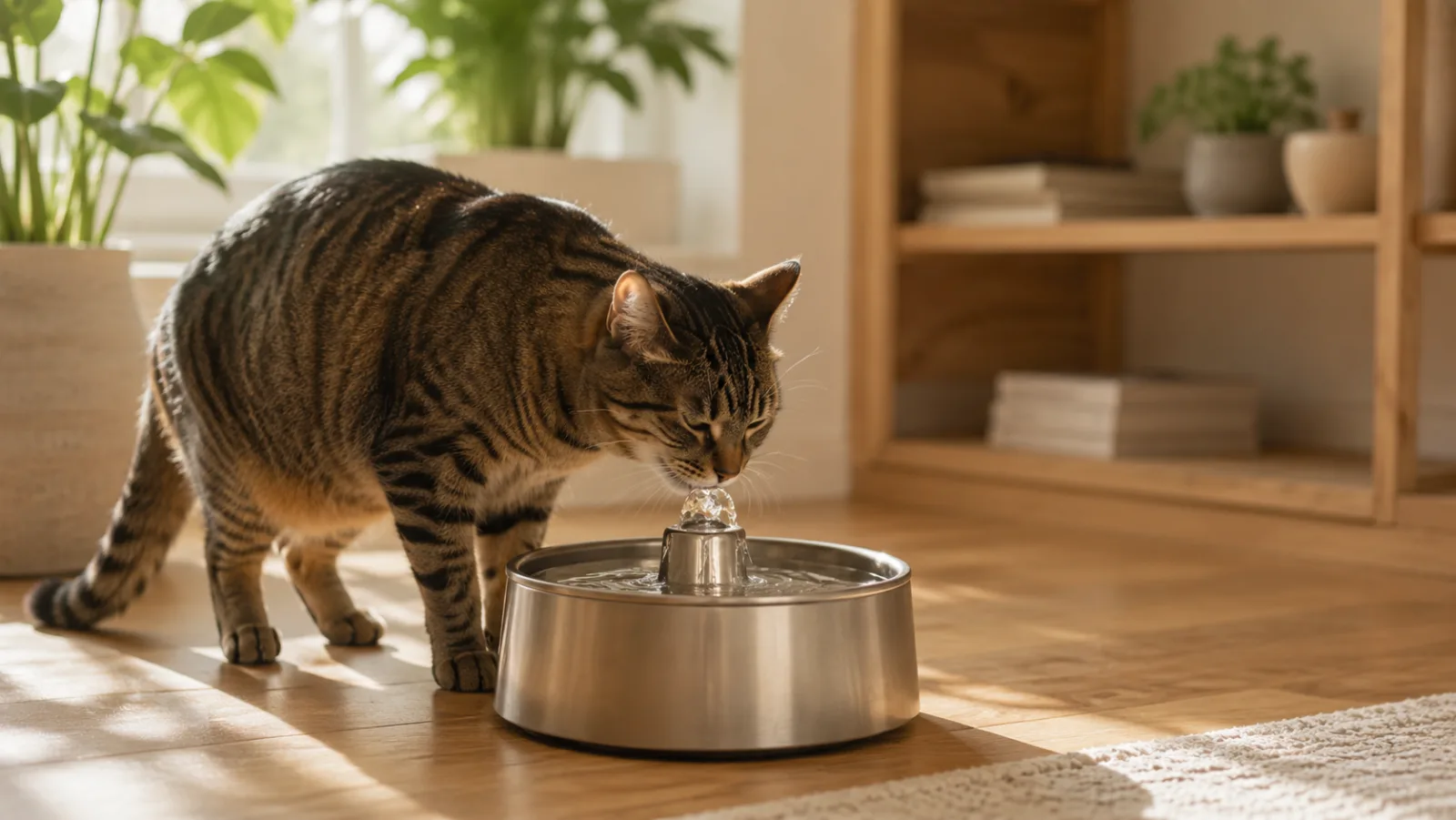
Best Cat Water Fountains for Hydration, Cleaning Ease, and Quiet Operation (2026)
Most cats under-drink, and Cornell, AAFP, and Ohio State all support spreading water resources around the home; a fountain is most useful when it is easy to clean, sized to the household, and not oversold as a treatment for urinary or kidney disease.
13 min read
Best Probiotics for Dogs and Cats After Stress, Diet Change, or Antibiotics (2026)
A pet probiotic is most defensible when the label names the strain, lists a specific CFU count, identifies species fit, and the supplier carries the NASC Quality Seal — and even the best-labeled probiotic is not a substitute for a veterinarian when diarrhea is severe or persistent.
12 min read
Best Slow Feeders and Anti-Gulp Bowls for Dogs and Cats (2026)
For most fast eaters, the Outward Hound Fun Feeder Slo Bowl is the safest mainstream pick; reach for a LickiMat Buddy or LickiMat SloDog if your pet is short-faced or hates maze obstacles, and treat any slow feeder as a meal-rate tool, not a bloat-prevention device.
12 min read
Best Meal Toppers for Picky Eaters in Dogs and Cats (2026)
For picky dogs, Stella & Chewy's Meal Mixers add aroma without overwhelming a complete diet; for picky cats, Stella & Chewy's Marie's Magical Dinner Dust and Tiki Cat Stix are the strongest aroma- and moisture-first picks. Treat all toppers as the 10 percent of daily calories Tufts Petfoodology reserves for extras — not as the meal itself.
12 min read
Best Weight-Management Tools for Overweight Dogs and Cats (2026)
For most overweight pets, the smartest first purchase is a scale you will actually use weekly — Greater Goods Digital Pet Scale for cats, kittens, and toy breeds, Redmon Digital Dog Scale for medium and large dogs — paired with a kitchen-gram scale to weigh kibble. Treat retail weight-loss formulas like Hill's Science Diet Perfect Weight as portion-disciplined support, and reserve Royal Canin Satiety Support for vet-supervised plans.
12 min read
Best Sensitive-Stomach Foods and Diet-Transition Tools for Dogs and Cats (2026)
Retail limited-ingredient foods like Blue Buffalo Basics Salmon & Potato and Natural Balance L.I.D. can be useful starting points for mild digestive sensitivity in dogs and cats, but they are not diagnostic elimination diets. True food-allergy workups need a vet-supervised hydrolyzed or novel-protein trial — Hill's Prescription Diet z/d and Royal Canin HP are the formulas that come up in those conversations, not casual Amazon purchases.
13 min read
Best Gastrointestinal and Digestive Dog Foods (2026)
The over-the-counter dog foods built for digestibility, not just an allergy deck — highly digestible proteins, gentle carbs, prebiotic fiber, and live probiotics, scored on documented stool-quality outcomes. We mark the line where a shelf food ends and a vet-led GI workup begins.
13 min read
Best Hypoallergenic Cat Food (2026)
The over-the-counter cat foods that actually limit allergen exposure — the shortest, fish-free single-novel-protein rabbit and duck decks first, with the vet-trusted mainstream brands ranked honestly below them. We mark the line between a clean maintenance food and the vet-led elimination trial that diagnoses a real food allergy.
13 min read
Best Limited-Ingredient Diets for Dogs and Cats With Food Sensitivities (2026)
An over-the-counter limited-ingredient diet can simplify what a sensitive dog or cat eats, but it is not a diagnostic elimination diet. We synthesized veterinary-nutrition consensus to find the cleanest single-protein OTC formulas — and to mark the line between a maintenance food and the vet-led trial that actually diagnoses a food allergy.
14 min read
Best Vet-Recommended Senior Diets for Dogs and Cats (2026)
For most aging dogs, Hill's Science Diet Adult 7+ is the over-the-counter formula vets cite most; Purina Pro Plan Bright Mind 7+ adds cognitive and joint support. On the cat side, Purina Pro Plan Prime Plus 7+ leads on muscle-preserving protein. None of these is a prescription renal diet — those belong in a veterinary conversation, not an Amazon cart.
13 min read
Best Cat Water Fountains for Multi-Cat Households (2026)
Two or more cats can drain a small fountain in a day and burn out the pump. We read Cornell, ISFM/International Cat Care, the AAFP, and VCA to pick large-capacity, multi-drinking-point fountains that match how vets actually want water distributed in a multi-cat home.
13 min read
Best Stainless-Steel Cat Water Fountains (2026)
Stainless steel is the non-porous, dishwasher-safe drinking surface vets reach for first when a cat develops chin acne, and the Pioneer Pet Raindrop is the benchmark all-steel pick; just know that many fountains sold as 'stainless' still use a plastic reservoir.
12 min read
Best Ceramic Cat Water Fountains (2026)
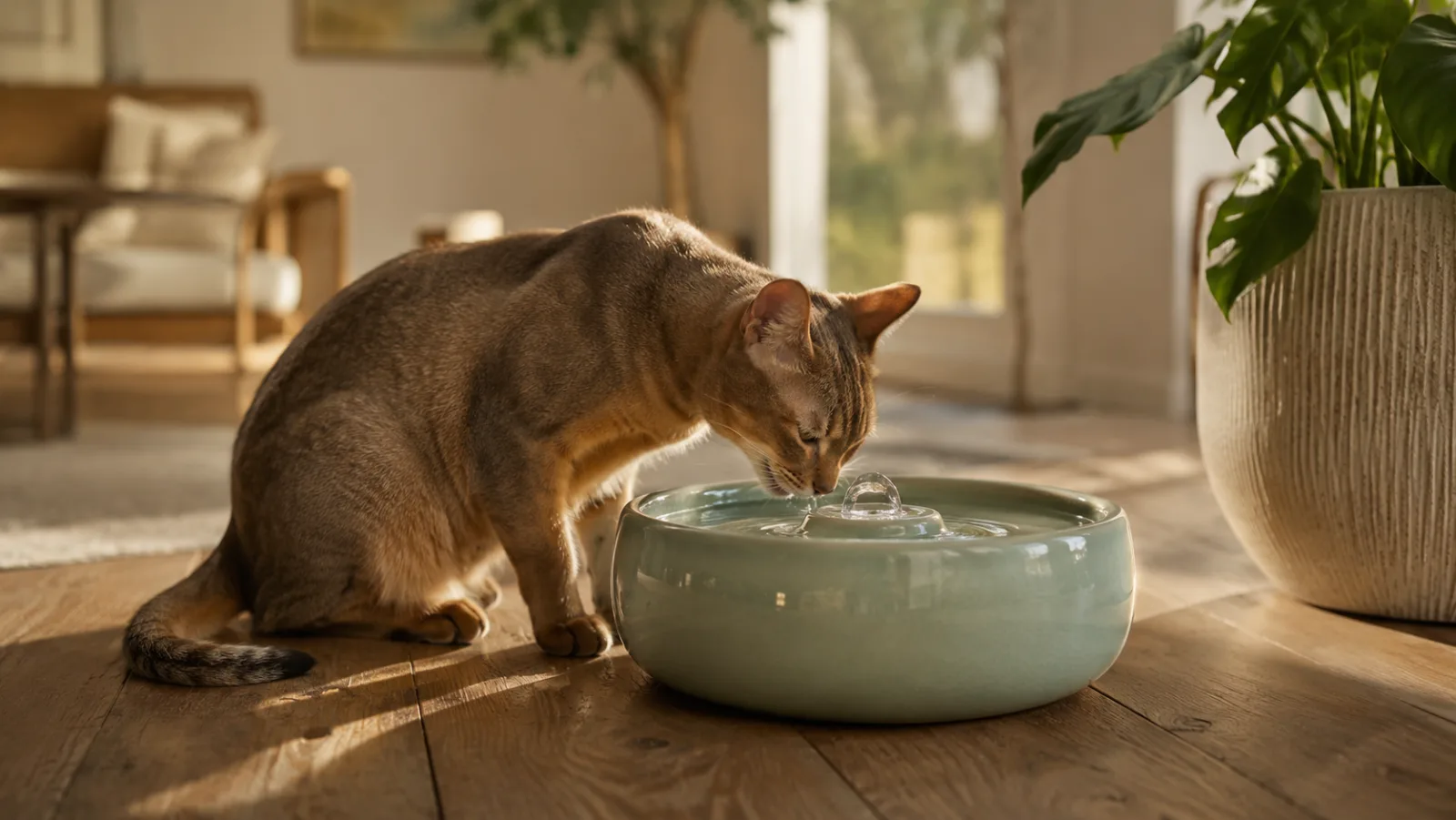
Glazed ceramic is the non-porous surface vets and the cat community reach for when a cat is breaking out on the chin, but capacity and cleaning access vary widely; the PetSafe Drinkwell Pagoda is the strongest all-rounder, with cheaper and quieter alternatives close behind.
12 min read
Best Quiet Cat Water Fountains (2026)
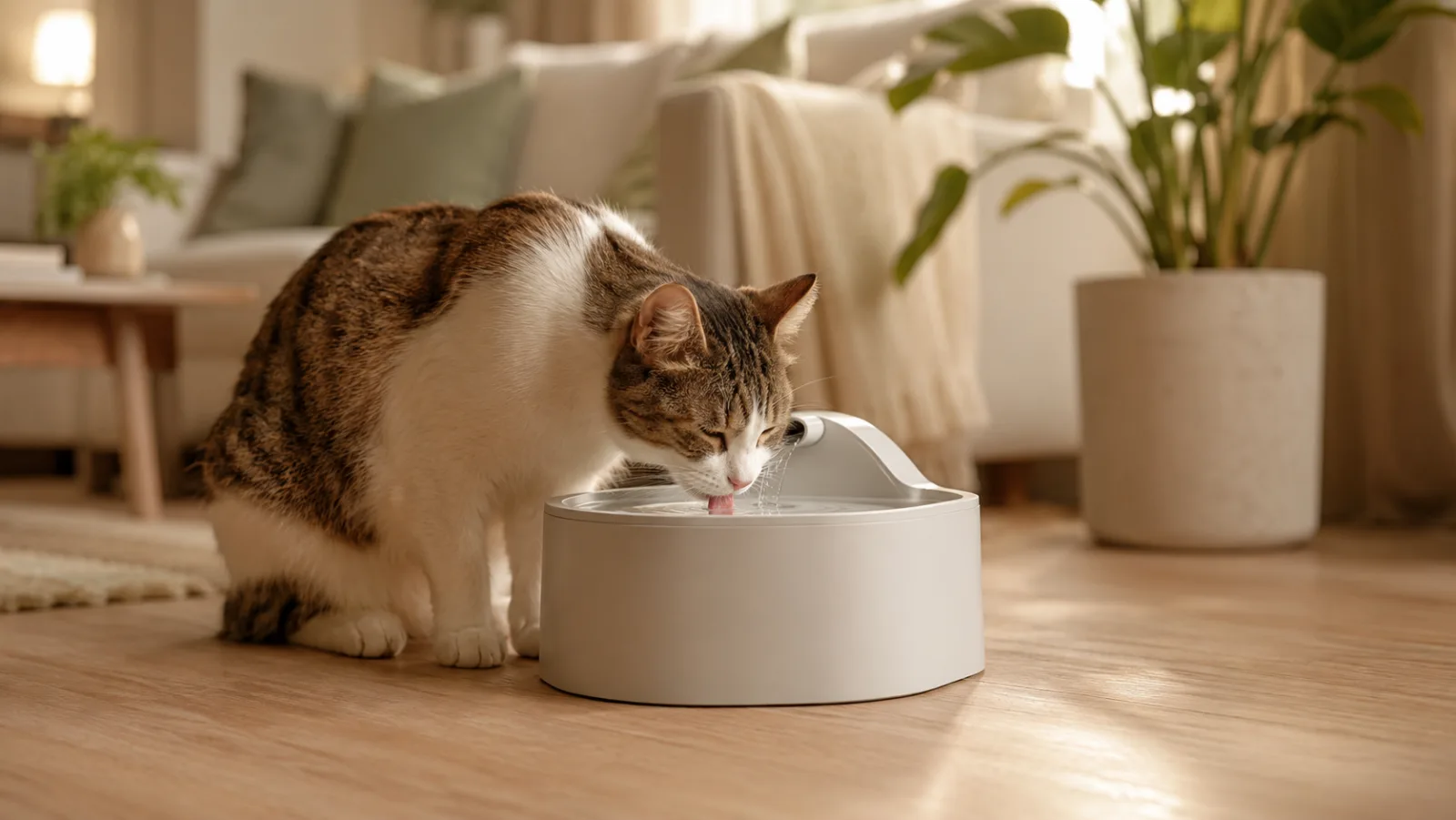
Pump noise is the number-one owner complaint about cat fountains, and most of it comes from the water level dropping below the pump's minimum line. The PETLIBRO Dockstream earns the top slot for a quality pump plus app low-water alerts; the PETKIT Eversweet SOLO 2 has the strongest pump design on the noise factor, with explicit anti-dry-burning protection.
12 min read
Best Cat Water Fountain Replacement Filters (2026)
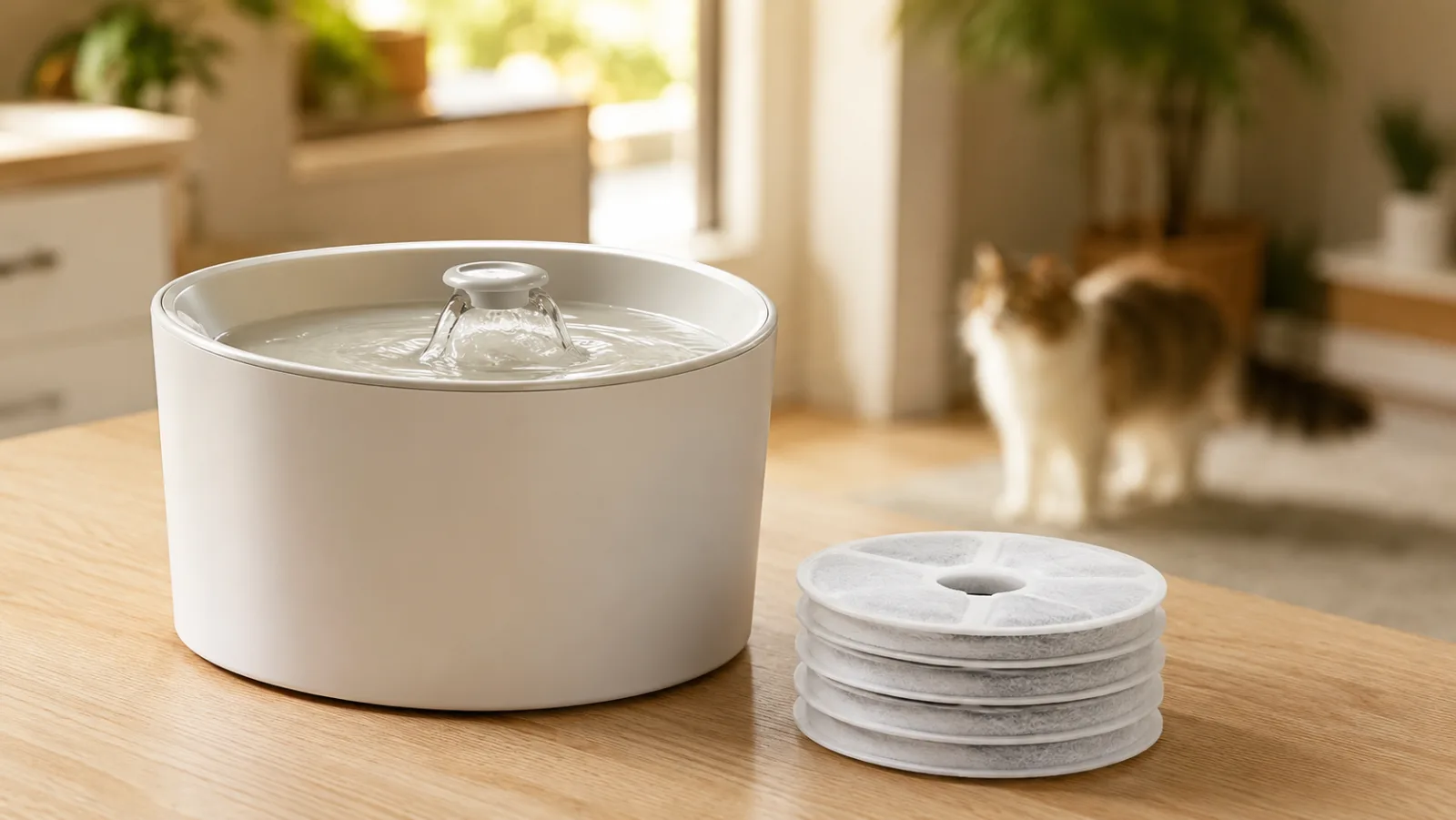
The filter is the consumable that keeps a fountain hygienic, not the fountain itself. The PETLIBRO 8-pack is the strongest all-round genuine-filter buy, but the right pick is the one that matches your fountain's exact model — and no filter removes biofilm, so you still scrub the pump.
12 min read
Sources & Methodology
Expert review sources
- AAFCO — Reading Labels
- FDA — Complete and Balanced Pet Food (Feb. 28, 2020)
- FDA — Raw Pet Food Diets can be Dangerous to You and Your Pet
- FDA — Questions & Answers: FDA's Work on Potential Causes of Non-Hereditary DCM in Dogs
- WSAVA — Global Nutrition Guidelines
- WSAVA — Guidelines on Selecting Pet Foods (March 10, 2021)
- AAHA — 2021 AAHA Nutrition and Weight Management Guidelines for Dogs and Cats (June 21, 2021)
- AAHA — How to Perform a Complete Nutritional Assessment (June 21, 2021)
- AVMA — Raw or Undercooked Animal-Source Protein in Cat and Dog Diets
- AVMA — 13 animal emergencies that require immediate veterinary consultation and/or care
- Merck Veterinary Manual — Nutritional Requirements of Small Animals (revised Nov. 2023)
- Merck Veterinary Manual — Feeding Practices in Small Animals (revised Nov. 2023)
- Merck Veterinary Manual — Dog and Cat Foods
- Merck Veterinary Manual — Chronic Enteropathies in Small Animals (2024)
- Cornell Feline Health Center — Hydration (last updated 2021)
- Cornell Feline Health Center — How often should you feed your cat?
- Cornell Feline Health Center — Bladder and Kidney Stones
- Tufts Cummings School Petfoodology — Should you make your own pet food at home? (July 14, 2016)
- Tufts Cummings School Petfoodology — Raw Diets: A Healthy Choice or Raw Deal?
- Tufts Cummings School Petfoodology — Diet-associated DCM update
- Association for Pet Obesity Prevention — 2022 U.S. State of Pet Obesity Report
- American Association of Feline Practitioners — How to Feed a Cat
- Purina Institute — The Purina Body Condition System
- Purina Institute — How to Choose a Pet Probiotic Supplement
- Hill's Pet Nutrition — Tips and Timelines for Switching Dog or Cat Food
Community sources
- Peer-reviewed: 'Abrupt Dietary Change and Gradual Dietary Transition Impact…' (2023)
- Peer-reviewed: 'Association between life span and body condition in neutered client-owned dogs' (2018)
- Peer-reviewed: 'Strong associations of nine-point body condition scoring with survival and lifespan in cats' (2018)
Prices and specs verified May 4, 2026.
About the author
Nick Miles is the chief editor of PetPalHQ. PetPalHQ does not run a testing lab — every claim on this page is synthesized from veterinary references, federal regulatory guidance, university publications, peer-reviewed studies, and trade-association documentation. Sources are cited by name in body prose; the bibliography above lists every primary source consulted for this hub.
PetPalHQ is a participant in the Amazon Services LLC Associates Program. We may earn commissions from qualifying purchases — at no extra cost to you.
More Guides

Cats & Dogs
Best Automatic Pet Feeders for Busy Families (2026)
Cats & Dogs
Best Cat Water Fountains for Hydration, Cleaning Ease, and Quiet Operation (2026)
Cats & Dogs
Best Probiotics for Dogs and Cats After Stress, Diet Change, or Antibiotics (2026)

Cats & Dogs
Best Slow Feeders and Anti-Gulp Bowls for Dogs and Cats (2026)
Cats & Dogs
Best Meal Toppers for Picky Eaters in Dogs and Cats (2026)
Cats & Dogs
Best Weight-Management Tools for Overweight Dogs and Cats (2026)
Cats & Dogs
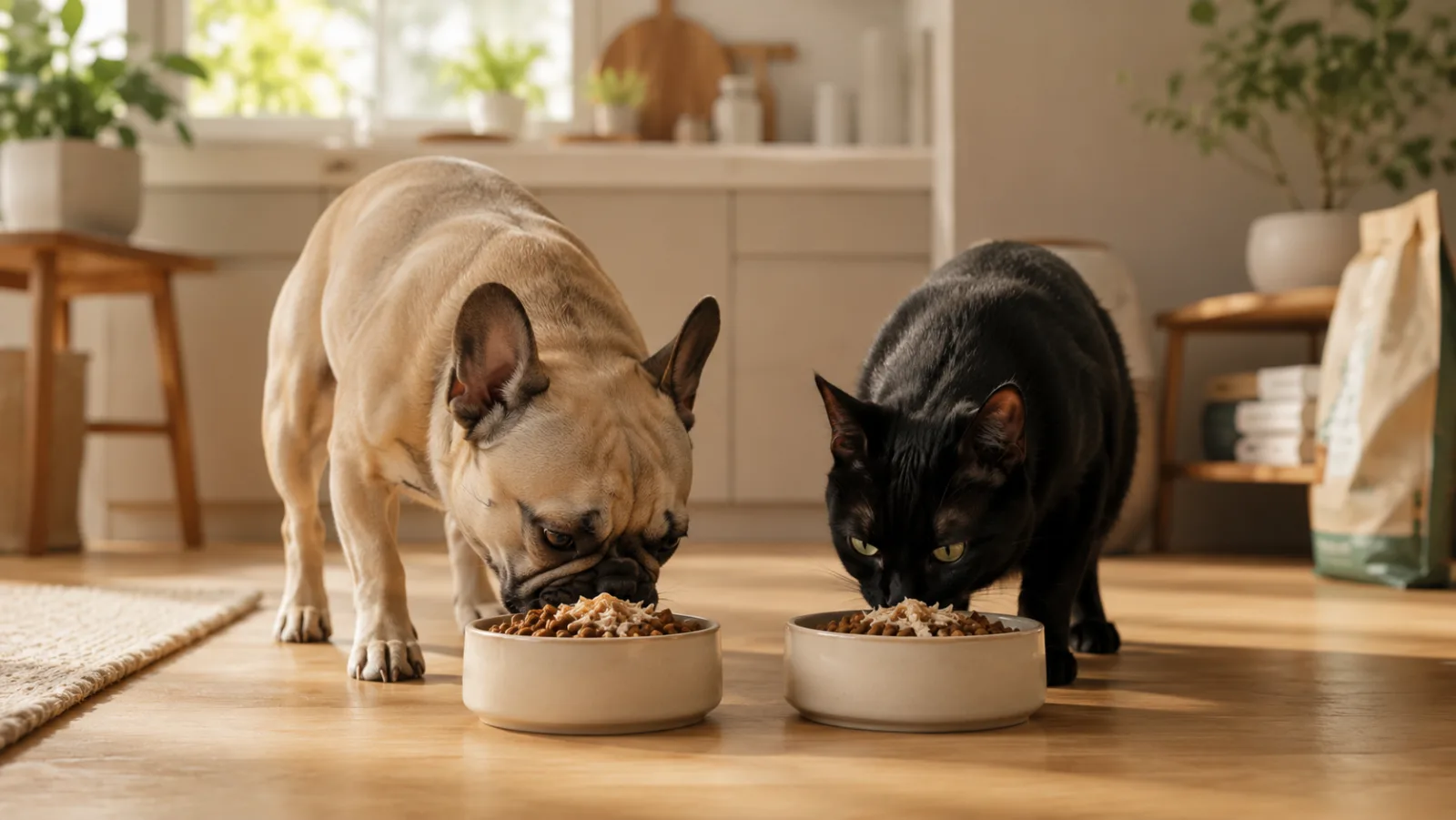
Best Sensitive-Stomach Foods and Diet-Transition Tools for Dogs and Cats (2026)
Cats & Dogs
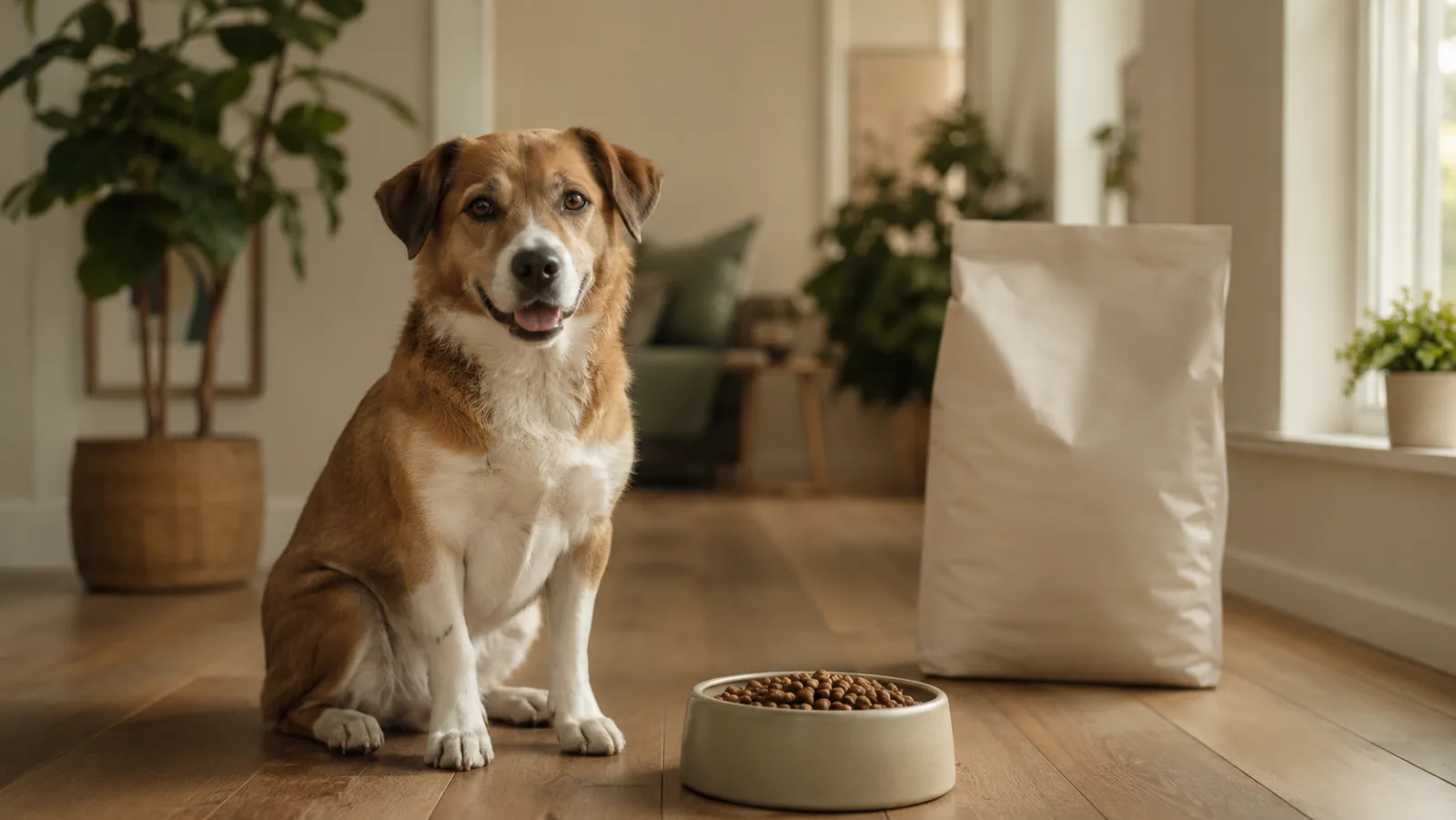
Best Limited-Ingredient Diets for Dogs and Cats With Food Sensitivities (2026)

Cats & Dogs
Best Vet-Recommended Senior Diets for Dogs and Cats (2026)
Cats & Dogs
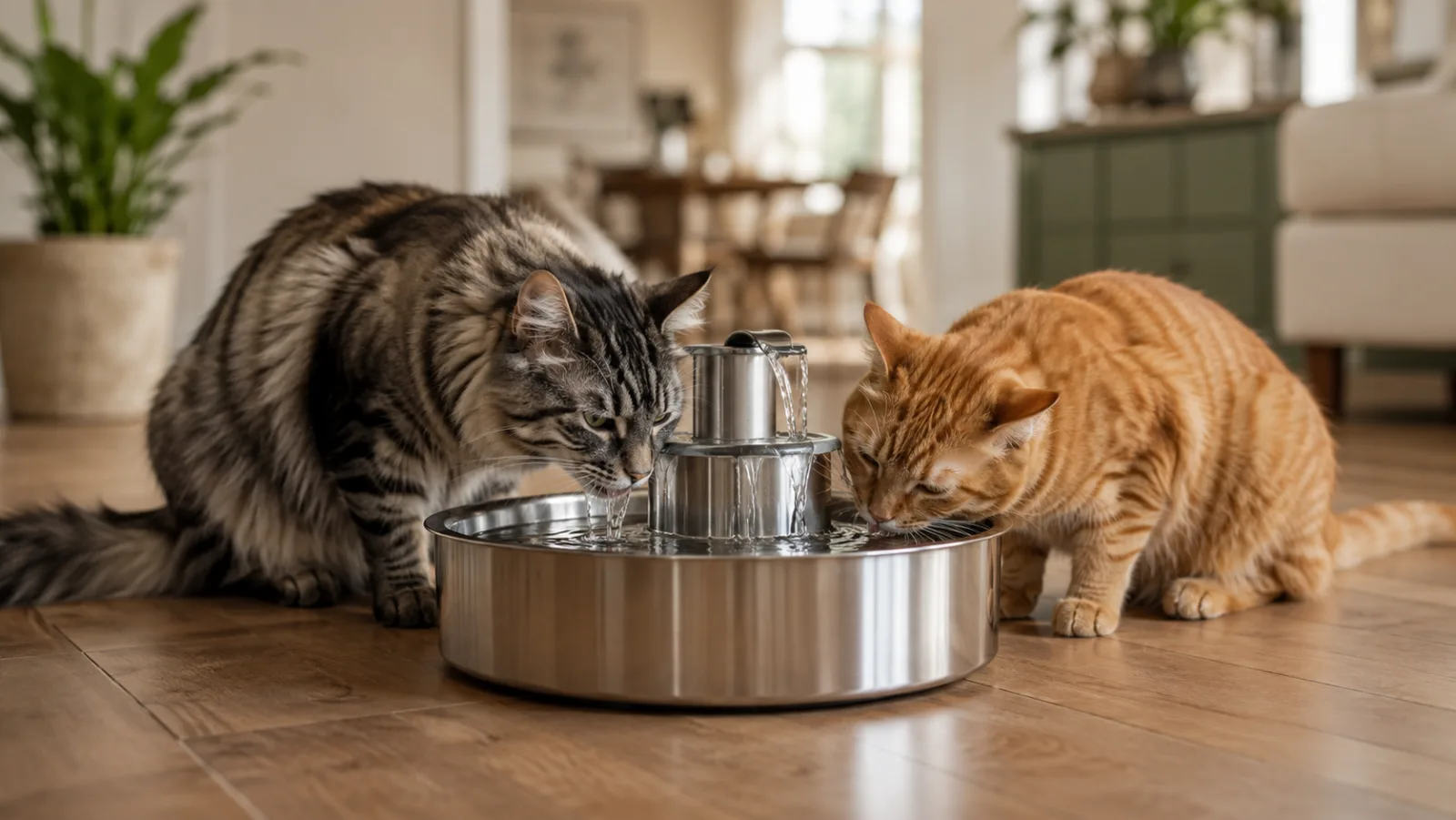
Best Cat Water Fountains for Multi-Cat Households (2026)
Cats & Dogs
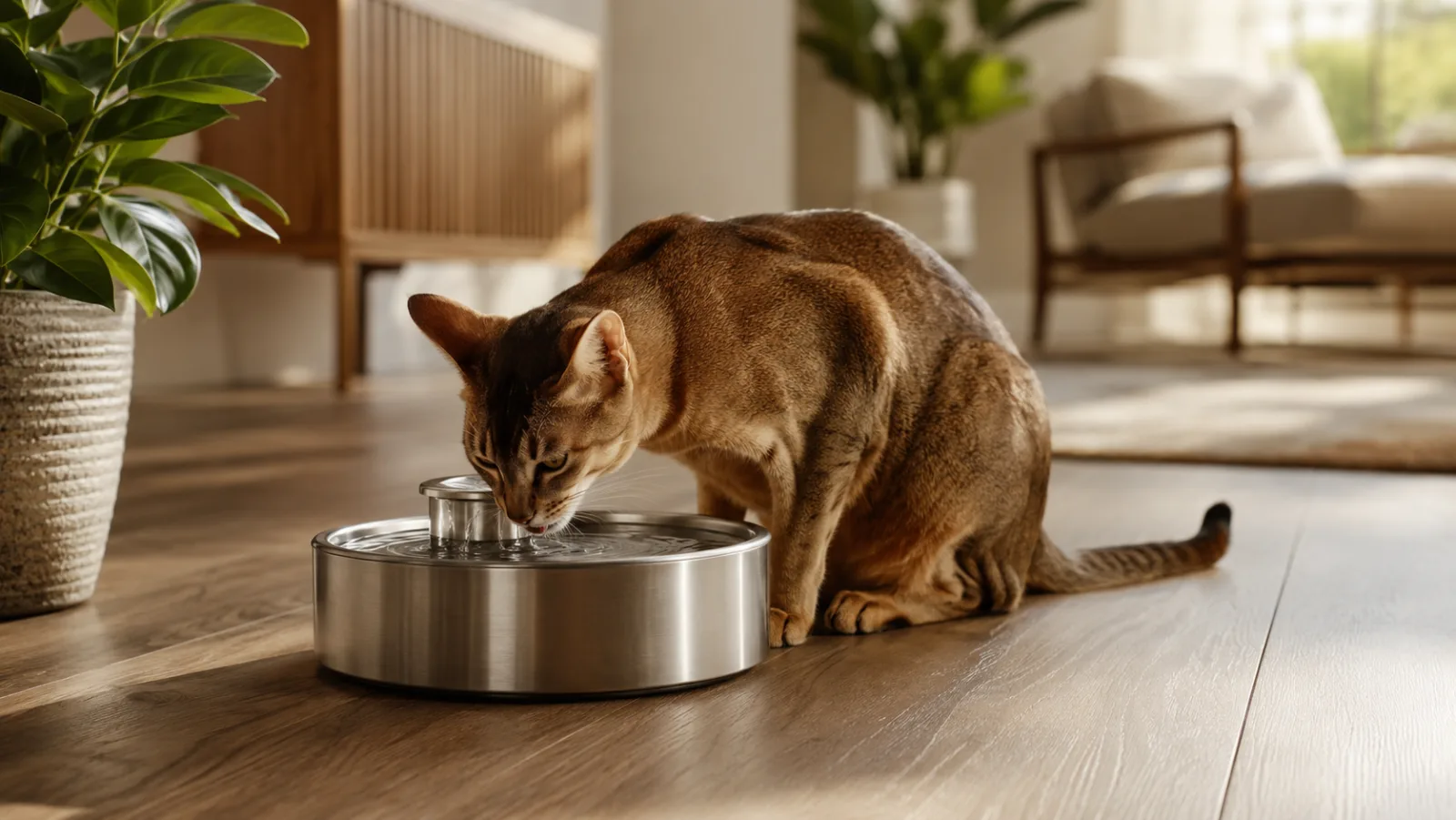
Best Stainless-Steel Cat Water Fountains (2026)
Cats & Dogs
Best Ceramic Cat Water Fountains (2026)
Cats & Dogs
Best Quiet Cat Water Fountains (2026)
Cats & Dogs