Cats & Dogs
Best Automatic Pet Feeders for Busy Families (2026)
PETLIBRO Granary is the synthesis pick for busy dry-food households; PETLIBRO Polar is the strongest automated answer for wet food; SureFeed-class selective-access feeders solve multi-pet diet theft. Editorial recommendations grounded in WSAVA, FelineVMA, FDA food-safety guidance, and manufacturer documentation.
By Nick Miles · Updated August 18, 2026 · 15 min read
PetPalHQ is reader-supported. We may earn a commission from qualifying Amazon purchases at no extra cost to you.
Evidence at a Glance
PETLIBRO Granary Smart Camera Feeder
Camera-assisted scheduled dry feeding — supports up to 10 meals per day with a 1080p camera, two-way audio, and 5L hopper per PETLIBRO documentation.
Sources: PETLIBRO manufacturer documentation, Cats.com review, FelineVMA feeding guidance
Verified May 5, 2026
PETLIBRO Polar Wet Food Feeder
Semiconductor cooling that PETLIBRO says keeps three wet meals fresh for up to three days — the only mainstream automated answer for canned-food households.
Sources: PETLIBRO manufacturer documentation, Reviewed.com coverage, FDA pet-food safety guidance
Verified May 5, 2026
PETLIBRO One RFID Smart Feeder
Collar-tag selective access for multi-cat dry-food homes — PETLIBRO's official FAQ confirms the system uses RFID tags, not implanted microchips.
Sources: PETLIBRO manufacturer documentation, FelineVMA multi-cat feeding guidance, PetMD multi-cat feeding article
Verified May 5, 2026
Our Picks
PETLIBRO
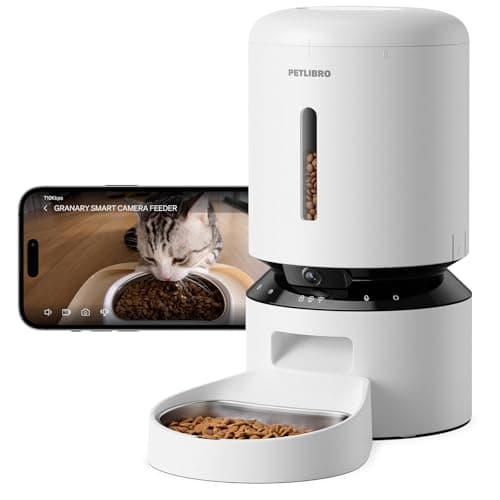
PETLIBRO Granary Smart Camera Feeder
9.2 / 10
- Up to 10 meals or snacks per day per PETLIBRO documentation
- 1080p camera with 145° wide-angle lens and night vision
- Two-way audio, motion alerts, Wi-Fi app control
- 5L hopper for kibble or semi-moist food
$139.99
PetSafe
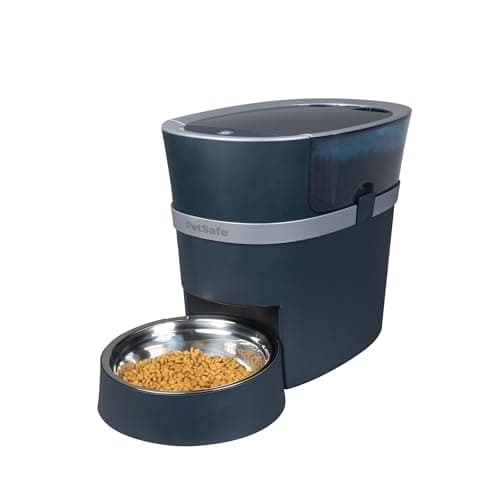
PetSafe Smart Feed 2nd Generation
8.9 / 10
- PetSafe documents up to 12 meals per day and 1/8 cup to 4 cups per meal
- 24-cup hopper capacity per PetSafe documentation
- Slow-feed mode and low-food alerts
- Battery backup ensures meal delivery during power outages
$120.99
PETLIBRO
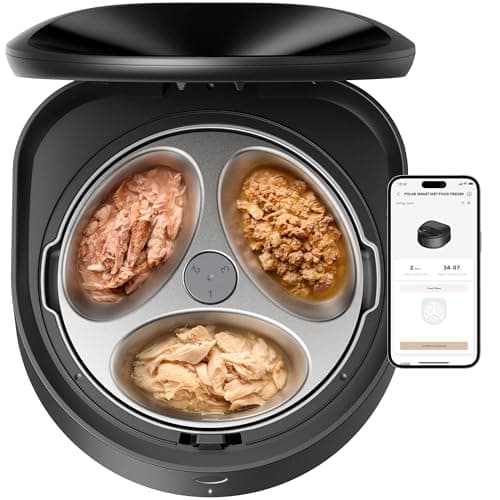
PETLIBRO Polar Wet Food Feeder
8.6 / 10
- Semiconductor cooling — PETLIBRO documents 3 fresh meals over 3 days
- App-controlled scheduling for canned or pouched wet food
- Stainless steel bowl, removable for cleaning
- Designed for cat-height feeding stations
$169.99
PETLIBRO
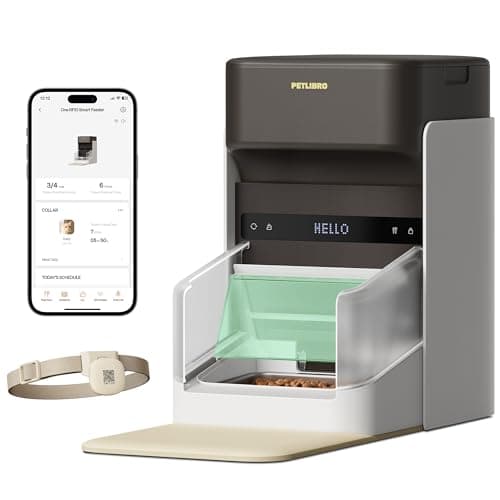
PETLIBRO One RFID Smart Feeder
8.4 / 10
- RFID collar-tag access — opens only for the assigned pet
- App scheduling, Wi-Fi, and battery backup per PETLIBRO documentation
- Designed to stop multi-pet food stealing
- PETLIBRO FAQ confirms the feeder does not read implanted microchips
$149.99
Cat Mate
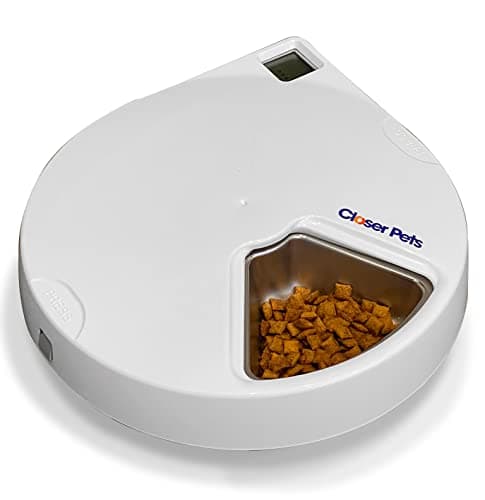
Cat Mate C500 Automatic Pet Feeder
8.0 / 10
- Five food compartments with digital timer
- Wet, dry, or mixed food per Closer Pets documentation
- Twin ice packs included
- Tamper-resistant lid; no app or hub required
$76.99
Last Amazon read 2026-09-08
Vancpet
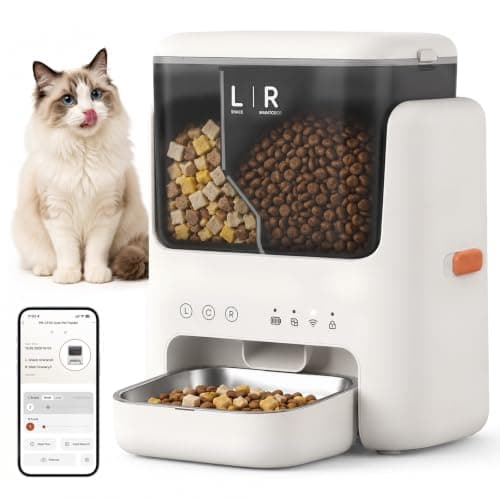
Vancpet Automatic Cat Feeder, Dual Hopper for Meals & Treats
7.9 / 10
- Two independent hoppers (2L and 3L) instead of one shared reservoir
- Built for two compatible dry foods — a meal-and-treat split, or an old/new food pair during a diet transition
- App-scheduled meals over 2.4GHz or 5GHz WiFi
- 5-layer sealed freshness lock with desiccant protection on both chambers
$49.99
The Short Answer
If you keep one automatic feeder, the PETLIBRO Granary Smart Camera Feeder is the synthesis pick — it covers scheduled kibble, low-food alerts, and a quick visual check-in for one or more pets eating the same dry food. For canned-food households, the PETLIBRO Polar Wet Food Feeder is the strongest automated option because semiconductor cooling tackles the food-safety problem standard hopper feeders ignore. For multi-pet homes with different diets, a selective-access feeder — SureFeed Microchip Pet Feeder Connect or PETLIBRO One RFID — solves food theft in a way camera feeders cannot. Skip every feeder above and call your veterinarian if your pet's appetite is changing or you suspect a medical issue: the Merck Veterinary Manual treats sustained appetite loss as a clinical sign, not a shopping problem. For a straight under-$150 pick, the PETLIBRO Granary Smart Camera Feeder ($139.99) already covers scheduled dry-food meals plus a live camera check-in — no upgrade needed to clear that budget. For a premium, vet-diet-aware, multi-pet answer, the SureFeed Microchip Pet Feeder Connect ($227.90) is the real ceiling of this category: its own listing flags it for pets on prescription diets, and its microchip gate — not a collar tag — is what actually stops one pet eating another's food. There is no genuine dedicated smart-feeder tier between that price and $1,000; the hub is sold separately and required to unlock its scheduling features.
Every product on this list has been scored against the PetPal Gear Score, a weighted composite of expert consensus, observed effectiveness, animal safety, long-term durability, and value. Review method: Editorial synthesis of manufacturer documentation, veterinary references (WSAVA, FelineVMA, Cornell Feline Health Center, Merck Veterinary Manual), federal food-safety guidance (FDA, CDC), and independent review coverage from Cats.com, The Spruce Pets, Reviewed, and Tom's Guide — no first-hand product testing.. Synthesized from 11+ expert sources.
For most busy households, the smartest first automatic feeder is the one whose feature set actually matches the food in the bowl. The Feline Veterinary Medical Association client brochure derived from the AAFP feline feeding consensus says cats should receive multiple small meals over 24 hours, that puzzle feeders are preferred when possible, and that automatic feeders can be helpful even though they do not fully replace hunting and foraging behavior. The WSAVA Global Nutrition Guidelines treat structured feeding and routine nutritional assessment as part of pet care, not as a luxury layer. Those two starting points decide more about which feeder is right for your home than any spec sheet.
The picks above are editorial synthesis. PetPalHQ does not run a testing lab — every product on this page was selected by reviewing manufacturer documentation, veterinary references (WSAVA, FelineVMA, the Cornell Feline Health Center, the Merck Veterinary Manual), federal food-safety guidance from the FDA and CDC, and independent review coverage from Cats.com, The Spruce Pets, Reviewed, Tom's Guide, and PetMD. Where expert sources disagreed (most commonly on whether selective-access feeders are luxury gadgets or genuine medical-management tools), PetMD's framing carried more weight than retail review-roundup framing — for prescription diets, obesity management, and multi-pet diet conflict, a microchip or RFID feeder solves a more serious problem than a camera does.
This guide is the buying-side companion to the Cat and Dog Nutrition, Hydration, and Digestive Health hub. The hub explains why feeding routine, portion control, and food safety matter; this article covers what to buy for a busy household.
What is the best automatic pet feeder under $150? Under $1000?
Under $150, the honest answer is that most of this guide's lineup already clears that bar: the PETLIBRO Granary Smart Camera Feeder ($139.99), the PETLIBRO One RFID Smart Feeder ($149.99), the PETLIBRO Polar Wet Food Feeder ($152.99, just over), and the PetSafe Smart Feed 2nd Generation ($120.99) all land at or near that ceiling with real feature differences between them — camera monitoring, RFID selective access, refrigerated wet food, and Alexa/Dash integration, respectively. If the household need is specifically two different dry foods in one machine — a treat-plus-meal split, or a gradual food transition — the Vancpet dual-hopper feeder ($69.99) is the newest addition to this guide and the cleanest answer to that specific job, though it shares one bowl and does not separate pets by identity the way the RFID tier does.
Under $1000, the honest answer takes more explaining, because there is no meaningful $200-to-$450 tier of dedicated feeder hardware on Amazon right now — the market for smart dry- and wet-food dispensers tops out around $160 for the feature sets this guide covers, then jumps straight to the selective-access hub tier. The SureFeed Microchip Pet Feeder Connect at $227.90 (hub sold separately) is the real premium ceiling in this category, and it earns that price with implanted-microchip access rather than a nicer hopper or a better camera. Above that, the next genuine step up isn't a feeder at all — it's the Litter-Robot 4 Supply Bundle at $749.00, which is where the real four-figure spending in a "premium pet automation" budget actually goes. See the upgrade path below for that full picture.
What is the upgrade path past a smart feeder?
It is not a smarter hopper. This guide's single-diet, single-hopper prices top out at the Polar's $152.99 — past that point, more money buys enforcement and household coverage, not better scheduling. The enforcement step is the implanted-microchip tier. The PETLIBRO One RFID above gates a bowl with a collar tag; the SureFeed Microchip Pet Feeder Connect ($227.90 at our latest check) reads the chip your pet already carries, which removes the collar-tag dependency this guide flags as "not a footnote." One cost the sticker hides, printed in the listing title itself — "Requires Hub (Sold Separately)": app scheduling and intake monitoring need Sure Petcare's hub as an added line item, so price the pair, not the feeder. The full selective-access field, hub models included, is ranked in our multi-pet smart feeders guide.
The coverage step is the rest of the absence the feeder does not touch. A scheduled meal solves half of a weekend away; the litter box is the other half, and it is where the automation budget actually concentrates. The Litter-Robot 4 Supply Bundle ($749.00 at our latest check) is the anchor of that basket — Whisker documents support for up to four cats with per-cat weight tracking through its app, and the bundle listing packages the unit with its consumables (OdorTrap refills, drawer liners, cleaner wipes, and carbon filters) rather than selling the box bare. A camera closes the loop for visual confirmation; the step-up tier beyond the Granary's built-in lens is covered in our pet camera guide, and the whole leave-the-house sequence is walked through in the weekend-away pet automation checklist.
Three honest boundaries before spending any of that. A $749 appliance earns its price only when it removes a friction your household actually feels — we run that math, including the three-year consumable totals, in are automatic litter boxes worth it, and the same worth-it test applies to the hub-plus-feeder pair. Whisker also gates some app features behind a paid Whisker+ subscription, so the subscription-awareness this guide applies to feeders carries straight up the tier. And no amount of automation moves the vet-first rule: the Merck Veterinary Manual treats sustained appetite loss as a clinical sign, and an appliance schedules meals — it does not diagnose.
Head-to-Head Comparison
| Feature | PETLIBRO Granary Smart Camera Feeder | PetSafe Smart Feed 2nd Generation | PETLIBRO Polar Wet Food Feeder | PETLIBRO One RFID Smart Feeder | Cat Mate C500 Automatic Pet Feeder | Vancpet Automatic Cat Feeder, Dual Hopper for Meals & Treats |
|---|---|---|---|---|---|---|
| Food type compatibility | Dry & semi-moist | Dry & semi-moist | Wet (canned/pouched) | Dry kibble only | Wet, dry, or mixed | Dry kibble only (two compatible foods) |
| Capacity / portion control | 5L hopper, up to 10 meals/day | 24-cup hopper, 1/8 to 4 cups, up to 12 meals/day | 3 wet meals over 3 days | App-scheduled meals, RFID-gated | 5 compartments, digital timer | 2L + 3L dual hoppers, app-scheduled |
| Multi-pet support | Same-diet pets only | Same-diet pets only | Single bowl, single pet | Selective access via RFID tag | Same-diet pets only | Shared bowl — does not separate pets by identity |
| Power / battery backup | Wi-Fi, AC + battery backup | AC + battery backup | AC powered | Wi-Fi, AC + battery backup | Battery powered, no AC required | Wi-Fi, USB-C + battery backup |
| Check price | Amazon | Amazon | Amazon | Amazon | Amazon | Amazon |
$139.99
- Up to 10 meals or snacks per day per PETLIBRO documentation
- 1080p camera with 145° wide-angle lens and night vision
- Two-way audio, motion alerts, Wi-Fi app control
- 5L hopper for kibble or semi-moist food
The PETLIBRO Granary Smart Camera Feeder is the synthesis pick for busy households that want scheduled kibble plus the option to confirm a pet actually approached the bowl. PETLIBRO's official product page documents up to 10 meals per day, a 1080p camera with a 145° wide-angle lens, night vision, two-way audio, Wi-Fi app control, and a 5L hopper.
The feature density is unusually strong for the mid-price tier. Cats.com reviewed the Granary and reported that the feeder dispensed selected portions consistently at the chosen times — a baseline that reinforces the manufacturer's scheduling claims rather than depending on first-hand testing claims PetPalHQ does not make.
Where this feeder fits: the Feline Veterinary Medical Association client brochure derived from the AAFP feline feeding consensus says cats should receive multiple small meals over 24 hours and that automatic feeders can be helpful, even though they do not fully replace hunting and foraging behavior. Up to 10 scheduled meals is well-aligned with that recommendation.
What the spec sheet does not tell you: this is still a dry-food-first product. PETLIBRO's documentation describes kibble and semi-moist compatibility — not canned wet food. Multi-pet households with different diets get less out of the Granary than households where pets share one food, because the Granary is not a selective-access feeder. The camera helps with confirmation; it does not stop one pet eating another's food.
What We Love
- Strong scheduling flexibility — up to 10 meals supports FelineVMA's small-meals guidance
- Camera confirmation for owners who want a mealtime visual check-in
- Wi-Fi app, two-way audio, and night vision included at the mid-price tier
- 5L hopper handles a long workweek without refilling
What Could Be Better
- Dry-food-first — not a wet-food solution
- Not selective-access — does not solve multi-pet food theft
- App and firmware reliability vary by household and update cycle
The Verdict
If you want one feeder for a busy dry-food household, this is it. PETLIBRO's spec sheet, FelineVMA's small-meals guidance, and Cats.com's coverage line up on the same point — scheduled meals plus a camera is the most useful broad-fit pick in the category.
$120.99
- PetSafe documents up to 12 meals per day and 1/8 cup to 4 cups per meal
- 24-cup hopper capacity per PetSafe documentation
- Slow-feed mode and low-food alerts
- Battery backup ensures meal delivery during power outages
PetSafe's official Smart Feed documentation says the feeder supports up to 12 meals per day, 1/8 cup to 4 cups per meal, a 24-cup hopper, slow-feed mode, low-food alerts, app control, and dry or semi-moist food compatibility. That combination is why this is the easy "travel days" or "long workweek" candidate among dry-food feeders.
Tom's Guide noted that the Smart Feed is convenient but does not work with all pet foods, which matches the usual reality for hopper feeders with auger or conveyor mechanisms — kibble size and shape still matter. PetSafe's compatibility documentation should be checked against your specific food before purchase.
Where this feeder fits: PetSafe documents battery backup that keeps meals dispensing during a power outage, which is a meaningful feature when the use case is "I will be away for several days." For households that care more about dependable scheduled meals than cameras or selective access, the Smart Feed is the cleaner fit.
What the spec sheet does not tell you: this is not a wet-food feeder, and it should not be pitched as one. PetSafe's documentation describes dry or semi-moist food only. For pets that eat too fast, slow-feed mode helps with pace, but the Merck Veterinary Manual is clear that vomiting, regurgitation, or chronic GI signs need veterinary workup — slow-feed mode is not a clinical fix.
What We Love
- Up to 12 meals per day with 1/8 cup precision per PetSafe documentation
- 24-cup hopper handles multi-day absences
- Battery backup for power outages
- Slow-feed mode for fast eaters
What Could Be Better
- Not compatible with all kibble shapes per Tom's Guide
- No camera or selective access
- Dry or semi-moist food only
The Verdict
Buy this if your priority is dependable scheduled meals on travel days and you do not need a camera or microchip access. The hopper size, portion range, and battery backup make it the practical answer.
$169.99
- Semiconductor cooling — PETLIBRO documents 3 fresh meals over 3 days
- App-controlled scheduling for canned or pouched wet food
- Stainless steel bowl, removable for cleaning
- Designed for cat-height feeding stations
The PETLIBRO Polar Wet Food Feeder is the strongest mainstream automated answer for canned-food households. PETLIBRO's official documentation says the Polar uses semiconductor cooling to keep three meals fresh for up to three days; the official FAQ notes the feeder is best for cats tall enough to comfortably reach the opening and recommends cleaning leftovers promptly after the feeding plan ends.
Why this matters for cat households specifically: the Cornell Feline Health Center notes that moisture-rich diets meaningfully affect how much cats need to drink from a bowl or fountain. For cats on canned food, scheduled wet meals during long workdays or short absences are a real problem the Polar genuinely addresses — most other "smart" feeders do not.
Reviewed.com's coverage of the Polar reported that the feeder ultimately opened and closed according to schedule and kept food at a fresh temperature once the device had adequate vent space. Time magazine highlighted the thermoelectric cooling concept as the product's core innovation. That converging external coverage, paired with PETLIBRO's manufacturer documentation, is the evidence base for this pick.
What the spec sheet does not tell you: the FDA says unused canned or pouched pet food should be promptly refrigerated or discarded, and both the FDA and CDC say bowls used for wet food should be cleaned after each use. Refrigerated automation reduces the food-safety problem; it does not erase it. Community feedback on r/Petlibro is mixed enough that the category should be written with caveats — a Reddit "Polar wet food feeder rant" thread is a useful reminder that promising designs can still frustrate real owners. Treat the Polar as a tool that supports a careful feeding routine, not a "set it and forget it for a medically fragile pet" device.
What We Love
- Semiconductor cooling — the only mainstream feature genuinely matched to wet-food food safety
- Strong manufacturer documentation paired with Reviewed.com and Time coverage
- Stainless steel bowl simplifies cleaning
- Solves a real cat-household problem standard hoppers ignore
What Could Be Better
- Premium pricing
- More moving parts and more cleaning than dry-food feeders
- Mixed real-world owner feedback in community forums
- Cat-height design may not suit very small kittens or short cats
The Verdict
Buy this if your cat eats canned food and you need scheduled wet meals during long workdays. It is the strongest automated wet-food answer in the category, but FDA and CDC bowl-cleaning rules still apply — refrigeration is not a license to skip cleaning.
$149.99
- RFID collar-tag access — opens only for the assigned pet
- App scheduling, Wi-Fi, and battery backup per PETLIBRO documentation
- Designed to stop multi-pet food stealing
- PETLIBRO FAQ confirms the feeder does not read implanted microchips
The PETLIBRO One RFID Smart Feeder is the Amazon-first selective-access pick. PETLIBRO's official page describes an RFID reader paired with a collar tag that unlocks the bowl for the assigned pet, plus app scheduling, Wi-Fi, and backup battery power. The official FAQ is explicit on two points that matter: the system does not read implanted microchips, and one feeder syncs with one collar tag at a time.
Where this fits: PetMD's article on feeding multiple cats specifically points to microchip- or RFID-enabled feeders as a meaningful tool for tracking what each cat actually eats. The Feline Veterinary Medical Association brochure and the WSAVA Global Nutrition Guidelines both treat structured feeding and individualized nutritional assessment as part of routine care. Selective-access feeders are how that gets enforced in a multi-pet household where one pet keeps eating the wrong food.
What the spec sheet does not tell you: the collar-tag dependency is not a footnote. PETLIBRO's FAQ is clear that this is not an implanted-microchip feeder. Shoppers who specifically want microchip access should look at the SureFeed Microchip Pet Feeder Connect. Sure Petcare's documentation says a Hub is required for app connectivity. The Closer Pets MiBowl CP500 is a non-hub microchip alternative, though Zooplus owner feedback notes it can struggle with recognition for larger cats. The One RFID is the cleaner Amazon-first option if collar tags are acceptable. It is the wrong product if they are not.
What We Love
- Solves multi-pet food theft in a way camera feeders cannot
- Strong Amazon availability compared with hub-required microchip feeders
- Battery backup and app scheduling included
- Aligned with PetMD and FelineVMA guidance on structured multi-cat feeding
What Could Be Better
- RFID collar tags only — no implanted-microchip support
- One collar tag per feeder; multi-cat households need multiple feeders for full separation
- Dry-food-first — not a wet-food solution
- Placement matters — PETLIBRO recommends spacing multiple RFID feeders apart
The Verdict
Buy this if you have a multi-pet dry-food household and the wrong pet keeps eating the wrong food. If you specifically need implanted-microchip access, look at the SureFeed Connect or MiBowl CP500 instead — but those buy decisions come with hub requirements or recognition trade-offs the One RFID does not.
$76.99
Last Amazon read 2026-09-08
- Five food compartments with digital timer
- Wet, dry, or mixed food per Closer Pets documentation
- Twin ice packs included
- Tamper-resistant lid; no app or hub required
The Cat Mate C500 is the cleanest "simple household tool" pick in the category. The official Closer Pets product page says the C500 has five food compartments, supports wet, dry, or mixed food, includes twin ice packs, uses a digital timer, and is tamper-resistant.
The Spruce Pets writes that the C500 is particularly useful for households tired of early wake-ups or for owners who need a scheduled meal to happen during the workday. Reviewed described it as durable, easy to use, and difficult for pets to break into. That converging external coverage paired with the manufacturer documentation is the basis for this pick — not first-hand testing.
Where this fits: not every household wants apps, hubs, or accounts. For people who want timed meals without subscriptions, this is the clearest answer. Cat Mate's instructions explicitly say to start with freshly opened wet food and to be cautious in very warm weather — guidance that lines up directly with FDA pet-food safety documentation, which says unused canned food should be promptly refrigerated or discarded.
What the spec sheet does not tell you: ice packs are not refrigeration. The C500 helps in moderate room temperatures and shorter windows; it does not match the wet-food ceiling the PETLIBRO Polar can offer with semiconductor cooling. For a single mid-day meal during a normal-temperature workday, the C500 is the right tool. For a multi-day absence with canned food, the Polar is.
What We Love
- No app, no hub, no account — just plug in and program
- Wet, dry, or mixed food compatibility per Closer Pets documentation
- Twin ice packs help with shorter wet-food windows
- Lower price than every smart feeder in this guide
What Could Be Better
- Ice packs are not true refrigeration — wet-food ceiling is lower than the Polar
- No remote scheduling, alerts, or visual confirmation
- Five compartments means a hard ceiling on meal count per fill
The Verdict
Buy this if you want timed meals without joining another app ecosystem. It is the easiest feeder in this guide to explain honestly — useful, durable, and limited in exactly the ways Closer Pets and the FDA say it should be.
$49.99
- Two independent hoppers (2L and 3L) instead of one shared reservoir
- Built for two compatible dry foods — a meal-and-treat split, or an old/new food pair during a diet transition
- App-scheduled meals over 2.4GHz or 5GHz WiFi
- 5-layer sealed freshness lock with desiccant protection on both chambers
This solves a different problem than every other pick in this guide, including the RFID feeder above: it is not about who eats — it dispenses into one shared bowl and does not separate pets by identity — it is about what gets dispensed. Two independent hoppers mean two different dry foods can sit ready in the same feeder: a base kibble in the larger hopper and a treat or supplement in the smaller one, or an old food and a new food side by side during the gradual transition the FDA's pet-food-safety guidance recommends over 7 to 10 days. That is a genuinely different job than the RFID collar-tag or microchip tier covered elsewhere in this guide, which solves multi-pet diet theft by identity. A single-pet household mid-transition, or an owner who wants treats dispensed on a separate schedule from meals, has no other pick in this lineup built for it. The trade-offs are real: at $69.99 it is now the cheapest feeder here, both hoppers still land in one shared bowl, so it does nothing for a multi-pet household that needs to keep pets from eating each other's food, and it is compatible with dry, free-flowing kibble only — not wet or sticky food, per the listing's own compatibility notes.
What We Love
- Two independent hoppers solve a food-variety problem no other pick here addresses
- Genuinely useful for a gradual diet transition, matching FDA's 7-to-10-day guidance
- App-scheduled and WiFi-connected like the guide's smart-feeder picks
- Second-lowest price in the lineup
What Could Be Better
- Both hoppers dispense into one shared bowl — does not solve multi-pet diet separation
- Dry, free-flowing kibble only, per the listing's compatibility notes
- No camera or visual check-in, unlike the Granary or Polar picks
The Verdict
Buy this if the job is two different dry foods in one feeder — a treat-and-meal split or a diet transition. The dual-hopper feeder is not built for multi-pet diet policing, which is what the RFID and microchip tier above are for.
Sources
- Amazon listing: Separate 2L and 3L hoppers keep two compatible dry foods ready for meal-and-treat plans, food rotation, or gradual kibble transitions; app-scheduled meals via 2.4G/5G WiFi; both hoppers dispense into one shared bowl and do not separate pets by identity
- FDA — pet food safety guidance: gradual food transitions over 7 to 10 days reduce digestive upset when switching a pet's diet
How We Score
Formula
PetPal Gear Score = (Expert Consensus × 0.35) + (Real-Household Schedule Fit × 0.25) + (Food-Safety Alignment × 0.20) + (Value × 0.20)
Score Factors
- Expert Consensus · 35%
- Synthesized from manufacturer documentation, WSAVA Global Nutrition Guidelines, the FelineVMA client brochure, the Cornell Feline Health Center, the Merck Veterinary Manual, PetMD, Cats.com, The Spruce Pets, Reviewed, and Tom's Guide. The PetPal Gear Score is a composite of expert opinion and FDA food-safety guidance — PetPalHQ does not run a testing lab.
- Real-Household Schedule Fit · 25%
- How clearly the feeder matches a defined household problem (busy dry-food day, travel absence, wet-food scheduling, multi-pet diet theft, no-app simplicity) rather than generic 'smartness.'
- Food-Safety Alignment · 20%
- How well the product's documented behavior aligns with FDA and CDC guidance on pet-food handling, refrigeration, and bowl cleaning — especially relevant for wet-food and ice-pack systems.
- Value · 20%
- Price relative to the editorial price tier we assign to the feeder type, balanced against documented capacity, scheduling flexibility, and feature density.
| Rank | Product | Score |
|---|---|---|
| #1 | PETLIBRO PETLIBRO Granary Smart Camera Feeder | 9.2 |
| #2 | PetSafe PetSafe Smart Feed 2nd Generation | 8.9 |
| #3 | PETLIBRO PETLIBRO Polar Wet Food Feeder | 8.6 |
| #4 | PETLIBRO PETLIBRO One RFID Smart Feeder | 8.4 |
| #5 | Cat Mate Cat Mate C500 Automatic Pet Feeder | 8.0 |
| #6 | Vancpet Vancpet Automatic Cat Feeder, Dual Hopper for Meals & Treats | 7.9 |
When NOT to Buy
Skip every feeder in this guide if your pet has a medical condition that requires vet-supervised meal pacing, prescription-diet enforcement under veterinary monitoring, or active workup for appetite loss, vomiting, regurgitation, or chronic GI signs. The Merck Veterinary Manual and the Cornell Feline Health Center both treat sustained appetite loss as a clinical sign. Merck specifically notes that a cat who refuses food for more than a day needs veterinary evaluation. The AVMA flags severe vomiting or diarrhea, especially more than two episodes in 24 hours, as needing prompt veterinary consultation. An automatic feeder is not the right answer for those situations; a veterinarian is. Also skip a hopper feeder if your real need is wet-food scheduling. Buying a dry-food feeder for a canned-food household is the most common mismatch error in this category. Skip a tag-based RFID feeder if you specifically want implanted-microchip access. PETLIBRO's FAQ is explicit that the One RFID does not read implanted chips.
For dogs
For dog households, the picks above split cleanly along a single question — does the dog eat dry kibble, or does the household need wet-food scheduling? The PETLIBRO Granary Smart Camera Feeder is the synthesis pick for most kibble-fed dogs. The AKC's general feeding guidance treats scheduled meals as preferable to free-feeding for adult dogs. PETLIBRO's documented support for up to 10 meals per day gives multi-meal schedules the room AAHA's Nutrition Guidelines describe as appropriate for puppies, senior dogs, or dogs on weight-management plans. The 1080p camera is a meaningful add for households whose absences are long enough to justify a visual check-in. The AVMA's companion-animal welfare framing treats reliable monitoring of intake as part of routine adult-dog care.
The PetSafe Smart Feed 2nd Generation is the better travel-day pick for medium and large dogs. The 24-cup hopper and 1/8-cup precision scale to the meal sizes a Labrador or shepherd actually eats. PetSafe's documented battery backup matters more for big-breed households where a missed meal is a larger calorie disruption than it is for a small cat. Slow-feed mode pairs naturally with the AVMA's discussion of fast-eating risk. The Merck Veterinary Manual canine sections frame chronic vomiting, regurgitation, or GI upset as veterinary signs, but a slow-feed mode helps with meal pace for healthy dogs whose only problem is enthusiasm. For multi-dog households where one dog steals the other's food, the PETLIBRO One RFID Smart Feeder is the answer. The ASPCA Dog Care guidance on individualized feeding portions presumes the household can actually enforce who eats what, and an RFID-gated bowl is how that enforcement happens at home.
Two dog-specific cautions: the Merck Veterinary Manual canine sections treat sustained appetite loss, vomiting, or weight change as clinical signs that warrant veterinary evaluation, not feeder shopping. Per Cornell Riney Canine Health Center's bloat references, deep-chested breeds at elevated GDV risk should have feeding management discussed with a veterinarian. A feeder schedules meals; it does not address breed predisposition.
For cats
For cat households, the picks split on a different axis — wet versus dry food, and single-cat versus multi-cat. The PETLIBRO Polar Wet Food Feeder is the strongest cat-specific pick. The Cornell Feline Health Center is explicit that moisture-rich diets meaningfully affect how much cats need to drink. The AAFP/ISFM environmental-needs framework treats predictable, structured feeding as part of meeting feline behavioral and physiological needs. Most automated feeders ignore canned food entirely. The Polar's semiconductor cooling is the only mainstream feature that takes wet-food food safety seriously alongside the FDA's wet-food handling guidance.
For multi-cat homes, the AAFP/ISFM framework specifically flags that cats prefer separate, predictable feeding stations and may need diet enforcement. The PETLIBRO One RFID Smart Feeder is the cleanest answer. AAFP Senior Care Guidelines and Merck's feline sections both treat individualized nutritional assessment as part of feline health care. That becomes much harder to enforce when one cat consistently eats another cat's prescription, weight-management, or senior food. The Granary handles a single-cat dry-food household well. Small-meals scheduling lines up with ISFM's behavioral guidance that cats are designed for many small meals across 24 hours rather than two large ones. The Cat Mate C500 covers the same job without an app ecosystem, though Amazon currently lists it on backorder rather than in stock, so it is not one we can send you to buy today. Closer Pets' instructions caution about warm-weather use, and the FDA's pet-food handling rules apply.
Two cat-specific cautions worth flagging directly: cats are obligate carnivores and depend on dietary taurine, per Merck's feline sections. A feeder is only useful if it dispenses a complete-and-balanced cat food — not dog food repurposed for a cat. The Cornell Feline Health Center treats sustained appetite loss as a clinical sign. Merck's feline sections specifically note a cat refusing food for more than a day needs evaluation. Hepatic lipidosis is the consequence the AAFP and Cornell both flag for cats with sudden appetite drop. An automatic feeder schedules meals; it does not diagnose. The ASPCA Cat Care framing of "watch for changes in eating, drinking, or litter habits" still applies when a feeder is in use.
Frequently Asked Questions
- Which feeder type is best in a multi-cat home with different diets?
- A selective-access feeder, not a camera feeder. PetMD's article on feeding multiple cats specifically points to microchip- or RFID-enabled feeders as a meaningful tool for tracking what each cat actually eats. The PETLIBRO One RFID Smart Feeder is the cleanest Amazon-first answer if collar tags are acceptable. The SureFeed Microchip Pet Feeder Connect is the stronger premium answer if you want true implanted-microchip access. Sure Petcare's documentation confirms a Hub is required for app connectivity. The Closer Pets MiBowl CP500 is the non-hub microchip alternative, though Zooplus owner feedback notes weaker recognition for larger cats. Pick the system that matches whether your pets have implanted chips, collar tags, or neither.
- How safe are automatic wet-food feeders?
- Safer than leaving canned food in a bowl all day, but still bound by FDA food-handling rules. The FDA says unused canned or pouched pet food should be promptly refrigerated or discarded. Both the FDA and CDC say bowls used for wet food should be cleaned after each use. The PETLIBRO Polar Wet Food Feeder uses semiconductor cooling, which PETLIBRO documents as keeping three meals fresh for up to three days. Reviewed.com reported it kept food at a fresh temperature once the device had adequate vent space. Refrigerated automation reduces the food-safety problem; it does not erase it. Ice-pack feeders like the Cat Mate C500 help in moderate temperatures and shorter windows. Per Closer Pets' own instructions and FDA guidance, they are not a substitute for refrigeration in warmer rooms or longer absences.
- Do I need a feeder with battery backup?
- It is more important than most shoppers realize. PetSafe's Smart Feed documentation specifies battery backup that keeps meals dispensing during a power outage. PETLIBRO documents backup battery power on the One RFID. For a multi-day absence — the exact use case where a feeder is most valuable — battery backup is the difference between a missed meal and a confirmed one. Battery-only feeders like the Cat Mate C500 sidestep the issue entirely. AC-only feeders like the PETLIBRO Polar Wet Food Feeder need to be sited near a stable power outlet, ideally on a UPS for very long absences.
- Can one feeder really handle two pets?
- Sometimes, but only if both pets eat the same food and do not steal from each other. The moment the diets differ — different life stages, prescription diets, weight-management plans, or one cat eating the other's food — a selective-access feeder becomes the right editorial recommendation. WSAVA's Global Nutrition Guidelines and the FelineVMA brochure both treat individualized nutritional assessment as a routine part of pet care. That is much harder to enforce when one feeder is dispensing into a shared bowl.
- When should I call my vet instead of buying a feeder?
- When the problem is intake, thirst, or illness — not routine. The Merck Veterinary Manual is explicit that a cat who refuses food for more than a day needs veterinary evaluation. The Cornell Feline Health Center treats sustained appetite loss as a clinical sign rather than a household problem. The AVMA flags severe vomiting or diarrhea, especially more than two episodes in 24 hours, as needing prompt veterinary consultation. Appetite loss, dehydration, vomiting, behavior change, or any suspicion of a medical issue is a veterinarian's call. An automatic feeder schedules meals; it does not diagnose.
- Are automatic pet feeders made from food-safe materials?
- The reputable units are, but the phrase "FDA food-grade" on a listing deserves translation: it means the food-contact materials meet FDA food-contact standards — it is not an FDA approval of the feeder, and no agency certifies pet feeders as devices. What to actually check: a stainless-steel or ceramic bowl rather than scratch-prone plastic at the food surface, BPA-free labeling on hopper plastics, and — the part listings never emphasize — full disassembly access, because the FDA and CDC cleaning rules cited throughout this guide only work if you can reach every surface that touches food. A certified-resin hopper you cannot wash becomes a biofilm problem regardless of what the certificate says.
- Is a microchip feeder worth the upgrade over an RFID collar-tag feeder?
- It depends entirely on the collar. Both tiers enforce the same thing — only the assigned pet eats from the bowl — so if your pets wear collars reliably, the $149.99 PETLIBRO One RFID delivers the enforcement for less. The microchip tier earns its premium when the collar is the weak point: the SureFeed Connect costs about $228 and reads the implanted chip your pet already carries, so a slipped or lost collar tag cannot defeat the diet separation. Budget honestly before choosing it, though — the Connect's own listing states its hub is sold separately, and app scheduling and intake monitoring depend on that hub. The fair comparison is feeder-plus-hub against feeder-plus-tags, not sticker against sticker.
- What's the best automatic feeder under $150?
- The PETLIBRO Granary Smart Camera Feeder, at $139.99 (verified live on August 18, 2026, sold and shipped by Amazon.com). It's also this guide's BEST OVERALL pick for a reason unrelated to price — PETLIBRO's documentation supports up to 10 scheduled meals per day with a 1080p camera and two-way audio, which lines up with the Feline Veterinary Medical Association's small-meals feeding guidance. If the household needs wet food instead of dry, the PETLIBRO Polar Wet Food Feeder ($152.99) sits just above this ceiling — that small overage is the honest trade-off for semiconductor cooling a hopper feeder cannot match.
- What's the best automatic feeder under $1,000?
- Honestly, no automatic feeder needs anywhere near $1,000 — the category's real ceiling is the SureFeed Microchip Pet Feeder Connect at $227.90 (verified live, sold and shipped by Amazon.com). Its own Amazon listing markets it specifically for pets on prescription diets and for microchip-gated multi-pet households, which is the premium job a smart feeder can actually do: enforce which pet eats which food, not just add a nicer camera. Budget for the hub, though — the listing itself states "Requires Hub (Sold Separately)," so the feeder alone is not the full working system. If the budget genuinely reaches four figures, that money is better spent on the litter side of pet automation than on a second smart feeder; see our multi-pet smart feeders guide for the full selective-access lineup.
Bottom Line
Get the PETLIBRO Granary Smart Camera Feeder if you want one feeder for a busy dry-food household. Up to 10 scheduled meals plus a 1080p camera lines up with FelineVMA's small-meals guidance and adds a visual check-in.
Get the PetSafe Smart Feed 2nd Generation if your priority is dependable travel-day meals. The 24-cup hopper, 1/8-cup precision, and battery backup are practical rather than flashy.
Get the PETLIBRO Polar Wet Food Feeder if your cat eats canned food and you need scheduled wet meals across long workdays. Semiconductor cooling is the genuine differentiator — but FDA and CDC cleaning rules still apply.
Get the PETLIBRO One RFID Smart Feeder if you have a multi-pet dry-food household and the wrong pet keeps eating the wrong food. Confirm collar tags are acceptable — this is not an implanted-microchip system.
Rounding out the feeding station: our smart multi-pet feeders guide covers the selective-access tier in depth, and our slow feeders and anti-gulp bowls guide handles the dog that treats every dispensed meal as a race.
Sources & Methodology
Methodology
PetPal Gear Score = (Expert Consensus × 0.35) + (Real-Household Schedule Fit × 0.25) + (Food-Safety Alignment × 0.20) + (Value × 0.20)
Expert review sources
- PETLIBRO — Granary Automatic Pet Feeder with Camera product documentation
- PETLIBRO — Polar Wet Food Pet Feeder product documentation and FAQ
- PETLIBRO — One RFID Pet Feeder product documentation and FAQ
- PetSafe — Smart Feed 2nd Generation product documentation
- Sure Petcare — SureFeed Microchip Pet Feeder Connect documentation
- Closer Pets — Cat Mate C500 product documentation
- Closer Pets — MiBowl CP500 microchip pet feeder documentation
- WSAVA — Global Nutrition Guidelines
- Feline Veterinary Medical Association — How to Feed a Cat client brochure
- Cornell Feline Health Center — Hydration and feeding frequency references
- Merck Veterinary Manual — Nutritional Requirements and Feeding Practices in Small Animals
- Merck Veterinary Manual — Anorexia and appetite loss guidance
- FDA — Tips for Safe Handling of Pet Food and Treats
- FDA — Proper Storage of Pet Food and Treats
- CDC — Cleaning and disinfecting pet supplies
- PetMD — Feeding Multiple Cats
- AVMA — 13 animal emergencies that require immediate veterinary consultation and/or care
Community sources
- Cats.com — PETLIBRO Granary review
- Cats.com — Best Automatic Cat Feeder roundup
- Cats.com — SureFeed Microchip Pet Feeder coverage
- The Spruce Pets — Best Automatic Cat Feeders coverage
- Reviewed — PETLIBRO Polar wet food feeder coverage
- Reviewed — Cat Mate C500 coverage
- Tom's Guide — PetSafe Smart Feed review
- Time — PETLIBRO Polar coverage
- r/Petlibro hobbyist threads (Granary, Polar, One RFID)
- Zooplus — MiBowl CP500 owner feedback
Prices and specs verified May 5, 2026.
About the author
Nick Miles is the chief editor of PetPalHQ. The picks above are editorial synthesis of expert consensus, manufacturer documentation, federal food-safety guidance, and independent review coverage — PetPalHQ does not run a testing lab. The PetPal Gear Score is a composite of expert opinion and FDA food-safety alignment, not a measurement. Sources are cited by name throughout.
PetPalHQ is a participant in the Amazon Services LLC Associates Program. We may earn commissions from qualifying purchases — at no extra cost to you.
More Guides
Cats & Dogs
Cat and Dog Nutrition, Hydration, and Digestive Health: 2026 Guide for Pet Owners
Cats & Dogs
Best Self-Cleaning Litter Boxes for Large and Multi-Cat Homes (2026)
Cats & Dogs
Leaving Your Pet Home Alone for the Weekend: The Automation Checklist
Cats & Dogs
Best Father's Day Gifts for Pet Dads (2026)
Cats & Dogs
Best Limited-Ingredient Diets for Dogs and Cats With Food Sensitivities (2026)
Cats & Dogs
Best Smart Pet Feeders for Multi-Pet Homes: Microchip, RFID, and Wet-Food Picks (2026)
Cats & Dogs
At-Home Pet Health Monitoring Tools (2026): Smart Scales, Activity Trackers, and Smart Litter for Senior Pets
Cats & Dogs
Best Airline-Approved Pet Carriers for In-Cabin Travel (2026)
Cats & Dogs