Cats & Dogs
Best Weight-Management Tools for Overweight Dogs and Cats (2026)
For most overweight pets, the smartest first purchase is a scale you will actually use weekly — Greater Goods Digital Pet Scale for cats, kittens, and toy breeds, Redmon Digital Dog Scale for medium and large dogs — paired with a kitchen-gram scale to weigh kibble. Treat retail weight-loss formulas like Hill's Science Diet Perfect Weight as portion-disciplined support, and reserve Royal Canin Satiety Support for vet-supervised plans.
By Nick Miles · Updated August 7, 2026 · 12 min read
PetPalHQ is reader-supported. We may earn a commission from qualifying Amazon purchases at no extra cost to you.
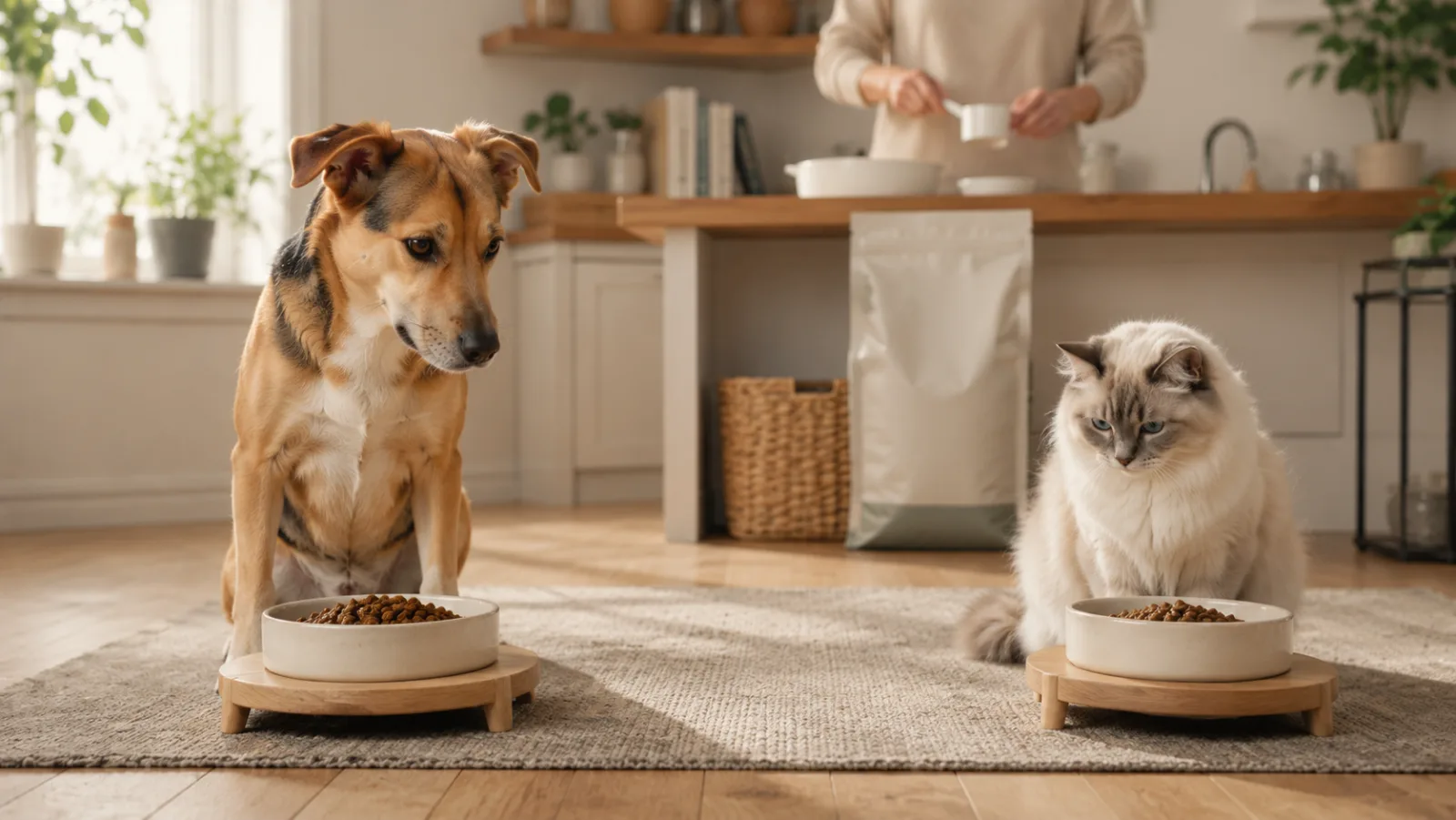
Evidence at a Glance
Greater Goods Digital Pet Scale for Cats & Dogs
0.1 lb precision and 44 lb capacity for kittens, cats, puppies, and small to medium dogs — the home weigh-in cadence APOP and Merck recommend.
Sources: Greater Goods manufacturer documentation, Association for Pet Obesity Prevention 2022 report, Merck Veterinary Manual
Verified May 5, 2026
Etekcity Food Kitchen Scale, Digital Grams and Ounces for Weight Loss
Gram-precision food scale that converts cup-based feeding into measured calories — Tufts Petfoodology calls volume measurement the single biggest source of overfeeding.
Sources: Etekcity manufacturer documentation, Tufts Petfoodology, AAHA Weight Management Guidelines
Verified May 5, 2026
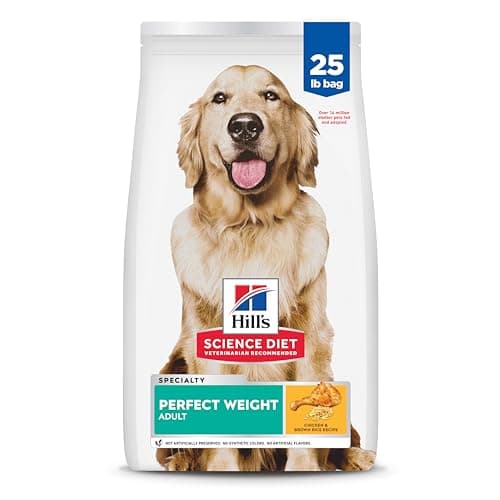
Hill's Science Diet Adult Perfect Weight Dry Dog Food, Chicken & Brown Rice, 25 lb. Bag
Lower-energy-density retail weight-loss formula — defensible editorially because lower-calorie food is supported by AAHA, not because food alone fixes obesity.
Sources: Hill's Pet Nutrition manufacturer documentation, AAHA Weight Management Guidelines, APOP
Verified May 5, 2026
Our Picks
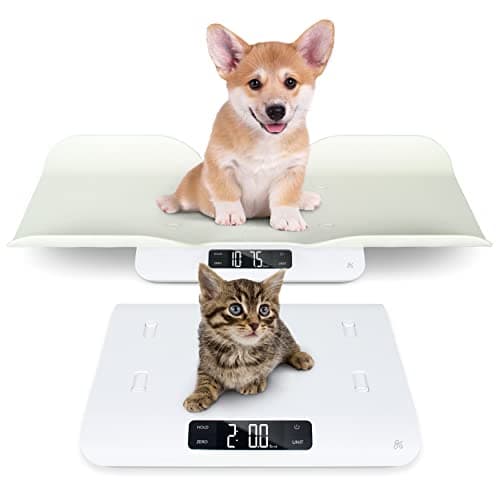
Greater Goods
Greater Goods Digital Pet Scale for Cats & Dogs
9.3 / 10
- 0.1 lb precision per Greater Goods documentation
- 44 lb capacity covers kittens through small and medium dogs
- Wiggle-proof weighing technology for restless pets
- Compact platform fits easily on the floor for repeated weekly use
$58.99
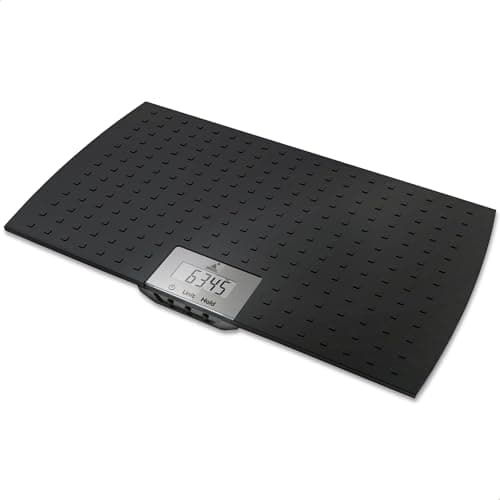
Redmon
Redmon Digital Dog Scale for Large Pet & Animal with Non-Skid Mat
8.8 / 10
- 225 lb capacity per Redmon documentation
- Non-skid mat designed for animal weighing
- Larger platform sized for medium-large and large dogs
- Portable enough for foster and rescue use
$98.99
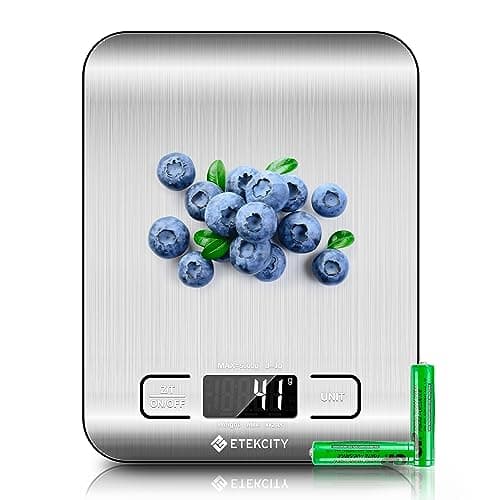
Etekcity
Etekcity Food Kitchen Scale, Digital Grams and Ounces for Weight Loss
8.7 / 10
- Gram-precision digital food scale per Etekcity documentation
- Stainless steel platform, LCD display, tare function
- Cheaper and more precise than a measuring cup or scoop
- Doubles as a household kitchen scale, not single-use
$10.99
Hill's Science Diet
Hill's Science Diet Adult Perfect Weight Dry Dog Food, Chicken & Brown Rice, 25 lb. Bag
8.5 / 10
- Lower-energy-density formulation positioned for weight management
- Mainstream retail availability — no veterinary authorization required
- Hill's documents formulation for weight-loss support
- Pairs naturally with measured gram-based feeding
$92.99
Royal Canin
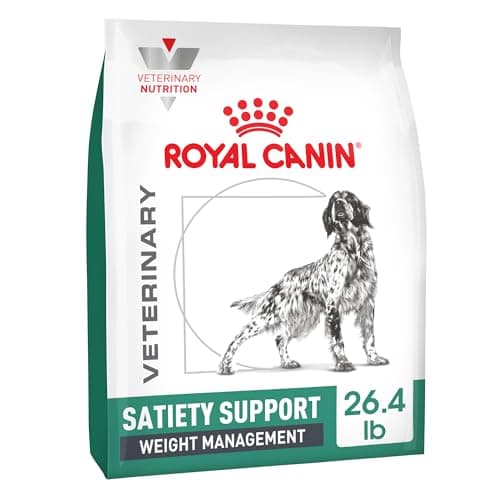
ROYAL CANIN Canine Satiety Support Dry (26.4 lb)
8.3 / 10
- Veterinary satiety formula positioned for hunger-driven weight management
- Higher-fiber, lower-energy density per Royal Canin documentation
- Information-only inclusion — purchase requires veterinary context
- Aligned with AAHA Weight Management Guidelines for vet-led plans
$128.99
The Short Answer
If you keep one weight-management tool, make it a scale you will actually use weekly. The Greater Goods Digital Pet Scale for Cats & Dogs is the cleanest small-pet pick. The Association for Pet Obesity Prevention reports 61% of cats assessed by veterinary professionals are overweight or have obesity. Weekly weigh-ins create the feedback loop the APOP and Merck Veterinary Manual call for. For medium and large dogs, the Redmon Digital Dog Scale fills the gap home scales for big dogs rarely cover. Pair either pet scale with the Etekcity Food Kitchen Scale to weigh kibble in grams — Tufts Petfoodology says volume cup measurement is the single biggest source of overfeeding error. Add Hill's Science Diet Adult Perfect Weight Dry Dog Food as a portion-disciplined retail support tool, and use Royal Canin Canine Satiety Support only under veterinary supervision. Free AAHA and WSAVA Body Condition Score charts are the no-cost foundation under all of this.
Every product on this list has been scored against the PetPal Gear Score, a weighted composite of expert consensus, observed effectiveness, animal safety, long-term durability, and value. Review method: Editorial synthesis of Association for Pet Obesity Prevention (APOP), AAHA Weight Management Guidelines, WSAVA Body Condition Score charts, Tufts Petfoodology, Merck Veterinary Manual, and manufacturer documentation — no first-hand product testing.. Synthesized from 9+ expert sources.
For most overweight pets, the smartest first purchase is a scale the household will actually use weekly. The Association for Pet Obesity Prevention's 2022 clinic-based survey reported 59% of dogs and 61% of cats assessed by veterinary professionals were overweight or had obesity. That is the most common companion-animal nutritional problem in the United States. The AAHA Weight Management Guidelines, the WSAVA Body Condition Score charts, and the Merck Veterinary Manual all converge on the same prescription: structured monitoring, measured portions, and a roughly 1% body-weight-per-week loss target. That target is adjusted to the individual pet.
The picks above are editorial synthesis. PetPalHQ does not run a testing lab. Every product on this page was selected by reviewing manufacturer documentation, the Association for Pet Obesity Prevention's 2022 report, the AAHA Weight Management Guidelines, WSAVA's Body Condition Score reference charts, the Merck Veterinary Manual's weight-loss framework, and Tufts Petfoodology's owner-facing portion-control coverage. Where expert sources disagreed — most commonly on whether retail weight-loss formulas are a meaningful intervention or a marketing layer — the AAHA Weight Management Guidelines' framing carried more weight. Caloric restriction works, but only when paired with measured portions.
This guide is the buying-side companion to the Cat and Dog Nutrition, Hydration, and Digestive Health hub. Automatic feeders are covered separately in the Best Automatic Pet Feeders for Busy Families (2026) sibling spoke. This article focuses on the broader weight-management toolkit — scales, kitchen scales, formulated foods, and BCS reference — so the two guides cover complementary slices of the same problem.
Head-to-Head Comparison
| Feature | Greater Goods Digital Pet Scale for Cats & Dogs | Redmon Digital Dog Scale for Large Pet & Animal with Non-Skid Mat | Etekcity Food Kitchen Scale, Digital Grams and Ounces for Weight Loss | Hill's Science Diet Adult Perfect Weight Dry Dog Food, Chicken & Brown Rice, 25 lb. Bag | ROYAL CANIN Canine Satiety Support Dry (26.4 lb) |
|---|---|---|---|---|---|
| Tool type | Pet floor scale (small-medium) | Pet floor scale (large) | Kitchen gram scale | Retail weight-loss food | Veterinary satiety food |
| Use case | Weekly weigh-ins for cats & small-medium dogs | Weekly weigh-ins for medium-large & large dogs | Gram-precision kibble portioning | Mainstream weight-management diet | Vet-supervised satiety/hunger management |
| Vet-supervised need | No (home tool) | No (home tool) | No (home tool) | Optional | Yes — talk to your vet |
| Frequency | Weekly weigh-ins per Merck guidance | Every 1-2 weeks per AAHA guidance | Every meal | Daily feeding within a plan | Daily feeding within a vet-led plan |
| Check price | Amazon | Amazon | Amazon | Amazon | Amazon |
$58.99
- 0.1 lb precision per Greater Goods documentation
- 44 lb capacity covers kittens through small and medium dogs
- Wiggle-proof weighing technology for restless pets
- Compact platform fits easily on the floor for repeated weekly use
The Greater Goods Digital Pet Scale for Cats & Dogs is the synthesis pick because the Association for Pet Obesity Prevention's 2022 clinic-based survey reported 59% of dogs and 61% of cats assessed by veterinary professionals were overweight or had obesity — and the AAHA Weight Management Guidelines treat structured monitoring as the central, repeatable mechanism owners can run at home. A scale you will actually use weekly is more useful than a more accurate one you never set up.
Greater Goods documents 0.1 lb precision and a 44 lb capacity, which covers kittens, cats, puppies, toy and small breeds, and many medium dogs. The wiggle-proof technology matters here in a way it does not on a kitchen scale — pets do not stand still. A scale that locks in a reading despite movement is the difference between a usable home weigh-in and a frustrated owner who gives up after three tries.
The Merck Veterinary Manual frames a reasonable weight-loss target as roughly 1% of body weight per week, with monitoring about every two weeks and program adjustments based on response. That cadence is what this scale supports. The Greater Goods Digital Pet Scale for Cats & Dogs earns the top slot not because it is the most accurate scale on Amazon. It earns it because it covers the broadest weight band, reads quickly enough for a wiggling cat, and is priced at the level a household will actually buy and use.
What the spec sheet does not tell you: weighing too often is its own failure mode. Tufts Petfoodology and the AAHA Weight Management Guidelines both emphasize that fluctuations of a few ounces day-to-day are noise, not signal. Pick a weekly cadence, weigh at the same time and roughly the same conditions (e.g., morning before feeding), and write the number down so trend matters more than any one reading.
What We Love
- 0.1 lb precision per manufacturer documentation
- 44 lb capacity covers most cats and small-to-medium dogs
- Wiggle-proof reading helps with restless pets
- Strong Amazon visibility and consistent stock
What Could Be Better
- 44 lb ceiling is too low for medium-large and large dogs
- Floor scale is awkward for very small kittens (a baby/pet scale can be easier)
- Like all home scales, requires consistent cadence to be useful
The Verdict
If you can buy one weight-management tool, make it the Greater Goods Digital Pet Scale for Cats & Dogs. APOP, AAHA, and Merck all converge on the same point — structured home monitoring is the foundation of a weight plan, and this is the scale that fits the most households.
$98.99
- 225 lb capacity per Redmon documentation
- Non-skid mat designed for animal weighing
- Larger platform sized for medium-large and large dogs
- Portable enough for foster and rescue use
The Redmon Digital Dog Scale for Large Pet & Animal with Non-Skid Mat fills a real editorial gap: home scales for medium-large and large dogs are not as easy to find as kitten scales, and bathroom scales are an unreliable workaround because the owner-minus-dog math depends on standing perfectly still while holding 60+ pounds of unstable weight. Redmon documents a 225 lb capacity and a non-skid mat sized for animal weighing.
The Association for Pet Obesity Prevention reports 59% of dogs assessed by veterinary professionals were overweight or had obesity. The highest-leverage households for a home dog scale are the ones managing weight on dogs whose monthly veterinary weigh-in is too infrequent to catch trend reversals. The Merck Veterinary Manual's roughly 1% body-weight-per-week target depends on monitoring at the cadence the AAHA Weight Management Guidelines describe. For a 70 lb Labrador, that is about 0.7 lb per week. A bathroom scale cannot reliably resolve that when subtracted out.
Editorially, the Redmon Digital Dog Scale for Large Pet & Animal with Non-Skid Mat is the best scale for larger pets. It is not an impulse buy. For an owner running a serious vet-led weight plan on a medium-large or large dog, better home data justifies the spend. The trade-off is footprint and price.
What the spec sheet does not tell you: a calm dog still has to step onto and stand on the platform. Owners with anxious or excitable dogs report better success training the scale step as a low-stakes routine — treats on the platform during a maintenance week, then no treats during the actual weigh-in. AAHA's nutritional assessment guidance treats body condition scoring alongside weight as the more complete picture; a scale tells you whether the trend is working, but a Body Condition Score chart tells you whether the destination is right.
What We Love
- 225 lb capacity covers virtually all dog breeds
- Non-skid mat sized for animal weighing
- Bigger platform than household scales
- Useful for foster, rescue, and breeder workflows beyond a single household
What Could Be Better
- Larger footprint and higher price than small-pet scales
- Overkill for cat-only or toy-breed households
- Anxious dogs may need acclimation training before useful readings
The Verdict
Buy this if you keep a medium-large or large dog and your veterinary weigh-in cadence is not enough to catch weekly trends. It is not the right scale for a cat-only household — choose the Greater Goods Digital Pet Scale for Cats & Dogs instead — but it is the cleanest answer for the dog scale gap.
$10.99
- Gram-precision digital food scale per Etekcity documentation
- Stainless steel platform, LCD display, tare function
- Cheaper and more precise than a measuring cup or scoop
- Doubles as a household kitchen scale, not single-use
The Etekcity Food Kitchen Scale, Digital Grams and Ounces for Weight Loss is the most under-recommended weight-management tool in the entire category. Tufts Petfoodology has been explicit that volume measurement is one of the largest sources of overfeeding error — kibble densities vary across brands, scoops vary across owners, and cup-based feeding routinely delivers 20-30% more calories than the manufacturer's labeling intends. The fix is gram weighing, and a $14 kitchen scale outperforms a measuring cup.
Most weight-loss food packaging in the United States already prints kcal/cup and kcal/gram side by side — Hill's, Royal Canin, and Purina all publish gram-based feeding tables. Tufts and the AAHA Weight Management Guidelines both treat measured intake as the lowest-friction intervention an owner can make, and editorially, no other tool in this guide moves the needle on overfeeding faster for less money.
The Etekcity Food Kitchen Scale is positioned as a household kitchen scale, but the same gram precision that helps with baking or meal prep is exactly what is needed for kibble. The tare (zero) function lets an owner zero out a bowl, then add kibble until the scale reads the target gram weight from the food bag — no scoop math, no per-brand density problem.
What the spec sheet does not tell you: a kitchen scale is the unsexy half of a weight-management bundle and gets skipped because it is not "for pets." That framing is wrong. The Association for Pet Obesity Prevention notes that owners consistently underestimate how much they are actually feeding, and a kitchen scale is the most direct corrective. Pair it with weekly pet-scale weigh-ins, and the AAHA Weight Management Guidelines' feedback loop works as intended.
What We Love
- Gram-precision is the actual fix for cup-based overfeeding
- Cheap enough to be a no-brainer add-on
- Doubles as a household kitchen scale
- Tare function makes it easy to zero out a bowl
What Could Be Better
- Not pet-branded — many shoppers skip kitchen scales as 'not for this'
- Requires reading the gram column on the food bag the first time
- Battery powered; check before you start a feeding routine
The Verdict
If you only buy one tool from this guide and your real problem is portion creep, buy the Etekcity Food Kitchen Scale, Digital Grams and Ounces for Weight Loss. Tufts Petfoodology, AAHA, and APOP all keep landing on the same point — measured intake is the lowest-friction win, and gram weighing beats cup measurement at the level that actually matters.
Hill's Science Diet Hill's Science Diet Adult Perfect Weight Dry Dog Food, Chicken & Brown Rice, 25 lb. Bag
$92.99
- Lower-energy-density formulation positioned for weight management
- Mainstream retail availability — no veterinary authorization required
- Hill's documents formulation for weight-loss support
- Pairs naturally with measured gram-based feeding
The Hill's Science Diet Adult Perfect Weight Dry Dog Food, Chicken & Brown Rice, 25 lb. Bag is the cleanest mainstream retail food inclusion. Amazon availability is consistent, and the product family is built around lower-energy-density weight-management nutrition. Editorially, its value is not that food alone fixes obesity. It is that lower-calorie food is easier to defend than gimmick "fat-burner" supplements, which the Association for Pet Obesity Prevention and Tufts Petfoodology both treat as poor-evidence territory.
The AAHA Weight Management Guidelines support a multi-prong approach: caloric restriction, structured monitoring, and increased activity where appropriate. A retail weight-loss formula like Hill's Science Diet Adult Perfect Weight Dry Dog Food handles the caloric-density piece without requiring a veterinarian-authorized prescription diet. That makes it useful for early-stage cases where the dog is overweight but not yet in clinical territory.
The caution is the oldest one in pet nutrition. A weight-loss formula still needs measured portions and a treat budget. APOP's 2022 report found owners systematically underestimate the calories they are adding through treats and table food. Switching to a weight-loss kibble while continuing to free-feed snacks is the most common defeat pattern in this category.
What the spec sheet does not tell you: the AAHA Weight Management Guidelines and Tufts Petfoodology agree that "diet food" can become a license for owners to relax discipline elsewhere ("she's on a weight-loss food now, so a few extra treats are fine"). That is the trap. Pair this food with the Etekcity Food Kitchen Scale for portion control and the Greater Goods Digital Pet Scale for Cats & Dogs for monitoring, and the formula does what it is supposed to. Use it as a license to feed loosely, and it will not.
What We Love
- Lower energy density is a defensible editorial choice
- Mainstream Amazon availability
- No vet authorization required
- Can be used in combination with structured portion control
What Could Be Better
- Food alone is not a weight plan — portion control still matters
- 'Diet food' framing can mask continued overfeeding via treats
- Retail formulation is not the same thing as a vet-prescribed satiety diet
The Verdict
Use Hill's Science Diet Adult Perfect Weight Dry Dog Food, Chicken & Brown Rice, 25 lb. Bag as the mainstream food-based support tool — not as a miracle diet. AAHA, APOP, and Tufts Petfoodology all keep landing on the same point: caloric restriction works, but only when paired with measured portions and treat discipline. The food is one piece of the plan.
$128.99
- Veterinary satiety formula positioned for hunger-driven weight management
- Higher-fiber, lower-energy density per Royal Canin documentation
- Information-only inclusion — purchase requires veterinary context
- Aligned with AAHA Weight Management Guidelines for vet-led plans
ROYAL CANIN Canine Satiety Support Dry (26.4 lb) belongs in this guide as an information-rich, prescription-style option. Royal Canin's veterinary diets are positioned for owners already working with a veterinarian on hunger-driven weight management — dogs who finish their reduced portion in 30 seconds and beg the rest of the day. Royal Canin documents the satiety formula as higher-fiber and lower-energy-density, designed to extend mealtime fullness within a calorie-restricted plan.
The AAHA Weight Management Guidelines treat structured weight-loss programs — including therapeutic diets when indicated — as part of the appropriate response to clinically overweight pets, not as casual self-prescribing. Editorially, ROYAL CANIN Canine Satiety Support Dry (26.4 lb) is the right "best vet-led satiety food" inclusion. It lets the article distinguish between a retail weight-loss formula like Hill's Science Diet Adult Perfect Weight Dry Dog Food, Chicken & Brown Rice, 25 lb. Bag (mainstream, owner-driven) and a veterinary therapeutic diet (vet-led, monitored).
The caution is scope. This is not the first thing a casual owner should add to cart without context. The Merck Veterinary Manual's framing of weight-loss programs assumes a baseline veterinary assessment — body condition score, ideal weight, ruling out endocrine disease — that a consumer guide cannot perform. Treat this as informational; the actual purchase decision belongs in a conversation with the dog's veterinarian.
What the spec sheet does not tell you: satiety formulas are sometimes confused with hydrolyzed elimination diets. They are not the same thing. Satiety addresses calorie density and hunger; hydrolyzed addresses food sensitivity. If the dog's problem is suspected food allergy and not weight, see the Best Sensitive-Stomach Foods and Diet-Transition Tools guide instead.
What We Love
- Vet-led therapeutic option for hunger-driven weight management
- Higher-fiber positioning aligned with satiety mechanism
- Royal Canin's documentation is clear about the use case
- Aligned with AAHA Weight Management Guidelines for clinical cases
What Could Be Better
- Not appropriate for casual self-prescribing — vet context required
- Higher cost than mainstream retail weight-loss formulas
- Sometimes confused with hydrolyzed sensitivity diets — different category
The Verdict
Talk to your veterinarian before buying ROYAL CANIN Canine Satiety Support Dry (26.4 lb). The AAHA Weight Management Guidelines and the Merck Veterinary Manual both frame therapeutic diets as part of vet-led plans, not as a shopping decision. If your dog needs satiety support, the vet will say so — and the bag will make sense in that context.
How We Score
Formula
PetPal Gear Score = (Expert Consensus × 0.35) + (Real-Household Weight Goal Fit × 0.25) + (Veterinary Alignment × 0.20) + (Value × 0.20)
Score Factors
- Expert Consensus · 35%
- Synthesized from the Association for Pet Obesity Prevention 2022 report, AAHA Weight Management Guidelines, WSAVA Body Condition Score charts, Tufts Petfoodology, the Merck Veterinary Manual, and manufacturer documentation. The PetPal Gear Score is a composite of expert opinion — PetPalHQ does not run a testing lab.
- Real-Household Weight Goal Fit · 25%
- How clearly the tool matches a defined household problem (kitten or cat weigh-ins, large-dog weigh-ins, kibble portioning, mainstream weight-loss food, vet-led satiety) rather than generic 'weight management.'
- Veterinary Alignment · 20%
- How well the product aligns with AAHA Weight Management Guidelines, WSAVA's body-condition framework, and Merck's roughly 1% body-weight-per-week loss target — especially relevant for therapeutic diets.
- Value · 20%
- Price relative to the editorial price tier, balanced against documented capability, longevity, and the share of the weight-management problem the tool actually solves.
| Rank | Product | Score |
|---|---|---|
| #1 | Greater Goods Greater Goods Digital Pet Scale for Cats & Dogs | 9.3 |
| #2 | Redmon Redmon Digital Dog Scale for Large Pet & Animal with Non-Skid Mat | 8.8 |
| #3 | Etekcity Etekcity Food Kitchen Scale, Digital Grams and Ounces for Weight Loss | 8.7 |
| #4 | Hill's Science Diet Hill's Science Diet Adult Perfect Weight Dry Dog Food, Chicken & Brown Rice, 25 lb. Bag | 8.5 |
| #5 | Royal Canin ROYAL CANIN Canine Satiety Support Dry (26.4 lb) | 8.3 |
When NOT to Buy
Skip every tool in this guide and call your veterinarian first if your pet has lost weight unintentionally, is showing appetite changes alongside other signs (vomiting, lethargy, increased thirst), or is severely obese. The AAHA Weight Management Guidelines and the Merck Veterinary Manual both treat severe obesity, sudden weight changes, and concurrent disease as conditions requiring a veterinary workup before any owner-driven plan. Underlying endocrine disease (hypothyroidism, Cushing's), orthopedic limitation, or chronic illness can mimic or cause weight problems. Those conditions respond differently than simple caloric excess. Skip "fat-burner" or "metabolism booster" supplements entirely. The Association for Pet Obesity Prevention and Tufts Petfoodology both treat these as poor-evidence territory. The Merck Veterinary Manual's weight-loss framework relies on caloric restriction and structured monitoring, not metabolic shortcuts. Skip severe calorie restriction without veterinary oversight. The Merck Veterinary Manual's roughly 1% body-weight-per-week target is the safer ceiling. Crash dieting in cats specifically can trigger hepatic lipidosis. Skip a retail weight-loss food alone if the household has not yet committed to measured portions and a treat budget. APOP's 2022 report found owners consistently underestimate the calories they add through treats and table food, which defeats the formula. Free AAHA and WSAVA Body Condition Score charts are no-cost downloads worth printing and posting on the fridge — every household running a weight plan should keep one alongside the scale.
For dogs
For dog households, the picks above split between scales (for monitoring) and food-based interventions (for caloric restriction). The Greater Goods Digital Pet Scale for Cats & Dogs covers small and medium dogs to its 44 lb capacity ceiling. For medium-large and large dogs above that ceiling, the Redmon Digital Dog Scale is the right answer. The AAHA Weight Management Guidelines' weekly weigh-in cadence requires resolving roughly 0.5 to 1 lb per week. A bathroom-scale subtraction cannot reliably deliver that for a 60+ pound dog. AKC general care content treats structured monitoring as part of adult-dog health. The Merck Veterinary Manual canine weight-management framework targets roughly 1% body-weight-per-week loss with monitoring every two weeks.
The Etekcity Food Kitchen Scale is the unsexy but highest-leverage purchase per Tufts Cummings Petfoodology. Cup-based feeding routinely delivers more calories than the manufacturer's labeling intends. Gram weighing fixes that for $14. Hill's Science Diet Adult Perfect Weight Dry Dog Food is the mainstream retail support. Per AAHA Weight Management Guidelines, a lower-energy-density formula paired with measured portions is a defensible mainstream intervention for dogs in the overweight category. ROYAL CANIN Canine Satiety Support Dry (26.4 lb) is the vet-led satiety formula for dogs whose hunger drive on reduced calories is the limiting factor — that is a veterinarian's conversation, not a casual retail purchase.
Two dog-specific cautions: the Merck Veterinary Manual canine sections and AVMA broader guidance flag unintentional weight loss, sudden appetite change, vomiting, or increased thirst as workup-territory signs that deserve a vet visit before any owner-driven plan. Hypothyroidism, Cushing's, and orthopedic limitation all complicate weight management. AAHA Pain Management Guidelines treat orthopedic pain as a confounder for activity-based weight strategies — for dogs with osteoarthritis or post-surgical recovery, the activity side of the AAHA weight plan needs veterinary tailoring. ASPCA Dog Care guidance on body-condition self-checks complements but does not replace veterinary body-condition scoring.
For cats
For cat households, the picks above narrow to monitoring tools rather than food. The Greater Goods Digital Pet Scale for Cats & Dogs is the synthesis pick because its 0.1 lb precision and 44 lb capacity comfortably cover kittens, adult cats, and even very large breeds. The Association for Pet Obesity Prevention's clinic-based survey reported 61% of cats assessed by veterinary professionals were overweight or had obesity — the most common feline nutritional problem. The AAFP feline weight-management guidance and Cornell Feline Health Center both treat structured home weigh-ins as the foundation of a feline weight plan. ISFM's behavioral framework supports introducing scale-platform stepping as a low-stress acclimation routine.
The Etekcity Food Kitchen Scale is the same lever for cats as for dogs. Tufts Cummings Petfoodology has been explicit that cup-based feeding overshoots calories. Gram weighing is the lowest-friction fix. Per AAFP and Merck Veterinary Manual feline sections, cats are obligate carnivores and depend on dietary taurine. A feline weight plan needs a complete-and-balanced cat food at the calorie target — not a dog formula or a generic "diet" food. The retail Hill's Science Diet Adult Perfect Weight and prescription Royal Canin Satiety formulas in this guide are dog-specific. For a cat-specific weight-loss formula, the conversation belongs with the veterinarian. They will choose between feline therapeutic weight diets based on body-condition score and concurrent conditions.
Two cat-specific cautions are non-negotiable. The AAFP and Cornell Feline Health Center are explicit that rapid feline weight loss can trigger hepatic lipidosis. Merck's feline sections frame the same risk. Crash dieting in cats is dangerous in a way it is not in dogs. The Merck Veterinary Manual's roughly 1% body-weight-per-week ceiling matters more for cats than dogs. For a 12 lb cat, that is about 0.12 lb per week — slow on purpose. ASPCA Cat Care guidance treats body-condition tracking as a routine wellness habit. AVMA emergency-care framing treats sudden appetite change as a workup signal. A scale tells you whether the trend is working. A body-condition reference and a veterinarian decide whether the destination is right for an individual cat.
Frequently Asked Questions
- How common is pet overweight or obesity?
- The Association for Pet Obesity Prevention's 2022 clinic-based U.S. survey found 59% of dogs and 61% of cats assessed by veterinary professionals were overweight or had obesity. The Merck Veterinary Manual notes obesity is one of the most common companion-animal health problems, and the AAHA Weight Management Guidelines treat it as a chronic condition requiring structured response, not a cosmetic concern.
- How fast should a pet lose weight?
- The Merck Veterinary Manual frames roughly 1% of body weight per week as a reasonable target, with monitoring about every two weeks and program adjustments based on response. For a 70 lb dog, that is about 0.7 lb per week; for a 12 lb cat, it is about 0.12 lb per week. Crash dieting is dangerous — the AAFP and Cornell Feline Health Center both flag rapid weight loss in cats as a hepatic lipidosis risk factor.
- Is a scoop enough, or do I really need a kitchen scale?
- A scoop is better than eyeballing, but Tufts Petfoodology has been explicit that volume measurement is one of the largest sources of overfeeding error. Kibble densities vary across brands, scoops vary across owners, and cup-based feeding routinely delivers more calories than the manufacturer's labeling intends. Most weight-loss food packaging already prints kcal/gram. A $14 kitchen scale like the Etekcity Food Kitchen Scale, Digital Grams and Ounces for Weight Loss is the cheapest fix in this category.
- Should I use a Body Condition Score chart at home?
- Yes. AAHA's Weight Management Guidelines and WSAVA's BCS chart are designed for this. Both are free PDF downloads from the respective organizations. AAHA frames body-condition scoring as a core assessment tool that complements weight on the scale. Print one, post it on the fridge alongside the scale, and use it monthly. A scale tells you whether the trend is working; a BCS chart tells you whether the destination is right.
- Are weight-control foods enough by themselves?
- No. The AAHA Weight Management Guidelines, the Association for Pet Obesity Prevention's 2022 report, and Tufts Petfoodology all keep landing on the same point — caloric restriction works, but the formula is one piece. Treats, table food, and unmeasured snacks are where the plan fails. Switching to Hill's Science Diet Adult Perfect Weight Dry Dog Food, Chicken & Brown Rice, 25 lb. Bag while continuing to free-feed snacks is the most common defeat pattern in this category.
- When should I see a veterinarian instead of buying tools?
- When the problem is unintentional weight loss, sudden appetite change, severe obesity, or weight issues alongside other signs (lethargy, increased thirst, vomiting). The AAHA Weight Management Guidelines and the Merck Veterinary Manual both treat severe obesity, sudden weight changes, and concurrent disease as conditions requiring a veterinary workup before any owner-driven plan. Endocrine disease (hypothyroidism, Cushing's), orthopedic limitation, and chronic illness can all mimic or cause weight problems. They respond differently than simple caloric excess. ROYAL CANIN Canine Satiety Support Dry (26.4 lb) and other prescription-grade therapeutic diets are part of those conversations, not consumer purchases ahead of them.
Bottom Line
Get the Greater Goods Digital Pet Scale for Cats & Dogs if you can only buy one weight-management tool. APOP, AAHA, and Merck all converge on weekly home weigh-ins as the foundation.
Get the Redmon Digital Dog Scale for Large Pet & Animal with Non-Skid Mat if you keep a medium-large or large dog. Bathroom-scale subtraction math is unreliable for the 0.5-1 lb weekly resolution AAHA's plan needs.
Get the Etekcity Food Kitchen Scale, Digital Grams and Ounces for Weight Loss to weigh kibble in grams. Tufts Petfoodology calls cup-based feeding the single biggest source of overfeeding error — the fix is $14.
Get Hill's Science Diet Adult Perfect Weight Dry Dog Food, Chicken & Brown Rice, 25 lb. Bag as a portion-disciplined retail support tool. AAHA supports caloric-density reduction; APOP confirms the trap is treats on top, not the food itself.
Talk to your veterinarian before buying ROYAL CANIN Canine Satiety Support Dry (26.4 lb). It is a vet-led satiety formula, not a casual retail purchase.
Sources & Methodology
Methodology
PetPal Gear Score = (Expert Consensus × 0.35) + (Real-Household Weight Goal Fit × 0.25) + (Veterinary Alignment × 0.20) + (Value × 0.20)
Expert review sources
- Association for Pet Obesity Prevention — 2022 State of Pet Obesity Report
- AAHA — Weight Management Guidelines for Dogs and Cats
- AAHA — Body Condition Scoring guidance
- WSAVA — Body Condition Score chart for dogs
- WSAVA — Body Condition Score chart for cats
- Tufts Petfoodology — portion control and weight management coverage
- Merck Veterinary Manual — Nutrition in Disease Management in Small Animals
- Greater Goods — Digital Pet Scale for Cats & Dogs documentation
- Redmon — Digital Dog Scale documentation
- Etekcity — Food Kitchen Scale documentation
- Hill's Pet Nutrition — Science Diet Adult Perfect Weight documentation
- Royal Canin — Canine Satiety Support documentation
Community sources
- r/dogs and r/cats — home weigh-in cadence threads
- r/AskVet — body-condition-score self-assessment discussions
- Tufts Cummings School of Veterinary Medicine — Petfoodology owner Q&A
Prices and specs verified May 5, 2026.
About the author
Nick Miles is the chief editor of PetPalHQ. The picks above are editorial synthesis of expert consensus from the Association for Pet Obesity Prevention, AAHA, WSAVA, Tufts Petfoodology, the Merck Veterinary Manual, and manufacturer documentation — PetPalHQ does not run a testing lab. The PetPal Gear Score is a composite of expert opinion, not a measurement. Sources are cited by name throughout.
PetPalHQ is a participant in the Amazon Services LLC Associates Program. We may earn commissions from qualifying purchases — at no extra cost to you.
More Guides
Cats & Dogs
Cat and Dog Nutrition, Hydration, and Digestive Health: 2026 Guide for Pet Owners
Cats & Dogs
Best Automatic Pet Feeders for Busy Families (2026)
Cats & Dogs
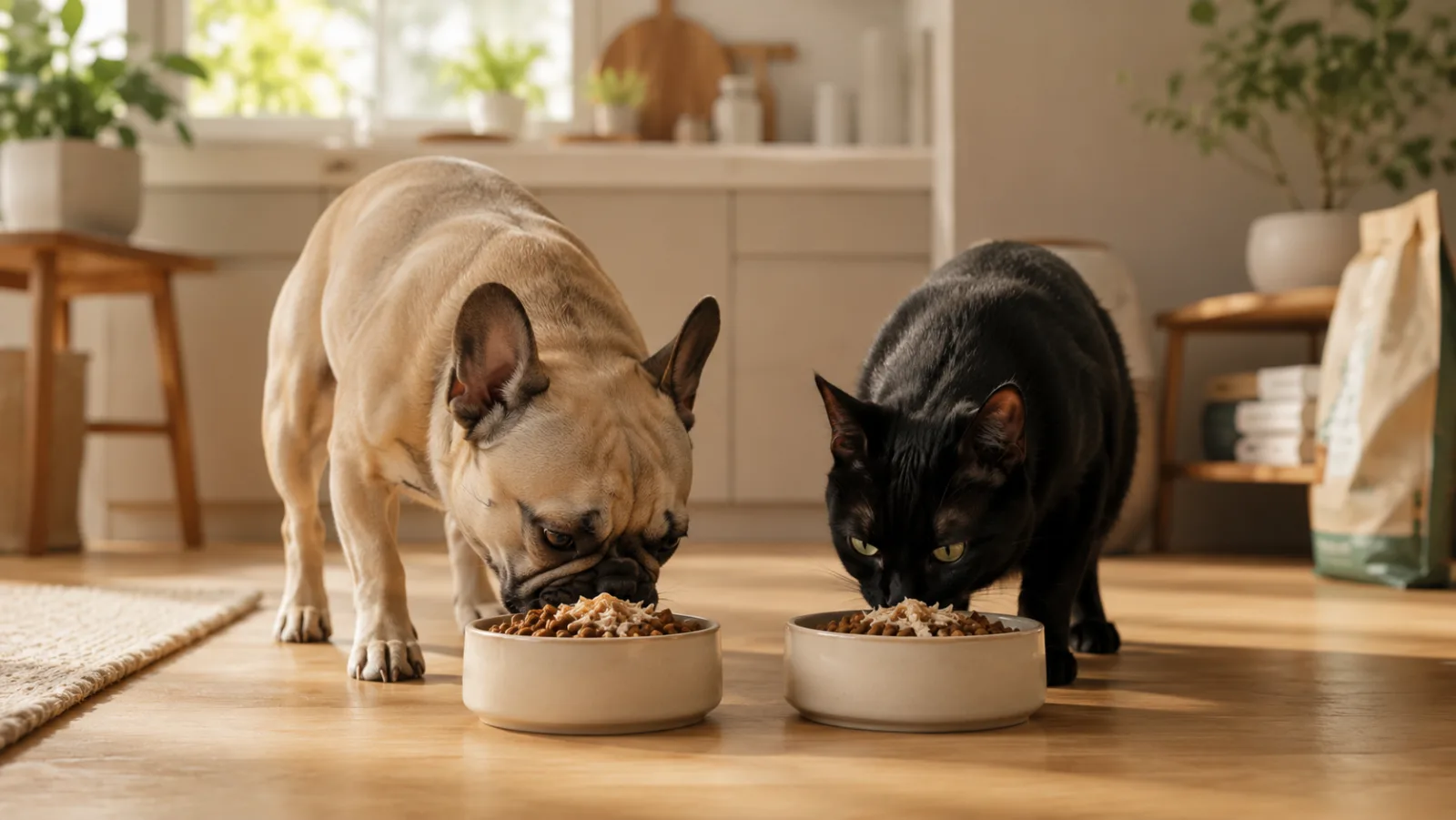
Best Sensitive-Stomach Foods and Diet-Transition Tools for Dogs and Cats (2026)
Cats & Dogs
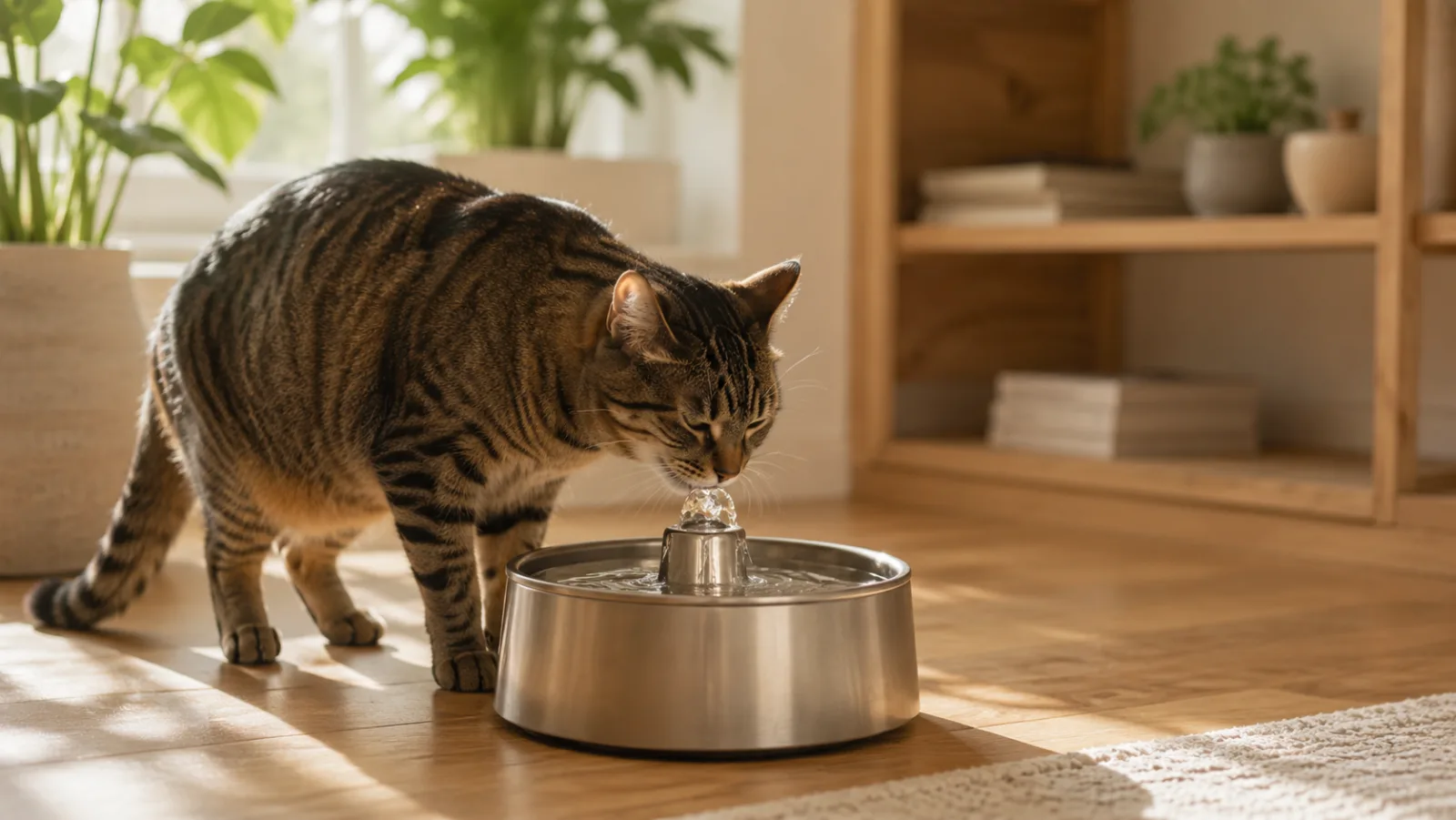
Best Cat Water Fountains for Hydration, Cleaning Ease, and Quiet Operation (2026)
Cats & Dogs