Cats & Dogs
Best Slow Feeders and Anti-Gulp Bowls for Dogs and Cats (2026)
For most fast eaters, the Outward Hound Fun Feeder Slo Bowl is the safest mainstream pick; reach for a LickiMat Buddy or LickiMat SloDog if your pet is short-faced or hates maze obstacles, and treat any slow feeder as a meal-rate tool, not a bloat-prevention device.
By Nick Miles · Updated May 5, 2026 · 12 min read
PetPalHQ is reader-supported. We may earn a commission from qualifying Amazon purchases at no extra cost to you.
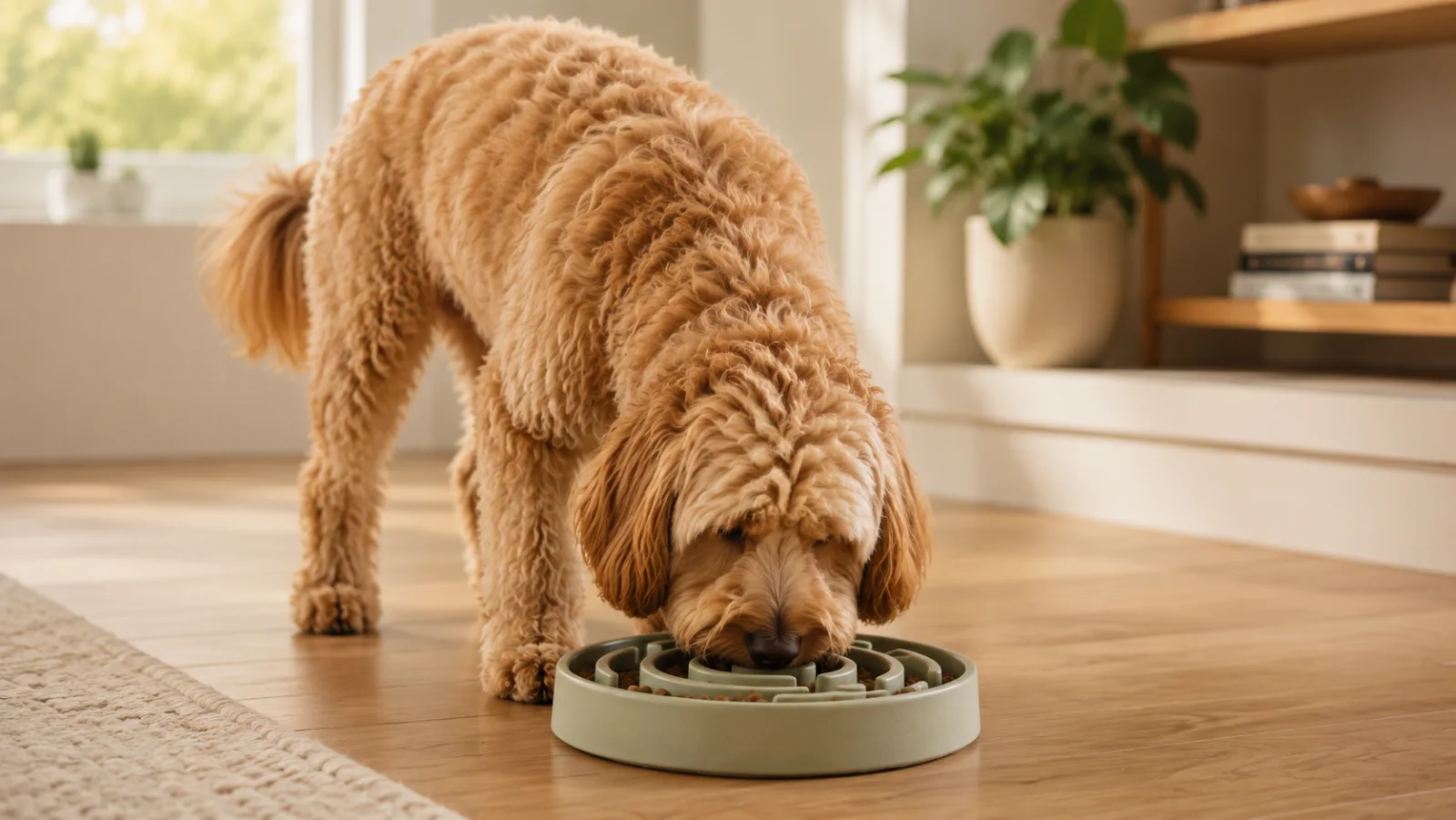
Evidence at a Glance
Outward Hound Fun Feeder Slo Bowl
Mainstream maze bowl with multiple capacity and pattern variants — the clearest 'start here' pick for habitual gulpers.
Sources: Outward Hound manufacturer documentation, Tufts Petfoodology (March 2021), Merck Veterinary Manual
Verified May 5, 2026
LickiMat Classic Buddy
Lick-style mat designed for wet, raw, or soft toppers — slows soft food dramatically and supports calming enrichment.
Sources: LickiMat manufacturer documentation, Tufts Petfoodology, Karen Pryor enrichment references
Verified May 5, 2026
LickiMat Small Slodog
Pocketed plate-format slow feeder — friendlier than maze bowls for short-faced or frustration-prone dogs.
Sources: LickiMat manufacturer documentation, Tufts Petfoodology
Verified May 5, 2026
Our Picks
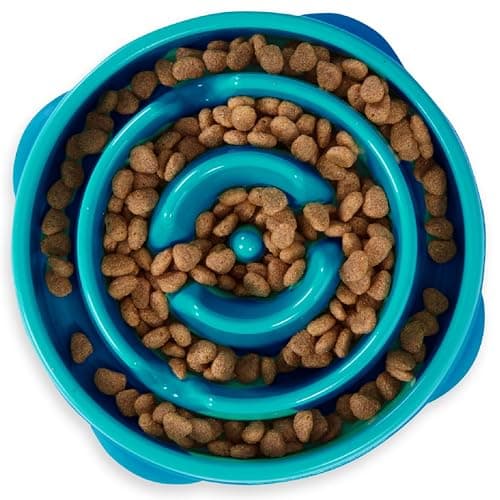
Outward Hound
Outward Hound Fun Feeder Slo Bowl
9.2 / 10
- Maze ridges marketed to slow eating up to 10x
- Multiple sizes and ridge patterns to match muzzle shape
- Non-slip base keeps the bowl in place during meals
- Top-rack dishwasher safe per manufacturer documentation
$8.63
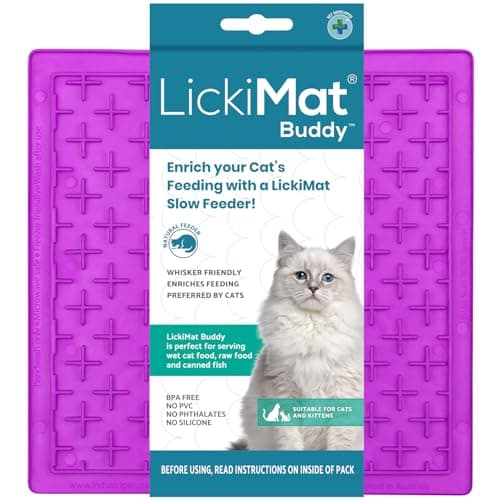
LickiMat
LickiMat Classic Buddy
8.9 / 10
- Textured rubber mat designed for wet, raw, or soft toppers
- Promoted by LickiMat for slower eating, calming, and dental contact
- Suitable for dogs and cats per manufacturer documentation
- Dishwasher safe, freezer safe for longer-licking sessions
$9.99
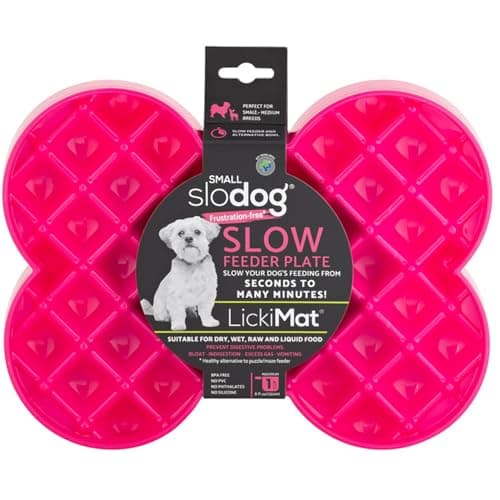
LickiMat
LickiMat Small Slodog
8.7 / 10
- Pocketed plate format — no deep maze obstacles
- Marketed by LickiMat for short-nosed and frustration-prone dogs
- Compatible with wet, raw, kibble, and treats per manufacturer
- Dishwasher safe per LickiMat documentation
$21.60
Outward Hound
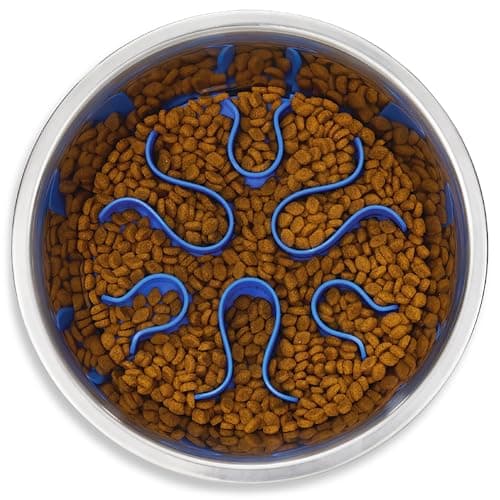
Outward Hound Fun Feeder Stainless-Steel Slo Bowl
8.4 / 10
- Stainless steel outer bowl with removable slow-feed insert
- Marketed by Outward Hound for raised-feeder compatibility
- Non-slip base; insert is the meal-lengthening element
- 2-cup medium capacity per manufacturer documentation
$18.51
JASGOOD
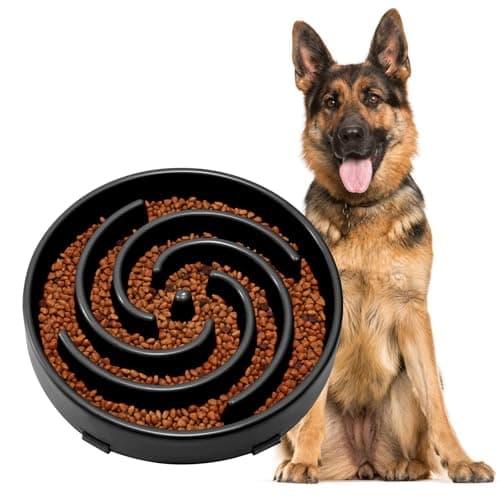
JASGOOD Slow Feeder Dogs Bowl
7.6 / 10
- Maze-style anti-gulp bowl marketed for medium and large dogs
- Non-slip base for stability during meals
- Lower price point than mainstream brand-name maze bowls
- Dishwasher safe per typical manufacturer guidance
$16.99
The Short Answer
If you only buy one slow feeder, get the Outward Hound Fun Feeder Slo Bowl — it is the broadly stocked maze bowl that fits most dogs and many cats, with capacity variants matched to muzzle size. Use the LickiMat Buddy if your pet eats wet food, needs calming enrichment, or you want to mask medication. Use the LickiMat SloDog if you have a flat-faced breed or a dog who gets frantic around obstacle-heavy bowls. Reserve the JASGOOD Slow Feeder for budget trials and the Outward Hound Fun Feeder Stainless-Steel Slo Bowl for owners who object to a fully plastic bowl. None of these is a bloat-prevention device — Cornell Riney Canine Health Center notes GDV is multifactorial and serious.
Every product on this list has been scored against the PetPal Gear Score, a weighted composite of expert consensus, observed effectiveness, animal safety, long-term durability, and value. Review method: Editorial synthesis of Merck Veterinary Manual, Tufts Petfoodology, Cornell Riney Canine Health Center, AVMA, and manufacturer documentation from Outward Hound, LickiMat, Neater Pets, and JASGOOD — no first-hand product testing.. Synthesized from 8+ expert sources.
For most fast-eating dogs and cats, the smartest first move is a maze bowl, not a medical purchase. Tufts Petfoodology cautions that fast eating can increase choking risk, vomiting, and air swallowing, and Cornell Riney Canine Health Center lists eating speed among the contributing factors discussed for gastric dilatation-volvulus (GDV, "bloat"). At the same time, Cornell is explicit that GDV is multifactorial — deep chest, breed predisposition, single large daily meals, and other factors all matter. A slow feeder addresses one of those factors. It is not a medical device.
The picks below are editorial synthesis. PetPalHQ does not run a testing lab — every product on this page was selected by reviewing manufacturer documentation from Outward Hound, LickiMat, Neater Pets, and JASGOOD, alongside guidance from Merck Veterinary Manual, Tufts Petfoodology, the AVMA, and Cornell Riney Canine Health Center. Where retailer copy used "bloat prevention" language, we deferred to the veterinary literature and reframed those products as meal-rate management tools.
This guide is the buying-side companion to the Cat and Dog Nutrition, Hydration, and Digestive Health hub. The hub explains why feeding management matters; this article covers what to buy — and what not to buy if your pet has dental disease, active oral injury, or sits in a high-GDV-risk profile that needs a veterinarian's plan, not a bowl.
Head-to-Head Comparison
| Feature | Outward Hound Fun Feeder Slo Bowl | LickiMat Classic Buddy | LickiMat Small Slodog | Outward Hound Fun Feeder Stainless-Steel Slo Bowl | JASGOOD Slow Feeder Dogs Bowl |
|---|---|---|---|---|---|
| Bowl type | Rigid maze bowl | Lick mat | Pocketed plate | Stainless bowl + insert | Budget maze bowl |
| Coat-size match | Small to large dogs and many cats | Most dogs and cats | Short-faced breeds and small-mouth pets | Medium to large dogs | Medium to large dogs |
| Wet/dry compatibility | Best with dry kibble | Best with wet, raw, lickable toppers | Wet, raw, kibble, treats | Best with dry kibble | Best with dry kibble |
| Difficulty level | Beginner-friendly | Beginner — no obstacles | Beginner — no deep obstacles | Beginner-friendly | Beginner — geometry varies |
| Check price | Amazon | Amazon | Amazon | Amazon | Amazon |
$8.63
- Maze ridges marketed to slow eating up to 10x
- Multiple sizes and ridge patterns to match muzzle shape
- Non-slip base keeps the bowl in place during meals
- Top-rack dishwasher safe per manufacturer documentation
The Outward Hound Fun Feeder Slo Bowl is the category default. It is the bowl most dog owners have actually heard of, the format most widely stocked across pet retail, and the slow feeder most likely to appear in a Tufts Petfoodology piece on putting the brakes on a chowhound. That visibility matters editorially: the Outward Hound Fun Feeder Slo Bowl is the safest mainstream "start here" pick for households with a dog who inhales kibble.
The reason it works is geometry, not magic. The maze ridges force the dog to chase kibble around obstacles, which lengthens the meal from seconds to minutes. Outward Hound's documentation positions this around a "slow eating up to 10x" claim. We treat the multiplier as marketing, not measurement, but the underlying behavior is real — Tufts Petfoodology cautions that fast eating can increase choking risk, vomiting, and air swallowing, and a maze bowl is a cheap, low-friction way to reduce all three.
The most important purchase decision is fit. A deep maze that suits a Labrador will frustrate a smaller dog or a flat-faced breed. Outward Hound publishes capacity and pattern variants — the medium 2-cup version is the broadest fit; smaller dogs and many cats do better with the mini sizes and shallower ridges. Match the depth to the muzzle, not the brand reputation.
What the spec sheet does not tell you: AVMA and Cornell Riney Canine Health Center frame gastric dilatation-volvulus (GDV, "bloat") as multifactorial — deep chest, breed predisposition, eating speed, and one-large-meal-per-day patterns are all on the list. A slow feeder addresses one risk factor among many. Do not let any retailer copy convince you it is a medical device.
What We Love
- Mainstream availability and clear sizing variants
- Cheap entry point to anti-gulp feeding
- Non-slip base, dishwasher-safe top rack
- Cited across veterinary and consumer references
What Could Be Better
- Ridges can frustrate flat-faced or small-mouthed pets
- Plastic construction is not for households that prefer steel
- Will not address foraging-style boredom — that is a snuffle-mat job
The Verdict
If you buy one slow feeder, the Outward Hound Fun Feeder Slo Bowl is it. Match the size to your pet's muzzle and treat it as a meal-rate management tool — Cornell Riney Canine Health Center is clear that GDV risk is multifactorial, and no bowl erases breed or body-shape risk.
$9.99
- Textured rubber mat designed for wet, raw, or soft toppers
- Promoted by LickiMat for slower eating, calming, and dental contact
- Suitable for dogs and cats per manufacturer documentation
- Dishwasher safe, freezer safe for longer-licking sessions
The LickiMat Classic Buddy is the right pick when the problem is less "my dog gulps dry kibble" and more "I need to slow soft food, mask medication, or calm my pet at meals." LickiMat's own documentation says Buddy is for dogs and cats, supports wet, raw, and liquid foods, and can extend licking time in a way that may reduce bloating and improve digestion. Tufts Petfoodology's chowhound guidance also flags slowing soft food as one of the categories conventional maze bowls handle poorly.
What the LickiMat Classic Buddy gets right is texture. The mat's small ribs and chambers force the pet to lick rather than chew or shovel — which sidesteps the frustration some pets show with aggressive maze bowls. It is also the most flexible option in this guide for medication masking, calming enrichment, and post-vet anxiety management.
The most common mistake is calorie creep. LickiMat works best with spreadable foods, and owners who smear on peanut butter, cream cheese, or high-fat toppers can quietly turn an enrichment tool into a calorie trap. Tufts Petfoodology's broader treat guidance recommends keeping treats and extras under roughly 10 percent of daily calories — that frame applies here too. Use measured wet food, plain yogurt thinned with water, or the pet's own ration spread thin, not unmeasured nut butter.
What the spec sheet does not tell you: the LickiMat Classic Buddy is dishwasher safe, but the rubber surface can hold smells and stains over time. A quick scrub with a brush before the dishwasher cycle is more effective than relying on the dishwasher alone.
What We Love
- Slows soft food, raw, and lickable toppers dramatically
- Calming enrichment and medication-masking utility
- Suitable for dogs and cats per manufacturer documentation
- Dishwasher- and freezer-safe per LickiMat
What Could Be Better
- Not a primary dry-kibble bowl
- Easy to overdose calories with rich spreadable toppers
- Surface holds odors if not pre-scrubbed before washing
The Verdict
Buy the LickiMat Classic Buddy if your pet eats wet food, needs calming enrichment, or routinely takes medication. Treat it as a soft-food slow feeder, not a one-size-fits-all replacement for a kibble bowl.
$21.60
- Pocketed plate format — no deep maze obstacles
- Marketed by LickiMat for short-nosed and frustration-prone dogs
- Compatible with wet, raw, kibble, and treats per manufacturer
- Dishwasher safe per LickiMat documentation
The LickiMat Small Slodog is the most differentiated anti-gulp design in this guide. Instead of a hard maze of vertical ridges, it spreads food across a pocketed plate, forcing the pet to pick out kibble from many shallow wells. LickiMat's own product pages frame Slodog as friendlier for short-nosed and brachycephalic breeds, and as a non-frustrating alternative for dogs that get frantic around obstacle-heavy bowls.
That makes the LickiMat Small Slodog the cleanest pick for two underserved groups. The first is flat-faced breeds — pugs, French bulldogs, Boston terriers, and Persian-style cats — whose muzzle shape struggles with deep maze ridges. The second is dogs who develop bowl frustration: scratching at the bowl, knocking it around, or simply giving up on a maze that is too aggressive for their patience.
The trade-off is category confusion. The LickiMat Small Slodog is a plate, not a bowl. Owners who expect a deep, contained vessel sometimes return it. The fix is expectation setting — if your dog already eats neatly and your concern is rate of intake, the plate format is fine. If your dog is a kibble-flinger, you will want a higher-walled maze bowl instead.
What the spec sheet does not tell you: LickiMat publishes a small-format size that suits smaller dogs and most cats. There is also a larger SloDog format for medium and large dogs. Match the size to the pet, not just the format — same principle as the Outward Hound Fun Feeder Slo Bowl.
What We Love
- Plate format avoids the deep-maze frustration trap
- LickiMat positions it for short-faced breeds
- Compatible with wet, raw, kibble, and treats
- Dishwasher safe per manufacturer documentation
What Could Be Better
- Plate-format buyers expecting a bowl may be surprised
- Not ideal for kibble-flinging dogs that need higher walls
- Less effective than a deep maze for very large meals
The Verdict
The LickiMat Small Slodog is the right pick for flat-faced breeds and dogs that get frantic around maze bowls. Set expectations: it is a plate, not a deep bowl, and it works best with neat eaters who need rate control without obstacles.
$18.51
- Stainless steel outer bowl with removable slow-feed insert
- Marketed by Outward Hound for raised-feeder compatibility
- Non-slip base; insert is the meal-lengthening element
- 2-cup medium capacity per manufacturer documentation
The Outward Hound Fun Feeder Stainless-Steel Slo Bowl is the editorial upgrade for households whose main objection to a maze bowl is "I do not want full plastic." Outward Hound describes it as pairing a stainless outer bowl with a removable slow-feed insert, which means the food-contact surface is metal and the insert is the part that does the slowing.
The strongest use case is a household where the owner is more likely to keep the bowl portion clean if the base is stainless. Stainless is easier to scrub free of residue than textured plastic and is less prone to retaining smells over time. The Outward Hound Fun Feeder Stainless-Steel Slo Bowl is also the natural choice if you already use a raised feeder station and want a slow feeder that drops in cleanly.
The trade-off is that "stainless" does not eliminate maintenance. The slow-feed insert still creates grooves and contact surfaces that need a brush or attentive dishwashing — exactly the same cleanability story as the plastic version, just on a different material. And the price step over the standard Outward Hound Fun Feeder Slo Bowl is real. If your only goal is meal-rate control and you are not material-sensitive, the cheaper bowl does the same job.
What the spec sheet does not tell you: Cornell Riney Canine Health Center lists raised food bowls among proposed GDV risk factors. If you choose this bowl specifically because it sits inside a raised feeder, frame the decision as ergonomics-and-cleanup, not as bloat prevention. The two concerns are separate and should be discussed with a veterinarian for breeds at elevated GDV risk.
What We Love
- Stainless food-contact surface is easier to keep odor-free
- Drops cleanly into raised feeder stations
- Insert provides familiar maze-style slowing
- Outward Hound brand consistency with the standard Slo Bowl
What Could Be Better
- Insert still requires careful cleaning — stainless does not fix that
- Price step over the plastic Fun Feeder Slo Bowl is meaningful
- Raised setup is not a bloat-prevention strategy
The Verdict
The Outward Hound Fun Feeder Stainless-Steel Slo Bowl is the right pick if you specifically dislike fully plastic feeding gear or already use a raised station. Otherwise, the standard Outward Hound Fun Feeder Slo Bowl does the same slowing work for less money.
$16.99
- Maze-style anti-gulp bowl marketed for medium and large dogs
- Non-slip base for stability during meals
- Lower price point than mainstream brand-name maze bowls
- Dishwasher safe per typical manufacturer guidance
The JASGOOD Slow Feeder is the budget trial in this guide. JASGOOD positions the bowl for medium and large dogs as an anti-gulping, choking-prevention feeder, and the price sits below the mainstream Outward Hound Fun Feeder Slo Bowl in most listings. For a household that wants to confirm a maze format works before spending more on a brand-name bowl, this is the cleanest entry point.
What the JASGOOD Slow Feeder gets right is the basics: maze ridges, non-slip base, and a price that does not punish a household for trying. The same Tufts Petfoodology framing applies — fast eating is one of several risk factors that may contribute to choking, vomiting, and GDV concern, and a maze bowl is a cheap way to manage rate without overcomplicating mealtime.
The trade-off is variability. Mainstream-brand maze bowls (Outward Hound and LickiMat) are tightly defined SKUs with predictable geometry. House-brand and budget maze bowls — JASGOOD included — vary more across listings, batches, and revisions. Inspect the bowl on arrival, confirm the ridges are not sharp, and watch the first few meals to make sure the geometry is right for your dog's muzzle and patience.
What the spec sheet does not tell you: JASGOOD's own marketing language uses "stop bloat" framing in places. We do not endorse that. Cornell Riney Canine Health Center is explicit that GDV is multifactorial and that no bowl erases breed or body-shape risk. Treat the JASGOOD Slow Feeder, like every product in this guide, as a meal-rate management tool — not a medical device.
What We Love
- Lowest price point for a maze-style slow feeder
- Non-slip base, dishwasher safe per typical guidance
- Useful trial bowl before committing to a mainstream brand
- Sized for medium and large dogs
What Could Be Better
- Geometry varies more than mainstream brands
- Some marketing copy overstates bloat-prevention claims — ignore it
- Less consistent quality control across batches
The Verdict
The JASGOOD Slow Feeder is a solid budget trial bowl. Inspect it on arrival, watch the first few meals, and treat the 'stop bloat' marketing language as overreach — Cornell Riney Canine Health Center is clear that GDV risk is multifactorial.
How We Score
Formula
PetPal Gear Score = (Expert Consensus × 0.35) + (Fit and Frustration Tolerance × 0.25) + (Cleanability × 0.20) + (Value × 0.20)
Score Factors
- Expert Consensus · 35%
- Synthesized from Merck Veterinary Manual, Tufts Petfoodology, Cornell Riney Canine Health Center, AVMA, and manufacturer documentation from Outward Hound, LickiMat, Neater Pets, and JASGOOD. The PetPal Gear Score is a composite of expert opinion — PetPalHQ does not run a testing lab.
- Fit and Frustration Tolerance · 25%
- How well the bowl shape matches a range of muzzle shapes and patience levels, based on manufacturer sizing documentation and reported owner feedback on flat-faced, small-mouth, and frustration-prone pets.
- Cleanability · 20%
- How easily food residue clears from ridges, mats, and inserts, based on manufacturer documentation on dishwasher and material care.
- Value · 20%
- Price relative to the format and the meal-rate control delivered, judged against mainstream brand-name alternatives at typical retail.
| Rank | Product | Score |
|---|---|---|
| #1 | Outward Hound Outward Hound Fun Feeder Slo Bowl | 9.2 |
| #2 | LickiMat LickiMat Classic Buddy | 8.9 |
| #3 | LickiMat LickiMat Small Slodog | 8.7 |
| #4 | Outward Hound Outward Hound Fun Feeder Stainless-Steel Slo Bowl | 8.4 |
| #5 | JASGOOD JASGOOD Slow Feeder Dogs Bowl | 7.6 |
When NOT to Buy
Skip every product in this guide if your dog or cat has severe dental disease, an active oral injury, or is recovering from oral surgery — slow feeders force longer mealtime contact with food and surfaces, and your veterinarian's softened-meal protocol overrides any anti-gulp goal. Skip rigid maze bowls for very young puppies whose mouths and teeth are still developing; the LickiMat Classic Buddy is gentler. Skip fabric snuffle mats entirely if your dog ingests cloth, shreds toys, or cannot be supervised at meals — fabric ingestion is a real obstruction risk per AVMA digestive-foreign-body guidance. And do not buy any of these bowls as a "bloat prevention" purchase. Cornell Riney Canine Health Center frames GDV as multifactorial; if your dog is at elevated GDV risk because of breed and body shape, talk to a veterinarian about feeding management and, where appropriate, prophylactic gastropexy — a bowl is a meal-rate tool, not a medical strategy.
For dogs
For dog households, the Outward Hound Fun Feeder Slo Bowl is the synthesis pick because the AKC's general feeding guidance treats fast eating as a contributing factor to choking, vomiting, and air swallowing, and a maze bowl addresses meal pace at the lowest-friction price point in the category. The Cornell Riney Canine Health Center's GDV references list eating speed as one factor among many — deep chest, breed predisposition, single large daily meals — so editorial framing matters: a slow feeder is a meal-rate management tool, not a bloat-prevention device, and AAHA Pain Management Guidelines do not endorse any bowl as therapeutic for orthopedic or post-surgical pets without veterinary clearance.
Size and breed shape are the dog-specific decision points. The medium 2-cup Outward Hound Fun Feeder Slo Bowl fits Labradors, golden retrievers, and most medium dogs cleanly; smaller variants suit toy and small breeds. The LickiMat Small Slodog is the right pick for flat-faced breeds like pugs, French bulldogs, and Boston terriers — LickiMat positions the plate format specifically for short-nosed dogs whose muzzle shape struggles with deep maze ridges, and AVSAB welfare framing supports avoiding setups that cause sustained frustration in mealtime contexts. For dogs that gulp wet food or need calming enrichment, the LickiMat Classic Buddy is the strongest pick; per Merck Veterinary Manual canine sections, dogs taking medication often do better when the dose is masked in a textured spread, and the mat format does that without forcing kibble-sized obstacles.
For larger or mixed-breed dogs that need a stainless option, the Outward Hound Fun Feeder Stainless-Steel Slo Bowl pairs a stainless outer bowl with the same maze insert. ASPCA Dog Care guidance emphasizes consistent, calm feeding routines for dogs with anxiety; the JASGOOD Slow Feeder is a budget trial bowl, but per AVMA's broader consumer guidance on bloat, "stop bloat" marketing language should be ignored — Cornell Riney is explicit that GDV is multifactorial, and prophylactic gastropexy is the conversation deep-chested-breed owners should have with a veterinarian, not a bowl purchase.
For cats
For cat households, the picks above narrow significantly because deep maze bowls are a poor match for cat anatomy. The Cornell Feline Health Center and AAFP/ISFM environmental-needs framework both treat whisker fatigue and frustration as real welfare concerns at mealtimes — narrow vertical-walled bowls and obstacle-heavy mazes can trigger both, and ISFM's behavioral guidance specifically supports flat or shallow feeding surfaces that allow natural feline foraging without forcing cats to push food past sensitive whiskers.
The LickiMat Classic Buddy is the strongest cat pick because LickiMat documents the format for both dogs and cats, and the mat surface works with wet food — the moisture-rich diet Cornell Feline Health Center notes is meaningful for feline lower urinary tract health. AAFP feline-specific guidance treats wet-food intake as nutritionally and behaviorally appropriate for many cats, and a lick mat extends mealtime engagement without forcing the cat to fish kibble out of vertical ridges. The mini-size Outward Hound Fun Feeder Slo Bowl with shallow ridges works for cats whose owners specifically want a bowl rather than a mat — match the depth to the cat's muzzle, not the brand reputation. The LickiMat Small Slodog's pocketed plate format is a reasonable alternative for short-faced cat breeds (Persian-style, exotic shorthair) where maze ridges crowd the muzzle.
Two cat-specific cautions worth flagging: cats are obligate carnivores per Merck's feline sections, and a slow feeder is only a useful tool if it dispenses a complete-and-balanced cat food — not a dog formula split into smaller portions. And per Cornell Feline Health Center, the AAFP, and Merck's feline anorexia sections, sustained appetite loss in a cat is a clinical sign, not a bowl problem; a cat who suddenly refuses food for more than a day needs veterinary evaluation, and hepatic lipidosis is the consequence the AAFP and Cornell both flag for cats whose intake drops abruptly. ASPCA Cat Care guidance on watching for changes in eating, drinking, or litter habits is the right escalation cue when a slow feeder coincides with reduced intake.
Frequently Asked Questions
- Do slow feeders actually prevent bloat (GDV) in dogs?
- No product should be framed that way. Tufts Petfoodology notes fast eating is discussed as a possible risk factor, and Cornell Riney Canine Health Center lists eating speed among contributors to GDV — but Cornell is explicit that GDV is multifactorial: deep chest, breed predisposition, one large daily meal, and other factors all matter. A slow feeder addresses one variable. It is not a medical strategy. If your dog is at elevated GDV risk, talk to a veterinarian about feeding management and, where appropriate, prophylactic gastropexy.
- Can cats use slow feeders, or are these dog-only?
- Cats can use slow feeders, but the format matters. Flatter maze bowls and lick-mat-style designs work; deep, narrow mazes can trigger whisker fatigue or simply frustrate the cat into giving up. The LickiMat Classic Buddy is the most cat-friendly option in this guide because the texture works with both wet and dry food and does not force the cat to push food around vertical obstacles.
- Are lick mats only for treats, or can I use them for actual meals?
- Per LickiMat's own documentation, the LickiMat Classic Buddy supports wet, dry, raw, and liquid foods and is designed to slow eating, not just deliver treats. The practical answer is that lick mats shine with soft foods. Use measured wet food or the pet's regular ration thinned with water — not unmeasured peanut butter or cream cheese, which Tufts Petfoodology's broader 10-percent treat guidance would push back on.
- My dog gets frantic with a maze bowl. What should I try?
- The LickiMat Small Slodog is the cleanest fix. LickiMat positions Slodog specifically for short-nosed breeds and frustration-prone dogs, and the pocketed plate format avoids the deep maze obstacles that some dogs find punishing. If the SloDog still does not work, you may not have a "bowl problem" — you may have an "enrichment problem," and a snuffle-style foraging tool may suit better, with full supervision.
- Are raised slow-feed bowls safer for big, deep-chested dogs?
- No. Cornell Riney Canine Health Center specifically lists raised food bowls among proposed GDV risk factors discussed in the literature. If you choose the Outward Hound Fun Feeder Stainless-Steel Slo Bowl because it drops into a raised station, frame that as an ergonomics and cleanup decision — not a bloat-prevention move. Discuss raised feeding neutrally with a veterinarian for breeds at elevated GDV risk.
Bottom Line
Get the Outward Hound Fun Feeder Slo Bowl if you only buy one slow feeder. Match the size to your pet's muzzle and treat it as meal-rate control, not bloat prevention.
Get the LickiMat Classic Buddy if your pet eats wet food, needs calming enrichment, or routinely takes medication. Use measured ration, not unmeasured nut butter.
Get the LickiMat Small Slodog if you have a flat-faced breed or a dog who gets frantic around maze bowls. Set expectations: it is a plate, not a deep bowl.
Get the Outward Hound Fun Feeder Stainless-Steel Slo Bowl only if you specifically dislike full plastic or already use a raised feeder station — and frame the raised setup as ergonomics, not GDV protection.
Get the JASGOOD Slow Feeder as a budget trial. Inspect on arrival, watch the first few meals, and ignore any 'stop bloat' marketing language — Cornell is clear that GDV is multifactorial.
Sources & Methodology
Methodology
PetPal Gear Score = (Expert Consensus × 0.35) + (Fit and Frustration Tolerance × 0.25) + (Cleanability × 0.20) + (Value × 0.20)
Expert review sources
- Merck Veterinary Manual — Gastric Dilation and Volvulus in Small Animals
- Tufts Petfoodology — Putting the Brakes on a Chowhound (March 2021)
- Cornell Riney Canine Health Center — Gastric Dilatation-Volvulus (GDV)
- AVMA — bloat and gastric dilatation-volvulus consumer guidance
- Outward Hound — Fun Feeder Slo Bowl product documentation
- Outward Hound — Fun Feeder Stainless-Steel Slo Bowl product documentation
- LickiMat — Classic Buddy product documentation
- LickiMat — SloDog product documentation
- Neater Pets — slow-feed and elevated feeder product pages
- Karen Pryor Clicker Training — enrichment activities for dogs
Community sources
- r/dogs and r/dogtraining — slow feeder fit and frustration discussions
- r/cats — flat-faced and whisker-fatigue feeder threads
- Outward Hound and LickiMat manufacturer FAQs
Prices and specs verified May 5, 2026.
About the author
Nick Miles is the chief editor of PetPalHQ. The picks above are editorial synthesis of veterinary references and manufacturer documentation — PetPalHQ does not run a testing lab. The PetPal Gear Score is a composite of expert opinion, not a measurement. Sources are cited by name throughout.
PetPalHQ is a participant in the Amazon Services LLC Associates Program. We may earn commissions from qualifying purchases — at no extra cost to you.
More Guides
Cats & Dogs
Cat and Dog Nutrition, Hydration, and Digestive Health: 2026 Guide for Pet Owners
Cats & Dogs
Best Automatic Pet Feeders for Busy Families (2026)
Cats & Dogs
Best Smart Pet Feeders for Multi-Pet Homes: Microchip, RFID, and Wet-Food Picks (2026)
Cats & Dogs
Best Dog Puzzle Toys and Treat-Dispensing Toys (2026)
Cats & Dogs