Cats & Dogs
Best Smart Pet Feeders for Multi-Pet Homes: Microchip, RFID, and Wet-Food Picks (2026)
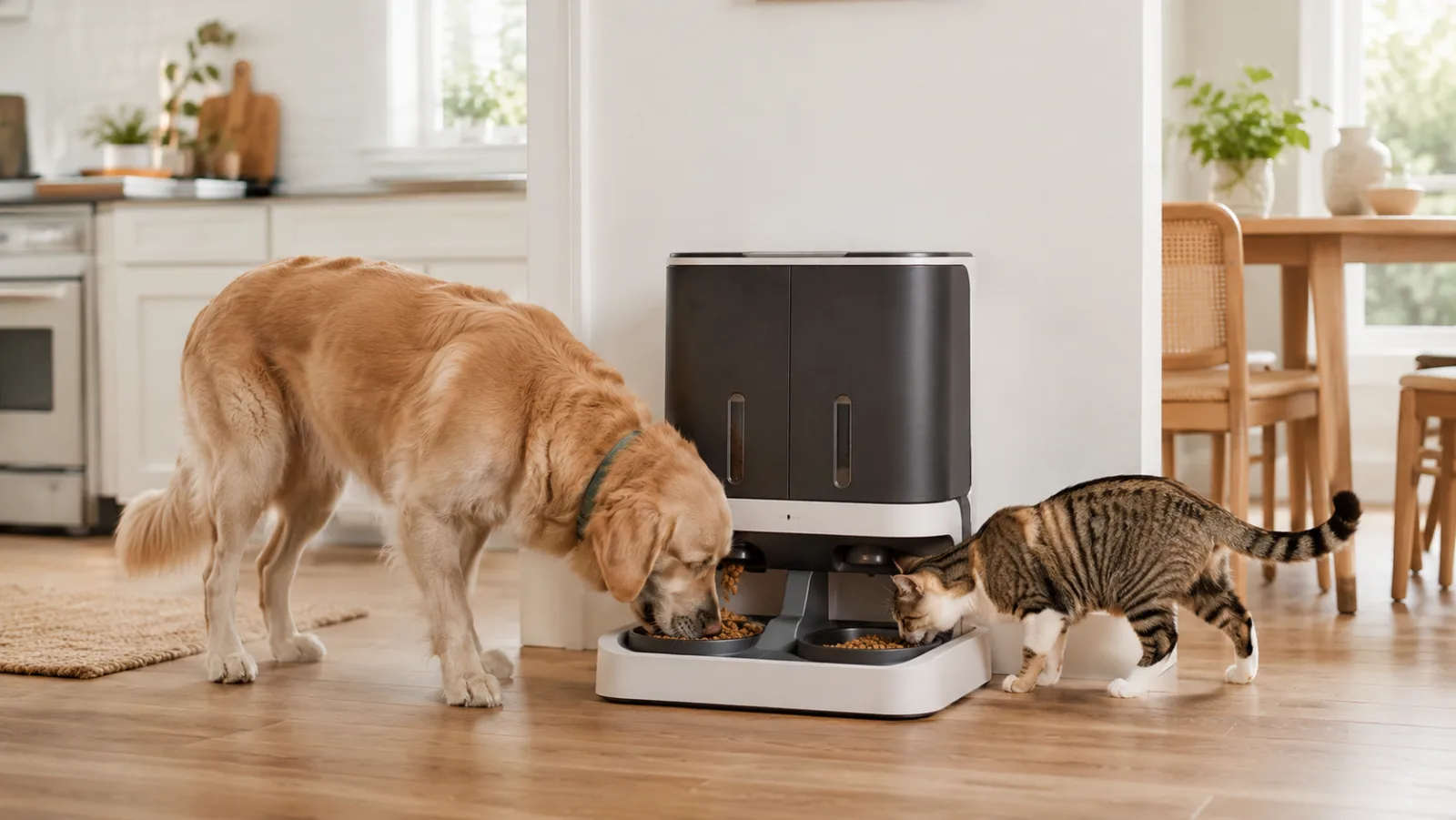
For multi-pet homes with prescription diets, food theft, or weight-management splits, an implanted-microchip feeder solves a problem no camera or schedule-only feeder can. The Sure Petcare SureFeed Microchip Pet Feeder is the synthesis pick; the SureFeed Connect adds app-linked monitoring; PETLIBRO One RFID is the collar-tag alternative; the PETLIBRO Polar covers the wet-food angle that hopper feeders ignore.
By Nick Miles · Updated August 7, 2026 · 12 min read
PetPalHQ is reader-supported. We may earn a commission from qualifying Amazon purchases at no extra cost to you.
Evidence at a Glance
Sure Petcare SureFeed Microchip Pet Feeder
Implanted-microchip access for multi-pet, prescription-diet, and weight-management homes — Sure Petcare confirms compatibility with common implanted microchips and RFID collar tags.
Sources: Sure Petcare manufacturer documentation, AAFP/ISFM Feline Environmental Needs Guidelines, PetMD multi-cat feeding article
Verified May 5, 2026
Sure Petcare SureFeed Microchip Pet Feeder Connect
Adds app-linked monitoring and weight tracking to the SureFeed access-control model — Sure Petcare documents that a separately-sold Hub is required for connectivity.
Sources: Sure Petcare manufacturer documentation, AAFP/ISFM Feline Environmental Needs Guidelines, Reddit r/CatAdvice owner threads
Verified May 5, 2026
PETLIBRO One RFID Smart Feeder
Collar-tag-activated personalized meals — PETLIBRO's documentation is explicit that the One RFID does not read implanted microchips and works only with its dedicated collar tag.
Sources: PETLIBRO manufacturer documentation, PetMD multi-cat feeding article, AAFP/ISFM Feline Environmental Needs Guidelines
Verified May 5, 2026
Our Picks
Sure Petcare
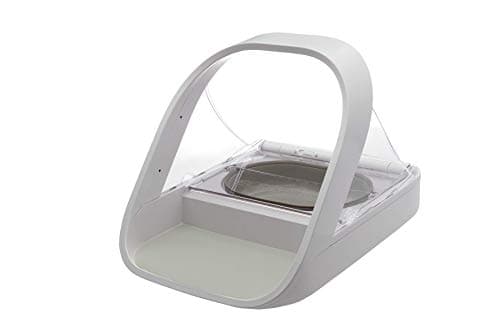
Sure Petcare SureFeed Microchip Pet Feeder
9.3 / 10
- Reads implanted microchips and RFID collar tags per Sure Petcare documentation
- Designed for multi-pet, prescription-diet, and weight-management households
- Compatible with both wet and dry food per the manufacturer
- Battery-powered — no AC required, no schedule control
$199.00
Sure Petcare
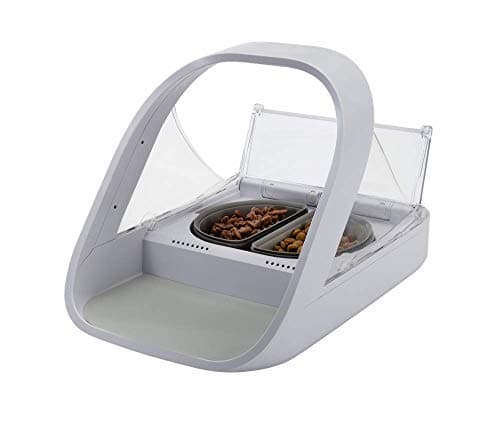
Sure Petcare SureFeed Microchip Pet Feeder Connect
8.9 / 10
- Same access-control model as the standard SureFeed plus app-linked monitoring
- Weight tracking and feeding-session data via the Sure Petcare app
- Hub sold separately — required for connectivity per Sure Petcare documentation
- Multi-pet, prescription-diet, and weight-management framing
$227.90
PETLIBRO
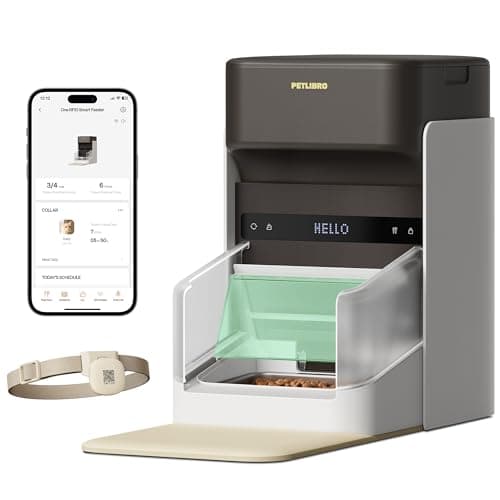
PETLIBRO One RFID Smart Feeder
8.6 / 10
- Collar-tag-activated personalized meals per PETLIBRO documentation
- App scheduling, diet tracking, and Wi-Fi connectivity
- Documented as RFID collar-tag only — does not read implanted microchips
- Anti-stealing logic for multi-pet dry-food households
$149.99
PETLIBRO
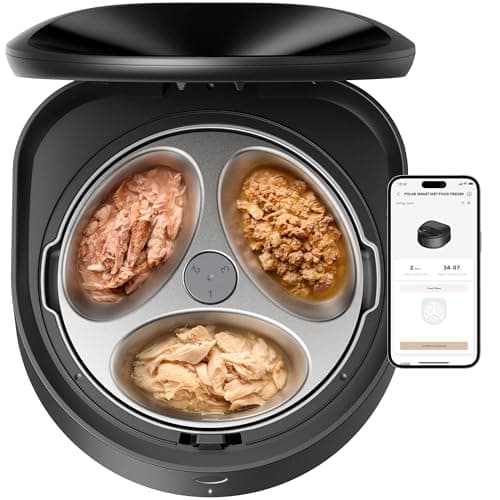
PETLIBRO Polar Automatic Wet Food Cat Feeder
8.4 / 10
- Semiconductor cooling — PETLIBRO documents three wet meals fresh for up to three days
- App scheduling and stainless steel bowl per the manufacturer
- Pauses cooling before serving so food is at temperature
- PETLIBRO advises against raw food and notes a minimum shoulder height
$169.99
The Short Answer
If you want one smart feeder for a multi-pet household, the Sure Petcare SureFeed Microchip Pet Feeder is the synthesis pick — it is the only implanted-microchip-native feeder on this list. Sure Petcare documents it as designed for multi-pet, prescription-diet, and weight-management households. The SureFeed Connect adds app monitoring and weight tracking but requires a separate Hub for connectivity. The PETLIBRO One RFID Smart Feeder is the strongest collar-tag alternative for households where one or more pets is not chipped. The PETLIBRO Polar Wet Food Feeder is the only wet-food answer in this list; it is not access-controlled but solves the canned-food scheduling problem standard feeders cannot. None of these feeders replaces veterinary care — Sure Petcare's own documentation says so directly. The AAFP/ISFM Feline Environmental Needs Guidelines and Merck Veterinary Manual both treat appetite, weight, and prescription-diet management as clinical, not consumer, decisions.
Every product on this list has been scored against the PetPal Gear Score, a weighted composite of expert consensus, observed effectiveness, animal safety, long-term durability, and value. Review method: Editorial synthesis of manufacturer documentation, veterinary references (AAFP/ISFM, Cornell Feline Health Center, Merck Veterinary Manual, AVMA), federal food-safety guidance (FDA, CDC), welfare-organization guidance (ASPCA), and independent retailer/community coverage from Reddit hobbyist threads — no first-hand product testing.. Synthesized from 11+ expert sources.
Most "smart feeder" buying advice gets one detail wrong: it treats access control and meal scheduling as the same feature. They are not. Sure Petcare's product documentation describes the SureFeed line as designed for multi-pet, prescription-diet, and weight-management households — its job is keeping the wrong pet's nose out of the right pet's bowl, not portioning food on a clock. PETLIBRO's One RFID combines selective access with scheduled meals using collar tags. PETLIBRO's documentation is explicit that the device does not read implanted microchips. PETLIBRO's Polar handles the wet-food angle that hopper feeders ignore but does not control access at all. Choosing the right feeder starts by naming the problem the household actually has.
The picks above are editorial synthesis. PetPalHQ does not run a testing lab — every product on this page was selected by reviewing manufacturer documentation, the AAFP/ISFM Feline Environmental Needs Guidelines, Cornell Feline Health Center references, the Merck Veterinary Manual's appetite-loss and behavior content, AVMA emergency-care guidance, ASPCA welfare references, FDA and CDC food-safety guidance, PetMD's multi-cat feeding article, and hobbyist community feedback on Reddit's r/CatAdvice and r/Petlibro threads. Where expert sources and brand marketing diverged most sharply — on whether selective-access feeders are luxury gadgets or genuine multi-pet management tools — the AAFP/ISFM environmental guidelines and PetMD's framing carried more weight than retail roundups. For prescription diets, weight-management splits, and chronic food theft, microchip and RFID feeders are doing real work. No schedule-only feeder, treat camera, or shared-bowl shortcut can replicate that.
This guide covers the Hub 4 multi-pet, microchip, and RFID angle. For general-purpose automatic feeders — including the dry-food hopper, schedule-only, and travel-day picks — see the Best Automatic Pet Feeders for Busy Families guide on PetPalHQ. The two articles share product DNA in places (PETLIBRO appears in both catalogs) but answer different buying questions: the general feeders guide asks "what is the right feeder for my busy household?" while this Hub 4 spoke asks "what is the right feeder for my multi-pet, prescription-diet, or food-theft problem?" This guide is also the buying-side companion to the Pet Home Systems, Cleanup, and Travel hub. The hub explains why the AAFP/ISFM environmental framing matters and how to map it onto your home. This article covers what to buy for a multi-pet household.
Head-to-Head Comparison
| Feature | Sure Petcare SureFeed Microchip Pet Feeder | Sure Petcare SureFeed Microchip Pet Feeder Connect | PETLIBRO One RFID Smart Feeder | PETLIBRO Polar Automatic Wet Food Cat Feeder |
|---|---|---|---|---|
| Access control method | Implanted microchip + RFID collar tag | Implanted microchip + RFID collar tag (with app) | RFID collar tag only — NOT implanted microchip | None — open lid on schedule |
| Scheduling capability | Access control only — no scheduled meals | Access control with app data — no scheduled meals | App-controlled scheduling per pet | App-controlled scheduling for up to 3 wet meals |
| Food type compatibility | Wet or dry per Sure Petcare | Wet or dry per Sure Petcare | Dry kibble | Wet (canned/pouched) — no raw food per PETLIBRO |
| Hub or subscription requirement | None — battery-powered standalone | Hub required separately for connectivity | Wi-Fi only — no Hub or subscription required | Wi-Fi only — no Hub or subscription required |
| Check price | Amazon | Amazon | Amazon | Amazon |
$199.00
- Reads implanted microchips and RFID collar tags per Sure Petcare documentation
- Designed for multi-pet, prescription-diet, and weight-management households
- Compatible with both wet and dry food per the manufacturer
- Battery-powered — no AC required, no schedule control
The Sure Petcare SureFeed Microchip Pet Feeder is the synthesis pick because it solves the one problem no schedule-only feeder, treat-tossing camera, or shared-bowl hopper can solve: keeping the wrong pet's nose out of the right pet's food. Sure Petcare's product documentation describes the device as designed for multi-pet, prescription-diet, and weight-management households. It confirms compatibility with common implanted microchips and RFID collar tags.
Where this fits: AAFP/ISFM's Feline Environmental Needs Guidelines treat separated, redundant feeding stations as a core feline resource — not a luxury. PetMD's article on feeding multiple cats specifically points to microchip- or RFID-enabled feeders as a meaningful tool for tracking and protecting individual diets in multi-cat households. The SureFeed is the only product in this guide that reads implanted chips natively. That matters because not every pet wears a collar reliably.
What the spec sheet does not tell you: this is access control, not meal scheduling. The SureFeed opens its lid for the right chip and closes it when that pet leaves. It does not portion food into the bowl on a schedule. For households whose problem is food theft (the sibling cat who steals prescription food, the dog whose nose follows the cat's bowl), that is exactly right. For households whose problem is timed meals while the owner is at work, this is the wrong category — pair it with a schedule-driven feeder for the gated pet, or step up to the Connect model if app-linked timing data matters. Reddit's r/CatAdvice threads also surface battery dependence as a long-term operational point. Plan for the documented battery cycle and confirm Sure Petcare's recommendation on battery type before extended absences.
What We Love
- Only implanted-microchip-native feeder in this guide
- Sure Petcare documents multi-pet, prescription-diet, and weight-management use cases explicitly
- Wet- and dry-food compatible per manufacturer
- Battery-powered means no power outage failure mode
What Could Be Better
- Access control only — does not schedule meals
- Battery dependence is a long-term operational consideration
- Single bowl per unit — multi-cat homes may need more than one feeder
The Verdict
Buy this if you have a multi-pet household with diet conflict, prescription diets, or weight-management splits and you want true implanted-microchip access without a collar tag. AAFP/ISFM and PetMD support the multi-cat use case. Sure Petcare's documentation supports the prescription-diet and weight-management framing. Pair with a schedule-driven feeder if timed meals matter. Sure Petcare's own documentation says these products do not replace veterinary care.
$227.90
- Same access-control model as the standard SureFeed plus app-linked monitoring
- Weight tracking and feeding-session data via the Sure Petcare app
- Hub sold separately — required for connectivity per Sure Petcare documentation
- Multi-pet, prescription-diet, and weight-management framing
The SureFeed Microchip Pet Feeder Connect is the access-control feeder upgraded with an app layer. Sure Petcare's product documentation describes it as the connected version of the standard SureFeed: the same implanted-microchip and RFID collar-tag access logic, with feeding-session data and weight tracking surfaced through the Sure Petcare app. The Hub required for connectivity is sold separately. The dossier flagged that as the single most common shopper friction point.
Where this fits: this is the right pick for households that want longitudinal data about which pet ate what and when. AAFP/ISFM's framing of resources as separated, monitored, and appropriate to social subgroup gets a meaningful boost when feeding sessions and weights are logged automatically. The Merck Veterinary Manual treats sustained appetite loss as a clinical sign. Having the data to see when intake changed is genuinely useful for veterinary conversations. Sure Petcare also documents the device as designed for prescription-diet and weight-management workflows, which is where automated tracking earns its premium.
What the spec sheet does not tell you: the Hub-required-separately fact is the single most common buying mistake. Read the Amazon listing carefully — Sure Petcare's catalog includes both the feeder and the Hub as separate purchases. A buyer who orders only the feeder will get a working access-control device with no app connectivity until the Hub is added. Reddit threads on r/CatAdvice repeatedly surface this as the moment owners feel they paid premium pricing for a non-premium experience. Confirm the Hub is in the cart, or buy the bundled listing if available.
What We Love
- App-linked feeding-session and weight data — useful for veterinary conversations
- Same implanted-microchip and RFID collar-tag access as the standard SureFeed
- Sure Petcare's documentation supports prescription-diet and weight-management workflows
- Strong fit for households monitoring multiple cats with different diets
What Could Be Better
- Hub required separately for connectivity — confirm before checkout
- Higher upfront cost than the standard SureFeed
- Still access control, not scheduling
The Verdict
Buy this if you want SureFeed's access control plus longitudinal feeding data. AAFP/ISFM-aligned multi-pet framing applies. Sure Petcare's documentation supports prescription-diet workflows. The data is useful evidence to share with a veterinarian. Confirm the separately-sold Hub is in your cart at checkout — that is the single most common mistake on this product. Skip if your primary need is timed meals (use a schedule-driven feeder) or if app data is not worth the upcharge over the standard SureFeed.
$149.99
- Collar-tag-activated personalized meals per PETLIBRO documentation
- App scheduling, diet tracking, and Wi-Fi connectivity
- Documented as RFID collar-tag only — does not read implanted microchips
- Anti-stealing logic for multi-pet dry-food households
The PETLIBRO One RFID Smart Feeder is the right answer for multi-pet households where one or more cats does not have an implanted microchip. It also fits households where the owner prefers a collar-tag system with built-in scheduling rather than a chip-only access-control device. PETLIBRO's product documentation describes the One RFID as collar-tag-activated, with personalized meals per pet, app-driven scheduling, and Wi-Fi connectivity for tracking.
Where this fits: PetMD's article on feeding multiple cats names microchip- or RFID-enabled feeders as a meaningful tool for individual diet management. The AAFP/ISFM Feline Environmental Needs Guidelines treat separated, monitored feeding as a core resource. The One RFID brings the access-control benefit into a feeder that also schedules meals, which is the SureFeed line's main gap. Reddit threads on r/CatAdvice and r/Petlibro repeatedly surface the trade clearly: owners who can put collar tags on their cats lean toward PETLIBRO; owners whose cats refuse collars or whose households mix species lean toward Sure Petcare.
What the spec sheet does not tell you: PETLIBRO's documentation is explicit that the One RFID does not read implanted microchips. That is the buying-decision pivot for this product. If your prescription-diet cat is chipped but does not wear a collar, this is the wrong product — switch to the SureFeed line. If your cats wear collars or you are willing to fit them with the included tags, this is the cleanest combination of access control plus scheduling on Amazon today.
What We Love
- Combines selective access with scheduled meals in one device
- PETLIBRO documents anti-stealing logic and per-pet personalization
- App scheduling and diet tracking included
- Lower price than the SureFeed Connect
What Could Be Better
- Does NOT read implanted microchips — collar-tag only per PETLIBRO documentation
- Collar-resistant cats are not a fit
- Wi-Fi-dependent app behavior — outages affect tracking
The Verdict
Buy this if your cats wear collars (or will accept the included tags) and you want both access control and scheduled meals in one feeder. PetMD's multi-cat feeding article supports the use case. PETLIBRO's documentation is clear about the collar-tag-only constraint. Skip if your prescription-diet pet is chipped but collar-resistant — the SureFeed line is the right product in that scenario. PETLIBRO's documentation is explicit about the collar-only design; do not assume implanted-microchip compatibility.
$169.99
- Semiconductor cooling — PETLIBRO documents three wet meals fresh for up to three days
- App scheduling and stainless steel bowl per the manufacturer
- Pauses cooling before serving so food is at temperature
- PETLIBRO advises against raw food and notes a minimum shoulder height
The PETLIBRO Polar Wet Food Feeder is the wet-food answer in this guide. PETLIBRO's product documentation describes it as a semiconductor-cooled, app-controlled feeder that keeps three meals fresh for up to three days, pauses cooling before serving so the food is at temperature, and uses a stainless steel bowl that is easy to clean. The brand also documents that the device is not for raw food. It also notes a minimum shoulder height — which the dossier flagged as a fit caveat for very small cats and kittens.
Where this fits: most "smart feeder" content centers on dry-food hopper devices, leaving wet-food households with shared-bowl shortcuts and food-safety risk. The FDA's pet-food safety guidance is explicit that unused canned or pouched food should be promptly refrigerated or discarded. Both the FDA and CDC say bowls used for wet food should be cleaned after each use. The Polar's semiconductor cooling does not erase those rules — it reduces the food-safety problem from "wet food sitting at room temperature for hours" to "wet food in cold storage on a documented schedule." That is a meaningful upgrade for multi-pet homes whose wet-food logistics are otherwise unmanageable across long workdays.
What the spec sheet does not tell you: this is not a selective-access feeder. It does not read chips or tags, and any pet in the household can eat from the bowl when the lid opens. For homes with prescription-diet wet food and food theft, the Polar alone is not enough — pair it with physical separation (a closed door, a stair gate, a baby gate) during the scheduled feeding window. PETLIBRO documents that the Polar may not fit very small cats or kittens comfortably because of bowl height. The manufacturer also advises against raw food in the device. Treat both notes as buying constraints, not edge cases.
What We Love
- Only credible wet-food smart feeder in this guide
- Semiconductor cooling reduces FDA-flagged wet-food safety risk
- Stainless steel bowl aligns with CDC bowl-cleaning guidance
- App-controlled scheduling for up to three meals across long absences
What Could Be Better
- Not access-controlled — multi-pet households need physical separation if diet theft is the problem
- Bowl height may not fit very small cats or kittens per PETLIBRO
- PETLIBRO advises against raw food in the device
- AC-powered — no battery backup
The Verdict
Buy this if your multi-pet household includes a wet-food eater whose meals you cannot manage in person across long workdays. PETLIBRO's documentation supports up to three fresh wet meals over three days. FDA and CDC food-safety guidance still applies, but the cooling layer materially reduces the risk window. Pair with physical separation if diet theft is the problem — this feeder solves freshness, not access. Skip if all pets eat dry food or if your wet-food eater is very small and falls below PETLIBRO's documented shoulder-height minimum.
How We Score
Formula
PetPal Gear Score = (Expert Consensus × 0.35) + (Multi-Pet Household Fit × 0.25) + (Food-Safety Alignment × 0.20) + (Value × 0.20)
Score Factors
- Expert Consensus · 35%
- Synthesized from manufacturer documentation, the AAFP/ISFM Feline Environmental Needs Guidelines, the Cornell Feline Health Center, the Merck Veterinary Manual, AVMA emergency guidance, ASPCA welfare references, FDA and CDC food-safety rules, and PetMD's multi-cat feeding article. The PetPal Gear Score is a composite of expert opinion and food-safety alignment — PetPalHQ does not run a testing lab.
- Multi-Pet Household Fit · 25%
- How clearly the feeder solves the specific Hub 4 problems: food theft between pets, prescription-diet protection, weight-management splits, and wet-food logistics in homes where one bowl is not enough.
- Food-Safety Alignment · 20%
- How well the product's documented behavior aligns with FDA and CDC guidance on pet-food handling, refrigeration, and bowl cleaning — especially relevant for wet-food and refrigerated systems.
- Value · 20%
- Price relative to the editorial price tier we assign to the feeder type, with multi-pet specificity (chip vs tag, access vs scheduling, dry vs wet) priced as the load-bearing differentiator.
| Rank | Product | Score |
|---|---|---|
| #1 | Sure Petcare Sure Petcare SureFeed Microchip Pet Feeder | 9.3 |
| #2 | Sure Petcare Sure Petcare SureFeed Microchip Pet Feeder Connect | 8.9 |
| #3 | PETLIBRO PETLIBRO One RFID Smart Feeder | 8.6 |
| #4 | PETLIBRO PETLIBRO Polar Automatic Wet Food Cat Feeder | 8.4 |
When NOT to Buy
Skip every feeder in this guide if your pet has a medical condition that requires veterinarian-supervised meal pacing, prescription-diet enforcement under clinical monitoring, or active workup for appetite loss, vomiting, regurgitation, or chronic GI signs. Sure Petcare's own documentation says its products do not replace veterinary care. That line carries across the category. The Merck Veterinary Manual is explicit that a cat who refuses food for more than a day needs veterinary evaluation. The Cornell Feline Health Center treats sustained appetite loss as a clinical sign rather than a household problem. The AVMA flags severe vomiting or diarrhea — especially more than two episodes in 24 hours — as needing prompt veterinary consultation. A smart feeder schedules meals or controls access; it does not diagnose. Also skip a tag-based RFID feeder like the PETLIBRO One RFID if you specifically need implanted-microchip access — PETLIBRO's documentation is explicit that the One RFID does not read implanted chips. The SureFeed line is the right product in that scenario. Skip the Polar wet-food feeder if your wet-food eater is very small or kitten-sized and falls below PETLIBRO's documented shoulder-height minimum. And skip every product on this page if your underlying problem is house-soiling, intercat aggression, or a behavior issue: AAFP/ISFM's environmental guidelines and AVSAB position statements both treat behavior change as the domain of environmental management and veterinary behavior support, not consumer hardware.
For dogs
For dogs, smart feeders solve two distinct problems: portion control in weight-management households and prescription-diet enforcement in multi-pet homes where one dog needs a therapeutic food the other dogs cannot access. The Sure Petcare SureFeed Microchip Pet Feeder is the editorial pick for the prescription-diet case — it is the only implanted-microchip-native feeder in this guide. It is useful for chipped dogs whose collars come off during play, in crates, or during grooming. The Sure Petcare SureFeed Microchip Pet Feeder Connect adds longitudinal feeding-session data and weight tracking. That is the right fit for dogs on therapeutic diets that require veterinary follow-up.
The AAHA Nutrition Assessment Guidelines and AAHA Weight Management Guidelines both treat portioning, therapeutic-diet adherence, and longitudinal weight monitoring as clinical workflows — not consumer convenience features. They benefit from documented data. A feeder that logs which dog ate what and when is genuinely useful evidence in a veterinary conversation. This is especially true for therapeutic diets where adherence is hard to confirm by inspecting empty bowls. Sure Petcare's documentation describes the device as designed for prescription-diet and weight-management households, which is the AAHA-aligned use case.
For multi-dog households where one dog steals the other's food, access control is the load-bearing feature. Schedule-only feeders, treat-tossing cameras, and shared-bowl hoppers do not solve this — the moment the diets differ, food theft is a near-certainty without selective access. ASPCA dog-care guidance treats consistent feeding as part of routine care. AKC's nutrition resources flag inter-dog food competition as a behavior issue that hardware alone does not resolve. Pair the SureFeed with placement that reduces ambush behavior, and supervise transitions until each dog has learned which feeder is theirs.
The boundary that applies equally to dogs and cats: smart feeders do not replace veterinary care. The Merck Veterinary Manual is explicit that sustained appetite loss, weight change, vomiting, or chronic GI signs need clinical workup before they are treated as feeder problems. For weight-management dogs specifically, AAHA's guidelines treat the prescription as a veterinarian-supervised plan that includes diet, activity, and monitoring. The feeder is the enforcement tool, not the prescription.
For cats
For cats, the multi-pet feeder problem is sharper than the dog version. Feline household structure differs in ways that matter for nutrition. The AAFP and International Society of Feline Medicine's Feline Environmental Needs Guidelines treat feeding stations as a core resource that must be separated and replicated per cat — not shared. The AAFP Senior Care Guidelines extend the same framing into older cats. Their prescription diets (renal, urinary, GI) often overlap awkwardly with younger housemates' regular food. The Sure Petcare SureFeed Microchip Pet Feeder is the editorial default. Chipped cats whose collars come off — and many cats refuse collars entirely — still get reliable access without the owner managing collar discipline.
For collar-friendly cat households, the PETLIBRO One RFID Smart Feeder combines selective access with scheduled meals in one device — something the SureFeed line cannot do. PETLIBRO's documentation is explicit that the One RFID does not read implanted microchips. That is the buying-decision pivot. PetMD's Feeding Multiple Cats article specifically names microchip- or RFID-enabled feeders as a meaningful tool for individual diet management. The Cornell Feline Health Center's nutrition resources support the same framing for households whose cats have meaningfully different dietary requirements.
For wet-food households, the PETLIBRO Polar Automatic Wet Food Cat Feeder is the only credible answer in this guide. The FDA's pet-food safety guidance is explicit that unused canned or pouched food should be promptly refrigerated or discarded. The CDC's pet-supply hygiene guidance says bowls used for wet food should be cleaned after each use. The Polar's semiconductor cooling reduces the food-safety risk window substantially without erasing those rules. PETLIBRO advises against raw food in the device and notes a minimum shoulder height for the bowl, which excludes very small cats and kittens — both are buying constraints.
Resource competition is the AAFP/ISFM-flagged welfare risk that hardware alone does not solve. Multi-cat households with food theft, prescription-diet conflict, or weight-management splits need separated, redundant feeding stations distributed by social subgroup. The AAFP/ISFM environmental framework treats placement as load-bearing as the feeder itself. For sudden appetite changes, weight loss, or new behavior around food, the Merck Veterinary Manual and Cornell Feline Health Center both treat the change as a clinical signal needing veterinary evaluation. A feeder schedules access; it does not diagnose.
Frequently Asked Questions
- What is the difference between an implanted-microchip feeder and an RFID collar-tag feeder?
- They read different things. Sure Petcare's documentation describes the SureFeed line as compatible with both common implanted microchips and RFID collar tags — meaning a chipped pet can use the feeder without a collar. PETLIBRO's documentation is explicit that the One RFID is collar-tag only and does not read implanted microchips. The buying-decision pivot is collar reliability. If your pet refuses to wear a collar, hates the included tag, or routinely loses tags, the implanted-microchip path is the only one that works. If your household is collar-friendly, RFID feeders combine selective access with scheduling, which the SureFeed line does not.
- Will a smart feeder help me protect a prescription diet from food-stealing siblings?
- That is exactly the multi-pet, prescription-diet, and weight-management workflow Sure Petcare's documentation describes. PetMD's article on feeding multiple cats names microchip- or RFID-enabled feeders as a meaningful tool for individual diet management. The AAFP/ISFM Feline Environmental Needs Guidelines treat separated, redundant feeding stations as a core feline resource. Pair the feeder with placement that reduces ambush behavior — AAFP/ISFM's environmental framing matters as much as the hardware. Sure Petcare's own documentation says its products do not replace veterinary care. Prescription-diet workflows benefit from veterinary follow-up regardless of the feeder.
- Are wet-food smart feeders safe?
- Safer than leaving canned food in a bowl all day, but still bound by FDA food-handling rules. The FDA's pet-food safety guidance says unused canned or pouched pet food should be promptly refrigerated or discarded. Both the FDA and CDC say bowls used for wet food should be cleaned after each use. The PETLIBRO Polar Wet Food Feeder uses semiconductor cooling. PETLIBRO documents this as keeping three wet meals fresh for up to three days, and the device pauses cooling before serving so the food is at temperature. Refrigerated automation reduces the food-safety problem; it does not erase it. PETLIBRO also advises against raw food in the device and notes a minimum shoulder height — treat both as buying constraints.
- Can one smart feeder really handle two cats with different diets?
- Only if the feeder enforces selective access. The SureFeed line opens for the right chip or tag and closes when that pet leaves — that is the correct mechanism for diet-different households. The PETLIBRO One RFID does the same with collar tags. A schedule-only feeder, a camera feeder, or a shared-bowl hopper does not. The moment the diets differ, food theft is a near-certainty without selective access. AAFP/ISFM's environmental framing is the right lens here: separated, redundant resources distributed by social subgroup. Hardware is a real assist; placement and observation matter as much.
- When should I call my vet instead of buying a smart feeder?
- When the problem is intake, weight, or illness — not routine. Sure Petcare's own documentation says its products do not replace veterinary care. The Merck Veterinary Manual is explicit that a cat who refuses food for more than a day needs veterinary evaluation. The Cornell Feline Health Center treats sustained appetite loss as a clinical sign rather than a household problem. The AVMA flags severe vomiting or diarrhea — especially more than two episodes in 24 hours — as needing prompt veterinary consultation. A smart feeder schedules access or meals; it does not diagnose. Appetite loss, weight change, vomiting, behavior change, or any suspicion of a medical issue is a veterinarian's call.
Bottom Line
Get the Sure Petcare SureFeed Microchip Pet Feeder if you have a multi-pet household with diet conflict, prescription diets, or weight-management splits and want true implanted-microchip access. Sure Petcare's documentation supports the use case explicitly. AAFP/ISFM and PetMD agree that selective-access feeders are a real tool for multi-pet diet management.
Get the SureFeed Connect if you also want app-linked feeding data and weight tracking. Confirm the separately-sold Hub is in your cart — that is the single most common buying mistake on this product.
Get the PETLIBRO One RFID Smart Feeder if your cats wear collars or will accept the included tags and you want both access control and scheduled meals in one device. PETLIBRO's documentation is clear that the One RFID does not read implanted microchips.
Get the PETLIBRO Polar Wet Food Feeder if your multi-pet household includes a wet-food eater whose meals you cannot manage in person. Semiconductor cooling reduces FDA-flagged wet-food safety risk. Pair with physical separation if diet theft is the problem.
Skip every feeder in this guide and call your veterinarian if appetite loss, weight change, vomiting, or other clinical signs are the actual problem. Sure Petcare itself says these products do not replace veterinary care. The Merck Veterinary Manual treats sustained appetite loss as a clinical sign, not a shopping problem.
Sources & Methodology
Methodology
PetPal Gear Score = (Expert Consensus × 0.35) + (Multi-Pet Household Fit × 0.25) + (Food-Safety Alignment × 0.20) + (Value × 0.20)
Expert review sources
- Sure Petcare — SureFeed Microchip Pet Feeder product documentation
- Sure Petcare — SureFeed Microchip Pet Feeder Connect documentation
- PETLIBRO — One RFID Pet Feeder product documentation and FAQ
- PETLIBRO — Polar Wet Food Pet Feeder product documentation and FAQ
- AAFP and International Society of Feline Medicine — Feline Environmental Needs Guidelines (2013)
- Cornell Feline Health Center — Feeding and hydration references
- Merck Veterinary Manual — Anorexia and appetite loss guidance
- Merck Veterinary Manual — Behavior problems of cats
- AVMA — 13 animal emergencies that require immediate veterinary consultation and/or care
- ASPCA — General Cat Care; Litter Box Problems; Multi-Pet Home guidance
- FDA — Tips for Safe Handling of Pet Food and Treats; Proper Storage of Pet Food and Treats
- CDC — Cleaning and disinfecting pet supplies
- PetMD — Feeding Multiple Cats
Community sources
- Reddit r/CatAdvice — SureFeed Microchip Pet Feeder owner threads (2024-2026)
- Reddit r/CatAdvice — Microchip timed feeder discussion threads
- Reddit r/Petlibro — One RFID and Polar owner threads
Prices and specs verified May 5, 2026.
About the author
Nick Miles is the chief editor of PetPalHQ. The picks above are editorial synthesis of expert consensus, manufacturer documentation, federal food-safety guidance, and hobbyist community feedback — PetPalHQ does not run a testing lab. The PetPal Gear Score is a composite of expert opinion and food-safety alignment, not a measurement. Sources are cited by name throughout.
PetPalHQ is a participant in the Amazon Services LLC Associates Program. We may earn commissions from qualifying purchases — at no extra cost to you.
More Guides
Cats & Dogs
Pet Home Systems, Cleanup, and Travel Gear for Cats and Dogs (2026 Guide)
Cats & Dogs
Best Automatic Pet Feeders for Busy Families (2026)
Cats & Dogs
Best Pet Cameras for Dogs and Cats: Monitoring, Treat-Toss, and Subscription-Free Picks (2026)
Cats & Dogs
Best Father's Day Gifts for Pet Dads (2026)
Cats & Dogs
At-Home Pet Health Monitoring Tools (2026): Smart Scales, Activity Trackers, and Smart Litter for Senior Pets
Cats & Dogs