Cats & Dogs
Best Sensitive-Stomach Foods and Diet-Transition Tools for Dogs and Cats (2026)
Retail limited-ingredient foods like Blue Buffalo Basics Salmon & Potato and Natural Balance L.I.D. can be useful starting points for mild digestive sensitivity in dogs and cats, but they are not diagnostic elimination diets. True food-allergy workups need a vet-supervised hydrolyzed or novel-protein trial — Hill's Prescription Diet z/d and Royal Canin HP are the formulas that come up in those conversations, not casual Amazon purchases.
By Nick Miles · Updated May 5, 2026 · 13 min read
PetPalHQ is reader-supported. We may earn a commission from qualifying Amazon purchases at no extra cost to you.

Evidence at a Glance
Blue Buffalo Basics Adult Dry Dog Food, Salmon & Potato Recipe
Retail limited-ingredient formula positioned for dogs with skin and stomach sensitivities — useful as a starting point, not a diagnostic elimination diet.
Sources: Blue Buffalo manufacturer documentation, Tufts Petfoodology, AAFCO labeling guidance
Verified May 5, 2026
Natural Balance Limited Ingredient Adult Grain-Free Dry Dog Food, Salmon & Sweet Potato Recipe
Single-protein retail LID with simplified ingredient deck — strong for owners overwhelmed by long ingredient lists, still not a diagnostic trial.
Sources: Natural Balance manufacturer documentation, Tufts Petfoodology, Merck Veterinary Manual
Verified May 5, 2026
Hill's Prescription Diet z/d Skin/Food Sensitivities Dry Dog Food, Hydrolyzed Chicken
Hydrolyzed-protein veterinary therapeutic diet — the formula that comes up in actual vet-led elimination trials, not a casual purchase.
Sources: Hill's Pet Nutrition manufacturer documentation, Tufts Petfoodology, Merck Veterinary Manual
Verified May 5, 2026
Our Picks
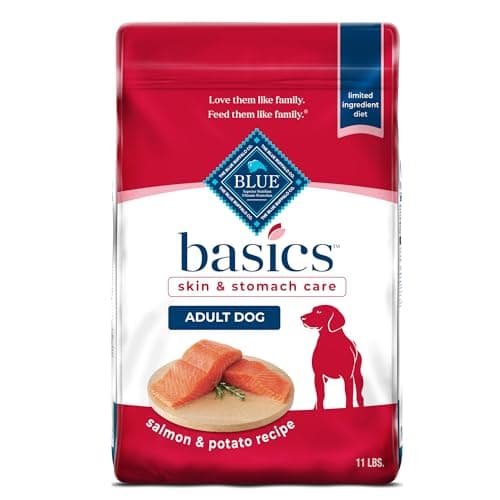
Blue Buffalo
Blue Buffalo Basics Adult Dry Dog Food, Salmon & Potato Recipe
8.6 / 10
- Limited-ingredient diet positioned for skin and stomach care
- Salmon as primary animal protein with digestible carbohydrate
- Made-in-the-USA framing per Blue Buffalo documentation
- Retail availability — no veterinary authorization required
$44.98
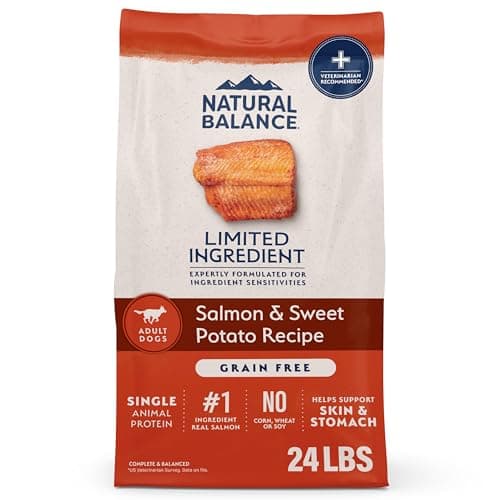
Natural Balance
Natural Balance Limited Ingredient Adult Grain-Free Dry Dog Food, Salmon & Sweet Potato Recipe
8.4 / 10
- Single-source animal protein with sensitive-stomach and skin positioning
- Limited-ingredient deck designed for ingredient-sensitive dogs
- Vet-recommended framing in Natural Balance documentation
- 24 lb bag — practical for medium and large breeds
$72.98
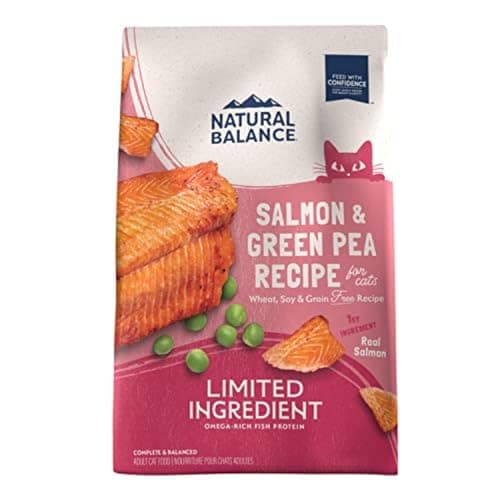
Natural Balance
Natural Balance Limited Ingredient Adult Grain-Free Dry Cat Food, Salmon & Green Pea Recipe
8.3 / 10
- Limited-ingredient diet built for ingredient-sensitive cats
- Single-source protein (salmon) with simple carbohydrate (green pea)
- Cat-formulated — not a dog food repurposed for cats
- 10 lb bag size with consistent retail availability
$39.98
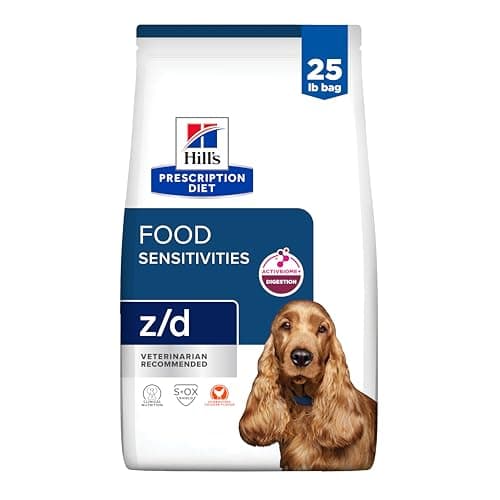
Hill's Prescription Diet
Hill's Prescription Diet z/d Skin/Food Sensitivities Dry Dog Food, Hydrolyzed Chicken
8.9 / 10
- Hydrolyzed-protein veterinary therapeutic diet
- Hill's positions the formula for dogs with food sensitivities
- Information-only inclusion — purchase requires veterinary authorization
- Used in actual elimination-diet workups, not as a casual food swap
$135.99
Royal Canin
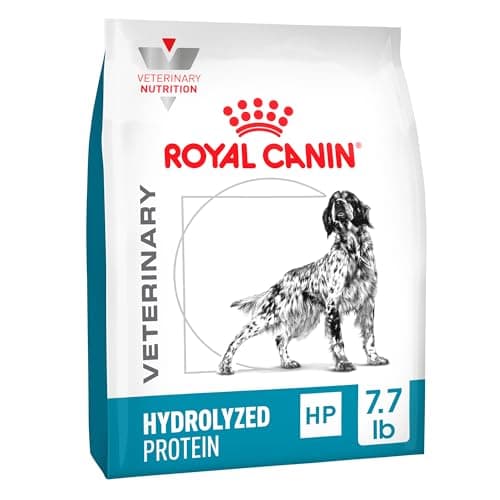
Royal Canin HP Hypoallergenic Hydrolyzed Protein Dog Food 7.7 lb
8.7 / 10
- Hydrolyzed-protein veterinary diet for dogs
- Royal Canin documents complete-and-balanced status for adult dogs
- Information-only inclusion — purchase requires veterinary context
- Strong comparator to Hill's z/d for vet-led elimination workups
$60.99
The Short Answer
For mild digestive sensitivity, the cleanest limited-ingredient pick for dogs is Blue Buffalo Basics Adult Dry Dog Food, Salmon & Potato Recipe. Natural Balance Limited Ingredient Adult Grain-Free Dry Dog Food, Salmon & Sweet Potato Recipe is the strongest single-protein retail option. Natural Balance Limited Ingredient Adult Grain-Free Dry Cat Food, Salmon & Green Pea Recipe handles the cat side of the same need. None of those is a substitute for a veterinary workup. For actual elimination diets, the Merck Veterinary Manual is the reference standard. Two prescription-grade formulas come up in those conversations. The first is Hill's Prescription Diet z/d Skin/Food Sensitivities Dry Dog Food, Hydrolyzed Chicken. The second is Royal Canin HP Hypoallergenic Hydrolyzed Protein Dog Food. Tufts Petfoodology says skin-focused trials run 8-12 weeks. Digestive trials run 3-4 weeks. Breaking the trial with treats invalidates it.
Every product on this list has been scored against the PetPal Gear Score, a weighted composite of expert consensus, observed effectiveness, animal safety, long-term durability, and value. Review method: Editorial synthesis of Tufts Petfoodology, AAHA Nutritional Assessment Guidelines, the Merck Veterinary Manual cutaneous food allergy chapter, AAFCO labeling rules, FDA pet-food guidance, and manufacturer documentation — no first-hand product testing. This guide does not diagnose food allergies and does not replace a veterinary workup.. Synthesized from 10+ expert sources.
For most owners shopping for "sensitive-stomach" food, the smartest first move is to pause before assuming the problem is a food allergy. Tufts Petfoodology has been blunt that true food allergies are less common than the volume of retail "sensitive stomach" marketing suggests, and the Merck Veterinary Manual's cutaneous food allergy chapter says dietary elimination trials remain the reference standard — meaning the only way to actually diagnose an adverse food reaction is through a structured veterinary trial, typically using a hydrolyzed or novel-protein diet for the duration Tufts describes (8-12 weeks for skin presentations, 3-4 weeks for digestive presentations).
The picks above are editorial synthesis. PetPalHQ does not run a testing lab and does not diagnose food allergies — every product on this page was selected by reviewing manufacturer documentation, Tufts Petfoodology's owner-facing food-allergy coverage, the Merck Veterinary Manual cutaneous food allergy chapter, AAHA's Nutritional Assessment Guidelines, AAFCO labeling rules, and FDA pet-food guidance. Where expert sources disagreed (most commonly on whether retail limited-ingredient diets are useful tools or distractions), Tufts and the Merck Veterinary Manual carried more weight than retail review-roundup framing. A retail LID can be a reasonable starting point for mild digestive sensitivity; it is not a diagnostic tool, and it is not a substitute for veterinary care if signs are chronic, severe, or include skin or ear involvement.
This guide is the buying-side companion to the Cat and Dog Nutrition, Hydration, and Digestive Health hub. The hub covers digestive health context across the full lifecycle — feeding routine, hydration, microbiome — while this article focuses on what to consider when sensitivity is the presenting concern. For deeper, category-specific picks, see our dedicated guides to the best gastrointestinal and digestive dog foods, the best hypoallergenic cat food, and limited-ingredient diets for food sensitivities.
Head-to-Head Comparison
| Feature | Blue Buffalo Basics Adult Dry Dog Food, Salmon & Potato Recipe | Natural Balance Limited Ingredient Adult Grain-Free Dry Dog Food, Salmon & Sweet Potato Recipe | Natural Balance Limited Ingredient Adult Grain-Free Dry Cat Food, Salmon & Green Pea Recipe | Hill's Prescription Diet z/d Skin/Food Sensitivities Dry Dog Food, Hydrolyzed Chicken | Royal Canin HP Hypoallergenic Hydrolyzed Protein Dog Food 7.7 lb |
|---|---|---|---|---|---|
| Diet category | Retail limited-ingredient (dog) | Retail single-protein LID (dog) | Retail limited-ingredient (cat) | Rx hydrolyzed (dog) | Rx hydrolyzed (dog) alternative |
| Use case | Mild digestive sensitivity in dogs | Owners overwhelmed by long ingredient decks | Mild ingredient sensitivity in cats | Vet-led elimination trial | Vet-led elimination trial — alternative formula |
| Vet authorization required | No | No | No | Yes (Rx) | Yes (Rx) |
| Diagnostic elimination diet? | No — starting point only | No — starting point only | No — starting point only | Yes — vet-led trial | Yes — vet-led trial |
| Check price | Amazon | Amazon | Amazon | Amazon | Amazon |
$44.98
- Limited-ingredient diet positioned for skin and stomach care
- Salmon as primary animal protein with digestible carbohydrate
- Made-in-the-USA framing per Blue Buffalo documentation
- Retail availability — no veterinary authorization required
Blue Buffalo Basics Adult Dry Dog Food, Salmon & Potato Recipe is the cleanest retail limited-ingredient pick for dogs. Blue Buffalo describes the Basics line as a limited-ingredient diet for dogs with food sensitivities. Salmon is the primary animal protein, paired with digestible carbohydrate. The broader Basics family uses explicit "made without" language. That makes it easy to explain to shoppers and easy to start with.
The reason this is positioned as a starting point and not a solution: both Tufts Petfoodology and the Merck Veterinary Manual cutaneous food allergy chapter flag retail elimination experiments as inadequate. A retail limited-ingredient food is not the same as a diagnostic elimination-diet formula. Cross-contact during manufacturing, prior ingredient history, and treats that break the trial all matter. Only a veterinary-supervised elimination diet — typically hydrolyzed or novel-protein — meets the reference-standard threshold for diagnosing an adverse food reaction. Tufts specifies how long each trial type must run.
Editorially, Blue Buffalo Basics Adult Dry Dog Food, Salmon & Potato Recipe earns the top retail slot. It is the most widely available, clearly positioned LID on Amazon for dogs with skin and stomach sensitivities. It is the right first move for an owner who suspects mild digestive sensitivity and wants to try a simpler ingredient deck before escalating. It is not the right move for an owner who suspects a real food allergy.
What the spec sheet does not tell you: a "limited ingredient" label is a marketing position, not a regulatory standard. AAFCO regulates whether a food meets complete-and-balanced requirements. It does not certify a food as elimination-diet-grade. The Merck Veterinary Manual is explicit that dietary elimination trials remain the reference standard for diagnosing adverse food reactions. Tufts adds that hydrolyzed diets are the closest available option to a "hypoallergenic" approach. Neither describes a retail LID. Use this food for what it is.
What We Love
- Clearly positioned as a limited-ingredient diet by Blue Buffalo
- Salmon plus potato is a defensible simpler-deck combination
- Strong Amazon availability
- No veterinary authorization required for purchase
What Could Be Better
- Not a diagnostic elimination diet — cannot confirm or rule out food allergy
- Treats and flavored medications still break any informal trial
- Cross-contact during manufacturing matters for true allergy work
The Verdict
Use Blue Buffalo Basics Adult Dry Dog Food, Salmon & Potato Recipe as the best accessible retail LID for dogs with mild digestive sensitivity — not as proof-positive allergy management. If signs are chronic, severe, or include skin or ear involvement, the next step is a veterinary conversation, not another retail bag.
Natural Balance Natural Balance Limited Ingredient Adult Grain-Free Dry Dog Food, Salmon & Sweet Potato Recipe
$72.98
- Single-source animal protein with sensitive-stomach and skin positioning
- Limited-ingredient deck designed for ingredient-sensitive dogs
- Vet-recommended framing in Natural Balance documentation
- 24 lb bag — practical for medium and large breeds
Natural Balance Limited Ingredient Adult Grain-Free Dry Dog Food, Salmon & Sweet Potato Recipe is the strongest retail option for owners overwhelmed by long ingredient decks. Natural Balance's public materials emphasize a single-source animal protein approach and a sensitive-stomach and skin positioning. That is exactly the messaging owners search for when they are trying to simplify what their dog eats.
The upside is simplicity and a clear category claim. The same downside applies here as to Blue Buffalo Basics Adult Dry Dog Food, Salmon & Potato Recipe. Even a simple retail formula can fail as an elimination trial. The dog must not be getting flavored heartworm chews, table scraps, training treats, or random snacks. Tufts Petfoodology has been blunt that owners commonly invalidate elimination trials this way without realizing it. The Merck Veterinary Manual's cutaneous food allergy chapter says dietary elimination trials remain the reference standard. That means the work has to be done with veterinary structure — not over-the-counter.
Editorially, Natural Balance Limited Ingredient Adult Grain-Free Dry Dog Food, Salmon & Sweet Potato Recipe is a solid parallel retail option. Pick by which protein the dog has had less exposure to. Household preference or price can break the tie. If digestive signs persist or escalate, both products point to the same next step: a vet conversation about a structured elimination trial.
What the spec sheet does not tell you: "grain-free" is not a synonym for sensitive-stomach therapy. The FDA has investigated possible links between grain-free diets and dilated cardiomyopathy in dogs in recent years. That does not mean the food is unsafe. But it does mean grain-free is not automatically safer or more sensitive-stomach-friendly than a grain-inclusive formula. Pick on protein and ingredient simplicity, not on the grain-free label.
What We Love
- Single-source protein simplifies the ingredient story
- Sensitive-stomach and skin positioning matches the search intent honestly
- Larger bag is practical for medium and large dogs
- Strong Amazon availability
What Could Be Better
- Not a diagnostic elimination diet — same caution as all retail LIDs
- Grain-free framing is not inherently safer
- Real food-reaction workups still belong with a veterinarian
The Verdict
Pick Natural Balance Limited Ingredient Adult Grain-Free Dry Dog Food, Salmon & Sweet Potato Recipe for the simpler-deck retail option for medium or large dogs. It is a starting point for mild sensitivity. It is not a substitute for a vet workup if signs are chronic or severe.
Natural Balance Natural Balance Limited Ingredient Adult Grain-Free Dry Cat Food, Salmon & Green Pea Recipe
$39.98
- Limited-ingredient diet built for ingredient-sensitive cats
- Single-source protein (salmon) with simple carbohydrate (green pea)
- Cat-formulated — not a dog food repurposed for cats
- 10 lb bag size with consistent retail availability
Cat owners have fewer retail limited-ingredient options than dog owners do. Editorial coverage also tends to skew dog-first. Natural Balance Limited Ingredient Adult Grain-Free Dry Cat Food, Salmon & Green Pea Recipe fills that gap. Natural Balance documents the cat LID line as built for ingredient-sensitive pets with single-source proteins and selected carbohydrates. That makes this the right "best retail LID for cats" inclusion.
The framing has to be more careful for cats than for dogs. Cats with chronic vomiting, weight loss, ear or skin issues, or persistent appetite changes do not belong in self-directed food roulette. The Cornell Feline Health Center treats sustained appetite loss as a clinical sign. Merck specifically says a cat refusing food for more than a day needs evaluation. The AAFP feline weight-management guidance emphasizes that rapid feline weight loss is a hepatic lipidosis risk. None of that is a retail-shopping problem.
Editorially, Natural Balance Limited Ingredient Adult Grain-Free Dry Cat Food, Salmon & Green Pea Recipe is the best retail LID for cats with mild ingredient sensitivity who are otherwise healthy. It is not the right answer for cats whose problem is more than mild. It is also not the answer if the household is trying to run an elimination diet. Tufts says hydrolyzed diets are the closest available option to a "hypoallergenic" approach, and that work belongs with a veterinarian.
What the spec sheet does not tell you: feline elimination trials run 3-4 weeks for digestive presentations and 8-12 weeks for skin presentations per Tufts Petfoodology. Treats break the trial. Cats are also notoriously persistent about food preferences, and an abrupt switch can backfire. Use a 7-10 day gradual transition. Watch intake closely. Stop the experiment if the cat refuses to eat — a cat in food-strike does not need a new bag, it needs a vet.
What We Love
- Cat-specific LID — many limited-ingredient products are dog-only
- Single-source protein with simple carbohydrate
- Reasonable bag size for single-cat households
- Decent Amazon availability
What Could Be Better
- Cats with chronic GI or skin signs need veterinary evaluation, not retail roulette
- Rapid feline weight loss during food changes is a hepatic lipidosis risk
- Not a diagnostic elimination diet
The Verdict
Use Natural Balance Limited Ingredient Adult Grain-Free Dry Cat Food, Salmon & Green Pea Recipe as the best retail LID for cats with mild ingredient sensitivity. Watch intake closely during transition, stop if the cat refuses food, and escalate to a veterinary conversation for anything chronic or severe.
Hill's Prescription Diet Hill's Prescription Diet z/d Skin/Food Sensitivities Dry Dog Food, Hydrolyzed Chicken
$135.99
- Hydrolyzed-protein veterinary therapeutic diet
- Hill's positions the formula for dogs with food sensitivities
- Information-only inclusion — purchase requires veterinary authorization
- Used in actual elimination-diet workups, not as a casual food swap
Hill's Prescription Diet z/d Skin/Food Sensitivities Dry Dog Food, Hydrolyzed Chicken is included for editorial completeness. The difference between a retail limited-ingredient food and a hydrolyzed veterinary diet is the most important distinction in this category. Retail-shopping content routinely blurs it. Hill's documents z/d as a hydrolyzed-protein formula clinically positioned for dogs with food allergies or intolerances. That positioning is meaningful in a way "limited ingredient" is not.
The Merck Veterinary Manual's cutaneous food allergy chapter says dietary elimination trials remain the reference standard. Tufts Petfoodology adds that hydrolyzed diets are the closest available option to a "hypoallergenic" approach. Hydrolysis breaks the protein into fragments small enough that the immune system is much less likely to recognize them as allergens. That is a fundamentally different approach from simply using a single retail protein the dog has not seen before.
Editorially, Hill's Prescription Diet z/d Skin/Food Sensitivities Dry Dog Food, Hydrolyzed Chicken is positioned as Rx/vet-context food, not as another Amazon bag to add to cart. Including it lets this guide teach the difference between a true hydrolyzed approach and a retail limited-ingredient approach. Tufts says skin-focused elimination trials run 8-12 weeks. Digestive presentations run 3-4 weeks. That scope of structured testing belongs with a veterinarian, not with a consumer guide.
What the spec sheet does not tell you: "hypoallergenic" is not a regulatory term and even hydrolyzed diets can occasionally fail to be tolerated. Tufts Petfoodology has been explicit that elimination trials must be run cleanly to produce useful information — meaning no other food, no flavored treats, no flavored medications, no table scraps. The veterinary cost is in the protocol, not just the bag. Talk to your veterinarian.
What We Love
- True hydrolyzed-protein approach — different category from retail LIDs
- Used in clinically structured elimination trials
- Hill's documentation is unusually clear about the use case
- Consistent Amazon availability
What Could Be Better
- Requires veterinary authorization in many states/retailers
- Higher cost than retail LIDs
- Owner must run the trial cleanly — treats and flavored meds break it
The Verdict
Talk to your veterinarian before buying Hill's Prescription Diet z/d Skin/Food Sensitivities Dry Dog Food, Hydrolyzed Chicken. The Merck Veterinary Manual treats elimination diets as the reference standard for diagnosing adverse food reactions, and that work is structured veterinary care — not a retail purchase. If the vet recommends z/d, the bag will make sense in that context.
$60.99
- Hydrolyzed-protein veterinary diet for dogs
- Royal Canin documents complete-and-balanced status for adult dogs
- Information-only inclusion — purchase requires veterinary context
- Strong comparator to Hill's z/d for vet-led elimination workups
Royal Canin HP Hypoallergenic Hydrolyzed Protein Dog Food 7.7 lb is the alternative hydrolyzed comparator to Hill's Prescription Diet z/d Skin/Food Sensitivities Dry Dog Food, Hydrolyzed Chicken. Royal Canin's U.S. veterinary-diet documentation positions HP as a complete-and-balanced veterinary formula for adult dogs. It is available through select retailers and veterinary clinics. That clear positioning matters because it lets this guide distinguish hydrolyzed-protein veterinary formulas from retail LIDs.
The use case is identical to z/d — a structured veterinary elimination trial — and the caution is identical too. The Merck Veterinary Manual's cutaneous food allergy chapter says dietary elimination trials remain the reference standard. Tufts Petfoodology specifies skin-focused trials at 8-12 weeks and digestive trials at 3-4 weeks. Both timelines presume the trial is being run cleanly. That means a veterinarian is helping the household enforce discipline across treats, flavored medications, table food, and household members who might slip the dog snacks.
Editorially, Royal Canin HP Hypoallergenic Hydrolyzed Protein Dog Food 7.7 lb is the best "alternative hydrolyzed Rx" inclusion. Owners and veterinarians sometimes prefer Hill's, sometimes Royal Canin, and sometimes pick based on availability or palatability. Including both lets this guide reflect the real choice landscape without prescribing one over the other.
What the spec sheet does not tell you: hydrolyzed Rx products are not interchangeable with each other in a clinical sense. If the veterinarian started the dog on z/d, switching to Royal Canin HP mid-trial without medical guidance can compromise the trial. Stay on whichever bag the trial started with for the full duration Tufts describes — 8-12 weeks for skin, 3-4 weeks for digestive. Only change with veterinary input.
What We Love
- Hydrolyzed-protein approach with veterinary positioning
- Strong alternative to Hill's z/d for trials where palatability or availability matters
- Royal Canin's documentation is straightforward about the use case
- Smaller bag size useful for trial purposes
What Could Be Better
- Requires veterinary context, just like Hill's z/d
- Per-pound cost is higher than retail LIDs
- Mid-trial switching between hydrolyzed brands compromises the trial
The Verdict
Royal Canin HP Hypoallergenic Hydrolyzed Protein Dog Food 7.7 lb belongs in a vet-led elimination workup, not in a retail-shopping decision ahead of one. Talk to your veterinarian; if HP is the right diet for your dog's trial, it will come up in that conversation.
How We Score
Formula
PetPal Gear Score = (Expert Consensus × 0.35) + (Real-Household Sensitivity Fit × 0.25) + (Veterinary Alignment × 0.20) + (Value × 0.20)
Score Factors
- Expert Consensus · 35%
- Synthesized from Tufts Petfoodology, AAHA Nutritional Assessment Guidelines, the Merck Veterinary Manual cutaneous food allergy chapter, AAFCO labeling guidance, FDA pet-food guidance, and manufacturer documentation. The PetPal Gear Score is a composite of expert opinion — PetPalHQ does not run a testing lab and does not diagnose food allergies.
- Real-Household Sensitivity Fit · 25%
- How clearly the food matches a defined household scenario (mild digestive sensitivity, ingredient-deck simplification, vet-led elimination trial) rather than generic 'sensitive stomach' marketing.
- Veterinary Alignment · 20%
- How well the product aligns with the Merck Veterinary Manual's framing of dietary elimination trials as the reference standard, Tufts Petfoodology's trial-duration recommendations, and AAHA's nutritional assessment framework.
- Value · 20%
- Price relative to the editorial price tier, balanced against actual diagnostic and management value — retail LIDs are cheaper but solve a smaller piece of the problem than vet-led hydrolyzed trials.
| Rank | Product | Score |
|---|---|---|
| #1 | Hill's Prescription Diet Hill's Prescription Diet z/d Skin/Food Sensitivities Dry Dog Food, Hydrolyzed Chicken | 8.9 |
| #2 | Royal Canin Royal Canin HP Hypoallergenic Hydrolyzed Protein Dog Food 7.7 lb | 8.7 |
| #3 | Blue Buffalo Blue Buffalo Basics Adult Dry Dog Food, Salmon & Potato Recipe | 8.6 |
| #4 | Natural Balance Natural Balance Limited Ingredient Adult Grain-Free Dry Dog Food, Salmon & Sweet Potato Recipe | 8.4 |
| #5 | Natural Balance Natural Balance Limited Ingredient Adult Grain-Free Dry Cat Food, Salmon & Green Pea Recipe | 8.3 |
When NOT to Buy
Skip every food in this guide and call your veterinarian first if your pet has chronic vomiting, blood in stool, ongoing weight loss, recurrent ear problems, persistent itch, or skin involvement. Tufts Petfoodology and the Merck Veterinary Manual's cutaneous food allergy chapter both flag these as red flags that flip the situation from shopping to care-seeking. Skip "grain-free" as a synonym for sensitive-stomach therapy. The FDA has investigated possible links between grain-free diets and dilated cardiomyopathy in dogs, and grain-free is not inherently gentler. Skip presenting any retail food as a validated elimination-diet tool. The Merck Veterinary Manual is explicit that dietary elimination trials remain the reference standard. Tufts adds that hydrolyzed diets are the closest available option to a "hypoallergenic" approach — neither describes a retail LID. Skip raw-food elimination experiments built from internet anecdotes. Raw diets carry FDA-documented food-safety concerns and do not satisfy the structured-trial requirement the Merck Veterinary Manual describes. Skip casual purchases of Hill's Prescription Diet z/d Skin/Food Sensitivities Dry Dog Food, Hydrolyzed Chicken or Royal Canin HP Hypoallergenic Hydrolyzed Protein Dog Food 7.7 lb without veterinary context. These are diagnostic and management tools used inside a clinical workup, not consumer experiments. Do not let flavored treats, supplemental chews, or topper products break a trial — Tufts has been blunt that this is the most common reason elimination trials fail to produce useful information. Important: this guide does not diagnose food allergies. Suspected food allergy belongs with a veterinarian.
For dogs
For dog households, Blue Buffalo Basics Adult Dry Dog Food, Salmon & Potato Recipe is the synthesis retail starting point. The AKC's general nutritional guidance treats simpler ingredient decks as a reasonable first move for dogs with mild digestive looseness. AAHA Nutrition Guidelines (2021) treat structured food trials as part of nutritional assessment rather than a casual swap. Natural Balance Limited Ingredient Adult Grain-Free Dry Dog Food, Salmon & Sweet Potato Recipe is the parallel single-protein retail option for owners overwhelmed by long ingredient decks. Per Tufts Cummings Petfoodology, "grain-free" is not synonymous with sensitive-stomach therapy. The FDA has investigated potential links between grain-free diets and dilated cardiomyopathy in dogs. The protein simplification, not the grain framing, is the editorial reason to consider this formula.
For actual diagnostic work, the formulas that come up in vet-led elimination trials are Hill's Prescription Diet z/d Skin/Food Sensitivities Dry Dog Food, Hydrolyzed Chicken and Royal Canin HP Hypoallergenic Hydrolyzed Protein Dog Food 7.7 lb. The Merck Veterinary Manual cutaneous food allergy chapter is explicit that dietary elimination trials remain the reference standard. Tufts says skin presentations run 8 to 12 weeks. Digestive presentations run 3 to 4 weeks. That is structured veterinary care, not a retail decision.
Two dog-specific cautions apply. First, the Merck Veterinary Manual canine sections and AVMA emergency-care guidance treat chronic vomiting, blood in stool, ongoing weight loss, recurrent ear infections, or persistent itch as workup-territory signs — not retail-shopping signs. AAHA Pain Management Guidelines and AAHA Nutrition Guidelines (2021) frame chronic GI presentations as deserving structured veterinary assessment rather than serial food rotation. ASPCA Dog Care guidance on noting changes in stool, appetite, and skin condition is the right escalation cue. Per Tufts, treats and flavored medications break elimination trials — for a clean trial, those have to come out of the household with veterinary direction.
For cats
For cat households, the retail picture is much narrower. Natural Balance Limited Ingredient Adult Grain-Free Dry Cat Food, Salmon & Green Pea Recipe is the synthesis pick because cat-specific limited-ingredient SKUs are scarce. The AAFP and Cornell Feline Health Center both flag that cats with chronic vomiting, weight loss, ear involvement, or persistent appetite change need veterinary evaluation rather than self-directed food rotation. The cat-specific risk Merck's feline sections highlight — reinforced by AAFP feline weight-management guidance — is hepatic lipidosis. Rapid feline weight loss during food changes is dangerous in a way it is not in dogs. A cat that refuses food during a transition needs a vet, not a new bag.
The cat side of elimination-diet work belongs almost entirely with a veterinarian. The Merck Veterinary Manual's reference-standard framing applies to cats too. Per ISFM behavioral guidance, cats are notoriously persistent about food preferences — abrupt changes can backfire. The AAFP/ISFM environmental-needs framework supports gradual transitions over 7 to 10 days while watching intake closely. A cat-formulated hydrolyzed or novel-protein veterinary diet exists for genuine elimination work, but those formulas come up in feline veterinary conversations rather than retail decisions.
Two cat-specific cautions are non-negotiable. Cats are obligate carnivores per Merck's feline sections. They depend on dietary taurine. A cat-formulated food — not a dog food repurposed for a cat — is the correct base for any feline trial. Per the Cornell Feline Health Center, AAFP, and Merck, sustained appetite loss in a cat is a clinical sign requiring evaluation. AVMA emergency-care guidance treats severe vomiting, ongoing weight loss, or food refusal as veterinary territory. ASPCA Cat Care guidance on watching for changes in eating, drinking, or litter habits is the right escalation cue. The stakes of cat food-trial mistakes are higher than dog food-trial mistakes. The threshold for involving a veterinarian is correspondingly lower.
Frequently Asked Questions
- Is true food allergy common in dogs and cats?
- Less common than the volume of retail marketing suggests. The Merck Veterinary Manual describes true food allergy as relatively low in prevalence relative to the very large number of pets owners suspect have it. Many digestive complaints are dietary indiscretion, abrupt food changes, parasites, or other GI conditions — not food allergy specifically. That is part of why Tufts Petfoodology emphasizes a veterinary workup rather than self-directed food switching.
- What is the gold standard for diagnosing a food allergy?
- A dietary elimination trial. The Merck Veterinary Manual's cutaneous food allergy chapter says dietary elimination trials remain the reference standard. Tufts Petfoodology says hydrolyzed diets are the closest available option to a "hypoallergenic" approach. Blood and saliva tests for food allergies are not validated diagnostic tools per Tufts. The elimination trial is the work that actually answers the question, and it has to be run cleanly.
- How long does an elimination diet take?
- Tufts Petfoodology says most specialists recommend 8-12 weeks for skin-focused presentations and 3-4 weeks for digestive presentations. The trial only produces useful information if it is run cleanly — meaning no other food, no flavored treats, no flavored medications, no table scraps. A trial broken at week six is not a shorter trial; it is a trial that has to start over.
- Is a "limited ingredient" food the same as a hydrolyzed prescription diet?
- No. A retail LID simplifies the ingredient deck — Blue Buffalo Basics Adult Dry Dog Food, Salmon & Potato Recipe or Natural Balance Limited Ingredient Adult Grain-Free Dry Dog Food, Salmon & Sweet Potato Recipe are examples. A hydrolyzed Rx diet breaks the protein into fragments the immune system is much less likely to recognize. That is a fundamentally different approach. Hill's Prescription Diet z/d and Royal Canin HP Hypoallergenic Hydrolyzed Protein Dog Food 7.7 lb are examples of the hydrolyzed Rx category. Retail LIDs are a starting point for mild sensitivity. Hydrolyzed Rx is the formula category that comes up in actual vet-led elimination trials.
- Can I use treats during a food trial?
- Only if the veterinarian has confirmed the treat is compatible with the trial. Tufts Petfoodology has been blunt that treats — including flavored medications, dental chews, training treats, and table scraps — are the most common reason elimination trials fail to produce useful information. The trial is not "the food plus a few flexible exceptions"; it is the food, period, for the full duration.
- Should I see a veterinarian before switching foods?
- For mild, transient digestive looseness in an otherwise healthy adult dog or cat, a careful 7-10 day transition to a retail limited-ingredient food is reasonable. For anything chronic, severe, or accompanied by weight loss, blood in stool, recurrent ear or skin issues, or persistent itch, the next step is veterinary — not another bag. The Merck Veterinary Manual treats those signs as workup territory. Tufts Petfoodology says food-allergy questions specifically need a structured elimination trial, not retail roulette.
Bottom Line
Use Blue Buffalo Basics Adult Dry Dog Food, Salmon & Potato Recipe as the best accessible retail LID for dogs with mild digestive sensitivity. It is a starting point, not a diagnostic tool.
Pick Natural Balance Limited Ingredient Adult Grain-Free Dry Dog Food, Salmon & Sweet Potato Recipe if you want the simpler-deck retail option for medium or large dogs.
Use Natural Balance Limited Ingredient Adult Grain-Free Dry Cat Food, Salmon & Green Pea Recipe as the best retail LID for cats with mild ingredient sensitivity — and watch intake closely during transition.
Talk to your veterinarian before buying Hill's Prescription Diet z/d Skin/Food Sensitivities Dry Dog Food, Hydrolyzed Chicken. It is part of a structured elimination trial, not a retail decision.
Royal Canin HP Hypoallergenic Hydrolyzed Protein Dog Food 7.7 lb is the alternative vet-led hydrolyzed option. Like z/d, it belongs in a clinical workup, not ahead of one.
Sources & Methodology
Methodology
PetPal Gear Score = (Expert Consensus × 0.35) + (Real-Household Sensitivity Fit × 0.25) + (Veterinary Alignment × 0.20) + (Value × 0.20)
Expert review sources
- Tufts Petfoodology — Think Your Pet Has a Food Allergy: Eliminating Mistakes in Elimination Diet Trials
- Tufts Petfoodology — Food Allergies
- Merck Veterinary Manual — Cutaneous Food Allergy in Animals
- Merck Veterinary Manual — Nutrition in Disease Management in Small Animals
- AAHA — Nutritional Assessment Guidelines
- AAFCO — Selecting the Right Pet Food
- FDA — Complete and Balanced Pet Food guidance
- Cornell Feline Health Center — Feline appetite and feeding references
- Blue Buffalo — Basics Salmon & Potato product documentation
- Natural Balance — Limited Ingredient dog and cat product documentation
- Hill's Pet Nutrition — Prescription Diet z/d documentation
- Royal Canin — Hydrolyzed Protein HP veterinary diet documentation
- Purina — Pro Plan Veterinary Diets HA Hydrolyzed documentation
Community sources
- r/AskVet — elimination diet protocol discussions
- r/dogs and r/cats — food sensitivity owner threads
- Tufts Cummings School of Veterinary Medicine — Petfoodology owner Q&A
Prices and specs verified May 5, 2026.
About the author
Nick Miles is the chief editor of PetPalHQ. The picks above are editorial synthesis of expert consensus from Tufts Petfoodology, the Merck Veterinary Manual, AAHA, AAFCO, the FDA, and manufacturer documentation — PetPalHQ does not run a testing lab and does not diagnose food allergies. The PetPal Gear Score is a composite of expert opinion, not a measurement. Sources are cited by name throughout. Suspected food allergy belongs with a veterinarian.
PetPalHQ is a participant in the Amazon Services LLC Associates Program. We may earn commissions from qualifying purchases — at no extra cost to you.
More Guides

Cats & Dogs
Cat and Dog Nutrition, Hydration, and Digestive Health: 2026 Guide for Pet Owners

Cats & Dogs
Best Gastrointestinal and Digestive Dog Foods (2026)
Cats & Dogs
Best Hypoallergenic Cat Food (2026)

Cats & Dogs
Best Limited-Ingredient Diets for Dogs and Cats With Food Sensitivities (2026)

Cats & Dogs
Best Weight-Management Tools for Overweight Dogs and Cats (2026)

Cats & Dogs
Best Automatic Pet Feeders for Busy Families (2026)

Cats & Dogs
Best Cat Water Fountains for Hydration, Cleaning Ease, and Quiet Operation (2026)

Cats & Dogs