Cats & Dogs
Best Probiotics for Dogs and Cats After Stress, Diet Change, or Antibiotics (2026)
A pet probiotic is most defensible when the label names the strain, lists a specific CFU count, identifies species fit, and the supplier carries the NASC Quality Seal — and even the best-labeled probiotic is not a substitute for a veterinarian when diarrhea is severe or persistent.
By Nick Miles · Updated May 5, 2026 · 12 min read
PetPalHQ is reader-supported. We may earn a commission from qualifying Amazon purchases at no extra cost to you.
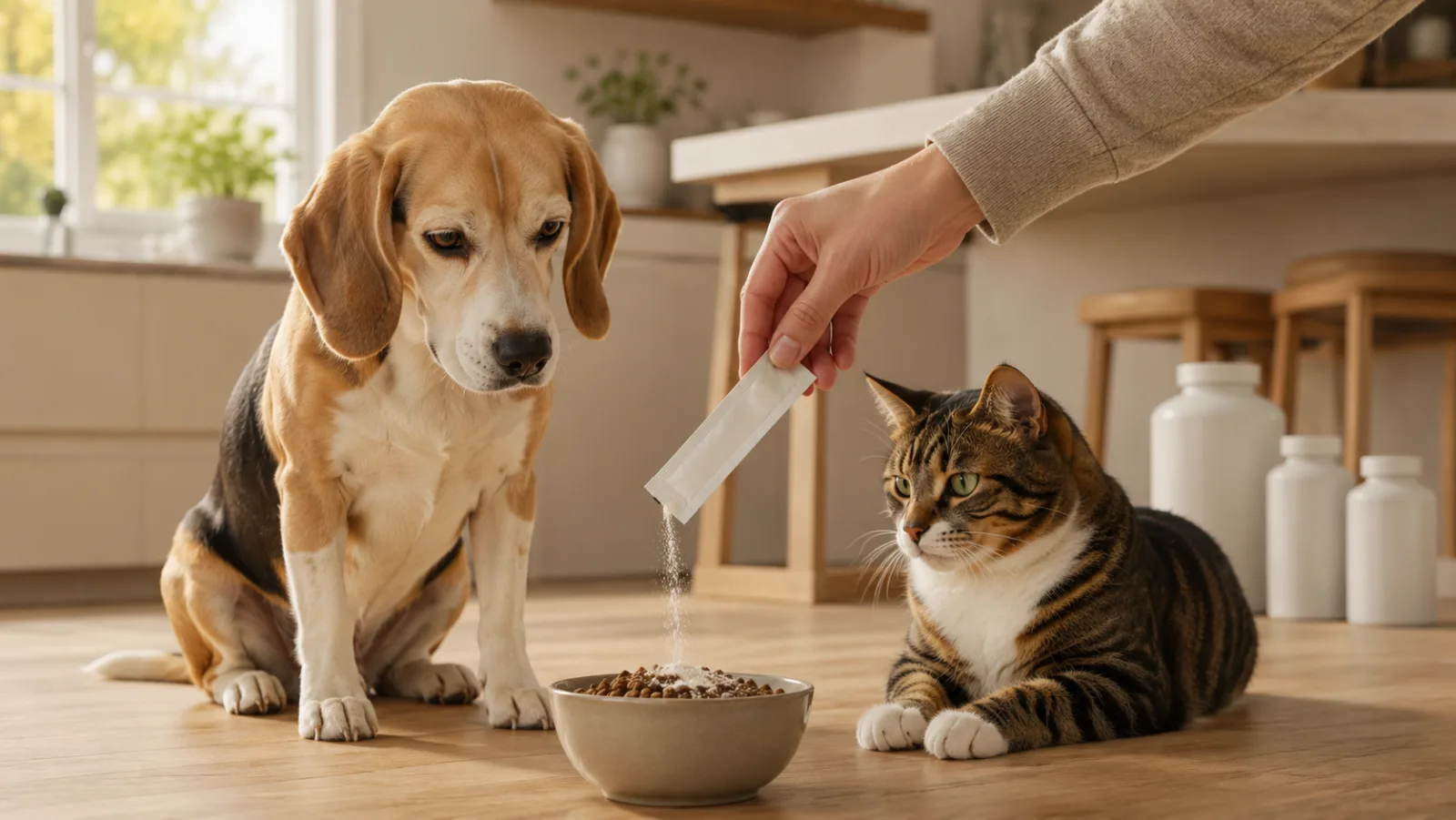
Evidence at a Glance
Purina Pro Plan Veterinary Supplements FortiFlora Daily Probiotics for Dogs
Single-strain sachet (Enterococcus faecium SF68) with NASC-sealed supplier status and the most explicit veterinarian-recommended positioning on Amazon.
Sources: Purina manufacturer documentation, NASC Quality Seal program documentation, Purina Institute — How to Choose a Pet Probiotic Supplement
Verified May 5, 2026
Nutramax Proviable Probiotics for Dogs and Cats
7 strains, 5 billion CFU per capsule with prebiotics — the most transparent multi-strain label in the consumer category.
Sources: Nutramax manufacturer documentation, Proviable.com strain disclosure, AVMA emergency-care guidance
Verified May 5, 2026
VetriScience Gut Health Chews
1 billion CFU Bacillus coagulans per chew, disclosed on the panel, with NASC-sealed supplier status.
Sources: VetriScience manufacturer documentation, NASC supplier listing
Verified May 5, 2026
Our Picks
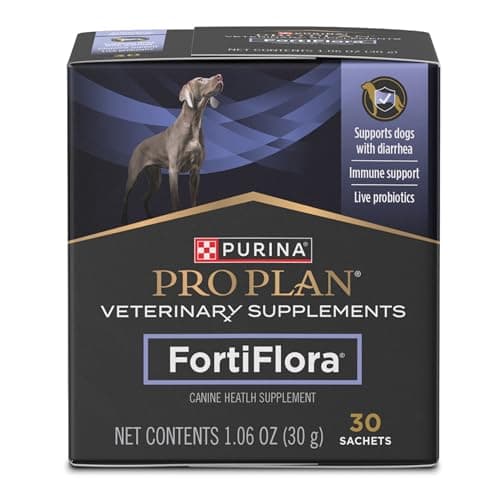
Purina Pro Plan Veterinary Supplements
Purina Pro Plan Veterinary Supplements FortiFlora Daily Probiotics for Dogs
9.4 / 10
- Single-strain Enterococcus faecium SF68 sachet
- 30-count box, easy single-dose powder format
- NASC-sealed supplier (Nestlé Purina)
- Explicit veterinarian-recommended positioning in Purina's product copy
$30.99
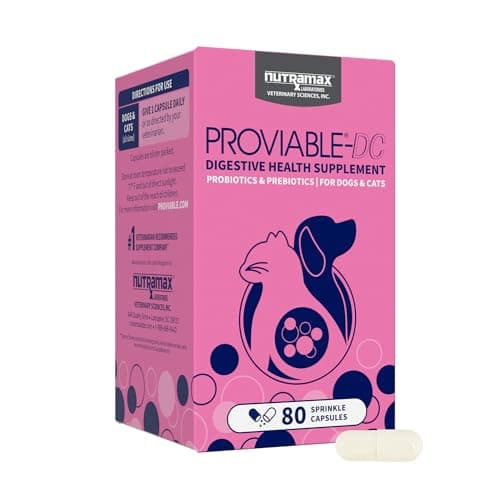
Nutramax
Nutramax Proviable Probiotics for Dogs and Cats
9.0 / 10
- 7 probiotic strains plus prebiotics
- 5 billion CFU per capsule (per Nutramax public documentation)
- 80-capsule bottle covers multi-month daily use
- Species-flexible for dogs and cats
$44.99
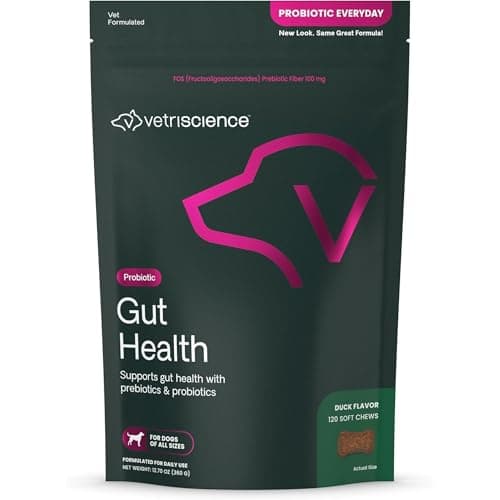
VetriScience
VetriScience Gut Health Chews
8.5 / 10
- 1 billion CFU Bacillus coagulans per chew (disclosed on panel)
- Duck-flavored 120-count bag
- NASC-sealed supplier (FoodScience Corporation)
- Probiotic Everyday daily-format positioning
$39.32
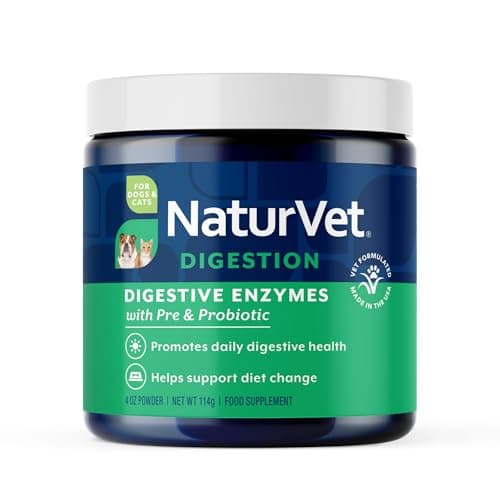
NaturVet
NaturVet Digestive Enzymes for Dogs
8.0 / 10
- Digestive enzymes plus prebiotics and probiotics
- 4 oz powder, sprinkled on food
- Positioned for diet change and sensitive stomachs
- NASC-sealed supplier (NaturVet)
$19.87
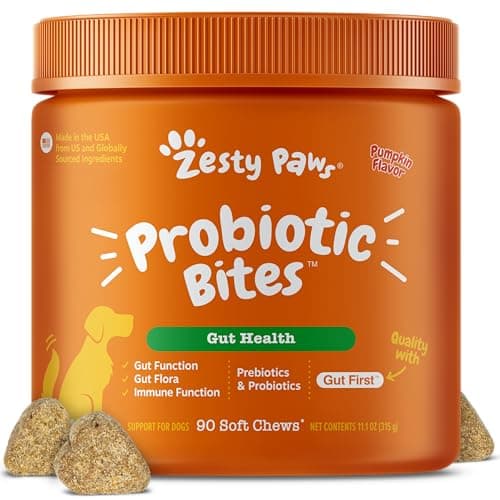
Zesty Paws
Zesty Paws Probiotics for Dogs
8.3 / 10
- Clinically studied DE111 Bacillus subtilis strain
- Includes digestive enzymes and prebiotic fiber
- Pumpkin-flavored soft chews, 90-count
- NASC-sealed supplier (Zesty Paws)
$32.97
The Short Answer
If you keep one pet probiotic on hand for stress, travel, diet change, or post-antibiotic recovery, the Purina FortiFlora Daily Probiotics for Dogs sachet is the safest mainstream pick. It has clear strain labeling (Enterococcus faecium SF68), a specific CFU claim, NASC-sealed supplier status, and the most explicit veterinarian-recommended positioning of any consumer probiotic on Amazon. Choose Nutramax Proviable Probiotics for Dogs and Cats for multi-strain daily support with the most transparent label (7 strains, 5 billion CFU). Choose VetriScience Gut Health Chews for chewable convenience with disclosed CFU per chew. Choose NaturVet Digestive Enzymes for Dogs as a combo enzyme-and-probiotic powder for diet transitions. Choose Zesty Paws Probiotics for Dogs for the clinically studied DE111 strain in soft-chew format. None of these is a treatment for parasites, infectious diarrhea, or chronic GI disease — those are veterinary problems first.
Every product on this list has been scored against the PetPal Gear Score, a weighted composite of expert consensus, observed effectiveness, animal safety, long-term durability, and value. Review method: Editorial synthesis of NASC (National Animal Supplement Council) Quality Seal documentation, the Purina Institute's How to Choose a Pet Probiotic Supplement guidance, manufacturer documentation from Purina FortiFlora, Nutramax Proviable, VetriScience, NaturVet, and Zesty Paws, and veterinary references from the AVMA and Merck Veterinary Manual — no first-hand product testing.. Synthesized from 9+ expert sources.
For most owners, a pet probiotic is most useful during a defined window — travel, boarding, a diet change, or after a course of antibiotics. It is least useful as a vague forever-supplement that nobody on the household side can explain. The Purina Institute's pet-probiotic guidance, NASC's Quality Seal program documentation, and Merck Veterinary Manual references converge on the same editorial test: a defensible probiotic label names the strain, lists a specific CFU count, identifies species fit, explains storage, and avoids disease-cure language. NASC's seal itself is a quality-program signal — the council describes it as identifying companies committed to quality, vigilance, and continuous improvement. It is not proof of clinical efficacy.
The picks below are editorial synthesis. PetPalHQ does not run a testing lab — every product on this page was selected by reviewing manufacturer labels, NASC supplier listings, the Purina Institute's pet-probiotic guidance, and AVMA and Merck references on when GI signs need veterinary care. Where expert sources disagreed (most commonly on whether single-strain or multi-strain products are preferable), we deferred to the consistent message across all of them: label transparency, species fit, and dosing compliance matter more than headline CFU numbers. That is the Purina Institute's editorial standard.
This guide is the buying-side companion to the Cat and Dog Nutrition, Hydration, and Digestive Health hub. The hub explains why digestive health matters; this article covers what to buy — and explicitly, when not to buy and reach for the veterinarian instead.
Head-to-Head Comparison
| Feature | Purina Pro Plan Veterinary Supplements FortiFlora Daily Probiotics for Dogs | Nutramax Proviable Probiotics for Dogs and Cats | VetriScience Gut Health Chews | NaturVet Digestive Enzymes for Dogs | Zesty Paws Probiotics for Dogs |
|---|---|---|---|---|---|
| Format | Single-dose sachet powder | Capsule | Duck-flavored chew | Powder (sprinkle on food) | Soft chew |
| Strain disclosure | Enterococcus faecium SF68 | 7 strains disclosed | Bacillus coagulans | Multiple — broader combo | DE111 Bacillus subtilis |
| CFU label | Per-sachet (Purina docs) | 5 billion / capsule | 1 billion / chew | Not clearly per-scoop | Not always per-chew |
| NASC supplier seal | Yes (Nestlé Purina) | Confirm current status | Yes (FoodScience) | Yes (NaturVet) | Yes (Zesty Paws) |
| Check price | Amazon | Amazon | Amazon | Amazon | Amazon |
Purina Pro Plan Veterinary Supplements Purina Pro Plan Veterinary Supplements FortiFlora Daily Probiotics for Dogs
$30.99
- Single-strain Enterococcus faecium SF68 sachet
- 30-count box, easy single-dose powder format
- NASC-sealed supplier (Nestlé Purina)
- Explicit veterinarian-recommended positioning in Purina's product copy
The Purina Pro Plan Veterinary Supplements FortiFlora Daily Probiotics for Dogs is the easiest pet probiotic to defend in a mainstream Amazon article. The label clears every checkbox the Purina Institute's "How to Choose a Pet Probiotic Supplement" guidance asks for. The strain is named (Enterococcus faecium SF68). The CFU is stated. The species fit is explicit. The supplier (Nestlé Purina) carries the NASC Quality Seal. And the format — single-dose powder sachets sprinkled on food — is the highest-compliance delivery method when a household is dealing with travel stress, boarding, or the early days of a diet change.
Why it earns the top slot: the product is purpose-built for the use cases owners actually buy probiotics to address. The Purina Institute's pet-probiotic guidance frames short-run digestive support — diet change, stress, post-antibiotic recovery — as the strongest evidence-supported angle for pet probiotic use. A single-strain sachet with explicit dosing fits that frame better than a multi-ingredient daily chew. The Merck Veterinary Manual treats acute diarrhea as a problem that often resolves with supportive care alongside veterinary input. FortiFlora is the supportive-care side of that equation, not a substitute for the veterinary side.
What the spec sheet does not tell you: FortiFlora is priced higher per day than value chews and powders. The per-sachet cost adds up fast over a multi-week stress event. Editorially, that is the right trade-off for short-run, high-confidence use — but it makes FortiFlora the wrong choice as a daily forever-supplement for a healthy dog. Use it during the acute window (travel, boarding, diet transition, post-antibiotic), then re-evaluate.
What We Love
- Strain named, CFU stated, species fit explicit
- NASC-sealed supplier with mature Amazon supply
- Single-dose sachet format encourages compliance
- Most explicit veterinarian-recommended positioning in this set
What Could Be Better
- Higher per-day cost than chews and powders
- Single strain — not the right pick if you specifically want multi-strain support
- Sachets can be over-used as a daily supplement when targeted use is more defensible
The Verdict
If you keep one pet probiotic on hand for stress events, the Purina Pro Plan Veterinary Supplements FortiFlora Daily Probiotics for Dogs is the safest mainstream pick. The Purina Institute's framing — short-run, supportive, alongside veterinary input — is exactly the use case this sachet is built for. The cat version is also widely stocked on Amazon.
$44.99
- 7 probiotic strains plus prebiotics
- 5 billion CFU per capsule (per Nutramax public documentation)
- 80-capsule bottle covers multi-month daily use
- Species-flexible for dogs and cats
The Nutramax Proviable Probiotics for Dogs and Cats is the cleanest label in the multi-strain category. Nutramax's public-facing pages disclose seven probiotic strains and a 5 billion CFU per capsule claim alongside prebiotics. That is the kind of label specificity the Purina Institute's pet-probiotic guidance singles out as the editorial test for whether a probiotic is worth buying versus a generic "probiotic blend" product.
Why it earns inclusion: the species-flexible positioning is unusually useful in multi-pet homes. A single bottle of Nutramax Proviable Probiotics for Dogs and Cats covers both dogs and cats with the same documented strain panel. Owners do not have to manage two species-specific SKUs for essentially the same supportive use case. The 80-capsule bottle is also the right format for ongoing daily support after a vet has discussed it as part of long-term GI management — a different use case from FortiFlora's acute-window sachets.
What the spec sheet does not tell you: capsule format is harder to dose than sachets in finicky cats and small dogs, and sprinkling capsule contents onto food — while common — is not always palatable. Public-access NASC seal confirmation for the specific Proviable line is less straightforward than for Purina or Zesty Paws in the sources we reviewed. That does not mean the product is unverified. It means owners who use the NASC seal as their primary screen should confirm current status on nasc.cc before relying on it for their decision. The label transparency itself is the stronger signal here.
What We Love
- 7 named strains and disclosed CFU — best label in the multi-strain category
- Prebiotics included alongside probiotics
- Single SKU covers both dogs and cats
- 80-capsule format suits multi-month daily use
What Could Be Better
- Capsule dosing harder than sachet powder for picky pets
- Higher upfront cost than sachet boxes
- Confirm current NASC seal status before relying on it as your primary screen
The Verdict
Pick the Nutramax Proviable Probiotics for Dogs and Cats if you actively compare probiotic labels and want a transparent multi-strain daily option for dogs, cats, or both. The 7-strain, 5-billion-CFU disclosure is the kind of label specificity the Purina Institute's pet-probiotic guidance asks owners to demand.
$39.32
- 1 billion CFU Bacillus coagulans per chew (disclosed on panel)
- Duck-flavored 120-count bag
- NASC-sealed supplier (FoodScience Corporation)
- Probiotic Everyday daily-format positioning
The VetriScience Gut Health Chews is the strongest chewable pick in this set. The product panel discloses one billion CFU of Bacillus coagulans per chew — a strain-and-CFU combination cited in NASC supplier documentation and VetriScience's own product copy. The supplier (FoodScience Corporation) carries the NASC Quality Seal, verifiable through the public NASC primary-supplier listing.
Why it earns inclusion: chewable format is the highest-compliance delivery method for daily probiotics in dogs that resist powders and capsules. The Purina Institute's pet-probiotic guidance is consistent that dosing format matters. The most transparent label in the world is useless if the dog refuses the dose. The VetriScience Gut Health Chews splits that problem — duck-flavored chews go down easier than capsule contents sprinkled on kibble. The disclosed CFU per chew lets owners math out actual delivered dose rather than guessing.
What the spec sheet does not tell you: VetriScience's gut-health line includes "Probiotic Everyday," "Gut Health," and "Extra Strength Gut Health" SKUs with related but not identical formulas. Confirm the exact panel before reordering, especially if your veterinarian recommended a specific CFU target. The single-strain Bacillus coagulans positioning is also editorially different from a Proviable-style multi-strain product. Pick chews for compliance and convenience, not for the broadest strain coverage.
What We Love
- Strain and CFU per chew disclosed on panel
- Chewable format encourages compliance
- NASC-sealed supplier verifiable on nasc.cc
- 120-count bag covers months of daily use
What Could Be Better
- Single-strain — narrower than multi-strain capsule alternatives
- VetriScience product family includes related-but-not-identical SKUs
- Higher per-chew cost than budget powders
The Verdict
Pick the VetriScience Gut Health Chews if your dog refuses powder or capsules and you want a daily probiotic with disclosed CFU per chew and verified NASC supplier status. It is the right convenience pick — but confirm the exact SKU before reordering, since VetriScience's gut-health line has multiple variants.
$19.87
- Digestive enzymes plus prebiotics and probiotics
- 4 oz powder, sprinkled on food
- Positioned for diet change and sensitive stomachs
- NASC-sealed supplier (NaturVet)
The NaturVet Digestive Enzymes for Dogs is a combo digestive-support pick rather than a pure probiotic. The product documentation foregrounds enzymes, prebiotics, and probiotics together, with positioning around diet change, gas, bloating, diarrhea, and sensitive stomachs. NaturVet is a verified NASC primary supplier per the public NASC member listing.
Why it earns inclusion: many owners searching for "a probiotic" are actually looking for general digestive support during a diet transition or after a stress event. The NaturVet Digestive Enzymes for Dogs is honest about that — the panel does not pretend to be a research-forward probiotic-first product. The powder format is easy to mix into kibble or wet food during the early days of a diet switch. Hill's Pet Nutrition's diet-transition guidance and the Merck Veterinary Manual both note that gradual diet changes reduce GI upset. A digestive-enzyme-and-probiotic combo powder is a reasonable supportive addition during that window.
What the spec sheet does not tell you: the accessible product documentation does not consistently expose a single, simple CFU-per-scoop number the way Proviable or VetriScience do. That is acceptable for a digestive-support combo product. It means the NaturVet Digestive Enzymes for Dogs should not outrank cleaner-label probiotic-first products when the goal is specifically a strain-and-dose-transparent probiotic. Use it for what it is: a multi-ingredient digestive-support powder for diet transitions and sensitive stomachs.
What We Love
- Lowest price point in this set
- Combines enzymes, prebiotics, and probiotics in one powder
- NASC-sealed supplier verifiable on nasc.cc
- Honest combo positioning rather than generic 'probiotic blend' framing
What Could Be Better
- CFU not as clearly visible as on Proviable or VetriScience labels
- Combo product — not the right pick if you specifically need probiotic-only
- Powder format requires more careful dosing than sachets
The Verdict
Pick the NaturVet Digestive Enzymes for Dogs if you want broader digestive support during a diet transition rather than a probiotic-only product. It is the right honest combo pick, with verified NASC supplier status — just do not buy it expecting Proviable-style strain transparency.
$32.97
- Clinically studied DE111 Bacillus subtilis strain
- Includes digestive enzymes and prebiotic fiber
- Pumpkin-flavored soft chews, 90-count
- NASC-sealed supplier (Zesty Paws)
The Zesty Paws Probiotics for Dogs is the strongest soft-chew pick when the question is "is the strain actually documented?" The label calls out DE111 Bacillus subtilis — a specific, clinically studied strain rather than a generic "probiotic blend." It also includes digestive enzymes and prebiotic fiber. Zesty Paws is a verified NASC primary supplier per the public NASC member listing.
Why it earns inclusion: DE111 has visible third-party research positioning that most generic chew products lack. Pairing the strain disclosure with prebiotic fiber gives the product a synbiotic structure rather than a probiotic-only one. For owners whose dogs do not tolerate Purina FortiFlora's powder format or Proviable's capsules, the Zesty Paws Probiotics for Dogs is the right "soft chew with documented strain" alternative. The pumpkin flavor pairs well with diet-transition use cases since pumpkin is itself often used as a stool-firming addition.
What the spec sheet does not tell you: the accessible product documentation does not always expose a single clear total-CFU number per chew the way VetriScience does. Confirm the panel on the bottle before relying on a specific CFU target. Note that Zesty Paws has a sister "Probiotic Powder for Cats" SKU for cats — this guide does not cover it but it is sourced from the same NASC-sealed supplier. As with all the picks in this set, the Zesty Paws Probiotics for Dogs is supportive care, not a substitute for veterinary care if diarrhea is severe, bloody, or persistent.
What We Love
- Specific clinically studied strain (DE111 Bacillus subtilis) named on panel
- Synbiotic structure — probiotic plus prebiotic fiber
- Soft-chew format encourages compliance
- NASC-sealed supplier
What Could Be Better
- Total CFU per chew not always clearly exposed in accessible snippets
- Soft chews add calories — track against daily intake for weight-conscious dogs
- Cat-specific version is a separate SKU
The Verdict
Pick the Zesty Paws Probiotics for Dogs if you want a soft-chew probiotic with a clinically studied named strain (DE111 Bacillus subtilis) and verified NASC supplier status. Confirm the CFU on the bottle before relying on a specific dose target, and watch the calorie load against your dog's daily intake.
How We Score
Formula
PetPal Gear Score = (Expert Consensus and Label Transparency × 0.40) + (NASC Quality Signal × 0.20) + (Format and Compliance × 0.20) + (Short-Run vs Daily-Use Fit × 0.20)
Score Factors
- Expert Consensus and Label Transparency · 40%
- Whether the label names the strain, lists a specific CFU count, identifies species fit, and avoids disease-cure language — synthesized from the Purina Institute's How to Choose a Pet Probiotic Supplement guidance, NASC's quality-program documentation, and veterinary references. The PetPal Gear Score is a composite of expert opinion — PetPalHQ does not run a testing lab.
- NASC Quality Signal · 20%
- Whether the supplier carries the NASC Quality Seal as verifiable on nasc.cc. NASC describes the seal as identifying companies committed to quality, vigilance, and continuous improvement — a quality-program signal, not proof of clinical efficacy.
- Format and Compliance · 20%
- Sachet, capsule, chew, or powder, and the realistic odds the owner can deliver the labeled dose to a finicky dog or cat. The Purina Institute's pet-probiotic guidance is consistent that dosing compliance is part of whether a probiotic actually helps.
- Short-Run vs Daily-Use Fit · 20%
- Whether the product is the right format for short-run support (travel, boarding, diet change, post-antibiotic) or for daily ongoing use, and whether the species fit (dog, cat, or both) is explicit.
| Rank | Product | Score |
|---|---|---|
| #1 | Purina Pro Plan Veterinary Supplements Purina Pro Plan Veterinary Supplements FortiFlora Daily Probiotics for Dogs | 9.4 |
| #2 | Nutramax Nutramax Proviable Probiotics for Dogs and Cats | 9.0 |
| #3 | VetriScience VetriScience Gut Health Chews | 8.5 |
| #4 | Zesty Paws Zesty Paws Probiotics for Dogs | 8.3 |
| #5 | NaturVet NaturVet Digestive Enzymes for Dogs | 8.0 |
When NOT to Buy
Do not buy a pet probiotic instead of seeing a veterinarian. The AVMA flags severe vomiting or diarrhea — especially more than two episodes in 24 hours — as needing prompt veterinary consultation. Blood, lethargy, dehydration, or persistent GI signs are not "wait and see" situations. No probiotic on this page is appropriate as a substitute for diagnosis. Skip products that never identify the organism beyond "probiotic blend" — the Purina Institute's pet-probiotic guidance treats strain disclosure as the entry-level test for a credible product. Skip products with splashy CFU claims that bury strain names or species fit. Skip "breed-specific probiotic" copy that substitutes for actual label transparency. And skip any probiotic marketed as a cure for parasites, infectious diarrhea, pancreatitis, or chronic inflammatory disease — those are veterinary problems first. A supplement that claims otherwise is the wrong product.
For dogs
For dog households, the Purina Pro Plan Veterinary Supplements FortiFlora Daily Probiotics for Dogs is the synthesis pick. The strain (Enterococcus faecium SF68) is named. The supplier carries the NASC Quality Seal. The sachet format encourages compliance during the exact use cases dog owners reach for probiotics — boarding, travel, diet change, post-antibiotic recovery. The AAHA Nutrition Guidelines (2021) treat dietary support as part of structured GI care rather than a substitute for it. FortiFlora fits that frame as a defined supportive tool, not a forever-supplement. AKC general care content treats short-run digestive support as a reasonable household intervention when GI signs are mild and transient.
For multi-strain daily support in adult dogs, the Nutramax Proviable Probiotics for Dogs and Cats is the cleaner label — seven named strains plus prebiotics in one capsule, dosable across small and large dogs. The VetriScience Gut Health Chews suits dogs that resist powders and capsules. Per AVMA and Merck Veterinary Manual canine sections, dosing compliance affects whether a supplement actually delivers. A duck-flavored chew with disclosed CFU per chew goes down easier than a sprinkled capsule. The NaturVet Digestive Enzymes for Dogs is the right pick during a diet transition specifically. Merck's canine GI sections describe gradual diet changes as the protective approach for sensitive dogs, and a combo enzyme-probiotic powder fits that window. The Zesty Paws Probiotics for Dogs adds the clinically studied DE111 Bacillus subtilis strain in soft-chew form, which suits owners who want a documented strain in a high-compliance format.
Two dog-specific cautions: the Merck Veterinary Manual's chronic enteropathy guidance frames severe, bloody, or persistent diarrhea as veterinary territory. The AVMA flags more than two episodes of severe vomiting or diarrhea in 24 hours as needing prompt consultation. AAHA-accredited practice guidance treats probiotics as supportive care alongside diagnosis, not as a substitute for it. Soft chews also add calories — for weight-conscious dogs or dogs on AAHA Weight Management plans, count chews against the daily intake budget rather than treating them as free.
For cats
For cat households, the picks above narrow significantly — most consumer probiotic SKUs are formulated for dogs. The Cornell Feline Health Center treats feline GI care as its own discipline distinct from canine. The Nutramax Proviable Probiotics for Dogs and Cats is the cleanest dual-species label, with seven named strains and disclosed CFU per capsule. It is the editorial first pick for adult cats whose owners want a transparent multi-strain daily option. Purina also publishes a FortiFlora cat sister SKU through the Pro Plan Veterinary Supplements line. It uses the same Enterococcus faecium SF68 strain in a sprinkle-on sachet. AAFP feline-specific guidance treats short-run supportive care during boarding, travel, or diet transitions as appropriate. A sachet sprinkled over food is the highest-compliance delivery method for finicky cats per ISFM behavioral references.
The cat-specific medical context is what most distinguishes feline probiotic selection. The AAFP Senior Care Guidelines and Cornell Feline Health Center both treat sustained appetite loss as a clinical sign, not a flavor problem. Merck's feline sections specifically note a cat refusing food for more than a day needs veterinary evaluation. Hepatic lipidosis is a real risk for cats whose intake drops. ISFM's environmental-needs framework treats predictable feeding routines and reduced household stressors as part of feline care. A probiotic during a known stress event (a move, a new household member, a vet stay) fits that frame. A probiotic for "my cat suddenly stopped eating" does not. ASPCA Cat Care guidance on watching for changes in eating, drinking, or litter habits is the right escalation cue.
For diarrhea specifically, the AVMA's emergency-care guidance treats severe, bloody, or persistent feline diarrhea as veterinary territory. Per Cornell, parasites, infectious agents, and chronic GI conditions are diagnoses, not supplement targets. Cats are obligate carnivores per Merck. Feline GI care is closely tied to a complete-and-balanced cat-formulated diet. A probiotic is supportive care to that diet, not a workaround for it.
Frequently Asked Questions
- Is yogurt a substitute for a pet probiotic?
- Sometimes as a food, maybe; as a reliable probiotic strategy, not really. The Purina Institute's pet-probiotic guidance is direct that pet probiotic products offer labeled organisms, defined CFU counts, and species-appropriate dosing formats that yogurt does not. If your dog or cat tolerates plain unsweetened yogurt as a treat, that is a separate question. Yogurt almost never provides a documented probiotic dose at the strain and CFU specificity vets and the Purina Institute look for.
- Do probiotics cure giardia or other parasites?
- No. Suspected parasites need diagnosis and targeted treatment, not a supplement. The Merck Veterinary Manual and AVMA emergency-care guidance treat parasitic, infectious, and severe GI signs as veterinary problems first. Use probiotics for supportive care during defined stress windows or as part of a vet-discussed long-term GI management plan — not as a cure for anything.
- How long until I see results?
- For mild stool-quality issues from a stress event or a recent diet change, owners often judge results over several days to about a week. No honest probiotic article should promise a fixed timeline. The AVMA flags severe vomiting or diarrhea — especially more than two episodes in 24 hours, blood, lethargy, or dehydration — as needing prompt veterinary consultation. If signs persist, escalate to your vet rather than giving the probiotic more time.
- Should I choose a dog-specific or cat-specific probiotic?
- Usually yes, especially when a product clearly offers species-specific dosing or palatability. Some formulas — including Nutramax Proviable Probiotics for Dogs and Cats — are dual-species. That should be explicit on the label, not assumed. Cats are not small dogs nutritionally. The AAFP's feline-specific guidance treats feline GI care as its own discipline. A cat-formulated probiotic with the right strain panel and palatability is more likely to be tolerated than a dog-formula split into half-doses.
- Are NASC-sealed products proven to work?
- No. The NASC Quality Seal is a quality-program signal — NASC describes it as identifying companies committed to quality, vigilance, and continuous improvement. It is not proof of clinical success for any specific formula. Treat NASC-sealed status as a screening filter rather than a guarantee. Combine it with the rest of the Purina Institute's checklist: strain named, CFU stated, species fit explicit, no disease-cure language, storage instructions on the label.
- Can I use probiotics every day?
- Sometimes, yes, but daily use is an editorial category decision rather than a blanket medical instruction. Daily-format products like Nutramax Proviable Probiotics for Dogs and Cats and VetriScience Gut Health Chews are built for that pattern. Acute-window products like Purina Pro Plan Veterinary Supplements FortiFlora Daily Probiotics for Dogs are arguably better used during defined stress events. Chronic GI signs deserve a workup — a daily probiotic is not the right answer to "my dog has had soft stool for two months."
Bottom Line
Get the Purina Pro Plan Veterinary Supplements FortiFlora Daily Probiotics for Dogs if you want a single mainstream probiotic for short-run stress, travel, boarding, diet change, or post-antibiotic recovery. The strain (Enterococcus faecium SF68) is named, the supplier is NASC-sealed, and the sachet format encourages compliance. The cat version is also widely stocked.
Get the Nutramax Proviable Probiotics for Dogs and Cats if you actively compare labels and want a transparent multi-strain daily option (7 strains, 5 billion CFU). It is the cleanest multi-strain label in this set.
Get the VetriScience Gut Health Chews if your dog refuses powder or capsules and you want a chewable with disclosed CFU per chew (1 billion Bacillus coagulans) and verified NASC supplier status.
Get the NaturVet Digestive Enzymes for Dogs if you want a broader digestive-support combo powder during a diet transition rather than a probiotic-only product. Honest combo positioning, verified NASC supplier.
Get the Zesty Paws Probiotics for Dogs if you want a soft-chew with a clinically studied named strain (DE111 Bacillus subtilis) and prebiotic fiber. Watch the calorie load and confirm the CFU on the bottle.
When the question is the base food rather than a supplement, our gastrointestinal and digestive dog food guide covers the food-first route to the same stool-quality goal.
Sources & Methodology
Methodology
PetPal Gear Score = (Expert Consensus and Label Transparency × 0.40) + (NASC Quality Signal × 0.20) + (Format and Compliance × 0.20) + (Short-Run vs Daily-Use Fit × 0.20)
Expert review sources
- NASC — National Animal Supplement Council Quality Seal program documentation
- NASC — Primary Suppliers listing (Nestlé Purina, FoodScience, NaturVet, Zesty Paws)
- Purina Institute — How to Choose a Pet Probiotic Supplement
- Purina Pro Plan Veterinary Supplements — FortiFlora product documentation
- Nutramax — Proviable product documentation and strain disclosure
- VetriScience — Gut Health Chews and Probiotic Everyday product documentation
- NaturVet — Digestive Enzymes Powder with Prebiotics and Probiotics product documentation
- Zesty Paws — Probiotic Bites and Probiotic Powder for cats product documentation
- AVMA — animal emergencies that require immediate veterinary consultation
- Merck Veterinary Manual — Chronic Enteropathies in Small Animals (2024)
Community sources
- r/dogs — probiotic recommendation threads
- r/CatAdvice — probiotic and digestive-supplement discussions
- AAHA-accredited practice forums — veterinarian probiotic guidance
Prices and specs verified May 5, 2026.
About the author
Nick Miles is the chief editor of PetPalHQ. The picks above are editorial synthesis of NASC quality-program documentation, the Purina Institute's pet-probiotic guidance, manufacturer labels, and AVMA and Merck Veterinary Manual references — PetPalHQ does not run a testing lab. The PetPal Gear Score is a composite of expert opinion, not a measurement. Sources are cited by name throughout.
PetPalHQ is a participant in the Amazon Services LLC Associates Program. We may earn commissions from qualifying purchases — at no extra cost to you.
More Guides
Cats & Dogs
Cat and Dog Nutrition, Hydration, and Digestive Health: 2026 Guide for Pet Owners
Cats & Dogs
Best Cat Water Fountains for Hydration, Cleaning Ease, and Quiet Operation (2026)
Cats & Dogs
Best Meal Toppers for Picky Eaters in Dogs and Cats (2026)
Cats & Dogs
Best Weight-Management Tools for Overweight Dogs and Cats (2026)
Cats & Dogs
Best Father's Day Gifts for Pet Dads (2026)

Cats & Dogs
Best Hypoallergenic & Sensitive-Skin Shampoos for Dogs and Cats (2026)
Cats & Dogs
Best Limited-Ingredient Diets for Dogs and Cats With Food Sensitivities (2026)
Cats & Dogs