Cats & Dogs
How to Transition a Cat to an Automatic Litter Box (2026)
This is not a best-box ranking — it is the acceptance playbook. The transition is a slow behavioral hand-off, not an install: place the unplugged unit beside the old box, let the cat use it cold, run one cycle only when they are away, and remove the old box last. The picks below are a toolkit that carries acceptance, not premium boxes ranked against each other. If box avoidance is sudden, painful, or stress-linked, skip the shopping entirely and call your veterinarian — ASPCA, Cornell, and Merck all treat house-soiling as a medical workup first.
By Nick Miles · Updated September 30, 2026 · 11 min read
PetPalHQ is reader-supported. We may earn a commission from qualifying Amazon purchases at no extra cost to you.
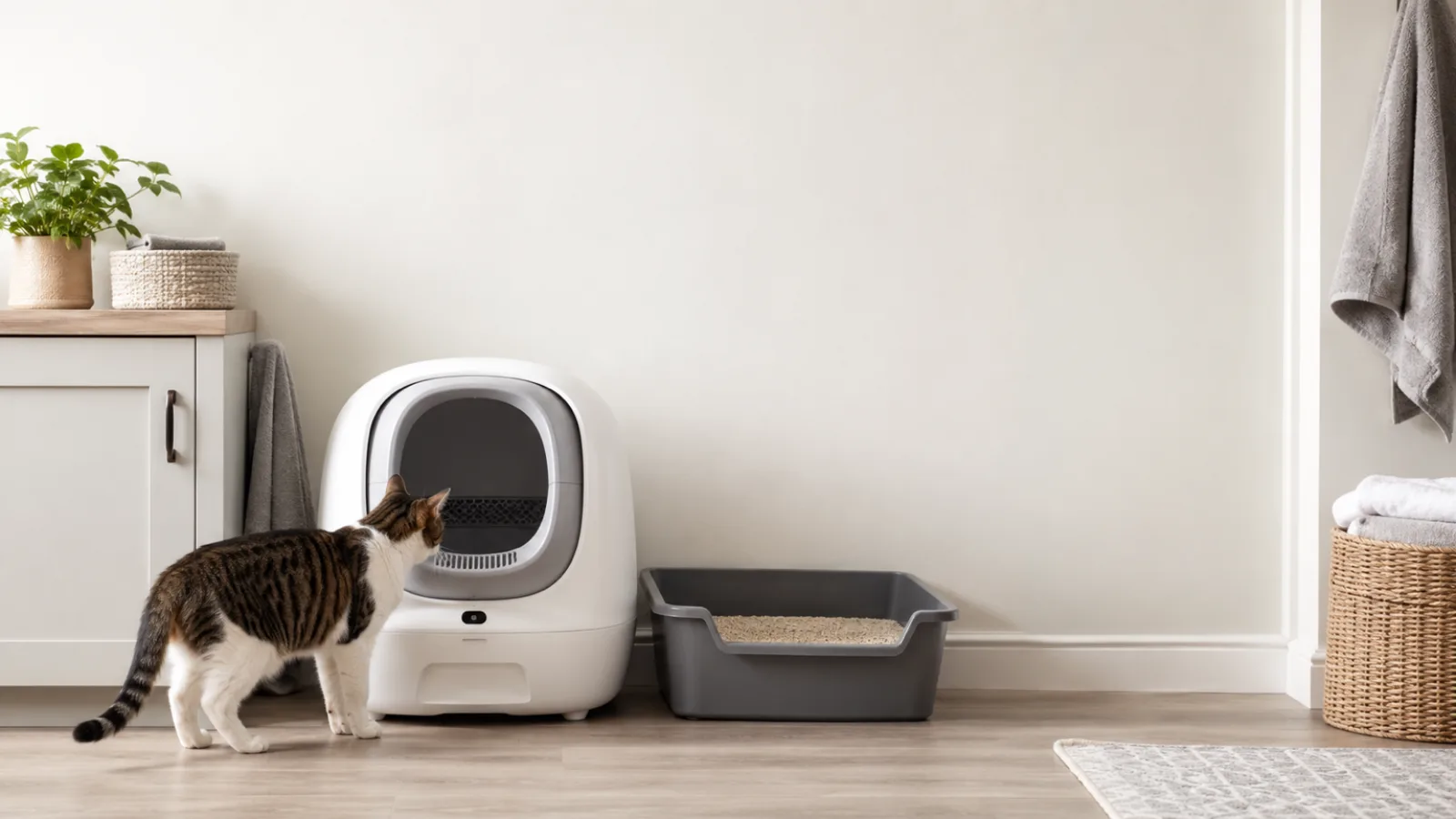
Evidence at a Glance
Neakasa M1 Plus
Open-top design preserves the familiar tray geometry a cat already trusts — the single biggest lever for transitioning cats that refuse enclosed globes, with 360° safety sensors and anti-pinch logic per Neakasa.
Sources: Neakasa manufacturer documentation, ASPCA litter-box guidance, AAHA/AAFP Feline Life Stage Guidelines
Verified Jul 11, 2026
PetSafe ScoopFree Crystal Classic
Lowest-risk on-ramp for testing acceptance without a premium gamble — PetSafe documents roughly a month hands-free per disposable tray, no app required.
Sources: PetSafe manufacturer documentation, AAHA/AAFP Feline Life Stage Guidelines, ASPCA litter-box guidance
Verified Jul 11, 2026
Dr. Elsey's Ultra Unscented Clumping
The substrate that removes a refusal variable — AAHA/AAFP recommend unscented clumping litter for most cats, and keeping the litter constant across the move is the foundation of the whole protocol.
Sources: Dr. Elsey's manufacturer documentation, AAHA/AAFP Feline Life Stage Guidelines, Cornell Feline Health Center
Verified Jul 11, 2026
Our Picks
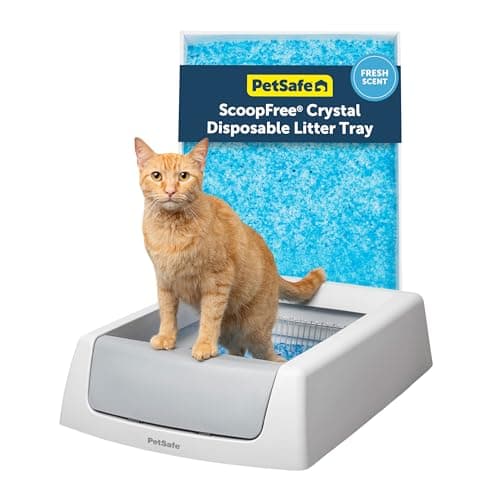
PetSafe
PetSafe ScoopFree Crystal Classic
8.0 / 10
- Roughly a month hands-free per disposable crystal tray per PetSafe
- No app, no Wi-Fi, no setup account — simple operation
- Lowest entry price of any automatic box in the toolkit
- PetSafe documents that the platform works with its crystal system
$99.00
Current price · checked Sep 8, 2026
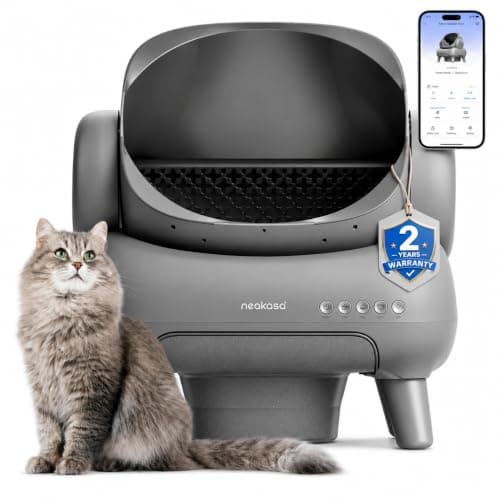
Neakasa
Neakasa M1 Plus (open-top)
8.6 / 10
- Open-top layout preserves familiar tray-style entry
- Neakasa documents 360° safety sensors with anti-pinch logic
- Sized for larger cats and multi-cat households per Neakasa
- Odor and leak control per manufacturer documentation
$399.99
Current price · checked Sep 8, 2026
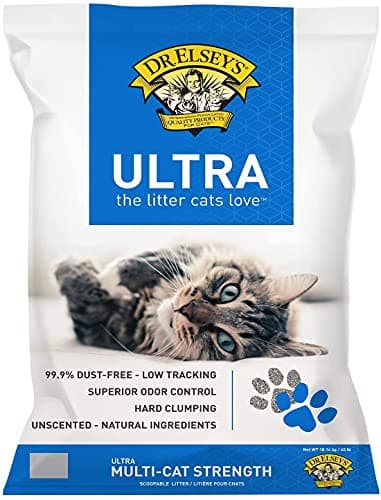
Dr. Elsey's
Dr. Elsey's Ultra Unscented Clumping 40 lb
8.8 / 10
- Unscented, hard-clumping clay — the AAFP default substrate
- 40 lb supply covers a full multi-week transition
- No added fragrance to deter a scent-sensitive cat
$20.99
Current price · checked Sep 8, 2026
Dr. Elsey's
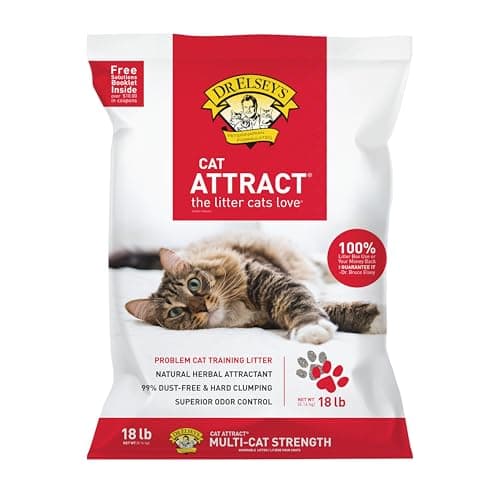
Dr. Elsey's Cat Attract Clumping 18 lb
8.3 / 10
- Herbal attractant blended into clumping clay
- Positioned by Dr. Elsey's for litter-box training and re-training
- Mixes into the existing trusted substrate
- 18 lb bag sized as a transition supplement, not the whole supply
$15.29
Current price · checked Sep 8, 2026
FELIWAY
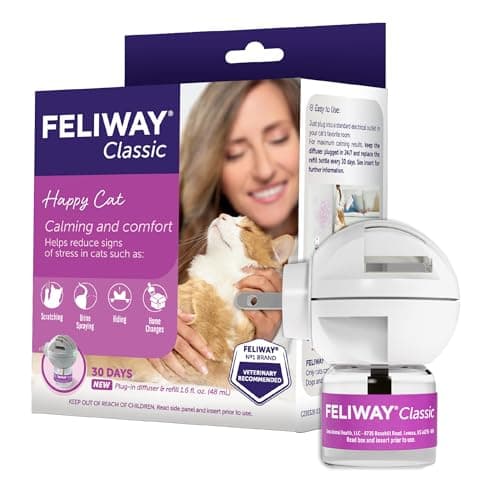
Feliway Classic Calming Diffuser Kit
7.9 / 10
- 30-day plug-in pheromone diffuser per Feliway documentation
- Positioned by Feliway to reduce stress-related behaviors
- Covers a room-scale area during the transition window
- Refillable kit for ongoing environmental support
$19.99
Current price · checked Sep 8, 2026
TEVILA
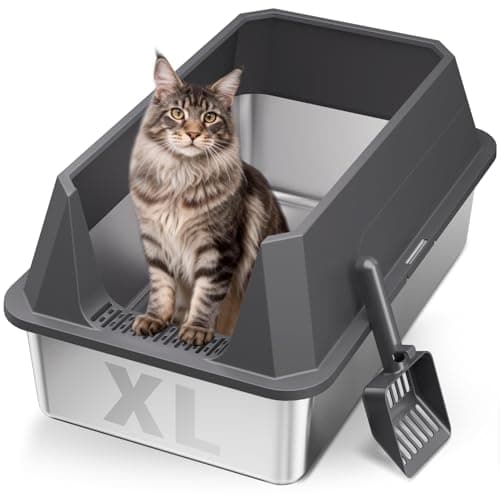
TEVILA Stainless Steel XL High-Sided Litter Box
8.4 / 10
- Large, open, easily entered — matches ASPCA's box preference
- Stainless steel resists odor absorption and scratching
- High sides contain litter scatter and stray urine
- Scoop included for the manual fallback
$35.99
Current price · checked Sep 8, 2026
Nature's Miracle
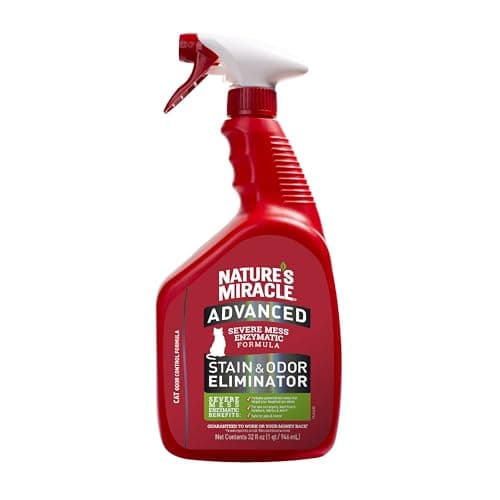
Nature's Miracle Advanced Cat Enzymatic Stain & Odor Remover 32 oz
8.1 / 10
- Enzymatic formula targets the proteins behind cat-urine odor
- Neutralizes residual scent that re-marks a spot
- 32 oz sprayer sized for repeat cleanups during transition
- Formulated specifically for cat stains and odor
$13.57
Current price · checked Sep 8, 2026
The Short Answer
Move the cat over in phases, not in one switch. First, place the new box unplugged directly beside the existing box and change nothing else. Let the cat use it cold — powered off — until it is a familiar, boring object. Only then run a single cleaning cycle while the cat is out of the room, so the noise and motion never happen with the cat inside. Remove the old box last, and only after the cat has chosen the new one on its own for several consecutive days. The toolkit that carries this acceptance is not a set of premium boxes ranked against each other: a friendly first box (the open-top Neakasa M1 Plus or the simple PetSafe ScoopFree Crystal), the substrate the cat already trusts (Dr. Elsey's unscented clumping clay), an attractant for a hesitating cat (Dr. Elsey's Cat Attract), a Feliway diffuser to lower ambient stress, a mandatory traditional backup box (TEVILA stainless), and an enzyme cleaner (Nature's Miracle) for the accidents a transition inevitably produces. Before any of it: if the cat's avoidance is sudden, if it strains painfully, or if it started after a stressful event, this is a veterinary question first. ASPCA, the Cornell Feline Health Center, and the Merck Veterinary Manual all treat house-soiling as a medical and behavioral workup before a shopping decision.
Every product on this list has been scored against the PetPal Gear Score, a weighted composite of expert consensus, observed effectiveness, animal safety, long-term durability, and value. Review method: Editorial synthesis of veterinary and welfare guidance — AAHA/AAFP Feline Life Stage Guidelines, ASPCA litter-box and house-soiling guidance, the Cornell Feline Health Center, and the Merck Veterinary Manual. Manufacturer documentation from PetSafe, Neakasa, Dr. Elsey's, Feliway, TEVILA, and Nature's Miracle was reviewed. Community consensus on r/litterrobot and r/CatAdvice was included as consensus, not quotation. No first-hand product testing — PetPalHQ does not run a testing lab.. Synthesized from 6+ expert sources.
Moving a cat to an automatic litter box fails, in this guide's editorial judgment, for one reason more than any other: the power-on gets rushed — the transition is a slow behavioral hand-off, not an install. A cat does not experience a new appliance the way an owner does. Where the owner sees a convenience upgrade, the cat sees an unfamiliar object that moves and makes noise in the one place it needs to feel safe. The whole protocol below exists to shrink that gap change by change, so the cat is never asked to accept the box, the motion, and the sound all at once.
The phased schedule is the spine of it. Place the new unit unplugged directly beside the existing box and change nothing else, so it becomes an ordinary, boring object. Let the cat use it cold — powered off — until it is a settled part of the routine. Only then run a single cleaning cycle while the cat is out of the room, so the noise and movement never happen with the cat inside. Remove the old box last, and only after the cat has freely chosen the new one for several consecutive days. Around that spine sit the supporting moves: keep the trusted substrate constant, add an attractant only if the cat hesitates, lower the ambient stress before the object arrives, and — non-negotiably — keep a traditional backup box in service the entire time so the cat can always vote against the appliance without eliminating on the floor.
The picks on this page are that toolkit, not a ranking of premium boxes against each other. If you want boxes compared head-to-head, that is a different guide. Here, each item earns its place by carrying acceptance: a friendly first box, the foundation substrate, the hesitation nudge, the stress layer, the reversibility net, and the accident-recovery cleaner. Everything is editorial synthesis of veterinary and welfare guidance and manufacturer documentation — PetPalHQ does not run a testing lab, and where sources point one way, that direction is named rather than asserted.
One rule sits above the whole protocol. Sudden box avoidance, painful straining, frequent small urinations, or elimination after a stressful event are medical signals first. The ASPCA, the Cornell Feline Health Center, and the Merck Veterinary Manual all treat house-soiling as a medical and behavioral workup before a shopping decision. No box, litter, attractant, or diffuser diagnoses urinary tract disease, cystitis, or arthritis — a veterinarian does. Start there whenever the avoidance is new.
Head-to-Head Comparison
| Feature | PetSafe ScoopFree Crystal Classic | Neakasa M1 Plus (open-top) | Dr. Elsey's Ultra Unscented Clumping 40 lb | Dr. Elsey's Cat Attract Clumping 18 lb | Feliway Classic Calming Diffuser Kit | TEVILA Stainless Steel XL High-Sided Litter Box | Nature's Miracle Advanced Cat Enzymatic Stain & Odor Remover 32 oz |
|---|---|---|---|---|---|---|---|
| Role in the transition | Low-risk first box | Globe-refuser first box | Foundation substrate | Hesitation nudge | Stress-lowering layer | Reversibility net | Accident recovery |
| When to introduce it | Phase one, unplugged | Phase one, unplugged | Before and throughout | Only if the cat hesitates | A few days ahead | Kept in service throughout | From day one, as needed |
| Substrate impact | Crystal — a substrate change | Works with standard clumping | The trusted clumping default | Herbal cue in clumping clay | None — environmental | Owner's chosen litter | None — cleaning agent |
| Can it override a medical avoidance? | No — vet first | No — vet first | No — vet first | No — vet first | No — vet first | No — vet first | No — vet first |
| Check price | Amazon | Amazon | Amazon | Amazon | Amazon | Amazon | Amazon |
$99.00
Current price · checked Sep 8, 2026
- Roughly a month hands-free per disposable crystal tray per PetSafe
- No app, no Wi-Fi, no setup account — simple operation
- Lowest entry price of any automatic box in the toolkit
- PetSafe documents that the platform works with its crystal system
For a first automatic box, the lowest-risk on-ramp is the one that commits the household to the least money and the cat to the least novelty. The PetSafe ScoopFree Crystal Classic is that on-ramp. PetSafe's product page documents roughly a month of hands-free operation per disposable crystal tray and a simple, app-free design. The point of choosing it first is not that it is the best appliance in the category — it plainly is not — but that it lets a cautious household test the one thing money cannot buy back later: whether this particular cat will accept an automatic box at all.
Where it fits the protocol: run the phased schedule with this unit before spending premium money. Place it unplugged beside the existing box, let the cat treat it as an ordinary object, and only introduce a cleaning cycle once the cat is already using it cold. If the cat accepts a simple box, a household then has evidence — not a guess — for whether to step up. Buyers who want to see how it stacks against the higher-end appliances can read the full automatic litter box comparison, and households specifically avoiding recurring fees should compare self-cleaning boxes that run without a subscription before committing.
The honest caveat sits at the center of the transition problem: crystal is itself a substrate change. AAHA/AAFP and ASPCA both name unscented clumping litter as the default for most cats, and swapping to crystals introduces exactly the kind of variable this protocol works to eliminate. A cat mid-transition is already adjusting to a new object; adding a new footing underfoot can be one change too many. The mitigation is to keep the trusted clumping litter and the traditional backup box in play while the cat decides, and to treat any refusal as information rather than a battle to win. If the cat rejects the crystals, that is not a failed cat — it is a signal to fall back and reconsider the substrate, not to force the issue.
What We Love
- Cheapest way to test acceptance before a premium purchase
- App-free simplicity means fewer variables during the transition
- Roughly a month between tray changes reduces daily handling
- Established PetSafe platform
What Could Be Better
- Crystal is a substrate change — a real refusal risk mid-transition
- Disposable trays are an ongoing consumable cost
- No usage or weight data if a vet later wants to monitor trends
- Not a premium long-term appliance for multi-cat homes
The Verdict
Start here if you are unsure your cat will accept any automatic box and you want to find out cheaply. The trade-off is the crystal substrate — pair it with the trusted clumping litter and the backup box so a rejection of the crystals never becomes a rejection of the whole idea.
Sources
- PetSafe (Amazon product listing, ScoopFree Crystal Classic): self-cleaning litter box system with advanced odor control; includes disposable crystal litter tray
- ASPCA (Litter Box Problems guidance): if a cat starts avoiding a self-cleaning box, switching back to a traditional box is a sensible troubleshooting step
$399.99
Current price · checked Sep 8, 2026
- Open-top layout preserves familiar tray-style entry
- Neakasa documents 360° safety sensors with anti-pinch logic
- Sized for larger cats and multi-cat households per Neakasa
- Odor and leak control per manufacturer documentation
- Ships with litter mat and refill bags per the Amazon listing
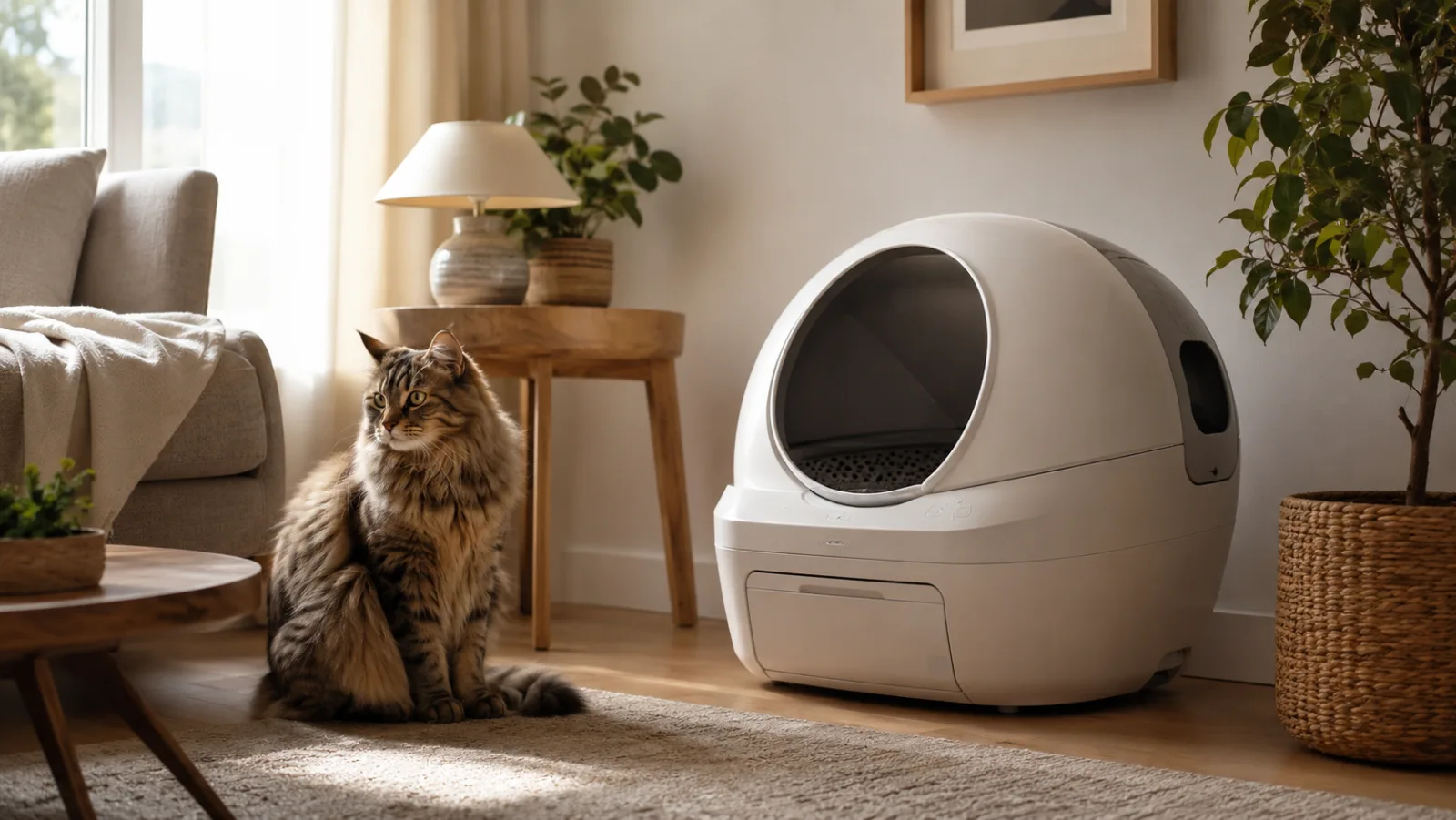
Open-top geometry is the single biggest lever a household has when a cat has already refused an enclosed globe, and the Neakasa M1 Plus is built around it. Neakasa's product page documents an open design with 360° safety sensors, anti-pinch logic, and odor and leak control, sized for larger and multi-cat homes. The reason this matters for a transition — rather than for a spec-sheet beauty contest — is that the biggest visual and physical shift a cat experiences moving to most automatic boxes is the enclosure itself. Remove the dome, and the new box looks and enters like the tray the cat already knows.
Where it fits the protocol: the phased hand-off works far better when the new object resembles the old one. ASPCA's litter-box guidance is explicit that cats generally prefer large, easily entered boxes in quiet locations, and AAHA/AAFP recommend boxes at least one-and-a-half times the cat's body length. An open-top automatic satisfies both without asking the cat to walk into a barrel. During the unplugged phase, a globe-averse cat will often step into this unit within days, where the same cat might refuse an enclosed model indefinitely.
The honest caveat is evidentiary, not mechanical: the long-term community record on Neakasa is thinner than on older category leaders, so its multi-year reliability picture is simply less established. That is a reason to run the transition unusually slowly, not a reason to avoid the box. Keep the traditional backup available, watch for any avoidance, and follow ASPCA's guidance to switch back if the cat starts steering clear. The other real cost is footprint — an open unit sized for big cats takes more floor than an enclosed appliance, which matters in a small apartment. As always, confirm current price and availability before buying, since this listing's bundle contents and seller move over time.
What We Love
- Open-top design is the strongest single lever for globe-refusers
- Neakasa documents 360° sensors and anti-pinch protection
- Fits ASPCA's preference for large, easily entered boxes
- Handles larger and multi-cat households per Neakasa
What Could Be Better
- Thinner long-term reliability record than older leaders
- Large open footprint is awkward in small spaces
- Premium price for a first-box experiment
The Verdict
If your cat has already turned its nose up at an enclosed globe, this is the box that makes the transition winnable — its open tray is closer to what the cat already trusts than any barrel design. Move slowly and keep the backup box, because the long-term record is younger than the category's veterans.
Sources
- Neakasa (Amazon product listing, M1 Plus): open-top self-cleaning cat litter box with 360° safety sensors, advanced odor and leak control, for large and multi-cat homes; litter mat and 2 rolls of refill bags included
- ASPCA (Litter Box Problems guidance): cats generally prefer large, easily entered boxes in quiet locations
$20.99
Current price · checked Sep 8, 2026
- Unscented, hard-clumping clay — the AAFP default substrate
- 40 lb supply covers a full multi-week transition
- No added fragrance to deter a scent-sensitive cat
Substrate is the variable most transitions quietly ignore, and it is often the one that decides them. Dr. Elsey's Ultra is unscented hard-clumping clay, and the reason it anchors this toolkit is that AAHA/AAFP name unscented clumping litter as the recommended default for most cats. If the cat already uses a clumping litter it trusts, the single most powerful thing an owner can do during the move is to keep that footing identical. A cat that steps into a new automatic box and finds the same familiar surface underfoot has one fewer reason to refuse.
Where it fits the protocol: the phased schedule assumes only one thing changes at a time. Change the box, but hold the litter constant. Carrying the trusted substrate from the old box into the new one — literally scooping a little of the used, clumped litter across so the new box smells lived-in — is a widely used behavioral bridge in litter-box retraining practice. The Cornell Feline Health Center notes that house-soiling problems frequently link to box style, location, and access; substrate familiarity is the quiet fourth factor that sits under all three.
The honest caveat is that unscented clumping clay is not compatible with every automatic mechanism — some crystal-tray and specialty systems are built for their own consumables, so an owner has to confirm the box accepts standard clumping litter before assuming the substrate can stay constant. Clay is also heavier and dustier than crystal or plant alternatives, which some households dislike. And keeping the litter familiar does not override the medical-first rule: if a cat that has always accepted this exact substrate suddenly avoids the box, the litter is not the story — a veterinary visit is. Used as intended, though, holding the substrate steady removes the refusal variable that owners most often overlook.
What We Love
- Unscented clumping clay matches the AAFP-recommended default
- Keeping the substrate constant removes a major refusal variable
- No fragrance to deter scent-sensitive cats
What Could Be Better
- Not every automatic box accepts standard clumping clay
- Heavier and dustier than crystal or plant-based litters
- Familiar litter still cannot override a sudden medical avoidance
The Verdict
Compared with every gadget in this toolkit, the litter is the cheapest lever and often the most decisive — keep the cat's trusted unscented clumping substrate constant and you have removed the variable owners most often forget. Confirm your chosen box accepts standard clumping clay before you count on holding it steady.
Sources
- Dr. Elsey's (Amazon product listing, Ultra): Ultra unscented clumping clay cat litter, 40 lb bag
- AAHA/AAFP (Feline Life Stage Guidelines): unscented clumping litter is the recommended default substrate for most cats
$15.29
Current price · checked Sep 8, 2026
- Herbal attractant blended into clumping clay
- Positioned by Dr. Elsey's for litter-box training and re-training
- Mixes into the existing trusted substrate
- 18 lb bag sized as a transition supplement, not the whole supply
When a cat hesitates at the threshold of the new box — approaching, sniffing, then walking away — the tool for that specific moment is an attractant. Dr. Elsey's Cat Attract is a herbal attractant blended into clumping clay, which Dr. Elsey's positions for litter-box training and re-training. It is not a base litter for the whole household; it is a targeted mix-in for a cat that is on the fence about a new box during the transition.
Where it fits the protocol: this is the escalation step, not the default. Run the phased schedule first with the trusted plain substrate. If — and only if — the cat is clearly interested but not committing, blend a portion of Cat Attract into the familiar litter in the new box. The herbal cue gives a hesitating cat a reason to commit to the new location while the rest of the setup stays constant. Because it is clumping clay, it layers onto the substrate-continuity principle rather than fighting it: the footing stays clay, and only the scent cue is added.
The honest caveats matter here more than usual, because an attractant can paper over a problem that needs solving. First, an attractant is a nudge, not a fix: if a cat refuses the new box outright, the answer is to diagnose why — location, noise, enclosure, or health — not to keep escalating scent cues. Second, the Cornell Feline Health Center and the Merck Veterinary Manual are unambiguous that a cat which suddenly stops using a box it previously accepted needs a veterinarian, not a stronger attractant; masking a medical avoidance is the exact failure this toolkit is built to prevent. Third, some cats simply do not respond to herbal attractants, so a household should treat it as one tool among several rather than a guarantee. Used narrowly — for the genuinely hesitant, medically-cleared cat — it earns its place.
What We Love
- Targeted nudge for a cat hesitating at the new box
- Blends into the trusted clumping substrate without changing footing
- Maker positions it specifically for training and re-training
- Small bag suits supplemental, not primary, use
What Could Be Better
- An attractant can mask a medical or behavioral cause of refusal
- Not every cat responds to herbal attractants
- Wrong tool for a hard refusal — diagnose the cause instead
The Verdict
Reach for this only when a medically-cleared cat is interested but not committing — it is the escalation step in the protocol, not the opening move. If the cat refuses outright, put the attractant down and diagnose the reason, because a nudge cannot fix a problem it is only hiding.
$19.99
Current price · checked Sep 8, 2026
- 30-day plug-in pheromone diffuser per Feliway documentation
- Positioned by Feliway to reduce stress-related behaviors
- Covers a room-scale area during the transition window
- Refillable kit for ongoing environmental support
Stress is the quiet driver behind a surprising share of box refusals, and any change to a cat's core routine — a new appliance in the corner it uses most — is a stressor. Feliway Classic is a synthetic feline pheromone delivered by a 30-day plug-in diffuser that Feliway positions to help reduce stress-related behaviors such as urine spraying, scratching, and hiding. In a transition, the goal is not to sedate the cat but to lower the ambient tension so the new box registers as one small change rather than a threat.
Where it fits the protocol: introduce the diffuser near the litter area a few days before the new box arrives, so the calming baseline is already established when the object appears. A cat moving through the phased schedule with a lower stress load is more likely to investigate the unplugged unit, tolerate the eventual cleaning cycle, and settle on the new box without the guarding, hiding, or out-of-box marking that stress can trigger. The Merck Veterinary Manual frames consistent environmental factors as meaningful for feline behavior; a stable, low-stress litter area is part of that environment.
The honest caveats keep this in proportion. Pheromone response is individual — some cats respond visibly, some show nothing, and the evidence base is a supportive signal rather than a guarantee, so no household should treat a diffuser as the thing that makes the transition happen. The diffuser is also an ongoing running cost with refills, and its coverage is room-scale, so a large or multi-room home may need more than one unit. Most important, calming a genuinely anxious cat does not address a medical cause of avoidance: if the refusal is sudden or paired with straining, the pheromone is beside the point and the veterinarian is not. As a stress-lowering layer under an already-careful transition, though, it is a low-risk addition.
What We Love
- Targets the stress that genuinely drives some box avoidance
- Hands-off environmental support via a 30-day plug-in
- Low-risk environmental support during a disruptive change
- Refillable for the whole transition window
What Could Be Better
- Pheromone response is individual — some cats show no effect
- Ongoing refill cost and room-scale coverage limits
- Cannot substitute for a vet visit on a sudden refusal
The Verdict
Use case: the anxious cat whose routine is about to be disrupted, where lowering the baseline tension a few days ahead smooths the whole hand-off. It is a supporting layer, not the lever — a calm cat still needs the trusted substrate and the backup box to complete the move.
$35.99
Current price · checked Sep 8, 2026
- Large, open, easily entered — matches ASPCA's box preference
- Stainless steel resists odor absorption and scratching
- High sides contain litter scatter and stray urine
- Scoop included for the manual fallback
The safety net that makes the entire protocol reversible is a traditional box kept in service the whole way through — and the TEVILA stainless XL is built for exactly that role. It is a large, open, high-sided stainless box with a scoop, matching ASPCA's documented note that cats prefer large, easily entered boxes. This is not a compromise or a placeholder. It is the single most important non-negotiable in a transition, because it is the thing that lets a cat vote against the new appliance without eliminating on your floor.
Where it fits the protocol: ASPCA's guidance is direct — keep the original box available during transition, and if the cat starts avoiding a self-cleaning box, switching back to a traditional one is a sensible troubleshooting step. That instruction is only actionable if a good traditional box is already present and accepted. The AAHA/AAFP resource rule of one box per cat plus one extra reinforces the point: the automatic box does not replace that count during the transition, it adds to it. Remove the old box only after the cat has freely chosen the new one for several consecutive days, and even then, most households keep a backup in the rotation.
The honest caveats are practical. Stainless is heavier and pricier than plastic, and a high-sided box is harder for a kitten or an arthritic senior to enter — for those cats a lower entry point matters more than containment, and this is the wrong box. The open design also means manual scooping continues, which is precisely the chore the automatic box is meant to reduce; that is the deliberate trade of keeping a fallback. Households still deciding whether the automatic upgrade earns its keep at all should read whether an automatic box is worth it for your household before over-investing. As the reversibility layer, though, a durable open box is the cheapest insurance in the whole toolkit.
What We Love
- Makes the transition reversible per ASPCA's switch-back guidance
- Large, open, easily entered — matches documented cat preference
- Stainless resists odor and scratching better than plastic
- High sides contain scatter during the overlap period
What Could Be Better
- High sides are hard for kittens and arthritic seniors to enter
- Heavier and costlier than a basic plastic box
- Keeping it in service means manual scooping continues
The Verdict
Buy this because ASPCA's switch-back rule is only usable if a good traditional box is already there — this is the insurance that lets your cat reject the appliance without rejecting the litter box. For a kitten or a stiff senior, choose a lower-entry box instead; containment is not worth a barrier they cannot clear.
$13.57
Current price · checked Sep 8, 2026
- Enzymatic formula targets the proteins behind cat-urine odor
- Neutralizes residual scent that re-marks a spot
- 32 oz sprayer sized for repeat cleanups during transition
- Formulated specifically for cat stains and odor
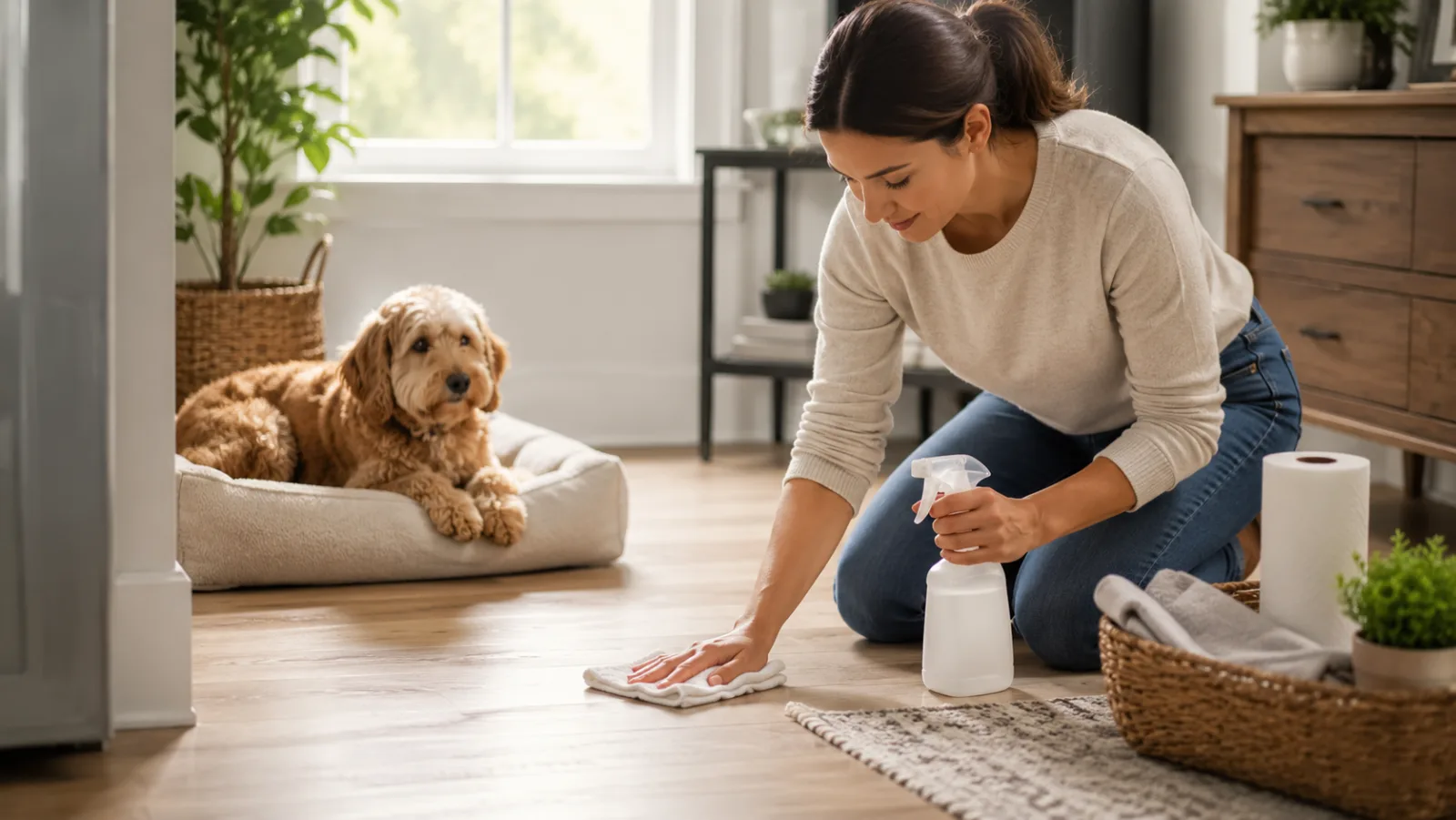
Every transition produces at least one accident, and how a household cleans it determines whether it stays a one-off or becomes a habit. Nature's Miracle Advanced is an enzymatic cat stain and odor remover, and the enzymatic part is the whole point: ordinary cleaners lift the visible mess but leave the scent proteins that a cat's nose reads as a marked location. If that residual scent survives, the cat is drawn back to re-offend at the same spot, quietly undermining the acceptance the rest of the toolkit is building.
Where it fits the protocol: this is the recovery tool for the phase when a cat is still deciding. During the overlap, an out-of-box event near the new appliance is common and not a failure — but it has to be fully neutralized, not just wiped, or the spot becomes a competing latrine that pulls the cat away from both boxes. Saturating the area with an enzymatic cleaner and letting it work removes the scent marker so the accident does not rewrite the cat's map of where it should go. That keeps the behavioral hand-off pointed at the new box instead of a corner of the room.
The honest caveats are about expectations. An enzyme cleaner treats the symptom, not the cause: repeated accidents mean the transition is moving too fast, the box or location is wrong, or — per the Cornell Feline Health Center and the Merck Veterinary Manual — a medical problem is driving the avoidance and needs a veterinarian, not another bottle of cleaner. Enzymatic formulas also need dwell time and sometimes a second treatment on set-in stains, and they work best on fresh accidents, so speed matters. Used as the recovery step in a careful transition, it protects the progress the other picks are making; used to excuse a pattern of accidents, it hides a problem that deserves a diagnosis.
What We Love
- Neutralizes the scent proteins that cause repeat marking
- Protects transition progress by erasing the accident's map-marker
- Cat-specific enzymatic formula in a repeat-use size
- Cheapest insurance against an accident becoming a habit
What Could Be Better
- Treats the symptom — repeated accidents signal a deeper problem
- Needs dwell time and sometimes a second pass on set-in stains
- Cannot substitute for a vet visit when avoidance persists
The Verdict
Keep a bottle on hand from day one, because a fully neutralized accident is a non-event and a half-cleaned one becomes a habit. If you find yourself reaching for it repeatedly, stop cleaning and start diagnosing — a pattern of accidents is the transition or the cat's health telling you something.
How We Score
Formula
PetPal Gear Score = (Expert Consensus × 0.35) + (Transition Fit × 0.25) + (Safety / Welfare Design × 0.20) + (Value × 0.20)
Score Factors
- Expert Consensus · 35%
- Synthesized from the AAHA/AAFP Feline Life Stage Guidelines, ASPCA litter-box and house-soiling guidance, the Cornell Feline Health Center, the Merck Veterinary Manual, and manufacturer documentation. The PetPal Gear Score is a composite of expert opinion — PetPalHQ does not run a testing lab.
- Transition Fit · 25%
- How directly the item advances a phased behavioral hand-off — preserving familiar geometry and substrate, lowering stress, keeping the move reversible, and recovering from accidents — rather than how it performs as a standalone appliance.
- Safety / Welfare Design · 20%
- Alignment with documented welfare guidance — large, easily entered box geometry, quiet low-stress placement, unscented clumping litter, safe sensor behavior, and the resource rule of one box per cat plus one extra.
- Value · 20%
- Cost relative to the item's role in the transition, including consumables (trays, refills, litter) weighed against how much refusal risk the item removes.
| Rank | Product | Score |
|---|---|---|
| #1 | Dr. Elsey's Dr. Elsey's Ultra Unscented Clumping 40 lb | 8.8 |
| #2 | Neakasa Neakasa M1 Plus (open-top) | 8.6 |
| #3 | TEVILA TEVILA Stainless Steel XL High-Sided Litter Box | 8.4 |
| #4 | Dr. Elsey's Dr. Elsey's Cat Attract Clumping 18 lb | 8.3 |
| #5 | Nature's Miracle Nature's Miracle Advanced Cat Enzymatic Stain & Odor Remover 32 oz | 8.1 |
| #6 | PetSafe PetSafe ScoopFree Crystal Classic | 8.0 |
| #7 | FELIWAY Feliway Classic Calming Diffuser Kit | 7.9 |
When NOT to Buy
Before you buy anything on this page, rule out medicine. If your cat is suddenly avoiding the box, straining painfully, urinating small amounts frequently, or eliminating outside the box after a stressful event, this is not a transition problem and no tool here fixes it. Call your veterinarian first. The ASPCA, the Cornell Feline Health Center, and the Merck Veterinary Manual all treat sudden house-soiling as a medical and behavioral workup — it can signal urinary tract disease, idiopathic cystitis, or arthritis in a senior that can no longer climb into a high-sided box. An attractant, a diffuser, or a nicer appliance only masks that.
Some cats should not be moved to an automatic box at all. A cat with a strong, established box aversion is the wrong candidate — forcing an automated enclosure onto a cat that already struggles with litter-box acceptance runs against everything ASPCA's guidance supports. Kittens under about three pounds should not use most automatic boxes' powered cycle unsupervised, per the minimums manufacturers document across the category; keep them on a traditional box until they are grown. And if your real goal is simply less daily scooping, the honest answer may be that a larger open box, unscented clumping litter, and more frequent cleaning solve the same problem far more cheaply — a household still weighing that trade should read whether an automatic box is worth it for your household before spending. Confirm current price and availability before buying any item here; listings and bundles move over time.
Frequently Asked Questions
- How long should the transition actually take?
- Longer than most owners expect, and there is no universal number — the cat sets the pace, not the calendar. A confident cat raised on open trays might settle within a week or two, while a cautious or previously box-averse cat can need well over a month, and some plateau at the unplugged stage for a while before committing. The edge case worth naming is the multi-cat home: cats do not transition on the same timeline, so the slowest cat governs when the old box comes out. If any cat is still using the traditional box, it stays. Rushing to hit a deadline is the failure mode the whole protocol is built to prevent.
- The unit is running fine but my cat still won't step in — what am I missing?
- Usually the location, not the box. A detail the phased schedule can obscure is that an automatic box often cannot go exactly where the old box sat — it needs power, and sometimes a level surface or clearance the old spot did not. If you quietly moved the box a few feet to reach an outlet, the cat may be refusing the new place, not the new appliance. Cats also dislike a box backed into a noisy or high-traffic corner. Return the box as close to the trusted location as the power situation allows, keep it quiet, and give the cold, unplugged phase more time before assuming the appliance itself is the problem.
- Should I clean the automatic box differently during the transition?
- Yes, and this is the counterintuitive part: run it dirtier than you eventually will. An automatic box's selling point is that it clears waste almost immediately, but a transitioning cat often relies on its own scent to recognize the box as its territory. Wiping every trace instantly can make the new box smell like nothing, which reads as unfamiliar. During the acclimation window, letting a little scent linger — and moving a scoop of used, clumped litter from the old box into the new one — helps the cat claim the space. Tighten up the hygiene once the cat has committed.
- My cat accepted the box, then started avoiding it weeks later. Is that normal?
- Treat it as medical until proven otherwise, because a regression after successful acceptance is a different signal than initial hesitation. A cat that used the box happily and then stops has changed — and sudden avoidance, per the Cornell Feline Health Center and the Merck Veterinary Manual, commonly points to a urinary or pain issue rather than a behavioral one. Rule that out with a veterinarian first. Only after a clean bill of health should you look at what else shifted: a new litter batch, a relocated box, a household stressor, or a mechanical change in how the unit cycles. Do not assume a working transition simply broke on its own.
- Can I skip the traditional backup box if my cat seems totally fine with the new one?
- Not during the transition, no — and the reason is asymmetry of risk. Keeping the backup costs you a little floor space and some manual scooping; removing it too early risks a cat that suddenly balks having nowhere acceptable to go, which can seed an out-of-box habit that outlasts the original hesitation. The edge case that makes this concrete is a power outage or a mechanical fault: an automatic box that stops cycling becomes a dirty box fast, and a cat with no fallback may pick a corner instead. Keep the backup until the cat has chosen the new box freely for several consecutive days, and many households keep one in the rotation permanently.
Bottom Line
Run the transition in phases, never in one switch: unplugged beside the old box, used cold, one cycle only when the cat is away, and the old box removed last. Rushing the power-on is what turns a hesitant cat into a permanent refuser.
Pick the first box for the cat, not the spec sheet. The open-top Neakasa M1 Plus is the strongest lever for a cat that has refused an enclosed globe; the PetSafe ScoopFree Crystal Classic is the cheapest way to test acceptance before spending premium money.
Hold the substrate constant with Dr. Elsey's Ultra unscented clumping litter — AAHA/AAFP's default — and reach for Dr. Elsey's Cat Attract only if a medically-cleared cat is hesitating. Lower the ambient stress with a Feliway diffuser a few days ahead.
Keep the TEVILA stainless backup box in service the whole way through. ASPCA's switch-back rule is only usable if a good traditional box is already there, and a bottle of Nature's Miracle enzyme cleaner keeps any accident from becoming a habit.
None of it overrides a vet. Sudden avoidance, painful straining, or post-stress accidents are a medical question first — ASPCA, Cornell, and Merck all agree the workup comes before the shopping.
Sources & Methodology
Methodology
PetPal Gear Score = (Expert Consensus × 0.35) + (Transition Fit × 0.25) + (Safety / Welfare Design × 0.20) + (Value × 0.20)
Expert review sources
- American Animal Hospital Association and American Association of Feline Practitioners — Feline Life Stage Guidelines
- ASPCA — Litter Box Problems
- Cornell Feline Health Center — Feline Behavior Problems: House Soiling
- Merck Veterinary Manual — Behavior Problems of Cats
- PetSafe — ScoopFree Crystal Classic product documentation
- Neakasa — M1 Plus product documentation
- Dr. Elsey's — Ultra and Cat Attract product documentation
- Feliway — Classic diffuser product documentation
- Nature's Miracle — Advanced Cat enzymatic remover product documentation
Community sources
- r/litterrobot — transition and acclimation discussion consensus
- r/CatAdvice — introducing an automatic box and refusal-troubleshooting consensus
Prices and specs verified July 11, 2026.
About the author
Nick Miles is the chief editor of PetPalHQ. This transition protocol and its toolkit are editorial synthesis of the AAHA/AAFP Feline Life Stage Guidelines, ASPCA litter-box and house-soiling guidance, the Cornell Feline Health Center, the Merck Veterinary Manual, and manufacturer documentation — PetPalHQ does not run a testing lab. The PetPal Gear Score is a composite of expert opinion, not a measurement. Sources are cited by name throughout.
PetPalHQ is a participant in the Amazon Services LLC Associates Program. We may earn commissions from qualifying purchases — at no extra cost to you.
More Guides
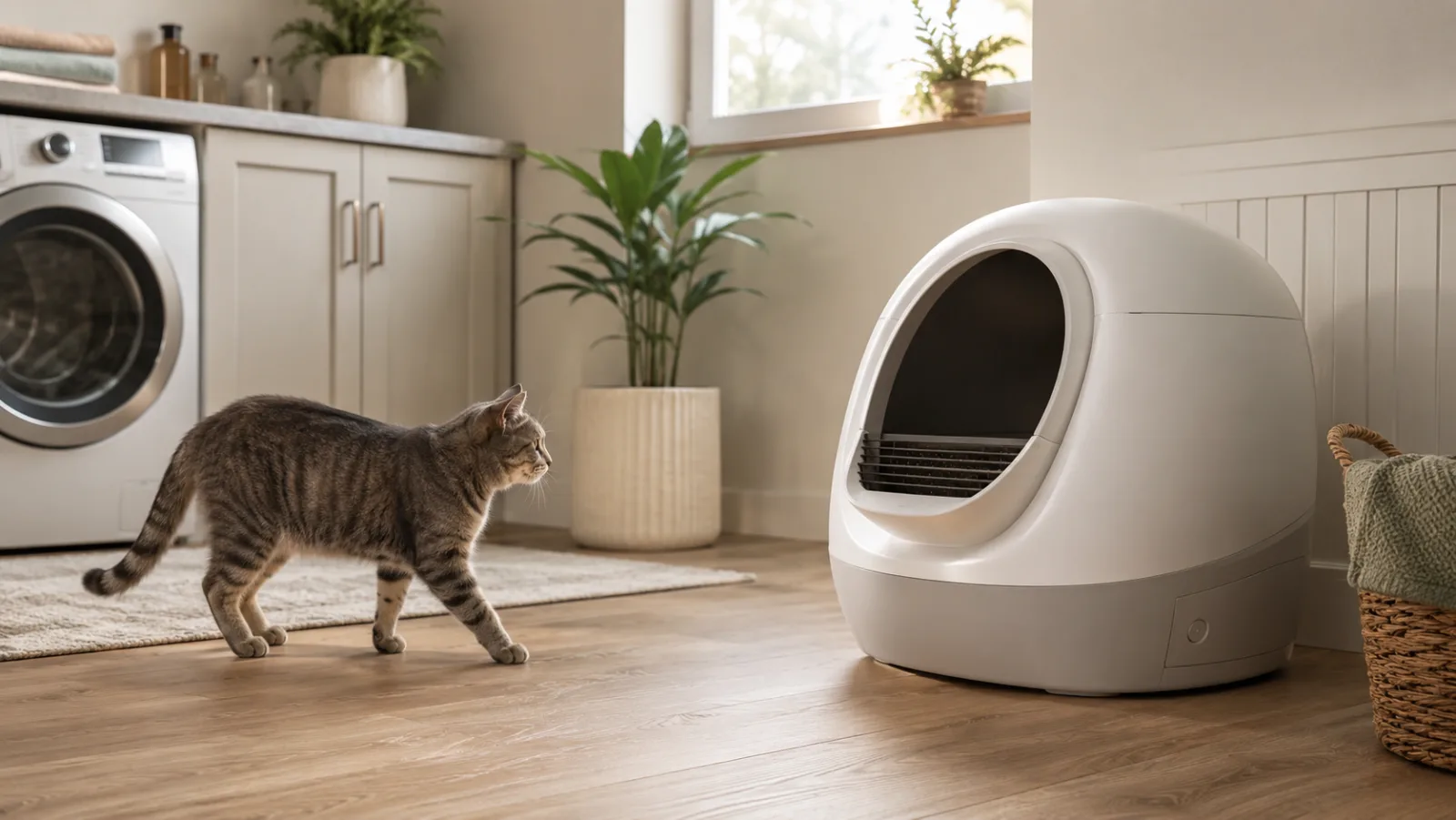
Cats & Dogs
Best Automatic Litter Boxes for Cats (2026)
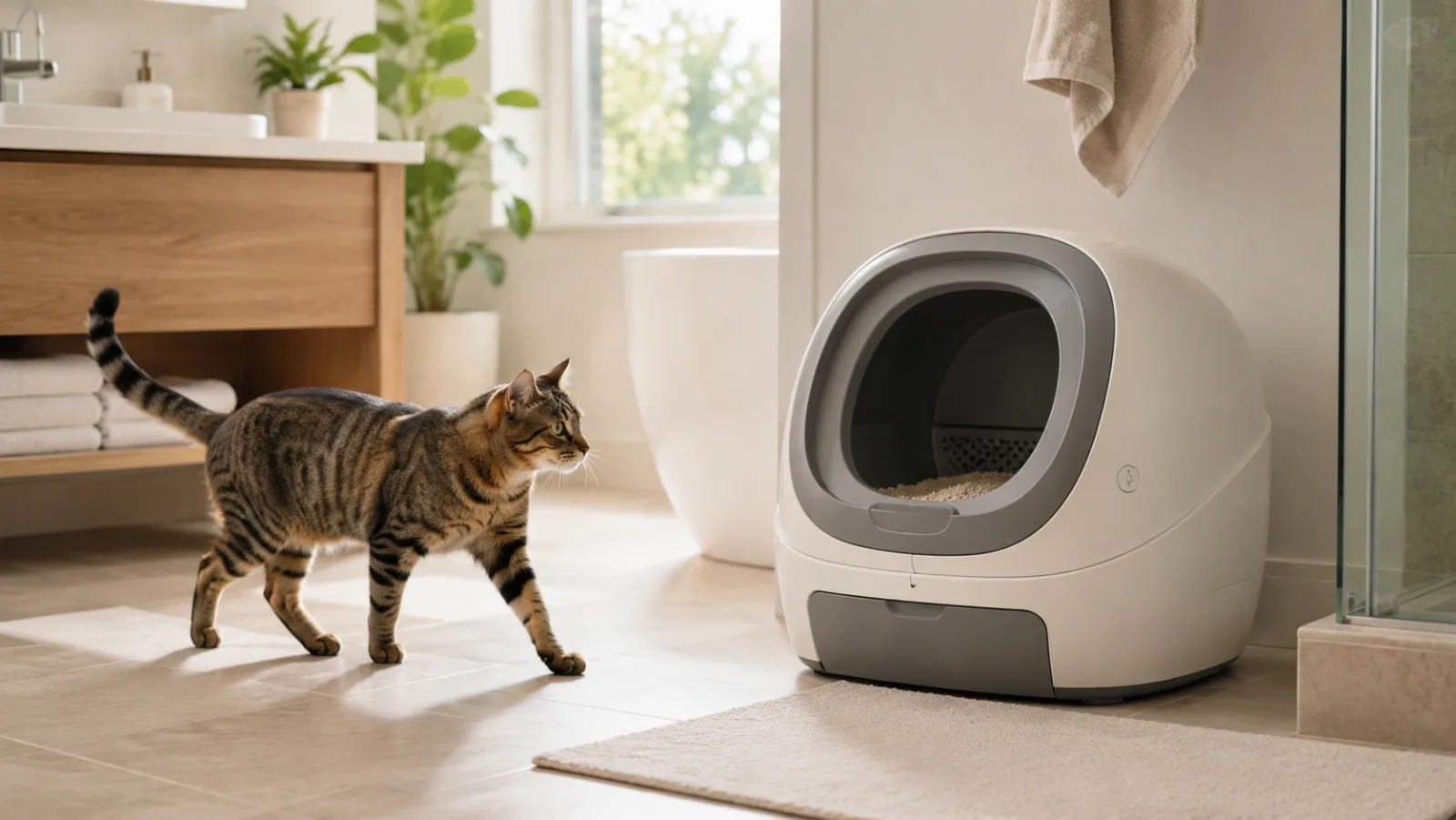
Cats & Dogs
Best Self-Cleaning Litter Boxes With No Subscription (2026)
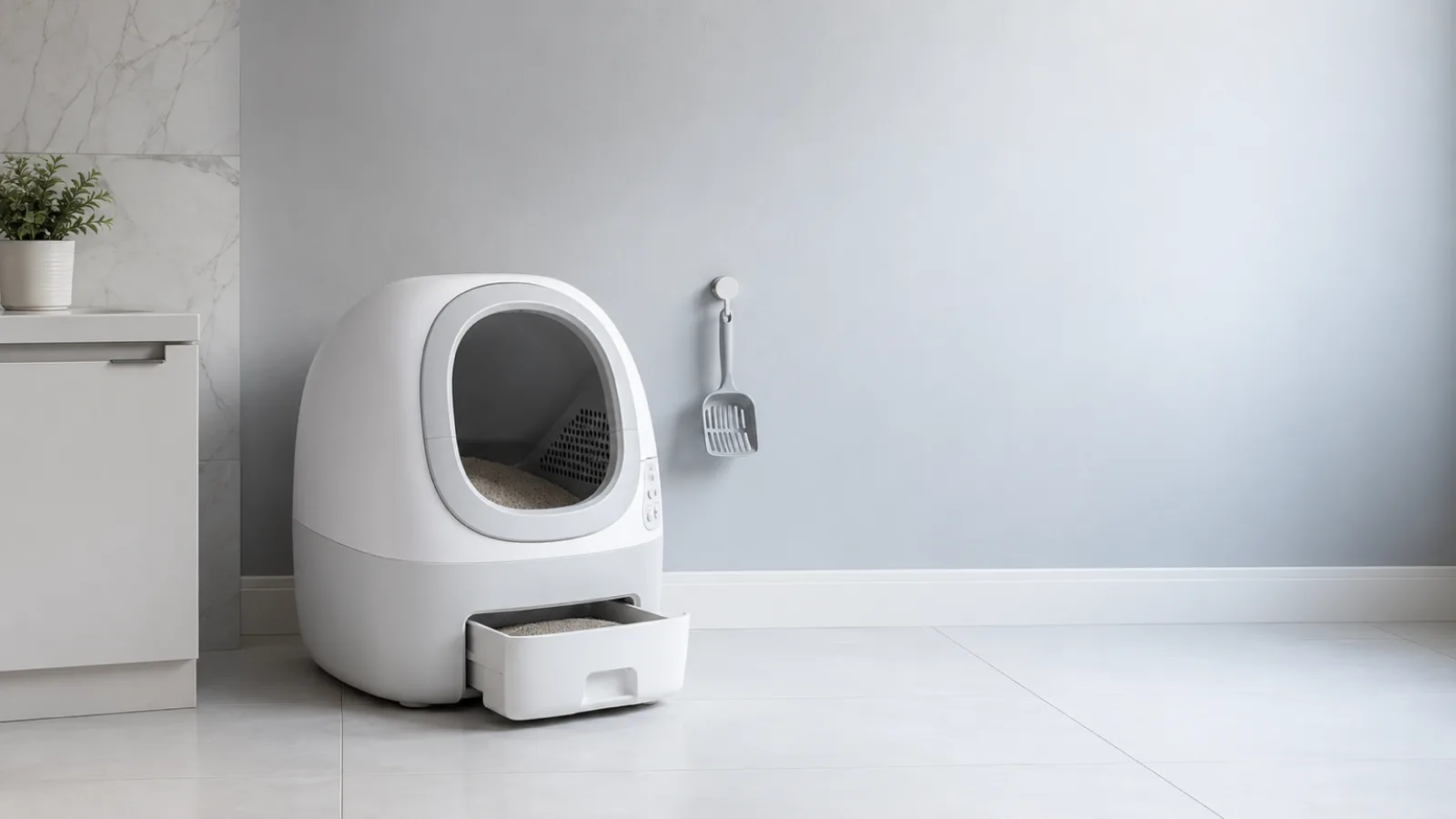
Cats & Dogs
Are Automatic Litter Boxes Worth It? (2026)
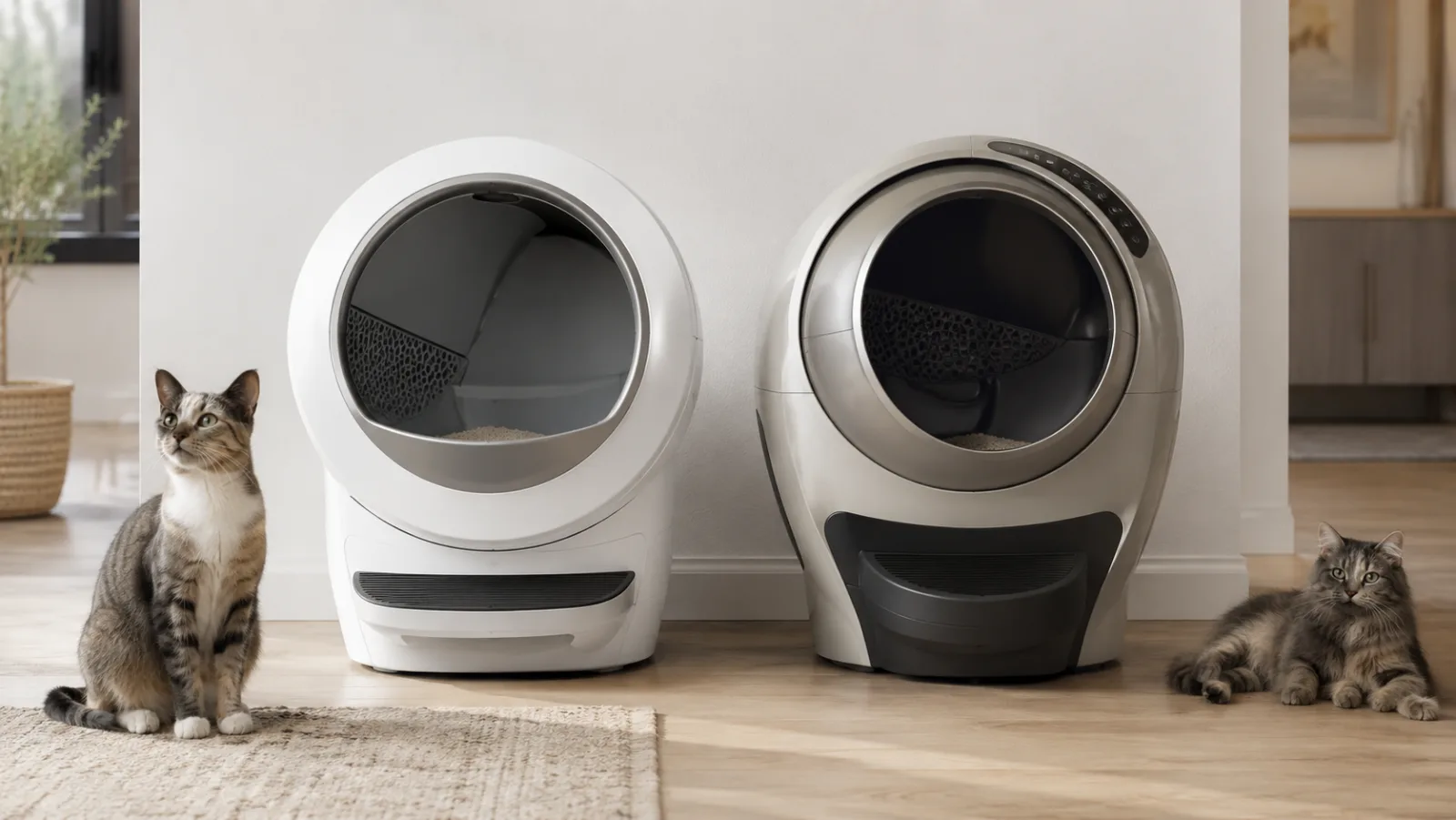
Cats & Dogs
Litter-Robot 5 vs Litter-Robot 4 (2026), and the Amazon Alternatives
Cats & Dogs
Best Pet Odor Removers and Enzyme Cleaners (2026)
Cats & Dogs