Cats & Dogs
Are Automatic Litter Boxes Worth It? (2026)
An automatic box is worth it when it removes a real, recurring friction you would otherwise neglect — not because it is 'smart.' This guide runs the 3-year total-cost-of-ownership math and the time-value calculation for four decision archetypes, then hands you a suitability checklist. For a large share of single-cat homes, a bigger manual box scooped twice daily wins the math outright.
By Nick Miles · Updated September 30, 2026 · 11 min read
PetPalHQ is reader-supported. We may earn a commission from qualifying Amazon purchases at no extra cost to you.
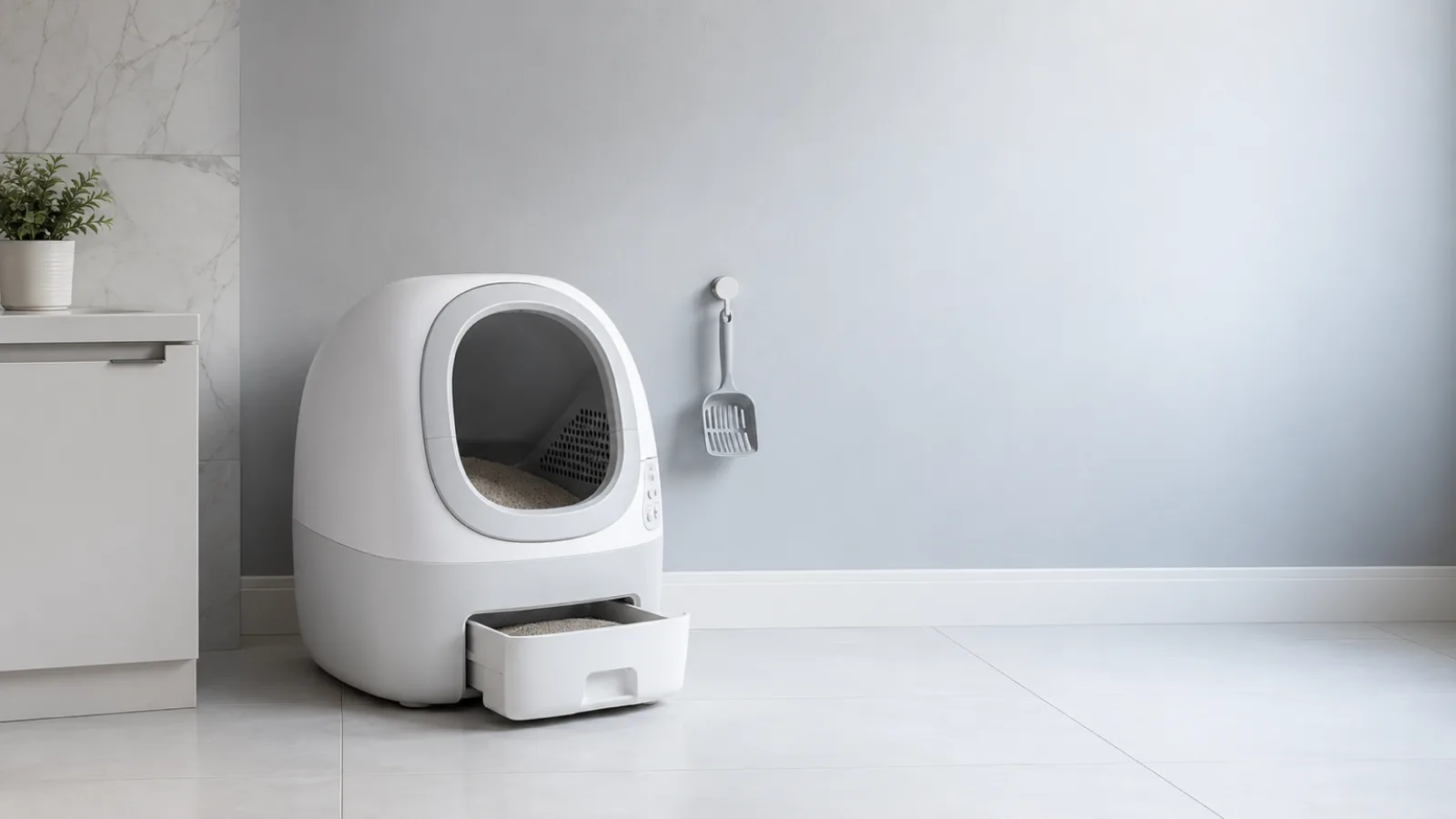
Evidence at a Glance
Whisker Litter-Robot 4 (Step & Fence)
The archetype where an automatic box clearly earns its price: a multi-cat home with real scooping fatigue that also values per-cat usage and weight data. Highest upfront cost, but the friction removed is largest here.
Sources: Whisker manufacturer documentation, AAHA/AAFP Feline Life Stage Guidelines, ASPCA litter-box guidance
Verified Jul 11, 2026
PetSafe ScoopFree SmartSpin (White)
The mid-budget worth-it case when odor is the specific friction — a sealed waste drawer at roughly half the premium-globe price, and it works with your existing litter per PetSafe documentation.
Sources: PetSafe manufacturer documentation, ASPCA litter-box guidance, AAHA/AAFP Feline Life Stage Guidelines
Verified Jul 11, 2026
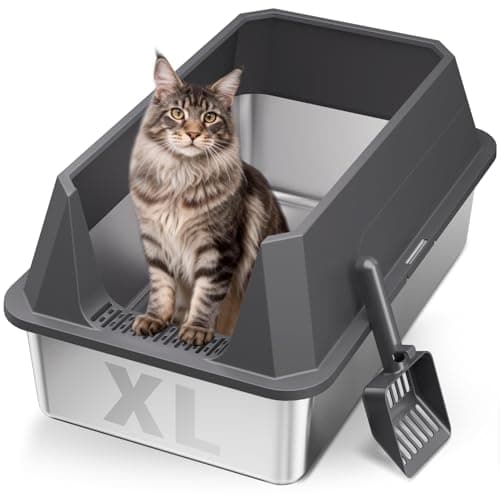
TEVILA Stainless Steel XL High-Sided Litter Box
The honest counter-pick. For many single-cat homes, a large open box scooped twice daily with unscented clumping litter satisfies the AAFP welfare brief at a fraction of the cost — the automatic box is a want, not a need.
Sources: ASPCA litter-box guidance, AAHA/AAFP Feline Life Stage Guidelines, Cornell Feline Health Center
Verified Jul 11, 2026
Our Picks
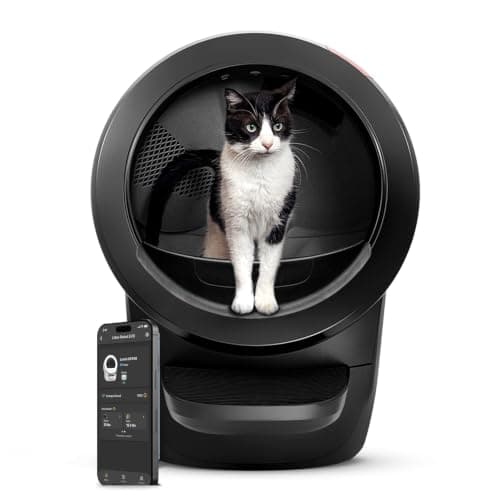
Whisker
Whisker Litter-Robot 4 (Step & Fence)
9.0 / 10
- Worth-it archetype: multi-cat home with high scooping fatigue
- Whisker documents support for up to four cats, 3 lb minimum for auto mode
- Per-cat usage and weight tracking is the friction it removes
- Standard clumping litter — no proprietary substrate lock-in
$699.00
Current price · checked Sep 8, 2026
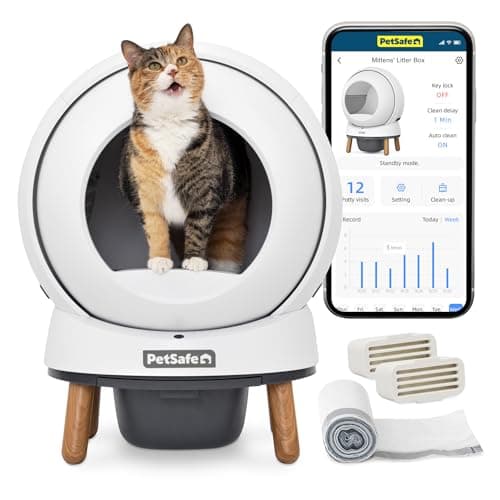
PetSafe
PetSafe ScoopFree SmartSpin (White)
8.6 / 10
- Worth-it archetype: odor is the one friction you cannot stay ahead of
- Sealed waste drawer keeps waste inside the appliance
- PetSafe documents compatibility with any litter
- Roughly half the price of a premium globe
$340.00
Current price · checked Sep 8, 2026
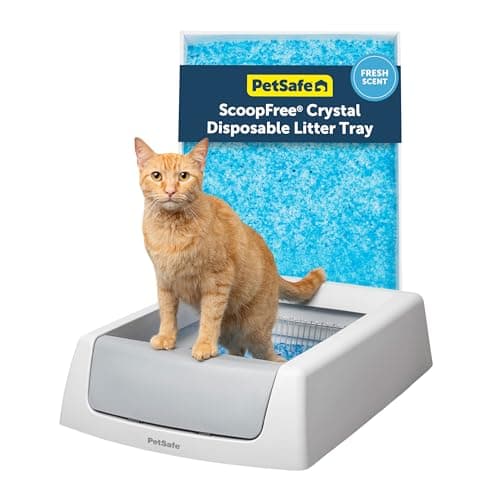
PetSafe
PetSafe ScoopFree Crystal Classic
7.9 / 10
- Worth-it archetype: the lowest-risk way to learn if your cat accepts an auto box
- PetSafe documents up to ~30 days per disposable crystal tray
- Lowest upfront price into the automatic category
- Trade-off is the ongoing disposable-tray cost
$99.00
Current price · checked Sep 8, 2026
TEVILA
TEVILA Stainless Steel XL High-Sided Litter Box
8.5 / 10
- The counter-pick this guide exists to name
- Large, easily entered — matches ASPCA's stated box preference
- High sides contain scatter; stainless wipes clean and does not hold odor
- One-time cost plus litter — no consumables, no electronics
$35.99
Current price · checked Sep 8, 2026
The Short Answer
Worth it if you have two or more cats, limited time or mobility, or a box that quietly gets skipped on busy days — and the Litter-Robot 4 is the one to buy in that case. Not worth it for one cat and a daily scoop. And no box fixes house-soiling that's medical.
Every product on this list has been scored against the PetPal Gear Score, a weighted composite of expert consensus, observed effectiveness, animal safety, long-term durability, and value. Review method: Editorial synthesis of veterinary and welfare guidance — AAHA/AAFP Feline Life Stage Guidelines, ASPCA litter-box and house-soiling guidance, the Cornell Feline Health Center, and the Merck Veterinary Manual — applied to a cost-of-ownership and suitability decision framework. Manufacturer documentation from Whisker and PetSafe was reviewed for capacity, consumable, and litter-compatibility claims. All cost figures are editorial estimates, not measured lab results. No first-hand product testing.. Synthesized from 6+ expert sources.
The question is not which automatic litter box is best — it is whether one is worth the money for your home at all. The honest answer turns on a single principle: an automatic box is worth it when it removes a real, recurring friction you would otherwise neglect, not because it is "smart." For a large share of single-cat households, a bigger manual box scooped twice a day, with unscented clumping litter, wins the math outright and still meets every welfare recommendation the AAHA/AAFP Feline Life Stage Guidelines and the ASPCA put forward.
Two calculations decide it. The first is three-year cost of ownership: the upfront price is only the down payment, because litter, disposable trays, optional filters, and electricity keep accruing long after checkout — and the cheapest "automatic" option can quietly out-cost a mid-priced one once its consumables are counted. The second is the value of your own time: manual scooping runs somewhere around forty to sixty hours a year, and an appliance only "pays for itself" in time if you would otherwise let that scooping slide. If you scoop reliably today, that time was never lost, and the appliance is buying convenience you do not feel.
Before any of that, one caveat overrides the whole exercise. Sudden box avoidance, painful straining, frequent small urinations, or elimination after a stressful event are not shopping problems. The AAHA/AAFP guidelines, ASPCA litter-box guidance, the Cornell Feline Health Center, and the Merck Veterinary Manual all agree that house-soiling is a medical and behavioral workup first. No box — automatic or manual — diagnoses urinary tract disease, cystitis, arthritis, or stress-related elimination. A veterinarian does.
Everything below is editorial synthesis, not lab testing, and every cost figure is a planning estimate rather than a quoted price. The four "picks" are not a ranking; they are decision archetypes — the multi-cat premium case, the odor-driven mid case, the cheap acceptance test, and the manual box that wins when an automatic one simply is not worth it.
Decided it is worth it — what does the premium tier buy now?
This guide's job ends at yes or no; once the answer is yes at the premium tier, the question changes from whether to spend to which build to buy. The current answer on Amazon is the Litter-Robot 4 Supply Bundle ($749.00 at our latest check) — the same up-to-four-cats appliance as the premium archetype above, sold with its consumables packaged in: the bundle listing includes the unit plus OdorTrap refills, drawer liners, cleaner wipes, and carbon filters, which are exactly the optional line items this guide's three-year math budgets at perhaps $100–$150 a year. The $50 gap over the $699 archetype price is a starter stock of that consumable spend moved to checkout day, not a different worth-it answer — the roughly $1,500–$1,700 three-year planning total above already budgets those consumables, so it does not move.
Above it sits a newer generation, and the honest read is to slow down before reaching for it. Whisker's Litter-Robot 5 ($799 list) raises the cat ceiling to five and adds WasteID; the Litter-Robot 5 Pro ($899 list) adds dual AI cameras whose features require a paid Whisker+ subscription. Our Litter-Robot 5 vs Litter-Robot 4 comparison works through why the new tier is not a clear upgrade yet — early r/litterrobot buyer feedback flags recurring laser-board faults and paywall friction while the LR4 carries a three-year community reliability record — so the proven $699–$749 tier is where the premium math in this guide was run. And Whisker is not the whole field: our large and multi-cat self-cleaning roundup ranks the alternatives from roughly $270 to $749, including open-top designs for the cats this guide warns may refuse an enclosed globe.
None of that spending moves this guide's boundaries. The premium three-year total still lands around $1,500–$1,700 once litter is counted, whichever globe you pick. The ASPCA's one-box-per-cat-plus-one guidance still applies, so a premium appliance supplements backup boxes rather than replacing them. And sudden avoidance, straining, or house-soiling stays a veterinary workup first — no generation of hardware changes that.
Head-to-Head Comparison
| Feature | Whisker Litter-Robot 4 (Step & Fence) | PetSafe ScoopFree SmartSpin (White) | PetSafe ScoopFree Crystal Classic | TEVILA Stainless Steel XL High-Sided Litter Box |
|---|---|---|---|---|
| Best for | Multi-cat homes (up to 4 cats, 3 lb+) with real scooping fatigue | One- or two-cat homes where odor is the deciding friction | First-timers unsure their cat will accept an automatic box at all | Single healthy cat, owner home daily, any real budget |
| Friction it removes | Daily scooping across several cats, plus per-cat usage and weight data | Litter-box odor, via a sealed waste drawer | The risk of spending before you know your cat complies | None — it trades money for about five minutes of your day, twice |
| When it is NOT worth it | Single cat, home daily | Your real friction is scooping volume, not smell | Your cat has already refused enclosed boxes; crystals add a substrate change | You would genuinely neglect twice-daily scooping — then automation earns its price |
| Check price | Amazon | Amazon | Amazon | Amazon |
$699.00
Current price · checked Sep 8, 2026
- Worth-it archetype: multi-cat home with high scooping fatigue
- Whisker documents support for up to four cats, 3 lb minimum for auto mode
- Per-cat usage and weight tracking is the friction it removes
- Standard clumping litter — no proprietary substrate lock-in
The math on this one only points in a single direction: more cats, less of your time. Whisker documents support for up to four cats at three pounds and up, plus per-cat usage and weight tracking. That data layer — which cat used the box, how often, at what weight — is the friction it removes for a busy multi-cat household, and it is the reason to spend here rather than on a cheaper appliance.
Run the three-year numbers honestly. Upfront is roughly $699. Add clumping litter for several cats at maybe $12–$18 a month, so plan for around $500–$650 in litter across three years. Add the optional Whisker consumables — OdorTraps and drawer liners run a household perhaps $100–$150 a year if you buy them. Electricity is trivial, on the order of a few dollars a year. Total three-year cost of ownership: plan for roughly $1,500–$1,700. Those are estimates, not quotes; litter habits swing the figure hard.
Now the time side, because that is where the case is actually made. Scooping two or three boxes twice a day is on the order of forty to sixty hours a year. Over three years that is 120–180 hours the appliance hands back. Value your own time at even $15–$20 an hour and the box "pays for itself" — but only if you would otherwise let the scooping slide. If you scoop reliably today, that time was never really lost, and the calculation collapses.
Suitability checklist before you buy: two or more cats, all comfortably above three pounds; cats that already tolerate an enclosed box; a household where the box currently gets neglected on busy days; and a budget that treats $699 as a convenience purchase, not a stretch. Whisker's own documentation sets the auto-mode floor at three pounds, so a very small kitten rules it out for now.
Once you have decided the premium tier is worth it, the specific model choice belongs to our full ranking of automatic litter boxes — this guide only settles whether to spend, not which globe wins.
What We Love
- Largest friction removed — daily scooping across multiple cats disappears
- Per-cat usage and weight data no cheaper tier matches
- Standard clumping litter keeps consumable cost predictable
What Could Be Better
- Highest upfront cost of this guide's four picks by a wide margin
- Only earns its price if you would otherwise neglect scooping
- Auto mode excludes cats under 3 lb per Whisker
- Enclosed globe rules out cats that refuse covered boxes
The Verdict
Worth it for the multi-cat home with genuine scooping fatigue and the budget to treat $699 as convenience. For a single-cat household that already keeps up with the box, the three-year total is money spent to remove a friction you do not actually feel.
Sources
- Whisker (Amazon product listing, Litter-Robot 4 with Step & Fence): suitable for up to 4 cats, each cat must weigh at least 3 lbs to safely use Automatic Mode; app monitors waste and litter levels and tracks weight after each use
- AAHA/AAFP (Feline Life Stage Guidelines): electronic and self-cleaning litter boxes are included as legitimate options, with box size, cleanliness, and unscented clumping litter still emphasized
$340.00
Current price · checked Sep 8, 2026
- Worth-it archetype: odor is the one friction you cannot stay ahead of
- Sealed waste drawer keeps waste inside the appliance
- PetSafe documents compatibility with any litter
- Roughly half the price of a premium globe
Odor is the friction here, and a sealed drawer is the thing that actually removes it. PetSafe documents that the SmartSpin works with any litter and seals waste inside a drawer rather than an open tray. If the reason you are shopping is that the litter area smells no matter how often you scoop, this is the archetype that maps to your problem — and it does so at roughly half the price of a premium globe.
The three-year cost of ownership is far gentler than the premium tier. Upfront is $350.00 for the white unit. Because it takes your existing clumping litter, you avoid proprietary refills; plan for around $10 a month, or roughly $360 across three years. Electricity is again negligible. Total: plan for roughly $710–$760 over three years. That is an estimate, and it assumes you do not add scented or specialty litter that PetSafe does not require.
The "works with any litter" claim is the quiet value driver, and it is worth one echo: it lets you keep the unscented clumping litter that AAHA/AAFP recommend as the default for most cats, so you are not gambling acceptance on a substrate change at the same time you change the appliance. That single fact removes one of the two biggest reasons cats reject a new box.
Suitability checklist: one to a few cats; odor — not raw scooping labor — as the deciding friction; a household that will still empty the drawer periodically, because "sealed" is not "never touch it"; and a budget that lands comfortably in the mid-hundreds. Treat any weight or usage numbers the appliance surfaces as a trend flag for a vet conversation, per the Merck Veterinary Manual, not a diagnosis.
One more cost angle before you commit: some appliances in this category lean on recurring cartridge or subscription purchases that quietly inflate the three-year total. If subscription fees are what you are trying to dodge, weigh this against self-cleaning boxes that avoid subscription fees — the ongoing-cost angle is exactly what drives the real total-cost-of-ownership picture.
What We Love
- Sealed drawer targets odor — the specific friction it is bought for
- Any-litter compatibility lets you keep AAFP-recommended clumping litter
- Three-year total roughly half the premium tier
What Could Be Better
- Drawer still needs periodic emptying — not full automation
- Does little for a home whose real friction is multi-cat scooping volume
- App 'health' data is a trend signal, not a diagnostic
- Still several times the cost of a good manual box
The Verdict
The mid-budget purchase that makes sense when odor is the problem you actually have. Skip it if raw scooping labor across many cats is your friction — the sealed drawer is not what that household needs.
Sources
- PetSafe (Amazon product listing, ScoopFree SmartSpin, White): app-controlled self-cleaning litter box featuring odor control and a spacious waste drawer; $350.00, sold and shipped by Amazon.com
- AAHA/AAFP (Feline Life Stage Guidelines): unscented clumping litter is the recommended default substrate for most cats
$99.00
Current price · checked Sep 8, 2026
- Worth-it archetype: the lowest-risk way to learn if your cat accepts an auto box
- PetSafe documents up to ~30 days per disposable crystal tray
- Lowest upfront price into the automatic category
- Trade-off is the ongoing disposable-tray cost
Before you gamble $400 to $700 on whether your cat will even use an automatic box, spend $99 to find out. That is the entire case for the Crystal Classic. It is not the best appliance in the category, and it is not trying to be — it is the cheapest way to answer the one question that sinks most expensive purchases: will this particular cat accept a self-cleaning box at all?
But run the real three-year math, because the sticker price is a trap. Upfront is $99. PetSafe documents that each disposable crystal tray lasts up to about thirty days, so you are committing to roughly a tray a month. Fold that in at maybe $10–$15 a tray and you are looking at $360–$540 in consumables over three years. Total three-year cost of ownership: plan for roughly $500–$650. That can quietly land near the SmartSpin's total while delivering less appliance — which is exactly why it should be framed as a test, not a long-term home.
There is a second catch worth naming once: the crystal substrate is a litter change, and AAHA/AAFP recommend unscented clumping as the default for most cats. So this box tests two variables at once — the automation and the substrate. If your cat refuses, you will not always know which one it rejected.
Suitability checklist: any household that is genuinely unsure of cat acceptance; a cat with no strong history of refusing covered boxes; and an owner who treats the purchase as a three-to-six-month experiment rather than a decade of tray subscriptions. If the cat takes to it, graduate to a better long-term appliance and retire the disposable-tray cost.
Because acceptance is the whole point of this tier, pair the cheap test with a deliberate introduction — how to transition your cat to an automatic box — rather than swapping the setup overnight and hoping.
What We Love
- Lowest-cost way to test cat acceptance before a premium spend
- Simple operation, no app dependency to learn
- PetSafe documents up to ~30 days hands-free per tray
What Could Be Better
- Disposable-tray cost can push the three-year total near a better appliance
- Crystal substrate is a litter change some cats reject
- Tests automation and substrate at once — muddies the result
- Not a long-term home if it works — you will want to graduate
The Verdict
Worth $99 as an experiment, not as a destination. If your cat accepts it, you have learned the expensive tier is safe to buy; if the ongoing tray cost annoys you, that is the signal to move up, not to keep feeding trays for years.
Sources
- PetSafe (Amazon product listing, ScoopFree Crystal Classic): self-cleaning litter box system with advanced odor control; includes disposable crystal litter tray
- ASPCA (Litter Box Problems guidance): if a cat starts avoiding a self-cleaning box, switching back to a traditional box is a sensible troubleshooting step
$35.99
Current price · checked Sep 8, 2026
- The counter-pick this guide exists to name
- Large, easily entered — matches ASPCA's stated box preference
- High sides contain scatter; stainless wipes clean and does not hold odor
- One-time cost plus litter — no consumables, no electronics
Here is the honest counter-pick, and the one this guide was built to name. For a large share of single-cat homes, a big open box scooped twice a day with unscented clumping litter satisfies the AAHA/AAFP and ASPCA welfare brief completely — and the automatic box is a want, not a need. The TEVILA XL is a stand-in for that entire strategy: large, high-sided, easily entered, and cheap.
The three-year math is where this pick wins outright. Upfront is about $34. Add unscented clumping litter for a single cat at roughly $8 a month, so plan for around $290 over three years. There are no cartridges, no proprietary trays, no motor to fail, and no electricity. Total three-year cost of ownership: plan for roughly $320–$350. Set that beside $710 for the SmartSpin or $1,500-plus for a multi-cat premium build and the gap is not close.
What you trade for the savings is time — about five minutes a day, twice — and that is the whole decision in one sentence. If you would reliably do that scooping, the manual box wins the money and meets the welfare guidance. If you honestly would not, and the box would sit dirty, then the friction is real and one of the worth-it archetypes above earns its price. The ASPCA is explicit that cats prefer large, easily entered boxes in quiet locations; a stainless XL delivers exactly that geometry with nothing to break.
Suitability checklist for choosing manual: a single healthy cat, or two at most; an owner home daily who does not mind scooping; a budget where $400–$700 is a real number; or a cat that has already refused enclosed boxes, since forcing acceptance is not what ASPCA's guidance supports. And the caveat that overrides everything: if the current problem is a cat suddenly avoiding the box, no purchase on this page is the answer — that is a veterinary question first.
What We Love
- By far the lowest three-year cost of ownership in this guide
- Large, easily entered geometry matches ASPCA's stated preference
- Stainless steel wipes clean and does not absorb odor over time
- Nothing to fail — no motor, sensors, cartridges, or electricity
What Could Be Better
- Removes no friction — it trades money for your daily scooping time
- No usage or weight data for owners monitoring a cat's health trend
- High sides can be hard for arthritic or senior cats to enter
- Does not solve odor as passively as a sealed-drawer appliance
The Verdict
For the single-cat, home-daily household on any real budget, this is the pick that quietly beats every automatic box on cost while meeting the same welfare guidance. Choose an automatic tier only if you can name the recurring friction it removes — otherwise this is the smarter spend.
How We Score
Formula
Worth-It Score = (Friction Removed × 0.35) + (3-Year Total Cost of Ownership × 0.25) + (Cat Suitability × 0.25) + (Reversibility / Risk × 0.15)
Score Factors
- Friction Removed · 35%
- How large and how recurring the real-world friction is that the purchase eliminates — daily scooping labor, persistent odor, or multi-cat usage the owner needs to monitor. An appliance scores high only when it removes a friction the household actually feels; convenience the owner would not otherwise miss scores low. This is a worth-it axis, not a feature-count axis.
- 3-Year Total Cost of Ownership · 25%
- Editorial estimate of upfront price plus three years of consumables (litter, disposable trays, optional filters and liners) and electricity, framed against the cost of manual scooping. All figures are planning estimates, not measured or quoted prices; litter and consumable habits move the totals substantially.
- Cat Suitability · 25%
- How well the purchase fits the specific cat and household — cat count, age and weight (auto modes typically require 3 lb+), prior acceptance of enclosed boxes, and mobility or health factors. Drawn from AAHA/AAFP and ASPCA guidance that treats the cat's behavioral history as more decisive than feature density.
- Reversibility / Risk · 15%
- How cheaply the household can back out if the cat rejects the box or the appliance disappoints — low-cost tests and any-litter compatibility lower risk; high upfront cost plus a substrate change raises it. Reflects the ASPCA position that switching back to a traditional box is a legitimate troubleshooting step.
| Rank | Product | Score |
|---|---|---|
| #1 | Whisker Whisker Litter-Robot 4 (Step & Fence) | 9.0 |
| #2 | PetSafe PetSafe ScoopFree SmartSpin (White) | 8.6 |
| #3 | TEVILA TEVILA Stainless Steel XL High-Sided Litter Box | 8.5 |
| #4 | PetSafe PetSafe ScoopFree Crystal Classic | 7.9 |
When NOT to Buy
Do not buy any automatic litter box — and see your veterinarian first — if your cat is suddenly avoiding the box, straining painfully, urinating in small frequent amounts, or eliminating outside the box after a stressful event. That is a medical and behavioral workup, not a shopping decision. AAHA/AAFP, the ASPCA, the Cornell Feline Health Center, and the Merck Veterinary Manual all converge on that posture: sudden house-soiling can signal urinary tract disease, idiopathic cystitis, arthritis, or stress-related elimination, and no appliance diagnoses any of them. Beyond the medical caveat, the automatic box is genuinely not worth the money for several ordinary households. Skip it if you have a single healthy cat and you are home daily and do not mind scooping — a large open box, twice-daily scooping, and unscented clumping litter meet the AAFP welfare brief at a fraction of the cost. Skip it if your budget is under roughly $100, because the cheapest genuinely automatic option commits you to ongoing disposable-tray costs that can quietly exceed a mid-priced appliance over three years. Skip it if your cat has already shown aversion to enclosed boxes — most automatic appliances are enclosed by design, and forcing acceptance is not what ASPCA guidance supports. And skip it if you cannot name the specific recurring friction it would remove: "it is smart" is not a friction. When you can name one — multi-cat scooping fatigue, odor you cannot stay ahead of, or usage data your vet asked you to track — that is when the spend starts to earn itself.
Frequently Asked Questions
- At what point does an automatic litter box actually pay for itself?
- In pure cash terms, it usually does not — it trades money for time. A manual box plus litter runs a single-cat home somewhere around $320 to $350 over three years; a mid-priced automatic box lands near $710 to $760, and a multi-cat premium build can pass $1,500 once litter and consumables are counted. Those are estimates, but the direction is stable: the appliance costs more. It "pays for itself" only in the value of the roughly forty to sixty hours a year you would otherwise spend scooping — and only if you would genuinely have done that scooping. If the box would sit dirty otherwise, the friction removed is real; if you scoop reliably today, the time was never lost.
- Which household actually gets the most value from one?
- Multi-cat homes and time-pressed or reduced-mobility owners. The more cats and the more scooping cycles per day, the more hours an automatic box hands back, and the faster the time-value case closes. Owners who need to monitor a specific cat's usage or weight on a veterinarian's advice also get value a manual box cannot offer, though that data is a trend signal, not a diagnosis. The household that gets the least value is a single healthy cat with an owner home daily who does not mind the routine — there, the friction the appliance removes is small.
- How much does electricity add to the cost?
- Very little. A self-cleaning box draws power mainly during short cleaning cycles and while idle on standby, so annual electricity typically amounts to only a few dollars — negligible next to litter and consumables. The recurring costs that actually move a three-year total are litter volume for multi-cat homes and, for tray-based models, the disposable cartridges. When you estimate ownership cost, weight the consumables heavily and treat electricity as a rounding error.
- Do the cheapest automatic boxes end up costing more than mid-priced ones?
- They can, and this is the most common budget trap. A $99 tray-based box looks like the safe way in, but if each disposable tray lasts about a month, three years of trays can add $360 to $540 — landing the true total near a mid-priced appliance that uses your own litter. The cheapest genuinely worthwhile use of an entry model is as a short experiment to learn whether your cat accepts an automatic box at all, then graduating to a lower-consumable design if it works, rather than paying tray subscriptions for years.
- Is an automatic box worth it in a multi-cat home specifically?
- Often yes on time, but hardware capacity is not the whole story. One appliance rated for several cats still does not replace the AAFP guideline of one box per cat plus one extra, and behavioral acceptance varies cat by cat. The realistic multi-cat setup is an automatic box plus at least one traditional backup, which raises the total cost but respects the resource-distribution guidance. The value is real because scooping load scales with cat count — just budget for the backup box and do not assume a single automated unit satisfies a whole multi-cat household on its own.
- Does the Litter-Robot 5 change the worth-it math?
- No — it raises the ceiling without changing the decision. The Litter-Robot 5 at a $799 list price lifts the cat ceiling from four to five and adds WasteID, and the $899-list LR5 Pro adds dual AI cameras whose features require a paid Whisker+ subscription, so the newer generation adds cost and a subscription dependency on top of the totals this guide estimates. Early r/litterrobot buyer feedback also flags recurring laser-board faults and firmware still being patched after launch, which is early-adopter risk the proven LR4 tier does not carry. The sequence stays the same: name the recurring friction first, and only if the answer is a premium yes does the LR5-generation question even open — at which point it is a comparison-shopping decision, not a worth-it one.
Bottom Line
An automatic box is worth it only when it removes a real, recurring friction you would otherwise neglect. If you cannot name that friction, the honest answer is that a large manual box scooped twice daily wins the money and meets the same welfare guidance.
Worth it — premium: the Whisker Litter-Robot 4 makes sense for a multi-cat home with genuine scooping fatigue that also values per-cat data. Plan for roughly $1,500–$1,700 over three years, and only buy if you would otherwise let scooping slide.
Worth it — mid: the PetSafe ScoopFree SmartSpin is the right spend when odor is the deciding friction. At $350.00 it is roughly half the premium tier, its any-litter compatibility keeps you on AAFP-recommended clumping litter, and the three-year total lands near $710–$760.
Worth it to test: the PetSafe ScoopFree Crystal Classic answers the acceptance question for $99 upfront — but the disposable-tray cost means it is an experiment, not a destination. Graduate to a better appliance if your cat takes to it.
Not worth it: for a single healthy cat with an owner home daily, the TEVILA XL manual box wins on cost at roughly $320–$350 over three years and satisfies ASPCA's preference for a large, easily entered box. And whenever avoidance is sudden or painful, the correct first purchase is a vet visit.
Sources & Methodology
Methodology
Worth-It Score = (Friction Removed × 0.35) + (3-Year Total Cost of Ownership × 0.25) + (Cat Suitability × 0.25) + (Reversibility / Risk × 0.15)
Expert review sources
- American Animal Hospital Association and American Association of Feline Practitioners — Feline Life Stage Guidelines
- ASPCA — Litter Box Problems
- Cornell Feline Health Center — Feline Behavior Problems: House Soiling
- Merck Veterinary Manual — Behavior Problems of Cats
- Whisker — Litter-Robot 4 product documentation and FAQ
- PetSafe — ScoopFree SmartSpin and Crystal Classic product documentation
Community sources
- r/litterrobot — long-term cost and reliability consensus
- r/CatAdvice — automatic-versus-manual worth-it discussion
Prices and specs verified July 11, 2026.
About the author
Nick Miles is the chief editor of PetPalHQ. The decision framework above is editorial synthesis of AAHA/AAFP feline guidelines, ASPCA litter-box and house-soiling guidance, the Cornell Feline Health Center, the Merck Veterinary Manual, and manufacturer documentation from Whisker and PetSafe — PetPalHQ does not run a testing lab. All cost figures are planning estimates, not measured or quoted prices. Sources are cited by name throughout.
PetPalHQ is a participant in the Amazon Services LLC Associates Program. We may earn commissions from qualifying purchases — at no extra cost to you.
More Guides
Cats & Dogs
Best Automatic Litter Boxes for Cats (2026)
Cats & Dogs
Best Self-Cleaning Litter Boxes for Large and Multi-Cat Homes (2026)
Cats & Dogs
Best Self-Cleaning Litter Boxes With No Subscription (2026)
Cats & Dogs
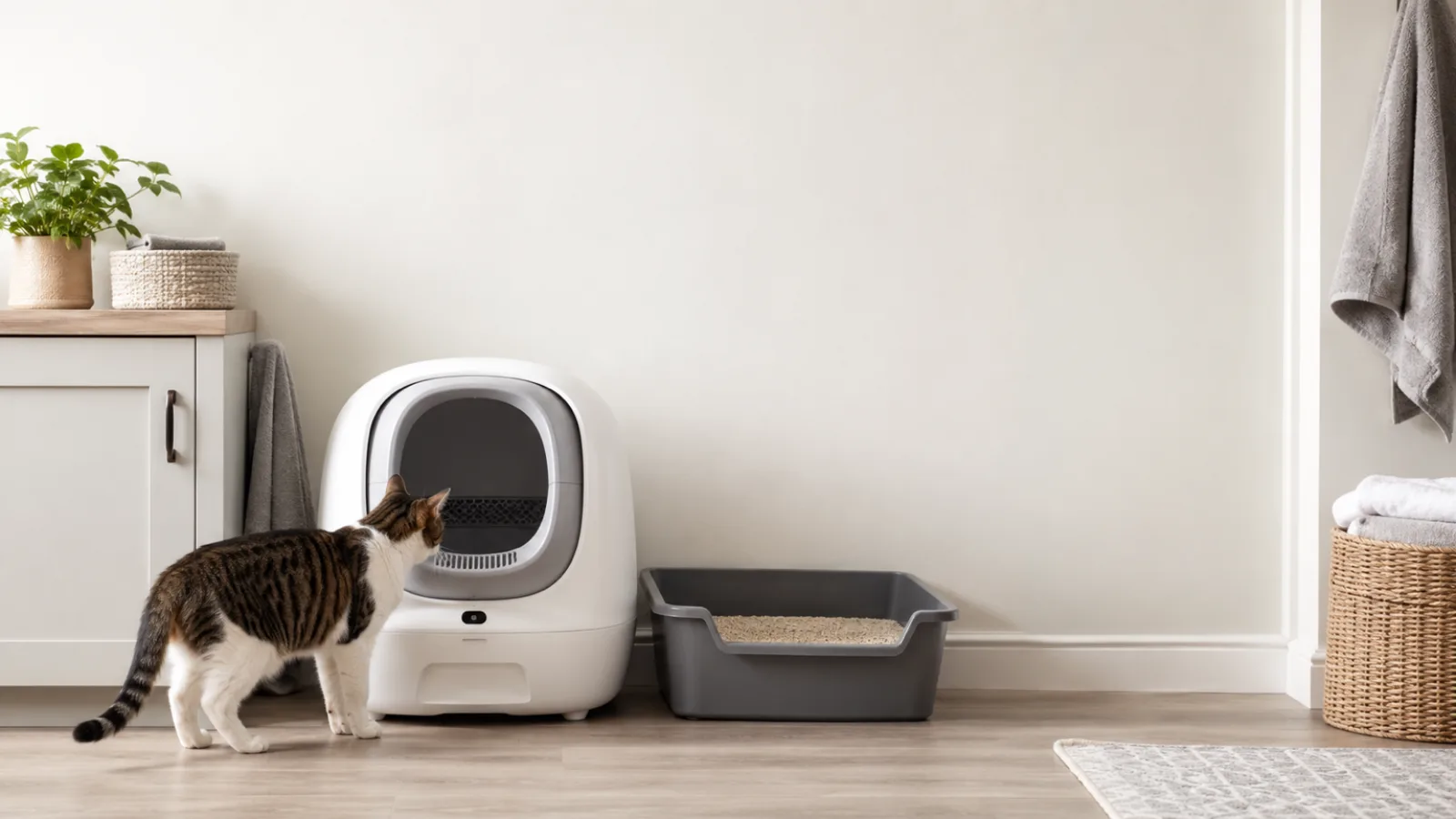
How to Transition a Cat to an Automatic Litter Box (2026)
Cats & Dogs
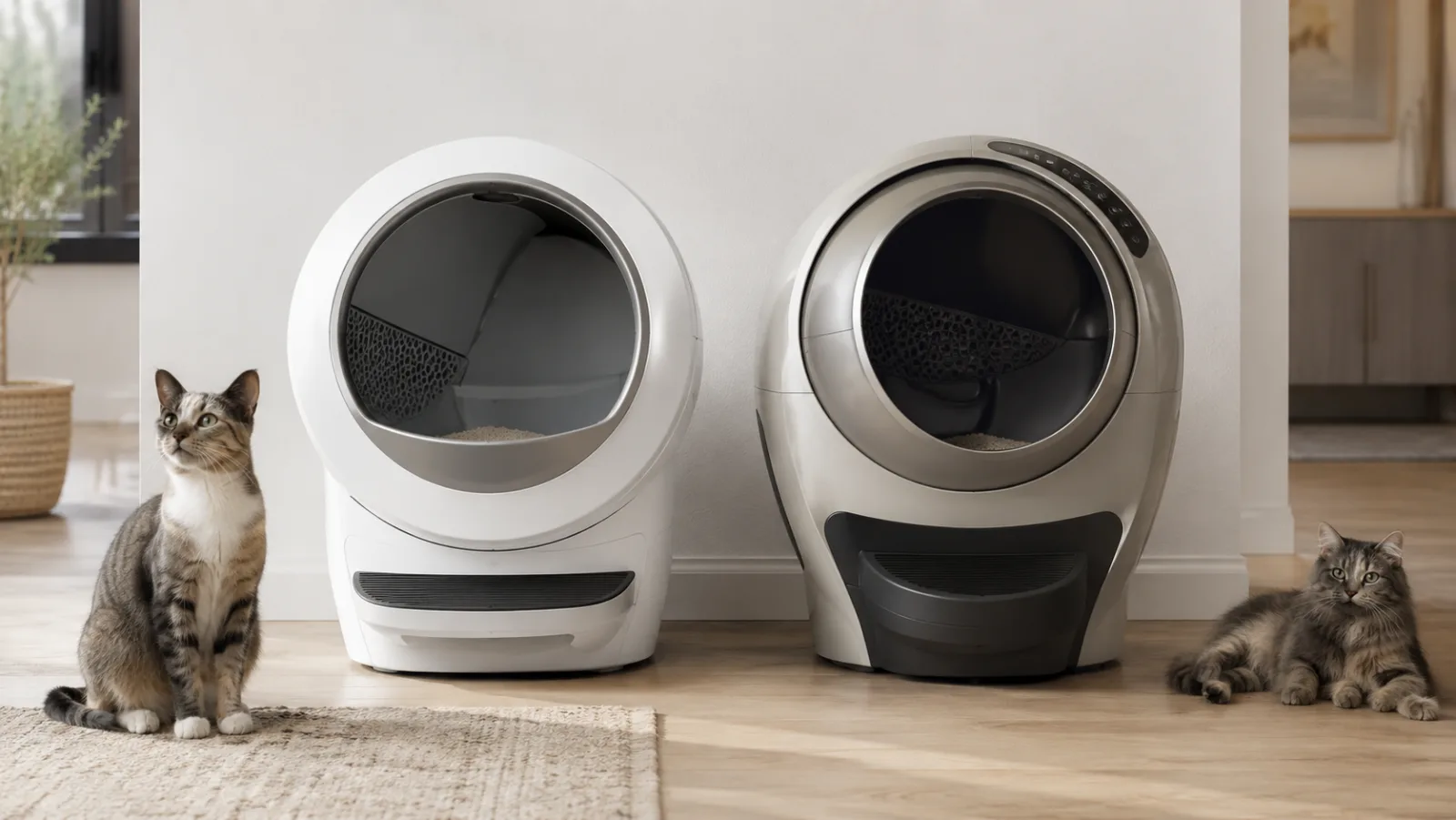
Litter-Robot 5 vs Litter-Robot 4 (2026), and the Amazon Alternatives
Cats & Dogs
Best Pet Odor Removers and Enzyme Cleaners (2026)
Cats & Dogs
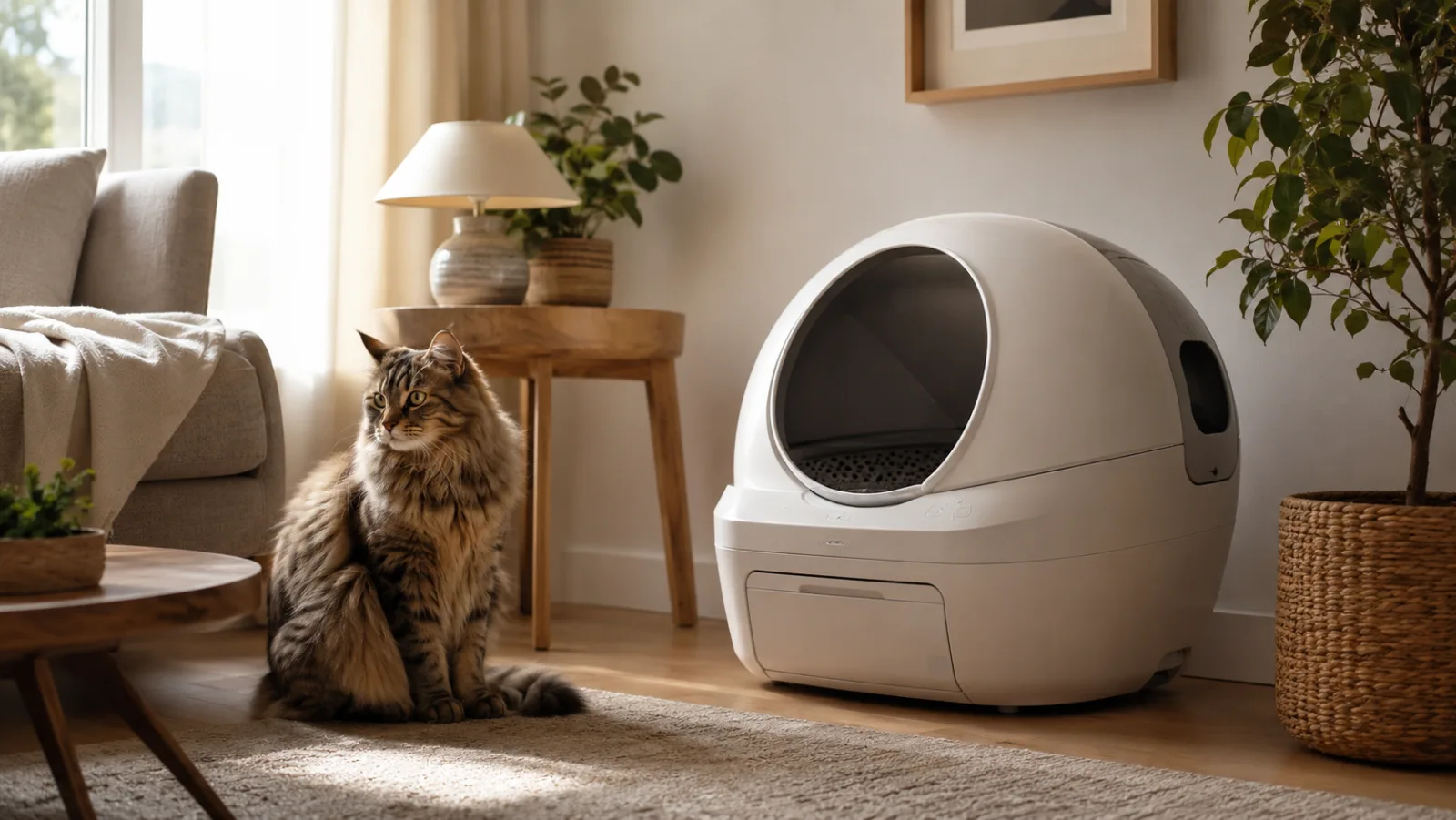
Automatic & Self-Cleaning Litter Box Systems: 2026 Buyer's Guide
Cats & Dogs