Cats & Dogs
Best Standard Litter Boxes for Cats (2026)
The IRIS USA XX-Large High Sided pan is the winner because it is the cheapest box here that actually clears the AAFP/ISFM sizing rule. The KittyGoHere Senior box answers the arthritic cat who can no longer climb a rim, and the Modkat XL is for households losing the war against tracked litter. A box too small for the cat is a common and under-diagnosed reason a cat stops using it, and AAFP/ISFM says many commercial boxes prove to be too small.
By Nick Miles · Updated September 13, 2026 · 13 min read
PetPalHQ is reader-supported. We may earn a commission from qualifying Amazon purchases at no extra cost to you.
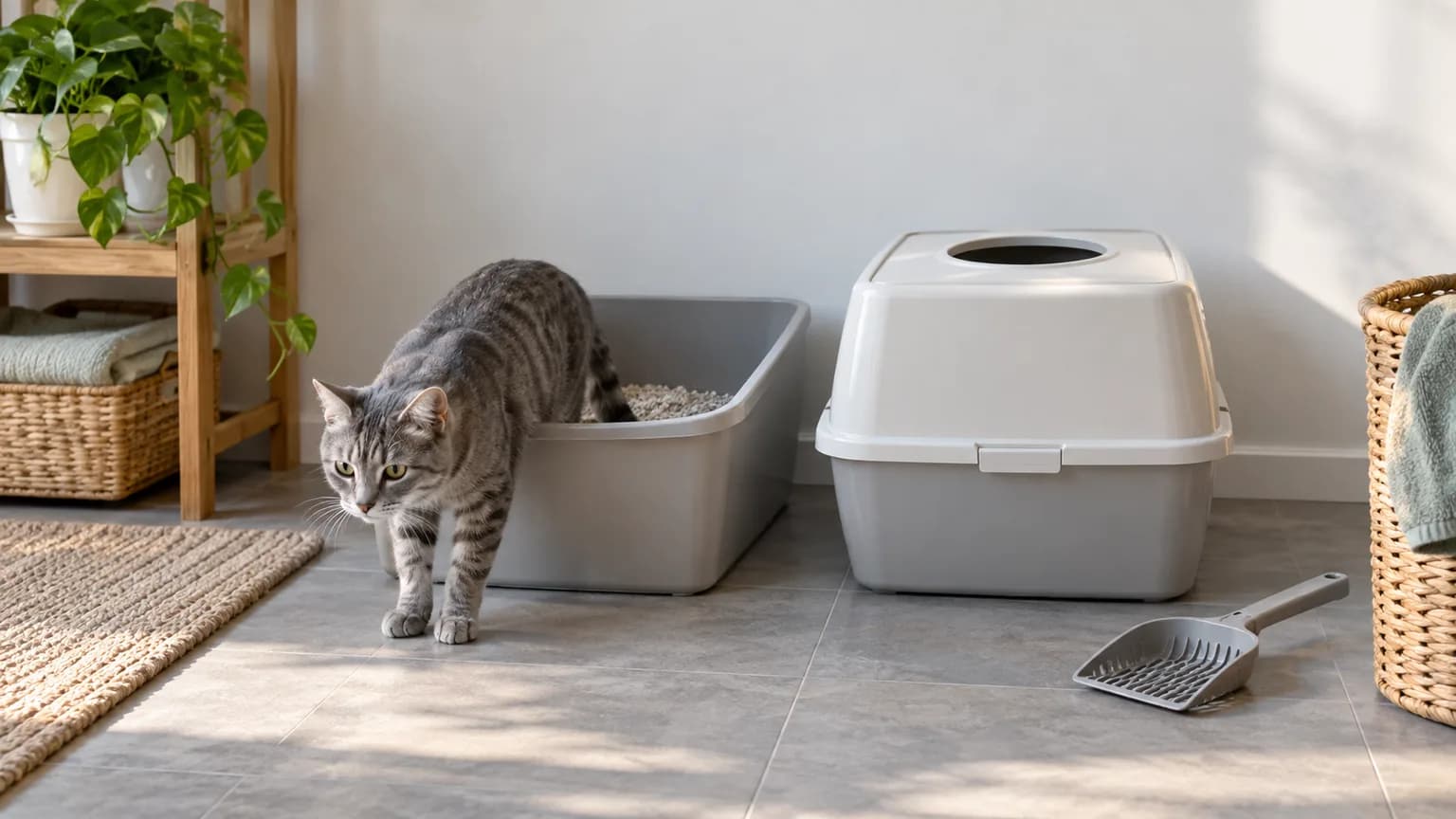
Evidence at a Glance
IRIS USA XX-Large High Sided Cat Litter Box
A 30"L x 20"W x 14"H open pan with a 6.5" curved entry — large enough to satisfy the AAFP/ISFM rule that a box run about 1.5 times the cat's body length.
Sources: AAFP/ISFM House-Soiling Guidelines (2014), ASPCA — Litter Box Problems, IRIS USA listing specifications
Verified Sep 13, 2026
KittyGoHere Senior Cat Litter Box
An open tray with a low front entrance, built for cats with joint problems who can no longer step over a standard rim or push through a swinging door.
Sources: VCA Animal Hospitals — House Soiling, Cornell Feline Health Center, Merck Veterinary Manual
Verified Sep 13, 2026
Modkat XL Cat Litter Box
Ships with the parts for either top-entry or front-entry use, so a household can chase tracking control without permanently committing the cat to a lid.
Sources: AAFP/ISFM House-Soiling Guidelines (2014), ASPCA — Litter Box Problems, Modkat listing specifications
Verified Sep 13, 2026
Our Picks
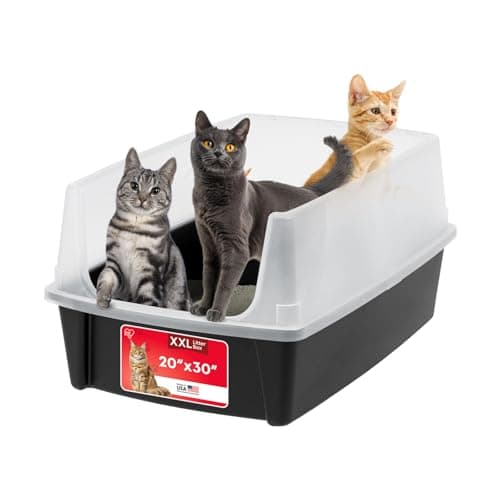
IRIS USA
IRIS USA XX-Large High Sided Cat Litter Box
9.2 / 10
- 30"L x 20"W x 14"H per the IRIS USA listing
- 6.5" curved entrance cut into 14" walls
- Open top — no lid, no flap, no filter
- Smooth interior with minimal crevices for wipe-down cleaning
$29.97
NE14pets
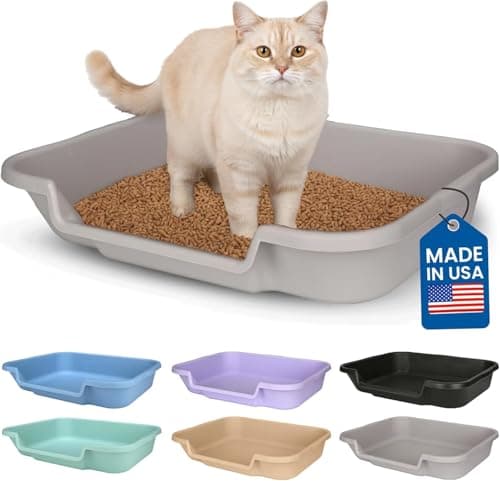
KittyGoHere Senior Cat Litter Box
8.8 / 10
- Low entrance a cat walks into instead of climbing over
- Open tray with no swinging door to push through
- Made in the USA from easy-clean materials per the listing
- Offered in more than one size
$49.95
Modkat
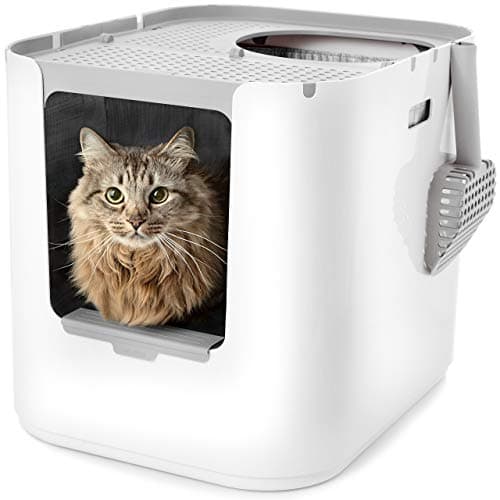
Modkat XL Cat Litter Box
8.4 / 10
- Ships with the components for top-entry or front-entry configuration
- Top-entry lid doubles as a walk-off mat; front-entry mode adds a built-in step
- One-handed swivel lid instead of a lift-off hood
- Reusable liners rated for up to three months of use
$189.95
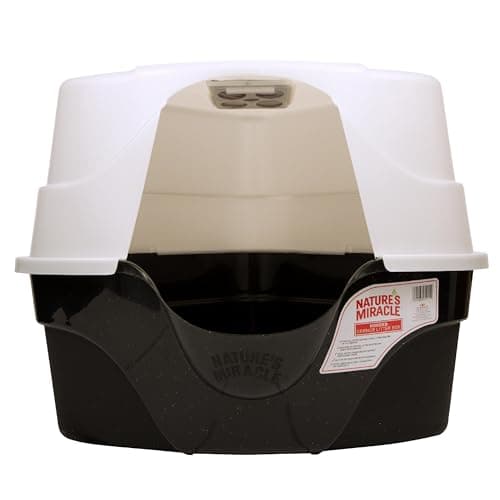
Nature's Miracle
Nature's Miracle Advanced Hooded Corner Cat Litter Box
7.9 / 10
- Corner-shaped footprint designed to save floor space
- Hooded enclosure for privacy and scatter control
- Built-in charcoal filter for odor control
- Non-stick surface to reduce litter caking
$61.69
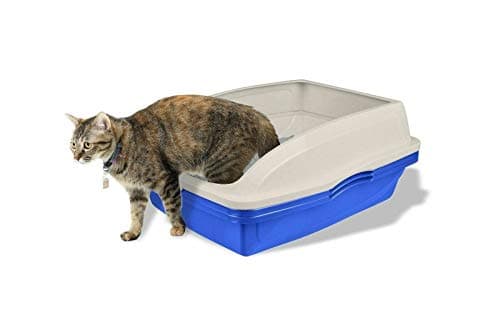
Van Ness
Van Ness Large Sifting Cat Litter Box with Frame
7.6 / 10
- Sifting pan system for scoop-free maintenance
- Framed pan adds height to reduce spill over the edge
- 19"L x 15.125"W x 8"H outer dimensions per the listing
- Designed for clumping litters
$30.22
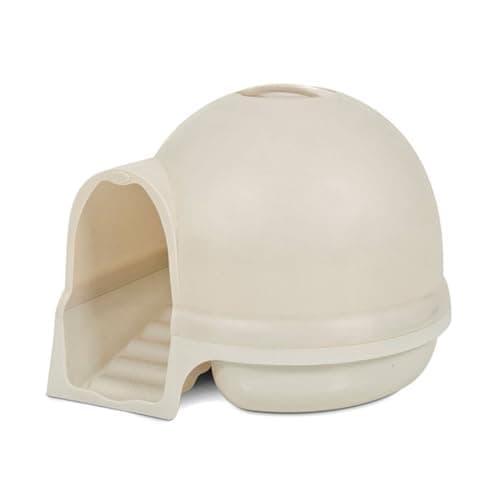
Petmate
Petmate Booda Clean Step Cat Litter Box Dome
7.3 / 10
- Dome encloses the box on all sides
- Charcoal filter in the dome for odor absorption
- Grooved clean-step entrance that wipes paws on the way out
- Petmate describes the box as large enough for two cats
$64.99
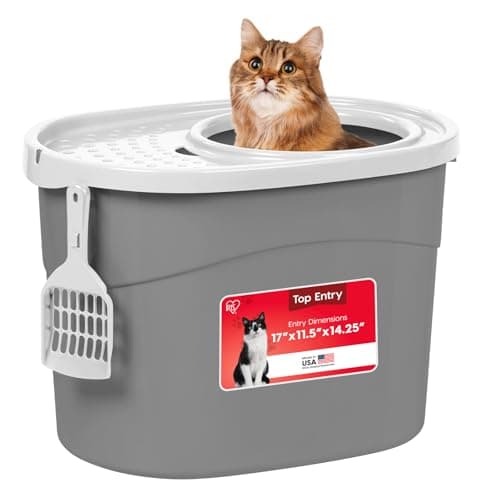
IRIS USA
IRIS USA Top Entry Cat Litter Box
7.0 / 10
- Outer dimensions 20.5"L x 14.75"W x 14.38"H; inside bottom 17"L x 11.5"W
- 9.25" diameter top entry
- Perforated lid catches litter from paws on the way out
- Includes a scoop with a hook that hangs on the box
$27.99
The Short Answer
Buy the IRIS USA XX-Large High Sided box — at 30 inches long, it is the cheapest pan here that actually fits a full-grown cat.
Every product on this list has been scored against the PetPal Gear Score, a weighted composite of expert consensus, observed effectiveness, animal safety, long-term durability, and value. Review method: Editorial synthesis of veterinary and welfare guidance — the 2014 AAFP/ISFM Guidelines for Diagnosing and Solving House-Soiling Behavior in Cats, the Cornell Feline Health Center, ASPCA litter-box guidance, the Merck Veterinary Manual, VCA Animal Hospitals, and the Ohio State University Indoor Pet Initiative. Product specifications were taken from manufacturer-supplied Amazon listing copy, checked September 13, 2026. No first-hand product testing.. Synthesized from 6+ expert sources.
A cat who stops using the litter box is not necessarily making a point. She may be reporting an equipment failure, and size is the common, under-diagnosed version of it — AAFP/ISFM states outright that many commercial litter boxes prove to be too small. The 2014 AAFP/ISFM house-soiling guidelines put a number on it: a rectangular box should measure about one and a half times the length of the cat, from the nose to the base of the tail. The same guidelines cite research in which cats preferred a 34-by-15-inch box over a smaller one. Measure a sleeping cat, then measure the pan in your bathroom, and the gap is often embarrassing.
That single fact reorders this entire category. A charcoal filter, a swivel lid, a walk-off mat and a corner footprint are all improvements to a household's experience of a litter box. None of them fixes a box the cat has physically outgrown. So the ranking below leads with usable interior floor space, treats entry height as the second question because Merck, VCA and Cornell all name low sides as a need rather than a comfort, and scores odor control last — the veterinary sources are consistent that a lid improves the room's air while trapping odor on the cat's side of it.
One structural warning before the picks. Manufacturers in this category advertise outer dimensions, and outer dimensions flatter the product. The clearest example is on this very page: a box marketed as "Large" with a 20.5-inch outer length whose interior floor measures 17 by 11.5 inches. Read the interior spec, and when a listing does not publish one, treat that silence as information.
These picks are editorial synthesis. PetPalHQ does not run a litter box testing lab — every product here was selected by reading manufacturer-supplied listing specifications against veterinary and welfare guidance from AAFP/ISFM, the Cornell Feline Health Center, the ASPCA, the Merck Veterinary Manual, VCA Animal Hospitals, and the Ohio State University Indoor Pet Initiative. Where the sources disagreed — most visibly on covered versus open boxes — the guidance that named a welfare consequence outweighed the guidance that named a convenience.
Why Does Box Size Decide Almost Everything?
Because a cat that cannot turn around, dig, and posture comfortably inside a box will eventually find somewhere it can. The AAFP/ISFM guidelines tie box dimensions directly to the cat's body length rather than to a product category, which is the only sensible way to spec a box: a Maine Coon and a six-pound rescue are not shopping in the same aisle even though the store stocks one shelf. Cornell, the ASPCA and the Merck Veterinary Manual all converge on the same practical conclusion in plainer words — larger boxes are better, and most cats prefer them.
What makes this an expensive mistake is that it presents as a behavioral problem. An owner sees puddles on a bath mat and starts buying enzyme cleaner, rehoming furniture, or reading about stress. Meanwhile the cause may be a pan two inches too short for the cat to stand in without her tail touching the wall. The multi-cat setup guide covers the logistics side of this, but the sizing fix is usually simpler and cheaper than anything else you will try.
Depth matters too, and here more is not better. AAFP/ISFM specifies at least 1.25 inches of litter, and the ASPCA and Cornell both land on 1 to 2 inches as the working range, with the ASPCA explicitly warning against the three-to-four-inch drifts some owners maintain out of good intentions.
Open, Hooded, Top-Entry or Sifting: Which Type Should You Buy?
Open, unless you have a specific reason not to be. The ASPCA's guidance is unusually direct on this point — remove covers and liners from all litter boxes, because most cats dislike both. AAFP/ISFM is gentler, reporting that cats in research were roughly evenly split between covered and open boxes, but the guideline still recommends open boxes wherever possible, and names its two reasons: to facilitate owner monitoring and frequent scooping. It adds that an open box avoids trapping odors inside, and scopes its posture warning specifically to small covered boxes, which it says may make it difficult for larger cats to posture normally.
Hoods and domes solve a household problem rather than a cat problem. They contain scatter, hide the contents from guests, and take a charcoal filter. Cornell's framing is the one to keep in mind — covers hold odors in, which reads as a benefit from the sofa and a penalty from inside the box. VCA adds a second objection specific to multi-cat homes: an enclosed box has only one exit, which lets one cat trap another inside. Whether a cat then abandons the box is our inference; the single-exit risk is the part VCA states.
Top-entry designs are the most aggressive tracking control available without a motor, and they carry the steepest access cost. A cat has to jump up, drop in, and climb out. That is fine for a healthy three-year-old and disqualifying for a stiff thirteen-year-old. Sifting boxes are a different axis entirely — they change the owner's workflow rather than the cat's experience, and they only work with clumping litter.
What Changes When a Cat Gets Old or Arthritic?
The rim becomes the whole product. Merck states that older cats with arthritis might need litter boxes with lower sides so that they can enter and exit easily, and VCA says a larger box with lower sides might be necessary for a cat with arthritis, declining sensory function or cognitive decline. Cornell states the general version: elderly cats and cats with mobility problems need boxes with low sides. All three put that advice inside guidance about cats who stop using the box, so treat it as a mechanical cause to rule out rather than as senior pampering — and it is fixable for about fifty dollars.
Watch for the pattern rather than waiting for certainty. A cat who has used the same box for a decade, who now urinates beside it rather than in it, who hesitates at the rim, or who has stopped jumping onto the sofa she used to own, is telling you something mechanical. A low-entry box placed on the same floor the cat already spends time on removes both the climb and the stairs in one move.
Do the medical work in parallel, though. Arthritis and lower urinary tract disease look identical from the hallway carpet, and every source in this guide treats sudden house soiling as a veterinary workup before it is a shopping decision.
How Many Boxes Does the House Actually Need?
One more than you have cats, in at least two separate locations. That rule is stated independently by AAFP/ISFM, Cornell, the ASPCA, Merck and VCA, which is about as close to settled as household cat advice gets. The ASPCA gives the worked example: three cats means a minimum of four boxes. VCA adds the clause that matters in a house with stairs — spreading boxes across locations protects a cat who cannot safely cross another cat's territory to reach the only option.
Placement is the quieter half of the equation. The Ohio State Indoor Pet Initiative warns against siting boxes near noisy appliances or air ducts, and against spots where a cat can be cornered with no line of retreat. A box beside a furnace that kicks on mid-visit teaches a cat exactly one lesson, and the guides on multi-cat box logistics go further into the mapping.
Cleaning cadence is the last non-negotiable. Every main source here specifies a daily scoop; AAFP/ISFM puts a full wash at every one to four weeks, and Merck says at least weekly. Treat weekly as the default and note how much of this guide's scoring is really about whether a design makes that routine easy enough to survive a busy month.
When Should You Stop Buying Manual Boxes?
When the daily scoop is the constraint rather than the cat. Manual boxes scale by multiplication — more cats means more pans, more floor space and more minutes each morning — and there is a household size, travel schedule or physical limitation past which that arithmetic simply stops working. The powered category exists for that reader, and pretending otherwise would be dishonest.
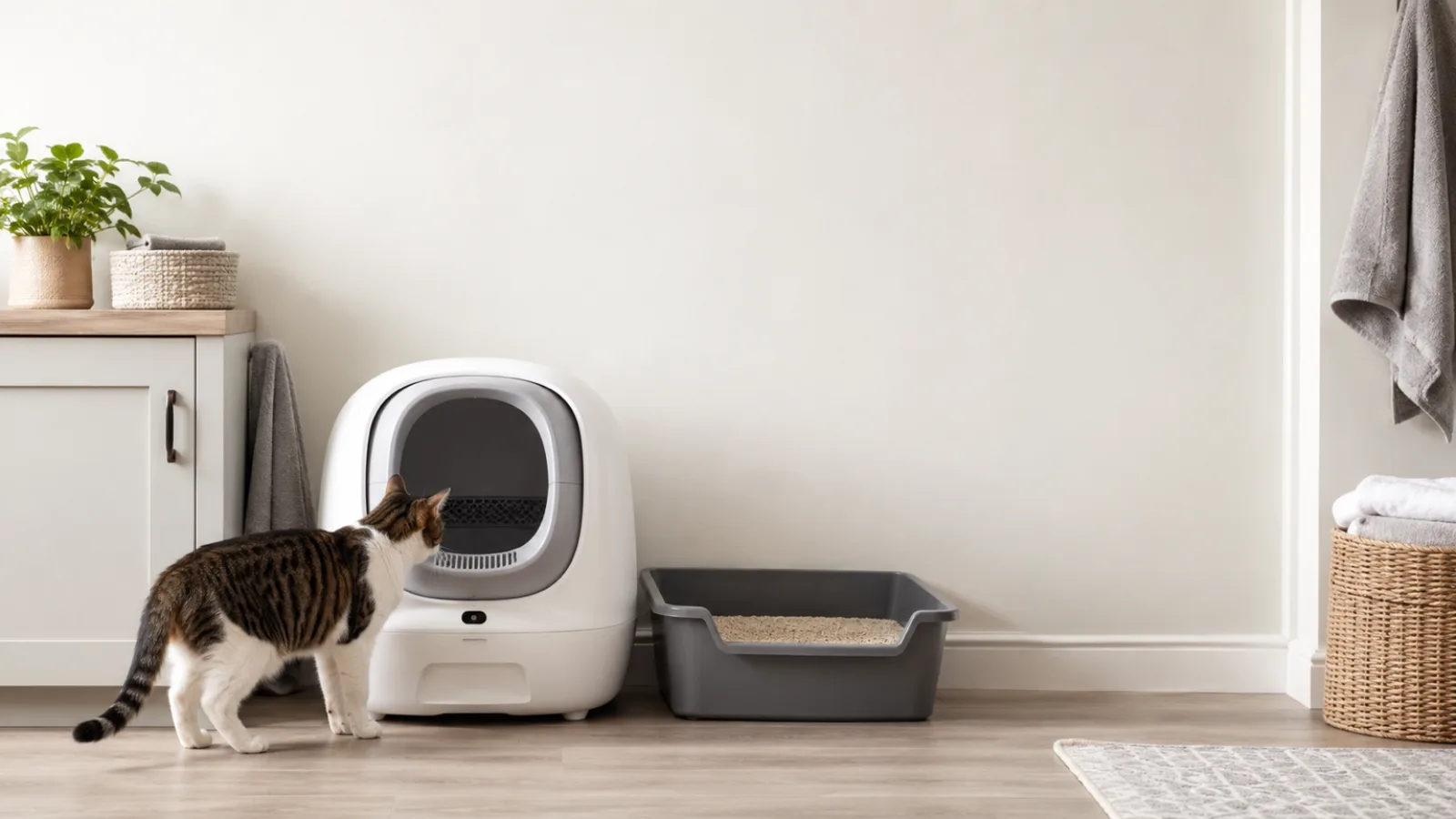
The honest comparison is not $30 against $700; it is the total cost and labor of three or four properly sized manual boxes against one machine that cycles itself. The decision-stage cost analysis works that math out, and the large and multi-cat self-cleaning guide covers the households where manual scaling breaks down first. If you do move up, the transition protocol is worth reading first, because it requires keeping a traditional backup box during the changeover — and one of the picks above is exactly what that backup should be.
For most single-cat and two-cat homes, though, the honest answer stays boring. A box large enough for the cat, scooped daily, filled with an inch or two of unscented clumping litter, placed somewhere quiet, satisfies the entire veterinary brief for about thirty dollars.
Head-to-Head Comparison
| Feature | IRIS USA XX-Large High Sided Cat Litter Box | KittyGoHere Senior Cat Litter Box | Modkat XL Cat Litter Box | Nature's Miracle Advanced Hooded Corner Cat Litter Box | Van Ness Large Sifting Cat Litter Box with Frame | Petmate Booda Clean Step Cat Litter Box Dome | IRIS USA Top Entry Cat Litter Box |
|---|---|---|---|---|---|---|---|
| Box type | Open, high-sided pan | Open tray, low entrance | Top-entry or front-entry, convertible | Hooded corner | Sifting pan with frame | Enclosed dome | Top-entry, hooded |
| Dimensions stated on the listing | 30"L x 20"W x 14"H | None published | None published | None published | 19"L x 15.125"W x 8"H outer | None published | 20.5"L x 14.75"W x 14.38"H outer; 17"L x 11.5"W inside |
| Entry style and opening | 6.5" curved cutout in a 14" wall | Low front entrance, no door | Top opening or front step, owner's choice | Front hood opening | Open over an 8" framed wall | Grooved raised clean-step threshold | 9.25" diameter hole in the lid |
| Suits a senior or arthritic cat | No — a 6.5" cutout is still a step up | Yes — the reason it exists | Front-entry mode only | Depends on an unpublished rim height | No — an 8" framed wall is the shortest full wall here, but a higher climb than the KittyGoHere's low front entrance | No — raised step threshold | No — requires jumping in and out |
| Odor management | None — open to the room | None — open to the room | Lid encloses; filters included per the listing, no filter spec published | Hood plus charcoal filter | None — open to the room | Dome plus a built-in charcoal filter | Enclosed lid; no filter listed |
| Amazon price (checked Sept 13, 2026) | $29.97 | $49.95 | $189.95 | $61.69 | $30.22 | $64.99 (low stock) | $27.99 |
| Check price | Amazon | Amazon | Amazon | Amazon | Amazon | Amazon | Amazon |
$29.97
- 30"L x 20"W x 14"H per the IRIS USA listing
- 6.5" curved entrance cut into 14" walls
- Open top — no lid, no flap, no filter
- Smooth interior with minimal crevices for wipe-down cleaning
Thirty inches of interior length is the whole argument. The AAFP/ISFM house-soiling guidelines ask for a box roughly 1.5 times the cat's length from nose to the base of the tail, and IRIS XX-Large High Sided is the only pan on this page whose listed dimensions — 30"L x 20"W x 14"H — clear that bar for a large adult cat without any interpretation. A twelve-pound domestic shorthair measuring about eighteen inches needs roughly twenty-seven inches of box, and AAFP/ISFM is blunt that many commercial litter boxes prove to be too small. This one is not, and it sits in the budget tier of this page rather than the premium one.
The rest of the design is unfashionable in the best way. There is no lid, no flap, no charcoal cartridge and no app. IRIS describes an open top that keeps air moving and lets you see the box's condition at a glance — which is exactly the posture the ASPCA takes when it tells owners to strip covers and liners off their boxes entirely. The 14-inch walls with a 6.5-inch curved cutout do the containment work that a hood normally gets credit for, so a cat who digs like she is excavating a foundation keeps the litter inside.
What the listing does not tell you is how much litter a pan this size eats. Twenty inches of width times thirty inches of length is a lot of floor to cover at the 1 to 2 inches of depth that the ASPCA and Cornell both recommend, and you will notice the difference at the store. The other honest caveat is the 6.5-inch entry. That is a modest step for a healthy adult cat and a real obstacle for a stiff fourteen-year-old — which is precisely why the next pick exists. Households running several cats should also read the multi-cat litter box setup guide before deciding how many of these to buy.
What We Love
- 30"L x 20"W x 14"H — clears the AAFP/ISFM 1.5x sizing rule for large adult cats
- Open top matches the configuration ASPCA recommends by default, and the one Merck credits with more air circulation
- 14" walls with a 6.5" curved entry contain diggers and high sprayers
- Smooth interior with few crevices makes the weekly wash quick
What Could Be Better
- The 6.5" entry is a genuine obstacle for arthritic, obese or very young cats
- No lid and no filter, so odor and visible waste sit in the open between scoops
- A 30-inch footprint dominates a small bathroom, hallway or closet
- Filling 600 square inches to a proper 1-2 inch depth burns through litter faster than a standard pan
The Verdict
If you buy one box on this page, buy the IRIS XX-Large. It is the cheapest way to rule out a common and under-diagnosed problem — a pan the cat has physically outgrown — and it gets there by being big and plain rather than clever. Skip it only if your cat cannot manage the 6.5-inch step.
Sources
- AAFP/ISFM Guidelines for Diagnosing and Solving House-Soiling Behavior in Cats (2014): a rectangular litter box that is 1.5 times the length of the cat from nose to base of tail
- ASPCA — Litter Box Problems: Remove covers and liners from all litter boxes
- Merck Veterinary Manual — Providing a Litter Box for a Cat: larger litter boxes are better
$49.95
- Low entrance a cat walks into instead of climbing over
- Open tray with no swinging door to push through
- Made in the USA from easy-clean materials per the listing
- Offered in more than one size
Here is the scenario nobody warns new owners about. A cat who used the box faithfully for a decade starts leaving puddles beside it at fourteen, and the household reads it as spite or senility. Merck puts the mechanical explanation plainly: older cats with arthritis might need litter boxes with lower sides so that they can enter and exit easily. VCA says the same thing about a cat with arthritis, declining sensory function or cognitive decline, and Cornell states the general rule that elderly cats and cats with mobility problems need boxes with low sides. This box is what those sentences look like as a product: a low front entrance the cat walks into rather than climbs over, and the listing's own summary of the point — a cat can access the box without jumping in.
The second thing it gets right is subtler. NE14pets specifically calls out cats who cannot manage a swinging door, and the pan is a plain open tray. For a cat with sore hips, a flap is a second physical negotiation on top of the rim — press through it, hold it open, back out through it. Removing that is not a small mercy. The listing also notes the box suits overweight older cats, the population that struggles most with both problems at once.
Two honest deductions. The listing offers several sizes and publishes no dimensions for any of them, which means you are picking by eye and by the brand's own advice to size up for larger cats. And the price is steep for what arrives — this is an unlidded plastic tray at $49.95, sold by Peck Rock Associates rather than by Amazon, with no scoop, filter or liner in the box. You are paying for a geometry that mass-market brands do not bother to make.
What We Love
- Low entrance directly addresses the arthritis access problem Merck and VCA describe
- Open tray with no flap to push through — one less obstacle for a stiff cat
- Listing calls out overweight and older cats specifically, not just seniors in general
- Made in the USA from materials the brand describes as easy to clean
What Could Be Better
- No dimensions published on the listing, so size selection is guesswork
- $49.95 for an unlidded plastic tray with no scoop, filter or liner included
- Sold by Peck Rock Associates rather than by Amazon, so returns run through a third-party seller
- The low front wall trades containment for access — an energetic digger will kick litter out
The Verdict
Buy this the moment a senior cat starts missing the box, before you start buying enzyme cleaner in bulk. Merck and VCA both name lower sides as the accommodation an arthritic cat needs, and a low-entry pan is the cheapest intervention on the list. It is still a vet conversation first — arthritis and urinary disease look identical from the hallway carpet.
Sources
- VCA Animal Hospitals — Cat Behavior Problems: House Soiling: an elderly cat may also find climbing into an uncovered pan, or a litter box with lower sides, much easier
- Cornell Feline Health Center — Feline Behavior Problems: House Soiling: Young kittens, elderly cats, and cats with mobility problems need boxes with low sides
- Merck Veterinary Manual — Providing a Litter Box for a Cat: Older cats with arthritis might need litter boxes with lower sides so that they can enter and exit easily
$189.95
- Ships with the components for top-entry or front-entry configuration
- Top-entry lid doubles as a walk-off mat; front-entry mode adds a built-in step
- One-handed swivel lid instead of a lift-off hood
- Reusable liners rated for up to three months of use
Tracked litter is the one complaint an open pan does nothing about, and the Modkat XL is the most serious answer here. Modkat ships both configurations in one carton: in top-entry mode the lid works as a walk-off mat that strips litter from the paws on the way out, and in front-entry mode a built-in step catches the same debris at floor level. Buying a design you can reverse is worth real money, because the ASPCA's position is that most cats dislike lids, and a cat who rejects the top entry does not turn the most expensive box on this page into a mistake.
The swivel lid is the detail owners end up appreciating daily. A conventional hood has to be unclipped and parked somewhere while you scoop, which is why so many hooded boxes end up scooped less often than they should be. Swinging the lid aside one-handed removes that friction, and cleaning frequency is the single behavior every source in this guide agrees on. The reusable liners, rated for around three months, are the other half of the pitch.
Be clear-eyed about the cost stack, though. Those liners are a consumable — Modkat sells Type C and Type D refills separately — so whatever you pay at checkout is a floor, not a ceiling. The listing never publishes an interior measurement, which means "XL" is a marketing word until you get a tape measure on it, and that is an uncomfortable gap in a category where AAFP/ISFM makes usable size the deciding spec. It also ships from Modkat rather than from Amazon. Readers already eyeing this price band should honestly compare it against the automatic litter boxes, since another two hundred dollars buys a different category of machine.
What We Love
- Converts between top-entry and front-entry, so a lid refusal is not a wasted purchase
- Walk-off lid and built-in step both target tracked litter directly
- One-handed swivel lid lowers the friction that makes owners scoop less often
- Reusable liners rated for up to three months replace disposable liner spending
What Could Be Better
- The most expensive pick on this page by a wide margin — several times the price of the open pan that ranks first
- Liners are a recurring consumable — Type C and Type D refills are sold separately
- No interior dimensions published, so the 'XL' claim cannot be checked before purchase
- Top-entry mode conflicts with ASPCA's advice to remove lids, and a closed box forfeits the odor escape AAFP/ISFM credits to open ones
- Sold by Modkat rather than by Amazon, so shipping and returns run through the brand
The Verdict
This is the pick for a household that has lost the tracking argument and wants one box that can be reconfigured rather than replaced. The value is in the optionality and the swivel lid, not in the hood itself — the veterinary sources are lukewarm on covers, and at this end of the price range you should be too.
Sources
- ASPCA — Litter Box Problems: Most cats don't like box liners or lids on their boxes
- AAFP/ISFM Guidelines for Diagnosing and Solving House-Soiling Behavior in Cats (2014): An open box avoids trapping odors inside
- Cornell Feline Health Center — Feline Behavior Problems: House Soiling: covers hold odors in
$61.69
- Corner-shaped footprint designed to save floor space
- Hooded enclosure for privacy and scatter control
- Built-in charcoal filter for odor control
- Non-stick surface to reduce litter caking
Small apartments create a specific problem: the only places a box will physically go are the places a cat should not have to use. A corner box buys back the floor a rectangle wastes, and that can be the difference between a box tucked into a quiet corner of the bathroom and a box shoved beside the washing machine — which the Ohio State Indoor Pet Initiative specifically warns against, because appliance noise turns a bathroom trip into an ambush.
Nature's Miracle pairs the shape with a hood, a charcoal filter and a non-stick interior surface that resists the caked ring every owner knows from the bottom of an old pan. As a package it is coherent: the enclosure catches scatter, the filter handles the room's air, and the coating makes the weekly wash faster.
The trade is geometry, and it is not trivial. A corner cuts usable area exactly where a cat needs it — the turning circle in the middle — and the listing publishes no dimensions at all, so there is no way to test it against the AAFP/ISFM sizing rule before it arrives. The hood is the configuration the ASPCA tells owners to remove, and Cornell notes that covers hold odors in from the cat's side of the lid even as the room smells better. The charcoal filter is also a consumable that quietly stops working. You are paying a mid-tier price against a budget-tier top pick for an interior nobody has published and a design the veterinary literature is skeptical of.
What We Love
- Corner footprint fits rooms where a full rectangle will not go
- Hood contains scatter and gives shy cats visual privacy
- Charcoal filter targets room odor at the source
- Non-stick surface resists the caked residue that makes old pans hard to wash
What Could Be Better
- No dimensions published on the listing, so usable interior size cannot be verified
- Corner geometry removes area from the middle of the box, where a cat turns
- A hood is the configuration ASPCA explicitly advises owners to remove
- The charcoal filter is a consumable that degrades without any obvious signal
- Priced well above the open pan ranked first, with no published interior dimensions to justify the gap
The Verdict
Buy this only when floor space genuinely dictates the shape of the box. It is a well-made solution to a real apartment constraint, but it stacks a hood and a corner cut onto a category where the veterinary consensus asks for open and large — so treat it as a compromise you chose, not an upgrade.
$30.22
- Sifting pan system for scoop-free maintenance
- Framed pan adds height to reduce spill over the edge
- 19"L x 15.125"W x 8"H outer dimensions per the listing
- Designed for clumping litters
Sifting is a workflow change more than a product upgrade, and some owners take to it immediately. Instead of hunting clumps with a scoop, you lift the perforated pan, let the clean litter fall through, and tip what is left into the bin. Van Ness prices it in the same budget tier as a plain pan, which makes it the cheapest way to find out whether the method suits you. The high-polish finish resists stains and the raised frame lifts the working edge to keep spill down.
Where it falls down is the spec that matters most in this guide. Nineteen inches by fifteen is the outer measurement, and the interior is smaller still, which puts it under the AAFP/ISFM target for an average adult cat before you account for a big one. The 8-inch wall height is the shortest here by a wide margin — fine for a tidy cat, useless against a sprayer.
There is also a substrate lock-in worth naming. The listing states the system is built for clumping litters and is not suited to pellets or powders, so a household committed to pine pellets or paper crumble cannot use the sifting function at all. And sifting is not effortless: lifting and shaking a loaded pan is more physical than scooping, which matters if your reason for wanting less scooping is a wrist or shoulder problem. It arrives from MaxWarehouse rather than from Amazon.
What We Love
- Cheapest route into a genuinely scoop-free cleaning routine at $30.22
- Raised frame lifts the working edge and cuts spill over the side
- High-polish, stain-resistant finish stays clean-looking longer than matte plastic
- No motor, filter or power cord to fail or replace
What Could Be Better
- 19"L x 15.125"W outer footprint falls short of the AAFP/ISFM sizing rule for most adult cats
- 8" walls are the shortest on this page and contain almost nothing from a sprayer
- Works only with clumping litter — pellets and powders defeat the sifter
- Lifting and shaking a loaded pan is harder on wrists than scooping
- Sold by MaxWarehouse rather than by Amazon
The Verdict
Take this if the daily scoop is the part of cat ownership you actively resent and your cat is small and tidy. It is a cheap, durable answer to a workflow problem. It is not an answer to a sizing problem, and for most large cats the sizing problem is the one that matters.
$64.99
- Dome encloses the box on all sides
- Charcoal filter in the dome for odor absorption
- Grooved clean-step entrance that wipes paws on the way out
- Petmate describes the box as large enough for two cats
Odor is the reason most people shop for a covered box, and a dome handles it more convincingly than a flat hood does, because Petmate describes an enclosure that closes the box on all sides and a charcoal filter built into the dome itself. Petmate pairs that with the clean-step entrance — a grooved threshold that dislodges litter from the paws as the cat leaves — so the design attacks smell and tracking with one shape.
Call the stock situation plainly first. On our September 13, 2026 price check this box read as low stock rather than freely available at $64.99. The Buy Box was live, but thin stock is not something to build a plan on, so do not assume you will find a second one next month.
The design tradeoffs are the ones the veterinary sources keep raising. VCA warns that a fully enclosed box gives a cat only one exit, which becomes an ambush risk in multi-cat homes where one cat guards doorways. AAFP/ISFM's posture warning is aimed specifically at small covered boxes, and with no dimensions published there is no way to tell which side of that line this dome falls on — the two-cat claim cannot be checked either. What is visible in the shape is that a curved roof takes headroom away toward the edges, exactly where a big cat would stand. The stepped threshold also rules the box out for the arthritic cats served by the second pick here.
What We Love
- A dome that encloses the cat on all sides plus a built-in charcoal filter is the most thorough odor design on this page
- Grooved clean-step entrance removes litter from paws at the exit
- Petmate states the box holds two cats
- No motor, sensor or subscription — the odor control is a passive charcoal filter
What Could Be Better
- Read as low stock rather than freely available at our September 13, 2026 check
- Full enclosure creates the single-exit ambush geometry VCA warns about in multi-cat homes
- A curved roof steals headroom at the edges, where a large cat needs to posture
- The clean-step entrance is a raised threshold, which rules it out for arthritic cats
- No dimensions published, so the two-cat capacity claim cannot be verified
The Verdict
Choose the dome if odor is the deciding factor, your household has one confident cat, and you accept the enclosure trade the veterinary sources describe. Check availability before you commit, because stock on this model is thin and it is not a design you can substitute easily.
$27.99
- Outer dimensions 20.5"L x 14.75"W x 14.38"H; inside bottom 17"L x 11.5"W
- 9.25" diameter top entry
- Perforated lid catches litter from paws on the way out
- Includes a scoop with a hook that hangs on the box
There is a useful lesson buried in this listing, and IRIS deserves credit for publishing the number that exposes it. The box measures 20.5 inches long on the outside and 17 inches long on the inside floor, with a usable width of 11.5 inches. The word on the package is "Large." The cat gets a box shorter than most sixteen-inch cats need, in a category where AAFP/ISFM asks for one and a half times body length. Every time you read a box's outer dimensions in this category, remember that gap.
Taken on its own modest terms it does its job. Top entry keeps a dog out of the litter, contains a sprayer inside tall walls, and hides the contents from the room. The perforated lid catches litter off the paws, and the included scoop hangs on a hook so it stops disappearing behind the toilet. At $27.99 shipped by Amazon it is the cheapest box here.
The limits are real and they stack. A 9.25-inch hole means the cat jumps up, drops in, and climbs back out — the wrong movement entirely for a senior, arthritic or heavy cat. The enclosure holds odor in on the cat's side of the lid, which is Cornell's specific objection to covers, and the ASPCA's standing advice is to take lids off boxes rather than add them. Buy it as a dog-proof box for a small, agile, healthy cat. Do not buy it because the label says large.
What We Love
- Cheapest box on this page at $27.99, shipped and sold by Amazon
- Top entry keeps dogs out of the litter and contains sprayers inside tall walls
- Perforated lid strips litter from paws as the cat climbs out
- Included scoop hangs from a hook on the box instead of getting lost
What Could Be Better
- Inside floor is only 17"L x 11.5"W despite the 20.5" outer length and the 'Large' name
- A 9.25" entry hole requires jumping in and climbing out — wrong for senior, arthritic or heavy cats
- Enclosed design holds odor in on the cat's side, which Cornell names as a drawback
- Top entry runs directly against ASPCA's advice to remove lids from boxes
The Verdict
Buy it for a small, agile, healthy cat in a home with a litter-raiding dog, and go in knowing the interior is 17 by 11.5 inches. It is an honest cheap box with a misleading name, and it ranks last here for the same reason it sells well — the outer dimensions flatter it.
How We Score
Formula
PetPal Litter Box Fit Score = (Usable Interior Size × 0.30) + (Entry and Access × 0.25) + (Containment and Tracking Control × 0.20) + (Cleanability × 0.15) + (Odor Management × 0.10)
Score Factors
- Usable Interior Size · 30%
- Interior floor length and width, measured against the AAFP/ISFM guideline that a box run about 1.5 times the cat's nose-to-tail-base length. Boxes that publish only outer dimensions, or no dimensions at all, cannot earn full credit on this factor — an unverifiable size claim is not a size claim — though a pick can still rank well on the other four factors. This factor carries the most weight because AAFP/ISFM ties box dimensions directly to the cat rather than to a product category.
- Entry and Access · 25%
- Rim or threshold height, opening width, and whether a cat must step, climb or jump. Weighted heavily because Merck and VCA both name lower sides as an accommodation arthritic cats may need, and Cornell states that elderly cats and cats with mobility problems need boxes with low sides — all three inside guidance about cats who stop using the box.
- Containment and Tracking Control · 20%
- Wall height against spray, plus whatever the design does about litter carried out on paws — walk-off lids, grooved steps, perforated tops, raised frames. Credit is given only for mechanisms the manufacturer actually documents.
- Cleanability · 15%
- How much friction stands between the owner and a daily scoop and a weekly wash: surface finish, crevice count, number of parts to disassemble, and whether a lid has to be removed and parked. Daily scooping is the one practice every source in this guide agrees on, so anything that discourages it is penalized.
- Odor Management · 10%
- Filters, enclosure and surface coatings. Weighted last on purpose — AAFP/ISFM, ASPCA and Cornell all note that covers improve the room's air while trapping odor on the cat's side, so odor features are scored as a household convenience, never as a welfare gain.
| Rank | Product | Score |
|---|---|---|
| #1 | IRIS USA IRIS USA XX-Large High Sided Cat Litter Box | 9.2 |
| #2 | NE14pets KittyGoHere Senior Cat Litter Box | 8.8 |
| #3 | Modkat Modkat XL Cat Litter Box | 8.4 |
| #4 | Nature's Miracle Nature's Miracle Advanced Hooded Corner Cat Litter Box | 7.9 |
| #5 | Van Ness Van Ness Large Sifting Cat Litter Box with Frame | 7.6 |
| #6 | Petmate Petmate Booda Clean Step Cat Litter Box Dome | 7.3 |
| #7 | IRIS USA IRIS USA Top Entry Cat Litter Box | 7.0 |
When NOT to Buy
Do not shop at all if the litter-box problem started suddenly. Straining, frequent small urinations, blood, or elimination outside the box after a stressful event are veterinary problems, and no pan on this page diagnoses a urinary obstruction. Call the vet first, then come back to the shopping question. Skip the manual category entirely if the daily scoop is the thing you actually cannot sustain — an owner traveling constantly, managing a mobility limitation, or living with a serious odor sensitivity will keep failing the daily cleaning standard that every source here treats as non-negotiable, and a machine that cycles on its own is the honest fix. Read Are Automatic Litter Boxes Worth It? (2026) before spending, because it runs the cost math instead of assuming automation pays. Households with three or more cats, or with a Maine Coon-sized cat, should look hard at Best Self-Cleaning Litter Boxes for Large and Multi-Cat Homes (2026) — manual boxes scale by multiplying units and floor space, and past a certain headcount that stops being practical. Buyers already comfortable in the $400-700 band should compare the full powered field in Best Automatic Litter Boxes for Cats (2026) rather than buying a $190 manual box as a hedge. And skip every covered pick here if your cat has ever refused a hooded box, because the ASPCA's advice runs the other direction: take the lid off, do not shop for a better one.
Frequently Asked Questions
- What size litter box does my cat actually need?
- Measure your cat from the nose to the base of the tail and multiply by 1.5. The AAFP/ISFM house-soiling guidelines give that ratio directly, and they cite research in which cats preferred a 34-by-15-inch box over a smaller one. An eighteen-inch cat therefore wants about twenty-seven inches of interior length, which rules out many boxes marketed as large. Measure the interior floor, not the outer shell — the difference between those two numbers is often four or five inches, and it all comes out of the cat's turning room.
- Are covered litter boxes actually bad for cats?
- Bad is too strong, but the guidance leans clearly toward open pans. The ASPCA advises removing covers and liners from all boxes, noting that most cats dislike both. AAFP/ISFM found cats roughly evenly split on the question, yet still recommends open boxes wherever possible, for two stated reasons: to facilitate owner monitoring and frequent scooping. It also says an open box avoids trapping odors inside, and aims its posture warning at small covered boxes specifically. Cornell makes the same odor point from the cat's side of the lid. VCA adds that an enclosed box has only one exit, which is a real risk in multi-cat homes where one cat guards doorways.
- How many litter boxes should a multi-cat home have?
- One per cat plus one more, spread across at least two separate locations. AAFP/ISFM, Cornell, the ASPCA, Merck and VCA all state this independently, which makes it about as reliable as household cat guidance gets. The ASPCA's worked example is three cats and four boxes. The two-location clause matters as much as the count, because a single bank of boxes in one room can still be controlled by one assertive cat, leaving the others with nowhere safe to go.
- My senior cat started going beside the box. Is it the box?
- It might be, and it might be a urinary problem, so book the vet visit first. Once medical causes are ruled out, rim height is a mechanical suspect worth checking. Merck says older cats with arthritis might need litter boxes with lower sides so that they can enter and exit easily, VCA says a larger box with lower sides might be necessary for a cat with arthritis, and Cornell states that elderly cats and cats with mobility problems need boxes with low sides. Watch for hesitation at the rim, missed jumps onto furniture, and urination immediately beside the box rather than across the room — that pattern points at access rather than preference.
- How deep should the litter be, and how often should I clean it?
- Shallower than most owners assume, and more often than most owners manage. AAFP/ISFM specifies at least 1.25 inches of litter, while the ASPCA and Cornell both land on a 1-to-2-inch working range, with the ASPCA warning specifically against three or four inches. Scoop daily — every source in this guide agrees on that one. Wash the box fully every one to four weeks according to AAFP/ISFM, or at least weekly per Merck, and treat weekly as the safe default.
- Is a sifting litter box worth it compared to scooping?
- It depends on which part of the chore you dislike. Sifting swaps clump-hunting with a scoop for lifting a perforated pan and shaking the clean litter through, which some owners find genuinely faster. The trade-offs are real: sifting systems work only with clumping litters, so pellets and paper crumble are out, and lifting a loaded pan is more physical than scooping. If your reason for wanting less scooping is wrist or shoulder pain, sifting may be the wrong direction entirely.
- Should I just buy an automatic litter box instead?
- Only if the daily scoop is the real constraint. A correctly sized manual box, scooped daily, with an inch or two of unscented clumping litter in a quiet spot, meets the full veterinary brief for about thirty dollars. The case for automation is narrower and specific: constant travel, a mobility limitation that makes daily scooping unreliable, a serious odor sensitivity, or a cat count high enough that manual scaling has stopped being practical. Buy the machine for one of those reasons, not because the manual box feels unsophisticated.
Bottom Line
Get the IRIS USA XX-Large High Sided box if you buy only one. Its 30"L x 20"W interior is the only dimension set here that clears the AAFP/ISFM 1.5x sizing rule outright, and it costs $29.97.
Get the KittyGoHere Senior Cat Litter Box the moment an older cat starts missing. Merck and VCA both name lower sides as the accommodation an arthritic cat needs, and this is the low-entry answer — after a vet visit rules out the medical causes.
Get the Modkat XL if tracked litter is the fight you are losing. It ships as both a top-entry and a front-entry box, so a lid refusal costs you nothing but a reconfiguration — worth the premium price only if tracking is genuinely your problem.
Get the Nature's Miracle Advanced Hooded Corner box when floor space, not preference, dictates the shape. Accept that a corner cut plus a hood is a compromise against the sizing and open-box guidance, not an upgrade.
Get the Van Ness Large Sifting box at $30.22 if you want to stop scooping and your cat is small and tidy. Its 19-inch outer footprint will not serve a large cat, and the sifter only works with clumping litter.
Get the Petmate Booda dome for odor control in a calm single-cat home, and check stock first — it read as low stock at $64.99 on our September 13, 2026 check.
Get the IRIS USA Top Entry box only for a small, agile cat in a home with a litter-raiding dog. The interior floor is 17"L x 11.5"W despite the 'Large' label, which is why it finishes last.
Sources & Methodology
Methodology
PetPal Litter Box Fit Score = (Usable Interior Size × 0.30) + (Entry and Access × 0.25) + (Containment and Tracking Control × 0.20) + (Cleanability × 0.15) + (Odor Management × 0.10)
Expert review sources
- AAFP/ISFM Guidelines for Diagnosing and Solving House-Soiling Behavior in Cats (Carney et al., Journal of Feline Medicine and Surgery, 2014)
- Cornell Feline Health Center — Feline Behavior Problems: House Soiling
- ASPCA — Litter Box Problems
- Merck Veterinary Manual — Providing a Litter Box for a Cat
- VCA Animal Hospitals — Cat Behavior Problems: House Soiling
- Ohio State University Indoor Pet Initiative — A Purrfect Start
- Manufacturer-supplied Amazon listing specifications for IRIS USA, NE14pets, Modkat, Nature's Miracle, Van Ness and Petmate, checked September 13, 2026
Prices and specs verified September 13, 2026.
About the author
Nick Miles is the chief editor of PetPalHQ. Every pick above is editorial synthesis of the 2014 AAFP/ISFM house-soiling guidelines, the Cornell Feline Health Center, ASPCA litter-box guidance, the Merck Veterinary Manual, VCA Animal Hospitals, the Ohio State University Indoor Pet Initiative, and manufacturer-supplied listing specifications. PetPalHQ does not run a litter box testing lab. The PetPal Litter Box Fit Score is a weighted composite of published guidance and published specifications, not a measurement. Sources are cited by name throughout.
PetPalHQ is a participant in the Amazon Services LLC Associates Program. We may earn commissions from qualifying purchases — at no extra cost to you.
More Guides
Cats & Dogs
Best Automatic Litter Boxes for Cats (2026)
Cats & Dogs
Best Self-Cleaning Litter Boxes for Large and Multi-Cat Homes (2026)
Cats & Dogs
Are Automatic Litter Boxes Worth It? (2026)
Cat
How to Set Up Litter Boxes for Multiple Cats: The Logistics (2026)
Cats & Dogs
How to Transition a Cat to an Automatic Litter Box (2026)
Cats & Dogs