Cat
How to Set Up Litter Boxes for Multiple Cats: The Logistics (2026)
This is not a behavior guide about getting two cats to like each other — it is the litter-box math and floor plan for a multi-cat home. The picks below are the logistics kit: a large self-cleaning box sized for several cats, a second automated unit so no single box is a bottleneck, a no-subscription option, extra manual boxes to hit the n+1 count, a big mat, bulk litter, a waste pail, and a vacuum. If you think one fancy box solves a multi-cat home, read the n+1 rule and the placement section first, because litter-box problems in multi-cat homes are almost always a count-and-placement failure, not a product failure.
By Nick Miles · Updated August 18, 2026 · 11 min read
PetPalHQ is reader-supported. We may earn a commission from qualifying Amazon purchases at no extra cost to you.
Evidence at a Glance
Meowant 106L Self-Cleaning Litter Box
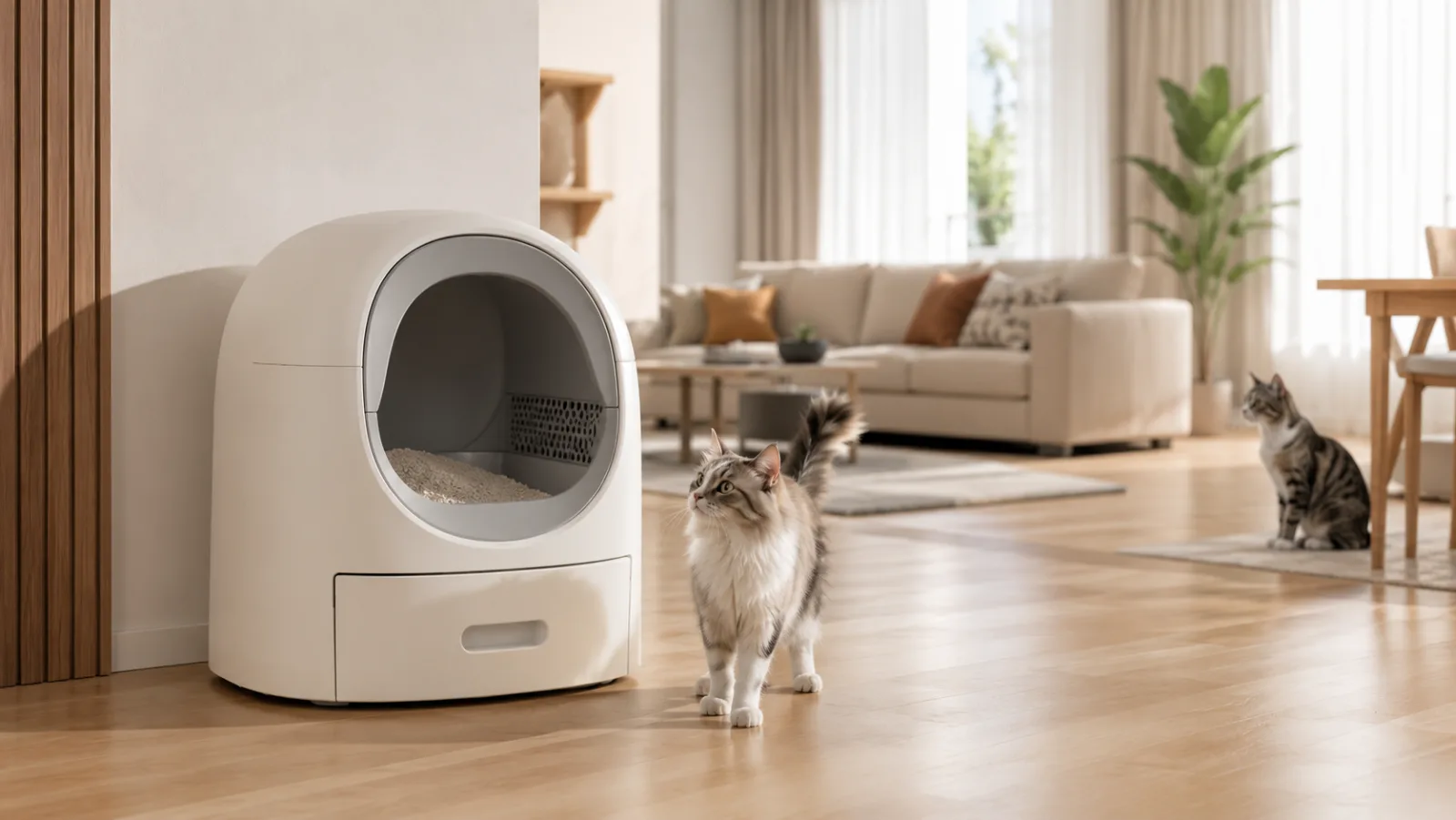
The powered core — an extra-large 106-liter self-cleaning box that auto-cycles waste into a sealed bin per Meowant, sized so several cats share one high-capacity box without it filling up between cycles, which is the demand a multi-cat home puts on any single box.
Sources: Meowant manufacturer documentation, Feline-care guidance (ASPCA, ISFM) on litter provision, Published multi-cat husbandry consensus
Verified Jul 12, 2026
IRIS USA Large Open-Top High-Sided Litter Box
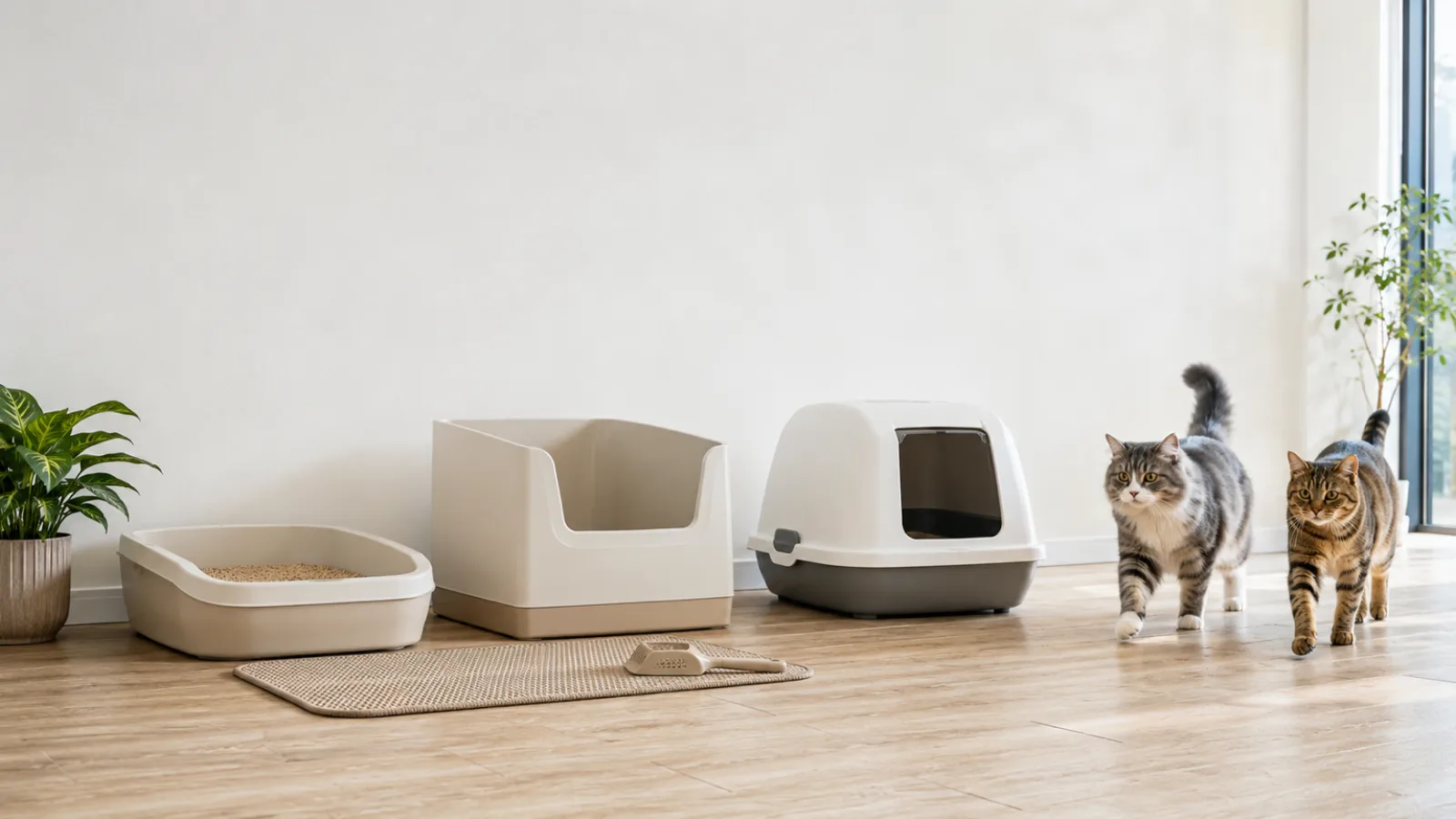
The count-filler — a large open-top box with high sides that contains scatter per IRIS USA, cheap enough to buy several of so a multi-cat home can actually hit the n+1 box count without a powered box at every station.
Sources: IRIS USA manufacturer documentation, Feline-care guidance (ASPCA, ISFM) on litter provision, Published multi-cat husbandry consensus
Verified Jul 12, 2026
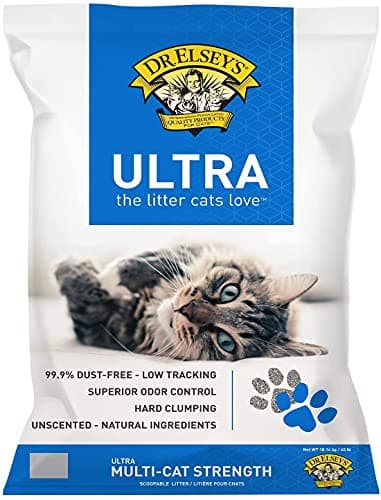
Dr. Elsey's Ultra Unscented Clumping Cat Litter (40 lb)
The bulk fill — a hard-clumping unscented clay litter in a 40-pound bag per Dr. Elsey's, bought in volume because a multi-cat home goes through litter far faster and every box needs a deep, consistent bed to clump and stay usable.
Sources: Dr. Elsey's manufacturer documentation, Feline-care guidance (ASPCA, ISFM) on litter provision, Published multi-cat husbandry consensus
Verified Jul 12, 2026
Our Picks
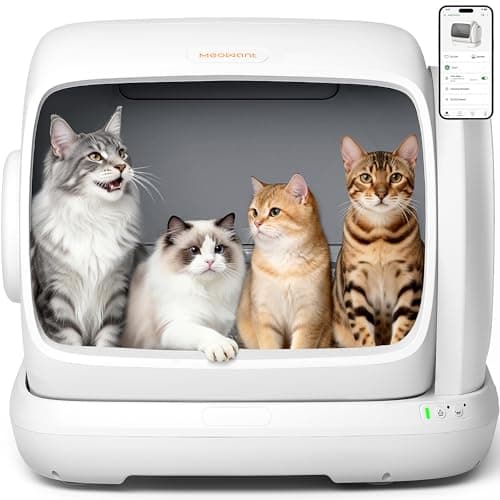
Meowant
Meowant 106L Self-Cleaning Litter Box
8.6 / 10
- Extra-large 106 L capacity for a multi-cat load per Meowant
- Auto-sifts waste into a sealed lower bin after each use
- Large entry and interior suit bigger cats and shared use
- Reduces how often you scoop a high-traffic box
$314.39
Current price · checked Sep 8, 2026
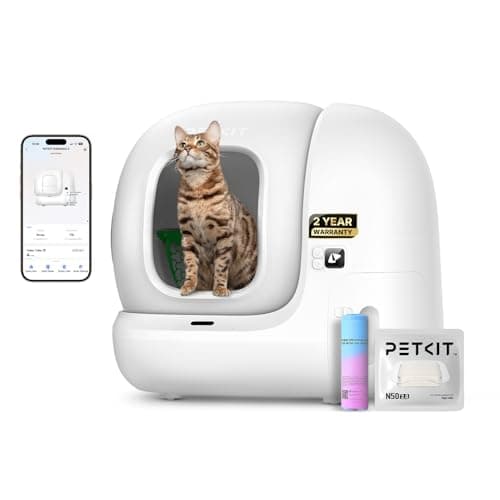
PETKIT
PETKIT PuraMax 2 Automatic Litter Box
8.5 / 10
- Automatic self-cleaning box with a large interior per PETKIT
- App monitoring can track visits across multiple cats
- A second powered station in a different room
- Removes the single-box bottleneck in a busy home
$299.99
Current price · checked Sep 8, 2026
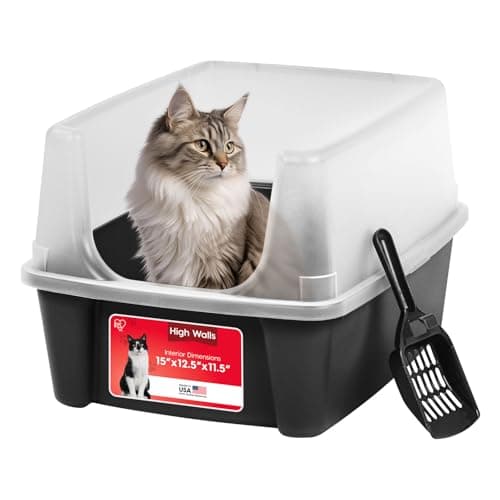
IRIS USA
IRIS USA Large Open-Top High-Sided Litter Box
8.3 / 10
- Large open-top box with high sides to contain scatter per IRIS USA
- Simple, inexpensive plastic — buy several to hit the count
- Open top suits cats wary of enclosed or powered boxes
- Lower front entry works for kittens and senior cats
$22.99
Current price · checked Sep 8, 2026
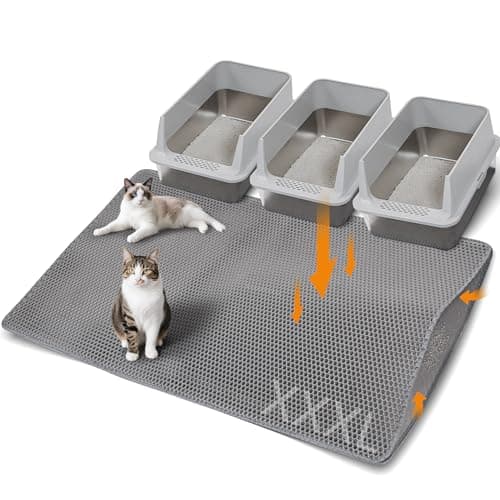
Anywish
Anywish Large Cat Litter Mat (47" x 33")
8.2 / 10
- Large 47 x 33 in double-layer trapping mat per Anywish
- Honeycomb top catches litter from paws on exit
- Waterproof base protects the floor under the station
- Sized to sit under a large or powered box
$29.69
Current price · checked Sep 8, 2026
Dr. Elsey's
Dr. Elsey's Ultra Unscented Clumping Cat Litter (40 lb)
8.1 / 10
- Hard-clumping unscented clay in a 40 lb bulk bag per Dr. Elsey's
- Firm clumps make daily scooping faster and cleaner
- Unscented suits cats that reject perfumed litters
- Bulk sizing for a home that burns through litter
$20.99
Current price · checked Sep 8, 2026
Litter Genie
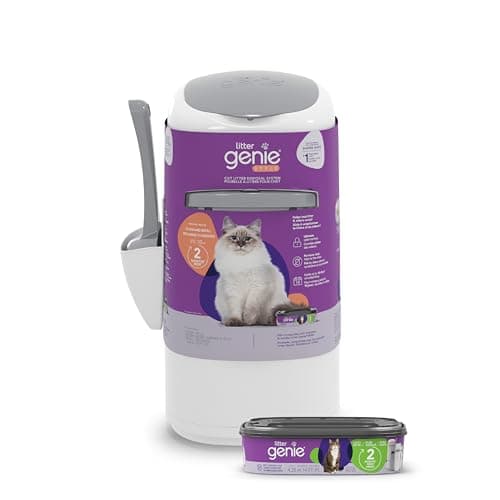
Litter Genie-Style Cat Litter Waste Disposal Pail
8.0 / 10
- Sealed pail that holds scooped waste in a lined container per Litter Genie
- Continuous liner seals waste at the point of scooping
- Contains odor between trash runs, not just at the box
- Sits at the busiest station in a multi-box layout
$25.99
Current price · checked Sep 8, 2026
Bissell
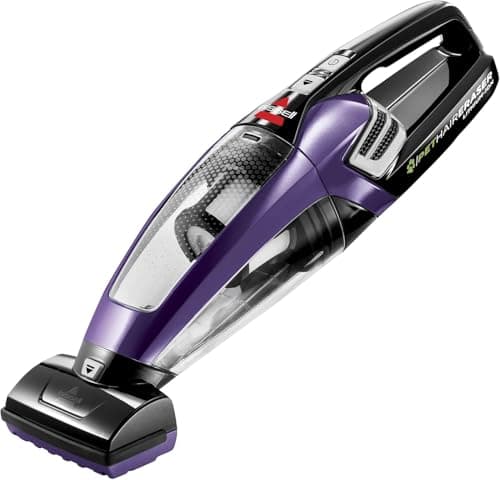
Bissell Pet Hair Eraser Cordless Hand Vacuum
7.9 / 10
- Cordless handheld with a motorized pet-hair brush per Bissell
- Sized for quick spot cleanups at the litter station
- Grab-and-go for tracked litter and shed hair
- Kept near the boxes for daily maintenance
$89.97
Current price · checked Sep 8, 2026
The Short Answer
In a multi-cat home, the litter-box setup is a counting and placement problem before it is a product problem. Follow the n+1 rule — one box per cat plus one spare — and spread the boxes across different rooms and floors so no cat can guard them all. For the powered core, the Meowant 106L Self-Cleaning Box gives multiple cats a large-capacity, auto-cycling box, and a second automated unit like the PETKIT PuraMax 2 means no single box becomes a bottleneck. Complete the count cheaply with extra manual boxes like the IRIS USA Large High-Sided Box, contain the mess with a big mat, buy litter in bulk with Dr. Elsey's, manage waste volume with a disposal pail, and keep tracked litter down with a hand vacuum. The rule never changes: enough boxes, spread out, is what prevents accidents — not one clever machine.
Every product on this list has been scored against the PetPal Gear Score, a weighted composite of expert consensus, observed effectiveness, animal safety, long-term durability, and value. Review method: Editorial synthesis of feline-care guidance — the ASPCA and the International Society of Feline Medicine (ISFM) on litter-box provision and placement, and published multi-cat husbandry consensus. Manufacturer documentation from Meowant, PETKIT, IRIS USA, Anywish, Dr. Elsey's, Litter Genie, and Bissell was reviewed. Community consensus from r/CatAdvice and r/cats was included as consensus, not quotation. No first-hand product testing — PetPalHQ does not run a testing lab.. Synthesized from 6+ expert sources.
A multi-cat litter setup goes wrong, in this guide's editorial judgment, for one reason more than any other: the household treats it as a shopping problem when it is a counting and floor-plan problem. Someone with two or three cats and a litter-box accident buys the most advanced box they can find, puts it where the old one was, and is surprised when the accidents continue. The box was rarely the issue. The issue is almost always too few boxes, in too few places, kept less than perfectly clean — and no single machine, however clever, fixes a count-and-placement failure.
Start with the rule that governs everything else: the n+1 rule. A multi-cat home wants one litter box per cat plus one spare, so two cats need three boxes and three cats need four, and those boxes belong in different rooms and on different floors rather than lined up together. Cats guard resources, and a bank of boxes in one corner is a resource one cat can control; boxes spread around the home give every cat, including a timid one, a bathroom it can always reach unchallenged. That is the whole game, and the products below exist to make hitting that count and that spread practical and affordable.
From there it is capacity and upkeep. One or two self-cleaning boxes carry the heaviest traffic and keep themselves acceptable between scoops, simple manual boxes fill out the count in the other rooms, and mats, bulk litter, a waste pail, and a hand vacuum keep the mess of several cats manageable. The picks below are that logistics kit, not eight boxes ranked against each other. Each earns its place by making enough clean, well-placed boxes realistic, and where a claim rests on a maker's documentation or feline-care guidance, that is named rather than asserted, because PetPalHQ does not run a testing lab.
One principle sits above the whole setup and never bends. Enough boxes, spread across the home, scooped often, is what prevents litter-box problems in a multi-cat house — not one expensive machine. Powered boxes help with capacity and frequency, but they never replace the count, the placement, or the daily scooping, and every home should keep a plain manual box working for when a machine jams or the power drops. Build the count first and the floor plan second, and a multi-cat home stays clean; reverse it, and the fanciest box on the market will not save you.
Head-to-Head Comparison
| Feature | Meowant 106L Self-Cleaning Litter Box | PETKIT PuraMax 2 Automatic Litter Box | IRIS USA Large Open-Top High-Sided Litter Box | Anywish Large Cat Litter Mat (47" x 33") | Dr. Elsey's Ultra Unscented Clumping Cat Litter (40 lb) | Litter Genie-Style Cat Litter Waste Disposal Pail | Bissell Pet Hair Eraser Cordless Hand Vacuum |
|---|---|---|---|---|---|---|---|
| Role in the setup | Powered core | Second powered station | Hit the n+1 count | Contain scatter | Bulk fill | Manage waste | Daily cleanup |
| Powered or manual | Powered | Powered | Manual | Accessory | Consumable | Accessory | Tool |
| Why a multi-cat home needs it | High shared capacity | No single bottleneck | Enough boxes, spread out | Tracking multiplies | Litter burns fast | Waste volume scales | Tracking and hair scale |
| PetPal Multi-Cat Litter Score | 8.6 | 8.5 | 8.3 | 8.2 | 8.1 | 8.0 | 7.9 |
| Check price | Amazon | Amazon | Amazon | Amazon | Amazon | Amazon | Amazon |
$314.39
Current price · checked Sep 8, 2026
- Extra-large 106 L capacity for a multi-cat load per Meowant
- Auto-sifts waste into a sealed lower bin after each use
- Large entry and interior suit bigger cats and shared use
- Reduces how often you scoop a high-traffic box
- One powered box does not replace the n+1 box count
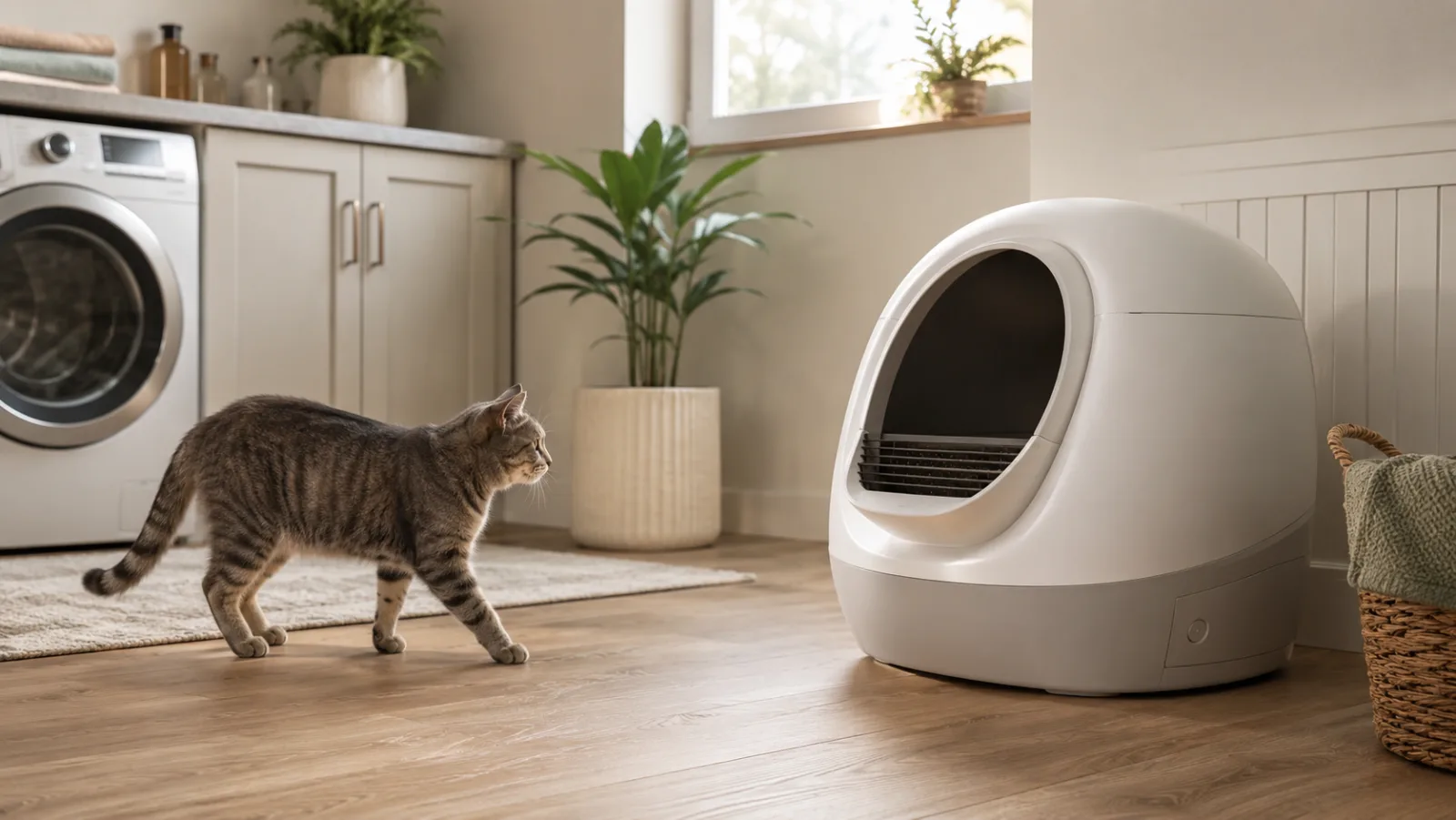
The powered core of a multi-cat litter setup is a box big enough and self-cleaning enough to keep up with several cats using it all day. The Meowant 106L Self-Cleaning Litter Box earns the first slot on capacity. Meowant documents an extra-large 106-liter box that automatically sifts waste into a sealed lower bin after a cat leaves, with a large interior and a waste capacity aimed at multi-cat homes. The value here is throughput: a box that cleans itself after each visit and holds a lot of waste is one that stays acceptable to cats through a busy day.
Where it fits the logistics: this is the anchor box, not the whole answer. A self-cleaning box solves the frequency problem — cats refuse a soiled box, and an auto-cycling one stays cleaner between your scoops — but it does not repeal the n+1 rule below. Even the largest single box is still one location, and in a multi-cat home you need more than one location so cats are never forced to share or queue. So this box is the high-capacity centerpiece you build the rest of the count and the floor plan around. If you want to compare large auto-boxes head to head, our roundup of the best self-cleaning litter boxes for large and multi-cat homes ranks the capacity options.
The honest caveats are about cost, cats, and mechanics. A large powered box is the most expensive item here by far, and some cats are wary of a moving, cycling box at first, so you introduce it alongside a familiar manual box rather than removing all the old ones at once. Powered boxes also need real upkeep — emptying the bin, wiping the mechanism, and watching that the sensors cycle correctly with more than one cat — and a jammed auto-box is worse than a simple one. Confirm current price and availability before buying. As the powered core, it carries the heaviest single share of the load, but it works only as part of a properly counted, well-placed set of boxes.
What We Love
- Large 106 L capacity suits several cats sharing one box
- Auto-cleaning keeps a high-traffic box acceptable longer
- Sealed waste bin reduces how often you handle waste
- A strong anchor for the powered part of the setup
What Could Be Better
- The most expensive item in a multi-cat setup by far
- Some cats need time to accept a cycling, moving box
- Still one location — it does not satisfy the n+1 rule alone
The Verdict
Build the powered core of a multi-cat setup around one large, high-capacity self-cleaning box. It carries the biggest single share of the load, but it is one box in one place — you still need the box count and placement below, not just a clever machine.
Sources
- Meowant (Amazon product listing, 106L Self-Cleaning Litter Box): an extra-large 106-liter self-cleaning litter box that automatically sifts waste into a sealed lower bin after a cat exits, with a large interior and waste capacity intended for multi-cat households
- Feline-care guidance (ASPCA, ISFM) on litter provision: cats reject a dirty box, so a box in a busy multi-cat home has to be cleaned frequently and offer enough capacity that it does not fill between cleanings, which is exactly what an auto-cycling box is built to hold up to
$299.99
Current price · checked Sep 8, 2026
- Automatic self-cleaning box with a large interior per PETKIT
- App monitoring can track visits across multiple cats
- A second powered station in a different room
- Removes the single-box bottleneck in a busy home
- Health-tracking data is a bonus, not a diagnosis
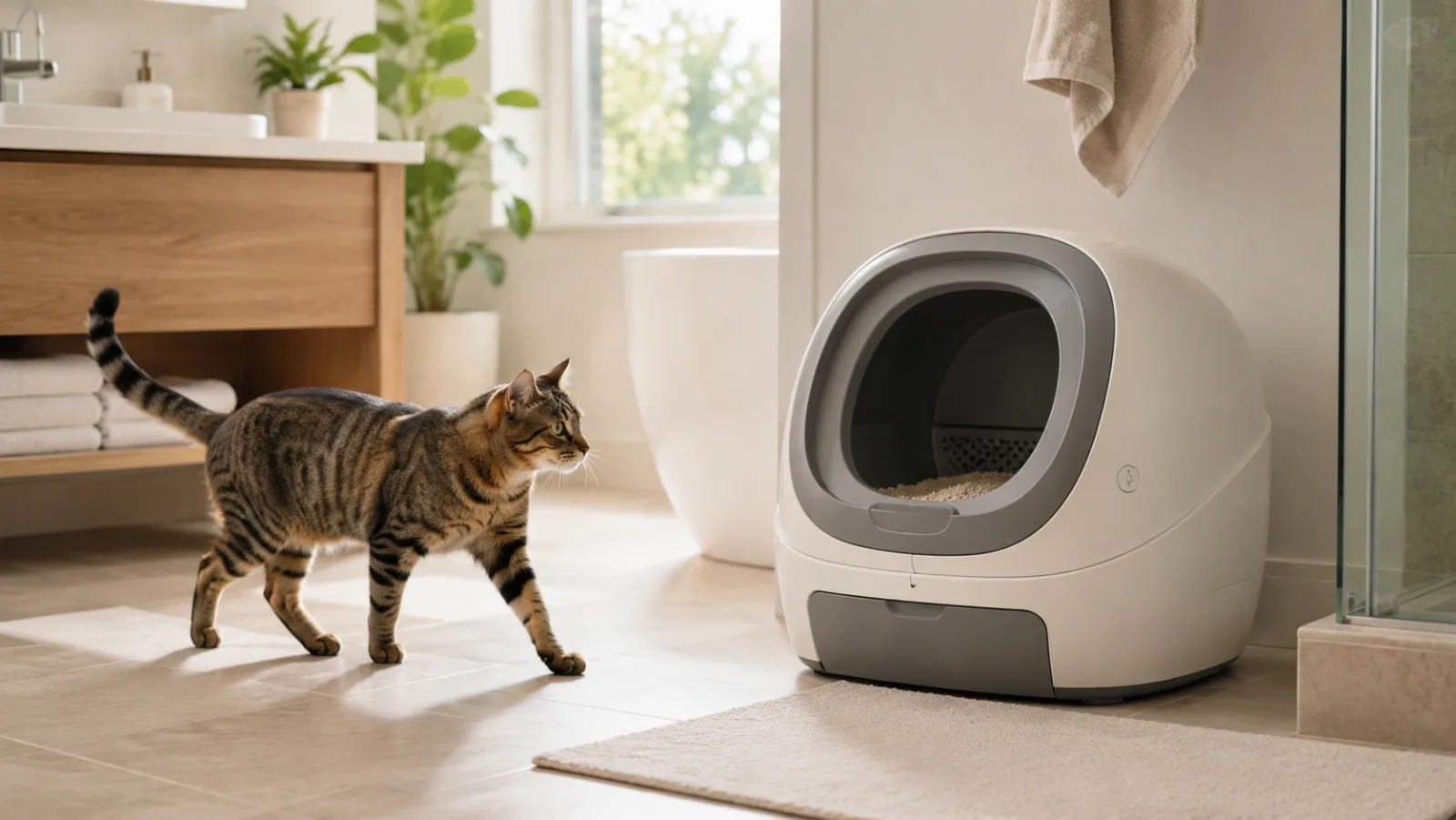
The second stage is a second automated box, placed somewhere else in the home, so the powered capacity is spread rather than stacked in one corner. The PETKIT PuraMax 2 fills that role. PETKIT documents an automatic self-cleaning box with a large interior and app monitoring that cycles waste into a lined bin, with visit tracking that can help distinguish which cat used it. Two automated boxes in two rooms means no single box is a chokepoint when several cats need it at similar times.
Where it fits the logistics: this is the n+1 rule applied to powered boxes. A common and expensive multi-cat mistake is buying one premium box and lining the household up behind it — which recreates the exact competition and queuing the setup is meant to prevent. Two automated boxes in separate locations give cats a genuine choice and a fallback, and the app's per-cat visit tracking is a real convenience for spotting when a cat suddenly stops using a box, which can be an early welfare flag worth a vet call. For other automated options and how they compare, see our roundup of the best automatic litter boxes.
The honest caveats are about redundancy and reliance. Two powered boxes is a large outlay, and not every home needs two — a smaller two-cat home may do better with one powered box plus manual boxes below. App tracking is helpful but it is monitoring, not medicine: a change in litter-box habits is a reason to see a vet, not a diagnosis the app can give. And powered boxes concentrate failure risk, so keeping at least one simple manual box in the mix means a jam or a power cut never leaves a cat without a bathroom. Confirm current price and availability before buying. As the second powered station, it turns one clever box into a distributed system with no single point of failure.
What We Love
- A second powered station removes the one-box bottleneck
- Per-cat visit tracking flags habit changes early
- Large interior suits multi-cat shared use
- Distributes capacity across rooms, as the n+1 rule wants
What Could Be Better
- Two powered boxes is a significant total cost
- App data is monitoring, not a veterinary diagnosis
- Powered boxes fail — keep a manual box as backup
The Verdict
Add a second automated box in a different room so powered capacity is distributed, not stacked. The per-cat tracking is a useful early-warning bonus, but keep at least one manual box in the plan so a jam or outage never leaves a cat without a box.
Sources
- PETKIT (Amazon product listing, PuraMax 2): an automatic self-cleaning litter box with a large interior and app monitoring that cycles waste into a lined bin; app tracking can distinguish visits, which is useful for keeping tabs on multiple cats
- Published multi-cat husbandry consensus: resource competition is a core multi-cat problem, so distributing litter boxes rather than concentrating capacity in one place prevents queuing and guarding and gives a lower-ranking cat a box it can reach unchallenged
$22.99
Current price · checked Sep 8, 2026
- Large open-top box with high sides to contain scatter per IRIS USA
- Simple, inexpensive plastic — buy several to hit the count
- Open top suits cats wary of enclosed or powered boxes
- Lower front entry works for kittens and senior cats
- The affordable way to reach the n+1 box total
The fourth stage is where the box count actually gets met, cheaply. The IRIS USA Large Open-Top High-Sided Litter Box is the plain, inexpensive box you buy several of. IRIS USA documents a large open-top box with high sides that contain scatter and a lower front entry, in a simple plastic design. This is the workhorse that lets a multi-cat home reach the n+1 total without a powered box at every single station, which would be neither necessary nor affordable.
Where it fits the logistics: the n+1 rule — one box per cat plus one spare — is the backbone of the whole setup, and manual boxes are how most homes satisfy it. A three-cat home needs four boxes; you do not need four self-cleaning machines, you need one or two powered boxes plus enough simple boxes, placed in different rooms, to reach the count. High sides matter here because they contain the litter a digging cat kicks out, and an open top is reassuring to cats that dislike enclosed or motorized boxes. These are also the boxes that keep working during a power cut or a mechanical jam, which is why every multi-cat home should own some regardless of how many auto-boxes it has.
The honest caveats are about scooping and reach. Manual boxes are only as clean as your scooping discipline — in a multi-cat home that means scooping at least twice a day, because a soiled manual box is refused just as fast as any other. High sides that contain scatter can be hard for a stiff senior cat or a small kitten to climb, so match the entry height to your least mobile cat, or keep at least one low-entry box. Confirm current price and availability before buying. As the count-filler, this simple box is how the n+1 rule stops being a slogan and becomes a floor plan.
What We Love
- Cheap enough to buy several and reach the n+1 count
- High sides contain the scatter a digging cat kicks out
- Open top reassures cats wary of enclosed or auto-boxes
- Keeps working during a power cut or a mechanical jam
What Could Be Better
- Only as clean as twice-daily manual scooping
- High sides can be hard for kittens and senior cats
- No odor or dust control beyond the litter itself
The Verdict
Reach the n+1 box count with several of these simple, high-sided boxes rather than a powered box at every station. Scoop them at least twice daily, and keep one low-entry option for any kitten or senior cat that struggles with high sides.
Sources
- IRIS USA (Amazon product listing, Large Open-Top Litter Box): a large open-top litter box with high sides to contain scatter and a lower front entry, in a simple plastic design inexpensive enough to buy several of for a multi-cat home
- Feline-care guidance (ASPCA, ISFM) on litter provision: the standard recommendation for a multi-cat home is one litter box per cat plus one extra, distributed around the home, because enough boxes in enough places is the single most reliable way to prevent litter-box avoidance
$29.69
Current price · checked Sep 8, 2026
- Large 47 x 33 in double-layer trapping mat per Anywish
- Honeycomb top catches litter from paws on exit
- Waterproof base protects the floor under the station
- Sized to sit under a large or powered box
- One mat per station in a multi-cat layout
The fifth stage keeps several boxes' worth of tracked litter off the floors. The Anywish Large Cat Litter Mat catches granules as cats step out. Anywish documents a large 47-by-33-inch double-layer mat with a honeycomb top that traps litter from paws and a waterproof base. In a multi-cat home with boxes in several rooms, tracked litter multiplies with every cat and every box, so containment at each station is a real chore-reducer rather than a nicety.
Where it fits the logistics: mats scale with the box count. A single-cat home might get away with one small mat; a multi-cat home wants a large mat under each busy station, especially under the powered boxes cats enter and exit more deliberately. A big mat with a waterproof base also protects flooring from the occasional over-the-side miss, which is more likely with several cats sharing boxes. It is a low-cost item that saves a surprising amount of vacuuming and floor-mopping across a whole household.
The honest caveats are about cleaning and comfort. Mats need shaking out or vacuuming regularly or they simply become a litter reservoir rather than a trap, so they add a small task, not remove one. Some cats dislike the texture of a coarse honeycomb mat under their paws and will step around it, which defeats the purpose, so watch that your cats actually walk on it. And a mat contains tracking; it does nothing for odor or the box itself. Confirm current price and availability before buying. As the containment layer, one mat per station is how a multi-cat home keeps litter from ending up in every room.
What We Love
- Large size contains scatter under a powered or big box
- Waterproof base protects flooring from over-the-side misses
- Meaningfully cuts household-wide litter tracking
- Inexpensive per station across a multi-box layout
What Could Be Better
- Needs regular shaking out or it becomes a litter reservoir
- Some cats dislike the texture and step around it
- Contains tracking only — no effect on odor or the box
The Verdict
Put a large trapping mat under each busy station, especially the powered boxes, to keep tracked litter from spreading through a multi-cat home. Shake or vacuum it regularly, and check your cats actually walk on it rather than around it.
Sources
- Anywish (Amazon product listing, Large Cat Litter Mat): a large 47-by-33-inch double-layer litter mat designed to trap litter from cats' paws as they leave the box, with a honeycomb top layer that catches granules and a waterproof base
- Published multi-cat husbandry consensus: more cats and more boxes mean proportionally more tracked litter across the home, so containing scatter at each box station is a practical necessity in a multi-cat household rather than a cosmetic nicety
$20.99
Current price · checked Sep 8, 2026
- Hard-clumping unscented clay in a 40 lb bulk bag per Dr. Elsey's
- Firm clumps make daily scooping faster and cleaner
- Unscented suits cats that reject perfumed litters
- Bulk sizing for a home that burns through litter
- One consistent litter across every box
The sixth stage feeds every box the litter it needs, bought at the scale a multi-cat home actually uses. Dr. Elsey's Ultra Unscented Clumping Litter is the bulk clumping clay. Dr. Elsey's documents a hard-clumping, low-dust, unscented clay litter in a 40-pound bag that forms firm clumps for easy scooping. Several cats and several boxes go through litter far faster than a single cat, so buying a consistent litter in volume is both a cost saver and a way to keep every box filled to a proper depth.
Where it fits the logistics: consistency and depth are the quiet rules of multi-cat litter. Cats can be particular, and many prefer an unscented, fine, sand-like clumping litter over a perfumed or pellet one, so a litter with broad acceptance lowers the odds that any one cat refuses a box over the substrate. Using the same litter in every box also means a cat never has to adjust between stations, and keeping each box at an adequate depth — deep enough to clump and cover — is part of keeping boxes usable. Bulk sizing simply matches the reality that a multi-cat home is a high-throughput litter operation.
The honest caveats are about weight, dust, and preference. A 40-pound bag is heavy to carry and store, which is the trade-off for buying in bulk. Clay litter, even low-dust, produces some dust, which matters in a small or poorly ventilated space with several boxes. And litter preference is individual — a litter most cats like is not a litter every cat likes, so if one cat consistently avoids a box, the litter is one of the variables to test. Confirm current price and availability before buying. As the bulk fill, it keeps every box in the count stocked with a litter cats generally accept.
What We Love
- Firm clumps speed up scooping across many boxes
- Unscented formula suits cats that reject perfumes
- Bulk 40 lb sizing lowers cost per box refill
- One consistent litter cats need not adjust between
What Could Be Better
- A 40 lb bag is heavy to carry and store
- Clay litter still raises some dust in small spaces
- No single litter is accepted by every individual cat
The Verdict
Feed every box one consistent, widely accepted clumping litter bought in bulk, kept at a proper depth. Bulk sizing matches a multi-cat home's throughput — just plan for the weight, and treat litter type as a variable to test if one cat avoids a box.
Sources
- Dr. Elsey's (Amazon product listing, Ultra Unscented Clumping Litter): a hard-clumping, low-dust, unscented clay litter in a 40-pound bag, formulated to form firm clumps for easy scooping and sold in bulk sizing suited to households that go through litter quickly
- Feline-care guidance (ASPCA, ISFM) on litter provision: many cats prefer an unscented, fine-grained clumping litter, and a consistent litter kept at an adequate depth in every box is part of keeping boxes acceptable, especially where several cats share them
$25.99
Current price · checked Sep 8, 2026
- Sealed pail that holds scooped waste in a lined container per Litter Genie
- Continuous liner seals waste at the point of scooping
- Contains odor between trash runs, not just at the box
- Sits at the busiest station in a multi-box layout
- Reduces trips to the outdoor bin with several cats
The seventh stage deals with the sheer volume of waste several cats produce. A Litter Genie-style disposal pail holds scooped clumps in a sealed, lined container between trash days. Litter Genie documents a pail that seals waste using a continuous liner so odor is contained at the point of scooping. In a multi-cat home, where you are scooping several boxes twice a day, a pail beside the busiest station saves a walk to the outdoor bin after every scoop.
Where it fits the logistics: this is scooping-workflow infrastructure. The n+1 boxes and twice-daily scooping the rest of this setup calls for only work if scooping is fast and low-friction, and a sealed pail at the main station makes each scoop a two-second drop rather than a trip. Containing odor at the point of collection also matters more with several cats' waste held between trash runs. It is a small item that makes the daily routine sustainable, which is the difference between a multi-cat litter plan you keep up and one you let slide.
The honest caveats are about liners and capacity. Proprietary continuous liners are a recurring cost, and while generic refills exist, they are the ongoing bill of this convenience. A pail also has a finite capacity, and a multi-cat home fills one faster, so it is emptied on a real schedule rather than left until it overflows. And a pail contains odor between scoops; it is not a substitute for actually scooping frequently, which remains the real odor control. Confirm current price and availability before buying. As the waste-management step, it keeps the twice-daily multi-cat scooping routine quick enough that you actually do it.
What We Love
- Seals scooped waste and odor between trash runs
- Saves a trip to the outdoor bin after every scoop
- Keeps the twice-daily scooping routine fast and low-friction
- Sits at the busiest station in a multi-box home
What Could Be Better
- Continuous liners are a recurring consumable cost
- Finite capacity fills faster in a multi-cat home
- Contains odor between scoops — not a substitute for scooping
The Verdict
Keep a sealed disposal pail at the busiest station so twice-daily multi-cat scooping stays a two-second drop, not a trip outside. Budget for the liner refills, and remember frequent scooping — not the pail — is the real odor control.
Sources
- Litter Genie (Amazon product listing, Waste Disposal Pail): a sealed litter-waste disposal pail that holds scooped clumps in a lined, closed container between trash runs, using a continuous liner to seal waste and contain odor at the point of scooping
- Published multi-cat husbandry consensus: waste volume scales with the number of cats, so a multi-cat home needs a practical way to hold scooped waste between trash days rather than making a trip to an outdoor bin after every scoop of every box
$89.97
Current price · checked Sep 8, 2026
- Cordless handheld with a motorized pet-hair brush per Bissell
- Sized for quick spot cleanups at the litter station
- Grab-and-go for tracked litter and shed hair
- Kept near the boxes for daily maintenance
- A spot tool, not a whole-home vacuum
The last stage handles the litter that escapes the mats and the hair that comes with several cats. The Bissell Pet Hair Eraser Cordless Hand Vacuum is the grab-and-go cleanup tool. Bissell documents a cordless handheld vacuum with a motorized brush for pulling up pet hair and debris from floors and upholstery, sized for quick spot cleanups. Kept near the litter stations, it makes clearing tracked granules and stray hair a thirty-second job rather than dragging out a full vacuum.
Where it fits the logistics: this is the maintenance tool that keeps the whole system livable day to day. Mats catch most tracking, but a multi-cat home still spreads some litter and a lot of hair, and the easier it is to clean up, the more consistently it gets done. A handheld kept by the main station covers the daily reality between deeper cleans. For whole-home cleaning and stronger suction across a house full of cats, our roundup of the best pet-hair vacuums compares the fuller options.
The honest caveats are about scope and battery. A handheld is a spot tool, not a replacement for a proper vacuum — its capacity and runtime are small, which is fine for a station cleanup and frustrating for a whole floor. Cordless batteries also fade over years, and a small dust cup fills quickly with litter and hair, so it is emptied often. And it cleans up tracking; it does not reduce it, which is what the mats and box placement are for. Confirm current price and availability before buying. As the daily maintenance tool, it is what keeps a multi-box, multi-cat home from feeling like a constant cleanup.
What We Love
- Cordless grab-and-go for quick station cleanups
- Motorized brush handles both litter and shed hair
- Makes daily maintenance low-effort and consistent
- Kept by the boxes for the spills mats miss
What Could Be Better
- A spot tool — not a whole-home vacuum replacement
- Small dust cup fills fast with litter and hair
- Cordless battery capacity fades over the years
The Verdict
Keep a cordless handheld by the main litter station for the daily tracked litter and hair a multi-cat home spreads. It is a spot tool, not a whole-home vacuum — pair it with a proper vacuum for deeper cleans, and lean on mats and placement to reduce tracking in the first place.
Sources
- Bissell (Amazon product listing, Pet Hair Eraser Cordless Hand Vacuum): a cordless handheld vacuum with a motorized brush tool designed to pull up pet hair and debris from floors and upholstery, sized for quick spot cleanups rather than whole-home vacuuming
- Published multi-cat husbandry consensus: tracked litter and shed hair scale with the number of cats, so a quick, grab-and-go cleanup tool kept near the litter stations makes daily maintenance realistic in a multi-cat home
How We Score
Formula
PetPal Multi-Cat Litter Score = (Expert Consensus × 0.35) + (Multi-Cat Logistics Fit × 0.25) + (Capacity / Placement Design × 0.20) + (Value × 0.20)
Score Factors
- Expert Consensus · 35%
- Synthesized from feline-care guidance (the ASPCA and the International Society of Feline Medicine) on litter-box provision and placement, published multi-cat husbandry consensus, and manufacturer documentation. The PetPal Multi-Cat Litter Score is a composite of expert opinion — PetPalHQ does not run a testing lab.
- Multi-Cat Logistics Fit · 25%
- How directly the item advances a correct multi-cat litter setup — meeting the n+1 box count, distributing boxes across the home, and keeping enough clean capacity for several cats — rather than how it performs as a standalone box ranked against rivals.
- Capacity / Placement Design · 20%
- Alignment with multi-cat litter principles — enough boxes in enough separate places, adequate capacity per box, consistent litter at proper depth, and containment of tracking and waste at scale, so no cat is forced to share, queue, or use a soiled box.
- Value · 20%
- Cost relative to the item's role in the setup, including ongoing consumables like litter, liners, and refills, and how much of the reliable, accident-free outcome the item is responsible for. This kit is the equipment cost, not the ongoing cost of running a multi-cat home.
| Rank | Product | Score |
|---|---|---|
| #1 | Meowant Meowant 106L Self-Cleaning Litter Box | 8.6 |
| #2 | PETKIT PETKIT PuraMax 2 Automatic Litter Box | 8.5 |
| #3 | IRIS USA IRIS USA Large Open-Top High-Sided Litter Box | 8.3 |
| #4 | Anywish Anywish Large Cat Litter Mat (47" x 33") | 8.2 |
| #5 | Dr. Elsey's Dr. Elsey's Ultra Unscented Clumping Cat Litter (40 lb) | 8.1 |
| #6 | Litter Genie Litter Genie-Style Cat Litter Waste Disposal Pail | 8.0 |
| #7 | Bissell Bissell Pet Hair Eraser Cordless Hand Vacuum | 7.9 |
When NOT to Buy
Before buying anything, understand that a multi-cat litter problem is almost never solved by a single product, and reaching for one premium box to fix accidents in a multi-cat home usually disappoints. The fix is the count and the floor plan: enough boxes, in enough separate places, kept clean. If you already have the right number of well-placed, clean boxes and a cat is still avoiding them, that is a signal to see a veterinarian, because sudden litter-box avoidance can be an early sign of a urinary or medical problem, not a hardware failure — and no box on this list is a substitute for that vet visit.
Restraint on the powered boxes is the other honest caution. A self-cleaning box is genuinely useful for capacity and frequency, but two or three premium auto-boxes is a large outlay, and a home can meet the n+1 rule with one powered box and several simple manual boxes for a fraction of the cost. Some cats are also wary of a moving, cycling box and will avoid it, so you never remove every familiar manual box to force the issue — you add a powered box alongside the old ones and let cats choose. And because powered boxes jam and lose power, every multi-cat home should keep at least one plain manual box working no matter how many machines it owns.
Finally, the honest scope note: this kit is the equipment, not the routine. Litter, liners, and refills are the ongoing bill, and it does not stop — but the real work is free and daily: scooping every box at least twice a day, keeping a consistent litter at a proper depth, and watching each cat's habits so a change gets noticed early. A multi-cat home that scoops on schedule with cheap boxes beats one with an expensive box it lets go dirty. Confirm current price and availability on every item before buying, since prices and sellers move over time.
Frequently Asked Questions
- How many litter boxes do I actually need for multiple cats?
- The standard guidance is the n+1 rule: one litter box per cat, plus one extra. So two cats need three boxes, three cats need four, and four cats need five. It sounds like a lot, and it is more than most people start with, which is exactly why litter-box problems are so common in multi-cat homes. The extra box matters because it gives cats a choice and a fallback, so a cat is never forced to use a soiled box or one another cat is guarding. Just as important as the number is the spread — those boxes should be in different rooms and ideally on different floors, not lined up side by side, because several boxes in one location function socially like a single station that one cat can control. You do not need a powered box for every one of them; one or two self-cleaning boxes plus enough simple manual boxes to reach the count, placed around the home, is the practical and affordable way to satisfy the rule.
- Can one big self-cleaning box replace having several boxes?
- No, and this is the most expensive misunderstanding in multi-cat litter setups. A large self-cleaning box solves a real problem — capacity and cleanliness, keeping a busy box acceptable between your scoops — but it is still one box in one location, and the core multi-cat rule is about having enough boxes in enough separate places. Even the highest-capacity powered box cannot give a timid cat an alternative when a more assertive cat is sitting near it, and it cannot be in two rooms at once. So a self-cleaning box is best thought of as the high-capacity core of the setup, not the entirety of it: you build around it with additional boxes, at least some of them simple manual ones, distributed through the home. There is also a reliability reason never to rely on a single powered box — they jam and they lose power, and a home with only one automated box and no manual backup can leave every cat without a working bathroom at the worst moment.
- Where should I put the litter boxes in a multi-cat home?
- Spread them out, and choose calm, low-traffic spots each cat can reach and exit without being cornered. The goal is distribution: different rooms and different floors, so a single cat cannot physically guard access to all of them at once. Avoid clustering boxes together, since a row of boxes in one closet or corner behaves like one station socially, and one cat controlling that area controls all of them. Avoid dead-end placements where a cat could be trapped by another cat while using the box, and give a box more than one escape route where you can. Keep boxes away from noisy appliances that might startle a cat mid-use and, as a general matter, away from the immediate feeding and drinking area. For homes with multiple floors, having at least one box per floor matters especially for kittens and senior cats, who may not make it up or down stairs in time. The theme throughout is that placement is about giving every cat, including the least assertive one, a bathroom it can always get to.
- How often do I need to scoop with several cats?
- At least twice a day for manual boxes, and you still empty and maintain the powered boxes on a regular schedule. Waste volume scales directly with the number of cats, and cats are far more likely to reject a soiled box than a clean one, so a multi-cat home simply cannot stretch scooping the way a single-cat home sometimes gets away with. Self-cleaning boxes reduce this burden by cycling after each use, but they are not zero-maintenance — the waste bin fills faster with several cats and needs emptying often, and the mechanism needs occasional cleaning. Frequent scooping is also the real odor control in a multi-cat home; sealed waste pails and litter choice help at the margins, but nothing substitutes for removing waste promptly and often. A practical routine is a quick scoop of every box morning and evening, a bin empty on a set schedule, and a full litter change and box wash periodically. If keeping up with that feels impossible, that is a sign you need more boxes or more powered capacity, not less scooping.
- One of my cats keeps going outside the box even though I have enough boxes — what now?
- If you genuinely have the right number of clean, well-distributed boxes and a cat is still avoiding them, treat it as a health question first, not a hardware one. Sudden or ongoing litter-box avoidance is one of the classic early signs of a medical problem in cats — urinary tract issues, cystitis, and other conditions can make a cat associate the box with discomfort or simply be unable to hold it — so a veterinary visit is the right next step before you buy another product. Once medical causes are ruled out, the variables to test are the ones cats care about: litter type and depth, box cleanliness, whether the box is covered or uncovered, entry height for an older or arthritic cat, and whether that specific cat is being blocked or ambushed at certain box locations by another cat. Change one variable at a time so you can tell what worked. The key mindset is that a cat avoiding a proper, clean, well-placed setup is communicating something, and the answer is usually a vet or an environmental adjustment rather than a fancier machine.
Bottom Line
Start with the count, not the gadget: the n+1 rule means one box per cat plus one spare. A three-cat home needs four boxes, and no single clever machine repeals that — the Meowant 106L powered box is the high-capacity core, not the whole answer.
Distribute, do not stack. Spread boxes across different rooms and floors so no cat can guard them all — a second automated box like the PETKIT PuraMax 2 in another room removes the single-box bottleneck the whole setup is trying to prevent.
Meet the count affordably. Several simple IRIS USA high-sided boxes reach the n+1 total far more cheaply than a machine at every station — and they keep working through a jam or a power cut, which no powered box does.
Manage the mess at scale. A large mat under each busy station contains the tracking that multiplies with more cats, bulk Dr. Elsey's litter keeps every box filled to depth, and a sealed pail keeps twice-daily scooping fast enough that you actually keep it up.
The rule never changes: enough clean boxes, spread out, prevents accidents — not one expensive box. If a cat keeps avoiding a proper setup, that is a vet visit, not a hardware upgrade.
Sources & Methodology
Methodology
PetPal Multi-Cat Litter Score = (Expert Consensus × 0.35) + (Multi-Cat Logistics Fit × 0.25) + (Capacity / Placement Design × 0.20) + (Value × 0.20)
Expert review sources
- Feline-care guidance — the ASPCA on litter-box provision
- The International Society of Feline Medicine (ISFM) on litter-box number and placement
- Published multi-cat husbandry consensus on resource distribution
- Meowant — 106L Self-Cleaning Litter Box product documentation
- PETKIT — PuraMax 2 Automatic Litter Box product documentation
- IRIS USA — Large Open-Top Litter Box product documentation
- Dr. Elsey's, Anywish, Litter Genie, and Bissell product documentation
Community sources
- r/CatAdvice — multi-cat litter-box count and placement consensus
- r/cats — general multi-cat household consensus
Prices and specs verified July 12, 2026.
About the author
Nick Miles is the chief editor of PetPalHQ. This multi-cat litter-box setup and its kit are editorial synthesis of feline-care guidance (the ASPCA and the International Society of Feline Medicine) on litter provision and placement, published multi-cat husbandry consensus, and manufacturer documentation — PetPalHQ does not run a testing lab. The PetPal Multi-Cat Litter Score is a composite of expert opinion, not a measurement. Sources are cited by name throughout.
PetPalHQ is a participant in the Amazon Services LLC Associates Program. We may earn commissions from qualifying purchases — at no extra cost to you.