Cats & Dogs
Best Auto-Replenishing Pet Care Station: Litter, Feeding & Water (2026)
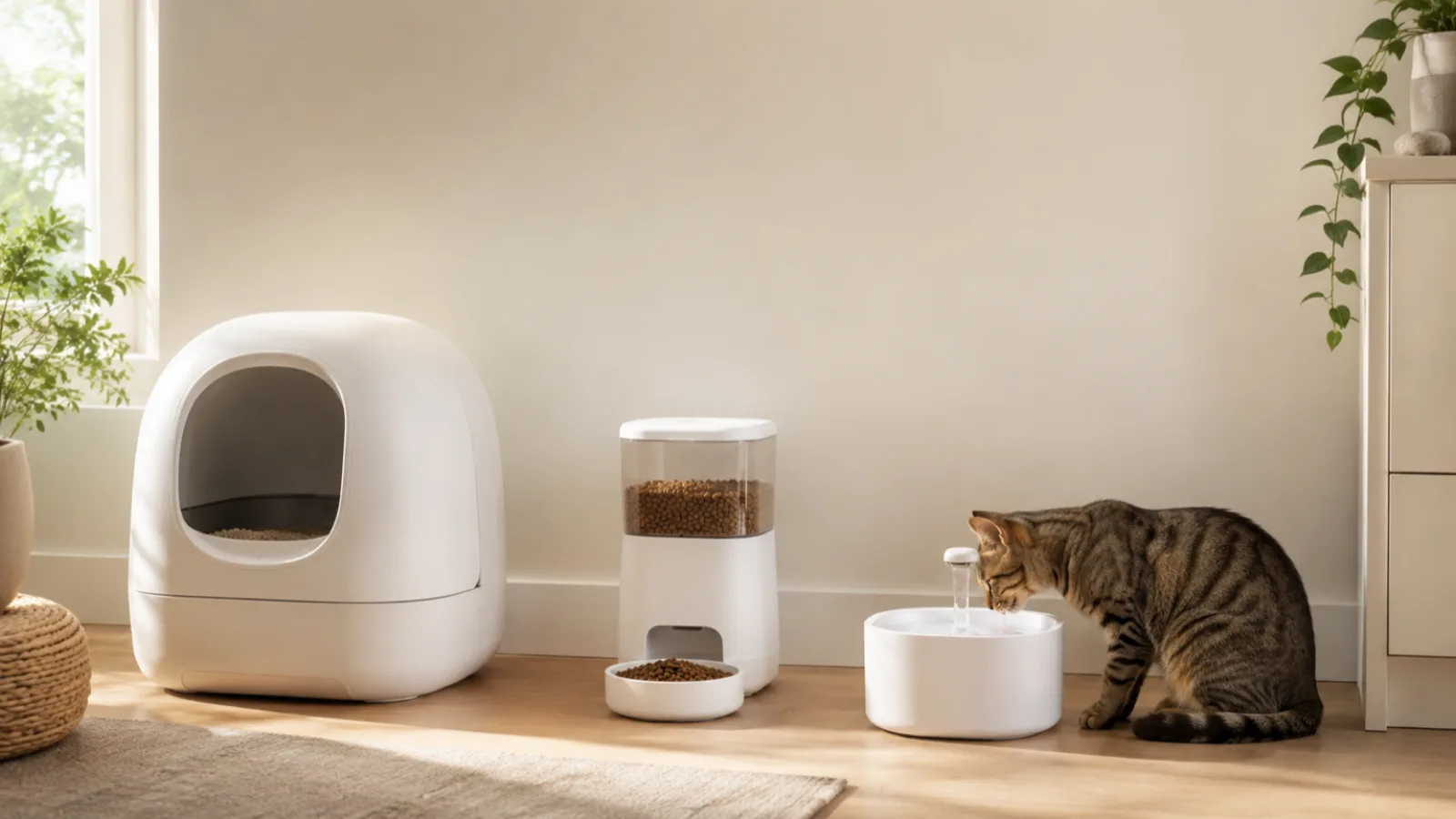
The Litter-Robot 4 Supply Bundle anchors the station; a PETLIBRO feeder pairs with Subscribe & Save food; a PetSafe fountain runs on cheap replacement filters. The recurring cost, not the sticker, decides the build.
By Nick Miles · Updated August 18, 2026 · 15 min read
PetPalHQ is reader-supported. We may earn a commission from qualifying Amazon purchases at no extra cost to you.
Evidence at a Glance
Whisker Litter-Robot 4 Self-Cleaning Litter Box (Supply Bundle)
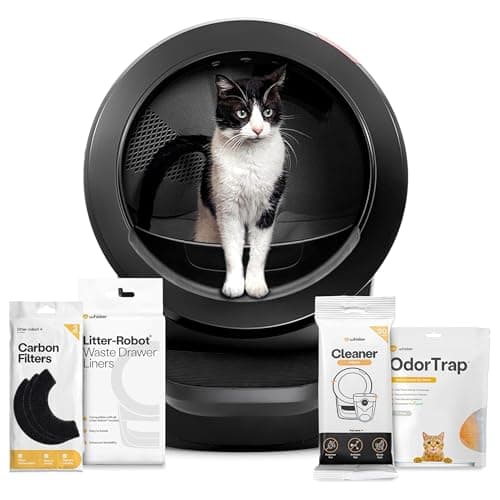
The high-AOV anchor — Whisker documents up to four cats and per-cat weight tracking, and the bundle packages the OdorTrap refills, drawer liners, and carbon filters so the first round of consumables is already in the box.
Sources: Whisker manufacturer documentation, ASPCA — Litter Box Problems, Cats.com — Litter-Robot review
Verified Jul 24, 2026
Casa Leo Leo's Loo Too Self-Cleaning Litter Box
The lower-cost self-cleaning anchor for households that want an automatic box without the top-tier price — replacement carbon filters and liners are its recurring line items.
Sources: Smarty Pear (Casa Leo) manufacturer documentation, AAFP/ISFM — Feline Environmental Needs Guidelines, ASPCA — Litter Box Problems
Verified Jul 24, 2026
PETLIBRO Granary Smart Camera Feeder
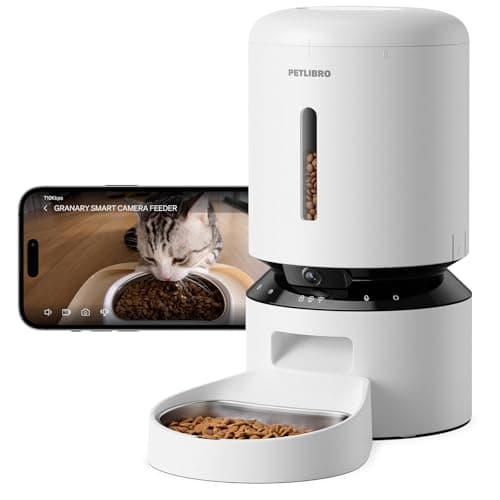
The feeding tier's auto-reorder answer — scheduled meals plus low-food alerts that pair with Amazon Subscribe & Save on the same kibble so the refill arrives before the hopper runs dry.
Sources: PETLIBRO manufacturer documentation, Feline Veterinary Medical Association — feeding guidance, FDA — pet-food storage guidance
Verified Jul 24, 2026
Our Picks
Whisker
Whisker Litter-Robot 4 Self-Cleaning Litter Box (Supply Bundle)
9.3 / 10
- Whisker documents support for up to four cats with per-cat weight tracking through its app
- Bundle ships with 3 OdorTrap refills, 10 waste-drawer liners, 30 cleaner wipes, and 3 carbon filters
- Large carbon-filtered waste drawer that Whisker says can go as long as 8 days between empties for a single cat
- App scheduling, cycle history, and litter-level reporting
$749.00
Smarty Pear
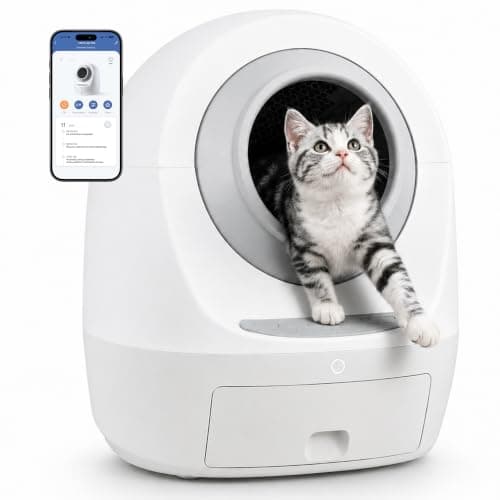
Casa Leo Leo's Loo Too Self-Cleaning Litter Box
8.7 / 10
- App-controlled automatic sifting with scheduled and on-demand cleaning cycles
- Weight-sensor safety that halts the cycle when a cat is detected
- Built-in odor control using replaceable carbon filters
- Health-adjacent reporting — Smarty Pear's app logs visit frequency and weight
$599.00
PETLIBRO
PETLIBRO Granary Smart Camera Feeder
9.0 / 10
- Up to 10 scheduled meals per day per PETLIBRO documentation
- 1080p camera with wide-angle lens and night vision for a mealtime check-in
- Low-food alerts that flag a refill before the 5L hopper empties
- Two-way audio and Wi-Fi app control
$139.99
PETLIBRO
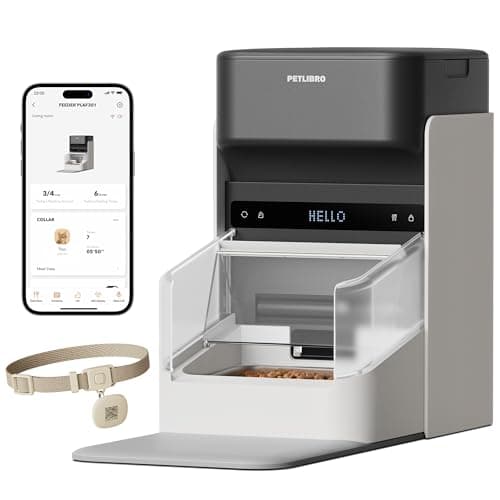
PETLIBRO One RFID Smart Feeder
8.5 / 10
- RFID collar-tag access — the bowl opens only for the assigned pet
- App scheduling and low-food alerts for Subscribe & Save timing
- Battery backup per PETLIBRO documentation
- Designed to stop multi-pet food stealing so per-pet intake is trackable
$149.99
PetSafe
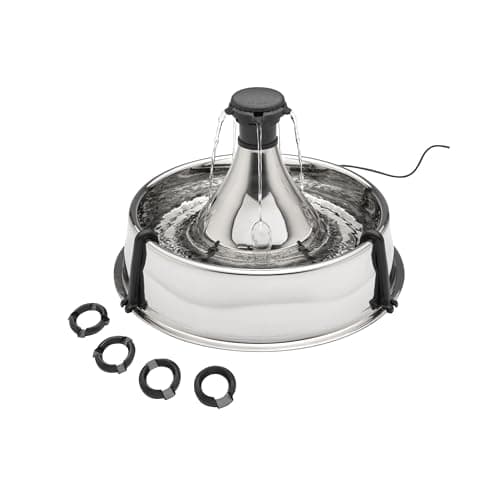
PetSafe Drinkwell Stainless Steel 360 Multi-Pet Fountain
8.6 / 10
- Up to five free-falling streams for multi-pet households, per PetSafe documentation
- Stainless steel bowl — easier to keep clean than scratch-prone plastic
- Replaceable carbon and foam filtration
- 128 oz (nearly one gallon) capacity for multiple pets or larger dogs
$75.99
The Short Answer
The point of this build is that the only chore left is reordering. Start with the Whisker Litter-Robot 4 supply bundle, because it's the one appliance here that arrives with its own consumable stream already attached — refills, liners, filters. Hardware is a one-time cost; the consumables are the real bill.
Every product on this list has been scored against the PetPal Gear Score, a weighted composite of expert consensus, observed effectiveness, animal safety, long-term durability, and value. Review method: Editorial synthesis of veterinary and welfare guidance (AAFP/ISFM Feline Environmental Needs, ASPCA general and litter-box care, Cornell Feline Health Center hydration and feeding references, Merck Veterinary Manual), federal food-safety guidance (FDA, CDC), and manufacturer documentation from Whisker, Smarty Pear (Casa Leo), PETLIBRO, and PetSafe — no first-hand product testing. Prices and availability were checked live against the Amazon Creators API on 2026-07-24.. Synthesized from 12+ expert sources.
For a busy household, the appeal of an "auto-replenishing" pet setup is simple: the three chores that repeat every single day — cleaning up waste, putting out meals, and keeping water fresh — get handed to hardware, and the only recurring task left is reordering the consumables. The catch is that the sticker price is a down payment, not the cost. A self-cleaning litter box still eats litter. An automatic feeder still eats food. A fountain still eats filters. The station that actually earns the word "hands-off" is the one whose litter, food, and filter reorders you understand before you buy, because that recurring line is where the real money and the real reliability live.
The picks below are editorial synthesis. PetPalHQ does not run a testing lab — every product on this page was selected by reviewing manufacturer documentation from Whisker, Smarty Pear, PETLIBRO, and PetSafe, alongside welfare and veterinary guidance from the AAFP/ISFM feline environmental-needs framework, the ASPCA, the Cornell Feline Health Center, the Feline Veterinary Medical Association, and the Merck Veterinary Manual, plus FDA and CDC food-and-water hygiene rules. Every price on this page — and who actually sells each product — was checked live against the Amazon Creators API on 2026-07-24; confirm current pricing and availability before you buy, because both move independently of any guide.
This station is a spoke of the broader Pet Home Systems, Cleanup, and Travel hub. The hub explains why automating home care matters and how the pieces fit a whole household routine; this guide covers what to buy, tier by tier, and what each tier costs to keep running.
The three-tier station, at a glance
| Tier | Pick | Verified price (2026-08-18) | The recurring cost |
|---|---|---|---|
| Litter — anchor | Whisker Litter-Robot 4 Supply Bundle | $749.00 | Litter, plus OdorTrap refills, liners, and carbon filters |
| Litter — value | Casa Leo Leo's Loo Too | $599.00 | Litter, plus carbon filters and liners |
| Feeding — schedule | PETLIBRO Granary Smart Camera Feeder | $139.99 | Food, ideally on Subscribe & Save |
| Feeding — separation | PETLIBRO One RFID Smart Feeder | $149.99 | Food, ideally on Subscribe & Save |
| Water — fountain | PetSafe Drinkwell Stainless 360 | $75.99 | Carbon filters (~$14 per 12-pack) |
Prices and availability were captured against the Amazon Creators API on 2026-08-07 and will drift; the buy decision is the recurring-cost column, not the sticker.
The replenishment math: what the station actually costs to run
The reason to plan the consumables first is that they, not the hardware, decide whether a station stays hands-off. Here is the honest per-subsystem picture.
Water is the cleanest example. The PetSafe Drinkwell Stainless 360 runs on replaceable carbon filters that cost roughly $14 for a twelve-pack, and PetSafe's guidance is to change the carbon filter about every two to four weeks. Change it every two weeks and a twelve-pack lasts around six months — on the order of a few dollars a month; change it monthly and the same pack stretches nearly a year. Either way it is trivial money, and a twelve-pack dropped onto Amazon's Subscribe & Save arrives before the last filter is spent. The filter is the whole subsystem's standing cost, and skipping it is the single most common way a fountain quietly stops doing its job.
Feeding moves the recurring cost off the appliance entirely. Both the Granary and the One RFID are one-time buys; the consumable is the food. That is a feature, not a gap — because the "auto reorder" the category is searched for is best implemented as a Subscribe & Save subscription on the exact kibble you already use, which you own and can pause, re-time, or switch brands on without stranding a feeder-specific refill. The feeders' low-food alerts are the backstop that keeps the automated food delivery in sync with real consumption. (Amazon's Subscribe & Save applies a standing discount to recurring orders and grows it as you add more subscriptions — check the current terms at checkout, since Amazon sets them.)
Litter is where the recurring cost is largest and least reducible. Automation removes the scooping, not the litter: a multi-cat home buys clumping litter on the same cadence it always did, and that is best handled as its own Subscribe & Save line. On top of the litter, the Litter-Robot bundle's accessories — OdorTrap refills, waste-drawer liners, and carbon filters — add a low-hundreds-per-year figure that we cost out over three years in are automatic litter boxes worth it. The Casa Leo's recurring shape is the same, one tier down. Budget the litter-plus-accessories line honestly and the premium anchor's price stops looking like the whole story.
A note on programs: PetPalHQ's product links are Amazon links, so the Subscribe & Save math above is the program this guide can actually point you to. Chewy's Autoship is a reasonable alternative for food and litter if you already shop there — we mention it as an option, not as a link.
Head-to-Head Comparison
| Feature | Whisker Litter-Robot 4 Self-Cleaning Litter Box (Supply Bundle) | Casa Leo Leo's Loo Too Self-Cleaning Litter Box | PETLIBRO Granary Smart Camera Feeder | PETLIBRO One RFID Smart Feeder | PetSafe Drinkwell Stainless Steel 360 Multi-Pet Fountain |
|---|---|---|---|---|---|
| Station role | Litter — anchor | Litter — value | Feeding — schedule | Feeding — separation | Water — fountain |
| Verified price (2026-08-18) | $749.00 | $599.00 | $139.99 | $149.99 | $75.99 |
| Recurring consumable | Litter + OdorTrap/liners/filters | Litter + carbon filters/liners | Food (Subscribe & Save) | Food (Subscribe & Save) | Carbon filters (~$14/12-pack) |
| Multi-pet handling | Up to 4 cats, weight-tracked | Single box, one-per-cat-plus-one still applies | Same-diet pets only | Selective access via collar tag | Multi-stream, up to 5 streams |
| Fail-safe / power | Weight-pause; Wi-Fi | Weight-sensor stop; Wi-Fi | AC + battery backup | AC + battery backup | AC powered |
| Check price | Amazon | Amazon | Amazon | Amazon | Amazon |
$749.00
- Whisker documents support for up to four cats with per-cat weight tracking through its app
- Bundle ships with 3 OdorTrap refills, 10 waste-drawer liners, 30 cleaner wipes, and 3 carbon filters
- Large carbon-filtered waste drawer that Whisker says can go as long as 8 days between empties for a single cat
- App scheduling, cycle history, and litter-level reporting
- Documented fail-safe behavior — the unit pauses the cycle when weight is detected in the globe
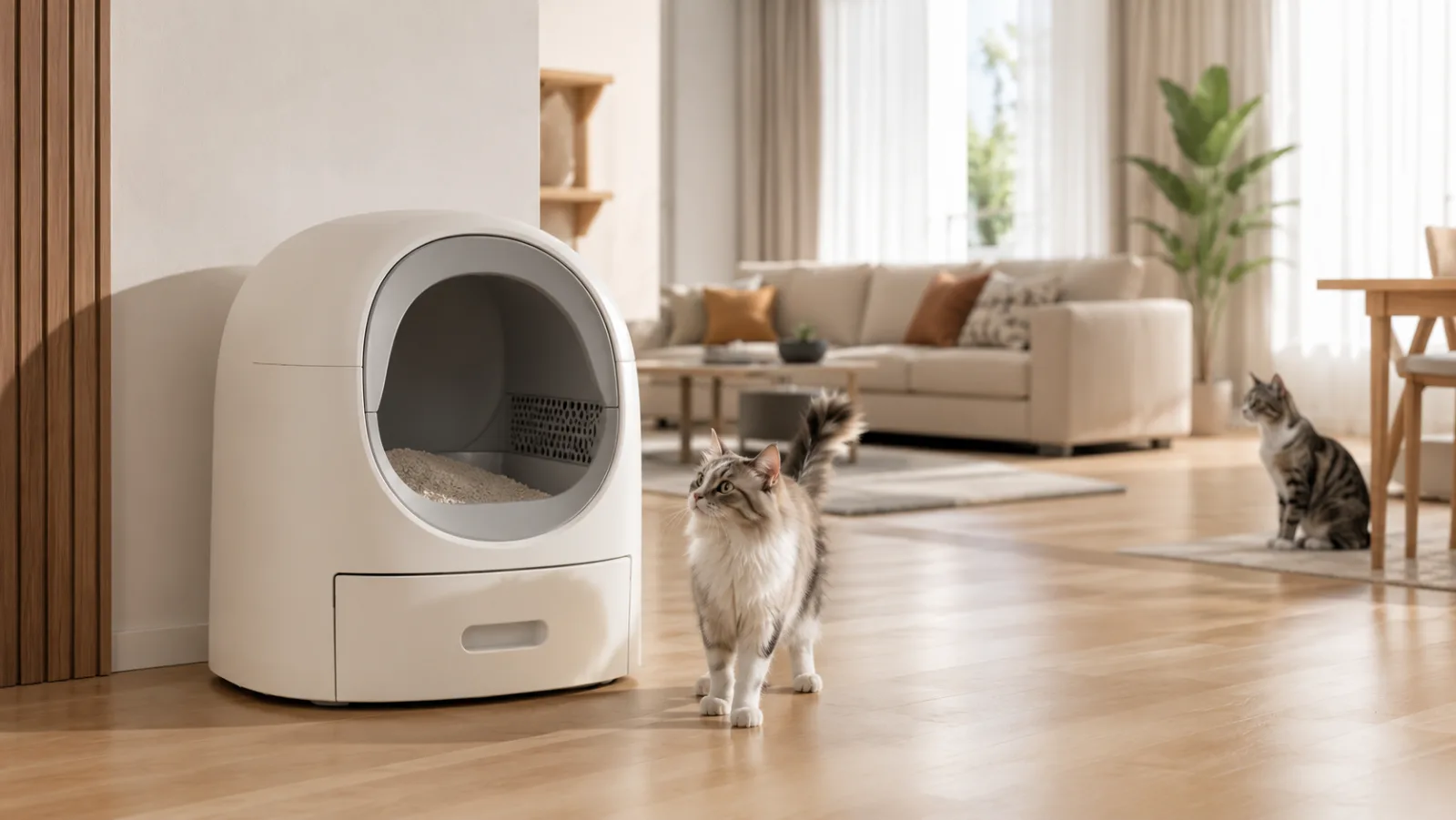
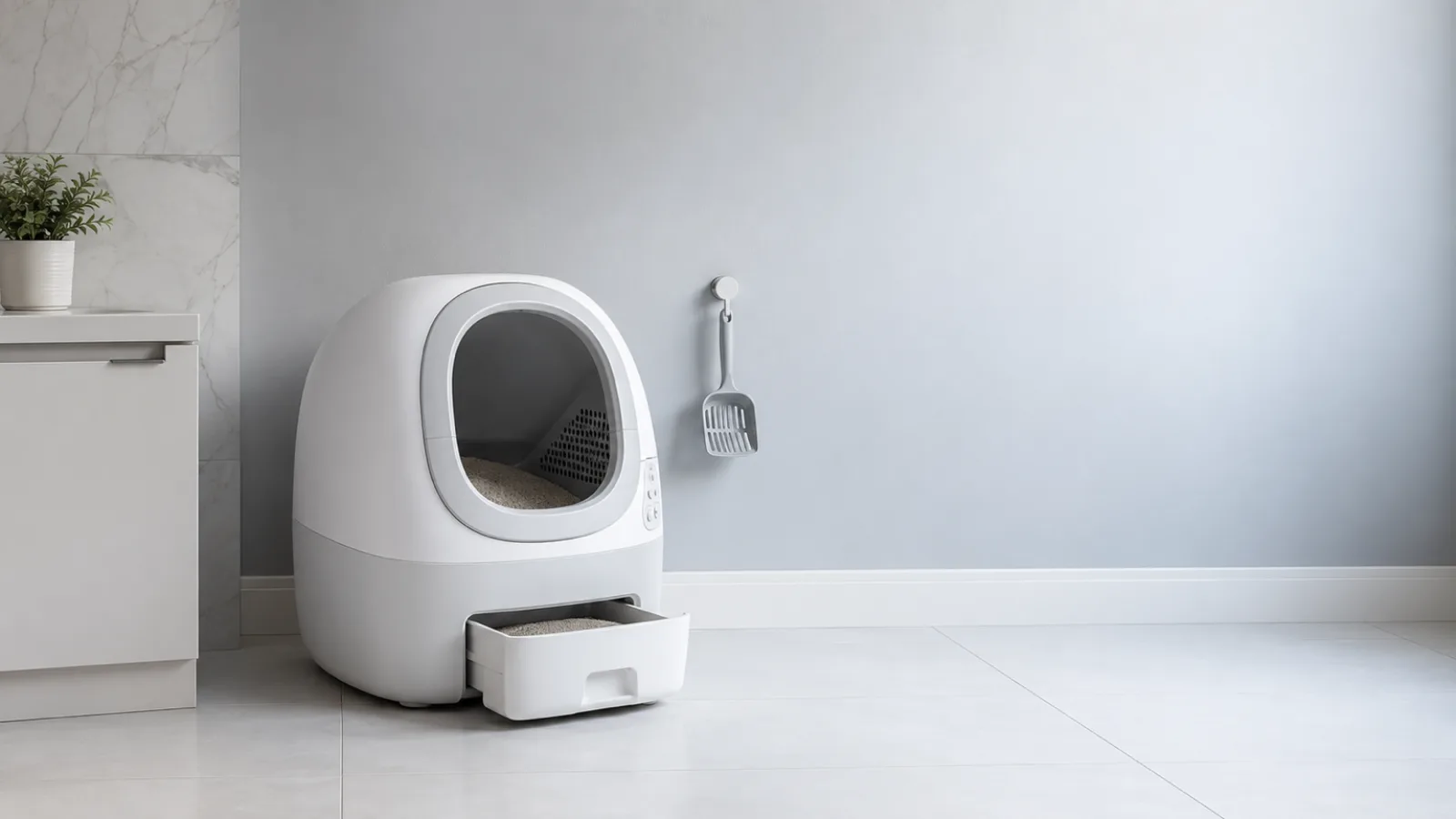
The Litter-Robot 4 Supply Bundle is the anchor of the station because it is the one appliance whose price actually earns the word "system." Whisker's documentation describes support for up to four cats with per-cat weight tracking, a large carbon-filtered waste drawer that can stretch to roughly eight days between empties for a single cat, app scheduling with cycle history, and a weight-triggered pause that stops the globe when a cat is inside. The Amazon listing surfaces the supply bundle rather than the bare unit: it packages three OdorTrap refills, ten waste-drawer liners, thirty cleaner wipes, and three carbon filters alongside the box, which is why it sits about fifty dollars above the standalone archetype price.
That bundling is the point, not a markup. The consumables in the box are exactly the recurring line items an automatic litter setup generates, so the bundle front-loads the first several months of replenishment into checkout day. The ASPCA's litter-box guidance is the welfare frame here: it recommends one box per cat plus one, and it is explicit that a cat who refuses a self-cleaning unit should be given a traditional box back. An automatic box removes the scooping chore; it does not override a cat's preference, and it is not a substitute for the litter-box hygiene the ASPCA treats as a health-monitoring habit.
What the spec sheet does not tell you: the litter itself is still the dominant monthly cost, and it is unchanged by automation. The bundle's accessories run in the low-hundreds per year — we run those three-year totals honestly in our are-automatic-litter-boxes-worth-it analysis — but a multi-cat home still buys clumping litter on the same cadence it always did. Whisker also gates the richest app data behind a paid Whisker+ tier, so budget the subscription-awareness this guide applies to feeders straight up into the litter tier. Buy the anchor when the household has multiple cats, the scooping chore is a real daily friction, and the budget absorbs the price plus a standing litter order.
What We Love
- Bundle front-loads the first round of OdorTrap refills, liners, and carbon filters
- Whisker-documented multi-cat support with per-cat weight tracking
- Fail-safe weight pause and app-reported cycle history
- Large waste drawer stretches the emptying interval for single-cat homes
What Could Be Better
- Highest price in the station by a wide margin
- Richest app data sits behind a paid Whisker+ subscription
- Litter remains the dominant monthly cost — automation does not reduce it
The Verdict
The synthesis pick when a multi-cat household wants one appliance to end the scooping chore and start its replenishment story with the consumables already in the box.
$599.00
- App-controlled automatic sifting with scheduled and on-demand cleaning cycles
- Weight-sensor safety that halts the cycle when a cat is detected
- Built-in odor control using replaceable carbon filters
- Health-adjacent reporting — Smarty Pear's app logs visit frequency and weight
- Lower entry price than the top-tier robot while keeping the same core automation
For the household that wants the scooping chore gone but not the flagship price, the Casa Leo Leo's Loo Too is the value anchor of the litter tier. Smarty Pear documents app-controlled automatic sifting, a weight-sensor safety stop, replaceable carbon-filter odor control, and app logging of visit frequency and weight — the same category of automation as the anchor, one price tier down. The health-adjacent reporting matters more than it sounds: the AAFP/ISFM Feline Environmental Needs framework treats predictable, monitorable resources as part of meeting a cat's behavioral needs, and a box that logs how often a cat visits is a passive early-signal tool, not just a convenience.
Where it fits the station: this is the pick when the litter subsystem needs to anchor the setup at a friendlier number so the feeding and water tiers still fit the budget. Its recurring costs are the same shape as the anchor's — replaceable carbon filters and liners on a standing reorder — just against a lower up-front spend. The ASPCA's one-box-per-cat-plus-one guidance still applies; a single automatic box does not change the resource-count math for a genuinely multi-cat home, and Smarty Pear's own documentation, like Whisker's, presumes a correctly sized litter bed and routine filter changes.
One caveat on the reporting: app-reported weight and visit logs are signal, not diagnosis. The Cornell Feline Health Center treats changes in litter habits as something to watch, and Merck's feline references treat sustained changes as clinical signs — a reporting box surfaces the pattern, but the vet interprets it. Choose Leo's Loo Too when the automation matters as much as the anchor's but the budget is better spent leaving room for the feeder and fountain, rather than concentrating it all in one appliance.
What We Love
- Full self-cleaning automation at a lower price than the flagship anchor
- Weight-sensor safety stop per Smarty Pear documentation
- App logs visit frequency and weight as a passive early-signal tool
- Leaves room in a station budget for the feeder and fountain tiers
What Could Be Better
- Still a several-hundred-dollar appliance, not a budget box
- App weight and visit data are signal, not diagnosis
- Replaceable carbon filters and liners are a standing recurring cost
The Verdict
Best when the household wants real litter automation but would rather spread the station budget across all three tiers than sink it into the single most expensive box.
Sources
- Smarty Pear: App-controlled self-cleaning with weight-sensor safety and carbon-filter odor control
- AAFP/ISFM: Multiple, separated, monitorable key resources
- ASPCA: One litter box per cat, plus one extra
$139.99
- Up to 10 scheduled meals per day per PETLIBRO documentation
- 1080p camera with wide-angle lens and night vision for a mealtime check-in
- Low-food alerts that flag a refill before the 5L hopper empties
- Two-way audio and Wi-Fi app control
- Battery backup so scheduled meals survive a power blip
The demand that names this tier is literal — households search for an "automatic pet feeder subscription meal plan auto reorder" — and the honest answer is that no consumer feeder reorders food by itself. What the PETLIBRO Granary Smart Camera Feeder does is close the loop the right way: it schedules up to ten meals a day per PETLIBRO's documentation, it sends a low-food alert before the 5L hopper runs dry, and it lets you set the exact kibble on Amazon Subscribe & Save so a fresh bag arrives on a cadence matched to how fast the hopper actually empties. The camera and two-way audio turn a missed-meal worry into a two-second visual check. The FelineVMA client brochure derived from the AAFP feline feeding consensus says cats do best on multiple small meals across the day, and ten scheduled slots give that guidance room.
Where it anchors the feeding tier: the feeder is a one-time buy, so the recurring cost is the food, and the "auto reorder" is a Subscribe & Save subscription you own rather than a proprietary lock-in. That is the cleaner economics — you can change brands, pause, or re-time the delivery without stranding a feeder-specific consumable. The low-food alert is the manual backstop that keeps the automated food order and the automated dispensing in sync.
The honest limit: this is a dry-food-first appliance, and it is not selective-access, so it confirms that a pet approached the bowl without stopping a second pet from eating first. Multi-pet homes with different diets get less from the Granary than single-diet homes — which is exactly the gap the next pick fills. And the vet-first rule overrides the schedule: the Merck Veterinary Manual treats sustained appetite loss as a clinical sign, and a feeder dispenses meals, it does not diagnose one.
What We Love
- Scheduling flexibility that matches FelineVMA small-meals guidance
- Low-food alert keeps a Subscribe & Save order in sync with real consumption
- Camera and two-way audio add a mealtime visual check-in
- Battery backup protects the schedule during a power interruption
What Could Be Better
- Dry-food-first — not a wet-food solution
- Not selective-access; does not stop a second pet from eating first
- App and firmware reliability vary by household and update cycle
The Verdict
The feeding tier's default when one pet or a single-diet home wants scheduled meals and an owned Subscribe & Save reorder rather than a proprietary refill lock-in.
Sources
- PETLIBRO: Up to 10 meals/day, 5L hopper, low-food alerts, 1080p camera
- Feline Veterinary Medical Association: Multiple small meals across 24 hours
- FDA: Keep dry food sealed, dry, and used before expiration
$149.99
- RFID collar-tag access — the bowl opens only for the assigned pet
- App scheduling and low-food alerts for Subscribe & Save timing
- Battery backup per PETLIBRO documentation
- Designed to stop multi-pet food stealing so per-pet intake is trackable
- PETLIBRO's FAQ confirms it reads collar tags, not implanted microchips
The multi-pet household has a different problem than the busy single-cat home: not whether meals happen, but who ate them. The PETLIBRO One RFID Smart Feeder answers the "which pet is eating what" question that the health-monitoring searches in this category really point at. PETLIBRO documents an RFID reader paired with a collar tag that unlocks the bowl only for the assigned pet, plus app scheduling and battery backup. When one bowl opens for one pet, the app's dispense log becomes a genuine per-pet intake record — the passive signal that PetMD's guidance on feeding multiple cats calls a meaningful tool for tracking what each cat actually eats.
Where it fits the station: pair it with the Granary rather than replacing it. The Granary handles the shared or single-diet meals and the camera check-in; the One RFID enforces separation where a prescription, weight-management, or senior diet cannot be allowed to reach the wrong pet. Its consumable story is the same as the Granary's — the food on Subscribe & Save, the low-food alert as the reorder backstop — with the added rule that each feeder syncs to one collar tag, so a true two-cat separation needs two feeders.
The dependency to plan around: the enforcement rides on the collar. PETLIBRO's FAQ is explicit that this is not an implanted-microchip feeder, so a slipped or lost tag defeats the separation until it is replaced. Shoppers who want chip-level enforcement should price the microchip tier in our multi-pet smart feeders guide instead. Use the One RFID when collar tags are acceptable and the real goal is an honest intake log, not a diagnosis — appetite changes still belong to the veterinarian, per the Merck Veterinary Manual.
What We Love
- Solves multi-pet diet theft so per-pet intake is actually trackable
- Owned Subscribe & Save reorder story, same as the Granary
- Battery backup and app scheduling included
- Aligned with PetMD and FelineVMA guidance on structured multi-cat feeding
What Could Be Better
- RFID collar tags only — no implanted-microchip support
- One collar tag per feeder; full two-cat separation needs two units
- Dry-food-first, like the Granary
The Verdict
The station's separation layer — add it alongside the Granary when a multi-pet home needs to know, and control, which pet eats which diet.
$75.99
- Up to five free-falling streams for multi-pet households, per PetSafe documentation
- Stainless steel bowl — easier to keep clean than scratch-prone plastic
- Replaceable carbon and foam filtration
- 128 oz (nearly one gallon) capacity for multiple pets or larger dogs
- Adjustable flow to suit cautious or confident drinkers
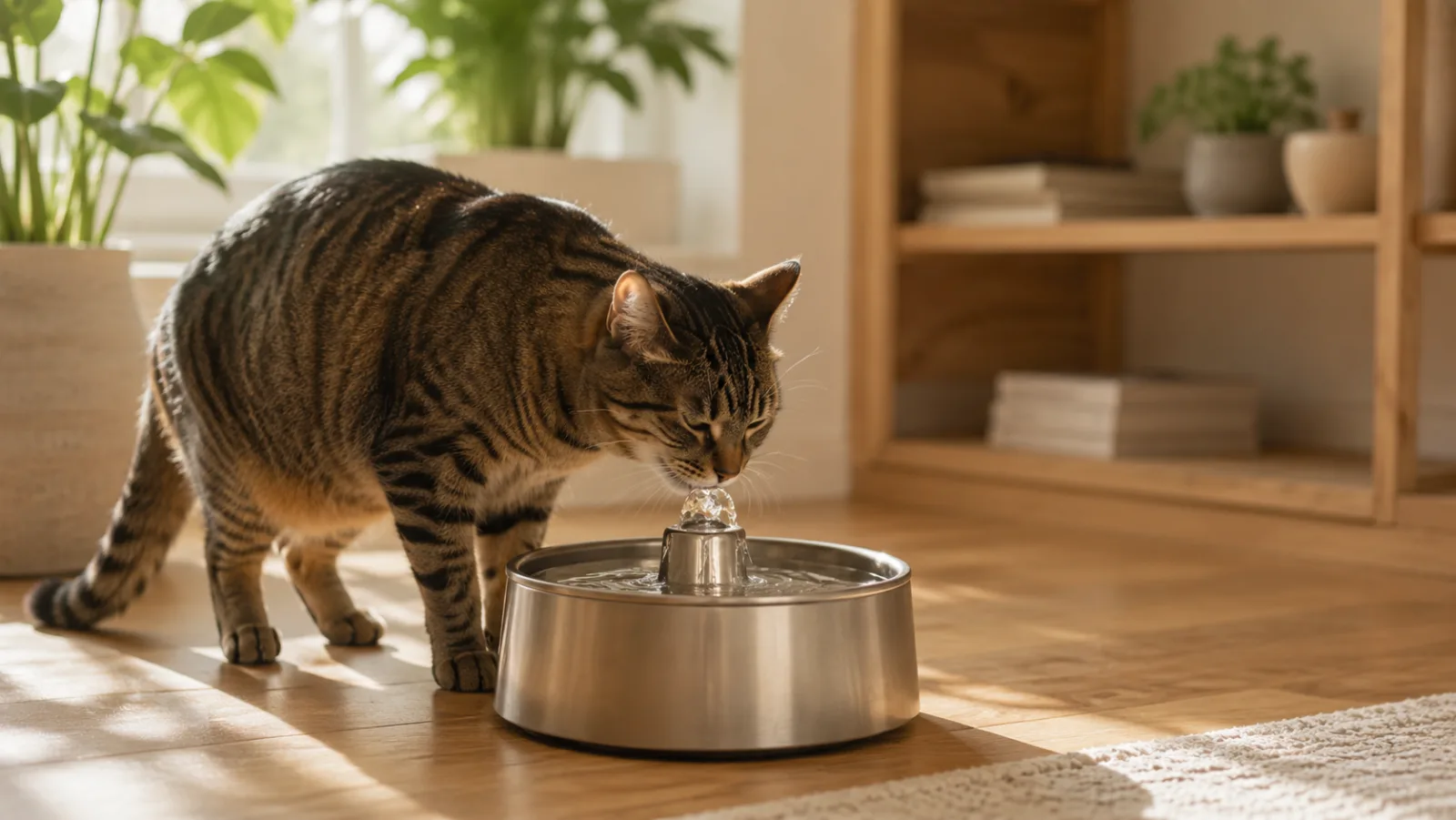
Water is the cheapest subsystem to automate and the clearest illustration of the station's real economics. The PetSafe Drinkwell Stainless Steel 360 documents up to five free-falling streams, a stainless bowl that resists the biofilm scratches plastic collects, replaceable carbon and foam filtration, and a nearly one-gallon reservoir sized for multiple pets. The Cornell Feline Health Center notes that many cats drink more readily from moving water, and a multi-stream stainless fountain is the durable, easy-to-sanitize way to offer it — the CDC's guidance to keep pet water bowls clean is far easier to honor on stainless than on scratched plastic.
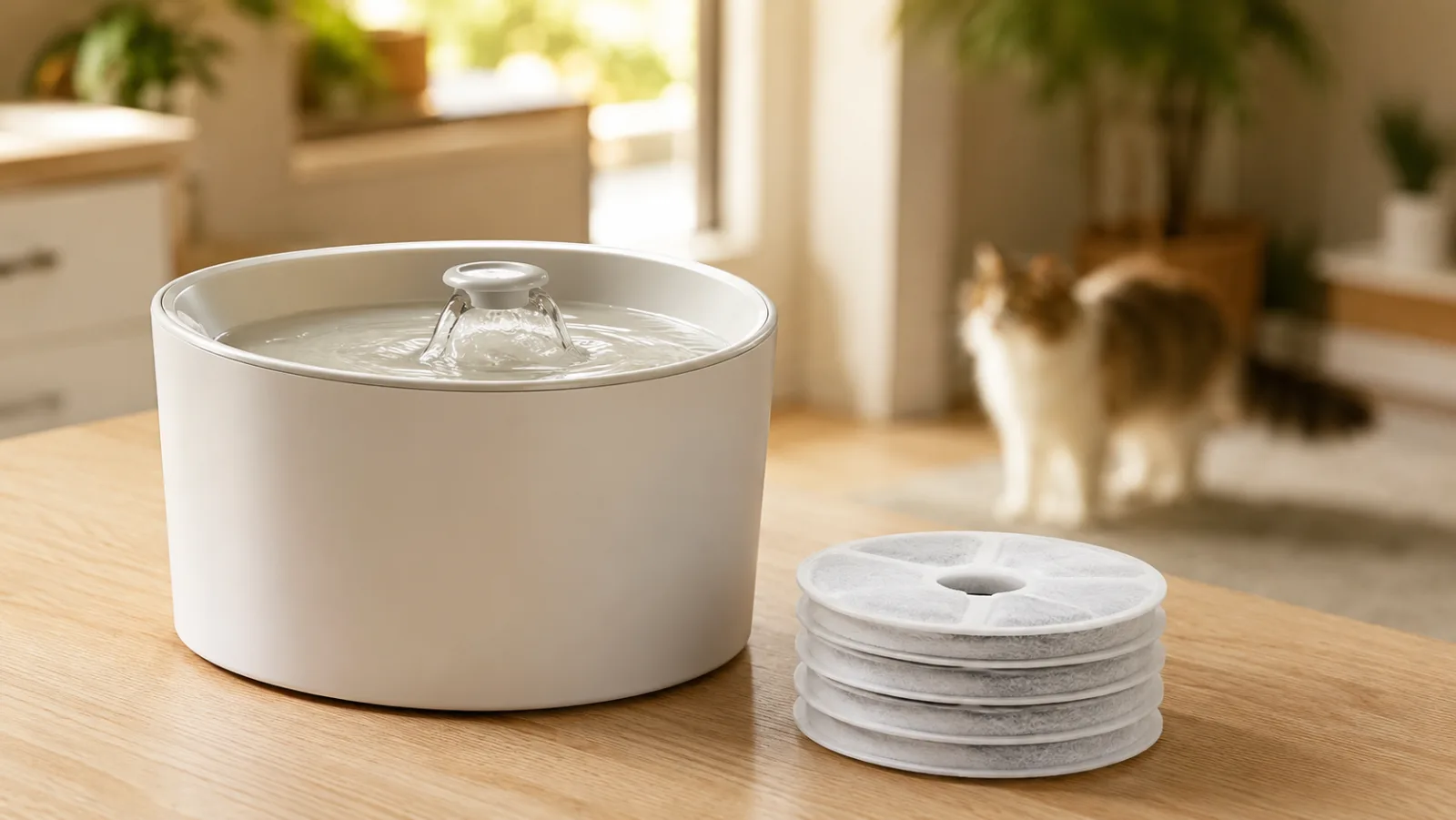
Where it fits the station: the fountain is a modest one-time buy, so the recurring cost is the filter, and that filter is the honest anchor of the replenishment math the rest of this guide builds toward. PetSafe's Drinkwell replacement carbon filters run about fourteen dollars for a twelve-pack, and PetSafe's guidance is to change the carbon filter roughly every two to four weeks. That is the whole subsystem's standing cost — a few dollars a month, trivially placed on Amazon Subscribe & Save so a fresh pack arrives before the last filter is used.
The failure mode to avoid: fountain filters are strictly model-specific, and mismatched or overdue filters are the usual failure mode, not the pump. A fountain that is not filtered on cadence is just a moving-water bowl, so the filter subscription is the part that actually makes the appliance work — our replacement-filter guide breaks down the compatibility rules brand by brand. Match the filter to the exact model, keep the change on schedule, and the water tier runs itself for the price of a coffee a month.
What We Love
- Multi-pet, multi-stream design in durable stainless steel
- Filter is the only meaningful recurring cost — a few dollars a month
- Nearly one-gallon capacity suits multi-cat homes and larger dogs
- Stainless bowl makes the FDA/CDC clean-water routine easy to keep
What Could Be Better
- Filters are model-specific — the wrong pack will not seal correctly
- Skipping the two-to-four-week filter change undoes the benefit
- Pump and reservoir still need periodic full cleaning, not just filter swaps
The Verdict
The water tier's workhorse — a durable multi-pet fountain whose cheap, on-cadence filter subscription is the clearest proof that the station's cost lives in the consumables, not the hardware.
How We Score
Formula
PetPal Gear Score = (Household Automation Fit × 0.30) + (Replenishment Economics × 0.25) + (Expert & Welfare Alignment × 0.25) + (Reliability & Fail-Safe × 0.20)
Score Factors
- Household Automation Fit · 30%
- How completely the appliance removes a repeating daily chore — waste, meals, or water — for a busy multi-pet household, rather than adding a gadget that still needs daily attention.
- Replenishment Economics · 25%
- Transparency and reasonableness of the recurring consumable cost, and whether the reorder can run on an owned program (Amazon Subscribe & Save) rather than a proprietary refill lock-in. PetPalHQ monetizes Amazon links; the Score does not reward any program for paying more.
- Expert & Welfare Alignment · 25%
- How well the product's documented behavior aligns with AAFP/ISFM environmental-needs guidance, ASPCA litter-box and general-care advice, Cornell Feline Health Center hydration and feeding references, and FDA/CDC food-and-water hygiene rules. PetPalHQ does not run a testing lab.
- Reliability & Fail-Safe · 20%
- Documented safety behavior (weight pauses, interrupted-cycle handling), backup power for scheduled tasks, and how easily every food- or water-contact surface can be reached and cleaned.
| Rank | Product | Score |
|---|---|---|
| #1 | Whisker Whisker Litter-Robot 4 Self-Cleaning Litter Box (Supply Bundle) | 9.3 |
| #2 | PETLIBRO PETLIBRO Granary Smart Camera Feeder | 9.0 |
| #3 | Smarty Pear Casa Leo Leo's Loo Too Self-Cleaning Litter Box | 8.7 |
| #4 | PetSafe PetSafe Drinkwell Stainless Steel 360 Multi-Pet Fountain | 8.6 |
| #5 | PETLIBRO PETLIBRO One RFID Smart Feeder | 8.5 |
When NOT to Buy
Skip the whole station — or any single tier of it — if the underlying issue is medical rather than logistical. The Merck Veterinary Manual and the Cornell Feline Health Center both treat sustained appetite loss, increased or decreased thirst, and changes in litter-box habits as clinical signs that warrant veterinary evaluation, not an automation purchase. A self-cleaning box that hides stool output can actually delay the detection of a urinary or GI problem the ASPCA tells owners to watch for, so pair any automatic box with the same habit of periodically checking what it clears. Skip an automatic litter box entirely for a cat that consistently refuses it — the ASPCA is explicit that a cat avoiding a self-cleaning unit should be given a traditional box back. Skip the Granary if your real need is wet-food scheduling or multi-pet diet separation; buy the wet-food or selective-access tier instead. Skip the One RFID if your pets will not reliably wear collars, since its enforcement rides on the tag. And skip the premium litter anchor if the budget cannot also cover the standing litter, food, and filter orders the station generates every month — the hardware is the down payment, not the total cost.
Frequently Asked Questions
- Can an automatic pet feeder really "auto reorder" food on a subscription meal plan?
- Not by itself — and it is worth being precise about why. No mainstream consumer feeder places its own food orders; what "auto reorder" means in practice is a Subscribe & Save subscription on the same kibble, timed to how fast the hopper empties, with the feeder's low-food alert as the manual backstop. The PETLIBRO Granary is a strong fit because its scheduling and alerts make that cadence easy to set. Treat the subscription as the reorder engine and the feeder as the dispenser, and you get the outcome the "meal plan auto reorder" search is really after, without a proprietary lock-in.
- Which litter box anchors the station, and is the bundle worth the extra over the bare unit?
- The Whisker Litter-Robot 4 Supply Bundle is the anchor for a multi-cat home, and the roughly fifty-dollar premium over the standalone archetype is a starter stock of consumables moved to checkout day, not a different worth-it answer. The bundle includes the box plus OdorTrap refills, waste-drawer liners, cleaner wipes, and carbon filters — exactly the recurring items an automatic box generates. If a lower entry price matters more than the flagship's feature set, the Casa Leo Leo's Loo Too is the value alternative with the same core automation.
- How much do cat fountain replacement filters actually cost per month?
- For the PetSafe Drinkwell line, about a few dollars a month. A twelve-pack of Drinkwell carbon filters runs roughly $14, and PetSafe recommends changing the carbon filter every two to four weeks, so a single pack covers somewhere between six months and nearly a year depending on cadence. The important discipline is not the cost but the match: fountain filters are strictly model-specific, so confirm the exact model before ordering, which our replacement-filter guide breaks down brand by brand.
- Do I need two feeders for a multi-pet home with different diets?
- If the diets genuinely cannot be crossed — a prescription, weight-management, or senior food that must not reach the wrong pet — then yes, because the PETLIBRO One RFID syncs one collar tag per feeder, so full two-pet separation needs two units. Pair each One RFID with the shared Granary rather than replacing it: the Granary handles the common meals and the camera check-in, the One RFID enforces the separation. If your pets simply share the same food and no one steals, a single Granary is enough.
- Does a self-cleaning litter box hide health signals I should be watching?
- It can, and that is a real trade-off worth managing rather than ignoring. The ASPCA and Cornell Feline Health Center both treat litter-box output — frequency, stool quality, straining — as an early-warning window, and a box that clears waste automatically removes the daily glance that surfaces those signs. The mitigation is to use the app data (visit frequency and, on the reporting boxes, per-cat weight) as your new signal and to periodically check the waste drawer directly. Automation should replace the chore, not the monitoring.
- What should I automate first if I cannot buy the whole station at once?
- Water, then feeding, then litter — cheapest and lowest-risk to most expensive. A fountain is a sub-$80 buy with a few-dollars-a-month filter, so it delivers the always-fresh benefit immediately at minimal risk. Feeding is the next step for a household whose schedule is the real problem. The litter robot is the largest commitment and the one most worth running the worth-it math on first, since it carries both the highest sticker and the largest standing consumable cost. The weekend-away pet automation checklist walks the same sequence for shorter absences.
Bottom Line
Start with the litter tier: the Whisker Litter-Robot 4 Supply Bundle is the anchor for a multi-cat home because it front-loads its own consumables and tracks up to four cats; the Casa Leo Leo's Loo Too is the value alternative when the budget should stretch across all three tiers.
Add the feeding tier: the PETLIBRO Granary pairs scheduled meals and low-food alerts with an owned Amazon Subscribe & Save food order — the only honest form of 'auto reorder' — and the PETLIBRO One RFID adds diet separation so a multi-pet home knows which pet ate.
Finish with water: the PetSafe Drinkwell Stainless 360 is a durable multi-pet fountain whose ~$14 twelve-pack of carbon filters, changed every two to four weeks, is the cheapest and clearest example of the station's real recurring cost.
Buy the hardware once; budget the consumables forever. The station that wins is the one whose litter, food, and filter reorders you set up — and understood — before you clicked buy.
Sources & Methodology
Methodology
PetPal Gear Score = (Household Automation Fit × 0.30) + (Replenishment Economics × 0.25) + (Expert & Welfare Alignment × 0.25) + (Reliability & Fail-Safe × 0.20)
Expert review sources
- American Association of Feline Practitioners and International Society of Feline Medicine — Feline Environmental Needs Guidelines
- ASPCA — General Cat Care; Litter Box Problems
- Cornell Feline Health Center — Hydration and feeding-frequency references
- Feline Veterinary Medical Association — How to Feed a Cat client brochure
- Merck Veterinary Manual — Nutritional Requirements and Feeding Practices in Small Animals; Anorexia and appetite-loss guidance
- FDA — Proper Storage of Pet Food and Treats; Tips for Safe Handling of Pet Food and Treats
- CDC — Cleaning and disinfecting pet supplies; Healthy Pets, Healthy People
- Whisker — Litter-Robot 4 product documentation
- Smarty Pear — Leo's Loo Too product documentation
- PETLIBRO — Granary Camera Feeder and One RFID product documentation and FAQ
- PetSafe — Drinkwell Stainless Steel 360 Multi-Pet Fountain product documentation
- PetMD — Feeding Multiple Cats
Community sources
- Cats.com — Litter-Robot review and automatic litter box roundups
- The Spruce Pets — automatic feeders and cat fountains coverage
- Reviewed — pet fountain and feeder coverage
- r/Litterrobot and r/Petlibro hobbyist threads (signal, not authority)
Prices and specs verified July 24, 2026.
About the author
Nick Miles is the chief editor of PetPalHQ. The picks above are editorial synthesis of expert consensus and manufacturer documentation — PetPalHQ does not run a testing lab. Prices and sellers were verified live against the Amazon Creators API on 2026-07-24. The PetPal Gear Score is a composite of expert opinion, welfare guidance, and documented specifications, not a measurement. Sources are cited by name throughout.
PetPalHQ is a participant in the Amazon Services LLC Associates Program. We may earn commissions from qualifying purchases — at no extra cost to you.
More Guides
Cats & Dogs
Pet Home Systems, Cleanup, and Travel Gear for Cats and Dogs (2026 Guide)
Cats & Dogs
Best Automatic Pet Feeders for Busy Families (2026)
Cats & Dogs
Best Self-Cleaning Litter Boxes for Large and Multi-Cat Homes (2026)
Cats & Dogs
Are Automatic Litter Boxes Worth It? (2026)
Cats & Dogs
Best Cat Water Fountains for Hydration, Cleaning Ease, and Quiet Operation (2026)
Cats & Dogs
Best Cat Water Fountain Replacement Filters (2026)
Cats & Dogs
Best Smart Pet Feeders for Multi-Pet Homes: Microchip, RFID, and Wet-Food Picks (2026)
Cats & Dogs