Cats & Dogs
GPS Containment and Pet Tracking Systems for Dogs and Cats (2026 Guide)
Prevention and recovery are two different purchases. This hub separates them, prices the subscriptions honestly, and states the welfare position on static correction in full.
By Nick Miles · Updated September 26, 2026 · 14 min
PetPalHQ is reader-supported. We may earn a commission from qualifying Amazon purchases at no extra cost to you.

Evidence at a Glance
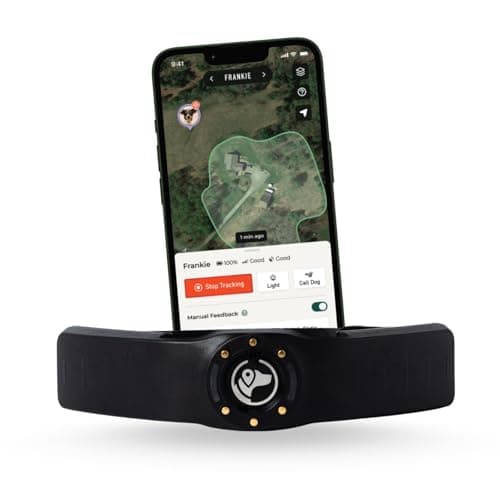
SpotOn GPS Dog Fence Collar, Nova Edition
The only containment system here whose fence works with no subscription at all — SpotOn states that without a plan you can still create GPS fences and train your dog to stay in, and that standard features including unlimited fences need neither cellular service nor Wi-Fi. Real-time tracking is the paid add-on, not the fence.
Sources: SpotOn manufacturer subscription page, SpotOn manufacturer product page
Verified Aug 21, 2026
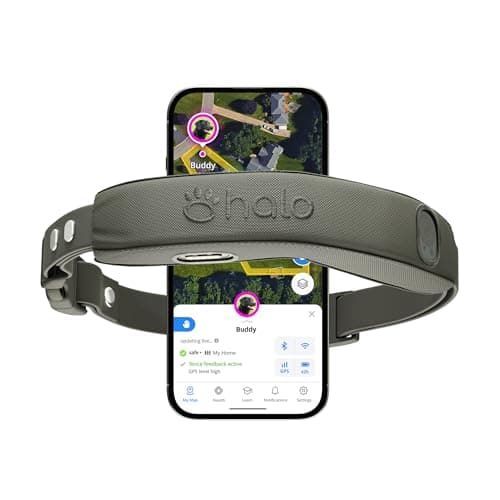
Halo Collar 5 GPS Wireless Dog Fence
Containment and live tracking in one collar at half SpotOn's price, with the trade-off stated on Halo's own site: a Pack Membership Plan is required to activate and maintain GPS services and to create, edit, and use wireless fences, and a plan is required for each collar.
Sources: Halo manufacturer home page, Halo manufacturer shop page
Verified Aug 21, 2026
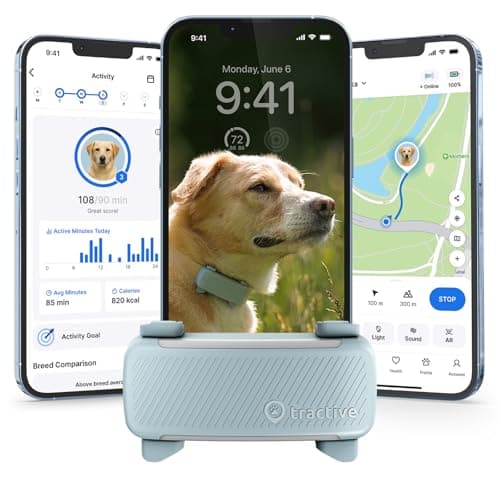
Tractive Smart Dog GPS Tracker
The recovery layer with no correction in it at all. Tractive's Virtual Fence sends an instant alert to your phone when the pet crosses a safe-zone boundary — that is the entire mechanism, which is exactly why it is the option that carries no welfare argument against it.
Sources: Tractive Virtual Fences product page, Tractive plans page
Verified Aug 21, 2026
Our Picks
SpotOn
SpotOn GPS Dog Fence Collar, Nova Edition
8.0 / 10
- The fence itself needs no subscription — SpotOn sells tracking as the optional plan, not containment
- Standard features including unlimited fences work without cellular service or Wi-Fi, per SpotOn
- Optional tracking plans published at $9.95 monthly, $8.49 a month on a one-year plan, or $7.49 a month on a two-year plan
- Fits dogs of at least 15 pounds with necks of 10 to 26 inches
$999.00
Current price · checked Sep 8, 2026
Halo
Halo Collar 5 GPS Wireless Dog Fence, Graphite
7.5 / 10
- Containment and real-time tracking in a single collar, so an escape becomes a live map rather than a search
- A Pack Membership is required to create, edit, and use wireless fences, per Halo's own home page
- Published tiers from $9.99 a month (Bronze) through $14.99 (Silver) to $19.99 (Gold)
- A plan is required for each collar, so multi-dog households multiply the recurring cost
$524.00
Current price · checked Sep 26, 2026
Tractive
Tractive Smart Dog GPS Tracker, Live Pet Tracker with Virtual Fence
6.7 / 10
- Tractive's Virtual Fence sends an alert to your phone — it delivers no correction and contains nothing
- Live location, which is the layer a containment-only system such as the PetSafe Guardian cannot give you
- Published plans from $9 a month on a one-year Basic plan down to $5 a month on a five-year Premium plan
- The subscription covers the built-in SIM and mobile-network fees, per Tractive
$55.30
Current price · checked Sep 8, 2026
PetSafe
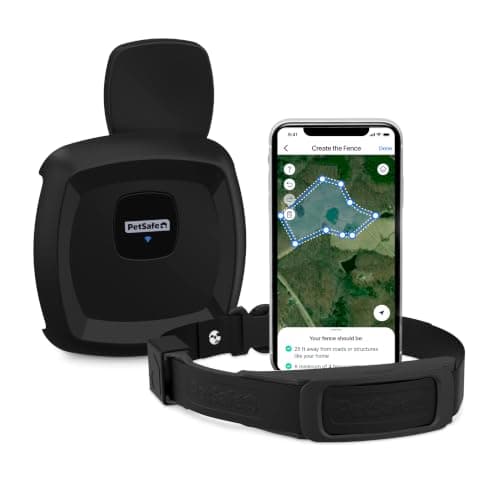
PetSafe Guardian GPS Dog Fence, 3/4 Acre or Larger
6.5 / 10
- PetSafe states plainly: no subscription fees or hidden costs, ever
- Published for properties of three-quarters of an acre or larger — smaller lots are outside its design envelope
- Designed for dogs weighing over 25 pounds, with neck sizes from 13 to 28 inches
- No location tracking of any kind, so an escape is a search rather than a map
$389.99
Current price · checked Sep 26, 2026
Tractive
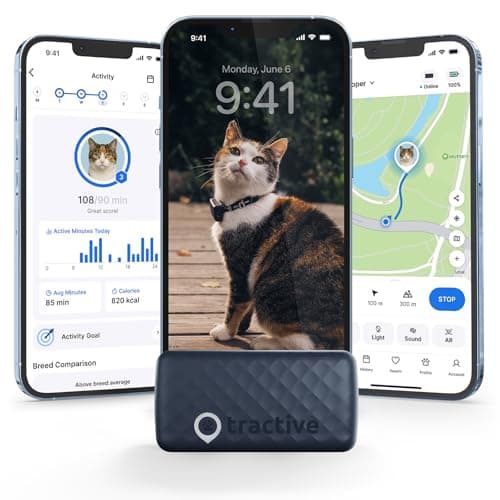
Tractive Smart Cat GPS Tracker, Real-Time Location and Wellness
6.4 / 10
- Live location for an outdoor cat, which is the only category that exists here — there is no cat containment tier
- This variant publishes its own floor on the listing - cats 6.5 lbs and up - which still rules out kittens and very small adults
- Same published plan structure as the dog trackers
- No stimulus of any kind, which is the only acceptable answer for a cat
$49.99
Current price · checked Sep 8, 2026
The Short Answer
Containment and tracking are two separate purchases that solve two separate problems, and the most expensive mistake in this category is buying one while believing you bought the other. A GPS fence tries to stop the dog leaving; a GPS tracker tells you where the dog went. Tractive's own product page is explicit that its Virtual Fence sends you an alert when the pet crosses the boundary — there is no correction and no containment in it. On the containment side the fork is subscriptions: SpotOn's $999.00 collar creates and runs fences with no plan at all, while Halo states plainly that a Pack Membership is required to create, edit, and use wireless fences, from $9.99 a month per collar. The PetSafe Guardian at $389.99 sits in between — no subscription ever, but properties of three-quarters of an acre or larger and dogs over 25 pounds only. Before buying any static-correction system, read the welfare section below: the AAHA and AVSAB both name electronic shock collars among the tools they say should not be used.
Every product on this list has been scored against the PetPal Gear Score, a weighted composite of expert consensus, observed effectiveness, animal safety, long-term durability, and value. Review method: Editorial synthesis of manufacturer documentation from Halo, PetSafe, SpotOn, and Tractive — every subscription rate, weight floor, and neck-size range on this page was re-fetched from the manufacturer's own live pages on August 21, 2026 — together with the American Animal Hospital Association's 2015 Canine and Feline Behavior Management Guidelines, the American Veterinary Society of Animal Behavior's 2021 Position Statement on Humane Dog Training, RSPCA welfare guidance, and VCA Animal Hospitals' clinical explainer on invisible fences. Prices, availability, listing condition, and listing seller were verified against the Amazon Creators API on August 21, 2026. PetPalHQ does not run a containment testing lab.. Synthesized from 8+ expert sources.
Almost every bad outcome in this category traces back to one confusion, and the industry's own vocabulary causes it. A "virtual fence" sold by a tracker company is a phone notification. A "virtual fence" sold by a containment company is a boundary the collar tries to enforce. Same two words, entirely different product, and a household that buys the first believing it bought the second finds out on the day the gate is left open.
This hub separates the two categories, prices the subscriptions from the manufacturers' own live pages, and states the veterinary-body position on static correction in full — because that position exists, it is not ambiguous, and a guide that hid it would be selling rather than advising.
Two Categories, Two Different Jobs
Everything on PetPalHQ in this space sorts into one of two buckets.
- Containment tries to prevent the animal leaving a boundary. It is a collar that delivers a warning and then a static correction as the dog approaches the line. SpotOn, Halo, and the PetSafe Guardian are all containment.
- Recovery tells you where the animal is once it has already gone. It is a cellular GPS tag with an app behind it. Tractive and Fi are recovery.
Nothing sold to consumers does both jobs equally well from a single device except the Halo, and it charges a permanent subscription for the privilege. Most households that care seriously about escape end up owning one of each — a fence for the boundary and a tag for the day the boundary fails.
What a GPS Fence Can and Cannot Do
The capabilities are real. So are the limits, and the limits are published by the manufacturers themselves rather than uncovered by critics.
| The claim | What the manufacturer actually publishes |
|---|---|
| "Works on any property" | PetSafe publishes the no-subscription Guardian for properties three-quarters of an acre or larger |
| "Fits any dog" | Guardian: over 25 pounds, 13–28 in neck. SpotOn: at least 15 pounds, 10–26 in. Halo: over 10 pounds, 8–30 in |
| "Keeps your dog safe in the yard" | VCA: invisible fences "do not prevent hazards from entering the yard" — stray dogs and wildlife still get in |
| "Your dog can't get out" | VCA: a frightened or highly motivated dog "may breach the electric fence, ignoring the electric stimulus" |
Those last two rows are the ones that change decisions. A virtual fence is a one-directional deterrent addressed to your dog. It has no effect at all on what comes into the yard, and it is a deterrent rather than a wall for the dog it is addressed to.
The Correction Question, Stated in Full
Every containment product on this page works by delivering a static correction. The professional bodies have published positions on that class of tool, and they are not neutral.
The American Animal Hospital Association's 2015 Canine and Feline Behavior Management Guidelines list electronic shock collars among aversive techniques and state that "none of those tools and methods should be used to either teach or alter behavior." The same guidelines warn that animals "repeatedly exposed to inescapable unpleasant or painful stimuli may develop learned helplessness."
The American Veterinary Society of Animal Behavior's 2021 Position Statement on Humane Dog Training recommends "that only reward-based training methods are used for all dog training," and says an appropriate trainer "should avoid any use of training tools that involve pain (choke chains, prong collars, or electronic shock collars)." The RSPCA's guidance is that "the electric shock can cause physical problems. It can also cause behaviour issues linked with pain, fear and stress."
Two honest observations about applying that to containment specifically. First, none of those statements is about GPS fences as such — AVSAB's is about training methods, and it does not mention containment at all. Second, the tool class is the same, and a reader deciding whether to put a correction collar on their dog deserves to know the professional position before they buy rather than after.
The practical consequence for this hub is simple. If the welfare argument is decisive for you, the recovery tier is a complete product category with none of it attached, and it starts at $49.99.
What a Tracker Can and Cannot Do
Tractive's Virtual Fences page states the mechanism in one line: "If your pet crosses a safe zone boundary or enters a no-go zone, you'll receive an instant alert to your phone." Nothing on that page describes a correction, a stimulus, or any containment mechanism, because there is not one.
That is a genuine capability and a real limit at the same time. An alert on your phone is enormously valuable if you are home and the dog just left. It is worth nothing at all if the phone is in another room, and it prevents nothing in either case.
Trackers also carry a hard dependency: the device holds a SIM, so it needs both an active plan and mobile coverage wherever the animal actually went. Tractive's published plans run from $9 a month on a one-year Basic plan through to $5 a month on a five-year Premium plan.
The Subscription Fork Runs Through Both Categories
This is where the real money lives, and where the published rates diverge most sharply. All figures below were re-fetched from the manufacturers' own pages on August 21, 2026.
- SpotOn — the fence needs no plan at all. Tracking is the paid add-on: $9.95 monthly, $8.49 a month billed annually at $101.88, or $7.49 a month on a two-year plan at $179.76.
- Halo — the fence itself requires a plan. Published tiers start at $9.99 a month for Bronze, $14.99 for Silver, and $19.99 for Gold, with additional collars at $9.99 a month and a plan required for each collar. Annual totals are not published as dollar figures.
- PetSafe Guardian — "No subscription fees or hidden costs – ever."
- PetSafe Guardian GPS 2.0 — the tracking-equipped sibling does charge: "$9.99 for 1 month (includes a 1-month trial) or $99 for a 1-year plan."
- Tractive — Basic at $9 a month on a one-year plan ($108) or $6 on a two-year ($144); Premium at $10, $7, and $5 a month on one-, two-, and five-year plans ($120, $168, $300).
One structural note that the sticker prices hide: Halo charges per collar. A two-dog household on Bronze pays twice, every month, for as long as both dogs wear a collar. Over a ten-year ownership window that is the difference between the cheapest collar on the page and the most expensive system on it.
Cats Have Trackers, Not Containment
There is no cat equivalent of a GPS fence, and there should not be. Every cat product in this space is a recovery device.
The buying constraints are consequently different. Fit is by weight, and it is published per variant rather than per brand — Tractive sells several cat models with different floors, and the one linked on this page states "for Cats 6.5 lbs+" in its own listing title. Read the floor on the exact variant you are buying. A breakaway collar is non-negotiable for any outdoor cat, which means accepting that the collar and the tracker on it can be lost together. That is a feature: a cat hung on a fence by a non-breakaway collar is a far worse outcome than a lost tracker.
Training Comes Before Unsupervised Use
None of these systems is a set-and-forget purchase, and the manufacturers themselves build introduction programmes into their onboarding rather than shipping a collar you switch on.
The reason is visible in VCA's account of how these systems fail: a dog that is frightened or highly motivated may breach the boundary and ignore the stimulus entirely. A dog that has been taught where the edge is, using flags and supervised sessions and reward-based reinforcement, is a dog that retreats from the line rather than testing it. A dog that has only been corrected at it has learned that the yard perimeter is where unpleasant things happen — which is the mechanism behind the learned-helplessness warning in the AAHA's guidelines.
If you take one thing from this hub into a purchase, take this: the collar is the second thing you buy. The first is the time to introduce it properly, and if that time does not exist in your household, neither does the containment.
Head-to-Head Comparison
| Feature | SpotOn GPS Dog Fence Collar, Nova Edition | Halo Collar 5 GPS Wireless Dog Fence, Graphite | Tractive Smart Dog GPS Tracker, Live Pet Tracker with Virtual Fence | PetSafe Guardian GPS Dog Fence, 3/4 Acre or Larger | Tractive Smart Cat GPS Tracker, Real-Time Location and Wellness |
|---|---|---|---|---|---|
| What it actually does | Containment | Containment and tracking | Tracking only | Containment only | Tracking only |
| Subscription required to do that job | No | Yes | Yes | No | Yes |
| Published fit floor | 15 lb, 10-26 in neck | 10 lb, 8-30 in neck | No published floor - collar-mounted | Over 25 lb, 13-28 in neck | 6.5 lb, per this variant's listing |
| Delivers static correction | Yes | Yes | No | Yes | No |
| Escape-Risk Coverage Score | 8.0 | 7.5 | 6.7 | 6.5 | 6.4 |
| Check price | Amazon | Amazon | Amazon | Amazon | Amazon |
$999.00
Current price · checked Sep 8, 2026
- The fence itself needs no subscription — SpotOn sells tracking as the optional plan, not containment
- Standard features including unlimited fences work without cellular service or Wi-Fi, per SpotOn
- Optional tracking plans published at $9.95 monthly, $8.49 a month on a one-year plan, or $7.49 a month on a two-year plan
- Fits dogs of at least 15 pounds with necks of 10 to 26 inches
- Uses static correction, which the AAHA and AVSAB both advise against as a training tool
SpotOn is the structural outlier in this category and the reason the hub leads with it: the containment function is not rented. SpotOn's own subscription page states that without a plan you can still create GPS fences and train your dog to stay in — what you lose is location visibility and tracking features. Its product page goes further, saying standard features including unlimited fences require neither cellular service nor Wi-Fi.
That matters more than the sticker. A $999.00 collar that keeps working forever and a $524.00 collar that becomes inert the month a card expires are not the same product at different prices; they are different ownership models. If you want the arithmetic run out over one, three, and five years across the whole category, that is what the total-cost comparison spoke is for.
Tracking is where SpotOn charges. Published plans are $9.95 monthly, $8.49 a month billed annually at $101.88, or $7.49 a month on a two-year plan at $179.76. Buying the collar without a plan is a coherent decision — you get containment and no map.
The honest limits: this is a static-correction system, and the fit floor is 15 pounds with a 10-to-26-inch neck. Read the welfare section on this page before deciding that correction-based containment is the right approach for your household at all.
What We Love
- The fence works with no subscription — the only pick here where containment is bought outright
- Unlimited fences without cellular service or Wi-Fi, per SpotOn's own product page
- Tracking plan prices are published clearly rather than left to a sales call
- Published fit floor of 15 pounds reaches smaller dogs than the no-subscription PetSafe
What Could Be Better
- The highest upfront price in the category by a wide margin
- Location tracking is a separate recurring cost, so the escape-recovery layer is not included
- Static correction, which the AAHA and AVSAB name among tools they say should not be used
- Not suitable below 15 pounds or outside the 10-to-26-inch neck range
The Verdict
Get the SpotOn Nova if you want containment you own rather than rent, and you can absorb a four-figure purchase. It is the only system here whose fence keeps working when the billing stops.
Sources
- SpotOn (manufacturer subscription page): Without a plan, you can create GPS fences and train your dog to stay in, but without seeing his location and accessing tracking features
- SpotOn (manufacturer product page): SpotOn does NOT require cellular service or Wi-Fi for standard features, including unlimited fences; fits dogs weighing at least 15 pounds with necks measuring 10-26 inches
$524.00
Current price · checked Sep 26, 2026
- Containment and real-time tracking in a single collar, so an escape becomes a live map rather than a search
- A Pack Membership is required to create, edit, and use wireless fences, per Halo's own home page
- Published tiers from $9.99 a month (Bronze) through $14.99 (Silver) to $19.99 (Gold)
- A plan is required for each collar, so multi-dog households multiply the recurring cost
- Halo's own pages give two different maximum neck sizes — 30 inches on the shop page, 30.5 inches on the home page
The Halo Collar 5 is the pick for households that want prevention and recovery from one device. Where the PetSafe Guardian contains and cannot track, and a Tractive tracks and cannot contain, the Halo does both — and prices that convenience as a permanent subscription.
Halo is admirably direct about the terms. Its home page states that a Pack Membership Plan is required to activate and maintain GPS services, cellular data, and to create, edit, and use wireless dog fences. That is not a features paywall; it is the fence. When we re-fetched Halo's shop page on August 21, 2026, published tiers ran from $9.99 a month for Bronze through $14.99 for Silver to $19.99 for Gold, with additional collars at $9.99 a month and a plan required for each collar.
Two details worth carrying into a purchase. First, multi-dog households pay per collar, so a two-dog yard doubles the recurring line rather than sharing it. Second, Halo's annual figures are not published as dollar amounts — the site offers a free month on annual billing and three free months on two-year billing without printing the totals, so the annual cost has to be derived rather than read.
One small inconsistency, noted because a fit spec is a safety spec: Halo's home page gives a neck range of 8 to 30.5 inches for dogs over five months and over 10 pounds, while its shop page lists 8 to 30 inches. Measure and buy against the narrower figure.
What We Love
- Prevention and live recovery tracking in a single collar and a single app
- Reaches down to roughly 10-pound dogs, well below the no-subscription PetSafe's 25-pound floor
- Monthly tier prices are published plainly on the shop page
- Lists at $599.00 against the SpotOn's $999.00, and was discounted to $524.00 on Amazon at our August 21, 2026 check
What Could Be Better
- The fence itself stops working without an active membership, per Halo's own wording
- A plan is required for each collar, so multi-dog costs scale linearly
- Annual and two-year totals are not published as dollar figures
- Static correction, with the AAHA and AVSAB positions below applying in full
The Verdict
Get the Halo Collar 5 if you want containment and live tracking from one collar and you accept a permanent per-collar subscription. Price the membership across your dog's whole life before deciding it is the cheaper collar — and note the $524.00 is a promotion against a $599.00 list price on both the listing and Halo's own shop page.
Sources
- Halo (manufacturer home page): A Pack Membership Plan is required to activate and maintain GPS services, cellular data (just like your cell phone), and create, edit, and use wireless dog fences
- Halo (manufacturer shop page): published membership tiers from $9.99 a month (Bronze), $14.99 (Silver) and $19.99 (Gold), with additional collars at $9.99 a month and a plan required for each collar
$55.30
Current price · checked Sep 8, 2026
- Tractive's Virtual Fence sends an alert to your phone — it delivers no correction and contains nothing
- Live location, which is the layer a containment-only system such as the PetSafe Guardian cannot give you
- Published plans from $9 a month on a one-year Basic plan down to $5 a month on a five-year Premium plan
- The subscription covers the built-in SIM and mobile-network fees, per Tractive
- No static stimulus at all, so none of the welfare arguments below apply to it
The single most useful sentence in this whole category is on Tractive's own Virtual Fences page: if your pet crosses a safe zone boundary or enters a no-go zone, you will receive an instant alert to your phone. Read it carefully. The alert is the mechanism. There is no correction, no stimulus, and no containment anywhere in it.
Names in this category are actively misleading — "virtual fence" reads like a fence — so the distinction is worth spelling out. A Tractive tells you the dog left. A GPS fence collar tries to stop the dog leaving. A household that buys a tracker believing it bought containment has bought a very good product for a problem it does not solve.
The subscription here is unavoidable and openly priced. Tractive's plans page, re-fetched August 21, 2026, lists Basic at $9 a month on a one-year plan ($108 a year) and $6 a month on a two-year plan ($144), and Premium at $10, $7, and $5 a month on one-, two-, and five-year plans ($120, $168, and $300 respectively). Tractive explains why: the tracker carries a built-in SIM and the plan covers the mobile-network fees.
The reason this pick sits third on a containment hub rather than last is that for a large share of households it is the correct purchase. If your yard is already fenced and the real risk is a gate left open, recovery is what you need — and it comes with no welfare argument attached.
What We Love
- No static stimulus, so it sidesteps the welfare question entirely
- Live location, the layer a no-subscription containment system cannot provide
- Plan prices published openly across one-, two-, and five-year terms
- An order of magnitude cheaper than any containment collar here
What Could Be Better
- Contains nothing — the Virtual Fence is a notification, not a boundary
- Unusable without an active plan, because the plan carries the cellular connection
- Recovery depends on mobile coverage where the dog actually went
- Adds a device to charge, which is a habit rather than a feature
The Verdict
Get the Tractive if your real problem is finding the dog rather than holding the boundary. Just do not let the words 'virtual fence' persuade you it is containment — Tractive's own page says it sends an alert.
Sources
- Tractive (manufacturer Virtual Fences page): If your pet crosses a safe zone boundary or enters a no-go zone, you'll receive an instant alert to your phone
- Tractive (manufacturer plans page): published plans from $9 a month on a one-year Basic plan ($108 a year) down to $5 a month on a five-year Premium plan ($300)
$389.99
Current price · checked Sep 26, 2026
- PetSafe states plainly: no subscription fees or hidden costs, ever
- Published for properties of three-quarters of an acre or larger — smaller lots are outside its design envelope
- Designed for dogs weighing over 25 pounds, with neck sizes from 13 to 28 inches
- No location tracking of any kind, so an escape is a search rather than a map
- Static correction, with the welfare positions below applying
The Guardian is the cheapest way to own containment outright rather than rent it, and PetSafe states the terms in one line on its own product page: no subscription fees or hidden costs, ever. At $389.99 that is the lowest entry price to permanent containment on this hub.
What you give up is the entire recovery layer. There is no tracking, so if the boundary fails you are searching a neighbourhood rather than watching a map — which is precisely why so many households end up owning a fence and a tracker rather than choosing between them.
The fit limits are the real gate, and they are stricter than the price suggests. PetSafe publishes this system for properties of three-quarters of an acre or larger, for dogs weighing over 25 pounds, with neck sizes from 13 to 28 inches. A townhouse lot or a 15-pound dog is outside the design envelope, and no configuration setting closes that gap — satellite positioning simply is not precise enough to hold a tight boundary reliably. Households in that position should look at the tracker tier, or at physical containment.
It scores below the Tractive here for one reason worth saying out loud: it does exactly one of the two jobs this hub is about, and it does it for a narrower set of dogs and yards than any other pick on the page.
What We Love
- No subscription fees or hidden costs, ever, in PetSafe's own words
- Lowest entry price to permanent, unrented containment
- Simple ownership model with nothing to lapse or renew
- Established manufacturer with published fit and property specifications
What Could Be Better
- No tracking at all — a breach is a search, not a map
- Requires a property of three-quarters of an acre or larger
- Designed for dogs over 25 pounds only, with 13-to-28-inch necks
- Static correction, with the AAHA and AVSAB positions below applying
The Verdict
Get the PetSafe Guardian if you have the acreage and a dog over 25 pounds, and you want containment with no recurring bill. Budget separately for a tracker if escape recovery matters to you, because this system does not do it.
Sources
- PetSafe (manufacturer product page): No subscription fees or hidden costs - ever; for properties 3/4 acre or larger; designed for dogs weighing over 25 pounds; neck sizes ranging 13 in to 28 in
$49.99
Current price · checked Sep 8, 2026
- Live location for an outdoor cat, which is the only category that exists here — there is no cat containment tier
- This variant publishes its own floor on the listing - cats 6.5 lbs and up - which still rules out kittens and very small adults
- Same published plan structure as the dog trackers
- No stimulus of any kind, which is the only acceptable answer for a cat
- Wellness and activity data alongside location
Cat owners arriving at this hub from the dog side should know the shape of the category immediately: there is no cat equivalent of a GPS fence. Nothing in this class contains a cat. Every product for cats is a recovery device, and that is the right outcome — a static-correction collar on a cat is not a product anyone should be building.
What a tracker buys is the answer to the question that actually keeps outdoor-cat households awake: is the cat late, or is the cat lost? Live location turns a night of driving around calling into a map with a pin on it.
Fit is the gate, and it is published per variant rather than per brand — which matters, because Tractive sells several cat models with different floors. The one linked here publishes its own in its listing title: real-time location and wellness monitoring "for Cats 6.5 lbs+", with a breakaway collar included. Buy against the floor printed on the variant you are actually adding to the basket, not against the brand. Below roughly 6.5 pounds there is no Tractive cat product that should be on the animal at all.
The subscription applies here exactly as it does on the dog side: the tracker carries a SIM, and the plan carries the network. Tractive's published plans run from $9 a month on a one-year Basic plan down to $5 a month on a five-year Premium plan.
What We Love
- The only category that exists for cats, and it carries no welfare objection
- Live location answers the specific question outdoor-cat households ask
- Published, model-specific fit ranges rather than a single vague weight claim
- The cheapest entry point anywhere on this hub
What Could Be Better
- No containment exists for cats — this cannot keep a cat home
- Published floor of 6.5 pounds excludes kittens and very small adults
- Requires an active plan, like every cellular tracker
- Needs a breakaway collar, which by design can be lost with the tracker on it
The Verdict
Get this Tractive cat tracker if your cat goes outdoors and is over the 6.5 pounds its own listing publishes. It is recovery, not containment — and for cats, recovery is the whole category.
Sources
- Amazon listing (Creators API, verified 2026-08-21): the shipped variant's listing title publishes its own fit floor - "Real-Time Location & Wellness Monitoring for Cats 6.5 lbs+" - and states "Breakaway Collar Included"
- Tractive (manufacturer plans page): the same published plan structure applies to cat trackers, from $9 a month on a one-year Basic plan to $5 a month on a five-year Premium plan
How We Score
Formula
Escape-Risk Coverage Score = (Prevention Capability × 0.30) + (Recovery Capability × 0.25) + (Cost Transparency and Lock-In × 0.25) + (Welfare and Household Fit × 0.20)
Score Factors
- Prevention Capability · 30%
- Whether the system actually attempts to keep the animal inside a boundary, and how well the underlying technology supports that attempt. Containment collars score high here; trackers score near the floor by design, because a notification is not a boundary. This is weighted heaviest because prevention is the job most buyers believe they are purchasing when they type 'virtual fence' into a search box.
- Recovery Capability · 25%
- Whether the system tells you where the animal is once it has left, and whether that capability is included or sold separately. A containment system with no tracking scores near the floor; a live tracker scores at the top. Recovery is the half of the problem that survives every containment failure, which is why it carries almost as much weight as prevention.
- Cost Transparency and Lock-In · 25%
- Whether the manufacturer publishes its recurring rates plainly, and what happens to the product when payment stops. A system whose core function keeps working unpaid scores at the top; one that becomes inert scores low, and one whose annual totals are not published scores lower still. This factor is weighted equally with recovery because it is the dimension buyers can least easily evaluate at the point of sale.
- Welfare and Household Fit · 20%
- Whether the system uses aversive stimulus, and how wide a range of animals and properties its published specifications actually serve. Products with no stimulus score at the top of the welfare half; static-correction products are capped, reflecting the AAHA and AVSAB positions cited on this page. Narrow weight floors and large minimum property sizes reduce the fit half, because a system that excludes most households is a narrower answer regardless of how well it performs.
| Rank | Product | Score |
|---|---|---|
| #1 | SpotOn SpotOn GPS Dog Fence Collar, Nova Edition | 8.0 |
| #2 | Halo Halo Collar 5 GPS Wireless Dog Fence, Graphite | 7.5 |
| #3 | Tractive Tractive Smart Dog GPS Tracker, Live Pet Tracker with Virtual Fence | 6.7 |
| #4 | PetSafe PetSafe Guardian GPS Dog Fence, 3/4 Acre or Larger | 6.5 |
| #5 | Tractive Tractive Smart Cat GPS Tracker, Real-Time Location and Wellness | 6.4 |
When NOT to Buy
Skip GPS containment entirely if your property is small. PetSafe publishes its no-subscription Guardian for properties of three-quarters of an acre or larger, and that floor reflects a physical limit rather than a marketing choice — satellite positioning is not precise enough to hold a tight boundary reliably. On a townhouse lot, physical fencing or a leash is the honest answer.
Skip it if your dog is below the published weight floors. The PetSafe Guardian is designed for dogs over 25 pounds; SpotOn publishes a floor of 15 pounds with a 10-to-26-inch neck; Halo publishes over 10 pounds with an 8-to-30-inch neck. Fitting a collar outside its published range is a safety decision, not a sizing preference.
Skip static-correction containment if the welfare position matters to you, and read it before deciding rather than after. The AAHA's 2015 Canine and Feline Behavior Management Guidelines list electronic shock collars among aversive techniques and state that none of those tools and methods should be used to either teach or alter behavior. AVSAB's 2021 position statement recommends reward-based methods only. The RSPCA notes the electric shock can cause physical problems and behaviour issues linked with pain, fear and stress. A tracker delivers no stimulus at all and remains a complete answer to the recovery half of the problem.
Skip any virtual fence as the only containment for a dog with high prey drive or a noise phobia. VCA Animal Hospitals explains the failure mode plainly: a dog that sees something it really wants to chase, or is frightened by thunder or something inside the yard, may breach the electric fence and ignore the stimulus.
Skip the assumption that a fence protects the yard. VCA also notes that invisible fences prevent dogs from leaving but do not prevent hazards from entering, and that stray dogs and wild animals can still access the yard and interact aggressively with the resident dog. That is a real gap that no upgrade within this category closes.
Skip subscription-dependent containment if a lapsed payment would strand you. Halo's own site states a Pack Membership is required to create, edit, and use wireless fences, and that a plan is required for each collar — so a billing failure in a two-dog household is a containment failure in a two-dog household.
Frequently Asked Questions
- What is the actual difference between a GPS fence and a GPS tracker?
- A GPS fence attempts to keep the dog inside a boundary, using a warning and then a static correction as the dog approaches the line. A GPS tracker reports the animal's location and can send an alert when it leaves an area. Tractive's own Virtual Fences page says that when the pet crosses a safe-zone boundary "you'll receive an instant alert to your phone" — no correction and no containment is involved. If your goal is prevention, you need containment; if your goal is finding the animal, you need a tracker.
- Do any GPS fences work without a subscription?
- Yes, two on this page. SpotOn states that without a plan you can still create GPS fences and train your dog to stay in — what a plan adds is location visibility and tracking. PetSafe's Guardian product page states "No subscription fees or hidden costs – ever." The Halo Collar 5 is the opposite case: Halo's own home page says a Pack Membership Plan is required to create, edit, and use wireless dog fences, and a plan is required for each collar.
- How small a yard can a GPS fence handle?
- PetSafe publishes its no-subscription Guardian for properties of three-quarters of an acre or larger, and that floor is a physical constraint rather than a marketing one — satellite positioning is not precise enough to hold a tight boundary consistently. On a small suburban lot, physical fencing is the answer, and a tracker covers the escape-recovery half.
- What do veterinary organisations say about static-correction collars?
- They are not neutral on them. The AAHA's 2015 Canine and Feline Behavior Management Guidelines list electronic shock collars among aversive techniques and state that none of those tools and methods should be used to teach or alter behavior. AVSAB's 2021 position statement recommends reward-based training methods only and says trainers should avoid tools that involve pain, naming electronic shock collars specifically. The RSPCA says the electric shock can cause physical problems and behaviour issues linked with pain, fear and stress. None of those statements is specifically about GPS containment, but the tool class is the same and the position deserves to be read before a purchase rather than after.
- Will a virtual fence keep other animals out of my yard?
- No. VCA Animal Hospitals states the point directly: invisible fences prevent dogs from leaving the yard but do not prevent hazards from entering it, and stray dogs and wild animals can still access the yard and interact aggressively with the resident dog. If keeping things out is part of what you need, only physical fencing does that.
- Is there a GPS containment system for cats?
- No. Every GPS product for cats is a recovery device — live location and, on some models, activity and wellness data. That is the correct state of the category. If your cat goes outdoors, the purchase is a tracker on a breakaway collar, sized to the published fit range for the model you buy.
Bottom Line
Decide which job you are buying before you compare any two products. Containment tries to stop the animal leaving; tracking tells you where it went. Tractive's own page says its Virtual Fence sends an alert to your phone — that is a notification, not a boundary, and the naming in this category actively obscures the difference.
If you want containment you own rather than rent, there are two answers and they sit at opposite ends of the price range: the SpotOn Nova at $999.00, whose fence works with no plan, and the PetSafe Guardian at $389.99, which PetSafe describes as having no subscription fees or hidden costs, ever.
If you want containment and recovery from one collar, the Halo Collar 5 at $524.00 is the pick, and the membership is not optional — Halo's own home page says a Pack Membership Plan is required to create, edit, and use wireless dog fences, and a plan is required for each collar.
If your yard is already fenced and the real risk is a gate left open, buy the tracker and skip containment entirely. The Tractive at $79.00 costs a fraction of any fence, and it carries none of the welfare objections that apply to static correction.
For cats there is no containment tier at all. Every cat product in this category is a recovery device, and the fit floor is published per variant - the tracker linked here states cats 6.5 lbs and up on its own listing.
Before buying any static-correction system, read the welfare section on this page in full. The AAHA's 2015 behavior guidelines name electronic shock collars among aversive techniques that it says should not be used to teach or alter behavior, and AVSAB's 2021 position statement recommends reward-based methods only. That is not a reason nobody buys these systems; it is a reason nobody should buy one without knowing it.
All articles in this guide
GPS Fence or GPS Tracker: Which One Does Your Dog Actually Need? (2026)
Containment stops the dog leaving. Tracking tells you where it went. Here is how to work out which one your household is actually buying — and what each costs over five years.
12 min
Best GPS Wireless Dog Fences for Unfenced Yards and Escape Artists (2026)
The wireless dog fences that actually hold a boundary — compared on GPS drift, subscription math, minimum dog and yard sizes, and the training weeks you cannot skip.
12 min
Best Premium GPS Dog Fence Collars: SpotOn, Halo, and the No-Subscription Question (2026)
Above the $350 line, a GPS fence collar is really a subscription decision. SpotOn charges more upfront and asks for nothing after; Halo costs less to buy but stops working the day the plan lapses. Here is how the premium tier actually shakes out — and the multi-week training none of the marketing mentions.
16 min
GPS Dog Fence Total Cost of Ownership: The Real 3- and 5-Year Cost (2026)
The total cost of owning a GPS dog fence is hardware plus every month you keep paying — and one of these systems does not print that second number on its plans page. Real 1-, 3-, and 5-year totals from each brand's published rates, across a no-subscription premium fence, a fee-required fence, a no-fee budget fence, a GPS tracker (not containment), and a one-time-cost e-collar system.
13 min read
Best Dog GPS Trackers for Lost-Dog Recovery (2026)
The GPS trackers that actually recover a lost dog — ranked on GPS fix speed, real-world battery, and three-year subscription cost, with honest reporting on the claims that don't survive owner data.
13 min
Fi vs Tractive (and What Happened to Whistle): Real Subscription Costs Compared (2026)
The two dog GPS trackers everyone compares, judged on the number that settles it — three-year cost of ownership. Fi's integrated collar and months of battery against Tractive's $79.00 hardware, fastest GPS lock, and a lifetime cost $128-$161 lower — with the Whistle shutdown that narrowed the field to these two.
11 min
Best GPS Trackers for Cats (Weight Limits, Breakaway Safety, Real Subscription Costs)
Six cat trackers ranked on cat-safe weight, breakaway-collar safety, and real three-year subscription cost — with honest reporting on why an AirTag is not GPS and why every real-time tracker needs a plan that outcosts the device.
13 min
Best Buried-Wire In-Ground Dog Fence Systems (2026)
SportDOG's In-Ground Fence System is the synthesis pick for most yards and the largest out-of-box coverage; PetSafe's Stubborn Dog kit is the budget entry point; Extreme Dog Fence's Standard Kit extends its warranty to 5 years on registration. No subscriptions, no satellite drift — a physical wire loop instead.
12 min read
How to Set Up a GPS Dog Fence (Boundary Training That Actually Contains Your Dog)
The collar is the second purchase; the protocol is the product. A stage-by-stage boundary-training plan — draw with a buffer, plant flags, run the weeks, calibrate correction, proof on a long line, test readiness — plus the honest three-way subscription math on Halo versus PetSafe Guardian.
13 min read
How to Create a Safe Dog Backyard: A Containment Setup (2026)
This is not a backyard-play guide — it is how you keep a dog safely inside the yard. The picks below are the containment kit in layers: a wireless boundary system, a heavy-duty physical kennel as the failsafe, a controlled dog door, a dig barrier for the fence line, a trolley run, and a long line for supervised freedom. If you think one wireless fence keeps a determined dog home, read the layered-containment section first, because a single boundary — physical or electronic — is exactly how dogs get out.
11 min read
Invisible Fence Cost: Professional Install vs DIY (2026)
Angi reports professionally installed electronic fences at $950 to $2,500, and Invisible Fence Brand publishes no installed price at all — only a quote form, a $399-a-year care plan, and a $300 do-it-yourself collar of its own. A DIY system that does the same containment job costs $309.71 to $524.00 once. This guide separates what the professional premium actually buys — training and service calls — from what it does not: better containment.
16 min read
Sources & Methodology
Methodology
Escape-Risk Coverage Score = (Prevention Capability × 0.30) + (Recovery Capability × 0.25) + (Cost Transparency and Lock-In × 0.25) + (Welfare and Household Fit × 0.20)
Expert review sources
- American Animal Hospital Association - 2015 Canine and Feline Behavior Management Guidelines (electronic shock collars listed among aversive techniques; learned-helplessness discussion)
- American Veterinary Society of Animal Behavior - 2021 Position Statement on Humane Dog Training (reward-based methods only; avoid electronic shock collars)
- RSPCA - welfare guidance on electric-shock training devices
- VCA Animal Hospitals - clinical explainer on the pros and cons of invisible fences for dogs
- Halo (manufacturer home page and shop page, read 2026-08-21) - Pack Membership requirement, published tier prices, per-collar plan requirement, and fit specifications
- PetSafe (manufacturer product pages, read 2026-08-21) - Guardian GPS no-subscription statement, property-size floor, weight and neck ranges; Guardian GPS 2.0 published plan rates
- SpotOn (manufacturer product and subscription pages, read 2026-08-21) - fence-without-plan statement, published tracking plan rates, and fit specifications
- Tractive (manufacturer Virtual Fences and plans pages, read 2026-08-21) - alert-only virtual fence mechanism and published plan rates; the cat tracker's fit floor is taken from the shipped variant's own Amazon listing title rather than from a brand-level page
Community sources
- Owner reports on boundary drift, collar fit, and training curves across hunting-dog and general dog-owner forums
Prices and specs verified August 21, 2026.
About the author
Nicholas Miles is the chief editor of PetPalHQ. PetPalHQ does not run a containment testing lab. Every subscription rate, weight floor, and neck-size range on this page was re-fetched from the manufacturer's own live pages on August 21, 2026, and every welfare claim is quoted from a named veterinary or welfare body. Prices, availability, listing condition, and listing seller were verified against the Amazon Creators API on the same date.
PetPalHQ is a participant in the Amazon Services LLC Associates Program. We may earn commissions from qualifying purchases — at no extra cost to you.
More Guides

Cats & Dogs
GPS Fence or GPS Tracker: Which One Does Your Dog Actually Need? (2026)
Cats & Dogs
Best GPS Wireless Dog Fences for Unfenced Yards and Escape Artists (2026)

Cats & Dogs
Best Dog GPS Trackers for Lost-Dog Recovery (2026)
Cats & Dogs
Best GPS Trackers for Cats (Weight Limits, Breakaway Safety, Real Subscription Costs)

Cats & Dogs
Best Premium GPS Dog Fence Collars: SpotOn, Halo, and the No-Subscription Question (2026)

Cats & Dogs