Cats & Dogs
How to Set Up a GPS Dog Fence (Boundary Training That Actually Contains Your Dog)
The collar is the second purchase; the protocol is the product. A stage-by-stage boundary-training plan — draw with a buffer, plant flags, run the weeks, calibrate correction, proof on a long line, test readiness — plus the honest three-way subscription math on Halo versus PetSafe Guardian.
By Nick Miles · Updated September 26, 2026 · 13 min read
PetPalHQ is reader-supported. We may earn a commission from qualifying Amazon purchases at no extra cost to you.
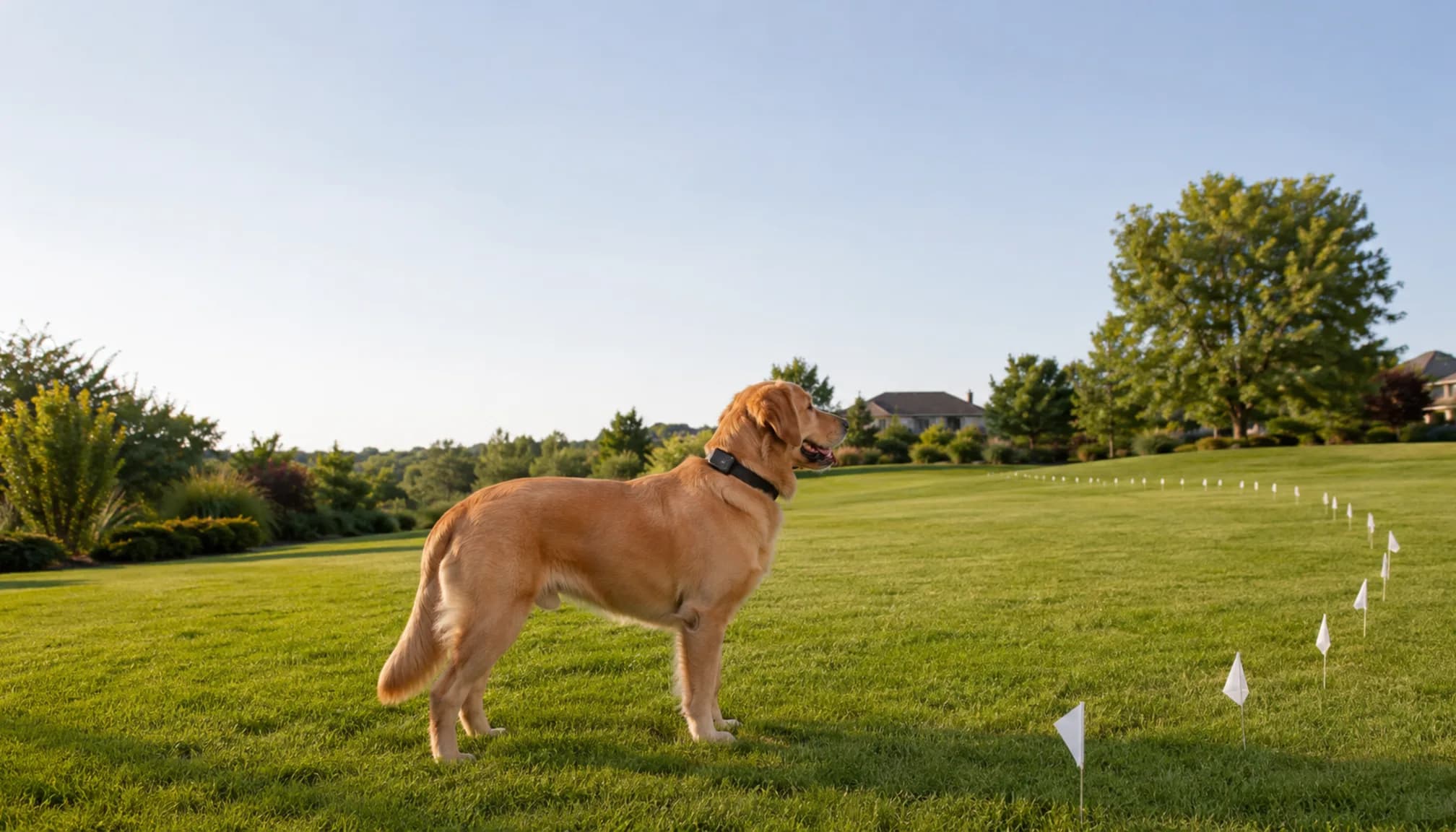
Evidence at a Glance
PetSafe Guardian GPS Dog Fence (No Subscription)
The honest-value containment fork: zero ongoing cost, ever, with an included two-week step-by-step training guide that this protocol synthesizes. The subscription-averse fork — no plan exists, so no plan can lapse and leave the dog unfenced.
Sources: PetSafe Guardian GPS product page (manufacturer), PetSafe boundary-training support pages, American Kennel Club — GPS dog fence guidance
Verified Jul 16, 2026
Halo Collar 5 Wireless Dog Fence & GPS Collar
The premium, guided-training fork: an in-app Cesar Millan program of eight lessons across four phases, plus live tracking — but the fence is inert without a mandatory Halo membership. The pick for owners who want the schedule built for them and will keep paying the plan.
Sources: Halo Plans & Subscriptions page (manufacturer), Halo Cesar Millan Training page (manufacturer), World Animal Foundation — hands-on Halo Collar 5 review
Verified Jul 16, 2026
PetSafe Guardian GPS 2.0 Dog Fence + Tracking
The middle fork: cheaper than Halo, adds live GPS tracking, and fits smaller dogs down to 10 pounds — but the plan rents the tracking, not the fence. Let the plan lapse and containment survives on stored GPS; you only lose the live map and notifications.
Sources: PetSafe Guardian GPS 2.0 product page (manufacturer), PetSafe boundary-training support pages, World Animal Foundation — hands-on Halo Collar 5 review
Verified Jul 16, 2026
Our Picks
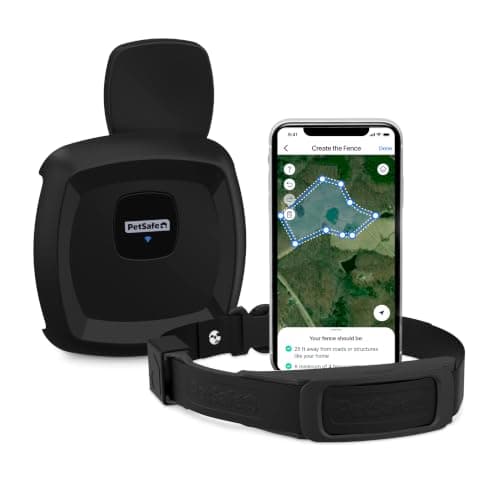
PetSafe
PetSafe Guardian GPS Dog Fence (No Subscription)
8.7 / 10
- No subscription fees or hidden costs, ever — pure containment at zero dollars a month
- Included two-week step-by-step training guide, the published protocol this guide synthesizes
- Choose tone and vibration or 10 levels of static on a rechargeable, waterproof collar
- For dogs over 25 lb, neck 13–28 in, on properties three-quarters of an acre or larger
$389.99
Current price · checked Sep 26, 2026
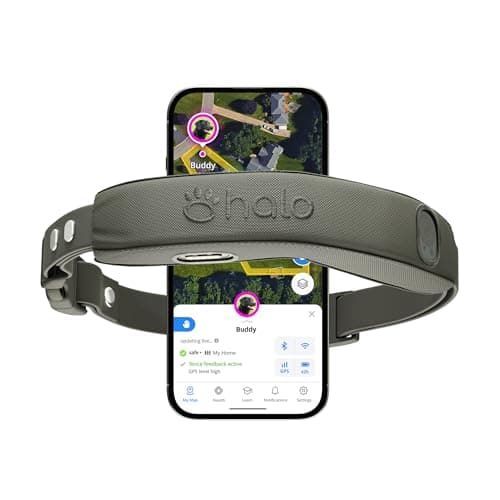
Halo
Halo Collar 5 Wireless Dog Fence & GPS Collar
8.8 / 10
- In-app Cesar Millan training program: eight lessons across four phases, roughly 15–30 min a day
- Live AlwaysOn GPS tracking and instant boundary-crossing alerts
- Mandatory Halo membership activates the fence and every feature (Bronze is the floor)
- Minimum fence size of 30 by 30 feet; static is optional, never required
$524.00
Current price · checked Sep 26, 2026
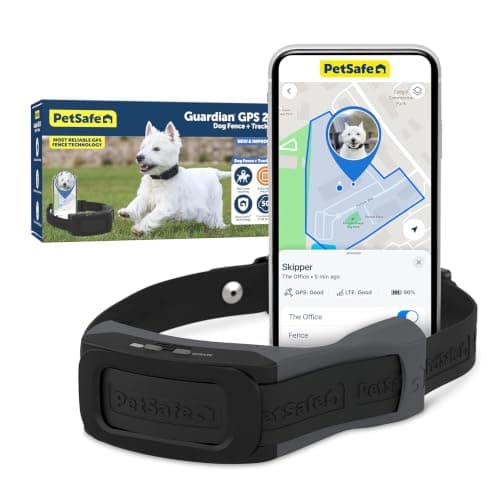
PetSafe
PetSafe Guardian GPS 2.0 Dog Fence + Tracking
8.5 / 10
- Subscription buys tracking, not containment — the fence survives a lapsed plan
- Live dual-frequency GPS tracking and push alerts on boundary crossings
- Fits smaller dogs — adjusts to necks as small as 8 in, breeds 10 lb and up
- Up to 50 custom fences in the My PetSafe app; up to 70 hours of battery
$319.99
Current price · checked Sep 26, 2026
ACE Supply
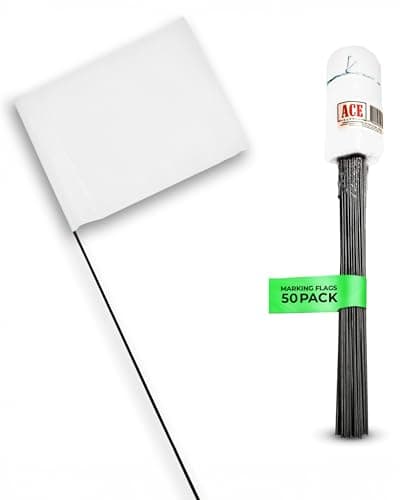
ACE Supply White Invisible-Fence Flags for Dogs (50-Pack)
8.9 / 10
- 50 white 4×5×15-inch marker flags, the training-standard color for a boundary line
- 16-gauge high-carbon steel wire that plants in hard soil without bending
- The visual boundary the dog learns before it relies on collar feedback
- Planted in Weeks 1–2, tapered in Weeks 3–4, replanted for seasonal re-training
$8.99
Current price · checked Sep 8, 2026
Viper
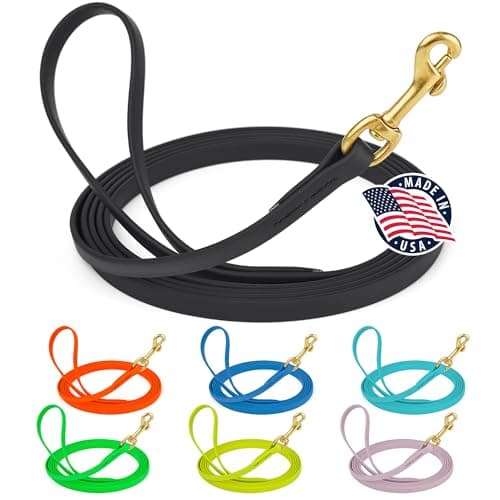
Viper Biothane Working Tracking Lead Long Line (1/2" × 15 ft)
8.6 / 10
- 15-foot biothane lead — weatherproof, mud- and water-shedding, unlike a nylon line
- Clips to the dog's regular collar, never the GPS collar's contact points
- Gives the dog off-leash-style freedom while you keep a safety handle
- The Weeks 2–3 proofing tool — distraction practice before true off-leash
$32.99
Current price · checked Sep 8, 2026
Bil-Jac
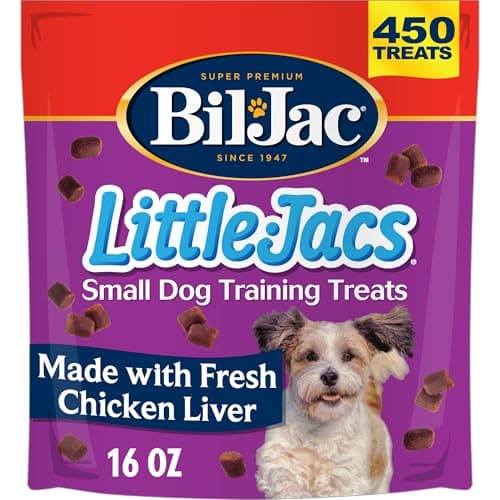
Bil-Jac Little-Jacs Small Dog Training Treats (Soft Chicken Liver)
8.4 / 10
- Under 3 calories per treat — high-value reward without overfeeding across many reps
- Real chicken liver as the first ingredient for an aroma that holds attention
- Soft texture that won't crumble in a pocket or pouch during a session
- Used in every phase, from the first tone-and-treat exploration onward
$11.99
Current price · checked Sep 8, 2026
heouvo
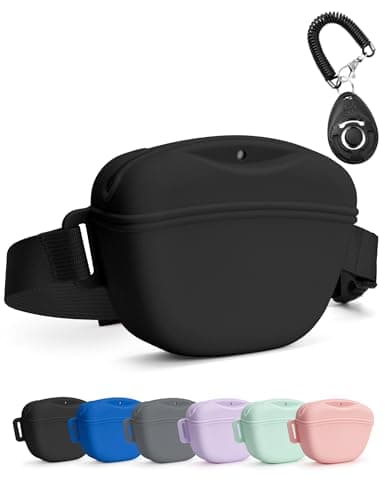
heouvo Dog Treat Pouch with Training Clicker (Magnetic)
8.2 / 10
- Hands-free treat pouch with a built-in training clicker for precise timing
- Stronger magnetic closure that resists spilling during active yard work
- 1.67-cup food-grade silicone body; adjustable waist belt fits 25–47 in
- The clicker marks the instant the dog turns back from the boundary
$9.99
Current price · checked Sep 8, 2026
The Short Answer
Setting up a GPS dog fence is roughly 20 percent hardware and 80 percent training — the collar is the second purchase, and the protocol is the product. Draw the boundary in the app with a 15-to-25-foot safety buffer inside every road, driveway, pool, and property edge, keep it at least 30 by 30 feet, plant white flags on the line, then run a two-to-four-week protocol: leashed flag-walking on tone only, a zig-zag boundary-avoidance phase with correction escalated one level at a time and only if the dog does not respond, long-line proofing against real distractions, and a readiness test before the dog is ever off-leash unsupervised. Progress by the dog's responsiveness, not the calendar. Skip the weeks and the fence will not hold a motivated dog. And pick the subscription model before the collar: a Halo Collar 5 is inert the month you stop paying its mandatory plan, a PetSafe Guardian No-Subscription carries zero ongoing cost forever, and a Guardian 2.0's plan buys live tracking, not containment — let it lapse and the dog is still fenced, you only lose the live map.
Every product on this list has been scored against the PetPal Gear Score, a weighted composite of expert consensus, observed effectiveness, animal safety, long-term durability, and value. Review method: Editorial synthesis of manufacturer training documentation and published expert guidance. The subscription costs and training-program structure are quoted from Halo's Plans, Cesar Millan Training, and FAQ pages and from PetSafe's Guardian GPS, Guardian GPS 2.0, and boundary-training support pages; the drift and safety-buffer guidance is grounded on World Animal Foundation's hands-on Halo Collar 5 review and GPS-fence setup consensus rather than a manufacturer's best-case accuracy claim; the training-necessity framing is attributed to the American Kennel Club. Product specifications and prices come from each item's Amazon listing, captured 2026-07-16. PetPalHQ does not run a dog-containment testing lab; the PetPal Containment-Confidence Score is a transparent synthesis of documented protocols and specifications, not a measurement.. Synthesized from 4+ expert sources.
The American Kennel Club puts the case for training in a single line: "Just as you wouldn't hand a teenager the keys to a car without teaching them how to drive, you shouldn't introduce a GPS fence without proper training." The best GPS wireless dog fences roundup makes the full welfare-and-containment case for why those weeks are non-negotiable; this guide does the opposite job. It delivers the protocol that roundup says you need — the collar is only the second purchase, and the protocol is the product.
So this is a how-to, not a re-argument. It covers the part a spec sheet never does: where to draw the boundary and where not to, how to place the flags, the week-by-week schedule from leashed flag-walking to supervised off-leash proofing, how to calibrate correction from tone upward, and how to test readiness before trusting the dog alone. The three fences below are the containment layer — they point back to the roundup for comparison depth — and the roster's real work is the training kit: flags, a long line, high-value treats, and a clicker pouch, each mapped to the week it earns its place.
A note on how this guide is built. PetPalHQ does not run a dog-containment testing lab. Subscription costs and manufacturer protocols are quoted from Halo's and PetSafe's own pages; the drift and buffer guidance is grounded on a hands-on review rather than a maker's best-case accuracy figure; and no rigid day-by-day calendar is invented, because both manufacturers are explicit that a dog advances when it is consistently responding, not when a set number of days have passed.
PetPalHQ.com earns affiliate commissions from qualifying purchases. Recommendations are based on expert consensus — a synthesis of manufacturer documentation and published expert guidance — to find pet gear worth your investment. Commission rates never influence editorial recommendations.
Head-to-Head Comparison
| Feature | PetSafe Guardian GPS Dog Fence (No Subscription) | Halo Collar 5 Wireless Dog Fence & GPS Collar | PetSafe Guardian GPS 2.0 Dog Fence + Tracking | ACE Supply White Invisible-Fence Flags for Dogs (50-Pack) | Viper Biothane Working Tracking Lead Long Line (1/2" × 15 ft) | Bil-Jac Little-Jacs Small Dog Training Treats (Soft Chicken Liver) | heouvo Dog Treat Pouch with Training Clicker (Magnetic) |
|---|---|---|---|---|---|---|---|
| Fence fork | PetSafe Guardian (No-Sub) | Halo Collar 5 | PetSafe Guardian 2.0 | – | – | – | – |
| Subscription | None — ever | Mandatory | Tracking only | – | – | – | – |
| What DIES without the plan | Nothing — no plan exists | Everything — the fence is inert | Live tracking + notifications | – | – | – | – |
| What SURVIVES without the plan | Full containment, forever | Nothing | Containment (stored GPS) | – | – | – | – |
| Dog / yard floor | Over 25 lb / ¾ acre+ | Any breed / 30×30 ft min | 10 lb+ / ½ acre+ | – | – | – | – |
| Training program | Included 2-week guide | Cesar Millan 8-lesson in-app | 2-week phased (tone→static) | – | – | – | – |
| PetPal Containment-Confidence Score | 8.7 | 8.8 | 8.5 | – | – | – | – |
| Check price | Amazon | Amazon | Amazon | Amazon | Amazon | Amazon | Amazon |
$389.99
Current price · checked Sep 26, 2026
- No subscription fees or hidden costs, ever — pure containment at zero dollars a month
- Included two-week step-by-step training guide, the published protocol this guide synthesizes
- Choose tone and vibration or 10 levels of static on a rechargeable, waterproof collar
- For dogs over 25 lb, neck 13–28 in, on properties three-quarters of an acre or larger
- Boundary drawn in the My PetSafe app; up to five days of battery per charge
Start with the honest question the rest of the guide keeps returning to: what does the fence cost after you buy it? For the Guardian No-Subscription the answer is nothing. PetSafe states it plainly on the product page — "No subscription fees or hidden costs – ever" — which makes this the containment fork with no ongoing math and, just as important, no plan that can lapse and leave a dog unfenced.
What earns it the lead position, though, is that PetSafe ships the protocol with the hardware: an included two-week step-by-step training guide. That published schedule — Phase 1 exploring the pet area on tone and vibration with treats on hand, Phase 2 learning to avoid the boundary in a zig-zag approach with correction advanced one level at a time — is the backbone every stage below is built on. Draw the boundary in the My PetSafe app with a safety buffer inside every road and hazard, keep it well clear of the property edge, and remember the collar's floor: this fence is built for dogs over 25 pounds with a 13-to-28-inch neck, on lots of three-quarters of an acre or larger. It compares against the other two forks in the GPS wireless dog fences roundup; here it is the value pick for the owner who would rather own the training than rent the collar.
What We Love
- Zero ongoing cost — no subscription to pay and none to lose
- Includes a two-week step-by-step training guide, not just hardware
- Tone-and-vibration or 10 static levels lets you start soft
- Lowest verified hardware price of the three fences
What Could Be Better
- No live tracking — it contains, it does not locate a loose dog
- Weight and yard floors rule out small dogs and small lots (over 25 lb, ¾ acre+)
- You run the two-week protocol yourself; no in-app coach walks you through it
The Verdict
For the owner who wants containment with no monthly bill and is willing to run the included two-week protocol, the Guardian No-Subscription is the editorial default. It is the only fork here with no plan to lapse — buy the hardware once, train the dog properly, and the ongoing cost is zero.
Sources
- PetSafe (Guardian GPS Dog Fence product page): "No subscription fees or hidden costs – ever." Includes a 2-week step-by-step training guide; for dogs over 25 lb with neck sizes 13 in to 28 in; properties 3/4 acre or larger; tone and vibration or 10 levels of static; up to 5 days battery.
- PetSafe (Guardian GPS boundary-training support, Phase 2): "Approach the boundary in a wide zig-zag pattern (moving side to side, parallel, and gradually moving closer)." Advance the correction level up one level only "if there is still not a physical reaction," and only once the pet resists leaving the pet area on its own.
$524.00
Current price · checked Sep 26, 2026
- In-app Cesar Millan training program: eight lessons across four phases, roughly 15–30 min a day
- Live AlwaysOn GPS tracking and instant boundary-crossing alerts
- Mandatory Halo membership activates the fence and every feature (Bronze is the floor)
- Minimum fence size of 30 by 30 feet; static is optional, never required
- Dual-frequency GPS with drift-prevention corrections for large and rural properties
Price the plan before you price the collar, because the Halo Collar 5 is the one fence here that does not run without a subscription. Halo says so on its Plans page — "A plan is required to keep your collar active and access all your Halo collar has to offer" — with Bronze the floor that keeps the fence live, Silver and Gold above it, and annual billing knocking off a month. The wireless fence is inert the day the plan lapses. That is the trade for what you get in return, and what you get is the most guided training path of the three.
Where PetSafe hands you a booklet, Halo builds the schedule into the app: a Cesar Millan program of "8 comprehensive lessons with reading materials and instructional videos" across four phases — setup, collar introduction, indoor safe-environment work with Beacons, then outdoor GPS-fence training — at roughly 15 to 30 minutes a day. Its guidance on when to move on is the single most useful rule in this whole guide: "The right time to advance to the next phase is when the dog is consistently responding, not when a certain number of days have passed." Draw the boundary at least 30 by 30 feet — Halo's stated minimum — and know that static is optional; "you're never required to use static with your dog's Halo Collar." On accuracy, keep expectations grounded: Halo advertises pinpoint GPS, but a hands-on World Animal Foundation review measured drift of "a few feet" under moderate tree cover and about 2 to 3 meters in open sky, which is exactly why the boundary needs a real setback rather than a line drawn to the property edge.
What We Love
- Most guided path here — an in-app, phase-by-phase program with videos
- Advance-when-responsive rule keeps training honest, not calendar-driven
- Live tracking finds a loose dog, not just contains one
- Tone-only is a legitimate finish line; static is never required
What Could Be Better
- Mandatory subscription — the fence is inert the month you stop paying
- Highest hardware price of the three, before the plan is added
- Real-world drift is a few feet, not the advertised pinpoint — draw a buffer
The Verdict
Get the Halo Collar 5 when you want the training schedule built for you and live tracking on top, and the monthly plan is a cost you will keep paying without resentment. The in-app Cesar Millan program is the strongest completion aid of the three forks — but the fence lives and dies with the membership, so commit to the plan before the collar.
Sources
- Halo (Plans & Subscriptions page): "A plan is required to keep your collar active and access all your Halo collar has to offer." Membership tiers: Bronze $9.16/mo, Silver $13.74/mo, Gold $18.32/mo; annual billing includes one month free.
- Halo (Cesar Millan In-App Training Program): "8 comprehensive lessons with reading materials and instructional videos." "The right time to advance to the next phase is when the dog is consistently responding, not when a certain number of days have passed."
- World Animal Foundation (hands-on Halo Collar 5 review): "In my backyard, which features moderate tree coverage, we're talking a few feet." "Independent and internal testing cite open-sky accuracy around 2 to 3 meters."
$319.99
Current price · checked Sep 26, 2026
- Subscription buys tracking, not containment — the fence survives a lapsed plan
- Live dual-frequency GPS tracking and push alerts on boundary crossings
- Fits smaller dogs — adjusts to necks as small as 8 in, breeds 10 lb and up
- Up to 50 custom fences in the My PetSafe app; up to 70 hours of battery
- Three training modes: tone, vibration, and 10 levels of static
The Guardian 2.0 is the fork where the honesty axis matters most, because it is the one people conflate with Halo. Both "require a subscription," but the resemblance ends there. On the 2.0 the plan buys live tracking only — PetSafe is explicit that "your collar can still function without cellular service by using stored GPS data to maintain a virtual fence, but you won't be able to track your dog's live location or receive notifications without a connection." Let the plan lapse and the dog is still fenced; you lose the live map, not the boundary. That is the opposite of Halo, where the plan gates the fence itself.
Positioned between the other two forks, it sells at $319.99 on Amazon as of September 26, 2026, adds a live GPS layer the no-subscription Guardian does not have, and reaches dogs the no-sub model cannot — it adjusts to necks as small as 8 inches and is built for breeds 10 pounds and up, on lots half an acre or larger. Training follows the same PetSafe family: tone and vibration first, static escalated one level at a time and only if the dog does not react. That boundary correction is a narrow job — teaching a dog where the line is — and it is distinct from a handheld remote trainer for recall and obedience; if that off-leash control is what you are really after, GPS dog-training e-collar systems are the separate tool for it. The plan runs $9.99 a month or $99 a year with a one-month free trial. Buy it when live tracking earns its keep — an escape-prone dog, an open rural line — and treat the monthly fee as the price of the map, not the fence.
What We Love
- Containment survives a lapsed plan — you only lose live tracking
- Fits smaller dogs the no-subscription Guardian rules out (10 lb+, 8-in neck)
- Adds live GPS tracking and crossing alerts on top of containment
- Same tone-first, one-level-at-a-time correction protocol as the no-sub model
What Could Be Better
- Tracking is a paid subscription ($9.99/mo or $99/yr) — budget for it
- Live tracking needs a cellular connection; without one you keep only the fence
The Verdict
Get the Guardian 2.0 when you want a loose-dog map on top of the fence and a collar that fits a smaller dog, and you accept that the plan rents the tracking. The nuance to hold onto: unlike Halo, its subscription never gates containment — the fence keeps working whether or not you pay.
Sources
- PetSafe (Guardian GPS 2.0 + Tracking product page): "Your collar can still function without cellular service by using stored GPS data to maintain a virtual fence, but you won't be able to track your dog's live location or receive notifications without a connection." Subscription $9.99/mo or $99/yr with a one-month free trial; fits necks as small as 8 in, breeds 10 lb+; properties ½ acre or larger; tone, vibration, or 10 static levels.
$8.99
Current price · checked Sep 8, 2026
- 50 white 4×5×15-inch marker flags, the training-standard color for a boundary line
- 16-gauge high-carbon steel wire that plants in hard soil without bending
- The visual boundary the dog learns before it relies on collar feedback
- Planted in Weeks 1–2, tapered in Weeks 3–4, replanted for seasonal re-training
- A separate buy — no GPS fence ships with flags
Nearly free and quietly the most protocol-critical item in the roster: the flags are how a dog first sees the line the collar only signals. GPS boundaries are invisible, so before a single correction makes sense the dog needs a physical cue, and a taut row of white flags is it. Published flag-training guidance from Halo describes the logic — flags give a clear visual boundary that, paired with collar feedback, teaches the concept, and once the dog understands the line the flags come down gradually. This 50-pack is white, the training-standard color, and its 16-gauge steel wire plants in hard ground without folding over in wind.
Placement is a stage, not a one-time chore. Plant the flags on the boundary line spaced so the dog can always see the next one — roughly 10 to 15 feet apart is the common interval, denser at corners and gates, but confirm the spacing against your fence's warning-zone width rather than treating any number as exact. They go in during Weeks 1 and 2 for the leashed flag-walking on tone only: you walk the flagged line, the dog hears the tone, you invite it back, and you reward heavily. They stay up through the proofing weeks, then taper in stages in Weeks 3 to 4 as the dog leans on the collar rather than the markers — and they come back out for seasonal re-training or any time you redraw the boundary.
What We Love
- The cheapest, highest-leverage buy here — the boundary the dog actually learns
- White is the training-standard flag color; 50 count covers a typical yard
- Steel wire plants in hard soil and holds in wind
- Reusable across the taper and every seasonal re-proof
What Could Be Better
- A generic yard-marking flag — no GPS fence includes flags, so this is a required add-on
- Spacing is an industry rule of thumb, not a per-fence spec — confirm to your warning zone
- Plastic-and-wire markers won't survive a determined chewer left unsupervised
The Verdict
Plant the flags before the first training session and you give the dog the visual boundary it needs to make sense of the tone. At under nine dollars for 50, the ACE Supply white flags are the single most protocol-critical buy in this roster — cheaper than a bag of treats and far more decisive to whether the training works.
Sources
- ACE Supply (Amazon product listing): White invisible-fence training flags for dogs, 4×5×15 in, 50-pack; 16-gauge high-carbon steel wire that penetrates hard soil without bending; used to mark the boundary of the containment line.
- Halo (flag-training guidance, Help Center): Flags provide a clear visual boundary that, combined with collar feedback, reinforces the concept of the line; once the dog understands the boundary the flags can be gradually removed. Halo also states each fence needs a minimum of 30 ft × 30 ft for a dog to roam safely.
$32.99
Current price · checked Sep 8, 2026
- 15-foot biothane lead — weatherproof, mud- and water-shedding, unlike a nylon line
- Clips to the dog's regular collar, never the GPS collar's contact points
- Gives the dog off-leash-style freedom while you keep a safety handle
- The Weeks 2–3 proofing tool — distraction practice before true off-leash
- Solid brass hardware that will not rust in outdoor yard use
- Lists at $35.99 and currently sells for $29.99
Proofing is the phase most owners skip, and the long line is what makes it safe to do. After the leashed flag-walking comes the step that turns a dog that behaves next to you into a dog that respects the line on its own: it drags a long line while you add distractions — a person walking past, another dog, a scent along the far boundary — and you keep a handle in reserve. Biothane is the material that suits it, because a 15-foot lead spends the session on wet grass and mud; unlike nylon it sheds water instead of soaking it up, stays flexible in cold, and wipes clean.
One safety rule governs the whole phase, and it comes straight from PetSafe's protocol: the leash goes on the dog's regular collar, never on the GPS collar's contact points. The long line is a proofing aid, not a correction tool. Run it through Weeks 2 and 3 for the zig-zag boundary-avoidance work and the first supervised off-leash-style practice, and use it any time you re-proof after a lapse. If your day-to-day walks are the real struggle rather than the boundary, that is a different job for no-pull harnesses and leash manners; and if the dog needs a secure hold during the pre-training weeks, an outdoor kennel or run is the honest backstop while the protocol is still underway.
What We Love
- Weatherproof biothane sheds mud and water where nylon soaks and molds
- 15 feet is enough proofing room while a safety handle stays in reach
- Rust-proof brass hardware built for repeated outdoor sessions
- Enables distraction-proofing — the step that decides real containment
What Could Be Better
- Not a chew-proof material and not a tie-out — supervise every session
- Must clip to the regular collar, never the fence collar's contacts
- 15 feet is fixed at this length; very large yards may want a longer lead
The Verdict
Add the Viper biothane long line for the proofing weeks, when the dog needs off-leash-style freedom and you need a safety handle. The weatherproof material is the right call for muddy yard work, and the discipline that matters is simple: it clips to the regular collar for proofing, never to the GPS collar.
Sources
- Viper (Amazon product listing): Biothane working tracking long line, 1/2 in × 15 ft; waterproof coating that stays flexible in extreme cold and heat, sheds mud and water, and does not get stiff or moldy; solid brass hardware. Explicitly "not a chew proof material, not to be used for tie out."
$11.99
Current price · checked Sep 8, 2026
- Under 3 calories per treat — high-value reward without overfeeding across many reps
- Real chicken liver as the first ingredient for an aroma that holds attention
- Soft texture that won't crumble in a pocket or pouch during a session
- Used in every phase, from the first tone-and-treat exploration onward
- Tears apart for rapid-fire marking of the turn back from the line
- Lists at $11.99, and the buy box matched list at our August 17, 2026 check
Reward is not a garnish on boundary training; it is the engine. PetSafe's own Phase 1 is built around it — set the collar to tone and vibration, let the dog explore the pet area, and "as soon as he returns, give him lots of treats and praise." A GPS fence teaches a dog that the interior is where good things happen and the line is where they stop, and the treat is how that lesson lands. What makes a treat work here is that it can be delivered fast, dozens of times a session, without filling the dog up: these Little-Jacs run under three calories each, tear apart easily, and lead with real chicken liver, so they hold a dog's focus against the distractions of an open yard.
Their place in the schedule is every week, not one of them. In the leashed flag-walking they reward the invited return; in the boundary-avoidance phase they pay the dog for choosing to stay inside; in proofing they compete against the squirrel and the passing dog for the animal's attention. Because they stay soft and do not crumble in a pouch, they suit the hands-free, rapid delivery the marking work depends on. Keep them on you for the fearful-dog fix too — flooding the yard interior with reward is how you rebuild a dog that got spooked by correction introduced too early.
What We Love
- Under 3 calories each — hundreds of reps without overfeeding
- Real chicken liver holds attention against yard distractions
- Soft and crumble-free, so they ride cleanly in a treat pouch
- Central to every phase, from first exploration to distraction-proofing
What Could Be Better
- A consumable — plan to restock across a multi-week protocol
- Rich liver formula can loosen a sensitive dog's stomach in volume
- Not a boundary tool on its own — it only works paired with the flags and collar
The Verdict
Keep high-value treats on you for every session, because reward is what makes the turn-back-from-the-line stick. The Bil-Jac Little-Jacs are the practical pick — soft, low-calorie, and liver-driven enough to win a dog's attention in an open yard, which is exactly where the training has to hold.
Sources
- Bil-Jac (Amazon product listing): Little-Jacs soft small-dog training treats, real chicken liver as the first ingredient, under 3 calories per treat; soft slow-cooked texture that resists crumbling in a pocket; 16 oz.
- American Kennel Club (GPS dog fence guidance): "Clear guidance and positive reinforcement help your dog understand the warning tones and respond confidently to the boundary."
$9.99
Current price · checked Sep 8, 2026
- Hands-free treat pouch with a built-in training clicker for precise timing
- Stronger magnetic closure that resists spilling during active yard work
- 1.67-cup food-grade silicone body; adjustable waist belt fits 25–47 in
- The clicker marks the instant the dog turns back from the boundary
- Carried in every phase for one-handed, rapid reward delivery
Timing is the quiet variable that separates training that works from training that confuses, and a clicker is how you get it right. The dog needs to know precisely which choice earned the treat — the moment it turned back from the line, not the two seconds later when it reached your hand — and a click bridges that gap. This heouvo kit folds a clicker into the pouch itself, so the marker and the reward live in one hand while the other manages the flag line or the long line.
The pouch half solves the logistics that a session of dozens of rewards creates. A magnetic closure keeps treats from scattering across the yard when the dog lunges or you crouch, the food-grade silicone body holds enough for a full session at 1.67 cups, and the waist belt keeps it hands-free through the flag-walking and long-line phases alike. It rides along in every week of the protocol rather than any single stage — wherever a treat gets delivered, the pouch and clicker make the delivery fast and the timing sharp. It is the least glamorous item in the roster and one of the most quietly useful, because marking the right instant is what turns repetition into a trained response.
What We Love
- Clicker marks the exact moment of the turn-back, sharpening every reward
- Magnetic closure keeps treats in the pouch during active sessions
- Hands-free belt frees both hands for the flag line or long line
- One inexpensive kit covers marking and reward delivery together
What Could Be Better
- A convenience-and-timing aid, not a containment tool in its own right
- 1.67-cup capacity means a refill on a long, treat-heavy session
- Clicker timing takes practice — a mistimed click can muddy the lesson
The Verdict
Carry the clicker pouch through every session for one-handed reward and precise marking. It is the least flashy buy here, but folding a clicker into the pouch at ten dollars is a sensible way to get the timing right — and timing is what turns a treat into a trained turn away from the line.
Sources
- heouvo (Amazon product listing): Hands-free dog treat pouch with a built-in training clicker; upgraded magnetic closure to prevent spilling; 1.67-cup food-grade silicone body; adjustable waist belt fitting 25 in to 47 in.
How We Score
Formula
PetPal Containment-Confidence Score = (Training Completion × 0.35) + (Boundary Buffer Safety × 0.25) + (Correction Calibration × 0.20) + (Readiness Proofing × 0.20)
Score Factors
- Training Completion · 35%
- Fit label: Protocol Weeks Logged. Did the owner run every stage — leashed flag-walking, boundary avoidance, long-line proofing — instead of skipping straight to off-leash? It carries the most weight because the failure this guide exists to prevent is hardware bought and weeks skipped. Scored within each pick's role: fences with a published, guided program (Halo's eight-lesson Cesar Millan course; PetSafe's included two-week guide) support completion most, and kit items are scored on how directly they carry a training stage. PetPalHQ does not run a testing lab; this scores documented protocol support, not a measured outcome.
- Boundary Buffer Safety · 25%
- Fit label: Setback Margin. Keep the active line at least 15 to 25 feet inside every road, driveway, pool, and property edge, and at least 30 by 30 feet overall (Halo's stated minimum). The buffer exists because GPS drift is real — a hands-on review measured a few feet under moderate tree cover and about 2 to 3 meters in open sky — so the setback is what keeps normal drift from ever pushing the active boundary onto a hazard. Never route the line along a road or at the exact property edge.
- Correction Calibration · 20%
- Fit label: Feedback Fit. Start on tone and vibration and escalate static one level at a time, and only when the dog does not respond — PetSafe advances the correction up one level solely 'if there is still not a physical reaction,' and Halo states 'you're never required to use static.' Tone-only is a legitimate finish line for soft or sensitive dogs. This factor rewards staying within published, manufacturer-stated escalation rather than an invented schedule.
- Readiness Proofing · 20%
- Fit label: Off-Leash Test Passed. Before any unsupervised freedom, the dog should turn back at the line under real distraction while dragging a long line, with the owner holding a safety handle. Progress is response-gated, not calendar-gated: advance only when the dog is consistently responding, as both manufacturers state. A pick scores here on how well it supports that final, honest test of whether the boundary actually holds.
| Rank | Product | Score |
|---|---|---|
| #1 | ACE Supply ACE Supply White Invisible-Fence Flags for Dogs (50-Pack) | 8.9 |
| #2 | Halo Halo Collar 5 Wireless Dog Fence & GPS Collar | 8.8 |
| #3 | PetSafe PetSafe Guardian GPS Dog Fence (No Subscription) | 8.7 |
| #4 | Viper Viper Biothane Working Tracking Lead Long Line (1/2" × 15 ft) | 8.6 |
| #5 | PetSafe PetSafe Guardian GPS 2.0 Dog Fence + Tracking | 8.5 |
| #6 | Bil-Jac Bil-Jac Little-Jacs Small Dog Training Treats (Soft Chicken Liver) | 8.4 |
| #7 | heouvo heouvo Dog Treat Pouch with Training Clicker (Magnetic) | 8.2 |
When NOT to Buy
Do not force a GPS fence onto a dog below the collar's floor. The PetSafe Guardian No-Subscription is built for dogs over 25 pounds with a 13-to-28-inch neck; the Guardian 2.0 reaches smaller dogs down to about 10 pounds and an 8-inch neck, so if you have a small dog, match the collar to the animal rather than squeezing it under a model it was not designed for. A collar that does not fit will not train reliably, and a dog that slips it is not contained at all.
Skip a GPS fence on a small lot. The boundary needs a 15-to-25-foot hazard buffer and at least a 30-by-30-foot minimum, and a small yard cannot hold that setback without the active line sitting on a road or a neighbor's edge — drift makes that unsafe. A physical fence, or a supervised outdoor kennel or run, is the honest answer for a lot that is too small to draw a safe boundary.
Do not run a fearful or reactive dog up the static levels. A dog that panics or redirects under correction should stay on tone only, or skip a GPS fence altogether — this is a welfare boundary, not a spec to push past. If correction went in too early and the dog is now spooked by the yard, drop to tone, flood the interior with reward, and rebuild the positive association from the center outward.
And do not buy the hardware if you cannot commit to the weeks. A GPS fence with a skipped protocol is not a fence; it is a collar on a dog that never learned the line. If the training time is not there right now, contain the dog physically in the meantime — a secure heavy-duty crate or run keeps everyone safe while you build up to the protocol — and start the fence when you can give it the two-to-four weeks it needs.
Frequently Asked Questions
- How long until I can trust my dog off-leash behind a GPS fence?
- Plan on two to four weeks of short daily sessions, around 15 to 30 minutes each, but treat that as a range rather than a deadline. Both makers are explicit that a dog advances when it is consistently responding, not on a fixed calendar — Halo's rule is to move to the next phase "when the dog is consistently responding, not when a certain number of days have passed," and PetSafe estimates roughly three days for the boundary-avoidance phase alone while calling it extendable. The gate is not a date; it is a readiness test the dog passes under distraction, on a long line, before any unsupervised freedom.
- Can I train tone and vibration only, without ever using static?
- For many dogs, yes. Halo states outright that "you're never required to use static with your dog's Halo Collar," and PetSafe starts every dog on tone and vibration only. If you do escalate to static, go up one level at a time and only when the dog gives no reaction at all — never jump straight to a high level. For a soft or sensitive dog, tone-only is a legitimate finish line, not a compromise, provided the dog reliably turns back at the tone.
- What do I do if my dog runs straight through the boundary?
- This is the most common failure, and it is a training gap, not a hardware defect. Owners on training forums describe exactly how it happens — a dog that learned the warning tone "just meant cheese" will blow through it for a stronger motivator like a fresh scent, because it was never taught that the line itself is the limit. The fix is to go back a stage: return to leashed flag-walking, raise the value of the reward, shrink the approach, and only if needed advance the correction one level. Re-proof on the long line before giving off-leash freedom again.
- My dog is suddenly afraid of the whole yard — what went wrong?
- Usually correction was introduced too early or too high, before the dog understood what the tone meant, so the yard itself became the scary thing. Drop back to tone only, then rebuild from the middle out: flood the interior of the yard with treats and play so the center becomes the best place to be, and expand the dog's comfort outward toward the line gradually. Never start a fearful dog on static, and if the fear runs deep, a GPS fence may simply be the wrong tool for that dog.
- Do the boundary flags ever come down, or are they permanent?
- They come down — that is part of the plan. Once the dog reliably respects the line, taper the flags in stages over Weeks 3 to 4 so it leans on the collar feedback rather than the visual markers. Do not pull them all at once; remove every other flag, confirm the dog still holds the line, then thin them further. Keep the pack, because you will replant them for seasonal re-training and any time you redraw the boundary.
- Do I need to re-train in winter or after I change the boundary?
- Yes to both. Leaf-on canopy in summer and snow in winter can change how the GPS behaves, and any boundary you redraw is effectively a new line to the dog. Re-flag and re-proof after seasonal changes, after a long lapse in use, or whenever you move the boundary — a quick refresher on the long line is far cheaper than a lost dog. It is also worth re-confirming the collar holds a stable GPS lock in open sky before you trust a re-drawn line.
- If I stop paying the subscription, is my dog still fenced?
- It depends entirely on which collar you own, and this is the single most important decision to get right before buying. On the Halo Collar 5 the answer is no — the plan is mandatory and the fence is inert without it. On the PetSafe Guardian No-Subscription there is no plan to stop paying, so containment simply continues at zero cost. On the Guardian 2.0, the plan buys live tracking only: let it lapse and the fence keeps working on stored GPS data, you just lose the live location map and the crossing notifications. Pick the subscription model before you pick the collar.
Bottom Line
Get the PetSafe Guardian No-Subscription if you want containment with no monthly bill and will run its included two-week protocol yourself — it is the only fork here with no plan to lapse.
Get the Halo Collar 5 if you want the training schedule built for you and live tracking on top, and the mandatory plan is a cost you will keep paying — the in-app Cesar Millan program is the strongest completion aid, but the fence is inert the month you stop.
Get the Guardian 2.0 if you want a loose-dog map on top of the fence and a collar that fits a smaller dog — just hold the nuance that the plan rents the tracking, not the containment, which survives a lapse.
Plant the ACE Supply white flags before the first session: at under nine dollars for 50, they are the cheapest and most decisive buy here — the visual boundary the dog learns before collar feedback takes over.
Add the Viper biothane long line for the proofing weeks — a weatherproof 15-foot lead that clips to the regular collar, never the fence collar, so the dog can practice off-leash while you keep a safety handle.
Carry the Bil-Jac treats and the heouvo clicker pouch through every session: high-value, low-calorie reward plus a precisely-timed click is what turns the turn-back-from-the-line into a trained response.
Whichever fence you own, the non-negotiable is identical — run the weeks, progress by the dog's responsiveness rather than the calendar, and pass a readiness test before the dog is ever off-leash unsupervised.
Sources & Methodology
Methodology
PetPal Containment-Confidence Score = (Training Completion × 0.35) + (Boundary Buffer Safety × 0.25) + (Correction Calibration × 0.20) + (Readiness Proofing × 0.20)
Expert review sources
- Halo — Plans & Subscriptions, Cesar Millan In-App Training, and FAQ pages (mandatory-membership requirement, eight-lesson four-phase program, advance-when-responsive rule, 30×30 ft minimum, static optional)
- PetSafe — Guardian GPS and Guardian GPS 2.0 product pages plus boundary-training support articles (no-subscription containment, included two-week guide, zig-zag boundary avoidance, one-level correction escalation, tracking-survives-lapse nuance)
- World Animal Foundation — hands-on Halo Collar 5 review (real-world GPS drift of a few feet under tree cover and 2–3 meters in open sky, grounding the safety buffer)
- American Kennel Club — GPS dog fence guidance (the training-necessity framing and positive-reinforcement guidance)
Community sources
- Dog-training forum discussion of Halo boundary training, paraphrased as post-purchase persona evidence: owners describe a dog learning that the warning tone 'just meant cheese' and blowing through it for a stronger motivator — a training gap the protocol is designed to close (full-text fetch was blocked, so this is used only as paraphrased demand evidence, not a verbatim quote).
Prices and specs verified July 16, 2026.
About the author
Nick Miles is the chief editor of PetPalHQ. This boundary-training protocol is an editorial synthesis of manufacturer training documentation — Halo's plan, program, and FAQ pages and PetSafe's Guardian, Guardian 2.0, and boundary-training support pages — cross-checked against World Animal Foundation's hands-on Halo Collar 5 review and the American Kennel Club's GPS-fence guidance. PetPalHQ does not run a dog-containment testing lab. Subscription costs and training-program structure are quoted from the manufacturers' own pages; the drift and safety-buffer guidance is grounded on the hands-on review figures rather than a manufacturer's best-case accuracy claim; and no week-by-week calendar is invented — the schedule is expressed as staged ranges because both makers state progress is set by the dog's responsiveness, not a fixed number of days. The PetPal Containment-Confidence Score is a transparent composite of documented protocols and specifications, not a measurement.
PetPalHQ is a participant in the Amazon Services LLC Associates Program. We may earn commissions from qualifying purchases — at no extra cost to you.
More Guides
Cats & Dogs
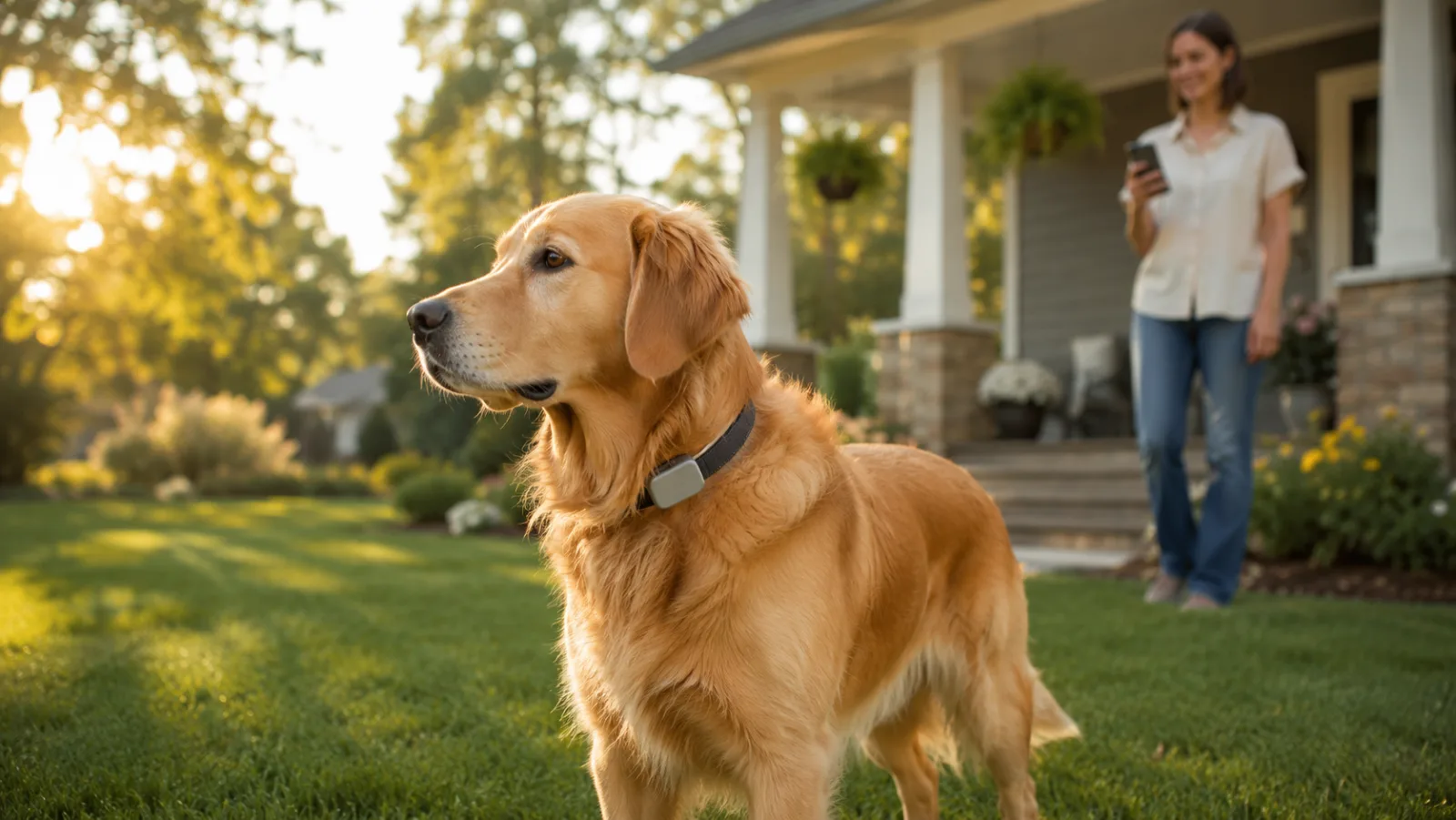
Best GPS Wireless Dog Fences for Unfenced Yards and Escape Artists (2026)
Cats & Dogs
The Lost-Dog Prevention & First-48-Hours Recovery Plan (2026)
Cats & Dogs
Best GPS Dog Training & E-Collar Systems 2026: Tracking and Training Rigs for Hunting and Working Dogs
Cats & Dogs
Best No-Pull Harnesses and Leash Manners Tools for Dogs (2026)
Cats & Dogs
Best Heavy-Duty Outdoor Dog Kennels and Runs (2026)
Cats & Dogs