Cats & Dogs
The Lost-Dog Prevention & First-48-Hours Recovery Plan (2026)
Recovery is a plan you build before the gate opens, not a purchase you make after. Most lost dogs come home — Weiss et al. found 93% of them do — but the ones that make it back are the ones whose owners walked the fence line, kept a current tag on the collar, and had a first-48-hours plan ready before the dog was ever out. This guide runs the prevention audit, then the playbook: do not chase or call a panicked dog, lure it at the last-seen spot, file in person at every shelter, post free to Petco Love Lost and PawBoost, and sign the intersections. A GPS tracker sits under all of it as the recovery layer — the audit and the playbook are what actually bring the dog home.
By Nick Miles · Updated August 10, 2026 · 12 min read
PetPalHQ is reader-supported. We may earn a commission from qualifying Amazon purchases at no extra cost to you.
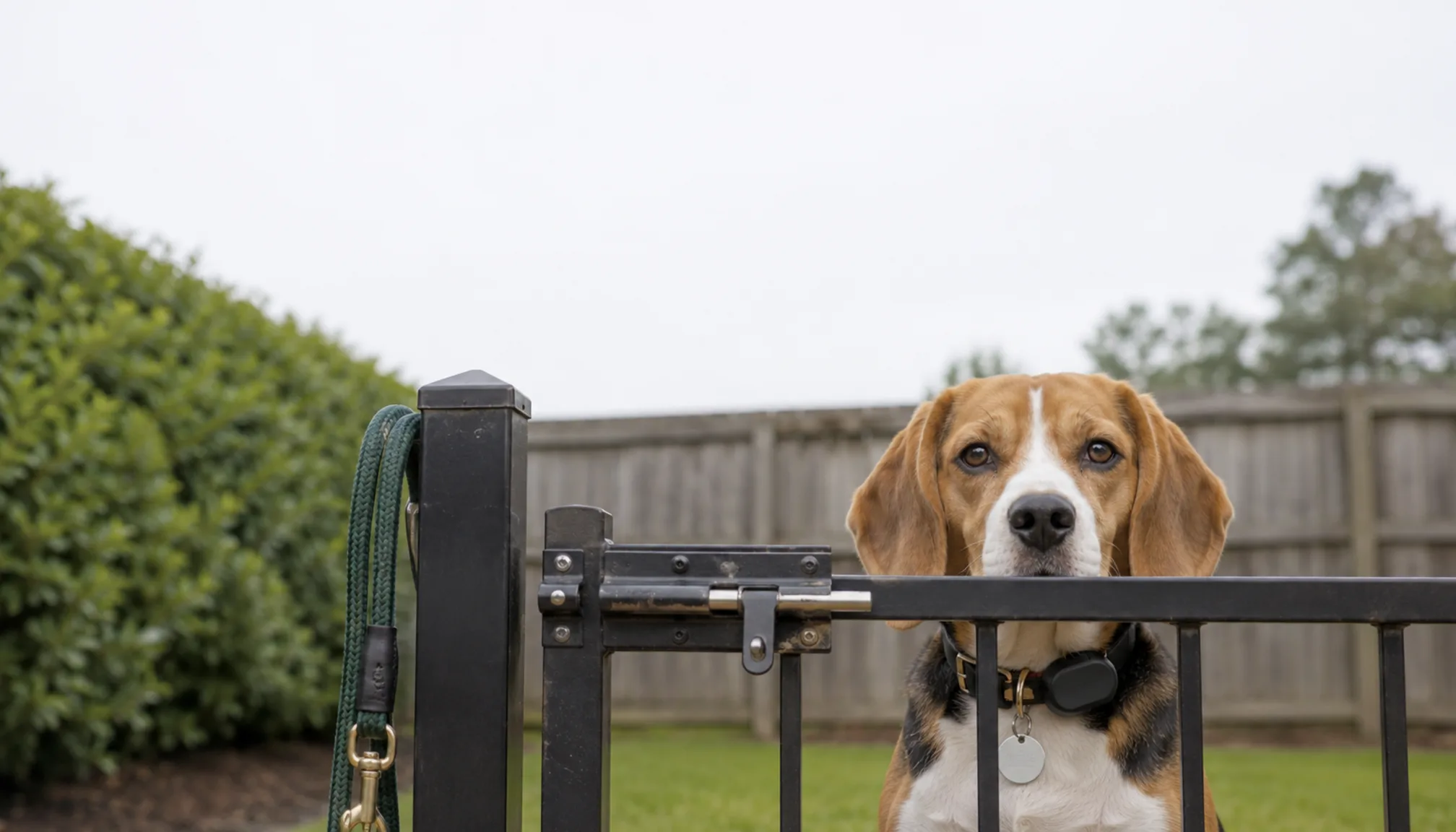
Evidence at a Glance
smrtcol Gate Chain Lock with Carabiners
The containment walk in one $9 fix — a 20-inch barn chain with carabiners that backstops a gate whose latch is worn, springs open, or gets left unlatched, which is the single most common yard escape. It secures the escape you prevent so it never needs a recovery.
Sources: smrtcol (Amazon product listing), dvm360 / Petco Love
Verified Jul 16, 2026
GoTags Stainless Steel Personalized Pet ID Tag
The audit's cheapest, highest-leverage fix — a stainless tag engraved on both sides so two phone numbers and MICROCHIPPED all fit. Weiss et al. credit an ID tag or microchip with 14% of recovered dogs, and a current tag is the fastest path home when a neighbor already has the dog in hand.
Sources: GoTags (Amazon product listing), Weiss, Slater & Lord (2012), AVMA
Verified Jul 16, 2026
Tractive Smart Dog GPS Tracker
The recovery layer's value on-ramp — a clip-on live-GPS tracker with virtual-fence escape alerts, listed at $79.00. It is the fastest GPS lock in the roundup's cited testing, and it needs a paid plan to work; it points to the full four-tracker comparison rather than re-ranking them here.
Sources: Tractive (Amazon product listing), AVMA
Verified Jul 16, 2026
Our Picks
smrtcol
smrtcol Gate Chain Lock with Carabiners
8.3 / 10
- 20-inch barn chain plus carabiners, per smrtcol
- Weather-resistant black finish for outdoor gates
- Adjustable length fits most gate sizes
- Carabiner-and-chain combo secures a failing latch
$8.99
Current price · checked Sep 8, 2026
GoTags
GoTags Stainless Steel Personalized Pet ID Tag
9.0 / 10
- Engraved on both sides, up to 8 lines total, per GoTags
- Room for two phone numbers plus MICROCHIPPED
- Stainless steel resists bending and wear
- 1.3-inch regular size suits medium and large dogs
$8.95
Current price · checked Sep 8, 2026
Tractive
Tractive Smart Dog GPS Tracker
8.8 / 10
- Live GPS, unlimited range, updates every 2-3 seconds, per Tractive
- Virtual-fence escape alerts and location history
- Waterproof, up to 14 days of battery
- Clips to any collar for dogs over 8 pounds
$55.30
Current price · checked Sep 8, 2026
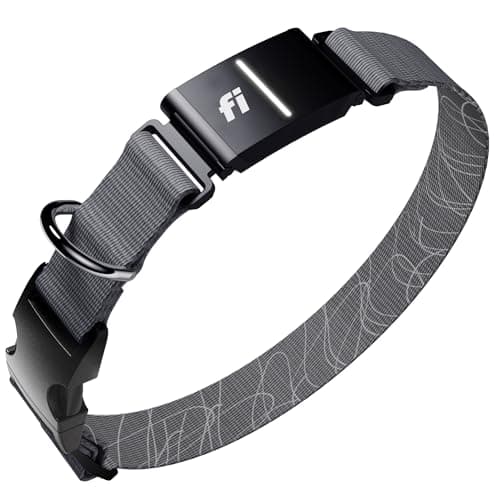
Fi
Fi New Series 3+ Smart Dog Tracker Collar
8.6 / 10
- Integrated collar the dog cannot slip or shake off, per Fi
- Real-time nationwide GPS with no range limits
- Virtual-fence escape alerts every few seconds in Lost Mode
- Waterproof with long multi-week battery life
$189.00
Current price · checked Sep 8, 2026
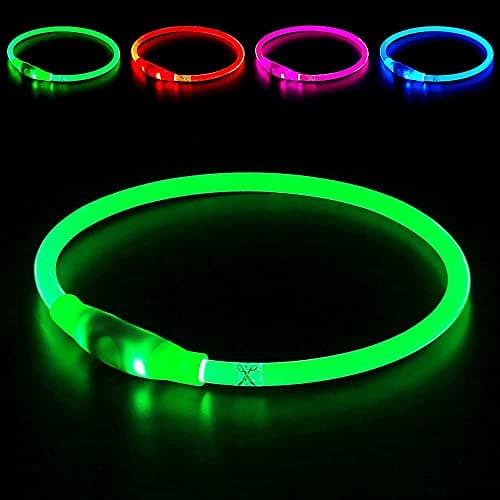
BSEEN
BSEEN LED Dog Collar Light
8.0 / 10
- USB-rechargeable, three modes, per BSEEN
- 360-degree visibility around the collar
- Slow-flash, fast-flash, and steady-glow settings
- 70cm length trims to fit small through large dogs
$12.99
Current price · checked Sep 8, 2026
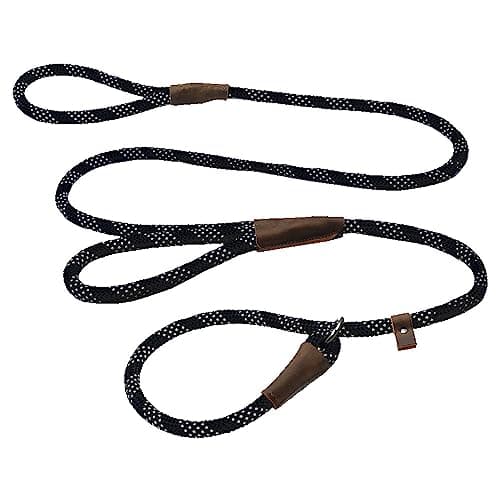
Max and Neo
Max and Neo Double-Handle Rope Slip Lead
8.4 / 10
- Double handles for close control at capture, per Max and Neo
- Slips over the head with no buckle to fasten
- Works on a dog with no collar or a stranger's found dog
- Reflective half-inch nylon rope
$17.99
Current price · checked Sep 8, 2026
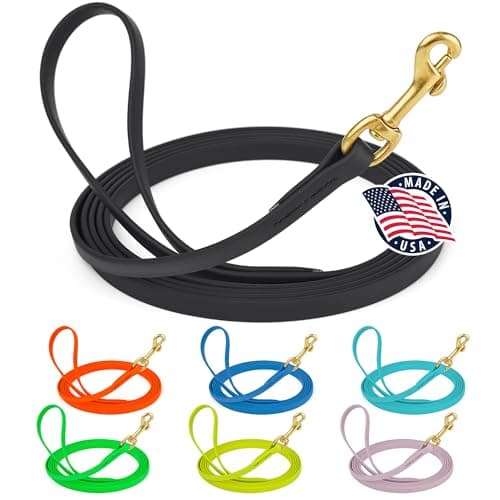
Viper
Viper Biothane Working Tracking Lead Long Line
8.2 / 10
- Half-inch biothane sheds mud and water, per Viper
- Stays flexible in extreme cold or heat
- Solid brass hardware that will not rust
- Offered in lengths from 15 to 50 feet
$32.99
Current price · checked Sep 8, 2026
The Short Answer
A lost dog is won or lost before it happens. Run the prevention audit first — walk your gates, doors, and fence line for the latch that fails or the gap the dog slips through, put a current tag on the collar, and confirm the microchip is registered to a phone number that still works, because a chip is not GPS and only helps if a finder can reach you. Then keep a first-48-hours plan ready: the moment the dog is out, do NOT chase and do NOT call it, because forward movement and calling both trigger panic flight; instead get low, lure with smelly food at the exact spot the dog was last seen, file in person at every shelter within range with a photo, post to Petco Love Lost, PawBoost, and Nextdoor (all free), and blanket the intersections with big neon LOST DOG signs. Weiss et al. found that 93% of lost dogs are recovered, most by searching the neighborhood (49%), the dog returning on its own (20%), or an ID tag or microchip (14% of finds). A GPS tracker is the live-locate layer beneath the plan — the value pick is the clip-on Tractive and the escape-artist pick is the Fi collar that cannot be removed, and both point to the full tracker roundup — but the tracker is not a substitute for the audit or the playbook.
Every product on this list has been scored against the PetPal Gear Score, a weighted composite of expert consensus, observed effectiveness, animal safety, long-term durability, and value. Review method: Editorial synthesis of lost-pet-recovery authorities and manufacturer documentation. The prevention audit and first-48-hours playbook are grounded in the AVMA microchipping guidance, the Missing Animal Response Network (Kat Albrecht) lost-dog behavior and lure-do-not-chase protocols, the peer-reviewed Weiss, Slater & Lord (2012) national study of lost dogs and the methods that recovered them, Petco Love Lost, Lost Dogs of America's signage guidance, the AAHA Universal Pet Microchip Lookup Tool, and Pet FBI's lost-pet-scam guidance. July-4 lost-pet statistics come from dvm360 and Shelter Animals Count and are reconciled with PetPalHQ's dog GPS tracker roundup rather than restated independently. Product specifications come from each item's Amazon listing. No first-hand product testing — PetPalHQ does not run a testing lab.. Synthesized from 9+ expert sources.
Most advice about a lost dog arrives too late — after the gate is open, the dog is gone, and panic is calling the shots. The premise of this guide is the opposite: recovery is a plan you build before the gate opens, not a purchase you make after. The reassuring part is that the plan works. In the largest national study of the question, Weiss, Slater and Lord found that 93% of lost dogs are recovered — and the dogs that make it back are overwhelmingly the ones whose owners had done the ordinary, unglamorous work in advance: walked the fence line, kept a current tag on the collar, and knew what to do in the first hour.
So the guide comes in two halves. The first is a prevention audit — a walk of the gates, doors, and fence line for the escape point, a check that the collar carries a legible current tag, and a confirmation that the microchip is registered to a phone number that still rings. The second is a first-48-hours playbook — the do-not-chase rule, the attraction station at the last-seen spot, the in-person shelter filing, the free online alerts, and the neon signs that generate sightings. Where a number or a behavior claim appears, its source is named rather than asserted; PetPalHQ does not run a testing lab, and the PetPal Recovery Readiness Score is a composite of expert guidance, not a measurement.
A GPS tracker runs underneath both halves as the recovery layer — the tool that shows you where a moving dog went. Two anchor picks below cover it, the value clip-on and the escape-proof collar, and both hand off to the full dog GPS tracker roundup for the head-to-head comparison rather than re-ranking trackers here. A tracker is worth owning. It is just not the plan — the audit and the playbook are.
Head-to-Head Comparison
| Feature | smrtcol Gate Chain Lock with Carabiners | GoTags Stainless Steel Personalized Pet ID Tag | Tractive Smart Dog GPS Tracker | Fi New Series 3+ Smart Dog Tracker Collar | BSEEN LED Dog Collar Light | Max and Neo Double-Handle Rope Slip Lead | Viper Biothane Working Tracking Lead Long Line |
|---|---|---|---|---|---|---|---|
| Protocol stage | Audit — containment | Audit — ID | Recovery layer | Recovery layer | Response — visibility | Response — capture | Response — capture |
| Role in the plan | Gate/latch backstop | Tag currency | Live GPS — value | Live GPS — escape-proof | Night visibility | Close-range capture | Distance capture |
| What it prevents or recovers | Prevents the gate escape | Speeds the reunion | Locates a moving dog | Locates + can't fall off | Prevents a dark bolt | Secures a lured dog | Secures at distance |
| Subscription? | None | None | Mandatory | Mandatory (prepaid) | None | None | None |
| Fit label | Gate & Door Audit | Two Ways Home | Live-Locate Layer | Live-Locate Layer | First-48 Ready | First-48 Ready | First-48 Ready |
| PetPal Recovery Readiness Score | 8.3 | 9.0 | 8.8 | 8.6 | 8.0 | 8.4 | 8.2 |
| Check price | Amazon | Amazon | Amazon | Amazon | Amazon | Amazon | Amazon |
$8.99
Current price · checked Sep 8, 2026
- 20-inch barn chain plus carabiners, per smrtcol
- Weather-resistant black finish for outdoor gates
- Adjustable length fits most gate sizes
- Carabiner-and-chain combo secures a failing latch
- Reusable across a second gate, grill, or shed
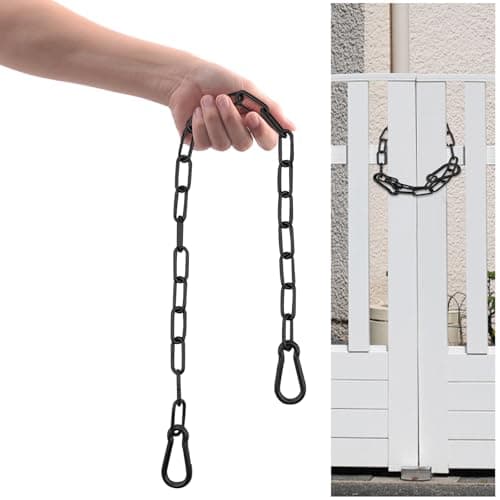
Start where most dogs actually get out. The containment walk is the first step of the audit, and it costs almost nothing: walk the perimeter looking for the gate that does not quite latch, the fence gap or dig-line at the corner, and the garage or delivery door that gets left open long enough for a door-dash. The most common yard escape is not a dog scaling a six-foot fence — it is a gate that sprang back open or never caught. smrtcol documents a 20-inch black barn chain with carabiners, a weather-resistant finish, and an adjustable length that fits most gates, marketed to keep pets and livestock from an accidental escape.
Where it sits in the audit: this is the belt-and-suspenders fix for a latch you cannot trust. Loop the chain and clip the carabiners so a gate that springs open or gets bumped stays shut, and a delivery driver who forgets the latch cannot cost you the dog. dvm360, citing Petco Love, frames why the timing matters — July is National Lost Pet Prevention Month "because of how many pets go missing this time of year" — and a $9 chain is the cheapest hour of prevention on the calendar.
Be honest about what it is not. This backstops a latch; it does not repair a fence, close a dig-line, or contain a determined climber. A fence gap routes to a proper wireless dog fence, and a chronic escape artist on a small lot may need the physical containment of a heavy-duty kennel or run. As the containment rung, it earns its place by fixing the one failure — an unlatched gate — that sends the most dogs into the street.
What We Love
- Fixes the most common yard escape for about nine dollars
- Weatherproof finish holds up on an outdoor gate
- Carabiners make it a fast, tool-free install
- Reusable on a second gate, shed, or grill
What Could Be Better
- Backstops a latch only — not a fence repair or a dig-line fix
- Will not contain a determined climber or jumper
- A single 20-inch length; a two-gate yard wants a pack
The Verdict
Get the smrtcol chain lock to close out the containment walk cheaply: it secures the gate that springs open or gets left unlatched, which is where most dogs slip into the street. Treat it as a latch backstop, not a fence — route real fence gaps to the wireless-fence guide and a chronic climber to a kennel.
Sources
- smrtcol (Amazon product listing, Gate Chain Lock with Carabiners): 20-inch black barn chain with carabiners; weather-resistant finish; adjustable length to fit various gate sizes; marketed to secure fences, pet enclosures, barns, and backyards against accidental escapes
- dvm360 / Petco Love: July is National Lost Pet Prevention Month because of how many pets go missing this time of year, many of them ending up in shelters that are already at capacity
$8.95
Current price · checked Sep 8, 2026
- Engraved on both sides, up to 8 lines total, per GoTags
- Room for two phone numbers plus MICROCHIPPED
- Stainless steel resists bending and wear
- 1.3-inch regular size suits medium and large dogs
- Scratch- and rub-resistant laser engraving
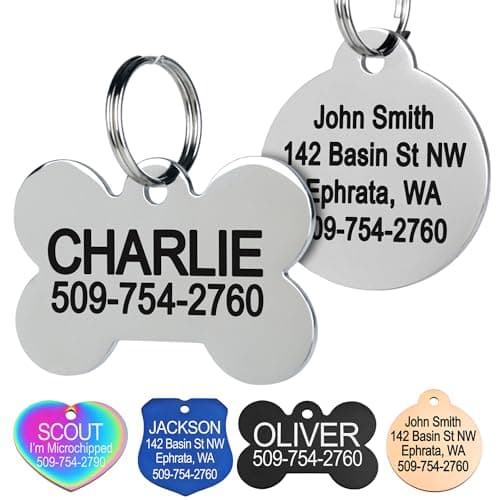
The fastest way a lost dog gets home is the oldest one: a stranger reads the tag and picks up the phone. That is why the ID layer is the highest-leverage step in the audit, and why a nine-dollar tag punches so far above its price. GoTags documents a stainless tag laser-engraved on both sides, up to eight lines of text across the two faces — enough for two phone numbers and the word MICROCHIPPED, which tells a finder the dog can be traced even if the tag is somehow missing.
The evidence is blunt about the payoff. Weiss et al. found that 14% of recovered dogs were reunited through an ID tag or chip, and the AVMA reports that microchipped dogs are returned "at more than double the overall rate" — with the single most common failure being "an incorrect or disconnected owner telephone number." A tag works instantly and needs no database lookup; the chip is the backup for when the collar comes off. Carry both, and put a current number on each. The audit step here is not buying the tag — it is confirming the number on it still rings.
The honest limit is the failure a tag shares with a collar: it only helps while it is on the dog. A tag can be lost with the collar, which is exactly why it pairs with a registered microchip rather than replacing one. Engraving legibility also fades faster on cheaper aluminum, so stainless is worth the dollar. As the ID rung, it is the cheapest, fastest reunion insurance a dog can wear — provided the phone number is current.
What We Love
- Both-sided engraving fits two numbers plus MICROCHIPPED
- Works instantly with no app or database lookup
- Stainless resists the bending that kills cheap tags
- Backs up the microchip for a collar-off scenario
What Could Be Better
- Only helps while it is on the collar
- Useless if the engraved phone number is out of date
- A tag alone is not a substitute for a registered chip
The Verdict
Get the GoTags tag as the audit's first purchase and put a current phone number on both sides — a tag is what gets a dog home the moment a neighbor has it in hand, and Weiss et al. credit ID with 14% of recovered dogs. Pair it with a registered microchip, and re-check the number on it twice a year.
Sources
- GoTags (Amazon product listing, Stainless Steel Pet ID Tag): stainless steel tag laser-engraved on both sides with up to 8 lines of text (up to 4 lines front, 4 lines back); regular 1.3-inch size for medium and large dogs; scratch- and rub-resistant engraving
- Weiss, Slater & Lord (2012), Animals 2(2):301-315: among recovered dogs, 14% were found through an identification tag or the microchip; searching the neighborhood accounted for 49% and the dog returning on its own for 20%
- AVMA (Microchipping FAQ): in a study of more than 7,700 stray animals, microchipped dogs were returned to their owners at more than double the overall rate; the most common reason microchipped animals were not returned was an incorrect or disconnected owner telephone number
$55.30
Current price · checked Sep 8, 2026
- Live GPS, unlimited range, updates every 2-3 seconds, per Tractive
- Virtual-fence escape alerts and location history
- Waterproof, up to 14 days of battery
- Clips to any collar for dogs over 8 pounds
- Requires a paid subscription to function
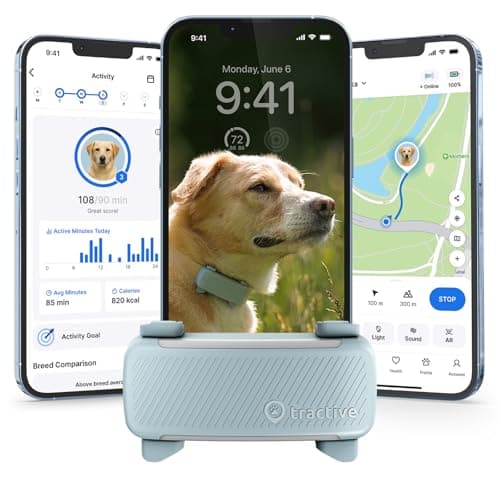
When containment fails, the recovery layer is what tells you which way the dog went — and Tractive is the value on-ramp into it. This guide does not re-rank trackers; the dog GPS tracker roundup compares the full four-tracker field. What matters here is the role: Tractive documents live GPS with unlimited range and updates every 2-3 seconds, custom virtual fences that fire an instant escape alert, location history to retrace a route, a waterproof body, and up to 14 days of battery on a clip that fits any collar over eight pounds. In the roundup's cited testing it posts the fastest GPS lock, which is the trait that matters at the moment a dog bolts.
Price and the honest catch, together: it lists and currently sells at $79.00 as of our August 10, 2026 check, but the hardware is only half the cost. The subscription is mandatory — Tractive publishes Premium at $10 a month billed annually, $7 on a 2-year term, or $5 prepaid across five years, which puts three years of ownership at $367 to $439 per the roundup — and the AVMA line is the reason a tracker exists at all: "the microchip is not a GPS device and cannot track your animal if it gets lost." A chip reunites a dog after a stranger finds it; a tracker shows you where a moving dog is right now. They do different jobs, and neither replaces the other.
Know what you are buying. Cancel the plan and you own a plastic clip — the recurring cost is the product, not the $79.00 sticker. And a tracker computes a GPS position but cannot transmit it without cell coverage, so on remote acreage the roundup's dead-zone caveat applies. As the value recovery layer, Tractive is the cheapest way to put live location under the audit and the playbook, as long as the plan stays paid and the collar stays on.
What We Love
- Fastest GPS lock in the roundup's cited testing
- Live updates every 2-3 seconds with unlimited range
- Virtual-fence escape alerts catch a bolt early
- Cheapest hardware entry into live tracking at $79.00
What Could Be Better
- Mandatory subscription — about $5/mo annual, roughly $235 over three years
- A clip-on can be lost with the collar in an escape
- No live location in a cellular dead zone
The Verdict
Get the Tractive as the value recovery layer: the fastest lock in the roundup, live escape alerts, and the cheapest hardware entry at $79.00. Budget the mandatory plan as the real cost, remember a chip is not GPS, and see the full four-tracker roundup before you commit.
Sources
- Tractive (Amazon product listing, Smart Dog GPS Tracker): live GPS with unlimited range and location updates every 2-3 seconds; custom virtual fences with instant escape alerts and location history; waterproof; up to 14 days of battery; clips to any collar for dogs over 8 pounds
- AVMA (Microchipping FAQ): the microchip is not a GPS device and cannot track your animal if it gets lost
$189.00
Current price · checked Sep 8, 2026
- Integrated collar the dog cannot slip or shake off, per Fi
- Real-time nationwide GPS with no range limits
- Virtual-fence escape alerts every few seconds in Lost Mode
- Waterproof with long multi-week battery life
- $189 includes the first 12 months of membership
For the confirmed escape artist, the tracker that helps is the one that survives the escape. A clip-on can snap off a collar the dog wriggles out of — and the Missing Animal Response Network notes that "many dogs, even dogs that normally are not fearful at home, become terrified when they become lost," which is when a bolting dog is most likely to back out of a loose collar. Fi answers that with an integrated design: the tracker is built into an aluminum-buckle collar the dog cannot shake off, alongside real-time nationwide GPS with no range limits and virtual-fence escape alerts that fire every few seconds in Lost Mode.
The trade is price and plan structure. At $189 the collar costs far more than a clip-on, but that price includes the first 12 months of membership; after year one, Fi sells prepaid blocks only (roughly $99 for six months, $189 a year, or $339 for two years, about $567 over three years per the roundup). The roundup also notes it locks on a GPS fix more slowly than the Tractive. This guide does not re-rank the two — the dog GPS tracker roundup carries the full head-to-head — but the split is clear: Tractive for value and lock speed, Fi for the dog that gets out of everything.
The honest caveats mirror the value pick. A tracker of any kind is the recovery layer, not prevention — it tells you where the dog went after containment failed — and it needs cell coverage to transmit, so the dead-zone rule still applies. What Fi buys over a clip-on is exactly one thing, and for the right dog it is the whole point: it cannot fall off. As the escape-artist recovery layer, it is the tracker for the door-dasher and the Houdini who would lose a clip-on with the collar.
What We Love
- Integrated collar cannot slip off during an escape
- Real-time nationwide GPS with no range limits
- First 12 months of membership included in the price
- Waterproof with long multi-week battery
What Could Be Better
- Prepaid-only renewals after year one, roughly $567 over three years
- Slower GPS lock than the Tractive, per the roundup
- Still needs cell coverage and is not a prevention tool
The Verdict
Get the Fi Series 3+ for the dog that gets out of everything: the integrated collar cannot fall off, which is the one thing a clip-on cannot promise a Houdini. It costs more and renews prepaid-only after the included first year, and it locks slower than the Tractive — weigh the two in the full roundup.
Sources
- Fi (Amazon product listing, New Series 3+ Smart Dog Tracker Collar): integrated smart collar with real-time nationwide GPS and no range limits; custom virtual fences with escape alerts every few seconds in Lost Mode; waterproof; the $189 price includes the first 12 months of membership
- Missing Animal Response Network (Kat Albrecht, Lost Dog Behavior): many dogs, even dogs that normally are not fearful at home, become terrified when they become lost
$12.99
Current price · checked Sep 8, 2026
- USB-rechargeable, three modes, per BSEEN
- 360-degree visibility around the collar
- Slow-flash, fast-flash, and steady-glow settings
- 70cm length trims to fit small through large dogs
- Doubles as prevention on dusk walks and response after a bolt
A dog is hardest to find in exactly the conditions that make it bolt: after dark, during fireworks, when it is already frightened. That is the case for a rechargeable collar light, and it plays two roles. As prevention, it keeps a dog visible on a dusk walk through fireworks season — dvm360, citing Petco Love, notes that more pets go missing around July 4th than any other time of year, many of them bolting in fear. As response, a glowing collar makes a dark dog spottable at a distance and signals to a Good Samaritan that the animal is owned, not a stray. BSEEN documents a USB-rechargeable light with slow-flash, fast-flash, and steady-glow modes, 360-degree visibility, and a 70cm band that trims to fit any size dog.
Where it sits in the plan: it bridges prevention and the first-48 response. A dog wearing a lit collar when it slips out at night is a dog you can still see across a yard or a field — and one a neighbor is far more likely to approach and read the tag on. It lists at $20.99 and currently sells for $12.99, cheap insurance for the season when the most dogs run.
The honest limits are simple. It is a visibility aid, not a locator — it does not tell you where the dog is, only helps you or a finder spot one that is already in sight, which is why it sits alongside the tracker rather than instead of it. The battery needs recharging, and a panicked dog moving fast in the dark can still outrun a light beam. As the visibility rung, it is a few dollars that make a dark-hours bolt less likely to end in the dog vanishing unseen.
What We Love
- Makes a dark-hours bolt visible across a yard or field
- Signals a found dog is owned, not stray
- Rechargeable with three brightness modes
- Trims to fit any size dog
What Could Be Better
- A visibility aid, not a locator — it shows, it does not track
- Battery needs recharging before it can help
- A fast dog in the dark can still outrun the beam
The Verdict
Get the BSEEN light for fireworks season and dusk walks: a lit collar keeps a dog visible when it is most likely to bolt, and tells a finder it is owned. At $12.99 (from $20.99) it is cheap seasonal insurance — just remember it makes a dog easier to spot, not to locate, so it complements a tracker rather than replacing one.
Sources
- BSEEN (Amazon product listing, LED Dog Collar Light): USB-rechargeable LED collar light with slow-flash, fast-flash, and steady-glow modes; 360-degree visibility; 70cm length trims to fit small through large dogs
- dvm360 / Petco Love: more pets go missing around July 4th than at any other time of year, many bolting in fear during fireworks
$17.99
Current price · checked Sep 8, 2026
- Double handles for close control at capture, per Max and Neo
- Slips over the head with no buckle to fasten
- Works on a dog with no collar or a stranger's found dog
- Reflective half-inch nylon rope
- One leash donated to a rescue per leash sold
The capture moment is the one part of a recovery you cannot rehearse with the dog, so the tool has to be foolproof. A slip lead is that tool: it drops over the head like a lasso with no buckle to fumble, which means it works on a dog wearing no collar, on a stranger's found dog, and in the seconds when a frightened animal will not hold still. Max and Neo documents a half-inch reflective nylon rope lead with double handles that give close control the instant the dog is within reach.
Where it sits in the playbook: it is the hands-on end of the do-not-chase rule. The Missing Animal Response Network is emphatic — "our best advice for a lost or stray dog is to LURE them back, DO NOT CHASE after them," and when the dog does come close, "let your dog touch you first." A slip lead lets you take control at that exact moment without lunging or grabbing, which can re-trigger flight. Keep one in each car and one in the go-bag, because a sighting can come anywhere. The brand also donates a leash to a rescue for every one sold, which is a fair thing to fund on the way.
The honest caveats are about restraint, in both senses. A slip lead tightens under pull, so it is a capture and short-hold tool, not an all-day walking collar for a panicked dog that thrashes. And it only helps after the luring works — it is the last six inches of a recovery, not the whole of it. As the close-range capture rung, it is the cheapest way to make sure that when a lured dog finally steps in, you do not lose it for lack of a lead.
What We Love
- No-buckle slip design works on a collarless or found dog
- Double handles give control at the capture moment
- Cheap enough to stash one in every car
- Donates a leash to a rescue per sale
What Could Be Better
- Tightens under pull — a capture tool, not an all-day collar
- Only useful after luring brings the dog in
- A single lead; a search team wants several
The Verdict
Get the Max and Neo slip lead and stash one in each car: it drops over the head with no buckle, so it takes control of a collarless or found dog in the one second that counts. Lure first and let the dog touch you before you slip it on — it is the last six inches of a recovery, not a walking collar for a thrashing dog.
Sources
- Max and Neo (Amazon product listing, Double Handle Rope Slip Lead): half-inch reflective nylon rope slip lead with double handles for close control; slips over the head with no buckle; the brand donates one leash to a dog rescue for every leash sold
- Missing Animal Response Network (Lure Lost or Stray Dogs, Do Not Chase): our best advice for a lost or stray dog is to LURE them back, DO NOT CHASE after them; if it comes close, let your dog touch you first
$32.99
Current price · checked Sep 8, 2026
- Half-inch biothane sheds mud and water, per Viper
- Stays flexible in extreme cold or heat
- Solid brass hardware that will not rust
- Offered in lengths from 15 to 50 feet
- Same long line rostered in the GPS-fence setup kit
A sighting in a field, a drainage ditch, or a wood line calls for reach, not a six-foot leash. A biothane long line gives a helper managed control at a distance — enough to secure a lured dog or hold a just-caught one without closing the gap in a way the Missing Animal Response Network warns against: "any forward movement in the direction of the dog, even as little as one step, could in the dog's mind be considered chasing." Viper documents a half-inch biothane line with a waterproof coating that sheds mud and water, stays flexible in extreme cold or heat, and runs on solid brass hardware, offered in lengths from 15 to 50 feet.
Where it sits in the playbook: it is the distance companion to the slip lead. Biothane is the material choice on purpose — it does not soak up water or stiffen in a muddy sighting area the way nylon or leather can, so it stays usable across the swampy, cold, or wet ground where lost dogs turn up. It lists at $35.99 and currently sells for $29.99. It is also the same long line rostered in PetPalHQ's GPS-fence setup kit, so a household working on containment training already knows the tool.
Two honest notes on length and use. The base listing ships a 15-foot line; for capture work, a 20-to-30-foot length gives more managed reach, so choose the length option to match the job. And a long line is a controlled-approach tool for a lured or cornered dog, not a lasso to throw over a running one — the do-not-chase rule still governs. As the distance-capture rung, it is the weatherproof line that lets a search helper hold a dog safely in the open ground where sightings actually happen.
What We Love
- Biothane sheds mud and water where nylon soaks and stiffens
- Reach to secure a dog without a close, flight-triggering approach
- Solid brass hardware that will not rust outdoors
- Shared with the GPS-fence kit, so it does double duty
What Could Be Better
- Base listing ships 15 feet — choose a longer option for capture reach
- A managed-approach tool, not a lasso for a running dog
- More line than a small suburban yard needs
The Verdict
Get the Viper long line for the field, ditch, or wood-line sighting where you need reach without a chase: biothane stays usable on wet, cold, muddy ground. At $29.99 (from $35.99) it is the same line in the fence-training kit — just size up from the 15-foot base to 20-30 feet for real capture work.
Sources
- Viper (Amazon product listing, Biothane Working Tracking Lead Long Line): half-inch biothane long line with a waterproof coating that sheds mud and water and stays flexible in extreme cold or heat; solid brass hardware; offered in multiple lengths from 15 to 50 feet
- Missing Animal Response Network (Lure Lost or Stray Dogs, Do Not Chase): any forward movement in the direction of the dog, even as little as one step, could in the dog's mind be considered chasing
How We Score
Formula
PetPal Recovery Readiness Score = (Containment Integrity × 0.30) + (ID Redundancy × 0.25) + (Response-Plan Preparedness × 0.25) + (Recovery Speed Capability × 0.20)
Score Factors
- Containment Integrity · 30%
- How well the plan closes the escape before it happens — every gate latched or backstopped, the fence line walked for gaps and dig-lines, and garage or delivery-door habits fixed. Per-product fit label: Gate & Door Audit. This carries the highest weight because the escape you prevent never needs a recovery, and the most common yard escape is a gate that did not latch.
- ID Redundancy · 25%
- Whether the dog carries two ways home — a current tag AND a microchip registered to a working phone number. Per-product fit label: Two Ways Home. Weiss et al. credit an ID tag or microchip with 14% of recovered dogs, and the AVMA reports microchipped dogs are reclaimed at more than double the rate, with a disconnected phone number the number-one reason chips fail.
- Response-Plan Preparedness · 25%
- Whether the first-48-hours playbook is rehearsed before it is needed — do-not-chase understood, attraction-station supplies on hand, a shelter list and photo ready, Petco Love Lost, PawBoost, and Nextdoor accounts pre-known, and sign materials and capture leads staged. Per-product fit label: First-48 Ready. The plan you rehearse beats the panic you improvise.
- Recovery Speed Capability · 20%
- Whether a charged GPS tracker sits under the plan as the live-locate layer — weighted lowest here because it is the safety net beneath prevention and response, not a replacement for them. Per-product fit label: Live-Locate Layer. A microchip is not a GPS device (AVMA), so the tracker is the only tool that locates a dog in motion. The Score is a composite of expert guidance and documented factors, not a lab measurement — PetPalHQ does not run a testing lab.
| Rank | Product | Score |
|---|---|---|
| #1 | GoTags GoTags Stainless Steel Personalized Pet ID Tag | 9.0 |
| #2 | Tractive Tractive Smart Dog GPS Tracker | 8.8 |
| #3 | Fi Fi New Series 3+ Smart Dog Tracker Collar | 8.6 |
| #4 | Max and Neo Max and Neo Double-Handle Rope Slip Lead | 8.4 |
| #5 | smrtcol smrtcol Gate Chain Lock with Carabiners | 8.3 |
| #6 | Viper Viper Biothane Working Tracking Lead Long Line | 8.2 |
| #7 | BSEEN BSEEN LED Dog Collar Light | 8.0 |
When NOT to Buy
Gear is not prevention. No tag, chain lock, or tracker replaces supervision and a trained recall — the containment walk and a dog that comes when called do the real work of keeping a dog home. When the fix is training, that routes to hands-on tools like a GPS-fence and e-collar system or a no-pull harness and better leash manners, not to a gadget bought in a panic. And if a GPS fence is part of your containment plan, the boundary-training setup protocol is the companion piece — a fence without its training weeks is exactly the kind of gap this audit exists to catch. Buy the kit to back up the habits, not to stand in for them.
A microchip is not a GPS tracker, and confusing the two costs dogs. The AVMA is explicit: "the microchip is not a GPS device and cannot track your animal if it gets lost." A chip reunites a dog after a stranger finds it and scans it; a tracker shows you where a moving dog is right now. If you want live location, that is the tracker (see the full roundup); if you want the reunion after a finder has the dog, that is the chip plus a current tag. Buy for the job you actually have, and do not let a chip talk you out of a tracker or the reverse.
Skip the tracker for a cellular dead zone — or at least verify coverage first. A GPS tracker computes a position but cannot transmit it without a cell signal, so on remote acreage or deep in the backcountry it can go quiet exactly where a lost dog ends up. The dog GPS tracker roundup covers this caveat in detail; check the carrier's coverage at the places your dog actually roams before you rely on a tracker there.
Do not buy a humane trap as a first move. Trapping a frightened, unapproachable lost dog is a professional escalation, not a starter purchase — the recovery authorities position traps as tools deployed with guidance once a dog is confirmed hard to approach. If it comes to that, call a lost-pet-recovery professional or your local animal control rather than improvising with a $150 cage. That is why this plan does not sell a trap.
A GPS tracker is the recovery layer, not the plan. It tells you where the dog went after containment failed — it does not prevent the escape or run the search. The audit (gates, tag, chip) and the first-48 playbook are what actually bring most dogs home: Weiss et al. found 93% of lost dogs recovered, most through neighborhood searching (49%), returning on their own (20%), or an ID tag or microchip (14% of finds). Buy the tracker as the safety net beneath those, not as a substitute for them.
Frequently Asked Questions
- My dog just got out — what do I do in the first hour?
- Do NOT chase and do NOT call the dog. The Missing Animal Response Network is blunt that "one of the worst things that you can do is CALL a stray, loose, or panicked dog," and that any forward movement toward the dog reads as chasing and pushes it into flight. Instead, get low, avoid eye contact, speak softly, and lure with smelly food — and set an attraction station (smelly wet food and a worn, familiar-smelling item) at the exact spot the dog was last seen. At the same time, get a recent photo ready, phone the microchip registry line, and start searching the immediate neighborhood: Weiss et al. found that 49% of recovered dogs are found by searching the neighborhood, the single most common method. Calm, close, and quiet beats fast and loud every time.
- How far do lost dogs travel?
- It depends on the dog's temperament, not a fixed number of miles. The Missing Animal Response Network explains that "how a dog behaves towards strangers influences how far it will travel" when lost — gregarious, people-friendly dogs are often found close to home, while aloof or fearful dogs can travel much farther and are harder to catch. This guide deliberately does not publish a mileage figure, because the peer-reviewed and professional sources describe distance by temperament category rather than by distance. Profile your own dog honestly: a shy or fearful dog needs a wider, quieter search and more patience than a social one.
- Is the "only 14% of lost dogs get home" number right?
- It needs context. The peer-reviewed national study (Weiss, Slater & Lord, 2012) found that 14% is the share of dogs that got lost over a five-year window — and that 93% of those lost dogs were recovered, most of them through searching the neighborhood (49%), returning on their own (20%), or an ID tag or microchip (14% of the finds). Lower "returned to owner" figures you may see elsewhere describe dogs that enter the shelter system without any ID, where the odds genuinely drop. The takeaway is not fatalism — it is that active searching plus working ID is exactly what closes the gap between a dog that is lost and a dog that comes home.
- Do scent items and food stations actually work?
- Used correctly, yes. The Missing Animal Response Network advises putting out "smelly, wet canned dog food or something with gravy" because that "carries the most smell and will help lure the dog back home," along with dirty laundry or a dog bed to keep familiar scents outside your house. The honest caveat is what a scent station is not: it is a lure at the last-seen location or a confirmed sighting spot, paired with calm body language and patience — not a magic homing beacon that pulls a dog across town. Set it where the dog actually was, keep the area quiet, and let the smell and stillness do the work while you search.
- How do I check and update my dog's microchip?
- Run the chip number through the free AAHA Universal Pet Microchip Lookup Tool. It "peeks into (most) major microchip registries and tells you within a few seconds if or where the microchip number is registered." It is a finder, not a registry, and it stores no owner data — it simply points you to the company that holds your chip, where you log in and update your phone number. Do that now, before anything goes wrong, because the AVMA reports that the most common reason microchipped dogs are not returned is "an incorrect or disconnected owner telephone number." And remember the chip's limit: "the microchip is not a GPS device and cannot track your animal if it gets lost." The chip earns the reunion after a finder scans the dog; a tracker is what locates one in motion.
- Where should I post online — and is any of it free?
- Post to Petco Love Lost, which describes itself as "a free and easy way to search 200K+ lost and found pets" and uses photo-matching against 3,000+ shelters plus Nextdoor and Neighbors by Ring photos; PawBoost, which is free to post a lost-pet alert; and your local Nextdoor. All three are free to file the core alert. Then file in person at every shelter within range, too — Petco Love catches shelter intakes, but a clear photo on a shelter's own board still matters and staff who have met you remember your dog. Post a recent, well-lit photo everywhere, and update the listings the moment you have a sighting.
- Someone says they have my dog and wants money first — is it real?
- Treat it as a scam until it is proven otherwise. Pet FBI warns of a common con in which "the scammer states that your pet has been injured and needs immediate medical care for which they require a deposit," usually pushing a wire transfer or gift cards. Its rule is the one to remember: "reputable finders or shelters will not ask for money before you've confirmed that they have your pet." Ask for a clear photo, ask a detail only the real finder would know (a specific marking, the collar color), arrange to meet at a shelter or vet clinic, and never wire money or buy gift cards. A recent news cluster out of Charlotte followed exactly this script before a shelter stepped in — the pattern is real, and so is the defense against it.
Bottom Line
Get the smrtcol gate chain lock to close the containment walk: it backstops the unlatched gate that sends the most dogs into the street, for about nine dollars — a latch fix, not a fence repair.
Get the GoTags tag as the audit's first buy and keep the number current on both sides: a tag-or-chip ID layer is credited by Weiss et al. with 14% of recovered dogs, and the tag is its fastest half, and it pairs with a registered chip.
Get the Tractive as the value recovery layer: the fastest GPS lock in the roundup and the cheapest hardware entry at $79.00 — just budget the mandatory ~$5/mo plan as the real cost.
Get the Fi Series 3+ for the escape artist: the integrated collar cannot fall off, the one thing a clip-on cannot promise, though it costs more, renews prepaid-only after year one, and locks slower than Tractive.
Get the BSEEN LED collar light for fireworks season: a lit collar keeps a dark-hours bolt visible and marks a found dog as owned, at $12.99 from $20.99 — a visibility aid, not a locator.
Get the Max and Neo slip lead for the capture moment and stash one in every car: no buckle, works on a collarless or found dog, and it is the last six inches of a recovery after luring brings the dog in.
Get the Viper biothane long line for a field or ditch sighting: weatherproof reach to secure a dog without a flight-triggering approach — size up from the 15-foot base to 20-30 feet for capture work.
Sources & Methodology
Methodology
PetPal Recovery Readiness Score = (Containment Integrity × 0.30) + (ID Redundancy × 0.25) + (Response-Plan Preparedness × 0.25) + (Recovery Speed Capability × 0.20)
Expert review sources
- AVMA (Microchipping FAQ) — the microchip is not a GPS device; keep registration current; the top reason microchipped dogs are not returned is a disconnected owner phone number; and (Lord et al. 2009) microchipped stray dogs returned at more than double the overall rate
- Missing Animal Response Network / Kat Albrecht (Lost Dog Behavior; Lure Lost or Stray Dogs, Do Not Chase) — lost dogs travel by temperament not fixed distance, do NOT call or chase a panicked dog, and lure with smelly food and calming signals at the last-seen location
- Weiss, Slater & Lord (2012), Animals 2(2):301-315 — 14% of dogs were lost in a five-year window and 93% of those were recovered, most via neighborhood search (49%), returning on their own (20%), and ID tag or microchip (14% of finds)
- Petco Love Lost — a free service to search 200K+ lost and found pets using photo-matching against 3,000+ shelters plus Nextdoor and Neighbors by Ring photos
- Lost Dogs of America (Creating and Placing Effective Signs) — big neon signs with few words, a photo, and heavy placement at intersections generate the sightings that drive reunions
- AAHA Universal Pet Microchip Lookup Tool (via Found Animals) — a finder, not a registry, that reports within seconds which registry holds a chip so the owner can log in and update the phone number
- Pet FBI (Lost Pet Scams) — the injured-pet deposit con, wire-transfer and gift-card red flags, and the rule that reputable finders do not ask for money before you confirm they have your pet
- dvm360 / Petco Love — July 4th is the day the greatest number of pets go missing, and July is National Lost Pet Prevention Month
- Shelter Animals Count — July 5 logged as the single highest stray-dog intake day nationwide from 2021 through 2023 (via the dog GPS tracker roundup)
Community sources
- Charlotte lost-pet ransom news cluster (Humane Society of Charlotte / Hoodline, March 2026) — a scammer claimed a found dog was injured and demanded payment before a shelter intervened, the exact scam persona Pet FBI warns about
- Lost-pet-recovery community consensus that humane trapping is a guided, professional escalation for confirmed unapproachable dogs, not a first-move DIY purchase
Prices and specs verified July 16, 2026.
About the author
Nick Miles is the chief editor of PetPalHQ. This prevention audit and first-48-hours playbook are editorial synthesis of lost-pet-recovery authorities — the AVMA, the Missing Animal Response Network (Kat Albrecht), the peer-reviewed Weiss, Slater & Lord (2012) national study, Petco Love Lost, Lost Dogs of America, the AAHA Universal Pet Microchip Lookup Tool, and Pet FBI — reconciled with PetPalHQ's dog GPS tracker roundup; product specifications come from each item's Amazon listing. PetPalHQ does not run a testing lab, and the PetPal Recovery Readiness Score is a composite of expert guidance and documented factors, not a measurement. Lost-dog travel is described by temperament rather than an invented mileage figure, exactly as the sources state it.
PetPalHQ is a participant in the Amazon Services LLC Associates Program. We may earn commissions from qualifying purchases — at no extra cost to you.
More Guides

Cats & Dogs
Best Dog GPS Trackers for Lost-Dog Recovery (2026)
Cats & Dogs
Best GPS Wireless Dog Fences for Unfenced Yards and Escape Artists (2026)
Cats & Dogs
Best GPS Trackers for Cats (Weight Limits, Breakaway Safety, Real Subscription Costs)
Playground
Best 4th of July Pet Safety Gear (2026)
Cats & Dogs
Best GPS Dog Training & E-Collar Systems 2026: Tracking and Training Rigs for Hunting and Working Dogs
Cats & Dogs