Cats & Dogs
Best No-Pull Harnesses and Leash Manners Tools for Dogs (2026)
AVSAB explicitly opposes prong, choke, and shock collars for dog training — reward-based methods are the consensus standard. The PetSafe Easy Walk No-Pull Dog Harness anchors the budget front-clip pick; the Ruffwear Front Range Dog Harness is the everyday padded dual-clip option. Editorial synthesis of AVSAB, AKC, and manufacturer guidance.
By Nick Miles · Updated August 7, 2026 · 12 min read
PetPalHQ is reader-supported. We may earn a commission from qualifying Amazon purchases at no extra cost to you.
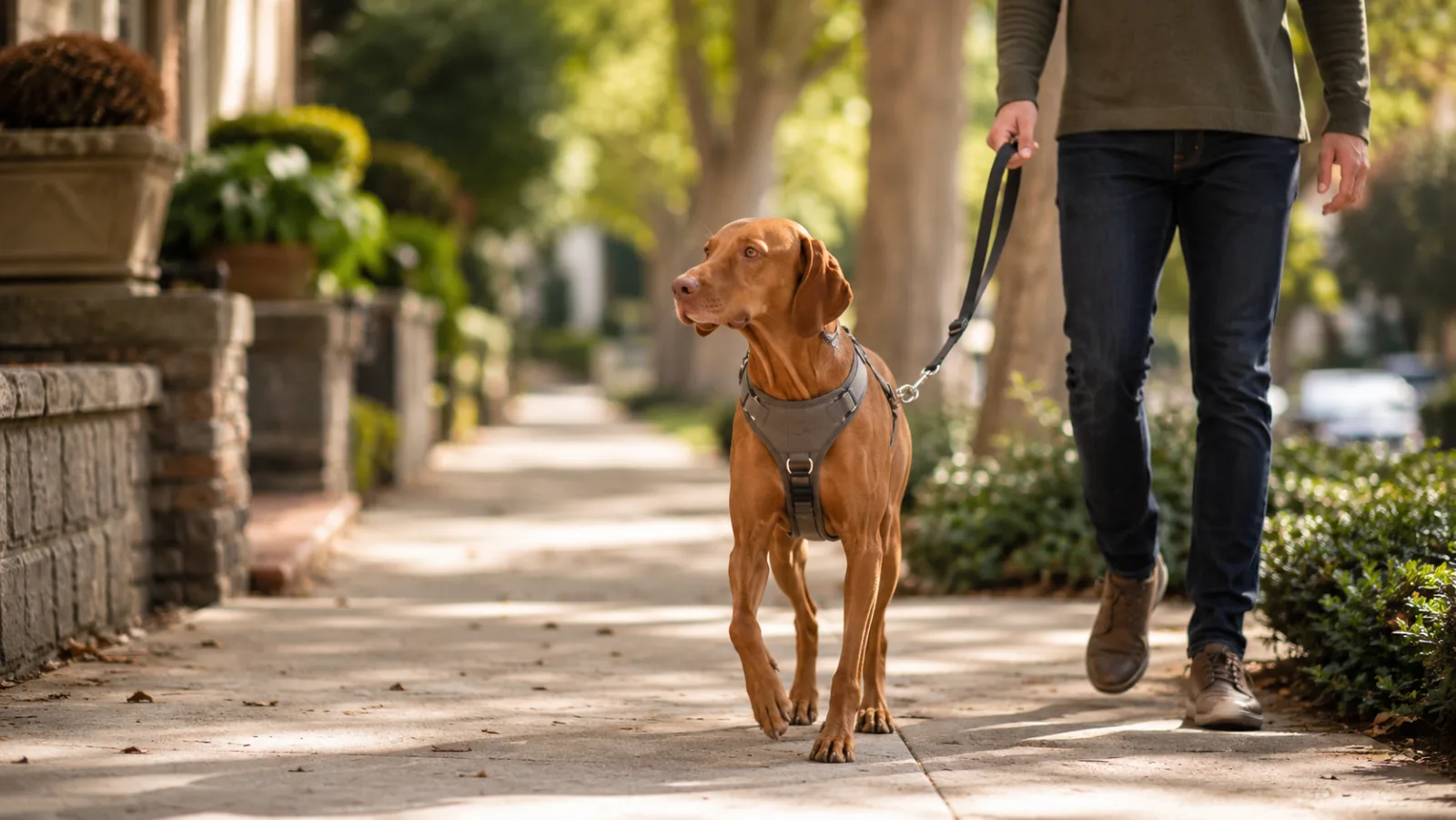
Evidence at a Glance
PetSafe Easy Walk No-Pull Dog Harness - Ultimate Harness to Help Stop Pulling - Pull-Free Walks - Take Control & Teach Better Leash Manners - Patented Martingale Loop Design - Black, Large
Front-clip martingale loop redirects pulling — the budget editorial default for everyday loose-leash training.
Sources: PetSafe manufacturer documentation, AVSAB Position Statement on Humane Dog Training, AKC leash-walking guidance
Verified May 5, 2026
Ruffwear, Front Range Dog Harness, Reflective Soft Padded Everyday Harness with Dual Leash Clips, Adjustable and Lightweight Fit for Training or Walking for All Dogs, Basalt Gray, Medium
Dual-clip Y-front harness with foam padding — the everyday training-and-walking workhorse.
Sources: Ruffwear manufacturer documentation, AKC leash-walking guidance, AAHA Canine and Feline Behavior Management Guidelines
Verified May 5, 2026
PetSafe Gentle Leader No-Pull Dog Headcollar - The Ultimate Solution to Pulling - Redirects Your Dog's Pulling for Easier Walks - Helps You Regain Control - Medium, Black
Head-halter design redirects head — the conditioned tool for extreme pullers when introduced gradually with reward-based methods.
Sources: PetSafe manufacturer documentation, AVSAB Position Statement on Humane Dog Training, AAHA Canine and Feline Behavior Management Guidelines
Verified May 5, 2026
Our Picks
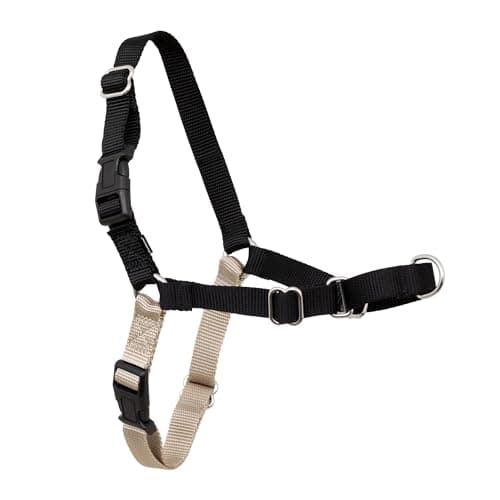
PetSafe
PetSafe Easy Walk No-Pull Dog Harness - Ultimate Harness to Help Stop Pulling - Pull-Free Walks - Take Control & Teach Better Leash Manners - Patented Martingale Loop Design - Black, Large
9.1 / 10
- Front chest leash attachment — redirects forward pulling at the source
- Martingale-style front loop tightens slightly under tension, then releases
- Four adjustment points for fit
- Designed by a veterinary behaviorist per PetSafe documentation
$22.95
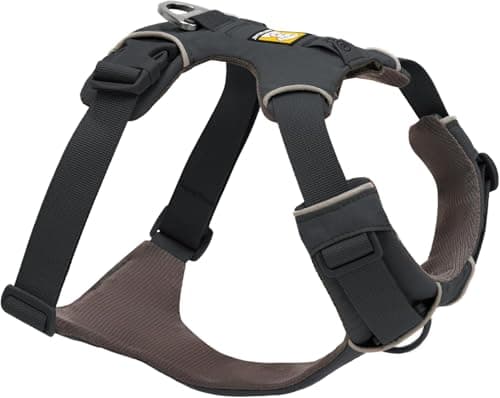
Ruffwear
Ruffwear, Front Range Dog Harness, Reflective Soft Padded Everyday Harness with Dual Leash Clips, Adjustable and Lightweight Fit for Training or Walking for All Dogs, Basalt Gray, Medium
9.0 / 10
- Dual leash clips — front for training, back for relaxed walks
- Foam-padded chest and belly panels for everyday comfort
- Reinforced front webbing for redirection
- Reflective trim and four adjustment points
$59.99
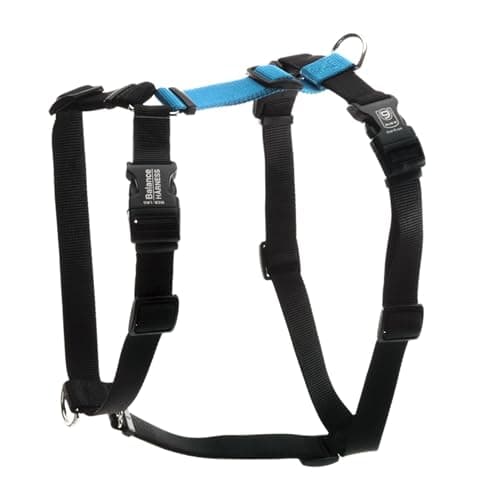
Blue-9
Blue-9 Buckle-Neck Balance Harness, Fully Customizable Fit No-Pull Harness, Ideal for Dog Training and Obedience, Made in The USA, Sky Blue, Medium
8.9 / 10
- Six-point adjustable design for customizable fit
- Buckle-neck closure — no need to put the harness over the head
- Front and back leash rings for training transitions
- Made in the USA per Blue-9 documentation
$49.95
Last Amazon read 2026-09-08
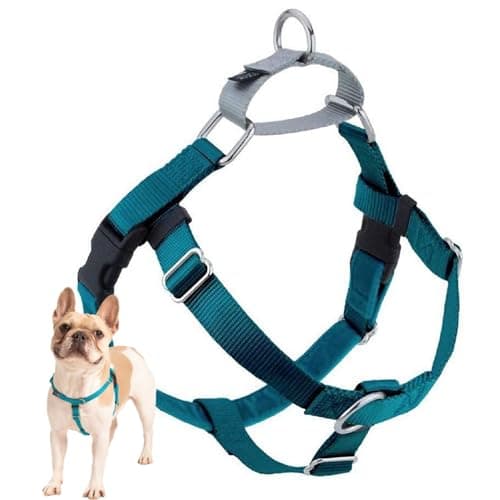
2 Hounds Design
2 Hounds Design Freedom No Pull Dog Harness, Adjustable Harness, Easy Walking & Comfortable Control, Fits Small, Medium & Large Dogs, Solid Colors, Made in USA, 1" MD, Teal
8.8 / 10
- Front structural ring plus patented back control loop
- Velvet-lined chest strap to reduce friction at the contact point
- Stainless steel hardware with USA manufacturing
- Sizing across small, medium, and large dogs
$34.98
Last Amazon read 2026-09-08
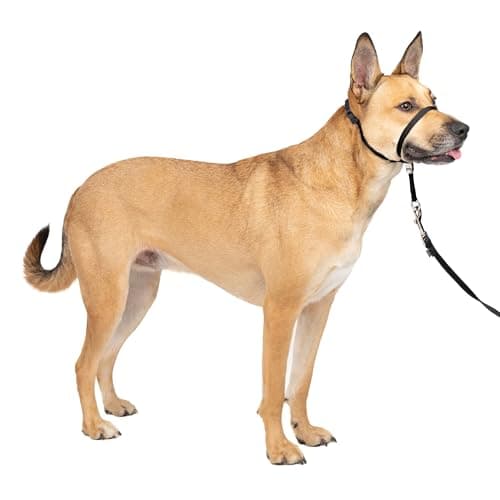
PetSafe
PetSafe Gentle Leader No-Pull Dog Headcollar - The Ultimate Solution to Pulling - Redirects Your Dog's Pulling for Easier Walks - Helps You Regain Control - Medium, Black
8.6 / 10
- Padded neoprene nose loop redirects the dog's head
- Designed by a veterinary behaviorist per PetSafe documentation
- Allows full range of motion to eat, drink, pant, and bark
- Not a muzzle — does not restrict the dog's mouth
$14.49
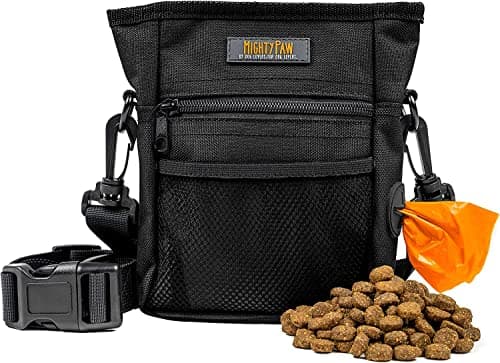
Mighty Paw
Mighty Paw Dog Treat Pouch | No Spill Magenetic Clasp - Hands-Free Pouches for Training - Pets Training Treat Pouches for Dog Walks - Pet Bags Pouch - Built in Poop Bag Holder - Black
8.7 / 10
- Magnetic clasp keeps the pouch closed between rewards
- Hands-free belt design for fast access during training
- Built-in poop bag holder consolidates walk gear
- Pockets for treats, phone, and small accessories
$19.99
The Short Answer
No-pull harnesses are management tools. They reduce mechanical pulling so reward-based training has room to work. AVSAB's position statement on humane dog training is explicit: aversive tools (prong collars, choke chains, shock/e-collars) should not be used for training or behavior modification. AAHA's behavior management guidelines align with that stance. For most dogs, the PetSafe Easy Walk is the budget front-clip default. The Ruffwear Front Range is the padded everyday dual-clip. The Blue-9 Buckle-Neck Balance Harness is the fit-focused pick for hard-to-fit or deep-chested dogs. The 2 Hounds Design Freedom is the stronger dual-connection training harness. The PetSafe Gentle Leader is the head-halter pick for extreme pullers when conditioned gradually. The Mighty Paw Treat Pouch is core training equipment, not an accessory.
Every product on this list has been scored against the PetPal Gear Score, a weighted composite of expert consensus, observed effectiveness, animal safety, long-term durability, and value. Review method: Editorial synthesis of the AVSAB Position Statement on Humane Dog Training, AKC leash-walking and puppy-leash-training resources, AAHA Canine and Feline Behavior Management Guidelines, peer-reviewed welfare research (Cooper et al. 2014, Vieira de Castro et al. 2020), Karen Pryor Academy training resources, Fear Free Pets handling guidance, and manufacturer documentation from PetSafe, Ruffwear, Blue-9, 2 Hounds Design, and Mighty Paw — no first-hand product testing.. Synthesized from 11+ expert sources.
A no-pull harness is a management tool, not a training method. AVSAB's Position Statement on Humane Dog Training is the editorial anchor for this guide: reward-based methods should be used for all canine training and behavior modification, and aversive tools — prong collars, choke chains, shock/e-collars, leash corrections — should not be used. The harness reduces the mechanical advantage of pulling so the actual training has room to land.
Editorial position up front: prong, choke, and shock collars will not appear in the picks. AVSAB lists fallout from aversive methods including increased anxiety, fear-related aggression, avoidance, and learned helplessness. Cooper et al. 2014 found no consistent training advantage for e-collars over reward-based methods in their study context, and Vieira de Castro et al. 2020 documented welfare concerns associated with aversive training methods. AAHA's Canine and Feline Behavior Management Guidelines align with the same reward-based consensus. The picks below are humane management equipment that supports the AVSAB/AAHA-aligned training plan.
The picks below are editorial synthesis. PetPalHQ does not run a testing lab — every product on this page was selected by reviewing the AVSAB Position Statement on Humane Dog Training, AKC leash-walking and puppy-leash-training resources, AAHA Canine and Feline Behavior Management Guidelines, peer-reviewed welfare research (Cooper et al. 2014, Vieira de Castro et al. 2020), Karen Pryor Academy training resources, Fear Free Pets handling guidance, and manufacturer documentation from PetSafe, Ruffwear, Blue-9, 2 Hounds Design, and Mighty Paw.
Loose-leash walking sits inside a larger behavior framework. AAHA's behavior management guidelines treat handling, training, and management as a unified system — pulling is sometimes a management problem, sometimes a fear or arousal problem, sometimes a frustration problem, and the right answer depends on the underlying driver. This guide is the buying-side companion to the Cat, Dog Behavior, Anxiety, and Enrichment hub, which covers the broader framework, and pairs naturally with the Best Lick Mats for Dogs and Cats guide for post-walk decompression and counter-conditioning.
Head-to-Head Comparison
| Feature | PetSafe Easy Walk No-Pull Dog Harness - Ultimate Harness to Help Stop Pulling - Pull-Free Walks - Take Control & Teach Better Leash Manners - Patented Martingale Loop Design - Black, Large | Ruffwear, Front Range Dog Harness, Reflective Soft Padded Everyday Harness with Dual Leash Clips, Adjustable and Lightweight Fit for Training or Walking for All Dogs, Basalt Gray, Medium | Blue-9 Buckle-Neck Balance Harness, Fully Customizable Fit No-Pull Harness, Ideal for Dog Training and Obedience, Made in The USA, Sky Blue, Medium | 2 Hounds Design Freedom No Pull Dog Harness, Adjustable Harness, Easy Walking & Comfortable Control, Fits Small, Medium & Large Dogs, Solid Colors, Made in USA, 1" MD, Teal | PetSafe Gentle Leader No-Pull Dog Headcollar - The Ultimate Solution to Pulling - Redirects Your Dog's Pulling for Easier Walks - Helps You Regain Control - Medium, Black | Mighty Paw Dog Treat Pouch | No Spill Magenetic Clasp - Hands-Free Pouches for Training - Pets Training Treat Pouches for Dog Walks - Pet Bags Pouch - Built in Poop Bag Holder - Black |
|---|---|---|---|---|---|---|
| Clip type | Front-clip martingale | Dual-clip Y-front | Dual-clip six-point | Dual ring + control loop | Head halter | Treat delivery |
| Best for | Budget front-clip start | Everyday training and walks | Hard-to-fit body shapes | Strong pullers | Extreme pullers (conditioned) | All loose-leash training |
| Padding | Light | Foam-padded | Minimal | Velvet-lined chest only | Padded nose loop | N/A |
| Training context | Reward-based pairing | Front for training, back for walks | Customized fit + training | Dual connection + double leash | Conditioned acclimation required | Reinforces every other tool |
| Check price | Amazon | Amazon | Amazon | Amazon | Amazon | Amazon |
PetSafe PetSafe Easy Walk No-Pull Dog Harness - Ultimate Harness to Help Stop Pulling - Pull-Free Walks - Take Control & Teach Better Leash Manners - Patented Martingale Loop Design - Black, Large
$22.95
- Front chest leash attachment — redirects forward pulling at the source
- Martingale-style front loop tightens slightly under tension, then releases
- Four adjustment points for fit
- Designed by a veterinary behaviorist per PetSafe documentation
The PetSafe Easy Walk is the editorial budget default for owners starting on loose-leash training. PetSafe's product documentation describes the harness as designed by a veterinary behaviorist. It uses a front chest leash attachment and a patented martingale loop that gently redirects the dog when they pull forward.
The behavioral framing is the part most marketing copy skips. AVSAB's Position Statement on Humane Dog Training is explicit that reward-based methods are the standard. No-pull equipment can reduce mechanical pulling, but the harness does not teach loose-leash walking by itself. The PetSafe Easy Walk gives the handler a more controlled walk so the actual training can happen: mark and feed when the leash slackens, stop forward motion when the dog hits the end, reinforce voluntary check-ins. AKC leash-training resources describe the same loop. The harness is the management half. The treats and the timing are the training half.
Fit is the main caveat. AAHA's Canine and Feline Behavior Management Guidelines emphasize that equipment must fit before it can support behavior change. Chest-strap harnesses can rub or affect shoulder motion on some dogs. PetSafe's fit guide and the AKC fit checklist both recommend the two-finger rule, watching armpit clearance, and checking shoulder movement at a walk and a trot. If the harness slides toward the armpits or restricts gait, change sizes or move to a different harness style. Y-front designs like the Ruffwear Front Range or Blue-9 Buckle-Neck Balance Harness sit differently on the chest.
What the spec sheet does not tell you: the front-clip mechanism reduces the dog's mechanical advantage but does not eliminate it. Strong, motivated pullers will still pull — just less effectively. Pair the harness with a 4-6 ft fixed leash (not a retractable). Keep the Mighty Paw Treat Pouch on your hip for fast reinforcement, and follow the conditioning ladder in the how-to section. See the Cat, Dog Behavior, Anxiety, and Enrichment hub for the behavior framework that supports the equipment choice.
What We Love
- Front-clip redirection at a true budget price
- Designed by a veterinary behaviorist per PetSafe documentation
- Four adjustment points support fit on a wide range of body shapes
- Pairs cleanly with reward-based loose-leash training
What Could Be Better
- Chest-strap design can rub or restrict shoulder motion on some dogs
- Strong pullers still pull — the harness is management, not magic
- Less padding than the Ruffwear Front Range Dog Harness
- Fit can be tricky for very deep-chested or narrow-chested dogs
The Verdict
If you need a front-clip no-pull harness on a budget and your dog has a typical body shape, the PetSafe Easy Walk is the editorial default. Pair it with a treat pouch, a 4-6 ft fixed leash, and the AVSAB-aligned reward-based training plan in the how-to section.
Ruffwear Ruffwear, Front Range Dog Harness, Reflective Soft Padded Everyday Harness with Dual Leash Clips, Adjustable and Lightweight Fit for Training or Walking for All Dogs, Basalt Gray, Medium
$59.99
- Dual leash clips — front for training, back for relaxed walks
- Foam-padded chest and belly panels for everyday comfort
- Reinforced front webbing for redirection
- Reflective trim and four adjustment points
The Ruffwear Front Range is the editorial pick for owners who want one harness that handles both training and normal walks without looking like specialized training gear. Ruffwear's product documentation describes foam padding across the chest and belly panels, four adjustment points, and dual leash attachments — a metal V-ring on the back and reinforced webbing at the chest.
The dual-clip design supports the training progression AKC and Karen Pryor Academy resources both recommend. Use the front clip during active loose-leash training, especially in distracting environments where the dog is more likely to pull. Switch to the back clip on relaxed sniff walks once the dog has the skill. AVSAB's humane-training position statement is silent on harness style. What matters to AVSAB is that the training method is reward-based, not the specific clip location. A harness that supports both contexts makes it easier to follow that guidance consistently.
The honest limitations: the front connection is webbing reinforcement rather than a heavy metal ring. For a typical pulling dog this is fine, but extreme pullers may benefit from the structural front ring on the 2 Hounds Design Freedom or a conditioned PetSafe Gentle Leader. Ruffwear's pricing reflects the padding and outdoor-brand build quality. It is meaningfully more expensive than the PetSafe Easy Walk, which is the budget alternative for the same use case.
What the spec sheet does not tell you: fit on Y-front harnesses depends heavily on rib-cage measurement, not just neck or chest circumference. Use the AKC two-finger rule, watch for armpit rub on the first long walk, and check shoulder movement at a trot. AAHA behavior-management guidelines stress that any harness that restricts movement should be replaced. A fit problem is a training problem in disguise.
What We Love
- Dual-clip design supports training and relaxed walks in one harness
- Foam padding makes it comfortable for long daily wear
- Outdoor-brand build quality with reflective trim
- Y-front shape generally clears the shoulder better than martingale-style chest straps
What Could Be Better
- Higher price than budget front-clip harnesses
- Front connection is webbing reinforcement, not a heavy metal ring
- Extreme pullers may need a stronger structural front clip or conditioned head halter
- Sizing requires careful rib-cage measurement
The Verdict
Buy the Ruffwear Front Range if you want one comfortable harness for both training and everyday walks. It is the workhorse pick — front-clip training when you need it, back-clip relaxation when you do not.
Blue-9 Blue-9 Buckle-Neck Balance Harness, Fully Customizable Fit No-Pull Harness, Ideal for Dog Training and Obedience, Made in The USA, Sky Blue, Medium
$49.95
Last Amazon read 2026-09-08
- Six-point adjustable design for customizable fit
- Buckle-neck closure — no need to put the harness over the head
- Front and back leash rings for training transitions
- Made in the USA per Blue-9 documentation
The Blue-9 Buckle-Neck Balance Harness is the fit-focused editorial pick. Blue-9's product documentation describes six adjustment points, a front-and-back leash ring system, and a buckle-neck closure. That means the harness does not have to be pulled over the dog's head — important for dogs that dislike head-over fittings, anxious dogs, or any dog still being conditioned to wearing a harness.
The use case is specific. Deep-chested dogs (sighthounds, many Pit Bull-type dogs, narrow-chested dogs), growing adolescents who fall between standard sizes, and owners who care about shoulder freedom are the readers this harness was built for. Six adjustment points are not marketing — they are what lets a harness sit in the right place on a body shape that one-size-fits-most designs miss. Karen Pryor Academy training resources stress that equipment used during training should not be a source of friction. If the dog is uncomfortable in the harness, the training repetitions are happening at a deficit.
The honest trade-off: adjustability cuts both ways. A harness with six adjustment points can be set up wrong as easily as it can be set up right. AAHA's behavior-management guidelines emphasize fit verification. Blue-9's published fitting videos and diagrams are the source to follow during initial setup. Once the harness is dialed in, you generally do not need to re-adjust frequently. But the first hour of fitting takes longer than with a simpler martingale-style harness.
What the spec sheet does not tell you: Blue-9's design uses less padding than the Ruffwear Front Range, which keeps the profile lighter. It is best suited to dogs that walk or train rather than long all-day wear. The Y-front shape generally avoids the armpit rub problem some chest-strap harnesses cause. The front leash ring at the sternum supports the same training progression AKC resources describe — front for active training, back for relaxed walks once the dog has the skill.
What We Love
- Six-point adjustability fits hard-to-fit body shapes
- Buckle-neck closure suits dogs that dislike over-the-head fittings
- Front and back leash rings for training transitions
- Made in the USA with detailed manufacturer fit documentation
What Could Be Better
- Less padded than the Ruffwear Front Range Dog Harness
- Initial fitting takes longer due to multiple adjustment points
- Higher price than the PetSafe Easy Walk No-Pull Dog Harness
- Best suited to walking and training, not all-day wear
The Verdict
Choose the Blue-9 Buckle-Neck Balance Harness if your dog is hard to fit, deep-chested, narrow-chested, or anxious about over-the-head harnesses. The fit is the feature — reward-based loose-leash training works better when the equipment is not a source of friction.
2 Hounds Design 2 Hounds Design Freedom No Pull Dog Harness, Adjustable Harness, Easy Walking & Comfortable Control, Fits Small, Medium & Large Dogs, Solid Colors, Made in USA, 1" MD, Teal
$34.98
Last Amazon read 2026-09-08
- Front structural ring plus patented back control loop
- Velvet-lined chest strap to reduce friction at the contact point
- Stainless steel hardware with USA manufacturing
- Sizing across small, medium, and large dogs
The 2 Hounds Design Freedom is the dual-connection training pick. 2 Hounds Design describes the harness as having a front structural leash ring, a patented back control loop, a velvet-lined chest strap, and stainless steel hardware. Where the Ruffwear Front Range uses webbing reinforcement at the chest, the Freedom uses a metal ring. That structural difference shows up most when a strong dog hits the end of the leash.
The training protocol most often paired with this harness is a double-ended leash connected to both rings simultaneously. The front ring redirects forward pulling. The back ring provides a control point that lets the handler maintain leash position without leverage. That setup gives a strong puller more management room while reward-based training does its work — mark and feed when the leash slackens, change direction before the dog hits the end, reinforce voluntary check-ins. AVSAB's humane-training position statement is the editorial anchor: aversive tools are not the answer for strong pullers. A dual-connection harness with a treat pouch is the humane management half of the AVSAB-aligned plan.
Fit honesty: the chest strap on the Freedom sits low on the chest. That works well for many dogs, but can sit close to the shoulder on certain builds — sighthounds, very narrow-chested dogs, or dogs with unusually high shoulders. AAHA behavior-management guidelines and AKC fit guidance both recommend watching shoulder movement at a walk and trot during the first long use. If the chest strap interferes with gait, the harness is the wrong fit, not the wrong category. A Y-front design like the Blue-9 Buckle-Neck Balance Harness sits differently and may suit those body shapes better.
What the spec sheet does not tell you: 2 Hounds Design sells double-ended leashes designed specifically for the dual-connection use case. If you are using the Freedom for dual-connection training, you need either that leash or another double-ended leash that can clip front and back simultaneously. A single-clip leash defeats the design.
What We Love
- Front structural ring is sturdier than webbing-reinforced chest connections
- Velvet lining reduces friction at the chest contact point
- Stainless steel hardware with USA manufacturing
- Dual-connection setup gives strong pullers more management room
What Could Be Better
- Chest strap can sit close to the shoulder on some body shapes
- Dual-connection use requires a double-ended leash
- Less padding than the Ruffwear Front Range Dog Harness
- Not a substitute for reward-based training — still a management tool
The Verdict
Buy the 2 Hounds Design Freedom if your dog is a strong puller and you want more structural front connection than webbing-reinforced harnesses provide. Pair it with a double-ended leash and a reward-based training plan.
PetSafe PetSafe Gentle Leader No-Pull Dog Headcollar - The Ultimate Solution to Pulling - Redirects Your Dog's Pulling for Easier Walks - Helps You Regain Control - Medium, Black
$14.49
- Padded neoprene nose loop redirects the dog's head
- Designed by a veterinary behaviorist per PetSafe documentation
- Allows full range of motion to eat, drink, pant, and bark
- Not a muzzle — does not restrict the dog's mouth
The PetSafe Gentle Leader is the head-halter pick — the strongest mechanical redirection in the lineup, and the one that needs the most careful conditioning. PetSafe's product documentation describes a padded neoprene nose loop, a design originated by a veterinary behaviorist, and full range of motion for eating, drinking, panting, and barking. Critically, it is not a muzzle. The dog's mouth is not restricted.
Where head halters fit in the equipment hierarchy: extreme pullers, large dogs handled by smaller people, and dogs whose pulling is intense enough that front-clip harnesses alone are not providing enough management room for reward-based training to land. AAHA's Canine and Feline Behavior Management Guidelines and AVSAB's humane-training position statement both treat humane training equipment — including conditioned head halters — as compatible with reward-based methods. The "conditioned" word is doing the work in that sentence. A head halter introduced abruptly, used with a tight leash, or paired with leash corrections is not the tool AAHA and AVSAB are describing.
The conditioning protocol matters more than the brand choice. A typical reward-based introduction looks like this: present the nose loop with a treat behind it so the dog volunteers to put their nose through. Fasten the strap for one second, treat, remove. Build duration during meals and play. Attach the leash indoors with no pressure. Then take short outdoor walks with a loose leash and high-value treats. Karen Pryor Academy training resources describe variants of the same desensitization ladder. Never jerk, run, bike, or tether a dog wearing a head halter. Sudden pressure on the head halter is uncomfortable and unsafe.
What the spec sheet does not tell you: head halters are not appropriate for short-snouted (brachycephalic) breeds, which the PetSafe Gentle Leader fitting documentation acknowledges. They also require a soft leash hand at all times. If the dog lunges forward and you reflexively yank, the head halter transmits that force to the head and neck. That is uncomfortable and risks injury. If you cannot commit to the conditioning ladder and the soft leash hand, a Y-front harness like the Blue-9 Buckle-Neck Balance Harness or the dual-connection 2 Hounds Design Freedom is a better fit.
What We Love
- Strongest mechanical redirection of the lineup
- Designed by a veterinary behaviorist; consistent manufacturer guidance
- Allows full range of motion to eat, drink, pant, bark — not a muzzle
- Compatible with reward-based training when properly conditioned
What Could Be Better
- Requires a careful conditioning protocol — cannot be used cold
- Not appropriate for short-snouted (brachycephalic) breeds
- Demands a soft leash hand at all times
- Some dogs paw at the nose loop and need slower acclimation
The Verdict
Choose the PetSafe Gentle Leader for extreme pullers when you can commit to the reward-based conditioning ladder. Skip if you cannot maintain a soft leash hand or if the dog is brachycephalic — a Y-front harness is the better fit.
Mighty Paw Mighty Paw Dog Treat Pouch | No Spill Magenetic Clasp - Hands-Free Pouches for Training - Pets Training Treat Pouches for Dog Walks - Pet Bags Pouch - Built in Poop Bag Holder - Black
$19.99
- Magnetic clasp keeps the pouch closed between rewards
- Hands-free belt design for fast access during training
- Built-in poop bag holder consolidates walk gear
- Pockets for treats, phone, and small accessories
A treat pouch is not an accessory — it is core equipment. Reward-based loose-leash walking depends on timing, and timing depends on access. AVSAB's humane-training position statement and Karen Pryor Academy's loose-leash-walking resources both describe the mechanism the same way: mark and feed the moment the leash slackens, reinforce voluntary check-ins, and reward attention before the dog hits the end of the leash. None of that works if the treats are buried in a pocket. The Mighty Paw Treat Pouch is the editorial pick because the magnetic clasp is fast enough to keep up with reward timing and slow enough to keep treats from spilling between repetitions.
The behavioral framing matters here because most "best treat pouch" lists treat the pouch as an afterthought. AKC leash-training guidance is explicit that reinforcement timing is what teaches the dog that loose leash means rewards arrive — the harness reduces the mechanical advantage, but the pouch enables the reinforcement schedule that actually shifts behavior. AAHA's Canine and Feline Behavior Management Guidelines describe positive-reinforcement training as the consensus standard, and the equipment that supports timing is part of the consensus.
Use the pouch with a mix of reinforcers: a base of dry kibble or low-value training treats for routine reps, and a smaller stash of high-value treats (small pieces of cooked chicken, plain freeze-dried meat, or commercial high-value training treats) for harder environments and bigger wins. The built-in poop bag holder consolidates the walk into a single piece of gear, which makes it easier to actually bring the pouch out the door. Karen Pryor Academy resources emphasize that the friction of getting started is one of the most underrated reasons reward-based training programs stall.
What the spec sheet does not tell you: a treat pouch is only useful when the handler follows a plan. Dangling a treat in front of the dog's nose to lure forward motion is not the same as marking and feeding for loose leash — the goal is reinforcement after a desired behavior, not a continuous treat trail. See the conditioning and training-progression sections in the how-to material below for the full mechanical sequence.
What We Love
- Magnetic clasp supports fast reinforcement during training
- Hands-free belt frees both hands for leash and clicker
- Built-in poop bag holder consolidates walk gear
- Cited consistently across reward-based training resources as core equipment
What Could Be Better
- Pouch alone does not train — handler timing and plan still matter
- Magnetic clasp does not fully seal — strong-smelling treats can transfer odor
- Single-color options may not match every preference
- Belt fit needs to be verified before relying on it during a walk
The Verdict
Buy the Mighty Paw Treat Pouch alongside whichever no-pull harness you choose. Reward-based loose-leash training is timing-driven, and timing requires fast access. The pouch is core equipment, not an accessory.
How We Score
Formula
PetPal Gear Score = (Expert Consensus × 0.35) + (Training Compatibility × 0.25) + (Fit and Build × 0.20) + (Value × 0.20)
Score Factors
- Expert Consensus · 35%
- Synthesized from the AVSAB Position Statement on Humane Dog Training, AKC leash-walking and puppy-leash-training resources, AAHA Canine and Feline Behavior Management Guidelines, peer-reviewed welfare research (Cooper et al. 2014, Vieira de Castro et al. 2020), Karen Pryor Academy resources, and manufacturer documentation. The PetPal Gear Score is a composite of expert opinion — PetPalHQ does not run a testing lab.
- Training Compatibility · 25%
- How well the product supports the reward-based training methods AVSAB and AAHA describe — reinforcement timing, voluntary engagement, sub-threshold practice, and management without aversive correction.
- Fit and Build · 20%
- Whether the harness or halter fits a wide range of body shapes without restricting shoulder motion or causing armpit rub, and whether build quality supports daily training use.
- Value · 20%
- Per-walk cost across the product's expected service life, relative to the training value it enables.
| Rank | Product | Score |
|---|---|---|
| #1 | PetSafe PetSafe Easy Walk No-Pull Dog Harness - Ultimate Harness to Help Stop Pulling - Pull-Free Walks - Take Control & Teach Better Leash Manners - Patented Martingale Loop Design - Black, Large | 9.1 |
| #2 | Ruffwear Ruffwear, Front Range Dog Harness, Reflective Soft Padded Everyday Harness with Dual Leash Clips, Adjustable and Lightweight Fit for Training or Walking for All Dogs, Basalt Gray, Medium | 9.0 |
| #3 | Blue-9 Blue-9 Buckle-Neck Balance Harness, Fully Customizable Fit No-Pull Harness, Ideal for Dog Training and Obedience, Made in The USA, Sky Blue, Medium | 8.9 |
| #4 | 2 Hounds Design 2 Hounds Design Freedom No Pull Dog Harness, Adjustable Harness, Easy Walking & Comfortable Control, Fits Small, Medium & Large Dogs, Solid Colors, Made in USA, 1" MD, Teal | 8.8 |
| #5 | Mighty Paw Mighty Paw Dog Treat Pouch | No Spill Magenetic Clasp - Hands-Free Pouches for Training - Pets Training Treat Pouches for Dog Walks - Pet Bags Pouch - Built in Poop Bag Holder - Black | 8.7 |
| #6 | PetSafe PetSafe Gentle Leader No-Pull Dog Headcollar - The Ultimate Solution to Pulling - Redirects Your Dog's Pulling for Easier Walks - Helps You Regain Control - Medium, Black | 8.6 |
When NOT to Buy
Do not buy prong collars, choke chains, or shock/e-collars for leash manners. AVSAB's Position Statement on Humane Dog Training explicitly states that aversive methods — including electronic collars, prong collars, choke chains, leash corrections, and physical or psychological punishment — should not be used for training or behavior modification. AVSAB also lists fallout from aversive methods, including increased anxiety, fear-related aggression, avoidance, and learned helplessness. Cooper et al. 2014 found no consistent training advantage for e-collars over reward-based methods in their study context. Vieira de Castro et al. 2020 reported welfare concerns associated with aversive training.
Skip retractable leashes for loose-leash training. They maintain constant tension, reduce timing control, and can be unsafe in crowded areas. A 4-6 ft fixed leash is the right tool for sidewalk training. A long line on a back-clip harness is the right tool for open-space decompression walks.
Skip any "no-pull" device that works by pinching, choking, or forcing the dog into discomfort. Pain compliance is not a substitute for the reward-based plan AVSAB and AAHA describe. Skip head halters for brachycephalic breeds and for owners who cannot commit to the conditioning ladder and a soft leash hand at all times.
Frequently Asked Questions
- Are prong, choke, or shock collars ever appropriate for leash pulling?
- No, not in the AVSAB-aligned editorial framework PetPalHQ uses. AVSAB's Position Statement on Humane Dog Training is explicit: aversive methods — including electronic collars, prong collars, choke chains, leash corrections, and physical or psychological punishment — should not be used for training or behavior modification. AVSAB also lists fallout including increased anxiety, fear-related aggression, avoidance, and learned helplessness. Cooper et al. 2014 found no consistent training advantage for e-collars over reward-based methods. Vieira de Castro et al. 2020 reported welfare concerns associated with aversive methods. AAHA's behavior management guidelines align with the same reward-based consensus. The humane answer for pulling is a front-clip or dual-clip harness — or a conditioned head halter for extreme cases — paired with reward-based reinforcement of loose leash and check-ins.
- Will a no-pull harness actually stop my dog from pulling?
- A front-clip or dual-clip harness reduces the mechanical advantage of pulling and gives the handler more control, but it does not teach loose-leash walking by itself. AVSAB and AKC leash-training resources both treat the harness as the management half and reward-based reinforcement as the training half. Mark and feed the moment the leash slackens. Stop forward motion or change direction when the dog hits the end of the leash. Reinforce voluntary check-ins. Build the skill from low-distraction environments toward higher-distraction ones. The harness makes the early reps survivable. The reinforcement schedule is what shifts the behavior.
- Front-clip or back-clip — which one is better for a puller?
- Front-clip generally redirects pulling more effectively because the dog's forward momentum is converted into a turn rather than into the handler. Back-clip is comfortable for relaxed walks once the dog has the loose-leash skill, or for sniff walks where pulling is not the focus. The Ruffwear Front Range, the Blue-9 Buckle-Neck Balance Harness, and the 2 Hounds Design Freedom all support both clip locations. That lets you use front-clip during active training and switch to back-clip on relaxed days. The PetSafe Easy Walk is front-clip only, which is consistent with its budget-front-clip role in the lineup.
- How do I introduce a head halter without making my dog hate it?
- Use a reward-based conditioning ladder, never a cold introduction. A typical sequence: present the nose loop with a treat behind it so the dog volunteers to put their nose through. Fasten the strap for one second, treat, remove. Build duration during meals and play. Attach the leash indoors with no pressure. Then take short outdoor walks with a loose leash and high-value treats. Karen Pryor Academy training resources describe variants of the same desensitization approach. Never jerk, run, bike, or tether a dog wearing a head halter. Sudden pressure transmits to the head and neck. If the dog paws repeatedly at the nose loop, shuts down, or refuses food while wearing it, slow down and go back to the previous step. Head halters are not appropriate for short-snouted (brachycephalic) breeds.
- When should I hire a trainer or behavior professional?
- Hire a reward-based, credentialed professional (CPDT-KA, KPA-CTP, or higher) if your dog lunges or barks aggressively at people or other dogs, redirects bites onto the leash or your hand, cannot eat outdoors, or pulls because of fear or panic rather than excitement. Also hire one if the dog chases vehicles or wildlife, or has caused falls. For aggression or severe fear, a Veterinary Behaviorist (DACVB) or a Certified Applied Animal Behaviorist may be more appropriate than a general trainer. AVSAB's how-to-choose-a-trainer resource is the editorial source for screening. Look for explicit reward-based methods, transparent technique descriptions, and a willingness to refer up to a veterinarian for medical or behavior-medication input when needed. AAHA's behavior management guidelines treat the trainer–vet–owner triangle as a single team, not three separate decisions.
Bottom Line
Get the PetSafe Easy Walk if you want a budget front-clip default and your dog has a typical body shape.
Get the Ruffwear Front Range if you want one comfortable harness for both training and everyday walks.
Get the Blue-9 Buckle-Neck Balance Harness for hard-to-fit, deep-chested, or harness-shy dogs.
Get the 2 Hounds Design Freedom for strong pullers — pair with a double-ended leash for the dual-connection training setup.
Get the PetSafe Gentle Leader for extreme pullers when you can commit to reward-based conditioning. Skip for brachycephalic breeds.
Get the Mighty Paw Treat Pouch alongside whichever harness you pick. Reinforcement timing is what changes the behavior.
Do not buy prong, choke, or shock collars. AVSAB explicitly opposes aversive tools for training; reward-based methods are the consensus standard.
Sources & Methodology
Methodology
PetPal Gear Score = (Expert Consensus × 0.35) + (Training Compatibility × 0.25) + (Fit and Build × 0.20) + (Value × 0.20)
Expert review sources
- AVSAB — Position Statement on Humane Dog Training (2021)
- AKC — Leash Walking and Puppy Leash Training Resources
- AAHA — Canine and Feline Behavior Management Guidelines
- Karen Pryor Academy — loose-leash walking and separation-anxiety resources
- Fear Free Pets — handling and training resources
- Cooper et al. 2014, PLOS ONE — Electronic training collars study
- Vieira de Castro et al. 2020, PLOS ONE — Training method and dog welfare
- PetSafe — Easy Walk Harness product documentation
- PetSafe — Gentle Leader Headcollar product documentation
- Ruffwear — Front Range Harness product documentation
- Blue-9 — Balance Harness product documentation
- 2 Hounds Design — Freedom No-Pull Harness product documentation
- Mighty Paw — Treat Pouch product documentation
Community sources
- r/dogtraining — reward-based loose-leash threads
- AKC discussion forums on harness fit
Prices and specs verified May 5, 2026.
About the author
Nick Miles is the chief editor of PetPalHQ. The picks above are editorial synthesis of expert consensus from AVSAB, AKC, AAHA, peer-reviewed welfare research, and manufacturer documentation — PetPalHQ does not run a testing lab. The PetPal Gear Score is a composite of expert opinion, not a measurement. Sources are cited by name throughout.
PetPalHQ is a participant in the Amazon Services LLC Associates Program. We may earn commissions from qualifying purchases — at no extra cost to you.
More Guides

Cats & Dogs
Pet Behavior, Anxiety, and Enrichment for Cats and Dogs (2026 Guide)
Cats & Dogs
Best Dog Puzzle Toys and Treat-Dispensing Toys (2026)
Cats & Dogs
Best Lick Mats for Dogs and Cats: Decompression, Baths, and Training (2026)
Cats & Dogs
Best Pet Calming Aids for Anxiety in 2026

Cats & Dogs
Best Cat Scratching Posts and Furniture Alternatives (2026)

Cats & Dogs