Cats & Dogs
Best Dog GPS Trackers for Lost-Dog Recovery (2026)
The GPS trackers that actually recover a lost dog — ranked on GPS fix speed, real-world battery, and three-year subscription cost, with honest reporting on the claims that don't survive owner data.
By Nick Miles · Updated September 7, 2026 · 13 min
PetPalHQ is reader-supported. We may earn a commission from qualifying Amazon purchases at no extra cost to you.

Evidence at a Glance
Tractive Smart Dog GPS Tracker
Live GPS tracking over 4G LTE with virtual fence escape alerts, plus heart-rate, respiratory-rate, and bark monitoring in a clip-on that fits any collar. Wirecutter found it delivered the most consistently accurate location updates during live tracking and connected to GPS faster than any other model it evaluated. Roughly $343 to $415 over three years at its current $55.30 hardware and Tractive's own published Premium rates, depending on which term you prepay — still the cheapest three-year total in this guide.
Sources: NYT Wirecutter live-tracking comparison, The Family Pick 2026 subscription-cost analysis, Cross-outlet 2026 consensus aggregation
Verified Jun 10, 2026
Pawfit 3 GPS Pet Tracker
The value pick at $59.99 with 4G live tracking, unlimited range, a fully waterproof housing, and remote voice recall that plays your pre-recorded command from the tracker itself. Light enough that owners of chihuahuas, toy poodles, and pugs single it out in reviews. Real-world battery runs about 4 to 6 days — far short of the advertised 30 — and a paid plan kicks in after the included 30-day free subscription.
Sources: Smart Bark Pawfit range review, OneSDR 2026 accuracy testing, Trustpilot owner battery reports
Verified Jun 10, 2026
Fi Series 3+ Smart Dog Tracker Collar
An integrated collar with an aluminum buckle, so the tracker cannot snag, fall off, or be removed by the dog. Up to 3 months of battery between charges — the decisive advantage in Life With Klee Kai's long-term comparison — plus IP68 submersion-rated waterproofing, escape alerts, and Apple Watch compatibility. The $189.00 Amazon price includes the first 12 months of membership; renewals are prepaid-only.
Sources: PCMag category review, NYT Wirecutter co-top-pick assessment, Life With Klee Kai long-term owner comparison
Verified Jun 10, 2026
Our Picks
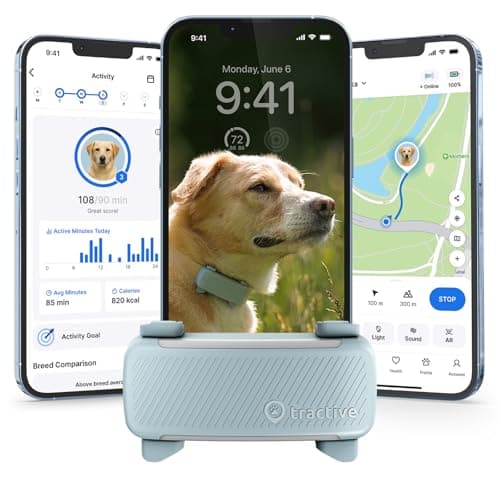
Tractive
Tractive Smart Dog GPS Tracker | Live Pet Tracker with Virtual Fence | Vital Signs Monitoring
9.0 / 10
- Live GPS tracking over 4G LTE with virtual fence escape alerts
- Heart-rate and respiratory-rate vital-signs monitoring plus bark monitoring
- Clip-on design attaches to any existing collar
- Plans start around $5 per month on annual billing
$55.30
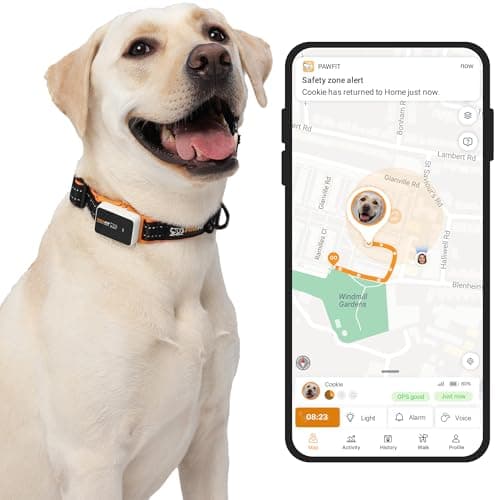
Pawfit
Pawfit 3 GPS Pet Tracker, 4G Live Tracking, Fully Waterproof, Remote Voice Recall
7.8 / 10
- 4G LTE live tracking with unlimited range
- Fully waterproof housing per manufacturer rating
- Remote voice recall plays your pre-recorded command from the tracker
- Fits all standard collars and includes activity monitoring
$59.99
![Fi New Series 3+ Smart Dog Tracker Collar [12 Month Membership Included]](/_next/image?url=https%3A%2F%2Fm.media-amazon.com%2Fimages%2FI%2F41YqOMpiqZL._SL500_.jpg&w=3840&q=75)
Fi
Fi New Series 3+ Smart Dog Tracker Collar [12 Month Membership Included]
8.4 / 10
- Integrated collar with aluminum buckle — the tracker cannot fall off, snag, or be removed by the dog
- Up to 3 months of battery life between charges
- IP68 waterproof, rated for full submersion
- Escape alerts, LED safety light, and Apple Watch compatibility
$189.00
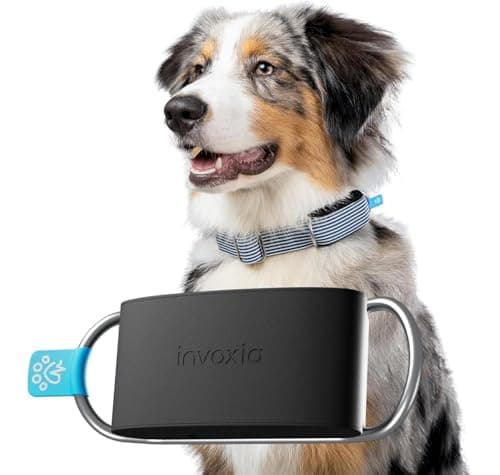
Invoxia
Invoxia Minitailz Health & GPS Tracker for Dogs — Cardiac and Respiratory Scan
7.6 / 10
- Cardiac and respiratory scanning with atrial-fibrillation detection
- Invoxia claims 99% heart-rate and 97% respiratory-rate detection accuracy
- Real-time GPS location in a compact, lightweight clip-on unit
- CES 2024 Innovation Award winner in the AI category — seven international awards total
$99.00
The Short Answer
Every real dog GPS tracker requires a subscription, so the buying decision is mostly a cost-and-coverage decision. The Tractive at $55.30 is the strongest overall pick — Wirecutter found it locked GPS signal faster than any other model it evaluated, and three years of ownership runs $343 to $415 at Tractive's own published Premium rates, depending on which term you prepay. The Fi Series 3+ at $189.00 is the escape-artist pick: an integrated collar that cannot fall off, up to 3 months of battery, but about $567 over three years on prepaid-only plans. The Pawfit 3 at $59.99 adds remote voice recall, the one feature nothing else here offers. And if the real goal is preventing the escape rather than finding the dog after one, price the containment tier properly first — our GPS containment total-cost comparison runs SpotOn, Halo, and PetSafe out to real 1-, 3-, and 5-year totals.
Every product on this list has been scored against the PetPal Gear Score, a weighted composite of expert consensus, observed effectiveness, animal safety, long-term durability, and value. Review method: Editorial synthesis of six expert sources covering dog GPS trackers. The New York Times Wirecutter's live-tracking comparison anchored the accuracy and GPS fix-speed rankings. PCMag's category review informed the Fi assessment. Dog Gear Review's side-by-side live-tracking testing settled how the Tractive handles a moving dog. Smart Bark's Pawfit range review and Life With Klee Kai's long-term two-tracker owner comparison rounded out the field. Lost-pet statistics come from dvm360 and Shelter Animals Count. Subscription economics were cross-checked against The Family Pick's 2026 cost comparison, and owner sentiment was surveyed on Trustpilot, r/dogs, and r/puppy101. Manufacturer documentation from Tractive, Pawfit, and Fi was reviewed for specifications. Prices, availability, and seller were re-verified by live Amazon product-page reads on September 7, 2026: the Tractive was $55.30 and in stock, the Pawfit 3 $59.99, the Fi Series 3+ $189.00, and the Invoxia Minitailz $99.00 in stock and sold by invoxia inc., which restores a pick our August 10 check had found with no live offer. Three-year totals attributed to The Family Pick are reported at their original basis and separately recomputed at current hardware prices. PetPalHQ does not run a GPS-tracker testing facility.. Synthesized from 6+ expert sources.
A GPS tracker is the recovery layer of dog ownership — the thing that turns "the gate was open" from a neighborhood-wide search into a dot moving on a map. We read 8 expert sources for this guide, and the consensus is unusually clean: one device wins the core job, and the interesting decisions are all about battery, subscriptions, and what happens at the worst moment. PetPalHQ.com earns affiliate commissions from qualifying purchases. Our recommendations are based on expert consensus — we synthesize professional reviews and multi-year owner data, not hands-on testing — and commission rates never influence our editorial picks.
The category's first fault line is attachment. Clip-on trackers like the Tractive and the Pawfit 3 attach to any collar or harness, move between dogs, and cost $55.30 to $59.99 — but a clip can snag, fall off, or get chewed loose. The Fi Series 3+ takes the opposite bet: the tracker is the collar, with an aluminum buckle the dog cannot defeat, at $189.00. The second fault line is the subscription, and there is no avoiding it — every true GPS tracker needs a cellular plan to send its position to your phone. The spread is real but narrower than the commonly-quoted figures: $343 to $415 over three years on the Tractive at its published rates, versus $528 to $567 on the Fi, whose plans are prepaid-only with no monthly option. (Several third-party write-ups also report a $20 Fi activation fee; it appears on none of Fi’s own public pages we could load, so we leave it out.) A note on ordering: we rank by buyer fit — which tracker best serves your dog's size, escape pattern, and subscription budget — not by raw PetPal Gear Score, so a pick further down the list can outscore one ranked above it.
It is worth being precise about what these devices are for, because the category next door solves a different problem. A tracker reports an escape; it does not prevent one. If your actual goal is keeping the dog inside the yard, that is containment — covered in our GPS wireless dog fence guide — and the two product types layer well together. Trackers also reward dogs who already have recall training, since a map only helps if you can close the distance and the dog comes when called.
Tracker Safety, Fit, and the July 4th Problem
GPS trackers carry no heat, UV, or chemical exposure in normal use, but the category has two genuine animal-safety considerations and one calendar date that drives more lost-dog emergencies than any other.
The first consideration is the battery inside the housing. Veterinarians warn that a chewed-open tracker case can expose a lithium battery, and mouthing or ingesting one can cause chemical burns to the mouth and GI tract. If your dog is a dedicated chewer, inspect the housing regularly and take damaged units off the collar immediately. The second is load and fit: clip-on trackers add roughly 30 to 35 grams, which is meaningful on toy breeds, and any tracker collar should be fitted two fingers loose to avoid abrasion on long-term wear.
Then there is the calendar. More pets go missing on July 4th than on any other day of the year, per Petco Love data reported by dvm360, and Shelter Animals Count logged July 5 as the single highest stray-dog intake day nationwide from 2021 through 2023. Animal control officials report a 30 to 60% surge in lost pets between July 4 and 6 each year — and only about 14% of lost pets nationwide are returned to their owners. The practical move is simple: charge the tracker the morning of July 3, confirm the app connects, and switch on live mode before the first fireworks. Pair it with the calming and visibility prep in our July 4th pet safety guide and the worst night of the year gets considerably less dangerous.
What We Passed On
The Whistle Go Explore 2.0 still circulates in Amazon listings, and buying one today gets you nothing. Tractive acquired the Whistle brand in early 2025 and permanently shut down all Whistle services on August 31, 2025 — existing devices stopped working and accounts could not be migrated. Any remaining stock is e-waste with a logo. Former Whistle owners looking for a replacement should go straight to the Tractive, which is the recommended migration path.
The Apple AirTag gets asked about constantly, and we passed because it is not a GPS tracker at all. An AirTag relays its position over Bluetooth through nearby Apple devices, which means it goes silent in exactly the places lost dogs end up — rural areas, trails, and low-iPhone-density zones. There are no escape alerts and no live tracking, and Apple itself states AirTags are designed exclusively for tracking objects, not people or pets. Veterinarians add a sharper warning: a chewed-open AirTag case exposes a CR2032 lithium coin battery that can burn a dog's mouth or GI tract. As a backup on a collar it is a cheap maybe; as the primary recovery plan for a dog, it is the wrong tool.
What is the containment upgrade from a GPS tracker?
It is not a more expensive tracker. The category genuinely tops out around the Fi's $189.00 hardware — past that point, more money buys prevention, not better recovery. A tracker tells you where the dog went after the gate failed; a GPS fence collar draws the boundary and intervenes before the escape becomes a search. For the household that keeps re-living the bolt — the fence-jumper, the gate-dasher, the rural property with no physical fence — the real upgrade is layering containment on top of the tracker, and that tier starts where this guide's prices end.
The premium containment decision is mostly a subscription decision, which will feel familiar after reading this guide. The SpotOn GPS Dog Collar Nova Edition ($999.00 at our latest check) costs the most upfront but requires no subscription for containment — SpotOn's own site states "No subscription required. GPS fences work always and everywhere right out of the box," with tracking sold as an optional paid add-on, so the fence keeps working when a billing cycle ends. The Halo Collar 5 ($524.00 at our latest check) is the top pick in our GPS wireless dog fence roundup, costs roughly half as much to buy, and per Halo's own documentation requires an active plan for its fence and tracking to work at all. If you already resent the Tractive's $5-a-month plan or Fi's prepaid blocks, that architecture difference is the whole premium-tier argument — we compare it head-to-head in the premium GPS fence collar guide.
Sticker price is the wrong number to compare across that tier, for exactly the reason this guide already taught you about trackers: the plan is the product. Here is what the containment options cost over the windows a dog is usually alive for, using each brand's own published rates:
| Containment system | Hardware | Required plan | 5-year total |
|---|---|---|---|
| PetSafe Guardian GPS | $399.99 | None | $399.99 |
| Halo Collar 5 | $524.00 ($599.00 list) | Required — from $9.99/mo Bronze, per collar | $1,198.40 at the list price |
| SpotOn Nova Edition | $999.00 | None (tracking add-on optional) | $999.00 |
| Garmin Alpha 300i | $1,223.98 | None for dog tracking | $1,223.98 |
The Halo row is the one to sit with, and it changed under us. When we re-fetched halocollar.com on August 12, 2026 the Bronze, Silver, and Gold tiers carried benefits and billing terms but no dollar amounts. Re-fetched on August 21, 2026, Halo's shop page publishes them: Bronze from $9.99 a month, Silver $14.99, Gold $19.99, with a plan required for each collar. So the number is now knowable, and it is not flattering — at the Bronze rate and Halo's $599.00 list price, five years of containment is $1,198.40, against three rivals whose totals are simply their stickers. The full breakdown, with 1-, 3-, and 5-year columns and the required-versus-optional subscription distinction drawn explicitly, is our GPS containment total-cost comparison. If you are about to spend $400 to $1,200 on prevention, that is the page to read before the buy button, not after.
Where This Page Sits in the Wider Category
If you are weighing a tracker against a containment collar rather than against another tracker, the comparison you actually want is our GPS fence or GPS tracker decision guide, which starts from where the escape happens rather than from the hardware and prices both routes over five years.
The GPS containment and pet tracking hub is the parent page for this whole cluster — containment, tracking, dogs and cats — and carries the published veterinary-body positions on static correction that a tracker sidesteps entirely.
Head-to-Head Comparison
| Feature | Tractive Smart Dog GPS Tracker | Live Pet Tracker with Virtual Fence | Vital Signs Monitoring | Pawfit 3 GPS Pet Tracker, 4G Live Tracking, Fully Waterproof, Remote Voice Recall | Fi New Series 3+ Smart Dog Tracker Collar [12 Month Membership Included] | Invoxia Minitailz Health & GPS Tracker for Dogs — Cardiac and Respiratory Scan |
|---|---|---|---|---|
| Price (verified 2026-09-07) | $55.30 | $59.99 | $189.00 (first 12 months of membership included) | $99.00 |
| Three-year cost of ownership | $343-$415 by term | $59.99 hardware plus a plan that varies by term | $528-$567 (excludes an unconfirmed $20 activation fee) | $99.00 hardware plus a required plan that varies by term |
| Real-world battery | 2-5 days | 4-6 days (30 days advertised) | Up to 3 months | Manufacturer claim only |
| Attachment | Clip-on, any collar or harness | Clip-on, any collar or harness | Integrated collar, aluminum buckle | Clip-on, any collar or harness |
| Why you would pick it | Fastest GPS lock in Wirecutter's testing | Remote voice recall at the lowest price | The tracker cannot fall off the dog | Cardiac and respiratory scanning |
| Lost-Dog Recovery Score | 9.0 | 7.8 | 8.4 | 7.6 |
| Check price | Amazon | Amazon | Amazon | Amazon |
Tractive Tractive Smart Dog GPS Tracker | Live Pet Tracker with Virtual Fence | Vital Signs Monitoring
$55.30
- Live GPS tracking over 4G LTE with virtual fence escape alerts
- Heart-rate and respiratory-rate vital-signs monitoring plus bark monitoring
- Clip-on design attaches to any existing collar
- Plans start around $5 per month on annual billing
- Three-year total of $343 (2-year term) to $415 (annual renewals) at Tractive's published Premium rates
The Tractive is the closest thing this category has to a unanimous verdict. Wirecutter reported that of all the devices it tested, the Tractive provided the most consistently accurate location updates during live tracking, and that it connected to GPS signal faster than any other model. That fix speed is the single number that matters most: when a dog bolts through an open gate, the gap between a fast lock and a slow one is the difference between watching the dog move on a map and staring at a stale dot. The 2026 roundup aggregation shows Wirecutter, Consumer Reports, Reviewed, TechGearLab, SafeWise, and Forbes Vetted all landing on Tractive as their top dog GPS pick — a six-outlet consensus no competitor here approaches.
The economics are the quiet second argument, and they need stating carefully because this category is full of stale totals. The hardware reads $55.30 on a live Amazon check dated September 7, 2026 — well under the $79.00 list price we carried through August, and the lowest hardware number on this page. Tractive publishes its Premium plan at $10 a month billed annually ($120 a year), $7 a month on a 2-year term, or $5 a month if you prepay five years. Computed from those published rates, three years of ownership runs $343.30 if you buy a 2-year term then a 1-year, or $415.30 on straight annual renewals. The Family Pick's widely-quoted ~$235 three-year figure is lower than either, because it was computed at the tracker's earlier $65.69 hardware and at a plan rate below Tractive's cheapest currently published term; we cite it as their finding, not as today's price. For that money the Tractive Dog 6 also monitors heart rate, respiratory rate, and barking, plus draws virtual fences that fire an escape alert when the dog crosses the line. The clip-on design attaches to any existing collar, which matters if your dog already wears a fitted harness or a favorite leather collar.
Here's the honest trade-off: battery. The Tractive runs roughly 2 to 5 days per charge depending on tracking frequency, far short of the months Fi delivers — and live tracking at high frequency drains it fastest exactly when you need it most. An owner who forgets to charge on day four has a dead tracker on day five. The clip-on housing can also sit awkwardly on small or sensitive dogs, where an integrated collar disappears into the daily routine. And the device is useless without the subscription — cancel the plan and you own a plastic clip. One footnote for former Whistle owners: Tractive acquired the Whistle brand in early 2025, and the Tractive is the recommended migration path for orphaned devices.
What We Love
- Fastest GPS lock and most consistent live-tracking accuracy in Wirecutter's evaluation
- Six-outlet 2026 consensus top pick — Wirecutter, Consumer Reports, Reviewed, TechGearLab, SafeWise, Forbes Vetted
- Lowest three-year cost of ownership in this guide at $343 to $415, depending on term
- Heart-rate, respiratory-rate, and bark monitoring at a $55.30 hardware price
- Clips to any existing collar or harness
What Could Be Better
- Battery lasts roughly 2 to 5 days — far short of Fi's months-long battery
- Mandatory subscription — the device does nothing without the ~$5/month plan
- Clip-on attachment can be cumbersome on small or sensitive dogs
- High-frequency live tracking drains the battery fastest exactly during an escape
The Verdict
The Tractive is the default buy: the fastest GPS lock in expert testing, the broadest outlet consensus, and the lowest three-year cost. Accept the 2-to-5-day charging routine and it has no equal at this price.
Sources
- NYT Wirecutter: 'Of all the devices we tested, the Tractive provided the most consistently accurate location updates during live tracking'
- NYT Wirecutter: the Tractive connected to GPS signal faster than any other model in its testing
- Cross-outlet consensus (per 2026 roundup aggregation): Wirecutter, Consumer Reports, Reviewed, TechGearLab, SafeWise, and Forbes Vetted all selected Tractive as their top dog GPS pick
- The Family Pick (subscription cost comparison, 2026): ~$235 over 3 years on Tractive vs ~$567 on Fi (computed at the Tractive's earlier $65.69 hardware and an assumed plan rate below Tractive's cheapest currently published term)
- HotAirTag (Whistle shutdown coverage): Tractive acquired the Whistle brand in early 2025 and is the recommended migration path for orphaned Whistle owners
$59.99
- 4G LTE live tracking with unlimited range
- Fully waterproof housing per manufacturer rating
- Remote voice recall plays your pre-recorded command from the tracker
- Fits all standard collars and includes activity monitoring
- 30-day free subscription included, then a paid plan is required
The Pawfit 3 sits at $59.99 — a few dollars above the Tractive on today's prices — and it carries one feature neither the Tractive nor the Fi offers: remote voice recall. Record a recall command in the app and the tracker plays your voice from the dog's collar on demand. For a dog with solid recall training, hearing the owner's actual voice from a distance can end a loose-dog incident before it becomes a chase. The housing is fully waterproof per the manufacturer rating, the 4G tracking has unlimited range, and the unit fits all standard collars with activity monitoring included. Owners of small breeds are the most consistent fans — Trustpilot reviews from chihuahua, toy poodle, and pug households single out the light weight as the reason the Pawfit stayed on the dog.
Across the reviews we surveyed, the caveats cluster around coverage and battery. Smart Bark's range review concluded the tracking is reliable but only as good as the 4G signal it can use, which makes the Pawfit a poor match for remote, low-coverage areas. OneSDR's 2026 testing measured accuracy errors widening to 5 to 8 meters in dense urban areas, where tall buildings bounce the signal — enough error to put a dog on the wrong side of a busy street on the map. And the marketing claim of up to 30 days of battery does not survive owner data: real-world reports put it at 4 to 6 days between charges.
Here's the honest trade-off: the Pawfit has the thinnest expert coverage on this page. Where the Tractive carries a six-outlet consensus and the Fi has PCMag and Wirecutter on record, the Pawfit's record rests on smaller outlets and owner reviews. It is the right pick when the $59.99 price and voice recall matter more than a deep testing paper trail — and the 30-day free subscription lets you validate coverage at your own house before paying anything monthly.
What We Love
- Low $59.99 hardware price with a 30-day subscription included
- Remote voice recall — no other pick here can play your voice from the collar
- Light enough that small-breed owners specifically praise it for toy dogs
- Fully waterproof housing with unlimited-range 4G tracking
- 30-day free subscription lets you test coverage before paying
What Could Be Better
- Real-world battery of roughly 4 to 6 days falls far short of the advertised 30 days
- Accuracy degrades to 5-to-8-meter errors in dense urban environments
- Coverage depends entirely on 4G signal — weak in remote and rural areas
- Lighter expert coverage than Tractive or Fi — fewer major-outlet tests to corroborate findings
The Verdict
The Pawfit 3 is the value answer: $59.99 hardware, voice recall, and a free first month to verify coverage. Buy it for a small dog in a well-covered suburb, not for a rural property or a 30-day-battery expectation.
Sources
- Smart Bark (UK Pawfit range review): tracking is reliable but 'only as good as the 4G signal it can use' — struggles in remote low-coverage areas
- OneSDR / 2026 Pawfit testing roundup: accuracy errors increased to 5-8 meters in dense urban areas due to tall buildings
- Owner reviews surveyed via Trustpilot and small-breed owners: praised for light weight on chihuahuas, toy poodles, and pugs
- Owner battery reports (Trustpilot/review roundups): real-world battery is ~4-6 days between charges despite the marketing claim of up to 30 days
$189.00
- Integrated collar with aluminum buckle — the tracker cannot fall off, snag, or be removed by the dog
- Up to 3 months of battery life between charges
- IP68 waterproof, rated for full submersion
- Escape alerts, LED safety light, and Apple Watch compatibility
- $189.00 Amazon price includes the first 12 months of membership
The Fi Series 3+ answers the two failure modes that sink clip-on trackers: the clip that falls off and the battery that died yesterday. The tracker is built into the collar itself with an aluminum buckle, so there is nothing for a dog to snag on a fence or for an owner to forget to reattach after a bath. Life With Klee Kai, which ran both the Fi and the Tractive long-term on its own dogs, reported the integrated design was so unobtrusive the dogs did not register they were wearing trackers — and called the battery life the decisive advantage. Fi claims up to 3 months between charges, a different universe from the Tractive's 2-to-5-day cycle. Add IP68 submersion-rated waterproofing, escape alerts, an LED safety light, and Apple Watch compatibility, and PCMag's designation of the Fi as best for most dogs is easy to follow.
So why does it rank below the Tractive? GPS lock speed at the worst moment. Wirecutter, which made the Fi a co-top pick, noted it connects to GPS more slowly than the Tractive during live tracking — and a bolted dog is precisely when seconds count. The Fi is the better everyday wearable; the Tractive is the better emergency instrument.
Here's the honest trade-off: cost structure. The $189.00 price includes the first 12 months of membership, which softens year one. After that, Fi sells only prepaid plans — $99 for 6 months, $189 per year, or $339 for 2 years — with no monthly option, and The Family Pick's comparison totals roughly $567 over three years. Recomputed at current hardware and both brands' published plan rates, the honest spread is $528-$567 for the Fi against $343-$415 for the Tractive — narrower than the older figures suggest, but still $152 to $185 in the Tractive's favour. Those Fi totals exclude a $20 activation fee that several third-party write-ups report: it appears on none of Fi's own public pages we could load on August 17, 2026, so we neither count it nor claim it does not exist. The proprietary collar also cuts both ways: the tracker cannot fall off, but you cannot move it to a harness or a favorite collar either. For a proven escape artist, the Fi collar's stay-on-the-dog reliability is worth the premium. For everyone else, the math favors the Tractive.
What We Love
- Integrated aluminum-buckle collar cannot fall off or be removed by the dog
- Up to 3 months of battery — the longest in this guide by a wide margin
- IP68 submersion-rated waterproofing for swimmers
- PCMag pick for most dogs and a Wirecutter co-top pick
- First 12 months of membership included in the $189.00 price
What Could Be Better
- Slower GPS lock than the Tractive during live tracking — the moment that matters most for a bolted dog
- Prepaid-only membership starting at $99 per 6 months, with no month-to-month option
- Highest three-year total cost of ownership in this guide at roughly $567
- Proprietary collar — the tracker cannot move to a harness or a favorite collar
The Verdict
Buy the Fi Series 3+ for a confirmed escape artist or a swimmer who destroys clip-ons: the collar stays on and the battery survives months. Accept that it locks GPS slower than the Tractive and costs about $567 over three years.
Sources
- PCMag: designated Fi 'Best for Most Dogs'
- NYT Wirecutter: co-top pick alongside Tractive; noted it connects to GPS more slowly than the Tractive during live tracking
- Life With Klee Kai (long-term owner comparison of both): Fi's integrated collar was so seamless the dogs didn't realize they had trackers on, and its battery life is the decisive advantage over Tractive
- The Family Pick (2026 subscription comparison): Fi sells only prepaid plans — $99/6mo, $189/yr, $339/2yr — with no monthly option
- The Family Pick: 3-year cost of ownership ~$567 vs ~$235 for Tractive
$99.00
- Cardiac and respiratory scanning with atrial-fibrillation detection
- Invoxia claims 99% heart-rate and 97% respiratory-rate detection accuracy
- Real-time GPS location in a compact, lightweight clip-on unit
- CES 2024 Innovation Award winner in the AI category — seven international awards total
- Subscription required for cellular GPS service
Availability note, September 7, 2026: this pick is buyable again. Our August 10 check found no live offer for the Minitailz and the entry sat here without a buy button; a live product-page read on September 7 shows it new and in stock at $99.00, sold by invoxia inc. and shipped by Amazon, listed as the 2026 Biotracker edition of the same device. Stock read as limited on that check, so the price and availability below are a September 7 snapshot rather than a standing guarantee.
The Invoxia Minitailz is in this guide for a different job than the other three. Its headline feature is not the map — it is the cardiac and respiratory scanning, including detection of atrial fibrillation, the irregular heartbeat that often goes unnoticed in dogs until a crisis. Invoxia claims 99% accuracy on heart-rate detection and 97% on respiratory rate, and the engineering attracted a CES 2024 Innovation Award in the AI category, one of seven international awards. For the owner of a senior dog or a breed with known cardiac risk, the Minitailz is the only pick here that doubles as an early-warning screen between vet visits. Reviewed.com found the health data genuinely useful alongside solid GPS tracking, with the caveat that the activity data is slightly flawed. SlashGear praised what it called shocking GPS accuracy in stationary location finding.
The qualifier in that last sentence is the catch: stationary. Dog Gear Review ran the Minitailz side-by-side against the Tractive and found its live-tracking updates lag behind a moving dog, concluding the Tractive was clearly better in speed, accuracy, and reliability for real-time tracking. If your primary fear is a bolted dog in motion, the Minitailz is the weakest of the four picks at the recovery job — buy it for the health screen, not the chase.
Here's the honest trade-off, and it extends past the hardware. Trustpilot reviews document refund refusals on subscriptions past 30 days and trackers bricked by firmware updates without replacement — a service record worth weighing before committing $99.00 plus the required subscription. And the health metrics, however accurate, are screening signals rather than diagnostics: veterinary guidance is consistent that an AFib flag from a collar device warrants a vet visit, not a conclusion. Treat the Minitailz as a tripwire that tells you when to call the clinic, and it earns its slot.
What We Love
- Only pick with cardiac and respiratory scanning, including AFib detection
- Claimed 99% heart-rate and 97% respiratory-rate detection accuracy
- Strong stationary GPS accuracy per SlashGear's review
- CES 2024 Innovation Award winner with seven international awards
What Could Be Better
- Live tracking lags behind a moving dog — weakest of the four picks for actual lost-dog recovery
- Trustpilot complaints document refund refusals and firmware-bricked devices without replacement
- Health metrics are screening signals, not diagnostics — an AFib flag needs a vet, not an app
- Subscription required on top of the $99.00 device price
- Stock ran thin at our September 7, 2026 check, after a spell with no live offer at all
The Verdict
The Minitailz is the specialist for cardiac and respiratory screening on a senior or at-risk dog, and it is buyable again at $99.00 as of September 7, 2026 after a stretch with no live offer. Laggy live tracking still makes the Tractive the better choice if lost-dog recovery is the primary job.
Sources
- SlashGear (Minitailz review): praised 'shocking GPS accuracy' in stationary location finding for a smart pet tracker
- Reviewed.com (Minitailz review): solid GPS tracking plus genuinely useful health data, though activity data is 'slightly flawed'
- Dog Gear Review (side-by-side vs Tractive): live-tracking location updates lag behind a moving dog, and Tractive was clearly better in speed, accuracy, and reliability for real-time tracking
- Trustpilot (Invoxia customer reviews): complaints of refund refusals on subscriptions past 30 days, and reports of trackers bricked by firmware updates without replacement
How We Score
Formula
Lost-Dog Recovery Score = (Live-Tracking Performance × 0.35) + (Battery Reliability × 0.25) + (Cost of Ownership × 0.20) + (Attachment Security × 0.20)
Score Factors
- Live-Tracking Performance · 35%
- How fast the tracker locks GPS signal and how accurately it follows a dog in motion — the core recovery job. Wirecutter's live-tracking evaluation anchors this factor: the Tractive connected to GPS faster than any other model and delivered the most consistent location updates, while the Fi locked more slowly. Urban accuracy degradation counts here too, like the 5-to-8-meter errors OneSDR measured on the Pawfit in dense city blocks.
- Battery Reliability · 25%
- Real-world days between charges, weighted against the marketing claim. A dead tracker recovers nothing, and owner data shows the gap between claim and reality varies widely: the Fi delivers up to 3 months per charge, the Tractive runs 2 to 5 days depending on tracking frequency, and the Pawfit's advertised 30 days collapses to 4 to 6 days in owner reports. Trackers also drain fastest in high-frequency live mode — exactly during an escape — so honest battery margins matter more than peak claims.
- Cost of Ownership · 20%
- Total three-year spend on device plus subscription, since every pick in this guide requires a plan to function. Computed from Tractive's own published plan rates ($120/year annual, $168 per 2 years, $300 per 5 years, re-read on tractive.com 2026-08-17) the Tractive runs $343 to $415 over three years depending on term at its September 7 hardware price; the Fi runs $528 to $567 on its prepaid-only structure ($99 per 6 months, $189 per year, $339 per 2 years, read off Fi's own storefront the same day). A $20 activation fee reported by several third-party write-ups is excluded, because it appears on none of Fi's own public pages we could load. The Family Pick's older ~$235-versus-~$567 framing is cited where relevant but is not used as a current price. Free-trial structure counts too — the Pawfit's included 30-day subscription lets an owner verify coverage at home before any recurring charge lands.
- Attachment Security · 20%
- Whether the tracker stays on the dog through fences, swims, and scratching. Integrated designs score highest: the Fi's aluminum-buckle collar cannot snag, fall off, or be removed by the dog, and its IP68 rating survives full submersion. Clip-ons trade that security for flexibility — they move between collars and harnesses but add 30 to 35 grams, a meaningful load on toy breeds, and can sit awkwardly on small or sensitive dogs. Fit guidance applies across the board: collars worn two fingers loose, checked regularly for abrasion.
| Rank | Product | Score |
|---|---|---|
| #1 | Tractive Tractive Smart Dog GPS Tracker | Live Pet Tracker with Virtual Fence | Vital Signs Monitoring | 9.0 |
| #2 | Fi Fi New Series 3+ Smart Dog Tracker Collar [12 Month Membership Included] | 8.4 |
| #3 | Pawfit Pawfit 3 GPS Pet Tracker, 4G Live Tracking, Fully Waterproof, Remote Voice Recall | 7.8 |
| #4 | Invoxia Invoxia Minitailz Health & GPS Tracker for Dogs — Cardiac and Respiratory Scan | 7.6 |
When NOT to Buy
Skip every tracker on this page if you will not pay a subscription. All four picks require a plan for cellular GPS service — the Tractive from around $5 per month, the Fi at $99 per 6 months minimum after the included first year, the Pawfit after its 30-day free trial, and the Minitailz on a plan of its own. There is no one-time-purchase GPS tracker in this guide, and a tracker with a cancelled plan reports nothing.
Skip the category if your property sits in a cellular dead zone. The GPS chip can compute a position without cell service, but the tracker cannot transmit that position to your phone without a data connection. Smart Bark's conclusion on the Pawfit generalizes to the whole category: the tracking is only as good as the signal available to carry it. Owners on remote acreage should verify carrier coverage at the property line before buying anything here.
Skip the clip-on picks for very small dogs if weight is already a concern. Clip-on trackers add roughly 30 to 35 grams to the collar, which is a meaningful load on a 4-pound chihuahua. Small-breed owners report the Pawfit wears lightest, but a veterinarian's guidance on total collar load is worth getting first for toy breeds.
Skip trackers as a substitute for training, fencing, or supervision. A GPS tracker tells you where the dog went after containment failed — it does not prevent the escape, and only about 14% of lost pets nationwide make it back to their owners. Recall training and physical containment do the prevention; the tracker is the recovery layer underneath them.
Skip any of these as a diagnostic device. The Tractive's heart-rate and respiratory-rate readings are screening signals, not measurements a clinic would act on directly. Veterinary guidance treats a collar reading as a reason to book an exam, not a diagnosis — and no tracker replaces a workup.
Frequently Asked Questions
- Do dog GPS trackers require a monthly subscription?
- Yes — every pick in this guide requires a plan, because live GPS tracking rides on cellular networks and someone has to pay the carrier. The structures differ sharply. Tractive publishes Premium at $10 a month billed annually, $7 on a 2-year term, or $5 prepaid across five years, which puts three years of ownership at $343 to $415 including its $55.30 hardware. Fi includes 12 months with the $189.00 collar but then sells only prepaid blocks — $99 for 6 months, $189 per year, or $339 for 2 years — with no monthly option. The Pawfit includes a 30-day free subscription before its paid plan starts. There is no subscription-free GPS tracker here, and a lapsed plan means a dead tracker.
- Can I use an Apple AirTag to track my dog instead of a GPS tracker?
- We advise against it. An AirTag is a Bluetooth relay, not a GPS device — it reports position only when a nearby Apple device passes within range, so it fails in rural areas, on trails, and anywhere iPhones are sparse, which is precisely where lost dogs go. It offers no escape alerts and no live tracking, and Apple states the product is designed exclusively for tracking objects, not people or pets. There is also a safety issue: a chewed-open case exposes a CR2032 lithium coin battery that can chemically burn a dog's mouth or GI tract. An AirTag can ride along as a cheap secondary beacon in dense suburbs, but it should never be the primary recovery plan.
- How long does a dog GPS tracker battery last between charges?
- Less than the box claims, with one exception. The Tractive runs roughly 2 to 5 days depending on how often it reports position. The Pawfit advertises up to 30 days, but owner reports on Trustpilot consistently land at 4 to 6 real-world days. The Fi Series 3+ is the outlier at up to 3 months between charges, which is the main reason escape-artist households pay its premium. One behavior is universal: live tracking at high frequency drains the battery fastest, which means an active escape burns charge exactly when you need the tracker most. Whatever you buy, charge on a schedule rather than waiting for the low-battery alert.
- Do GPS dog trackers work in rural areas without cell coverage?
- Only halfway, and the half that fails is the half you need. The GPS receiver computes the dog's position from satellites without any cell service — but the tracker transmits that position to your phone over a 4G network, so no coverage means no updates on the map. Smart Bark's verdict on the Pawfit applies category-wide: tracking is only as good as the signal it can use. Urban terrain has its own version of the problem — OneSDR measured Pawfit accuracy errors widening to 5 to 8 meters among tall buildings. Before buying any tracker for remote property, check your carrier's coverage map at the actual property line, not the town center.
- What happened to Whistle pet trackers — why did mine stop working?
- Tractive acquired the Whistle brand in early 2025 and permanently shut down all Whistle services on August 31, 2025. Existing Whistle devices stopped working at the shutdown, and accounts could not be migrated to any other platform — the hardware has no offline mode, so a Whistle without its service is inert. Tractive is the recommended migration path for orphaned Whistle owners, and its $55.30 hardware price keeps the switch relatively cheap. The episode is also a fair warning about the category in general: every subscription tracker depends on its company staying in business, which is one more argument for buying the brand with the broadest market position.
- Which dog GPS tracker has the cheapest subscription over three years?
- The Tractive, though by less than the commonly-quoted figures suggest. Computed from Tractive's own published plan rates (re-read on tractive.com 2026-08-17: $120 a year annually, $168 per 2 years, $300 per 5 years) and its current $55.30 hardware, three-year ownership runs $343 to $415 depending on term. The Fi runs $528 to $567 over the same window on its prepaid structure. We exclude the $20 activation fee that several third-party write-ups report, because it appears on none of Fi's own public pages we could load on August 17, 2026 — and we do not claim it does not exist, only that Fi does not publish it. The Family Pick's older ~$235-versus-~$567 comparison put the gap much wider, but it was computed at the Tractive's earlier $65.69 hardware and a plan rate below Tractive's cheapest published term, so we treat it as their 2026 finding rather than today's price. The Fi's number includes its $189.00 hardware with the first year of membership bundled, but its prepaid-only renewal structure ($99 per 6 months minimum) compounds faster. The Pawfit starts at $59.99 on hardware with a 30-day free trial, though its long-term plan pricing varies by term. If three-year cost is the deciding factor, the Tractive wins before the tiebreakers even start.
- Should I buy a GPS fence collar instead of a GPS tracker?
- They do different jobs, and for a repeat escape artist the honest answer is both. A tracker is the recovery layer — it maps the dog after containment fails but prevents nothing. A GPS fence collar is the prevention layer: it draws a boundary and intervenes before the bolt becomes a search. The premium fence tier splits on subscriptions the same way trackers do — SpotOn's $999.00 collar requires no plan for containment, while the $524.00 Halo Collar 5 needs an active subscription for its fence to work at all, per Halo's own documentation — and Halo now publishes that rate on its shop page, from $9.99 a month for Bronze, per collar — which puts five years of Halo containment at $1,198.40 at its $599.00 list price. Our GPS containment total-cost comparison totals all of them out at 1, 3, and 5 years. Two caveats before spending anything: every GPS fence uses static correction, and the American Animal Hospital Association's 2015 behavior guidelines list electronic shock collars among aversive techniques it says should not be used to teach or alter behavior. And no containment is perfect, which is why the fence adds to the tracker rather than replacing it.
Bottom Line
Buy the Tractive if you want the best recovery tool for the least money. It locked GPS faster than anything else Wirecutter evaluated, six outlets made it their top pick, and three years costs $343 to $415 at its current $55.30 hardware and Tractive's published rates, depending on the term you prepay. Charge it every 2 to 5 days without fail.
Buy the Fi Series 3+ for a proven escape artist or a swimmer. The integrated collar cannot fall off and the battery runs up to 3 months — just accept the slower GPS lock and roughly $567 over three years on prepaid-only plans.
Buy the Pawfit 3 if hardware budget rules and your area has solid 4G. Voice recall is genuinely useful, the 30-day free trial validates coverage risk-free, and small-breed owners praise the light weight. Expect 4 to 6 real days of battery, not 30.
Skip the category entirely if you expect a one-time purchase. All four picks require a subscription, and a tracker with a lapsed plan is a piece of plastic on your dog's neck.
Sources & Methodology
Methodology
Lost-Dog Recovery Score = (Live-Tracking Performance × 0.35) + (Battery Reliability × 0.25) + (Cost of Ownership × 0.20) + (Attachment Security × 0.20)
Expert review sources
- The New York Times Wirecutter — live-tracking accuracy and GPS fix-speed comparison across dog GPS trackers
- PCMag — Fi Series 3+ category review and best-for-most-dogs designation
- Dog Gear Review — side-by-side live-tracking comparison covering the Tractive
- Smart Bark — Pawfit range review and 4G coverage analysis
- Life With Klee Kai — long-term Fi and Tractive owner comparison
- dvm360 / Shelter Animals Count — July 4th lost-pet and shelter-intake statistics
Community sources
- The Family Pick 2026 subscription-cost comparison across Tractive and Fi plans
- Trustpilot owner reviews — Pawfit real-world battery reports
- OneSDR 2026 Pawfit urban-accuracy testing
- HotAirTag coverage of the Whistle service shutdown and Tractive migration path
- r/dogs and r/puppy101 community discussion on tracker selection and escape recovery
Prices and specs verified June 10, 2026.
About the author
Nick Miles is the chief editor of PetPalHQ. The picks above are editorial synthesis of expert reviews, manufacturer specifications, and verified owner sentiment. PetPalHQ does not run a GPS-tracker testing facility. The Lost-Dog Recovery Score is a composite of expert opinion and documented design factors, not a measurement.
PetPalHQ is a participant in the Amazon Services LLC Associates Program. We may earn commissions from qualifying purchases — at no extra cost to you.
More Guides

Cats & Dogs
GPS Dog Fence Total Cost of Ownership: The Real 3- and 5-Year Cost (2026)
Cats & Dogs
Best GPS Wireless Dog Fences for Unfenced Yards and Escape Artists (2026)

Cats & Dogs
Best Premium GPS Dog Fence Collars: SpotOn, Halo, and the No-Subscription Question (2026)
Playground
Best 4th of July Pet Safety Gear (2026)
Cats & Dogs
Best Pet Cameras for Dogs and Cats: Monitoring, Treat-Toss, and Subscription-Free Picks (2026)
Cats & Dogs