Cats & Dogs
Best GPS Wireless Dog Fences for Unfenced Yards and Escape Artists (2026)
The wireless dog fences that actually hold a boundary — compared on GPS drift, subscription math, minimum dog and yard sizes, and the training weeks you cannot skip.
By Nick Miles · Updated September 7, 2026 · 12 min
PetPalHQ is reader-supported. We may earn a commission from qualifying Amazon purchases at no extra cost to you.
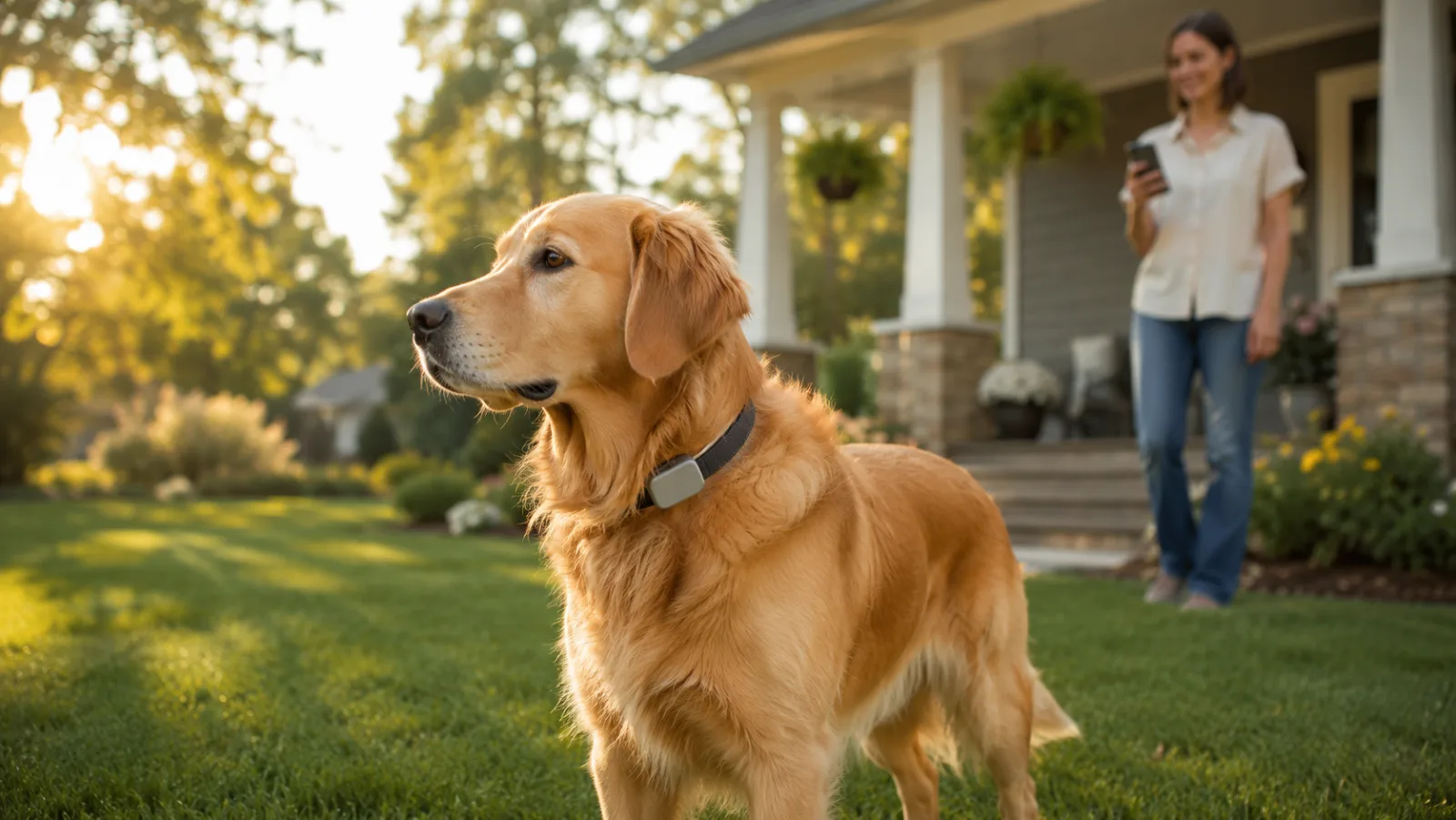
Evidence at a Glance
Halo Collar 5 Wireless Dog Fence & GPS Collar
Dual-frequency GPS on the L1 and L5 bands that switches to the strongest signal to cut interference and boundary bounce, with unlimited app-drawn wireless fences and real-time escape tracking. World Animal Foundation's March 2026 review credits the Halo 5 with improved battery life and some of the best health-data insights in the smart-collar arena. Roughly 30-plus hours of battery per charge; subscription required for all fence and tracking features.
Sources: Technobark dual-frequency GPS analysis, World Animal Foundation March 2026 Halo 5 review, Halo manufacturer documentation
Verified Jun 10, 2026
PetSafe Guardian GPS Dog Fence (No Subscription)
Custom GPS boundaries with zero ongoing fees — the only true GPS fence in this guide with no monthly plan. Dogs Academy's March 2026 comparison found it had the best battery life of all GPS dog fences evaluated, with a 72-hour claimed maximum and roughly two days between charges in real-world use. Designed for single yards of three-quarters of an acre or larger and dogs over 25 pounds, with a 2-week training guide included.
Sources: Dogs Academy March 2026 GPS fence comparison, DogTechHQ Guardian no-subscription review, PetSafe manufacturer documentation
Verified Jun 10, 2026
PetSafe Guardian GPS 2.0 Dog Fence + Tracking
Dual-frequency GPS with AccuGuard boundary technology and a smaller redesigned collar that PetSafe fits to neck circumferences as small as 8 inches, covering 98 percent of dog breeds — matching the Halo Collar 5 for the lowest fit floor among true GPS fences here rather than beating it. Adds real-time escape tracking on top of containment. Technobark evaluated 11 GPS fence models in 2026 and placed the Guardian 2.0 a strong second for its tracking and customizable virtual boundaries. Condition note: on our September 7, 2026 read this listing was sold by Amazon Resale as a used, Like New unit at $277.27, not a new-condition offer.
Sources: Technobark 2026 evaluation of 11 GPS fence models, Canine Journal wireless-fence brand comparison, PetSafe manufacturer documentation
Verified Jun 10, 2026
Our Picks
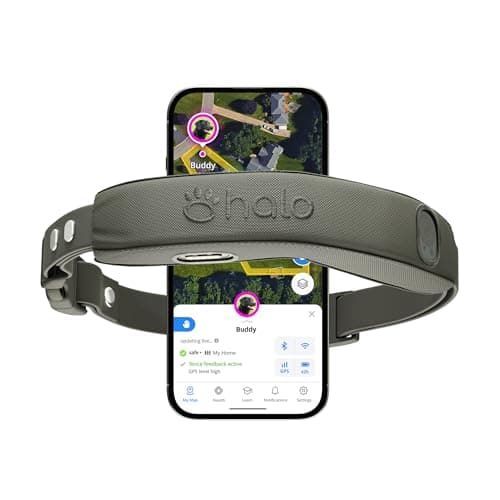
Halo
Halo Collar 5 Wireless Dog Fence & GPS Dog Collar, App-Controlled Boundaries and Real-Time Tracking, Graphite
8.7 / 10
- Dual-frequency GPS (L1 + L5 bands) switches to the strongest signal to reduce interference and boundary bounce
- Unlimited app-drawn wireless fences — draw any boundary shape, anywhere, from the app
- Real-time escape tracking built in, so a breached boundary becomes a live recovery map
- Roughly 30-plus hours of rechargeable battery life per charge
$524.00
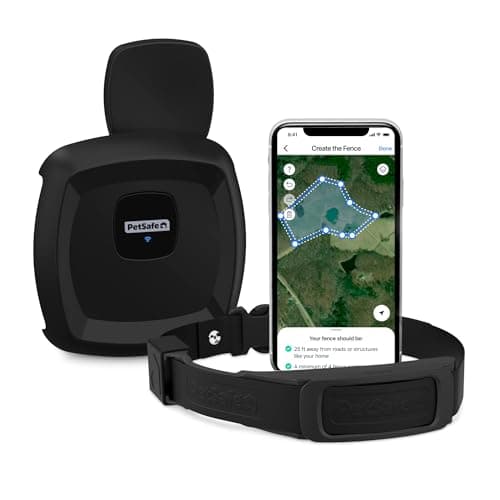
PetSafe
PetSafe Guardian GPS Dog Fence, No Subscription, Create Your Own Wireless Fence for Yards 3/4 Acre or Larger, Redesigned Collar
8.4 / 10
- No subscription — custom GPS boundaries with zero ongoing fees, unique among true GPS fences here
- Designed for single yards of 3/4 acre or larger, where GPS boundaries hold reliably
- Up to 72-hour claimed battery life — roughly two days between charges in real-world use
- Fits dogs over 25 pounds with neck sizes 13 to 28 inches
$399.99
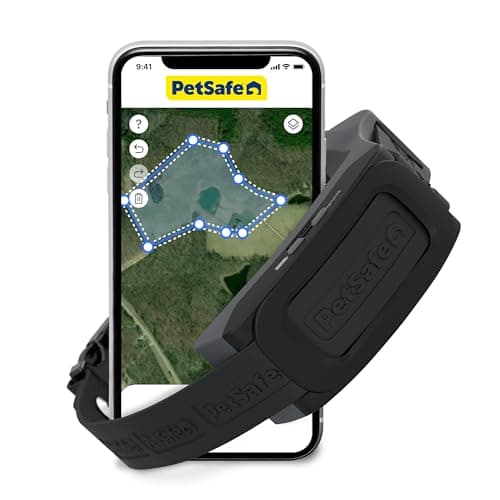
PetSafe
PetSafe Guardian GPS 2.0 Dog Fence + Tracking, Dual Frequency GPS, Smaller Collar for All Breeds 10 lbs and Above
8.2 / 10
- Dual-frequency GPS with AccuGuard boundary technology for steadier fence lines
- Smaller redesigned collar fitting necks from 8 inches, covering 98% of dog breeds — ties the Halo Collar 5 for the lowest fit floor among true GPS fences here
- Adds real-time escape tracking on top of containment
- Customizable virtual boundaries managed in the My PetSafe app
$277.27
May ship from a used-condition listing — verify condition before buying (checked 2026-09-08)
Jump to deep dive ↓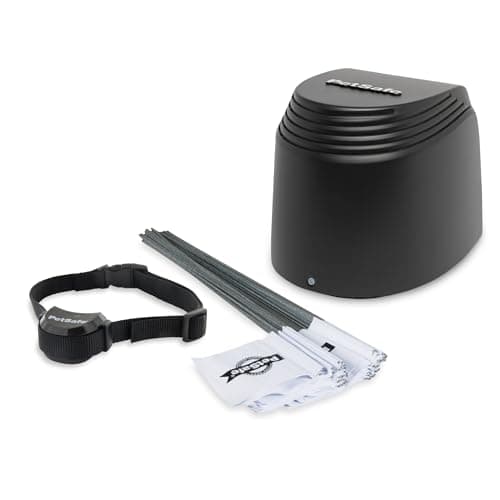
PetSafe
PetSafe Stay & Play Compact Wireless Pet Fence, Circular Boundary up to 3/4 Acre, No-Dig and Portable, for Dogs 5 lbs and Up
7.9 / 10
- Radio-signal circular boundary — no satellite drift, which is why it works on yards too small for GPS
- Covers up to 3/4 acre with an adjustable radius from a plug-in base station
- Fits dogs 5 pounds and up — the only pick here suitable for genuinely small dogs
- No wire to bury, and portable enough to take to a second home or campsite
$279.99
The Short Answer
GPS wireless dog fences work best on open yards of three-quarters of an acre or larger with dogs over 10 pounds — satellite drift makes smaller lots unreliable, a limitation PetSafe itself acknowledges. The Halo Collar 5 at $524.00 is the overall pick: dual-frequency GPS on the L1 and L5 bands cuts the boundary bounce that plagued earlier models, and real-time escape tracking is built in, but nothing functions without the required subscription. The PetSafe Guardian GPS at $399.99 is the value pick — zero ongoing fees and the best battery life Dogs Academy found in its March 2026 comparison. The Guardian GPS 2.0 and the Halo Collar 5 both reach down to roughly 10-pound dogs on their makers' own published fit specs, so small-dog households have two doors here rather than one, but every pick is satellite-based — yards under three-quarters of an acre and dogs under 10 pounds fall outside what this category can do reliably. Every pick uses static correction, so a multi-week, flag-based training protocol comes before any unsupervised use — that part is non-negotiable.
Every product on this list has been scored against the PetPal Gear Score, a weighted composite of expert consensus, observed effectiveness, animal safety, long-term durability, and value. Review method: Editorial synthesis of Technobark's 2026 evaluation of 11 GPS fence models, World Animal Foundation's March 2026 Halo Collar 5 review, Smart Pet Gear Lab's boundary-drift and subscription-lock-in reporting, Dogs Academy's March 2026 GPS fence battery comparison, DogTechHQ's Guardian no-subscription review, and Canine Journal's PetSafe-versus-SportDog-versus-Halo-versus-SpotOn brand comparison. iHeartDogs category coverage and Trustpilot customer reviews of the Halo Collar informed sentiment. Community input came from a Rokslide hunting-dog forum thread. Manufacturer documentation from Halo and PetSafe was reviewed. Prices, availability, seller and condition were re-read live on every listing on September 7, 2026. That check found two changes worth flagging: the Guardian GPS 2.0 is currently sold by Amazon Resale at $277.27 in used, Like New condition, with no new-condition offer featured, and the Stay & Play Compact has fallen to $279.99 sold and shipped by Amazon. The SpotOn Nova Edition — once noted here as direct-to-consumer only — remains a live Amazon listing at $999.00. PetPalHQ does not run a dog-containment testing lab.. Synthesized from 8+ expert sources.
A wireless dog fence makes a seductive promise: containment without trenching wire or building a physical fence, drawn in an app and enforced by a collar. The 2026 reality is more conditional. The technology genuinely works — within a yard-size floor, a dog-weight floor, and a training commitment no product page advertises. This guide maps those three conditions onto the four systems actually worth buying, because the gap between "GPS fence" as marketed and as owned is wider here than in almost any other pet-tech category.
PetPalHQ.com earns affiliate commissions from qualifying purchases. Our recommendations are based on expert consensus — we synthesize professional reviews and multi-year owner reports to find pet gear that is worth your investment. Commission rates never influence our editorial picks.
We read 8 expert sources for this guide, from Technobark's evaluation of 11 GPS fence models to World Animal Foundation's March 2026 review of the Halo Collar 5 and Dogs Academy's battery comparison. Four picks survived: the Halo 5 as the hardware leader, the PetSafe Guardian as the no-subscription value play, and the Guardian 2.0 as the cheaper of the two picks that reach dogs as light as 10 pounds — all true GPS systems, so the yard-size floor below applies to every one of them. Two well-known names did not survive, and one of them no longer functions at all.
GPS Drift Is the Spec That Decides Everything
Every satellite-positioned fence wanders. Consumer GPS does not hold a fixed line on the earth — it estimates one, continuously, and the estimate moves. On three acres, a boundary that breathes by 20 feet is invisible. On a quarter-acre lot, the same drift puts the correction zone inside the kitchen. That is why PetSafe designs the Guardian GPS for single yards of three-quarters of an acre or larger and explicitly does not recommend it for small lots.
Drift is also a welfare problem, not just a convenience one. Smart Pet Gear Lab documented the failure on the previous-generation Halo 4: the fence line shifted from where it was set, and corrections were delivered well inside the safe area — in one report, to a dog lying on its own bed. The current generation's answer is dual-frequency GPS. The Halo Collar 5 listens to both the L1 and L5 satellite bands and switches to the strongest signal, per Technobark, and the Guardian GPS 2.0 runs PetSafe's AccuGuard dual-frequency equivalent. The fix is real engineering, but the lesson stands: boundary stability is the spec to interrogate, and it is the reason yard size belongs at the top of your decision, not the bottom.
Radio-circle systems sidestep satellites entirely, which is how they serve small yards, but they trade drift for a wobble of their own — parked cars, slopes, and trees all degrade the signal. Neither approach gives you a hard line. Yard size decides which failure mode you can live with, and on this page every pick is on the satellite side of that fork.
The Subscription Fork
The category splits cleanly on one question: does the fence keep working if you stop paying? The Halo Collar 5 and the Guardian GPS 2.0 say no — both require an active plan, and Smart Pet Gear Lab is blunt about what cancellation means for the Halo: the collar becomes a paperweight, with containment and tracking both dead. What the subscription buys is real-time escape tracking, the feature that turns a breached boundary into a live map instead of a panicked neighborhood search. Owners who want that recovery layer without a containment collar at all should read our dog GPS trackers guide, where the same trade-off plays out at a fraction of the hardware price.
The PetSafe Guardian takes the opposite position: pay once, own it forever, and give up tracking entirely. For a system that may be on your dog's neck for five years or more, that fork — recurring cost with recovery features, or zero cost without them — is the real purchase decision. The hardware specs are downstream of it. If your shortlist is the four-figure premium tier specifically — the SpotOn Nova, Halo Collar 5, and no-subscription PetSafe Guardian, compared on customer-service reputation, reliability, and recent improvements — our premium GPS dog fence collar guide goes brand by brand.
What these systems actually cost over five years
The fork above is easy to describe and harder to price than it looks, because only some of these brands will tell you what their fee is. Two of the four picks charge nothing after checkout — the PetSafe Guardian and the radio-circle Stay & Play Compact — so for each of those the five-year cost is simply the purchase price. The table below covers the three satellite systems, where the subscription question is the one that actually decides the bill, and among those three the Guardian is the only one with no plan attached. PetSafe publishes a rate for the Guardian 2.0's required plan: $9.99 a month, or $99 a year, after a free first month. Halo published nothing at all when we first fetched its Pack Membership page on August 10, 2026 — it named Bronze, Silver, and Gold tiers, described what each includes, and printed no price for any of them. That changed on the August 21 re-check, and the rates below are the ones its shop page carries now.
| System | Hardware (listing price, Sept 7 2026) | Required plan | 5-year total |
|---|---|---|---|
| Halo Collar 5 | $524.00 ($599.00 list) | Required — from $9.99/mo Bronze, per collar | $1,123.40 |
| PetSafe Guardian GPS | $399.99 | None | $399.99 |
| Guardian GPS 2.0 + Tracking | $277.27 (used — Like New, Amazon Resale) | $9.99/mo or $99/yr (1 month free) | $772.27–$866.68 |
Two things fall out of that table. The Guardian 2.0 is the clearest lesson in the guide, and the September re-read sharpened it rather than softening it. It is the cheapest collar here to buy today at $277.27, and on the annual plan it is still the cheaper system twelve months in — $376.27 against the no-fee Guardian's $399.99. Wait one more year and the order reverses: $475.27 against that same $399.99, because the fee starts immediately and never stops while the Guardian above it never charges again. A sticker price that wins for a year and loses for the next four is the shape of every subscription decision in this category. The Halo row changed under us too. When we re-checked halocollar.com on August 12, 2026 its tiers carried benefits and billing terms but no dollar amounts; re-checked on August 21, 2026, the shop page publishes them — Bronze from $9.99 a month, Silver $14.99, Gold $19.99, with a plan required for each collar. So the number is finally computable, and it is the largest on this table: $1,123.40 over five years at the $524.00 the listing charges today, against $399.99 for the collar two rows down.
If that reframing changes your shortlist, the full version — including the $999.00 SpotOn Nova and the $1,223.98 Garmin Alpha 300i, each priced across 1, 3, and 5 years with required and optional subscriptions separated — is our GPS containment total-cost comparison. Read it before you commit to any subscription-required collar.
Static Correction, Skin Checks, and the Training Weeks You Cannot Skip
All four picks enforce their boundaries with static correction, and the welfare evidence in this category points to one conclusion: the danger is not the correction itself but the mis-timed one. Reviewers and owners have documented corrections reaching dogs inside the safe zone through boundary drift on GPS systems. A dog cannot learn a boundary from a correction that arrives on its own bed; it can only learn fear.
That is why the multi-week, flag-based training protocol is non-negotiable before unsupervised use. Physical flags mark the invisible line, supervised sessions teach the retreat behavior, and the collar's correction only makes sense to a dog who already knows where the edge is. PetSafe ships a 2-week training guide with the Guardian for this reason, and the Rokslide owner's report on the Halo 5 — working well, but with a larger training curve than expected — is the field-tested version of the same warning. Dogs that cannot yet hold a boundary belong in proper physical containment in the meantime; our heavy-duty dog crates guide covers the escape-artist tier.
Two more welfare rules round out safe ownership. First, take the collar off nightly — e-collar contact points worn continuously can cause skin irritation, and the Halo 5's one-to-two-day charging cycle conveniently forces the habit. Second, remember what a virtual fence does not do: it keeps nothing out. Other dogs, coyotes, and people cross your boundary freely, and no wireless system should be the sole containment for a dog with high prey drive.
What We Passed On
The SpotOn GPS Fence (Nova Edition) is the accuracy leader on paper. SpotOn-commissioned Spirent GNSS lab testing claims just 2.3 feet of fence-line drift against a 45-foot maximum measured for the Halo — the best boundary-stability numbers anyone in the category has published. It stays out of this guide's ranked picks for one reason only: at $999.00 it sits well above the $277-to-$524 band these four systems occupy, and this page exists to serve the yard-and-dog-fit decision inside that band.
Correction, August 10, 2026: an earlier version of this section said the Nova Edition sold direct-to-consumer only, so we could not verify live retail price or availability. That is no longer true, and it still held when we re-read the listing on September 7, 2026 — a live, in-stock Amazon listing for the SpotOn GPS Dog Collar Nova Edition at $999.00, sold by SpotOn GPS Fence, and its containment carries no required subscription — the one structural advantage that can make a four-figure collar the cheaper system over a long ownership window. We compare it against the Halo and the Guardian brand-by-brand in the premium GPS fence collar guide, and total both routes out to real multi-year numbers in the GPS containment total-cost comparison.
The Wagz Freedom Smart Dog Collar is a warning rather than a candidate. Wagz ceased operations and shut down service for existing collars, which means the geofencing is dead — yet stale listings still circulate online. Technobark had also found it failed to consistently hold the line even while the service was alive. Buying one today gets you an expensive activity tracker at best. Do not buy it at any discount.
If You Are Still Deciding Between a Fence and a Tracker
Plenty of readers arrive here having already decided containment is the answer, and a meaningful share of them are wrong about that — the escape happens at the front door, or off a lead, and a boundary drawn around the back garden addresses none of it. Our GPS fence or GPS tracker decision guide runs the four questions that separate the two categories and totals both routes over five years on each manufacturer's published rates.
For the category as a whole — including what the American Animal Hospital Association and the American Veterinary Society of Animal Behavior have published about static-correction collars, and why there is no containment tier for cats at all — the GPS containment and pet tracking hub is the parent page for everything on this topic.
Head-to-Head Comparison
| Feature | Halo Collar 5 Wireless Dog Fence & GPS Dog Collar, App-Controlled Boundaries and Real-Time Tracking, Graphite | PetSafe Guardian GPS Dog Fence, No Subscription, Create Your Own Wireless Fence for Yards 3/4 Acre or Larger, Redesigned Collar | PetSafe Guardian GPS 2.0 Dog Fence + Tracking, Dual Frequency GPS, Smaller Collar for All Breeds 10 lbs and Above | PetSafe Stay & Play Compact Wireless Pet Fence, Circular Boundary up to 3/4 Acre, No-Dig and Portable, for Dogs 5 lbs and Up |
|---|---|---|---|---|
| Price (verified 2026-09-07) | $524.00 | $399.99 | $277.27 (used — Like New, Amazon Resale) | $279.99 |
| Subscription for containment | Required — fence is inert without a plan; from $9.99/mo Bronze, per collar | None, ever | Required — $9.99/mo or $99/yr per PetSafe, 1 month free | None, ever |
| 5-year cost of ownership | $1,123.40 at Bronze on the $524.00 listing price | $399.99 | $772.27 (annual plan) to $866.68 (monthly) | $279.99 |
| Minimum dog weight | 10 lb (8-30 in neck; 30 lb realistic per reviewers) | 25 lb | 10 lb (8 in neck and up) | 5 lb |
| Boundary type | App-drawn GPS, any shape | GPS, fixed yard 3/4 acre or larger | App-drawn GPS, any shape | Radio circle, up to 3/4 acre |
| Live escape tracking | Yes — with an active plan | No | Yes — with an active plan | No |
| Containment Confidence Score | 8.7 | 8.4 | 8.2 | 7.9 |
| Check price | Amazon | Amazon | Amazon | Amazon |
Halo Halo Collar 5 Wireless Dog Fence & GPS Dog Collar, App-Controlled Boundaries and Real-Time Tracking, Graphite
$524.00
- Dual-frequency GPS (L1 + L5 bands) switches to the strongest signal to reduce interference and boundary bounce
- Unlimited app-drawn wireless fences — draw any boundary shape, anywhere, from the app
- Real-time escape tracking built in, so a breached boundary becomes a live recovery map
- Roughly 30-plus hours of rechargeable battery life per charge
- One-size adjustable collar — Halo publishes a floor of 10 lbs and up with an 8-to-30-inch neck range, though reviewers argue it suits larger dogs better in practice
The Halo Collar 5 is the editorial pick because it attacks the category's central failure mode — boundary drift — with hardware rather than promises. Per Technobark's analysis, the dual-frequency receiver listens to both the L1 and L5 GPS bands and switches between them, favoring the strongest signal to reduce the bouncing and weak-signal interference that make virtual fence lines wander. That matters because the wandering is documented: Smart Pet Gear Lab's review of the previous-generation Halo 4 recorded boundary-drift complaints where the fence line shifted from where owners set it, with corrections delivered well inside the supposedly safe area — including one dog corrected while lying on its own bed. The Halo 5's dual-band design is aimed squarely at that history, and World Animal Foundation's March 2026 review found the new model bolstered an already exceptional real-time tracking system, improved battery life, and kept some of the best health-data insights in the smart-collar arena.
The unlimited app-drawn fences are the practical advantage over radio-circle systems. You can draw a boundary that follows your actual property line, excludes the garden, and travels with you to a relative's acreage. When a dog does breach the line, the Halo 5 converts instantly into a live tracker — a recovery feature the no-subscription competition simply does not have.
Here's the honest trade-off: the subscription is mandatory, and Smart Pet Gear Lab calls that lock-in the headline drawback — without an active plan, the collar is a paperweight. Containment and tracking both stop entirely if you cancel. Battery is the second tax: roughly 30-plus hours per charge means real-world charging every one to two days, which forces a nightly take-the-collar-off routine. The third caution comes from the field — a Lab owner on a Rokslide hunting-dog forum thread reported the Halo 5 has worked relatively well, but the training curve was larger than expected. Budget weeks, not days. Fit is the fourth thing to get right, and it is widely misreported. Halo's own store lists the Collar 5 at 10 lbs and up with an 8-to-30-inch neck, and Halo's site FAQ says the system works for dogs over five months old and over 10 lbs with an 8-to-30.5-inch neck. That is the manufacturer's floor. Reviewers separately argue the one-size collar sits better on dogs of 30 pounds or more, which is a practical opinion about bulk rather than a specification — worth weighing for a 12-pound dog, but not the same thing as being excluded.
What We Love
- Dual-frequency L1 + L5 GPS directly targets the boundary-drift problem documented in earlier models
- Unlimited app-drawn fence shapes follow real property lines instead of forcing a circle
- Real-time escape tracking turns a breach into a live recovery map
- World Animal Foundation credits it with top-tier health-data insights among smart collars
- Portable — boundaries can be drawn anywhere you take the dog
What Could Be Better
- Subscription lock-in: containment and tracking stop working entirely if the monthly plan lapses
- Owner reports of boundary drift on the prior generation, with corrections delivered inside the safe zone
- Charging every one to two days in real-world use means a nightly collar-off routine
- One-size collar bulk: Halo's published floor is 10 lbs, but reviewers argue it realistically suits dogs of 30 pounds and up
The Verdict
If you want the strongest boundary hardware plus live escape tracking and can stomach a permanent subscription, the Halo Collar 5 is the pick. Plan on a multi-week training investment before trusting it unsupervised.
Sources
- Technobark: Halo's dual-frequency GPS uses the L1 and L5 bands and switches between them, favoring the strongest signal to reduce bouncing/weak signals and interference
- World Animal Foundation (March 2026 Halo 5 review): Halo 5 bolstered an already exceptional real-time tracking system, improved battery life, and retains some of the best health-data insights in the smart-collar arena
- Smart Pet Gear Lab (Halo 4 review): documented boundary-drift complaints — the fence line shifting from where it was set, with corrections delivered well inside the safe area, including a dog corrected while lying on its bed
- Smart Pet Gear Lab: calls subscription lock-in the headline drawback — the collar is a paperweight without an active plan
- Rokslide forum (hunting-dog community thread): mixed sentiment on Halo — one Lab owner reports it has worked relatively well but the training curve was larger than expected
- Canine Journal: ranks Halo among the four wireless-fence systems worth comparing (PetSafe vs SportDog vs Halo vs SpotOn)
PetSafe PetSafe Guardian GPS Dog Fence, No Subscription, Create Your Own Wireless Fence for Yards 3/4 Acre or Larger, Redesigned Collar
$399.99
- No subscription — custom GPS boundaries with zero ongoing fees, unique among true GPS fences here
- Designed for single yards of 3/4 acre or larger, where GPS boundaries hold reliably
- Up to 72-hour claimed battery life — roughly two days between charges in real-world use
- Fits dogs over 25 pounds with neck sizes 13 to 28 inches
- Fence setup and management through the My PetSafe app, with a 2-week training guide included
The PetSafe Guardian is the value pick because of what it permanently removes from the equation: the monthly bill. Every other true GPS fence in this guide stops working the moment a subscription lapses. The Guardian GPS charges $399.99 once and then nothing, which DogTechHQ calls the standout value argument in this category — custom boundaries, a contained dog, and no extra costs, ever. Over a multi-year ownership window, that single difference can matter more than any tracking feature.
The battery result is the second argument. Dogs Academy's March 2026 roundup found the Guardian had the best battery life of all the GPS dog fences it evaluated — a 72-hour claimed maximum that works out to roughly two days between charges in real-world use. That is the difference between a charge-every-night routine and a twice-a-week one. The same review called the app install and fence setup simple and easy, and rated the Guardian an excellent option on a budget. PetSafe also does the responsible thing on training: a 2-week training guide ships with the system, and per DogTechHQ the collar fits dogs over 25 pounds with neck sizes from 13 to 28 inches.
Here's the honest trade-off, and it has two halves. First, yard size: the Guardian is designed for single yards of three-quarters of an acre or larger, and PetSafe itself does not recommend it for small lots because GPS drift makes tight boundaries unreliable. If your yard is suburban-small, this is the wrong product no matter how appealing the no-fee math looks — a radio-based system, not a satellite one, is the small-yard answer. Second, there is no live escape tracking on this version; that feature is reserved for the Guardian 2.0 + Tracking model. If the PetSafe Guardian fails to contain your dog, it cannot tell you where the dog went. Owners also report app responsiveness and GPS connectivity issues near large metal objects or where Wi-Fi is weak, so the boundary's placement relative to sheds and vehicles deserves thought during setup.
What We Love
- Zero subscription fees — the only true GPS fence here that costs nothing after purchase
- Best battery life in Dogs Academy's March 2026 GPS fence comparison — about two days per charge
- Simple app setup, with a 2-week training guide included in the box
- About $124 less than the Halo Collar 5, at $399.99
What Could Be Better
- Needs a 3/4-acre-or-larger yard — PetSafe itself advises against small lots because of GPS drift
- No live escape tracking — if the dog gets out, the system cannot tell you where they went
- 25-pound minimum excludes small breeds entirely
- Owner reports of app and GPS connectivity issues near large metal objects or weak Wi-Fi
The Verdict
If your yard clears three-quarters of an acre and your dog clears 25 pounds, the Guardian GPS delivers true GPS containment with no recurring fees. Accept that it cannot track an escaped dog — that feature costs extra elsewhere.
Sources
- Dogs Academy (March 2026 GPS fence roundup): Guardian had the best battery life of all GPS dog fences tested — 72-hour maximum runtime claimed, roughly two days in real-world use
- DogTechHQ (Guardian no-subscription review): works for dogs over 25 pounds with 13-28 inch necks, syncs with the My PetSafe app for custom fence setup, and includes a 2-week training guide
- Dogs Academy: app install and fence setup were simple and easy; called the Guardian an excellent option on a budget
- DogTechHQ: the no-subscription model keeps your dog contained with custom boundaries and no extra costs — the standout value argument in this category
PetSafe PetSafe Guardian GPS 2.0 Dog Fence + Tracking, Dual Frequency GPS, Smaller Collar for All Breeds 10 lbs and Above
$277.27
- Dual-frequency GPS with AccuGuard boundary technology for steadier fence lines
- Smaller redesigned collar fitting necks from 8 inches, covering 98% of dog breeds — ties the Halo Collar 5 for the lowest fit floor among true GPS fences here
- Adds real-time escape tracking on top of containment
- Customizable virtual boundaries managed in the My PetSafe app
- Subscription required for the fence and tracking service
May ship from a used-condition listing — verify condition before buying (checked 2026-09-08)
The Guardian GPS 2.0 is the small-dog answer in this guide, but it is not the only one, and an earlier version of this guide overstated that. PetSafe fits the redesigned collar to necks from 8 inches and says it suits 98 percent of dog breeds, and its own "Which PetSafe GPS Fence is right for you?" comparison table puts the Guardian GPS 2.0 at 10+ lb dogs — a figure that sits in that table rather than in the primary spec list, which is why it is easy to miss. Halo publishes the same practical floor for the Collar 5 — 10 lbs and up, necks 8 to 30 inches — so a beagle-sized dog has two true GPS options here, not one. What still separates them is bulk and money: the Guardian 2.0's collar is half the size of the previous Guardian generation and it is the cheaper of the two, while Halo's one-size collar draws reviewer complaints about heft on smaller dogs. The no-subscription Guardian is the genuine exclusion at this size, requiring 25 pounds.
The credentials go beyond fit. Technobark evaluated 11 GPS fence models in 2026 and placed the Guardian 2.0 + Tracking a strong second overall, crediting its advanced real-time tracking and customizable virtual boundaries. The same review highlighted the AccuGuard dual-frequency boundary technology and a user-friendly app, calling the system built for ease of use and dependability for dogs of almost every size. Like the Halo 5, it pairs containment with live escape tracking — so a failed boundary becomes a recovery map rather than a neighborhood search party. Canine Journal lists PetSafe among the four wireless-fence brands worth comparing at all, alongside SportDog, Halo, and SpotOn, which speaks to the brand's depth in this category.
Here's the honest trade-off: the Guardian 2.0 gives up the very thing that makes its cheaper sibling special. A subscription is required for the fence and tracking service, so the collar price is the entry fee, not the total. There is a condition caveat on top of that: on our September 7, 2026 read this listing was sold by Amazon Resale at $277.27 in used, Like New condition, with no new-condition offer featured — the lowest of the five offers on the page. That is a real, returnable buy path and it is why this collar now undercuts every other pick here, but you are buying a returned unit rather than a sealed one, so check the condition note and the return window before you order. It is also a newer model with a shorter owner track record than the Halo line or the original Guardian — early reviews are strong, but multi-year durability data does not exist yet. The physics have not changed either: a reliable GPS boundary still wants large open space, and small suburban lots remain a poor fit regardless of which collar you buy. And as with every static-correction system in this guide, a multi-week training protocol comes before any unsupervised use; the smaller collar does not shorten the training calendar.
What We Love
- 10-pound weight minimum — ties the Halo Collar 5 for the lowest floor in this roster, and it is the cheapest listing here today, though that offer is a used, Like New unit from Amazon Resale rather than a new one
- Strong second place in Technobark's 2026 evaluation of 11 GPS fence models
- Real-time escape tracking included, unlike the no-subscription Guardian
- AccuGuard dual-frequency GPS targets boundary stability
What Could Be Better
- Subscription required — surrenders the no-fee advantage of the original Guardian model
- Sold by Amazon Resale as a used, Like New unit at $277.27 — no new-condition offer was featured on our September 7, 2026 read
- Newer model with a shorter owner track record than the Halo or the original Guardian
- Still needs large open space for a reliable boundary — small suburban lots remain a poor fit
- Static-correction containment requires a multi-week training protocol before unsupervised use
The Verdict
If your dog falls between 10 and 25 pounds and you want true GPS containment with escape tracking, the Guardian GPS 2.0 is the cheaper of the two doors in — the Halo Collar 5 reaches the same 10-pound floor for more money. At the moment the cheapest way in is a used, Like New unit from Amazon Resale at $277.27; budget for the subscription and the training weeks on top of it.
Sources
- Technobark (tested 11 GPS fence models, 2026): the Guardian GPS 2.0 + Tracking secures a strong second place thanks to advanced real-time tracking and customizable virtual boundaries
- Technobark: with AccuGuard technology and a user-friendly app, it's built for ease of use and dependability for dogs of almost every size
- Canine Journal: PetSafe is one of the four major brands in its wireless-fence comparison (PetSafe vs SportDog vs Halo vs SpotOn)
PetSafe PetSafe Stay & Play Compact Wireless Pet Fence, Circular Boundary up to 3/4 Acre, No-Dig and Portable, for Dogs 5 lbs and Up
$279.99
- Radio-signal circular boundary — no satellite drift, which is why it works on yards too small for GPS
- Covers up to 3/4 acre with an adjustable radius from a plug-in base station
- Fits dogs 5 pounds and up — the only pick here suitable for genuinely small dogs
- No wire to bury, and portable enough to take to a second home or campsite
- No subscription; from the parent company of Invisible Fence Brand
The Stay & Play Compact is in this guide because GPS has a floor, and many yards sit below it. Every satellite-based pick above wants roughly three-quarters of an acre of open space before its boundary stops wandering. The Stay and Play sidesteps the satellite problem entirely: a plug-in base station broadcasts a radio signal, and the collar corrects at the edge of an adjustable circular radius covering up to three-quarters of an acre. No satellites means no GPS drift — which is exactly why this older technology still earns a slot in a 2026 guide. It also goes where the GPS weight minimums cannot: the collar fits dogs from 5 pounds up, making it the only pick here for genuinely small dogs, and there is no subscription. The pedigree helps too — PetSafe is the parent company of Invisible Fence Brand, and owner reviews aggregated across Chewy and Home Depot put the Stay & Play line at roughly a 4.5-star average across thousands of reviews.
Portability is the quiet bonus. With no wire to bury, the base station packs up for a second home or a campsite, and the circle redraws itself wherever you plug in. For owners who split time between properties, that flexibility is something no buried-wire system can offer at any price.
One buying note from our September 7, 2026 re-read, because the number that used to make this the budget pick no longer does. The Stay & Play Compact is $279.99 sold and shipped by Amazon, in stock and in new condition — down $45.00 from the $324.99 this guide carried in August, but still well above the $249.99 it cost earlier in the year. The cost argument that follows from that has flipped: the true-GPS Guardian 2.0 is $277.27 today, so the radio-circle Stay & Play is now $2.72 more expensive than the satellite system it used to undercut. Buy this one for what its radio design does — hold a boundary on a yard too small for GPS, and fit a dog too small for any of the collars above — and not because it is the cheap way in, because as of this check it is not.
Here's the honest trade-off: a circle is a crude shape for a real yard. There are no custom boundaries, so irregular lots either waste coverage or leave gaps, and PetSafe's own guidance says not to include the driveway in the boundary because vehicles can interfere with the system. The radio signal has its own wobble — some owners report the boundary ranging 20 to 25 feet off at any given moment, with parked cars, slight yard slopes, and trees degrading consistency. There are also isolated owner reports of erratic corrections during power outages. And because there is no GPS, there is no tracking: if your dog does get out, the PetSafe Stay & Play cannot tell you where they went.
What We Love
- Works on small yards where every GPS fence in this guide is unreliable
- 5-pound minimum covers small dogs that no GPS pick can serve
- No subscription and no wire to bury, with a roughly 4.5-star owner average across thousands of reviews
- Portable base station redraws the boundary at a second home or campsite
What Could Be Better
- Circular boundary only — irregular yards waste coverage or leave gaps, and driveways should be excluded
- Boundary wobble of 20 to 25 feet reported in some yards, with metal, slopes, and trees as culprits
- Isolated owner reports of erratic corrections during power outages
- No GPS means no tracking — an escaped dog leaves no map
- No longer the price argument: $279.99 at our September 7, 2026 read, which is $2.72 more than the true-GPS Guardian 2.0 and $30.00 above the $249.99 it used to cost
The Verdict
If your yard or your dog is too small for GPS, the Stay & Play Compact is the legitimate fallback — proven radio containment with no fees. Accept the circle, keep the driveway out of it, and re-run the comparison at its current $279.99 rather than the $249.99 it used to cost — at that price it no longer undercuts the GPS picks.
Sources
- Owner reviews aggregated across Chewy and Home Depot: the Stay & Play line carries a roughly 4.5-star average across thousands of reviews, but some owners report the boundary ranging 20-25 feet off at any given moment
- Owner reviews (Chewy/Home Depot): parked cars, slight yard slopes, and trees can degrade the radio signal's consistency
- PetSafe (manufacturer guidance): does not recommend including the driveway in the boundary because vehicles can interfere with the system
- Canine Journal: PetSafe anchors the budget end of its wireless-fence brand comparison
How We Score
Formula
Containment Confidence Score = (Boundary Reliability × 0.35) + (Yard & Dog Fit × 0.25) + (Welfare & Training Support × 0.20) + (Ownership Cost × 0.20)
Score Factors
- Boundary Reliability · 35%
- How consistently the fence line stays where the owner drew it, weighted heaviest because a wandering boundary is both a containment failure and a welfare problem. Dual-frequency GPS designs score highest: the Halo Collar 5's L1 + L5 band switching and the Guardian 2.0's AccuGuard technology both exist to suppress the drift that Smart Pet Gear Lab documented on earlier hardware, where corrections reached dogs well inside the safe zone. Systems with documented correction errors during power outages or boundary-drift complaints on predecessor models carry that history in the score.
- Yard & Dog Fit · 25%
- How wide a range of real households the system can actually serve. Every pick here is satellite-based, so all of them carry the same hard floor of roughly three-quarters of an acre — PetSafe itself does not recommend the Guardian for small lots — and none of them earns credit for smaller yards. Weight minimums separate the picks less than they used to: the Guardian 2.0 and the Halo Collar 5 both publish a floor around 10 pounds and an 8-inch neck, so both open the category to small breeds, while the no-subscription Guardian's 25-pound floor genuinely narrows its audience. Reviewer opinion that the Halo's one-size collar suits dogs of 30 pounds and up is weighed here as practical bulk, not as a manufacturer limit. Collar adjustability, such as the Guardian's 13-to-28-inch neck range, contributes here as well.
- Welfare & Training Support · 20%
- How well the system supports a humane, multi-week introduction and ongoing safe wear. Every pick in this guide uses static correction, so the welfare burden sits in the details: a documented training program such as PetSafe's included 2-week guide scores highly, while documented mis-timed corrections — boundary drift reaching dogs inside the safe area, or erratic corrections during power outages — score against. Escape tracking earns welfare credit too, because a system that can locate a dog after a containment failure shortens the most dangerous window in the entire ownership experience. Charging cadence factors in: a one-to-two-day battery forces nightly collar removal, which doubles as the skin-health check every e-collar wearer needs.
- Ownership Cost · 20%
- Total cost over a realistic multi-year ownership window rather than the sticker price alone. Subscription structure dominates this factor: the Guardian GPS charges once and nothing after, while the Halo Collar 5 and the Guardian 2.0 stop functioning entirely without an active plan — Smart Pet Gear Lab calls that lock-in the headline drawback of the subscription tier, since a lapsed plan turns the hardware into a paperweight. Whether the maker publishes its plan rate at all feeds this factor too: a fee you cannot see before checkout is a cost you cannot weigh.
| Rank | Product | Score |
|---|---|---|
| #1 | Halo Halo Collar 5 Wireless Dog Fence & GPS Dog Collar, App-Controlled Boundaries and Real-Time Tracking, Graphite | 8.7 |
| #2 | PetSafe PetSafe Guardian GPS Dog Fence, No Subscription, Create Your Own Wireless Fence for Yards 3/4 Acre or Larger, Redesigned Collar | 8.4 |
| #3 | PetSafe PetSafe Guardian GPS 2.0 Dog Fence + Tracking, Dual Frequency GPS, Smaller Collar for All Breeds 10 lbs and Above | 8.2 |
| #4 | PetSafe PetSafe Stay & Play Compact Wireless Pet Fence, Circular Boundary up to 3/4 Acre, No-Dig and Portable, for Dogs 5 lbs and Up | 7.9 |
When NOT to Buy
Skip the GPS picks entirely if your yard is under three-quarters of an acre. That is not editorial caution — PetSafe itself does not recommend the Guardian for small lots, because satellite drift makes tight boundaries unreliable. On a small lot, a 20-foot wander puts the correction line in your living room or on the sidewalk. On a lot that size, a radio-based (wired or wireless-transmitter) containment system is the category to shop instead — every pick on this page is satellite-based.
Skip the category if your dog falls below the weight minimums. The Halo Collar 5 and the Guardian GPS 2.0 both publish a floor of about 10 pounds with 8-inch necks, while the no-subscription Guardian GPS requires 25 pounds. Under 10 pounds, nothing on this page fits — that floor is the category's, not one product's — and below it you are shopping radio-based containment, not GPS.
Skip any virtual fence as the sole containment for a dog with high prey drive. A static correction is a deterrent, not a wall — a sufficiently motivated dog can run through the boundary, and no wireless fence keeps other animals or people out of your yard. Dogs that bolt after wildlife need physical containment, with a wireless system as a backup layer at most.
Skip the purchase if you cannot commit to the training protocol. Static-correction containment requires a multi-week, flag-based introduction with supervised sessions before any unsupervised use. PetSafe ships a 2-week training guide with the Guardian for exactly this reason, and a Rokslide forum owner's experience with the Halo — it worked, but the training curve was larger than expected — is the realistic preview. A skipped protocol plus a mis-timed correction is how dogs learn to fear the yard instead of the boundary.
Skip the subscription models if a lapsed payment would strand you. The Halo Collar 5 and the Guardian 2.0 stop containing and stop tracking the moment the plan ends — Smart Pet Gear Lab calls the hardware a paperweight without it. If that dependency bothers you, the Guardian GPS is the true-GPS pick that keeps working regardless — and the radio-based Stay & Play Compact carries no fee either, if your yard and dog fit it.
Frequently Asked Questions
- Do GPS dog fences actually work, or will my dog just run through the boundary?
- They work as deterrents, not walls — and that distinction should shape your expectations. A static correction discourages crossing; it cannot physically stop a dog who is sufficiently motivated, which is why no virtual fence should be the sole containment for a dog with high prey drive. Real-world ownership reflects this: a Lab owner on the Rokslide hunting-dog forum reported the Halo Collar 5 has worked relatively well, with the caveat that the training curve was larger than expected. The systems that pair containment with real-time escape tracking — the Halo 5 and the Guardian 2.0 — at least convert a boundary failure into a live recovery map. The no-subscription picks cannot.
- Does the Halo Collar still work if you cancel the subscription?
- No — and this is the single most important thing to understand before spending $524.00. Smart Pet Gear Lab calls subscription lock-in the headline drawback of the Halo: without an active plan, the collar is a paperweight. Containment stops, tracking stops, and the hardware has no offline fallback mode. The same dependency applies to the Guardian GPS 2.0, which also requires a plan for its fence and tracking service. If that ongoing obligation bothers you, the PetSafe Guardian is the pick in this guide that keeps working with zero fees for as long as the hardware lasts.
- How big does my yard need to be for a GPS dog fence to be reliable?
- Plan on three-quarters of an acre or larger of open space. That figure comes from PetSafe itself, which designs the Guardian GPS for yards of that size and does not recommend it for small lots — satellite drift that is harmless on acreage becomes a correction inside the house on a small one. Owners also report GPS connectivity degrading near large metal objects and in weak Wi-Fi areas, so a big yard crowded with sheds and vehicles can underperform an open one. Below the GPS floor, a radio-based system is the answer rather than anything on this page: a transmitter-and-circle design has no satellite drift, but scales down to small yards because no satellites are involved.
- Are static corrections from a GPS fence humane?
- The honest answer from the evidence: the correction is defensible when training is done properly, and the documented welfare problems come from corrections the dog could not predict. Smart Pet Gear Lab recorded boundary drift on the Halo 4 delivering corrections well inside the safe area — including to a dog on its own bed. A correction with no learnable cause teaches fear, not boundaries. The mitigation is procedural: complete a multi-week, flag-based training protocol with supervised sessions before unsupervised use, favor current dual-frequency hardware that suppresses drift, and remove the collar nightly, since continuously worn contact points can cause skin irritation.
- Can a GPS dog fence work for a small dog under 20 pounds?
- Two of them can. Checking both makers' own pages on August 17, 2026: PetSafe fits the Guardian GPS 2.0 collar to neck circumferences from 8 inches, covering 98 percent of dog breeds, and its own model-comparison table lists the 2.0 as being for 10+ lb dogs, against 25+ lb for the no-subscription Guardian GPS; Halo lists the Collar 5 at 10 lbs and up with an 8-to-30-inch neck, and its site FAQ repeats that the system works for dogs over 10 lbs. So a 15-pound dog has a genuine choice between them, with the Guardian 2.0 the cheaper collar and the Halo the pricier one that reviewers say carries more bulk. The real exclusion at this size is the no-subscription Guardian GPS, which requires 25 pounds and a 13-to-28-inch neck. Below 10 pounds, GPS is off the table entirely — that is the category's floor rather than any one product's — and a radio-based containment system is the only realistic route, with no tracking but collars that go smaller than any satellite system here.
- What does a GPS dog fence subscription actually cost per year?
- Both subscription picks publish their rates in full before checkout, so this is arithmetic rather than guesswork. On PetSafe's own product page for the Guardian GPS 2.0, checked August 17, 2026, a subscription is required and you choose between $9.99 for one month, auto-renewing at $9.99 after a free first-month trial, or $99 for a one-year plan. Halo lists three Pack Membership tiers on its shop page, all including unlimited cellular data: Bronze at $9.99 a month for 5 virtual fences, Silver at $14.99 for 20 fences, and Gold at $19.99 for unlimited fences, with additional collars $9.99 a month on any tier. Halo is explicit that a plan "is required to activate and maintain GPS services, cellular data ... and create, edit, and use wireless dog fences," and that a plan is needed for each collar. Now run it over the ownership window rather than the checkout screen. Five years on the Guardian's annual plan is about $495 in fees. Five years of Halo Bronze is about $599, Silver about $899, and Gold about $1,199 — and the tier you actually need is set by how many fences you draw, which is the number most buyers cannot predict on day one. In every one of those cases the plan outruns the hardware, which is precisely what makes the no-subscription Guardian's zero-forever fee the value argument in this category. The trap is not hidden pricing; it is anchoring on the $9.99 entry tier and then discovering your use case sits two tiers up.
Bottom Line
Buy the Halo Collar 5 if you want the strongest boundary hardware in the category — dual-frequency L1 + L5 GPS — plus live escape tracking, and you accept that the $524.00 collar requires a subscription forever. Halo fits it to dogs 10 lbs and up with 8-to-30-inch necks, though reviewers argue it sits better on dogs of 30 pounds and over.
Buy the PetSafe Guardian GPS at $399.99 if your yard clears three-quarters of an acre and your dog clears 25 pounds. Zero ongoing fees and the best battery life in Dogs Academy's March 2026 comparison, but it cannot track a dog that gets out.
Buy the Guardian GPS 2.0 if your dog is between 10 and 25 pounds and you want the cheaper of the two fences that fit — the Halo Collar 5 reaches the same floor at a higher price — and Technobark ranked it a strong second of 11 models. Two caveats before you click: the subscription is the price of admission, and the $277.27 offer we read on September 7, 2026 comes from Amazon Resale in used, Like New condition rather than sealed.
Whatever you buy, the fence is the second purchase — the first is the multi-week, flag-based training protocol. Every pick here delivers static correction, and unsupervised use before training is complete is how mis-timed corrections become lasting fear.
Before committing to any of these, price the whole ownership window rather than the sticker. The Guardian adds nothing after checkout; the Guardian 2.0 adds $99 a year per PetSafe; and Halo adds a mandatory fee that its shop page now prices at $9.99 a month and up, per collar — $599.40 over five years on the entry tier, which is more than the Guardian costs outright. Our GPS containment total-cost comparison runs all of it out to 1-, 3-, and 5-year totals.
Sources & Methodology
Methodology
Containment Confidence Score = (Boundary Reliability × 0.35) + (Yard & Dog Fit × 0.25) + (Welfare & Training Support × 0.20) + (Ownership Cost × 0.20)
Expert review sources
- Technobark — 2026 evaluation of 11 GPS fence models; Halo dual-frequency GPS analysis
- World Animal Foundation — March 2026 Halo Collar 5 review
- Canine Journal — wireless-fence brand comparison (PetSafe vs SportDog vs Halo vs SpotOn)
- Smart Pet Gear Lab — Halo boundary-drift documentation and subscription-lock-in reporting
- Dogs Academy — March 2026 GPS dog fence battery and setup comparison
- DogTechHQ — PetSafe Guardian no-subscription review
- iHeartDogs — GPS dog fence category coverage
- Trustpilot — Halo Collar customer review aggregate
- PetSafe (manufacturer product page, read 2026-08-17) — published Guardian GPS 2.0 subscription rates: $9.99 monthly after a free first month, or $99 for a one-year plan
- Halo (manufacturer shop page, read 2026-08-17) — Pack Membership required to activate and maintain GPS services and to create, edit, and use wireless fences; published tiers Bronze $9.99/mo (5 fences), Silver $14.99/mo (20 fences), Gold $19.99/mo (unlimited)
- Halo (manufacturer shop page + site FAQ, read 2026-08-17) — Collar 5 fit specification: weight 10 lbs.+, neck 8-30 in (shop); 'over 5 months old and over 10 lbs', neck 8-30.5 in (site FAQ)
- PetSafe (manufacturer product page, read 2026-08-17) — Guardian GPS 2.0 fits neck circumferences as small as 8 inches, designed to accommodate 98% of recognized dog breeds; the on-page model-comparison table lists dog size as 10+ lb for the Guardian GPS 2.0, 30+ lb for Guardian GPS + Tracking, and 25+ lb for the Guardian GPS Dog Fence
Community sources
- Rokslide hunting-dog forum thread on GPS collar and fence ownership
- Manufacturer documentation — Halo and PetSafe
Prices and specs verified June 10, 2026.
About the author
Nick Miles is the chief editor of PetPalHQ. The picks above are editorial synthesis of expert reviews, manufacturer specifications, and verified community sentiment. PetPalHQ does not run a dog-containment testing lab. The Containment Confidence Score is a composite of expert opinion and documented design factors, not a measurement.
PetPalHQ is a participant in the Amazon Services LLC Associates Program. We may earn commissions from qualifying purchases — at no extra cost to you.
More Guides
Cats & Dogs
GPS Dog Fence Total Cost of Ownership: The Real 3- and 5-Year Cost (2026)
Cats & Dogs
Best Premium GPS Dog Fence Collars: SpotOn, Halo, and the No-Subscription Question (2026)

Cats & Dogs
Best Dog GPS Trackers for Lost-Dog Recovery (2026)
Cats & Dogs
Best Heavy-Duty and Escape-Proof Dog Crates for Powerful Dogs (2026)
Cats & Dogs
Best No-Pull Harnesses and Leash Manners Tools for Dogs (2026)

Cats & Dogs