Reptile
How to Set Up a Ball Python Enclosure: A Husbandry-First Build for a Shy Snake (2026)
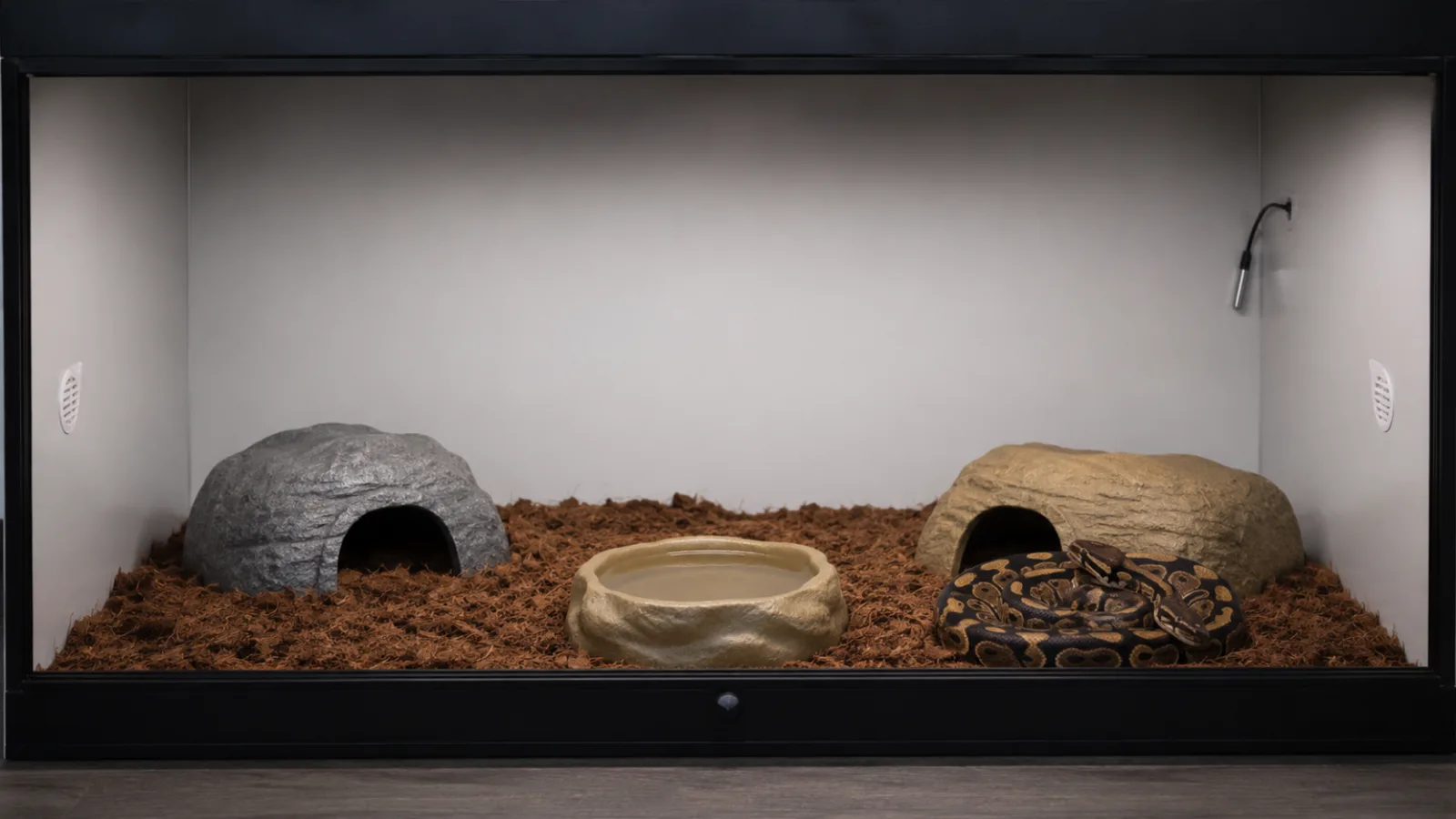
This is not a head-to-head reptile-gear ranking, and it is not a bioactive ecosystem build — it is a husbandry-first setup for one specific animal: the ball python, a shy, ground-dwelling ambush snake whose whole care revolves around feeling secure. The picks below are the starter kit in the order the snake's needs demand — a secure humidity-holding enclosure, warm-side belly heat, the thermostat that keeps it from burning the snake, two matched tight hides, a moisture-holding substrate, gauges, and a soaking water bowl — not seven products ranked against each other. If you are picturing a display snake in a bare glass tank with one open hide, read the caveats first, because the two things that most often go wrong with a ball python are a snake that feels exposed and a thermal gradient that is guessed instead of measured.
By Nick Miles · Updated July 12, 2026 · 12 min read
PetPalHQ is reader-supported. We may earn a commission from qualifying Amazon purchases at no extra cost to you.
Evidence at a Glance
REPTI ZOO 36-Inch PVC Reptile Enclosure
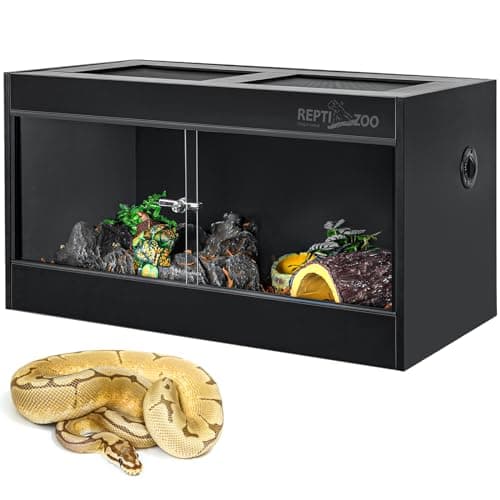
The secure home — a 36 by 18 by 18 inch PVC enclosure that insulates and holds humidity far better than a glass tank, with a locking sliding glass door so a strong, escape-prone snake stays put, giving a ground-dwelling ball python floor space and security.
Sources: REPTI ZOO manufacturer documentation, Ball python keeper community consensus on enclosures, Published reptile-welfare guidance on secure snake housing
Verified Jul 12, 2026
Oiibo Radiant Reptile Heat Panel
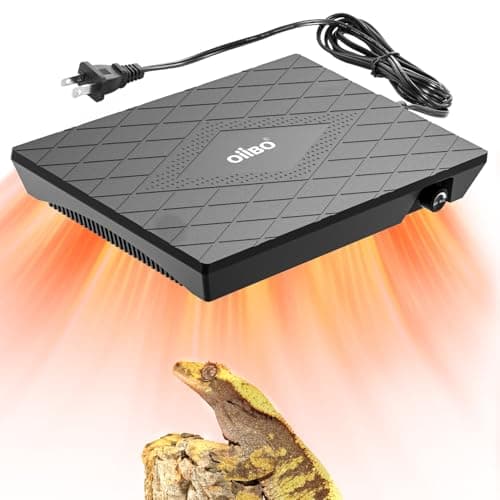
Warm-side heat — a temperature-adjustable radiant heat panel that warms the air over the warm hide to build one end of the thermal gradient a ball python needs, mounted overhead where it suits a PVC enclosure that under-tank mats struggle to heat.
Sources: Oiibo manufacturer documentation, Ball python keeper consensus on heating, Published reptile-welfare guidance on thermal gradients
Verified Jul 12, 2026
Inkbird Reptile Thermostat
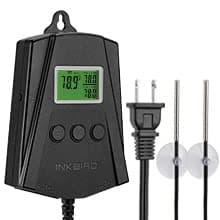
The safety control — a thermostat with a probe and temperature alarms that regulates the heat source, which is non-negotiable for a snake that lies directly on the warm spot and can suffer thermal burns from any unregulated heater.
Sources: Inkbird manufacturer documentation, Ball python keeper consensus on thermostats, Published reptile-welfare guidance on burn prevention
Verified Jul 12, 2026
Our Picks
REPTI ZOO
REPTI ZOO 36-Inch PVC Reptile Enclosure
8.7 / 10
- 36 by 18 by 18 inch PVC enclosure for snakes per REPTI ZOO
- PVC insulates and holds humidity better than glass
- Solid sides help a shy snake feel less exposed
- Locking sliding glass door stops a strong escaper
$229.99
Current price · checked Sep 8, 2026
Oiibo
Oiibo Radiant Reptile Heat Panel
8.5 / 10
- Adjustable radiant panel heats the terrarium air per Oiibo
- Built-in fan spreads heat evenly over the warm end
- Warms one end to build the thermal gradient
- Suits a PVC enclosure where under-tank mats struggle
$36.48
Current price · checked Sep 8, 2026
Inkbird
Inkbird Reptile Thermostat with Probe and Alarms
8.6 / 10
- Regulates the heat source via a temperature probe per Inkbird
- High and low temperature alarms flag a fault
- Two outlets can control more than one device
- Probe placed at the warm spot the snake contacts
$36.89
Current price · checked Sep 8, 2026
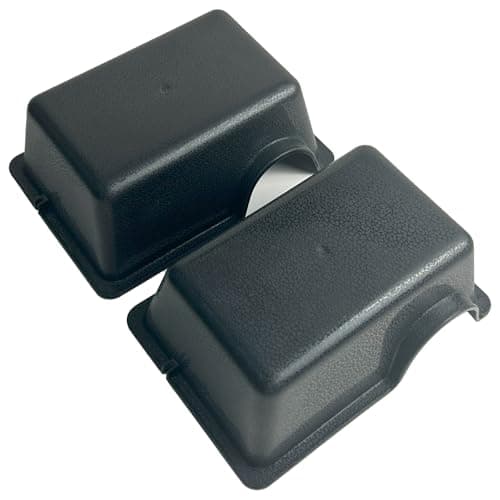
FCALIVV
FCALIVV Humid Hideout Caves (2 Pack)
8.4 / 10
- Two matched resin hides with smooth edges per FCALIVV
- Snug fit so the snake feels enclosed on all sides
- One for the warm end, one for the cool end
- Sized for a juvenile ball python, scaled up as it grows
$12.49
Current price · checked Sep 8, 2026
Fluker's
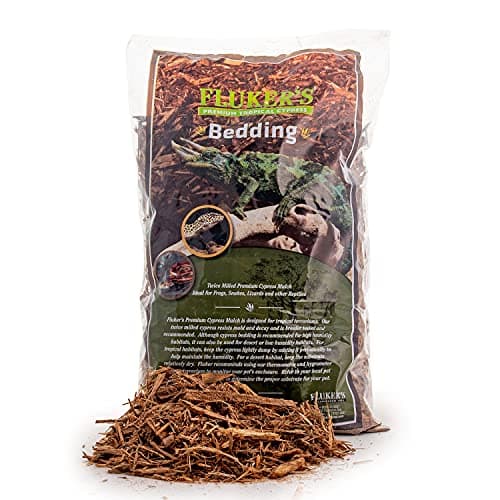
Fluker's Premium Tropical Cypress Bedding
8.1 / 10
- Twice-milled cypress mulch for reptiles per Fluker's
- Holds moisture to support enclosure humidity
- Suits the humidity a clean shed needs
- Spot-cleaned and fully changed on a schedule
$7.21
Current price · checked Sep 8, 2026
REPTI ZOO
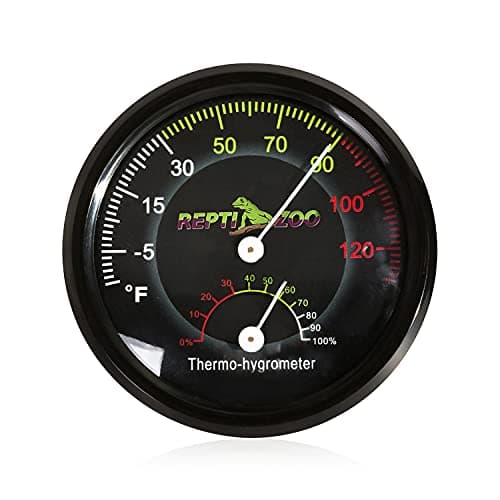
REPTI ZOO Dual Thermometer and Hygrometer
8.0 / 10
- Measures temperature and humidity together per REPTI ZOO
- Color-coded segments for easy reading
- Watches the gradient and the shed humidity
- Stick-on mount for the enclosure wall
$11.99
Current price · checked Sep 8, 2026
REPTIZOO
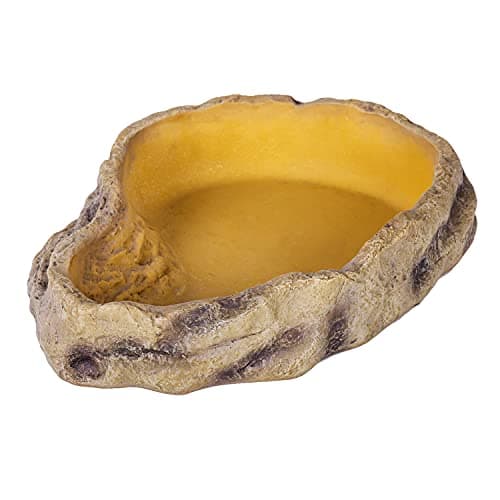
REPTIZOO Large Reptile Water Bowl
7.9 / 10
- Large resin bowl with an easy-clean surface per REPTIZOO
- Sized for a ball python to soak its whole body
- Heavy and stable so the snake cannot tip it
- Supports hydration and a difficult shed
$25.49
Current price · checked Sep 8, 2026
The Short Answer
Set up a ball python's enclosure around one fact: this is a shy, ground-dwelling ambush snake whose health depends on feeling secure and on a measured thermal gradient. Start with a secure, humidity-holding home — a REPTI ZOO 36-inch PVC enclosure insulates and holds humidity far better than a glass tank and locks so a strong snake cannot escape. Then build the heat as a gradient, not a single temperature: an Oiibo radiant heat panel warms one end for the warm hide, and an Inkbird thermostat is non-negotiable, because an unregulated heat source can burn a snake that lies right on the warm spot. Give the snake security with two matched FCALIVV hides — one on the warm side and one on the cool side — so it never has to choose between feeling safe and being the right temperature, which is the single most common ball python husbandry mistake. A Fluker's cypress substrate holds the humidity that clean sheds need, a REPTI ZOO thermometer-hygrometer lets you watch the gradient and humidity rather than guess, and a REPTIZOO water bowl large enough to soak in helps shedding and hydration. The core truth never changes: a ball python needs security, a measured warm-to-cool gradient, and shed-friendly humidity — build and dial in the empty enclosure first, then add the snake.
Every product on this list has been scored against the PetPal Gear Score, a weighted composite of expert consensus, observed effectiveness, animal safety, long-term durability, and value. Review method: Editorial synthesis of ball python husbandry guidance — ball python and snake keeper community consensus, published reptile-welfare and husbandry guidance on security, thermal gradients, humidity, shedding, and feeding, and manufacturer documentation from REPTI ZOO, Oiibo, Inkbird, FCALIVV, Fluker's, and REPTIZOO. Community consensus from ball python keeping forums was included as consensus, not quotation. No first-hand product testing — PetPalHQ does not run a testing lab.. Synthesized from 6+ expert sources.
Setting up a ball python goes wrong, in this guide's editorial judgment, for one reason more than any other: the snake is treated as a display animal for a tank instead of a shy ambush predator whose whole care revolves around feeling secure. A beginner buys a hatchling and a bare, see-through glass tank, drops in one open hide, sets a heat source by feel with no thermostat, and then worries when the snake hides constantly and refuses to eat. The setup was never built around what a ball python actually is — a ground-dwelling, security-seeking snake that needs a measured thermal gradient, snug hiding, and shed-friendly humidity.
This is also, deliberately, not a bioactive build. A ball python setup is not a living-ecosystem terrarium with a cleanup crew and a planted substrate — it is species husbandry, and the picks reflect that. Start with a secure, humidity-holding enclosure whose solid sides help a shy snake settle, then build heat as a gradient rather than a single temperature: one warm end for digestion, one cool end for retreat, with the warm side always regulated by a thermostat because a snake lies right on its warm spot and an unregulated heater burns.
Then comes the item that is pure ball python: two matched, snug hides, one warm and one cool, so the snake can feel enclosed on all sides at either temperature and never has to trade security for warmth. A moisture-holding substrate and a soaking water bowl manage the humidity a clean shed needs, and gauges let you read the gradient and the humidity rather than guess at them. The picks below are that kit, in the order the snake's needs demand, not seven products ranked against each other, and where a claim rests on a maker's documentation or keeper consensus, that is named rather than asserted, because PetPalHQ does not run a testing lab.
One principle sits above the whole build and never bends. A ball python needs to feel secure, needs a warm-to-cool gradient it can move across, and needs humidity managed for its sheds — and every one of those is set up and measured in the empty enclosure before the snake arrives. Food refusals that alarm new keepers are often simply normal for the species, better answered by leaving a secure snake alone than by handling or adjusting it. Ball python keeping rewards the person who builds security, measures the gradient, and manages humidity for a species that lives for decades — and it punishes the one who buys a bare tank and a hatchling and hopes the snake will settle, because a ball python that feels exposed does not settle. It hides, it stresses, and it stops eating.
Head-to-Head Comparison
| Feature | REPTI ZOO 36-Inch PVC Reptile Enclosure | Oiibo Radiant Reptile Heat Panel | Inkbird Reptile Thermostat with Probe and Alarms | FCALIVV Humid Hideout Caves (2 Pack) | Fluker's Premium Tropical Cypress Bedding | REPTI ZOO Dual Thermometer and Hygrometer | REPTIZOO Large Reptile Water Bowl |
|---|---|---|---|---|---|---|---|
| Stage in the setup | Secure enclosure | Warm-side heat | Thermostat | Two matched hides | Substrate | Gauges | Water bowl |
| What it does | Secure, humidity-holding home | Builds the warm end | Caps the heat, prevents burns | Security at both temperatures | Holds shed humidity | Measures the gradient and humidity | Hydration and soaking |
| When it comes into play | First, before the snake | Before the snake | With the heat, always | Once the gradient is set | Before the snake | To verify everything | From day one |
| PetPal Ball-Python-Readiness Score | 8.7 | 8.5 | 8.6 | 8.4 | 8.1 | 8.0 | 7.9 |
| Ongoing cost after purchase | A larger hide setup as it grows | Electricity | Occasional replacement | Bigger hides as it grows | Regular substrate changes | Cross-checking accuracy | Cleaning and fresh water |
| Check price | Amazon | Amazon | Amazon | Amazon | Amazon | Amazon | Amazon |
$229.99
Current price · checked Sep 8, 2026
- 36 by 18 by 18 inch PVC enclosure for snakes per REPTI ZOO
- PVC insulates and holds humidity better than glass
- Solid sides help a shy snake feel less exposed
- Locking sliding glass door stops a strong escaper
- Ground-level floor space suits a terrestrial snake
A ball python's enclosure is the foundation of its security, and the material matters as much as the size. The REPTI ZOO PVC enclosure earns the first slot because it does the two things a ball python's home must do: hold humidity and make the snake feel safe. REPTI ZOO documents a 36 by 18 by 18 inch PVC enclosure for snakes including ball pythons, with better insulation and moisture resistance than glass and a locking sliding door. PVC holds heat and humidity far better than a glass tank, and its solid sides are the point for a shy snake — a ball python in a see-through glass box with open sides feels exposed, while opaque walls help it settle.
Where it fits the setup: this is the secure shell, set up and dialed in before the snake arrives. A ball python is terrestrial, so floor space matters more than height, and this footprint suits a snake that spends its life on the ground. The locking door is not a minor feature — ball pythons are surprisingly strong and will push at a loose lid or door until they find a gap, and an escaped snake is a lost or endangered one. If you want to compare enclosure sizes for a growing snake or weigh PVC against other build types, dedicated roundups lay out the options; our roundup of the best ball python starter kits is the species-specific place to start.
The honest caveats are about size, security, and that the enclosure is only the shell. A hatchling can feel insecure in a large enclosure and may need more clutter and cover to feel safe, while an adult needs enough room to stretch out — so the enclosure is matched to the snake and furnished for security. Every gap and door must be escape-proof, because a determined ball python finds any weakness. And a bare enclosure is just a box until it has a controlled thermal gradient, two hides, humidity, and water, which is the rest of this setup. Confirm current price and availability before buying. Chosen as a secure, humidity-holding home rather than a display tank, it is the foundation a shy snake is built around.
What We Love
- PVC holds heat and humidity far better than glass
- Solid sides help a shy ball python feel secure
- Locking door contains a strong, persistent escaper
- Ground-level footprint suits a terrestrial snake
What Could Be Better
- A hatchling may need extra clutter to feel safe in it
- Every gap must be escape-proof for a determined snake
- Only a shell until heat, hides, humidity, and water are added
The Verdict
House a ball python in a secure, humidity-holding PVC enclosure rather than an exposed glass tank, and make sure the door locks against a strong escaper. Match the size to the snake, furnish it for security, and treat it as the shell that the gradient, hides, humidity, and water still have to be built into.
Sources
- REPTI ZOO (Amazon product listing, 50 Gallon PVC Reptile Enclosure): a 36 by 18 by 18 inch PVC reptile enclosure for snakes including ball pythons, with better insulation and moisture resistance than glass and a locking tempered-glass sliding door
- Ball python keeper community consensus on enclosures: keepers favor PVC enclosures over glass tanks for ball pythons because PVC holds heat and humidity far better and has solid sides that make a shy snake feel less exposed, and they stress a secure locking door because ball pythons are strong and persistent escape artists
$36.48
Current price · checked Sep 8, 2026
- Adjustable radiant panel heats the terrarium air per Oiibo
- Built-in fan spreads heat evenly over the warm end
- Warms one end to build the thermal gradient
- Suits a PVC enclosure where under-tank mats struggle
- Mounted over the warm hide, never the whole enclosure
The second stage builds heat, but as a gradient rather than a single temperature. The Oiibo heat panel warms one end of the enclosure. Oiibo documents an adjustable radiant heating panel that heats the terrarium air with a built-in fan for even distribution. The reason for a panel rather than an under-tank mat is the enclosure itself — a mat under thick PVC struggles to transfer heat, while a radiant panel warms the air and surfaces of the warm end effectively, which is where a ball python's warm hide goes.
Where it fits the setup: this establishes the warm end of the thermal gradient a ball python lives by. A snake is cold-blooded and thermoregulates by moving between a warm spot and a cool spot, so the whole enclosure is never heated to one temperature — one end is warmed for digestion and the other left cooler for rest, and the snake chooses. The panel heats only the warm end, over the warm hide, leaving the far end cool. Getting this gradient right is central to ball python health, because a snake kept too cool will not digest and one with no cool retreat cannot escape the heat. If you are matching panel wattage to your enclosure size, our roundup of the best reptile heat panels and radiant heat sources is where to size it to the space.
The honest caveats are about regulation, placement, and measurement. A heat panel must never be run without a thermostat — this is the single most important safety rule in the setup, covered in the next stage — because an unregulated panel can overheat and burn a snake. The panel warms one end only, so it is positioned to create a gradient rather than cook the whole box, and the actual temperatures are measured at the snake's level with gauges, not assumed from a dial. And heat is one leg of a stool with humidity and security; a perfect temperature in an exposed, dry enclosure still fails the snake. Confirm current price and availability before buying. Installed to warm one end and always run through a thermostat, it builds the warm half of the gradient a ball python depends on.
What We Love
- Radiant panel heats a PVC enclosure where mats fail
- Warms one end to create a proper thermal gradient
- Adjustable output helps tune the warm side
- Even heat distribution over the warm hide
What Could Be Better
- Must never be run without a thermostat — burn risk
- Heats one end only; the cool end must stay cool
- Temperatures must be measured at snake level, not guessed
The Verdict
Heat one end, not the whole enclosure, so a ball python can thermoregulate across a gradient. Mount the panel over the warm hide, size the wattage to the space, and never run it without the thermostat in the next stage — an unregulated panel is a burn waiting to happen.
Sources
- Oiibo (Amazon product listing, Reptile Heating Panel): a temperature-adjustable radiant reptile heating panel that heats the air in a terrarium with a built-in fan for even distribution, with an adjustable heat-output knob
- Ball python keeper consensus on heating: keepers create a warm end and a cool end so a ball python can thermoregulate by moving between them, and many favor a radiant heat panel over an under-tank mat in a PVC enclosure because panels heat the space effectively where a mat under thick PVC does not
$36.89
Current price · checked Sep 8, 2026
- Regulates the heat source via a temperature probe per Inkbird
- High and low temperature alarms flag a fault
- Two outlets can control more than one device
- Probe placed at the warm spot the snake contacts
- The non-negotiable safety link for any heater
The third stage is the one that keeps the heat from hurting the snake. The Inkbird thermostat regulates the heat panel. Inkbird documents a thermostat controller with temperature probes, two independently controlled outlets, and high and low temperature alarms. This is not an optional upgrade — it is the safety device that stands between a ball python and a thermal burn, because a snake lies right on its warm spot and an unregulated heater can climb to temperatures that seriously injure it.
Where it fits the setup: this sits between the heat panel and the wall, with its probe placed at the warm spot the snake actually contacts, so the thermostat holds that surface at a safe target and cuts the heater when it is reached. The gradient the panel creates is only safe because the thermostat caps it, and the temperature alarms add a second layer — flagging a fault before it becomes a burn or a cold snap. Every heat source in the enclosure goes through a thermostat, always, and the probe placement is what makes the reading meaningful: measured where the snake feels the heat, not somewhere convenient. If you are choosing a controller for your heat source, our roundup of the best reptile thermostats compares the options by control type and safety features.
The honest caveats are about probe placement, backups, and it being mandatory. The reading is only as good as where the probe sits, so it goes at the warm surface the snake uses, and it is checked with a separate thermometer rather than trusted blindly. A thermostat can fail, which is why the alarms matter and why keepers watch the enclosure rather than setting and forgetting it. And there is no version of this setup where the heater runs without the thermostat — an unregulated heat source is the most common way keepers accidentally burn a ball python. Confirm current price and availability before buying. Wired between the heater and the wall with its probe at the warm spot, it is the non-negotiable safety control the whole heating plan depends on.
What We Love
- Caps the heat source so it cannot burn the snake
- Alarms flag a fault before it harms the animal
- Probe at the warm spot gives a meaningful reading
- Two outlets can regulate more than one device
What Could Be Better
- Reading depends entirely on correct probe placement
- Can fail — alarms and monitoring still matter
- There is no safe setup that skips it
The Verdict
Never run a heat source without a thermostat, and place its probe at the warm spot the snake actually contacts. Verify it with a separate thermometer, heed the alarms, and treat this as the mandatory safety link in the heating plan — an unregulated heater is how ball pythons get burned.
Sources
- Inkbird (Amazon product listing, WiFi Reptile Thermostat Controller): a reptile thermostat controller with temperature probes, two independently controlled outlets, high and low temperature alarms, and remote monitoring, made to regulate reptile heating devices
- Ball python keeper consensus on thermostats: keepers treat a thermostat as mandatory with any heat source, because a ball python rests directly on or under its warm spot and an unregulated heater can climb to temperatures that cause serious thermal burns, so the heat device is always plugged into a thermostat with the probe at the warm spot
$12.49
Current price · checked Sep 8, 2026
- Two matched resin hides with smooth edges per FCALIVV
- Snug fit so the snake feels enclosed on all sides
- One for the warm end, one for the cool end
- Sized for a juvenile ball python, scaled up as it grows
- The species' single most important security item
The fourth stage is the one that is pure ball python, with no equivalent in most reptile setups. The FCALIVV hides give the snake security at both temperatures. FCALIVV documents a two-pack of resin humid hideout caves about 6.7 by 4.7 inches with smooth edges, sized for juvenile snakes including ball pythons. The reason there are two, and the reason they are identical, is the core of ball python husbandry: a ball python is a shy ambush snake that wants to be tucked into a snug, enclosed space, and it needs that security on both the warm side and the cool side.
Where it fits the setup: this is the security stage, placed once the gradient is set — one hide over the warm spot and one at the cool end, each snug enough that the snake touches the walls on all sides. The critical point is that they match: if the warm hide is cozy and the cool hide is an open dish, the snake is forced to choose between feeling safe and being at the right temperature, and it will often pick safety and sit too warm, or refuse to eat from stress. Two identical snug hides remove that choice, which is why experienced keepers treat matched hides as non-negotiable and why a bare display tank with one open hide is a classic beginner mistake. Snug is the goal — a ball python feels safest in a tight space, not a roomy one.
The honest caveats are about size, cleaning, and fit. Hides are matched to the snake and scaled up as it grows, since a hide that is too big does not give the enclosed feeling a ball python wants, and one outgrown is cramped — these juvenile-sized hides suit a young snake and get replaced as it grows. Hides are cleaned regularly because a snake spends most of its time in them, and a humid hide in particular is kept from growing mold. And two matched hides are a minimum, not a maximum; extra cover and clutter make a nervous snake feel even safer. Confirm current price and availability before buying. Placed as two snug, matched hides at both ends, they are the single most important thing you can do for a ball python's sense of security.
What We Love
- Two matched hides give security at both temperatures
- Snug fit gives the enclosed feeling a ball python wants
- Removes the choice between safety and correct temperature
- Smooth resin is easy to clean and durable
What Could Be Better
- Juvenile-sized — replaced as the snake grows
- A hide too large does not feel secure
- Humid hides must be kept from growing mold
The Verdict
Give a ball python two identical snug hides, one warm and one cool, so it never has to choose between feeling safe and being the right temperature — the single most common husbandry mistake. Keep them snug, scale them up as the snake grows, and add extra clutter for a nervous animal.
Sources
- FCALIVV (Amazon product listing, 2-Pack Humid Hideout Cave): a two-pack of resin humid hideout caves about 6.7 by 4.7 by 2.6 inches with smooth edges, sized for juvenile snakes and small reptiles including ball pythons
- Ball python keeper consensus on hides: keepers give a ball python two identical snug hides, one on the warm end and one on the cool end, so the snake can feel enclosed on all sides at either temperature and never has to choose between feeling secure and being at the right temperature, which is one of the most common causes of stress and feeding refusal
$7.21
Current price · checked Sep 8, 2026
- Twice-milled cypress mulch for reptiles per Fluker's
- Holds moisture to support enclosure humidity
- Suits the humidity a clean shed needs
- Spot-cleaned and fully changed on a schedule
- A ground substrate for a terrestrial snake
The fifth stage sets the floor that helps humidity and shedding. The Fluker's cypress bedding holds moisture. Fluker's documents a twice-milled cypress mulch for reptiles, suitable for high-humidity and low-humidity habitats. For a ball python, substrate is a humidity tool as much as a floor covering, because cypress holds moisture that can be raised when the snake is in shed, and humidity is what separates a clean, single-piece shed from a patchy one that leaves skin stuck on the tail and eye caps.
Where it fits the setup: this is the moisture-holding floor, laid deep enough to hold humidity and let the snake move across it before the snake goes in. A ball python's humidity needs are moderate day to day and higher during a shed cycle, and a moisture-retentive substrate is one of the levers for that — dampened a little more, or paired with a humid hide, it raises humidity when the snake needs it. Watching the humidity with a gauge, rather than guessing, is what turns the substrate from a guess into a tool. It works together with the water bowl and the hides to manage the moisture a good shed depends on.
The honest caveats are about hygiene, mold, and balance. Substrate is spot-cleaned of waste promptly and fully changed on a schedule, because a moist substrate that is neglected grows mold and bacteria. Too much moisture is as wrong as too little — a constantly soaked substrate causes scale rot and respiratory problems, so the goal is measured humidity, not a swamp. And substrate is one humidity lever among several, working with the water bowl, the hides, and the enclosure's own humidity retention rather than doing the job alone. Confirm current price and availability before buying. Laid as a moisture-holding, spot-cleaned floor and watched with a gauge, it is a key tool for the humidity a ball python's shed needs.
What We Love
- Holds moisture to support shed-friendly humidity
- Can be dampened to raise humidity during a shed
- Suits a terrestrial snake's ground-level life
- Inexpensive and widely used for ball pythons
What Could Be Better
- Neglected moist substrate grows mold and bacteria
- Too wet causes scale rot — measured humidity is the goal
- One humidity lever among several, not the whole job
The Verdict
Use a moisture-holding substrate as one lever for the humidity a clean shed needs, and watch it with a gauge rather than guessing. Spot-clean waste promptly, change it on a schedule, and avoid a soaked swamp — too much moisture causes scale rot as surely as too little causes stuck sheds.
Sources
- Fluker's (Amazon product listing, Premium Tropical Cypress Bedding): a twice-milled premium cypress mulch bedding for reptiles including snakes, suitable for both high-humidity and low-humidity habitats
- Ball python keeper consensus on substrate and shedding: keepers use a moisture-retentive substrate like cypress mulch for ball pythons because it holds humidity that can be raised to help a clean shed, and because a snake in an enclosure too dry sheds in patches and can retain skin on the tail tip and eye caps
$11.99
Current price · checked Sep 8, 2026
- Measures temperature and humidity together per REPTI ZOO
- Color-coded segments for easy reading
- Watches the gradient and the shed humidity
- Stick-on mount for the enclosure wall
- Turns guesswork into measured husbandry
The sixth stage lets you manage the enclosure by measurement rather than by feel. The REPTI ZOO gauge reads temperature and humidity. REPTI ZOO documents a dual thermometer and hygrometer with color-coded segments and a stick-on mount. A ball python's health rides on its thermal gradient and its humidity, and neither can be managed by guessing — a gauge is what turns "it feels about right" into an actual reading you can act on.
Where it fits the setup: this is the instrument that verifies everything else, ideally with readings at both the warm and cool ends plus humidity, so the gradient the panel and thermostat create is confirmed and the humidity the substrate and water bowl provide is checked. It is how you catch a warm end that has crept too hot, a cool end that is not cool enough, or humidity that has fallen low enough to threaten a clean shed. Many keepers use more than one gauge, or a probe thermometer, to read the actual surfaces the snake uses rather than the air in one corner. Measurement is what makes the rest of the setup safe and adjustable. If you want to compare digital probes and dial gauges for accuracy, our roundup of the best reptile hygrometers and thermometers lays out the options.
The honest caveats are about accuracy, placement, and stick-on gauges. Inexpensive dial and stick-on gauges vary in accuracy, so keepers cross-check them and many prefer a digital probe for the temperatures the snake actually contacts. Placement matters — a single gauge in one spot does not capture a gradient, so reading both ends is better than trusting one number. And a gauge measures but does not fix: it tells you the warm end is too hot or the air too dry, and then the thermostat, substrate, and water bowl are what you adjust. Confirm current price and availability before buying. Used to read both ends and the humidity rather than to decorate the wall, it is the instrument that turns a ball python enclosure into measured husbandry.
What We Love
- Reads temperature and humidity in one gauge
- Lets you verify the gradient and shed humidity
- Cheap enough to use more than one
- Easy color-coded reading and stick-on mount
What Could Be Better
- Inexpensive gauges vary — cross-check accuracy
- One gauge does not capture a whole gradient
- Measures the problem but does not fix it
The Verdict
Measure, do not guess — read the warm end, the cool end, and the humidity rather than trusting a dial by feel. Cross-check cheap gauges, consider a digital probe for the surfaces the snake contacts, and use the readings to adjust the thermostat, substrate, and water that actually set the climate.
Sources
- REPTI ZOO (Amazon product listing, Terrarium Thermometer Hygrometer): a dual-gauge reptile thermometer and hygrometer that measures temperature and humidity in a terrarium, with color-coded segments and a stick-on mount
- Ball python keeper consensus on measurement: keepers measure both temperature and humidity rather than guessing, checking the warm end, the cool end, and the humidity, because a ball python's gradient and moisture are the levers of its health and a dial set by feel is how enclosures end up too hot, too cold, or too dry
$25.49
Current price · checked Sep 8, 2026
- Large resin bowl with an easy-clean surface per REPTIZOO
- Sized for a ball python to soak its whole body
- Heavy and stable so the snake cannot tip it
- Supports hydration and a difficult shed
- Refilled with clean water and cleaned regularly
The final stage supplies water for drinking and soaking. The REPTIZOO bowl is a large, sturdy water dish. REPTIZOO documents a large resin water and feeding bowl with a smooth, easy-clean surface. For a ball python, a water bowl is more than a drink — a bowl large enough for the snake to climb into and soak its whole body helps with hydration and, importantly, with a difficult shed, when a soak softens skin that is stuck.
Where it fits the setup: this goes in from the start, sized so the snake can soak and heavy enough that it cannot be tipped. Ball pythons will soak more when they are in shed or if humidity is a little low, so the bowl works alongside the substrate and humid hide as part of the moisture picture. Stability matters because an active snake pushing against a light bowl can flood the enclosure, soaking the substrate and driving humidity and hygiene the wrong way. Placed on the cooler side, refilled with clean water, and kept from tipping, it quietly covers hydration and gives the snake a tool for its own shedding.
The honest caveats are about hygiene, placement, and flooding. A water bowl a snake soaks and sometimes defecates in needs frequent cleaning and fresh water, because standing fouled water is a health risk. It is placed and weighted so it cannot tip and flood the enclosure, which would spike humidity and wet the substrate. And while soaking helps a shed, a snake that soaks constantly can be signaling a problem — mites, too-low humidity, or being too warm — so heavy soaking is a cue to check the setup rather than to ignore. Confirm current price and availability before buying. Provided large, stable, and clean, it covers hydration and gives a ball python a way to help its own shed.
What We Love
- Large enough for a ball python to soak fully
- Heavy and stable so it will not tip and flood
- Supports hydration and eases a difficult shed
- Smooth resin is simple to clean
What Could Be Better
- Needs frequent cleaning and fresh water
- A tipped bowl floods the substrate and spikes humidity
- Constant soaking can signal mites or a setup problem
The Verdict
Give a ball python a sturdy water bowl big enough to soak its whole body, placed on the cool side and weighted so it cannot flood the enclosure. Clean it and refresh the water often, and treat constant soaking as a cue to check for mites or a humidity or temperature problem rather than ignore it.
Sources
- REPTIZOO (Amazon product listing, Large Reptile Water Bowl): a large resin reptile water and feeding bowl with a smooth easy-clean surface and a natural soil-toned color, made for reptiles and amphibians
- Ball python keeper consensus on water: keepers give a ball python a sturdy water bowl large enough for the snake to soak its whole body in, because soaking helps hydration and a difficult shed, and they keep it stable so an active snake cannot tip it and flood the enclosure
How We Score
Formula
PetPal Ball-Python-Readiness Score = (Expert Consensus × 0.35) + (Husbandry-Sequence Fit × 0.25) + (Snake Welfare / Security and Safety × 0.20) + (Value × 0.20)
Score Factors
- Expert Consensus · 35%
- Synthesized from ball python and snake keeper community consensus, published reptile-welfare and husbandry guidance on security, thermal gradients, humidity, shedding, and feeding, and manufacturer documentation. The PetPal Ball-Python-Readiness Score is a composite of expert opinion — PetPalHQ does not run a testing lab.
- Husbandry-Sequence Fit · 25%
- How directly the item advances a correct ball python setup in order — a secure humidity-holding enclosure, a warm end, a thermostat, two matched hides, a shed-friendly substrate, gauges, and water — rather than how it performs as a standalone product ranked against rivals. This is species husbandry, not a generic terrarium build.
- Snake Welfare / Security and Safety · 20%
- Alignment with ball python welfare principles — security from two matched snug hides, a measured warm-to-cool thermal gradient, a thermostat that prevents burns, shed-friendly humidity, and a soaking water bowl. A ball python's health depends on feeling secure and on temperatures and humidity that are measured, not guessed.
- Value · 20%
- Cost relative to the item's role in the setup, including ongoing costs like larger hides as the snake grows, electricity, substrate changes, and cleaning, and how much of a healthy ball python the item is responsible for. This kit is the equipment cost, not the decades of feeding and care a ball python needs.
| Rank | Product | Score |
|---|---|---|
| #1 | REPTI ZOO REPTI ZOO 36-Inch PVC Reptile Enclosure | 8.7 |
| #2 | Inkbird Inkbird Reptile Thermostat with Probe and Alarms | 8.6 |
| #3 | Oiibo Oiibo Radiant Reptile Heat Panel | 8.5 |
| #4 | FCALIVV FCALIVV Humid Hideout Caves (2 Pack) | 8.4 |
| #5 | Fluker's Fluker's Premium Tropical Cypress Bedding | 8.1 |
| #6 | REPTI ZOO REPTI ZOO Dual Thermometer and Hygrometer | 8.0 |
| #7 | REPTIZOO REPTIZOO Large Reptile Water Bowl | 7.9 |
When NOT to Buy
A ball python is a long-lived, live-food-eating reptile that can share your home for two to three decades, and it is the wrong pet for someone expecting a low-commitment, hands-on, or short-term animal. It eats whole rodent prey, usually frozen-thawed, which some owners are not prepared to store and handle. It is shy and not especially interactive, so it is a fascinating animal to keep well but not a cuddly or responsive one. And it lives long enough to be a genuine multi-decade commitment. If any of that is a dealbreaker, this setup guide is a chance to find out before the snake comes home, not after.
It is also a species where getting the husbandry wrong causes real suffering, and two mistakes dominate. The first is a snake that feels exposed — kept in a bare, see-through tank with too few hides, or with one cozy hide and one open dish, so it is forced to choose between security and the right temperature. The second is a thermal gradient set by feel instead of measured, with no thermostat, so the snake is too cool to digest, too hot and at risk of burns, or too dry for a clean shed. Ball pythons are also famous for going off food for weeks or even months, which is often normal for the species but alarming to a new keeper who then over-handles or over-adjusts a snake that just needs to be left secure. If your plan is a display snake in a bare tank, that plan is the warning sign.
Finally, the honest budget and effort note: the enclosure kit is the start, not the sum. There are ongoing costs — food, electricity to hold the gradient year-round, substrate, larger hides as the snake grows, and reptile-vet care — and the biggest investment is the patient, measured husbandry a ball python needs for decades. This build is also written for the ball python specifically and is not a bioactive ecosystem or a desert-lizard setup; a different species needs a different plan. If you are comparing enclosures for a growing snake, our roundup of the best PVC reptile enclosures lays out the options by size and build. Confirm current price and availability on every item before buying, since prices and sellers move over time.
Frequently Asked Questions
- Why does a ball python need two hides instead of one?
- Because a single hide forces the snake to choose between feeling safe and being at the right temperature, and that choice is one of the most common causes of ball python stress and feeding refusal. A ball python is a shy ambush snake that wants to be tucked into a snug, enclosed space where it touches the walls on all sides — and it needs that security at both ends of the thermal gradient. If you give it one cozy hide on the warm side and leave the cool side open, the snake often picks security over temperature and sits too warm, or feels exposed and stressed on the cool side. The fix is two identical snug hides, one over the warm spot and one at the cool end, so the snake can feel equally secure whether it wants to be warm or cool. The hides should match and both be snug rather than roomy, because a ball python feels safest in a tight space, and extra clutter and cover on top of the two hides make a nervous snake feel safer still. Matched hides are treated by experienced keepers as non-negotiable, not optional decoration.
- What temperatures and humidity does a ball python need?
- The specifics vary with the source and the individual snake, so the honest answer is to research your snake's target ranges and then measure rather than guess — but the structure is always the same: a thermal gradient and moderate, shed-adjustable humidity. The enclosure is never heated to one uniform temperature; instead you create a warm end, where the snake digests, and a distinctly cooler end it can retreat to, and the snake thermoregulates by moving between them. The warm side is always controlled by a thermostat with its probe at the warm surface, because a snake rests directly on its warm spot and an unregulated heater can cause serious burns. Humidity is moderate day to day and raised during a shed cycle to help the snake shed in one clean piece rather than in patches that leave skin stuck on the tail or eye caps. Both temperature and humidity are read with gauges — ideally at both ends plus humidity — because a dial set by feel is exactly how enclosures end up too hot, too cold, or too dry. Measure, verify, and adjust with the thermostat, substrate, and water bowl.
- Do ball pythons need UVB lighting?
- This is genuinely debated, and it is one of the ways a ball python setup differs from a desert-lizard or a full bioactive build. Ball pythons are crepuscular to nocturnal snakes that spend much of their time hidden, and they can be kept healthy without UVB as long as their diet provides what they need, which is why many keepers do not run UVB and why it is not treated as a mandatory pick in this setup the way heat, hides, and humidity are. At the same time, a growing body of opinion holds that low-level UVB can offer welfare benefits even for a nocturnal snake, and some keepers choose to provide a low-output UVB source for that reason. The honest position is that UVB for ball pythons is optional and debated rather than essential, unlike for a diurnal desert reptile where it is non-negotiable — so it is a considered choice to research for your own snake, not a default requirement. What is not debated is that if you do add UVB, it is a low-output source appropriate to a secretive snake, and it never replaces the security, gradient, and humidity that a ball python's health actually depends on.
- My ball python won't eat — is something wrong?
- Often nothing is wrong, because ball pythons are famous for going off food, sometimes for weeks or even months, and much of the time it is normal for the species. They commonly reduce or stop eating during winter, during a shed cycle, when settling into a new home, or during breeding season, and a healthy adult can fast for a surprisingly long time without harm. The mistake new keepers make is to panic — handling the snake more, changing the setup repeatedly, or offering food constantly — all of which stress a shy animal that most needs to be left secure. The productive response is to check the husbandry rather than to fuss over the snake: confirm the temperatures and gradient are right and measured, that the humidity is appropriate, that there are two snug hides so the snake feels secure, and that the enclosure is not in a high-traffic, exposed spot. If the security and climate are correct, a fasting ball python that is maintaining weight and otherwise healthy is usually best left alone to eat when it is ready. That said, genuine weight loss, signs of illness, or a very prolonged fast in a young or underweight snake warrant a reptile vet — the skill is telling a normal fast from a real problem, and good husbandry plus honest observation is how you do it.
- How is this different from a bioactive terrarium setup?
- They are different projects with different goals, and conflating them is a common way to over-complicate a first ball python. A bioactive terrarium is built as a small living ecosystem — a deep organic substrate seeded with a cleanup crew of springtails and isopods that break down waste, planted and maintained as a self-sustaining environment, often for a specific desert or tropical species. A ball python setup, as covered here, is species husbandry focused on the snake's behavioral and physiological needs: a secure enclosure, a measured thermal gradient with a thermostat, two matched hides, and managed humidity for shedding. You can keep a ball python in a bioactive enclosure, and some experienced keepers do, but it is an advanced approach that adds the whole complexity of establishing and maintaining a living ecosystem on top of the husbandry basics — which is why it is not the right starting point for a first snake. This guide deliberately keeps the focus on the husbandry fundamentals a ball python needs to feel secure and thermoregulate, using a simple moisture-holding substrate rather than a bioactive one, and leaves the ecosystem-building of a bioactive terrarium as a separate, more advanced project.
Bottom Line
Build the enclosure around security and humidity, not display. A REPTI ZOO PVC enclosure holds heat and humidity and its solid sides help a shy snake feel safe, with a locking door for a strong escaper — a bare glass tank is the classic way to keep a stressed ball python.
Make heat a measured gradient, never one temperature, and always regulate it. An Oiibo radiant panel warms one end for the warm hide, and an Inkbird thermostat is non-negotiable — a snake lies on its warm spot, and an unregulated heater causes thermal burns.
Give two matched snug hides — the single most important ball python decision. One warm hide and one cool FCALIVV hide, both snug and identical, mean the snake never has to choose between feeling safe and being the right temperature, which is the most common cause of stress and feeding refusal.
Manage humidity for clean sheds, and measure it. A Fluker's cypress substrate and a REPTIZOO soaking bowl provide the moisture a shed needs, and a REPTI ZOO thermometer-hygrometer lets you read the gradient and humidity rather than guess — too dry means stuck sheds, too wet means scale rot.
Keep it species-specific and long-term. This is ball python husbandry — security, a measured gradient, and shed humidity — not a bioactive build or a desert setup. Expect food refusals as often normal, budget for decades of care, and set up and dial in the empty enclosure before the snake.
Sources & Methodology
Methodology
PetPal Ball-Python-Readiness Score = (Expert Consensus × 0.35) + (Husbandry-Sequence Fit × 0.25) + (Snake Welfare / Security and Safety × 0.20) + (Value × 0.20)
Expert review sources
- Ball python and snake keeper community consensus on security, hides, and gradients
- Published reptile-welfare guidance on thermal gradients, burn prevention, and humidity
- Husbandry consensus on shedding, feeding response, and measured husbandry
- REPTI ZOO — 36-Inch PVC Reptile Enclosure product documentation
- Inkbird — Reptile Thermostat Controller product documentation
- Oiibo, FCALIVV, Fluker's, and REPTIZOO product documentation
Community sources
- Ball python keeping forums — hides, gradients, humidity, and feeding consensus
- Snake community consensus on secure enclosures and measured husbandry
Prices and specs verified July 12, 2026.
About the author
Nick Miles is the chief editor of PetPalHQ. This beginner ball python setup and its kit are editorial synthesis of ball python and snake keeper community consensus, published reptile-welfare and husbandry guidance, and manufacturer documentation — PetPalHQ does not run a testing lab. The PetPal Ball-Python-Readiness Score is a composite of expert opinion, not a measurement. This is species husbandry for a ball python, not a bioactive or desert build. Sources are cited by name throughout.
PetPalHQ is a participant in the Amazon Services LLC Associates Program. We may earn commissions from qualifying purchases — at no extra cost to you.
More Guides
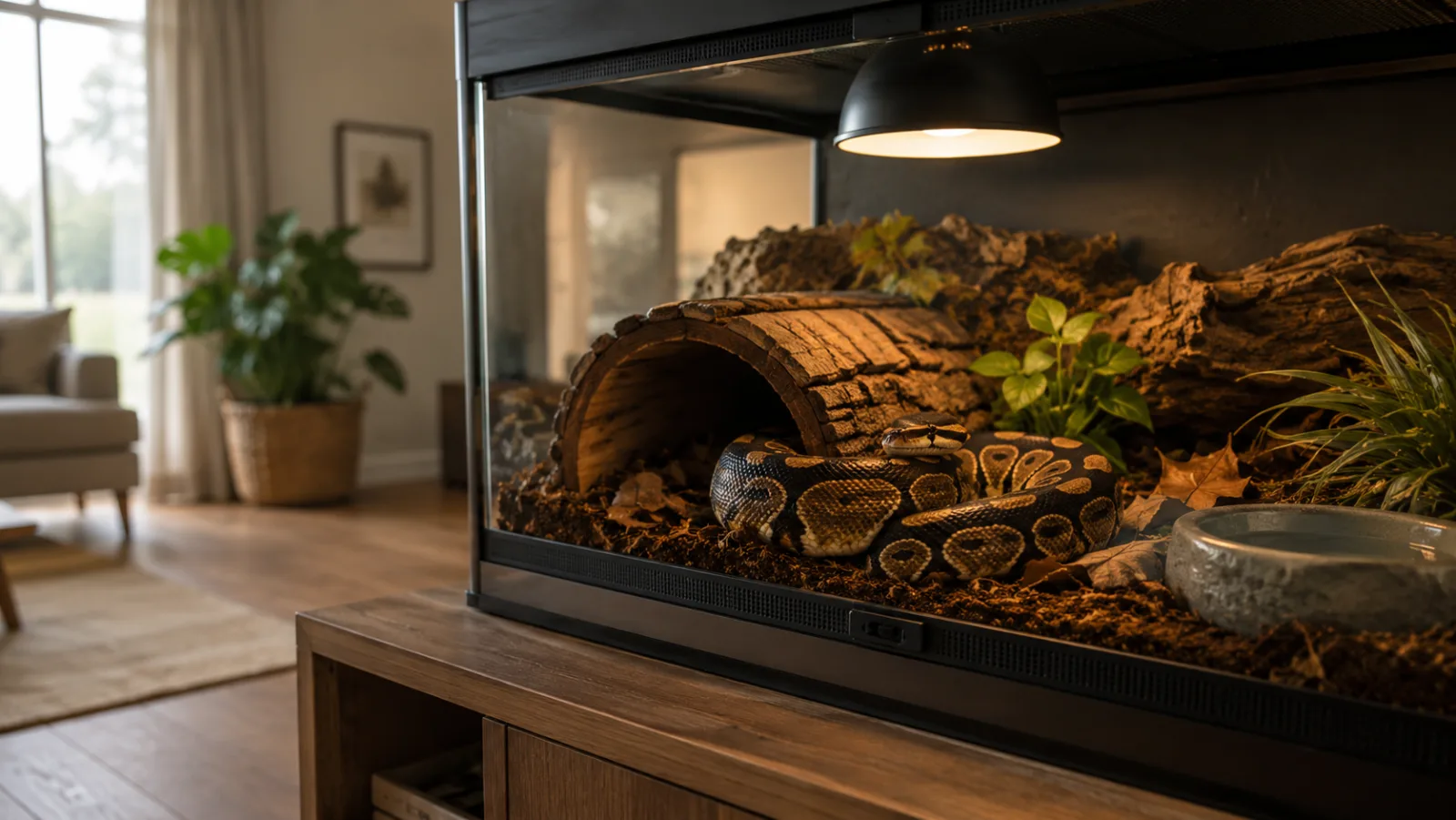
Reptile
Best Ball Python Starter Kits (2026)
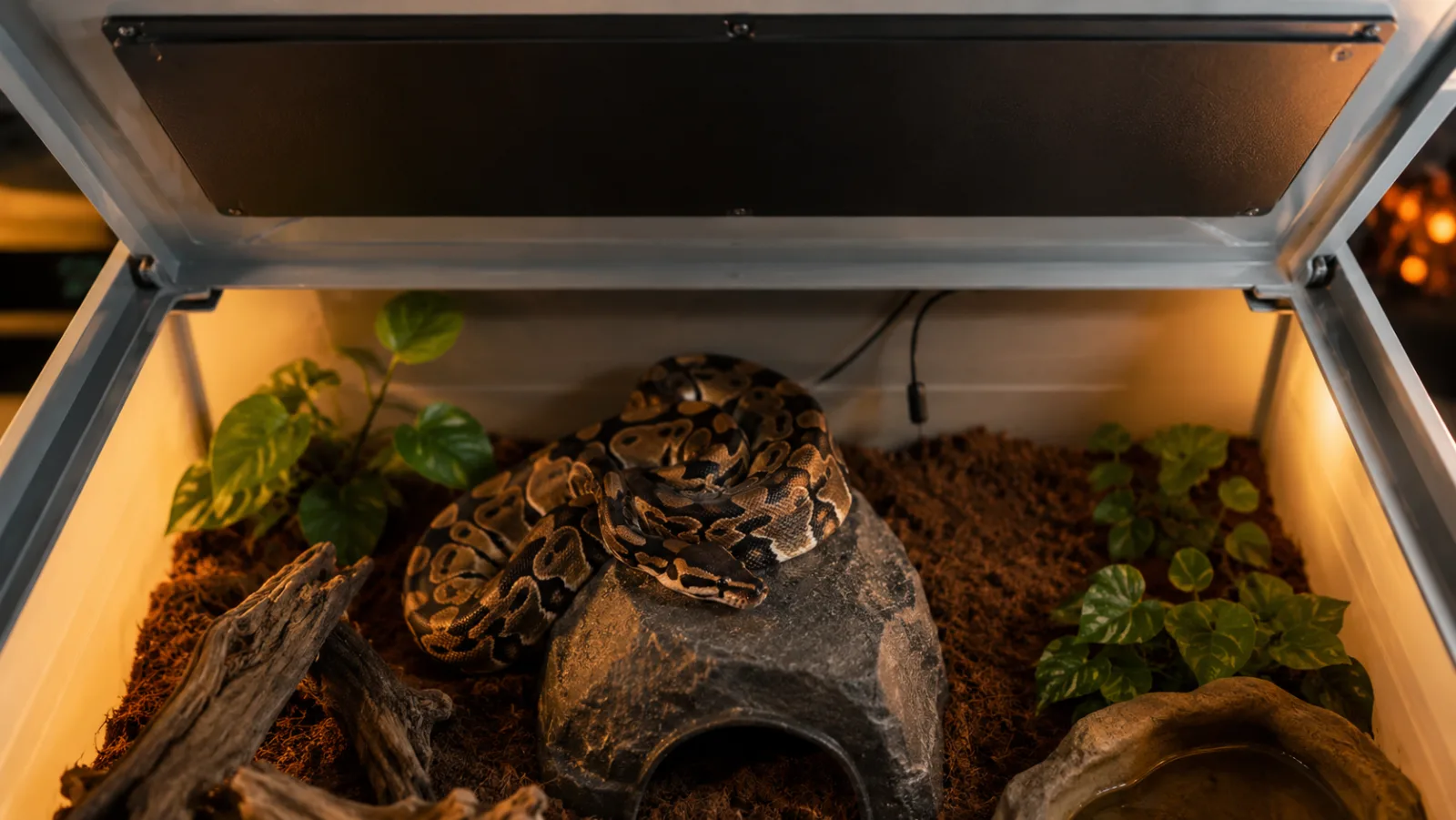
Reptile
Best Reptile Radiant Heat Panels and Overhead Heat for 2026
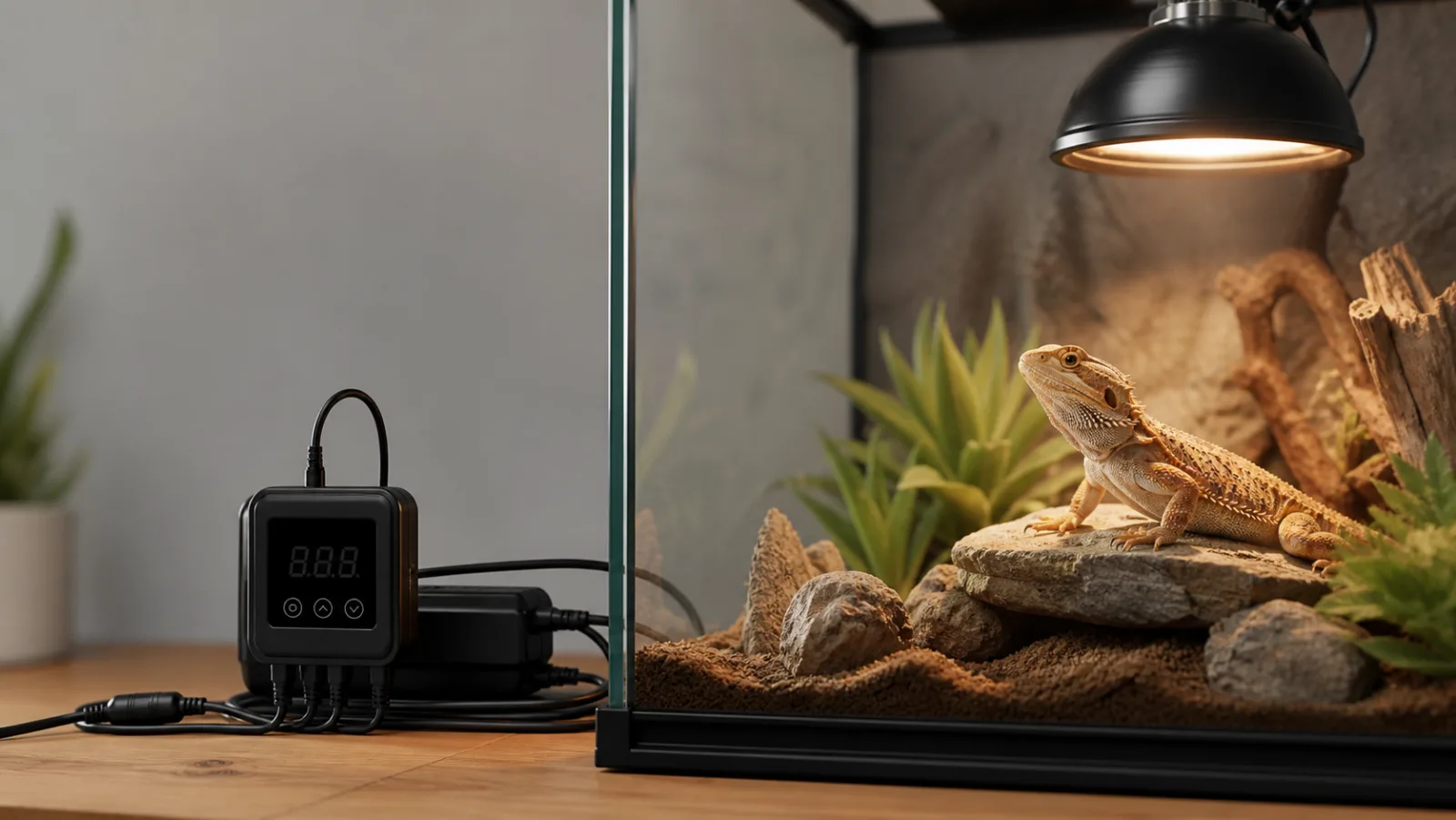
Reptile
Best Reptile Thermostats for Heat Mats, CHEs & Heating Elements (2026)
Reptile
Best Reptile Hygrometers & Thermometers 2026: Accurate Terrarium Monitoring
Reptile