Cats & Dogs
Best Premium GPS Dog Fence Collars: SpotOn, Halo, and the No-Subscription Question (2026)
Above the $350 line, a GPS fence collar is really a subscription decision. SpotOn charges more upfront and asks for nothing after; Halo costs less to buy but stops working the day the plan lapses. Here is how the premium tier actually shakes out — and the multi-week training none of the marketing mentions.
By Nick Miles · Updated September 26, 2026 · 16 min
PetPalHQ is reader-supported. We may earn a commission from qualifying Amazon purchases at no extra cost to you.

Evidence at a Glance
SpotOn GPS Dog Collar Nova Edition
Premium no-subscription containment — SpotOn's documentation describes a 151-satellite True Location network and a 99.3 percent boundary-success rate from aggregate user data, with containment working without any required monthly plan.
Sources: SpotOn manufacturer documentation, American Kennel Club GPS dog fence guidance
Verified Jul 20, 2026
Halo Collar 5
Dual-frequency Precision+ GPS with real-time tracking and a built-in Cesar Millan training program — Halo's documentation states GPS and fence features require an active subscription to work.
Sources: Halo manufacturer documentation, American Kennel Club GPS dog fence guidance
Verified Jul 20, 2026
PetSafe Guardian GPS Dog Fence
The genuine no-subscription pick — PetSafe's redesigned Guardian charges no fee and runs up to five days per charge, trading away tracking and portability, rated for dogs over 25 pounds on 3/4 acre or more.
Sources: PetSafe manufacturer documentation, American Kennel Club GPS dog fence guidance
Verified Jul 20, 2026
Our Picks
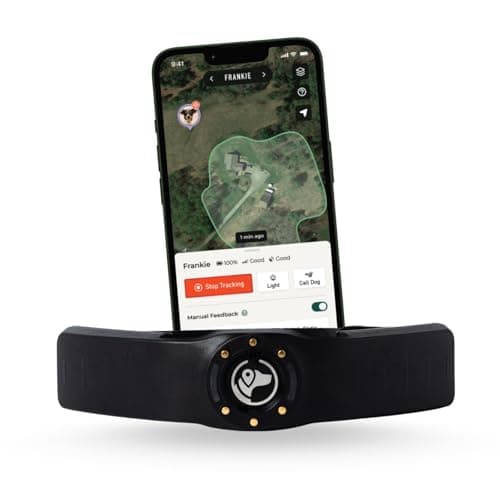
SpotOn
SpotOn GPS Dog Collar Nova Edition, Wireless GPS Fence, App-Controlled Boundaries, No Subscription Required
8.8 / 10
- No subscription required for containment — a cellular plan is optional for added tracking features, not for the fence itself
- SpotOn's patented True Location dual-band, dual-feed GPS reads a 151-satellite network for boundary accuracy the brand rates under five feet
- Unlimited fences of any shape plus correction-free keep-out zones, all drawn and edited from the app
- Engineered for dependable cue timing in dense tree cover and low-signal areas, per SpotOn's third-party testing claim
$999.00
Current price · checked Sep 8, 2026
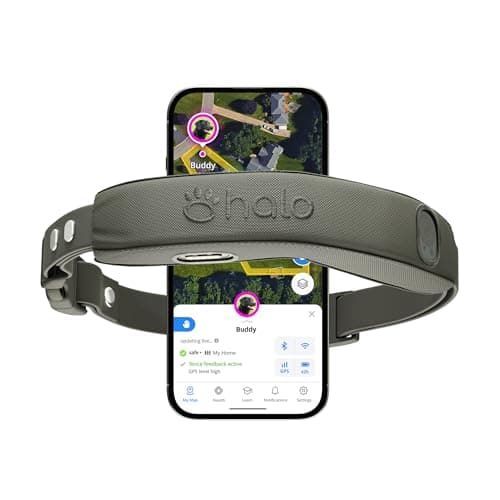
Halo
Halo Collar 5 Wireless Dog Fence & GPS Dog Collar, App-Controlled Boundaries and Real-Time Tracking, Graphite
8.5 / 10
- Precision+ dual-frequency (L1 + L5) GPS with real-time ground-station corrections, rated by Halo to within 2 feet
- AlwaysOn GPS updates location up to 20 times per second and comes standard with every plan
- Built-in Cesar Millan training program guides the mandatory boundary onboarding
- Works across Wi-Fi, Bluetooth, and cellular, so it stores and holds fences on rural and remote property
$524.00
Current price · checked Sep 26, 2026
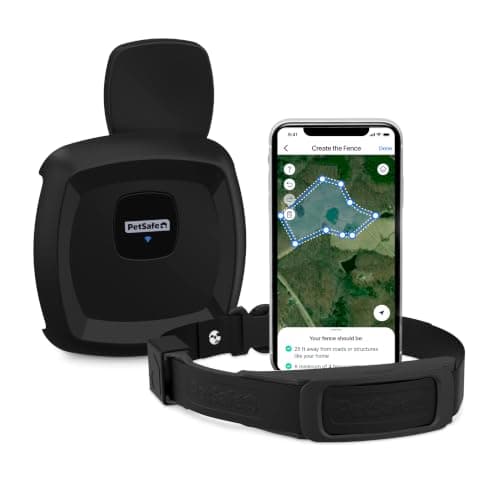
PetSafe
PetSafe Guardian GPS Dog Fence (No Subscription), for Yards 3/4 Acre or Larger, Redesigned Collar
8.0 / 10
- No subscription fee ever — the trade for that is no tracking and no portability
- AccuGuard tech blends GPS satellite data, real-time motion detection, and AI for containment
- Redesigned slim, lightweight collar rated for up to 5 days of battery per charge
- Installs in about an hour and draws the fence in the My PetSafe app, for properties 3/4 acre or larger
$389.99
Current price · checked Sep 26, 2026
The Short Answer
In this tier you're choosing a subscription, not hardware. The SpotOn Nova costs the most upfront and then costs nothing — containment works with no plan, and SpotOn's own data claims 99.3 percent boundary success. Halo is cheaper to buy but stops containing your dog the moment you cancel. Train with flags first.
Every product on this list has been scored against the PetPal Gear Score, a weighted composite of expert consensus, observed effectiveness, animal safety, long-term durability, and value. Review method: Editorial synthesis of American Kennel Club GPS-fence guidance ('What Is a GPS Dog Fence and How Do They Work?' and 'How to Evaluate a GPS Dog Fence'), plus manufacturer documentation and current Amazon listings for the SpotOn GPS Dog Collar Nova Edition, Halo Collar 5, and the no-subscription PetSafe Guardian GPS Dog Fence. Each collar's subscription status was read from its own Amazon listing. The 2026 update adds brand customer-service reputation (Trustpilot, BBB, CSIA), reliability and recent-improvement reporting (Smart Pet Gear Lab, manufacturer release documentation), and a veterinary-welfare review of static-correction containment (AVSAB and ACVB positions, the 2017 Starinsky et al. JAVMA escape-rate survey, Companion Animal Psychology's November 2025 coverage of the Radio Systems litigation, and the June 2025 European Parliament resolution). All manufacturer accuracy and cross-brand comparison figures are reported as vendor claims, not PetPalHQ measurements. Prices and availability verified against the Amazon Creators API on 2026-07-20 and re-verified 2026-07-24. PetPalHQ does not run a dog-containment testing lab.. Synthesized from 12+ expert sources.
A premium GPS dog fence collar is really a subscription decision wearing a hardware costume. Once you climb above the entry-level radio-circle systems, the three names that dominate the tier — SpotOn, Halo, and PetSafe's Guardian line — separate less on satellites than on what they charge you after checkout. SpotOn asks for the most upfront and nothing after. Halo asks for less at the register and a fee every month for as long as you own it. PetSafe splits the difference with the lowest sticker and no plan at all. Get that decision right and the accuracy specs mostly take care of themselves; get it wrong and you have either overpaid or bought a collar that quietly stops containing your dog the day a card expires.
The picks below are editorial synthesis. PetPalHQ does not run a dog-containment testing lab — every product here was chosen by reading manufacturer documentation and current Amazon listings, verifying price and availability against the Amazon Creators API on July 20, 2026, and cross-checking the category against American Kennel Club guidance on how GPS fences work and how to evaluate them. Where a brand publishes an accuracy or success figure, we report it as that brand's claim, not as an independent result. The one line every manufacturer soft-pedals carries more weight than any spec, and the American Kennel Club states it plainly: you should not introduce a GPS fence without proper training. No collar here is safe until the dog has been trained to its boundary over multiple weeks, and no containment is ever a full substitute for supervision.
This guide covers only the premium, mostly larger-dog tier. If you want the full range of wireless options — including cheaper radio-signal fences for small yards and lighter dogs — the GPS wireless dog fence roundup compares the broader field, and the backyard containment setup guide walks through combining a virtual fence with physical barriers and other layers of safety.
Do you actually need the premium tier?
Not every dog does. The premium tier earns its price on large, open, or wooded properties with a determined larger dog — the exact situation where a cheap radio-circle fence drifts, a physical fence is impractical or expensive, and an escape is genuinely dangerous. If that describes your yard and your dog, the accuracy and app control here are worth the money.
If it does not, be honest with yourself before spending $500 to $1,000. All GPS systems experience some signal variation, and that variation is worst on small, obstructed lots hemmed in by buildings and tree cover close to the boundary. On a quarter-acre suburban lot, a wired fence or a physical barrier is usually both cheaper and more reliable than any GPS collar. And no GPS fence — premium or budget — is appropriate for a dog whose escaping is driven by panic or prey drive, because a static correction can make a frightened dog worse. Those dogs need a physical fence and often a veterinary-behavior plan. The premium tier is a tool for a specific job, not an upgrade everyone should reach for.
Why does the subscription question decide the whole purchase?
Because it is the difference between a one-time cost and a bill that never stops. In this tier, the SpotOn and the PetSafe contain your dog with no required subscription, while the Halo's documentation is explicit that its GPS and fence features do not activate without an active plan — and stop working if the plan lapses. That single fact reshapes the price comparison.
Run the math over the life of the collar, not at the register. The Halo's $524 looks like a clear saving against the SpotOn's $999 on day one. But the Halo's containment depends on a paid plan for every month you own it, and over several years that recurring fee can close or erase the gap — while the SpotOn's cost simply stops after checkout. A subscription is not automatically the wrong choice: Halo's Pack Membership bundles cellular data, live tracking, and the built-in training program, and for a first-time owner that guided onboarding has real value. The point is to price each system as upfront cost plus the honest multi-year total, and to decide up front whether a lapsed payment turning off your dog's fence is a risk you are willing to carry. If it is not, buy a no-subscription system and never think about it again.
There is a complication in running that math, and it is worth naming plainly: Halo's plans page prints no price for its Pack Membership. We fetched it on August 12, 2026 — it names Bronze, Silver, and Gold, describes what each tier includes, quantifies the perks bundled into each ("$300+", "$900+", "$1,500+ in Added Perks"), and offers monthly, annual, and 2-year billing, but attaches no subscription figure to any of the three. So the honest comparison is not "$524 plus a known fee versus $999" but "$524 plus a fee the plans page does not print versus $999 that never changes," and a shopper cannot close that gap without getting Halo's rate in writing first. The SpotOn and the PetSafe Guardian have knowable final costs of $999.00 and $389.99; the Halo does not. Our GPS containment total-cost comparison shows the full 1-, 3-, and 5-year table for every system whose rate is published, including the Garmin Alpha 300i and a GPS tracker for scale, and separates the subscriptions that are genuinely required from the ones that are merely sold.
How much training does a GPS fence really need?
More than any of the marketing implies, and it is not optional. The American Kennel Club's guidance is blunt: you should not introduce a GPS fence without proper training, and the dog learns the boundary through consistency, repetition, and clear expectations over a period measured in weeks, not days. The standard protocol uses training flags planted along the virtual line so the dog can see the boundary while learning to associate the collar's warning tone with turning back, long before any static correction is in play.
This is where guided onboarding justifies its cost. The AKC's evaluation guidance highlights systems with multiple, proactive warning zones that give a dog more time to respond before reaching the edge — a design factor, not a marketing one. The Halo's built-in Cesar Millan program and SpotOn's certified one-on-one training support both exist because the training, not the hardware, is what determines whether the fence actually holds. Skip or rush it and even the most accurate collar on this page will fail, because a dog that does not understand the boundary will either bolt through it under motivation or, worse, become anxious about a yard it no longer understands. Budget the weeks. It is the single most important part of the purchase.
Is a GPS fence the same as a GPS tracker?
No, and confusing the two is a safety mistake, not just a shopping one. A GPS fence collar — the SpotOn, Halo, and PetSafe systems on this page — is a containment device: it warns and corrects your dog at a boundary to discourage crossing. A GPS tracker like Fi or Tractive is a location-alert device: it tells you where your dog is and pings you when it leaves a geofence, but it does nothing to keep the dog in. Tractive's own documentation makes the gap concrete — a fast dog can travel more than 1,000 feet past a boundary before the tracker's next location update lands, which is fine for recovery but useless for containment.
Buy the fence when the job is keeping the dog in the yard. Buy the tracker when the dog is already contained by a physical fence or leash and you want a recovery tool if it gets out — our Fi vs Tractive comparison and the broader dog GPS trackers guide cover that tier at a fraction of a fence collar's price. And choose neither — a physical fence — when the dog escapes out of panic, prey drive, or anxiety, or when your lot is too small or obstructed for reliable GPS. On those dogs and those yards, no collar on this page is the right tool, and the backyard containment setup guide walks through the physical alternatives.
Which GPS fence dog collar brand has the best customer service?
Across public review platforms, SpotOn currently has the strongest customer-service reputation of the three. SpotOn holds a Trustpilot rating around 4.2 to 4.3 stars across roughly 600 reviews, is BBB-accredited with an A+ rating, and is recognized as a CSIA Certified Customer Experience Provider, with seven-day phone, chat, and email support. Its no-subscription containment model also removes an entire class of complaint — the recurring-bill and cancellation grievances that follow every subscription-required product. That is reputation and structure, not a PetPalHQ test, and lighter complaints do exist, including Shop Pay refund confusion and isolated hardware faults.
Halo is genuinely mixed, and its brand fame does not settle the question. There are real accounts of fast, helpful Halo support — but alongside them runs a documented hardware-fragility pattern, with cracking collar plastic and charging-port failures that drive repeat replacements, plus scattered reports on the BBB and PissedConsumer of months-long waits. Weigh both before buying: a strong support team still generates a support workload when the hardware needs replacing, and because Halo is a subscription product, a lapse in service also stops the fence.
PetSafe is the mixed budget tier. It pairs the best battery life and the cheapest no-subscription entry with inconsistent owner battery reports and one failure mode worth naming — signal loss followed by an extended correction. That is a safety-relevant complaint, not a convenience one, and it is the honest counterweight to the Guardian's low price. As a category caution, a fourth name you may still see used online, Wagz, is effectively defunct: the company told customers in 2023 it could no longer support the product, and stuck subscriptions and unfulfilled refunds followed. Avoid used Wagz units.
One attribution rule governs the brand-versus-brand accuracy claims you will meet while shopping: SpotOn's marketing figures about Halo — a "45-foot drift," "7x more accurate," "100% reliability" — are vendor-sourced, and Halo's own "3x accuracy" Precision+ claims are equally vendor-sourced. Treat each as the maker's marketing, not neutral fact. This guide adjudicates neither.
Which GPS fence dog collar brand is the most reliable?
Reliability in a GPS fence comes down to three things: how tightly the boundary holds (GPS drift), how consistently the correction fires where it should, and how long the battery lasts between charges. Each brand's architecture points to a different profile — and every accuracy figure below is the manufacturer's own claim, reported as such.
SpotOn's Nova Edition builds its case on a dual-band, dual-feed antenna reading a large multi-constellation satellite network, which SpotOn rates to sub-five-foot boundary accuracy and a 99.3 percent containment success rate from aggregate user data. Halo's Collar 5 uses Precision+, a dual-frequency L1-and-L5 GPS design paired with real-time ground-station corrections that Halo rates to within two feet. The reliability caveat there is historical and honest: Smart Pet Gear Lab documented boundary drift on the previous-generation Halo 4 — corrections delivered well inside the safe area, in one report to a dog on its own bed — and the Collar 5's dual-frequency hardware is the engineered answer to exactly that failure. PetSafe's Guardian rests its case on the AccuGuard blend of GPS, real-time motion detection, and AI; its reliability strength is battery, up to five days per charge and the longest here, while its documented weakness is the signal-loss-then-extended-correction pattern noted above.
The honest through-line: dual-frequency GPS — the Halo 5, and PetSafe's separate Guardian GPS 2.0 — is the current reliability floor because it suppresses the drift that plagued single-band collars, but no consumer GPS holds a fixed line perfectly. Every system on this page is least reliable on small, obstructed lots and most reliable on open acreage, which is why yard size, not brand, is the first reliability decision you make.
What has improved in GPS fence collars recently (2025–2026)?
The last twelve to eighteen months brought real, dated hardware refreshes at the top of the tier — and one brand with nothing new to report, which is worth stating plainly rather than inventing a story for.
Halo Collar 5 Precision+ (April 2026) is the biggest step. Per Halo, it moved to a dual-band L1-and-L5 GPS receiver with Skylark ground-station corrections, raised the location-update rate to twenty times per second from roughly once every five seconds on the prior generation, roughly doubled battery life from about 24 to 48 hours, and cut collar weight by about 18 percent. Those are Halo's figures, vendor-attributed. SpotOn's Nova Edition (January 2026) replaced the earlier Omni with a dual-band, dual-feed antenna and a runtime SpotOn rates at 33-plus hours per charge; its reliability claims are likewise the vendor's. PetSafe is the honest blank: no dated 2026 hardware announcement exists for the Guardian line, so there is nothing new to report — the current story stays its redesigned slim collar and five-day battery, not a fresh release. And Wagz is the cautionary counter-example, a brand that has shipped zero improvements because it stopped supporting its product in 2023.
Shopper interest in the head-to-head is high — several dated 2025 and 2026 SpotOn-versus-Halo video comparisons exist — but the useful takeaway is not a winner, it is the pattern: the premium tier now competes on dual-frequency GPS and update speed, and a collar still on single-band hardware is a generation behind.
Are GPS fence collars safe and humane? The honest evidence
This is the part the marketing softens, and PetPalHQ's job is not to. Every collar on this page delivers a static correction — an electric shock — and the welfare debate around that is real and current, not settled in the products' favor.
The professional-body position is skeptical of routine use: both the American Veterinary Society of Animal Behavior (AVSAB) and the American College of Veterinary Behaviorists (ACVB) recommend against aversive methods as a default containment tool. The legal picture is moving too. In November 2025, Companion Animal Psychology reported on litigation against Radio Systems — PetSafe's parent company — in which the complaint characterized the phrase "static correction" as a euphemism used to market shock devices as harmless; that case reached a preliminary settlement in 2025. In June 2025 the European Parliament passed a resolution moving toward a ban on shock devices, with Council action pending. And a widely cited 2017 owner survey (Starinsky, Lord, and Herron, published in the Journal of the American Veterinary Medical Association) found a roughly 44 percent escape rate for dogs contained by electronic fences versus about 23 percent for physical fences — though that figure comes from a single self-reported owner survey with real sampling limits and should be read as a signal, not a settled statistic.
None of this makes a GPS fence categorically wrong; it makes it a tool with a narrow safe window. It is defensible for a confident, well-trained dog on suitable open land, introduced only after the multi-week, flag-based protocol the American Kennel Club requires. It is the wrong tool — not a marginal one — for an anxious, fearful, trauma-history, or collar-averse dog, for a reactive dog, and for an untrained puppy without a supervised training period. Those dogs need a physical fence and often a veterinary-behavior plan, and no collar on this page is a substitute.
Head-to-Head Comparison
| Feature | SpotOn GPS Dog Collar Nova Edition, Wireless GPS Fence, App-Controlled Boundaries, No Subscription Required | Halo Collar 5 Wireless Dog Fence & GPS Dog Collar, App-Controlled Boundaries and Real-Time Tracking, Graphite | PetSafe Guardian GPS Dog Fence (No Subscription), for Yards 3/4 Acre or Larger, Redesigned Collar |
|---|---|---|---|
| Subscription for containment | Not required (cellular plan optional) | Required — fence off without an active plan | Not required |
| Tracking / portability | Yes — live tracking, portable fences | Yes — real-time tracking (with plan) | No — fixed boundary, no tracking |
| Accuracy claim (manufacturer) | Under 5 ft, 151-satellite True Location | Within 2 ft, Precision+ L1 + L5 + ground stations | AccuGuard: GPS + motion + AI |
| Dog size | 10–26 in neck (medium/large) | 10 lb and up · neck 8–30 in per Halo | Over 25 lb (13–28 in neck) |
| Best for | Long-term owners who want no monthly fee | First-timers who value guided onboarding | Lowest-cost no-fee fixed backyard boundary |
| Check price | Amazon | Amazon | Amazon |
SpotOn SpotOn GPS Dog Collar Nova Edition, Wireless GPS Fence, App-Controlled Boundaries, No Subscription Required
$999.00
Current price · checked Sep 8, 2026
- No subscription required for containment — a cellular plan is optional for added tracking features, not for the fence itself
- SpotOn's patented True Location dual-band, dual-feed GPS reads a 151-satellite network for boundary accuracy the brand rates under five feet
- Unlimited fences of any shape plus correction-free keep-out zones, all drawn and edited from the app
- Engineered for dependable cue timing in dense tree cover and low-signal areas, per SpotOn's third-party testing claim
- Fits necks from 10 to 26 inches; includes access to certified 1:1 training support
The SpotOn GPS Dog Collar Nova Edition is the editorial pick in the premium tier because it answers the question that actually decides long-term cost: what happens when you stop paying. SpotOn's containment works without a required subscription. A cellular plan is available and adds tracking convenience, but the fence itself — the part that keeps your dog in the yard — does not switch off when a billing cycle ends. In a category where the alternative is a collar that becomes a paperweight the day a plan lapses, that architecture is the whole argument for spending $999 upfront instead of $524.
The accuracy story is SpotOn's own, and it is worth reporting as the brand's claim rather than as an independent lab result. SpotOn documents a patented True Location system using dual-band, dual-feed GPS that reads a 151-satellite network across four global satellite systems, which it says delivers boundary accuracy under five feet on the Nova Edition. It further claims a 99.3 percent success rate keeping dogs inside the boundary, drawn from aggregate user data. Those are manufacturer figures. The honest caveat that applies to every product on this page is our own, not the brand's: all GPS systems experience some signal variation, and no containment is perfect. SpotOn's engineering is aimed at shrinking that variation; it does not repeal the physics, and it does not replace supervision.
Where it fits: large, open, or wooded properties where you want to draw a boundary that follows the real land instead of a radio circle, and where the household would rather pay once than carry a permanent monthly fee. SpotOn lets you build unlimited fences of any shape and add correction-free keep-out zones — a garden bed, a pond, a driveway — from the app, and it includes access to certified one-on-one training support, which matters more than the spec sheet suggests.
Here is the honest trade-off. The $999 sticker is the highest in this guide and roughly double the Halo's upfront cost, so the no-subscription advantage only pays off if you keep the collar for years. It is a one-size, larger-dog product — SpotOn rates the fit for 10-to-26-inch necks, which rules out toy breeds. And "no subscription" is not "no work": the AKC is explicit that you should not introduce any GPS fence without proper training, so budget multiple weeks of flag-based boundary work before you trust it unsupervised, exactly as you would with the Halo or the PetSafe.
What We Love
- Containment does not require a subscription — the fence keeps working whether or not you pay for the optional cellular plan
- SpotOn's True Location system reads a 151-satellite network for boundary accuracy the brand rates under five feet on the Nova Edition
- Unlimited app-drawn fence shapes and keep-out zones follow real property lines instead of forcing a circle
- Includes certified 1:1 training support, which shortens the mandatory onboarding
What Could Be Better
- Highest upfront price in the tier at $999 — the no-subscription math only wins over multiple years of ownership
- One-size collar rated for 10-to-26-inch necks; not a toy-breed product
- The 99.3 percent success and sub-five-foot accuracy figures are SpotOn's own aggregate claims, not independent lab results
- Static-correction system: the AKC's multi-week flag-training protocol is mandatory before unsupervised use
The Verdict
Buy the SpotOn Nova Edition if you keep dogs for the long haul, want the boundary to follow your actual property, and would rather pay once than carry a monthly plan forever. It is the most expensive collar here and the one whose cost stops climbing after checkout.
Sources
- SpotOn manufacturer documentation: Keeps dogs within virtual boundaries 99.3% of the time (based on aggregate user data); patented True Location dual-band, dual-feed GPS; no subscription required for containment
- SpotOn (How It Works page): Nova Edition reads position from a 151-satellite network for boundary accuracy under five feet (independently tested); containment does not require a subscription
- American Kennel Club (What Is a GPS Dog Fence and How Do They Work?): You shouldn't introduce a GPS fence without proper training
Halo Halo Collar 5 Wireless Dog Fence & GPS Dog Collar, App-Controlled Boundaries and Real-Time Tracking, Graphite
$524.00
Current price · checked Sep 26, 2026
- Precision+ dual-frequency (L1 + L5) GPS with real-time ground-station corrections, rated by Halo to within 2 feet
- AlwaysOn GPS updates location up to 20 times per second and comes standard with every plan
- Built-in Cesar Millan training program guides the mandatory boundary onboarding
- Works across Wi-Fi, Bluetooth, and cellular, so it stores and holds fences on rural and remote property
- Subscription required to activate the GPS and virtual-fence features
The Halo Collar 5 is the pick for owners who want the strongest guided onboarding and are willing to pay a monthly fee to get it. Its hardware is genuinely premium: Halo's Precision+ system pairs dual-frequency L1 and L5 satellites with real-time ground-station corrections and, per Halo, holds accuracy within two feet while updating the dog's location up to 20 times per second. That is a tighter accuracy claim than SpotOn's sub-five-foot figure, though the two brands measure differently, so treat both as manufacturer numbers rather than a head-to-head lab result.
What sets the Halo apart in practice is the training layer. It ships with an exclusive boundary-training program built by Cesar Millan that walks you and the dog through understanding the collar's sound, vibration, and optional static cues as the dog nears a line. The American Kennel Club's evaluation guidance frames exactly this as a safety factor: systems with multiple, proactive warning zones give a dog more chances to make the right choice before reaching the edge. For a first-time GPS-fence household, that structured onboarding is worth real money and is the Halo's clearest advantage over the PetSafe.
The catch, and the reason this is not the overall pick, is the fee. Halo's documentation is direct that a subscription is required to activate the GPS and fence features at all. The $524 you pay at checkout buys hardware that does nothing for containment until you choose a plan, and it stops containing your dog if that plan lapses. Over several years, that required fee can erase the Halo's upfront savings against the no-subscription SpotOn — which is the whole point of running the total-cost math before you buy. Like every collar here it is a static-correction, larger-dog system that demands the AKC's multi-week training protocol before you can trust it off-leash.
What We Love
- Precision+ dual-frequency GPS with ground-station corrections is rated by Halo to within two feet
- Built-in Cesar Millan training program is the best guided onboarding in this group
- AlwaysOn GPS updates up to 20 times per second and holds fences on rural, off-grid property
- Lower upfront price than the SpotOn at $524
What Could Be Better
- A subscription is required to activate GPS and fence features — the collar does not contain your dog without an active plan
- Containment and tracking stop entirely if the plan lapses, so the true cost is upfront price plus every future month
- Two-foot accuracy is Halo's own rating, measured differently from SpotOn's figure
- Static correction plus larger-dog sizing means the AKC's multi-week flag-training protocol is mandatory
The Verdict
Choose the Halo Collar 5 if the guided Cesar Millan training and tight accuracy claim matter more to you than avoiding a monthly fee. Just price it honestly as $524 plus a subscription you can never cancel without turning off the fence.
Sources
- Halo manufacturer documentation: Subscription required to activate GPS and fence features; Precision+ combines dual-frequency L1 and L5 satellites with real-time ground-station corrections for accuracy within 2 feet, updating location 20 times per second
- Halo (training program documentation): Includes an exclusive training program by Cesar Millan that teaches the dog to respond to the collar's sound, vibration, and optional static warnings as it approaches a boundary
- American Kennel Club (How to Evaluate a GPS Dog Fence): Multiple, proactive warning zones ahead of the boundary give a dog more opportunity to respond before reaching the edge
PetSafe PetSafe Guardian GPS Dog Fence (No Subscription), for Yards 3/4 Acre or Larger, Redesigned Collar
$389.99
Current price · checked Sep 26, 2026
- No subscription fee ever — the trade for that is no tracking and no portability
- AccuGuard tech blends GPS satellite data, real-time motion detection, and AI for containment
- Redesigned slim, lightweight collar rated for up to 5 days of battery per charge
- Installs in about an hour and draws the fence in the My PetSafe app, for properties 3/4 acre or larger
- Rechargeable, waterproof collar with tone-and-vibration or 10 levels of static; sized for dogs over 25 pounds (13–28 inch necks)
The PetSafe Guardian GPS Dog Fence is the value answer for owners who want real GPS containment without either a four-figure sticker or a monthly plan. At $389.99 it is the least expensive collar here, and like the SpotOn it charges nothing after checkout — but it earns that price by cutting features, not by matching the premium systems. PetSafe is explicit that the no-subscription version drops tracking and portability, and that is exactly why there is no fee: there is no cellular service to pay for. For a household that wants a fixed backyard boundary and nothing more, that is a fair trade.
Where it genuinely competes is battery and simplicity. The redesigned slim collar is rated for up to five days per charge — long enough to end the every-day-or-two charging routine most GPS collars in this class demand, a real quality-of-life difference. PetSafe's AccuGuard system blends GPS satellite data with real-time motion detection and AI to hold the boundary, the fence installs in about an hour, and you draw it from the My PetSafe app for properties three-quarters of an acre or larger. The collar is rechargeable and waterproof, with a choice of tone-and-vibration or ten static levels.
The compromise is what it leaves out. Because it has no tracking, a dog that breaches this boundary is not on a live map the way it would be with the SpotOn or Halo — you get a boundary, not a recovery tool. It is a fixed-property system, not a portable one you can redraw at a relative's acreage. And it is a larger-dog product: PetSafe rates it for dogs over 25 pounds with 13-to-28-inch necks, so it is not for small breeds. The one rule that does not change is training. The American Kennel Club is direct that you should not introduce any GPS fence without proper training, and this static-correction collar is no exception — budget the multi-week, flag-based protocol before any unsupervised use.
What We Love
- Lowest upfront price in the tier at $389.99, with no subscription fee ever
- Up to 5 days of battery per charge — the longest here, ending the nightly-charge routine
- AccuGuard blends GPS, real-time motion detection, and AI; installs in about an hour
- Rechargeable, waterproof collar with tone-and-vibration or 10 static levels
What Could Be Better
- No tracking and no portability — a breach is not shown on a live recovery map
- Fixed-property system rated for yards 3/4 acre or larger — not a small-lot or travel tool
- Larger-dog only: rated for dogs over 25 pounds (13–28 inch necks)
- Static-correction system still requires the AKC's multi-week flag-training protocol
The Verdict
Get the no-subscription PetSafe Guardian if you want a genuine no-fee backyard boundary at the lowest cost, have an open 3/4-acre-plus yard and a larger dog, and do not need live tracking or portability. It is the honest budget entry to the tier — you are trading the SpotOn's tracking and reach for a five-day battery and no bill.
Sources
- PetSafe manufacturer documentation: No Subscription Fee: no tracking or portability means no subscriptions or fees; redesigned slim collar with up to 5 days of battery, AccuGuard tech blending GPS, real-time motion detection and AI, for properties 3/4 acre or larger and dogs over 25 pounds
- American Kennel Club (What Is a GPS Dog Fence and How Do They Work?): You shouldn't introduce a GPS fence without proper training; the boundary is drawn in an app rather than with buried wire
How We Score
Formula
PetPal Gear Score = (Boundary Reliability × 0.35) + (Total Cost of Ownership × 0.25) + (Welfare & Training Support × 0.20) + (Yard & Dog Fit × 0.20)
Score Factors
- Boundary Reliability · 35%
- How well the system's GPS design holds the boundary, using manufacturer accuracy ratings and our editorial judgment that all satellite systems vary somewhat and no containment is perfect. Manufacturer figures are reported as claims, not as PetPalHQ lab results — PetPalHQ does not run a dog-containment testing lab.
- Total Cost of Ownership · 25%
- Upfront price plus the honest multi-year cost of any required subscription. A lower sticker with a mandatory monthly plan is scored against a higher sticker with no ongoing fee.
- Welfare & Training Support · 20%
- Quality of the guided training the system provides, since every static-correction fence requires a multi-week flag-training protocol before unsupervised use, and clear proactive warning zones improve a dog's chance to respond.
- Yard & Dog Fit · 20%
- Realistic yard size and minimum dog weight the system supports — GPS containment is an open-yard, larger-dog technology, and small lots or toy breeds are honest disqualifiers.
| Rank | Product | Score |
|---|---|---|
| #1 | SpotOn SpotOn GPS Dog Collar Nova Edition, Wireless GPS Fence, App-Controlled Boundaries, No Subscription Required | 8.8 |
| #2 | Halo Halo Collar 5 Wireless Dog Fence & GPS Dog Collar, App-Controlled Boundaries and Real-Time Tracking, Graphite | 8.5 |
| #3 | PetSafe PetSafe Guardian GPS Dog Fence (No Subscription), for Yards 3/4 Acre or Larger, Redesigned Collar | 8.0 |
When NOT to Buy
Skip the premium GPS fence tier entirely if your yard is small or heavily boxed in by buildings and tree cover — satellite systems are least reliable on tight, obstructed lots, and a traditional wired fence or a physical barrier is the safer call there. Skip the no-subscription picks for a small dog: the PetSafe Guardian is rated for dogs over 25 pounds and the SpotOn for 10-to-26-inch necks, so neither suits a small breed. The Halo is the exception in this tier — Halo publishes a 10-pound minimum and an 8-to-30-inch neck range for its single-size collar — but its fence only works on a paid plan, so a small-dog owner buying it is trading the no-fee advantage away. Skip a subscription-required system like the Halo if a lapsed payment turning off your dog's containment is a risk you are not willing to carry — choose a no-subscription SpotOn or PetSafe instead. And skip GPS containment altogether for a dog whose escape behavior is driven by panic, prey drive, or genuine anxiety: a static correction can worsen a fearful dog. Those dogs need a physical fence and, often, a veterinary-behavior plan — not a collar. Finally, do not buy any of these expecting to skip the work. The American Kennel Club is direct that you should not introduce a GPS fence without proper training; every system here requires multiple weeks of flag-based boundary work before your dog can be trusted off-leash, and none is safe as a set-and-forget purchase.
Frequently Asked Questions
- Which premium GPS dog fence has no subscription?
- Two of the three here. The SpotOn GPS Dog Collar Nova Edition contains your dog with no required subscription — a cellular plan is optional and adds tracking features, but the fence works without it. The no-subscription PetSafe Guardian GPS Dog Fence also charges no fee — it stays fee-free specifically by dropping tracking and portability, since there is no cellular service to pay for. The Halo Collar 5 is the exception: its own documentation states that a subscription is required to activate the GPS and fence features, and containment stops if the plan lapses. If avoiding a monthly bill is the priority, the SpotOn or the PetSafe is the answer. (Note that PetSafe's other model, the Guardian GPS 2.0 with tracking, does require a subscription — read the listing title before you buy.)
- Is the SpotOn really worth $999 when the Halo is $524?
- It depends entirely on how long you keep it and how you feel about recurring fees. The SpotOn costs more upfront but nothing after, while the Halo costs less at checkout and requires a paid plan for as long as you own it. Over several years the Halo's subscription can erase its upfront savings, so for a long-term owner the SpotOn's one-time cost often wins. The Halo pulls ahead for owners who value its built-in Cesar Millan training program and tighter accuracy claim, and who are comfortable with a permanent subscription. Price both as upfront cost plus the honest multi-year total before deciding.
- How accurate are premium GPS dog fences?
- Each brand publishes its own figure, and they are worth treating as claims rather than independent results. SpotOn rates the Nova Edition to boundary accuracy under five feet using what it describes as a 151-satellite True Location network; Halo rates its Precision+ system to within two feet using dual-frequency L1 and L5 satellites plus ground-station corrections. The no-subscription PetSafe Guardian describes its AccuGuard system as GPS plus real-time motion detection and AI. The honest caveat applies to all of them: every GPS system experiences some signal variation, so the accuracy numbers narrow the boundary's wobble but never fully remove it, and no containment is perfect.
- Will a GPS fence work on a small yard?
- Usually not well. GPS signal is least reliable on small, obstructed lots surrounded by buildings and tree cover, and PetSafe rates the no-subscription Guardian for yards of about three-quarters of an acre or larger. On a small suburban lot, a wired fence or a physical barrier is generally both cheaper and more reliable than any GPS collar. The premium GPS tier is built for large, open, or rural properties — that is where it earns its price and where it actually holds a boundary.
- Can a premium GPS collar contain a small dog?
- One of them, and it decides the purchase. Halo publishes a 10-pound minimum and an 8-to-30-inch neck range for its single-size collar — the widest fit in this tier and low enough for a genuinely small dog. (Halo's own surfaces disagree on the top of that range: its fit specification says 30 inches and other Halo product copy says 30.5, so measure and check yours if your dog sits near the ceiling.) The other two are not: the no-subscription PetSafe Guardian is rated for dogs over 25 pounds (13-to-28-inch necks), and the SpotOn fits necks from 10 to 26 inches, effectively a medium-and-larger-breed product. So a small-dog owner who wants a premium GPS fence is choosing the Halo, and accepting its subscription, because the Halo fence does not operate without a paid plan. PetSafe's separate Guardian GPS 2.0 also reaches 10-pound dogs and also carries a fee (PetSafe prices tracking from about $9.99 per month). Below 10 pounds none of these applies, and a physical containment solution is the safer choice.
- Is a GPS fence safe and humane for my dog?
- It can be, with the right dog and proper training — and it is the wrong tool for others. Every system here uses static correction, and the American Kennel Club is clear that no GPS fence should be introduced without a structured, multi-week, flag-based training protocol, and that clear, proactive warning zones give a dog more time to respond before the boundary. Well-trained dogs on open property generally do well. But a GPS fence is not humane for a dog that escapes out of panic, fear, or strong prey drive, because a correction can worsen an already frightened animal. The welfare debate is also live: the AVSAB and ACVB recommend against aversive containment as a default, a 2025 lawsuit against PetSafe's parent Radio Systems challenged the "static correction" euphemism, and a 2017 JAVMA owner survey found electronic fences had a higher escape rate than physical ones. Those dogs need a physical fence and often a veterinary-behavior plan. The honest rule is that the collar contains a trained, confident dog on suitable land — it does not fix an anxious or highly driven one.
- Which GPS fence dog collar brand has the best customer service?
- On public review platforms, SpotOn currently has the strongest customer-service reputation of the three — a Trustpilot rating around 4.2 to 4.3 across roughly 600 reviews, BBB A+ accreditation, CSIA Certified Customer Experience Provider recognition, and seven-day phone, chat, and email support, plus a no-subscription model that removes recurring-bill complaints entirely. Halo is mixed: genuine fast-support anecdotes alongside a hardware-fragility pattern — cracking plastic, charging-port failures — and scattered months-long-wait reports on the BBB and PissedConsumer. PetSafe pairs the cheapest no-fee entry and best battery with inconsistent battery reports and a documented signal-loss-then-extended-correction failure mode. A fourth name, Wagz, is effectively defunct — avoid used units. These are review-platform reputations, not a PetPalHQ test.
- What are the most reliable GPS fence dog collar brands?
- Reliability turns on GPS drift, correction consistency, and battery, and each figure here is the manufacturer's own claim. SpotOn's Nova Edition rates sub-five-foot accuracy and a 99.3 percent containment rate from aggregate user data; Halo's Collar 5 uses dual-frequency L1-and-L5 GPS rated to within two feet, the engineered answer to the boundary drift Smart Pet Gear Lab documented on the older Halo 4; PetSafe's Guardian rests on its AccuGuard blend of GPS, motion detection, and AI, and leads on battery at up to five days. Dual-frequency GPS is the current reliability floor, but no consumer GPS holds a perfect line — every system is least reliable on small, obstructed lots, so yard size matters more than brand.
- What has improved in wireless dog fence collars recently?
- The Halo Collar 5 Precision+ (April 2026) is the biggest recent step, per Halo: dual-band L1-and-L5 GPS with Skylark corrections, twenty location updates per second, battery roughly doubled to about 48 hours, and collar weight down about 18 percent. SpotOn's Nova Edition (January 2026) replaced the Omni with a dual-band, dual-feed antenna and a 33-plus-hour runtime. Those are vendor-attributed figures. PetSafe has no dated 2026 hardware release — its story remains the slim redesigned Guardian and its five-day battery — and Wagz has shipped nothing because it stopped supporting its product in 2023. The tier now competes on dual-frequency GPS and update speed.
- Is a GPS fence collar the same as a GPS tracker like Fi or Tractive?
- No — and treating them as interchangeable is a safety error. A GPS fence contains your dog by warning and correcting at a boundary; a GPS tracker only reports location and alerts you when the dog leaves a geofence. Tractive's own documentation notes a fast dog can travel more than 1,000 feet past a boundary before the next location ping, which is fine for recovery but does nothing to keep the dog in. Use a fence to keep a dog in the yard, a tracker to find a dog already contained another way, and a physical fence for dogs that escape from panic or prey drive.
Bottom Line
Get the SpotOn GPS Dog Collar Nova Edition if you keep dogs for years and would rather pay $999 once than carry a monthly fee forever. Its containment does not depend on a subscription, and SpotOn's own data claims a 99.3 percent boundary-success rate — the strongest no-subscription option in the tier.
Get the Halo Collar 5 if guided onboarding matters most and a permanent subscription is acceptable. Its built-in Cesar Millan training program is the best in the group and its Precision+ GPS is rated to within two feet, but the fence does nothing without an active plan, so price it as $524 plus every future month.
Get the no-subscription PetSafe Guardian GPS Dog Fence if you want an honest no-fee backyard boundary at the lowest cost, have an open 3/4-acre-plus yard and a larger dog, and do not need live tracking or portability. At $389.99 with up to five days of battery, it is the value entry to the tier — you trade the SpotOn's tracking and reach for no bill.
Whichever you choose, the American Kennel Club's rule governs all three: a GPS fence uses static correction, so a multi-week flag-training protocol comes before any unsupervised use, and no containment is ever a set-and-forget substitute for supervision. If you want the full field of wireless options rather than just the premium tier, start with our wireless dog fence roundup.
Sources & Methodology
Methodology
PetPal Gear Score = (Boundary Reliability × 0.35) + (Total Cost of Ownership × 0.25) + (Welfare & Training Support × 0.20) + (Yard & Dog Fit × 0.20)
Expert review sources
- American Kennel Club — What Is a GPS Dog Fence and How Do They Work?
- American Kennel Club — How to Evaluate a GPS Dog Fence: What Actually Matters for Your Dog's Safety
- SpotOn — GPS Dog Fence Nova Edition product documentation, How It Works / True Location page, and January 2026 Nova release notes
- Halo — Collar 5 Precision+ product documentation, training-program pages, and April 2026 release notes
- PetSafe — Guardian GPS Dog Fence (no-subscription) product documentation and Guardian GPS 2.0 subscription terms
- Smart Pet Gear Lab — Halo boundary-drift review (Halo 4 correction-placement failure)
- American Veterinary Society of Animal Behavior (AVSAB) and American College of Veterinary Behaviorists (ACVB) — position statements on aversive containment
- Starinsky, Lord & Herron (2017), Journal of the American Veterinary Medical Association — escape rates by containment method
- Companion Animal Psychology (November 2025) — coverage of the Radio Systems / PetSafe static-correction litigation
- European Parliament — June 2025 resolution toward a shock-device ban (Council action pending)
- Tractive — product documentation on geofence alerting versus containment
- Amazon Creators API — price and availability verification for all three picks (2026-07-20, re-verified 2026-07-24)
Community sources
- Trustpilot and Better Business Bureau — SpotOn, Halo, and PetSafe customer-service reputation
- PissedConsumer — Halo hardware-fragility and support-wait reports
- r/GPS_dog_fences — owner discussions of subscription and boundary reliability
- r/dogs — virtual fence training and escape-behavior threads
Prices and specs verified July 24, 2026.
About the author
Nick Miles is the chief editor of PetPalHQ. The picks above are editorial synthesis of American Kennel Club GPS-fence guidance and manufacturer documentation, with prices verified against the Amazon Creators API — PetPalHQ does not run a dog-containment testing lab. Accuracy and containment percentages are reported as each manufacturer's own claims. The PetPal Gear Score is a composite of expert opinion, not a measurement. Sources are cited by name throughout.
PetPalHQ is a participant in the Amazon Services LLC Associates Program. We may earn commissions from qualifying purchases — at no extra cost to you.
More Guides

Cats & Dogs
GPS Dog Fence Total Cost of Ownership: The Real 3- and 5-Year Cost (2026)
Cats & Dogs
Best GPS Wireless Dog Fences for Unfenced Yards and Escape Artists (2026)
Cats & Dogs
Best GPS Dog Training & E-Collar Systems 2026: Tracking and Training Rigs for Hunting and Working Dogs

Cats & Dogs
Best Dog GPS Trackers for Lost-Dog Recovery (2026)
Dog