Aquarium
How to Set Up an Axolotl Tank (Cool Water Is Everything)
This is not a head-to-head axolotl-gear ranking — it is a build order for a cold-water amphibian, the thermal opposite of the basking reptile most aquarium keepers picture. An axolotl has no heat lamp, no basking dock, and no UVB requirement; the entire problem is keeping the water cool, between 60 and 68°F, all summer long. The picks below are that kit in sequence — a floor-space tank, a fine sand bed, a chiller with an honest fan fallback, a gentle sponge filter, a conditioner, a bacteria starter, a test kit, and a thermometer — not ten products ranked against each other. If you cannot hold the water cool, cycle the tank fishless first, and keep gravel out from under a suction-feeding animal, read the caveats before you buy anything, because a warm, gravel-floored, uncycled tank is how most axolotls die.
By Nick Miles · Updated September 30, 2026 · 13 min read
PetPalHQ is reader-supported. We may earn a commission from qualifying Amazon purchases at no extra cost to you.
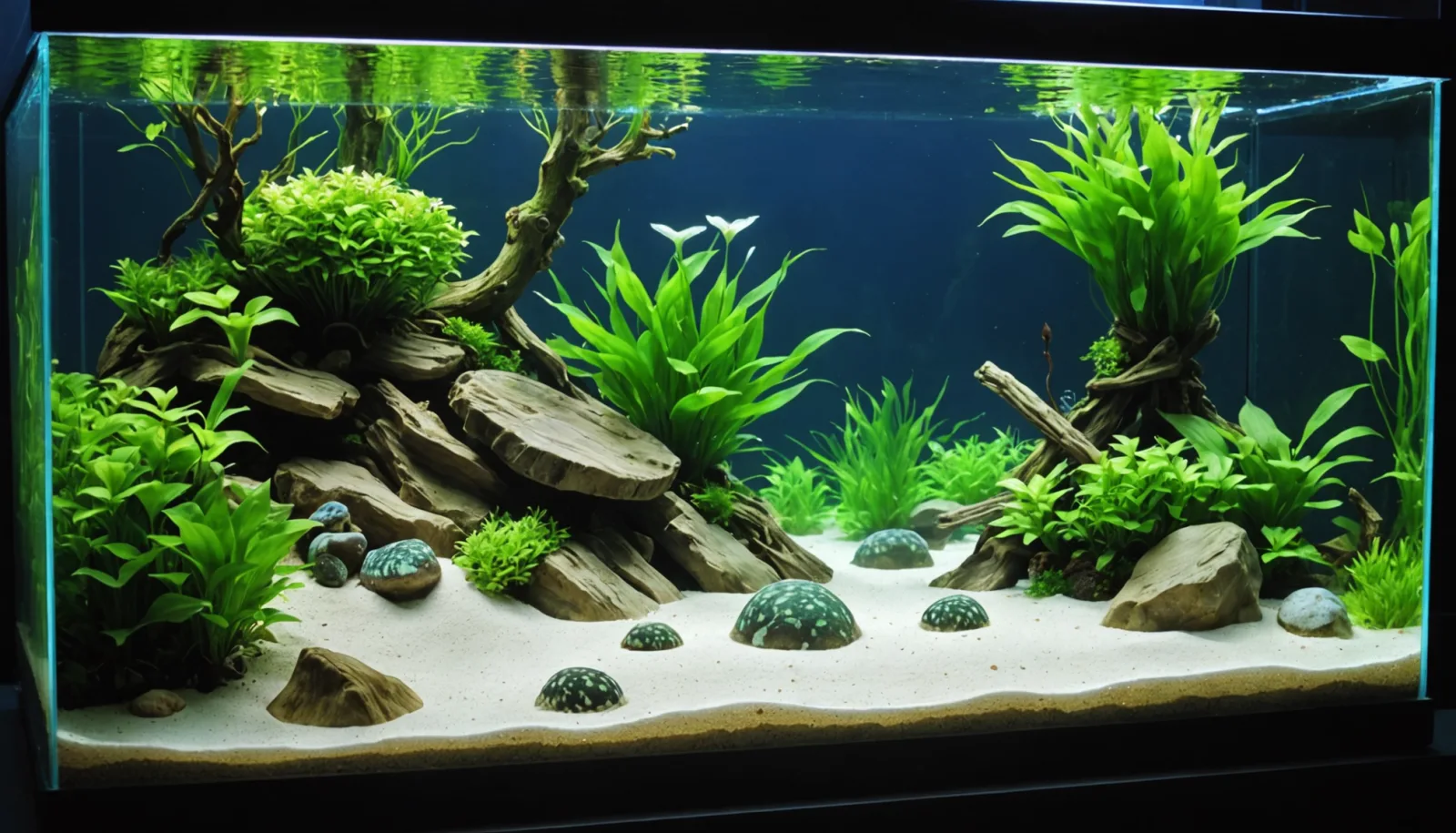
Evidence at a Glance
Aqueon Glass 20 Gallon Long Tank
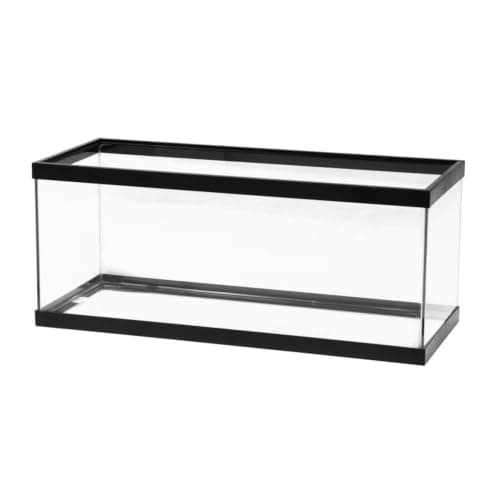
The habitat — a 20-gallon long glass tank measuring 30.5 by 13.13 by 13.0 inches per Aqueon, whose long, low footprint gives a bottom-walking axolotl the floor space it actually uses rather than the water height a fish wants, and whose rim takes a secure lid for an animal that can push out of an open tank.
Sources: Aqueon manufacturer documentation, Axolotl husbandry consensus on tank size and floor space, Published amphibian care standards on enclosure footprint
Verified Jul 16, 2026
Aqua Natural Galaxy Sand, 20 lb
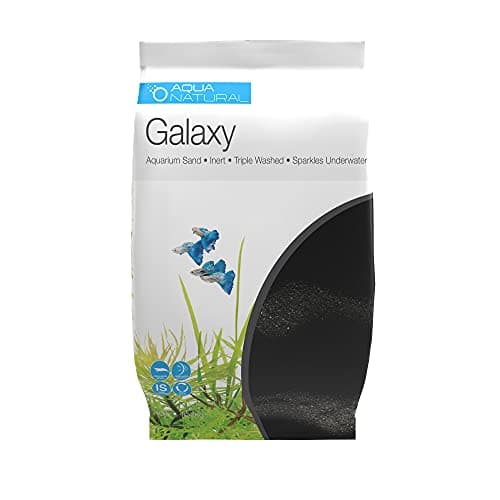
The floor — a fine black sand sustainably sourced under license in the USA per Aqua Natural, chosen because it is the only substrate a suction-feeding adult axolotl can swallow without the gut impaction that gravel causes, making the bed a safety decision rather than decoration.
Sources: Aqua Natural manufacturer documentation, Axolotl husbandry consensus on substrate and impaction, Published amphibian care standards on gut-impaction risk
Verified Jul 16, 2026
JBJ Aquarium Arctica Titanium Chiller, 1/10 HP
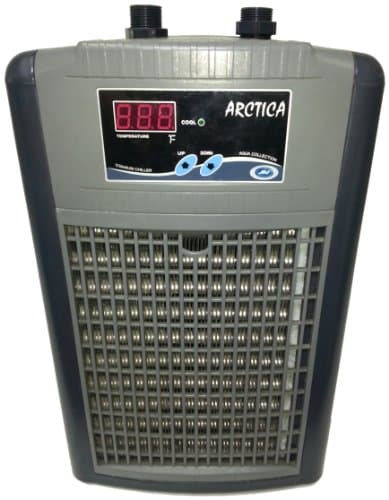
The climate control — an aquarium chiller with a titanium heat exchanger and a 1/10 horsepower compressor per JBJ, the one appliance that holds a hard temperature ceiling through summer so the water stays in the cool band an axolotl needs instead of drifting up with the room.
Sources: JBJ manufacturer documentation, Axolotl husbandry consensus on cool-water temperature, Published amphibian care standards on thermal stress
Verified Jul 16, 2026
Our Picks
Aqueon
Aqueon Glass 20 Gallon Long Tank
8.6 / 10
- 20 gallons at 30.5 by 13.13 by 13.0 inches per Aqueon
- Long, low footprint gives a walker real floor space
- Clean silicone edges and black trim per Aqueon
- Glass rim takes a secure, jump-proof lid
$99.99
Current price · checked Sep 8, 2026
Aqua Natural
Aqua Natural Galaxy Sand, 20 lb
8.5 / 10
- Fine grain an axolotl can pass rather than lodge
- Black sand sustainably sourced in the USA per Aqua Natural
- 20-pound bag suits a 20-gallon long footprint
- A thin layer, not a deep bed, for easy cleaning
JBJ
JBJ Aquarium Arctica Titanium Chiller, 1/10 HP
8.4 / 10
- Titanium heat exchanger and 1/10 HP compressor per JBJ
- Holds a hard temperature ceiling through summer
- Plumbs inline with the tank's water flow
- The only cooling that works in a genuinely hot room
$765.00
Current price · checked Sep 8, 2026
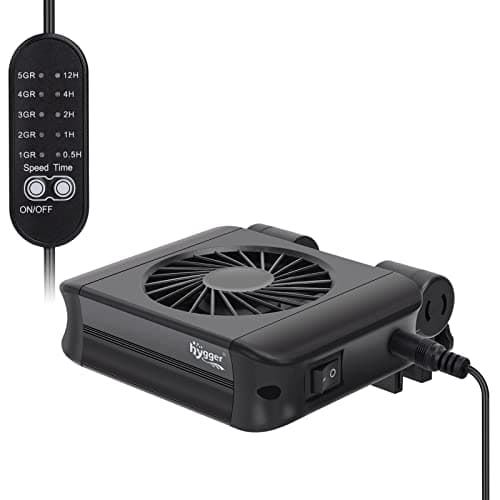
hygger
hygger Aquarium Cooling Fan (1-Fan Head)
8.3 / 10
- Adjustable timer and speed controller per hygger
- Cools by driving surface evaporation, no compressor
- Clips to the rim of a small tank
- An inexpensive first line in a cool room
$18.99
Current price · checked Sep 8, 2026
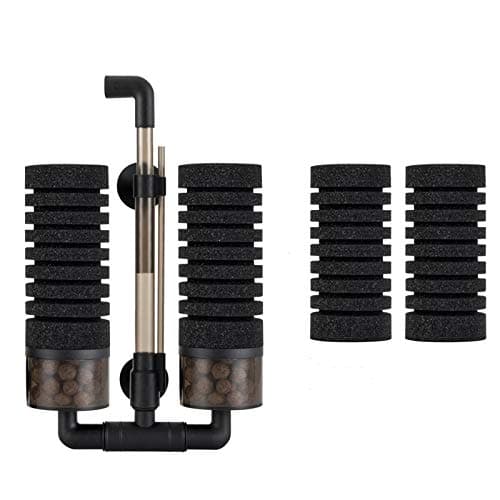
hygger
hygger Aquarium Double Sponge Filter (M)
8.2 / 10
- Double sponge media for a medium tank per hygger
- Air-driven, so it moves water without a strong current
- Large sponge surface hosts nitrifying bacteria
- Gentle enough for an animal with external gills
$19.99
Current price · checked Sep 8, 2026
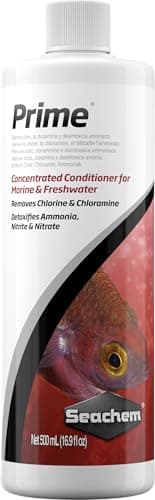
Seachem
Seachem Prime
8.1 / 10
- Removes chlorine and chloramine per Seachem
- Detoxifies ammonia and nitrite per Seachem
- Highly concentrated, so a small bottle lasts
- Used on the first fill and every water change
$16.62
Current price · checked Sep 8, 2026
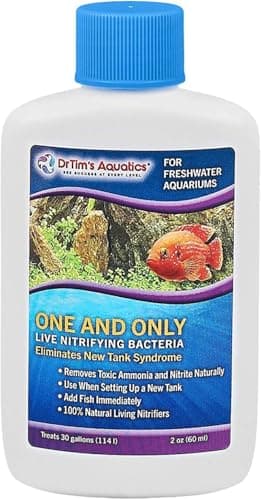
DrTim's Aquatics
DrTim's Aquatics One and Only Freshwater
8.0 / 10
- Live nitrifying bacteria for freshwater cycling per DrTim's
- Seeds the filter to process ammonia and nitrite
- Used to start a fishless cycle before stocking
- Paired with an ammonia source and a test kit
$19.99
Current price · checked Sep 8, 2026
API
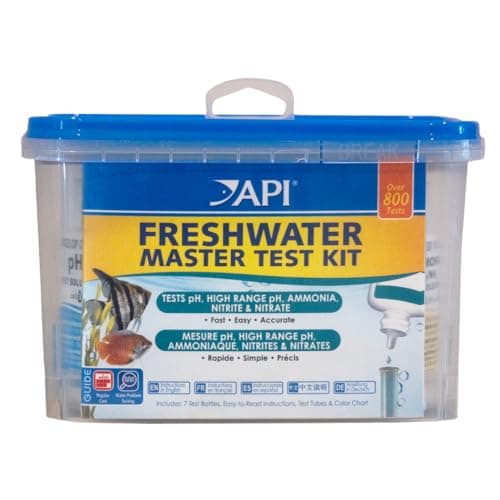
API Freshwater Master Test Kit
7.9 / 10
- Measures ammonia, nitrite, nitrate, and pH per API
- Liquid reagents rather than less-precise test strips
- 800-test kit lasts a beginner a long time per API
- Confirms a finished cycle before stocking
$41.99
Current price · checked Sep 8, 2026
AQUANEAT
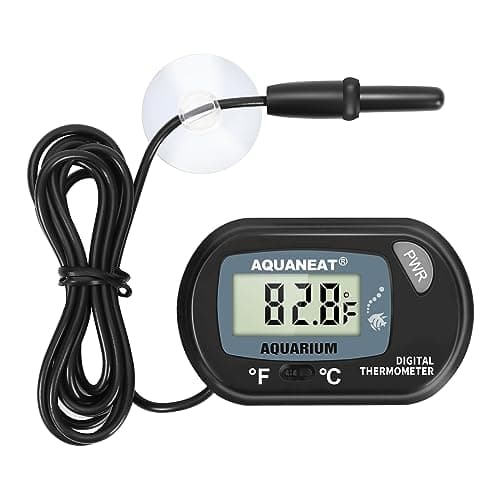
AQUANEAT Digital Aquarium Thermometer
7.8 / 10
- Large LCD display reads at a glance per AQUANEAT
- Submersible probe sits in the water column
- Inexpensive enough to keep a spare on hand
- The instrument every cooling decision depends on
$5.45
Current price · checked Sep 8, 2026
Niuohoy
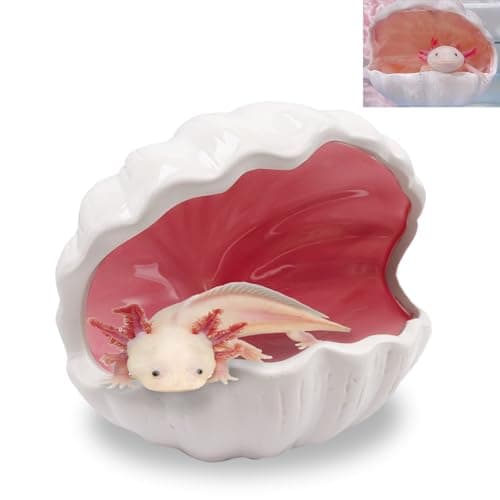
Niuohoy Axolotl Hide Shell Ceramic Cave (XL)
7.7 / 10
- Smooth double-sided glaze prevents sharp edges per Niuohoy
- Extra-large shell shape fits an adult axolotl
- Ceramic sinks and stays put without anchoring
- Gives a light-shy animal a dark retreat
$20.99
Current price · checked Sep 8, 2026
The Short Answer
An axolotl is the thermal opposite of a reptile: no heater, no basking lamp, no UVB. Build for floor space and cold water — the Aqueon 20-gallon long tank, fine sand instead of gravel because they suction-feed, gentle sponge filtration, and a chiller if your room runs warm. Cycle fully before the animal arrives.
Every product on this list has been scored against the PetPal Gear Score, a weighted composite of expert consensus, observed effectiveness, animal safety, long-term durability, and value. Review method: Editorial synthesis of axolotl setup guidance — axolotl husbandry consensus from the axolotl-keeping community and published amphibian care standards on water temperature, substrate safety, low-flow filtration, and fishless cycling, plus manufacturer documentation from Aqueon, Aqua Natural, JBJ, hygger, Seachem, DrTim's Aquatics, API, and AQUANEAT. Community consensus from axolotl-keeping forums was included as consensus, not quotation. No first-hand product testing — PetPalHQ does not run a testing lab.. Synthesized from 6+ expert sources.
An axolotl tank goes wrong, in this guide's editorial judgment, for one reason above every other: it is set up like a tropical fish tank, warm and gravel-floored, when an axolotl is a cold-water amphibian that needs the opposite of heat. A beginner buys the strange, smiling animal on impulse, drops it into a heated tank over decorative gravel, and within weeks has an axolotl that has stopped eating, grown a cottony fungus, and possibly swallowed the substrate it feeds over. The tank was built for the wrong climate and the wrong body, and nearly every axolotl tragedy traces back to that single mismatch. Cool water is everything here, and everything else in the build serves it.
Think of this animal as the exact inverse of a basking reptile. A turtle or a tropical fish wants a heater, a warm spot, and often UVB light; an axolotl wants none of those. It needs no heat lamp, no basking dock, and no UVB requirement — the entire engineering problem is subtraction, pulling heat out of the water and holding it between 60 and 68°F while the room around it warms with the season. Sustained warmth above the low seventies is not a discomfort but a slow danger, so the appliances that define this tank are a chiller or a cooling fan, not a heater, and the mental model to bring is a refrigerator rather than a terrarium.
That reframing sets the whole sequence. Start with a long, low tank that gives a bottom-walking animal floor space, then lay a fine sand floor it can feed over safely instead of the gravel that impacts a suction-feeder. Hold the temperature next — with a chiller in a warm room or an honest cooling-fan fallback in a cool one — and move the water gently through a sponge filter, because external gills hate current. Then make the water safe and alive: condition the tap water, seed and finish a fishless cycle, and prove it with a test kit before the animal ever arrives. A thermometer keeps watch over the defining number, and a smooth hide gives a light-shy amphibian somewhere to settle. Where a claim rests on a maker's documentation or keeper consensus, that is named rather than asserted, because PetPalHQ does not run a testing lab.
One principle sits above the build and never bends. The tank is made cool, cycled, and calm before the axolotl is stocked, and the animal goes in only once the water holds a steady, cold, zero-ammonia state on its own. The chiller or fan, the sand, the sponge filter, the conditioner, and the cycle are not upgrades to add over time; they are the minimum a cold-water amphibian needs from the first day. An axolotl rewards the keeper who cools the water, keeps gravel out, cycles the tank fishless, and only then adds the animal — and it punishes the one who buys the novelty first and tries to build a cold-water habitat around a living, warming, gill-burning mistake.
Head-to-Head Comparison
| Feature | Aqueon Glass 20 Gallon Long Tank | Aqua Natural Galaxy Sand, 20 lb | JBJ Aquarium Arctica Titanium Chiller, 1/10 HP | hygger Aquarium Cooling Fan (1-Fan Head) | hygger Aquarium Double Sponge Filter (M) | Seachem Prime | DrTim's Aquatics One and Only Freshwater | API Freshwater Master Test Kit | AQUANEAT Digital Aquarium Thermometer | Niuohoy Axolotl Hide Shell Ceramic Cave (XL) |
|---|---|---|---|---|---|---|---|---|---|---|
| Stage in the setup | Size the habitat | Lay the floor | Hold the temperature | The budget fork | Move the water gently | Make tap water safe | Build the cycle | Prove the cycle | Watch the number | Give it cover |
| When it comes into play | Before anything else | Before water goes in | Before stocking, in a warm room | Before the chiller spend | Before stocking, running to cycle | At fill and every change | Weeks before stocking | Before stocking and ongoing | Setup and daily | Once the water is right |
| What it does | Sets floor space | Safe, cleanable bed | Holds the cool ceiling | Cools a cool room only | Gentle biological flow | Neutralizes tap chemicals | Seeds the nitrogen cycle | Confirms the numbers | Reads the water temperature | A safe retreat |
| PetPal Axolotl-Readiness Score | 8.6 | 8.5 | 8.4 | 8.3 | 8.2 | 8.1 | 8.0 | 7.9 | 7.8 | 7.7 |
| Ongoing cost after purchase | Water and a lid | Occasional top-up | Electricity | Electricity, top-ups | Air pump, spare sponge | Refilled regularly | Bought fresh to cycle | Reagents over years | A battery now and then | None once placed |
| Check price | Amazon | Amazon | Amazon | Amazon | Amazon | Amazon | Amazon | Amazon | Amazon | Amazon |
$99.99
Current price · checked Sep 8, 2026
- 20 gallons at 30.5 by 13.13 by 13.0 inches per Aqueon
- Long, low footprint gives a walker real floor space
- Clean silicone edges and black trim per Aqueon
- Glass rim takes a secure, jump-proof lid
- Sized for one adult — bigger only helps, never hurts
A cold-water animal lives on the bottom, so the tank decision is a floor-space decision before it is a volume one. The Aqueon 20-gallon long earns the first slot because its long, shallow footprint matches how an axolotl actually moves. It walks the substrate on stubby legs rather than cruising a water column. Aqueon documents a high-quality glass aquarium built for freshwater and marine use, with clean silicone edges and sleek black trim, measuring 30.5 inches long by 13.13 wide by 13.0 high. That extra length, not extra height, is what a bottom-walker turns into usable territory.
This is the shell the whole cool-water build attaches to, and it is sized to the adult from the start. Axolotl keepers settle on a 20-gallon long as the sensible floor for one animal. A larger surface area both holds a walking amphibian comfortably and gives the water more mass to resist temperature swings. A small bowl heats up far faster than a broad, shallow tank. Height buys almost nothing here. A taller tank of the same volume just wastes water an axolotl never swims through. Buy the long footprint, and the sand bed, the sponge filter, and the cooling gear below all have room to sit without crowding the animal off the floor.
The honest caveats are about weight, lids, and what a bare tank leaves out. A filled 20-gallon glass tank is heavy enough to need a level, load-bearing surface rather than a flimsy shelf. The rim needs a secure, close-fitting lid, because an axolotl startled by a sudden temperature spike or a filter current can heave itself right out. It is a jump most keepers only learn about once. And a tank is only the habitat. It arrives with no floor, no filter, no cooling, and no cover, which is the entire reason the stages below exist. Bought as the adult's long-term home rather than a starter bowl, it is the one part of the build you should not have to replace.
What We Love
- Long footprint fits a walking, bottom-dwelling animal
- Broad, shallow water mass resists fast temperature swings
- Glass rim accepts a secure jump-proof lid
- A single tank sized to a full-grown adult
What Could Be Better
- Ships bare — no floor, filter, cooling, or lid included
- A filled tank needs a level, load-bearing surface
- Needs a tight lid, since a startled axolotl can jump out
The Verdict
Buy the long footprint and size to the adult, because an axolotl walks the floor and a broad, shallow tank holds cool temperature better than a tall one. Set it on a level, load-bearing surface, fit a secure lid against a jumping animal, and treat this as the empty habitat the floor, filter, and cooling gear all attach to.
Sources
- Aqueon (Amazon product listing, Glass 20 Gallon Long Tank): a high-quality glass aquarium suitable for freshwater and marine applications, with clean silicone edges and sleek black trim, measuring 30.5 inches long by 13.13 inches wide by 13.0 inches high
- Axolotl husbandry consensus on tank size and floor space: keepers treat a 20-gallon long as the practical minimum for a single adult axolotl because a bottom-dwelling walker uses floor space far more than water height, and a secure lid matters because a startled axolotl can push itself out of an open tank
- Fine grain an axolotl can pass rather than lodge
- Black sand sustainably sourced in the USA per Aqua Natural
- 20-pound bag suits a 20-gallon long footprint
- A thin layer, not a deep bed, for easy cleaning
- The safe alternative to impaction-risk gravel
The floor of an axolotl tank is the substrate decision that quietly kills more animals than any other. An axolotl feeds by suction. It lunges, opens its mouth, and pulls in prey along with whatever sits beneath it. So the grain size under it is a health question, not a look. Aqua Natural documents a fine black sand sustainably sourced under license in the USA, sold as a 20-pound bag. Its fineness is exactly the point: a grain small enough to pass through the gut instead of lodging in it.
Where it fits the build: this is the layer that makes the tank safe to feed in, laid before water goes in and kept deliberately thin. Fine sand sits below the animal without becoming a hazard, and a shallow layer is easy to siphon clean during water changes rather than trapping waste in a deep bed. Some keepers run a bare glass bottom instead, which is also safe and even easier to clean. Either choice beats the tempting middle ground of small gravel, which is precisely the size an axolotl can swallow and cannot pass. There is no cosmetic version of this rule worth the risk.
The honest caveats are about depth, rinsing, and patience. Sand needs a thorough rinse before it goes in or it clouds the water for days. It should be added as a thin layer rather than a thick one, since a deep sand bed can trap waste and go anaerobic. Uneaten food and waste show plainly on light-fed sand and need siphoning, which is a feature. You can see what to remove. Laid thin, rinsed well, and chosen over gravel every time, it turns the tank floor from the build's biggest hidden danger into a plain, cleanable surface.
What We Love
- Fine grain passes through the gut instead of lodging
- Thin layer siphons clean during water changes
- Sustainably sourced black sand per Aqua Natural
- The safe answer to the gravel-impaction problem
What Could Be Better
- Needs a thorough rinse or it clouds the water for days
- A deep bed can trap waste and go anaerobic — keep it thin
- Shows waste plainly, so it still needs regular siphoning
The Verdict
Lay fine sand thin, or run a bare bottom, and keep gravel out entirely — a suction-feeding axolotl swallows what it lands on, and gravel is a documented cause of fatal impaction. Rinse it well before it goes in, keep the layer shallow enough to siphon clean, and treat the floor as a safety choice rather than a decorating one.
Sources
- Aqua Natural (Amazon product listing, Galaxy Sand 20 lb): a fine black sand sustainably sourced under license in the USA, supplied in a 20-pound bag
- Axolotl husbandry consensus on substrate and impaction: gravel is a documented and common cause of axolotl death because the animal suction-feeds and swallows whatever it lands on, so fine sand or a bare bottom is the only floor considered safe for an adult
$765.00
Current price · checked Sep 8, 2026
- Titanium heat exchanger and 1/10 HP compressor per JBJ
- Holds a hard temperature ceiling through summer
- Plumbs inline with the tank's water flow
- The only cooling that works in a genuinely hot room
- Sized for a small tank's cooling load
This is the appliance the whole guide is named for, and the single line item that separates axolotl keeping from every warm-water tank. Where a tropical setup adds a heater, an axolotl setup does the opposite. It pulls heat out. JBJ documents an Arctica chiller with a titanium heat exchanger and a 1/10 horsepower compressor, plumbed inline so tank water passes through it and comes back colder. In a room that drifts above the low seventies, no fan, ice bottle, or open lid holds the line for long. A chiller is the only thing that sets a ceiling and keeps it.
Where it fits the build: this is the marquee decision for anyone whose home gets warm, installed and dialed in before the animal goes anywhere near the water. The reason it matters so much is biological, not mechanical. An axolotl held too warm stops eating, grows vulnerable to fungus, and slides downhill in a way that is hard to reverse. So the cool band is not a preference but the animal's baseline. If you are matching chiller capacity to your tank volume and your room's summer high, size it against the numbers rather than guessing. A dedicated roundup of the best aquarium chillers lays out how to match horsepower to the cooling load instead of over- or under-buying.
The honest caveats are about cost, plumbing, and noise. A chiller is by far the most expensive piece of the build, and there is no way around that if your room runs hot. It is the price of keeping a cold-water animal in a warm climate. It needs a pump to move water through it and a little space beside the tank for airflow, since it vents heat like a small refrigerator, and it hums while it runs. None of that is a reason to skip it in a hot home. It is a reason to budget for it honestly and, where the room is already cool, to weigh the fan below first.
What We Love
- Sets and holds a hard cool ceiling through summer
- Titanium exchanger resists corrosion per JBJ
- The only reliable cooling in a genuinely warm room
- Removes the guesswork from a hot-climate build
What Could Be Better
- By far the most expensive item in the build
- Needs a pump, airflow space, and vents heat like a fridge
- Runs with an audible hum while cooling
The Verdict
Buy the chiller if your room drifts above the low seventies, because it is the one appliance that holds a hard cool ceiling an axolotl depends on. Size the capacity to your tank volume and summer high rather than guessing, plan for a pump and venting space — and if your room already runs cool, read the fan below first.
Sources
- JBJ (Amazon product listing, Arctica Titanium 1/10 HP Chiller): an aquarium chiller with a titanium heat exchanger and a 1/10 horsepower compressor built to pull heat out of aquarium water
- Axolotl husbandry consensus on cool-water temperature: axolotls need water held at roughly 60 to 68°F year-round, and sustained temperatures above about 72°F push them into stress, appetite loss, and fungus risk, so a chiller is the only appliance that reliably holds a hard ceiling through a hot season
$18.99
Current price · checked Sep 8, 2026
- Adjustable timer and speed controller per hygger
- Cools by driving surface evaporation, no compressor
- Clips to the rim of a small tank
- An inexpensive first line in a cool room
- Suitable for freshwater tanks per hygger
Not every keeper needs to spend on a chiller, and this is the honest fork that decides it. The hygger cooling fan blows across the water surface and cools by evaporation, the same reason sweat cools skin. hygger documents a quiet tank fan with an adjustable timer and speed controller for fresh and saltwater tanks. In the right room it does real work: a few degrees of drop. In a cool basement or a mild climate that can be the whole difference between the low seventies and the safe cool band.
Where it fits the build: this is the deliberately cheaper alternative to the chiller above, and whether it is enough depends entirely on your room, not on the fan. Run it against a thermometer for a week before you decide anything. If the water settles inside the cool range with the fan alone, you have saved the largest expense in the build. If it does not, the fan has just told you honestly that you need the chiller. Framing it as a fork rather than a competitor is the point. One keeper's cool study needs only this, and another's warm apartment needs the compressor, and the number on the thermometer is what settles which keeper you are.
The honest caveats are about ceilings, evaporation, and climate. A fan cannot beat physics. On a hot day in a hot room, evaporative cooling simply cannot pull the water low enough, and no timer setting changes that. It also speeds evaporation, so the water level drops faster and you top up more often with conditioned water, and it pushes humidity into the room around the tank. Bought as the first thing to try in a cool space rather than a guaranteed substitute for a chiller, it is the cheapest way to find out whether you can avoid the build's biggest bill.
What We Love
- A few dollars against the chiller's cost
- Enough on its own in a cool room or mild climate
- Timer and speed control let you tune the cooling
- Tells you honestly whether you need a chiller
What Could Be Better
- Cannot hold a cool ceiling in a genuinely hot room
- Speeds evaporation, so the water level drops faster
- Adds humidity to the room around the tank
The Verdict
Try the fan first only if your room already runs cool, and let a thermometer decide the rest. Give it a week against the water temperature — if it holds the cool band, it has saved you the build's largest expense, and if it cannot, it has told you plainly that the chiller above is not optional in your climate.
Sources
- hygger (Amazon product listing, Aquarium Cooling Fan): a quiet fish-tank cooling fan with an adjustable timer and speed controller, suitable for freshwater and saltwater tanks
- Axolotl husbandry consensus on evaporative cooling: a clip-on fan lowers water temperature a few degrees by driving evaporation and can be enough in a mild climate or a cool room, but it cannot hold a hard ceiling in a hot one and it raises evaporation and room humidity as the trade
$19.99
Current price · checked Sep 8, 2026
- Double sponge media for a medium tank per hygger
- Air-driven, so it moves water without a strong current
- Large sponge surface hosts nitrifying bacteria
- Gentle enough for an animal with external gills
- Simple to rinse and reuse during water changes
Axolotls wear their gills on the outside, and those feathery external stalks are the reason filtration here is about gentleness, not power. The hygger double sponge filter runs on an air pump rather than a motor. It draws water slowly through two sponges without producing the brisk current a canister or in-tank pump would. hygger documents a double sponge filter for fresh and saltwater tanks in a medium size. The double sponge does two jobs at once. It traps waste mechanically and, more importantly, gives beneficial bacteria a large surface to colonize.
Where it fits the build: this is the life-support that respects the animal's anatomy, installed and running before stocking so the tank cycles first. An axolotl held in strong flow stresses, its gills clamp, and it fights the current instead of resting. So the calm output of an air-driven sponge is species-correct rather than a compromise. A keeper who wants more filtration capacity as the tank matures is not forced back to a high-flow unit either. The roundup of the best aquarium sponge filters covers larger air-driven options, and the guide to the best aquarium canister filters explains the gentle upgrade: a canister with its return sent through a spray bar aimed at the glass, which spreads and softens the flow instead of blasting it across the tank. What never belongs here is a filter that turns the tank into a current.
The honest caveats are about capacity, air pumps, and maintenance. A single sponge filter has modest throughput, so a heavily fed tank may want two sponges or the canister-with-spray-bar upgrade rather than one unit working flat out. It needs an air pump and airline to run, which is one more thing to buy and to keep quiet. And the sponge must be rinsed in old tank water, never tap, during changes so you clean it without killing the bacteria living inside it. Chosen for gentle flow over raw power, it keeps the water moving and biologically alive without ever pushing an axolotl around its own tank.
What We Love
- Air-driven flow suits an animal that hates current
- Large sponge surface builds the biological filter
- Gentle output an axolotl can rest beside
- Rinses and reuses cheaply during water changes
What Could Be Better
- Modest capacity — a fed tank may want two, or a canister
- Needs a separate air pump and airline to run
- Must be rinsed in tank water, never tap, to spare bacteria
The Verdict
Match the filtration to the gills, not to the gallons — air-driven sponge flow is what an external-gilled animal needs, and raw pump power is what it does not. Rinse the sponge in old tank water to keep the bacteria alive, and if you outgrow it, upgrade to a canister sent through a spray bar rather than a high-flow unit blasting the tank.
Sources
- hygger (Amazon product listing, Double Sponge Filter M): a double sponge filter for fresh water and salt-water fish tanks, size medium
- Axolotl husbandry consensus on flow: axolotls have external gills and dislike current, so air-driven sponge filtration is the species-correct choice, and a canister run through a spray bar aimed at the glass is the gentle upgrade path for a keeper who wants more capacity
$16.62
Current price · checked Sep 8, 2026
- Removes chlorine and chloramine per Seachem
- Detoxifies ammonia and nitrite per Seachem
- Highly concentrated, so a small bottle lasts
- Used on the first fill and every water change
- Protects the filter's bacteria from raw chlorine
Tap water is not axolotl water until it is treated, and that step is the cheapest insurance in the build. Municipal water is dosed with chlorine or chloramine to be safe for people. Those same chemicals irritate an axolotl's exposed gills and kill the bacteria the filter depends on. Seachem documents Prime as a concentrated conditioner that removes chlorine and chloramine and detoxifies ammonia and nitrite. Its concentration is part of why it earns the slot. A small bottle treats a great deal of water, so it lasts a beginner a long time.
Where it fits the build: this is the routine that never ends, used to fill the tank at setup and on every partial water change for the animal's life. It runs alongside the cycle rather than replacing it. Dechlorinating protects the filter bacteria you are trying to grow. Prime's ability to temporarily detoxify a little ammonia and nitrite is a genuine safety margin during a new tank's shaky first weeks, not a substitute for a finished cycle. For a keeper comparing conditioners on concentration, dosing, and cost per gallon, the roundup of the best aquarium water conditioners lays out the field. The important part for an axolotl is simply that no untreated tap water ever touches the tank.
The honest caveats are about scope, dosing, and habit. A conditioner fixes tap-water chemistry. It does not clean the water, remove waste, or reduce the need for filtration and water changes. Dosing is measured to the volume of new water, not eyeballed, since under-dosing leaves chlorine behind and over-dosing wastes a concentrated product. And it is a consumable tied to the water-change schedule, so it belongs on the standing supply list beside the test kit rather than as a one-time purchase. Kept on hand and used on every batch, it quietly protects both the gills and the biological filter at once.
What We Love
- Neutralizes chlorine and chloramine that burn gills
- Detoxifies a little ammonia and nitrite as a safety margin
- Concentrated, so a small bottle treats a lot of water
- Protects the filter bacteria on every change
What Could Be Better
- Conditions chemistry only — it does not clean the water
- Must be dosed to the new water volume, not guessed
- A consumable tied to the water-change schedule
The Verdict
Condition every batch of water, at the first fill and on every change for life, because untreated tap water burns an axolotl's exposed gills and kills the filter bacteria. Dose it to the new water volume rather than eyeballing it, and treat it as one ongoing step in water care, never a shortcut around filtration and changes.
Sources
- Seachem (Amazon product listing, Prime): a concentrated conditioner that removes chlorine and chloramine and detoxifies ammonia and nitrite per Seachem
- Axolotl husbandry consensus on tap water: chlorine and chloramine in municipal tap water burn an axolotl's exposed gills and kill the beneficial bacteria in the filter, so every batch of new and replacement water is dechlorinated before it reaches the animal
$19.99
Current price · checked Sep 8, 2026
- Live nitrifying bacteria for freshwater cycling per DrTim's
- Seeds the filter to process ammonia and nitrite
- Used to start a fishless cycle before stocking
- Paired with an ammonia source and a test kit
- A consumable with a shelf life — buy it fresh
A tank is not ready the day it holds water. It is ready the day it can process waste, and that takes a living colony this bottle helps start. An axolotl produces a heavy bioload, and its exposed gills are especially vulnerable to ammonia. So the nitrogen cycle has to be running before the animal arrives. DrTim's documents One and Only as a live nitrifying bacteria supplement for cycling a freshwater aquarium. You add it to seed the filter with the bacteria that convert toxic ammonia to nitrite and then to far less harmful nitrate.
Where it fits the build: this is the invisible stage that has to finish before stocking, and it is why a responsible axolotl setup is measured in weeks rather than a single afternoon. A fishless cycle means feeding the tank an ammonia source and letting the bacteria population catch up until the water can clear a full dose to zero. The bottle gives that colony a head start rather than waiting for it to appear on its own. It works hand in hand with the next stage, since the only way to know the cycle is finished is to measure it. The roundup of the best aquarium bacteria starters compares the live-culture options, but every one of them is proven by a test kit, not by the calendar. Adding an axolotl to an uncycled tank is the classic beginner mistake this stage exists to prevent.
The honest caveats are about freshness, patience, and proof. Live bacteria are perishable. A bottle that has sat warm on a shelf may be less viable, so it is bought fresh and stored cool, and it speeds a cycle rather than skipping it. It also cannot outrun the tank's own chemistry. You still feed ammonia, still wait, and still confirm the result before trusting it. Treated as a jump-start to a fishless cycle you verify with a test kit, it shortens the wait an axolotl's gills depend on without ever replacing it.
What We Love
- Seeds the filter with live nitrifying bacteria
- Speeds a fishless cycle before the animal arrives
- Protects vulnerable gills by front-loading the cycle
- Works with an ammonia source and a test kit
What Could Be Better
- Perishable — buy fresh and store cool for best results
- Speeds a cycle but does not skip the wait
- Only trustworthy once a test kit confirms the result
The Verdict
Seed the cycle with live bacteria and prove it before you stock, because an axolotl's exposed gills burn in the ammonia of an uncycled tank. Buy the bottle fresh, feed a fishless cycle alongside it, and trust the test kit rather than the calendar to say the tank is ready.
Sources
- DrTim's Aquatics (Amazon product listing, One and Only Freshwater): a live nitrifying bacteria supplement for cycling a freshwater aquarium
- Axolotl husbandry consensus on fishless cycling: an axolotl produces heavy waste and its exposed gills are burned by ammonia, so the tank is cycled fishless to a stable zero-ammonia, zero-nitrite reading before the animal is ever added
$41.99
Current price · checked Sep 8, 2026
- Measures ammonia, nitrite, nitrate, and pH per API
- Liquid reagents rather than less-precise test strips
- 800-test kit lasts a beginner a long time per API
- Confirms a finished cycle before stocking
- Tracks nitrate to time weekly water changes
Cycling is invisible without a way to measure it, and this kit is the instrument that turns a guess into a reading. The whole fishless-cycle plan hinges on knowing three numbers: ammonia, nitrite, and nitrate. And an axolotl's gills give no second chances if you get them wrong. API documents a freshwater master kit that measures ammonia, nitrite, nitrate, and pH across some 800 tests using liquid reagents. Those read more precisely than the paper strips beginners often start with and regret.
Where it fits the build: this is the proof stage, and it is what makes every earlier step trustworthy rather than hopeful. Before an axolotl goes in, the kit confirms the reading the cycle is built to reach: a full ammonia dose processed to zero ammonia and zero nitrite within a day. After the animal is in, it tracks nitrate so you know when a weekly water change is due. Paired with the bacteria starter above, it is the half of the cycle that supplies the evidence. The roundup of the best aquarium water test kits compares liquid kits against strips, but for a cold-water animal that cannot tell you when its water has turned, a precise liquid kit is the honest choice. Numbers, not the calendar, decide when the tank is ready and when it needs work.
The honest caveats are about method, time, and habit. Liquid tests take a few minutes and a careful count of drops, and one of the tubes needs vigorous shaking to read true. Read the instructions rather than rushing, or the result misleads. The kit is a consumable whose reagents do eventually age, so it is replaced over the years rather than kept forever. And a test kit only reports the water. It does not fix it, so a bad reading is a prompt to change water, not just information. Used to confirm the cycle and then to time changes, it is the small ongoing habit that keeps an axolotl's water honest.
What We Love
- Liquid reagents read more precisely than strips
- Covers the three cycle numbers plus pH
- Confirms a finished cycle before the animal arrives
- Tracks nitrate so water changes are timed, not guessed
What Could Be Better
- Takes a few careful minutes and correct technique
- Reagents age and the kit is eventually replaced
- Reports the water but does not fix it
The Verdict
Prove the water with numbers rather than trusting the calendar, because an axolotl cannot signal when its cycle has failed. Confirm zero ammonia and nitrite before stocking, track nitrate to time weekly changes afterward, and follow the drop-count technique carefully so the reading you act on is the true one.
Sources
- API (Amazon product listing, Freshwater Master Test Kit): an 800-test freshwater aquarium master kit that measures ammonia, nitrite, nitrate, and pH
- Axolotl husbandry consensus on water testing: the nitrogen cycle is invisible without measurement, so keepers track ammonia, nitrite, and nitrate with a liquid test kit, confirming zero ammonia and nitrite before stocking and keeping nitrate low through weekly partial water changes
$5.45
Current price · checked Sep 8, 2026
- Large LCD display reads at a glance per AQUANEAT
- Submersible probe sits in the water column
- Inexpensive enough to keep a spare on hand
- The instrument every cooling decision depends on
- Suitable for different water types per AQUANEAT
Every cooling decision in this build comes back to one number, and this is the tool that reports it. A chiller, a fan, a cool room, a warm afternoon: none of them mean anything until you can read what the water is actually doing. A thermometer is what turns the guide's central concern from a worry into a fact. AQUANEAT documents a digital thermometer with a large LCD display and a submersible probe suited to different water types. Its whole value is that it is glanceable. The temperature is visible every time you walk past the tank.
Where it fits the build: this is the instrument that arbitrates the chiller-versus-fan fork and then keeps watch for good. During setup it is what tells you honestly whether the fan alone holds the cool band or the chiller is genuinely needed in your room. After the animal is in, it catches the slow summer creep before it becomes a crisis. For a few dollars it makes the most important variable in an axolotl tank continuously visible. That is exactly why it earns a slot despite being the cheapest thing here. The cost of not knowing the temperature is measured in a sick animal.
The honest caveats are about accuracy, batteries, and placement. A budget digital probe can drift a degree or two over time, so it is worth sanity-checking against a second thermometer now and then, especially when a reading sits near the edge of the safe band. It runs on a small battery that eventually dies, usually without warning, so a spare is cheap insurance. And the probe should sit in the open water rather than tucked behind the chiller return or against the glass, where it reads a local pocket instead of the tank. Placed well and glanced at daily, it keeps the build's defining number in plain sight.
What We Love
- Makes the tank's most important variable visible
- Glanceable LCD encourages a daily check
- Cheap enough to keep a backup on hand
- Settles the chiller-versus-fan decision honestly
What Could Be Better
- A budget probe can drift a degree or two over time
- Battery dies eventually, usually without warning
- Reads a local pocket if placed against glass or return
The Verdict
Keep the defining number in plain sight, because every cooling choice in this build is only as good as your ability to read the water. Place the probe in open water rather than against the glass, sanity-check it against a second thermometer near the edge of the safe band, and glance at it daily so a warm creep never becomes a crisis.
Sources
- AQUANEAT (Amazon product listing, Digital Aquarium Thermometer): a digital aquarium thermometer with a large LCD display and a submersible probe, suitable for different water types
- Axolotl husbandry consensus on monitoring temperature: because the entire build turns on holding cool water, keepers watch the temperature daily with a thermometer, and it is the instrument that settles whether a cooling fan is enough or a chiller is required
$20.99
Current price · checked Sep 8, 2026
- Smooth double-sided glaze prevents sharp edges per Niuohoy
- Extra-large shell shape fits an adult axolotl
- Ceramic sinks and stays put without anchoring
- Gives a light-shy animal a dark retreat
- One hide per axolotl as the minimum
An axolotl is soft-bodied and light-shy, so cover is not decoration here. It is the difference between a stressed animal in the open and a settled one that comes out to feed. The Niuohoy ceramic hide gives that retreat, and its glaze is the reason it belongs in a tank full of delicate skin. Niuohoy documents an extra-large shell-shaped hide with a smooth, double-sided glaze that prevents sharp edges. That matters because an axolotl has no scales and no protective slime armor to spare against a rough surface.
Where it fits the build: this is the finishing stage that makes the cool, cycled tank feel safe to its occupant, added once the environment itself is right. A hide lets a light-averse animal escape the daytime brightness and rest. A calmer axolotl eats better and hides its gills less, so cover pays back in visible health rather than just looking nice. The rule keepers hold is one hide per animal at minimum and nothing sharp anywhere in the tank. Every ornament, not just this one, has to pass the same smooth-edge test, because a soft-bodied amphibian can scrape itself on decor a fish would never notice.
The honest caveats are about size, edges, and light. A hide has to be large enough for the adult to fit inside comfortably, so an extra-large cave suits a full-grown axolotl where a small one would only frustrate it. Anything added alongside it, whether plants, driftwood, or ornaments, must clear the same smooth-edge bar, since one rough object undoes the point of a safe hide. And the tank overall should sit somewhere dim and away from direct sun, so the hide is a retreat from ordinary room light rather than the only shade in a too-bright tank. Chosen smooth and sized to the adult, it turns a bare cool-water box into a place the animal will actually settle.
What We Love
- Smooth glaze protects an axolotl's delicate skin
- Extra-large shape fits a full-grown adult
- Ceramic sinks and stays put without anchoring
- Gives a light-shy animal a dark place to rest
What Could Be Better
- Must be large enough for the adult to fit inside
- Every other ornament must pass the same smooth-edge test
- Works best in a dim tank away from direct sun
The Verdict
Give each axolotl at least one smooth hide, and hold every ornament to the same edge, because a skinless-soft animal scrapes on decor a fish would ignore. Size the cave to the adult, keep the tank dim and out of direct sun, and treat cover as part of the animal's health rather than the tank's looks.
Sources
- Niuohoy (Amazon product listing, Axolotl Hide Shell Ceramic Cave XL): a ceramic axolotl hide with a smooth, double-sided glaze that prevents sharp edges, in an extra-large shell shape
- Axolotl husbandry consensus on cover and decor: axolotls are light-shy and skinless-soft, so every item in the tank must be smooth-edged, and each animal needs at least one hide it can retreat into to feel secure
How We Score
Formula
PetPal Axolotl-Readiness Score = (Expert Consensus × 0.35) + (Setup-Sequence Fit × 0.25) + (Cool-Water & Species-Safety Design × 0.20) + (Value × 0.20)
Score Factors
- Expert Consensus · 35%
- Synthesized from axolotl husbandry consensus across the axolotl-keeping community and published amphibian care standards on water temperature, substrate safety, low-flow filtration, and fishless cycling, plus manufacturer documentation. The PetPal Axolotl-Readiness Score is a composite of expert opinion — PetPalHQ does not run a testing lab.
- Setup-Sequence Fit · 25%
- How directly the item advances a correct cool-water build in order — sizing the habitat, laying a safe floor, holding the temperature, moving the water gently, conditioning and cycling it, proving the cycle, and giving the animal cover — rather than how it performs as a standalone product ranked against rivals.
- Cool-Water & Species-Safety Design · 20%
- Alignment with axolotl welfare — cool water held between 60 and 68°F, a substrate that cannot impact a suction-feeder, gentle flow for external gills, a fully cycled zero-ammonia environment, and smooth-edged cover for delicate skin. The animal is stocked only after the tank holds a steady, cold, cycled state.
- Value · 20%
- Cost relative to the item's role in the sequence, including ongoing costs like electricity for cooling, replacement reagents, and conditioner, and how much of the healthy-axolotl outcome the item is responsible for. This kit is the equipment cost, not the ongoing cost of keeping the animal.
| Rank | Product | Score |
|---|---|---|
| #1 | Aqueon Aqueon Glass 20 Gallon Long Tank | 8.6 |
| #2 | Aqua Natural Aqua Natural Galaxy Sand, 20 lb | 8.5 |
| #3 | JBJ JBJ Aquarium Arctica Titanium Chiller, 1/10 HP | 8.4 |
| #4 | hygger hygger Aquarium Cooling Fan (1-Fan Head) | 8.3 |
| #5 | hygger hygger Aquarium Double Sponge Filter (M) | 8.2 |
| #6 | Seachem Seachem Prime | 8.1 |
| #7 | DrTim's Aquatics DrTim's Aquatics One and Only Freshwater | 8.0 |
| #8 | API API Freshwater Master Test Kit | 7.9 |
| #9 | AQUANEAT AQUANEAT Digital Aquarium Thermometer | 7.8 |
| #10 | Niuohoy Niuohoy Axolotl Hide Shell Ceramic Cave (XL) | 7.7 |
When NOT to Buy
An axolotl is a cold-water amphibian sold as a novelty, and that mismatch is where most axolotl keeping goes wrong. It is the thermal opposite of the basking reptiles and tropical fish most aquarium gear is built for. It needs no heater, no basking lamp, and no UVB, and it needs its water held genuinely cool. If your home runs warm through summer and you are not willing to budget for a chiller, or at least prove that a cool room and a fan hold the line, an axolotl is the wrong animal. A warm axolotl stops eating, grows fungus, and declines in ways that are hard to reverse. The animal goes in last, only after the tank is cool, cycled, and gently filtered.
The build also rules out the usual shortcuts. Gravel is not a cosmetic choice you can make anyway. A suction-feeding axolotl swallows it and dies of impaction, so fine sand or a bare bottom is the only safe floor. An uncycled tank is not something you can fix after stocking. An axolotl's exposed gills burn in ammonia, so the fishless cycle has to finish first, proven by a test kit rather than the calendar. And strong flow is not a minor irritation. External gills clamp and the animal stresses in a current, so the filtration is deliberately gentle. This guide is written for a cold-water amphibian specifically. It is the wrong build for a tropical fish tank or a basking turtle, which want exactly the heat an axolotl cannot tolerate.
Finally, the honest budget note: this kit is the equipment, not the cost of keeping the animal. Electricity to run cooling through summer, replacement test reagents, conditioner for every water change, and veterinary care are the ongoing bill, and the chiller in particular is a real expense in a warm climate. There is also work the kit assumes but does not supply. That includes cycling the tank before stocking, holding the temperature in the cool band, and doing partial water changes for the animal's life. If you are still sizing the cooling or the filtration, a dedicated roundup of the best aquarium chillers and the guide to the best aquarium canister filters are the honest places to match those to your room before you commit. Verify current prices and sellers on every item before buying, since prices and availability move over time.
Frequently Asked Questions
- Do axolotls really need a chiller, or is that overkill?
- It depends entirely on your room, not on the animal. The requirement is the cool water, and the chiller is only one way to reach it. If you keep the tank in a genuinely cool space, such as a basement or an air-conditioned room that stays below the low seventies, an evaporative cooling fan or even good placement alone may hold the water in the safe band. Many keepers in mild climates never buy a chiller. The honest test is to set the tank up, run whatever cooling you are trying, and watch a thermometer for a week before you decide. If the water sits in range, you are done. If it creeps up on warm afternoons, that is the tank telling you a chiller is not optional in your climate. What is never negotiable is the temperature itself. So the real question is not "chiller or not" but "what does it take to hold the cool band in this particular room."
- Why is gravel such a problem in an axolotl tank?
- Because of how an axolotl eats. It feeds by suction, lunging at food and pulling in a mouthful of water along with whatever is lying beneath the target. If that is gravel, it swallows the gravel too. Small stones then lodge in the gut and cause impaction, a blockage that is a common and often fatal problem in captive axolotls. It can happen from a single bad mouthful rather than a habit built up over time. The safe alternatives are fine sand, which is small enough to pass harmlessly through the digestive tract, or a completely bare glass bottom, which removes the risk altogether and is the easiest of all to keep clean. The trap is the middle ground of small decorative gravel. It looks harmless and is exactly the wrong size: big enough to swallow, too big to pass.
- Can axolotls live with fish or other tankmates?
- The safe default is that an axolotl lives alone. Two problems collide. An axolotl will try to eat anything small enough to fit in its mouth, so small fish become expensive snacks. And many fish in turn nip at an axolotl's feathery external gills, which stresses the animal and invites infection. On top of that, most community fish want the warm water an axolotl cannot tolerate. So the temperature needs alone rule out the usual tankmates before behavior even enters into it. Keepers who do add anything at all tend to stick to a small, carefully chosen cleanup species in a large tank and accept the risk. But for a beginner the honest and lowest-risk answer is one axolotl to a tank, with more floor space rather than more animals if you want to scale up.
- How long does the tank need to cycle before I add an axolotl?
- Long enough that the water can neutralize waste on its own, which typically means several weeks rather than days. A fishless cycle works by feeding the tank an ammonia source and waiting for two colonies of bacteria to establish. One converts ammonia to nitrite and another converts nitrite to nitrate. That population simply takes time to grow, even when a bottled bacteria starter gives it a head start. The tank is ready not on a particular date but when a test kit shows a specific result. It must process a full dose of ammonia down to zero ammonia and zero nitrite within about a day, with nitrate accumulating as the harmless end product. Because an axolotl's exposed gills are so easily burned by ammonia, this is the one step there is no honest way to rush. The numbers, confirmed by testing, decide when the animal can go in. A tank that has not reached them is not ready no matter how long it has been running.
- Do axolotls need a heater or special lighting like other aquarium animals?
- No, and this is the clearest way to see how different they are from almost everything else sold in the aquarium aisle. An axolotl needs no heater. The whole challenge is keeping the water cool rather than warm, so a heater is not just unnecessary but actively dangerous. It also has no UVB requirement, unlike a basking turtle, because it is a fully aquatic amphibian that does not bask. And it actually prefers dim conditions. Axolotls are light-shy, so a subdued, indirect light on a normal day-night rhythm suits them far better than the bright fixtures a planted or reef tank uses. Strong lighting stresses them and can encourage algae in a tank you are trying to keep cool and calm. So a modest light for viewing, a dim overall placement away from direct sun, and a hide to retreat into are all the lighting an axolotl setup needs.
Bottom Line
Build the tank before the animal, and size it to floor space. Start with the Aqueon 20-gallon long, because an axolotl walks the bottom and a broad, shallow tank holds cool temperature better than a tall one — fit a secure lid, since a startled axolotl can jump.
Keep gravel out entirely and lay fine sand or a bare bottom. Aqua Natural Galaxy Sand is a floor a suction-feeder can pass rather than lodge, so the substrate is a safety decision, not a look — gravel is a documented cause of fatal impaction.
Hold the water cool, and let a thermometer decide how. The JBJ Arctica chiller sets a hard ceiling in a warm room, a hygger cooling fan can be enough in a cool one, and an AQUANEAT thermometer is what honestly settles which your room needs.
Move the water gently and make it safe before the animal arrives. A hygger sponge filter respects external gills, Seachem Prime dechlorinates every batch, and DrTim's One and Only seeds a fishless cycle you confirm with an API master test kit — zero ammonia and nitrite first.
Match the whole build to a cold-water amphibian and stock it last. Give each animal a smooth-glazed hide with no sharp edges anywhere near delicate skin, keep the tank dim, and budget for cooling electricity and replacement reagents — an axolotl is a cool-water commitment, not a warm-tank novelty.
Sources & Methodology
Methodology
PetPal Axolotl-Readiness Score = (Expert Consensus × 0.35) + (Setup-Sequence Fit × 0.25) + (Cool-Water & Species-Safety Design × 0.20) + (Value × 0.20)
Expert review sources
- Axolotl husbandry consensus on cool-water temperature and thermal stress
- Axolotl husbandry consensus on substrate safety and gut impaction
- Published amphibian care standards on fishless cycling and low-flow filtration
- Aqueon — 20 Gallon Long Glass Tank product documentation
- JBJ — Arctica Titanium 1/10 HP Chiller product documentation
- Aqua Natural, hygger, Seachem, DrTim's Aquatics, API, and AQUANEAT product documentation
Community sources
- Axolotl-keeping forums — tank size, sand-over-gravel, and cooling consensus
- Amphibian-keeper community consensus on fishless cycling and gill-safe flow
Prices and specs verified July 16, 2026.
About the author
Nick Miles is the chief editor of PetPalHQ. This beginner axolotl setup sequence and its kit are editorial synthesis of axolotl husbandry consensus from the axolotl-keeping community and published amphibian care standards, plus manufacturer documentation — PetPalHQ does not run a testing lab. The PetPal Axolotl-Readiness Score is a composite of expert opinion, not a measurement. Sources are cited by name throughout.
PetPalHQ is a participant in the Amazon Services LLC Associates Program. We may earn commissions from qualifying purchases — at no extra cost to you.
More Guides
Aquarium
Best Aquarium Chillers for Reef & Marine Tanks (2026)
Aquarium
Best Aquarium Sponge Filters for Shrimp, Fry, Betta & Quarantine (2026)
Aquarium
Best Aquarium Canister Filters (2026)
Aquarium
Best Aquarium Bacteria Starters for New Freshwater Tanks (2026)
Aquarium
Best Aquarium Water Conditioner for Freshwater Tanks (2026)
Aquarium