Dog
How to Create a Safe Dog Backyard: A Containment Setup (2026)
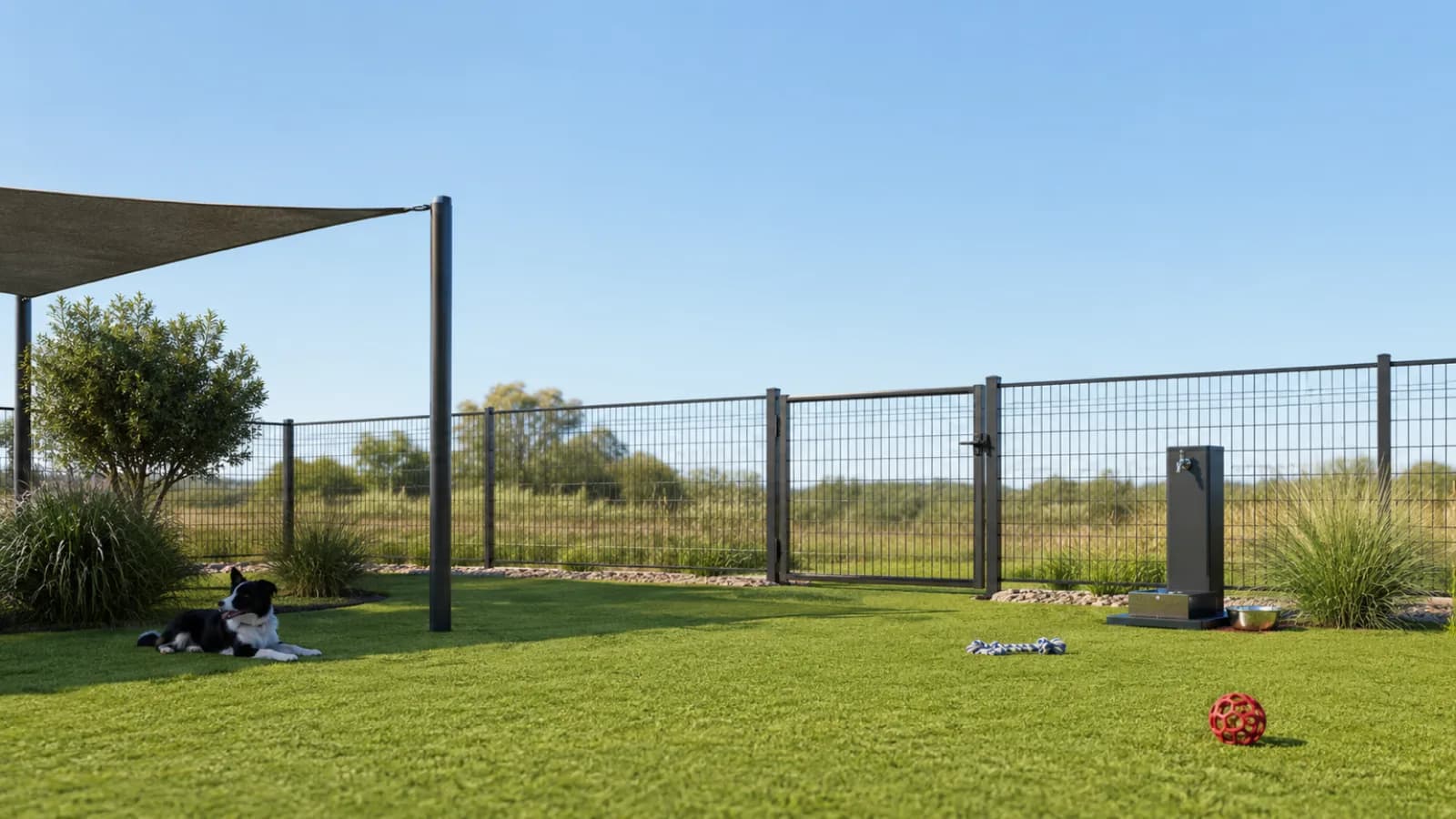
This is not a backyard-play guide — it is how you keep a dog safely inside the yard. The picks below are the containment kit in layers: a wireless boundary system, a heavy-duty physical kennel as the failsafe, a controlled dog door, a dig barrier for the fence line, a trolley run, and a long line for supervised freedom. If you think one wireless fence keeps a determined dog home, read the layered-containment section first, because a single boundary — physical or electronic — is exactly how dogs get out.
By Nick Miles · Updated August 18, 2026 · 11 min read
PetPalHQ is reader-supported. We may earn a commission from qualifying Amazon purchases at no extra cost to you.
Evidence at a Glance
PetSafe Original Wireless Fence
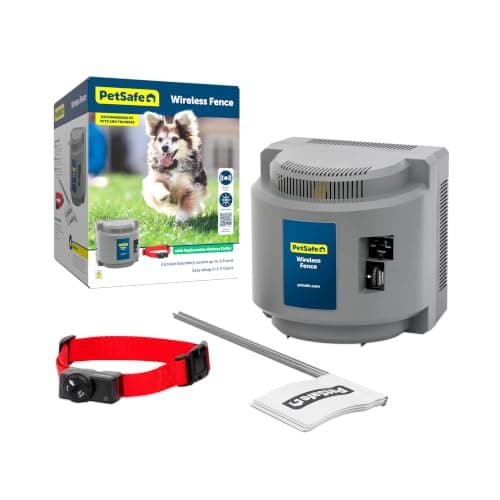
The boundary layer — a portable wireless containment system that defines a circular boundary around a transmitter and warns, then corrects, through a receiver collar per PetSafe, training a dog to stay inside a set radius without a physical fence, as one layer of a containment plan rather than the whole of it.
Sources: PetSafe manufacturer documentation, Canine-containment guidance (AKC, humane training consensus), Published pet-safety standards
Verified Jul 12, 2026
LEMBERI 8x4x6 Outdoor Dog Kennel
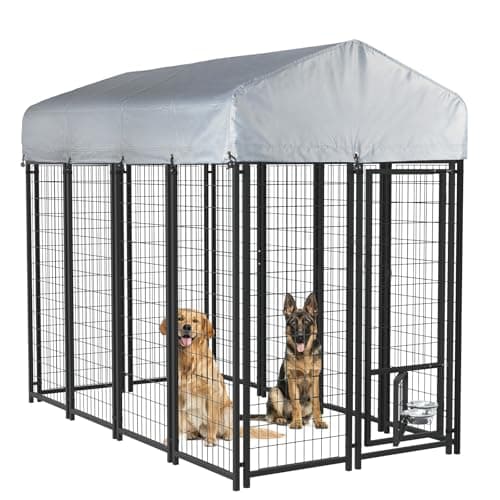
The physical failsafe — a heavy-duty galvanized-steel outdoor kennel and run per LEMBERI, giving a dog a genuinely escape-resistant physical enclosure for unsupervised time, which is the backstop a boundary system alone cannot provide.
Sources: LEMBERI manufacturer documentation, Canine-containment guidance (AKC, humane training consensus), Published pet-safety standards
Verified Jul 12, 2026
Our Picks
PetSafe
PetSafe Original Wireless Fence
8.5 / 10
- Transmitter defines an adjustable circular boundary per PetSafe
- Collar gives a warning tone, then a static correction near the edge
- Portable — no buried wire to install
- A training system, not a physical wall
$197.50
Current price · checked Sep 8, 2026
LEMBERI
LEMBERI 8x4x6 Heavy-Duty Outdoor Dog Kennel
8.4 / 10
- 8 x 4 x 6 ft galvanized-steel enclosed run per LEMBERI
- Secure latching gate for a physical barrier
- A genuine escape-resistant space for unsupervised time
- The backstop a boundary system cannot provide
$189.98
Current price · checked Sep 8, 2026
PetSafe
PetSafe Never Rust Electronic Pet Door
8.3 / 10
- Unlocks only for a dog wearing the collar key per PetSafe
- Stays locked to strays and wildlife
- Corrosion-resistant for an exterior door
- Controls house-to-yard access on your terms
$200.99
Current price · checked Sep 8, 2026
Garovee
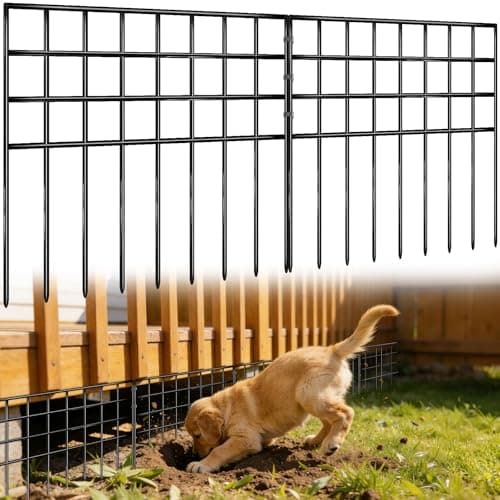
Garovee Garden Fence Animal Barrier (42.5 ft)
8.2 / 10
- 42.5 ft of 13-inch no-dig fence panels per Garovee
- Press into the ground along a fence line
- Blocks the under-the-fence dig-out route
- Reinforces the base of an existing perimeter
$53.99
Current price · checked Sep 8, 2026
LUFFWELL
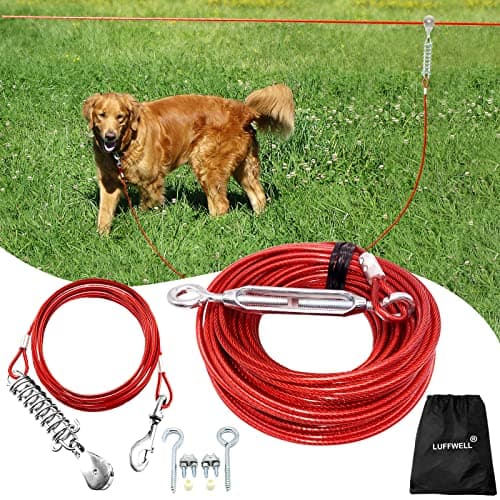
LUFFWELL 100 ft Dog Trolley Run and Tie-Out
8.1 / 10
- 100 ft aerial cable with a 15 ft sliding lead per LUFFWELL
- Gives a long, defined run of movement while tethered
- A physical tether for supervised yard time
- Strung between two solid anchor points
$33.99
Current price · checked Sep 8, 2026
Hi Kiss
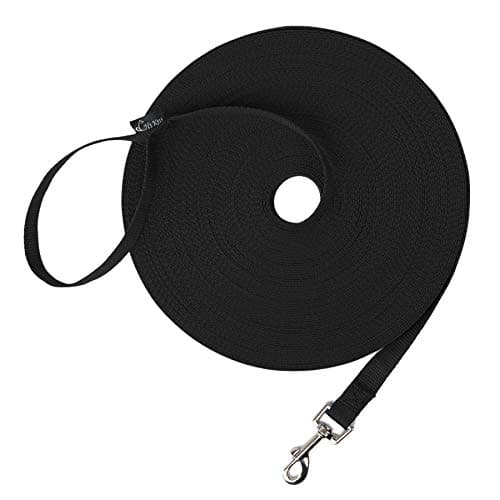
Hi Kiss Dog Training Long Line (15 ft)
8.0 / 10
- 15 ft training long line per Hi Kiss
- Controlled freedom at distance with a physical connection
- For recall and boundary-respect practice
- Bridges leash work to off-lead reliability
$9.97
Current price · checked Sep 8, 2026
The Short Answer
A safe backyard for a dog is built in layers, because any single barrier eventually fails. Start with a boundary system and a physical failsafe: the PetSafe Original Wireless Fence trains a dog to a boundary through a collar and signal, and a heavy-duty LEMBERI Outdoor Dog Kennel gives a physical, escape-resistant space for the times a boundary system is not enough. Add a controlled PetSafe Electronic Pet Door so the dog moves between house and yard on your terms, a Garovee dig barrier along the fence line to stop the classic under-the-fence escape, and a LUFFWELL trolley run for a secure tie-out. Keep a Hi Kiss long line for supervised off-collar freedom and for the recall training that recovers every other mistake. The rule never changes: layer the containment, train the boundary, and never trust one barrier alone with a determined dog.
Every product on this list has been scored against the PetPal Gear Score, a weighted composite of expert consensus, observed effectiveness, animal safety, long-term durability, and value. Review method: Editorial synthesis of canine-containment guidance — the American Kennel Club (AKC) on fencing and yard safety and humane dog-training consensus on boundary training, and published pet-safety standards. Manufacturer documentation from PetSafe, LEMBERI, Garovee, LUFFWELL, and Hi Kiss was reviewed. Community consensus from r/Dogtraining and r/dogs was included as consensus, not quotation. No first-hand product testing — PetPalHQ does not run a testing lab.. Synthesized from 6+ expert sources.
A backyard fails to contain a dog, in this guide's editorial judgment, for one reason more than any other: the owner trusts a single barrier. Someone installs one wireless fence, or relies on one stretch of existing fencing, and treats the job as done — until a squirrel, an open gate, a soft patch of dirt, or a dead collar battery turns that single barrier into a single point of failure, and the dog is gone. Containment is not one product. It is a set of layers that each cover the others' weaknesses, so that no one failure lets a dog out.
Start with the boundary and its physical failsafe, because these two answer different questions. A wireless boundary system trains a dog to respect the edge of the yard, which is genuinely useful and, for many dogs, enough under supervision — but it is a training tool, not a wall, and a determined or frightened dog can run straight through it. That is why a physical run exists in the plan: for unsupervised time, and for dogs a boundary system suits poorly, a secure enclosure is the barrier that actually holds. The two are partners, not rivals.
From there it is about closing the specific ways dogs get out and planning for the day one still does. A collar-activated door controls the house-to-yard passage without leaving an open flap, a dig barrier defeats the under-the-fence tunnel that undoes most fenced yards, and a trolley and a long line give supervised freedom while building the recall that prevents lost dogs. The picks below are that layered kit, not six products ranked against each other. Each earns its place by covering a failure the others cannot, and where a claim rests on a maker's documentation or containment guidance, that is named rather than asserted, because PetPalHQ does not run a testing lab.
One principle sits above the whole plan and never bends. Layer the containment, train the boundary, supervise the tethers, and never trust one barrier alone with a determined dog — and back the whole thing with a microchip, an ID tag, and a reliable recall for the day something still goes wrong. A yard becomes safe not because one clever product makes it so, but because several honest layers each catch what the others miss. Build it that way, and a dog stays home; trust a single barrier, and eventually it will not.
Upgrading the boundary layer
The wireless fence in this kit is the entry point to the boundary layer, not the ceiling of it. Two premium alternatives exist for households that have outgrown a basic portable wireless system, and each solves a different limitation of the setup above.
If the honest problem is that a wireless boundary is a training tool a determined or frightened dog can still run through, our Best Premium GPS Dog Fence Collars guide compares the tier above — SpotOn's no-subscription Nova Edition, the subscription-required Halo Collar 5, and the no-fee PetSafe Guardian — on the real question that tier turns on: total cost of ownership once a required monthly plan is priced in, not just the sticker.
If the honest problem is GPS reliability itself — wooded or rural lots where satellite signal drifts near the boundary — our Best Buried-Wire In-Ground Dog Fence Systems guide covers the physical-wire alternative: a boundary set by a buried line rather than a satellite fix, with zero monthly fees, at the cost of a weekend of trenching and a wire you re-bury rather than redraw if the yard changes. Every system in both guides still uses static correction, so the same training and supervision rules on this page still apply regardless of which boundary tier you choose.
Head-to-Head Comparison
| Feature | PetSafe Original Wireless Fence | LEMBERI 8x4x6 Heavy-Duty Outdoor Dog Kennel | PetSafe Never Rust Electronic Pet Door | Garovee Garden Fence Animal Barrier (42.5 ft) | LUFFWELL 100 ft Dog Trolley Run and Tie-Out | Hi Kiss Dog Training Long Line (15 ft) |
|---|---|---|---|---|---|---|
| Layer in the plan | Boundary training | Physical failsafe | Access control | Perimeter base | Supervised tether | Training aid |
| Contains or supports | Trains the edge | Physically holds | Controls the door | Stops digging out | Tethers under watch | Builds recall |
| Works unsupervised? | Only after training | Yes, with shelter | Yes, into a secured yard | Yes | No — supervised only | No — supervised only |
| PetPal Dog-Containment Score | 8.5 | 8.4 | 8.3 | 8.2 | 8.1 | 8.0 |
| Check price | Amazon | Amazon | Amazon | Amazon | Amazon | Amazon |
$197.50
Current price · checked Sep 8, 2026
- Transmitter defines an adjustable circular boundary per PetSafe
- Collar gives a warning tone, then a static correction near the edge
- Portable — no buried wire to install
- A training system, not a physical wall
- Does not stop other animals entering the yard
The first layer of containment is a boundary the dog learns. The PetSafe Original Wireless Fence defines an invisible circle and teaches the dog to stay inside it. PetSafe documents a portable system in which a transmitter sets an adjustable circular boundary and a receiver collar delivers a warning tone and then a static correction as the dog nears the edge, with no wire to bury. The value is coverage without construction — a boundary in a yard where a physical fence is impractical, unwanted, or not allowed.
Where it fits the setup: this is one layer, and treating it as the whole containment plan is the central mistake this guide is written against. A wireless system is a training tool — it teaches a dog where the edge is, and it works only after a careful, positive introduction with flags and short supervised sessions over days, not minutes. It also has real limits that make the physical layers below non-negotiable: it does not physically stop a determined dog that decides to run through the correction, it does nothing to keep other dogs, wildlife, or people out of the yard, and it depends on a charged collar and working transmitter. If you want to compare wireless and GPS boundary systems, our roundup of the best GPS and wireless dog fences lays out the coverage and reliability trade-offs.
The honest caveats are about temperament and training. A boundary system is a poor fit for some dogs — a strongly prey-driven or panic-prone dog may bolt through the correction chasing a squirrel and then be unwilling to cross back in, which is worse than no system, and this is why the physical kennel below exists as a failsafe. Correction levels must be set humanely and introduced gradually, and the system is never a substitute for supervision with a dog still in training. Confirm current price and availability before buying. As the boundary layer, it defines the yard's edge — but only a physical barrier actually enforces it.
What We Love
- Defines a yard boundary without building a fence
- Portable with no wire to bury
- Adjustable boundary radius and correction levels
- A useful layer where a physical fence is impractical
What Could Be Better
- A training tool, not a physical barrier — some dogs run through it
- Does not keep other animals or people out of the yard
- Depends on a charged collar and a working transmitter
The Verdict
Use a wireless boundary as one layer of containment and a training tool, introduced slowly and humanely with flags and supervision. It defines the yard's edge, but it does not enforce it — pair it with the physical failsafe below, especially for a prey-driven or panic-prone dog.
Sources
- PetSafe (Amazon product listing, Original Wireless Fence): a portable wireless containment system in which a transmitter defines an adjustable circular boundary and a receiver collar delivers a warning tone and then a static correction as the dog approaches the edge; set up without burying wire
- Canine-containment guidance (AKC, humane training consensus): electronic boundary systems are training tools that teach a dog where the edge of the yard is, and they work only with a proper introduction and consistent training — they are not a physical barrier and do not stop other animals or people from entering the yard
$189.98
Current price · checked Sep 8, 2026
- 8 x 4 x 6 ft galvanized-steel enclosed run per LEMBERI
- Secure latching gate for a physical barrier
- A genuine escape-resistant space for unsupervised time
- The backstop a boundary system cannot provide
- Needs shade, water, and shelter added inside
The second layer is the one that physically holds. The LEMBERI 8x4x6 Outdoor Dog Kennel is a galvanized-steel run that actually contains a dog when a boundary signal is not enough. LEMBERI documents a heavy-duty 8-by-4-by-6-foot kennel built from galvanized steel with a secure latching gate. This is the failsafe for the times supervision and a wireless boundary are not appropriate — a secure physical space where a dog can be outside without the risk of running through an invisible line.
Where it fits the setup: every containment plan needs a physical backstop, and this is it. A boundary system trains and a long line supervises, but for genuinely unsupervised outdoor time, or for a dog that a wireless system suits poorly, a physical run is the honest answer. It also solves a problem the boundary layer cannot — it keeps the dog in a defined space regardless of squirrels, delivery trucks, or a flat collar battery. The kennel and the wireless fence are not competitors; the fence gives freedom under supervision, and the kennel gives safety without it. For comparing run sizes, materials, and roofed options, see our roundup of the best heavy-duty outdoor dog kennels and runs.
The honest caveats are about welfare and escape. A kennel is safe housing only if it meets the dog's needs inside it — shade, fresh water, and weather shelter are mandatory, not optional, and a dog should never be left in a bare metal run in heat or cold. A run is also confinement, not enrichment, so it is for defined periods, not a place to leave a dog all day. And determined dogs climb or dig, so a run on soft ground may need a floor, an anchor, or a roof depending on the dog. Confirm current price and availability before buying. As the physical failsafe, it is what makes the whole layered plan trustworthy when no one is watching.
What We Love
- A genuine physical barrier for unsupervised time
- Galvanized steel resists weather and wear
- Secure latching gate holds a dog a signal cannot
- The reliable backstop every containment plan needs
What Could Be Better
- Must add shade, water, and shelter — a bare run is unsafe
- Confinement, not enrichment — for periods, not all day
- Climbers and diggers may need a floor, anchor, or roof
The Verdict
Anchor the containment plan with a physical run for unsupervised outdoor time and for dogs a boundary system suits poorly. It is the failsafe a wireless fence cannot be — but only if you add shade, water, and shelter and use it for defined periods, never as all-day confinement.
Sources
- LEMBERI (Amazon product listing, 8x4x6 Outdoor Dog Kennel): a heavy-duty outdoor dog kennel measuring 8 by 4 by 6 feet built from galvanized steel, forming an enclosed run with a secure latching gate to physically contain a dog outdoors
- Canine-containment guidance (AKC, humane training consensus): a physical enclosure is the reliable failsafe for unsupervised outdoor time, and any outdoor containment for a dog must also provide shade, water, and shelter — a run is safe housing only when the dog's basic needs are met inside it
$200.99
Current price · checked Sep 8, 2026
- Unlocks only for a dog wearing the collar key per PetSafe
- Stays locked to strays and wildlife
- Corrosion-resistant for an exterior door
- Controls house-to-yard access on your terms
- The yard behind it must itself be contained
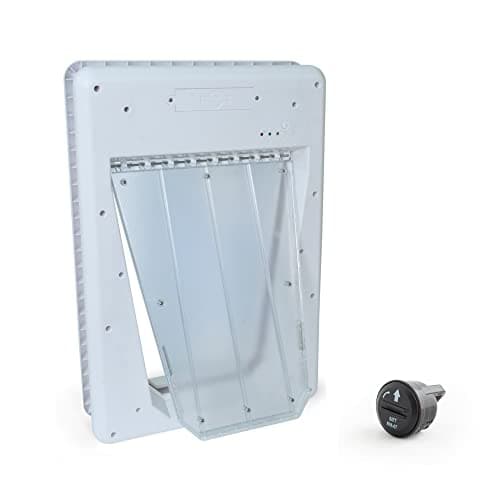
The third layer controls the doorway between house and yard. The PetSafe Never Rust Electronic Pet Door lets your dog pass while staying locked to everything else. PetSafe documents an electronic door that unlocks only for a dog wearing a matching collar key, with corrosion-resistant construction for exterior use. This is access control — the dog can come and go, but a raccoon, a stray, or a neighbor's cat cannot follow it inside, and the door is not simply hanging open to the world.
Where it fits the setup: a dog door only makes sense if what lies beyond it is already contained. Pairing a selective door with the boundary and physical layers above lets a dog move between house and a secured yard freely, which is genuinely good for a dog's routine and house-training, without turning the back wall of the home into an open invitation. A collar-activated door also stops the specific problem of an always-open flap, which lets wildlife in and lets a dog wander out unsupervised whenever it likes. The door is a convenience layer that respects the rest of the containment rather than undermining it.
The honest caveats are about the yard and the hardware. A dog door is only as safe as the containment on the far side — installing one that opens onto an unfenced, unsecured yard hands a dog an unsupervised exit, so this layer assumes the boundary, kennel, and dig-proofing are in place. The collar key needs a working battery, the door needs a compatible installation surface, and a very determined dog can sometimes learn to defeat a flap. Confirm current price and availability before buying. As the access layer, it gives a dog freedom of movement into a yard that the other layers have already made safe.
What We Love
- Opens only for your dog, staying locked to intruders
- Lets a dog move house-to-yard without an open flap
- Corrosion-resistant for exterior installation
- Supports routine and house-training in a secured yard
What Could Be Better
- Only as safe as the containment beyond the door
- Collar key and door depend on working batteries
- A determined dog may learn to defeat the flap
The Verdict
Add a collar-activated door only once the yard beyond it is already contained. It gives a dog free, controlled movement between house and a secured yard while staying locked to wildlife and strays — but it is a convenience layer, never a substitute for securing the yard itself.
Sources
- PetSafe (Amazon product listing, Never Rust Electronic Pet Door): an electronic pet door that unlocks only for the dog wearing a matching collar key, so it opens for your dog while staying locked to strays and wildlife; corrosion-resistant construction for exterior doors
- Published pet-safety standards: a selective, collar-activated door controls which animal can pass and keeps the exterior barrier locked to intruders, unlike an always-open flap that lets any animal in and lets a dog out unsupervised at will
$53.99
Current price · checked Sep 8, 2026
- 42.5 ft of 13-inch no-dig fence panels per Garovee
- Press into the ground along a fence line
- Blocks the under-the-fence dig-out route
- Reinforces the base of an existing perimeter
- Addresses the most common escape method
The fourth layer closes the most common escape route: under the fence. The Garovee Garden Fence Animal Barrier reinforces the base of a perimeter. Garovee documents a 42.5-foot run of 13-inch no-dig fence panels that press into the ground along a fence line to block animals from pushing under or through. Where the fence itself stops a dog from going over, this stops the digging that gets a dog out along the bottom edge — the failure point most escape-proofing overlooks.
Where it fits the setup: containment fails at its weakest point, and for a lot of dogs that point is the dirt at the base of the fence. A physical fence or run holds only if the ground under it is secured, and a low barrier pressed in along the line — or buried as an L-footer turned outward — defeats the classic dig-out. This is a cheap layer that protects the value of the expensive ones, since a beautifully fenced yard with a soft, undug perimeter is a yard a determined digger will simply tunnel out of. It reinforces the base of an existing fence or the ground around a run.
The honest caveats are about determination and coverage. A press-in barrier stops casual and moderate diggers, but a truly obsessive digger may need a deeper buried barrier, a concrete footer, or a hardscaped dig zone — match the reinforcement to the dog. It also only covers the length you install, so the whole perimeter has to be assessed, since a dog finds the one soft, uncovered gap. And a dig barrier addresses digging only; it does nothing for a climber or a jumper. Confirm current price and availability before buying. As the perimeter reinforcement, it protects the base of the fence line that a determined dog will otherwise exploit.
What We Love
- Blocks the under-the-fence dig-out, a top escape route
- Inexpensive way to protect an expensive fence or run
- Presses in along the line without heavy construction
- Reinforces the perimeter's weakest point
What Could Be Better
- An obsessive digger may need a deeper buried barrier
- Only covers the length installed — assess the whole line
- Addresses digging only, not climbing or jumping
The Verdict
Reinforce the base of the fence line to defeat the most common escape — digging out underneath. It is a cheap layer that protects your expensive barriers, but match the depth to the dog, cover the whole perimeter, and pair it with height for a climber.
Sources
- Garovee (Amazon product listing, Garden Fence Animal Barrier): a 42.5-foot run of no-dig garden fence panels, 13 inches high, that press into the ground to form a low barrier along a fence line or garden edge to block animals from pushing under or through
- Canine-containment guidance (AKC, humane training consensus): digging under the fence line is one of the most common ways dogs escape a fenced yard, so reinforcing the base of the perimeter — with buried barriers, an L-footer, or ground stakes — is a standard part of making a yard genuinely escape-proof
$33.99
Current price · checked Sep 8, 2026
- 100 ft aerial cable with a 15 ft sliding lead per LUFFWELL
- Gives a long, defined run of movement while tethered
- A physical tether for supervised yard time
- Strung between two solid anchor points
- For supervised use only — never unattended
The fifth layer is a supervised tether for yards without a full physical fence. The LUFFWELL 100 ft Dog Trolley Run gives a dog a long run of movement while physically attached. LUFFWELL documents a 100-foot aerial cable strung between two anchors with a 15-foot lead that slides along it. It is more freedom than a stake-out and more physical certainty than a boundary signal — a dog can move a long line up and down the yard while staying genuinely tethered.
Where it fits the setup: a trolley bridges the gap between a wireless boundary and a full fence during supervised time. For a yard that is not fully fenced, or while a dog is still learning a boundary system, an aerial run lets the dog be outside with real movement and a physical guarantee it cannot leave. It is especially useful during the training phase of a wireless fence, when the dog does not yet reliably respect the boundary and needs a physical backup you control. The trolley is a supervised tool, not a containment solution for leaving a dog alone.
The honest caveats are about supervision and safety. A tethered dog must be supervised — the standard, serious caution is that an unattended dog on a tie-out or trolley can tangle, wrap a leg, or catch the line and injure itself, and a dog should never be left alone on one. It must be fitted with a proper harness or flat collar, never a slip or choke collar, and the run cleared of obstacles the line could snag. And a trolley contains only the dog on it; it is not a barrier and offers no protection from other animals entering the yard. Confirm current price and availability before buying. As the supervised-tether layer, it gives real movement with physical certainty while someone is watching.
What We Love
- Long run of movement while physically tethered
- A physical backup during wireless-fence training
- More freedom than a fixed stake-out
- Useful for yards without a full fence
What Could Be Better
- Supervised use only — tangling risks injury if left alone
- Requires a harness or flat collar, never a slip collar
- Contains the tethered dog only — not a barrier
The Verdict
Use a trolley run for supervised outdoor time and as a physical backup while a dog learns a boundary system. It gives real movement with physical certainty — but only ever with someone watching, on a proper harness, with the line cleared of snag hazards.
Sources
- LUFFWELL (Amazon product listing, Dog Trolley Run): a 100-foot aerial trolley cable strung between two anchor points with a 15-foot tie-out lead that slides along it, giving a dog a long, defined run of movement while physically tethered
- Canine-containment guidance (AKC, humane training consensus): a trolley or tie-out is for supervised outdoor time only and must be fitted to avoid tangling and never used with a slip or choke collar, because an unsupervised tethered dog risks entanglement and injury
$9.97
Current price · checked Sep 8, 2026
- 15 ft training long line per Hi Kiss
- Controlled freedom at distance with a physical connection
- For recall and boundary-respect practice
- Bridges leash work to off-lead reliability
- Not a tie-out — held or dragged under supervision
The sixth layer is the training tool that makes the others reliable. The Hi Kiss 15 ft Long Line lets you practice recall and boundary respect with a physical safety net. Hi Kiss documents a long lead offered in lengths including 15 feet, used for recall and boundary work to give a dog controlled freedom at distance while the handler keeps a physical connection. It is how a dog earns trust in a new yard or a new boundary before anyone relies on it off-lead.
Where it fits the setup: containment is only as good as the training behind it, and a long line is the bridge from close control to off-lead reliability. When introducing a wireless fence, a long line lets you supervise the dog near the boundary and physically prevent a bolt while the lesson sinks in. For recall — the behavior that saves a dog if any layer ever fails — a long line lets you practice come-when-called at real distances with a fallback if the dog ignores you. It is cheap, and it does more for actual safety than any single piece of hardware, because a dog with a reliable recall is far harder to lose. For structured recall training tools, see our roundup of the best GPS and e-collar dog training systems.
The honest caveats are about handling and use. A long line is held or lightly dragged under supervision, not clipped to an anchor and left — used as an unattended tie-out it becomes an entanglement hazard. It attaches to a harness or flat collar, never a slip collar, because a dog hitting the end of fifteen feet at speed can jolt hard. And it is a training aid, not a barrier; its whole job is to become unnecessary as training succeeds. Confirm current price and availability before buying. As the training layer, it is the inexpensive line that turns a boundary and a recall into behaviors you can actually trust.
What We Love
- Cheap, high-value tool for recall and boundary training
- Physical safety net while a dog learns a wireless fence
- Builds the reliable recall that prevents lost dogs
- Bridges close control to off-lead reliability
What Could Be Better
- Supervised handling only — not an unattended tie-out
- Needs a harness or flat collar to avoid a hard jolt
- A training aid, not a containment barrier
The Verdict
Train recall and boundary respect on a long line before you trust any layer off-lead — it is the cheapest, highest-value safety tool here. Hold or lightly drag it under supervision on a harness, and let its job be to make itself unnecessary.
Sources
- Hi Kiss (Amazon product listing, Obedience Recall Training Lead): a long training lead, offered in lengths including 15 feet, used for recall and boundary work to give a dog controlled freedom at distance while the handler retains a physical connection
- Canine-containment guidance (AKC, humane training consensus): a long line lets a handler practice recall and boundary respect at distance with a physical safety net, which is central to training a dog to a new yard or a boundary system before trusting it off-lead
How We Score
Formula
PetPal Dog-Containment Score = (Expert Consensus × 0.35) + (Containment-Layer Fit × 0.25) + (Safety / Welfare Design × 0.20) + (Value × 0.20)
Score Factors
- Expert Consensus · 35%
- Synthesized from canine-containment guidance (the American Kennel Club and humane dog-training consensus), published pet-safety standards, and manufacturer documentation. The PetPal Dog-Containment Score is a composite of expert opinion — PetPalHQ does not run a testing lab.
- Containment-Layer Fit · 25%
- How directly the item advances a correct, layered containment plan — a trained boundary, a physical failsafe, controlled access, a reinforced perimeter, supervised tethering, training, and recovery — rather than how it performs as a standalone product ranked against rivals.
- Safety / Welfare Design · 20%
- Alignment with dog-safety and welfare principles — humane boundary training, shade, water, and shelter in any enclosure, supervised use of tethers, and layered redundancy so no single failure lets a dog loose or leaves it at risk in the yard.
- Value · 20%
- Cost relative to the item's role in the layered plan, including ongoing needs like batteries and maintenance, and how much of the safe-yard outcome the item is responsible for. This kit is the equipment cost, not the ongoing cost of maintaining a secure yard.
| Rank | Product | Score |
|---|---|---|
| #1 | PetSafe PetSafe Original Wireless Fence | 8.5 |
| #2 | LEMBERI LEMBERI 8x4x6 Heavy-Duty Outdoor Dog Kennel | 8.4 |
| #3 | PetSafe PetSafe Never Rust Electronic Pet Door | 8.3 |
| #4 | Garovee Garovee Garden Fence Animal Barrier (42.5 ft) | 8.2 |
| #5 | LUFFWELL LUFFWELL 100 ft Dog Trolley Run and Tie-Out | 8.1 |
| #6 | Hi Kiss Hi Kiss Dog Training Long Line (15 ft) | 8.0 |
When NOT to Buy
Before buying anything, be honest about the central rule this guide is built on: no single barrier contains a determined dog, and buying only one — whether an expensive wireless fence or a single stretch of fencing — is how dogs get out. If your plan is one boundary system and nothing else, that is not a containment plan, it is a single point of failure. A wireless system in particular is a training tool with real limits: it is a poor fit for a strongly prey-driven or panic-prone dog that may bolt through the correction and refuse to come back in, and for those dogs a physical run and supervision matter far more than any signal.
Welfare rules out several shortcuts. An outdoor kennel or run is safe only when it provides shade, fresh water, and weather shelter, and it is for defined periods of time, never a place to leave a dog all day — a bare metal run in summer heat or winter cold is a hazard, not housing. Tethers and long lines are for supervised time only, because an unattended dog on a tie-out or trolley can tangle and injure itself, and they must be used with a harness or flat collar rather than a slip or choke collar. And a wireless boundary must be introduced slowly and humanely with proper training, never switched on and left to teach the dog through correction alone.
Finally, the honest scope note: this kit is the yard equipment, not the whole of a dog's safety. Microchipping and a physical ID tag are the identification backstop every dog needs regardless of how good the yard is, recall training is the behavior that saves a dog if any layer fails, and supervision is free and irreplaceable. This guide is about containment and escape-proofing, not about heat safety — if your concern is keeping a dog cool and preventing heatstroke outdoors, that is a different setup with its own shade and cooling needs. Confirm current price and availability on every item before buying, since prices and sellers move over time.
Frequently Asked Questions
- Is a wireless fence enough to keep my dog in the yard by itself?
- For many dogs it is a genuinely useful layer, but as a standalone solution it is not enough, and treating it as a complete containment plan is the mistake this guide is written against. A wireless or GPS boundary system is fundamentally a training tool: it teaches a dog where the edge of the yard is through a warning tone and a static correction, and it only works after a careful, positive introduction over days with boundary flags and supervised sessions. Its limits are real and important. It does not physically stop a dog — a strongly motivated dog chasing a squirrel, or a dog panicked by fireworks or a thunderstorm, can run through the correction, and some then will not cross back through it to come home. It also does nothing to keep other dogs, wildlife, or people out of the yard, and it depends entirely on a charged collar and a working transmitter. So a wireless fence is best used as one layer — the boundary-training layer — backed by a physical failsafe like a secure run for unsupervised time, supervision while a dog is still learning, and a recall the dog knows. For a prey-driven or panic-prone dog especially, lean on the physical layers.
- How do I stop my dog from digging under the fence?
- Digging out along the base of the fence is one of the most common escapes, and the fix is to reinforce the ground at the perimeter rather than just building the fence taller. A low barrier pressed into the ground along the fence line, or a buried "L-footer" — fencing bent outward at the bottom and buried a few inches down — defeats the classic dig-out by blocking the dog where it tries to tunnel. For a truly obsessive digger you may need to go further, with a deeper buried barrier, paving stones or concrete along the fence base, or a dedicated dig zone elsewhere in the yard to redirect the behavior. The key points are to assess the entire perimeter, because a dog will find the single soft, unreinforced gap, and to remember that dig-proofing only addresses digging — a dog that climbs or jumps needs height and possibly a lean-in at the top instead. Reinforcing the base is also cheap insurance on an expensive fence, since a well-built fence with an undug perimeter is exactly the yard a determined digger tunnels out of.
- Is it safe to leave my dog outside in a kennel or run?
- A physical run is the safest layer for unsupervised outdoor time, but only when it genuinely meets the dog's needs and is used for reasonable periods rather than as all-day confinement. The non-negotiables are shade, fresh water, and weather shelter — a bare metal run in direct summer sun or winter cold is a serious hazard, not housing, and any outdoor enclosure has to protect the dog from heat, cold, and rain. Beyond the basics, a run is confinement rather than enrichment, so it is appropriate for defined periods when you cannot supervise directly, not a substitute for exercise, company, and time out of it. You should also match the run's construction to the dog: a climber may need a covered top, a digger may need a floor or a buried anchor, and the gate latch must be secure against a dog that learns to nose it open. Used that way — as a secure, sheltered space for limited unsupervised time — a run is the reliable physical failsafe in a containment plan. Left as a place to park a dog all day in the elements, it is neither safe nor humane.
- My yard is not fully fenced yet — how do I keep my dog contained in the meantime?
- Until a full physical barrier is in place, rely on supervised layers rather than trusting a dog loose. The most useful tools are a trolley run or a long line used under direct supervision, which give a dog real movement while keeping a physical connection you control, and they are especially valuable while a dog is still learning a boundary system it does not yet respect reliably. The critical word is supervised: an aerial trolley or a long line gives freedom only when someone is watching, because an unattended tethered dog can tangle, wrap a leg, or catch the line and hurt itself, and these are never a way to leave a dog outside alone. Fit them with a harness or a flat collar, never a slip or choke collar, and clear the run area of anything the line could snag on. A secure crate or run handles the unsupervised gaps. And throughout, work on recall with a long line so that as the permanent fencing comes together, the dog already has the one behavior that recovers every mistake.
- Do I still need a GPS tracker if I have a good fence and a run?
- Yes, and the reason is the honest premise of the whole layered approach: no containment is perfect, and a tracker is the recovery plan for the day a layer fails. Even a well-fenced yard with a secure run has failure modes — a gate left open by a visitor, a storm-panicked dog going over or through something, a collar battery that dies at the wrong moment — and when a dog does get out, a real-time GPS tracker turns a frantic, hours-long neighborhood search into a glance at a map. It is important to be clear about what a tracker is and is not: it contains nothing and prevents no escapes, so it is never a reason to cut corners on the physical layers, and it depends on a charged battery and a signal, so it has to be maintained rather than forgotten. It works best alongside the permanent identification every dog should have anyway — a microchip and a physical ID tag — which is what reunites a dog even if the tracker's battery is dead. Think of it as cheap insurance that makes a good containment plan resilient to the failure every good plan expects.
- I've outgrown the basic wireless fence in this kit — what's the upgrade path?
- It depends on which limitation you've hit. If a determined or frightened dog is running through the boundary correction, the premium GPS fence tier — SpotOn, Halo, and PetSafe Guardian, compared in our Best Premium GPS Dog Fence Collars guide — adds tighter accuracy claims and, on some models, live tracking, though the real decision there is total cost of ownership once a required subscription is priced in. If the problem is GPS reliability itself on a wooded or rural lot, a buried-wire system sets the boundary with a physical wire instead of a satellite fix; our Best Buried-Wire In-Ground Dog Fence Systems guide covers that trade-off. Either upgrade still requires the same training and layered-containment discipline this page is built around.
Bottom Line
Layer the containment — no single barrier holds a determined dog. Pair the PetSafe Wireless Fence as a trained boundary with the LEMBERI physical kennel as the failsafe, because a signal trains the edge and only a physical barrier enforces it.
Match the boundary system to the dog. A wireless fence is a training tool introduced slowly and humanely, and it is a poor fit for a prey-driven or panic-prone dog that may bolt through the correction — those dogs need the physical run and supervision, not just a collar.
Close the common escape routes. A collar-activated PetSafe door controls house-to-yard access without an open flap, and a Garovee dig barrier defeats the under-the-fence tunnel that undoes most fenced yards — but the door is only as safe as the yard beyond it.
Train and supervise, never just confine. A LUFFWELL trolley gives supervised freedom and a Hi Kiss long line builds the recall that prevents lost dogs — both on a harness, both supervised, because an unattended tether is an injury risk.
Plan for failure. No containment is perfect, so back the whole kit with a microchip, an ID tag, and a recall the dog actually knows — and a GPS tracker on the collar if you want the fastest recovery. None of that contains anything; it is what turns an escape into a scare instead of a tragedy.
Sources & Methodology
Methodology
PetPal Dog-Containment Score = (Expert Consensus × 0.35) + (Containment-Layer Fit × 0.25) + (Safety / Welfare Design × 0.20) + (Value × 0.20)
Expert review sources
- Canine-containment guidance — the American Kennel Club (AKC) on fencing and yard safety
- Humane dog-training consensus on boundary-system introduction and recall
- Published pet-safety standards on tethering, enclosures, and identification
- PetSafe — Original Wireless Fence and Never Rust Electronic Pet Door product documentation
- LEMBERI — 8x4x6 Outdoor Dog Kennel product documentation
- Garovee, LUFFWELL, and Hi Kiss product documentation
Community sources
- r/Dogtraining — boundary training, recall, and escape-proofing consensus
- r/dogs — general yard-safety and containment consensus
Prices and specs verified July 12, 2026.
About the author
Nick Miles is the chief editor of PetPalHQ. This layered dog-containment setup and its kit are editorial synthesis of canine-containment guidance (the American Kennel Club and humane dog-training consensus), published pet-safety standards, and manufacturer documentation — PetPalHQ does not run a testing lab. The PetPal Dog-Containment Score is a composite of expert opinion, not a measurement. Sources are cited by name throughout.
PetPalHQ is a participant in the Amazon Services LLC Associates Program. We may earn commissions from qualifying purchases — at no extra cost to you.
More Guides
Cats & Dogs
Best GPS Wireless Dog Fences for Unfenced Yards and Escape Artists (2026)
Cats & Dogs
Best Heavy-Duty Outdoor Dog Kennels and Runs (2026)
Cats & Dogs
Best Electronic & Automatic Dog Doors for Large Dogs (2026)
Cats & Dogs
Best GPS Dog Training & E-Collar Systems 2026: Tracking and Training Rigs for Hunting and Working Dogs
Playground
Best Dog Backyard Agility Kits for Real-Yard Training (2026)

Cats & Dogs
Best Premium GPS Dog Fence Collars: SpotOn, Halo, and the No-Subscription Question (2026)
Cats & Dogs