Aquarium
Koi Pond Summer Care: Fixing Algae and Low Oxygen (2026)
This is not a head-to-head pond-gear ranking — it is a summer emergency protocol. Warm water holds less oxygen exactly when koi and algae demand more, and heat, sun, and nutrients set off green-water and string-algae blooms. The picks below are the fix kit in the order you deploy it — aeration first to stop an oxygen crash, a UV clarifier for green water, netting to cut the nutrient load, beneficial bacteria to rebuild the biology, and a thermometer to tell you when to act — not five products graded against each other. If your pond is tiny, overstocked, or you are reaching for algaecide as a first move, read the caveats before you buy anything.
By Nick Miles · Updated July 12, 2026 · 12 min read
PetPalHQ is reader-supported. We may earn a commission from qualifying Amazon purchases at no extra cost to you.
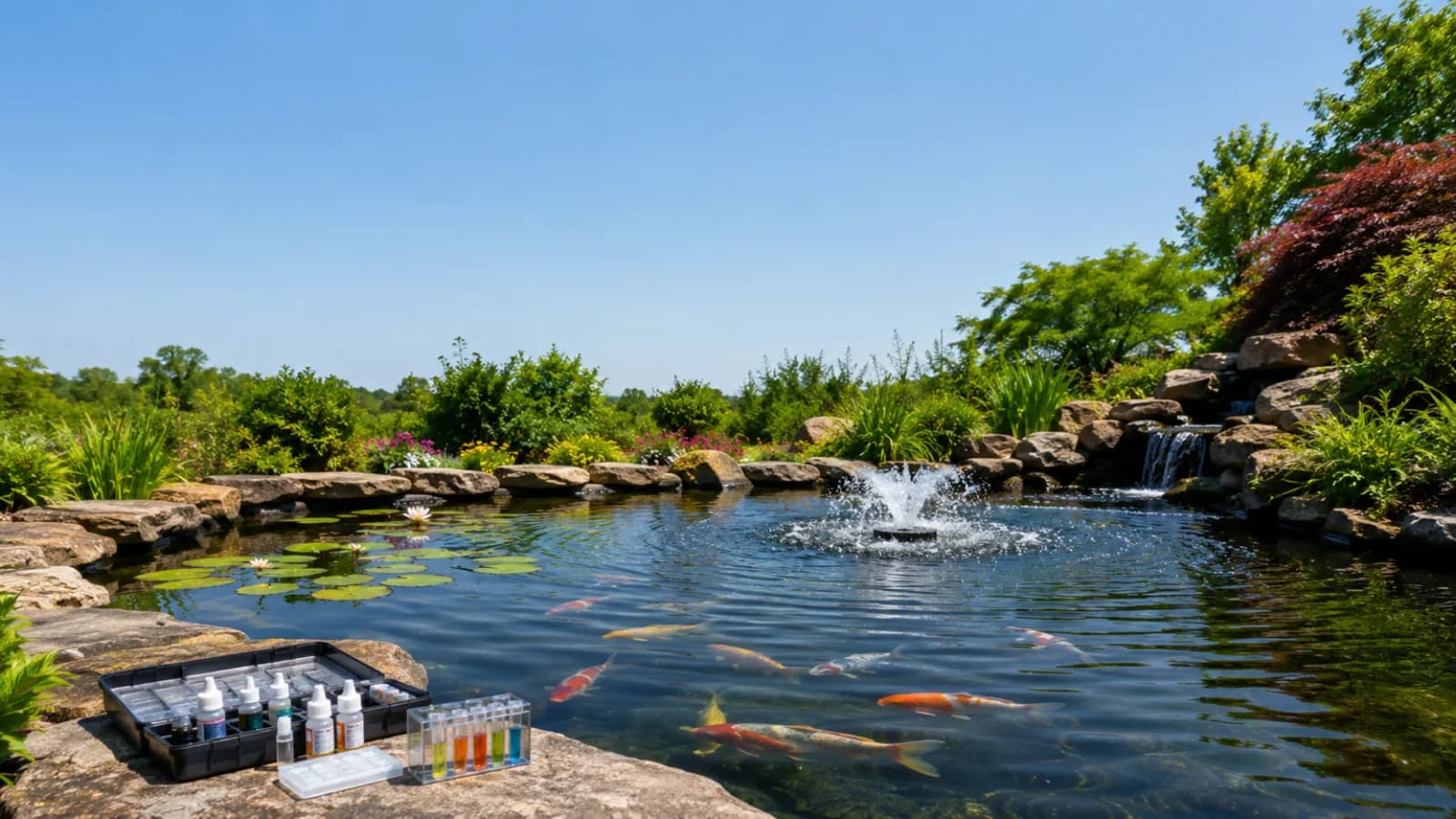
Evidence at a Glance
CrystalClear PondAir 2 Aeration Kit
The first summer fix — a complete bottom-diffused aeration kit for ponds up to 1,000 gallons that raises oxygen saturation and circulation, runs near-silent at just 4 watts around the clock, and vents harmful gases per CrystalClear, so it stops the pre-dawn oxygen crash that is the deadliest July failure mode for koi.
Sources: CrystalClear manufacturer documentation, Pond-keeping and dissolved-oxygen standards consensus, Koi-health consensus
Verified Jul 12, 2026
coospider Pond Filter with 18W UV Clarifier
The green-water fix — an 18-watt UV clarifier that eliminates free-floating green-water algae in about three to seven days paired with six-layer mechanical and biological filtration and a 660 GPH pump for ponds up to 1,500 gallons per coospider; the honest limit is that UV clears suspended algae only, never string algae on rocks.
Sources: coospider manufacturer documentation, Pond-keeping and water-quality standards consensus, Koi-health consensus
Verified Jul 12, 2026
Alloxity Pond Netting (7 x 10 ft)
The prevention layer — an anti-tear HDPE net that keeps leaves and debris out before they rot and feed an algae bloom, while also blocking herons, egrets, and raccoons that pick off koi in summer per Alloxity; it stakes down with no tools but is prevention, not a cure for a bloom already in the water.
Sources: Alloxity manufacturer documentation, Pond-keeping and water-garden consensus, Koi-health consensus
Verified Jul 12, 2026
Our Picks
CrystalClear
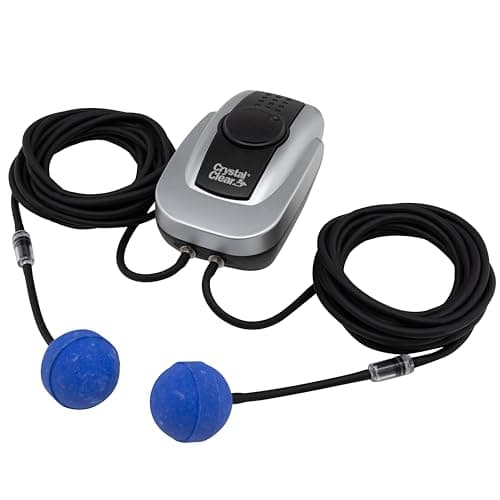
CrystalClear PondAir 2 Aeration Kit
8.8 / 10
- Complete kit for ponds up to 1,000 gallons — compressor, tubing, and two air stones, per CrystalClear
- Increases circulation and oxygen saturation across the whole water column
- Bottom-diffused air supports beneficial bacteria that clear water and reduce muck
- Near-silent and runs 24/7 at just 4 watts, per the listing
$59.99
Current price · checked Sep 8, 2026
coospider-repta
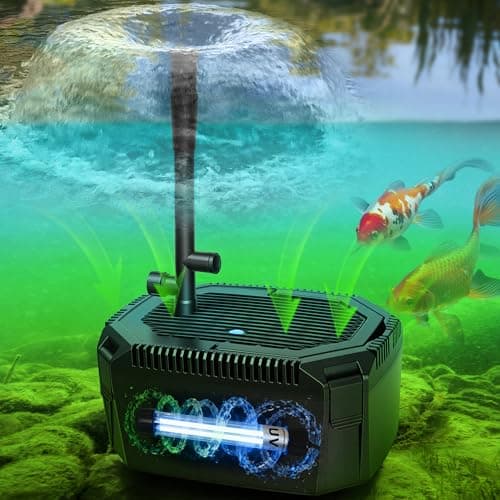
coospider Pond Filter with 18W UV Clarifier
8.5 / 10
- 18-watt UV clarifier eliminates green-water algae in about 3 to 7 days, safe for fish and plants, per coospider
- Six-layer filtration: three mechanical pads, activated carbon, lava rock, and bio balls for beneficial bacteria
- 42-watt pump moves about 660 GPH for ponds up to 1,500 gallons
- Three fountain nozzles add surface aeration and circulation
$139.99
Current price · checked Sep 8, 2026
Alloxity
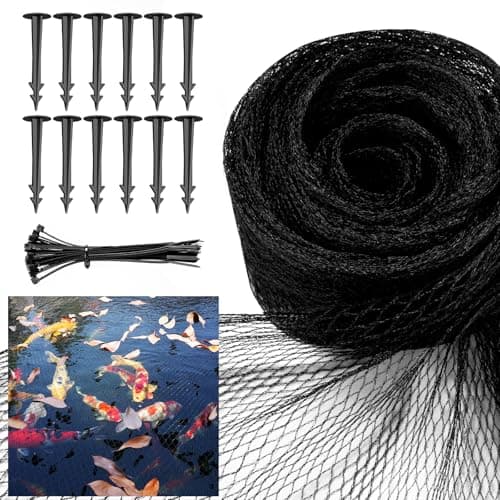
Alloxity Pond Netting (7 x 10 ft, with Stakes)
8.1 / 10
- 7-by-10-foot HDPE net keeps leaves and debris out; shake it off in minutes, per Alloxity
- Anti-tear, weather-resistant, and reusable season to season
- Barrier against herons, egrets, raccoons, cats, and frogs
- Stretches over the pond and stakes down with no tools
$12.99
Current price · checked Sep 8, 2026
Aquascape
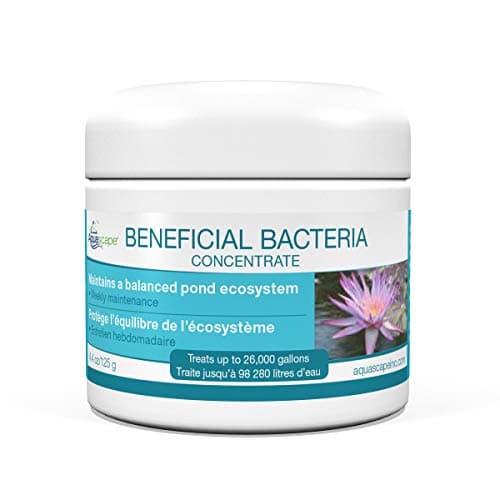
Aquascape Dry Beneficial Bacteria (4.4 oz)
7.9 / 10
- Maintains biological balance for clean, clear, healthy water, per Aquascape
- Eight concentrated bacteria strains including PSB, plus enzymes
- PSB clump fine suspended debris so it settles out of the water
- Contains marigold and vitamin B for fish health
$12.66
Current price · checked Sep 8, 2026
Danner
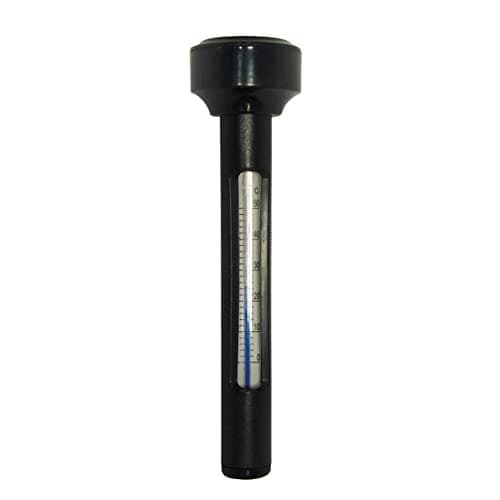
Danner Pondmaster Floating Pond Thermometer
7.7 / 10
- Floating pond thermometer reading both Fahrenheit and Celsius, per Danner
- Color-coded temperature zones for a quick at-a-glance read
- Six-foot tether so it is easy to retrieve from the water
- Helps time water treatments, plant care, and fish feeding
$16.88
Current price · checked Sep 8, 2026
The Short Answer
Treat summer as two emergencies, not one, and fix them in order. The first is low dissolved oxygen: warm water holds less oxygen, and plants and algae use it up overnight, so fish gasp at the surface before dawn. Fix oxygen first with the CrystalClear PondAir 2 Aeration Kit — a bottom-diffused air pump that runs day and night and raises oxygen saturation across the pond. The second emergency is algae, and it splits in two. Green water — a pea-soup cloud of free-floating algae — is what the coospider Pond Filter with 18W UV Clarifier is for; its UV kills suspended algae in days while six filter layers pull out debris. String and hair algae on rocks is a different problem UV cannot touch; that needs manual removal and nutrient control. Cut the nutrient load at the source with Alloxity Pond Netting, which keeps leaves and debris out before they rot and feed algae. Rebuild the biology with Aquascape Dry Beneficial Bacteria, which out-competes algae for nutrients over weeks. And read the water with the Danner Pondmaster Floating Pond Thermometer, because temperature is the trigger — above about 75 to 80 degrees you cut feeding and boost aeration. Never dump algaecide first: a fast algae die-off crashes oxygen and can kill koi. Aeration first, nutrient control second, chemicals last and cautiously. Gear cannot fix a pond that is simply too small or overstocked.
Every product on this list has been scored against the PetPal Gear Score, a weighted composite of expert consensus, observed effectiveness, animal safety, long-term durability, and value. Review method: Editorial synthesis of water-quality guidance — pond-keeping and water-garden consensus, published dissolved-oxygen and water-quality standards, and koi-health consensus. Manufacturer documentation from CrystalClear, coospider, Alloxity, Aquascape, and Danner was reviewed. Community consensus from r/koi and r/ponds was included as consensus, not quotation. No first-hand product testing — PetPalHQ does not run a testing lab.. Synthesized from 3+ expert sources.
A koi pond goes wrong in summer, in this guide's editorial judgment, for one reason more than any other: the two July emergencies get treated as one problem, or in the wrong order. An owner sees green water, reaches for algaecide, and loses fish overnight — not to the algae, but to the oxygen crash the die-off caused. The heat, the low oxygen, and the algae bloom are linked, but they are not the same emergency, and the order you fix them in decides whether the koi live. This guide is the diagnose-and-fix protocol, in the order you actually deploy it.
Start with oxygen, because it is the one that kills fastest and the one summer attacks hardest. Warm water holds less dissolved oxygen than cool water, so a heatwave lowers the ceiling exactly when fish and algae are demanding more. Plants and algae make oxygen in daylight but consume it overnight, which is why the daily low arrives just before dawn — and why koi crowded at the surface gasping at first light is an emergency, not a habit. Aeration is the fix, and it comes before anything else, ideally added before the heat arrives rather than during the crisis.
Then take on algae, and split it in two the way a pond keeper has to. Green water is a cloud of free-floating algae suspended in the water, and a UV clarifier clears it in days because the algae passes through the light and dies. String and hair algae clinging to rocks and liner is a completely different problem the UV never touches — that one needs manual removal and nutrient control. The rest of the kit works upstream of both: netting keeps the rotting debris that feeds algae out of the water, beneficial bacteria out-compete algae for nutrients over weeks, and a thermometer tells you when the water is hot enough to change how you feed and aerate.
One rule sits above the whole protocol and never bends. Never reach for algaecide as a first move: a fast, large die-off consumes oxygen as it decomposes and can crash a pond overnight, killing the koi you meant to save. The order is aeration first, nutrient control second, and chemicals last and cautiously. Reduce feeding in extreme heat, because overfeeding a warm-water koi spikes ammonia and feeds the bloom. And accept the honest limit that no gear fixes a pond that is simply too small or too full of fish — stocking density is the root cause there, and more water or fewer fish is the only real answer.
Head-to-Head Comparison
| Feature | CrystalClear PondAir 2 Aeration Kit | coospider Pond Filter with 18W UV Clarifier | Alloxity Pond Netting (7 x 10 ft, with Stakes) | Aquascape Dry Beneficial Bacteria (4.4 oz) | Danner Pondmaster Floating Pond Thermometer |
|---|---|---|---|---|---|
| Summer failure it fixes | Low dissolved oxygen crash | Green-water algae bloom | Debris feeding the next bloom | Nutrient imbalance over time | Not knowing when to act |
| Where it goes | Air stones on the pond bottom | Inline pump-and-filter unit in the pond | Stretched over the pond surface | Dosed into the water | Floating on the surface |
| Prevention or cure | Emergency cure and prevention | Cure for suspended algae only | Prevention, not a cure | Slow, steady-state maintenance | Monitoring instrument |
| Speed of effect | Immediate oxygen lift | Clears green water in 3 to 7 days | Works as debris arrives | Weeks to shift the balance | Instant reading |
| Check price | Amazon | Amazon | Amazon | Amazon | Amazon |
$59.99
Current price · checked Sep 8, 2026
- Complete kit for ponds up to 1,000 gallons — compressor, tubing, and two air stones, per CrystalClear
- Increases circulation and oxygen saturation across the whole water column
- Bottom-diffused air supports beneficial bacteria that clear water and reduce muck
- Near-silent and runs 24/7 at just 4 watts, per the listing
- Vents harmful gases and can keep a hole open in winter ice
Summer kills koi through oxygen before it kills them through anything else, and the fix comes first for that reason. The CrystalClear PondAir 2 Aeration Kit is that fix. CrystalClear documents a complete kit for ponds up to 1,000 gallons — a compressor, tubing, and two air stones — that raises circulation and oxygen saturation, runs near-silent at just 4 watts around the clock, vents harmful gases, and can hold an ice hole open in winter. It works by pushing air from the bottom up, so the whole water column mixes rather than only the surface.
The physics are the reason this is the number-one job. Warm water simply holds less dissolved oxygen than cool water, so a July heatwave lowers the ceiling exactly when fish and algae want more. Plants and algae also breathe: overnight they consume oxygen instead of making it, which is why the daily low arrives just before dawn and why koi gasping at the surface at first light is an emergency, not a quirk. Add aeration before a heatwave, not during one, and keep it running day and night. For readers sizing a full pump-and-filter build around this, our guide to backyard koi pond systems covers matching the hardware to a real koi load rather than the optimistic gallon number on the box.
The honest caveats are about scope and pairing. This is an aeration kit, not a filter — it moves oxygen, and that alone can pull a pond back from a crash, but it does not clear green water or remove waste on its own. A pond much larger than 1,000 gallons needs more diffusion than two stones provide, so match the kit to the water volume rather than assuming one size covers every pond. And air stones clog over time, so they need occasional cleaning to keep the bubble column strong. Confirm current price and availability before buying. As the first move in a summer emergency, though, nothing else on this page saves fish as directly.
What We Love
- Directly targets the deadliest summer failure — a dissolved-oxygen crash
- Bottom-diffused air mixes the whole column, not just the surface
- Runs 24/7 at only 4 watts, so it is cheap to leave on through the season
- Also vents harmful gases and reduces muck by feeding beneficial bacteria
What Could Be Better
- It is aeration only — it does not filter water or clear algae
- Two air stones suit ponds up to about 1,000 gallons, not larger builds
- Air stones clog over time and need periodic cleaning
- A cheap check valve is worth adding so water cannot back-siphon into the pump
The Verdict
The first thing to plug in when summer turns dangerous: bottom-up aeration that raises oxygen across the whole pond for the price of a nightlight in power. Add it before the heatwave, run it around the clock, and match the diffusion to your gallons — but pair it with real filtration, because oxygen alone does not clear the water.
Sources
- CrystalClear (Amazon product listing, PondAir 2 Aeration Kit): complete aeration kit for ponds up to 1,000 gallons with a compressor, tubing, and two air stones that increases circulation and oxygen saturation, runs near-silent 24/7 at just 4 watts, and vents harmful gases
- Pond-keeping and dissolved-oxygen standards consensus: warm water holds less dissolved oxygen than cool water, and because plants and algae consume oxygen overnight, the daily low comes just before dawn — when koi gasping at the surface signals an oxygen emergency
$139.99
Current price · checked Sep 8, 2026
- 18-watt UV clarifier eliminates green-water algae in about 3 to 7 days, safe for fish and plants, per coospider
- Six-layer filtration: three mechanical pads, activated carbon, lava rock, and bio balls for beneficial bacteria
- 42-watt pump moves about 660 GPH for ponds up to 1,500 gallons
- Three fountain nozzles add surface aeration and circulation
- Plug-and-play; clean the sponges about every three days in heavy season
Green water is the second summer emergency, and it is a different problem from low oxygen — related, but not the same. The coospider Pond Filter with 18W UV Clarifier is the tool for it. coospider documents an 18-watt UV clarifier that eliminates green-water algae in roughly three to seven days while staying safe for fish and plants, paired with six-layer filtration — three mechanical pads, activated carbon, lava rock, and bio balls that host beneficial bacteria — and a 42-watt pump moving about 660 gallons per hour for ponds up to 1,500 gallons, with three fountain nozzles that add surface aeration.
The distinction that matters most is what UV can and cannot do. UV light kills the free-floating algae that turns water pea-soup green, because that algae passes through the clarifier and gets zapped in transit. It does nothing to the string and hair algae clinging to rocks and liner, which never enters the flow — that kind needs manual removal and nutrient control, not a UV bulb. Keep the two apart when you diagnose a pond. UV also only works with adequate flow and a clean bulb and quartz sleeve; a fouled sleeve or a starved pump quietly stops clarifying while the light still glows.
The honest caveats are about upkeep and pairing. The sponges need cleaning about every three days during a heavy bloom, or flow drops and the UV loses contact time. A UV bulb dims with age and eventually stops sterilizing even when lit, so it is a wear part on a schedule. And clarifying the water does not remove the nutrients that fed the bloom, so without cutting the nutrient load the green water returns. Confirm current price and availability before buying. For clearing suspended green water specifically, though, a correctly sized UV clarifier is the reliable fix — just remember it is precise, not universal.
What We Love
- Directly clears free-floating green-water algae, the classic summer bloom
- Six-layer media handles mechanical and biological filtration in one unit
- Fountain nozzles add surface aeration on top of clarification
- Plug-and-play install suits ponds up to about 1,500 gallons
What Could Be Better
- UV clears green water only — it does nothing to string or hair algae on rocks
- Sponges clog fast in summer and need cleaning every few days
- The UV bulb and quartz sleeve are wear parts that need replacing and cleaning
- Clarifying does not remove nutrients, so the bloom returns without nutrient control
The Verdict
The right answer for pea-soup green water — UV that clears suspended algae in days, wrapped around real six-stage filtration. Just hold the distinction firmly: it kills free-floating algae, not the string algae on your rocks, and it only works with clean media, a fresh bulb, and steady flow.
Sources
- coospider (Amazon product listing, Pond Filter with 18W UV Clarifier): 18-watt UV clarifier that eliminates green-water algae in about 3 to 7 days safe for fish and plants, with 6-layer filtration and a 42-watt pump moving about 660 GPH for ponds up to 1,500 gallons
- Pond-keeping and water-quality standards consensus: a UV clarifier clears only free-floating green-water algae suspended in the water column and has no effect on string or hair algae attached to rocks and liner, which nutrient control and manual removal address instead
$12.99
Current price · checked Sep 8, 2026
- 7-by-10-foot HDPE net keeps leaves and debris out; shake it off in minutes, per Alloxity
- Anti-tear, weather-resistant, and reusable season to season
- Barrier against herons, egrets, raccoons, cats, and frogs
- Stretches over the pond and stakes down with no tools
- Includes 12 pegs and 20 zip ties for anchoring
An algae bloom is a nutrient problem before it is anything else, and the cheapest nutrient control is keeping the food out of the water. Alloxity Pond Netting does that. Alloxity documents a 7-by-10-foot anti-tear HDPE net that keeps leaves and debris out, blends into the water, resists weather, and stakes over the pond with no tools using twelve pegs and twenty zip ties, doubling as a barrier against herons, egrets, raccoons, cats, and frogs.
The summer logic runs through the nutrient cycle. Every leaf, seed, and bit of debris that lands in the pond eventually rots, and as it breaks down it both releases the nutrients algae feed on and consumes dissolved oxygen — so debris makes both summer emergencies worse at once. Netting stops that at the surface, which is why it sits in the fix kit even though it treats nothing directly. It also earns its place a second way: summer is heron season, and a net is the simplest barrier between a wading bird and a pond full of visible koi. Shake the collected debris off every few days so the net does not sag into the water.
The honest caveat is what this pick is not. Netting is prevention, not a cure — it keeps new nutrients out, but it does nothing about the bloom already in the water or the muck already on the bottom. It works best set up before the heavy leaf-fall and used all season, not thrown on in a panic. A net pulled taut and staked well also matters for the koi: loose netting that sags into the water can trap a fish, so keep it stretched and anchored. Confirm current price and availability before buying. As the prevention layer, it is a few dollars that quietly starves the next bloom before it starts.
What We Love
- Cuts the nutrient load at the source by keeping rotting debris out
- Doubles as a heron, egret, and raccoon barrier during summer
- Sets up with no tools and stores for reuse season to season
- The lowest-cost preventive lever in the whole kit
What Could Be Better
- Prevention only — it does nothing about a bloom already in the water
- Must be shaken off regularly or it sags and stops working
- Loose netting can trap a fish, so it has to stay taut and staked
- A single 7-by-10-foot panel suits a small pond; larger ponds need more
The Verdict
The quiet preventive that starves the next bloom: keep rotting leaves out of the water and you cut the nutrients algae live on, while blocking the summer heron at the same time. Just treat it as prevention, not a cure, keep it pulled taut so no koi gets trapped, and size the coverage to your pond.
Sources
- Alloxity (Amazon product listing, Pond Netting 7 x 10 ft): anti-tear, weather-resistant HDPE pond net measuring 7 by 10 feet that keeps leaves and debris out and blocks herons, egrets, raccoons, cats, and frogs, staking over the pond with no tools using 12 pegs and 20 zip ties
- Pond-keeping and water-garden consensus: decaying leaves and organic debris feed algae and consume dissolved oxygen as they break down, so keeping debris out of the water is a front-line nutrient-control step rather than a treatment for an existing bloom
$12.66
Current price · checked Sep 8, 2026
- Maintains biological balance for clean, clear, healthy water, per Aquascape
- Eight concentrated bacteria strains including PSB, plus enzymes
- PSB clump fine suspended debris so it settles out of the water
- Contains marigold and vitamin B for fish health
- One 4.4-ounce container treats up to 26,000 gallons
Clear water is a sign the biology is winning, and beneficial bacteria are how you tip that balance. Aquascape Dry Beneficial Bacteria is the rebuild tool. Aquascape documents a dry blend of eight concentrated bacteria strains plus enzymes that maintains biological balance for clean, clear, healthy water, with photosynthetic bacteria (PSB) that clump fine suspended debris so it settles out, marigold and vitamin B for fish health, and enough concentration that one 4.4-ounce container treats up to 26,000 gallons.
Where it fits the fix: aeration and a UV clarifier deal with symptoms, but the underlying contest in a pond is between bacteria and algae for the same nutrients. When beneficial bacteria are thriving, they consume the nitrogen and phosphorus algae would otherwise use, and the water stays clearer with less bloom pressure. Dosing bacteria is how you feed that side of the fight after a filter clean, a water change, or a bloom has knocked the population back. It pairs naturally with the netting and the filter — bacteria handle the dissolved nutrients, netting handles the incoming debris, and UV handles the algae already suspended.
The honest caveats are about time and heat. Bacteria are a steady-state tool, not an overnight fix — they out-compete algae over weeks, not hours, so this is maintenance, not rescue. In hot weather bacteria are consumed and turn over faster, so summer dosing usually needs to be more frequent than the cool-season rate, following the label. And bacteria need oxygen to work, which is one more reason the aeration kit comes first — a low-oxygen pond starves the very bacteria you are adding. Confirm current price and availability before buying. As the biological layer, it is the cheap, slow lever that keeps clear water clear once the emergencies are handled.
What We Love
- Out-competes algae for nutrients, attacking the bloom at its root
- PSB clump fine debris so it settles instead of clouding the water
- Highly concentrated — a small container treats a very large volume
- Cheap maintenance that keeps water clear after the emergencies pass
What Could Be Better
- Works over weeks, not hours — it is maintenance, not a rescue
- Needs more frequent dosing in summer heat as bacteria turn over faster
- Requires dissolved oxygen to work, so aeration has to come first
- Does nothing for string algae or a heavy existing bloom on its own
The Verdict
The slow lever that keeps clear water clear: bacteria that starve algae of the nutrients it needs, for a few dollars a container. Just set the expectation honestly — it is a weeks-long, steady-state tool, it needs oxygen and more frequent summer dosing to work, and it belongs after the aeration and clarifier, not instead of them.
$16.88
Current price · checked Sep 8, 2026
- Floating pond thermometer reading both Fahrenheit and Celsius, per Danner
- Color-coded temperature zones for a quick at-a-glance read
- Six-foot tether so it is easy to retrieve from the water
- Helps time water treatments, plant care, and fish feeding
- Measures across a 20-to-120-degree Fahrenheit range
Every summer decision — how much to feed, how hard to aerate, when to treat — starts with the water temperature, and guessing is how ponds get hurt. The Danner Pondmaster Floating Pond Thermometer removes the guess. Danner documents a floating thermometer that reads both Fahrenheit and Celsius across a 20-to-120-degree range, with color-coded zones for an at-a-glance read and a six-foot tether so it is easy to pull from the water.
The summer logic is that temperature is the trigger for everything else in this guide. Above roughly 75 to 80 degrees, dissolved oxygen falls and koi metabolism and appetite shift, and that number is the signal to reduce feeding and boost aeration. Overfeeding in heat is a common mistake — the food a cool-water koi handles becomes an ammonia spike and an algae meal in warm water, because a warm, slow-metabolism fish digests less of it. The thermometer turns that from a vague worry into a decision: read the water, and if it is hot, feed less and aerate more. It also tells you when a treatment is safe to add, since many pond products behave differently across the temperature range.
The honest caveats are modest, because a thermometer is a simple instrument. It reports surface temperature at its float, which on a hot, still day can read warmer than the cooler water deeper down, so use it as a guide rather than a lab reading. It gives you the number but not the action — the value is only realized if you actually change feeding and aeration in response. And a floating gauge can drift to a corner or get knocked, which the tether is there to solve. Confirm current price and availability before buying. As the monitoring layer, it is the cheap instrument that tells you when every other tool in this kit needs to work harder.
What We Love
- Turns summer feeding and aeration from guesswork into a temperature-driven decision
- Color-coded zones and dual scales make the read fast and clear
- Six-foot tether keeps it retrievable and stops it drifting away
- Cheap instrument that informs when to act on every other tool here
What Could Be Better
- Reads surface temperature, which can run warmer than deeper water
- Tells you the number but not the action — you still have to respond
- A floating gauge can drift or get knocked without the tether secured
The Verdict
The cheap instrument that makes the rest of the kit work on time: above about 75 to 80 degrees, oxygen falls and you cut feeding and raise aeration, and this is how you know you have crossed that line. Just treat its surface reading as a guide, and remember the number only helps if you act on it.
How We Score
Formula
PetPal Pond-Care Score = (Expert Consensus × 0.35) + (Summer-Fix Fit × 0.25) + (Fish Safety / Welfare × 0.20) + (Value × 0.20)
Score Factors
- Expert Consensus · 35%
- Synthesized from pond-keeping and water-garden consensus, published dissolved-oxygen and water-quality standards, koi-health consensus, and manufacturer documentation. The PetPal Pond-Care Score is a composite of expert opinion — PetPalHQ does not run a testing lab.
- Summer-Fix Fit · 25%
- How directly the item addresses a specific summer failure mode — an oxygen crash, a green-water bloom, incoming nutrient load, biological imbalance, or not knowing when to act — rather than how it performs as a standalone product ranked against rivals.
- Fish Safety / Welfare · 20%
- Alignment with koi-health principles — keeping dissolved oxygen high, avoiding the algaecide-first mistake that crashes oxygen, controlling nutrients, and matching feeding to water temperature so warm water does not spike ammonia.
- Value · 20%
- Cost relative to the item's role in the summer protocol, including running cost, durability outdoors, and how much of the safe-and-clear outcome the item is responsible for.
| Rank | Product | Score |
|---|---|---|
| #1 | CrystalClear CrystalClear PondAir 2 Aeration Kit | 8.8 |
| #2 | coospider-repta coospider Pond Filter with 18W UV Clarifier | 8.5 |
| #3 | Alloxity Alloxity Pond Netting (7 x 10 ft, with Stakes) | 8.1 |
| #4 | Aquascape Aquascape Dry Beneficial Bacteria (4.4 oz) | 7.9 |
| #5 | Danner Danner Pondmaster Floating Pond Thermometer | 7.7 |
When NOT to Buy
Gear cannot fix a pond that is too small or too full of fish, and this is the honest limit to name first. Koi are heavy waste producers, and a pond that is undersized or overstocked runs low on oxygen and high on nutrients no matter how much aeration and filtration you bolt on. In that case the stocking density is the root cause, and the real fix is fewer fish or more water — not another pump. Before sizing any aeration kit, pump, or UV clarifier, confirm your pond's actual gallons, because every rating in this guide assumes you match the tool to a real koi load rather than the optimistic figure on the box — the full-system sizing guide linked in the aeration pick above walks through that math honestly.
The most dangerous summer mistake is reaching for algaecide first. A large algae die-off is a large oxygen draw: the dying algae decompose fast, bacteria consume oxygen to break them down, and the pond can crash overnight and kill the koi you were trying to help. The order is not negotiable — aeration first, nutrient control second, and chemicals last and cautiously, in small doses with aeration running hard. If a pond is already low on oxygen, adding an algaecide on top of it is how a green pond becomes a dead one.
Finally, match each tool to the right problem. A UV clarifier will not touch the string and hair algae growing on your rocks — that is manual removal and nutrient control, not a bulb. Netting is prevention, not a cure for a bloom already in the water. Beneficial bacteria work over weeks, not in an afternoon. And feeding is a lever, not a constant: in extreme heat, reduce feeding, because overfeeding a warm-water koi spikes ammonia and feeds the very algae you are fighting. Confirm current price, sizing, and availability on every item before buying — pond listings and bundle contents move over time.
Frequently Asked Questions
- Why are my koi gasping at the surface in the morning?
- That is almost always a dissolved-oxygen problem, and the timing is the clue. Warm water holds less oxygen than cool water, so a summer heatwave lowers how much the pond can carry. On top of that, plants and algae consume oxygen overnight instead of producing it, so the level drops steadily in the dark and hits its low point just before dawn. Fish crowding at the surface at first light are trying to breathe from the thin oxygen-rich layer where air meets water. Treat it as an emergency: run aeration hard, add a fountain or waterfall to break the surface, and do a partial water change with cooler dechlorinated water if you can. Then keep aeration running around the clock through the hot season. Do not add an algaecide in this situation, because a die-off would pull oxygen down even further.
- What is the difference between green water and string algae, and does UV fix both?
- They are two different organisms and need two different fixes, which is the most useful thing to understand about pond algae. Green water is billions of tiny free-floating algae suspended in the water, turning it the color of pea soup, and because that algae drifts through the plumbing, a UV clarifier kills it as it passes the light — usually clearing the water in three to seven days. String or hair algae is the long green growth attached to rocks, liner, and waterfall faces, and it never enters the flow, so UV does nothing to it at all. String algae is handled by manual removal — pulling and brushing it out — plus nutrient control to starve its regrowth. So UV fixes green water only. If someone tells you a clarifier will clear the algae on your rocks, they are mixing up the two problems.
- Should I just add algaecide to clear the bloom fast?
- No, at least not as a first move, and this is the mistake that kills the most koi in summer. When a large amount of algae dies at once, it decomposes fast, and the bacteria breaking it down consume a great deal of oxygen. In a warm pond that already holds less oxygen to begin with, that draw can crash the level overnight and suffocate the fish. The safe order is aeration first, nutrient control second, and chemicals last and only cautiously — in small doses, with aeration running hard, never all at once on a hot day. Far better to clear green water with UV, cut the nutrients feeding it, and let beneficial bacteria compete the algae down over time. If you ever do use a chemical treatment, treat a portion of the pond at a time and keep the air pump running the whole while.
- How much should I feed my koi in summer heat?
- Less than you might think, and the water temperature is the guide. Koi are cold-blooded, so their metabolism tracks the water, and in very warm water their appetite and digestion change. Overfeeding in heat backfires twice: uneaten and poorly digested food breaks down into ammonia, which is toxic, and it adds nutrients that feed the algae you are trying to control. A floating thermometer makes this a decision rather than a guess — as the water climbs past roughly 75 to 80 degrees, cut the amount and frequency of feeding, offer only what the fish finish quickly, and lean harder on aeration. In extreme heat, feeding lightly or briefly pausing does far less harm than overfeeding. Think of feeding as a lever you adjust to the temperature, not a fixed daily routine.
- My pond is small and stocked with several koi — can gear fix the summer problems?
- Only up to a point, and it is worth being honest with yourself about it. Koi grow large and produce a lot of waste, so a pond that is small or heavily stocked runs low on oxygen and high on nutrients no matter how much aeration and filtration you add. In that situation the stocking density is the root cause, and the durable fix is fewer fish or a bigger pond, not another pump. Gear buys you real help — aeration lifts oxygen, UV clears green water, bacteria and netting cut nutrients — but it cannot rewrite the math of too many fish in too little water. Before you size any equipment, confirm your pond's actual gallons and be realistic about how many koi it can carry, because every pump and clarifier rating assumes you are matching the tool to a sensible load rather than an overcrowded one.
Bottom Line
Fix oxygen first, because it kills fastest. Warm water holds less dissolved oxygen, plants and algae use it up overnight, and the pre-dawn low is when koi gasp at the surface — the CrystalClear PondAir 2 aeration kit is the emergency move, added before a heatwave and run around the clock.
Treat algae as two different problems. Green water — free-floating and pea-soup — is what the coospider 18W UV clarifier clears in days; string and hair algae on rocks is a separate job for manual removal and nutrient control, and UV does nothing to it.
Cut the nutrient load and rebuild the biology. Alloxity netting keeps rotting debris out before it feeds a bloom and consumes oxygen, and Aquascape beneficial bacteria out-competes algae for nutrients over weeks — prevention and biology, not quick fixes.
Let temperature drive your decisions. The Danner floating thermometer tells you when you have crossed roughly 75 to 80 degrees, the point to reduce feeding and boost aeration, because overfeeding a warm-water koi spikes ammonia and feeds algae.
Never dump algaecide first. A fast algae die-off crashes oxygen and can kill koi — aeration first, nutrient control second, chemicals last and cautiously. And no gear fixes a pond that is simply too small or overstocked; stocking density is the root cause there.
Sources & Methodology
Methodology
PetPal Pond-Care Score = (Expert Consensus × 0.35) + (Summer-Fix Fit × 0.25) + (Fish Safety / Welfare × 0.20) + (Value × 0.20)
Expert review sources
- Pond-keeping and water-garden consensus — summer pond care and algae control
- Published dissolved-oxygen and water-quality standards — temperature, oxygen, and ammonia relationships
- Koi-health consensus — warm-water feeding, oxygen demand, and bloom die-off risk
- CrystalClear — PondAir 2 Aeration Kit product documentation
- coospider — Pond Filter with 18W UV Clarifier product documentation
- Alloxity — Pond Netting product documentation
- Aquascape — Dry Beneficial Bacteria product documentation
- Danner — Pondmaster Floating Pond Thermometer product documentation
Community sources
- r/koi — summer oxygen, green-water, and string-algae consensus
- r/ponds — aeration, netting, and nutrient-control consensus
Prices and specs verified July 12, 2026.
About the author
Nick Miles is the chief editor of PetPalHQ. This summer koi-pond protocol and its fix kit are editorial synthesis of pond-keeping and water-garden consensus, published dissolved-oxygen and water-quality standards, koi-health consensus, and manufacturer documentation — PetPalHQ does not run a testing lab. The PetPal Pond-Care Score is a composite of expert opinion, not a measurement. Sources are cited by name throughout.
PetPalHQ is a participant in the Amazon Services LLC Associates Program. We may earn commissions from qualifying purchases — at no extra cost to you.
More Guides
Aquarium
Best Backyard Koi Pond Systems 2026: Pumps, Pressure Filters & UV That Keep Water Clear
Aquarium
Best Aquarium UV Sterilizers (2026)
Aquarium
Best Aquarium Water Test Kits for Freshwater Fish Tanks (2026)
Aquarium
Best Aquarium Water Conditioner for Freshwater Tanks (2026)
Aquarium