Playground
Best Premium Dog Hiking Backpacks for Adventure Dogs (2026)
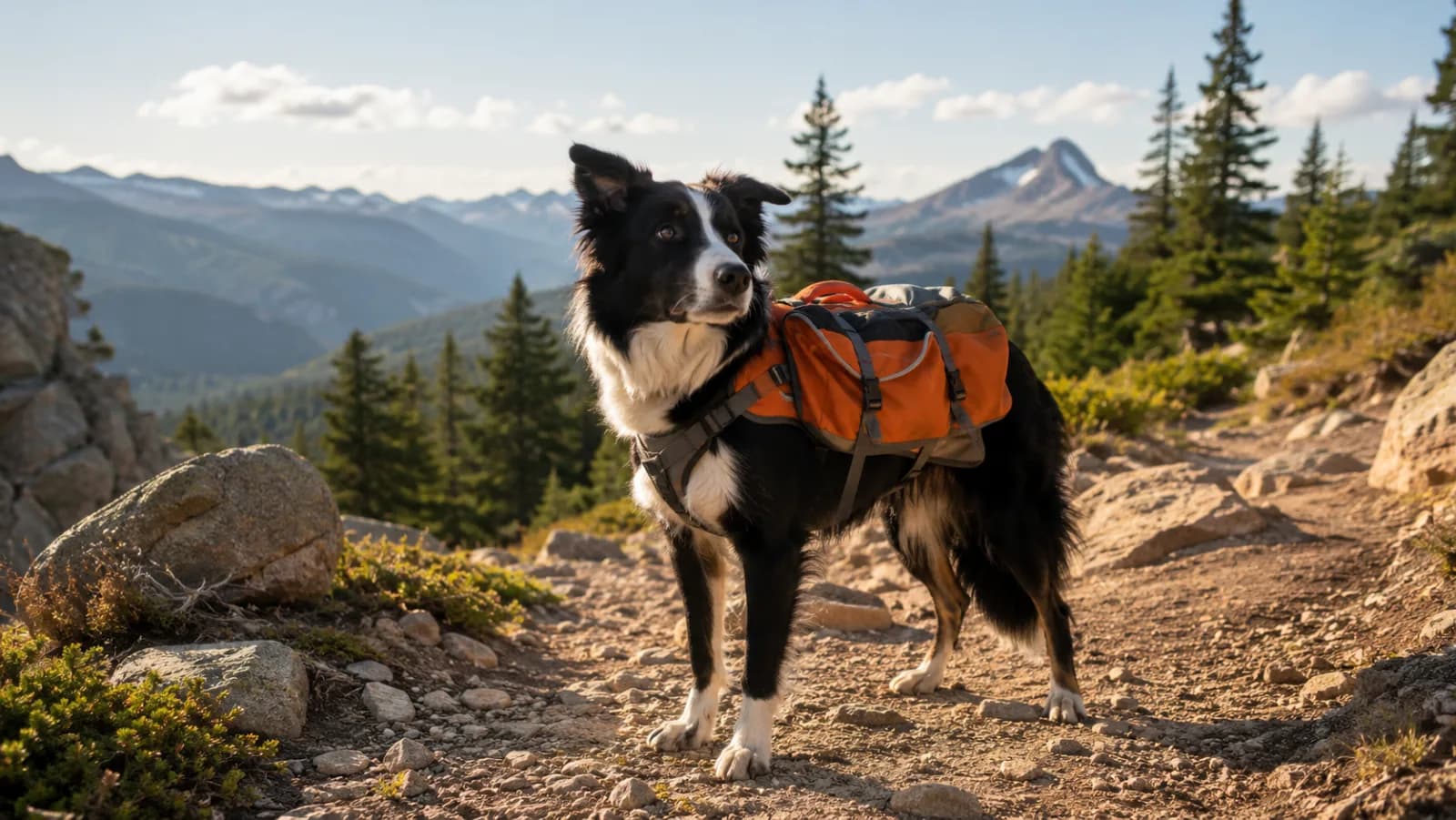
A dog backpack is the rare pet product that the dog has actual opinions about. Carrying its own water bottles, treats, and waste bags is a job, and dogs that have a job are dogs that act like they have one. The Trail-Ready Score is built around whether the pack actually distributes load like a real piece of hiking gear, or whether it's a costume with pockets.
By Nick Miles · Updated September 27, 2026 · 10 min read
PetPalHQ is reader-supported. We may earn a commission from qualifying Amazon purchases at no extra cost to you.
Evidence at a Glance
Ruffwear Palisades Pack
Multi-day pack with removable saddlebags, two 1-liter hydration bladders, cross-load compression, and a breathable chest harness. The only dog pack on this list designed for overnight trail use.
Sources: Ruffwear manufacturer documentation and Palisades product engineering notes, r/CampingDogs community threads on multi-day dog packing setups
Verified May 8, 2026
Kurgo Big Baxter Dog Backpack
Adjustable saddlebag design with bright color options, YKK buckles, and ripstop nylon construction. The non-Ruffwear option for hikers who want proven materials.
Sources: Kurgo manufacturer documentation and Big Baxter product specifications, r/hiking and r/dogs owner-review threads on Kurgo pack durability
Verified May 8, 2026
Our Picks
Ruffwear
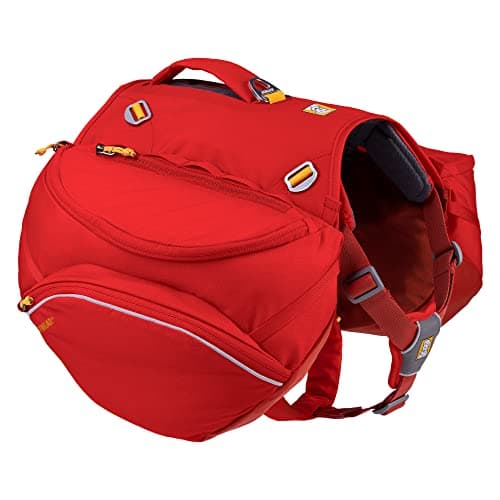
Ruffwear Palisades Pack
9.1 / 10
- Removable saddlebags — pack can be run as a harness without the panniers
- Two included 1-liter hydration bladders with drinking tubes
- Cross-load compression straps keep gear stable during scrambles
- Breathable harness design with padded chest plate
$127.49
Current price · checked Sep 8, 2026
Ruffwear
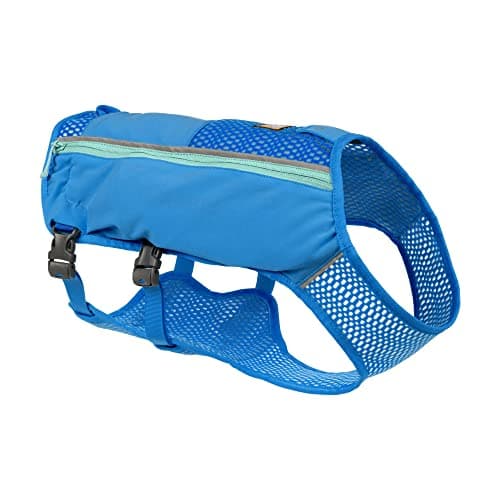
Ruffwear Trail Runner Running Vest
8.8 / 10
- Running vest design — form-fitting harness with hydration flask pockets
- Bounce-free engineering with compression straps that move with the dog
- Reflective trim and light loop for low-light running
- Lightweight construction rated for faster movement
$99.99
Current price · checked Sep 8, 2026
Kurgo
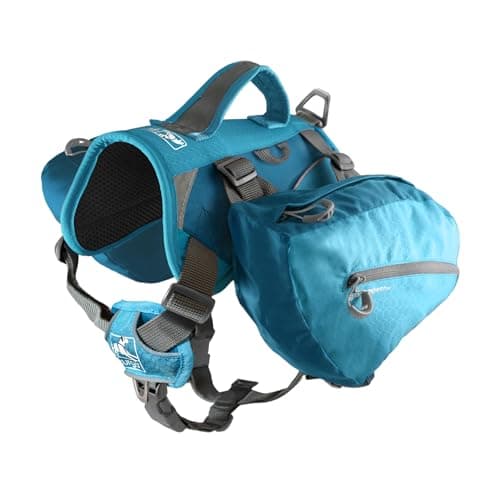
Kurgo Big Baxter Dog Backpack
8.5 / 10
- Adjustable saddlebag with ripstop nylon construction
- YKK buckles throughout — the floor for serious trail hardware
- Chest, belly, and neck adjustment points
- Reflective accents, bright Coastal Blue colorway
$29.39
Current price · checked Sep 8, 2026
Mountainsmith
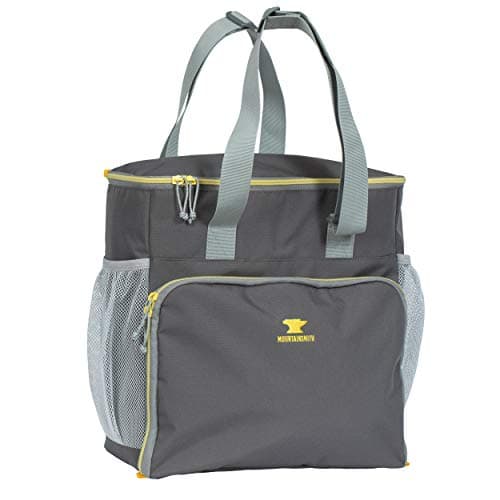
Mountainsmith K-9 Cube
8.2 / 10
- Cube-shaped panniers with internal structure — load holds shape when partially full
- Human hiking brand with decades of backpack engineering applied to canine design
- Multiple access points on each pannier
- Padded, breathable back panel with adjustable straps
The Short Answer
For trail running or faster-paced hiking, the Ruffwear Trail Runner vest at $99.99 moves with the dog instead of bouncing against it. The Mountainsmith K-9 Cube is the structured-pannier specialist for hikers who want a human outdoor brand behind the engineering, and the Kurgo Big Baxter is the cheap way into real ripstop nylon and YKK buckles for anyone who would rather not carry the trailhead's most recognizable logo.
Every product on this list has been scored against the PetPal Gear Score, a weighted composite of expert consensus, observed effectiveness, animal safety, long-term durability, and value. Review method: Editorial synthesis of Ruffwear, Kurgo, and Mountainsmith manufacturer documentation; load-distribution engineering notes published by Ruffwear; owner-reported failure modes in r/CampingDogs, r/dogs, r/ultralight, and r/hiking; AKC conditioning guidelines for working dogs carrying loads; and veterinary orthopedics guidance on weight limits for dogs across size and breed categories. PetPalHQ does not run a hiking-pack testing lab and we have not field-tested these packs personally — the Trail-Ready Score is a composite of expert opinion and community consensus, not a measurement.. Synthesized from 6+ expert sources.
A dog backpack is the rare pet product that the dog has actual opinions about. Carrying its own water bottles, treats, and waste bags is a job, and dogs that have a job are dogs that act like they have one. Watch a Labrador at the trailhead without a pack, and then watch one with a properly fitted pack. The second dog is not the same dog. It stands differently. It walks differently. The pack engages something in working-breed neurology that an empty collar walk does not.
The Trail-Ready Score is built around whether the pack actually distributes load like a real piece of hiking gear, or whether it is a costume with pockets. Load Distribution & Balance (30%) is the most weighted factor because a saddlebag that rides low and swings during movement is not a hiking pack — it is a weight penalty on a dog that wanted to run. Build Durability (25%) measures whether the ripstop nylon and buckles survive the terrain they are marketed for. Adjustability & Fit (25%) measures whether the pack ships with a real size chart and enough adjustment points to fit the actual dog, not a hypothetical medium dog. Adventure-Worthy Cool Factor (20%) is what it says: we are who we are, and the dog at the trailhead in Ruffwear gear reads differently than the dog in an off-brand saddlebag. Both carry water. Only one looks like it volunteered.
PetPalHQ does not run a hiking-pack testing lab. The Trail-Ready Score is editorial synthesis of Ruffwear, Kurgo, and Mountainsmith engineering documentation; AKC conditioning guidelines for load-bearing dogs; veterinary orthopedics guidance on safe carry weights by size and breed; and owner-reported performance in r/CampingDogs, r/dogs, r/hiking, and r/ultralight threads where people post both the trail photos and the buckle failures. The picks below were chosen by reading that material — not by personally hiking fourteen miles with a Lab named whatever. For the underlying safety decisions — which dogs should not carry loads, what conditioning looks like before a multi-day trip, when to consult a vet — the PetPalHQ senior pet mobility and preventive care guide and the no-pull harness and fit guide cover the veterinary and fit principles that apply equally here.
How much weight should a dog actually carry?
The standard guideline from veterinary and canine sports medicine sources is 10–25% of the dog's body weight, with 10% as the conservative starting point for dogs new to carrying and 25% as the ceiling for fit, conditioned adult working dogs on short routes. The range is not a shrug — it is the difference between a conditioned 60 lb German Shepherd on a 3-mile day hike and a 40 lb Cocker Spaniel with no load-carrying experience on an 8-mile route.
A few variables that move the safe ceiling significantly:
Conditioning history. A dog that has never carried weight should start below 10% and build over weeks, not days. The muscles that stabilize the spine and shoulder under load are not the same muscles the dog uses to run or jump — they develop specifically in response to load-carrying, the same way a new human hiker builds trail muscles that a gym routine does not replicate.
Breed and body structure. Long-backed breeds (Dachshunds, Basset Hounds, Corgis) have spinal anatomy that is already under more mechanical stress than a square-build dog. Load-carrying on an already-stressed spine is a vet conversation, not a trail decision. Deep-chested breeds (Great Danes, Irish Setters) can carry load but have body shapes that interact differently with standard saddlebag harness designs — fit verification matters more for these dogs.
Trail length and terrain. A dog carrying 20% on a flat 2-mile trail and the same dog carrying 20% on an 8-mile route with 2,000 feet of elevation gain are different situations. Load-per-distance is the better unit than load-per-body-weight for trip planning purposes.
Temperature. A 50-pound load feels lighter when it is 55°F and heavier when it is 85°F. Heat limits endurance for dogs more aggressively than for humans, and a dog carrying load in high heat is a dog that will dehydrate and fatigue faster than the same dog unloaded. The best dog cooling vest guide covers the thermoregulation side of warm-weather hiking in more depth.
The honest rule: start lower than you think is safe, build slowly, watch the dog, and consult your veterinarian before starting any load-carrying program on a dog with existing joint, spine, or age-related health history.
Saddlebag construction: balanced load is the whole game
The saddlebag design that most dog hiking packs use — two panniers hanging from a chest harness — is mechanically sound when the harness positions the weight correctly. Weight-forward (toward the chest and shoulders) follows the same principle that human pack fitting uses: the heaviest items go high and close to the body's center of gravity. Weight-backward (toward the hips and tail) shifts load onto the hindquarters, which increases joint stress and fatigues the dog faster on long descents.
The second construction variable is saddlebag stability at movement speed. A pannier that distributes load correctly at standing rest can destabilize at a trot — the panels swing outward and then slap back against the dog's sides on each stride. This is not a minor annoyance. It shortens the dog's gait, creates chafing at the contact points, and eventually produces a dog that refuses to trot at pace because the pack hurts. The Ruffwear Flopper Stopper system addresses this via belly straps that lock the saddlebags flat against the sides when loaded. Competing designs that lack this feature are fine on easy terrain at walking pace; they are a tolerance problem at trot pace on rougher ground.
The third variable is belly strap placement relative to the sternum. A belly strap placed too far forward compresses the sternum and restricts breathing. Too far back and the saddlebags ride rearward toward the hips regardless of how the chest harness is fitted. The correct position is just behind the sternum, which allows full ribcage expansion during exertion. Brands that publish strap placement diagrams and adjustment instructions are brands that understand this; brands that say "adjust for comfort" and provide one strap are brands that have not.
Why working-dog brands beat tactical-look knockoffs
The Amazon saddlebag market is full of products that use military-aesthetic MOLLE webbing and woodland camo fabric to suggest durability and purpose. Some of them cost $25–$40. None of them are on this list, and not because of price snobbery.
The problem with tactical-look dog packs is the same problem with tactical-look human packs: the aesthetic is distinct from the engineering. MOLLE webbing on a saddlebag that uses cheap nylon and no-name buckles is a costume. Ripstop nylon on a saddlebag from a brand that publishes size charts, load engineering documentation, and a warranty is a hiking pack.
The specific failure mode that shows up repeatedly in r/CampingDogs and r/dogs threads on cheap dog packs: buckle failure on the trail. Not near the end of the trail — mid-route, often on the descent when the dog is hottest and the buckle has been under load for several hours. A buckle that fails mid-trail in rough terrain means a loose, shifting load on a dog that is already fatiguing, or a pack you carry yourself for the last three miles. YKK buckles have a failure rate low enough for mountaineering applications; off-brand buckles do not. The difference is measurable in owner-reported threads.
Ruffwear, Kurgo, and Mountainsmith all publish material specifications. Ruffwear publishes load-balance design documentation. All three brands have customer service programs built for outdoor gear, not fulfillment returns. The no-name tactical pack does not, and the trail is not the place to discover this.
When a backpack is the wrong choice
Dog hiking packs are not right for every dog, and the list of dogs that should not carry load is longer than the product listings will tell you.
Puppies under 18 months. Growth plates in dogs close between 12 and 24 months depending on breed size — large breeds close later than small breeds. Load-bearing before growth plate closure can affect the development of the joint surfaces that a dog will rely on for the next decade. Trail socialization before 18 months: correct. Load-carrying before 18 months: not correct.
Senior dogs without a recent vet assessment. A 9-year-old Labrador that hiked with a pack for years may be fine to continue if a recent exam confirms joint health. A 9-year-old Labrador being fitted for its first pack needs a vet conversation before the first trail day, not after. The PetPalHQ senior pet mobility and preventive care guide covers the specific exam criteria that apply to older dogs taking on new physical activities.
Dogs with active joint diagnoses. Hip dysplasia, elbow dysplasia, degenerative myelopathy, intervertebral disc disease, and cruciate ligament injury are all conditions where additional spinal and joint load is a clinical decision, not a trail decision. These conditions are common in the most popular trail dog breeds — German Shepherds, Labrador Retrievers, Golden Retrievers, Siberian Huskies. A diagnosis does not automatically preclude hiking, but it does preclude making the load decision without a veterinarian's input.
Dogs that are not conditioned for the route. A dog that is generally healthy but has been mostly sedentary over winter is not a dog that should carry 20% of its body weight on a 10-mile first spring hike. The conditioning ramp matters as much for dogs as for humans. Start with no pack, then an empty pack, then a light load, then a full load — across weeks, not one day.
The instinct to fit the dog with a pack because it is enthusiastic and eager is a real trap. Enthusiasm is not conditioning. A border collie will run until it collapses; the pack does not change that, and it adds load to the collapse.
Head-to-Head Comparison
| Feature | Ruffwear Palisades Pack | Ruffwear Trail Runner Running Vest | Kurgo Big Baxter Dog Backpack | Mountainsmith K-9 Cube |
|---|---|---|---|---|
| Best for | Multi-day backpacking | Trail running | Mid-premium alternative | Structured pannier design |
| Load design | Removable saddlebags + compression | Vest / form-fitting | Standard saddlebag | Cube-structured panniers |
| Hydration capable | Yes — 2x 1L bladders included | Yes — soft flask pockets | No | No |
| Handle | Yes — padded | No | No | Yes |
| Check price | Amazon | Amazon | Amazon | Amazon |
$127.49
Current price · checked Sep 8, 2026
- Removable saddlebags — pack can be run as a harness without the panniers
- Two included 1-liter hydration bladders with drinking tubes
- Cross-load compression straps keep gear stable during scrambles
- Breathable harness design with padded chest plate
- Reflective trim, padded handle, dual leash points
The Palisades is the Ruffwear pack for people who take their dogs on actual backpacking trips, not just day hikes. The defining feature is the removable saddlebag system — the panniers detach from the harness, which means the dog can carry full gear on the uphill and run free on the descent, and the harness doubles as a working harness the rest of the year. That removability also means the pack washes correctly (detach, wash panels, air-dry the harness), which matters after a three-day trip.
The two included 1-liter hydration bladders are the other significant feature. A conditioned 50 lb dog can carry 2 liters of water — enough to stay ahead of its own hydration on a long day — without approaching its safe load limit. The bladders fit the dedicated pockets in the saddlebags, and the drinking tubes route forward so the dog drinks from the tube at a rest stop rather than from a collapsible bowl (which is slower and messier). This is a real quality-of-life improvement on longer days.
The cross-load compression straps are worth understanding: they run across the top of the saddlebags and cinch down, which prevents the load from shifting laterally when the dog scrambles over rocks. A pack without compression straps is fine on a maintained trail; it becomes a balance problem on off-trail terrain.
The cost is justified for anyone doing multi-day camping with a dog large enough to carry meaningful gear (roughly 50 lbs and up, conditioned). The Palisades earns its price on the trips where the dog carries its own food.
What the spec sheet does not tell you: size small (listed here) fits dogs with chest girths roughly 22–28 inches. Ruffwear's published Palisades size chart is the authoritative reference — the harness needs a snug fit for the saddlebag removal system to work correctly. A loose harness causes the panniers to shift when the dog bends.
What We Love
- Removable saddlebags turn the pack into a working harness — year-round utility
- Two included 1L hydration bladders with drinking tubes — genuine multi-day capability
- Cross-load compression prevents lateral load shift on scramble terrain
- Breathable harness design handles longer wear time than a standard padded pack
What Could Be Better
- $127.49 — invest only if multi-day trips are actually on the schedule
- Complex fit — harness, panniers, and bladder tubes all require separate adjustment
The Verdict
The pack for the dog that genuinely camps. If your trail dog has an overnight trip on the calendar in 2026, buy this.
$99.99
Current price · checked Sep 8, 2026
- Running vest design — form-fitting harness with hydration flask pockets
- Bounce-free engineering with compression straps that move with the dog
- Reflective trim and light loop for low-light running
- Lightweight construction rated for faster movement
- Flask pockets hold soft flasks for water access without stopping
The Trail Runner addresses a specific failure mode of standard saddlebag packs: bounce. A saddlebag design that works perfectly at a 2.5 mph hiking pace can become a tolerance problem at a 5.5 mph trail running pace. The load swings with every stride, the dog shortens its gait to compensate, and a Labrador that wants to run becomes a Labrador that wants the pack off.
The Trail Runner's vest design distributes the load across a full-chest harness rather than two saddlebag panels. The fit is more like a compression garment than a traditional pack — it moves with the dog rather than against it. The soft flask pockets sit flush against the chest rather than hanging off the sides. There are no Flopper Stoppers here because the vest design does not have flopping to stop.
It is not the right choice for a dog that hikes at a leisurely pace — the pack is optimized for movement efficiency rather than load capacity. It is the right choice for a border collie, Australian shepherd, vizsla, Weimaraner, or any high-drive dog breed that runs rather than hikes and is going to be moving fast enough that a traditional saddlebag creates friction.
The reflective trim and dedicated light loop are worth noting for runners who go out early or late — a dog in a high-vis vest with a blinky attached is a meaningfully safer trail companion than one that blends into the trail edge.
What the spec sheet does not tell you: the Trail Runner is a harness that also carries things, not a backpack that also serves as a harness. The fit should be snug, not loose. If your dog falls between sizes, size down on the Trail Runner. Bounce is a fit problem before it is a design problem.
What We Love
- Bounce-free vest design solves the saddlebag-swing problem at running pace
- Flask pockets accessible at speed — no stopping, no collapsible bowl
- Reflective trim and light loop for safe low-light running
- Ruffwear construction quality in a vest cut rather than a saddlebag
What Could Be Better
- Lower saddlebag volume — not for dogs carrying significant load
- Vest fit requires accurate chest measurement — loose vest bounces as badly as a saddlebag
- Overkill for dogs that hike at walking pace
The Verdict
Buy this if your dog runs, not just hikes. The Trail Runner vest is the correct Ruffwear pack for high-drive breeds that cover trail miles at speed.
$29.39
Current price · checked Sep 8, 2026
- Adjustable saddlebag with ripstop nylon construction
- YKK buckles throughout — the floor for serious trail hardware
- Chest, belly, and neck adjustment points
- Reflective accents, bright Coastal Blue colorway
- Rated for dogs 55–85 lbs in the standard version
The Kurgo Big Baxter exists for the category of outdoor gear buyer who on principle does not buy the same brand as everyone else at the trailhead. Ruffwear dominates trail-dog communities to the point of becoming synonymous with dog backpacks in the same way that Chaco became synonymous with hiking sandals. That brand saturation is real and has produced a market of hikers who want equivalent construction quality under a different label.
Kurgo is that label. The Big Baxter uses ripstop nylon and YKK buckles, which are the two material specifications that separate real hiking gear from Amazon-brand knockoffs. Ripstop fabric holds its structure when it contacts a rock face or a thorny shrub; standard nylon does not. YKK buckles have a failure rate low enough that they are used on mountaineering gear; no-name buckles have a failure rate measurable in r/CampingDogs threads. Both of those details are in the Kurgo spec sheet.
The three-point adjustment system (chest, belly, neck) is solid. For standard build dogs in the 55–85 lb range, the three-point system is sufficient.
The Coastal Blue colorway is the pack's most visible differentiator. Ruffwear's Campfire Orange, Slate Blue, and Trail Orange are instantly recognizable at the trailhead. The Kurgo Big Baxter Coastal Blue is different enough to read as a distinct choice. Both are legitimate gear aesthetics; neither is wrong.
What the spec sheet does not tell you: r/hiking and r/dogs reviews of the Kurgo Big Baxter consistently note that the buckle at the chest plate is the first point of wear after extended use. It is a YKK buckle, so it does not fail suddenly — but it loosens over time. Check the chest buckle snugness at the start of each trip and re-snug as needed. This is a maintenance behavior, not a defect.
What We Love
- Ripstop nylon and YKK buckles — real trail hardware, not costume-grade construction
- Non-Ruffwear option
- Three-point adjustment covers most standard-build dogs in the 55–85 lb range
- Coastal Blue is a legitimate gear colorway — less trailhead-ubiquitous than Ruffwear orange
What Could Be Better
- Chest buckle loosens over time — require active maintenance check at each trip start
The Verdict
The Kurgo Big Baxter is the correct buy if you want ripstop nylon and YKK buckles. For dogs in the 55–85 lb range with standard builds, it performs comparably.
- Cube-shaped panniers with internal structure — load holds shape when partially full
- Human hiking brand with decades of backpack engineering applied to canine design
- Multiple access points on each pannier
- Padded, breathable back panel with adjustable straps
- Reflective trim, top handle, load-compression capability
Mountainsmith makes human backpacks and has for decades. The K-9 Cube is what happens when an outdoor gear company that engineers load distribution for human hikers applies that same thinking to a dog pack. The result is a product that solves a specific problem the pannier-style packs on this list do not address: load shape maintenance.
Standard saddlebag packs rely on the load inside to give the panel its shape. Put two water bottles and some snacks in the panel and it looks like a pack; put only a light emergency kit in the panel and it collapses and shifts. The K-9 Cube's pannier structure maintains its cube shape regardless of how fully loaded it is, which means the load distributes the same whether the dog is carrying 2 lbs or 6 lbs. This is a detail that matters on day hikes where the load changes throughout the trip — full at the trailhead, lighter by the summit.
The Mountainsmith brand pedigree is the other differentiator. The brand publishes load-distribution design documentation, uses proven hiking-pack materials, and has a warranty and customer service program built for outdoor gear, not a fulfillment operation. In the r/ultralight and r/hiking communities, Mountainsmith is a recognized brand name. The K-9 Cube inherits that credibility.
The K-9 Cube does not have hydration bladder capability. For hikers who prefer a more traditional pack aesthetic and want the structured pannier look, this is the specialist pick.
What the spec sheet does not tell you: the K-9 Cube is optimized for mid-to-large dogs. The pannier dimensions are sized for dogs in the 50 lb and up range — on smaller dogs, the cube proportions overwhelm the body. Mountainsmith recommends measuring chest girth before ordering; the pack is available in multiple sizes and the fit needs to be confirmed against their published chart.
What We Love
- Structured cube panniers maintain load shape at partial fill — solves saddlebag collapse problem
- Human outdoor gear brand with real load-distribution engineering applied to dog pack design
- Multiple pannier access points — easier to repack mid-trail without removing the whole pack
- Top handle, reflective trim, load compression — full feature set
What Could Be Better
- Without hydration bladder capability, unlike the Trail Runner's soft-flask pockets
- Cube proportions optimized for mid-to-large dogs — not the right pack for sub-50 lb dogs
- Mountainsmith brand less represented in r/CampingDogs than Ruffwear — thinner community size data for edge-case fit scenarios
The Verdict
The specialist pick for the hiker who wants a structured pannier aesthetic and a human outdoor gear brand behind the engineering. Buy it if the cube structure or the Mountainsmith brand pedigree is the differentiating factor.
How We Score
Formula
Trail-Ready Score = (Load Distribution & Balance × 0.30) + (Build Durability × 0.25) + (Adjustability & Fit × 0.25) + (Adventure-Worthy Cool Factor × 0.20)
Score Factors
- Load Distribution & Balance · 30%
- Whether the pack carries weight along the dog's center of gravity (chest-shoulder area) or whether it sags toward the hips when loaded. Saddlebag designs that follow the spine and balance side-to-side outperform pannier-only designs that ride low. Ruffwear and Mountainsmith publish actual load-balance design notes; cheaper brands do not. PetPalHQ does not run a hiking-pack testing lab — this is composite of expert opinion, not a measurement.
- Build Durability · 25%
- Stitching quality, buckle reliability, fabric weight, and seam reinforcement. Ripstop nylon and YKK buckles are the floor for any pack that goes on real trails. The score punishes packs that fail buckles in r/CampingDogs or r/dogs threads — owner-reported failure modes are the most reliable durability signal short of actual testing.
- Adjustability & Fit · 25%
- Multiple adjustment points (chest, belly, neck), padded contact areas, and breed-shape compatibility. A pack that fits a Labrador may not fit a Greyhound; the score weights brands that publish size charts with chest girth and length, deducts brands that just say 'M = medium dog.' Padding around the chest plate matters most for long-distance carry.
- Adventure-Worthy Cool Factor · 20%
- We are who we are. The dog wearing a Ruffwear pack at the trailhead reads differently than the dog wearing a generic Amazon-brand saddlebag. Both can carry water bottles; only one looks like the dog volunteered for the trip. The score weights aesthetic legitimacy and brand pedigree without deducting for fun colors.
| Rank | Product | Score |
|---|---|---|
| #1 | Ruffwear Ruffwear Palisades Pack | 9.1 |
| #2 | Ruffwear Ruffwear Trail Runner Running Vest | 8.8 |
| #3 | Kurgo Kurgo Big Baxter Dog Backpack | 8.5 |
| #4 | Mountainsmith Mountainsmith K-9 Cube | 8.2 |
When NOT to Buy
Skip dog backpacks entirely if your dog is under 18 months (growth plates are still developing — load-bearing at this age can affect joint development long-term), over 10 years old without a current vet clearance, or diagnosed with any condition affecting spinal, shoulder, or hip joints. That includes hip dysplasia, degenerative myelopathy, elbow dysplasia, and intervertebral disc disease — all common in the breeds most likely to be enthusiastic trail dogs (Labs, German Shepherds, Goldens, Huskies). A dog that hops at the end of the leash is not necessarily a dog that should carry weight, and a pack load that seems light to a human (3 lbs) is non-trivial on a 20 lb dog. Consult your veterinarian before starting any load-carrying program with a dog that has existing joint concerns or a recent orthopedic history. The PetPalHQ senior pet mobility and preventive care guide covers the underlying orthopedic considerations in more depth.
Frequently Asked Questions
- How do I measure my dog for a saddlebag pack?
- Two measurements matter: chest girth (around the deepest part of the chest, just behind the front legs) and back length (from the base of the neck to the base of the tail). Chest girth is the more critical number — the chest harness needs a snug, stable fit to keep the saddlebags from shifting. All four brands on this list publish size charts using chest girth as the primary variable. Do not order based on the weight ranges printed in the listing description — they are approximate guides, not fit specifications. Measure, then check against the size chart.
- Can my dog drink from a water source on the trail instead of carrying water?
- Sometimes yes, with caveats. Many backcountry water sources are safe for dogs, but giardia and other pathogens that cause gastrointestinal illness in humans also affect dogs. Beaver ponds, slow-moving water, and any source downstream of livestock grazing areas are higher-risk. Filtered or carried water is the conservative answer for day hikes; a collapsible bowl paired with a filter system covers the backcountry case. On longer distances, the Trail Runner's soft-flask pockets are the most convenient way to carry that water on the dog rather than on you.
- How do I introduce the pack so my dog doesn't hate it?
- The same way you introduce any new piece of equipment: incrementally and with positive reinforcement. Day one: let the dog sniff the pack, treat, done. Day two: put the pack on empty for five minutes at home, treat, off. Day three: ten minutes at home, then a short neighborhood walk. Day four: a familiar short trail. The dog that hates the pack on the first trail day is usually a dog that was introduced to the pack, the harness, the load, and the new terrain simultaneously. Split those variables.
- How do I know if the pack fits correctly once it's on the dog?
- You should be able to fit two fingers under every strap without the straps going slack. The saddlebags should hang parallel to the dog's sides, not angled forward or backward. When the dog walks, the bags should move with the dog's body, not swing independently. The belly strap (or Flopper Stoppers, in the Ruffwear case) should hold the bags against the sides — if you can slide your hand between the bag and the dog's flank while loaded, the belly attachment needs tightening. And the top handle should sit above the spine, not twisted to one side, which would indicate the chest harness is not centered.
- Is it safe to use the backpack as the dog's leash attachment on the trail?
- Many saddlebag designs are not structurally rated for leash tension, and using them as a leash attachment can torque the harness in ways that shift load and stress the stitching. Check the manufacturer's documentation before using any pack as a leash harness, and always use a dedicated leash ring if one is provided rather than clipping to a grab handle or strap loop that was not designed for leash loads.
Bottom Line
Get the Ruffwear Trail Runner if your dog runs trails rather than hikes them. The vest design eliminates saddlebag bounce at speed, which is the failure mode of every other pack on this list.
Get the Kurgo Big Baxter if you want Ruffwear-tier construction under a different brand. Ripstop nylon and YKK buckles.
Get the Mountainsmith K-9 Cube if you want structured panniers and a human outdoor gear brand behind the engineering. The cube design holds shape at partial load — a detail that matters on longer days.
Sources & Methodology
Methodology
Trail-Ready Score = (Load Distribution & Balance × 0.30) + (Build Durability × 0.25) + (Adjustability & Fit × 0.25) + (Adventure-Worthy Cool Factor × 0.20)
Expert review sources
- Ruffwear — Palisades Pack and Trail Runner product documentation and load-distribution design notes
- Kurgo — Big Baxter product documentation and material specifications
- Mountainsmith — K-9 Cube product documentation
- AKC Canine Health Foundation — guidelines for working dog conditioning and load-carrying capacity
- Veterinary orthopedics literature on weight limits and load-bearing for dogs across breed and age categories
- PetPalHQ senior pet mobility and preventive care guide — orthopedic considerations for older dogs
Community sources
- r/CampingDogs — pack stability, load tolerance, and buckle failure threads
- r/dogs — sizing and fit threads for Ruffwear, Kurgo, and Mountainsmith packs
- r/hiking and r/ultralight — owner-review threads on dog pack durability at trail distances
- r/CampingWithDogs — multi-day pack configuration and hydration setup discussions
Prices and specs verified May 8, 2026.
About the author
PetPalHQ Playground recommends gear that works on the trail and looks like it should be there. The Trail-Ready Score is a composite of manufacturer documentation, owner-reported field performance, and expert guidance on load-carrying safety — PetPalHQ does not run a hiking-pack testing lab and we have not strapped any of these packs onto our own dogs for a controlled distance trial. The picks below are the result of reading the engineering notes, the size charts, the r/CampingDogs buckle-failure threads, and the AKC conditioning guidance, then applying the score to determine which packs treat load distribution as a physics problem rather than a marketing term. For the orthopedic considerations behind load-bearing decisions — joint health, conditioning timelines, age limits — the cross-linked senior mobility guide covers the underlying veterinary guidance.
PetPalHQ is a participant in the Amazon Services LLC Associates Program. We may earn commissions from qualifying purchases — at no extra cost to you.
More Guides

Playground
Best Pet Cosplay Picks for 2026 — Star Wars Pugs, Batman Cats, Goth Bats, and Other Photogenic Crimes
Playground
Best Premium Dog Goggles for Sun, Snow, and Adventure Dogs (2026)
Playground
Best Dog Cooling Vests for Hot Summer Days (2026)
Playground
Best Premium Dog Life Vests for Pool, Beach, and Boat Days (2026)
Cats & Dogs
Best No-Pull Harnesses and Leash Manners Tools for Dogs (2026)
Cats & Dogs
Senior Pet Mobility and Preventive Care: 2026 Guide for Aging Dogs and Cats
Playground
Best 4th of July Pet Safety Gear (2026)
Playground