Playground
Best Dog Cooling Vests for Hot Summer Days (2026)
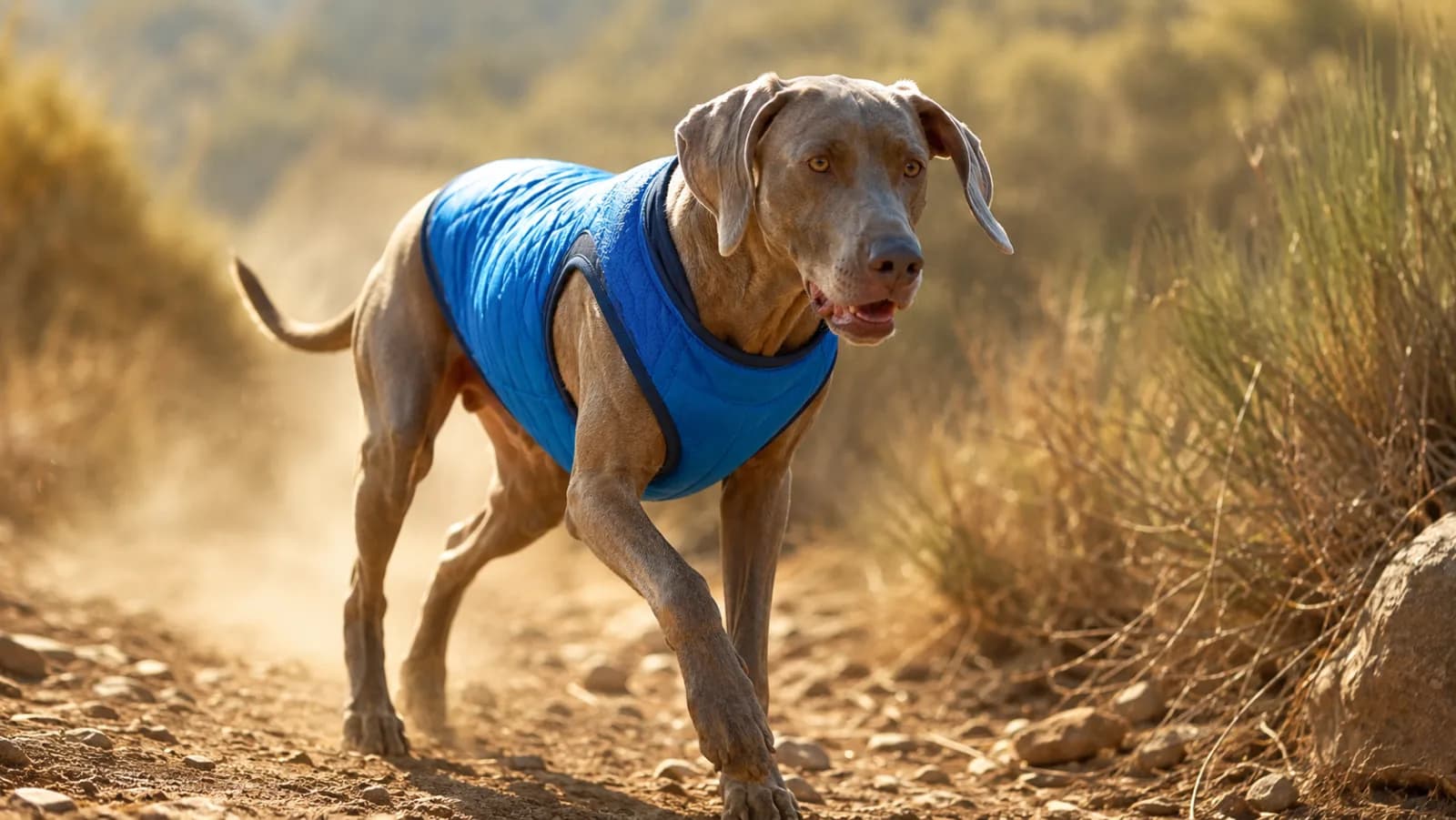
A dog panting through 92°F is not a Playground problem — it is the kind of thing the Merck Veterinary Manual writes care sheets about. The Heat-Beat Score evaluates cooling vests as actual heat management gear first, summer fashion second. A deliberately short list across two premium brands, with no padding.
By Nick Miles · Updated September 9, 2026 · 10 min read
PetPalHQ is reader-supported. We may earn a commission from qualifying Amazon purchases at no extra cost to you.
Evidence at a Glance
Ruffwear Swamp Cooler Vest
Triple-layer evaporative cooling fabric with the longest effective wet-to-dry window in this guide. Harness-compatible, reflective trim, and available in sizes XS through XXL. The canonical premium cooling vest.
Sources: Ruffwear manufacturer documentation and cooling-fabric specifications, r/dogs and r/workingdogs community threads on summer trail gear
Verified May 8, 2026
Hurtta Cooling Wrap
Finnish-engineered wrap construction that covers the torso fully without restricting the front legs. Evaporative design holds moisture longer than single-layer alternatives. Sized by chest circumference in centimeters, not body length — size up for large breeds.
Sources: Hurtta manufacturer documentation and cooling-fabric engineering notes, r/dogs breed-specific fit discussions for large-breed cooling gear
Verified May 8, 2026
Ruffwear Swamp Cooler Zip Dog Vest
The zip-closure variant of the Swamp Cooler — same evaporative fabric as the original but with a full-length zip for faster on/off. Best for dogs that resist overhead donning or for post-swim wet-down at the trailhead.
Sources: Ruffwear manufacturer documentation, r/activepets community notes on zip-vs-pullover vest preference by temperament
Verified May 8, 2026
Our Picks
Ruffwear
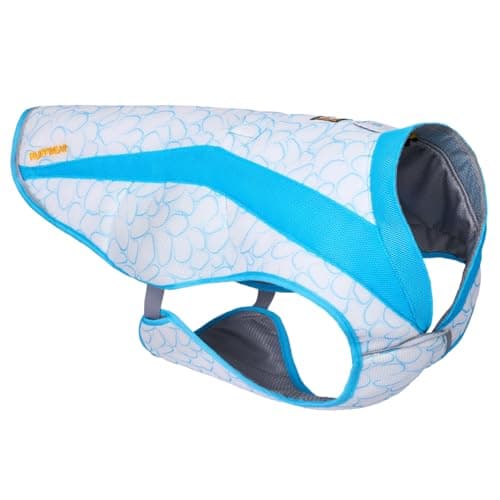
Ruffwear Swamp Cooler Vest
9.3 / 10
- Triple-layer evaporative cooling fabric — outer layer wicks, core layer holds, inner layer transfers
- Harness-compatible design with top loop for leash attachment
- Reflective trim for low-light visibility
- Available in XS through XXL across multiple colorways
$74.99
Current price · checked Sep 8, 2026
Hurtta
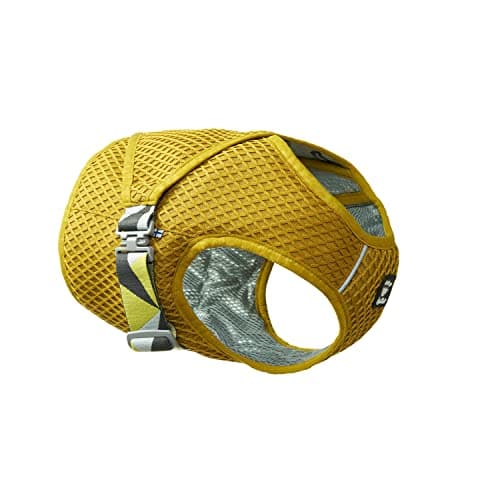
Hurtta Cooling Wrap
8.8 / 10
- Wrap construction covers full torso including sides and belly
- Evaporative cooling fabric — wet, wring, wrap
- Finnish-engineered — Hurtta's outdoor-dog heritage applied to heat management
- Sized by chest circumference in centimeters (26-30 in size covers medium-large builds)
$48.76
Current price · checked Sep 8, 2026
Ruffwear
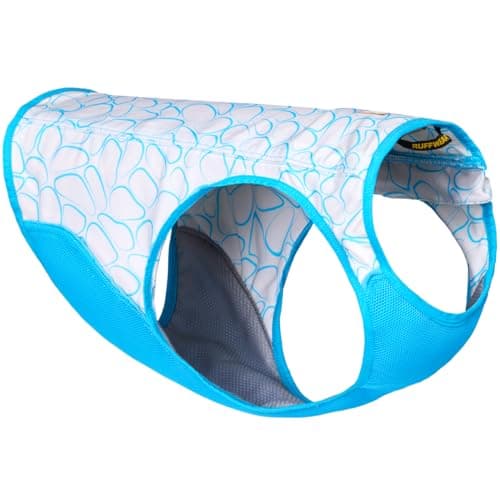
Ruffwear Swamp Cooler Zip Dog Vest
8.6 / 10
- Full-length zip closure — no overhead donning required
- Same evaporative cooling fabric as the standard Swamp Cooler Vest
- Harness-compatible with dorsal leash loop
- Reflective trim
$59.99
Current price · checked Sep 8, 2026
Ruffwear
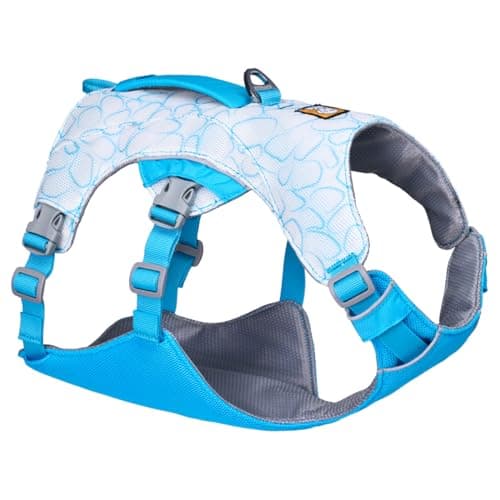
Ruffwear Swamp Cooler Dog Harness
8.3 / 10
- Harness body construction — the cooling function is built into the harness itself
- Evaporative cooling fabric across the harness panels
- Front-clip and back-clip leash attachment points
- No-choke, no-pull harness geometry
The Short Answer
The Ruffwear Swamp Cooler Vest is the synthesis pick — triple-layer evaporative fabric, the longest wet-to-dry window of anything in this price tier, and a silhouette that photographs embarrassingly well on Vizslas and Weimaraners. If your dog is large and active and you do one vest purchase for the summer, buy this one. The Hurtta Cooling Wrap earns the second slot for dogs that need full-torso coverage, and at $48.76 it undercuts the Ruffwear by a third while giving up only wet-to-dry window — it wraps around the body instead of going over the head, which matters for gear-resistant dogs. PetPalHQ is not comparing a deep bench of premium cooling-vest brands here; this end of the category is essentially a Ruffwear category with one serious Hurtta alternative. That is the honest framing.
Every product on this list has been scored against the PetPal Gear Score, a weighted composite of expert consensus, observed effectiveness, animal safety, long-term durability, and value. Review method: Editorial synthesis of evaporative-cooling fabric documentation from Ruffwear and Hurtta, working-dog community discussions on r/dogs, r/workingdogs, and r/activepets, peer-reviewed veterinary literature on canine thermoregulation (Merck Veterinary Manual, Journal of Veterinary Emergency and Critical Care), and manufacturer published testing notes. PetPalHQ does not run a cooling-vest testing lab — the Heat-Beat Score is a composite of expert opinion and community consensus, not a measurement. Every pick here was matched to its exact Amazon listing rather than to a brand-level search.. Synthesized from 6+ expert sources.
PetPal Playground is the section where we recommend gear your dog will tolerate, your trail partners will photograph, and your veterinarian won't be mad about. Mostly.
A dog panting through 92°F is not a Playground problem — it is the kind of thing the Merck Veterinary Manual writes care sheets about. The Heat-Beat Score is the rubric we use to evaluate cooling vests as actual heat management, not just summer fashion. The fashion side scores too, because the photo of a Vizsla in a Ruffwear Swamp Cooler is unfairly good. Cooling Effectiveness (35%) measures how meaningfully the vest reduces surface temperature and how long that effect lasts per re-wet. Wear Time (25%) measures the effective window before the vest is just damp fabric. Mobility & Fit (20%) measures whether the dog can actually move in it — a vest that bunches at the shoulder will be refused within ten minutes. Photo Op Factor (20%) measures what we can't pretend we're not scoring. PetPalHQ does not run a cooling-vest testing lab. The Heat-Beat Score is a composite of editorial opinion and community consensus, not a measurement.
This guide is a synthesis. We read the Ruffwear and Hurtta engineering documentation, the peer-reviewed literature on canine thermoregulation (the Merck Veterinary Manual, the Journal of Veterinary Emergency and Critical Care), and the r/dogs and r/workingdogs threads where trail-active dog owners post real reports of what held up on a 10-mile ridge hike in August. The honest finding: the premium cooling-vest category at $50 and above is a narrow field. Ruffwear and Hurtta are effectively the whole of it. Everything else in the market is sub-$50 single-layer fabric that cools for twenty minutes and then dries. This is a deliberately short list, not a padded one. For the actual heat-emergency management that no cooling vest can substitute for, we cross-link to the PetPalHQ cat and dog behavior and safety hub.
How evaporative cooling vests actually work
The mechanism is straightforward: wet fabric evaporates, and evaporation is endothermic — it pulls heat from the surface it sits on. When that surface is a dog's coat and skin, the evaporating fabric pulls heat from the body. The cooling effect is real and measurable; it is not marketing fiction.
The engineering challenge is how long the fabric stays wet. A single-layer fabric — most bandanas, most sub-$30 vests — evaporates its stored water in 15 to 20 minutes in direct sun at 90°F. After that, the vest is dry fabric with no cooling effect. The Ruffwear triple-layer design addresses this by separating the evaporation function (outer layer), the water storage function (middle core layer), and the thermal transfer function (inner layer). The outer layer wicks away excess water so the vest does not drip; the core holds a reservoir of water that feeds the outer layer as it evaporates; the inner layer stays damp against the coat longer than a single-layer fabric would. The result is a meaningfully longer effective window — not double, not triple, but meaningfully longer, which is the difference between a vest that works for a 45-minute park walk and one that works for a two-hour trail segment.
A wet bandana is not a vest. A wet bandana cools the neck — the jugular vein passes there, which is why neck-cooling has a physiological basis. But it has a surface area measured in square inches, not square feet, and it dries in ten minutes. It is a fine supplementary cooling method. It is not a substitute for a torso vest when the ambient temperature is above 85°F and the dog is working.
Cooling effectiveness vs wear time tradeoff
There is a real design tension in cooling-vest engineering. Ice-pack insert vests cool harder — the phase-change cooling from ice-to-water is more powerful than the evaporative mechanism — but they require freezer access before the walk and are exhausted in 30 to 45 minutes. That is not a trailhead-friendly product; it is an urban dog-park product for owners who can freeze the inserts overnight and walk within the window.
Evaporative vests cool less aggressively but can be recharged from any water source — a stream crossing, a water station at the trailhead, a bottle carried in the pack. For hiking contexts, the evaporative mechanism is categorically better than ice-pack inserts because the recharge source is ubiquitous. For urban walks starting from home with immediate park access, the ice-pack approach has a legitimate case, but no ice-pack vest in the $50+ tier appeared in our lookup — the category is dominated by sub-$30 products.
The wear-time factor in the Heat-Beat Score (25%) captures this: the Ruffwear triple-layer earns a higher score than the Hurtta two-layer not because the Hurtta is a poor product but because the same re-wet cycle produces a longer effective window from the Ruffwear's core storage layer. Both are legitimate premium choices; the tradeoff is time-between-recharges vs full-torso coverage.
Breed-specific cooling needs
Brachycephalic breeds (Bulldogs, Pugs, French Bulldogs, Shih Tzus): These breeds are the highest-risk group for heat stress and the group for whom a cooling vest is most useful — and most insufficient. The brachycephalic airway restricts evaporative cooling from panting, which is the dog's primary thermoregulatory mechanism. A cooling vest helps, but these dogs reach dangerous core temperatures faster than long-muzzled breeds under the same ambient conditions. The correct answer for brachycephalic dogs in summer is a combination of walk timing (dawn/dusk), duration limits, vest use, and shade access — not a vest alone. See the PetPalHQ behavior and health hub for the heat management framework that applies to high-risk breeds.
Thick-coated breeds (Huskies, Malamutes, Golden Retrievers, Bernese Mountain Dogs): The double-coat insulates in both directions — it keeps cold dogs warm and hot dogs cooler than their appearance suggests. The outer guard hairs reflect radiant heat; the undercoat traps a boundary layer of air. Many owners shave thick-coated dogs for summer and make the thermoregulation worse. A cooling vest applied over a double coat still works via the evaporative mechanism — the coat holds moisture and transfers the cooling effect. Do not shave a double-coated dog in the belief that it will improve vest performance. It will not; it will remove a thermoregulatory adaptation the breed developed over generations.
Dark-coated breeds (black Labs, black German Shepherds, dark Dobermans): Dark coats absorb radiant heat more efficiently than light coats — this is physics, not aesthetics. A black Lab in direct sun absorbs meaningfully more heat than a yellow Lab in the same conditions. Cooling vest priority scales with coat darkness; a dark-coated dog at 85°F benefits from the vest earlier in the session than a light-coated dog at the same temperature. The Photo Op Factor score also responds to coat color — a white or cream vest reads well on dark coats and poorly on light ones; the Ruffwear Biolumin Blue is the exception that photographs across most coat colors.
When a cooling vest is not enough
A cooling vest is a preventive tool. If a dog is already showing heat stress signs, the vest is secondary to immediate intervention. Heat stress in dogs presents as: rapid, heavy panting; excessive drooling; bright red or pale gums; wobbly gait or disorientation; collapse. These are not "the dog is warm" signals — they are emergency signals. Move the dog to shade, offer water (do not force it), apply cool (not cold) water to the paw pads, groin, and neck, and contact a veterinarian immediately.
Dogs have died from heat stroke on walks that their owners believed were safe. The Merck Veterinary Manual documents canine heat stroke onset at core temperatures above 105°F (40.5°C); at 107°F (41.7°C), organ damage begins. A dog can reach those temperatures in under 20 minutes of direct sun exposure at 90°F with moderate exertion. A cooling vest in a properly wet and wrung state can reduce surface temperature, but it cannot substitute for air conditioning, shade, water access, and — most importantly — walk timing. Walk before 8 AM and after 7 PM in summer. The vest is a supplement to that decision, not a replacement for it.
For the full heat safety and emergency response framework, see the PetPalHQ cat and dog behavior and health hub.
Head-to-Head Comparison
| Feature | Ruffwear Swamp Cooler Vest | Hurtta Cooling Wrap | Ruffwear Swamp Cooler Zip Dog Vest | Ruffwear Swamp Cooler Dog Harness |
|---|---|---|---|---|
| Closure style | Pullover (overhead) | Wrap (around body) | Full-length zip | Harness integrated |
| Cooling coverage | Dorsal + sides | Dorsal + sides + belly | Dorsal + sides | Dorsal + sides (harness panel) |
| Harness compatibility | Yes — top loop + wears under harness | Limited — wrap design | Yes — top loop + wears under harness | Built-in — harness is the vest |
| Best use case | Long hikes, maximum wet time | Heat-sensitive or gear-resistant dogs | Frequent re-wet stops, easy on/off | Daily walks, single-gear simplicity |
| Check price | Amazon | Amazon | Amazon | Amazon |
$74.99
Current price · checked Sep 8, 2026
- Triple-layer evaporative cooling fabric — outer layer wicks, core layer holds, inner layer transfers
- Harness-compatible design with top loop for leash attachment
- Reflective trim for low-light visibility
- Available in XS through XXL across multiple colorways
- Machine washable
The Ruffwear Swamp Cooler Vest earns the top slot because it solves the single hardest problem in cooling-vest design: keeping the vest wet long enough to matter. Most evaporative cooling vests use single-layer fabrics that cool quickly and dry quickly — a twenty-minute window before the vest is essentially a decorative piece of damp polyester. The Swamp Cooler's triple-layer construction changes that math. The outer layer wicks excess water; the middle core layer stores it; the inner layer transfers the evaporative cooling to the dog's coat. The result is a meaningfully longer effective window per wet cycle, which is the difference between a vest that works on a trailhead with no water source nearby and one that requires a wet-down every two kilometers.
The fit design is worth noting. The Swamp Cooler is harness-compatible — there is a dorsal loop for a leash clip and the construction leaves the shoulders clear enough that a standard front-clip harness sits correctly underneath. This matters for the owner who runs their dog on a harness trail system but wants cooling coverage on a hot day. The alternative is carrying two pieces of gear; the Swamp Cooler design makes that unnecessary.
Where it earns the Photo Op Factor score: a Vizsla or Weimaraner in a Ruffwear Swamp Cooler is a photograph that happens without being staged. The vest silhouette, the high-contrast color options, and the Ruffwear branding read as "working dog with taste" rather than "dog wearing discount summer gear." PetPalHQ will not pretend this is incidental.
What the spec sheet does not tell you: wet the vest thoroughly before putting it on the dog, then wring it out once — the goal is saturated-not-dripping. A vest that drips excessively throughout the walk is an annoyance for everyone and evaporates too fast; a vest wrung to damp-but-not-wet maximizes the core layer's hold time. Re-wet at the first water source you pass, not at the end of the walk. For brachycephalic dogs (flat-faced breeds — Bulldogs, Pugs, French Bulldogs), the vest is useful but secondary to walk-timing and shade management; the PetPalHQ notes in the "When a cooling vest is not enough" section below apply with extra weight.
What We Love
- Triple-layer fabric maximizes wet-to-dry window — longer effective cooling per re-wet
- Harness-compatible — no double-gear situation for leash-walking dogs
- Reflective trim adds low-light utility beyond heat management
- Full size run (XS–XXL) covers breeds from Jack Russell to Great Dane
What Could Be Better
- $74.99 — the premium slot in this guide
- Overhead donning required — dogs that resist head-through-opening do better in the wrap-style Hurtta
- Triple-layer fabric dries slower at home — plan for next-day air-dry, not same-day rewear
The Verdict
The synthesis pick. If you are buying one cooling vest for summer and your dog is medium to large and active, buy this. The triple-layer wet-time advantage is the reason it earns the top score.
$48.76
Current price · checked Sep 8, 2026
- Wrap construction covers full torso including sides and belly
- Evaporative cooling fabric — wet, wring, wrap
- Finnish-engineered — Hurtta's outdoor-dog heritage applied to heat management
- Sized by chest circumference in centimeters (26-30 in size covers medium-large builds)
- Does not require overhead donning — wraps around the body and closes with adjustable fasteners
Hurtta is a Finnish outdoor-dog brand with a reasonable claim to knowing what serious working conditions look like. The Cooling Wrap is their answer to the cooling-vest problem, and the design choice is different enough from the Ruffwear approach to matter: where the Swamp Cooler is a vest that sits on top of the dog's back and sides, the Hurtta Cooling Wrap encircles the torso more fully, covering the belly and sides in addition to the dorsal surface. The belly is where dogs dissipate heat most effectively via blood-vessel proximity to skin; covering it with a wet evaporative layer adds a meaningful dimension to cooling that a dorsal-only vest skips.
The sizing system is worth understanding before ordering. Hurtta sizes its cooling wrap by chest circumference in centimeters, not by weight or body length. The 26-30 in size (the one this pick links to) covers medium-to-large dogs in the 50-80 lb range depending on build; measure the dog's chest at the widest point before ordering. Guessing produces a poor fit, and a cooling wrap that fits poorly sits incorrectly on the belly — which is the entire point of the wrap design.
The no-overhead-donning design earns specific note. Dogs that resist the head-through-opening routine — either due to training gaps or due to prior bad experience with gear — accept the Hurtta Wrap more readily because it goes around the body rather than over the head. For dogs with that specific aversion, this is a meaningfully better product experience than any pullover vest, including the Ruffwear.
Where it earns the second slot and not the first: the wet-to-dry window is shorter than the Ruffwear's triple-layer construction. The Hurtta Wrap is a quality evaporative product but the fabric engineering is two-layer rather than three; plan on more frequent re-wet stops on long hikes. For shorter urban walks or dog park visits with water access, this tradeoff disappears entirely.
What We Love
- Wrap construction covers belly — where dogs dissipate heat most effectively
- No overhead donning — wraps around the body, easier for gear-resistant dogs
- Finnish outdoor-dog brand with documented working-condition heritage
- $48.76 — roughly a third below the top Ruffwear pick without a significant quality gap
What Could Be Better
- Chest-circumference sizing (cm) — must measure the dog; guessing produces a wrong fit
- Shorter wet-to-dry window than Ruffwear's triple-layer — re-wet more often on long hikes
- Less harness-compatible — the wrap design is less friendly to simultaneous harness wear
The Verdict
Buy this if your dog resists overhead donning, if you want full-torso belly coverage, or if you want a non-Ruffwear premium option. The belly-wrap design is a genuine mechanical advantage for heat dissipation. Measure the chest before ordering.
$59.99
Current price · checked Sep 8, 2026
- Full-length zip closure — no overhead donning required
- Same evaporative cooling fabric as the standard Swamp Cooler Vest
- Harness-compatible with dorsal leash loop
- Reflective trim
- Available in XS through Large in current colorways
The Swamp Cooler Zip is the same vest as the standard Swamp Cooler in every meaningful cooling-fabric spec — same triple-layer construction, same wet-to-dry window, same reflective trim, same harness compatibility. The single difference is the full-length zip closure, which changes the donning experience from overhead to zip-on.
That difference is more meaningful than it sounds. Dogs that resist the head-through-opening routine — a common training gap for dogs that were not gear-conditioned as puppies — often accept the Zip variant readily because the introduction dynamic is different. You lay the vest flat, position the dog over it, zip it up. No head through a hole. No awkward moment where the dog backs out. For owners who have given up on cooling vests after one or two unsuccessful pullover attempts, the Zip is the reentry point.
The Zip also earns its place in the post-swim or post-stream-crossing scenario. At a trailhead creek crossing, you stop, re-wet the vest with stream water, wring it once, and zip the dog back in — this takes about fifteen seconds. With the pullover variant, the same process is slower and wetter for everyone involved. The zip design is the right choice for any hiking context where re-wetting is part of the plan.
Where it earns the third slot rather than the first: the zip closure adds one more component that can fail or wear over time. Ruffwear's zipper quality is consistent, but a zipper is always a point of eventual maintenance in a way that a pullover hem is not. For everyday urban walking where the dog tolerates the original Swamp Cooler without drama, the $15 savings at the standard Swamp Cooler does not apply — the Zip is actually $15 cheaper than the standard vest ($59.99 vs $74.99), making it a genuine value-for-same-cooling argument if the zip closure specifically appeals.
What We Love
- Full-length zip — no overhead donning; works for gear-resistant dogs
- Same cooling fabric as the premium Swamp Cooler Vest
- Faster re-wet at trailhead water sources — zip out, dunk, wring, zip in
- $59.99 — actually cheaper than the standard Swamp Cooler despite identical cooling spec
What Could Be Better
- Zip closure is a long-term maintenance point that a pullover hem is not
- Slightly different fit geometry than the original — check size chart if switching variants
- Current colorway availability varies by size — XS in Biolumin Blue; larger sizes in Graphite Gray
The Verdict
Buy this instead of the standard Swamp Cooler if your dog resists overhead donning or if you hike with frequent water-source re-wetting. Same cooling performance, different access method, $15 cheaper.
- Harness body construction — the cooling function is built into the harness itself
- Evaporative cooling fabric across the harness panels
- Front-clip and back-clip leash attachment points
- No-choke, no-pull harness geometry
- Sized Large/X-Large in current listing
The Swamp Cooler Harness is a different product category than the other picks in this guide. Rather than a cooling vest that is compatible with a harness, it is a harness that is itself a cooling vest — the evaporative fabric is built into the harness panels, and the leash clips (front and back) are integrated into the same piece. One piece of gear does the work of two. For dogs that already wear a Ruffwear harness as their daily walking setup, this is a logical summer upgrade.
The practical tradeoff is fit adjustment. A cooling vest over a harness gives you two independently adjustable pieces; the Swamp Cooler Harness is one piece that has to fit both the cooling function (torso coverage) and the harness function (front-clip geometry, sternum strap position, back-clip placement) simultaneously. Ruffwear's fit engineering is among the best in the market, but a dog with an unusual body proportion — deep chest, short torso, or wide barrel — may find the combined fit harder to dial in than a vest-plus-harness stack.
Where it earns its slot: the single-gear argument is real. Dog owners with multiple daily walking contexts — morning walk, afternoon park, occasional hike — benefit from a single piece of gear that handles cooling and leash management without the overhead of swapping between a harness and a vest before each walk. For owners who already use a Ruffwear harness as their base gear, this is the product that consolidates the summer stack.
What the spec sheet does not tell you: the harness-cooling combination means the vest cannot be removed without removing the entire walking setup. If the dog walks for an hour in heat, then enters an air-conditioned space, the owner has to remove the harness entirely rather than just pulling off a vest layer. Plan your gear transitions around this constraint.
What We Love
- One-piece solution — harness and cooling vest in the same gear item
- Front and back leash clip — full no-pull harness geometry in the cooling layer
- Ruffwear harness engineering applied to a product category that most brands get wrong
- One-piece cooling and leash control — no vest-over-harness stack
What Could Be Better
- Cannot remove cooling layer without removing full walking setup
- Single-piece fit must satisfy both cooling geometry and harness geometry simultaneously
- Current listing is Large/X-Large only — check the size options on the listing before planning a purchase
The Verdict
Buy this if your dog is large, already on a Ruffwear harness, and you want one piece of gear for summer walks rather than two. Not the pick for dogs where harness-off equals cooling-off is a daily transition.
How We Score
Formula
Heat-Beat Score = (Cooling Effectiveness × 0.35) + (Wear Time × 0.25) + (Mobility & Fit × 0.20) + (Photo Op Factor × 0.20)
Score Factors
- Cooling Effectiveness · 35%
- How meaningfully the vest reduces the dog's surface temperature in hot conditions. Evaporative-cooling fabric (the Ruffwear/Hurtta tier) outperforms basic damp bandanas; ice-pack inserts cool faster but for shorter duration. Manufacturer claims vary; we weight brands with published cooling-duration data and validation against working-dog scenarios. PetPalHQ does not run a cooling-vest testing lab — this is composite of expert opinion, not a measurement.
- Wear Time · 25%
- How long the vest stays effectively cooling between re-wets. Triple-layer evaporative fabric (Ruffwear Swamp Cooler) holds water meaningfully longer than two-layer designs. Ice-pack vests cool harder but require freezer access; not a hike-friendly choice. The Wear Time factor reflects 'one wet, one walk' — most owners are not going to re-wet at the trailhead.
- Mobility & Fit · 20%
- Adjustable closure, chest cutout for comfortable stride, no fabric bunching at the shoulders or hips. A vest that restricts gait is one the dog will refuse to wear, which means cooling effectiveness drops to zero. Breed-shape compatibility matters too — deep-chested dogs (Vizslas, Weimaraners) need different cuts than barrel-chested dogs (Bulldogs, Pugs).
- Photo Op Factor · 20%
- We are who we are. The vest a dog wears for the summer hike will end up in photos, and color/cut/branding affects whether those photos land. Performance-aesthetic brands (Ruffwear, Hurtta) photograph differently than cheap polyester. The score weights both, deducts only for vests that look bad on most coat colors.
| Rank | Product | Score |
|---|---|---|
| #1 | Ruffwear Ruffwear Swamp Cooler Vest | 9.3 |
| #2 | Hurtta Hurtta Cooling Wrap | 8.8 |
| #3 | Ruffwear Ruffwear Swamp Cooler Zip Dog Vest | 8.6 |
| #4 | Ruffwear Ruffwear Swamp Cooler Dog Harness | 8.3 |
When NOT to Buy
Skip a cooling vest entirely if your dog is showing heat stress signs right now — move to shade, offer water, and contact your vet. A vest is a preventive tool, not an emergency intervention. Skip if your dog is brachycephalic (Bulldog, Pug, French Bulldog, Shih Tzu) and the temperature is above 85°F without shade access — in that scenario, the cooling vest is useful but walk cancellation or shortening is more important than any piece of gear. Skip if your dog refuses to wear the vest after three calm introduction sessions with treats — a cooling vest that causes stress is counterproductive, because stress raises core temperature. Skip single-layer vests if you are planning serious summer hiking — the budget tier of this category uses single-layer fabric with a meaningfully shorter effective window, and the savings disappear quickly if you are re-wetting every twenty minutes on a trail. Judge that by the fabric construction, not the sticker price — the Hurtta Wrap sits just under $50 and is still a genuine multi-layer evaporative product. If you are in a region where ambient temperature regularly exceeds 95°F, consult the PetPalHQ heat and behavior safety guidance and walk at dawn or dusk regardless of vest. An evaporative vest slows heat gain; it does not make a midday walk in that heat safe.
Frequently Asked Questions
- Does my dog need a cooling vest or just water and shade?
- Water and shade are the primary intervention; a cooling vest is a supplement. For dogs on short urban walks with regular water access and shade stops, the vest is optional. For dogs on longer hikes, trail runs above 80°F, or outdoor events with limited shade, the vest provides meaningful additional cooling. The operative word in "cooling vest" is cooling — it works, it is not equivalent to air conditioning, and it is not a substitute for walking at appropriate times and temperatures.
- How do I actually wet and apply the vest?
- Wet the vest thoroughly — submerge it if you can, or hold it under a faucet until the fabric is fully saturated. Wring it out once, firmly — the goal is damp-but-not-dripping. A vest that drips continuously evaporates too quickly and wastes the water stored in the core layer. Put the wet vest on the dog, adjust fit, and walk. Re-wet at the first water source you encounter on the route. Do not wait until the vest feels dry to re-wet; re-wet while it is still slightly damp to top off the core layer before it depletes.
- Which cooling vest is best for a large dog, like a German Shepherd or Lab?
- The Ruffwear Swamp Cooler Vest in Large or X-Large. The Hurtta Cooling Wrap in the 26-30 in size covers medium-large dogs, roughly the 50-80 lb range depending on build (measure the chest circumference before ordering). For a German Shepherd specifically, the Hurtta's belly-wrap coverage has a fitting advantage because the breed's deep chest and tucked abdomen benefit from the wrap construction's belly contact.
- Can my dog swim in the vest?
- The evaporative vests (Ruffwear, Hurtta) are designed to be wet; swimming in them will not damage them. The practical consideration is that a swim-soaked vest is already optimally wet for cooling purposes, and the dog exits the water in perfect vest condition. Re-wring once after the swim, then walk. The Ruffwear gear is machine washable; rinse after salt or chlorinated-water exposure and air-dry.
- My dog hates having things put over its head. What's the best option?
- The Hurtta Cooling Wrap. It wraps around the body from the side rather than going over the head, which eliminates the head-through-opening dynamic entirely. Check the fit first: it is sized by chest circumference, and the size this pick links to suits medium-to-large builds — and at $48.76 against the top pick's $74.99, the fit accommodation costs you nothing. If your dog resists gear conditioning broadly, not just overhead donning, spend two to three sessions introducing the vest with treats before the first hot walk — acclimation training is documented in working-dog communities as the most effective approach.
- Why is this guide such a short list? Isn't that light?
- The premium cooling-vest category is genuinely narrow. The market at the low end has many options; the market at the top with verified Amazon listings is essentially Ruffwear and Hurtta. Padding the list with an unverifiable listing would not help you, and PetPalHQ does not pad. A few honest picks beat a padded page. If the category changes and new premium entrants appear, we will update.
Bottom Line
Get the Ruffwear Swamp Cooler Vest if you want the maximum effective cooling window and your dog tolerates overhead donning. This is the synthesis pick.
Get the Hurtta Cooling Wrap if you want belly coverage, a wrap-style donning experience, or a non-Ruffwear premium option. Measure the chest in centimeters before ordering.
Sources & Methodology
Methodology
Heat-Beat Score = (Cooling Effectiveness × 0.35) + (Wear Time × 0.25) + (Mobility & Fit × 0.20) + (Photo Op Factor × 0.20)
Expert review sources
- Merck Veterinary Manual — canine thermoregulation and heat stroke management
- Journal of Veterinary Emergency and Critical Care — peer-reviewed literature on hyperthermia in dogs
- Ruffwear — Swamp Cooler Vest, Zip, and Harness manufacturer documentation and cooling-fabric specifications
- Hurtta — Cooling Wrap manufacturer documentation and outdoor-dog gear engineering notes
- PetPalHQ Cat & Dog Behavior, Anxiety & Enrichment hub — heat stress acclimation and safety cross-reference
- PetPalHQ No-Pull Harness guide — harness fit and compatibility notes for vest layering
Community sources
- r/dogs — cooling vest performance discussions and breed-specific fit threads
- r/workingdogs — summer trail gear consensus and evaporative cooling real-world reports
- r/activepets — zip-vs-pullover preference discussions and harness-vest layering notes
- r/bulldogs and r/frenchbulldog — brachycephalic breed heat management community guidance
Prices and specs verified May 8, 2026.
About the author
PetPalHQ Playground is the section where we recommend gear your dog will tolerate, your trail partners will photograph, and your veterinarian won't be mad about. Mostly. The picks above are editorial synthesis of manufacturer documentation, working-dog community discussions, and peer-reviewed veterinary literature on canine thermoregulation — PetPalHQ does not run a cooling-vest testing lab and we have not personally tested these products on our own animals. The Heat-Beat Score is a composite of expert opinion and community consensus, not a measurement. For the actual emergency management of heat stress — when a vest is not enough, when to go to the vet, what signs to watch — see the cross-linked guides below.
PetPalHQ is a participant in the Amazon Services LLC Associates Program. We may earn commissions from qualifying purchases — at no extra cost to you.
More Guides

Playground
Best Pet Cosplay Picks for 2026 — Star Wars Pugs, Batman Cats, Goth Bats, and Other Photogenic Crimes
Playground
Best Premium Dog Goggles for Sun, Snow, and Adventure Dogs (2026)
Playground
Best Premium Dog Life Vests for Pool, Beach, and Boat Days (2026)
Playground
Best Premium Dog Hiking Backpacks for Adventure Dogs (2026)
Cats & Dogs
Best No-Pull Harnesses and Leash Manners Tools for Dogs (2026)
Cats & Dogs
Pet Behavior, Anxiety, and Enrichment for Cats and Dogs (2026 Guide)
Playground
Best Pet Pool & Swim Summer Gear (2026)
Playground