Cats & Dogs
Invisible Fence Cost: Professional Install vs DIY (2026)
Angi reports professionally installed electronic fences at $950 to $2,500, and Invisible Fence Brand publishes no installed price at all — only a quote form, a $399-a-year care plan, and a $300 do-it-yourself collar of its own. A DIY system that does the same containment job costs $309.71 to $524.00 once. This guide separates what the professional premium actually buys — training and service calls — from what it does not: better containment.
By Nick Miles · Updated September 26, 2026 · 16 min read
PetPalHQ is reader-supported. We may earn a commission from qualifying Amazon purchases at no extra cost to you.
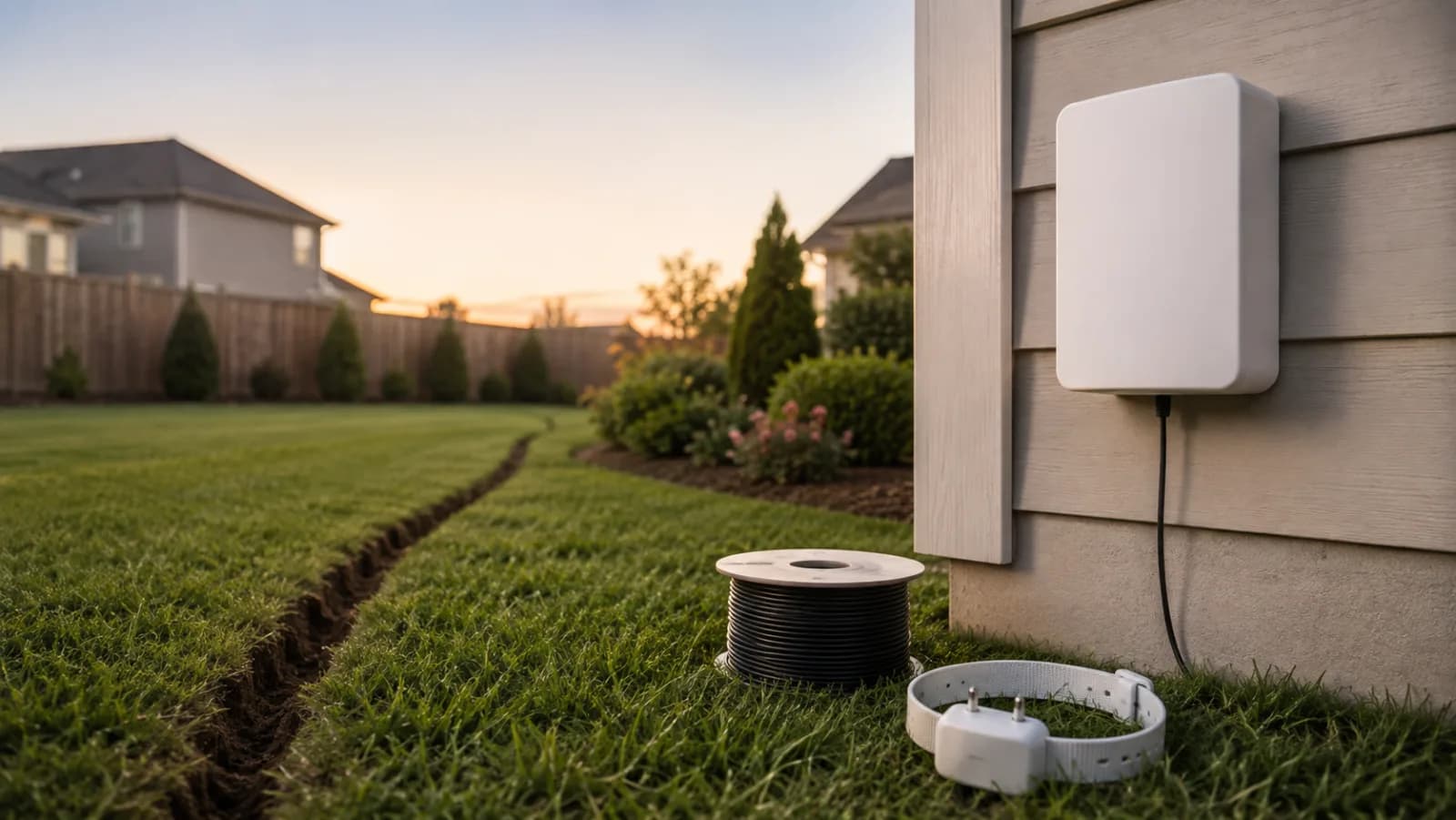
Evidence at a Glance
PetSafe Guardian GPS Dog Fence, 3/4 Acre+
App-drawn boundary with no trenching and, per PetSafe, no subscription fee ever — the flat-cost answer to a quoted install plus an annual service plan.
Sources: PetSafe manufacturer product documentation, Amazon Creators API listing B0D83MQBZ3
Verified Aug 16, 2026
SportDOG Rechargeable In-Ground Fence System, Up to 1 1/3 Acres
The same buried-wire technology a professional installer would bury, as a two-collar kit with 1,000 feet of wire — you supply the trenching.
Sources: SportDOG manufacturer product documentation, Amazon Creators API listing B07R3GSW5B
Verified Aug 16, 2026
Halo Collar 5 GPS Wireless Dog Fence
The only DIY system here that ships a structured training program in the box — the closest thing to the certified-trainer sessions the professional package sells.
Sources: Halo manufacturer product documentation, Amazon Creators API listing B0FMLGHHJ7
Verified Aug 16, 2026
PetSafe Guardian GPS 2.0 Dog Fence + Tracking, 1/2 Acre or More
Adds real-time tracking and a smaller collar to the Guardian platform, at the cost of the subscription the original Guardian avoids.
Sources: PetSafe manufacturer product documentation, Amazon Creators API listing B0DZYH7DFF
Verified Aug 16, 2026
Our Picks
PetSafe
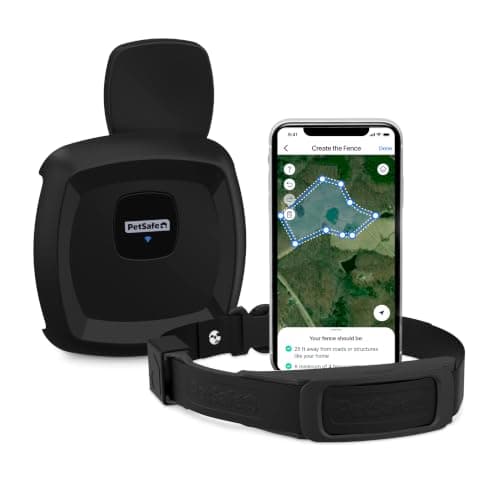
PetSafe Guardian GPS Dog Fence, 3/4 Acre+
9.1 / 10
- PetSafe states there are no subscriptions or fees, because the system has no tracking or portability service to bill for
- Boundary drawn in the My PetSafe app rather than trenched — PetSafe states install in as little as 1 hour
- AccuGuard combines GPS satellite data with real-time motion detection and AI
- Rechargeable, waterproof collar with up to 5 days of battery life per charge
$389.99
Current price · checked Sep 26, 2026
SportDOG
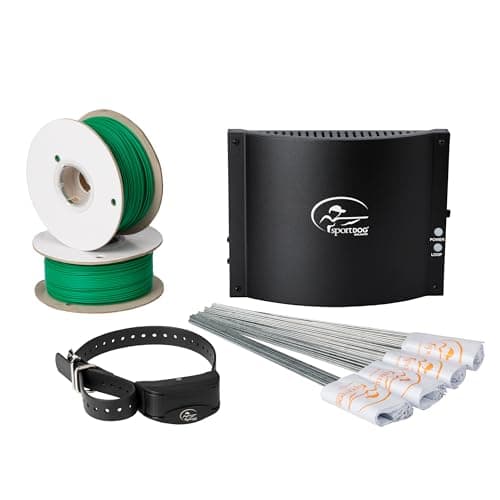
SportDOG Rechargeable In-Ground Fence System, Up to 1 1/3 Acres
8.9 / 10
- Two collars, 100 boundary flags and 1,000 feet of boundary wire included
- Covers 1 1/3 acres out of the box; expandable to 100 acres with additional wire
- Waterproof collar submersible to 25 feet, with a 2-hour quick charge and one to two months of battery life
- Tone and vibration warning before any of seven static stimulation levels
$274.99
Current price · checked Sep 8, 2026
Halo
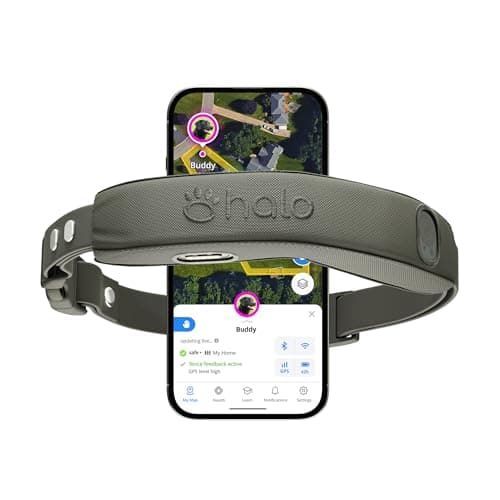
Halo Collar 5 GPS Wireless Dog Fence, Graphite
8.6 / 10
- Ships a structured training program developed by Cesar Millan built into the collar's app
- Dual-frequency L1 and L5 satellites with real-time ground-station corrections; Halo states accuracy within 2 feet
- AlwaysOn GPS tracking included with every plan, updating location 20 times per second
- Multiple stored fences, including rural properties, trails and remote locations
$524.00
Current price · checked Sep 26, 2026
PetSafe
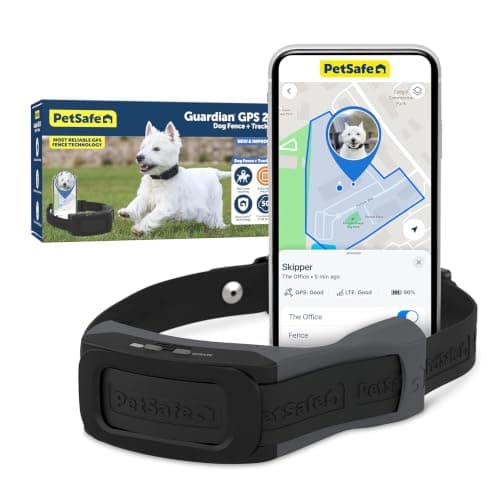
PetSafe Guardian GPS 2.0 Dog Fence + Tracking, 1/2 Acre or More
8.4 / 10
- Real-time tracking on a dual-frequency GPS antenna, which the no-fee Guardian deliberately omits
- PetSafe states the collar is 50% smaller than the original and fits neck sizes as small as 8 inches
- Up to 50 custom fences created in the MyPetSafe app, with push notifications on a crossing
- Rechargeable battery rated up to 70 hours; suits properties 1/2 acre or larger
$319.99
Current price · checked Sep 26, 2026
The Short Answer
For most dogs and most yards, buy a DIY system and skip the installation quote. PetSafe's Guardian GPS Dog Fence at $389.99 is the pick — it draws a boundary from an app with no trenching, and PetSafe states it carries no subscription fee, ever, because it has no tracking service to bill for. That is one payment against the $950 to $2,500 Angi reports for a professionally installed system, plus the $399.00 a year Invisible Fence Brand charges for its own Complete Care plan. If you specifically want a buried wire boundary — the technology an installer would actually put in your ground — SportDOG's In-Ground Fence System at $309.71 is the same job for a weekend of your own labor. Be clear about what the professional premium buys, because it is real: certified training sessions and a service contract for wire breaks, not a boundary that holds better. And before you buy any of this, read the escape data below. A 2017 JAVMA study found 44.0% of dogs contained by electronic fences had escaped, against 23.3% behind a see-through physical fence.
Every product on this list has been scored against the PetPal Gear Score, a weighted composite of expert consensus, observed effectiveness, animal safety, long-term durability, and value. Review method: Editorial cost analysis. Professionally installed pricing is quote-based and is not published by any manufacturer, so the installed figures in this guide are attributed to the cost publishers that report them — Angi, HomeGuide, HomeAdvisor and Bob Vila — and are reported as those publishers' figures rather than as a market fact. Recurring service and battery-plan prices come from Invisible Fence Brand's own published plans page. Containment effectiveness data comes from Starinsky, Lord and Herron's 2017 JAVMA study. Welfare positions are quoted from AVSAB and the AAHA behavior-management guidelines. DIY hardware prices and availability were pulled per product through the Amazon Creators API on the date below. PetPalHQ does not install fences and does not receive quotes from dealers.. Synthesized from 6+ expert sources.
The question behind "how much does an invisible fence cost" is almost never really about the hardware. It is about whether the professionally installed version — the one with a brand name, a dealer, a trainer and a service contract — is worth several times what a box on a shelf costs to do what looks like the same job.
That question has a real answer, and this guide is built to give it to you. But it starts with an honest structural problem: nobody in the installed tier publishes a price. Invisible Fence Brand's own cost page carries no installed figure at all — each professional tier ends in a quote request and a disclaimer that services and pricing may vary by location due to regional differences in property types, installation requirements, and local regulations. The only price printed on that page belongs to the company's do-it-yourself tier, a GPS collar from $300, which is precisely not the installed system people are asking about. So there is no manufacturer figure for the installed job to compare against, and any guide that hands you a precise installed price for a branded system is inventing it.
What does exist is a set of published cost estimates from home-services publishers, and a set of published recurring plan prices from the manufacturer itself. Those are what this guide uses, attributed source by source, and read as estimates rather than quotes.
What the installed tier costs, according to the publishers who report it
Angi reports that invisible fence installation cost averages $1,600, with most homeowners paying between $950 and $2,500 for a professionally installed system, and puts underground systems at $2 to $4 per linear foot. It breaks the same figure down by yard: 400 to 800 linear feet at $700 to $1,200, 800 to 1,200 feet at $1,100 to $1,800, 1,200 to 1,800 feet at $1,500 to $2,500, and over 1,800 feet at $2,000 to $3,500. By system type it reports wired at around $1,000, wireless at around $350, and GPS-based at around $2,000.
HomeGuide reports installing an invisible dog fence at $800 to $2,800 on average, or $2 to $7 per linear foot, and states that an electric fence for dogs costs $1,600 to $2,000 per acre — noting an acre needs 850 to 900 linear feet of boundary wire for a rectangular yard.
HomeAdvisor reports electric fence installation at $1,337 on average, with a low end around $425 and a high end around $2,042, and puts underground invisible fence work at $2 to $6 per linear foot or $1,000 to $5,000 per acre.
Bob Vila gives the widest band, reporting invisible fence cost at $200 to $2,500 depending on the size and number of pets, at $2.40 to $3.90 per linear foot — and adds the thing most cost tables leave out, that homeowners also need to factor in the cost of training the dog to use the fence.
Three caveats belong with those numbers rather than in a footnote. First, Angi and HomeAdvisor are properties of the same company and should not be counted as two independent confirmations of each other. Second, these publishers personalize their headline figures by metro, so the range you see on their sites may differ from the range quoted here. Third, and most important: these ranges describe electronic pet fencing generally, not the branded dealer-installed tier specifically. No publisher we could verify breaks out branded dealer pricing at all.
The recurring cost the sticker price never shows
This is the part of the installed tier that is genuinely published, and it is the most useful number in this guide. Invisible Fence Brand's battery and service plans page lists a Complete Care Plan at $399.00 (battery plan plus service plan), a Power Cap battery plan at $99.00, and an Annual Service Plan at $329.00 — the last described as saving approximately $185 on a typical service call.
Read that against the DIY column. The Complete Care Plan costs $399.00 a year. The PetSafe Guardian at the top of this guide costs $389.99 once, and PetSafe states it carries no subscription or fee at all because it has no tracking service to bill for. That is not a small difference of degree. Over five years it is the difference between one payment of $389.99 and roughly $2,000 in plan renewals on top of an installed cost of $950 to $2,500.
Angi's own ongoing-cost figures fill in the DIY side of the same ledger honestly: replacement batteries at $10 to $60 per year, GPS subscriptions at $5 to $15 per month where a system requires one, wire-break repairs at $100 to $300, transmitter issues at $75 to $200, and collar replacement at $50 to $150. HomeGuide reports technician fees to test and flag a perimeter at $150 to $250. Owning the system yourself means owning those repairs.
So what does the professional premium actually buy?
Not a boundary that holds better. The containment technology in a dealer-installed in-ground system is the same continuous-loop buried wire you can buy in a box, and the GPS tier is the same satellite boundary.
What it buys is stated plainly by the company selling it, and taking it seriously is the fair thing to do. Invisible Fence Brand lists three Perfect Start Plus training sessions led by certified trainers, a one-year Complete Care Plan of free service calls for wire breaks, boundary flagging and battery replacements, a limited lifetime warranty on its premium in-ground tier, and indoor Shields avoidance. It draws the DIY contrast itself, writing that unlike other DIY dog fences and underground fences, its professional, animal-behaviorist-backed pet training helps a pet feel confident in the yard, meaning fewer break-outs and less stress.
That claim about fewer break-outs is the company's own, not an independent finding, and it should be read as marketing. But the mechanism behind it is not silly. Training is the part of this category that DIY buyers most often skip, and it is the part that decides whether the system works.
There is one more claim on the same pages worth flagging rather than repeating: the company describes itself as the number-one dog fence recommended by veterinarians, and publishes no survey, sample or source for that anywhere. Given the veterinary-behavior positions quoted in the next section, treat it as an advertising claim until the data behind it is published.
The finding that outranks the price question
Before the money matters, this does. Starinsky, Lord and Herron's 2017 study in the Journal of the American Veterinary Medical Association surveyed 974 owners of 1,053 dogs and reported that dogs confined by an electronic fence were more likely to have escaped — 66 of 150, or 44.0% — than dogs confined by a see-through fence (153 of 658, 23.3%), a privacy fence (38 of 163, 23.3%), or a tether (22 of 82, 26.8%).
Roughly twice as many dogs get through an electronic boundary as get through a fence they can see. That is the single most important number on this page, it applies equally to the $309.71 kit and the $2,500 installation, and no dealer's brochure contains it.
The same study also found that containment method was not significantly associated with whether dogs had ever bitten a person or another dog — a result worth stating clearly so this research is not misused. It is evidence about escapes, not about aggression.
On the welfare side, the guidance is consistent and it is not favourable to this category. AVSAB's 2021 Humane Dog Training Position Statement states that the application of aversive methods — which by definition rely on application of force, pain, or emotional or physical discomfort — should not be used in canine training or for the treatment of behavioral disorders, and that there is no evidence that aversive training is necessary for dog training or behavior modification. Its FAQ names electronic shock collars explicitly among tools an appropriate trainer should avoid, and it documents the fallout as increased anxiety and fear-related aggression, avoidance, and learned helplessness. AVSAB's board statement on the same page goes further, stating that AVSAB does not support the use of aversives in any context. The AAHA's Canine and Feline Behavior Management Guidelines list electronic shock collars among aversive techniques and state that none of those tools and methods should be used to either teach or alter behavior.
Every product in this guide, at every price point, uses static correction. We are not going to sell past that. If it is decisive for you, a physical fence is the answer, and this page has done its job by telling you so.
Head-to-Head Comparison
| System | Subscription required | Boundary type | Training program included | Install labor |
|---|---|---|---|---|
| PetSafe Guardian GPS Dog Fence, 3/4 Acre+ | None, per PetSafe | App-drawn GPS | No | None — app setup |
| SportDOG Rechargeable In-Ground Fence System, Up to 1 1/3 Acres | None | Buried wire | No | Trench 1,000 ft of wire |
| Halo Collar 5 GPS Wireless Dog Fence, Graphite | Yes — required to contain | App-drawn GPS | Yes — built in | None — app setup |
| PetSafe Guardian GPS 2.0 Dog Fence + Tracking, 1/2 Acre or More | Yes, per dog | App-drawn GPS | No | None — app setup |
| Professionally installed tier | Optional plans | Typically buried wire | Yes — certified trainers | Included in the quote |
$389.99
Current price · checked Sep 26, 2026
- PetSafe states there are no subscriptions or fees, because the system has no tracking or portability service to bill for
- Boundary drawn in the My PetSafe app rather than trenched — PetSafe states install in as little as 1 hour
- AccuGuard combines GPS satellite data with real-time motion detection and AI
- Rechargeable, waterproof collar with up to 5 days of battery life per charge
- For properties 3/4 acre or larger, dogs over 25 lb, neck sizes 13 to 28 inches
Start with the arithmetic, because it is the whole argument. Angi reports that a professionally installed electronic fence runs $950 to $2,500 for most homeowners. Invisible Fence Brand, the best-known name in the installed tier, publishes no installed price at all — each professional tier on its cost page ends in a quote request rather than a number. What it does publish is the cost of keeping the system serviced afterwards: a Complete Care Plan at $399.00 a year, an Annual Service Plan at $329.00, and a Power Cap battery plan at $99.00. The same page also lists a do-it-yourself tier of the company's own, a GPS collar from $300, bundled with a one-year GPS subscription. This collar costs $389.99 once, with no plan behind it.
What you give up by going this route is not containment. PetSafe's Guardian draws its boundary in the My PetSafe app, and PetSafe states you can install it in as little as an hour from your couch, on properties three-quarters of an acre or larger. AccuGuard blends GPS satellite data with real-time motion detection and AI, and the rechargeable waterproof collar runs up to five days per charge. There is no trench, no wire to splice, and no annual plan — PetSafe is explicit that there are no subscriptions or fees because there is no tracking or portability service to bill for. That last detail is worth pausing on, because it means the zero is structural rather than promotional. There is no service to lapse.
Here is the honest trade-off, and it has two parts. First, the no-subscription design is also a no-tracking design: if your dog does get out, this collar will not tell you where he went. That is a real gap and the reason our Best GPS Wireless Dog Fences guide treats tracking as a separate purchase decision. Second, and more important: this is still a static-correction system, and the multi-week training window is not optional. The professional package's genuine advantage is that a certified trainer runs that window for you. Buying this instead means you run it yourself, properly, or the money is wasted. Before you decide either way, read the escape-rate section below — it applies to every product on this page.
What We Love
- PetSafe states no subscriptions or fees, ever, with a structural reason rather than a promotional one
- One payment of $389.99 against the $950 to $2,500 Angi reports for a professionally installed system
- No trenching — PetSafe states installation in as little as one hour via the app
- Rechargeable waterproof collar rated up to 5 days per charge
- Costs less than a single year of Invisible Fence Brand's own $399.00 Complete Care Plan
What Could Be Better
- No tracking at all — if the dog leaves the boundary, the collar will not show you where he is
- Requires a property of 3/4 acre or larger and a dog over 25 lb; smaller yards and smaller dogs are out of scope
- You run the multi-week static-correction training window yourself; no certified trainer is included
- No service contract — a hardware failure outside warranty is your problem, not a dealer's
The Verdict
Get the Guardian GPS if you want the professionally installed system's containment job without its quote or its annual plan, and you are willing to do the training yourself.
Sources
- PetSafe (Guardian GPS product documentation): "No Subscription Fee: No tracking or portability means no subscriptions or fees"; "Install in as little as 1 hour and design your wireless dog fence from the comfort of your couch in the My PetSafe app (for properties 3/4 acres or larger)"; up to 5 days of battery per charge; for dogs over 25 lb
- Invisible Fence Brand (Battery and Service Plans page): "Complete Care Plan $399.00 Battery plan + Service plan"; "Power Cap® Plan $99.00"; "Annual Service Plan $329.00 Save approx. $185 on a typical service call."
- Invisible Fence Brand (What It Costs page): Each professionally installed tier card carries a quote request and no price; the do-it-yourself tier card reads "GPS DIY starting at $300" and links to /product/gps-collar, which publishes a price of $300 and lists "1 Year GPS Subscription" among its inclusions
- Amazon Creators API (live listing): Listed at $389.99, condition New, at time of check
$274.99
Current price · checked Sep 8, 2026
- Two collars, 100 boundary flags and 1,000 feet of boundary wire included
- Covers 1 1/3 acres out of the box; expandable to 100 acres with additional wire
- Waterproof collar submersible to 25 feet, with a 2-hour quick charge and one to two months of battery life
- Tone and vibration warning before any of seven static stimulation levels
- Unlimited additional dogs with add-on collars; fits dogs 10 lb and up; two-year manufacturer's warranty
If what you actually want is the thing the installer would bury — a physical wire loop, a transmitter in the garage, and a boundary that does not depend on a satellite fix — this is that product, at $309.71, with the labor left as an exercise for you. The kit ships two collars, 1,000 feet of boundary wire and 100 flags, enough for 1 1/3 acres out of the box, and SportDOG states it expands to 100 acres with additional wire. The collar is submersible to 25 feet, quick-charges in two hours, and runs one to two months. There is a two-year manufacturer's warranty.
The labor you are taking on is the entire professional premium, and it is worth pricing honestly rather than waving at. Angi reports trenching and wire installation at $2 to $4 per linear foot, with hourly labor at $50 to $100. Applied to the 1,000 feet in this box, that is roughly $2,000 to $4,000 of work — more than the total installed cost Angi reports for most homeowners, which tells you the typical professional job runs a shorter perimeter than this kit can. HomeAdvisor puts underground invisible fence installation at $2 to $6 per linear foot or $1,000 to $5,000 per acre. HomeGuide reports $1,600 to $2,000 per acre and notes that an acre needs 850 to 900 linear feet of boundary wire for a rectangular yard. Whichever set you use, the shape of the answer is the same: burying wire is what you are paying a contractor for, and it is a real weekend of digging if you do it yourself.
Two honest trade-offs before you commit. A buried boundary is permanent in a way an app-drawn one is not — reshaping it later means digging the wire up and re-running it, not redrawing a line on a phone. And because the wire is physical, a mower or an edger can cut it; budget for that as ongoing upkeep rather than a one-time cost. Angi reports wire-break repairs at $100 to $300 when a contractor does them, which is precisely the risk Invisible Fence Brand's $329.00 Annual Service Plan is sold to cover. Doing it yourself means owning that repair too. Our Best Buried-Wire In-Ground Dog Fence Systems guide compares this kit against the rest of the buried-wire category in detail.
What We Love
- Same continuous-loop buried-wire technology a professional installer would put in your ground
- Two collars and 1,000 feet of wire included — enough for 1 1/3 acres out of the box
- Removes the trenching labor Angi reports at $2 to $4 per linear foot
- Boundary set by physical wire, immune to the tree cover and terrain that degrade a GPS fix
- Two-year manufacturer's warranty and a collar submersible to 25 feet
What Could Be Better
- A genuine weekend of trenching — this is the one pick here with real physical labor attached
- Reshaping the boundary later means re-digging and re-splicing wire, not redrawing it in an app
- A mower or edger can cut the wire; repair is ongoing upkeep you now own rather than a dealer's service call
- Static correction with no included training program — you run the multi-week window unaided
The Verdict
Get the SportDOG kit if you want a buried-wire boundary specifically and you would rather spend a weekend digging than $950 to $2,500 having someone dig for you.
Sources
- SportDOG (In-Ground Fence System product documentation): "This kit includes 2 collars, 100 boundary flags, and 1000 ft of wire"; covers "1 1/3 acres of land for one dog; can be expanded to cover 100 acres with more wire and flags"; "waterproof and submersible to 25 ft"; "tone (beep) and vibration (buzz) warning before moving to one of seven static stimulation levels"; "Includes two-year manufacturer's warranty"
- Angi (invisible fence cost report): "Expect to pay $2 to $4 per linear foot for underground systems." and "Hourly rates range from $50 to $100, while per-foot rates for trenching and wire installation fall between $2 and $4."
- Amazon Creators API (live listing): Listed at $309.71, availability IN_STOCK, condition New, Amazon.com buy box at time of check
$524.00
Current price · checked Sep 26, 2026
- Ships a structured training program developed by Cesar Millan built into the collar's app
- Dual-frequency L1 and L5 satellites with real-time ground-station corrections; Halo states accuracy within 2 feet
- AlwaysOn GPS tracking included with every plan, updating location 20 times per second
- Multiple stored fences, including rural properties, trails and remote locations
- Subscription required to activate GPS and fence features — the collar does not contain without a plan
Read Invisible Fence Brand's own marketing and one claim does most of the work. Under a heading that names DIY fences directly, the company writes that unlike other DIY dog fences and underground fences, its professional, animal-behaviorist-backed pet training helps a pet feel confident in the yard, meaning fewer break-outs and less stress. Its package description lists three Perfect Start Plus training sessions led by certified trainers. That is the professional premium, stated by the company selling it — and it is a fair point. Training is where static-correction containment succeeds or fails, and most DIY buyers do it badly or not at all.
The Halo Collar 5 is the only system on this page that answers that argument in the box. It ships an exclusive training program by Cesar Millan built into the app, teaching a dog to understand the sound, vibration and optional static warnings as it approaches a boundary. On hardware, it is also the most capable pick here: dual-frequency L1 and L5 satellites with real-time ground-station corrections, accuracy Halo states as within two feet, location updating twenty times per second, and multiple stored fences including rural and off-property boundaries. If your objection to DIY was that nobody would teach you or the dog what to do, this is the pick that removes it.
Now the part that has to be said plainly, because it changes the price. Halo states that a subscription is required to activate the GPS and fence features. This is not an optional tracking upgrade — without a plan, the containment does not run. So $524.00 is the entry cost, not the total, and the honest comparison against a professionally installed system is hardware plus every month you keep it active. That is a full calculation in its own right, and we have done it: our GPS Dog Fence Total Cost of Ownership guide totals the real one-, three- and five-year cost of this collar and its rivals from each brand's published plan rates. Read that before you buy this one. If a recurring bill is the thing you were trying to escape by avoiding the dealer's $399.00-a-year care plan, the Guardian at rank one is the pick that actually escapes it.
What We Love
- The only DIY pick here with a structured training program included — the professional package's own stated differentiator
- Dual-frequency L1 and L5 GPS with ground-station corrections; Halo states two-foot accuracy
- AlwaysOn tracking included with every plan, so an escape is locatable rather than just alarming
- Multiple stored fences, usable away from home on trails and rural property
What Could Be Better
- Subscription required to activate GPS and fence features — the collar does not contain without an active plan
- Highest hardware price in this guide at $524.00, before any subscription is counted
- The recurring cost reproduces the exact structure — an ongoing plan — that avoiding a dealer install was meant to escape
- Sold by Halo Collar rather than by Amazon.com itself at time of check
The Verdict
Get the Halo Collar 5 if the training program is what was stopping you going DIY — but price the required subscription first, because it is the whole reason this is not the value pick.
Sources
- Halo (Collar 5 product documentation): "Professional training guidance built-in: An exclusive training program by Cesar Millan teaches any dog to understand the automatic sound, vibration, and static (optional) warnings"; "Subscription required to activate GPS & fence features"; "GPS accuracy within 2 feet of your dog's actual location"; location updated "20 times per second"
- Invisible Fence Brand (Why Invisible Fence page): "Perfect Start Plus™ Training* Step-by-step program led by certified trainers customized to train pets of all ages, sizes, and breeds to their Invisible Boundary®." and "1 Year Free Complete Care Plan* Free service calls to your home for wire breaks, boundary flagging, battery replacements and more included." (*"Included with every Boundary Plus® in-ground system installation.")
- Amazon Creators API (live listing): Listed at $524.00, availability IN_STOCK, condition New, sold by Halo Collar at time of check
$319.99
Current price · checked Sep 26, 2026
- Real-time tracking on a dual-frequency GPS antenna, which the no-fee Guardian deliberately omits
- PetSafe states the collar is 50% smaller than the original and fits neck sizes as small as 8 inches
- Up to 50 custom fences created in the MyPetSafe app, with push notifications on a crossing
- Rechargeable battery rated up to 70 hours; suits properties 1/2 acre or larger
- Subscription required, with a one-month free trial; each additional dog needs its own collar and plan
PetSafe sells two Guardian systems, and the difference between them is the cleanest illustration of the cost question this whole guide is about. The rank-one Guardian has no tracking and therefore no fee. This one has tracking, and therefore has a fee. Same brand, same platform, opposite cost structures, and PetSafe states the reasoning openly on both listings rather than hiding it in a footnote. That is worth rewarding with a clear-eyed read rather than a complaint.
What the extra buys is genuine. There is a dual-frequency GPS antenna for more reliable location, up to fifty custom fences stored in the MyPetSafe app with push notifications when the dog crosses one, and a collar PetSafe states is fifty percent smaller than the original, adjusting to neck sizes as small as eight inches — which brings small breeds into a category the 25-pound-minimum Guardian excludes. It works on properties half an acre or larger, a lower floor than the original's three-quarters of an acre. The battery is rated up to seventy hours. And it costs $70.00 less than the no-fee Guardian up front.
The trade-off is the recurring bill, and it compounds in a way the sticker does not show. A subscription is required, and PetSafe states that in a multi-dog home each dog needs both its own collar and its own subscription. Angi reports GPS containment subscriptions running $5 to $15 a month. Two dogs on plans at the top of that range is $360 a year, which is within touching distance of Invisible Fence Brand's $399.00 Complete Care Plan — the recurring cost that going DIY was supposed to avoid. If tracking is genuinely what you need, this is a well-built way to get it. If you talked yourself into tracking because it sounded prudent, the rank-one Guardian plus a separate tracker is usually the cheaper structure, and our Best GPS Wireless Dog Fences guide covers where that split makes sense.
What We Love
- Real-time tracking on a dual-frequency antenna — the gap the no-fee Guardian leaves open
- Fits neck sizes as small as 8 inches, bringing small dogs into scope
- Works on properties from 1/2 acre, a lower floor than the original Guardian's 3/4 acre
- Up to 50 stored fences with crossing notifications; up to 70 hours per charge
- $70.00 cheaper than the no-fee Guardian at purchase
What Could Be Better
- Subscription required, and PetSafe states each additional dog needs its own collar and its own plan
- At the $5 to $15 per month Angi reports, a two-dog home approaches the annual cost of the dealer care plan you were avoiding
- Cheaper up front but more expensive over any multi-year horizon than the no-fee Guardian
- Same multi-week static-correction training window, with no included training program
The Verdict
Get the Guardian GPS 2.0 if you have a small dog or genuinely need tracking — but if you only wanted containment, the no-fee Guardian is the cheaper structure over any horizon longer than a year.
Sources
- PetSafe (Guardian GPS 2.0 product documentation): "Subscription Required: Choose a monthly or annual subscription plan (one-month free trial available). For multiple dogs, each dog will need their own Guardian GPS Dog Fence collar and a subscription is required for each pet."; "now 50% smaller"; "rechargeable battery that lasts up to 70 hours"; "create up to 50 custom fences"; "adjusting to neck sizes as small as 8 inches"; "Ideal for Properties ½ Acre Or Larger"
- Angi (invisible fence cost report, ongoing costs): "Plan for ongoing expenses like replacement batteries ($10 to $60 per year), collar maintenance, and—for GPS-based systems—monthly subscriptions of $5 to $15."
- Amazon Creators API (live listing): Listed at $319.99, condition New, Amazon.com buy box at time of check
How We Score
Formula
Do-It-Yourself Value Score = (Cost Against the Installed Quote × 0.35) + (Containment Reliability & Coverage × 0.25) + (Training Support Included × 0.20) + (Installation Burden × 0.10) + (Warranty & Service Path × 0.10)
Score Factors
- Cost Against the Installed Quote · 35%
- Containment Reliability & Coverage · 25%
- Training Support Included · 20%
- Installation Burden · 10%
- Warranty & Service Path · 10%
| Rank | Product | Score |
|---|---|---|
| #1 | PetSafe PetSafe Guardian GPS Dog Fence, 3/4 Acre+ | 9.1 |
| #2 | SportDOG SportDOG Rechargeable In-Ground Fence System, Up to 1 1/3 Acres | 8.9 |
| #3 | Halo Halo Collar 5 GPS Wireless Dog Fence, Graphite | 8.6 |
| #4 | PetSafe PetSafe Guardian GPS 2.0 Dog Fence + Tracking, 1/2 Acre or More | 8.4 |
When NOT to Buy
Skip this whole category if your dog has ever run through a correction. This is the most important paragraph on the page and it is not a sales caveat. Starinsky, Lord and Herron's 2017 study in the Journal of the American Veterinary Medical Association surveyed 974 owners of 1,053 dogs and found that dogs confined by an electronic fence were more likely to have escaped — 66 of 150, or 44.0% — than dogs confined by a see-through fence (153 of 658, 23.3%), a privacy fence (38 of 163, 23.3%), or a tether (22 of 82, 26.8%). An electronic boundary is a deterrent, not a wall, and roughly twice as many dogs get through one as get through a fence you can see. Neither the $389.99 version nor the $2,500 version changes that finding.
In fairness to the same study, one thing it did not find matters too: containment method was not significantly associated with whether dogs had ever bitten a person or another dog. This research is evidence about escape rates. It is not evidence that electronic fences make dogs aggressive, and we are not going to let it be read that way.
Skip static-correction containment entirely if you want to follow veterinary behavior guidance to the letter. AVSAB's 2021 Humane Dog Training Position Statement states that the application of aversive methods — which by definition rely on application of force, pain, or emotional or physical discomfort — should not be used in canine training or for the treatment of behavioral disorders, and that there is no evidence aversive training is necessary. Its FAQ names electronic shock collars specifically among the tools an appropriate trainer should avoid, and the statement documents the fallout as increased anxiety and fear-related aggression, avoidance, and learned helplessness. AVSAB's board has since gone further, stating on its position-statements page that it does not support the use of aversives in any context. The AAHA's Canine and Feline Behavior Management Guidelines take the same line, listing electronic shock collars among aversive techniques and stating that none of those tools and methods should be used to either teach or alter behavior. Every product on this page uses static correction. If that guidance is decisive for you, the honest answer is a physical fence or supervised-only containment, and no amount of price comparison changes it.
Skip the professional quote specifically if your yard is simple and your budget is tight. The premium is real but it is concentrated in two things — a trainer running the introduction, and a service contract for wire breaks. If you will genuinely run the training window yourself and you can splice a wire, the hardware doing the containing is the same technology either way.
Skip DIY specifically if you cannot commit the training weeks. This cuts the other direction and it deserves equal weight. Invisible Fence Brand's argument that professional training means fewer break-outs is the company's own claim rather than an independent finding, but the underlying logic is sound and the JAVMA escape data gives it context. A system nobody trained the dog on is worse than no system, because it teaches a dog that the yard is where unpredictable things happen.
Skip any single containment layer if your dog is a genuine escape artist. Our How to Create a Safe Dog Backyard guide covers layering a boundary with a physical kennel, a dig barrier and a GPS tracker as the failsafe. For a dog in the 44% column, one system is not a plan.
For dogs
The single most useful thing to understand before you request a quote is that no manufacturer in the professionally installed tier publishes a price. Invisible Fence Brand's own cost page routes you to a local team for each of its installed tiers, and states that services and pricing may vary by location due to regional differences in property types, installation requirements, and local regulations. The one price it does print there belongs to a different product — the company's own do-it-yourself GPS collar, from $300 — and that is not a substitute for the installed quote. That is a legitimate reason — a two-acre wooded lot genuinely is not a quarter-acre suburban rectangle — but it does mean you cannot comparison-shop the installed tier the way you can shop the hardware on this page. Go into the quote knowing the published ranges below, and knowing what the recurring plans cost.
What the company does publish is what its package includes, and it is worth taking seriously rather than dismissing: three Perfect Start Plus training sessions led by certified trainers, a limited lifetime warranty on its premium in-ground tier, a one-year Complete Care Plan of free service calls for wire breaks, boundary flagging and battery replacements, and indoor Shields avoidance. Its published guarantee terms include a one-year money-back performance guarantee on professionally installed premium outdoor systems and a minimum one-year equipment warranty, with many systems carrying a lifetime equipment warranty. None of the DIY systems on this page offers anything comparable on the service side. SportDOG's two-year manufacturer's warranty is the longest term among them, and there is no one to call to your house under any of them.
One claim on the same page deserves a flag rather than a repeat: the company describes itself as the number-one dog fence recommended by veterinarians, and cites no survey, sample or source for it anywhere on the page. Set that next to the AVSAB and AAHA positions quoted above, both of which name electronic shock collars among tools that should not be used, and treat the recommendation claim as marketing until someone publishes the underlying data.
Frequently Asked Questions
- How much does an Invisible Fence Brand system cost?
- The company does not publish an installed price. Its cost page routes you to a local team for a quote on each professional tier and states that services and pricing may vary by location due to regional differences in property types, installation requirements, and local regulations. Cost publishers report the wider professionally installed electronic-fence market at $950 to $2,500 (Angi), $800 to $2,800 (HomeGuide) and around $1,337 on average (HomeAdvisor), but none of them breaks out the branded dealer tier specifically. The company does print one hardware price on that page — its own do-it-yourself GPS collar, listed from $300 — alongside a financing illustration built around a $5,500 example purchase. The first is a different product from an installed system; the second is an illustration rather than a price.
- Is a DIY invisible fence as good as a professionally installed one?
- For containment, the technology is the same — the same continuous-loop buried wire, or the same satellite boundary. What differs is training and service. The professional package includes certified-trainer sessions and a service contract for wire breaks; a DIY kit includes neither, and you run the multi-week training window yourself. If you will genuinely do that training, the containment outcome should be comparable. If you will not, the professional route is buying you the thing you would otherwise skip.
- What does an invisible fence cost per linear foot?
- The publishers disagree, so here is the spread rather than a single figure. Angi reports $2 to $4 per linear foot for underground systems and puts trenching and wire installation labor in the same $2 to $4 band, with hourly labor at $50 to $100. HomeAdvisor reports $2 to $6 per linear foot. HomeGuide reports $2 to $7. Bob Vila reports $2.40 to $3.90. Note that Angi and HomeAdvisor belong to the same company, so the genuinely independent estimates here are fewer than the number of sources suggests.
- Are there ongoing costs after the fence is installed?
- Yes, on both routes. Invisible Fence Brand publishes a Complete Care Plan at $399.00 a year, an Annual Service Plan at $329.00, and a Power Cap battery plan at $99.00 — and states the service plan saves approximately $185 on a typical service call, which tells you roughly what an out-of-plan visit costs. On the DIY side, Angi reports replacement batteries at $10 to $60 a year, GPS subscriptions at $5 to $15 a month where required, and wire-break repairs at $100 to $300. The one structure with no recurring cost at all is a no-subscription system you maintain yourself, which is why the PetSafe Guardian is the top pick here.
- Do invisible fences actually keep dogs in?
- Less reliably than a physical fence, according to the best non-vendor data available. The 2017 JAVMA study by Starinsky, Lord and Herron reported that 44.0% of dogs contained by an electronic fence had escaped, against 23.3% for a see-through fence and 23.3% for a privacy fence. HomeGuide states the caution on its own cost page, noting that electric fences may not effectively contain dogs and can cause behavioral issues, and advising readers to consult a vet and check local ordinances, since some local laws prohibit them.
- Can I install a buried-wire fence myself?
- Yes — it is the labor, not the skill, that stops most people. The SportDOG kit in this guide ships 1,000 feet of wire, two collars and 100 flags, and covers 1 1/3 acres out of the box. Burying that much wire around a real property line is a weekend of trenching. At the $2 to $4 per linear foot Angi reports for trenching and wire installation, that same 1,000 feet would represent roughly $2,000 to $4,000 of contracted labor. The trade you are making is a weekend against that number, plus owning any future wire-break repair yourself.
- Which is cheaper over five years, professional or DIY?
- DIY, in almost every scenario we can construct from published figures — but the gap depends entirely on subscriptions. A no-fee system like the PetSafe Guardian is $389.99 and then nothing. A professionally installed system at Angi's reported $950 to $2,500, plus five renewals of a $399.00 Complete Care Plan, lands in the $2,900 to $4,500 region. A DIY system with a required subscription sits in between, and the gap narrows fast with more than one dog. Our GPS Dog Fence Total Cost of Ownership guide runs those subscription totals properly from each brand's published plan rates.
- Does an invisible fence work for a dog that already escapes?
- This is the case where we would tell you not to buy one. The JAVMA escape figures describe dogs in general; a dog with a history of running through boundaries is self-selected into the harder half of that distribution. An electronic boundary is a deterrent, and a dog willing to take a correction to chase something will take it. For that dog, layer the containment — our How to Create a Safe Dog Backyard guide covers pairing a boundary with a physical kennel, a dig barrier and a tracker — or use a physical fence.
Bottom Line
Buy the PetSafe Guardian GPS at $389.99 if you want containment and nothing else — it is one payment, PetSafe states there is no subscription ever, and it costs less than a single year of the installed tier's own $399.00 Complete Care Plan.
Buy the SportDOG In-Ground Fence System at $309.71 if you specifically want a buried wire boundary — it is the same technology a contractor would install, minus the $2 to $4 per linear foot Angi reports for trenching.
Buy the Halo Collar 5 at $524.00 if the missing training program was your real objection to DIY — but read our total-cost guide first, because Halo states the subscription is required for the fence to work at all.
Buy the PetSafe Guardian GPS 2.0 at $319.99 if you have a small dog or genuinely need tracking — and budget the per-dog subscription, because two dogs on plans approaches the annual cost of the dealer plan you were avoiding.
Get the professional quote if you want a certified trainer to run the introduction and a service contract for wire breaks, and you would rather buy those than do them. That is what the premium is. It is not a boundary that holds better.
Whatever you choose, weigh the JAVMA finding first: 44.0% of dogs contained by electronic fences had escaped, against 23.3% behind a see-through fence. Price is the second question. Whether this category suits your dog at all is the first.
Sources & Methodology
Methodology
Do-It-Yourself Value Score = (Cost Against the Installed Quote × 0.35) + (Containment Reliability & Coverage × 0.25) + (Training Support Included × 0.20) + (Installation Burden × 0.10) + (Warranty & Service Path × 0.10)
Expert review sources
- Starinsky NS, Lord LK, Herron ME — Escape rates and biting histories of dogs confined to their owner's property through the use of various containment methods, JAVMA 2017;250(3):297-302
- AVSAB — 2021 Humane Dog Training Position Statement, and the board statement published on the AVSAB position-statements page
- American Animal Hospital Association — 2015 AAHA Canine and Feline Behavior Management Guidelines
- Angi — Invisible fence cost report
- HomeGuide — Invisible fence cost report
- HomeAdvisor — Electric fence installation cost report
Community sources
- r/Dogtraining — electronic containment training-window discussion
- r/dogs — professional install versus DIY containment threads
Prices and specs verified August 16, 2026.
About the author
Nick Miles is the chief editor of PetPalHQ. Professionally installed pricing in this guide is quote-based and unpublished by manufacturers, so every installed figure is attributed to the cost publisher that reports it and is presented as that publisher's figure, not as a market fact — Angi and HomeAdvisor are properties of the same company and are not independent corroboration of each other. Recurring plan prices are quoted from Invisible Fence Brand's own published plans page. Hardware prices come from live Amazon listing data pulled per product through the Creators API. PetPalHQ does not install fences, does not solicit dealer quotes, and does not run a containment testing lab. The Do-It-Yourself Value Score is a weighting of published figures, not a measurement.
PetPalHQ is a participant in the Amazon Services LLC Associates Program. We may earn commissions from qualifying purchases — at no extra cost to you.
More Guides
Cats & Dogs
Best GPS Wireless Dog Fences for Unfenced Yards and Escape Artists (2026)
Cats & Dogs
Best Buried-Wire In-Ground Dog Fence Systems (2026)
Cats & Dogs
GPS Dog Fence Total Cost of Ownership: The Real 3- and 5-Year Cost (2026)
Dog
How to Create a Safe Dog Backyard: A Containment Setup (2026)
Cats & Dogs