Playground
Beyond the Treadmill: Canine Conditioning & Rehab Equipment (2026)
A flat treadmill is only the entry point for a genuinely athletic or post-rehab dog. The GoPet PetRun PR720F adds a real motorized conditioning platform, the petspemf RollnRest brings PEMF recovery into daily rest, a non-motorized slat mill lets a dog self-pace incline work, and a cold laser device and a FitPAWS balance platform round out the recovery-and-proprioception layer most treadmill-only setups skip.
By Nick Miles · Updated August 10, 2026 · 13 min read
PetPalHQ is reader-supported. We may earn a commission from qualifying Amazon purchases at no extra cost to you.
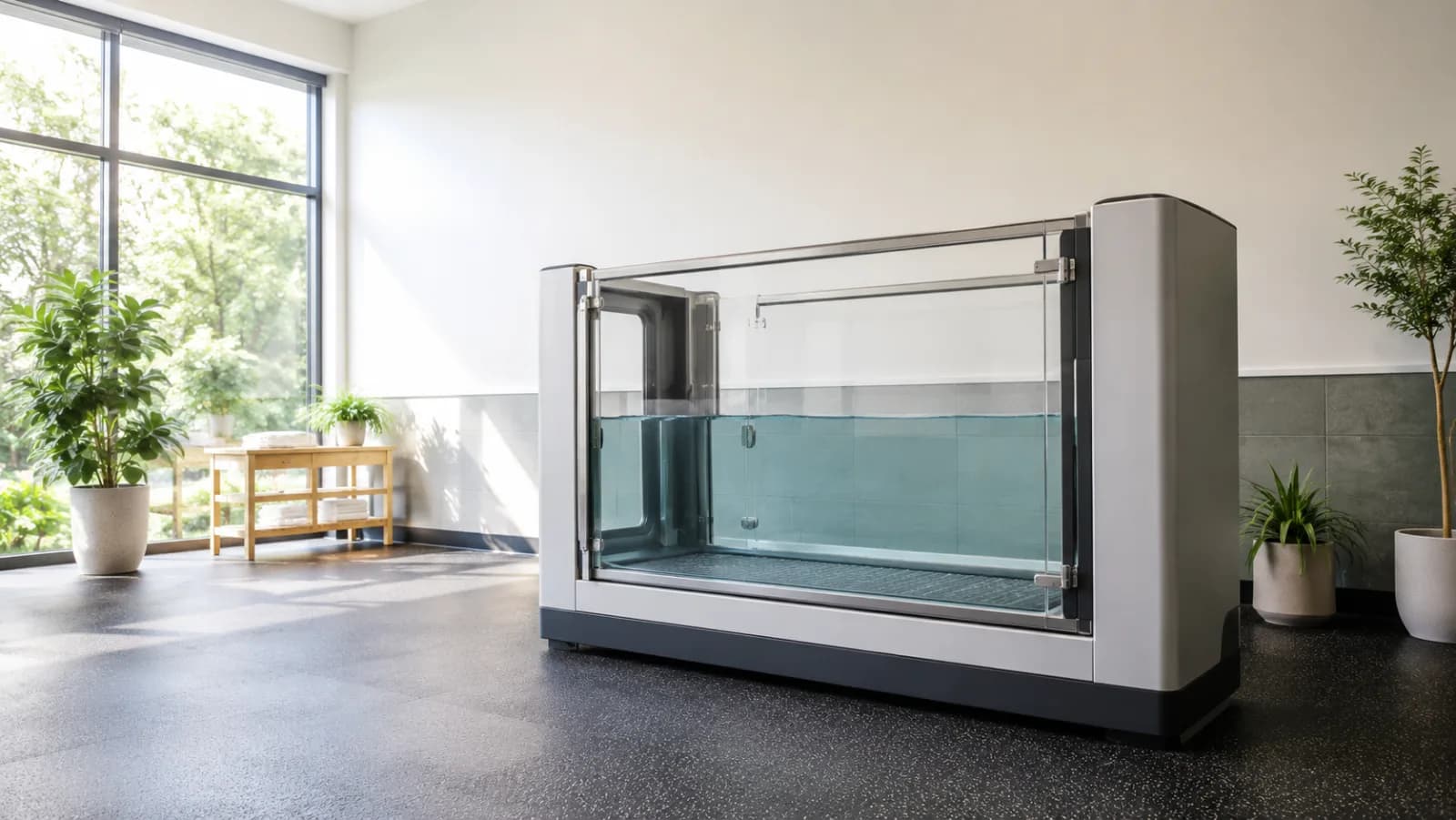
Evidence at a Glance
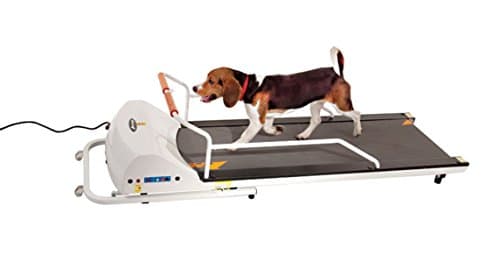
GoPet PetRun PR720F Dog Treadmill Indoor Exercise/Fitness Kit
A motorized treadmill with a 52-by-16-inch belt for dogs up to 132 lb, a silent drive system, remote or manual speed control, and an air-cylinder auto-fold for storage — the structured motorized conditioning platform in this guide.
Sources: GoPet USA manufacturer documentation, Cornell Riney Canine Health Center treadmill-training guidance, Amazon Creators API listing B002PJHDC2
Verified Jul 27, 2026
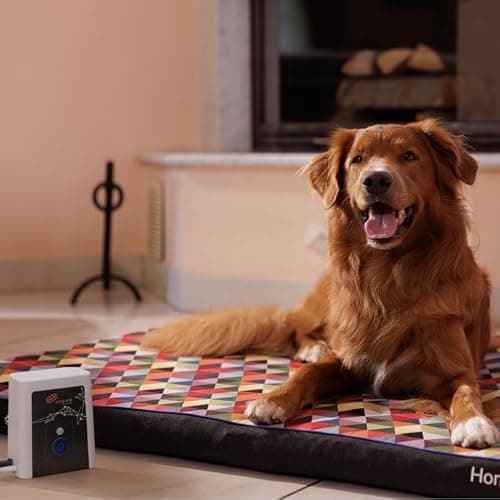
petspemf RollnRest Therapeutic PEMF Dog Bed
An orthopedic memory-foam bed with integrated PEMF therapy controlled through a companion app, for recovery and circulation support built into daily rest rather than a separate treatment session.
Sources: petspemf manufacturer documentation, AKC PEMF therapy explainer, Amazon Creators API listing B0H2FD8181
Verified Jul 27, 2026
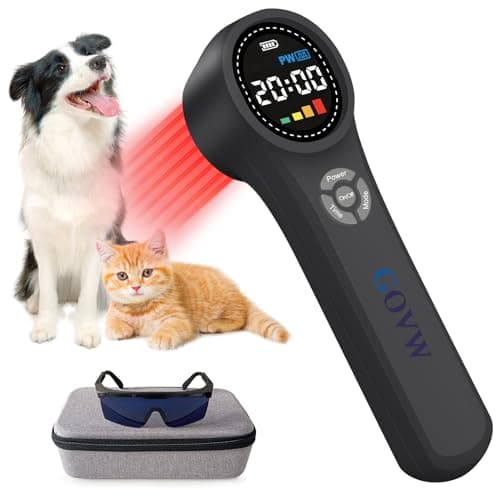
GOVW Cold Laser Therapy Device for Dogs
A tri-wavelength (660nm/810nm/980nm) at-home photobiomodulation device, the category AAHA's 2022 Pain Management Guidelines list as a recommended non-pharmacological modality for chronic pain and post-surgical recovery.
Sources: AAHA 2022 Pain Management Guidelines, Peer-reviewed photobiomodulation post-operative recovery study, Amazon Creators API listing B0CDKJX3WJ
Verified Jul 27, 2026
Our Picks
GoPet
GoPet PetRun PR720F Dog Treadmill Indoor Exercise/Fitness Kit
9.0 / 10
- 52 x 16 inch running belt rated for dogs up to 132 lb
- Motorized speed range of 0.6 to 8 MPH with remote or manual control
- Silent drive system for quiet indoor operation
- Air-cylinder auto-fold for compact upright storage
$1,542.21
petspemf
petspemf RollnRest Therapeutic PEMF Dog Bed
8.6 / 10
- Integrated PEMF therapy programs controlled through a companion app
- Premium orthopedic foam with cooling gel infusion and a waterproof inner cover
- Roll-up, travel-friendly design for storage or transport to vet visits
- Removable, washable covers and replaceable components
$899.00
Last Amazon read 2026-09-08
HotFeed
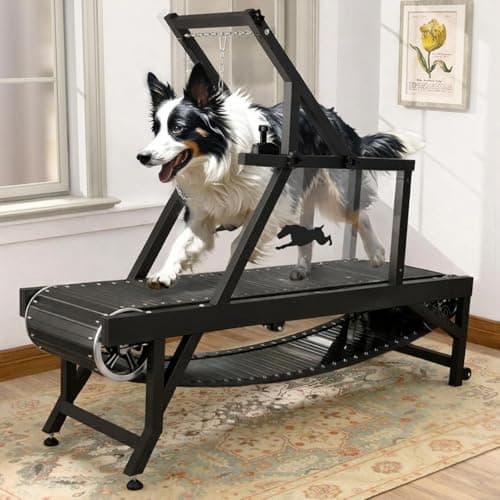
HotFeed Dog Slat Mill for Medium Dogs (Up to 300 lb)
8.4 / 10
- Fiberglass running belt — splinter-free, no wood-chip maintenance
- 3-level adjustable braking system for custom resistance
- Customizable incline via adjustable feet
- Carbon steel frame rated up to 300 lb
$499.99
GOVW
GOVW Cold Laser Therapy Device for Dogs
8.0 / 10
- Three wavelengths: 660nm, 810nm, and 980nm for surface-to-deep-tissue targeting
- Four adjustable power levels (25%, 50%, 75%, 100%)
- Continuous and pulse wave operating modes
- Adjustable 1-to-60-minute timer with an LED display
$208.00
FitPAWS
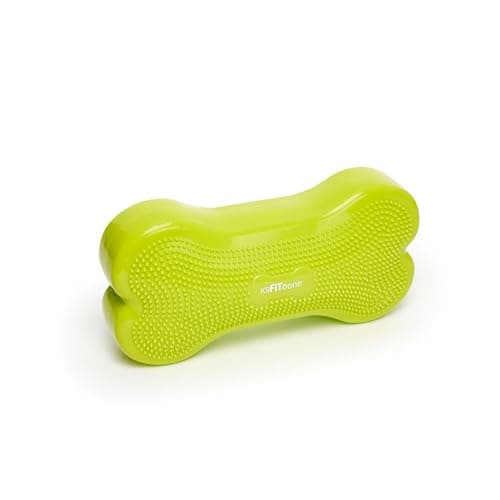
FitPAWS K9FITbone Dog Balance Training Platform (Regular)
8.7 / 10
- Inflatable balance platform with smooth and textured training surfaces
- Difficulty adjusts by adding or removing air with the included pump
- Suitable across life stages — puppies, adult conditioning, senior rehab
- Durable, easy-clean PVC construction built for repeated use
$86.95
The Short Answer
If your dog has outgrown a flat belt, start with the GoPet PetRun PR720F: a motorized conditioning platform for dogs up to 132 pounds, with a quiet drive and remote speed control that lets you run real intervals instead of a steady walk. Recovery gear comes after the conditioning, not instead of it.
Every product on this list has been scored against the PetPal Gear Score, a weighted composite of expert consensus, observed effectiveness, animal safety, long-term durability, and value. Review method: Editorial synthesis of veterinary rehabilitation guidance (AAHA 2022 Pain Management Guidelines on photobiomodulation and rehabilitation therapy, Cornell Riney Canine Health Center treadmill-training guidance, and peer-reviewed PEMF and photobiomodulation studies) plus manufacturer documentation for GoPet, petspemf, HotFeed, GOVW, and FitPAWS. Every pick is cross-checked against the Amazon Creators API for live pricing and buyability at time of publish. PetPalHQ does not run a canine-rehab testing lab.. Synthesized from 5+ expert sources.
A flat treadmill covers basic cardio, but a working dog, a competitive sport dog, or a dog well into a post-rehab conditioning program needs more than a belt at one speed. This guide covers what comes after the flat treadmill: a real motorized conditioning platform for structured interval work, a self-paced alternative for a dog that drives its own pace, and the recovery layer — PEMF, photobiomodulation, and proprioception training — that a treadmill-only setup skips entirely.
Two of the five picks here rest on real but modality-level veterinary evidence rather than device-specific trials, and this guide says so plainly rather than borrowing the modality's credibility for a specific consumer product. AAHA's 2022 Pain Management Guidelines and peer-reviewed research support PEMF and photobiomodulation as legitimate adjunctive modalities — but neither the petspemf bed nor the GOVW laser device has been independently trial-tested, and both guidelines and the American Kennel Club recommend looping in a veterinarian before relying on a specific device for an actual condition.
$1,542.21
- 52 x 16 inch running belt rated for dogs up to 132 lb
- Motorized speed range of 0.6 to 8 MPH with remote or manual control
- Silent drive system for quiet indoor operation
- Air-cylinder auto-fold for compact upright storage
- Low running platform designed to reduce a dog's hesitation boarding the belt
This is the pick for structured, repeatable conditioning work — interval sprints, sustained pace training, or supervised rehab cardio — rather than casual exercise. GoPet's own product page rates the PR720F for dogs up to 132 pounds on a 52-by-16-inch belt, with a motorized speed range from a slow 0.6 MPH crawl up to 8 MPH. That low floor matters for conditioning specifically: Cornell's Riney Canine Health Center guidance on treadmill training calls for a gradual, controlled introduction at a walk or trot, which a purely self-paced slatmill can't structure the same way a motorized belt with a fixed, repeatable speed can.
The silent drive system and air-cylinder auto-fold are what make this a realistic home-conditioning platform rather than a facility-only piece of equipment: it folds away between sessions instead of demanding a permanently dedicated room. For a working or athletic dog on a structured conditioning schedule — building endurance ahead of a season, or maintaining fitness during a stretch of bad weather — a fixed, repeatable pace is the actual point, which a self-paced slatmill (see the HotFeed pick below) can't fully replace.
The honest trade-off: a motorized belt means the dog has to learn to hold pace rather than setting it, which Cornell's material treats as a training cost, not a flaw, and this is the priciest single item in this guide. Budget the multi-week acclimation period before expecting full conditioning sessions.
What We Love
- 52 x 16 inch belt and 132 lb rating covers most working and athletic breeds
- 0.6 MPH low-speed floor supports gradual, Cornell-aligned conditioning introduction
- Fixed, repeatable motorized pace enables real interval and endurance training
- Silent drive and auto-fold make it realistic to run and store at home
What Could Be Better
- Most expensive single item in this guide
- Motorized pace must be taught — plan for a multi-week acclimation window
- Requires a dedicated flat area and a power outlet, unlike a self-paced slatmill
The Verdict
The structured conditioning platform for a working or athletic dog that needs a fixed, repeatable pace — budget the acclimation weeks Cornell's guidance calls for before expecting full sessions.
Sources
- GoPet USA: For dogs up to 132 pounds, running area 52 in L x 16 in W, speeds 0.6 to 8 MPH, silent drive system, air-cylinder auto-fold, wireless remote control
- Cornell University Riney Canine Health Center: a treadmill should measure 1.5 to 2 times the dog's body length and have safety side rails; exercise should be controlled at a walk or trot, introduced gradually
- Amazon: GoPet PetRun PR720F Dog Treadmill Indoor Exercise/Fitness Kit, listed at $1,542.21, live new-condition offer confirmed at our August 10, 2026 check
$899.00
Last Amazon read 2026-09-08
- Integrated PEMF therapy programs controlled through a companion app
- Premium orthopedic foam with cooling gel infusion and a waterproof inner cover
- Roll-up, travel-friendly design for storage or transport to vet visits
- Removable, washable covers and replaceable components
Honest framing first: peer-reviewed veterinary research on PEMF is real and generally positive — a randomized, placebo-controlled trial found measurable gait-symmetry improvement in dogs by day 42 of treatment, and other studies show benefits for post-operative wound healing — but AKC's own consumer guidance is explicit that not every PEMF device on the market is backed by device-specific trial data, and recommends discussing a specific product with a veterinarian before relying on it for a medical condition. That caveat applies here: this bed's PEMF programs haven't been independently trial-tested the way the peer-reviewed research above was, though the underlying modality has real support.
What the RollnRest does credibly is fold recovery support into a dog's existing daily rest rather than adding a separate treatment session — the orthopedic cooling foam and PEMF sessions run through the same bed a conditioning dog already sleeps and recovers on between workouts. For a dog on a structured conditioning program from the picks above, that's a genuine advantage: recovery happens passively during downtime instead of requiring a dedicated appointment.
The trade-offs are real. At $719.00 this is a significant recovery-tier investment, the peer-reviewed evidence above is about the PEMF modality broadly rather than this specific consumer bed, and the six-week timeline in the cited trial means this isn't a fast fix — treat it as a long-term recovery aid, and loop in a veterinarian for any active injury or post-surgical recovery rather than substituting it for veterinary care.
What We Love
- Folds PEMF recovery into a dog's daily rest instead of a separate treatment session
- Orthopedic cooling foam adds joint support independent of the PEMF feature
- Roll-up portable design works for home, travel, or vet-visit use
- The underlying PEMF modality has real peer-reviewed support for osteoarthritis and post-op recovery
What Could Be Better
- This specific bed has not been independently trial-tested — the cited research is on the PEMF modality generally, not this product
- AKC's own guidance recommends discussing any specific PEMF device with a veterinarian first
- Peer-reviewed gait-symmetry improvement took roughly six weeks in the cited trial — not a fast fix
- Significant cost for a recovery-tier accessory, not a replacement for veterinary rehab
The Verdict
The petspemf RollnRest is a real recovery aid for a dog already on a conditioning program — but talk to your veterinarian before leaning on it for an active injury, since AKC's own guidance is explicit that device-specific evidence varies.
Sources
- petspemf (Amazon brand listing): Orthopedic cooling memory-foam bed with integrated PEMF therapy, app-controlled, waterproof inner cover, roll-up portable design; listed at $719.00 at time of check
- American Kennel Club (AKC): PEMF therapy is a non-invasive treatment... accumulating clinical evidence supports its use for bone healing, wound healing, osteoarthritis and inflammation, and post-operative pain and edema; not all PEMF devices are supported by solid research, so discuss specific products with your veterinarian
- BMC Veterinary Research (peer-reviewed): PEMF-treated dogs exhibited significant improvements in gait symmetry by Day 42 in a randomized, double-blind, placebo-controlled trial; PEMF may serve as a valuable adjunctive intervention in long-term management of canine osteoarthritis
$499.99
- Fiberglass running belt — splinter-free, no wood-chip maintenance
- 3-level adjustable braking system for custom resistance
- Customizable incline via adjustable feet
- Carbon steel frame rated up to 300 lb
- Non-motorized — the dog sets and controls its own pace
A self-paced slatmill solves a different problem than the motorized PR720F above: the dog controls speed entirely, so there's no acclimation period spent teaching pace-matching, and no risk of a motorized belt outrunning a tired or hesitant dog. The dog walks, jogs, or sprints at will, and stops when it wants to. That self-limiting design is why slatmills are common in working- and sport-dog conditioning circles, where the goal is voluntary effort rather than forced pace.
The HotFeed model's adjustable incline is the conditioning-relevant feature here: raising the incline increases effort without changing belt speed, the same joint-sparing principle Cornell's material describes for motorized treadmills, but controlled by the dog's own pace instead of a fixed motor speed. The 3-level braking system adds resistance independent of incline, giving two separate ways to scale difficulty as a dog's conditioning improves.
The honest limits: a non-motorized mill only works if the dog is willing to self-drive the belt, which takes its own acclimation for a hesitant dog, and it demands real physical effort from the dog to overcome friction and incline rather than a set motor pace — not appropriate for early-stage rehab where a controlled, gentle motorized pace matters more. At $499.99 it's the mid-price pick in this guide, and its rated 300 lb capacity is a frame rating, not a statement that it suits giant breeds' full stride length — measure your dog against the deck before buying, per Cornell's sizing guidance.
What We Love
- No motor pace to teach — the dog sets speed and can stop at will
- Adjustable incline and independent 3-level braking give two ways to scale difficulty
- Fiberglass belt avoids the splinter and maintenance issues of wood-slat designs
- Mid-price point relative to a full motorized platform
What Could Be Better
- Requires the dog to physically drive the belt — not ideal for early-stage or gentle rehab
- A hesitant dog needs its own acclimation period to trust a self-paced mill
- 300 lb is a frame rating, not a deck-length guarantee for the tallest giant breeds
The Verdict
The HotFeed slat mill is the pick for a willing, self-motivated conditioning dog that doesn't need a taught pace — confirm deck length against Cornell's 1.5-to-2x body-length guidance before buying for a giant breed.
Sources
- Amazon listing: Fiberglass running belt, 3-level adjustable braking system, customizable incline via flexible feet, carbon steel frame, 66 x 20 x 56 in footprint, rated up to 300 lb; listed at $499.99 at time of check
- Cornell University Riney Canine Health Center: a treadmill should measure 1.5 to 2 times the dog's body length and have safety side rails; exercise should be controlled at a walk or trot
- AAHA 2022 Pain Management Guidelines: Rehabilitation therapy encompasses varied manual techniques, treatment modalities, and therapeutic exercises including hydrotherapy, and should be considered part of a comprehensive wellness plan for patients affected by acute or chronic pain
$208.00
- Three wavelengths: 660nm, 810nm, and 980nm for surface-to-deep-tissue targeting
- Four adjustable power levels (25%, 50%, 75%, 100%)
- Continuous and pulse wave operating modes
- Adjustable 1-to-60-minute timer with an LED display
Honest framing matters most here: AAHA's 2022 Pain Management Guidelines do list photobiomodulation (cold laser) among recommended non-pharmacological modalities, and a peer-reviewed study found it supported post-operative recovery when combined with physical rehabilitation — but that evidence is about the modality broadly, using clinical-grade equipment, not a specific verdict on this consumer device. GOVW's own product listing recommends 3 to 5 sessions weekly over 4 weeks, a protocol shape consistent with the clinical literature's cadence, but we found no independent clinical trial of the device itself.
Within that honest limit, the feature set is real: three wavelengths spanning 660nm (surface circulation) through 980nm (deeper joint and soft-tissue penetration), adjustable power, and both continuous and pulse modes. That's a reasonable at-home complement to the conditioning and recovery equipment above — using it on sore muscles or a joint flare-up after a conditioning session, for instance — but it is not a substitute for veterinary-directed laser therapy on a genuine injury, surgical site, or diagnosed condition.
The trade-off is straightforward: at $208.00 it's the least expensive recovery-tier item in this guide, but the gap between "AAHA recognizes this modality" and "this specific consumer device is clinically validated" is real and worth stating plainly before buying. Use it as a wellness/recovery adjunct, and see a veterinarian for anything beyond routine post-workout soreness.
What We Love
- Three wavelengths cover surface-to-deep-tissue targeting, matching the clinical modality's design
- Adjustable power and timer allow tailoring sessions to a dog's tolerance
- AAHA formally recognizes photobiomodulation as a legitimate non-pharmacological modality
- Least expensive recovery-tier pick in this guide
What Could Be Better
- No independent clinical trial exists for this specific consumer device — the supporting evidence is for the modality broadly
- Not a substitute for veterinary-directed laser therapy on a real injury or post-surgical site
- Manual dosing/timing is on the owner — no automated protocol matched to a specific condition
The Verdict
The GOVW cold laser is a reasonable, budget-priced recovery adjunct for routine post-conditioning soreness — not a substitute for veterinary care on any diagnosed injury, and the evidence backing it is for the modality, not this specific device.
Sources
- AAHA 2022 Pain Management Guidelines: AAHA's 2022 Pain Management Guidelines list photobiomodulation (laser therapy) among the recommended non-pharmacological treatments for chronic pain in dogs and cats
- Peer-reviewed veterinary study (PMC): Perilesional photobiomodulation therapy combined with physical rehabilitation supported post-operative recovery of dogs surgically treated for thoracolumbar disk extrusion
- Amazon listing: 3 wavelengths (660nm/810nm/980nm), adjustable power (25/50/75/100%), continuous and pulse wave modes, 1-60 minute timer; listed at $208.00 at time of check
$86.95
- Inflatable balance platform with smooth and textured training surfaces
- Difficulty adjusts by adding or removing air with the included pump
- Suitable across life stages — puppies, adult conditioning, senior rehab
- Durable, easy-clean PVC construction built for repeated use
Cardio conditioning without proprioception and core-stability work is an incomplete program — a dog that can run on a treadmill for 20 minutes but has poor balance and weak stabilizer muscles is still injury-prone. The K9FITbone is FitPAWS's entry point into that missing piece, and it's the lowest-cost item in this guide by a wide margin. FitPAWS's own product page positions it across the full use-case range this guide covers: companion conditioning, sporting and working-dog fitness, and rehabilitation, with difficulty scaling by how much air is in the platform.
That scalability is the practical reason it belongs alongside the higher-ticket treadmill and recovery equipment above rather than being treated as a toy: a conditioning program that only builds cardio without balance and core work leaves the exact gap AAHA's therapeutic-exercise category is meant to close. A dog moving from the treadmill picks above to structured balance work on the K9FITbone is building the stabilizer strength that actually reduces injury risk during real conditioning work.
The honest limit: at $86.95 this is a single-piece, single-difficulty-axis tool. FitPAWS sells companion pieces (paw pods, peanut balls, wobble boards) for a fuller program, and a serious working or post-rehab dog will likely need more than one balance tool over time. This is the starting point, not the complete proprioception program.
What We Love
- Lowest cost in this guide — a genuine entry point to structured balance work
- Adjustable difficulty via air level scales with a dog's progress
- Two training surfaces (smooth, textured) in one platform
- Fits AAHA's therapeutic-exercise category alongside cardio conditioning
What Could Be Better
- Single-piece tool — a full proprioception program typically needs additional FitPAWS equipment over time
- No motorized or self-paced cardio component — pair with a treadmill pick above for a complete program
- Requires supervision, especially early, since balance training carries a real fall risk until a dog learns the platform
The Verdict
The budget starting point for the balance-and-core-stability work a cardio-only conditioning program is missing — plan to add more FitPAWS pieces as a dog progresses.
Sources
- FitPAWS: Designed for weight-bearing activities and balance training for companion pets, sporting and working dogs, or animal rehabilitation and therapy; two training surfaces (smooth and textured); difficulty adjustable by adding or removing air
- AAHA 2022 Pain Management Guidelines: Rehabilitation therapy encompasses varied manual techniques, treatment modalities, and therapeutic exercises, and should be considered part of a comprehensive wellness plan
- Amazon: FitPAWS K9FITbone Regular, Green, dog balance training platform; listed at $86.95 at time of check
How We Score
Formula
Conditioning Completeness Score = (Structured Cardio Capacity × 0.30) + (Recovery & Modality Legitimacy × 0.30) + (Proprioception & Core Support × 0.20) + (Verified Buyability & Value × 0.20)
Score Factors
- Structured Cardio Capacity · 30%
- Recovery & Modality Legitimacy · 30%
- Proprioception & Core Support · 20%
- Verified Buyability & Value · 20%
| Rank | Product | Score |
|---|---|---|
| #1 | GoPet GoPet PetRun PR720F Dog Treadmill Indoor Exercise/Fitness Kit | 9.0 |
| #2 | FitPAWS FitPAWS K9FITbone Dog Balance Training Platform (Regular) | 8.7 |
| #3 | petspemf petspemf RollnRest Therapeutic PEMF Dog Bed | 8.6 |
| #4 | HotFeed HotFeed Dog Slat Mill for Medium Dogs (Up to 300 lb) | 8.4 |
| #5 | GOVW GOVW Cold Laser Therapy Device for Dogs | 8.0 |
When NOT to Buy
Skip every pick in this guide if your dog hasn't been cleared for exercise by a veterinarian, especially if this is a post-surgical or post-injury recovery situation. Nothing here — including the PEMF bed and the cold laser device — substitutes for a veterinarian's or a certified canine rehabilitation practitioner's direction on an actual injury or surgical recovery. For the acute, first-two-weeks post-surgery period specifically, see our Dog Post-Surgery Recovery Station Setup guide instead — that's a different scope than the ongoing-conditioning equipment covered here.
Skip the GoPet PR720F and the HotFeed slat mill if your dog is a toy or small breed under about 20 pounds, or if you haven't measured your dog against Cornell's 1.5-to-2x body-length deck guidance. Neither of these platforms is sized for a small dog's stride, and forcing a fit wastes the conditioning value.
Skip the petspemf PEMF bed and the GOVW cold laser device if you're expecting fast, guaranteed results. Both rest on real but modality-level evidence — the peer-reviewed research behind PEMF and photobiomodulation is genuine, but it doesn't validate any one consumer product, and the cited PEMF trial took roughly six weeks to show measurable improvement. Treat both as long-term adjuncts, not quick fixes.
Skip this guide's higher-ticket items entirely if you're just starting to build a basic exercise routine. Our Best Dog Treadmills for Large Breeds guide covers flat, entry-level treadmill options at a range of price points — start there, and come back to this guide once your dog has outgrown flat, unstructured cardio.
Frequently Asked Questions
- Is this guide about hydrotherapy or treadmills?
- Both, framed around the "beyond the treadmill" gap. Home underwater treadmills — the clinical hydrotherapy standard — are commercial-grade equipment typically sold direct to veterinary rehab facilities, not stocked as a consumer Amazon product at the time of this guide's publish. Instead, this guide covers the conditioning and recovery equipment that fills the same structured-exercise-and-recovery role at home: motorized and self-paced land treadmills, PEMF recovery, cold laser therapy, and proprioception training.
- Do I need a veterinarian's approval before starting any of this?
- Yes, especially if your dog is recovering from surgery, an injury, or has a diagnosed orthopedic condition. Every pick in this guide assumes a dog already cleared for structured activity. If you're in the acute post-surgical window, see our dog post-surgery recovery station guide instead — that covers the first two weeks, not ongoing conditioning.
- Is PEMF or cold laser therapy actually proven to work?
- The underlying modalities have real support — AAHA's 2022 Pain Management Guidelines list photobiomodulation as a recommended non-pharmacological treatment, and peer-reviewed studies show PEMF benefits for osteoarthritis gait symmetry and post-operative wound healing. But that evidence is about the modality broadly, using research-grade protocols and equipment. We found no independent clinical trial of the specific PEMF bed or the specific cold laser device in this guide, and the American Kennel Club's own guidance recommends discussing any specific device with a veterinarian rather than assuming it matches the published research.
- What's the difference between the GoPet treadmill and the HotFeed slat mill?
- The GoPet PR720F is motorized — it sets the pace, and the dog learns to match it, which enables real interval and endurance training at a fixed, repeatable speed. The HotFeed slat mill is non-motorized — the dog drives the belt and sets its own pace, with incline and braking resistance as the two ways to scale difficulty. Motorized suits structured conditioning programs; self-paced suits a dog you want exercising at will without a taught pace.
- Do I need the FitPAWS balance platform if my dog already runs on a treadmill?
- Yes, if the goal is a complete conditioning program rather than cardio alone. Cardio conditioning without proprioception and core-stability work leaves a real injury-risk gap — a dog with strong cardio but weak stabilizer muscles and poor balance is still prone to soft-tissue injury. AAHA's therapeutic-exercise framing treats balance work as part of a comprehensive plan, not an optional extra.
- How much does a complete conditioning-and-recovery setup cost?
- The five picks in this guide total roughly $3,007.65 at today's verified prices, though you don't need all five. A minimal setup pairs one cardio platform (GoPet or HotFeed) with the FitPAWS balance platform for about $1,580 to $1,900; the PEMF bed and cold laser device are optional recovery adjuncts to add once a base conditioning program is running.
Bottom Line
Buy the GoPet PetRun PR720F at $1,542.21 for structured, repeatable motorized conditioning — budget the multi-week acclimation Cornell's guidance calls for.
Buy the HotFeed slat mill at $499.99 instead if your dog is a willing self-pacer and you want incline/resistance work without teaching a motor pace.
Add the FitPAWS K9FITbone at $86.95 to any conditioning program — cardio without proprioception and core work leaves a real injury-risk gap.
Consider the petspemf RollnRest at $719.00 or the GOVW cold laser at $208.00 as recovery adjuncts only, with the honest caveat that both rest on modality-level evidence rather than device-specific trials — and never in place of veterinary care for an actual injury.
This is a conditioning-and-recovery upgrade path for an athletic or post-rehab dog, not a starting point — see our large-breed treadmill guide first if you're building a basic routine.
Sources & Methodology
Methodology
Conditioning Completeness Score = (Structured Cardio Capacity × 0.30) + (Recovery & Modality Legitimacy × 0.30) + (Proprioception & Core Support × 0.20) + (Verified Buyability & Value × 0.20)
Expert review sources
- AAHA — 2022 Pain Management Guidelines for Dogs and Cats
- Cornell University Riney Canine Health Center — treadmill-training guidance
- American Kennel Club (AKC) — PEMF therapy for dogs
- Peer-reviewed veterinary literature — photobiomodulation post-operative recovery study (PMC); PEMF osteoarthritis gait-symmetry trial (BMC Veterinary Research)
- GoPet USA, petspemf, FitPAWS — manufacturer product documentation
Prices and specs verified July 27, 2026.
About the author
Nick Miles is the chief editor of PetPalHQ. The picks above are editorial synthesis of manufacturer product documentation, veterinary rehabilitation guidance, and live Amazon listing data pulled per product through the Creators API — PetPalHQ does not run a canine-rehab testing lab. Sources are cited by name throughout, and modality-level evidence is distinguished from device-specific evidence wherever the two differ.
PetPalHQ is a participant in the Amazon Services LLC Associates Program. We may earn commissions from qualifying purchases — at no extra cost to you.
More Guides
Playground
Best Dog Treadmills for Large Breeds (2026)
Cats & Dogs
Setting Up a Dog Post-Surgery Recovery Station (TPLO / Cruciate Prep Checklist)
Cats & Dogs
Senior Dog Arthritis Home Setup: A Mobility Checklist for Aging Dogs in 2026

Cats & Dogs