Cats & Dogs
Senior Dog Arthritis Home Setup: A Mobility Checklist for Aging Dogs in 2026
Arthritis in an aging dog is managed as much by changing the house as the dog. A supportive bed, a ramp, floor traction, a raised bowl, and a lift harness remove the daily movements that hurt most — home setup that supports a veterinary plan, not replaces it.
By Nick Miles · Updated September 8, 2026 · 14 min read
PetPalHQ is reader-supported. We may earn a commission from qualifying Amazon purchases at no extra cost to you.
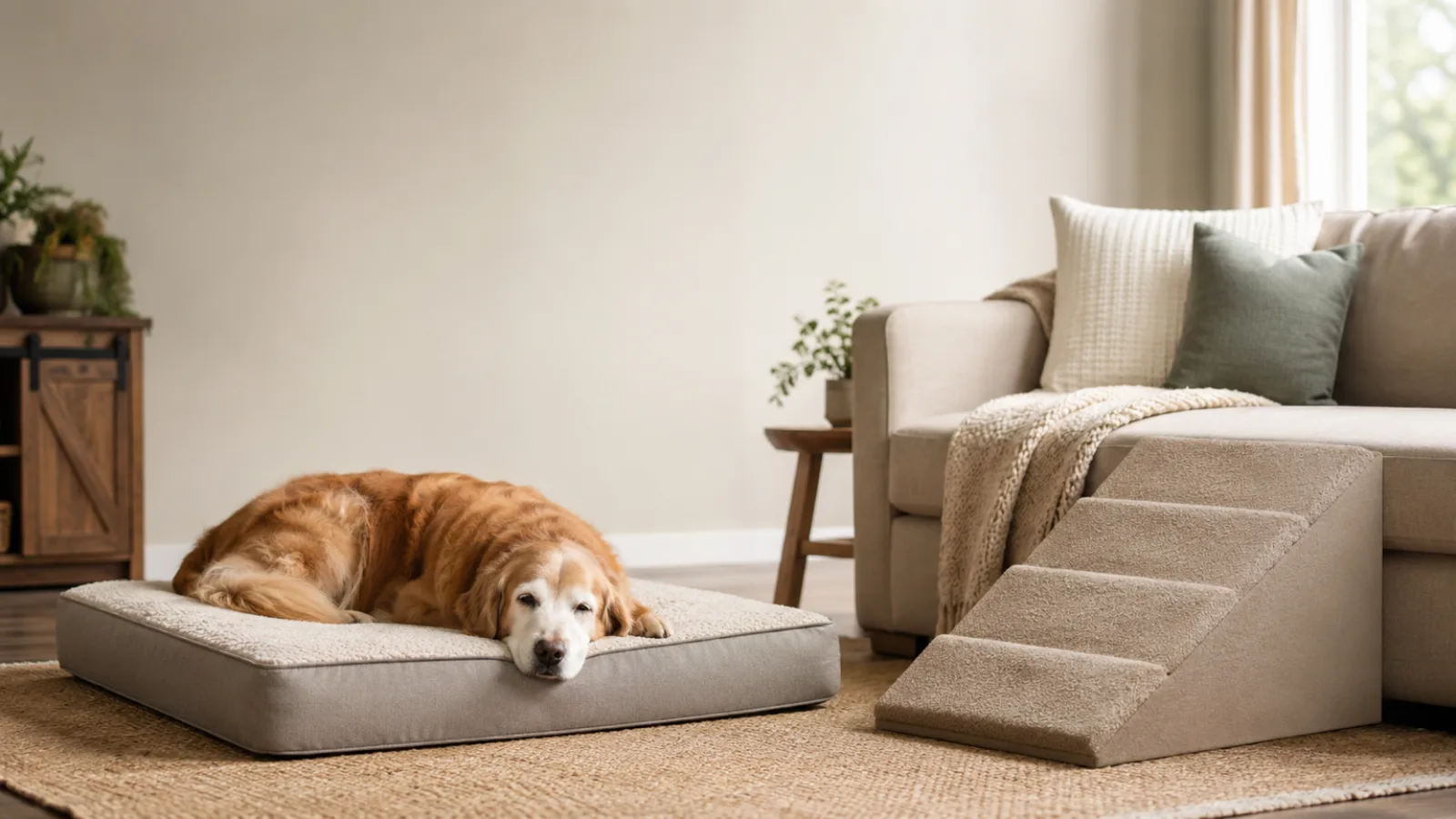
Evidence at a Glance
EHEYCIGA Orthopedic Memory Foam Dog Bed with Sides (44 x 32 in, XL)
The foundation of the setup: a 44-by-32-inch orthopedic memory-foam bed sized for extra-large dogs, with raised bolster sides to brace against, a waterproof washable cover, and a non-slip base — real support for a dog that already hurts to lie down and get up.
Sources: EHEYCIGA manufacturer/Amazon listing, Merck Veterinary Manual — Osteoarthritis in Dogs
Verified Jul 8, 2026
SweetBin Foldable Dog Ramp for Bed and Couch (12-20 in adjustable, up to 60 lb)
Removes the single most damaging daily movement: a foldable ramp with four heights from 12 to 20 inches and a non-slip surface, rated for dogs up to 60 pounds, that turns the jump-and-land onto furniture or into the car into a walk.
Sources: SweetBin manufacturer/Amazon listing, American College of Veterinary Surgeons — Osteoarthritis
Verified Jul 8, 2026
PICK FOR LIFE Adjustable Rear-Leg Lift Harness / Sling for Large Dogs
For the hardest transitions of the day: a padded rear-leg support sling sized for large dogs that gives an owner a hand-hold over the weak hindquarters — assisting stairs, the car, and a slick patch without lifting the dog's full weight.
Sources: PICK FOR LIFE manufacturer/Amazon listing, Tufts Cummings School of Veterinary Medicine — canine rehabilitation guidance
Verified Jul 8, 2026
Our Picks
EHEYCIGA
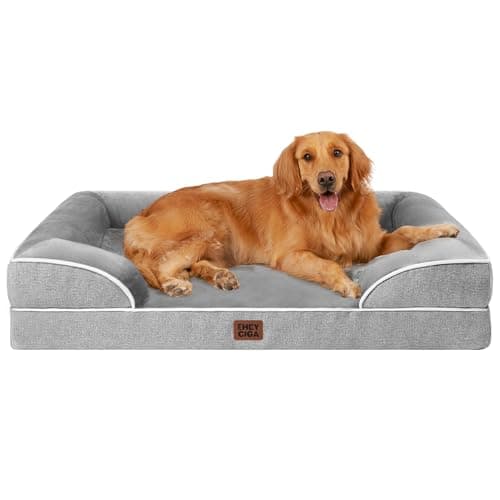
EHEYCIGA Orthopedic Memory Foam Dog Bed with Sides (44 x 32 in, XL)
8.6 / 10
- 44 x 32 in orthopedic memory-foam bed sized for extra-large dogs, with raised bolster sides
- Egg-crate foam layer spreads weight off the hips, elbows, and shoulders arthritis loads hardest
- Waterproof, non-slip base keeps the bed from sliding when a stiff dog pushes up to stand
- Machine-washable removable cover for the incontinence that comes with age
$39.98
Current price · checked Sep 8, 2026
SweetBin
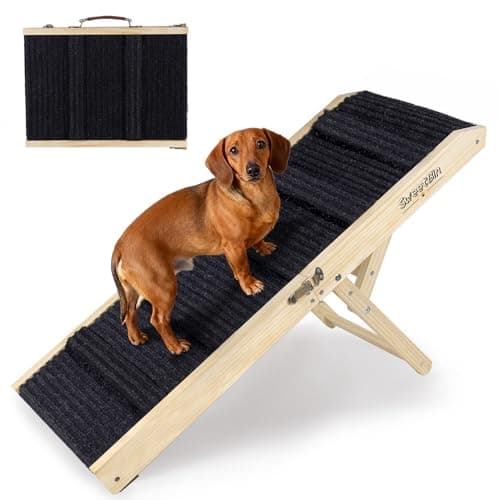
SweetBin Foldable Dog Ramp for Bed and Couch (12-20 in adjustable, up to 60 lb)
8.5 / 10
- Folds flat and adjusts across four heights from 12 to 20 inches for a bed, couch, or car
- Rated for dogs up to 60 lb, covering most small and mid-size seniors
- Non-slip surface gives sore paws the footing they need to trust the climb
- Portable fold makes it a car ramp for the vet trips that multiply with age
$59.99
Current price · checked Sep 8, 2026
Veken
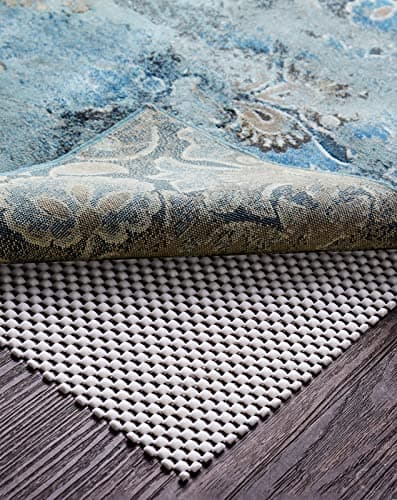
Veken Non-Slip Rug Gripper Pads for Hardwood Floors (2 x 3 ft)
8.2 / 10
- 2 x 3 ft non-slip pads that anchor rugs and runners on hardwood or tile
- Turn a rug you already own into a traction path along the routes the dog walks most
- Trim to fit doorways, hallways, and the landing zones at the base of stairs
- Reusable and washable, so they move when the furniture does
$5.39
Current price · checked Sep 8, 2026
XiaZ
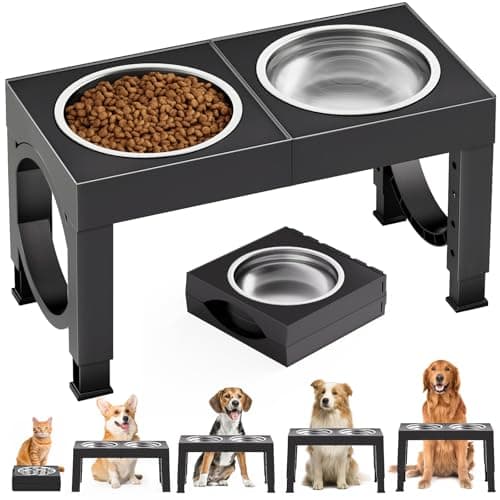
XiaZ Elevated Dog Bowl Stand, 5 Heights Adjustable (9-14 in)
8.0 / 10
- Stainless-steel elevated stand adjustable across five heights from 9 to 14 inches
- Raises food and water toward shoulder height to cut the deep bend to the floor
- Adjustable range fits different breeds and keeps fitting as things change
- Removable steel bowls lift out for cleaning
$19.99
Current price · checked Sep 8, 2026
PICK FOR LIFE
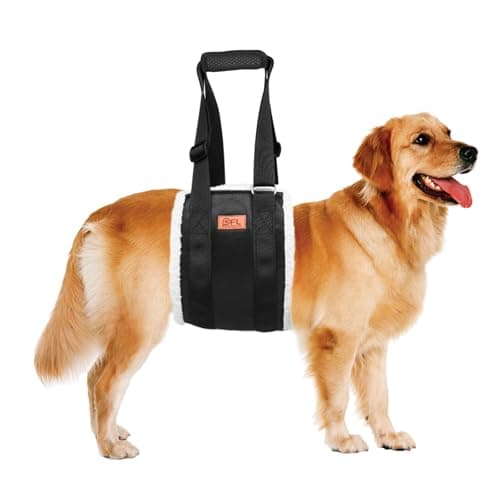
PICK FOR LIFE Adjustable Rear-Leg Lift Harness / Sling for Large Dogs
8.3 / 10
- Adjustable rear-leg support sling with a padded hand-hold over the hips
- Sized for large dogs, marketed for senior, post-surgical, and weak-hindquarter cases
- Assists the weakest phase of the gait without lifting the dog's full weight
- Targets specific hard moments — stairs, the car, a slick patch — not all-day wear
$19.99
Current price · checked Sep 8, 2026
LetPetRun
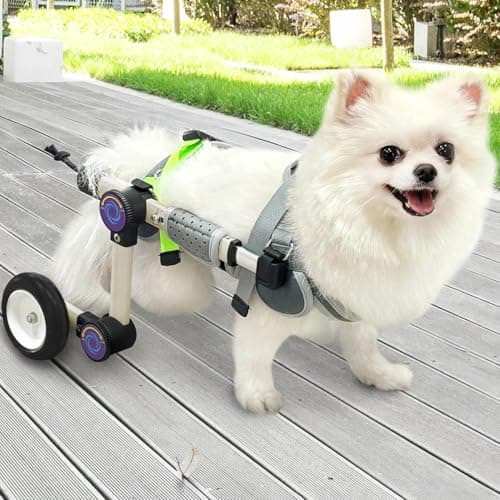
LetPetRun Adjustable Dog Wheelchair for Back-Leg Mobility Support
7.8 / 10
- Adjustable, lightweight cart that supports the hind end for dogs with failing rear legs
- Frame adjusts to the dog's length, height, and width
- Lets a dog keep moving under its own power when a harness is no longer enough
- Extra-small size shown on the listing — sizing must match the individual dog
$69.93
Current price · checked Sep 26, 2026
The Short Answer
Arthritis in an aging dog is managed as much by changing the house as by changing the dog, and the fix is a handful of one-time purchases, not an ongoing regimen. The setup runs in five moves: give the dog a real orthopedic bed to rest and rise on, swap the jump onto furniture and into the car for a ramp, put traction on slick floors, raise the food and water bowls, and keep a rear-leg lift harness for the hardest transitions — the stairs, the car, a weak back end. This guide names one sensible starting point for each, from the EHEYCIGA orthopedic bed at about $40 list to a rear-leg harness and, at the far end, a wheelchair for when legs give out. Together they run roughly $216 in list terms. None of it replaces a veterinary diagnosis or a pain plan — it is the environmental half of the care.
Every product on this list has been scored against the PetPal Gear Score, a weighted composite of expert consensus, observed effectiveness, animal safety, long-term durability, and value. Review method: Editorial synthesis of the manufacturer and Amazon listings for each product plus published veterinary and mobility guidance from the American Animal Hospital Association (AAHA), the Merck Veterinary Manual, the American College of Veterinary Surgeons (ACVS), Cornell University's Riney Canine Health Center, and the Tufts Cummings School of Veterinary Medicine. Every brand here — EHEYCIGA, SweetBin, Veken, XiaZ, PICK FOR LIFE, and LetPetRun — is a value or white-label Amazon brand whose specifications are manufacturer-stated. No independent lab or outlet has published a hands-on review of these specific marketplace products, so no award or verdict is attributed to any of them. PetPalHQ does not run a mobility-equipment testing lab; the PetPal Home-Setup Mobility Score below is a transparent synthesis of documented listing specifications and published mobility guidance, not a measurement. Prices were captured on 2026-07-08 in the post-holiday window and should be treated as list figures that will move — confirm the current price before buying.. Synthesized from 6+ expert sources.
An aging dog with arthritis does not need a different dog. It needs a different house. The stiff mornings, the refused jump onto the couch, the slow slide across the kitchen tile — most of the daily pain of canine arthritis comes from a handful of ordinary movements the home forces on the dog. Change those movements and you remove much of the hurt. A supportive bed, a ramp instead of a jump, traction on slick floors, a raised bowl, and a lift harness for the hardest transitions do the environmental half of arthritis care. They do not replace a veterinary diagnosis or a pain-management plan — they sit alongside it, and unlike a medication schedule, they are mostly done once.
This is a home-setup checklist, not a medical guide and not a single-product roundup. Each of the six items below is one sensible starting point for one part of the house, chosen by editorial synthesis of the manufacturer and Amazon listings against published veterinary guidance from the American Animal Hospital Association, the Merck Veterinary Manual, the American College of Veterinary Surgeons, and university veterinary programs. PetPalHQ does not run a mobility-equipment testing lab, and no independent outlet has hands-on-reviewed these specific marketplace products, so no award or verdict is attached to any of them. Every brand here is a value or white-label Amazon brand, described in listing terms, and the prices are list figures captured on 2026-07-08 that will move — confirm the current price before buying. The PetPal Home-Setup Mobility Score is a transparent synthesis of listing specs and published mobility guidance, not a measurement.
PetPalHQ.com earns affiliate commissions from qualifying purchases. Our recommendations are based on expert consensus — we synthesize professional reviews and manufacturer documentation, plus multi-year owner durability data, to find pet gear that is worth your investment. Commission rates never influence our editorial recommendations.
Set up start to finish, the six pieces run about $216 in list terms, and you do not need all of them at once. This spoke is the buying-side companion to the senior pet mobility and preventive-care hub, which covers screening cadence, pain recognition, weight management, and the veterinary plan this home setup supports rather than replaces.
Read the House the Way an Arthritic Dog Does
The most useful thing an owner can do costs nothing: spend a day watching the dog move and noting where it hesitates. Arthritis rarely announces itself as a clean limp. It shows up as a set of small refusals — a pause at the bottom of the stairs, a slow lower onto a hard floor, a scramble across the kitchen tile, a skipped jump onto the bed the dog used to make easily. Each hesitation is the dog telling you which movement now hurts, and each one maps to a fixable part of the house. The job of a home setup is to find those movements and remove them, one at a time, so the dog is not repeating a painful motion dozens of times a day. If your day is spent at work rather than at home, a pet camera watching the route does that noticing for you — and the refusals a dog only makes alone are the ones worth having on video for the vet.
This is the environmental half of arthritis care, and it works best paired with the medical half. Read this guide for the house, and read the senior pet mobility and preventive-care hub for the dog: how to tell arthritis from the other conditions that mimic it, how often an aging dog should be screened, and why staying lean is the highest-leverage thing you can do for sore joints. The two together are the plan the American Animal Hospital Association describes, where home modification sits alongside pain control and regular veterinary assessment rather than standing in for them.
Sleep and Getting Up
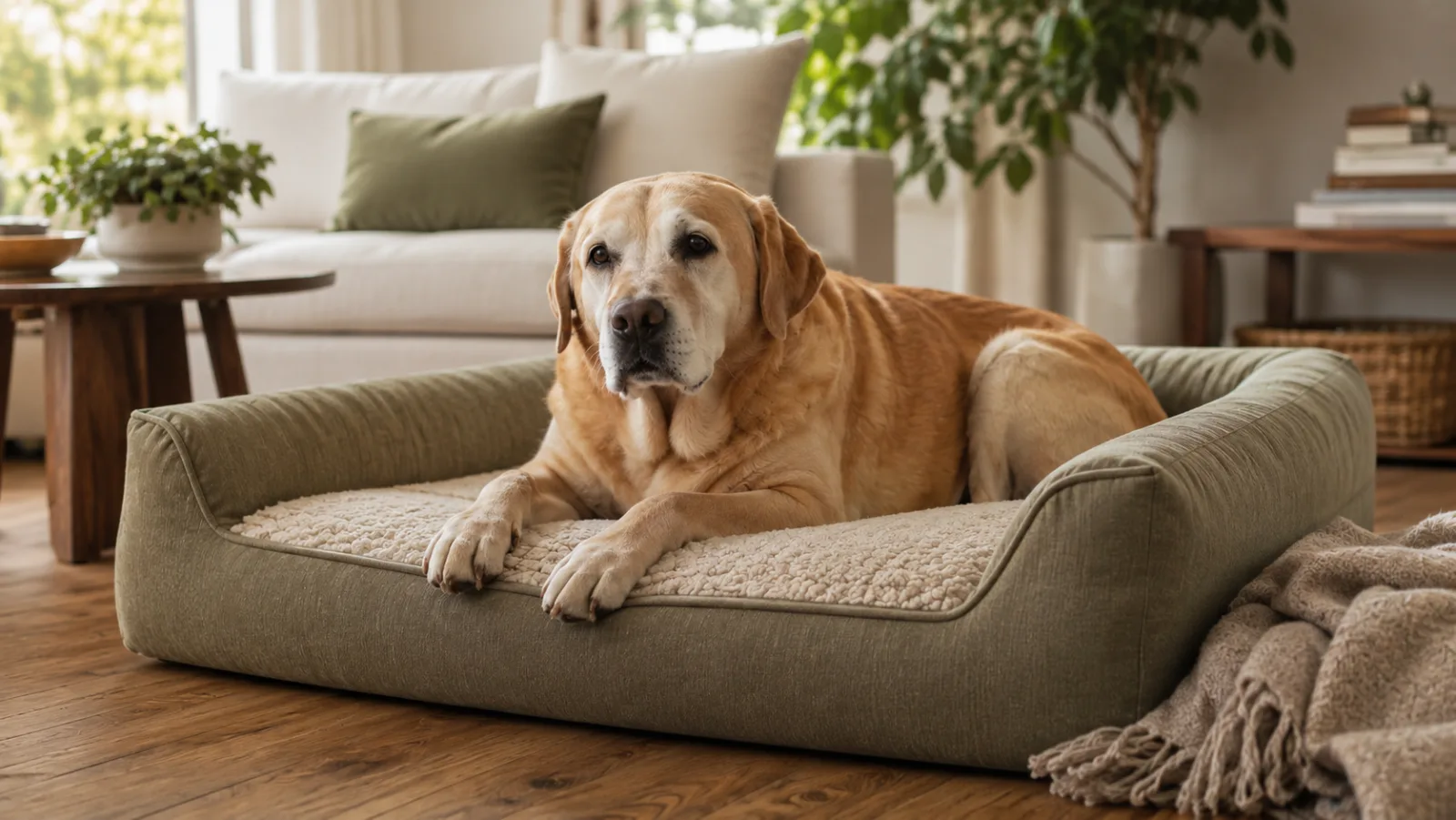
Start where the dog spends the most time. A senior dog with sore joints lies down more, and a hard floor or a flattened old bed turns every rest into low-grade pain and every stand-up into a struggle. A genuine orthopedic bed — real foam that does not bottom out, with sides to brace against — fixes both. The EHEYCIGA bed below is the value pick for this, but the category is deep, and if you want to compare firmness, foam type, and size against other seniors' needs, the best orthopedic dog beds for senior pets roundup lays out the trade-offs. Whatever you choose, size it to the dog stretched out, not curled up, and keep it off cold tile and away from drafts.
Getting up is its own problem. Watch where a stiff dog chooses to sleep and you will often find it has already picked the spot with the best footing and something to lean on. Work with that instinct: put the bed against a wall or beside a low, stable piece of furniture, and lay traction underneath so the bed does not slide when the dog pushes up. If you are shopping the category cold, a quick look at what a real orthopedic dog bed costs at list price shows how low the entry point is for the biggest daily comfort win in the house.
Getting Around: Floors, Stairs, and the Car
Once the bed is sorted, follow the dog's daily route and take out the impacts along it. Slick floors come first, because they are the cheapest to fix and the easiest to underestimate — a hind leg that slips on tile is a common way an arthritic dog strains itself, and a runner over grippers makes that hallway safe for the price of lunch. From there, target the jumps. Every leap onto the couch, the bed, or the car sends a jolt through inflamed joints, and a ramp trades that jolt for a walk. The SweetBin ramp handles dogs up to 60 pounds; larger dogs need a sturdier option, and the best dog ramps and stairs for senior dogs guide covers the higher-rated ramps and the ramp-versus-stairs question in depth.
Then there are the moments no ramp or rug can smooth — the flight of stairs the dog still has to climb, the lift into a tall SUV, the day its back end simply gives out. That is where a rear-leg lift harness earns its place, giving you a hand-hold to assist the weakest part of the gait. It is a targeted tool for two or three hard transitions a day, not all-day wear, and the best dog lift harnesses and support slings roundup compares full-body against rear-only designs for dogs weak in different places. If you are only pricing the floors for now, a set of non-slip rug grippers is the smallest line item here and the one that prevents the most avoidable injuries.
When Gear Isn't Enough — the Vet-Visit Signals
A home setup has a ceiling, and knowing where it is matters as much as the setup itself. Gear makes existing movements easier; it cannot restore a movement the dog has lost, and it cannot treat the disease underneath. When a dog crosses from stiff to unable — dragging a back leg, knuckling over on a paw, unable to bear weight, or unable to rise even with a supportive bed and a harness — that is not a shopping signal. It is a veterinary one. The same is true for sudden change: a dog that was managing and then declines fast needs a diagnosis, not another accessory.
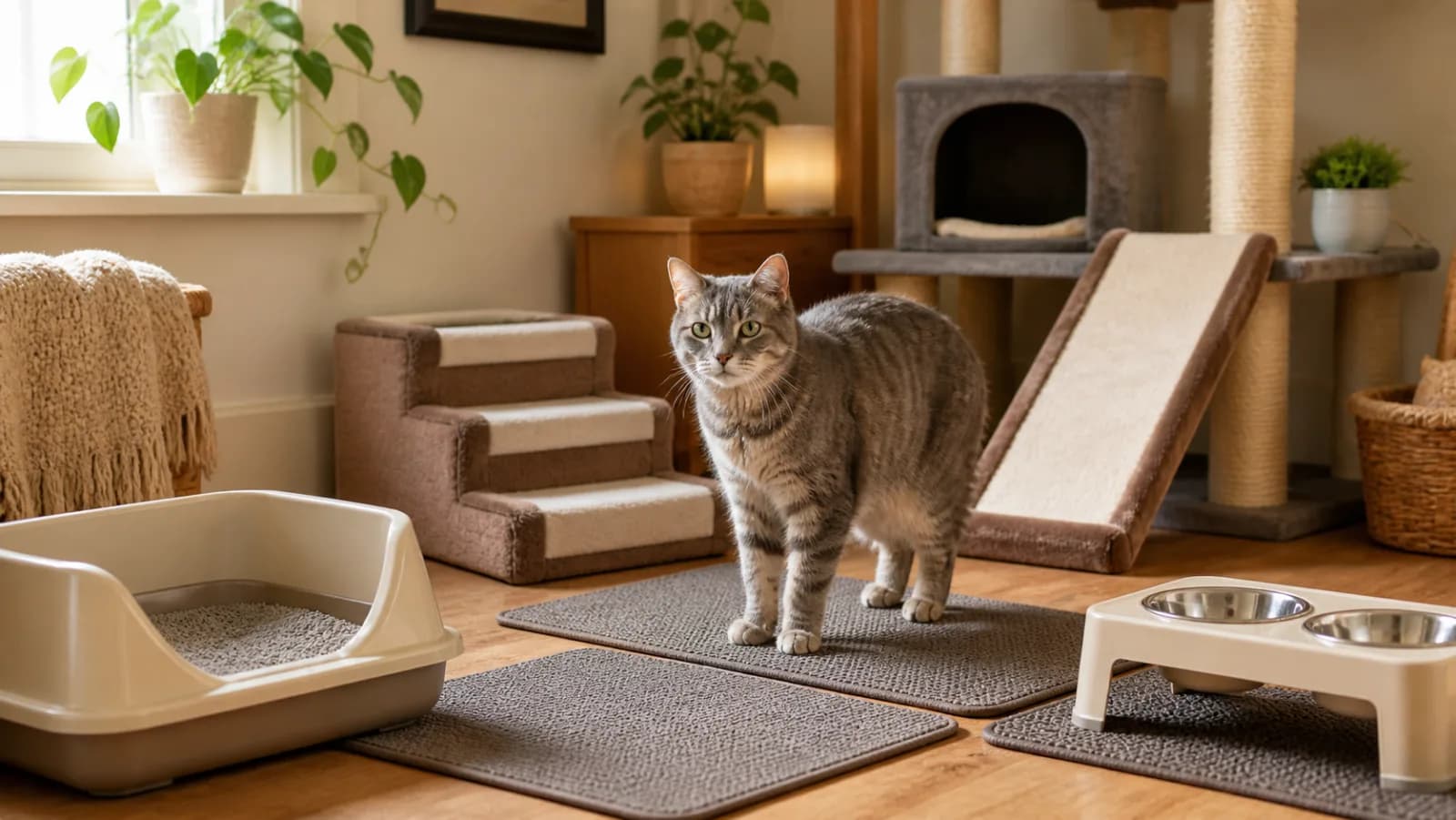
A wheelchair is where the setup and the medical plan meet. It can give a dog with failing rear legs real independence again, but only when a vet or rehab professional has confirmed the fit and the timing — which is why the best dog wheelchairs and mobility carts guide treats it as a vet-guided decision rather than an impulse buy. If you also share your home with a senior cat, the same house-first logic applies to them, laid out in the senior cat accessibility setup guide. And for everything the house cannot fix — pain management, weight, screening cadence, the difference between arthritis and the conditions that imitate it — the call belongs with your veterinarian, working from the mobility hub's framework, not a checklist of products.
Head-to-Head Comparison
| Feature | EHEYCIGA Orthopedic Memory Foam Dog Bed with Sides (44 x 32 in, XL) | SweetBin Foldable Dog Ramp for Bed and Couch (12-20 in adjustable, up to 60 lb) | Veken Non-Slip Rug Gripper Pads for Hardwood Floors (2 x 3 ft) | XiaZ Elevated Dog Bowl Stand, 5 Heights Adjustable (9-14 in) | PICK FOR LIFE Adjustable Rear-Leg Lift Harness / Sling for Large Dogs | LetPetRun Adjustable Dog Wheelchair for Back-Leg Mobility Support |
|---|---|---|---|---|---|---|
| Home zone | Where they sleep | On and off furniture | Slick floors | At the bowl | The hardest transitions | When legs give out |
| Painful movement it removes | The painful down-and-up off a hard floor | The jump-and-land onto a bed, couch, or car | The hind-leg slip on hardwood or tile | The deep neck-and-shoulder bend to eat | Unassisted stairs, the car, a weak rear end | Independent movement a harness can no longer restore |
| PetPal Home-Setup Mobility Score | 8.6 | 8.5 | 8.2 | 8.0 | 8.3 | 7.8 |
| Check price | Amazon | Amazon | Amazon | Amazon | Amazon | Amazon |
$39.98
Current price · checked Sep 8, 2026
- 44 x 32 in orthopedic memory-foam bed sized for extra-large dogs, with raised bolster sides
- Egg-crate foam layer spreads weight off the hips, elbows, and shoulders arthritis loads hardest
- Waterproof, non-slip base keeps the bed from sliding when a stiff dog pushes up to stand
- Machine-washable removable cover for the incontinence that comes with age
- Bolster sides double as a push-off brace for the hardest moment — standing up
A dog with sore joints spends more of the day lying down, which makes where it lies the first thing to fix. The EHEYCIGA orthopedic bed is built around that plain fact. Its memory-foam core, listed at 44 by 32 inches for extra-large dogs, spreads a heavy senior's weight off the hips, elbows, and shoulders instead of letting them press into a hard floor or a thin, flattened cushion. For a dog that already grunts on the way down, a supportive surface is not a luxury — it is the difference between real rest and a night of shifting to find a spot that does not ache.
The design answers the two moments that hurt most: lying down and getting up. Raised bolster sides give the dog something to brace a paw against as it pushes to stand, and a non-slip base keeps the bed from skating away at exactly the moment the dog needs it to hold still. The waterproof, washable cover is a senior-specific detail rather than a marketing one, because incontinence comes with age and a cover you can strip and machine-wash is what keeps the bed in service. Bought for the extra-large frame it is sized for, it is a genuinely orthopedic bed at a value price.
Two honest limits shape the buy. That footprint suits most large dogs, but a true giant breed will sit diagonally, so measure the dog stretched out first. Memory foam also traps heat, which a few dogs dislike in a warm room. And EHEYCIGA is a white-label marketplace brand, so foam density and long-term durability are the manufacturer's own figures rather than independently verified ones. For the arthritic dog that is sleeping badly on a floor or a worn-out bed, though, this is the first and cheapest place the setup pays off.
What We Love
- Real orthopedic foam, not a flat poly-fill cushion that bottoms out under a heavy senior
- Raised sides double as a push-off brace for the hardest part of the day — standing up
- Non-slip base means the bed does not skate away mid-transition
- Washable cover suits incontinence and the muddy paws of a slow outdoor dog
- One of the cheapest orthopedic beds in its size class at list price
What Could Be Better
- Sized for large dogs, but a true giant breed may have to lie diagonally
- Memory foam holds heat, which some dogs avoid in a warm room
- White-label listing — foam density and durability are manufacturer-stated, not independently verified
The Verdict
The value foundation of the whole setup: a genuinely orthopedic bed sized for large dogs, best for the senior that sleeps badly on a hard floor and struggles to rise.
Sources
- EHEYCIGA (manufacturer/Amazon listing): 44 x 32 in orthopedic memory-foam bed for extra-large dogs, with raised bolster sides, an egg-crate foam layer, a waterproof non-slip base, and a washable removable cover
- Merck Veterinary Manual (Osteoarthritis in Dogs): veterinary guidance lists weight management, controlled exercise, and environmental modification among the first-line, non-drug measures for managing canine osteoarthritis
$59.99
Current price · checked Sep 8, 2026
- Folds flat and adjusts across four heights from 12 to 20 inches for a bed, couch, or car
- Rated for dogs up to 60 lb, covering most small and mid-size seniors
- Non-slip surface gives sore paws the footing they need to trust the climb
- Portable fold makes it a car ramp for the vet trips that multiply with age
- Set the height once and it becomes part of the room the dog stops noticing
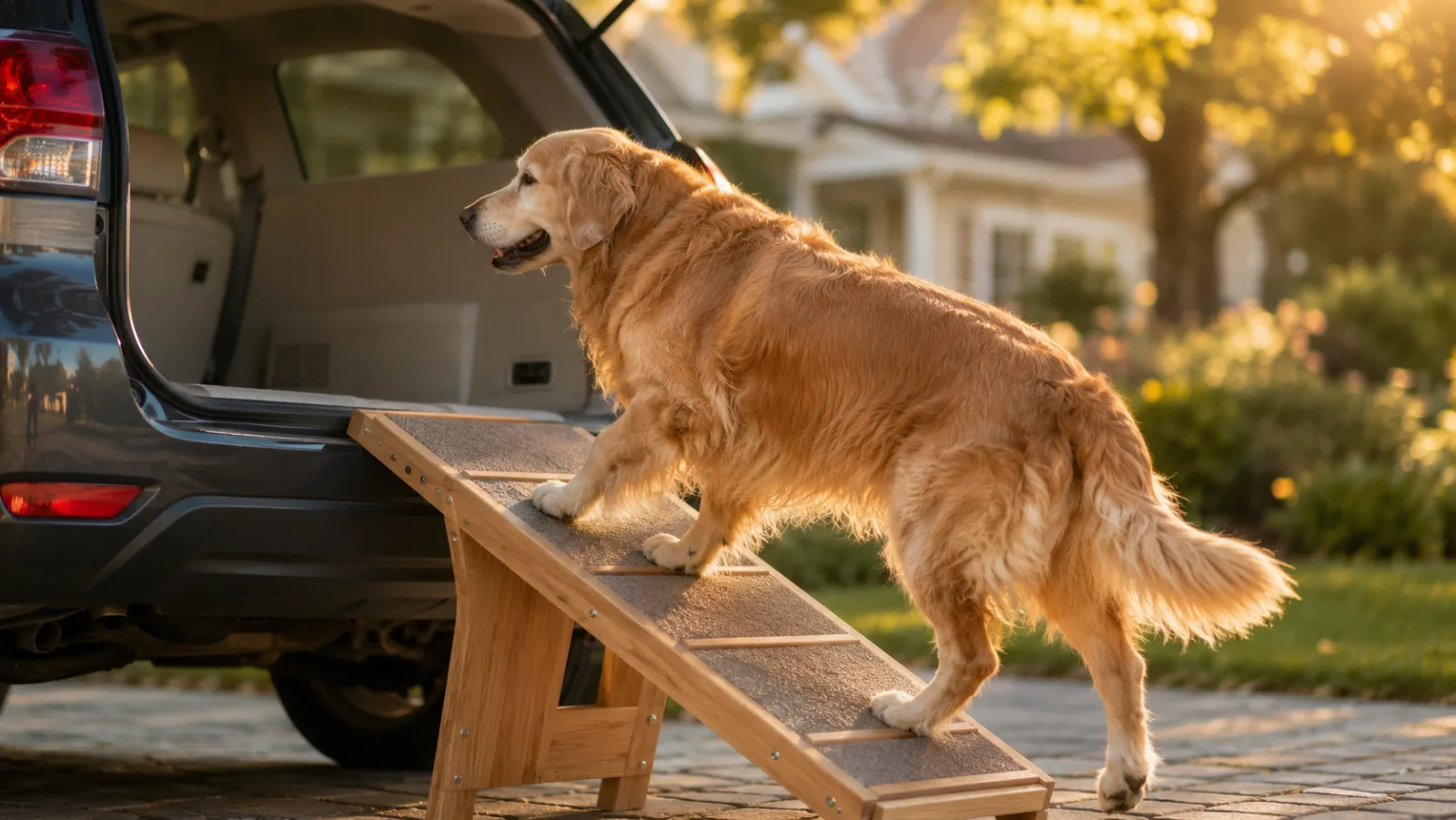
The jump onto the couch is the single most damaging movement in an arthritic dog's day. Every leap up and every drop down sends impact straight through joints that are already inflamed, and a dog that keeps doing it is re-injuring itself twice a day. The SweetBin foldable ramp removes that impact by turning the leap into a walk. It adjusts across four heights from 12 to 20 inches, so one ramp serves a low couch, a bed, and the tailgate of a car, and its non-slip surface gives sore paws the footing they need to commit to the climb.
Getting a dog to use a ramp is half the battle, and the details here are aimed at adoption. A textured, non-slip walking surface is the main reason a dog trusts a ramp instead of balking at the edge, and the fold-flat design means the same ramp that lives beside the couch travels to the clinic for the vet visits that come with age. There is nothing to program and nothing to learn — set the incline to match the furniture and it quietly becomes part of the room.
The trade-off is the weight ceiling. SweetBin rates the ramp for dogs up to 60 pounds, which covers most small and mid-size seniors but rules out the large and giant breeds that often need a ramp most; a big Labrador or shepherd should reach for a sturdier, higher-rated ramp instead. A ramp's incline also eats floor space a small apartment may not have, and, like the rest of this setup, the weight rating is a manufacturer's listing figure rather than an independently verified one. Within its size class, though, it takes out the worst daily impact in the house.
What We Love
- Removes the jump-and-land impact that jars arthritic joints worse than any other daily movement
- Four heights cover a low couch through a tall car hatch with one product
- Folds and travels, so the same ramp works at home and at the clinic
- Non-slip surface addresses the main reason dogs refuse a ramp
What Could Be Better
- 60 lb ceiling rules it out for large and giant breeds — the dogs that often need it most
- The incline needs floor space a small room may not have
- White-label listing — the weight rating is manufacturer-stated, not independently verified
The Verdict
For a small or mid-size dog still leaping on and off furniture, this ramp trades the day's most damaging impact for a gentle walk — larger dogs simply need a sturdier one.
Sources
- SweetBin (manufacturer/Amazon listing): foldable dog ramp with four adjustable heights from 12 to 20 inches, a non-slip surface pad, and a rating for dogs up to 60 lb, for use with a bed, couch, or car
- American College of Veterinary Surgeons (Osteoarthritis): veterinary surgical guidance favors low-impact, controlled activity for arthritic dogs and cautions against the repeated high-impact loading that jumping produces
$5.39
Current price · checked Sep 8, 2026
- 2 x 3 ft non-slip pads that anchor rugs and runners on hardwood or tile
- Turn a rug you already own into a traction path along the routes the dog walks most
- Trim to fit doorways, hallways, and the landing zones at the base of stairs
- Reusable and washable, so they move when the furniture does
- The cheapest intervention in the whole setup by a wide margin
Hardwood and tile give an arthritic dog almost nothing to grip, and a hind leg that slips out from under a stiff dog is one of the most common ways it strains or re-injures itself at home. The fix is not new flooring — it is traction on the paths the dog already walks. Veken's non-slip gripper pads, sized 2 by 3 feet, anchor the rugs and runners that turn a slick hallway into a safe one. Laid under a runner along the dog's main route — the path to the water bowl, the door, the base of the stairs — they stop the rug from sliding and give the dog a confident surface underfoot.
The reason this pick sits high despite costing a few dollars is leverage. A slip on a bare floor can undo the good that a bed and a ramp are doing, and preventing it is close to free. Grippers work with rugs a household already owns, they trim to fit doorways and landings, and they move when a room is rearranged. For homes with long stretches of laminate or tile, a runner over grippers is the difference between a dog that strides and one that scrambles.
The honest boundary is what a gripper does not do: it anchors a rug, but it adds no cushioning and no traction of its own on the bare stretches between rugs. Those gaps still need a runner laid over them, and a pad worn smooth eventually needs replacing. None of that changes the math. This is the cheapest meaningful intervention in the whole setup, and in a house full of slick floors it is the one to buy first.
What We Love
- Fixes the slip-and-scramble that re-injures arthritic hind legs on bare floors
- Works with rugs you already own rather than forcing a new floor covering
- A few dollars buys traction along a whole hallway
- Reusable and repositionable as the dog's routes change
What Could Be Better
- A gripper anchors a rug but adds no cushioning of its own
- Bare, rug-free stretches of floor still need a runner laid over them
- White-label listing — grip longevity is manufacturer-stated, not independently verified
The Verdict
The cheapest fix here and the one to make first: a runner over these grippers stops the slick-floor slips that quietly undo the rest of the setup.
Sources
- Veken (manufacturer/Amazon listing): 2 x 3 ft non-slip rug gripper pads designed to keep rugs and runners anchored on hardwood or tile floors
- American Animal Hospital Association (AAHA): senior-care guidance recommends adding floor traction and removing slip hazards as part of a home environment that supports an aging, arthritic dog
$19.99
Current price · checked Sep 8, 2026
- Stainless-steel elevated stand adjustable across five heights from 9 to 14 inches
- Raises food and water toward shoulder height to cut the deep bend to the floor
- Adjustable range fits different breeds and keeps fitting as things change
- Removable steel bowls lift out for cleaning
- Stable base resists tipping when a dog leans in to eat
Watch an arthritic dog eat from a floor-level bowl and the strain is easy to see — the deep bend of the neck and shoulders held through a whole meal. The XiaZ elevated stand lifts food and water toward shoulder height to shorten that bend, and its five-position range from 9 to 14 inches means the height is dialed to the individual dog rather than guessed. For a dog with neck or forelimb stiffness, raising the bowl a few inches is one of the smallest changes in this guide and one of the easiest to make today.
Adjustability is what earns this stand its slot over a fixed-height one. A dog's comfortable eating height depends on its size and where its stiffness sits, and a stand that steps through several heights fits a range of dogs and keeps fitting as things change. The removable steel bowls lift out for cleaning, and a stable base resists the tipping that would otherwise teach a cautious dog to distrust the whole thing.
Two caveats keep this honest. Raised feeding is a comfort aid, not a treatment — it eases the daily bend, but it does not slow arthritis, and what evidence exists is about comfort rather than cure. Deep-chested breeds are a genuine exception: raised bowls have been debated in connection with bloat, so those owners should ask a vet before elevating anything. Set against the bed and the ramp, this is a smaller win — but it is a cheap, reversible one that removes a strain the dog repeats several times a day.
What We Love
- Adjustable height dials the bowl to the individual dog rather than a fixed guess
- Eases the neck-and-shoulder bend for dogs with cervical or forelimb stiffness
- Steel bowls are hygienic and easy to clean
- Cheap, reversible change with no downside for most dogs
What Could Be Better
- Raised feeding is a comfort aid, not a proven treatment for arthritis
- Deep-chested breeds should ask a vet first, since raised bowls are debated for bloat risk
- White-label listing — build quality is manufacturer-stated, not independently verified
The Verdict
A smaller win than the bed or the ramp, but a cheap and reversible one: it shortens the neck-and-shoulder bend a stiff dog holds at every meal.
Sources
- XiaZ (manufacturer/Amazon listing): stainless-steel elevated dog bowl stand adjustable across five heights from 9 to 14 inches, with removable bowls and a stable base
- Cornell University Riney Canine Health Center: canine mobility resources describe environmental adjustments that reduce strain on stiff joints as supportive comfort care alongside a veterinary treatment plan
$19.99
Current price · checked Sep 8, 2026
- Adjustable rear-leg support sling with a padded hand-hold over the hips
- Sized for large dogs, marketed for senior, post-surgical, and weak-hindquarter cases
- Assists the weakest phase of the gait without lifting the dog's full weight
- Targets specific hard moments — stairs, the car, a slick patch — not all-day wear
- Padded strap spreads the load instead of digging in like an improvised towel
Some moments in a stiff dog's day are simply harder than the rest — the stairs, the step into the car, a slick patch it cannot cross alone. The PICK FOR LIFE rear-leg lift harness is built for exactly those moments. It wraps the hips and gives the owner a padded hand-hold over the dog's weakest region, so a person can take some of the load through the hardest few seconds without lifting the dog's whole weight. Sized for large dogs and marketed for senior, post-surgical, and weak-hindquarter cases, it assists the phase of the gait where arthritis and rear-end weakness bite hardest.
The value here is in what it replaces. Owners of a failing-hindquarter dog usually improvise with a rolled towel under the belly, which digs in and slips; a padded sling shaped for the job spreads the load and gives a secure grip. It is a targeted tool, not all-day wear — you reach for it at the bottom of the stairs or the open car door and set it down again once the hard moment is past.
The limits are worth stating plainly. Rear-leg support does nothing for a dog that is also weak in the front, and the harness is not hands-off — it needs an owner who is present and physically able to take the weight, every time. Sizing and stitching strength are manufacturer-stated on a white-label listing, so check the fit against the dog before trusting it on a staircase. For the household whose dog can still walk but stalls at the two or three hardest transitions of the day, this is the piece that keeps those transitions from becoming a two-person ordeal.
What We Love
- Turns stairs and the car from a two-person struggle into a one-hand assist
- Rear-leg focus matches where arthritis and hindquarter weakness hit hardest
- Padded design is kinder than the rolled-towel method owners improvise
- Cheap insurance for the days a dog's back end gives out mid-transition
What Could Be Better
- Rear-only support does nothing for a dog that is also weak in the front
- Not hands-off — an owner still has to be present and able to lift
- White-label listing — sizing and stitching strength are manufacturer-stated, not independently verified
The Verdict
For the dog that still walks but stalls at the stairs, the car, or a slick patch, this sling is the hand-hold that keeps its two or three hardest moments from becoming a two-person job.
Sources
- PICK FOR LIFE (manufacturer/Amazon listing): adjustable rear-leg support harness/sling sized for large dogs, with a padded lifting hand-hold, marketed for senior, injured, disabled, and post-surgical dogs with weak rear legs
- Tufts Cummings School of Veterinary Medicine (Canine rehabilitation): veterinary rehabilitation guidance uses support slings and assistive harnesses to help dogs with weak hindquarters manage stairs and transfers safely
$69.93
Current price · checked Sep 26, 2026
- Adjustable, lightweight cart that supports the hind end for dogs with failing rear legs
- Frame adjusts to the dog's length, height, and width
- Lets a dog keep moving under its own power when a harness is no longer enough
- Extra-small size shown on the listing — sizing must match the individual dog
- The escalation point of the whole setup, not a first purchase
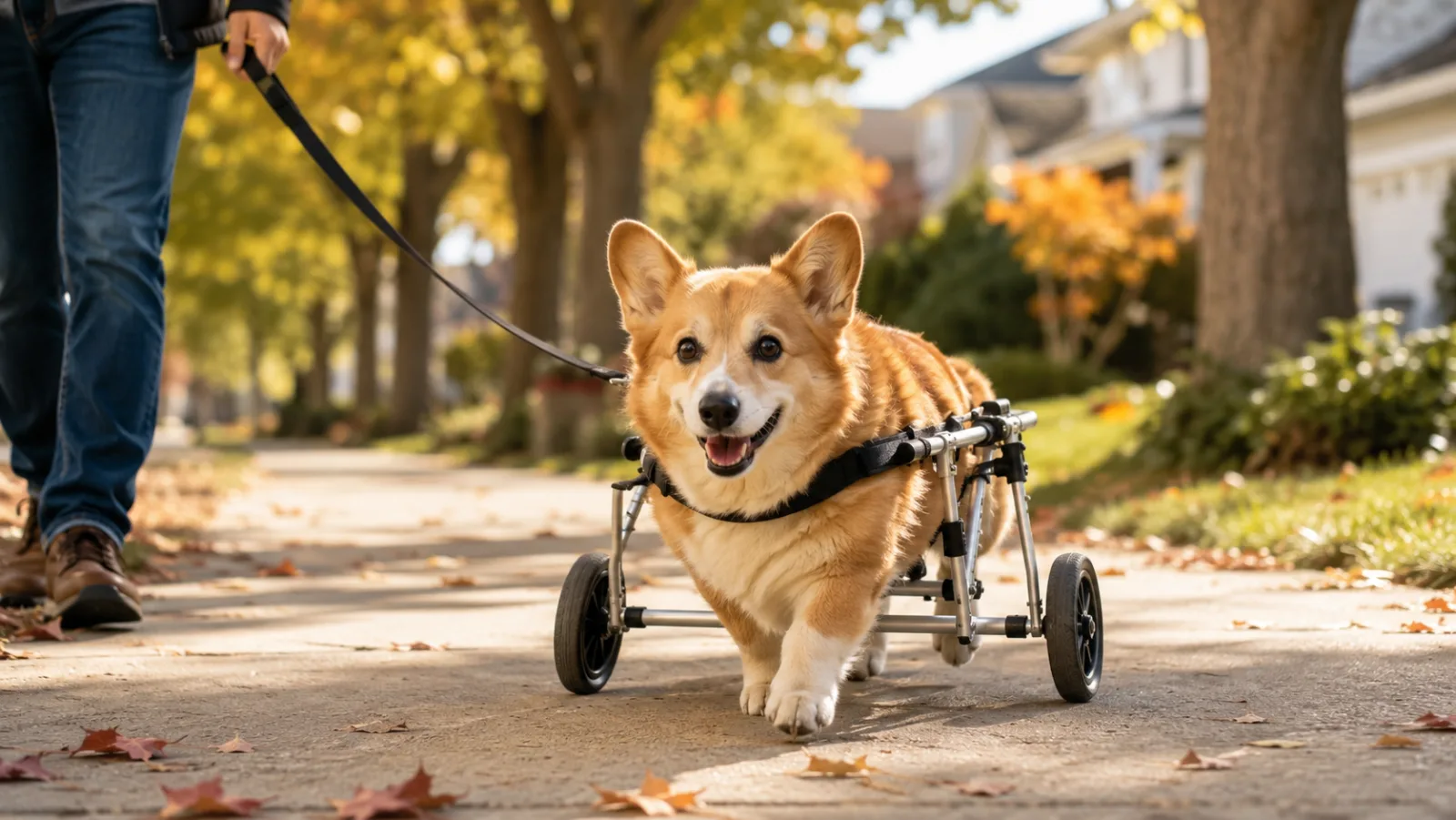
When a harness, a ramp, and traction together are no longer enough to keep a dog moving, the setup has reached its last stage. The LetPetRun adjustable wheelchair supports the hind end so a dog with failing rear legs can keep walking under its own power. Its frame adjusts to the dog's length, height, and width, and for a dog that is still bright and wants to move but can no longer carry its own back end, a cart is what preserves the walks rather than surrendering them to being carried.
A wheelchair is different in kind from everything above it, and it belongs at the end of this guide for a reason. The other five items make an existing movement easier; a cart replaces a movement the dog has lost. That makes fit a clinical question, not a shopping one — the listing shows an extra-small size, and the right size for a given dog depends on measurements a vet or rehab professional should confirm. A poorly fitted cart causes pressure sores and refusal, which is worse than no cart at all.
So the honest framing is a boundary, not a hard sell. This is the escalation point, the purchase you make with a vet's input once weakness has crossed from stiff to non-weight-bearing — not a comfort upgrade for a mildly arthritic dog. Bought at the right stage and fitted properly, it can give a still-happy dog months or years of independent movement. Bought too early or sized by guesswork, it sits unused. Treat it as the vet-guided end of the setup, and it does what nothing else here can.
What We Love
- Restores independent movement when rear legs can no longer carry the dog
- Adjustable frame adapts as the dog's condition or size changes
- Lets a still-happy dog stay active rather than being carried everywhere
- Lightweight enough for an owner to fit and lift into place
What Could Be Better
- Fit is clinical — a poorly sized cart causes sores and refusal, so vet fitting matters
- An escalation, not a comfort upgrade — the wrong stage for a mildly stiff dog
- White-label listing — frame durability and sizing are manufacturer-stated, not independently verified
The Verdict
The vet-guided escalation point, not a first buy: fitted properly once a dog's rear legs can no longer carry it, a cart restores the independent movement nothing else here can.
Sources
- LetPetRun (manufacturer/Amazon listing): adjustable, lightweight dog wheelchair built for back-leg mobility support in dogs with disabled or weak rear legs, with a frame that adjusts to the dog and an extra-small size shown
- American Animal Hospital Association (AAHA): senior-care guidance treats mobility assistance for a dog with advanced weakness as part of a veterinary-directed plan, with proper fitting and timing assessed by a professional
How We Score
Formula
PetPal Home-Setup Mobility Score = (Pain-Point Relief × 0.30) + (Ease of Daily Use × 0.20) + (Safety × 0.20) + (Adjustability × 0.15) + (Value × 0.15)
Score Factors
- Pain-Point Relief · 30%
- How directly the item removes a specific painful movement — a jump, a slip, a deep bend, an unsupported set of stairs. This is weighted highest because the whole point of a home setup is to delete the repeated motions that hurt an arthritic dog, not to add comfort in the abstract.
- Ease of Daily Use · 20%
- How simple the item is for an owner to use every day without a learning curve. A bed or a runner that just sits there scores highest; a harness or a cart that needs an owner present and fitted correctly loses points here, because a tool that is a hassle gets left in the closet.
- Safety · 20%
- Stability and support quality for a dog whose balance and strength are already compromised. Non-slip bases, secure footing, correct weight ratings, and proper fit raise this factor; anything that can slide, tip, or be outgrown by the dog's weight lowers it.
- Adjustability · 15%
- The range of height or size adjustment to fit the individual dog and the specific home. A ramp with four heights or a bowl stand with five suits more dogs and keeps fitting as the dog changes, where a fixed dimension is a single guess that may miss.
- Value · 15%
- List price measured against the specific pain point the item solves — not the lowest sticker. A few-dollar set of grippers that prevents an injury rates highly here; a pricier item is judged on how much of a daily problem it actually removes.
| Rank | Product | Score |
|---|---|---|
| #1 | EHEYCIGA EHEYCIGA Orthopedic Memory Foam Dog Bed with Sides (44 x 32 in, XL) | 8.6 |
| #2 | SweetBin SweetBin Foldable Dog Ramp for Bed and Couch (12-20 in adjustable, up to 60 lb) | 8.5 |
| #3 | PICK FOR LIFE PICK FOR LIFE Adjustable Rear-Leg Lift Harness / Sling for Large Dogs | 8.3 |
| #4 | Veken Veken Non-Slip Rug Gripper Pads for Hardwood Floors (2 x 3 ft) | 8.2 |
| #5 | XiaZ XiaZ Elevated Dog Bowl Stand, 5 Heights Adjustable (9-14 in) | 8.0 |
| #6 | LetPetRun LetPetRun Adjustable Dog Wheelchair for Back-Leg Mobility Support | 7.8 |
When NOT to Buy
Do not let any of these purchases stand in for a veterinary visit. A bed, a ramp, and a harness make an arthritic dog more comfortable, but they do not diagnose why the dog is slowing down or treat the disease behind it. New or worsening stiffness, a dragging leg, a sudden decline, or a dog that stops rising is a medical signal — see the vet first, then set up the house around the plan.
Do not buy the SweetBin ramp for a large or giant breed. Its 60-pound rating covers small and mid-size seniors; a big Labrador, shepherd, or mastiff needs a heavier-duty, higher-rated ramp, and forcing an over-weight dog onto an under-rated one is how a ramp fails at the worst moment. Match the rating to the dog before you buy.
Do not elevate the bowl for a deep-chested breed without asking a vet first. Raised feeding eases the neck-and-shoulder bend for many stiff dogs, but it has been debated in connection with bloat in breeds like Great Danes and standard Poodles, so that decision belongs with your veterinarian rather than a checklist.
Do not buy a wheelchair too early or by guesswork. It is the escalation point of this setup, not a comfort upgrade for a mildly arthritic dog, and a cart sized by eye instead of by measurement causes sores and refusal. Wait until a vet or rehab professional confirms both that the dog needs it and that the fit is right.
And do not treat the whole project as a substitute for weight management. The single highest-leverage thing you can do for a dog's sore joints is keep it lean, which is the mobility hub's territory, not a product's. Home setup is real, worthwhile support — but it is the environmental half of arthritis care, working alongside a lean body weight, pain control, and regular veterinary assessment, never instead of them.
Frequently Asked Questions
- When is a ramp no longer enough, and my dog actually needs a wheelchair?
- The dividing line is weight-bearing. A ramp helps a dog that can still walk but should not jump; a wheelchair is for a dog that can no longer reliably carry its own hind end. If your dog still stands and walks but stalls at height, stay with a ramp, traction, and a lift harness. Once the rear legs drag, knuckle, or collapse even on flat ground, a cart becomes the right tool — and that transition is a conversation with your vet, who should confirm both the timing and the fit before you buy.
- How do I tell arthritis pain from a dog just slowing down with age?
- You often cannot tell from the couch, and that uncertainty is itself the answer: treat new stiffness as a reason to call the vet, not just a reason to shop. Arthritis, dental disease, and several other conditions all look like "just getting old." The home setup is safe to add either way, because it only makes movement easier, but it should never substitute for a diagnosis. If the slowdown is new, worsening, or one-sided, that is a vet-visit signal, not a shopping one.
- Rug, runner, or gripper pad — what actually fixes a slick floor?
- All three do different jobs. A gripper pad anchors a rug so it does not slide, but it adds no traction of its own; a runner is the long, narrow rug that covers a hallway or the path to the door; and you generally want a runner laid over grippers along the routes the dog walks most. A single small rug on a big bare floor leaves too many slick gaps between footholds. Map the dog's daily path first, then cover it end to end.
- How big should an orthopedic bed be for an arthritic dog?
- Measure the dog lying fully stretched on its side, not curled up, and add a few inches on each side — an arthritic dog needs room to sprawl, because curling can be the painful position. If the dog falls between two sizes, go up. Bolster sides are a bonus for bracing on the way up, but they should not shrink the usable sleeping area below the dog's stretched-out length. A bed that forces a stiff dog to fold up defeats the point.
- Can I use pet steps instead of a ramp for my dog?
- Sometimes, but steps and ramps suit different dogs. Steps take less floor space and can work for a light dog with mild stiffness, but each step is still a small up-and-down impact, and a dog with weak hind legs can miss one and fall. A ramp is gentler because it is one continuous slope with no impact at all, which is why it is the safer default for a genuinely arthritic dog. If you do choose steps, keep them low, wide, and non-slip, and set them against something stable.
Bottom Line
Get the EHEYCIGA Orthopedic Memory Foam Bed if your dog is sleeping badly on a hard floor or a worn-out cushion and grunts getting up — it is the value foundation of the setup, sized for large dogs at a low list price.
Get the SweetBin Foldable Dog Ramp if your dog still jumps on and off the bed, couch, or car and weighs under 60 pounds — it removes the highest-impact movement in the house, though larger dogs need a sturdier ramp.
Get the Veken Non-Slip Rug Gripper Pads if your dog slips or scrambles on hardwood or tile — laid under a runner along the dog's route, they are the cheapest injury-prevention dollars you will spend.
Get the XiaZ Elevated Dog Bowl Stand if your dog bends stiffly or hesitates at a floor-level bowl — but check with a vet first if you own a deep-chested breed.
Get the PICK FOR LIFE Rear-Leg Lift Harness if your dog can still walk but stalls at the stairs, the car, or a slick patch — it gives you a hand-hold for the two or three hardest transitions of the day.
Get the LetPetRun Adjustable Dog Wheelchair only once a vet confirms your dog's rear legs can no longer carry it — it is the vet-guided escalation point of the setup, not a first purchase.
Sources & Methodology
Methodology
PetPal Home-Setup Mobility Score = (Pain-Point Relief × 0.30) + (Ease of Daily Use × 0.20) + (Safety × 0.20) + (Adjustability × 0.15) + (Value × 0.15)
Expert review sources
- Manufacturer/Amazon listings for all six products (EHEYCIGA orthopedic bed, SweetBin ramp, Veken rug grippers, XiaZ elevated bowl stand, PICK FOR LIFE lift harness, LetPetRun wheelchair) — specifications and feature bullets
- American Animal Hospital Association (AAHA) — Senior Care and Pain Management guidance (home modification as part of multimodal arthritis care)
- Merck Veterinary Manual — Osteoarthritis in Dogs (weight management, controlled exercise, and environmental modification as first-line, non-drug measures)
- American College of Veterinary Surgeons (ACVS) — Osteoarthritis in small animals (low-impact activity and avoiding high-impact loading)
- Cornell University Riney Canine Health Center — canine arthritis and mobility resources
- Tufts Cummings School of Veterinary Medicine — canine rehabilitation and mobility-assistance guidance
Community sources
- r/seniordogs — home-setup, ramp, and harness discussion for arthritic dogs
- r/dogs — traction and orthopedic-bed threads for senior dogs
Prices and specs verified July 8, 2026.
About the author
Nick Miles is the chief editor of PetPalHQ. This home-setup checklist is an editorial synthesis of the manufacturer and Amazon listings for each product, cross-checked against published veterinary and mobility guidance from the American Animal Hospital Association, the Merck Veterinary Manual, the American College of Veterinary Surgeons, and university veterinary programs. PetPalHQ does not run a mobility-equipment testing lab, and no independent outlet has published a hands-on review of these specific marketplace products. Every brand here is a value or white-label Amazon brand, described in listing terms. The PetPal Home-Setup Mobility Score is a transparent composite of documented listing specifications and published mobility guidance, not a measurement.
PetPalHQ is a participant in the Amazon Services LLC Associates Program. We may earn commissions from qualifying purchases — at no extra cost to you.
More Guides
Cats & Dogs
Senior Pet Mobility and Preventive Care: 2026 Guide for Aging Dogs and Cats
Cats & Dogs
Best Orthopedic Dog Beds for Senior Pets (2026)
Cats & Dogs
Best Dog Ramps and Stairs for Senior Dogs (2026)
Cats & Dogs
Best Dog Lift Harnesses & Support Slings 2026: Worn Aids Ranked for Senior and Post-Op Mobility
Cats & Dogs
Best Dog Wheelchairs and Mobility Carts for Senior and Disabled Dogs (2026)
Cats & Dogs