Cats & Dogs
Senior Cat Accessibility Setup: Low-Entry Litter, Raised Bowls, Steps & Traction
If your senior cat started peeing outside the box, hesitating to jump up, or moving stiffly, the home itself is part of the problem. The Petmate Basic Litter Pan is the synthesis pick for low-entry litter access; the Y YHY Raised Ceramic Cat Bowl is the easy-win feeding upgrade; the Best Pet Supplies Foam Pet Steps are the synthesis pick for furniture access. Editorial recommendations grounded in Cornell, AAFP, AAFP/ISFM, and Merck — not first-hand testing.
By Nick Miles · Updated August 12, 2026 · 14 min read
PetPalHQ is reader-supported. We may earn a commission from qualifying Amazon purchases at no extra cost to you.
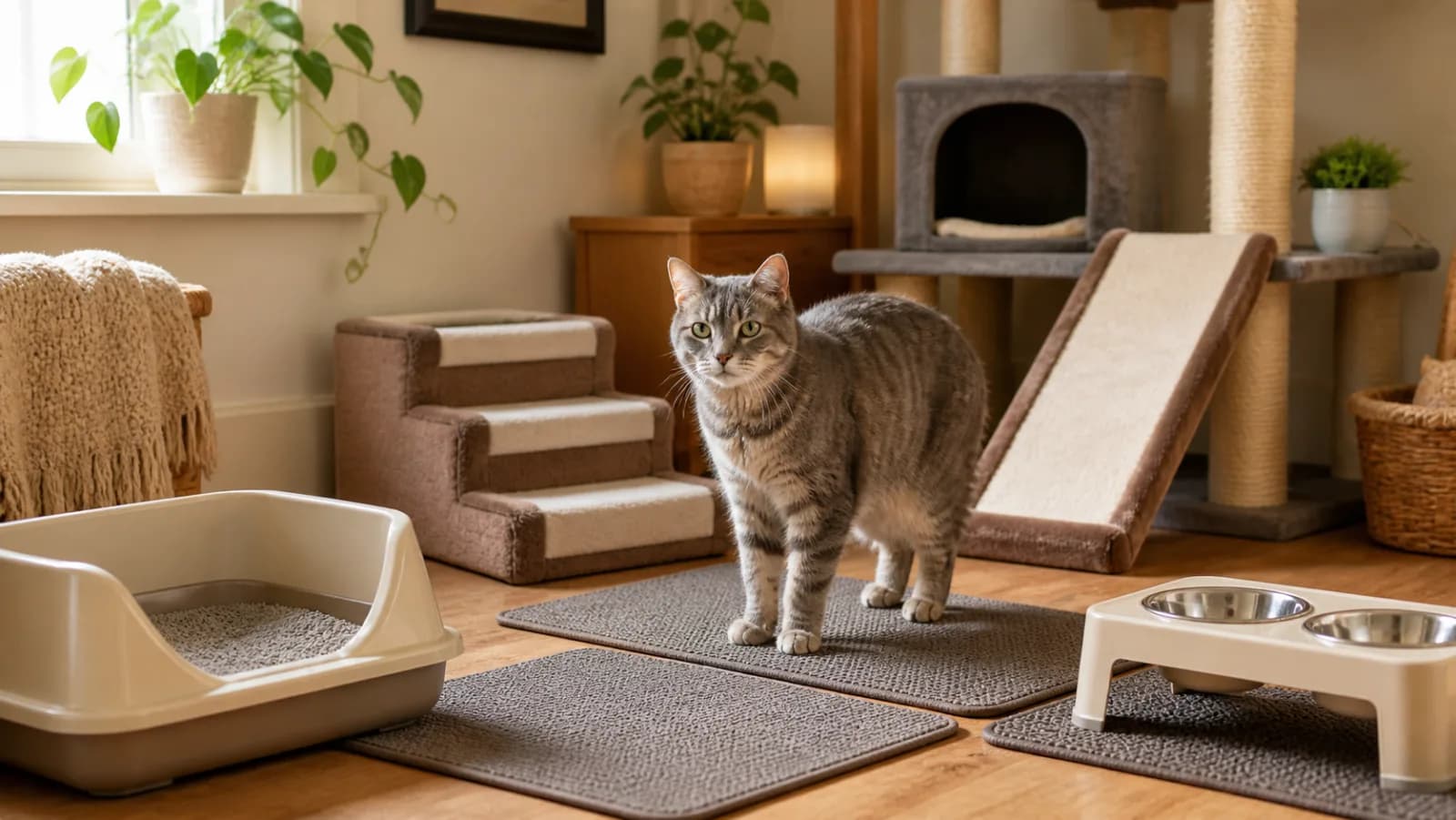
Evidence at a Glance
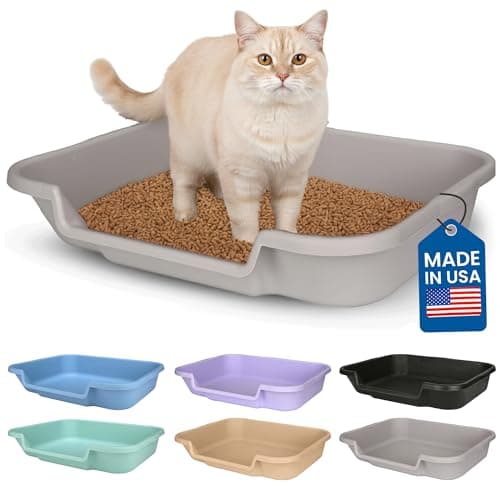
KittyGoHere Senior Cat Litter Box
Low-entrance open litter box explicitly designed for senior, arthritic, or mobility-limited cats — the synthesis pick for purpose-built low-entry access.
Sources: KittyGoHere manufacturer/retailer documentation, Cornell Feline Health Center — senior cat resources, Merck Veterinary Manual — degenerative joint disease in cats
Verified May 5, 2026
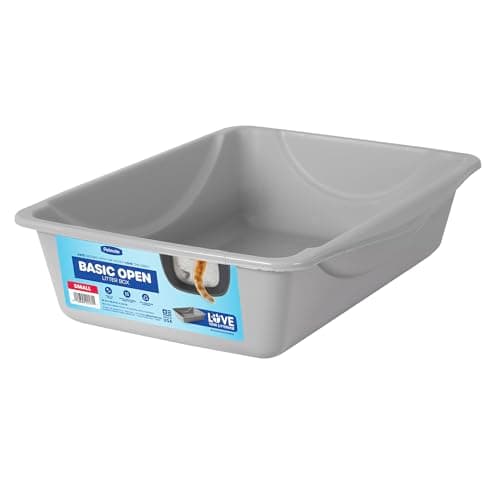
Petmate Basic Litter Pan
Open-top, low-rim pan with no hood and no top entry to climb over, in sizes up to jumbo — the synthesis pick for low-entry litter access, and the cheapest fix on this page.
Sources: Petmate product documentation, Cornell Feline Health Center — senior cat resources, AAFP/ISFM environmental-needs framework
Verified May 5, 2026
Y YHY Raised Ceramic Cat Bowl
Elevated ceramic bowl that removes the deep-crouch demand at floor level — the synthesis pick for cats hesitating at meals.
Sources: Y YHY product documentation, Cornell Feline Health Center — senior cat resources, AAFP Senior Care Guidelines
Verified May 5, 2026
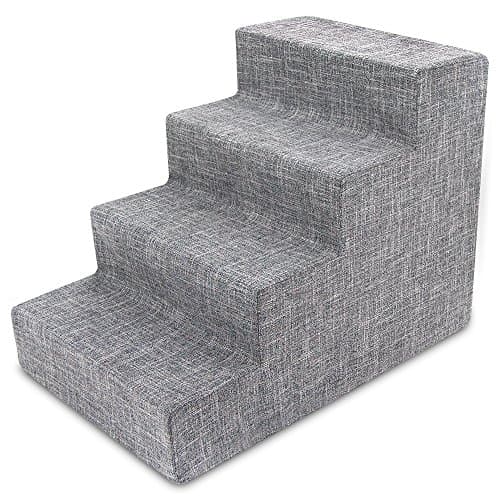
Best Pet Supplies Foam Pet Steps
Non-slip foam stairs that turn one big jump onto a couch or bed into a graded climb — the synthesis pick for furniture access.
Sources: Best Pet Supplies product documentation, AAFP/ISFM environmental-needs framework, Cornell Feline Health Center — senior cat resources
Verified May 5, 2026
Our Picks
KittyGoHere
KittyGoHere Senior Cat Litter Box
9.4 / 10
- Low entrance height purpose-built for senior, arthritic, or mobility-limited cats
- Open-top, walk-in form factor — no hood, no top entry, no high walls to climb
- Generous interior footprint sized for senior-cat comfort
- Made in USA per KittyGoHere product documentation
$49.95
Petmate
Petmate Basic Litter Pan
8.4 / 10
- Open-top, low-rim litter pan — no hood and no top entry
- Available in multiple sizes including jumbo formats per Petmate documentation
- Made in USA per Petmate product documentation
- Cheapest mainstream option for the low-entry use case
$5.99

Y YHY
Y YHY Raised Ceramic Cat Bowl
8.8 / 10
- Elevated ceramic bowl that lifts food off the floor
- Tilt-angle interior shape per Y YHY product documentation
- Heavy ceramic build — stable on hard floors
- Dishwasher-friendly per the manufacturer listing
$18.99
Best Pet Supplies
Best Pet Supplies Foam Pet Steps
8.6 / 10
- Foam construction with non-slip cover, per Best Pet Supplies
- No-assembly indoor stairs
- 4-step, 18-inch height variant — matches typical bed and couch heights
- Lightweight enough to reposition between rooms
$49.99
Gorilla Grip
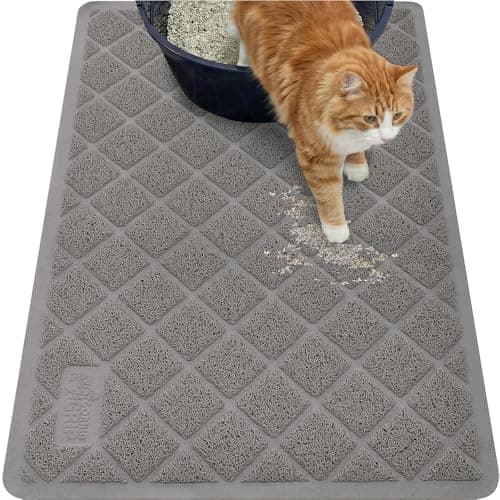
Gorilla Grip Cat Litter Box Mat
8.0 / 10
- 35-by-23-inch cushioned coil-mesh mat per Gorilla Grip documentation
- Litter-trapping deep-grooved surface
- Phthalate-free construction
- Rinse- or vacuum-cleanable per the manufacturer listing
$17.99
Feandrea
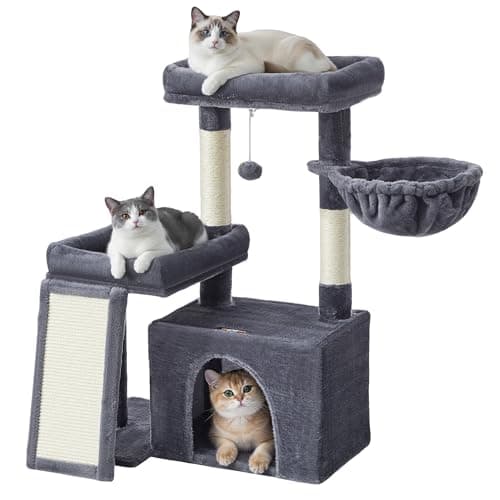
Feandrea Cat Tree with Ramp
8.2 / 10
- 33.8-inch tower with integrated ramp per Feandrea product documentation
- Two large perches plus cave and basket platforms
- Sisal scratching posts on the lower section
- Lower-rise format designed for graded climbing rather than one big leap
$36.99
The Short Answer
If your senior cat is having accidents, hesitating at the litter box, or refusing to jump on the bed, the home setup is usually part of the problem before it is a behavior problem. Cornell Feline Health Center says arthritis is common in older cats and can make it hard for them to climb into a litter box or reach food and water dishes. The Merck Veterinary Manual cites degenerative joint disease in roughly 60% of all cats and more than 90% of cats over 12 years old. The synthesis picks: Petmate Basic Litter Pan for low-entry litter access — an open, low-rim pan that comes in sizes up to jumbo and is the cheapest fix on this page; Y YHY Raised Ceramic Cat Bowl for feeding; Best Pet Supplies Foam Pet Steps for furniture access; Gorilla Grip Cat Litter Box Mat for traction; Feandrea Cat Tree with Ramp for households that want to keep vertical life possible. None of these replaces a veterinary visit when litter avoidance, weight loss, or declining mobility shows up — those are signals to call the vet, not just to redecorate.
Every product on this list has been scored against the PetPal Gear Score, a weighted composite of expert consensus, observed effectiveness, animal safety, long-term durability, and value. Review method: Editorial synthesis of veterinary and trade-association guidance — Cornell Feline Health Center senior-cat materials, the AAFP Senior Care Guidelines, the AAFP/ISFM environmental-needs framework, the Merck Veterinary Manual chapter on degenerative joint disease in cats, and manufacturer/retailer documentation. PetPalHQ does not run a testing lab.. Synthesized from 8+ expert sources.
If your senior cat started peeing outside the box, hesitating to jump on the bed, or moving stiffly at meals, the home itself is part of the problem before it is a behavior problem. Cornell Feline Health Center is explicit that arthritis is common in older cats and can make it difficult for them to access litter boxes and food and water dishes — especially when entry requires jumping or climbing. The AAFP Senior Care Guidelines describe pain in older cats as common and mobility changes as subtle. They frame senior-cat care as a multimodal program where environmental modification sits alongside pain management, nutrition, and routine veterinary assessment. The AAFP/ISFM environmental-needs framework treats home setup as essential rather than optional. The Merck Veterinary Manual puts a number on the scale of the problem: degenerative joint disease in roughly 60% of all cats, and more than 90% of cats older than 12 years.
The picks below are editorial synthesis. PetPalHQ does not run a testing lab. Every product on this page was selected by reviewing manufacturer and retailer documentation against Cornell Feline Health Center senior-cat materials, the AAFP Senior Care Guidelines, the AAFP/ISFM environmental-needs framework, and the Merck Veterinary Manual chapter on degenerative joint disease. Where the evidence converged, the recommendation is firm. Where mainstream litter-box conventions disagreed with senior-cat access — for example, the popularity of hooded or top-entry boxes — the article disqualifies them for this audience even though they suit other households well.
Why home access matters
Cornell Feline Health Center senior-cat materials treat the everyday environment as part of medical care rather than a separate cosmetic concern. When an older cat develops arthritis, the house itself starts producing pain signals — climbing into a tall litter box, crouching deeply to eat, leaping onto the bed. The AAFP Senior Care Guidelines reinforce the point in clinical language: pain is common in older cats, mobility changes can be subtle, and a senior-friendly home is part of the multimodal care plan. The AAFP/ISFM environmental-needs framework adds the welfare layer. Usable resources, multiple stations, and accessible vertical space are baselines for feline wellbeing. They matter more, not less, as a cat ages.
The Merck Veterinary Manual quantifies what those guidelines describe. Degenerative joint disease shows up in roughly 60% of all cats, and in more than 90% of cats older than 12 years. That makes the senior-cat accessibility setup less of a niche concern and more of a default. Most households with an older cat are working around some degree of joint disease, whether or not it has been formally diagnosed.
Comparison table
| Product | Form | Target use | Key features | Vet-recommended? | Amazon availability date-checked |
|---|---|---|---|---|---|
| Petmate Basic Litter Pan | Open low-rim litter pan | Senior, arthritic cats | Open-top, multiple sizes up to jumbo, mainstream availability | Conditional | Yes — 2026-05-05 |
| Y YHY Raised Ceramic Cat Bowl | Elevated ceramic bowl | Cats hesitating at floor-level dishes | Stable ceramic base, tilt-angle interior | Conditional | Yes — 2026-05-05 |
| Best Pet Supplies Foam Pet Steps | Foam indoor stairs | Furniture access | 4-step 18-inch foam stair, non-slip cover, no assembly | Conditional | Yes — 2026-05-05 |
| Gorilla Grip Cat Litter Box Mat | Coil-mesh traction mat | Litter-box landing zone | 35x23 in cushioned mesh, litter-trapping, phthalate-free | Conditional | Yes — 2026-05-05 |
| Feandrea Cat Tree with Ramp | Ramped cat tree | Vertical access without leaping | 33.8 in tower, integrated ramp, two perches plus cave and basket | Conditional | Yes — 2026-05-05 |
These picks favor access and traction over style. Some popular hooded and top-entry boxes are excellent for households worried about splash control or odor, but they require exactly the climbing motion arthritic cats are trying to avoid — and that disqualifies them for this audience.
Petmate Basic Litter Pan — low-entry litter access
The Petmate Basic is the litter pick here because it removes the one thing an arthritic cat cannot negotiate: the climb. Cornell explicitly notes that arthritis can stop older cats from using boxes they have used reliably for years, and an open low-rim pan is the direct answer — a jumbo Petmate is almost always a better choice for a stiff older cat than a hooded or top-entry box. AAFP/ISFM treats easy access to litter as a baseline welfare requirement; this delivers that for the price of a couple of cans of food. Reach for it when litter avoidance is starting to look like a behavior problem and the cause is climbing pain. If you cannot tell which it is, a few days of footage from a camera aimed at the box usually settles it: a cat that circles, hesitates at the rim and walks away is telling you about the climb, not the litter.
Y YHY Raised Ceramic Cat Bowl — easy-win feeding upgrade
Cornell names food and water access as a real-world senior-cat problem, and the Y YHY Raised Ceramic Cat Bowl is the easiest fix to make in an afternoon. Heavy ceramic stays put on hard floors, which matters more than any anti-vomit marketing claim — stability is the reason a cautious senior cat will keep using the bowl after the novelty wears off.
Best Pet Supplies Foam Pet Steps — furniture access
The Best Pet Supplies Foam Pet Steps turn one big jump into a graded climb. Cornell senior-cat materials emphasize that older cats benefit from accessible vertical space, and the AAFP/ISFM framework treats accessible perches as part of feline welfare. Foam suits cats well — the load rating that disqualifies foam stairs for a 70-pound dog is irrelevant to a 12-pound cat. The non-slip cover is the safety story.
Gorilla Grip Cat Litter Box Mat — traction at the landing zone
The Gorilla Grip is a supporting accessory, not a hero pick. It earns its place because slick approaches to the litter box are the kind of small environmental friction that compounds bigger problems. Buy it after the box itself is sorted, especially in homes with hardwood, laminate, or tile floors.
Feandrea Cat Tree with Ramp — vertical life without leaping
An accessible cat tree is only worth featuring if it offers intermediate routes instead of one giant leap. The Feandrea's integrated ramp is exactly that. AAFP/ISFM treats vertical space as a feline welfare baseline, and Cornell explicitly notes that older cats still want to perch — the route just has to become easier.
Beyond the starter kit: premium options as needs grow
The six picks above solve the everyday accessibility problems most senior cats run into first. Two related upgrades are worth knowing about once a household's needs outgrow this starter kit, even though they are not part of this guide's core recommendations.
If your senior cat still wants real vertical space and the Feandrea ramped tree above is not enough climbing room, our large cat trees guide covers taller, sturdier towers built for bigger cats — its top pick is a 72-inch solid-wood tower at $243.58, well above the Feandrea's 33.8-inch footprint. Match any taller tower to the same rule this page follows: a ramp or graded route beats a single big leap, so check that a taller tree still offers a climbable path rather than one dramatic jump.
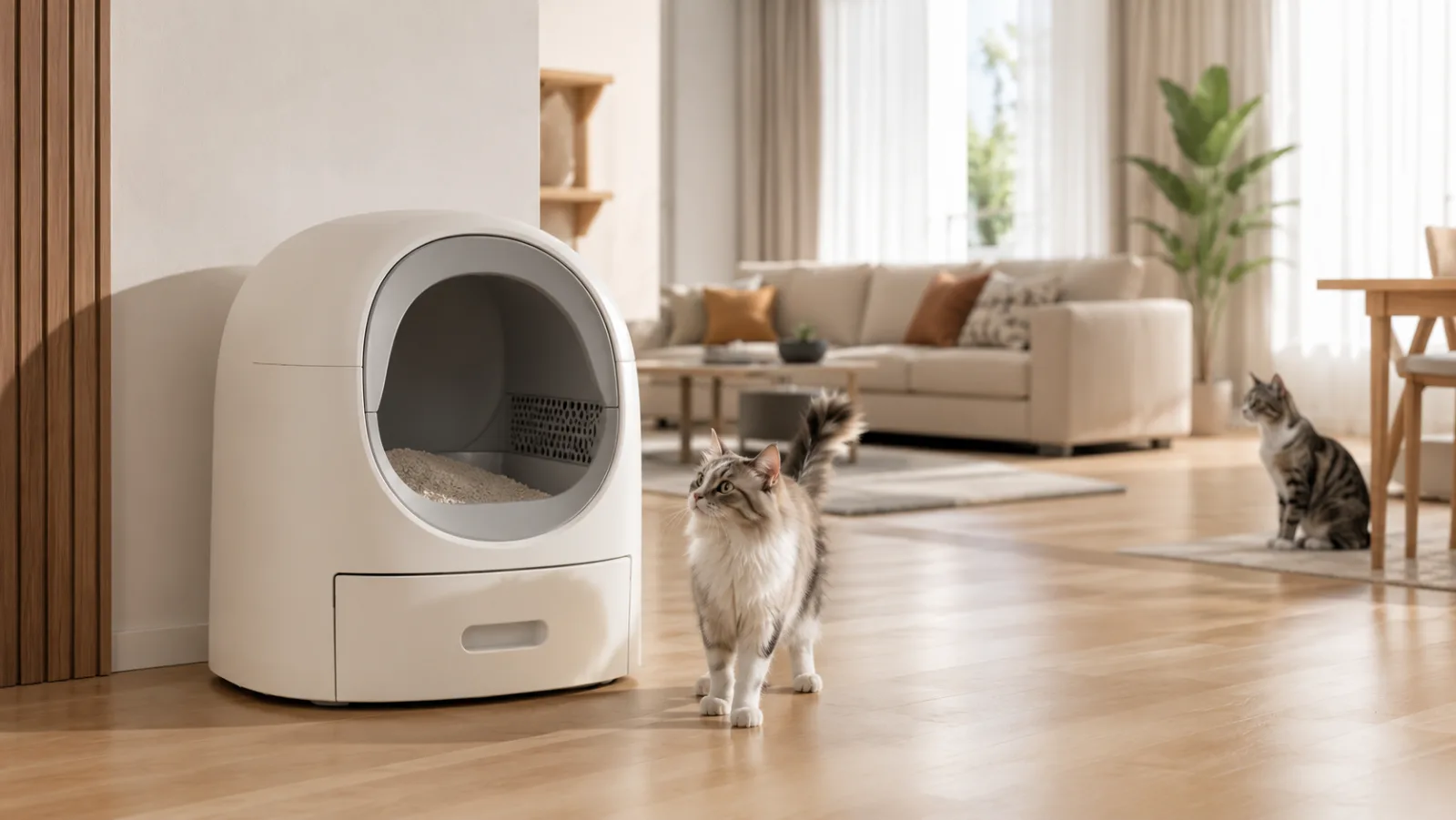
On the litter side, if the Petmate low-entry pan above is not enough — say, a multi-cat household that also wants automatic waste removal — our self-cleaning litter boxes for large and multi-cat homes guide includes a pick built around this exact audience: the Neakasa M1 Plus at $399.99, an open-top automatic box AAHA/AAFP guidance and the ASPCA both support for large or senior cats, since its low edge avoids the climb-in problem a hooded or top-entry automatic box would reintroduce. Not every self-cleaning box belongs on a senior-cat page — most are enclosed globes with exactly the climbing motion this guide warns against — so if you go looking on your own, apply the same low-entry rule to an automatic box that this page applies to a manual one.
How to set up safely
Transition gradually. Cornell senior-cat materials and the AAFP/ISFM environmental-needs framework agree on the principle: do not move every resource at once. Replace one box, one bowl, or one set of stairs at a time so the cat is not asked to relearn the whole house in a week.
In multi-cat homes, duplicate. The AAFP/ISFM framework is explicit that resources need to be available without social pressure or competition. An arthritic cat blocked by stairs, a doorway, or a more confident housemate will not use a single shared box no matter how good the box is. Plan one litter box per cat plus one extra, on the same floor the older cat lives on.
Escalate to the vet for any of these signs: litter avoidance, weight loss, reduced jumping, house-soiling, overgrown nails (often the first sign a cat has stopped scratching due to pain), or new reclusiveness. Cornell Feline Health Center materials and the AAFP Senior Care Guidelines are clear that those changes are clinical, not cosmetic. The Merck Veterinary Manual's stat — degenerative joint disease in roughly 60% of all cats and over 90% of cats older than 12 — is a reminder that the underlying disease is common, treatable, and frequently underrecognized.
What we don't recommend
High-wall and top-entry litter boxes for arthritic cats. Both formats demand the climbing motion this entire category is meant to remove. They suit other households well — privacy-loving cats, splash-control concerns — but they are wrong for an older cat that is already hesitating at the box.
Slick raised platforms with poor footing. An accessibility upgrade the cat refuses is wasted money, and stability is the single biggest predictor of whether a senior cat will keep using a new piece of equipment.
Tall cat trees that still need a big first jump. AAFP/ISFM treats accessible vertical space as a welfare baseline; a tower the cat cannot climb does not count.
Tiny bowls on unstable decorative stands. The bowl is the upgrade — the wobbly stand is the regression. Heavy ceramic on the floor or on a stable, low riser beats a tall novelty perch every time.
Head-to-Head Comparison
| Feature | KittyGoHere Senior Cat Litter Box | Petmate Basic Litter Pan | Y YHY Raised Ceramic Cat Bowl | Best Pet Supplies Foam Pet Steps | Gorilla Grip Cat Litter Box Mat | Feandrea Cat Tree with Ramp |
|---|---|---|---|---|---|---|
| Best use case | Purpose-built senior litter box | Low-entry litter access | Raised feeding upgrade | Furniture access steps | Traction accessory | Ramped cat tree |
| Form factor | Open low-entry pan | Open low-rim pan | Elevated ceramic bowl | Foam stairs, 18 in tall | 35x23 in coil-mesh mat | 33.8 in tower with ramp |
| Vet-recommended? | Conditional | Conditional | Conditional | Conditional | Conditional | Conditional |
| Amazon availability date-checked | Yes — 2026-05-05 | Yes — 2026-05-05 | Yes — 2026-05-05 | Yes — 2026-05-05 | Yes — 2026-05-05 | Yes — 2026-05-05 |
| Check price | Amazon | Amazon | Amazon | Amazon | Amazon | Amazon |
$49.95
- Low entrance height purpose-built for senior, arthritic, or mobility-limited cats
- Open-top, walk-in form factor — no hood, no top entry, no high walls to climb
- Generous interior footprint sized for senior-cat comfort
- Made in USA per KittyGoHere product documentation
The KittyGoHere Senior Cat Litter Box is the most on-theme litter pick in this slate because the entire product is built around a single problem: a senior cat that cannot, or will not, climb a tall threshold to use the box. KittyGoHere's product description and the Amazon listing both stress the low front entrance and the explicit positioning for senior, arthritic, and mobility-limited cats. That single design choice maps directly to what Cornell Feline Health Center calls out in its senior-cat materials, where arthritis is named as a common reason older cats stop using a box they have used reliably for years.
Why a genuinely low front wall matters more than odor-control extras: AAFP Senior Care Guidelines describe pain in older cats as common and mobility changes as subtle. The AAFP/ISFM environmental-needs framework treats home setup as essential rather than optional. A cat that hesitates at the box because climbing in hurts will eventually go elsewhere. House-soiling that is really pain-driven is one of the harder behaviors to reverse once it sets in. Removing the climb removes the trigger.
What the spec sheet does not tell you: this is a single-job product. It is not the prettiest pan on the market, and it does not solve odor or splash control. The editorial use case is narrow and important — the cat that is starting to skip the litter box, the cat that grunts climbing in, the cat that is post-orthopedic. The Merck Veterinary Manual's stat that degenerative joint disease shows up in roughly 60% of all cats and over 90% of cats older than 12 makes this a category that more households need than buy.
What We Love
- Purpose-built for senior and arthritic cats — the design brief is the differentiator
- Low front wall removes the most common litter-box pain point in older cats
- Open-top form factor avoids the climb-in problem of hooded and top-entry boxes
- Sized large enough for big seniors, per KittyGoHere documentation
What Could Be Better
- Open-top format does not contain odor or splash
- Premium price for what is, mechanically, a plastic pan
- Limited color and styling options compared with mainstream boxes
The Verdict
The synthesis pick when litter avoidance is becoming a behavior problem and the cause is climbing pain. Best fit for senior cats showing arthritis signs, post-surgical cats, and any household where the existing box has high walls.
$5.99
- Open-top, low-rim litter pan — no hood and no top entry
- Available in multiple sizes including jumbo formats per Petmate documentation
- Made in USA per Petmate product documentation
- Cheapest mainstream option for the low-entry use case
The Petmate Basic Litter Pan is the low-entry litter pick on this page, and it gets there by leaving things out rather than adding them. Petmate documents an open-top, low-rim format that is widely available at mainstream retailers. For many older cats, that is all that is needed. The AAFP/ISFM environmental-needs framework treats access to clean, easy-to-use litter as a baseline welfare requirement, not a luxury. A basic open pan delivers that without features that get in the way.
Why the plain pan is the right shape for this job: the barrier for an arthritic cat is the climb, and an open low-rim pan simply does not have one. A jumbo open Petmate pan is almost always a better choice for a stiff older cat than a hooded box, a top-entry box, or a "designer" enclosure with a high entrance. Cornell Feline Health Center materials are clear that older cats benefit from boxes they can enter and exit easily; a basic large pan does that, and it is the cheapest thing on this page.
What the spec sheet does not tell you: the front wall is the whole decision, so buy the biggest size that fits the space. Petmate lists the Basic in multiple sizes including jumbo, and a longer pan gives a stiff cat room to turn around inside rather than backing out. A standard Basic still has a usable rim rather than a minimal one, so watch how the cat enters. If your cat is visibly struggling even with an open pan, the next move is the vet, not another box — that is a pain signal, not a geometry problem.
What We Love
- Cheapest pick in the slate by a wide margin
- Mainstream availability — easy to source today
- Open-top format avoids the worst geometries for arthritic cats
- Multiple sizes including jumbo, per Petmate documentation
What Could Be Better
- Front wall is usable rather than minimal — check how your cat steps in
- No senior-specific design intent — the format just happens to fit
- Plain styling that some households dislike for visible rooms
The Verdict
The low-entry litter pick here, and the cheapest meaningful upgrade in the slate. Best fit for any senior cat currently climbing into a hooded, top-entry, or high-wall box — buy the largest size the space allows, and add a station per cat plus one in a multi-cat home.
$18.99
- Elevated ceramic bowl that lifts food off the floor
- Tilt-angle interior shape per Y YHY product documentation
- Heavy ceramic build — stable on hard floors
- Dishwasher-friendly per the manufacturer listing
Raised bowls earn a slot in any senior-cat accessibility setup because they directly address one of Cornell Feline Health Center's named real-world examples — older cats can have a hard time reaching food and water comfortably, especially when arthritis or neck stiffness makes deep crouching painful. The Y YHY Raised Ceramic Cat Bowl is the synthesis pick because the geometry matches the use case. It has a stable ceramic base that lifts the bowl off the floor and a tilted interior that keeps food where the cat does not have to dig for it.
Why ceramic specifically: stability matters more than features here. A senior cat that paws at a bowl, or that already moves cautiously, will quickly stop using a wobbly elevated dish on a tippy stand. Heavy ceramic stays put. The AAFP Senior Care Guidelines frame senior-cat care as a multimodal program — pain management, environmental modification, and nutrition together — and a raised bowl is one of the cheapest and least intrusive environmental modifications available.
What the spec sheet does not tell you: do not lean on anti-vomit marketing claims. The reason to buy this is access, not regurgitation control. Cornell's framing is the right one: if your cat is hesitating at floor-level dishes, lift the dish a few inches. If the cat is still eating poorly after the upgrade, that is a vet conversation about pain, dental disease, or systemic illness, not a bowl problem.
What We Love
- Solves the floor-crouch access problem at low cost
- Stable ceramic build avoids the wobble that defeats elevated dishes
- Tilt-angle interior keeps food accessible per Y YHY documentation
- Easy to clean — dishwasher-friendly per the manufacturer listing
What Could Be Better
- Ceramic chips if dropped on hard floors
- Single-bowl format — a multi-cat home will need duplicates
- Anti-vomit marketing claims are oversold; treat as access only
The Verdict
The synthesis pick when floor-level dishes are no longer comfortable. Best fit for senior cats slowing down at meals, cats with cervical arthritis, and any household easing the daily crouch demand.
$49.99
- Foam construction with non-slip cover, per Best Pet Supplies
- No-assembly indoor stairs
- 4-step, 18-inch height variant — matches typical bed and couch heights
- Lightweight enough to reposition between rooms
The Best Pet Supplies Foam Pet Steps are the synthesis pick when the daily problem is one big jump — onto a couch, onto a bed, onto a windowsill — that the cat is now refusing or making badly. Best Pet Supplies documents a non-slip foam construction with no assembly required, and the 4-step 18-inch height variant matches typical mattress and sofa heights. Replacing a single jump with a graded climb is exactly the kind of environmental modification the AAFP/ISFM environmental-needs framework treats as essential, not optional.
Why foam specifically for a cat: weight matters less here than it does for a senior dog, so the load rating that disqualifies foam stairs for a 70-pound retriever is not a blocker for a 9- to 14-pound cat. What matters is footing. The non-slip cover is the safety story; a cat that tries one step, slides, and hops back down has been taught the stairs are unsafe and will refuse them going forward. The Cornell Feline Health Center senior-cat materials emphasize that older cats benefit from accessible vertical space, which means the step has to be one the cat will use, not one that is technically present.
What the spec sheet does not tell you: stairs only work if the cat will commit to them, and that adoption process is slow. The AAFP-aligned framing is to introduce the steps next to the existing target — bed, couch, windowsill — without pressure, reward voluntary paw contact, and let the cat choose to climb. Forcing the cat onto the unit teaches it the steps are unsafe. Match the step height to the actual furniture, and check stability on the actual floor surface, especially over rugs.
What We Love
- Solves the most common high-jump access problem in senior-cat households
- Non-slip cover per Best Pet Supplies documentation
- Low-pressure indoor format — soft, no-assembly, repositionable
- 4-step height suits typical bed and couch dimensions
What Could Be Better
- Foam shows wear faster than rigid plastic over time
- Soft sides can wobble on uneven flooring or thick rugs
- Adoption requires patience — some cats refuse stairs entirely
The Verdict
The synthesis pick when a cat is refusing or struggling with a single big jump. Best fit for senior cats reluctant to leap onto beds, couches, or windowsills, and households willing to introduce the stairs gradually.
$17.99
- 35-by-23-inch cushioned coil-mesh mat per Gorilla Grip documentation
- Litter-trapping deep-grooved surface
- Phthalate-free construction
- Rinse- or vacuum-cleanable per the manufacturer listing
The Gorilla Grip Cat Litter Box Mat is less glamorous than a bowl or a set of stairs, but traction is a real accessibility intervention for an older cat. Slick approaches to a litter box are exactly the kind of environmental friction the AAFP/ISFM environmental-needs framework warns against. Senior cats that hesitate or stumble at the box landing zone will sometimes start avoiding the box entirely. Gorilla Grip documents a cushioned coil-mesh surface that traps litter and gives the paw something to grip on the way out.
Why this earns a supporting-accessory slot rather than a hero pick: a mat does not solve the fundamental access problem the way a low-entry box or a set of stairs does. What it does is fix the landing zone. Cornell Feline Health Center materials treat home setup for older cats as a system — the box, the bowls, the steps, the surfaces. A slick laminate or tile floor outside the litter box is the kind of small problem that compounds the bigger ones. Adding traction is cheap and reversible.
What the spec sheet does not tell you: this is a "buy with" pick, not a "buy alone" pick. If the cat is already avoiding the box, the priority is the box itself, not the mat. The mat is the right next purchase once the box is sorted, and it pulls double duty as a litter-trapping accessory that keeps tracked grit out of the rest of the house. For multi-cat households, plan one mat per box rather than asking a single mat to cover several stations.
What We Love
- Genuinely improves traction at the litter-box landing zone
- Litter-trapping coil-mesh design per Gorilla Grip documentation
- Phthalate-free construction
- Easy to clean — rinse or vacuum per the manufacturer listing
What Could Be Better
- Supporting accessory only — does not solve the climb-in problem
- Coil-mesh surface can collect debris in homes with long-haired cats
- Single mat covers one station; multi-cat homes need duplicates
The Verdict
The synthesis pick for traction at the litter box. Best fit as a companion purchase to a low-entry box, especially in homes with hardwood, laminate, or tile floors outside the box.
$36.99
- 33.8-inch tower with integrated ramp per Feandrea product documentation
- Two large perches plus cave and basket platforms
- Sisal scratching posts on the lower section
- Lower-rise format designed for graded climbing rather than one big leap
The Feandrea Cat Tree with Ramp is the synthesis pick for households that want to keep vertical life possible for a senior cat without asking the cat to make a big first jump. Feandrea documents a 33.8-inch tower with an integrated ramp, two large perches, a cave, and a basket — a layout that delivers staged climbing rather than the one-huge-leap demand of taller, dramatic towers. Cornell Feline Health Center materials treat continued access to elevated resting places as part of a senior cat's environmental needs, and the AAFP/ISFM environmental-needs framework lists vertical space as a feline welfare baseline, not a luxury.
Why a ramp matters more than the marketing photos suggest: an arthritic cat does not stop wanting vantage points, but a tall tower without intermediate routes punishes every climb. The editorial point is that low and staged is better than tall and dramatic for this audience. A ramp lets the cat walk up rather than jump, and a 33-inch height gives a real perch without requiring the kind of leap a stiff cat will simply refuse.
What the spec sheet does not tell you: this is a senior-friendly cat tree, not a senior-only one — younger cats in the same household will use it too, which is normal and fine. Place the tower in the same room the cat already chooses for napping, anchor it against a wall if the cat is heavy or jumpy, and treat the ramp as the primary route for the older cat. If the senior cat refuses the ramp, fold a textured throw across the bottom step to add traction; refused vertical space is a sign the geometry is wrong, not that the cat has stopped wanting altitude.
What We Love
- Integrated ramp lets stiff cats walk up rather than leap
- Lower 33.8-inch height keeps the climb realistic
- Multiple platform formats — perches, cave, basket — per Feandrea documentation
- Cheapest dedicated cat-tree option in the slate
What Could Be Better
- Smaller footprint than premium senior-cat towers
- Sisal posts wear faster than wrapped-rope premium designs
- Single-cat-friendly geometry — busy multi-cat homes may want a larger tower
The Verdict
The synthesis pick when an older cat needs a realistic route to vertical space. Best fit for senior cats still motivated to perch but unwilling to jump, and households that would rather upgrade the tree than retire it.
How We Score
Formula
PetPal Senior Cat Score = (Expert Consensus × 0.35) + (Access and Geometry × 0.25) + (Stability and Traction × 0.20) + (Senior-Cat Mobility Fit × 0.20)
Score Factors
- Expert Consensus · 35%
- Synthesized from Cornell Feline Health Center senior-cat materials, the AAFP Senior Care Guidelines, the AAFP/ISFM environmental-needs framework, and the Merck Veterinary Manual chapter on degenerative joint disease in cats. The PetPal Senior Cat Score is a composite of veterinary senior-care guidance and manufacturer specs — PetPalHQ does not run a testing lab.
- Access and Geometry · 25%
- Front-wall height, ramp angle, step rise, and bowl elevation evaluated against Cornell's senior-cat access framing and the AAFP/ISFM environmental-needs framework's emphasis on usable resources.
- Stability and Traction · 20%
- Surface grip, base stability, and footing — weighted against the accessibility logic that an unstable upgrade is worse than no upgrade.
- Senior-Cat Mobility Fit · 20%
- Whether the product geometry fits the most common senior-cat problems — climb-in litter avoidance, floor-crouch feeding, and refused furniture jumps — without forcing a household into a footprint they will stop using.
| Rank | Product | Score |
|---|---|---|
| #1 | KittyGoHere KittyGoHere Senior Cat Litter Box | 9.4 |
| #2 | Y YHY Y YHY Raised Ceramic Cat Bowl | 8.8 |
| #3 | Best Pet Supplies Best Pet Supplies Foam Pet Steps | 8.6 |
| #4 | Petmate Petmate Basic Litter Pan | 8.4 |
| #5 | Feandrea Feandrea Cat Tree with Ramp | 8.2 |
| #6 | Gorilla Grip Gorilla Grip Cat Litter Box Mat | 8.0 |
When NOT to Buy
Skip an accessibility purchase entirely if your cat has unevaluated mobility issues — new or worsening litter avoidance, weight loss, declining mobility, reduced jumping, house-soiling, overgrown nails, or new reclusiveness. Cornell Feline Health Center materials and the AAFP Senior Care Guidelines are clear that those signs warrant a veterinary visit. They can signal pain, systemic disease, or progression of degenerative joint disease — not just an aging-in-place problem. The Merck Veterinary Manual cites degenerative joint disease in roughly 60% of all cats and over 90% of cats older than 12, which means many of these symptoms are the disease showing up, not a lifestyle issue. Skip hooded and top-entry litter boxes for arthritic cats — they require exactly the climbing motion this category is meant to remove. Skip slick raised platforms with poor footing, no matter how stylish; an upgrade the cat refuses is wasted money. Skip tall cat trees that still demand a big first jump, even if they have ramps higher up. Skip tiny bowls perched on unstable decorative stands — stability matters more than aesthetics for a cautious senior cat. Above all, do not let a litter-box or feeding-bowl purchase substitute for medical care. The AAFP Senior Care Guidelines describe senior-cat care as a multimodal program — pain management, environmental modification, and routine veterinary assessment together — and environmental upgrades are an adjunct to a veterinary plan, not a replacement.
Frequently Asked Questions
- How common is arthritis in senior cats?
- Very common, and frequently underrecognized. The Merck Veterinary Manual cites degenerative joint disease in roughly 60% of all cats and more than 90% of cats older than 12 years. Cornell Feline Health Center materials describe arthritis as one of the leading causes of subtle behavior change in older cats — including litter avoidance and refusal to jump. The AAFP Senior Care Guidelines describe senior-cat pain as common and the mobility changes as subtle. If your older cat is acting differently around the box, the bowls, or the bed, joint disease is statistically the most likely explanation.
- What is the single biggest litter-box upgrade for a senior cat?
- Lowering the entry height. Cornell explicitly names climbing into the box as a real-world barrier for arthritic cats, and an open low-rim pan — the Petmate Basic is the pick here, in the largest size the space allows — removes that climb entirely. A genuinely low front wall matters more than odor-control extras, more than self-cleaning features, and more than premium materials.
- Should I use a hooded or top-entry box for a senior cat?
- Usually not. Hooded and top-entry boxes excel at splash control and privacy, but they demand exactly the climbing motion an arthritic cat is trying to avoid. The exception is a senior cat that strongly prefers privacy and can still enter comfortably — but if litter avoidance has already started, an open low-rim box is the safer default.
- Are raised bowls really helpful for older cats?
- Often yes for cats that dislike deep crouching. Cornell Feline Health Center senior-cat materials name food and water access as a real-world problem in older cats, and elevating the bowl removes the cervical and shoulder strain of floor-level eating. Treat this as an access fix, not an anti-vomit fix; the marketing claims around regurgitation are oversold.
- Steps or ramps for a senior cat?
- For many cats, short stable steps with traction are easier to accept than long ramps. The Best Pet Supplies Foam Pet Steps are the synthesis pick because they fit typical bed and couch heights and have a non-slip cover. Introduce the steps gradually, reward voluntary paw contact, and never lift the cat onto the unit — a forced first contact teaches the cat the equipment is unsafe.
- My senior cat just started peeing outside the box. What should I do first?
- Two things in parallel. Lower the litter-box threshold — replace a hooded, top-entry, or high-wall box with a low-entry or low-rim open pan today. And make a vet appointment. Cornell Feline Health Center materials and the AAFP Senior Care Guidelines both treat new litter avoidance in an older cat as a clinical signal, not a behavior problem to wait out. Pain, urinary tract disease, kidney disease, and cognitive decline can all show up this way.
- My senior cat stopped jumping on the bed. Is this just aging?
- Almost certainly not "just aging." The Merck Veterinary Manual cites degenerative joint disease in roughly 60% of all cats and over 90% of cats older than 12. Refused jumps are statistically very likely to be a pain signal. Add stairs or a ramped tree to remove the high-impact moments, and ask the vet about pain management, weight optimization, and a senior workup. The AAFP framing is multimodal: environmental modification plus medical care, not one or the other.
- How many litter boxes does a multi-cat senior household need?
- The AAFP/ISFM environmental-needs framework recommends one box per cat plus one extra, on the same floor where the cats live. For a senior cat, this is non-negotiable — an arthritic cat blocked by stairs, a doorway, or social pressure from a housemate will not use a shared box, no matter how good the box is.
- My senior cat has outgrown this starter kit — what's the premium next step?
- It depends which part of the setup your cat has outgrown. For vertical space, a taller tower than the Feandrea ramped tree above — our large cat trees guide covers sturdier, taller options — still needs to offer a graded route rather than one big jump. For litter access in a multi-cat or busy household, an open-top self-cleaning box like the Neakasa M1 Plus, covered in our self-cleaning litter boxes guide, keeps the low-entry access this page requires while adding automatic waste removal — but most self-cleaning boxes are enclosed globes that reintroduce the climbing problem, so an open-top low-edge design is the only style that fits a senior cat.
- What other signs mean I should call the vet?
- Weight loss, declining mobility, new reclusiveness, overgrown nails (often the first sign a cat has stopped scratching due to pain), and any sudden behavior change. Cornell Feline Health Center materials and the AAFP Senior Care Guidelines treat these as clinical rather than cosmetic. The home setup helps with comfort and access; the diagnosis happens at the clinic.
Bottom Line
Get the Petmate Basic Litter Pan if your senior cat is starting to avoid the box, hesitating to climb in, or grunting on entry. An open low-rim pan removes the climb a hooded or top-entry box demands, it comes in sizes up to jumbo, and it is the cheapest fix on this page — buy one per cat plus one in a multi-cat home.
Get the Y YHY Raised Ceramic Cat Bowl if your cat is hesitating at floor-level dishes, slowing down at meals, or showing neck or shoulder stiffness — lifting the dish a few inches is one of the smallest changes here with a daily payoff.
Get the Best Pet Supplies Foam Pet Steps if your senior cat is refusing or struggling with a single big jump onto a bed, couch, or windowsill — and commit to introducing the stairs gradually rather than placing the cat on them.
Get the Gorilla Grip Cat Litter Box Mat as a companion purchase to a low-entry box, especially in homes with hardwood, laminate, or tile floors that make the landing zone slick.
Get the Feandrea Cat Tree with Ramp if your senior cat still wants vertical space but will no longer make a big first jump — the integrated ramp turns a refused tower into a usable one.
Litter placement is its own discipline in a multi-cat home: our litter box setup for multiple cats guide covers the station-count and territory logic the accessibility rules here plug into.
Sources & Methodology
Methodology
PetPal Senior Cat Score = (Expert Consensus × 0.35) + (Access and Geometry × 0.25) + (Stability and Traction × 0.20) + (Senior-Cat Mobility Fit × 0.20)
Expert review sources
- Cornell Feline Health Center — Special Needs of the Senior Cat
- Cornell Feline Health Center — Loving Care for Older Cats
- American Association of Feline Practitioners (AAFP) — Senior Care Guidelines
- AAFP/ISFM — Feline Environmental Needs Guidelines
- Merck Veterinary Manual — Degenerative Joint Disease in Cats
- Petmate — Basic Litter Pan product documentation
- Y YHY — Elevated Ceramic Cat Bowl product documentation
- Best Pet Supplies — Foam Pet Steps product documentation
- Gorilla Grip — Cat Litter Box Mat product documentation
- Feandrea — Cat Tree with Ramp product documentation
Community sources
- r/CatAdvice — senior cats steps vs. ramp threads
- r/cats — litter avoidance and senior arthritis discussion
- r/seniorcats — accessibility setup threads
Prices and specs verified May 5, 2026.
About the author
Nick Miles is the chief editor of PetPalHQ. The picks above are editorial synthesis of expert consensus and manufacturer documentation — PetPalHQ does not run a testing lab. The PetPal Senior Cat Score is a composite of veterinary senior-care guidance and published product specifications, not a measurement. Sources are cited by name throughout.
PetPalHQ is a participant in the Amazon Services LLC Associates Program. We may earn commissions from qualifying purchases — at no extra cost to you.
More Guides
Cats & Dogs
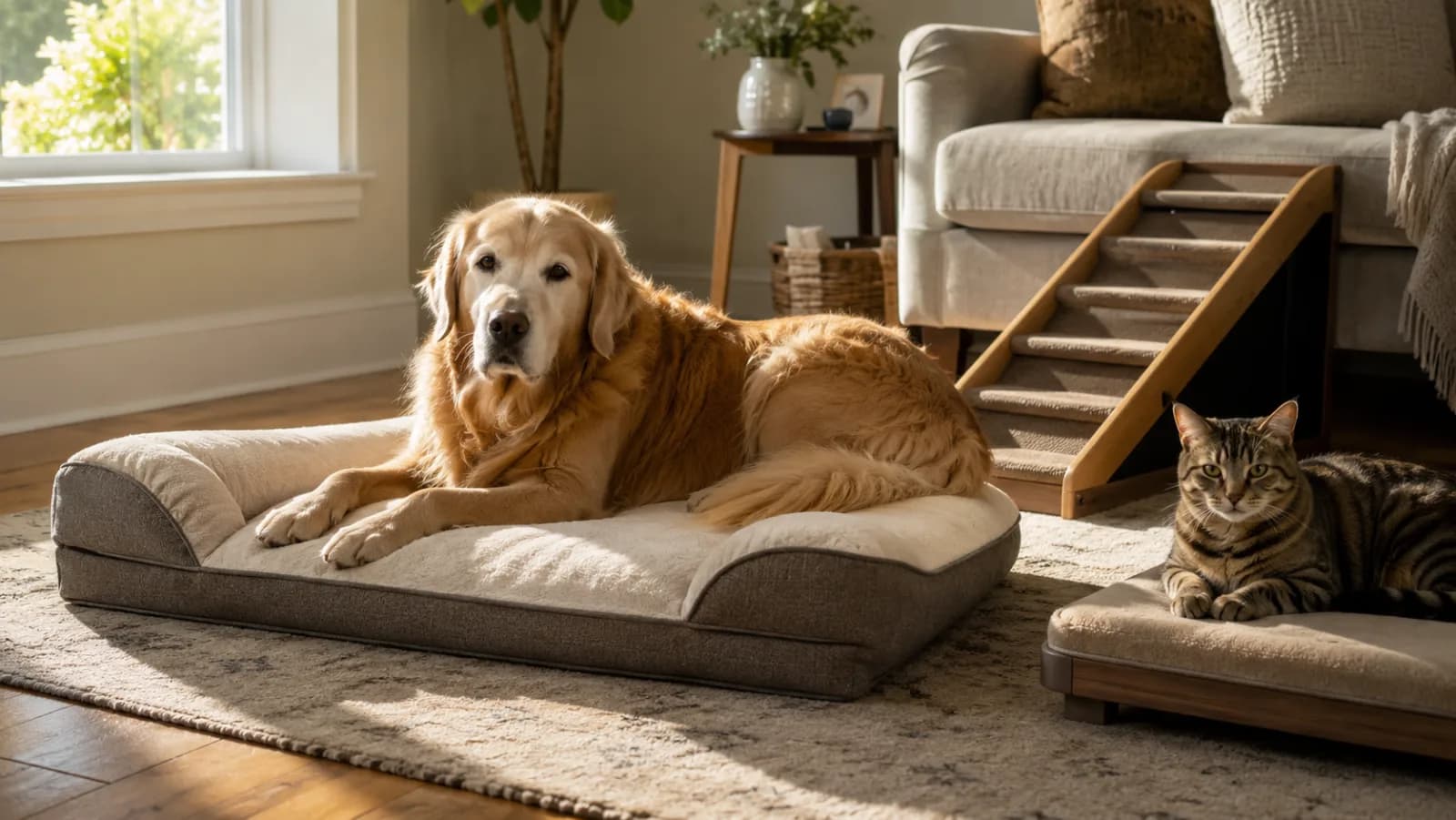
Senior Pet Mobility and Preventive Care: 2026 Guide for Aging Dogs and Cats
Playground
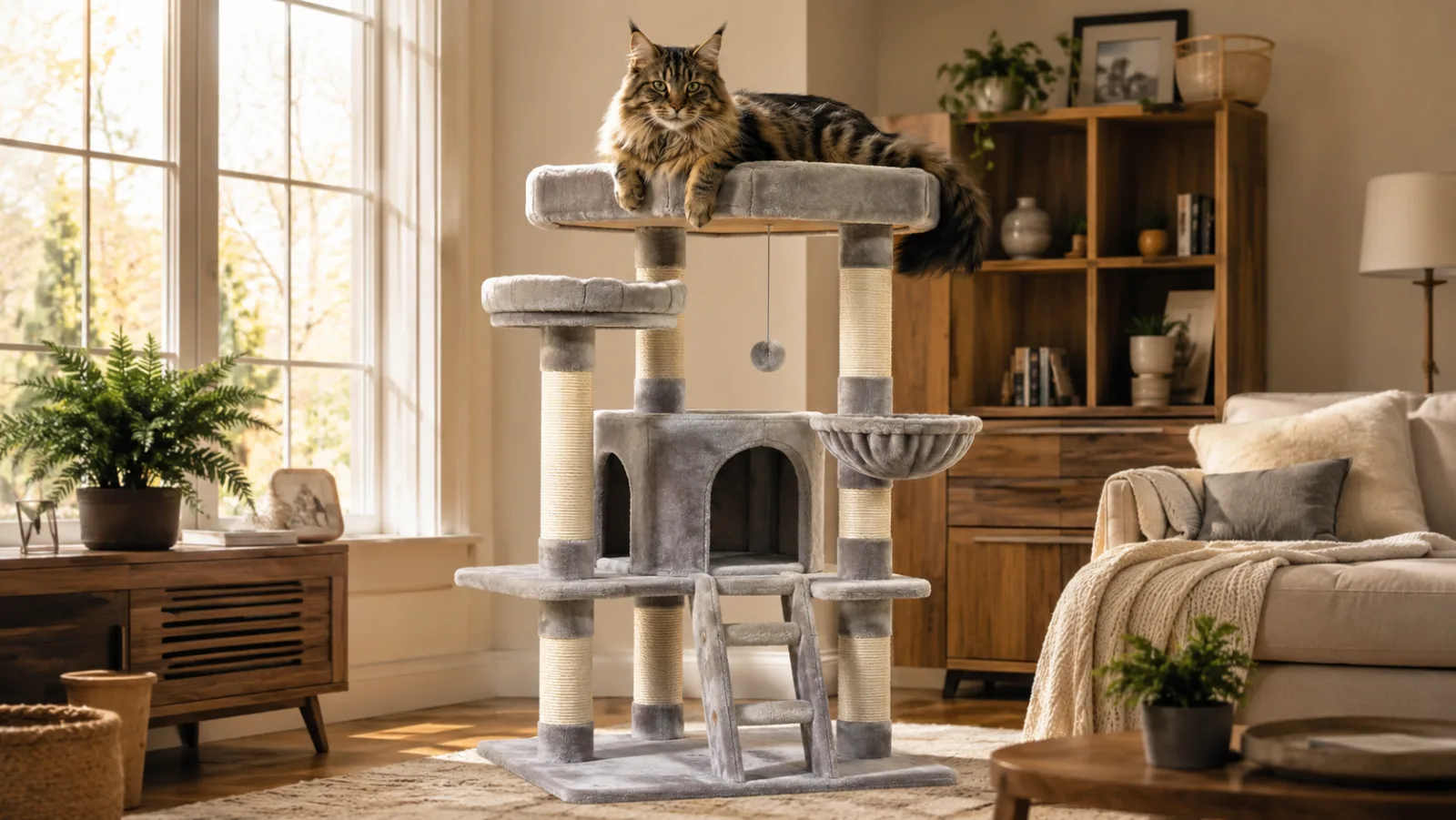
Best Cat Trees for Large Cats and Multi-Cat Homes (2026)
Cats & Dogs
Best Self-Cleaning Litter Boxes for Large and Multi-Cat Homes (2026)
Cats & Dogs
Best Joint Supplements and Fish Oils for Aging Dogs and Cats (2026)
Cats & Dogs
Best Orthopedic Dog Beds for Senior Pets (2026)
Cats & Dogs
Best Dog Ramps and Stairs for Senior Dogs (2026)

Cats & Dogs
Pet Insurance and Wellness Plans for U.S. Owners: How to Compare Without Getting Burned
Cats & Dogs
At-Home Pet Health Monitoring Tools (2026): Smart Scales, Activity Trackers, and Smart Litter for Senior Pets
Cats & Dogs