Cats & Dogs
Best Joint Supplements and Fish Oils for Aging Dogs and Cats (2026)
Welactin Canine Omega-3 is the synthesis pick for the best-supported supplement lane — EPA/DHA fish oil — for senior dogs. Nutramax Dasuquin with MSM is the synthesis pick for daily multi-ingredient chews. Editorial recommendations grounded in the Merck Veterinary Manual, AAHA's 2022 Pain Management Guidelines, and Tufts Cummings Petfoodology — not first-hand testing.
By Nick Miles · Updated May 5, 2026 · 14 min read
PetPalHQ is reader-supported. We may earn a commission from qualifying Amazon purchases at no extra cost to you.
Evidence at a Glance
Welactin Canine Omega-3
EPA/DHA fish oil from Nutramax with transparent omega-3 content per dose — the synthesis pick for the best-supported supplement lane in canine osteoarthritis.
Sources: Merck Veterinary Manual — osteoarthritis in dogs and cats, Tufts Cummings Petfoodology — fish oil for dogs, Nutramax Welactin manufacturer documentation
Verified May 5, 2026
Nutramax Dasuquin with MSM Soft Chews
Glucosamine HCl, chondroitin sulfate, ASU, and MSM in a soft chew from a brand deeply embedded in veterinary retail — the synthesis pick for premium multi-ingredient daily chews.
Sources: Nutramax manufacturer documentation, Merck Veterinary Manual — osteoarthritis in dogs and cats, AAHA 2022 Pain Management Guidelines
Verified May 5, 2026
Nutramax Cosequin for Cats Sprinkle Capsules
Glucosamine HCl and chondroitin sulfate in a sprinkle format suited to feline dosing realities — the synthesis pick for senior cats.
Sources: Nutramax Cosequin manufacturer documentation, Cornell Feline Health Center — senior cat care, AAHA 2022 Pain Management Guidelines
Verified May 5, 2026
Our Picks
Nutramax
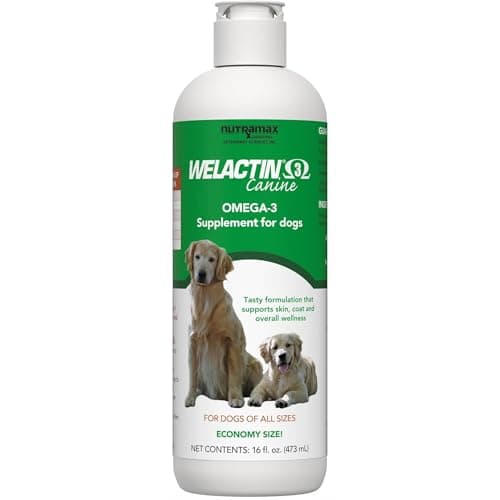
Welactin Canine Omega-3
9.3 / 10
- EPA + DHA fish oil with transparent omega-3 disclosure per Nutramax documentation
- Liquid pump format for flexible dosing across body weights
- From Nutramax — the same veterinary-channel brand behind Cosequin and Dasuquin
- Positioned for skin, coat, joint, and brain support across the lifespan
$29.99
Nutramax
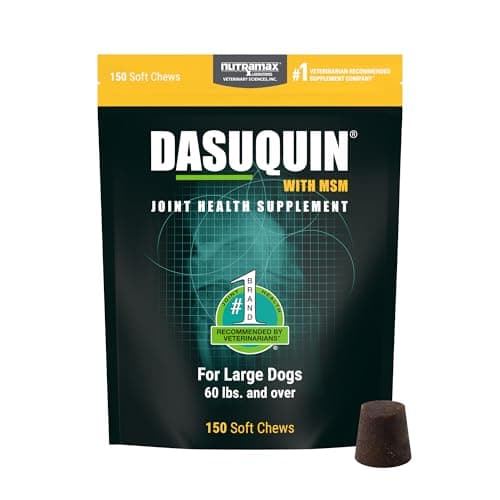
Nutramax Dasuquin with MSM Soft Chews for Large Dogs
9.0 / 10
- Glucosamine HCl, chondroitin sulfate, ASU, and MSM in one chew, per Nutramax
- Soft-chew format owners find easier than tablets for daily routines
- Brand deeply embedded in U.S. veterinary retail and clinic dispensaries
- Sized format for large dogs — separate sizing exists for small/medium dogs
$84.99
Nutramax
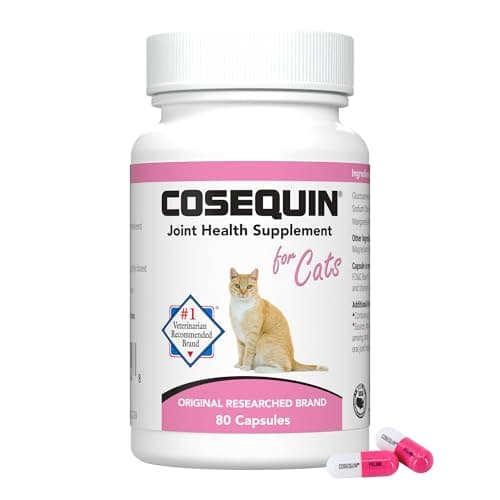
Nutramax Cosequin for Cats Sprinkle Capsules
8.7 / 10
- Glucosamine HCl and chondroitin sulfate, per Nutramax
- Sprinkle capsule format designed to mix into wet or dry food
- Loading and maintenance dose schedule per Nutramax directions
- From the same veterinary-channel brand behind Dasuquin and Welactin
$21.99
Nutramax
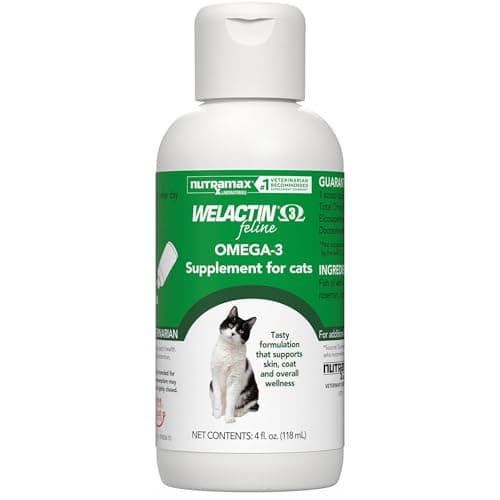
Welactin Feline Omega-3
8.6 / 10
- EPA + DHA fish oil with transparent disclosure, per Nutramax
- Liquid format designed to mix into wet food
- From Nutramax — same veterinary-channel brand as Cosequin
- Positioned for skin, coat, kidney, brain, and vision support across the lifespan
$15.99
VetriScience
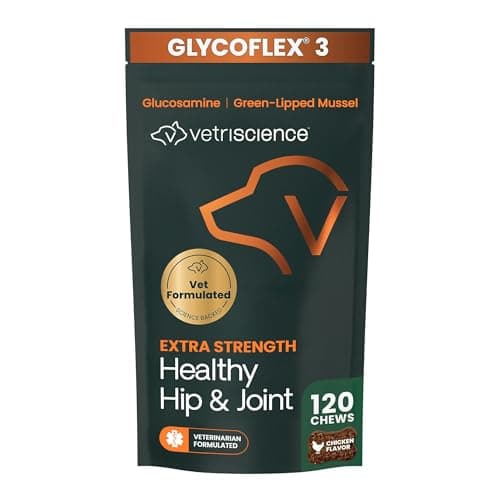
VetriScience GlycoFlex 3 Hip and Joint Supplement
8.4 / 10
- Green-lipped mussel, glucosamine, and MSM in one chew, per VetriScience
- Vet-formulated positioning with multi-ingredient joint support
- Chicken-flavor soft chew format for daily routines
- VetriScience publishes hind-limb strength data as part of brand identity
$44.81
Zesty Paws
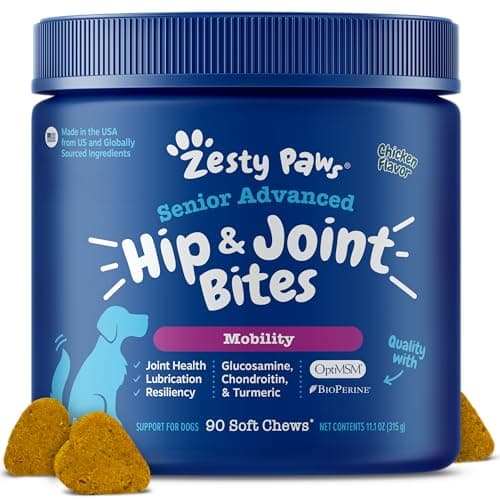
Zesty Paws Mobility Bites for Dogs
7.8 / 10
- Glucosamine, chondroitin, and MSM in a chicken-flavor soft chew
- Vitamins C and E added to the formula, per Zesty Paws
- Mainstream Amazon distribution and high review counts
- Owner-friendly bite format for daily routines
$42.97
Zesty Paws
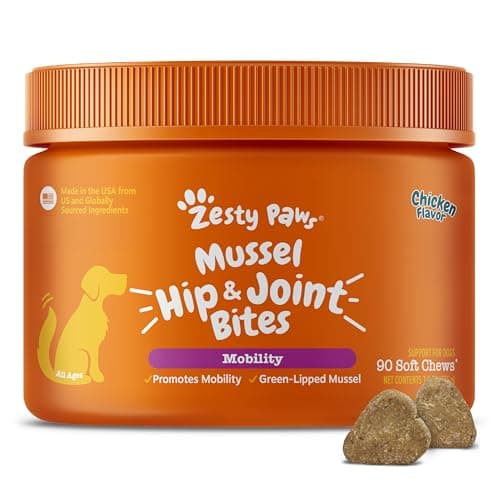
Zesty Paws Mussel Hip & Joint Bites for Dogs
7.6 / 10
- Cold-processed New Zealand green-lipped mussel per chew
- Simpler ingredient story than multi-stack chews
- Soft-chew format for daily routines
- Low entry price for owners trialing the green-lipped mussel category
$19.97
The Short Answer
If you are buying one supplement for an arthritic senior dog, start with EPA/DHA fish oil. The Merck Veterinary Manual gives EPA supplementation a usable therapeutic range of 50–100 mg/kg once daily for canine OA support, with evidence for improved gait, mobility, and NSAID-sparing effects. Welactin Canine Omega-3 is the synthesis pick because the brand is explicit about EPA/DHA content. For multi-ingredient daily chews, Nutramax Dasuquin with MSM is the synthesis pick because the formula is transparent and the brand is deeply embedded in veterinary retail. The Merck Veterinary Manual notes that a systematic review found no evidence supporting glucosamine and chondroitin for OA pain management in dogs and cats. Frame chews as conditional support, not proven treatment. For cats, Nutramax Cosequin Sprinkle Capsules and Welactin Feline Omega-3 are the synthesis picks. Hill's Prescription Diet j/d (vet channel) and Adequan Canine (Rx-only injectable) are veterinary-grade options. They belong in a conversation with your veterinarian, not on Amazon. The Merck Veterinary Manual is also clear that weight optimization is the primary preventive way to slow OA in dogs. No supplement replaces that, NSAIDs, or a veterinary plan.
Every product on this list has been scored against the PetPal Gear Score, a weighted composite of expert consensus, observed effectiveness, animal safety, long-term durability, and value. Review method: Editorial synthesis of veterinary references and manufacturer documentation. Sources include the Merck Veterinary Manual chapter on osteoarthritis in dogs and cats, the 2022 AAHA Pain Management Guidelines for Dogs and Cats, the 2023 AAHA Senior Care Guidelines, NASC quality-program documentation, Tufts Cummings Petfoodology coverage of joint supplements and fish oils, peer-reviewed evidence including Roush 2010 and Bauer 2011, and official Nutramax, VetriScience, Welactin, Hill's, and Adequan product pages. PetPalHQ does not run a testing lab.. Synthesized from 10+ expert sources.
For most senior-dog and senior-cat households, the question driving a search for joint supplements is not abstract — it is "my pet is stiff, what can I buy that might actually help?" The answer the evidence supports is more nuanced than the marketing copy on most product pages. The Merck Veterinary Manual is explicit that weight optimization is the primary preventive way to slow osteoarthritis progression in dogs, that EPA supplementation has a usable therapeutic range of 50 to 100 mg/kg once daily for canine OA support with evidence for improved gait and mobility, and that a systematic review found no evidence supporting glucosamine and chondroitin for OA pain management in dogs and cats. The AAHA 2022 Pain Management Guidelines reinforce that framing: OA is a multimodal problem, and supplements belong inside a plan that includes weight control, NSAIDs when appropriate, environmental modification, and rehabilitation. A chew is an adjunct, not a treatment.
The picks below are editorial synthesis. PetPalHQ does not run a testing lab — every product on this page was selected by reviewing the Merck Veterinary Manual, the 2022 AAHA Pain Management Guidelines, the 2023 AAHA Senior Care Guidelines, NASC quality-program documentation, Tufts Cummings Petfoodology coverage, peer-reviewed evidence including Roush 2010 and Bauer 2011, the Cornell Feline Health Center senior-cat materials, and official Nutramax, VetriScience, Welactin, Hill's, and Adequan product pages. Where the evidence converged — the stronger EPA/DHA story, the mixed glucosamine/chondroitin story, the conditional green-lipped mussel story — the recommendation is firm. Where it did not, this guide flags the disagreement explicitly rather than papering over it with confident-sounding marketing language.
A note on what this guide is and is not. It is a buying-side companion to the Senior Pet Mobility and Preventive Care hub. The hub explains why OA management matters and how to integrate supplements with weight control, exercise, environmental modification, and a veterinary plan; this article covers what to buy once an owner has decided supplementation is part of the plan. Two important categories are explicitly not affiliate picks here. Hill's Prescription Diet j/d and Metabolic + j/d are veterinary therapeutic diets — they are dispensed through clinics, not Amazon. Adequan Canine is a prescription-only polysulfated glycosaminoglycan injectable; the label calls for twice-weekly dosing for up to four weeks for signs associated with degenerative or traumatic arthritis of canine synovial joints, and the official parent-facing material says improvement may be seen within a month. Both are veterinary-grade, not supplements, and both belong in a conversation with the pet's veterinarian.
Comparison table
| Product | Form | Target species | Key actives | NASC seal / Rx | Vet-recommended? | Amazon availability date-checked |
|---|---|---|---|---|---|---|
| Welactin Canine Omega-3 | Liquid | Dogs | EPA + DHA fish oil | Supplement-grade | Conditional | Yes — 2026-05-05 |
| Nutramax Dasuquin with MSM Soft Chews | Soft chew | Dogs | Glucosamine HCl, chondroitin sulfate, ASU, MSM | Supplement-grade | Conditional | Yes — 2026-05-05 |
| Nutramax Cosequin for Cats Sprinkle Capsules | Sprinkle capsule | Cats | Glucosamine HCl, chondroitin sulfate | Supplement-grade | Conditional | Yes — 2026-05-05 |
| Welactin Feline Omega-3 | Liquid | Cats | EPA + DHA fish oil | Supplement-grade | Conditional | Yes — 2026-05-05 |
| VetriScience GlycoFlex 3 | Soft chew | Dogs | Green-lipped mussel, glucosamine, MSM | Supplement-grade | Conditional | Yes — 2026-05-05 |
| Zesty Paws Mobility Bites | Soft chew | Dogs | Glucosamine, chondroitin, MSM | Supplement-grade | Conditional | Yes — 2026-05-05 |
| Zesty Paws Mussel Hip & Joint Bites | Soft chew | Dogs | Cold-processed New Zealand green-lipped mussel | Supplement-grade | Conditional | Yes — 2026-05-05 |
| Hill's Prescription Diet j/d | Dry food | Dogs | Therapeutic omega-3s + glucosamine/chondroitin | Rx diet | Yes, via vet | Veterinary channel — not affiliated |
| Hill's Prescription Diet Metabolic + j/d | Dry food | Cats / Dogs variant | Weight + mobility positioning | Rx diet | Yes, via vet | Veterinary channel — not affiliated |
| Adequan Canine | Injectable | Dogs | Polysulfated glycosaminoglycan | Rx only | Yes, veterinary treatment | Not an affiliate pick |
The product facts in this table are synthesized from official manufacturer, drug, and diet pages plus Amazon listing checks captured on 2026-05-05. Amazon availability for liquid Welactin formats was confirmed for each individual size and flavor on the date listed; readers should still verify size and flavor variants at publish time, especially for the Nutramax fish-oil bottles where multiple sizes ship under similar listings.
Welactin Canine Omega-3
Welactin Canine Omega-3 is the synthesis pick because EPA/DHA fish oil is the supplement lane with the strongest support in current canine OA evidence. The Merck Veterinary Manual gives EPA supplementation a 50-to-100 mg/kg once-daily therapeutic range for OA support, with evidence for improved gait, improved mobility, and NSAID-sparing effects. Tufts Cummings Petfoodology separates that stronger EPA/DHA support from the weaker, dose-dependent, and inconsistent support for glucosamine/chondroitin and green-lipped mussel. Welactin is a Nutramax product — the same veterinary-channel parent brand behind Cosequin and Dasuquin — and the label is explicit about EPA + DHA per dose, which is the disclosure number that lets a careful owner translate label claims into the Merck mg/kg range. Expect a gradual onset; per Tufts, fish oil is a long-trial supplement, not a same-day pain reliever.
Nutramax Dasuquin with MSM Soft Chews for Large Dogs
Nutramax Dasuquin with MSM is the synthesis pick for the multi-ingredient daily chew slot. The product page documents glucosamine HCl, chondroitin sulfate, avocado/soybean unsaponifiables (ASU), and MSM, and the soft-chew format is sustainable for daily routines. The Merck Veterinary Manual notes that glucosamine and chondroitin are common in canine OA management but flags a systematic review finding no evidence for OA pain management — so the editorial framing here is not "Dasuquin is proven to relieve pain," but "Dasuquin is the most transparent and most veterinary-channel-aligned product in a category whose evidence is mixed." That framing matches how the AAHA 2022 Pain Management Guidelines treat adjunct nutraceuticals: a possible component of multimodal care, not a standalone treatment. Pair with weight management, EPA/DHA, and a veterinary plan; do not stack with other glucosamine products.
Nutramax Cosequin for Cats Sprinkle Capsules
Nutramax Cosequin for Cats is the synthesis pick for senior-cat joint supplementation because the sprinkle format actually maps to how owners feed cats. Many feline owners cannot reliably administer twice-daily chews or tablets; mixing a sprinkle capsule into wet food is materially easier. Cornell Feline Health Center materials specifically flag that senior cats hide pain well and that subtle behavioral changes — slowing on jumps, reluctance to use the litter box, reduced grooming — can be missed for months. Cosequin is the most practical retail pick for owners who want to try a conventional joint supplement, but the Merck systematic-review caveat applies in cats too, and AAFP framing pushes toward a vet-led senior-cat workup rather than indefinite supplement-stacking. Use Cosequin alongside a senior-cat plan, not in place of one.
Welactin Feline Omega-3
Welactin Feline Omega-3 is the synthesis pick when EPA/DHA fits a senior-cat plan. Brand transparency on EPA and DHA content is the dividing line that Merck and Tufts both rely on for omega-3 picks, and Nutramax discloses both. The OA-specific evidence in cats is thinner than in dogs per Merck, so the framing is conservative: EPA/DHA can be part of a broader feline wellness conversation — skin and coat, kidney support, broader anti-inflammatory positioning — when a veterinarian agrees, especially in cats with concurrent CKD or other comorbidities. The liquid format mixes naturally into wet food, which avoids the cat-medication problem the Cosequin sprinkle format also solves. Refrigerate after opening; rancid fish oil is a real quality concern Tufts Petfoodology and NASC both flag.
VetriScience GlycoFlex 3 Hip and Joint Supplement
VetriScience GlycoFlex 3 is the synthesis pick for the green-lipped-mussel-forward chew slot. The brand is explicit about the green-lipped mussel + glucosamine + MSM stack, has long published hind-limb strength data as part of the product identity, and earns a slot specifically because Tufts Cummings Petfoodology treats green-lipped mussel as a "conditional" category — more interesting than glucosamine alone, but not at the EPA/DHA level. The pitfall is overlap. If a dog is already on a glucosamine-forward chew or a prescription mobility diet that includes glucosamine, GlycoFlex 3 duplicates ingredients without proportional benefit. Tufts Petfoodology specifically advises against unnecessary supplement overlap, so GlycoFlex 3 is best used as a single multi-ingredient pick rather than as a stack.
Zesty Paws Mobility Bites for Dogs
Zesty Paws Mobility Bites is the mainstream Amazon chew slot. The formula — glucosamine, chondroitin, MSM, plus vitamins C and E in a chicken-flavor soft chew — is the formula many U.S. owners actually buy first because of distribution and review counts. The article uses Zesty Paws not to crown a winner but to teach owners how to read these products: NASC seal participation is a screening signal but not proof of effectiveness, vitamin additions do not change the underlying glucosamine/chondroitin evidence story, and the Merck Veterinary Manual systematic-review finding applies across the category. Best fit for a budget-to-midrange routine that ranks below a well-dosed EPA/DHA fish oil for any dog with confirmed OA.
Zesty Paws Mussel Hip & Joint Bites for Dogs
Zesty Paws Mussel Hip & Joint Bites is the synthesis pick for owners who want a single-ingredient green-lipped mussel trial. The product is explicit about cold-processed New Zealand green-lipped mussel content, the format is owner-friendly, and the sticker price is the lowest in the slate. The right framing in editorial copy is "may fit a green-lipped mussel trial," not "outranks veterinary pain control" — green-lipped mussel sits in Tufts' conditional lane, and ingredient simplicity is not the same as stronger evidence. Best use case: an owner who specifically wants to try the green-lipped mussel category alone, dislikes liquid fish oils, and is choosing not to stack a single-ingredient chew on top of a multi-ingredient one.
How long should you try a supplement?
The realistic editorial answer is 8 to 12 weeks, unless your veterinarian advises otherwise. Tufts Cummings Petfoodology and Nutramax product documentation both align around that window for assessing function honestly with multi-ingredient chews. Fish-oil effects often emerge gradually as omega-3 incorporation builds; expect a similar trial window before drawing conclusions. For prescription-grade options, Adequan Canine's parent-facing material says improvement may be seen within about a month at the labeled twice-weekly cadence for up to four weeks — but Adequan is not a supplement, it is a veterinary-administered injectable, and the comparison is included only to set expectations against the longer chew and oil trials.
The honest framing is this: if you have run a careful 8-to-12-week trial of a single supplement, kept your pet's body condition stable, and seen no meaningful function improvement, the answer is not to swap to a different supplement. It is to revisit the veterinary plan. The AAHA 2022 Pain Management Guidelines treat OA as a problem solved by multiple inputs — weight control, NSAIDs when appropriate, environmental modification, rehabilitation — and a long supplement trial without progress is a signal to escalate rather than to stack another bottle.
What we don't recommend
Several categories of product are explicitly outside this guide's recommendations. Skip any supplement with no meaningful concentration disclosure for glucosamine, chondroitin, EPA, or DHA — opaque "proprietary blend" framing is not editorially defensible when Merck's mg/kg guidance and Tufts' EPA + DHA framing both depend on knowing the actual numbers. Skip fish oils with no visible purity, freshness, or oxidation testing discussion; Tufts Petfoodology and NASC both flag oxidized fish oil as a real quality concern that turns a useful supplement into a label-only product. Skip CBD or hemp products positioned as miracle alternatives to mainstream OA management — the evidence base does not support framing them as substitutes for veterinarian-led care, and an article that did so would be misleading. And skip stacked products that duplicate the same ingredients across chews, powders, and oils without a veterinary reason; Tufts Petfoodology specifically advises against overlap, and the duplication usually adds cost and label complexity without proportional benefit.
A note on xylitol and other dangerous additives: this is rarely an issue in mainstream joint supplements, but always read the inactive-ingredient panel of any product before giving it to a dog. Xylitol is acutely toxic to dogs and can appear in human-marketed omega-3 capsules or flavored products that owners sometimes give to pets. Stick to pet-formulated supplements that disclose the full ingredient list and avoid repurposing human supplements without a veterinarian's specific direction.
Head-to-Head Comparison
| Feature | Welactin Canine Omega-3 | Nutramax Dasuquin with MSM Soft Chews for Large Dogs | Nutramax Cosequin for Cats Sprinkle Capsules | Welactin Feline Omega-3 | VetriScience GlycoFlex 3 Hip and Joint Supplement | Zesty Paws Mobility Bites for Dogs | Zesty Paws Mussel Hip & Joint Bites for Dogs |
|---|---|---|---|---|---|---|---|
| Best use case | EPA/DHA fish oil for dogs | Multi-ingredient daily chew | Cat joint sprinkle | EPA/DHA fish oil for cats | Green-lipped mussel chew | Mainstream Amazon chew | Single-ingredient mussel chew |
| Form | Liquid | Soft chew | Sprinkle capsule | Liquid | Soft chew | Soft chew | Soft chew |
| Target species | Dogs | Dogs | Cats | Cats | Dogs | Dogs | Dogs |
| Key actives | EPA + DHA | Glucosamine, chondroitin, ASU, MSM | Glucosamine, chondroitin | EPA + DHA | Green-lipped mussel, glucosamine, MSM | Glucosamine, chondroitin, MSM | Cold-processed NZ green-lipped mussel |
| Evidence lane | Stronger (per Merck) | Mixed (per Merck) | Mixed (per Merck) | Stronger in dogs; thinner in cats | Conditional (per Tufts) | Mixed (per Merck) | Conditional (per Tufts) |
| Check price | Amazon | Amazon | Amazon | Amazon | Amazon | Amazon | Amazon |
$29.99
- EPA + DHA fish oil with transparent omega-3 disclosure per Nutramax documentation
- Liquid pump format for flexible dosing across body weights
- From Nutramax — the same veterinary-channel brand behind Cosequin and Dasuquin
- Positioned for skin, coat, joint, and brain support across the lifespan
Welactin Canine Omega-3 is the synthesis pick because EPA/DHA fish oil is the best-supported supplement lane for canine osteoarthritis. The Merck Veterinary Manual gives EPA supplementation a usable therapeutic range of 50 to 100 mg/kg once daily for OA support in dogs. Evidence shows improved gait, improved mobility, and NSAID-sparing effects. Tufts Cummings Petfoodology separates that stronger EPA/DHA support from the weaker, dose-dependent support for glucosamine, chondroitin, and green-lipped mussel.
Why Welactin specifically: the brand is explicit about EPA/DHA content per dose. That is the number editors need to teach readers to convert label claims into mg/kg. Many fish-oil products on Amazon advertise "fish oil mg" without disclosing what fraction is the active EPA + DHA pair. Welactin sits inside the Nutramax veterinary-retail family — the same parent brand behind Cosequin and Dasuquin. The liquid pump format makes it easier to scale a small-dog dose against a large-dog dose without buying multiple bottle sizes.
What the spec sheet does not tell you: fish-oil quality questions are real. Tufts Petfoodology and the National Animal Supplement Council (NASC) both flag freshness, oxidation, and purity testing as what separates a useful fish oil from a label-only one. Most marketing copy will not surface those details. Welactin's Nutramax lineage is the editorial reason to give it the benefit of the doubt over generic Amazon house-brand omega-3s. Per the Merck Veterinary Manual, fish oil is still an adjunct. It is not a replacement for weight optimization, NSAIDs when indicated, or a veterinary plan. Supplements support a plan; they do not constitute one.
What We Love
- Best-supported supplement lane for canine OA, per Merck and Tufts Petfoodology
- EPA/DHA disclosure is more transparent than most Amazon-only fish oils
- Liquid format scales across body weights without buying a separate bottle per dog size
- Nutramax veterinary-retail provenance is editorially defensible
What Could Be Better
- Liquid fish oils can smell strongly marine — owner-tolerance varies
- Requires owner math to convert dose to mg/kg of EPA per the Merck range
- Refrigeration and bottle hygiene matter once opened
The Verdict
The synthesis pick when the goal is the best-evidenced supplement lane. Best fit for a senior dog with confirmed OA whose owner wants a transparent EPA/DHA product from a veterinary-channel brand — not a marketing-led house-brand fish oil.
$84.99
- Glucosamine HCl, chondroitin sulfate, ASU, and MSM in one chew, per Nutramax
- Soft-chew format owners find easier than tablets for daily routines
- Brand deeply embedded in U.S. veterinary retail and clinic dispensaries
- Sized format for large dogs — separate sizing exists for small/medium dogs
Nutramax Dasuquin with MSM is the synthesis pick for the "premium multi-ingredient chew" category. It is transparent about its core joint-support stack and sits closest to the conventional veterinary- supplement lane. The product page lists glucosamine HCl, chondroitin sulfate, avocado/soybean unsaponifiables (ASU), and MSM. That is the broadest familiar joint-support formula in this slate. The brand has a long footprint in U.S. veterinary retail.
Why this pick is editorially careful: the Merck Veterinary Manual notes that glucosamine and chondroitin are common in canine and feline OA management. A systematic review found no evidence supporting them for pain management in dogs and cats with OA. Tufts Cummings Petfoodology echoes that nuance. Support for glucosamine/chondroitin is weaker, more dose-dependent, and more inconsistent than the support for EPA/DHA. Dasuquin earns this slot not because the science is clean. It earns it because Nutramax is explicit about ingredients. The AAHA 2022 Pain Management Guidelines treat OA as a multimodal problem where adjunct nutraceuticals can be part of the conversation alongside weight management, NSAIDs, and rehabilitation.
What the spec sheet does not tell you: stacking matters. If a dog is already on a glucosamine/chondroitin chew or a prescription mobility diet that includes glucosamine, adding Dasuquin can duplicate ingredients without proportional benefit. Tufts Petfoodology specifically advises owners to avoid unnecessary overlap among joint supplements. The best use case for Dasuquin is a dog newly diagnosed with mild-to-moderate OA on a vet-approved plan. The trial window should be 8 to 12 weeks per Nutramax and Tufts. Avoid copy implying cartilage rebuilding or disease reversal; the evidence does not support that framing.
What We Love
- Transparent ingredient disclosure: glucosamine HCl, chondroitin, ASU, MSM
- Brand is deeply embedded in veterinary clinic dispensaries
- Soft-chew format is easier than tablets for many dogs
- Conventional benchmark against which other multi-ingredient chews are measured
What Could Be Better
- Glucosamine/chondroitin evidence is mixed, per Merck and Tufts Petfoodology
- Premium price tier within the supplement category
- Requires correct size selection — separate versions for small, medium, and large dogs
The Verdict
The synthesis pick when an owner wants a multi-ingredient daily chew from a veterinary-retail brand. Best fit for a dog newly diagnosed with mild-to-moderate OA whose owner can commit to an 8-to-12-week trial — but pair it with EPA/DHA fish oil and weight management for the full multimodal picture.
$21.99
- Glucosamine HCl and chondroitin sulfate, per Nutramax
- Sprinkle capsule format designed to mix into wet or dry food
- Loading and maintenance dose schedule per Nutramax directions
- From the same veterinary-channel brand behind Dasuquin and Welactin
Nutramax Cosequin for Cats Sprinkle Capsules is the synthesis pick for senior-cat joint support because feline dosing realities are the actual problem. Cats are notoriously hard to medicate with chews and tablets. Cornell Feline Health Center materials on senior-cat care emphasize that owners often miss subtle behavioral signs of OA because cats hide pain so well. A sprinkle format that mixes into food is a meaningfully better fit than a pill an owner has to administer twice a day.
Why this product is editorially defensible: Nutramax's product page highlights glucosamine HCl and chondroitin sulfate. These are the same conventional joint-support pair used across the company's canine line. The page also includes a published loading and maintenance cadence. The AAHA 2022 Pain Management Guidelines treat feline OA as a real and underdiagnosed problem. They frame supportive care — including environmental modification and adjunct nutraceuticals — as part of a multimodal plan, not as standalone treatment. That is the right framing for Cosequin in this article.
What the spec sheet does not tell you: the underlying evidence story for glucosamine/chondroitin in cats is even thinner than in dogs. The Merck Veterinary Manual systematic-review finding applies to both species. Cosequin is the most practical retail option for owners who want to try a conventional supplement. It should be paired with a veterinarian-led senior-cat assessment, attention to home access (low-entry litter boxes, ramp access to favored perches), and recheck conversations. Cornell and AAFP both push toward that conversation. If a senior cat is showing slowing-down behavior, a vet workup matters more than the chew.
What We Love
- Sprinkle format is realistic for cat-owner workflows
- Published loading and maintenance schedule from Nutramax
- Veterinary-retail brand provenance
- More transparent than most cat-targeted Amazon supplements
What Could Be Better
- Feline-specific OA evidence for glucosamine/chondroitin is even thinner than canine
- Some cats reject sprinkled food regardless of format
- Best paired with a veterinary senior-cat workup, not used in isolation
The Verdict
The synthesis pick when a senior-cat owner wants to try a conventional joint supplement with realistic dosing. Best fit alongside a Cornell-style senior-cat care conversation, a veterinarian-led OA workup, and home-access changes — not as a standalone answer.
$15.99
- EPA + DHA fish oil with transparent disclosure, per Nutramax
- Liquid format designed to mix into wet food
- From Nutramax — same veterinary-channel brand as Cosequin
- Positioned for skin, coat, kidney, brain, and vision support across the lifespan
Welactin Feline Omega-3 is the synthesis pick for fish oil in cats because brand transparency on EPA/DHA is the most useful editorial signal in this category. The Merck Veterinary Manual and Tufts Cummings Petfoodology both treat EPA/DHA disclosure as the dividing line between a defensible omega-3 pick and a label-only one. Welactin's Nutramax lineage and explicit EPA/DHA content per dose put it on the right side of that line for the feline form too.
Why the framing has to be careful for cats: the OA-specific evidence for fish oil in cats is less clear than in dogs, per Merck. EPA/DHA still has a defensible role in a senior cat's overall wellness picture. That includes skin and coat, kidney support in cats with concurrent CKD, and broader anti-inflammatory positioning. The spoke should not claim that fish oil treats feline arthritis the way it can support canine OA function. EPA/DHA can be part of a senior-cat conversation if a veterinarian agrees it fits. That is especially true in cats with multiple concurrent conditions.
What the spec sheet does not tell you: fish-oil dose for cats is veterinarian-individualized, not formulaic. Welactin is editorially preferred over generic house-brand fish oils because Nutramax is transparent about EPA/DHA content. Dose decisions for a cat with kidney disease, hyperthyroidism, or concurrent OA should be made with a veterinarian rather than from a label. Refrigerate after opening and discard if the oil smells strongly rancid. Tufts Petfoodology and NASC both flag oxidation as a real fish-oil quality concern.
What We Love
- Transparent EPA/DHA disclosure from a veterinary-channel brand
- Liquid format mixes naturally into wet food
- Smaller bottle size matches realistic feline consumption pace
- Same brand family as Cosequin for owners building a Nutramax routine
What Could Be Better
- OA-specific evidence in cats is thinner than in dogs, per Merck
- Strongly marine-smelling oils can trigger food refusal
- Dose decisions in cats with comorbidities should be vet-individualized
The Verdict
The synthesis pick when EPA/DHA fish oil belongs in a senior-cat plan. Best fit when a veterinarian agrees fish oil supports the broader picture — coat health, kidney support, or concurrent conditions — rather than as a standalone OA treatment.
$44.81
- Green-lipped mussel, glucosamine, and MSM in one chew, per VetriScience
- Vet-formulated positioning with multi-ingredient joint support
- Chicken-flavor soft chew format for daily routines
- VetriScience publishes hind-limb strength data as part of brand identity
VetriScience GlycoFlex 3 is the synthesis pick when the owner specifically wants a green-lipped-mussel-forward chew rather than a glucosamine/chondroitin baseline. VetriScience's positioning emphasizes green-lipped mussel alongside glucosamine and MSM. The brand has long published hind-limb strength data as part of the product identity. The chicken-flavor soft chew format is owner-friendly enough for daily routines.
Why green-lipped mussel earns its own slot: Tufts Cummings Petfoodology treats green-lipped mussel as a "conditional" category. It is not as well-supported as EPA/DHA, but it has a more interesting evidence story than glucosamine/chondroitin alone. For owners shopping the green-lipped mussel category, GlycoFlex 3 is editorially defensible. The brand is explicit about including the ingredient. The multi-ingredient stack is consistent with how the AAHA 2022 Pain Management Guidelines treat OA — multimodal, with multiple inputs, none of them silver bullets.
What the spec sheet does not tell you: ingredient overlap is the editorial pitfall here. If a dog is already on a glucosamine-forward chew or a prescription mobility diet, adding GlycoFlex 3 can duplicate inputs without proportional benefit. Tufts Petfoodology explicitly advises against unnecessary supplement overlap. The best use case for GlycoFlex 3 is an owner specifically choosing the green-lipped mussel lane. It is not the right pick for someone stacking it on top of an existing glucosamine/chondroitin product. Match it to the household plan, not to "more is better."
What We Love
- Cleanest green-lipped-mussel-forward pick in this set
- Vet-formulated positioning with published hind-limb strength data
- Soft-chew format owners find sustainable for long trials
- VetriScience brand has long footprint in retail veterinary supplements
What Could Be Better
- Green-lipped mussel evidence is conditional, not definitive, per Tufts Petfoodology
- Easy to duplicate ingredients with other glucosamine chews
- Higher per-chew cost than baseline mainstream products
The Verdict
The synthesis pick when the owner specifically wants a green-lipped-mussel-forward chew. Best fit as a single multi-ingredient product, not as a stack on top of a separate glucosamine/chondroitin chew.
$42.97
- Glucosamine, chondroitin, and MSM in a chicken-flavor soft chew
- Vitamins C and E added to the formula, per Zesty Paws
- Mainstream Amazon distribution and high review counts
- Owner-friendly bite format for daily routines
Zesty Paws Mobility Bites earns the "mainstream Amazon chew" slot because it is the formula the article actually has to discuss. Many U.S. owners begin their senior-pet supplement search on Amazon, sort by star count, and only later ask what the evidence says. Zesty Paws lists glucosamine, chondroitin, and MSM with vitamins C and E in a familiar soft-chew format. The brand has high distribution, and the bites are owner-friendly enough for sustained daily routines.
Why this is a teaching slot rather than a winner slot: the article uses Zesty Paws not to crown a hero pick, but to show readers how to evaluate the most commonly bought formulas. The Merck Veterinary Manual systematic-review finding applies to glucosamine and chondroitin generally, not just to small brands. Tufts Cummings Petfoodology repeatedly notes that popularity is not the same as clinical effect. Mobility Bites belongs in this slate because skipping it would leave readers without a frame for the chews they are most likely to encounter.
What the spec sheet does not tell you: NASC's quality-program seal is a useful editorial screening signal. Participating brands accept member compliance and audit involvement. But NASC is not proof of clinical effectiveness. That distinction matters here. The best use case for Mobility Bites is a budget-to-midrange chew for an owner who specifically wants the most mainstream Amazon option. The owner accepts that evidence is softer than for EPA/DHA and ranks it below a well-dosed fish-oil strategy if the dog has confirmed OA.
What We Love
- Highest distribution and recognition of any chew in this slate
- Soft-chew format is sustainable for daily routines
- Lower price point than Dasuquin makes longer trials easier
- Familiar ingredient profile owners can compare side by side
What Could Be Better
- Glucosamine/chondroitin evidence is mixed, per Merck and Tufts Petfoodology
- Vitamin additions do not change the underlying evidence story
- Marketing language sometimes outpaces the evidence — read carefully
The Verdict
The synthesis pick when an owner specifically wants the most mainstream Amazon chew. Best fit for a budget-to-midrange daily routine that ranks below a well-dosed EPA/DHA fish oil for any dog with confirmed OA.
$19.97
- Cold-processed New Zealand green-lipped mussel per chew
- Simpler ingredient story than multi-stack chews
- Soft-chew format for daily routines
- Low entry price for owners trialing the green-lipped mussel category
Zesty Paws Mussel Hip & Joint Bites is the synthesis pick when the owner wants the cleanest single-idea green-lipped mussel option for an Amazon-first shopping flow. The product is explicit about using cold-processed New Zealand green-lipped mussel. That lets the article explain why some owners gravitate to "single-idea" joint-support products rather than broad kitchen-sink formulas with seven overlapping inputs.
Why ingredient simplicity is a real category: Tufts Cummings Petfoodology specifically advises against unnecessary overlap among joint supplements. Merck's reminder that evidence is mixed for glucosamine/chondroitin makes the case for trying one ingredient at a time rather than stacking. Some owners want to test green-lipped mussel without also paying for glucosamine, chondroitin, MSM, and vitamins they may already get elsewhere. This single-idea format is the cleanest entry point for them.
What the spec sheet does not tell you: ingredient simplicity does not equal stronger evidence. Green-lipped mussel sits in Tufts' "conditional" lane. It has a more interesting evidence story than glucosamine alone, but it is not at the EPA/DHA level of support. The right framing in editorial copy is "may fit a green-lipped-mussel trial," not "outranks veterinary pain control." Best use case: an owner who wants a chew-first format, dislikes strongly marine-smelling fish-oil liquids, and is specifically choosing to try the green-lipped mussel category as a single ingredient rather than stacking it on top of a multi-ingredient chew.
What We Love
- Cleanest single-idea green-lipped mussel pick in the slate
- Lowest sticker price of any chew in the set
- Avoids stacking ingredients an owner may already be getting elsewhere
- Soft-chew format is owner-friendly for trial periods
What Could Be Better
- Green-lipped mussel evidence is conditional, not definitive
- Single-ingredient simplicity is not the same as stronger evidence
- Some dogs prefer multi-flavor formulas; flavor acceptance varies
The Verdict
The synthesis pick when an owner specifically wants a single-idea green-lipped mussel chew. Best fit for a trial of the category without ingredient overlap, and at a lower price point than VetriScience GlycoFlex 3.
How We Score
Formula
PetPal Supplement Score = (Expert Consensus × 0.35) + (Evidence Lane × 0.25) + (Ingredient Transparency × 0.20) + (Senior-Pet Routine Fit × 0.20)
Score Factors
- Expert Consensus · 35%
- Synthesized from the Merck Veterinary Manual chapter on osteoarthritis in dogs and cats, the 2022 AAHA Pain Management Guidelines, the 2023 AAHA Senior Care Guidelines, NASC quality-program documentation, Tufts Cummings Petfoodology coverage, peer-reviewed evidence including Roush 2010 and Bauer 2011, and official manufacturer pages. PetPalHQ does not run a testing lab. The PetPal Supplement Score is a composite of expert OA-management criteria and manufacturer disclosures — not a clinical measurement.
- Evidence Lane · 25%
- Whether the product sits in the EPA/DHA lane (stronger support per Merck and Tufts), the green-lipped mussel lane (conditional per Tufts), or the glucosamine/chondroitin lane (mixed per Merck systematic review).
- Ingredient Transparency · 20%
- Whether the manufacturer discloses meaningful active concentrations — EPA/DHA mg per dose, glucosamine mg per chew, chondroitin mg per chew — rather than only total fish-oil mg or vague 'proprietary blend' framing. NASC seal participation is a screening signal, not proof of effectiveness.
- Senior-Pet Routine Fit · 20%
- Whether the product fits the realistic senior-pet workflow — sprinkle for cats, liquid for body-weight-scaled dosing, single-ingredient chew for trial windows without stacking — rather than forcing an owner into a routine they will abandon.
| Rank | Product | Score |
|---|---|---|
| #1 | Nutramax Welactin Canine Omega-3 | 9.3 |
| #2 | Nutramax Nutramax Dasuquin with MSM Soft Chews for Large Dogs | 9.0 |
| #3 | Nutramax Nutramax Cosequin for Cats Sprinkle Capsules | 8.7 |
| #4 | Nutramax Welactin Feline Omega-3 | 8.6 |
| #5 | VetriScience VetriScience GlycoFlex 3 Hip and Joint Supplement | 8.4 |
| #6 | Zesty Paws Zesty Paws Mobility Bites for Dogs | 7.8 |
| #7 | Zesty Paws Zesty Paws Mussel Hip & Joint Bites for Dogs | 7.6 |
When NOT to Buy
Skip a supplement purchase entirely if your pet has unevaluated mobility issues. Sudden lameness, sharp pain, refusal to bear weight, dragging rear paws, vocalization on movement, or any acute change all warrant veterinary assessment. The Merck Veterinary Manual is clear: those signs can signal OA progression, neurologic disease, or a separate orthopedic problem that needs imaging and a real diagnostic workup. Skip any glucosamine/chondroitin chew if your dog is already on a prescription mobility diet that contains the same ingredients. Tufts Cummings Petfoodology specifically advises against unnecessary supplement overlap. Skip generic Amazon house-brand fish oils that do not disclose EPA + DHA content. The Merck Veterinary Manual ranges OA support against EPA mg/kg, not against undifferentiated "fish oil mg." A label that hides that math is not editorially defensible. Skip CBD or hemp products marketed as miracle alternatives to mainstream OA management. There is not enough evidence to position them as substitutes for a vet-led plan. Above all, do not let a supplement substitute for medical care. The Merck Veterinary Manual notes that weight optimization is the primary preventive way to slow canine OA progression. The AAHA 2022 Pain Management Guidelines treat OA as a multimodal problem where supplements are an adjunct, not the plan. Hill's Prescription Diet j/d (vet channel) and Adequan Canine (Rx-only injectable) belong in a conversation with your veterinarian. They are not Amazon picks.
For dogs
For senior dogs, the evidence base is unusually clear about which lane to start in. The Merck Veterinary Manual chapter on osteoarthritis in dogs and cats gives EPA supplementation a usable therapeutic range of 50 to 100 mg/kg once daily for canine OA support. Documented evidence shows improved gait, improved mobility, and NSAID-sparing effects. That is the strongest case any joint-support supplement makes in the current literature. Peer-reviewed work including Roush 2010 in JAVMA and Bauer 2011 in JAVMA underpins that range. Tufts Cummings Petfoodology separates that stronger EPA/DHA support from the weaker, dose-dependent, and inconsistent support for glucosamine and chondroitin. Welactin Canine Omega-3 is the synthesis pick because Nutramax is explicit about EPA + DHA per dose. That is the disclosure number an owner needs to translate label claims into the Merck mg/kg range.
For multi-ingredient daily chews, Nutramax Dasuquin with MSM Soft Chews for Large Dogs is the synthesis pick. Nutramax is transparent about glucosamine HCl, chondroitin sulfate, ASU, and MSM. The brand sits inside the same veterinary-channel family AAHA's 2022 Pain Management Guidelines describe when they frame OA as a multimodal problem with adjunct nutraceuticals. The honest framing comes from Merck's systematic-review caveat: the evidence is mixed. A chew is a possible component of multimodal care, not a standalone treatment. VetriScience GlycoFlex 3 Hip and Joint Supplement fills the green-lipped-mussel-forward chew slot per Tufts' "conditional" lane framing. Zesty Paws Mobility Bites for Dogs and Zesty Paws Mussel Hip & Joint Bites for Dogs are the mainstream Amazon options.
The AAHA 2023 Senior Care Guidelines and the AKC's senior-dog content both reinforce the same multimodal framing. Supplements support a plan that also includes weight optimization, NSAIDs when appropriate, environmental modification, and rehabilitation. AVMA's healthy-weight materials make weight management the first-line intervention. The Merck Veterinary Manual is unambiguous that weight optimization is the primary preventive way to slow canine OA progression. Two veterinary-grade options belong in a vet conversation rather than this affiliate slate. Hill's Prescription Diet j/d is dispensed through clinics, not Amazon. Adequan Canine is an Rx-only polysulfated glycosaminoglycan injectable. Both are veterinary-grade, neither is a supplement, and neither is recommended here as a buy-direct product.
For cats
For senior cats, the supplement conversation has to start with an underdiagnosis problem. The Merck Veterinary Manual cites degenerative joint disease in roughly 60% of all cats and more than 90% of cats over 12. The prevalence is dramatic, and the in-clinic detection rate is far lower because cats hide pain so effectively. Cornell Feline Health Center senior-cat materials emphasize that owners often miss subtle behavioral signs of OA — slowing on jumps, reluctance to use the litter box, reduced grooming — for months before a veterinarian sees them. AAFP Senior Care Guidelines reinforce that framing. Pain in cats is behavioral first, limping second. Home observation matters as much as the in-clinic exam.
The supplement evidence for cats is thinner than for dogs. The Merck Veterinary Manual systematic-review finding on glucosamine and chondroitin applies across both species. The OA-specific evidence for fish oil in cats is less developed than the canine literature Roush 2010 and Bauer 2011 supplied. Within those constraints, Nutramax Cosequin for Cats Sprinkle Capsules is the synthesis pick. Cats are notoriously hard to medicate with chews and tablets. A sprinkle format that mixes into food is materially better than a pill an owner has to administer twice daily. Welactin Feline Omega-3 is the synthesis fish-oil pick when a veterinarian agrees EPA/DHA fits the broader senior-cat picture. That is especially true for cats with concurrent CKD where the AAFP/ISFM environmental-needs framework emphasizes whole-cat care over single-symptom treatment.
The AAHA 2022 Pain Management Guidelines, the AAHA 2023 Senior Care Guidelines, and ISFM's feline-specific guidance all frame feline OA as real, underdiagnosed, and best managed multimodally. Supportive care includes environmental modification (low-entry litter boxes, ramp access to favored perches), veterinarian-led senior-cat workups, and adjunct nutraceuticals together. No one element works in isolation. ASPCA Cat Care materials and AVMA consumer guidance both push owners toward the vet conversation rather than indefinite supplement-stacking. Refrigerate any feline fish oil after opening. Tufts Cummings Petfoodology and NASC both flag oxidation as a real quality concern. A strongly rancid oil should be discarded rather than fed.
Frequently Asked Questions
- Is glucosamine actually proven to help dogs and cats with arthritis?
- No. The Merck Veterinary Manual states that glucosamine and chondroitin are common in canine and feline OA management. However, a systematic review found no evidence supporting them for pain management in dogs and cats with osteoarthritis. Tufts Cummings Petfoodology echoes that the evidence is weaker, more dose-dependent, and more inconsistent than the support for EPA/DHA. Conventional glucosamine/chondroitin chews are reasonable to try as part of a multimodal plan. They are not proven to relieve pain on their own.
- Is fish oil better supported than glucosamine for canine OA?
- Yes. The Merck Veterinary Manual gives EPA supplementation a usable therapeutic range of 50 to 100 mg/kg once daily for canine OA support. Evidence shows improved gait, improved mobility, and NSAID-sparing effects. Tufts Cummings Petfoodology separates that stronger EPA/DHA support from the weaker glucosamine/chondroitin story. Peer-reviewed work including Roush 2010 and Bauer 2011 supports the EPA/DHA lane in dogs. For dogs specifically, fish oil is the better-evidenced first move when an owner can only choose one supplement.
- Is fish oil safe for cats?
- Often yes in veterinarian-guided use. The OA-specific evidence in cats is thinner than in dogs per the Merck Veterinary Manual. Dosing should be individualized, especially in cats with chronic kidney disease, hyperthyroidism, or other concurrent conditions. EPA/DHA can still fit a senior-cat plan when a veterinarian agrees it supports the broader picture. That includes coat health, kidney support, and anti-inflammatory positioning. It is not a replacement for a veterinary-led OA workup. Refrigerate after opening and discard if the oil smells strongly rancid.
- What does the NASC seal mean?
- The National Animal Supplement Council seal indicates a member brand's participation in NASC's quality program. That includes audit involvement, adverse-event reporting, and labeling standards. It is a useful screening signal that suggests a supplement company is doing manufacturing quality work. It is not proof that the supplement is clinically effective for any condition. NASC participation is one input alongside ingredient transparency, evidence lane, and brand provenance.
- Are prescription joint diets like Hill's j/d different from regular Amazon supplements?
- Yes. Hill's Prescription Diet j/d and Metabolic + j/d are veterinary therapeutic diets dispensed through clinics, not Amazon supplements. They are formulated with therapeutic omega-3 levels and clinically positioned mobility benefit. Hill's frames the Metabolic + j/d variant around weight management. The Merck Veterinary Manual highlights weight management as the primary preventive way to slow OA. Therapeutic diets belong in a conversation with your veterinarian, especially if an OA diagnosis is already in place.
- What about Adequan Canine?
- Adequan Canine is a prescription-only polysulfated glycosaminoglycan injectable. It is indicated for signs associated with noninfectious degenerative and/or traumatic arthritis of canine synovial joints. The label calls for twice-weekly dosing for up to four weeks. The official parent-facing material says improvement may be seen within about a month. It is administered by a veterinarian and is not an Amazon product. It is not an alternative to chews. It is a different category of veterinary-grade care for dogs whose OA is significant enough to need it. We do not affiliate Adequan because it is Rx-only.
- What about CBD or hemp for senior-pet OA?
- We do not frame CBD or hemp as evidence-equal substitutes for mainstream OA management in this guide. The evidence base is not strong enough to position them as replacements for vet-led care, NSAIDs when appropriate, or the better-supported supplement lanes. If a veterinarian has discussed CBD as part of a specific multimodal plan for a specific pet, that is a different conversation. It is not the basis for a generic recommendation.
- How long should I try a joint supplement before deciding it isn't working?
- Usually 8 to 12 weeks unless your veterinarian advises otherwise, per Tufts Cummings Petfoodology and Nutramax product documentation. Multi-ingredient chews and fish oils both work gradually. A fair trial needs a long enough window to assess function changes. Do not rely on "did the dog seem more cheerful this week." If you have run a careful trial at the right dose with stable body condition and seen no meaningful improvement, the next step is a veterinary recheck rather than swapping to a different supplement.
- Should I stack multiple joint supplements together?
- Usually no, unless your veterinarian specifically suggests it. Tufts Cummings Petfoodology explicitly advises against unnecessary overlap among joint supplements. Adding GlycoFlex 3 to a dog already on Dasuquin duplicates glucosamine and MSM without proportional benefit. The same is true of stacking Zesty Paws Mobility Bites on top of a prescription mobility diet. The cleaner approach is one supplement at a time, with a real trial window, and a veterinary plan that connects supplementation to weight management, NSAIDs when appropriate, and environmental modification.
- Can I give my pet human fish oil capsules?
- It is not a default recommendation. Pet-formulated products like Welactin disclose EPA and DHA content per dose in a format that maps to the Merck mg/kg range. They also avoid additives like xylitol that can appear in human supplements and are acutely toxic to dogs. If a veterinarian has specifically directed you toward a human product for cost or supply reasons, follow that direction. Otherwise, stick to pet-formulated supplements with clear EPA + DHA disclosure.
Bottom Line
Get Welactin Canine Omega-3 if you want the supplement lane with the strongest evidence for canine OA. EPA/DHA fish oil from a Nutramax veterinary-channel brand with transparent disclosure.
Get Nutramax Dasuquin with MSM if you want a premium multi-ingredient daily chew from a veterinary-retail brand and you can commit to an 8-to-12-week trial alongside weight management and EPA/DHA.
Get Nutramax Cosequin for Cats if you want a realistic feline supplement workflow — sprinkle into food, no pill battle — paired with a Cornell-style senior-cat veterinary conversation.
Get Welactin Feline Omega-3 if your veterinarian agrees EPA/DHA fits the broader senior-cat picture, especially with skin/coat or kidney comorbidities.
Get VetriScience GlycoFlex 3 if you specifically want a green-lipped-mussel-forward chew rather than a glucosamine baseline — and you are not stacking it on top of another joint product.
Get Zesty Paws Mobility Bites if you specifically want the most mainstream Amazon chew for a budget-to-midrange daily routine that ranks below a well-dosed EPA/DHA fish oil.
Get Zesty Paws Mussel Hip & Joint Bites if you want a single-idea green-lipped mussel trial without ingredient overlap, at the lowest sticker price in the slate.
Supplements are one lane of a multimodal plan: our senior pet mobility and preventive care hub covers the weight, environment, and veterinary layers, and our orthopedic dog beds guide covers the non-supplement comfort layer an OA dog feels every night.
Sources & Methodology
Methodology
PetPal Supplement Score = (Expert Consensus × 0.35) + (Evidence Lane × 0.25) + (Ingredient Transparency × 0.20) + (Senior-Pet Routine Fit × 0.20)
Expert review sources
- Merck Veterinary Manual — Osteoarthritis in Dogs and Cats
- American Animal Hospital Association — 2022 AAHA Pain Management Guidelines for Dogs and Cats
- American Animal Hospital Association — 2023 AAHA Senior Care Guidelines for Dogs and Cats
- National Animal Supplement Council (NASC) — quality-program documentation
- Tufts Cummings Petfoodology — joint supplements and fish oil for dogs and cats
- Roush JK et al. (2010) — multicenter trial of EPA/DHA in dogs with OA, JAVMA
- Bauer JE (2011) — therapeutic use of fish oils in companion animals, JAVMA
- Cornell Feline Health Center — Special Needs of the Senior Cat
- Nutramax — Dasuquin, Cosequin, and Welactin product documentation
- VetriScience — GlycoFlex 3 product documentation
- Hill's Pet Nutrition — Prescription Diet j/d and Metabolic + j/d documentation
- Zoetis — Adequan Canine label and parent-facing materials
Community sources
- r/seniordogs — joint supplement and fish oil discussion threads
- r/AskVet — supplement evidence and stacking questions
- r/CatAdvice — senior cat OA and supplement threads
Prices and specs verified May 5, 2026.
About the author
Nick Miles is the chief editor of PetPalHQ. The picks above are editorial synthesis of expert consensus and manufacturer documentation — PetPalHQ does not run a testing lab. The PetPal Supplement Score is a composite of veterinary OA-management guidance and published product disclosures, not a clinical measurement. Sources are cited by name throughout.
PetPalHQ is a participant in the Amazon Services LLC Associates Program. We may earn commissions from qualifying purchases — at no extra cost to you.
More Guides

Cats & Dogs
Senior Pet Mobility and Preventive Care: 2026 Guide for Aging Dogs and Cats

Cats & Dogs
Best Orthopedic Dog Beds for Senior Pets (2026)

Cats & Dogs
Best Dog Ramps and Stairs for Senior Dogs (2026)
Cats & Dogs
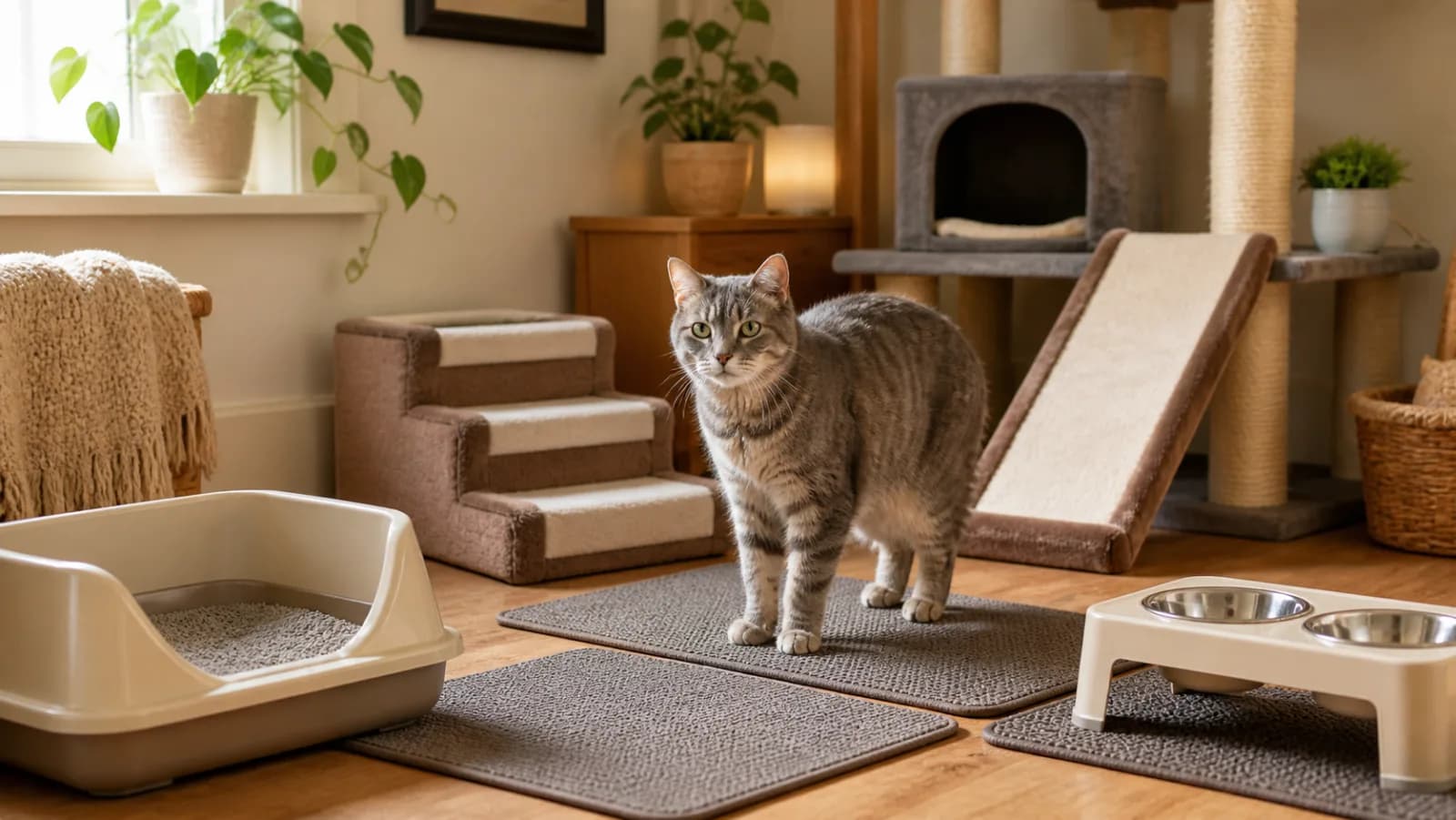
Senior Cat Accessibility Setup: Low-Entry Litter, Raised Bowls, Steps & Traction

Cats & Dogs
Pet Insurance and Wellness Plans for U.S. Owners: How to Compare Without Getting Burned

Cats & Dogs
At-Home Pet Health Monitoring Tools (2026): Smart Scales, Activity Trackers, and Smart Litter for Senior Pets

Cats & Dogs