Cats & Dogs
Managing a Diabetic Dog or Cat at Home: The Gear That Makes It Sustainable
Diabetes management does not usually fail on the medicine — the vet sets the insulin and the diet, and that part is handled. It fails on the logistics: testing that never becomes a habit, single readings a vet cannot use, a housemate cat eating the diabetic cat's measured meal, a low blood sugar nobody recognized in time. So this is a gear protocol for the newly-diagnosed, overwhelmed owner, staged as a routine: a species-calibrated meter (a human meter underestimates pet blood glucose, per Zoetis), the strips that are the real forever cost, a way to log a curve instead of spot readings, feeding segregation for multi-pet homes, weight-trend tracking, sharps safety, and knowing the signs of a low. Every clinical claim is attributed; the gear is logistics, never treatment.
By Nick Miles · Updated August 7, 2026 · 13 min read
PetPalHQ is reader-supported. We may earn a commission from qualifying Amazon purchases at no extra cost to you.
Evidence at a Glance
AlphaTrak 3 Pet Blood Glucose Monitoring Kit
The species-calibrated meter that anchors the routine — Zoetis documents that AlphaTrak 3 is calibrated specifically for the blood of dogs and cats, which matters because a human meter, per Zoetis, underestimates a pet's blood glucose and produces inaccurate results. The 8-piece kit ships with the meter, lancing device, starter strips, and control solution to start testing day one.
Sources: Zoetis Petcare, AlphaTrak (Amazon product listing)
Verified Jul 16, 2026
AlphaTrak 3 Test Strips (50 Count)
The recurring reality made concrete — the meter is the cheap part and these AlphaTrak-only strips are the forever cost, consumed at whatever testing frequency your vet sets. Peer-reviewed evidence is that a glucose curve, not a single reading, is what a vet needs to see, so more strips buy more curves and better data.
Sources: AlphaTrak (Amazon product listing), PMC10832679 (home monitoring of the diabetic cat)
Verified Jul 16, 2026
Sure Petcare SureFeed Microchip Pet Feeder
The multi-pet segregation tier — it opens only for the registered pet's implanted microchip or RFID collar tag and keeps the sealed bowl covered from other pets, so the diabetic pet's measured meal stays the diabetic pet's meal. Per Felinediabetes.com it is access-control, not a timed dispenser; it sells for $199.00.
Sources: Felinediabetes.com, Sure Petcare (Amazon product listing)
Verified Jul 16, 2026
Our Picks
AlphaTrak
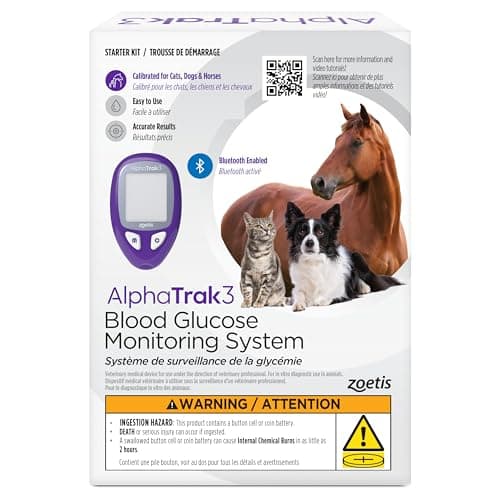
AlphaTrak 3, 8-Piece Pet Blood Glucose Monitoring Kit
9.1 / 10
- Calibrated for dog and cat blood, per Zoetis
- 8-piece kit: meter, lancing device, starter strips, lancets, control solution, case
- Reads a 0.3 microliter blood sample over a 20 to 750 mg/dL range, per the listing
- Pairs with the AlphaTrak app to graph and share readings with your vet
$76.09
Current price · checked Sep 8, 2026
Advocate PetTest
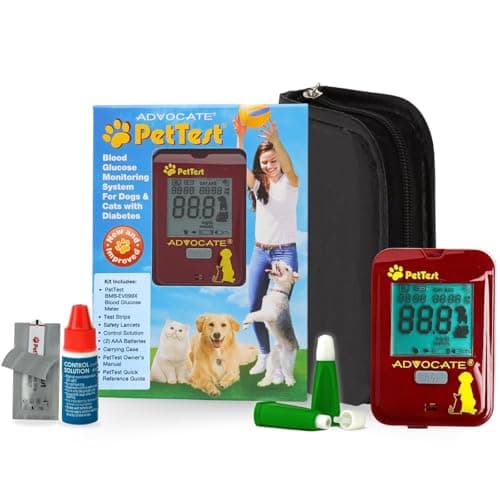
PetTest Beginner Glucose Monitoring Kit for Dogs & Cats
8.4 / 10
- Beginner kit sized for a first-time owner, per the listing
- Includes 25 foil-wrapped strips and 25 safety lancets to start
- Reads a 0.3 microliter sample in about five seconds, per the listing
- No coding required; one-button operation
$49.99
Current price · checked Sep 8, 2026
EasyTouch
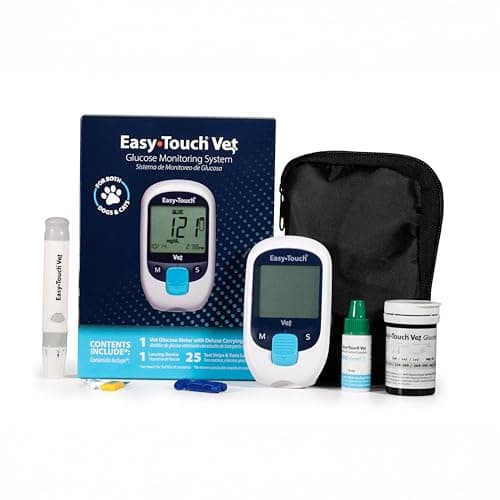
EasyTouch Pet Glucose Monitoring System Starter Kit
8.2 / 10
- Lowest verified meter price here, per the listing
- Complete starter kit: meter, 25 strips, 25 twist lancets, control solution
- Dual code chips for dog and cat blood, per the listing
- Needs a 0.7 microliter sample; supports alternate-site testing
$36.99
Current price · checked Sep 8, 2026
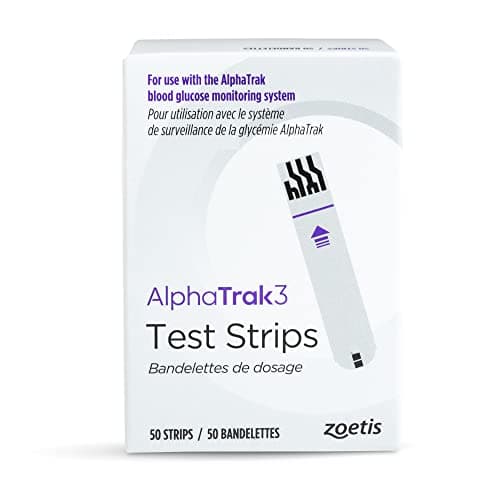
AlphaTrak
AlphaTrak 3 Test Strips, 50 Count
8.8 / 10
- AlphaTrak-3-specific — the recurring line of the whole routine
- 50 strips per box, one strip per reading
- Reads a 0.3 microliter droplet, per the listing
- Consumed at whatever testing frequency your vet sets
$52.95
Current price · checked Sep 8, 2026
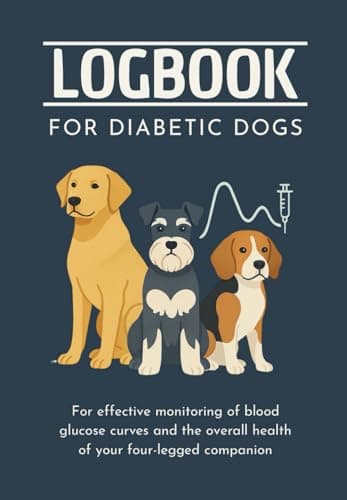
Majosta
Dog Diabetes Logbook — Blood Glucose Tracker & Health Journal
8.3 / 10
- Paper log with time, reading, insulin, food, and notes columns
- Built to record a curve, not scattered single readings
- Species-agnostic — the same columns work for a cat
- A low-tech alternative to the AlphaTrak app
$5.98
Current price · checked Sep 8, 2026
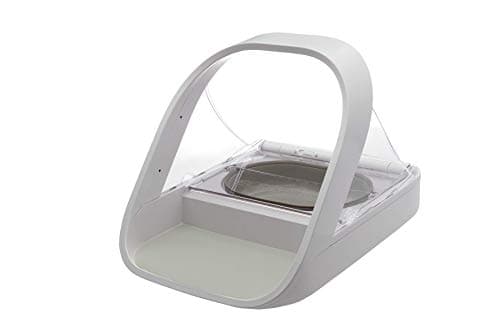
Sure Petcare
Sure Petcare SureFeed Microchip Pet Feeder
8.9 / 10
- Opens only for the registered pet's microchip or RFID collar tag
- Sealed lid keeps the measured meal covered from other pets
- Suits cats and small dogs on wet or dry food
- Access-control, not a timed dispenser, per Felinediabetes.com
$199.00
Current price · checked Sep 26, 2026
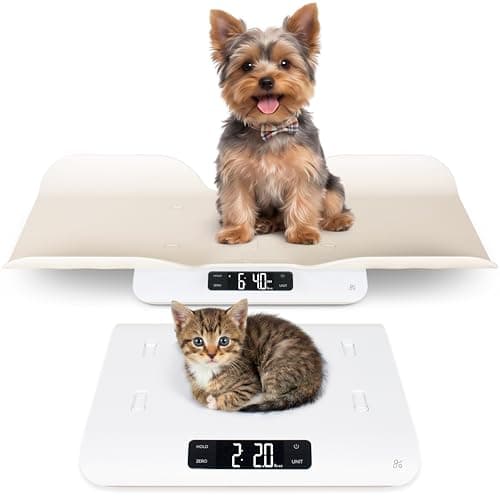
Greater Goods
Greater Goods Digital Pet Scale for Cats & Dogs
8.5 / 10
- 0.1 lb precision, 44 lb capacity, per Greater Goods
- Wiggle-proof stabilization with a lock indicator
- Tare function to zero out a bowl or blanket
- Covers kittens and puppies through small and medium dogs
$58.99
Current price · checked Sep 8, 2026
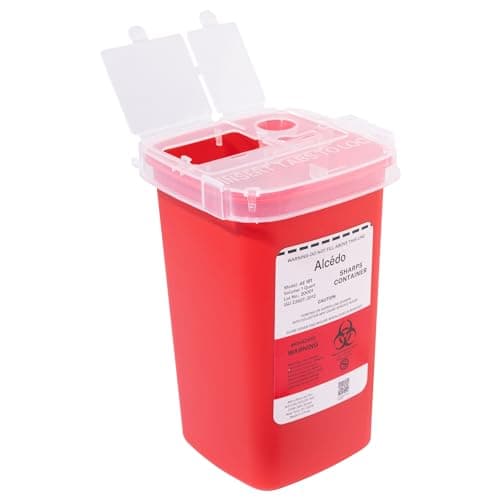
Alcedo
Alcedo Sharps Container for Home Use, 1 Quart
8.6 / 10
- Puncture-resistant 1-quart container, per the listing
- Clear window shows the fill level at a glance
- Temporary closure plus a final snap-lock for disposal
- Meets OSHA and EPA requirements, per the listing
$6.95
Current price · checked Sep 8, 2026
The Short Answer
Managing a diabetic dog or cat at home comes down to a repeatable routine your veterinarian directs — and the right gear to sustain it. The failure point for a newly-diagnosed owner is rarely the medicine, which the vet handles. It is almost always the logistics. The gear, staged as a routine: a species-calibrated glucometer, because human meters are calibrated for human blood and, per Zoetis, underestimate a pet's blood glucose. Test strips, the real recurring cost — the meter is a $37-to-$76 one-time buy, but you are really signing up for the strips, about $60 a box, used at whatever frequency your vet sets. A logbook or app, so you bring your vet a glucose curve — a series of readings across the day — instead of scattered single numbers. In a multi-pet home, a microchip feeder to keep other pets out of the diabetic pet's measured meal. A scale to catch weight trends. A sharps container for used lancets. And, most important, knowing the signs of a hypoglycemia emergency and what to do. Your veterinarian sets the insulin and the diet. This guide covers the gear that makes their plan sustainable, not the plan itself.
Every product on this list has been scored against the PetPal Gear Score, a weighted composite of expert consensus, observed effectiveness, animal safety, long-term durability, and value. Review method: Editorial synthesis of veterinary authorities, peer-reviewed home-monitoring studies, and manufacturer documentation — the gear protocol for a vet-managed case, never medical advice. The species-calibration fact is attributed to Zoetis Petcare; the owner-compliance and glucose-curve evidence to two peer-reviewed studies (PMC10832679 and PMC10832720); the current-year shift away from in-hospital curves to home data and continuous glucose monitoring to the 2026 AAHA Diabetes Management Guidelines for Cats as reported by AVMA News; the hypoglycemia first-aid to Merck Animal Health; and the microchip-feeder access-control role to Felinediabetes.com. Product specifications come from each item's Amazon listing. No first-hand product testing — PetPalHQ does not run a testing lab, and insulin, dose, testing frequency, and diet are decisions only your veterinarian makes.. Synthesized from 6+ expert sources.
A diabetes diagnosis rarely fails on the medicine. Your veterinarian sets the insulin and the diet, and that plan — the clinical part everyone fears — is handled the moment you leave the clinic. What actually decides whether management works is quieter and entirely logistical: whether the testing becomes a habit, whether you bring the vet a curve instead of a scatter of single readings, whether the housemate cat stops eating the diabetic cat's measured meal, and whether someone in the house would recognize a low blood sugar in time. This guide sells that layer — the gear that makes a vet's plan livable — and nothing else.
So it is a protocol, not a roundup, staged as the routine itself: a species-calibrated meter, the strips that are the real recurring cost, a way to log a curve, feeding segregation for multi-pet homes, weight-trend tracking, sharps safety, and knowing the signs of an emergency. Every clinical claim here is attributed to a named authority rather than asserted in our own voice, because the gear is logistics and the medicine is the vet's. PetPalHQ does not run a testing lab, and the Sustainable-Routine Score rates whether a routine sticks, not any clinical outcome.
One boundary holds throughout. Your veterinarian sets the diet and insulin plan — this guide covers the gear that makes their plan sustainable, not the plan itself. There is no food advice on this page, and none belongs here; where diet comes up, it points back to the vet.
Head-to-Head Comparison
| Feature | AlphaTrak 3, 8-Piece Pet Blood Glucose Monitoring Kit | PetTest Beginner Glucose Monitoring Kit for Dogs & Cats | EasyTouch Pet Glucose Monitoring System Starter Kit | AlphaTrak 3 Test Strips, 50 Count | Dog Diabetes Logbook — Blood Glucose Tracker & Health Journal | Sure Petcare SureFeed Microchip Pet Feeder | Greater Goods Digital Pet Scale for Cats & Dogs | Alcedo Sharps Container for Home Use, 1 Quart |
|---|---|---|---|---|---|---|---|---|
| Protocol stage | Stage 1 — meter | Stage 1 — meter (alt) | Stage 1 — meter (alt) | Stage 2 — strips | Stage 3 — logging | Stage 4 — feeding | Stage 5 — weight | Stage 6 — sharps |
| Role | Species-calibrated primary | Budget kit | Cheapest starter | The recurring cost | The logging habit | Multi-pet segregation | Weight-trend tracking | Sharps disposal |
| Fit label | Species-Accurate Fit | Budget-Entry Fit | Lowest-Barrier Fit | Recurring-Cost Fit | Curve-Logging Fit | Measured-Meal Fit | Weight-Trend Fit | Sharps-Safe Fit |
| Sustainable-Routine Score | 9.1 | 8.4 | 8.2 | 8.8 | 8.3 | 8.9 | 8.5 | 8.6 |
| Check price | Amazon | Amazon | Amazon | Amazon | Amazon | Amazon | Amazon | Amazon |
$76.09
Current price · checked Sep 8, 2026
- Calibrated for dog and cat blood, per Zoetis
- 8-piece kit: meter, lancing device, starter strips, lancets, control solution, case
- Reads a 0.3 microliter blood sample over a 20 to 750 mg/dL range, per the listing
- Pairs with the AlphaTrak app to graph and share readings with your vet
- Runs on two CR2032 batteries, included
Start with the meter, and start with the one built for the patient. A pet glucometer exists because of a calibration difference most owners never hear about until diagnosis. Zoetis documents that AlphaTrak 3 "is calibrated specifically for the blood of dogs and cats," while "human meters do not account for this difference and underestimate the level of glucose in the blood, producing inaccurate results." That is the whole case for a species-calibrated meter. A human drugstore meter will read a pet low — and a low reading on a diabetic pet is exactly the number you cannot afford to get wrong.
Where it sits in the routine: this is the anchor, the tool every later step feeds off. The 8-piece kit is deliberately a start-today bundle — the listing details the meter, two batteries, 25 starter strips, a lancing device with 30 lancets, control solution, and a carrying case, so nothing else is required to take a first reading. It reads a 0.3 microliter drop across a 20 to 750 mg/dL range, and it pairs with the AlphaTrak app so the readings graph themselves and travel to your vet without transcription. It is the premium fork because species accuracy is the one place this guide does not suggest economizing.
The honest trade is up-front cost. A human meter is cheaper because it is made in the millions for people; the pet calibration is why this one runs more, and it is the reason to pay it. What the meter does not do is treat anything — it produces the numbers, and your veterinarian decides what they mean and what to do about them. Buy accuracy first; the strips it consumes are the next line item, and they are the one that never stops.
What We Love
- Species-calibrated for dogs and cats, per Zoetis — the accuracy default
- Complete start-today kit; nothing else needed for a first reading
- App logging graphs readings and shares them with the vet
- Wide 20 to 750 mg/dL range on a tiny 0.3 microliter sample
What Could Be Better
- Costs more up front than a human meter
- Locked to AlphaTrak-specific strips (the recurring cost below)
- Produces data only — it does not treat; the vet directs everything clinical
The Verdict
Buy the species-calibrated meter first. Per Zoetis, a human meter underestimates a pet's blood glucose, and a wrong low is the reading that matters most. The 8-piece kit lets you test the day it arrives. It is the priciest meter here for one honest reason — the dog-and-cat calibration — and it is the one place accuracy is worth paying for.
Sources
- Zoetis Petcare (AlphaTrak 3 for Pet Owners): AlphaTrak 3 is calibrated specifically for the blood of dogs and cats; human meters do not account for this difference and underestimate the level of glucose in the blood, producing inaccurate results
- AlphaTrak (Amazon product listing, 8-Piece Pet Blood Glucose Monitoring Kit): kit includes the AlphaTrak 3 meter, two CR2032 batteries, 25 test strips, a lancing device and 30 lancets, a mini screwdriver, carrying case, diabetes diary, user's guide, and control solution; blood glucose testing range 20 to 750 mg/dL; 0.3 microliter sample
$49.99
Current price · checked Sep 8, 2026
- Beginner kit sized for a first-time owner, per the listing
- Includes 25 foil-wrapped strips and 25 safety lancets to start
- Reads a 0.3 microliter sample in about five seconds, per the listing
- No coding required; one-button operation
- Uses its own PetTest strips as the recurring consumable
Not every newly-diagnosed household wants to spend seventy-six dollars on day one, and the middle fork exists for that reader. PetTest packages a beginner kit explicitly for first-time owners — the listing bundles a meter, 25 individually foil-wrapped strips, 25 safety lancets, control solution, and a carrying case, with five-second results and no coding to fumble. The foil-wrapping is a small practical touch that keeps strips dry until the moment of use, which is the kind of thing that quietly helps a nervous first week go smoothly.
Where it sits in the routine: it is the mid-budget entry to the same Stage 1 job, getting a real reading into a logbook instead of guessing. The evidence that an ordinary owner can do this is not marketing — one peer-reviewed study of home monitoring found that "many owners are able and willing to perform home monitoring of blood glucose concentrations in diabetic cats," and a beginner-friendly kit lowers the barrier to joining them. Its recurring cost is its own PetTest strip, a separate reorder from the AlphaTrak line.
The honest caveat is the same one that governs every budget meter here: confirm your veterinarian is comfortable reading numbers from whatever brand you log. The species-calibrated AlphaTrak is the accuracy default; PetTest is a reasonable entry when cost is the deciding factor, provided your vet signs off on the source of the data they will be acting on.
What We Love
- Lower entry price than the species-calibrated kit
- First-timer bundle with strips and safety lancets included
- Foil-wrapped strips resist humidity, per the listing
- Fast, no-coding operation for an anxious first week
What Could Be Better
- Uses its own PetTest strips — not AlphaTrak strips
- Confirm your vet is comfortable with the brand's readings
- Still just a data tool — the vet directs all treatment
The Verdict
Choose PetTest as the mid-budget fork when the AlphaTrak kit's price is the sticking point but you still want a proper beginner bundle. It ships with strips and safety lancets and reads fast with no coding. Its recurring line is its own strip, and — as with any non-AlphaTrak meter — confirm your vet is comfortable acting on its readings.
Sources
- Advocate PetTest (Amazon product listing, Beginner Glucose Monitoring Kit): beginner kit for dogs and cats; includes a meter with batteries, 25 individually foil-wrapped test strips, 25 safety lancets, control solution, carrying case; 0.3 microliter sample; no coding required; results in about five seconds; companion app
- PMC10832679 (Home monitoring of the diabetic cat, peer-reviewed): many owners are able and willing to perform home monitoring of blood glucose concentrations in diabetic cats
$36.99
Current price · checked Sep 8, 2026
- Lowest verified meter price here, per the listing
- Complete starter kit: meter, 25 strips, 25 twist lancets, control solution
- Dual code chips for dog and cat blood, per the listing
- Needs a 0.7 microliter sample; supports alternate-site testing
- Uses its own EasyTouch strips and 26G twist lancets as reorders
The lowest-barrier fork answers one blunt question: what is the cheapest way to actually start testing? At $36.99 the EasyTouch starter kit is the least expensive verified entry, and it does not cut the essentials — the listing lists a meter, 25 strips, 25 twist lancets, control solution, a battery, and a case, plus dual code chips the maker calibrates separately for dogs and cats. For an owner who is stalling on cost and therefore not testing at all, the honest math is that the cheapest kit that gets you started beats the perfect kit still sitting in a cart.
Where it sits in the routine: same Stage 1 job, lowest price of entry. It is worth naming the hard part of week one plainly, because a peer-reviewed home-monitoring study did — the early hurdles owners reported were "producing negative pressure with the lancing device (11 of 12), producing a blood drop (10 of 12), and restraining the cat (8 of 12)." Those are technique problems, not gear problems, and they ease with practice on any meter, including this one. When the strips run low, the reorder is the EasyTouch strip and its 26G twist lancets.
The caveat carries through from the budget fork, only firmer: the species-calibrated AlphaTrak is the accuracy default, and a $37 kit is the low-barrier way in, not the way to economize on numbers your vet is treating from. Confirm your veterinarian is comfortable with the brand before it becomes your logbook's source of truth.
What We Love
- Cheapest verified way to start testing at home
- Complete starter bundle with strips, lancets, and control solution
- Dual dog and cat code chips, per the listing
- Alternate-site testing option for a squeamish first week
What Could Be Better
- Largest sample requirement here at 0.7 microliter
- Uses its own EasyTouch strips and lancets
- Lowest barrier, not the accuracy default — confirm your vet is comfortable
The Verdict
Reach for EasyTouch when the deciding factor is getting started at the lowest possible price, because a $37 kit you actually use beats a better one you never buy. It includes strips, lancets, and dual dog-and-cat chips. The early struggles are technique, not the meter — and, as always, the species-calibrated AlphaTrak is the accuracy default your vet may prefer.
Sources
- EasyTouch (Amazon product listing, Pet Glucose Monitoring System Starter Kit): starter kit includes meter, lancing device, 25 test strips, 25 28G twist lancets, control solution, battery, and case; dual code chips, one for dogs and one for cats; 0.7 microliter sample; supports alternate-site testing
- PMC10832720 (Home-monitoring of blood glucose in cats, 4-month evaluation, peer-reviewed): problems encountered initially included producing negative pressure with the lancing device (11 of 12), producing a blood drop (10 of 12), and restraining the cat (8 of 12)
$52.95
Current price · checked Sep 8, 2026
- AlphaTrak-3-specific — the recurring line of the whole routine
- 50 strips per box, one strip per reading
- Reads a 0.3 microliter droplet, per the listing
- Consumed at whatever testing frequency your vet sets
- More strips mean more curves, which the evidence calls necessary
Here is the money-fact nobody tells a newly-diagnosed owner at the counter: the meter is the cheap part. A glucometer is a $37-to-$76 one-time buy, but you are really signing up for the strips, which run about $60 a box and get consumed at whatever testing frequency your veterinarian sets. Budget for the strips, not the meter. This box — 50 AlphaTrak-3 strips, one per reading — is the line item that recurs, and naming it out loud is more useful to a first-week owner than any spec on the meter itself.
Where it sits in the routine: Stage 2, the recurring reality, and it is the pick that makes the routine's true cost honest. There is a reason to buy strips rather than ration them, and it is clinical rather than commercial: a peer-reviewed study is explicit that glucose curves "are necessary to assess time and duration of insulin effects, the nadir and degree of fluctuation in blood glucose concentration." A curve is a series of readings, and a series means strips. How many, and how often, is a number this guide will not invent — your vet sets it, and more strips simply mean the ability to follow that instruction.
Two honest limits. First, these are AlphaTrak-only; they do not fit a PetTest or EasyTouch meter, whose recurring strip is that brand's own reorder. Second, strips have a partner consumable — lancets, one per poke, cheap but consumed, so the true forever cost is strips plus lancets together (the EasyTouch 26G twist lancet pack is a common reorder). Treat this line, not the meter, as the ongoing spend.
What We Love
- Makes the meter-cheap, strips-forever reality concrete
- 0.3 microliter droplet keeps each poke small
- More strips enable the curves the evidence calls necessary
- 50 to a box, one clean strip per reading
What Could Be Better
- AlphaTrak-only — will not fit PetTest or EasyTouch meters
- The genuine recurring cost of the whole routine
- Lancets are a separate consumable on top of strips
The Verdict
This box is the honest heart of the budget: the meter is a one-time buy, the strips are forever, and at about $60 a box they are the real spend. Buy them rather than ration them, because a curve — a series of readings the evidence calls necessary — is what your vet needs. Note they are AlphaTrak-only, and that lancets ride alongside as the second consumable.
Sources
- AlphaTrak (Amazon product listing, AlphaTrak 3 Test Strips 50 Count): 50-count test strips for use only with the AlphaTrak 3 blood glucose monitoring system; quick results with a 0.3 microliter droplet of blood
- PMC10832679 (Home monitoring of the diabetic cat, peer-reviewed): blood glucose curves are necessary to assess time and duration of insulin effects, the nadir and degree of fluctuation in blood glucose concentration
$5.98
Current price · checked Sep 8, 2026
- Paper log with time, reading, insulin, food, and notes columns
- Built to record a curve, not scattered single readings
- Species-agnostic — the same columns work for a cat
- A low-tech alternative to the AlphaTrak app
- Under six dollars, per the listing
A reading you do not write down is a reading your vet cannot use. The single habit that turns testing into management is logging — capturing time, glucose reading, insulin, food, and notes in one place so a pattern can emerge. This paper journal exists for exactly that, and its near-nothing price is the point: the barrier to the logging habit should be zero. For an owner who would rather hold a pen than open an app, it puts the curve on paper where the vet can read it at a glance.
Where it sits in the routine: Stage 3, the logging habit, and it is where home monitoring earns its keep over a hospital visit. A four-month peer-reviewed study found that "in 38% of cases, treatment based on hospital curves would have been different from that based on home curves" — home data, logged over time, is not a lesser substitute for a stressed in-clinic reading; it can be the more accurate picture. That is a strong argument for keeping the log faithfully, because the value is in the series, not any one entry.
One honesty note the cover invites: it says "Dog," but a paper glucose log is species-agnostic — the columns for time, reading, insulin, food, and notes are identical for a cat, so any daily glucose logbook works, or log in the AlphaTrak app instead. Do not read the label as meaning a cat needs a different book. The habit is what matters; the medium is whatever you will actually keep.
What We Love
- Costs almost nothing yet builds the highest-value habit
- Structured for a curve, not one-off readings
- Works for a cat despite the 'Dog' label
- Paper option for owners who will not keep an app
What Could Be Better
- The 'Dog' title misleads at a glance — it is species-agnostic
- No alerts or graphs the way the app has
- Only as useful as the discipline of filling it in
The Verdict
A five-dollar notebook is the cheapest high-value item in the whole routine, because a logged curve is what a vet acts on — in one study, home and hospital curves would have pointed to different treatment in more than a third of cases. Ignore the 'Dog' on the cover — the columns are identical for a cat. Use this or the AlphaTrak app; just keep the log faithfully.
Sources
- Majosta (Amazon product listing, Dog Diabetes Logbook): paper blood-glucose tracker and health journal with columns for insulin records, blood sugar curves, and daily health tracking
- PMC10832720 (Home-monitoring of blood glucose in cats, 4-month evaluation, peer-reviewed): in 38% of cases, treatment based on hospital curves would have been different from that based on home curves
$199.00
Current price · checked Sep 26, 2026
- Opens only for the registered pet's microchip or RFID collar tag
- Sealed lid keeps the measured meal covered from other pets
- Suits cats and small dogs on wet or dry food
- Access-control, not a timed dispenser, per Felinediabetes.com
- Sells for $199.00
In a multi-pet home, the diabetic pet's measured meal has a way of disappearing into the wrong animal. That is the specific problem this tier solves, and it is a real one: Felinediabetes.com describes the microchip feeder plainly — "only the correct cat gets access to the food," and "in multi-cat homes this stops food theft." The SureFeed opens for the registered pet's implanted microchip or RFID collar tag and seals its bowl shut when that pet steps away, so the measured portion stays with the pet it was measured for.
Where it sits in the routine: Stage 4, feeding segregation. Its honest boundary is the whole reason to describe it carefully. It is access-control, not meal-scheduling — Felinediabetes.com is explicit that "most models are not a timed feeder… it is an access-control feeder." It keeps other pets out. It does not dispense on the insulin clock. If your vet's plan needs meals delivered on a schedule to line up with insulin, that is a different tool. Our best automatic pet feeders guide covers timed dispensing, and our multi-pet feeder guide is the deeper comparison for microchip access. Your veterinarian sets the diet and the timing; this device only protects the portion.
Two honest limits. Name the price straight: it sells for $199.00. And it is one bowl per unit, so a home with two pets who both need protection may need two feeders. As segregation gear it is the reason the diabetic pet eats what the vet prescribed and nothing extra — a genuinely useful job, kept honestly separate from the medicine.
What We Love
- Reads implanted microchips natively, no reliable collar needed
- Sealed bowl keeps the measured meal safe from housemates
- Wet- and dry-food compatible, per the listing
- Solves the multi-pet food-theft problem the vet's portioning depends on
What Could Be Better
- Access-control only — it does not time meals to insulin
- One bowl per unit; a second protected pet needs a second feeder
- The priciest item here at $199.00
The Verdict
In a multi-pet home this is the tier that keeps the diabetic pet's measured meal away from the housemate who would steal it, opening only for the right microchip. Read its boundary honestly — per Felinediabetes.com it is access-control, not a timed dispenser, so route insulin-timed dispensing to the automatic-feeder guide. It sells for $199.00, and single-pet homes can skip it.
Sources
- Felinediabetes.com (Microchip Feeders for Diabetic Cats): only the correct cat gets access to the food; in multi-cat homes this stops food theft; most models are not a timed feeder — it is an access-control feeder
- Sure Petcare (Amazon product listing, SureFeed Microchip Pet Feeder MPF001): sells for $199.00; opens for the assigned pet's implanted microchip or RFID collar tag and closes when it moves away; sealed lip keeps wet or dry food covered from other pets; suitable for both wet and dry food
$58.99
Current price · checked Sep 8, 2026
- 0.1 lb precision, 44 lb capacity, per Greater Goods
- Wiggle-proof stabilization with a lock indicator
- Tare function to zero out a bowl or blanket
- Covers kittens and puppies through small and medium dogs
- Reads at home, where a nervous cat weighs calmer than at the clinic
Weight is a diabetes signal that hides in plain sight, and catching its trend is easier at home than at the once-a-year scale. Greater Goods documents 0.1 lb precision on a 44 lb capacity, with wiggle-proof stabilization that shows a paw icon when a squirming animal's reading finally locks — the practical difference between a number you trust and one you guess. A tare function zeroes out a bowl or blanket, and the 44 lb ceiling covers kittens and puppies up through small and medium dogs.
Where it sits in the routine: Stage 5, trend tracking, and its value is the pattern, not the single figure. Unexplained weight loss or gain is the kind of change a vet wants flagged, and a home scale weighed on a schedule catches drift a stressed clinic visit can miss. There is a reason home data reads truer here — a peer-reviewed study notes that "cats in particular are sensitive to stress caused by an unfamiliar environment or veterinary manipulation," and a stressed cat is not a calm one on the vet's scale. For the depth on tracking, our weight-management tools guide carries this scale and the wider roster.
The honest scope: a scale reports weight, it does not interpret it. A trend line is information for your veterinarian, not a diagnosis you make at home — what a loss or gain means, and what to change, is theirs to decide. As trend-tracking gear it turns an abstract worry into a chartable number, which is exactly the kind of data a diabetes routine runs on.
What We Love
- 0.1 lb precision catches small trend changes, per Greater Goods
- Stabilizes a wiggling pet and signals a locked reading
- Home weighing avoids the clinic-stress distortion
- Tare and wide capacity fit real households
What Could Be Better
- Reports weight only — the vet interprets the trend
- 44 lb ceiling suits small and medium pets, not large dogs
- Needs a schedule kept to be a trend, not a snapshot
The Verdict
A home scale turns weight from a once-a-year clinic number into a trend you can chart, and unexplained loss or gain is exactly what a vet wants flagged. Greater Goods reads to 0.1 lb and steadies a wiggling pet. Remember its scope — it reports the number; your veterinarian reads the trend and decides what it means.
Sources
- Greater Goods (Amazon product listing, Digital Pet Scale): 0.1 lb precision and 44 lb capacity; wiggle-proof stabilization with a paw icon when the reading locks; tare function; 24 by 11.5 inch removable tray; covers kittens and puppies through small and medium animals
- PMC10832679 (Home monitoring of the diabetic cat, peer-reviewed): cats in particular are sensitive to stress caused by an unfamiliar environment or veterinary manipulation
$6.95
Current price · checked Sep 8, 2026
- Puncture-resistant 1-quart container, per the listing
- Clear window shows the fill level at a glance
- Temporary closure plus a final snap-lock for disposal
- Meets OSHA and EPA requirements, per the listing
- Right home size for used lancets and insulin needles
Every poke and every injection leaves a sharp behind, and where those go is not an afterthought. Used lancets and insulin needles are biohazard sharps, and safe disposal is a genuine part of the routine rather than an optional accessory. Alcedo documents a 1-quart puncture- and impact-resistant container with a clear window to watch the fill level, a temporary closure for daily use, and a final snap-lock for disposal — and notes it meets OSHA and EPA requirements for local biohazard waste collection.
Where it sits in the routine: Stage 6, safety logistics, the quiet rung that keeps a household running a needle routine from improvising with a coffee can. The 1-quart size is the honest fit for a home going through lancets and needles daily — small enough to sit by the testing kit, large enough to last, and clearly the right single-pack for a first-burst buyer over a stock-up multipack. Check your municipality's rule for handing in a full sharps container, since collection varies locally.
There is no clinical claim to make here, which is the point — this is pure logistics done safely. It does not test, treat, or track anything. It simply closes the loop the strips and lancets open, so the used sharps end up contained and disposed of the way biohazard waste should be, instead of loose in a kitchen bin.
What We Love
- Cheap, correct answer to a real safety task
- Puncture-resistant with a secure final lock, per the listing
- Fill-level window prevents overfilling
- Right 1-quart size for a home testing routine
What Could Be Better
- Replace it once full — an ongoing, if tiny, cost
- Local rules govern how a full container is collected
- Pure logistics — it does nothing clinical
The Verdict
Used lancets and needles are sharps, and a $7 container is the safe, non-optional way to handle them. Alcedo's 1-quart puncture-resistant box has a fill window and a final snap-lock and meets OSHA and EPA requirements. It is the least glamorous rung and a necessary one — just check your local rule for handing in a full container.
Sources
- Alcedo (Amazon product listing, Sharps Container for Home Use 1 Quart): 1-quart puncture- and impact-resistant biohazard container for needle and syringe disposal; clear fill-level view; temporary and final snap-lock closure; meets OSHA and EPA requirements for local biohazard waste collection
How We Score
Formula
PetPal Sustainable-Routine Score = (Routine Adherence × 0.35) + (Data Quality × 0.25) + (Feeding Control × 0.20) + (Safety Readiness × 0.20)
Score Factors
- Routine Adherence · 35%
- Whether the gear makes the vet's testing and feeding schedule sustainable day after day — the highest weight, because the persona failure is being diagnosed and then unable to keep the routine going. Grounded on owner-compliance evidence from two peer-reviewed studies (many owners are able and willing; 65% used home monitoring regularly; 80% generated curves over four months). Per-product fit labels reflect this: the AlphaTrak kit is a Species-Accurate Fit, the budget meters a Budget-Entry and Lowest-Barrier Fit, the strips a Recurring-Cost Fit. This factor rates whether the routine sticks, never a clinical outcome.
- Data Quality · 25%
- Whether the gear produces numbers a vet can act on — a species-calibrated meter (human meters underestimate pet blood glucose, per Zoetis) and logged curves the evidence calls necessary, not scattered single readings. The logbook earns its Curve-Logging Fit here; the meters earn their calibration. No accuracy comparison between meter brands is asserted — only the attributed human-versus-pet calibration difference.
- Feeding Control · 20%
- In a multi-pet home, whether the diabetic pet's measured portion stays the diabetic pet's portion — the SureFeed's Measured-Meal Fit, grounded on Felinediabetes.com's access-control (not timed) description. Single-pet homes score this on portion consistency alone and can skip the feeder tier. Your veterinarian sets the diet; this factor rates only the logistics of protecting the portion, never food choice.
- Safety Readiness · 20%
- Whether the household is ready for the safety edges of the routine — knowing the hypoglycemia signs and the conscious-versus-unconscious response (attributed to Merck Animal Health) and disposing of used lancets and needles as the sharps they are. The scores are a composite of veterinary-authority synthesis and manufacturer documentation — PetPalHQ does not run a testing lab, and the score rates logistics sustainability, not clinical results.
| Rank | Product | Score |
|---|---|---|
| #1 | AlphaTrak AlphaTrak 3, 8-Piece Pet Blood Glucose Monitoring Kit | 9.1 |
| #2 | Sure Petcare Sure Petcare SureFeed Microchip Pet Feeder | 8.9 |
| #3 | AlphaTrak AlphaTrak 3 Test Strips, 50 Count | 8.8 |
| #4 | Alcedo Alcedo Sharps Container for Home Use, 1 Quart | 8.6 |
| #5 | Greater Goods Greater Goods Digital Pet Scale for Cats & Dogs | 8.5 |
| #6 | Advocate PetTest PetTest Beginner Glucose Monitoring Kit for Dogs & Cats | 8.4 |
| #7 | Majosta Dog Diabetes Logbook — Blood Glucose Tracker & Health Journal | 8.3 |
| #8 | EasyTouch EasyTouch Pet Glucose Monitoring System Starter Kit | 8.2 |
When NOT to Buy
See the vet before you buy anything, if the diagnosis is not confirmed. None of this gear treats or diagnoses diabetes — a meter is logistics for a case a veterinarian has already confirmed and is managing. If your pet has not been diagnosed, buying a glucometer is premature; book the exam first, and let the diagnosis, not the anxiety, decide what you need.
Remember what the gear is not. A meter, a feeder, or a scale does not lower blood sugar. Insulin, dose, testing frequency, and diet are your veterinarian's decisions — this guide covers the gear that makes their plan sustainable, not the plan itself, and self-managing the medicine is exactly the failure this page is built to avoid. The gear produces data and protects the routine; the vet directs the treatment.
A few readers can spend less. Single-pet homes can skip the microchip feeder entirely — segregation solves a multi-pet problem, and skipping it saves $199.00. If your veterinarian has you on a continuous glucose monitor such as a FreeStyle Libre, that vet-directed, off-label path is your monitoring method. You may not need a spot glucometer at the same cadence — follow the vet's kit rather than double-buying against it. And do not chase the cheapest meter if your vet distrusts its readings. The budget kits are fine entries, but the species-calibrated AlphaTrak is the accuracy default, so confirm your vet is comfortable with whatever brand your logbook draws from. Re-confirm current prices before buying, since sellers and prices move.
Frequently Asked Questions
- Can I use my own (human) glucometer on my pet?
- No — it will misread. Zoetis documents that human meters "are created and calibrated for measuring the concentration of glucose in a human's blood," and "do not account for this difference and underestimate the level of glucose in the blood, producing inaccurate results." An underestimated reading on a diabetic pet is the dangerous direction to be wrong in, which is the entire reason a species-calibrated meter like the AlphaTrak 3 exists. Use one built for dog and cat blood, and let the vet act on numbers you can trust.
- How often should I test?
- Your veterinarian sets the frequency — this guide will not put a number on it. What the vet is after is not a single reading but a glucose curve, a series of readings across the day. A curve is what shows "time and duration of insulin effects, the nadir and degree of fluctuation in blood glucose concentration" (PMC10832679). Current-year guidance has also moved away from routine in-hospital curves toward home data. AVMA News, reporting on the 2026 AAHA Diabetes Management Guidelines for Cats, notes that "routine in-hospital blood glucose curves are no longer recommended for diabetic monitoring in cats." Follow your vet's cadence, and buy enough strips to keep it.
- What exactly is a glucose curve?
- It is a series of glucose readings taken across the day on your vet's schedule, rather than one isolated number. Plotted together, the readings show the low point (the nadir), how long the insulin is working, and how much the level swings — which one peer-reviewed study describes as "necessary to assess time and duration of insulin effects, the nadir and degree of fluctuation." A single reading cannot show any of that. Capture the series in a paper logbook or the AlphaTrak app so the shape, not just the dots, reaches your vet.
- Can an ordinary owner really do the testing at home?
- Most can, and the evidence is specific rather than reassuring-sounding. One four-month study found that "80% (12 of 15) of the owners of diabetic cats were willing and able to perform a series of BGCs at home" (PMC10832720). A separate cohort reported that "many owners are able and willing," with "65%" home-monitoring regularly (PMC10832679). The genuinely hard parts early on are mechanical — the same study lists "producing negative pressure with the lancing device," "producing a blood drop," and "restraining the cat" — and they ease with practice. Home data is not a consolation prize, either: in that study, "in 38% of cases, treatment based on hospital curves would have been different from that based on home curves."
- We have several pets — how do I keep the others out of the diabetic one's food, and does a microchip feeder time the meal to the insulin?
- A microchip feeder solves the theft problem but not the timing one, and the distinction matters. The SureFeed opens "only for the registered pet's implanted microchip or RFID collar tag" so "only the correct cat gets access to the food" and "in multi-cat homes this stops food theft" (Felinediabetes.com). But it is access-control, not a timed dispenser — Felinediabetes.com is explicit that "most models are not a timed feeder… it is an access-control feeder." So it protects the measured portion; it does not deliver a meal on the insulin clock. If your vet's plan needs scheduled dispensing, that is our automatic-feeder guide's territory. Your veterinarian sets the diet and timing; the feeder only keeps the right food with the right pet.
- What are the signs of low blood sugar, and what do I do?
- This is the one emergency worth memorizing before you need it, and the first aid is Merck Animal Health's, not ours. Signs can include "Weakness, Depression, Behavioral changes, Muscle twitching, Vocalization, Anxiety, Seizures, Coma, Death." If your pet is conscious, Merck's guidance is to "rub a tablespoon of corn syrup on his or her gums," then "when your pet is able to swallow, feed him or her a usual meal and contact your veterinarian." If your pet is unconscious or having a seizure, "this is a medical emergency. Contact your veterinarian right away." Never pour the solution into the mouth — Merck warns of the inhalation risk. Always call your vet; this is first aid, not treatment.
- Do I need a cat-specific logbook if I have a cat?
- No. A paper glucose log is species-agnostic — the columns for time, reading, insulin, food, and notes are identical whether the patient is a cat or a dog, so the "Dog" on a logbook cover does not mean a cat needs a different one. Any daily glucose logbook works, or log in the AlphaTrak app. The habit of recording the series is what has value; the format is whatever you will actually keep up.
- What about a continuous glucose monitor like the FreeStyle Libre?
- Some vets prefer one, and it is worth naming honestly. AVMA News, reporting on the 2026 AAHA Diabetes Management Guidelines for Cats, notes that feline monitoring "may include clinical signs, continuous glucose monitoring, and at-home glucose data." A CGM is vet-directed and used off-label in pets, though — so if your veterinarian recommends it, follow their kit and their instructions. This guide does not sell or link a CGM; it is mentioned once, here, because an honest at-home-monitoring page should acknowledge it exists.
Bottom Line
Buy the species-calibrated meter first: the AlphaTrak 3 kit reads dog and cat blood accurately where a human meter underestimates it (per Zoetis), and its 8-piece bundle lets you test the day it arrives.
Budget for the strips, not the meter: AlphaTrak 3 strips are about $60 a box and are the real recurring cost, consumed at whatever frequency your vet sets — more strips mean more of the curves the evidence calls necessary.
Pick a cheaper meter only to get started: PetTest at $49.99 and EasyTouch at $36.99 are honest budget entries with their own strips — fine, provided your vet is comfortable reading their numbers.
Keep the log faithfully: a $5.98 logbook (or the AlphaTrak app) captures the curve a vet acts on — in one study, hospital curves would have changed the treatment decision in 38% of cases compared with home curves — ignore the 'Dog' label, the columns fit a cat.
Protect the portion in multi-pet homes: the SureFeed opens only for the right microchip so the diabetic pet's measured meal is not stolen — it is access-control, not a timed dispenser, and sells for $199.00.
Track the weight trend and dispose of sharps safely: the Greater Goods scale charts the weight changes a vet wants flagged, and a $6.95 Alcedo sharps container handles used lancets and needles the way biohazard waste should be.
Know the emergency: learn the hypoglycemia signs and the response — conscious means corn syrup on the gums then call the vet; unconscious or seizing is an emergency; never pour into the mouth (Merck Animal Health) — because the vet sets the medicine, and the gear only makes their plan livable.
Sources & Methodology
Methodology
PetPal Sustainable-Routine Score = (Routine Adherence × 0.35) + (Data Quality × 0.25) + (Feeding Control × 0.20) + (Safety Readiness × 0.20)
Expert review sources
- Zoetis Petcare — AlphaTrak 3 is calibrated for dog and cat blood, and human meters underestimate a pet's blood glucose (the species-calibration education hook)
- Home monitoring of the diabetic cat, peer-reviewed (PMC10832679) — many owners are able and willing to home-monitor; 65% did so regularly; glucose curves are necessary to assess insulin effect, nadir, and fluctuation; cats are stress-sensitive at the clinic
- Home-monitoring of blood glucose in cats, 4-month evaluation, peer-reviewed (PMC10832720) — 80% (12 of 15) of owners generated curves over four months; the early hurdles are lancing and the blood drop; in 38% of cases home curves would have changed treatment versus hospital curves
- 2026 AAHA Diabetes Management Guidelines for Cats, via AVMA News reporting — routine in-hospital curves are no longer recommended; stress hyperglycemia complicates hospital readings; monitoring may include clinical signs, continuous glucose monitoring, and at-home glucose data
- Merck Animal Health — hypoglycemia signs and first aid: corn syrup on the gums for a conscious pet then call the vet; an unconscious or seizing pet is an emergency; never pour solution into the mouth
- Felinediabetes.com — the microchip feeder is access-control, not a timed dispenser; only the correct pet gets the food, which stops food theft in multi-cat homes
Community sources
- FDMB / Felinediabetes.com owner threads on microchip feeders — the multi-cat diabetic persona buys a microchip feeder specifically to stop the non-diabetic pet from eating the diabetic pet's measured food (paraphrased persona evidence, not verbatim)
Prices and specs verified July 16, 2026.
About the author
Nick Miles is the chief editor of PetPalHQ. This is a gear protocol for a newly-diagnosed, vet-managed case — not medical advice. Every clinical claim is attributed to a named authority: the species-calibration fact to Zoetis, the home-monitoring and glucose-curve evidence to two peer-reviewed studies, the current-year monitoring shift to the 2026 AAHA guidelines via AVMA News, the hypoglycemia first-aid to Merck Animal Health, and the microchip-feeder role to Felinediabetes.com. Product specifications come from each item's Amazon listing. PetPalHQ does not run a testing lab, and insulin, dose, testing frequency, and diet are decisions only your veterinarian makes.
PetPalHQ is a participant in the Amazon Services LLC Associates Program. We may earn commissions from qualifying purchases — at no extra cost to you.
More Guides
Cats & Dogs
Best Smart Pet Feeders for Multi-Pet Homes: Microchip, RFID, and Wet-Food Picks (2026)
Cats & Dogs
Best Automatic Pet Feeders for Busy Families (2026)
Cats & Dogs
Best Weight-Management Tools for Overweight Dogs and Cats (2026)
Cats & Dogs
Senior Pet Mobility and Preventive Care: 2026 Guide for Aging Dogs and Cats
Cats & Dogs