Reptile
How to Set Up a Leopard Gecko Habitat (Tank, Heating, Three Hides)
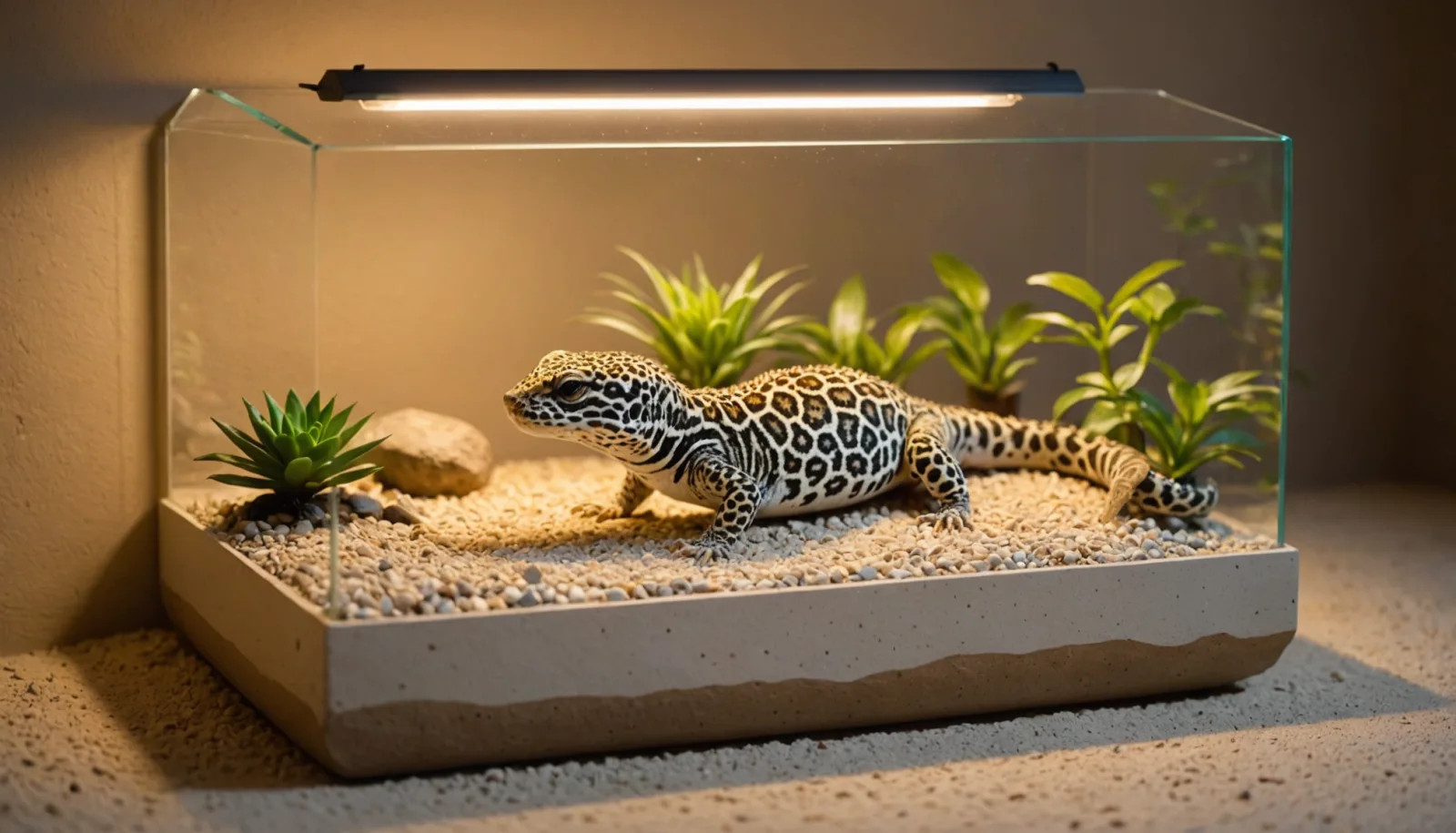
This is not a head-to-head reptile-gear ranking and it is not a desert-dragon build — it is a husbandry-first setup for one animal: the leopard gecko, a crepuscular, ground-dwelling lizard whose care is a floor plan rather than a light show. The picks below are the kit in the order the gecko's needs demand — a footprint-first tank, overhead heat that warms a basking surface, the thermostat that keeps that surface from burning, gauges to read the gradient, three hides for security and shedding, and calcium to dust the feeders — not eight products ranked against one another. If the picture in your head is a bright basking lamp over a bare tank with one open cave, read the caveats first, because the two things that most often go wrong for a leopard gecko are a heat plan set by feel and a missing moist hide.
By Nick Miles · Updated September 30, 2026 · 12 min read
PetPalHQ is reader-supported. We may earn a commission from qualifying Amazon purchases at no extra cost to you.
Evidence at a Glance
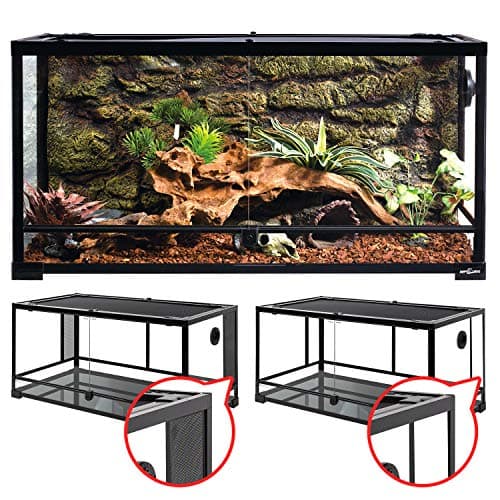
REPTI ZOO 50 Gallon Reptile Glass Terrarium
The floor — a 36 by 18 by 17.75 inch, 50 gallon front-opening glass terrarium that gives a ground-dwelling leopard gecko the floor space it lives on, with convertible side mesh and side glass to tune ventilation and humidity.
Sources: REPTI ZOO manufacturer documentation, Leopard-gecko keeper community consensus on enclosure size, Published reptile-care standards on ground-dweller floor space
Verified Jul 16, 2026
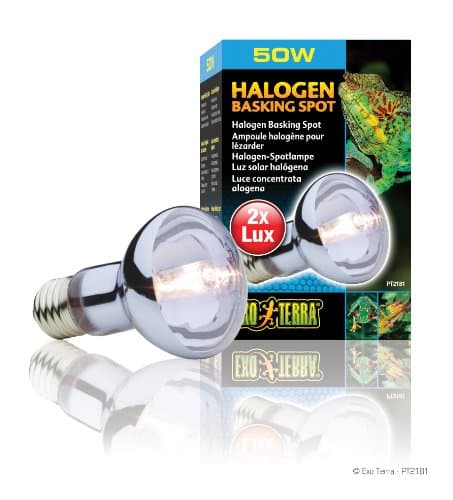
Exo Terra Sun Glo Halogen Basking Spot Lamp, 50W
Belly heat from above — a broad-spectrum halogen that warms a flat basking surface a leopard gecko presses its belly to, the modern replacement for the old under-tank heat mat, always run through a thermostat.
Sources: Exo Terra manufacturer documentation, Leopard-gecko keeper consensus on overhead heating, Published reptile-care standards on thermal gradients
Verified Jul 16, 2026
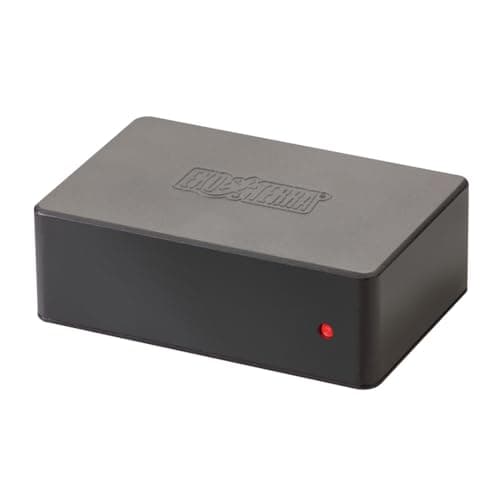
Exo Terra Dimming and Pulse Proportional Thermostat
The safety cap — a proportional dimming thermostat with a waterproof probe that holds the basking surface at a safe target, because an unregulated heat source is how a leopard gecko gets burned.
Sources: Exo Terra manufacturer documentation, Leopard-gecko keeper consensus on thermostats, Published reptile-care standards on burn prevention
Verified Jul 16, 2026
Our Picks
REPTI ZOO
REPTI ZOO 50 Gallon Reptile Glass Terrarium
8.6 / 10
- 36 by 18 by 17.75 inch, 50 gallon glass terrarium per REPTI ZOO
- Convertible side mesh and side glass to tune humidity and airflow
- Double hinge front door with screen ventilation
- All glass upgraded to tempered glass
$217.99
Current price · checked Sep 8, 2026
Exo Terra
Exo Terra Sun Glo Halogen Basking Spot Lamp, 50W
8.5 / 10
- 50 watt broad-spectrum daylight halogen per Exo Terra
- Enhanced infrared for deeper heat penetration into a surface
- Warms a basking stone from above rather than acting as a bright basking bulb
- Delivers belly heat through a warmed surface a gecko lies on
$19.85
Current price · checked Sep 8, 2026
Exo Terra
Exo Terra Dimming and Pulse Proportional Thermostat
8.4 / 10
- Proportional dimming and pulse control per Exo Terra
- Accurate control from 64 to 100 degrees Fahrenheit
- Waterproof remote temperature probe
- Drives heating devices up to 300 watts
$82.99
Current price · checked Sep 8, 2026
Govee
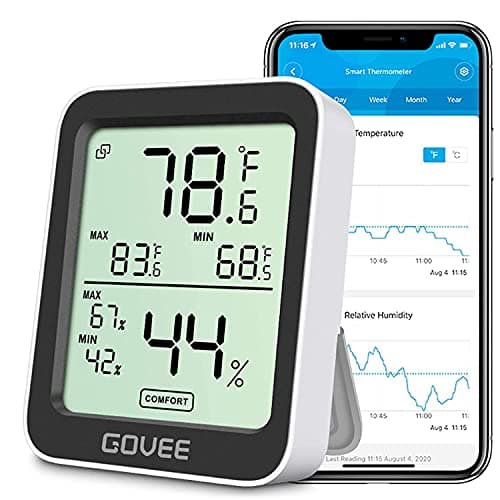
Govee Indoor Hygrometer Thermometer H5075
8.3 / 10
- Reads temperature and humidity together per Govee
- Swiss-made smart sensor
- Bluetooth app logs temperature and humidity graphs
- Cheap enough to run one at each end of the tank
$12.99
Current price · checked Sep 8, 2026
Exo Terra
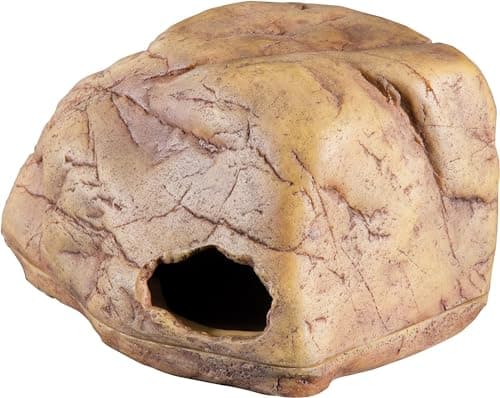
Exo Terra Gecko Cave, Medium
8.2 / 10
- Naturalistic resin gecko cave per Exo Terra
- Holds damp moss to raise humidity in one spot
- The moist hide of the warm, cool, and moist trio
- Cooler microclimate that eases a shed
$28.99
Current price · checked Sep 8, 2026
Gondola Geckos
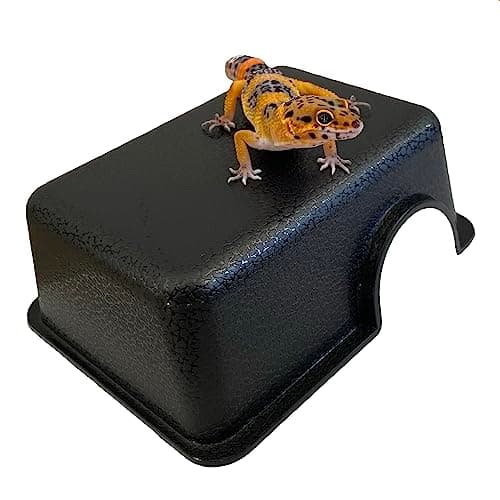
Gondola Geckos Plastic Reptile Hide Box
8.1 / 10
- Matte-plastic hide box per Gondola Geckos
- Snug, enclosed space a gecko feels safe in
- One goes on the warm end, one on the cool end
- Small and juvenile sizing — size up for a grown adult
$6.94
Current price · checked Sep 8, 2026
Zoo Med
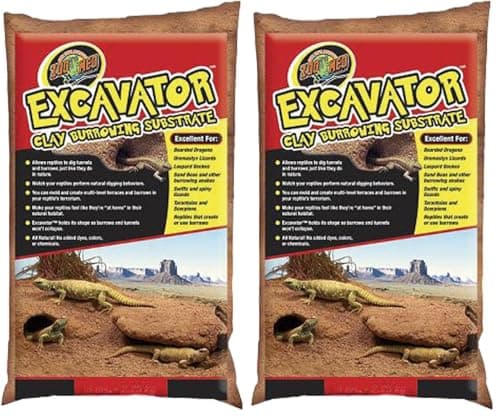
Zoo Med Excavator Clay Burrowing Substrate, 10 lb (2-Pack)
8.0 / 10
- All-natural burrowing clay per Zoo Med
- Holds its shape so tunnels do not collapse
- No dyes or chemicals
- Sold as a 10 pound, two-pack
$27.98
Current price · checked Sep 8, 2026
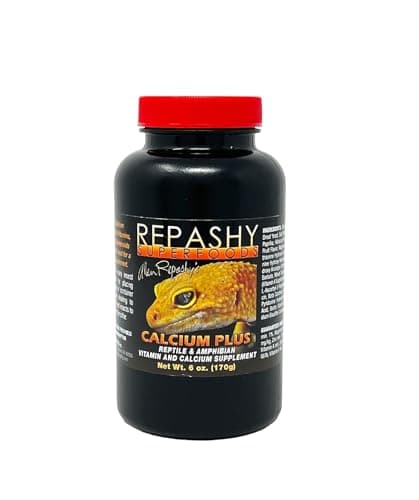
Repashy
Repashy Calcium Plus, 6 oz
7.9 / 10
- All-in-one calcium and D3 insect dust per Repashy
- Calcium listed at a minimum of 20 percent
- Vitamin D at a minimum of 20,000 IU per pound
- Dusts the feeder insects, not the gecko
$17.99
Current price · checked Sep 8, 2026
The Short Answer
Build a leopard gecko habitat as a floor plan, not a light show. Start with a footprint-first tank — a REPTI ZOO 36-inch glass terrarium gives a ground-dwelling gecko the floor space that matters more than height. Heat comes from above and lands on a surface: an Exo Terra halogen warms a basking stone for belly heat, and an Exo Terra proportional thermostat is non-negotiable because an unregulated bulb can cook the animal. A Govee hygrometer proves the warm end and the cool end rather than leaving them to guesswork. Then come the three hides a leopard gecko lives by — a warm hide and a cool hide from a Gondola Geckos hide box, plus an Exo Terra moist cave the gecko sheds in — because a stuck shed on the toes is the classic sign of a missing moist hide. Paper towel is the honest starter floor and never calcium sand, and Repashy Calcium Plus dusts the live insects so the diet covers what no lamp provides. Set up and dial in the empty tank first, then add the gecko.
Every product on this list has been scored against the PetPal Gear Score, a weighted composite of expert consensus, observed effectiveness, animal safety, long-term durability, and value. Review method: Editorial synthesis of leopard-gecko husbandry guidance — leopard-gecko keeper community consensus, published reptile-care standards on thermal gradients, hides, shedding, substrate, and supplementation, and manufacturer documentation from REPTI ZOO, Exo Terra, Govee, Gondola Geckos, and Repashy. Community consensus from gecko-keeping forums was included as consensus, not quotation. No first-hand product testing — PetPalHQ does not run a testing lab.. Synthesized from 6+ expert sources.
A leopard gecko habitat is a floor plan, not a light show: belly heat concentrated on one end, a temperature that falls away to a cool end, and three hides — warm, cool, and moist — spaced across that gradient so the animal can choose its spot hour by hour. Everything in this build follows from what a leopard gecko actually is: a crepuscular, ground-dwelling lizard that is active at dawn and dusk, spends the bright hours tucked away, and takes its warmth from a surface it lies on rather than from a bright lamp it suns beneath. Get that one idea right and the kit almost designs itself; get it wrong and no amount of expensive gear rescues the setup.
That is also why a leopard gecko's kit looks nothing like a desert dragon's. A bearded dragon is diurnal and needs strong UVB and a tall basking zone it climbs toward the light to use; a leopard gecko needs neither the height nor, in the view of many keepers, the UVB, because it warms its belly on a stone and takes its vitamin D from a dusted diet. Reading a leopard gecko as if it were a small desert dragon is the fastest way to overbuild the lighting and underbuild the thing that matters — the horizontal spread of temperature and the hiding it can trust.
So the picks below are sequenced the way the animal's needs stack, and the empty tank is built and dialed in before the gecko ever arrives. The floor comes first, because a ground-dweller needs length to move through a gradient. Then heat from above, landing on a basking surface and held steady by a thermostat, because an unregulated bulb burns. Then the gauges that turn an assumed gradient into a measured one, then the trio of hides that give the gecko security at the warm end, the cool end, and a humid pocket to shed in. A substrate chosen honestly and a calcium supplement for the insects finish the build — and where a claim rests on a maker's documentation or on keeper consensus, that is named rather than asserted, because PetPalHQ does not run a testing lab. Assembled this way, the kit runs to roughly $392, which sits in the optimal band of the independently corroborated beginner range.
Two debates run through the whole hobby, and this guide takes an honest position on both rather than hiding them. UVB is optional and genuinely argued — presented in full below, with the low-strength path linked rather than forced into a pick. Substrate is the community's most heated topic — paper towel and tile are the safe floors a beginner starts on, a naturalistic clay is an adult graduation, and calcium sand is the one thing nearly everyone agrees to keep out of the tank. One rule sits above all of it and never bends: a leopard gecko is solitary, and it is housed alone.
Head-to-Head Comparison
| Feature | REPTI ZOO 50 Gallon Reptile Glass Terrarium | Exo Terra Sun Glo Halogen Basking Spot Lamp, 50W | Exo Terra Dimming and Pulse Proportional Thermostat | Govee Indoor Hygrometer Thermometer H5075 | Exo Terra Gecko Cave, Medium | Gondola Geckos Plastic Reptile Hide Box | Zoo Med Excavator Clay Burrowing Substrate, 10 lb (2-Pack) | Repashy Calcium Plus, 6 oz |
|---|---|---|---|---|---|---|---|---|
| Role in the floor plan | The floor | Belly heat from above | The safety cap | Proof of the gradient | The moist hide | Warm + cool hides | The dig layer | Feeding support |
| What it does | Ground-dweller floor space | Warms a basking surface | Holds the surface temperature safe | Reads heat and humidity | Shed insurance | Security at both ends | Naturalistic burrowing floor | Calcium and D3 dusting |
| When it goes in | First, empty | With the tank | With the heat, always | To verify everything | Once the layout is set | Once the gradient is set | Adult, advanced tier | Feeding time |
| PetPal Leo-Readiness Score | 8.6 | 8.5 | 8.4 | 8.3 | 8.2 | 8.1 | 8.0 | 7.9 |
| Ongoing cost after purchase | Larger décor as it grows | Replacement bulbs | Occasional replacement | Cross-checking accuracy | Fresh moss | Bigger hides as it grows | Periodic substrate changes | Refills every few months |
| Check price | Amazon | Amazon | Amazon | Amazon | Amazon | Amazon | Amazon | Amazon |
$217.99
Current price · checked Sep 8, 2026
- 36 by 18 by 17.75 inch, 50 gallon glass terrarium per REPTI ZOO
- Convertible side mesh and side glass to tune humidity and airflow
- Double hinge front door with screen ventilation
- All glass upgraded to tempered glass
- Front-opening access that suits a low, ground-level gecko
A leopard gecko lives its whole life on the floor, so the enclosure is chosen for footprint before anything else. REPTI ZOO documents that 50-gallon glass terrarium with convertible side mesh and side glass, a double hinge front door, and tempered glass throughout. The length is the point: a gecko needs room to move between a warm end and a cool end, and a long tank spreads that gradient out where a tall one only stacks empty air above the animal.
Where it fits the setup: this is the shell, set up and dialed in before the gecko arrives, and every other pick installs into it. The convertible side panels earn their place for a leopard gecko specifically — swapping mesh for glass on the cool end lets a keeper hold a little humidity near the moist hide without turning the whole tank into a swamp, and the front door means reaching in low, at eye level with a floor animal, rather than looming down through a top like a predator. Floor length also decides how far apart the hides can sit, which is what makes the temperature gradient usable.
The honest caveats are about material, size, and what a bare tank still is not. Glass sheds heat and humidity faster than PVC, so the heating and the panel choices below have to do a little more work to hold a stable warm surface. A tank this long needs the shelf or stand space to match, and a hatchling can feel exposed in a large empty box until it is furnished with cover. And an empty terrarium is only a container until the heat, the gauges, the hides, and the floor go in — which is the rest of this build. To weigh full kits and tank sizes against one another, our roundup of the best leopard gecko tank kits lays out the options.
What We Love
- Long footprint spreads the warm-to-cool gradient a gecko needs
- Convertible side panels tune humidity near the moist hide
- Front door lets a keeper reach in low, not loom over the animal
- Tempered glass throughout
What Could Be Better
- Glass loses heat and humidity faster than a PVC enclosure
- A long tank needs the stand and shelf space to match
- Only a shell until heat, hides, and substrate are added
The Verdict
Choose the tank by floor length, not tank volume, because a leopard gecko thermoregulates by walking a gradient it can only have if the tank is long. The convertible panels and low front door suit a floor animal, and glass simply asks the heating to work a little harder. Treat it as the shell the whole build installs into.
Sources
- REPTI ZOO (Amazon product listing, 50 Gallon Reptile Glass Terrarium): a 36 by 18 by 17.75 inch, 50 gallon glass reptile terrarium with 2-in-1 side meshes and side glasses switched easily, a double hinge door with screen ventilation, and all glasses upgraded to tempered glass
- Leopard-gecko husbandry consensus (the gecko-keeping community and published reptile care standards): a 36-inch footprint in the 40-gallon-breeder class or larger is the modern adult floor for a ground-dwelling gecko, because a leopard gecko lives on the floor and floor area matters more than height
$19.85
Current price · checked Sep 8, 2026
- 50 watt broad-spectrum daylight halogen per Exo Terra
- Enhanced infrared for deeper heat penetration into a surface
- Warms a basking stone from above rather than acting as a bright basking bulb
- Delivers belly heat through a warmed surface a gecko lies on
- Runs through a thermostat, never straight to the socket
Heat for a leopard gecko comes from above and lands on a surface, not from a bright bulb the animal basks under. The Exo Terra halogen does exactly that — Exo Terra documents a broad-spectrum daylight halogen with enhanced infrared for superior heat penetration, and pointed at a flat stone it warms the surface a gecko presses its belly to. That belly contact is how the animal actually takes in heat to digest, which is why the keeping consensus has shifted toward an overhead halogen warming a basking rock and away from the under-tank mat that used to be the default.
Where it fits the setup: this establishes the warm end of the gradient, over the warm hide, aiming for a basking surface around 88 to 92 degrees while the far end of the tank stays in the low 70s and drops into the high 60s at night. A leopard gecko is crepuscular, not a sun-basking desert lizard, so the goal is a warm patch it visits to digest rather than a bright hot zone it lives under — the halogen is a heater with useful daylight, not a display light. The cool end is left cool on purpose, because a gecko with nowhere to retreat cannot regulate itself.
The honest caveats are about regulation, coverage, and lifespan. A halogen must never run straight to the wall — an unregulated bulb can climb well past a safe surface temperature and burn the animal, which is what the next pick exists to prevent. It warms one end only, so it is positioned to build a gradient rather than heat the whole tank, and every temperature is read at the surface the gecko touches rather than assumed from the wattage. Bulbs also dim as they age and get replaced on a schedule. To size a fixture and bulb to a specific tank, our roundup of the best reptile heat lamps and basking fixtures compares the options.
What We Love
- Warms a basking surface for the belly contact a gecko digests on
- Overhead halogen is the modern replacement for an under-tank mat
- Broad-spectrum daylight doubles as day lighting
- Inexpensive
What Could Be Better
- Never run without a thermostat — burn risk
- Warms one end only; the cool end must stay cool
- Bulbs dim with age and are replaced on a schedule
The Verdict
Warm a stone from above and let the gecko take belly heat off the surface, rather than lighting a bright basking zone it does not need. Point it at one end to build a gradient, keep the far end cool, and treat the wattage as a starting point the gauges and thermostat correct. It never runs unregulated.
Sources
- Exo Terra (Amazon product listing, Sun Glo Halogen Basking Spot Lamp): a 50 watt broad-spectrum daylight halogen basking spot lamp with enhanced infrared levels that deliver superior heat penetration
- Leopard-gecko husbandry consensus (the gecko-keeping community and published reptile care standards): modern leopard-gecko keeping warms a flat basking stone from above with an overhead halogen on a thermostat, replacing the old under-tank-mat default, aiming for a warm-side surface around 88 to 92 degrees and a cool side in the low 70s
$82.99
Current price · checked Sep 8, 2026
- Proportional dimming and pulse control per Exo Terra
- Accurate control from 64 to 100 degrees Fahrenheit
- Waterproof remote temperature probe
- Drives heating devices up to 300 watts
- Caps the basking surface so it cannot overheat
Nothing in the setup matters more for safety than the device that sits between the heat source and the wall. The Exo Terra thermostat is that device — Exo Terra documents a proportional dimming and pulse unit that controls temperatures accurately from 64 to 100 degrees with a waterproof remote probe. A proportional thermostat does not simply switch the heater on and off; it dims it toward a target, so the basking surface holds steady instead of spiking and crashing, which is exactly the stability a small animal lying on that surface needs.
Where it fits the setup: the probe goes at the warm surface the gecko actually contacts, and the thermostat holds that surface at target and eases the halogen down as it approaches. The gradient the lamp creates is only safe because this caps it — without it, the same bulb that warms a stone to a comfortable basking temperature can, on a hot day or in a warm room, climb to a surface that burns. It is the one pick that protects the animal from the rest of the equipment, which is why it is treated as mandatory rather than optional.
The honest caveats are about placement, cost, and trust. The reading is only as good as where the probe sits, so it goes at the exact surface the gecko uses and is verified against a separate gauge rather than trusted blind. A proportional thermostat adds meaningful cost to a first build, which tempts beginners to skip it — the wrong economy, because a burn is far more expensive than the controller. And a thermostat can fail, so the enclosure is watched rather than set and forgotten. To compare control types and safety features, our roundup of the best reptile thermostats lays them out.
What We Love
- Proportional dimming holds a steady basking surface
- Waterproof probe reads the exact surface the gecko contacts
- Caps a heat source that would otherwise burn the animal
- Handles the full range of reptile heaters
What Could Be Better
- Reading is only as good as where the probe sits
- Adds meaningful cost to a first setup
- Can fail — the surface is still spot-checked with a separate gauge
The Verdict
Never run the heat without a proportional thermostat, and set its probe at the warm surface the gecko lies on. A dimming controller holds that surface steady where a cheap on-off unit lets it swing, and the cost is small against a burn. It is the pick that makes every other heat choice safe.
Sources
- Exo Terra (Amazon product listing, Dimming and Pulse Proportional Thermostat): a dimming and pulse proportional thermostat that controls terrarium temperatures very accurately from 64 to 100 degrees Fahrenheit, with a waterproof remote temperature probe, controlling heating devices up to 300 watts including heat mats, cables, ceramic heaters, and incandescent heat bulbs
- Leopard-gecko husbandry consensus (the gecko-keeping community and published reptile care standards): an unregulated heat source can burn a reptile, and a proportional dimming thermostat is the difference between a controlled gradient and a hazard
$12.99
Current price · checked Sep 8, 2026
- Reads temperature and humidity together per Govee
- Swiss-made smart sensor
- Bluetooth app logs temperature and humidity graphs
- Cheap enough to run one at each end of the tank
- Turns an assumed gradient into a measured one
A gradient that is never measured is a gradient the keeper only assumes exists. The Govee gauge is the cheapest insurance against that assumption — Govee documents a smart hygrometer and thermometer with a Swiss-made sensor and an app that graphs temperature and humidity over time. For a leopard gecko, whose whole health rides on a warm end, a cool end, and moderate humidity, a logged reading is what turns "it feels about right" into a number a keeper can act on.
Where it fits the setup: this verifies everything else. Ideally a gauge reads the cool end while the thermostat probe holds the warm surface, so the actual spread across the tank is confirmed rather than hoped for, and the humidity near the moist hide is watched during a shed. Because the unit logs over time, it catches the slow drifts a spot-check misses — a warm end creeping up as a summer room heats, or humidity sliding low enough to threaten a clean shed. At this price a keeper can run more than one and read both ends at once.
The honest caveats are about accuracy, placement, and what a gauge does not do. Inexpensive sensors drift, so they are cross-checked against each other or against a probe thermometer at the surfaces that matter. One unit in one corner does not describe a whole gradient — reading both ends beats trusting a single number. And a gauge only reports: it tells a keeper the warm end is too hot or the air too dry, and then the thermostat, the panels, and the moist hide are what get adjusted. To compare digital probes and dial gauges, our roundup of the best reptile hygrometers and thermometers covers the field.
What We Love
- Reads temperature and humidity in one logged gauge
- Confirms the gradient rather than leaving it to feel
- Cheap enough to place one at each end
- App history catches slow drifts a spot-check misses
What Could Be Better
- Inexpensive sensors drift and are cross-checked
- One unit in one spot does not capture a whole gradient
- Measures the problem but does not fix it
The Verdict
Measure the gradient instead of assuming it — read the cool end and the warm surface, and watch humidity near the moist hide during a shed. Cheap sensors drift, so cross-check them, and remember the gauge only reports while the thermostat and hides do the adjusting. It is the least expensive way to keep the setup honest.
Sources
- Govee (Amazon product listing, Indoor Hygrometer Thermometer H5075): a smart indoor hygrometer and thermometer with a Swiss-made sensor and a Bluetooth app for remote monitoring and temperature and humidity graphs
- Leopard-gecko husbandry consensus (the gecko-keeping community and published reptile care standards): a gecko's gradient and humidity are managed by measurement rather than by feel, and inexpensive gauges are cross-checked against one another rather than trusted blindly
$28.99
Current price · checked Sep 8, 2026
- Naturalistic resin gecko cave per Exo Terra
- Holds damp moss to raise humidity in one spot
- The moist hide of the warm, cool, and moist trio
- Cooler microclimate that eases a shed
- Enclosed retreat that lowers a gecko's stress
Of the three hides a leopard gecko needs, the moist one does a job the other two cannot. Exo Terra documents a naturalistic gecko cave that provides a secure retreat and a cooler microclimate, and notes that adding forest or Sphagnum moss inside brings the moisture that helps a resting animal settle. Packed with damp moss, it becomes the humid pocket a gecko ducks into when it is ready to shed — a locally moist spot inside an otherwise moderate-humidity tank.
Where it fits the setup: this is placed on the cooler half, near a gauge, and kept lightly damp so the gecko has somewhere to soften its skin before a shed. A leopard gecko sheds in one piece when it can, and the moist hide is what makes that possible; without it, skin dries and sticks, and the thin skin on the toes and around the eyes is where a bad shed does real harm. This single hide is the difference between a routine shed and a keeper soaking a gecko to rescue a trapped toe.
The honest caveats are about hygiene, size, and scope. Damp moss left too long grows mold, so it is refreshed regularly rather than topped up forever. A cave too large does not give the enclosed, walls-on-all-sides feeling a gecko wants, so it is matched to the animal. And a moist hide is one of three — it covers shedding, but the warm and cool hides that follow cover the security a gecko needs at each end of the gradient, and all three work together.
What We Love
- Turns into the moist hide that prevents stuck sheds
- Holds damp moss to raise humidity in one controlled spot
- Cooler, enclosed retreat lowers stress
- Naturalistic resin is easy to wipe down
What Could Be Better
- Damp moss grows mold if it is not refreshed
- A cave too large does not give the enclosed feeling
- One hide of three, not the whole security picture
The Verdict
Pack this with damp moss and make it the moist hide on the cool side, because a leopard gecko needs a humid pocket to shed cleanly. It is the single item that most often prevents a stuck shed on the toes and eye caps. Refresh the moss so it stays a hide and not a mold farm.
Sources
- Exo Terra (Amazon product listing, Gecko Cave PT2865): a naturalistic gecko cave that provides a secure hiding place and a cooler microclimate, where placing forest moss or Sphagnum moss in the cave adds moisture, and where having a resting place helps alleviate stress
- Leopard-gecko husbandry consensus (the gecko-keeping community and published reptile care standards): the three-hides rule gives a leopard gecko a warm hide, a cool hide, and a moist hide it sheds in, and stuck shed on the toes and eye caps is the classic sign of a missing moist hide
$6.94
Current price · checked Sep 8, 2026
- Matte-plastic hide box per Gondola Geckos
- Snug, enclosed space a gecko feels safe in
- One goes on the warm end, one on the cool end
- Small and juvenile sizing — size up for a grown adult
- Cheap enough to buy a matched pair
Two more hides finish the trio, one at each end of the temperature range. The Gondola Geckos box is a plain, snug matte-plastic hide — the maker describes a comfortable, secure space for a small reptile to rest and hide — and the reason to buy two is the core of leopard-gecko security: the animal wants an enclosed place to tuck into whether it is choosing warmth or choosing cool. A warm hide sits over the basking surface, a cool hide sits at the far end, and the gecko moves between them as its temperature needs change.
Where it fits the setup: these go in once the gradient is set, so each hide can be placed at a known temperature rather than guessed. The matched pair matters. If only the warm end has a snug hide and the cool end is open, a gecko is forced to trade security for temperature and will often sit too warm because it feels safer there — one of the quiet husbandry mistakes that stresses an animal without an obvious cause. Two snug hides at both ends remove that trade entirely, which is why a bare tank with a single open cave is a classic beginner setup that quietly shortchanges the gecko.
The honest caveats are about sizing, looks, and cost. These are sized for small and juvenile geckos, so a full-grown adult needs the larger equivalent — a hide should be snug enough that the gecko touches the walls, not cavernous. The plain plastic look does not please every keeper, and because security calls for a matched pair, the low unit price is really doubled. None of that changes the job: a warm hide and a cool hide, both snug, are non-negotiable alongside the moist one.
What We Love
- A matched pair covers warm-end and cool-end security
- Snug fit gives the enclosed feeling a gecko wants
- Removes the choice between safety and correct temperature
- Very inexpensive per hide
What Could Be Better
- Sized for juveniles — adults need the larger version
- Plain look that some keepers dislike
- Bought in pairs, so the low unit price doubles
The Verdict
Buy two and place one snug hide over the warm end and one at the cool end, so the gecko never has to pick between feeling safe and being the right temperature. Keep them snug rather than roomy, and size up as the animal grows. Together with the moist hide, they complete the security a leopard gecko is built around.
Sources
- Gondola Geckos (Amazon product listing, Plastic Reptile Hide Box): a high-quality matte-plastic reptile hide box that gives a reptile a comfortable and secure space to rest and hide, sized for small and juvenile animals
- Leopard-gecko husbandry consensus (the gecko-keeping community and published reptile care standards): a leopard gecko needs a snug warm hide and a snug cool hide at opposite ends of the gradient so it never has to choose between feeling secure and being at the right temperature
$27.98
Current price · checked Sep 8, 2026
- All-natural burrowing clay per Zoo Med
- Holds its shape so tunnels do not collapse
- No dyes or chemicals
- Sold as a 10 pound, two-pack
- A naturalistic floor for a confirmed-healthy adult
No single topic in leopard-gecko keeping starts more arguments than what goes on the floor. Zoo Med documents an all-natural burrowing clay with no dyes or chemicals that holds its shape so tunnels will not collapse, which is what a naturalistic floor is meant to allow — a gecko digging and reshaping a burrow the way it would in the wild. Packed damp and allowed to set, it gives a solid, diggable surface rather than the loose grit that gets swallowed with prey.
Where it fits the setup: this is the adult, advanced-tier floor, and the honesty about substrate is more important than the product. The safe beginner floor is paper towel or tile — nothing loose, nothing that can be ingested — and that is where a new keeper, a juvenile, or any gecko that is not confirmed healthy should start. A naturalistic clay floor suits a grown, healthy gecko in a tank whose temperatures are correct enough to digest well, because impaction risk climbs when an animal eats substrate while too cool to process food. Presented in that order, the clay is a graduation, not a starting point.
The honest caveats are the whole reason this pick sits low and carries a warning. It is the wrong floor for a juvenile or an unwell gecko, which belong on paper towel until proven otherwise. It depends on correct temperatures to be used safely, since a cool gecko that ingests any substrate is the impaction case keepers dread. And it is heavier and messier to install and change than paper towel. The one thing the whole community agrees on is the thing to remember: calcium sand is never the answer, whatever its packaging claims.
What We Love
- Holds a solid, diggable burrow for a natural behavior
- All-natural with no dyes or chemicals
- Suits a confirmed-healthy adult at correct temperatures
- A two-pack covers a long tank
What Could Be Better
- Wrong for juveniles and unwell geckos — paper towel first
- Needs correct temperatures to be used safely
- Heavier and messier to change than paper towel
The Verdict
Reach for a naturalistic clay floor only once the gecko is a confirmed-healthy adult in a tank at correct temperatures, and start any new or young animal on paper towel. Whatever the marketing says, calcium sand stays out of the tank. This is a graduation from the safe starter floor, not the floor a first setup begins with.
Sources
- Zoo Med (Amazon product listing, Excavator Clay Burrowing Substrate): an all-natural burrowing clay substrate with no dyes or chemicals that holds its shape so tunnels will not collapse, sold as a 10 pound, two-pack
- Leopard-gecko husbandry consensus (the gecko-keeping community and published reptile care standards): substrate is the hobby's most-argued leopard-gecko topic — paper towel and tile are the safe beginner floors, naturalistic clay suits confirmed-healthy adults at correct temperatures, and calcium sand is never used because it is an impaction risk
$17.99
Current price · checked Sep 8, 2026
- All-in-one calcium and D3 insect dust per Repashy
- Calcium listed at a minimum of 20 percent
- Vitamin D at a minimum of 20,000 IU per pound
- Dusts the feeder insects, not the gecko
- Covers the D3 gap when no UVB is run
Feeding a leopard gecko is simple in outline — live insects, dusted — and the dusting is where this last item earns its place. Repashy documents an all-in-one supplement listing calcium at a minimum of 20 percent and vitamin D at 20,000 IU per pound, meant to coat feeder insects rather than sit in a dish. In practice a keeper drops crickets or dubia roaches into a bag or cup, adds a pinch of the powder, and shakes so the insects go in lightly coated.
Where it fits the setup: this is the diet's insurance, and it matters most in a build without UVB. A leopard gecko taking dusted insects gets the calcium its body needs and, from the D3 in an all-in-one supplement, the means to use that calcium — which is precisely the pathway UVB would otherwise support. An all-in-one product is chosen so the routine stays a single step rather than juggling separate calcium, D3, and multivitamin pots, which is how beginners end up either under- or over-supplementing.
The honest caveats are about scope and balance, stated as husbandry rather than medicine. Dusting supports a diet; it does not replace appropriate, gut-loaded feeder insects, and no powder rescues a poor feeding routine. More is not better — over-supplementing D3 carries its own risks, so an all-in-one is used at the labeled routine rather than piled on. And it is a dusting powder by design: it coats the insects and is not left out as a free-choice dish. Used that way, it closes the loop on a diet that a heat lamp and a tank cannot feed.
What We Love
- One-step all-in-one keeps the dusting routine simple
- Supplies the D3 pathway a no-UVB build relies on
- Coats feeders lightly and evenly
- A 6 oz pot lasts a long time at dusting rates
What Could Be Better
- Not a substitute for correct, gut-loaded feeder insects
- Over-supplementing D3 carries its own risks
- A dusting powder, not a free-choice dish
The Verdict
Dust the feeder insects with an all-in-one calcium and D3 powder, especially in a build that runs no UVB, so the diet supplies both the calcium and the means to use it. Keep to the labeled routine rather than piling it on, and treat it as support for good feeders, not a rescue for poor ones. It closes a gap a lamp and a tank cannot.
Sources
- Repashy (Amazon product listing, Calcium Plus): an all-in-one insect-dusting supplement listing calcium at a minimum of 20 percent and vitamin D at a minimum of 20,000 IU per pound
- Leopard-gecko husbandry consensus (the gecko-keeping community and published reptile care standards): leopard geckos eat live insects dusted with calcium and D3, especially where no UVB is provided, and a calcium or D3 shortfall over time is the classic cause of metabolic bone disease
How We Score
Formula
PetPal Leo-Readiness Score = (Expert Consensus × 0.35) + (Setup-Sequence Fit × 0.25) + (Thermal & Hide-Security Design × 0.20) + (Value × 0.20)
Score Factors
- Expert Consensus · 35%
- Synthesized from leopard-gecko keeper community consensus, published reptile-care standards on thermal gradients, hides, shedding, substrate, and supplementation, and manufacturer documentation. The PetPal Leo-Readiness Score is a composite of expert opinion — PetPalHQ does not run a testing lab.
- Setup-Sequence Fit · 25%
- How directly the item advances a correct leopard-gecko setup in order — a floor-first tank, overhead belly heat, a thermostat, gauges, the three hides, an honestly chosen substrate, and calcium dusting — rather than how it performs as a standalone product ranked against rivals. This is species husbandry, not a generic terrarium build.
- Thermal & Hide-Security Design · 20%
- Alignment with leopard-gecko welfare — a measured warm-to-cool gradient with belly heat on one end, a thermostat that prevents burns, and the three hides (warm, cool, and moist) that give the animal security and a clean shed. A leopard gecko's health depends on a gradient it can walk and hides it can trust.
- Value · 20%
- Cost relative to the item's role in the setup, including ongoing costs like replacement bulbs, fresh moss, larger hides as the gecko grows, and substrate changes, and how much of a healthy gecko the item is responsible for. This kit is the equipment cost, not the decade or more of feeding and care a leopard gecko needs.
| Rank | Product | Score |
|---|---|---|
| #1 | REPTI ZOO REPTI ZOO 50 Gallon Reptile Glass Terrarium | 8.6 |
| #2 | Exo Terra Exo Terra Sun Glo Halogen Basking Spot Lamp, 50W | 8.5 |
| #3 | Exo Terra Exo Terra Dimming and Pulse Proportional Thermostat | 8.4 |
| #4 | Govee Govee Indoor Hygrometer Thermometer H5075 | 8.3 |
| #5 | Exo Terra Exo Terra Gecko Cave, Medium | 8.2 |
| #6 | Gondola Geckos Gondola Geckos Plastic Reptile Hide Box | 8.1 |
| #7 | Zoo Med Zoo Med Excavator Clay Burrowing Substrate, 10 lb (2-Pack) | 8.0 |
| #8 | Repashy Repashy Calcium Plus, 6 oz | 7.9 |
When NOT to Buy
A leopard gecko is a small, live-food-eating reptile that can share a home for fifteen to twenty years or more, and it is the wrong pet for someone expecting a low-commitment, highly interactive, or short-term animal. It eats live insects that have to be bought, kept, and gut-loaded, which some keepers are not prepared to manage. It is most active at dawn and dusk and spends the bright hours hidden, so it is a fascinating animal to keep well rather than a constant companion. If any of that is a dealbreaker, this guide is the place to find out before the gecko comes home, not after.
It is also a species where getting the husbandry wrong causes real harm, and two mistakes dominate. The first is a heat plan set by feel — a bulb with no thermostat, a warm end that is guessed rather than measured, or the old under-tank mat left to run unregulated — which leaves a gecko too cool to digest or hot enough to burn. The second is a missing moist hide, so an animal with nowhere humid to shed retains skin on its toes and eye caps. If the plan is a bright basking lamp over a bare tank with one open hide, that plan is the warning sign. And a leopard gecko is solitary — two are never housed together, because males fight and cohabited females stress.
Two honest side paths belong here rather than in the picks. UVB for leopard geckos is genuinely debated: thousands of healthy geckos are raised on dusted diets with no UVB, while a growing body of opinion recommends a low-strength source for welfare — a considered choice, and desert-strength bulbs are overkill for a crepuscular animal, so no UVB fixture is picked here; to weigh a low-output option, see our roundup of the best reptile UVB bulbs. And in a cold room where overhead halogen cannot hold night temperatures, a radiant panel or ceramic heater is the nighttime answer — our roundup of the best reptile heat panels and radiant heat sources covers that path. Confirm current prices on every item before buying, since sellers and prices move.
Frequently Asked Questions
- Does a leopard gecko need UVB lighting?
- This is one of the genuine open debates in reptile keeping, and the honest answer is that it is a considered choice rather than a settled requirement. For decades, keepers have raised healthy leopard geckos with no UVB at all, relying on live insects dusted with a calcium and D3 supplement to supply the vitamin D the gecko would otherwise make under ultraviolet light — and that approach still works, which is why UVB is not treated as a mandatory pick in this setup the way heat and hides are. At the same time, a growing body of opinion holds that a low-strength UVB source offers real welfare benefits even for a crepuscular animal that never basks in strong sun, and many keepers now choose to add one. The practical snag is strength: many fixtures are desert-strength bulbs built for sun-loving lizards, which are more than a shade-dwelling gecko needs, so a UVB choice is about finding a genuinely low-output source rather than grabbing whatever is on the shelf. The position here is that UVB is optional and debated, not essential — a decision to research for a particular gecko, made alongside, never instead of, the dusted diet that a no-UVB build depends on.
- Is a heat mat or an overhead halogen better for a leopard gecko?
- The modern consensus has shifted toward overhead heat, and the reasoning is worth understanding rather than just following. The old default was an under-tank heat mat, on the logic that a leopard gecko takes belly heat from the ground — which is true, but a mat delivers that heat by conduction through the tank floor alone, is easy to run unregulated, and does nothing for the air or surfaces the gecko moves across. Today more keepers use an overhead halogen aimed at a flat basking stone: the lamp warms the stone, the gecko presses its belly to the warm surface, and the same fixture adds a little daytime light and warms the surrounding air, building a more natural gradient. Whichever heat source is used, two things do not change — it runs through a proportional thermostat, always, and the temperatures are read at the surface the gecko contacts rather than assumed from wattage. A workable target is a warm-side surface around 88 to 92 degrees, a cool end in the low 70s, and a night drop into the high 60s that a leopard gecko tolerates well. A mat is not forbidden, but if one is used it is thermostat-controlled and treated as a supplement to, not a replacement for, a properly measured warm surface.
- Why does a leopard gecko need three hides instead of one?
- Because each of the three does a different job, and dropping any one of them quietly compromises the gecko. A warm hide sits over the basking surface and lets the animal feel secure while it digests; a cool hide at the far end lets it feel equally secure when it needs to shed heat; and a moist hide, packed with damp moss, gives it a humid pocket to shed in. The failure mode of a single open cave is subtle. If only the warm end has a snug hide, a gecko is forced to choose between feeling safe and being the right temperature, and it will often sit too warm because security wins — a stressor with no obvious cause. If there is no moist hide, sheds go badly, and the thin skin on the toes and around the eyes retains stuck shed that can constrict and injure. All three hides should be snug enough that the gecko touches the walls, because a cavernous hide does not give the enclosed feeling the animal is looking for, and extra clutter on top of the three only makes a nervous gecko feel safer.
- What substrate is actually safe, and what about calcium sand?
- The safe answer is layered, and it starts more conservatively than the naturalistic photos online suggest. For a new keeper, a juvenile, or any gecko that is not confirmed healthy, the safe floor is paper towel or tile — nothing loose, nothing that can be swallowed with prey — because it removes impaction risk entirely and makes it easy to spot how the animal is eating and passing waste. A naturalistic loose or clay substrate is an advanced-tier floor for a grown, healthy gecko in a tank whose temperatures are genuinely correct, since impaction danger rises sharply when an animal ingests substrate while too cool to digest properly. Presented in that order, a diggable clay is a graduation, not a default. The one point of near-universal agreement is the warning: calcium sand is not a safe substrate, despite marketing that frames it as digestible or beneficial. A gecko will ingest it while feeding, and it is a classic impaction trap. Keep it out of the tank, start on paper towel, and treat a naturalistic floor as something a healthy adult earns.
- Can two leopard geckos share a tank?
- No — a leopard gecko is a solitary animal, and cohousing is a genuine welfare risk rather than a matter of preference. Two males will fight, often seriously, and there is no reliable way to house them together. Females cohabited in a shared tank frequently stress one another even without open aggression, and problems compound: competition for the single warm spot and the hides, subtle bullying that a keeper may not witness, and difficulty telling which animal is eating, shedding, or losing weight. A tank sized and furnished as a proper single-gecko habitat — one warm hide, one cool hide, one moist hide, one basking surface — is built around one occupant, and adding a second animal does not simply double the load, it introduces conflict the setup was never meant to absorb. The safe and standard practice is one leopard gecko per enclosure, full stop; a keeper who wants two keeps two separate, complete setups.
Bottom Line
Build the tank around floor length, not volume. A REPTI ZOO 36-inch terrarium gives a ground-dwelling leopard gecko room to walk a real warm-to-cool gradient, where a tall tank only stacks empty air the animal never uses.
Make heat belly heat, from above, and always capped. An Exo Terra halogen warms a basking surface a gecko lies on, and an Exo Terra proportional thermostat is non-negotiable — an unregulated bulb is how a gecko gets burned, and the modern build has retired the loose under-tank mat.
Give three hides, not one — the leopard-gecko decision that matters most. A snug warm hide and a snug cool hide from a Gondola Geckos box, plus an Exo Terra moist cave the gecko sheds in, mean it never trades security for temperature and never retains skin on its toes.
Choose the substrate honestly and dust the diet. Paper towel is the safe starter floor and calcium sand is never the answer, while Repashy Calcium Plus on the feeder insects supplies the calcium and D3 a no-UVB build depends on.
Keep it species-specific. This is crepuscular, belly-heat, three-hide husbandry — not a diurnal desert-dragon build — so UVB stays an optional, debated choice, the gecko is housed alone, and the empty tank is dialed in before the animal arrives.
Sources & Methodology
Methodology
PetPal Leo-Readiness Score = (Expert Consensus × 0.35) + (Setup-Sequence Fit × 0.25) + (Thermal & Hide-Security Design × 0.20) + (Value × 0.20)
Expert review sources
- Leopard-gecko keeper community consensus on tank size, gradients, hides, and shedding
- Published reptile-care standards on thermal gradients, burn prevention, and moist hides
- Husbandry consensus on substrate safety and calcium and D3 supplementation
- REPTI ZOO — 50 Gallon Reptile Glass Terrarium product documentation
- Exo Terra — Sun Glo Halogen, Dimming Pulse Thermostat, and Gecko Cave product documentation
- Govee, Gondola Geckos, and Repashy product documentation
Community sources
- Leopard-gecko keeping forums — three-hides rule, belly heat, and substrate consensus
- Gecko community consensus on solitary housing and the calcium-sand impaction trap
Prices and specs verified July 16, 2026.
About the author
Nick Miles is the chief editor of PetPalHQ. This beginner leopard-gecko setup and its kit are editorial synthesis of leopard-gecko keeper community consensus, published reptile-care standards, and manufacturer documentation — PetPalHQ does not run a testing lab. The PetPal Leo-Readiness Score is a composite of expert opinion, not a measurement. This is species husbandry for a crepuscular, belly-heat gecko, not a desert-dragon or bioactive build, and dusting practice is described as husbandry rather than veterinary advice. Sources are cited by name throughout.
PetPalHQ is a participant in the Amazon Services LLC Associates Program. We may earn commissions from qualifying purchases — at no extra cost to you.
More Guides
Reptile
Best Leopard Gecko Tank Kits 2026: Complete Setups That Actually Work
Reptile
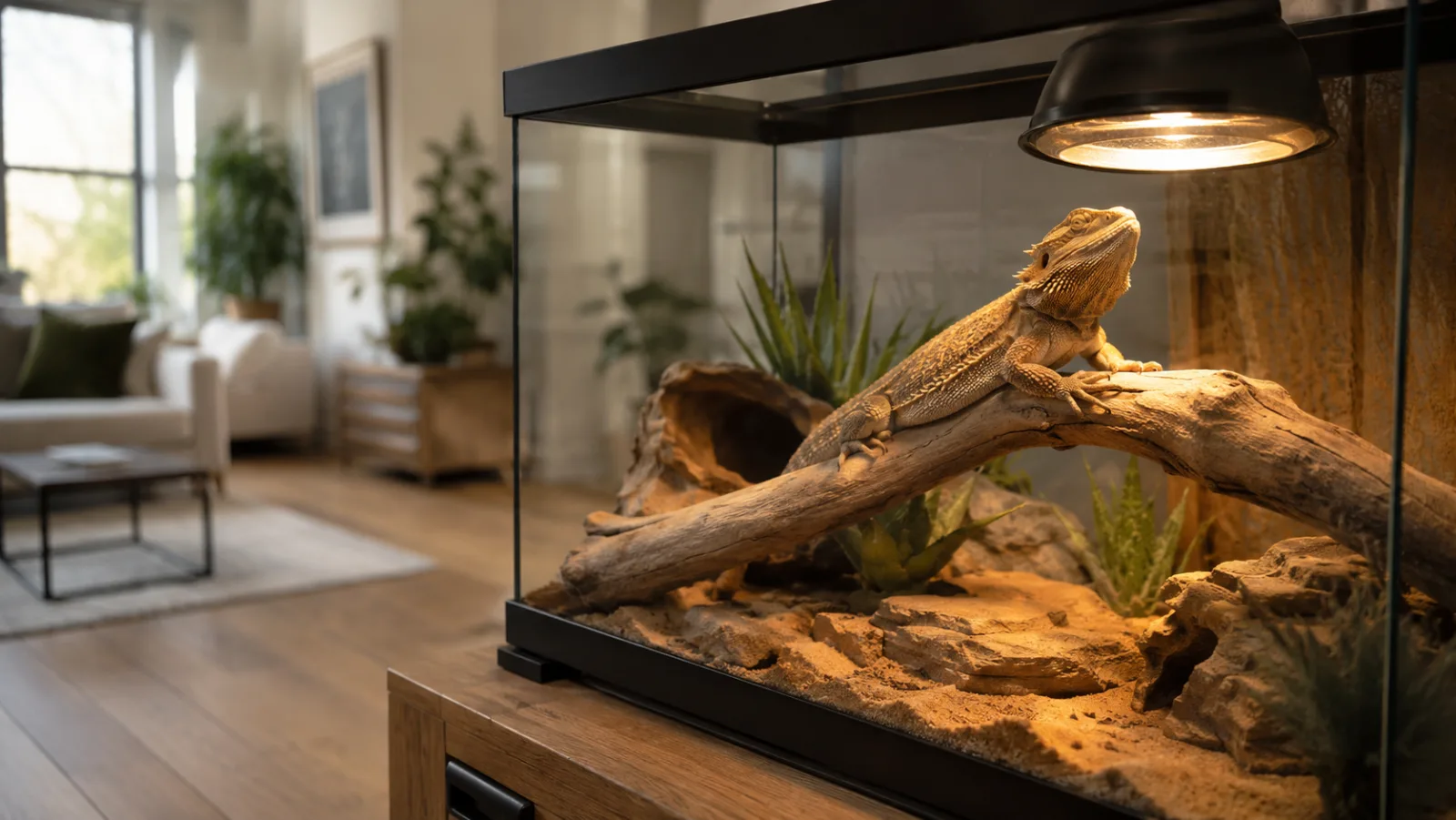
Best Reptile Heat Lamps & Basking Fixtures (2026)
Reptile
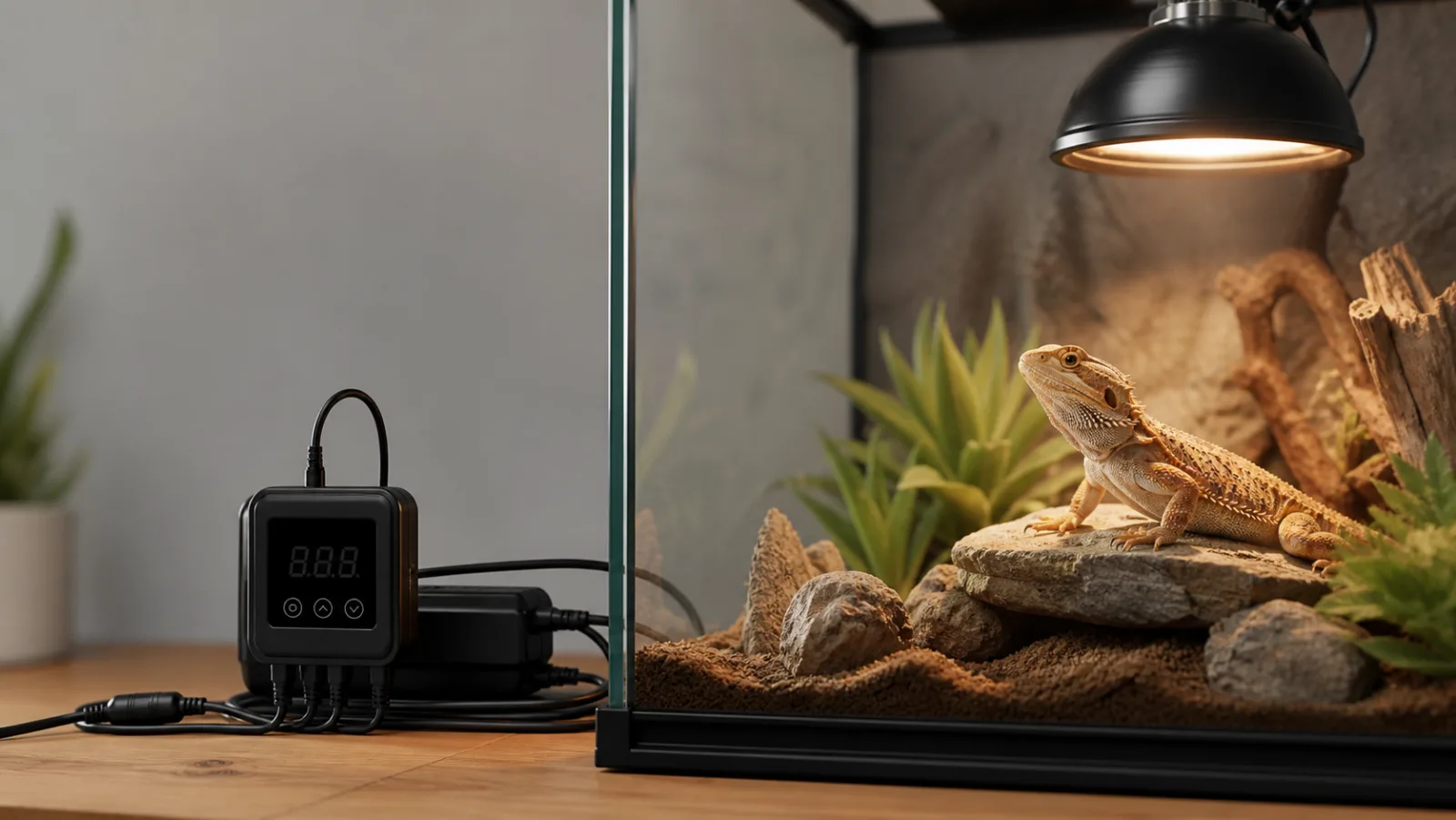
Best Reptile Thermostats for Heat Mats, CHEs & Heating Elements (2026)
Reptile
Best Reptile Hygrometers & Thermometers 2026: Accurate Terrarium Monitoring
Reptile