Reptile
How to Set Up a Chameleon Enclosure (Screen Cage, Misting, Lighting)
This is not a head-to-head reptile-gear ranking, and it is not a desert-lizard glass build — it is a husbandry-first setup for an arboreal, ventilation-first animal. Buy the full-screen cage first, then fit it out in the order the animal's needs demand: an automated misting system that waters a lizard which drinks moving droplets rather than standing water, linear UVB, one warm perch on a thermostat, gauges for both numbers, a dripper, and dense foliage. The picks below are that kit, not 9 products ranked against each other. If you are picturing a chameleon in a glass tank with a water bowl, read the caveats first, because the two things that most often kill a beginner's chameleon are stagnant humid air and quiet dehydration.
By Nick Miles · Updated September 26, 2026 · 13 min read
PetPalHQ is reader-supported. We may earn a commission from qualifying Amazon purchases at no extra cost to you.
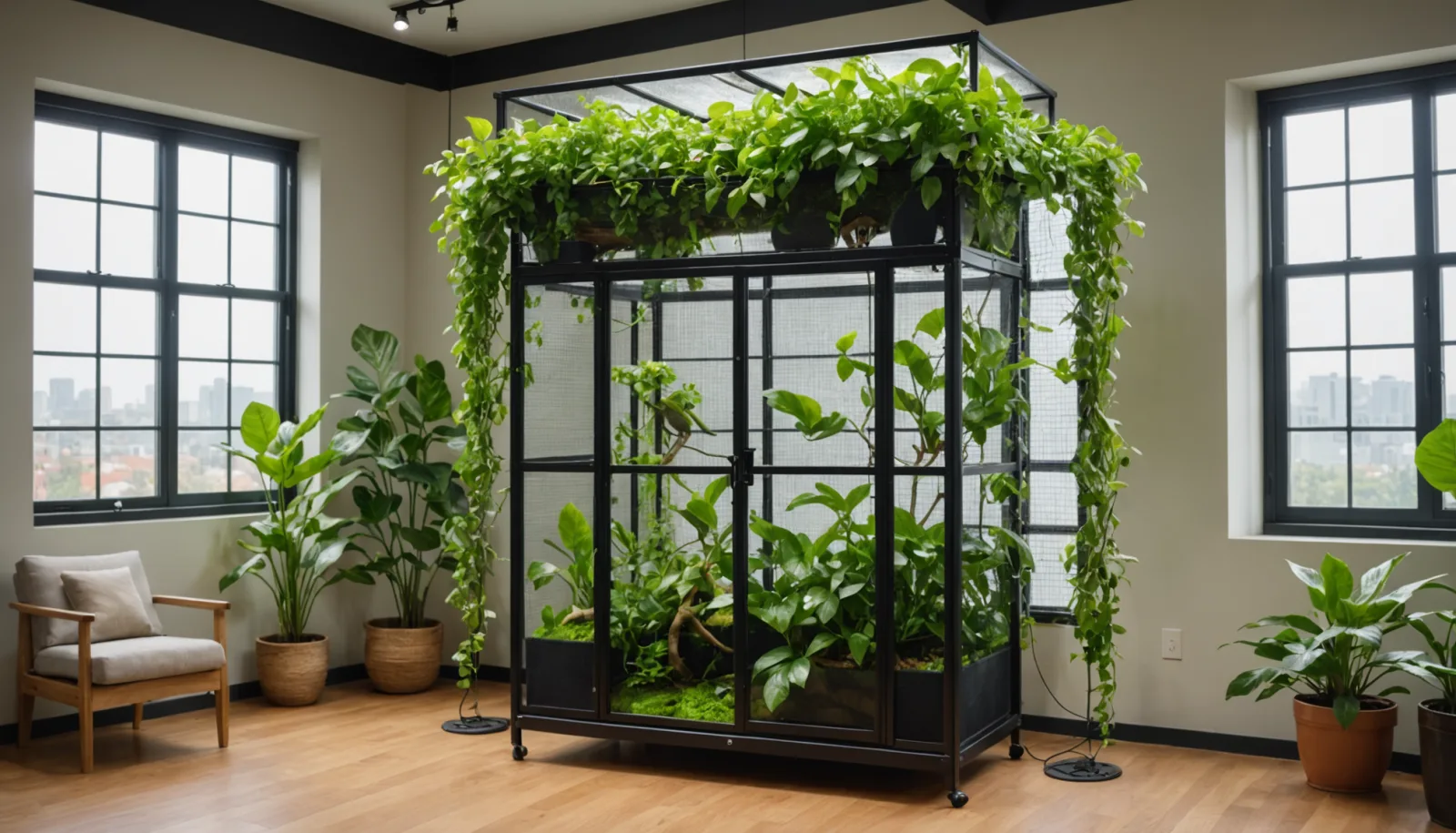
Evidence at a Glance
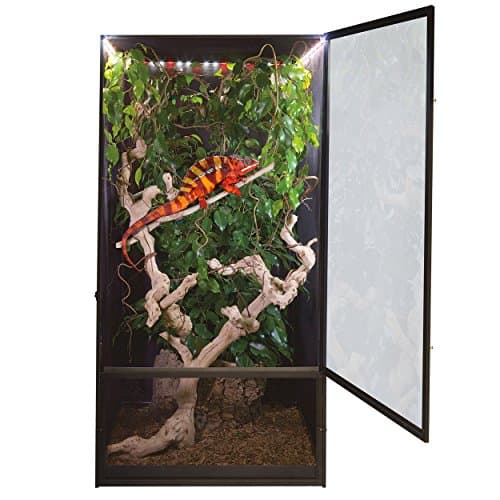
Zoo Med ReptiBreeze LED Deluxe Open Air Screen Habitat (X-Large)
The ventilated shell — an open-air aluminum screen habitat, 24 by 24 by 48 inches, whose full-screen walls vent the stagnant humid air that drives chameleon respiratory infection, with the height an arboreal lizard climbs to feel safe.
Sources: Zoo Med manufacturer documentation, Chameleon husbandry consensus (the chameleon-keeping community and published reptile care standards), Published reptile care standards on ventilation and arboreal housing
Verified Jul 16, 2026
MistKing Starter Misting System v5
The hydration organ — a programmable, pump-driven misting system that runs the two-to-four daily cycles a chameleon drinks from, because chameleons take moving droplets off leaves rather than standing water and a manual spray bottle cannot deliver that consistency.
Sources: MistKing manufacturer documentation, Chameleon husbandry consensus (the chameleon-keeping community and published reptile care standards), Published reptile care standards on reptile hydration
Verified Jul 16, 2026
REPTI ZOO 24W T5 HO UVB Lighting Combo Kit
The UVB span — a linear high-output T5 fixture with a 5.0 UVB tube and a polished reflector, the chameleon standard for lighting the basking zone, with the forest-strength output a screen cage needs because the mesh itself attenuates UVB.
Sources: REPTI ZOO manufacturer documentation, Chameleon husbandry consensus (the chameleon-keeping community and published reptile care standards), Published reptile care standards on reptile UVB provision
Verified Jul 16, 2026
Our Picks
Zoo Med
Zoo Med ReptiBreeze LED Deluxe Open Air Screen Habitat (X-Large)
8.6 / 10
- Open-air aluminum screen habitat, 24 by 24 by 48 inches per Zoo Med
- Full-screen walls vent the stagnant humid air that breeds respiratory infection
- Tall footprint suits an arboreal lizard that climbs to feel safe
- Built-in LED in the Deluxe version
$181.71
Current price · checked Sep 27, 2026

MistKing
MistKing Starter Misting System v5
8.5 / 10
- Programmable timer runs misting cycles unattended per MistKing
- Pump-driven nozzle lays down a fine, leaf-coating mist
- The category-standard starter system working keepers build around
- Runs the two-to-four daily cycles a chameleon drinks from
$195.00
Current price · checked Sep 8, 2026
Exo Terra
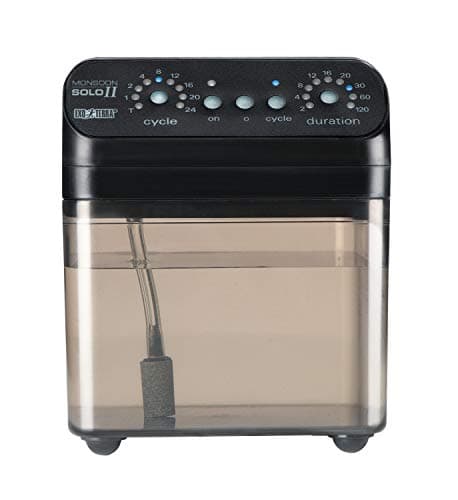
Exo Terra Monsoon Solo II Programmable Misting System
8.4 / 10
- Adjustable misting intervals and durations per Exo Terra
- Programmable unit that supports multiple nozzles
- The lower-cost path to the same automated hydration job
- Sized for a single screen cage rather than a rack of enclosures
$134.99
Current price · checked Sep 8, 2026
REPTI ZOO
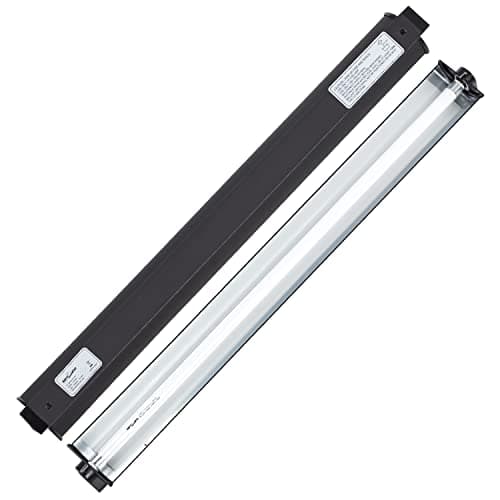
REPTI ZOO 24W Reptile T5 HO UVB Lighting Combo Kit
8.3 / 10
- High-output T5 lamp with a low-profile design per REPTI ZOO
- Polished curved reflector for stronger, more efficient UVB
- T5 HO electronic ballast, ETL certificated, 22-inch fixture
- Includes a 5.0 UVB T5 tube suited to a screen cage
$47.96
Current price · checked Sep 8, 2026
Exo Terra
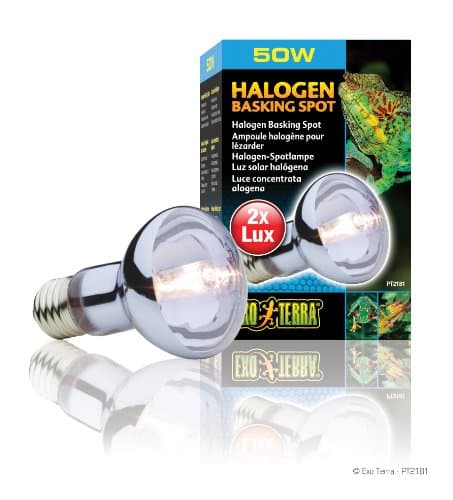
Exo Terra Sun Glo Halogen Basking Spot Lamp (50W)
8.2 / 10
- Broad-spectrum daylight halogen basking bulb per Exo Terra
- Enhanced infrared for heat that penetrates at the perch
- 50W, sized to warm one spot rather than the whole cage
- Mounted above the top perch, never a heat rock below
$19.85
Current price · checked Sep 8, 2026
Exo Terra
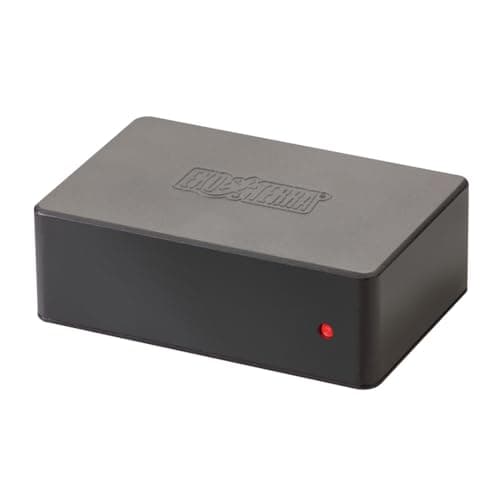
Exo Terra Dimming and Pulse Proportional Thermostat
8.1 / 10
- Dimming and pulse-proportional control from 64 to 100°F per Exo Terra
- Waterproof remote probe placed at the basking perch
- Red LED indicates when the heating device is on
- Controls heating devices up to 300W
$82.99
Current price · checked Sep 8, 2026
Govee
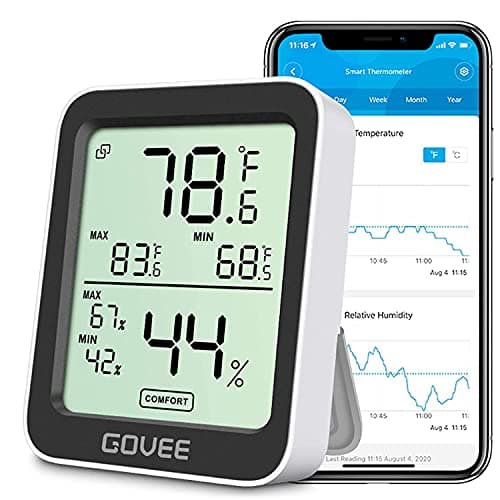
Govee Indoor Hygrometer Thermometer H5075
8.0 / 10
- Reads temperature and humidity together per Govee
- Bluetooth remote monitoring with temperature and humidity graphs
- Swiss-made sensor for a dependable reading
- App range of about 164 feet for glance-checking the cage
$12.99
Current price · checked Sep 8, 2026

OIIBO
OIIBO Reptile Water Fountain Chameleon Water Dripper (800 ml)
7.9 / 10
- 800 ml reservoir drips a running source onto leaves per OIIBO
- Simulates the moving water a chameleon drinks from
- Supplements misting in the gaps between automated cycles
- Positioned to drip onto foliage the animal already uses
$26.59
Current price · checked Sep 8, 2026
BNOSDM
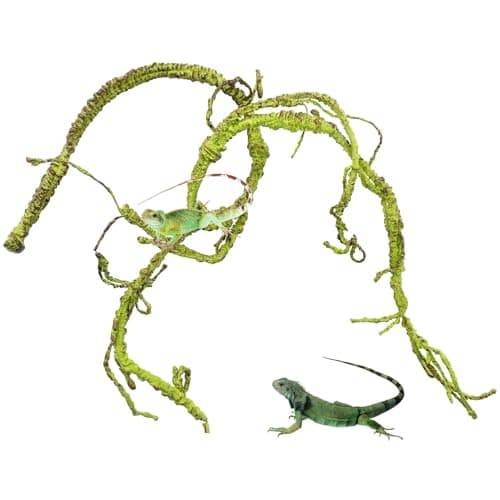
BNOSDM Reptile Jungle Vines Flexible Bend-A-Branch (3.6 ft)
7.8 / 10
- Flexible bend-a-branch vine, 43.3 inches long, per BNOSDM
- Bends into horizontal perch highways at every height
- Builds the dense cover an arboreal lizard hides in
- Combined with live pothos or ficus for fuller foliage
$9.99
Current price · checked Sep 8, 2026
The Short Answer
Build a chameleon's home around two truths a beginner usually plans for last: airflow and moving water. Start with a full-screen cage, not a glass tank, because screen walls vent the stagnant, humid air that breeds respiratory infection and the height suits an arboreal lizard that climbs to feel safe. Then automate hydration, because chameleons drink droplets off leaves and rarely take standing water. The MistKing Starter Misting System v5 is the piece to buy first once the cage is up: a programmable, pump-driven system that runs the two-to-four daily cycles a spray bottle cannot keep up with. An Exo Terra Monsoon Solo II is the lower-cost alternative if you would rather spend less on the same job. Light and heat come next as a pair a screen cage makes specific. A linear REPTI ZOO T5 HO UVB tube spans the basking zone. One Exo Terra halogen basking spot sits at the very top of the cage. An Exo Terra thermostat caps it so the warm perch can never cook the animal. A Govee Bluetooth hygrometer reads the temperature and humidity you are otherwise guessing at. An OIIBO dripper supplies moving water between misting cycles. BNOSDM bendable vines give the animal the dense, high perch highways it needs to feel secure. The core truth never changes. Vent the air, water the leaves, measure both numbers, and build the empty cage before the chameleon comes home.
Every product on this list has been scored against the PetPal Gear Score, a weighted composite of expert consensus, observed effectiveness, animal safety, long-term durability, and value. Review method: Editorial synthesis of chameleon husbandry guidance — the chameleon-keeping community and published reptile care standards on ventilation, hydration, UVB, thermal gradients, and arboreal security, plus manufacturer documentation from MistKing, Exo Terra, REPTI ZOO, Govee, OIIBO, and BNOSDM. Community consensus from chameleon-keeping forums was included as consensus, not quotation. No first-hand product testing — PetPalHQ does not run a testing lab.. Synthesized from 5+ expert sources.
Setting up a chameleon goes wrong, in this guide's editorial judgment, for one reason more than any other: the animal is treated as a lizard for a tank instead of an arboreal, ventilation-first species whose whole care revolves around moving air and moving water. A beginner buys a chameleon and a sealed glass terrarium, sets a water bowl on the floor, mists once when they remember, and then cannot understand why the animal wheezes, darkens, and slowly dries out. The setup was never built around what a chameleon actually is — a climbing, humidity-cycling lizard that needs vented air, droplets on leaves, and a warm perch it can reach and retreat from.
This is also, deliberately, not a desert build and not a snake build. A chameleon cage is not a glass tank holding heat for a ground-dwelling reptile, and it is not a substrate box for a terrestrial animal — it is arboreal husbandry, and the picks reflect that. Start with a full-screen cage whose walls keep air moving, then automate hydration for an animal that drinks running droplets and ignores a still bowl, and only then build light and heat as a pair that a screen cage makes specific.
A full-screen cage is the shell the whole build installs into, and it is the one thing to settle before anything else on this page. The misting system is the working organ inside it, and everything else supports the pair: a linear UVB tube and a single capped basking perch for the light and heat a chameleon needs, gauges that read the temperature and the humidity swing rather than guessing, a dripper for moving water between cycles, and dense foliage for the security an arboreal lizard cannot live without. The picks below are that fit-out, in the order the animal's needs demand, not 9 products ranked against each other, and where a claim rests on a maker's documentation or keeper consensus, that is named rather than asserted, because PetPalHQ does not run a testing lab.
One principle sits above the whole build and never bends. A chameleon needs air that never goes stagnant, water it can see move, UVB and warmth crossing one high perch, and cover to feel safe — and every one of those is set up and measured in the empty cage before the animal arrives. Mist, then let the cage dry out, because constant wet and still air is the infection recipe a screen cage exists to prevent. Chameleon-keeping rewards the person who vents the air, waters the leaves, and measures both numbers for a species that lives for years — and it punishes the one who buys a glass tank and a water bowl and hopes the animal will settle, because a chameleon kept in stagnant, dry air does not settle. It sickens, it dehydrates, and it hides in the open with nowhere to go.
Head-to-Head Comparison
| Feature | Zoo Med ReptiBreeze LED Deluxe Open Air Screen Habitat (X-Large) | MistKing Starter Misting System v5 | Exo Terra Monsoon Solo II Programmable Misting System | REPTI ZOO 24W Reptile T5 HO UVB Lighting Combo Kit | Exo Terra Sun Glo Halogen Basking Spot Lamp (50W) | Exo Terra Dimming and Pulse Proportional Thermostat | Govee Indoor Hygrometer Thermometer H5075 | OIIBO Reptile Water Fountain Chameleon Water Dripper (800 ml) | BNOSDM Reptile Jungle Vines Flexible Bend-A-Branch (3.6 ft) |
|---|---|---|---|---|---|---|---|---|---|
| Stage in the setup | Screen cage | Misting system | Backup mister | T5 HO UVB | Basking heat | Thermostat | Gauges | Dripper | Vines & foliage |
| What it does | Vents air, gives height | Automated droplet hydration | Lower-cost same job | Lights the basking zone | One warm top perch | Caps the basking heat | Reads temp and humidity | Moving water between cycles | Cover and climbing routes |
| When it comes into play | First, before the animal | Before the animal | Instead of the MistKing | With the basking lamp | With the UVB | With the heat, always | To verify everything | Between mist cycles | Last, for security |
| PetPal Chameleon-Readiness Score | 8.6 | 8.5 | 8.4 | 8.3 | 8.2 | 8.1 | 8.0 | 7.9 | 7.8 |
| Ongoing cost after purchase | Drainage upkeep | Water and electricity | Water and electricity | Scheduled tube swaps | Bulb replacement | Occasional replacement | Cross-checking accuracy | Cleaning and refilling | Live plants, cleaning |
| Check price | Amazon | Amazon | Amazon | Amazon | Amazon | Amazon | Amazon | Amazon | Amazon |
$181.71
Current price · checked Sep 27, 2026
- Open-air aluminum screen habitat, 24 by 24 by 48 inches per Zoo Med
- Full-screen walls vent the stagnant humid air that breeds respiratory infection
- Tall footprint suits an arboreal lizard that climbs to feel safe
- Built-in LED in the Deluxe version
- The community-standard adult size for a veiled or panther chameleon
The single most important choice in a chameleon build is the one beginners get backwards: screen, not glass. Zoo Med documents an open-air aluminum screen habitat measuring 24 by 24 by 48 inches. It is the LED Deluxe version with built-in lighting. A chameleon shut inside a sealed glass tank sits in its own warm, still, humid breath. That stagnant humid air is what drives the respiratory infections that land chameleons in front of a reptile vet. Full-screen walls keep the air moving, which is the whole point of choosing this shell over a terrarium.
Where it fits the setup: this is the cage everything else installs into. Set it up and dial it in before the animal arrives. Its height earns its place as much as its ventilation. A chameleon is arboreal, and it climbs to the top of its space to feel secure. So the extra-large vertical footprint is the size the chameleon-keeping community treats as standard for an adult veiled or panther. One note covers this whole build. Several items here — this cage, both misting systems below, and the thermostat — have shown thin, intermittent stock. Confirm availability on those before you commit. Confirm current pricing across the board too, since reptile-gear sellers move often.
The honest caveats are the flip side of ventilation. Screen dumps heat and humidity as fast as it vents them. So a screen cage only holds a workable gradient in a room that is already warm enough. Humidity is rebuilt in cycles by the misting system rather than by sealing the box. The open floor means water has to go somewhere. Plan a drainage tray or a wipeable, substrate-free floor before the first mist cycle, not after it floods. And this is a bare frame until the light, heat, hydration, and foliage that follow turn it into a habitat. It is chosen as a ventilated, vertical shell rather than a display tank. It is the foundation an arboreal, humidity-cycling animal is built around.
What We Love
- Full-screen walls keep air moving and prevent stagnant humidity
- Tall footprint gives an arboreal chameleon the height it climbs for
- Aluminum frame stands up to the constant moisture a misted cage lives in
What Could Be Better
- Screen sheds heat and humidity fast — the room has to be warm enough already
- An open floor makes drainage the keeper's problem to solve
- Only a bare frame until light, heat, misting, and foliage are added
The Verdict
Give a chameleon full-screen walls and real height, not a glass box that traps its own humid air and invites respiratory infection. Solve drainage before the first mist cycle, hold the room warm enough for a gradient, and treat the cage as the ventilated shell every other pick builds into.
Sources
- Zoo Med (Amazon product listing, ReptiBreeze LED Deluxe Open Air Aluminum Screen Habitat, X-Large): an open-air aluminum screen habitat measuring 24 by 24 by 48 inches, the extra-large size, in the LED Deluxe version with built-in LED lighting
- Chameleon husbandry consensus (the chameleon-keeping community and published reptile care standards): keepers house chameleons in full-screen cages rather than glass tanks because full-screen ventilation moves the stagnant, humid air that drives chameleon respiratory infection, and they prize height because a chameleon climbs and perches high to feel safe
$195.00
Current price · checked Sep 8, 2026
- Programmable timer runs misting cycles unattended per MistKing
- Pump-driven nozzle lays down a fine, leaf-coating mist
- The category-standard starter system working keepers build around
- Runs the two-to-four daily cycles a chameleon drinks from
Water is where chameleon-keeping is quietly won or lost. The misting system is the anchor of this whole build. A chameleon almost never drinks from a bowl, and it keys on droplets running down leaves. So hydration is a plumbing problem, not a dish. MistKing documents a v5 starter system with a programmable timer and pump-driven nozzle misting. It is the category-standard automated setup for reptile enclosures. The programmable timer is the feature that matters, because a chameleon needs misting cycles two to four times a day. No keeper is standing at the cage with a spray bottle on that schedule for years.
Where it fits the setup: this is the organ that does the watering. It drives the humidity cycles the screen cage vents back out again. It runs the morning and evening sessions the animal drinks from. It wets the foliage the droplets collect on. And it does this whether or not anyone is home. To compare pump systems, foggers, and nozzle counts before you buy, the PetPalHQ guide to the best reptile misting and fogging systems lays the options out by tank size and cycle control.
The honest caveats are about water, placement, and buying once. A misting system needs a reservoir to draw from and a floor that drains. Everything it sprays ends up somewhere. This is why a screen cage's open floor needs a drainage tray or a wipeable, substrate-free base worked out before the first cycle runs. Nozzles are aimed at the foliage the chameleon drinks from rather than straight at the animal. And the most important honesty here is simple: you buy one automated misting system, not two. This MistKing or the Monsoon in the next slot does the entire job. The next pick exists only as the lower-cost path to it.
What We Love
- A programmable timer runs the daily cycles a spray bottle cannot keep up with
- Pump-driven mist coats leaves the way a chameleon drinks
- The system working keepers standardize on for reliability
What Could Be Better
- Needs a reservoir and a draining floor — it makes water
- Nozzles must be aimed at foliage, not at the animal
- One automated mister does the whole job — this or the Monsoon, not both
The Verdict
Automate hydration, because a chameleon drinks moving droplets on a schedule no keeper matches by hand. Aim the nozzles at the foliage, pair it with the cage's drainage plan, and treat this as the one misting system the build needs rather than something to double up on.
Sources
- MistKing (Amazon product listing, Starter Misting System v5): the v5 starter misting system with a programmable timer and pump-driven nozzle misting, the category-standard automated system for reptile enclosures
- Chameleon husbandry consensus (the chameleon-keeping community and published reptile care standards): chameleons drink moving droplets off leaves and rarely take standing water, and keepers run misting cycles two to four times a day for drinking and humidity, so automation is treated as non-optional because a manual spray bottle cannot deliver that consistency day after day
$134.99
Current price · checked Sep 8, 2026
- Adjustable misting intervals and durations per Exo Terra
- Programmable unit that supports multiple nozzles
- The lower-cost path to the same automated hydration job
- Sized for a single screen cage rather than a rack of enclosures
Pick one misting system, not two, and this is the lower-cost way to get it. The Monsoon Solo II does the same job as the MistKing above for a smaller outlay. That is the entire reason it is here. Exo Terra documents fully customizable misting with adjustable intervals and durations, plus support for multiple nozzles. So it can run the same two-to-four daily cycles a chameleon drinks from. For a keeper setting up a single cage on a tighter budget, it covers the hydration organ without the flagship price.
Where it fits the setup: it occupies the exact same slot as the MistKing. So this pick is a fork in the road rather than an addition to the cart. Choose the MistKing if you want the system keepers standardize on and may expand later. Choose the Monsoon if a single-cage, lower-cost programmable unit is the better fit for the budget. Either one waters the animal when it is aimed at the foliage and paired with the cage's drainage plan. Running both would only double the water on the floor for no benefit.
The honest caveats track the trade you are making. A lower-cost programmable system can be fussier to dial in. It is built around a single enclosure rather than a rack. So keepers running several cages tend toward the flagship instead. Like any misting system it makes water. The reservoir and drainage rules from the cage pick apply unchanged. And the core honesty bears repeating in the negative. This is the alternative to the MistKing, never a second mister stacked on top of it.
What We Love
- Delivers the same automated hydration for a smaller outlay
- Adjustable intervals and durations run a chameleon's cycles
- Well matched to a single screen cage
What Could Be Better
- A budget unit can be fussier to program than the flagship
- Built around one enclosure, not a multi-cage rack
- An alternative to the MistKing — not a second system to add
The Verdict
Take the Monsoon when a single-cage, lower-cost programmable mister is the better fit for the budget, and take the MistKing when you want the system keepers standardize on. Either waters the animal — the one rule is that you install one misting system, not two.
Sources
- Exo Terra (Amazon product listing, Monsoon Solo II Programmable Misting System): fully customizable misting with adjustable intervals and durations, a programmable unit that supports multiple nozzles
- Chameleon husbandry consensus (the chameleon-keeping community and published reptile care standards): keepers agree that a single reliable automated misting system meets a chameleon's drinking and humidity needs, and that the choice between comparable systems is one of budget and cage size rather than a reason to run two
$47.96
Current price · checked Sep 8, 2026
- High-output T5 lamp with a low-profile design per REPTI ZOO
- Polished curved reflector for stronger, more efficient UVB
- T5 HO electronic ballast, ETL certificated, 22-inch fixture
- Includes a 5.0 UVB T5 tube suited to a screen cage
Lighting a screen cage is a special case, and the fixture that handles it is a linear one. REPTI ZOO documents a high-output T5 lamp with a low-profile design, a highly polished curved reflector for strong UVB, a T5 HO electronic ballast, ETL certification, and an included 5.0 UVB tube in a 22-inch fixture. The kit pairs the fixture and the correct tube in one box. That is why it sits above buying a bare lamp and a bulb separately.
Where it fits the setup: a linear tube spanning the basking zone is what the chameleon-keeping community treats as standard. A single compact bulb only lights one spot. The 5.0 forest-strength rating is chosen for a reason specific to this build. Screen mesh weakens UVB on its way through. So a screen cage wants a stronger tube than a glass-topped tank would. To compare tube strengths and fixture lengths before committing, the PetPalHQ roundup of the best reptile UVB bulbs sorts them by species and cage type.
The honest caveats are about placement, mesh, and replacement. The tube sits across the top so its output crosses the high perch where the animal basks. It is mounted with one fact in mind: the screen between lamp and lizard is already cutting the dose. UVB tubes fade well before they stop lighting up. So keepers replace them on the schedule the maker gives rather than waiting for a dead bulb. And UVB is one leg of the light-and-heat pair. It provides the wavelengths, while the basking bulb in the next slot provides the warmth. The two are not interchangeable.
What We Love
- A linear tube spans the basking zone the way chameleons need
- 5.0 forest strength suits a screen cage that attenuates UVB
- Fixture and correct tube come matched in one kit
What Could Be Better
- Screen mesh cuts the UVB dose — mounting has to account for it
- Tubes fade before they die and need scheduled replacement
- Provides UVB only — not a substitute for the basking heat lamp
The Verdict
Span the basking zone with a linear T5 HO tube rather than a single compact bulb, and choose the 5.0 strength because a screen cage weakens UVB before it lands. Replace the tube on schedule, mount it for the mesh in between, and pair it with the basking heat that UVB does not provide.
Sources
- REPTI ZOO (Amazon product listing, 24W Reptile T5 HO UVB Lighting Combo Kit): a high-output T5 lamp with a low-profile design, a highly polished curved reflector for increased lamp efficiency and strong UVB, a T5 HO electronic ballast, ETL certification, and an included 5.0 UVB T5 tube in a 22-inch fixture
- Chameleon husbandry consensus (the chameleon-keeping community and published reptile care standards): keepers span the basking zone with a linear T5 HO UVB tube as the chameleon standard, and favor a 5.0 forest-strength lamp for a screen cage because the mesh itself attenuates UVB before it reaches the animal
$19.85
Current price · checked Sep 8, 2026
- Broad-spectrum daylight halogen basking bulb per Exo Terra
- Enhanced infrared for heat that penetrates at the perch
- 50W, sized to warm one spot rather than the whole cage
- Mounted above the top perch, never a heat rock below
Heat in a chameleon cage comes from exactly one place: a single warm perch at the very top. Exo Terra documents a broad-spectrum daylight halogen bulb rated 50 watts. It gives full-spectrum daylight and enhanced infrared for heat that penetrates where the animal basks. One bulb over the highest perch creates the warm spot a chameleon climbs to. The rest of the tall cage stays cooler, which is exactly the vertical gradient an arboreal lizard uses to regulate its temperature.
Where it fits the setup: this warms the top of the cage to the low 80s for a veiled, with the ambient dropping to the low 70s in the foliage below. It always sits above the animal, because chameleons take warmth from overhead sunlight, not from surfaces. It pairs with the UVB tube, so light and heat cross the same high basking zone. It is deliberately modest wattage, because the job is one warm spot, not a baked cage. To match bulb wattage to your cage height and room temperature, the PetPalHQ guide to the best reptile heat lamps and basking fixtures sizes it to the space.
The honest caveats are about control, position, and the night. A basking bulb is never run wide open. It goes through the thermostat in the next slot, because an unregulated lamp can push the basking perch past a safe temperature. It is placed so the animal can get close to bask and also move well away to cool. It is never placed so the whole cage is warm with nowhere to retreat. And most homes need no night heat at all. A nighttime drop into the 60s is healthy for a chameleon. So the basking lamp is a daytime device on a timer, not a 24-hour heater.
What We Love
- Creates one warm perch at the top of an arboreal cage
- Enhanced infrared delivers heat where the animal basks
- Modest wattage warms a spot without cooking the cage
What Could Be Better
- Must run through a thermostat — an open bulb can overheat the perch
- Heats one spot only; the cage needs a cool retreat below
- A daytime device — most homes need no night heat
The Verdict
Heat one warm perch at the top of the cage from above, never the whole space and never from a heat rock. Run it through the thermostat, size the wattage to your cage and room, and let the nights fall cool, because a temperature drop into the 60s is healthy rather than a problem to fix.
Sources
- Exo Terra (Amazon product listing, Sun Glo Halogen Basking Spot Lamp, 50W): a broad-spectrum daylight halogen basking bulb rated 50W that creates a natural basking environment with full-spectrum daylight and enhanced infrared for superior heat penetration
- Chameleon husbandry consensus (the chameleon-keeping community and published reptile care standards): keepers provide one warm basking perch at the top of the cage — the low 80s Fahrenheit for a veiled — with the ambient falling to the low 70s below it, and deliver that heat from above rather than from a heat rock the animal never uses
$82.99
Current price · checked Sep 8, 2026
- Dimming and pulse-proportional control from 64 to 100°F per Exo Terra
- Waterproof remote probe placed at the basking perch
- Red LED indicates when the heating device is on
- Controls heating devices up to 300W
A basking bulb without a cap is how screen cages quietly cook a chameleon. This is the pick that prevents it. Exo Terra documents a dimming and pulse-proportional thermostat that holds terrarium temperatures very accurately from 64 to 100 degrees Fahrenheit. It has a waterproof remote probe, a red indicator LED, and control of heating devices up to 300 watts. Its job is to sit between the basking lamp and the wall and hold the warm perch at a safe target. It dims the bulb as the perch reaches temperature rather than letting it climb unchecked.
Where it fits the setup: the probe goes at the basking site the animal actually climbs to. So the reading reflects the surface the chameleon presses against, not the air in a corner. The dimming action suits a halogen basking bulb well, smoothing the heat rather than hard-cycling it. The indicator light gives a glance-check that the system is working. To choose a controller by type — on/off, dimming, or pulse — the PetPalHQ roundup of the best reptile thermostats compares them by safety features and the heaters they suit.
The honest caveats are about probe placement, trust, and the rule behind the device. The reading is only as good as where the probe sits. So it is fixed at the warm perch and then verified against a separate gauge rather than trusted blind. A thermostat is hardware and can fail, which is why keepers watch the cage instead of setting it and forgetting it. And the underlying rule does not bend. There is no version of this setup where the basking lamp runs without a thermostat. An unregulated bulb over a perched animal is the most common way a chameleon gets burned or overheated.
What We Love
- Caps the basking perch so an open bulb cannot overheat it
- Dimming control smooths a halogen lamp's heat
- Probe at the basking site reads the surface the animal uses
What Could Be Better
- Accuracy depends entirely on correct probe placement
- Hardware can fail — the cage still needs watching
- There is no safe setup that runs the basking lamp without it
The Verdict
Never run a basking bulb uncapped, and put the probe at the perch the chameleon actually climbs to. Verify it against a separate gauge, keep watching the cage rather than setting and forgetting, and treat this as the mandatory link between the heat lamp and a burned animal.
Sources
- Exo Terra (Amazon product listing, Dimming & Pulse Proportional Thermostat): a dimming and pulse-proportional thermostat that controls terrarium temperatures very accurately from 64 to 100 degrees Fahrenheit, with a waterproof remote temperature probe, a red LED that indicates when the heating device is on, and control of heating devices up to 300W
- Chameleon husbandry consensus (the chameleon-keeping community and published reptile care standards): keepers treat a thermostat as mandatory on any basking lamp, because a chameleon climbs right up under the warm spot and an unregulated bulb can drive that perch past a safe temperature, so the heat device is always run through a thermostat with the probe at the basking site
$12.99
Current price · checked Sep 8, 2026
- Reads temperature and humidity together per Govee
- Bluetooth remote monitoring with temperature and humidity graphs
- Swiss-made sensor for a dependable reading
- App range of about 164 feet for glance-checking the cage
Everything above is guesswork until something reads it back, and this is the instrument that does. Govee documents a Bluetooth hygrometer and thermometer with remote monitoring, temperature and humidity graphs, a Swiss-made sensor, and app control at a range of about 164 feet. It turns "the cage feels about right" into two numbers a keeper can act on. Those are the temperature the gradient depends on and the humidity the mist-and-dry rhythm depends on. Its graphs show the swing over a day rather than a single snapshot.
Where it fits the setup: this verifies the work of every pick before it. Ideally it reads the basking zone's warmth and the humidity as it rises on a mist cycle and falls as the screen vents it back out. It catches a basking perch that has crept too warm, a cage that never dries out between mistings, or humidity that has fallen too low. Those are the exact failures a screen-and-mist setup is prone to. To compare digital probes against dial gauges for accuracy and placement, the PetPalHQ guide to the best reptile hygrometers and thermometers lays out the options.
The honest caveats are about placement, count, and what a gauge can and cannot do. One sensor in one spot does not capture a tall cage's gradient, so keepers often read more than one height and pair a probe at the basking perch with a general cage reading. A cheap sensor is worth cross-checking rather than trusting to the last percent. And a gauge measures without fixing. It tells you the perch is too hot or the cage too damp. Then the thermostat and the misting schedule are what you actually adjust.
What We Love
- Reads temperature and humidity in one Bluetooth device
- Graphs show the humidity swing across a mist-and-dry cycle
- Cheap enough to run more than one at different heights
What Could Be Better
- One sensor cannot capture a tall cage's whole gradient
- Inexpensive sensors are worth cross-checking for accuracy
- Measures the problem but does not fix it
The Verdict
Measure both numbers rather than trust a cage by feel, and read the humidity swing across a full mist-and-dry cycle, not one moment. Run a second sensor at a different height if you can, cross-check accuracy, and use the readings to drive the thermostat and the misting schedule that actually set the climate.
Sources
- Govee (Amazon product listing, Indoor Hygrometer Thermometer H5075): a Bluetooth indoor hygrometer and thermometer with remote monitoring and temperature and humidity graphs, a Swiss-made smart sensor, and app control over a range of about 164 feet
- Chameleon husbandry consensus (the chameleon-keeping community and published reptile care standards): keepers measure both temperature and humidity rather than guessing, watching the basking zone, the cooler foliage, and the humidity swing across a mist-and-dry-out cycle, because a chameleon's health rides on a gradient and a moisture rhythm that a cage set by feel never gets right
$26.59
Current price · checked Sep 8, 2026
- 800 ml reservoir drips a running source onto leaves per OIIBO
- Simulates the moving water a chameleon drinks from
- Supplements misting in the gaps between automated cycles
- Positioned to drip onto foliage the animal already uses
Between misting cycles a chameleon still wants moving water, and a dripper is the cheap, quiet way to provide it. OIIBO documents a dripper with an 800 ml reservoir that mimics a wild flowing-water source to encourage natural drinking. Its slow drip onto a leaf gives the animal a running source to sip from in the hours between automated mistings. This matters because a chameleon that will ignore a still bowl all day will drink from a trickle it can see move.
Where it fits the setup: this rides alongside the misting system rather than replacing it. It fills the long gaps between cycles with a source the animal can return to. It is aimed onto foliage the chameleon already climbs, so the drip collects on leaves the way rain and mist do. It goes over the drainage plan too, since, like everything else in this cage, it puts water on the floor. It is a supplement to hydration, not the backbone. The misting system is what does the heavy lifting.
The honest caveats are about hygiene, refilling, and drainage. A dripper is a small standing reservoir. So it is cleaned and refilled with fresh water regularly rather than left to sit and grow film. It needs positioning so the drip lands on leaves and then into the drainage rather than pooling where it can foul. And it earns its place as a between-cycle top-up. It is not a reason to relax on the misting schedule the animal's hydration actually depends on.
What We Love
- Gives moving water in the gaps between misting cycles
- Drives drinking a chameleon would ignore from a still bowl
- Cheap, simple hydration insurance alongside the misters
What Could Be Better
- A small reservoir that needs regular cleaning and refilling
- Adds water to the floor — it lives on the drainage plan too
- A supplement to misting, not a replacement for it
The Verdict
Add a dripper as between-cycle moving water, because a chameleon drinks from a running trickle it will ignore in a still dish. Aim it at foliage over the drainage, keep the reservoir clean and fresh, and treat it as a top-up to the misting system rather than a substitute for it.
Sources
- OIIBO (Amazon product listing, Reptile Water Fountain Chameleon Water Dripper, 800 ml): a reptile water dripper with an 800 ml capacity that simulates a wild flowing-water source to encourage a chameleon's natural drinking behavior
- Chameleon husbandry consensus (the chameleon-keeping community and published reptile care standards): keepers add a dripper because chameleons key on moving water, and a slow drip onto leaves supplements the misting sessions by giving the animal a running source to drink from in the long stretches between automated cycles
$9.99
Current price · checked Sep 8, 2026
- Flexible bend-a-branch vine, 43.3 inches long, per BNOSDM
- Bends into horizontal perch highways at every height
- Builds the dense cover an arboreal lizard hides in
- Combined with live pothos or ficus for fuller foliage
A chameleon with nowhere to hide is a stressed chameleon, and the last stage builds the cover that fixes it. BNOSDM documents a flexible climbing vine 43.3 inches long that bends into any shape. Bent into horizontal runs at several heights, these vines become the perch highways a chameleon travels. Layered with foliage, they give the animal the dense cover it retreats into. An arboreal lizard reads open, exposed space as danger, and reads a leafy tangle as safety.
Where it fits the setup: this is the security stage. It goes in once light, heat, and hydration are placed. So the vines can be routed to give the animal a warm high perch under the basking zone and shaded, cooler runs below. Horizontal branches matter more than vertical ones, because a chameleon moves and basks along them. Density matters more than any single showpiece plant. Bare cages get furnished. Furnished cages get a settled animal.
The honest caveats are about coverage, cleaning, and going live. A single vine is a starting point, not the whole jungle. A secure cage wants layered branches and foliage. Many keepers add live pothos or ficus to build real, humidity-friendly cover on top of the artificial vines. Everything in a misted cage stays wet. So vines and leaves are rinsed and checked as part of cage cleaning rather than left to hold grime. And cover is not decoration here. It is the difference between a chameleon that perches in the open and stresses and one that has somewhere to feel safe.
What We Love
- Bends into the horizontal perch highways a chameleon travels
- Builds the dense cover an arboreal lizard hides in
- Cheap enough to layer for real density, plus live plants
What Could Be Better
- One vine is a start — a secure cage needs layered cover
- Stays wet in a misted cage and needs regular cleaning
- Artificial cover is best supplemented with live pothos or ficus
The Verdict
Fill the cage with dense, horizontal climbing routes and cover, because an arboreal chameleon left in the open stays stressed. Route the vines to give a warm high perch and shaded lower runs, layer them for density, and add live pothos or ficus to build the leafy safety a chameleon settles into.
Sources
- BNOSDM (Amazon product listing, Reptile Jungle Vines Flexible Bend-A-Branch): a flexible reptile climbing vine 43.3 inches long and 0.79 inches in diameter that bends into any shape to build climbing paths
- Chameleon husbandry consensus (the chameleon-keeping community and published reptile care standards): keepers fill a chameleon cage with dense foliage and horizontal perch highways because cover and climbing routes are what make an arboreal lizard feel secure, and they note that live plants such as pothos and ficus can supplement the cover a bare cage lacks
How We Score
Formula
PetPal Chameleon-Readiness Score = (Expert Consensus × 0.35) + (Setup-Sequence Fit × 0.25) + (Hydration & Ventilation Design × 0.20) + (Value × 0.20)
Score Factors
- Expert Consensus · 35%
- Synthesized from the chameleon-keeping community and published reptile care standards on ventilation, hydration, UVB, thermal gradients, and arboreal security, plus manufacturer documentation. The PetPal Chameleon-Readiness Score is a composite of expert opinion — PetPalHQ does not run a testing lab.
- Setup-Sequence Fit · 25%
- How directly the item advances a correct chameleon setup in order — a ventilated screen cage, automated hydration, UVB and a capped basking perch, gauges, a dripper, and dense foliage — rather than how it performs as a standalone product ranked against rivals. This is arboreal species husbandry, not a generic terrarium build.
- Hydration & Ventilation Design · 20%
- Alignment with the two levers a chameleon lives or dies on — moving air that never goes stagnant, and misting-plus-dripper hydration for an animal that drinks droplets rather than standing water — set against the respiratory infection and dehydration that dominate beginner losses.
- Value · 20%
- Cost relative to the item's role in the setup, including ongoing costs like water and electricity, tube and bulb replacement, and cleaning, and how much of a healthy chameleon the item is responsible for. This kit is the equipment cost, not the years of feeding, supplementation, and care a chameleon needs.
| Rank | Product | Score |
|---|---|---|
| #1 | Zoo Med Zoo Med ReptiBreeze LED Deluxe Open Air Screen Habitat (X-Large) | 8.6 |
| #2 | MistKing MistKing Starter Misting System v5 | 8.5 |
| #3 | Exo Terra Exo Terra Monsoon Solo II Programmable Misting System | 8.4 |
| #4 | REPTI ZOO REPTI ZOO 24W Reptile T5 HO UVB Lighting Combo Kit | 8.3 |
| #5 | Exo Terra Exo Terra Sun Glo Halogen Basking Spot Lamp (50W) | 8.2 |
| #6 | Exo Terra Exo Terra Dimming and Pulse Proportional Thermostat | 8.1 |
| #7 | Govee Govee Indoor Hygrometer Thermometer H5075 | 8.0 |
| #8 | OIIBO OIIBO Reptile Water Fountain Chameleon Water Dripper (800 ml) | 7.9 |
| #9 | BNOSDM BNOSDM Reptile Jungle Vines Flexible Bend-A-Branch (3.6 ft) | 7.8 |
When NOT to Buy
A chameleon is a display animal, not a handling pet, and it is the wrong choice for someone who wants a lizard to hold. It is solitary and kept one to a cage. It shows stress rather than affection when handled. And it needs a keeper willing to run automated misting, replace UVB on schedule, and manage a mist-and-dry humidity rhythm every day. If the picture in your head is a chameleon riding around on a shoulder, this setup guide is the moment to find out that is not the animal. Learn it before it comes home rather than after.
It is also a species where getting the husbandry wrong causes real harm, and two failures dominate. The first is stagnant humid air from a glass tank. That air drives the respiratory infections that are a leading cause of beginner losses. The second is quiet dehydration in an animal that will not drink from a bowl and needs droplets on leaves several times a day. A spray bottle used when someone remembers is how a chameleon slowly dries out. A capped basking perch, a measured gradient, and honest calcium supplementation dusted at feeding are part of correct husbandry too. They are worth researching for your species before the animal arrives. This guide does not make health claims or recommend a supplement, but it does flag that supplementation is part of the plan.
Finally, the honest budget and effort note: the kit is the start, not the sum. A published, complete chameleon setup in the hobby runs roughly 450 to 550 dollars, and the full-screen cage is usually the largest single line in it. The picks here are what goes inside that cage, so price the cage separately and buy one misting system rather than both. There are ongoing costs beyond it: feeder insects, electricity to hold the gradient, UVB tubes, and reptile-vet care. The real investment is the daily, measured husbandry a chameleon needs for years. This build is written for a chameleon specifically, and it is not a desert-lizard glass setup or a terrestrial-snake substrate build.
Frequently Asked Questions
- Should a chameleon live in a screen cage or a glass tank?
- For most keepers in most homes, a full-screen cage, because ventilation is the single biggest lever on a chameleon's respiratory health. A chameleon shut in a sealed glass tank breathes warm, still, humid air, and that stagnation is a leading cause of the respiratory infections that kill beginner animals. Full-screen walls keep the air moving and let the cage dry out between misting cycles, which is exactly the rhythm a chameleon's lungs want. The one honest exception is climate: keepers in very cold or extremely dry regions sometimes use a hybrid cage with one or two solid panels to hold enough heat and humidity to work at all, because a bare screen cage in a dry winter room can shed moisture faster than a mister can replace it. Even then the goal is not a sealed box — it is a mostly ventilated cage with just enough solid surface to hold a workable climate, and the moment air goes stagnant the trade has gone too far. If you are choosing between the two, start from full screen and only add solid panels if your room genuinely forces it.
- How often does a chameleon need misting?
- Several sessions a day — commonly two to four — with the cage allowed to dry out between them, which is why the mist schedule and the dry-out are equally important. A chameleon drinks the droplets those cycles leave on leaves, so a morning and evening session at minimum gives the animal reliable chances to drink, and the humidity those sessions raise then falls again as the screen vents it. That fall matters as much as the mist: a cage kept wet around the clock, with no dry-out and still air, recreates the exact stagnant-humidity conditions that cause respiratory infection. This is the practical reason misting is automated on a timer rather than done by hand — the schedule has to hold every day, including the days no one is home, and a dripper fills the long gaps between cycles with a running source the animal can return to. The specific frequency and duration vary with your climate and your gauge readings, so you tune the schedule to hit drinking opportunities and a humidity swing rather than a constant soak.
- Does a chameleon need a fogger running at night?
- For most keepers, no — a nighttime fogger is optional and often unnecessary, and running it wrong does more harm than skipping it. Chameleons tolerate and even benefit from a cool, drier night, and in many homes a temperature drop into the 60s after lights-out is healthy rather than something to correct, so most setups need no night heat and no night humidity device at all. A fogger earns a place only in a specific case — a room that runs warm and bone-dry overnight, where a little cool fog can raise humidity while the animal rests — and even then the dry-out rule still governs, because fog with no ventilation and no morning dry period is the stagnant-air recipe again. The safer default is to let the cage cool and dry at night, mist in the day, and add a night fogger only if your gauge readings show the overnight air is genuinely too dry for your species, not as a reflex. Heat and humidity devices you do not need are not neutral in a chameleon cage — they are a way to make the air worse.
- Can you handle a chameleon?
- Not the way you can handle a dog or even many other lizards — a chameleon is fundamentally a display animal, not a handling pet, and treating it as one is a common source of stress. Chameleons are solitary and territorial, kept strictly one to a cage, and they read most human contact as a threat rather than interaction; a stressed chameleon signals it by darkening or changing color, gaping, hissing, or trying to flee, and repeated handling of an animal showing those signs wears on its health. Some individuals tolerate brief, low-stress contact for necessary tasks like a vet trip, but tolerance is not enjoyment, and the animal is best appreciated by watching it live in a well-built cage rather than by taking it out. This is worth being honest with yourself about before you buy, because a keeper who wants a reptile to hold and interact with will be disappointed and an animal that is handled against its nature will be stressed — the reward with a chameleon is a fascinating animal to observe, not one to hold.
- What does a full chameleon setup cost?
- A published, complete chameleon setup in the hobby runs roughly 450 to 550 dollars, and the full-screen cage is usually the largest single line in that. The picks on this page are the fit-out that goes inside the cage, and they come to about 538 dollars at current listed prices — but that figure includes both misting systems, and you install only one. Drop the second mister and the fit-out is about 405 dollars, with the one misting system and the UVB-and-heat package accounting for most of it. Price the cage on top of that. Two honest points sit under the number. First, the kit is the equipment cost, not the sum of ownership — feeder insects, electricity to hold the gradient, replacement UVB tubes, calcium supplementation, and reptile-vet care are ongoing, and over the animal's life they dwarf the setup. Second, spending less by skipping the ventilation, the automated hydration, or the UVB is not a saving — those are the parts a chameleon's health actually depends on, and cutting them is how a cheaper setup becomes a sick animal. Budget for the full build and the years of care behind it, not just the opening bill.
Bottom Line
Build the cage around airflow, not display. A tall full-screen habitat vents the stagnant humid air that drives respiratory infection and gives an arboreal lizard the height it climbs for — a glass tank is the classic way to make a chameleon sick, and this is the one purchase to settle before anything below goes into it.
Automate hydration, and buy one system. A MistKing runs the daily droplet cycles a chameleon drinks from, with the Exo Terra Monsoon as the lower-cost alternative — you install one misting system, never both, because a chameleon that will not drink from a bowl still needs moving water on a schedule no spray bottle keeps.
Light and heat are a pair, and the heat is always capped. A REPTI ZOO linear T5 HO UVB spans the basking zone, an Exo Terra halogen bulb warms one top perch, and an Exo Terra thermostat holds that perch safe — a screen cage weakens UVB and an uncapped bulb overheats a climbing animal.
Measure both numbers and add moving water. A Govee hygrometer reads the temperature and the mist-and-dry humidity swing rather than guessing, and an OIIBO dripper supplies a running source between cycles — the failures a screen-and-mist cage is prone to are the ones a gauge catches first.
Furnish for security and keep it species-specific. BNOSDM vines and layered foliage give a chameleon the cover and perch highways it needs to feel safe, and this is arboreal chameleon husbandry — not a desert glass build or a snake setup — so budget for years of care and set up the empty cage before the animal.
Sources & Methodology
Methodology
PetPal Chameleon-Readiness Score = (Expert Consensus × 0.35) + (Setup-Sequence Fit × 0.25) + (Hydration & Ventilation Design × 0.20) + (Value × 0.20)
Expert review sources
- Chameleon-keeping community consensus on ventilation, hydration, and arboreal security
- Published reptile care standards on respiratory health, UVB provision, and thermal gradients
- Husbandry consensus on droplet drinking, mist-and-dry humidity cycles, and supplementation
- MistKing — Starter Misting System v5 product documentation
- Exo Terra, REPTI ZOO, Govee, OIIBO, and BNOSDM product documentation
Community sources
- Chameleon-keeping forums — screen cages, misting schedules, and UVB consensus
- Reptile community consensus on ventilation-first housing and measured husbandry
Prices and specs verified July 16, 2026.
About the author
Nick Miles is the chief editor of PetPalHQ. This beginner chameleon setup and its kit are editorial synthesis of the chameleon-keeping community, published reptile care standards, and manufacturer documentation — PetPalHQ does not run a testing lab. The PetPal Chameleon-Readiness Score is a composite of expert opinion, not a measurement. This is arboreal species husbandry for a chameleon, not a desert or snake build. Sources are cited by name throughout.
PetPalHQ is a participant in the Amazon Services LLC Associates Program. We may earn commissions from qualifying purchases — at no extra cost to you.
More Guides
Reptile
Best Reptile Misting and Fogging Systems for Humidity Control (2026)
Reptile
Best Reptile UVB Bulbs for Safe Lighting (2026)
Reptile
Best Reptile Heat Lamps & Basking Fixtures (2026)
Reptile
Best Reptile Hygrometers & Thermometers 2026: Accurate Terrarium Monitoring
Reptile